
 A SCHOLARLY BOOK REPOSITORY
This examination of the office of the German chancellorship as it has evolved under six post-war chancellors analyzes both the nature of executive leadership as institutionalized in the constitutional order or political system and the evolution of the office during the course of individual incumbencies. The distinguished contributors evaluate the "chancellor democracy" model rooted in the imperious incumbency of Konrad Adenauer, which postulates a concentration of executive authority around the chancellorship, and the model of "coordination democracy," which casts the chancellor in a more managerial role in a political system marked by the diffusion of authority. This volume traces a progression from the first model to the second over time.
German unification has thrust new roles on the chancellor, including one as a symbol of unity in an incomplete process of integration, and another as a key figure in redefining Germany's new national and international identity. A number of the contributors address the question of whether the office has the political resources to enable the incumbent to fill these new roles.
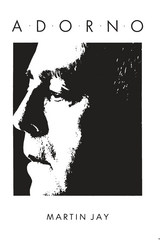
Theodor W. Adorno (1903-1969) was a leading figure in the Frankfurt School and one of this century's most demanding intellectuals. His works, always informed by his variant of Critical Theory that he called Negative Dialectics, is notoriously difficult to understand bu has had an enormous impact on philosophy, sociology, musicology, literary criticism, psychology, and the study of culture.
In an introductory section, Martin Jay gives a brief, lucid account of Adorno's notion of force-field, and of Adorno's extension of Walter Benjamin's concept of constellation. He distinguishes five impulses in Adorno's thinking: his Marxism, his aesthetic modernism, his mandarin cultural conservatism, his anticipation of deconstructionism, and the self-conscious Jewishness that led him to look for redemption and at the same time to refuse any definition of paradise.
Professor Jay devotes the central sections of his book to the major aspects of Adorno's thought--his philosophy, his social theory, and his view of modern culture and aesthetic theory. He has succeeded brilliantly in the task of presenting Adorno's theories in understandable form while remaining true to their unresolved tensions.

John J. McCloy was the "wise man" of the Cold War era who had the longest substantial American connection with Germany. A self-made man of great ambition, enormous vitality, and extraordinary tenacity, McCloy served in several government positions before being appointed High Commissioner of Germany in 1949.
America's Germany is the first study of McCloy's critical years in Germany. Drawing on deep archival research and interviews, Thomas Schwartz argues that McCloy played a decisive role in the American effort to restore democracy and integrate Germany into Western Europe. Convinced that reunification should wait until Germany was firmly linked to the West, McCloy implemented a policy of "dual containment," designed to keep both the Soviet Union and Germany from dominating Europe.
McCloy represented the best and the worst of the values and beliefs of a generation of American foreign policy leaders. He strove to learn from the mistakes made in the aftermath of the collapse of the Weimar Republic, when the West did not do enough to help German democracy survive. Yet his leniency toward convicted Nazi war criminals compromised the ideals for which America had fought in World War II.
America's Germany offers an essential history for those wishing to understand the recent changes in Germany and Europe. The book describes a unique period in the relationship between America and Germany, when the two nations forged an extraordinary range of connections--political, economic, military, and cultural--as the Federal Republic became part of the Western club and the new Europe.
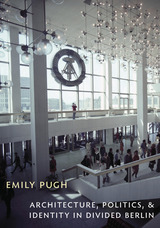
In Architecture, Politics, and Identity in Divided Berlin Emily Pugh provides an original comparative analysis of selected works of architecture and urban planning in both halves of Berlin during the Wall era, revealing the importance of these structures to the formation of political, cultural, and social identities. Pugh uncovers the roles played by organizations such as the Foundation for Prussian Cultural Heritage and the Building Academy in conveying the political narrative of their respective states through constructed spaces. She also provides an overview of earlier notable architectural works, to show the precursors for design aesthetics in Berlin at large, and considers projects in the post-Wall period, to demonstrate the ongoing effects of the Cold War.
Overall, Pugh offers a compelling case study of a divided city poised between powerful contending political and ideological forces, and she highlights the effort expended by each side to influence public opinion in Europe and around the World through the manipulation of the built environment.
Army life has always been known as a life of sacrifice, challenge, and frustration, yet one filled also with deep satisfactions. This is so for the soldiers’ families as much as for the soldiers themselves. Over the years, military and civilian leaders of the US Army have tried to reduce the hardships of military life by creating an array of community services designed to provide social support for soldiers and families and help them live satisfying lives in military communities.
Unfortunately, this effort has not been particularly successful, and frustration, dissatisfaction, and alienation persist among soldiers and family member in the US Army communities in Germany. Discontent continues because the underlying sources of alienation in the Army and among its families are highly complex, poorly understood, and therefore hardly addressed by the Army’s quality-of-life programs that are intended to make soldier and family life more bearable.
In Army of Hope, Army of Alienation: Culture and Contradiction in the American Army Communities of Cold War Germany, the author seeks to penetrate the logic, social structure, and daily practice of life in the American military communities that lay scattered along the frontier between East and West Germany during the final years of the Cold War. In coming to understand the life and thought of these American soldiers and families, ordinary American citizens can learn much about their military forces and about their own society and culture. In addition, a greater understanding about how people work and live around an institution that is at once so important and yet tasked with a mission so different from that of ordinary pursuits can stimulate social scientists and concerned citizens to think differently about culture, society, and behavior in general.
The literature describing social conditions during the post–World War II Allied occupation of Germany has been divided between seemingly irreconcilable assertions of prolonged criminal chaos and narratives of strict martial rule that precluded crime. In The Art of Occupation, Thomas J. Kehoe takes a different view on this history, addressing this divergence through an extensive, interdisciplinary analysis of the interaction between military government and social order.
Focusing on the American Zone and using previously unexamined American and German military reports, court records, and case files, Kehoe assesses crime rates and the psychology surrounding criminality. He thereby offers the first comprehensive exploration of criminality, policing, and both German and American fears around the realities of conquest and potential resistance, social and societal integrity, national futures, and a looming threat from communism in an emergent Cold War. The Art of Occupation is the fullest study of crime and governance during the five years from the first Allied incursions into Germany from the West in September 1944 through the end of the military occupation in 1949. It is an important contribution to American and German social, military, and police histories, as well as historical criminology.
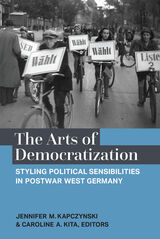
These essays highlight the contradictory and competing impulses that ran through the project to democratize postwar society and cast a critical eye toward the internal biases that shaped the model of Western democracy. In so doing, the contributions probe critical questions that we continue to grapple with today. How did postwar thinkers understand what it meant to be democratic? Did they conceive of democratic subjectivity in terms of acts of participation, a set of beliefs or principles, or perhaps in terms of particular feelings or emotions? How did the work to define democracy and its subjects deploy notions of nation, race, and gender or sexuality? As this book demonstrates, the case of West Germany offers compelling ways to think more broadly about the emergence of democracy. The Arts of Democratization offers lessons that resonate with the current moment as we consider what interventions may be necessary to resuscitate democracy today.
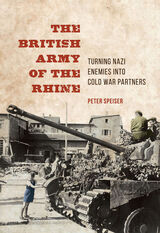
Peter Speiser charts the BAOR's fraught transformation from occupier to ally by looking at the charged nexus where British troops and their families interacted with Germany's civilian population. Examining the relationship on many levels, Speiser ranges from how British mass media representations of Germany influenced BAOR troops to initiatives taken by the Army to improve relations. He also weighs German perceptions, surveying clashes between soldiers and civilians and comparing the popularity of the British services with that of the other occupying powers. As Speiser shows, the BAOR's presence did not improve the relationship between British servicemen and the German populace, but it did prevent further deterioration during a crucial and dangerous period of the early Cold War.
An incisive look at an under-researched episode, The British Army of the Rhine sheds new light on Anglo-German diplomatic, political, and social relations after 1945, and evaluates their impact on the wider context of European integration in the postwar era.
Offering much more than a detached historical account of the "German miracle"—a ruined, war-torn nation evolving within a decade into the most flourishing country in Europe—Eugene Davidson delves into this intriguing story as a "participant observer." Drawing on countless interviews with Germans and Americans of various backgrounds and perspectives, from High Commissioner's office personnel to occupation troop GIs, storekeepers to housewives, Davidson insightfully conveys the atmosphere of postwar Germany and the role of the American occupation in achieving the nation's economic miracle.
The Death and Life of Germany examines the transformation of Germany, focusing on such key episodes as the unprecedented war-crimes tribunal at Nuremberg, the almost unceasing attempts of the Western Allies to cooperate with the Russians, the startling effects of the currency reform and Marshall Plan aid, the break between East and West Germany that culminated in the Berlin airlift, the heroic East German uprising of June 17, 1953, and the eventual formation of the Federal Republic of Germany and the German Democratic Republic.
Davidson traces the progress of thought among Germans and Americans alike as their conceptions of postwar Germany gradually evolved and the leaders of a new, democratic West Germany emerged from the ashes of defeat.
The strength of Davidson's research and analysis and the continuing relevance of this important volume make The Death and Life of Germany an invaluable addition to the collections of scholars and general readers interested in the evolution of postwar Germany.
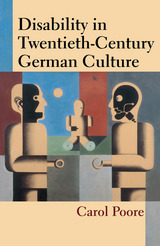
"Comprehensively researched, abundantly illustrated and written in accessible and engaging prose . . . With great skill, Poore weaves diverse types of evidence, including historical sources, art, literature, journalism, film, philosophy, and personal narratives into a tapestry which illuminates the cultural, political, and economic processes responsible for the marginalization, stigmatization, even elimination, of disabled people---as well as their recent emancipation."
---Disability Studies Quarterly
"A major, long-awaited book. The chapter on Nazi images is brilliant---certainly the best that has been written in this arena by any scholar."
---Sander L. Gilman, Emory University
"An important and pathbreaking book . . . immensely interesting, it will appeal not only to students of twentieth-century Germany but to all those interested in the growing field of disability studies."
---Robert C. Holub, University of Tennessee
Disability in Twentieth-Century German Culture covers the entire scope of Germany's most tragic and tumultuous century---from the Weimar Republic to the current administration---revealing how central the notion of disability is to modern German cultural history. By examining a wide range of literary and visual depictions of disability, Carol Poore explores the contradictions of a nation renowned for its social services programs yet notorious for its history of compulsory sterilization and eugenic dogma. This comprehensive volume focuses particular attention on the horrors of the Nazi era, when those with disabilities were considered "unworthy of life," but also investigates other previously overlooked topics including the exile community's response to disability, socialism and disability in East Germany, current bioethical debates, and the rise and gains of Germany's disability rights movement.
Richly illustrated, wide-ranging, and accessible, Disability in Twentieth-Century German Culture gives all those interested in disability studies, German studies, visual culture, Nazi history, and bioethics the opportunity to explore controversial questions of individuality, normalcy, citizenship, and morality. The book concludes with a memoir of the author's experiences in Germany as a person with a disability.
Carol Poore is Professor of German Studies at Brown University.
Illustration: "Monument to the Unknown Prostheses" by Heinrich Hoerle © 2007 Artists Rights Society (ARS), New York / VG Bild-Kunst, Bonn
A volume in the series Corporealities: Discourses of Disability
"Insightful and meticulously researched . . . Using disability as a concept, symbol, and lived experience, the author offers valuable new insights into Germany's political, economic, social, and cultural character . . . Demonstrating the significant ‘cultural phenomena' of disability prior to and long after Hitler's reign achieves several important theoretical and practical aims . . . Highly recommended."
---Choice
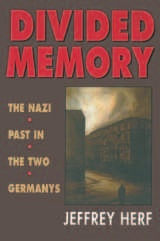
What has Germany made of its Nazi past?
A significant new look at the legacy of the Nazi regime, this book exposes the workings of past beliefs and political interests on how—and how differently—the two Germanys have recalled the crimes of Nazism, from the anti-Nazi emigration of the 1930s through the establishment of a day of remembrance for the victims of National Socialism in 1996.
Why, Jeffrey Herf asks, would German politicians raise the specter of the Holocaust at all, in view of the considerable depth and breadth of support its authors and their agenda had found in Nazi Germany? Why did the public memory of Nazi anti-Jewish persecution and the Holocaust emerge, if selectively, in West Germany, yet was repressed and marginalized in “anti-fascist” East Germany? And how do the politics of left and right come into play in this divided memory? The answers reveal the surprising relationship between how the crimes of Nazism were publicly recalled and how East and West Germany separately evolved a Communist dictatorship and a liberal democracy. This book, for the first time, points to the impact of the Cold War confrontation in both West and East Germany on the public memory of anti-Jewish persecution and the Holocaust.
Konrad Adenauer, Theodor Heuss, Kurt Schumacher, Willy Brandt, Richard von Weizsacker, and Helmut Kohl in the West and Walter Ulbricht, Wilhelm Pieck, Otto Grotewohl, Paul Merker, and Erich Honnecker in the East are among the many national figures whose private and public papers and statements Herf examines. His work makes the German memory of Nazism—suppressed on the one hand and selective on the other, from Nuremberg to Bitburg—comprehensible within the historical context of the ideologies and experiences of pre-1945 German and European history as well as within the international context of shifting alliances from World War II to the Cold War. Drawing on West German and recently opened East German archives, this book is a significant contribution to the history of belief that shaped public memory of Germany’s recent past.
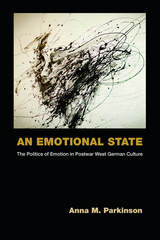
One of the book’s major contributions is that it offers an analytical distinction between emotion and affect, finding a compelling way to talk about affect and emotion that is informed by affect theory but that integrates psychoanalysis. The study draws on the psychoanalytic writings of Freud, Margarete and Alexander Mitscherlich, and André Green, while engaging with interdisciplinary theorists of affect including Barbara Rosenwein, Lauren Berlant, Ann Cvetkovich, and Eve Kosofsky Sedgwick among many others.
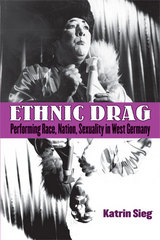
Using engaging case studies, Ethnic Drag traces the classical and travestied traditions of Jewish impersonation from the eighteenth century onward to construct a pre-history of postwar ethnic drag. It examines how, shortly after World War II, mass culture and popular practices facilitated the repression and refashioning of Nazi racial precepts. During a time when American occupation authorities insisted on remembrance and redress for the Holocaust, the Wild West emerged as a displaced theater of the racial imagination, where the roles of victim, avenger, and perpetrator of genocide were reassigned.
Ethnic Drag is an accessible and sophisticated, critical and entertaining book that examines the phenomenon of cultural masquerade in order to examine racial feeling, thought, and behavior in postwar German culture. Contributing to considerations of drag in postcolonial, feminist, and queer scholarships, this book will be of interest to people in German studies, theater performance, ethnic studies, and women's/queer studies.
Katrin Sieg is Associate Professor, Department of German and Center for German and European Studies, Georgetown University.
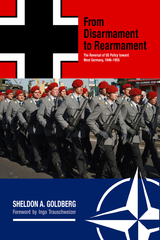
At the end of World War II, the Allies were unanimous in their determination to disarm the former aggressor Germany. As the Cold War intensified, however, the decision whether to reverse that policy and to rearm West Germany as a bulwark against the Soviet threat led to disagreements both within the US government and among members of the nascent NATO alliance. The US military took the practical view that a substantial number of German troops would be required to deter any potential Soviet assault. The State Department, on the other hand, initially advocated an alternative strategy of strengthening European institutions but eventually came around to the military’s position that an armed West Germany was preferable to a weak state on the dividing line between the Western democracies and the Soviet satellite states.
Sheldon A. Goldberg traces the military, diplomatic, and political threads of postwar policy toward West Germany and provides insights into the inner workings of alliance building and the roles of bureaucrats and military officers as well as those of diplomats and statesmen. He draws on previously unexamined primary sources to construct a cogent account of the political and diplomatic negotiations that led to West Germany’s accession to NATO and the shaping of European order for the next forty years.
West German filmmakers have tried to repeatedly over the past half-century to come to terms with Germany’s stigmatized history. How can Hitler and the Holocaust, how can the complicity and shame of the average German be narrated and visualized? How can Auschwitz be reconstructed? Anton Kaes argues that a major shift in German attitudes occurred in the mid-1970s—a shift best illustrated in films of the New German Cinema, which have focused less on guilt and atonement than on personal memory and yearning for national identity.
To support his claim, Kaes devotes a chapter to each of five complex and celebrated films of the modern German era: Hans Jürgen Syberberg's Hitler, a Film from Germany, a provocative restaging of German history in postmodern tableaux; The Marriage of Maria Braun, the personal and political reflection on postwar Germany with which Rainer Werner Fassbinder first caught the attention of American and European audiences; Helma Sanders-Brahms's feminist and autobiographical film Germany, Pale Mother, relating the unexplored role of German women during and after the war; Alexander Kluge's The Patriot, a self-reflexive collage of verbal and visual quotations from the entire course of the German past; and, finally, Edgar Reitz's Heimat, a 16-hour epic rendering of German history from 1918 to the present from the perspective of everyday life in the provinces.
Despite radical differences in style and form, these films are all concerned with memory, representation, and the dialogue between past and present Kaes draws from a variety of disciplines, interweaving textual interpretation, cultural history, and current theory to create a dynamic approach to highly complex and multi-voiced films. His book will engage readers interested in postwar German history, politics, and culture; in film and media studies; and in the interplay of history, memory, and film.

Nancy Sinkoff's new introduction explores the historical forces, particularly the dynamic world of secular Yiddish culture, which shaped Dawidowicz's decision to journey to Poland and her reassessment of those forces in the last years of her life.
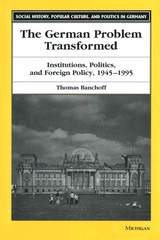
Many observers have underscored the reemergence of Germany as Europe's central power. After four decades of division, they contend, Germany is once again fully sovereign; without the strictures of bipolarity, its leaders are free to define and pursue national interests in East and West. From this perspective, the reunified Germany faces challenges not unlike those of its unified predecessor a century earlier.
The German Problem Transformed rejects this formulation. Thomas Banchoff acknowledges post-reunification challenges, but argues that postwar changes, not prewar analogies, best illuminate them. The book explains the transformation of German foreign policy through a structured analysis of four critical postwar junctures: the cold war of the 1950s, the détente of the 1960s and 1970s, the new cold war of the early 1980s, and the post-cold war 1990s. Each chapter examines the interaction of four factors--international structure and institutions, foreign policy ideas, and domestic politics--in driving the direction of German foreign policy at a key turning point.
This book will be of interest to scholars and students of German history, German politics, and European international relations, as well as policymakers and the interested public.
Thomas Banchoff is Assistant Professor of Government, Georgetown University.

Contributors. Kendall L. Baker, Karl H. Cerny, David P. Conradt, Arthur B. Gunlicks, Alice McGillivray, Peter H. Merkl, Ferdinand Muller-Rommel, Helmut Norpoth, Richard M. Scammon, Donald Schoonmaker, Christian Soe
A new Germany has come of age, as democratic, sophisticated, affluent, and modern as any other western nation. This remarkable transition in little more than a generation is the central theme of Germany Transformed. Here all the old stereotypes and conclusions are challenged and new research is marshalled to provide a model for an advanced democratic republic.
Kendall Baker, Russell Dalton, and Kai Hildebrandt, working with massive national election returns from 1953 onward, explain the Old Politics of the postwar period, which was based on the “economic miracle” and the security needs of West Germany, and the shift in the past decade to the New Politics, which emphasizes affluence, leisure, the quality of life, and international accommodation. But more than elections are examined. Rather, the authors delineate the transvaluation of the German civic culture as democracy became embedded in the nation’s institutions, political ways, party structures, and citizen interest in governance. By the 1970s the quiescent German of Prussia, the Empire, and the 1930s had become the active and aware democratic westerner.
This is among the most important books about West Germany written since the late 1950s, when the nation, devastated by war and rebuilding its economy and political life, was still struggling with the possibilities of democracy. It is a political history, recounted in enormous detail and with methodological precision, that will change perceptions about Germany and align them with realities. Germany is now an integrated part of a democratic western community of nations, and an understanding of its true condition not only illuminates better the staunch European identity but also is bound to have an impact on American policy.
How does a country reconstitute itself as a functioning democracy after a period of dictatorship? The new community may execute, imprison, or temporarily disenfranchise some citizens, but it will be unable to exclude all who supported the fallen regime. Political reconciliation must lay the groundwork for political trust. Democracy offers the compromised--and many who were more than just compromised--a second chance.
In this new book, Anne Sa'adah explores twentieth-century Germany's second chances. Drawing on evidence from intellectual debates, trials, literary works, controversies about the actions of public figures, and partisan competition, Sa'adah analyzes German responses to the problem of reconciliation after 1945 and again after 1989. She depicts the frustrations, moral and political ambiguities, and disappointments inherent to even successful processes of democratization. She constantly underscores the difficult trade-off between achieving a modicum of justice and securing the legitimacy and stability of the new regime. A strategy of reconciliation emphasizing outward conformity to democratic norms and behavior, she argues, has a greater chance of sustaining a new and fragile democracy than do more direct attempts to punish past misdeeds and alter people's inner convictions.
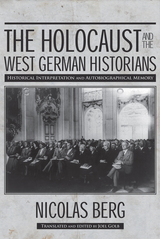
This English-language translation is also a shortened and reorganized edition, which includes a new introduction by Berg reviewing and commenting on the response to the German editions. Notably, in this American edition, discussion of historian Joseph Wulf and his colleague and fellow Holocaust survivor Léon Poliakov has been united in one chapter. And special care has been taken to make clear to English speakers the questions raised about German historiographical writing. Translator Joel Golb comments, "From 1945 to the present, the way historians have approached the Holocaust has posed deep-reaching problems regarding choice of language. . . . This book is consequently as much about language as it is about facts."
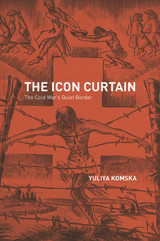
Yuliya Komska transports readers to the western edge of the Bohemian Forest, one of Europe’s oldest borderlands, where in the 1950s civilians set out to shape the so-called prayer wall. A chain of new and repurposed pilgrimage sites, lookout towers, and monuments, the prayer wall placed two long-standing German obsessions, forest and border, at the heart of the century’s most protracted conflict. Komska illustrates how civilians used the prayer wall to engage with and contribute to the new political and religious landscape. In the process, she relates West Germany’s quiet sylvan periphery to the tragic pitch prevalent along the Iron Curtain’s better-known segments.
Steeped in archival research and rooted in nuanced interpretations of wide-ranging cultural artifacts, from vandalized religious images and tourist snapshots to poems and travelogues, The Icon Curtain pushes disciplinary boundaries and opens new perspectives on the study of borders and the Cold War alike.
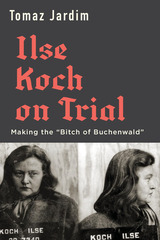
An authoritative reassessment of one of the Third Reich’s most notorious war criminals, whose alleged sexual barbarism made her a convenient scapegoat and obscured the true nature of Nazi terror.
On September 1, 1967, one of the Third Reich’s most infamous figures hanged herself in her cell after nearly twenty-four years in prison. Known as the “Bitch of Buchenwald,” Ilse Koch was singularly notorious, having been accused of owning lampshades fabricated from skins of murdered camp inmates and engaging in “bestial” sexual behavior. These allegations fueled a public fascination that turned Koch into a household name and the foremost symbol of Nazi savagery. Her subsequent prosecution resulted in a scandal that prompted US Senate hearings and even the intervention of President Truman.
Yet the most sensational atrocities attributed to Koch were apocryphal or unproven. In this authoritative reappraisal, Tomaz Jardim shows that, while Koch was guilty of heinous crimes, she also became a scapegoat for postwar Germans eager to distance themselves from the Nazi past. The popular condemnation of Koch—and the particularly perverse crimes attributed to her by prosecutors, the media, and the public at large—diverted attention from the far more consequential but less sensational complicity of millions of ordinary Germans in the Third Reich’s crimes.
Ilse Koch on Trial reveals how gendered perceptions of violence and culpability drove Koch’s zealous prosecution at a time when male Nazi perpetrators responsible for greater crimes often escaped punishment or received lighter sentences. Both in the international press and during her three criminal trials, Koch was condemned for her violation of accepted gender norms and “good womanly behavior.” Koch’s “sexual barbarism,” though treated as an emblem of the Third Reich’s depravity, ultimately obscured the bureaucratized terror of the Nazi state and hampered understanding of the Holocaust.
The collective memories of Nazism that developed in postwar Germany have helped define a new paradigm of memory politics. From Europe to South Africa and from Latin America to Iraq, scholars have studied the German case to learn how to overcome internal division and regain international recognition.
In Pursuit of German Memory: History, Television, and Politics after Auschwitz examines three arenas of German memory politics—professional historiography, national politics, and national public television—that have played key roles in the reinvention of the Nazi past in the last sixty years. Wulf Kansteiner shows that the interpretations of the past proposed by historians, politicians, and television producers reflect political and generational divisions and an extraordinary concern for Germany's image abroad. At the same time, each of these theaters of memory has developed its own dynamics and formats of historical reflection.
Kansteiner’s analysis of the German scene reveals a complex social geography of collective memory. In Pursuit of German Memory underscores the fact that German memories of Nazism, like many other collective memories, combine two seemingly contradictory qualities: They are highly mediated and part of a global exchange of images and story fragments but, at the same time, they can be reproduced only locally, in narrowly circumscribed networks of communication.
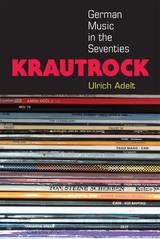
Among other topics, individual chapters of the book focus on the redefinition of German identity in the music of Kraftwerk, Can, and Neu!; on community and conflict in the music of Amon Düül, Faust, and Ton Steine Scherben; on “cosmic music” and New Age; and on Donna Summer’s and David Bowie’s connections to Germany. Rather than providing a purely musicological or historical account, Krautrock discusses the music as being constructed through performance and articulated through various forms of expressive culture, including communal living, spirituality, and sound.
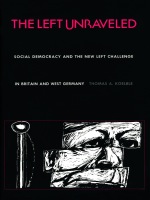
By focusing on the established parties rather than on external developments, Koelble departs from conventional methodology regarding the fortunes of political parties. In examining the fundamental processes of decision making and coalition building within the SPD and the Labour Party, he argues that it is the organizational structures within parties that shape political results by setting limits, creating opportunities, and determining strategies.
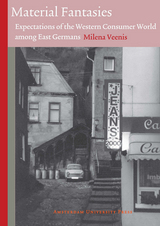
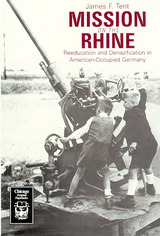
For this meticulously researched study, James F. Tent has drawn on a wealth of recently declassified documents and on numerous personal interviews with veterans of the Occupation. He brings to life not only the dilemmas American officials faced in balancing the need for a political purge against the need to rehabilitate a disrupted society but also the paradoxes involved in a democracy's attempt to impose its ideals on another people. His book chronicles the dedicated work of many Americans; it also illuminates America's Occupation experience as a whole.
Nahum Goldmann (1895-1982) was a major Zionist figure for the last half-century and the chief architect of the pact pledging West Germany to pay reparations to Israel and to individual Jews for acts committed during the Nazi regime. He was co-founder of the Eschkol Publishing House in Berlin and was co-publisher of the Encyclopedia Judaica, the only major Jewish encyclopedia published in Germany.
Patai’s study is the first to explore this brilliant, often irritating, and enormously successful Jewish politician and diplomat. Goldmann represented no government, yet he effected important international change. The book discusses Goldmann’s involvement with the partition controversy which led to the establishment of Israel, West German reparation payments amounting to over $36 billion, and a series of attempts to meet with Egyptian President Nasser in hopes of bringing peace to the Middle East.
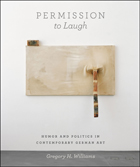
Permission to Laugh explores the work of three generations of German artists who, beginning in the 1960s, turned to jokes and wit in an effort to confront complex questions regarding German politics and history. Gregory H. Williams highlights six of them—Martin Kippenberger, Isa Genzken, Rosemarie Trockel, Albert Oehlen, Georg Herold, and Werner Büttner—who came of age in the mid-1970s in the art scenes of West Berlin, Cologne, and Hamburg. Williams argues that each employed a distinctive brand of humor that responded to the period of political apathy that followed a decade of intense political ferment in West Germany.

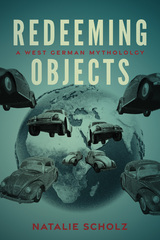
Postwar advertising, film, and print culture sought to divest mass-produced goods—such as the Volkswagen and modern interiors—of their fascist legacies. But Scholz demonstrates that postwar representations were saturated with unacknowledged references to the Nazi past. Drawing on a vast array of popular and highbrow publications and films, Redeeming Objects adds a new perspective to debates about postwar reconstruction, memory, and consumerism.
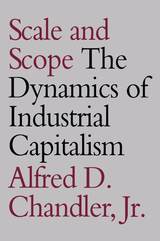
Scale and Scope is Alfred Chandler’s first major work since his Pulitzer Prize–winning The Visible Hand. Representing ten years of research into the history of the managerial business system, this book concentrates on patterns of growth and competitiveness in the United States, Germany, and Great Britain, tracing the evolution of large firms into multinational giants and orienting the late twentieth century’s most important developments.
This edition includes the entire hardcover edition with the exception of the Appendix Tables.
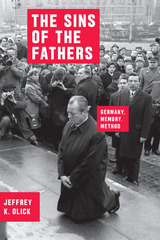
Nowhere has this precarious balance been more potent, or important, than in the Federal Republic of Germany, where the devastation and atrocities of two world wars have weighed heavily in virtually every moment and aspect of political life. The Sins of the Fathers confronts that difficulty head-on, exploring the variety of ways that Germany’s leaders since 1949 have attempted to meet this challenge, with a particular focus on how those approaches have changed over time. Jeffrey K. Olick asserts that other nations are looking to Germany as an example of how a society can confront a dark past—casting Germany as our model of difficult collective memory.
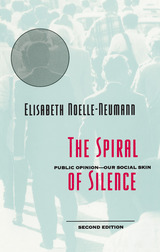
For this second edition, Noelle-Neumann has added three new chapters: the first discusses new discoveries in the history of public opinion; the second continues the author's efforts to construct a comprehensive theory of public opinion, addressing criticisms and defenses of her "spiral of silence" theory that have appeared since 1980; the third offers a concise and updated summary of the book's arguments.
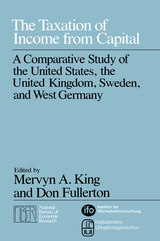

Combining tight prose with a compulsive delight in detail, Parei’s second novel in English presents a dynamic portrait of the West German soul from World War II through the German Autumn of 1977.

READERS
Browse our collection.
PUBLISHERS
See BiblioVault's publisher services.
STUDENT SERVICES
Files for college accessibility offices.
RECENTLY PUBLISHED


UChicago Accessibility Resources
home | accessibility | search | about | contact us
BiblioVault ® 2001 - 2024
The University of Chicago Press