
 A SCHOLARLY BOOK REPOSITORY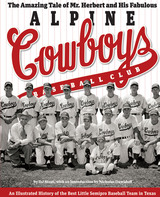
Back in the 1940s and 1950s, almost every small town in America had a baseball team. Most players were simply local heroes with a local following, but a few teams achieved fame far beyond their region. The Alpine Cowboys—despite being based in Texas's remote, sparsely populated Big Bend country—became a star in the firmament of semi-pro baseball. Lavishly underwritten by a wealthy rancher with a passion not only for baseball but even more for helping young men get a good start in life, the Cowboys played on a "field of dreams" whose facilities rivaled those of professional ballparks. Many Cowboys went on to play in the big leagues, and several pro teams, including the Pittsburgh Pirates, Chicago White Sox, and St. Louis Browns, came to play exhibition games at Kokernot Field.
The story of Herbert Kokernot Jr. and his Alpine Cowboys is a legend among baseball aficionados, but until now it has never been the subject of a book. DJ Stout, son of former Cowboys player Doyle Stout, presents a hall-of-fame-worthy collection of photographs, memorabilia, and reminiscences from Alpine Cowboys players, family members, and fans to capture fifteen years (1946–1961) of baseball at its finest. Nicholas Dawidoff's introduction, originally published in Sports Illustrated, tells the fascinating tale of "Mr. Herbert" and his determination to build a baseball team and ballpark that deserved to carry his ranch's 06 brand.
One of the most heartwarming episodes in the annals of the game, The Amazing Tale of Mr. Herbert and His Fabulous Alpine Cowboys is a fitting tribute to a man, a team, and a ballpark.
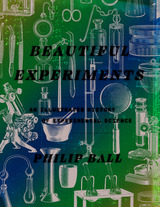
Featuring two hundred color plates, this history of the craft of scientific inquiry is as exquisite as the experiments whose stories it shares.
This illustrated history of experimental science is more than just a celebration of the ingenuity that scientists and natural philosophers have used throughout the ages to study—and to change—the world. Here we see in intricate detail experiments that have, in some way or another, exhibited elegance and beauty: in their design, their conception, and their execution. Celebrated science writer Philip Ball invites readers to marvel at and admire the craftsmanship of scientific instruments and apparatus on display, from the earliest microscopes to the giant particle colliders of today. With Ball as our expert guide, we are encouraged to think carefully about what experiments are, what they mean, and how they are used. Ranging across millennia and geographies, Beautiful Experiments demonstrates why “experiment” remains a contested notion in science, while also exploring how we came to understand the way the world functions, what it contains, and where the pursuit of that understanding has brought us today.
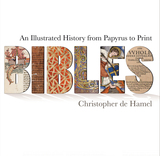
A unique visual history of the world’s best-selling book of all time, Bibles provides a rich snapshot of the biblical bookmaking tradition through images from fifty rare and important Bibles. As the captivating and colorful images collected here reveal, in many ways the history of the Bible mirrors the history of the book and publishing.
Presented chronologically, the Bibles provide a fascinating look into the book making techniques and characteristics of their time. From the fragile papyrus fragments of the ancient world to medieval illuminated manuscripts and glorious modern printed editions, each image is accompanied by a caption which explains its particular significance. In addition, each chapter includes a short introduction that contextualizes each book within its time period. Featuring many unusual examples—some of which have never been illustrated in print before—Bibles includes many of the great biblical texts of the Eastern and Western traditions, including the Magdalen Papyrus, the Laudian Acts, the Anglo-Saxon Exodus, St Margaret’s Gospel-book, the Douce Apocalypse, the Bible Moralisée (MS. Bodley 270b), the Kennicott Bible, the Guttenberg Bible, and the King James Bible.
Drawing exclusively from one of the finest collections of Bibles in the world, which is held at the Bodleian Library at Oxford University, this book tells the remarkable story of the development of the Bible across media, language, and provenance.

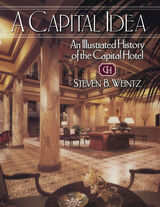
The Capital Hotel of Little Rock, Arkansas, is uniquely beautiful, with its cast-iron façade and marble lobby, its high-ceilinged rooms, and its rich history. Since its opening in 1876, it has been the stage for the struggles, schemes, and dreams of generations of politicians, debutantes, businesspeople, and newlyweds. A wide variety of owners and visionaries have shaped the hotel’s fortunes, including the Yankee entrepreneur who raised its walls, the Italian immigrant family who kept it going in its worst days, the architect who envisioned new life in its venerable bones, and the financiers and craftsmen who brought the Capital to its current glory as a luxury hotel.
The story of the Capital Hotel is also the story of Little Rock and of many American cities: built in the commercial boom of the 1870s, in full flower at the turn of the century—then battered by the Depression, optimistic in the postwar era, decrepit by the late 1960s, rejuvenated in the 1980s and 2000s, and now thriving today.
This lavishly illustrated volume—recently updated to celebrate the hotel’s 150th anniversary—traces the building’s lively history, from its origins as a commercial hub to its spectacular renovation into a jewel of downtown Little Rock.
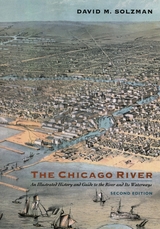
The river is indeed the soul of the city—it runs through the heart of downtown, and it is a vehicle for both pleasure and the industry that keeps Chicago humming. With The Chicago River, Solzman has succeeded in writing an encyclopedic work—at once guidebook and history—that explores the river’s physical character and natural history. Examining the river’s past, contemplating its present, and forecasting its future, Solzman draws on his unparalleled knowledge to point out places of scientific and historic interest—involving everything from infamous murder cases to invasive zebra mussels. The book’s 200 photographs and maps perfectly complement Solzman’s vivid prose, leading readers on a visual journey as sinuous as the river it celebrates—a journey interspersed with plenty of river lore, facts, and literary quotations.
Solzman, a veteran Chicago River tour guide, has also compiled a diverse collection of easy and enjoyable tours for anyone who wants to experience the river by foot, boat, canoe, or car. And he provides an appendix that lists river-related organizations, museums, tours, and riverfront restaurants and clubs.
With practical tips, evocative language, and an astonishing array of anecdotes, TheChicago River is the most comprehensive guide to the river and its waterways, the perfect companion for everyone from the active river enthusiast to the armchair traveler.

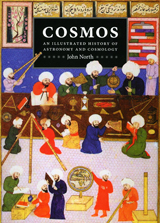
Organizing his history chronologically, North begins by examining Paleolithic cave drawings that clearly chart the phases of the moon. He then investigates scientific practices in the early civilizations of Egypt, Greece, China, and the Americas (among others), whose inhabitants developed sophisticated methods to record the movements of the planets and stars. Trade routes and religious movements, North notes, brought these ancient styles of scientific thinking to the attention of later astronomers, whose own theories—such as Copernicus’ planetary theory—led to the Scientific Revolution.
The work of master astronomers, including Ptolemy, Galileo, Kepler, and Newton, is described in detail, as are modern-day developments in astrophysics, such as the advent of radio astronomy, the brilliant innovations of Einstein, and the many recent discoveries brought about with the help of the Hubble telescope. This new edition brings North’s seminal book right up to the present day, as North takes a closer look at last year’s reclassification of Pluto as a “dwarf” planet and gives a thorough overview of current research.
With more than two hundred illustrations and a comprehensive bibliography, Cosmos is the definitive history of astronomy and cosmology. It is sure to find an eager audience among historians of science and astronomers alike.

Death in England provides the first ever social history of death-from the earliest times to Diana, Princess of Wales. As we discard the taboos surrounding death, this book charts the fascinating story of how people have coped with this fundamental aspect of their daily lives.
Peter C. Jupp and Clare Gittings reveal how attitudes, practices, and beliefs about death have undergone constant change, as well as how, why, and at what ages people died. Examining how death touches all aspects of society, they cover topics such as plagues and violence; wills and deathbeds; funerals and memorials; and beliefs and bereavement. This wide-ranging analysis is lavishly illustrated with photographs and drawings, their diversity reflecting the breadth of issues and periods covered.
The contributors are all specialists in their own fields, including archaeology, history, and sociology. The ten chapters cover: earliest times to the Bronze Age; the Iron and Roman Ages; the Early Middle Ages; from the advent of Purgatory to the Black Death; the Later Middle Ages and the Reformation; from Elizabeth I to the Civil War; the "Age of Decency"; the Enlightenment; the Victorian era; and the twentieth century.
With the pervasive depiction of death through the media and the ensuing public awareness of this topic, Death in England will be of interest not only to the general reader but also to students of archaeology, art, history, medicine, and sociology.

Published to commemorate the Deering Library’s 75th anniversary, this book explores the Deering and McCormick families, who funded the project; the building’s distinctive Collegiate Gothic architecture; its lore as a campus institution; and its role in the evolution of Northwestern University Library into one of the country’s most prominent research libraries. Richly illustrated, it is both an authoritative account of a landmark library and a rich keepsake for Northwestern alumni.
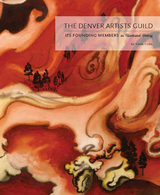
In 1928, the newly organized Denver Artists Guild held its inaugural exhibition in downtown Denver. Little did the participants realize that their initial effort would survive the Great Depression and World War II—and then outlive all of the group’s fifty-two charter members.
The guild’s founders worked in many media and pursued a variety of styles. In addition to the oils and watercolors one would expect were masterful pastels by Elsie Haddon Haynes, photographs by Laura Gilpin, sculpture by Gladys Caldwell Fisher and Arnold Rönnebeck, ceramics by Anne Van Briggle Ritter and Paul St. Gaudens, and collages by Pansy Stockton. Styles included realism, impressionism, regionalism, surrealism, and abstraction. Murals by Allen True, Vance Kirkland, John E. Thompson, Louise Ronnebeck, and others graced public and private buildings—secular and religious—in Colorado and throughout the United States. The guild’s artists didn’t just contribute to the fine and decorative arts of Colorado; they enhanced the national reputation of the state.
Then, in 1948, the Denver Artists Guild became the stage for a great public debate pitting traditional against modern. The twenty-year-old guild split apart as modernists bolted to form their own group, the Fifteen Colorado Artists. It was a seminal moment: some of the guild’s artists became great modernists, while others remained great traditionalists.
Enhanced by period photographs and reproductions of the founding members’ works, The Denver Artists Guild chronicles a vibrant yet overlooked chapter of Colorado’s cultural history. The book includes a walking tour of guild members’ paintings and sculptures viewable in Denver and elsewhere in Colorado, by Leah Naess and author Stan Cuba.
In honor of the book’s release, the Byers-Evans House Gallery will showcase a collection of founding guild members’ works starting June 26, 2015. The exhibit, also titled The Denver Artists Guild: Its Founding Members, contains paintings from artists such as the famed Paschal Quackenbush, Louise Ronnebeck, Albert Byron Olson, Elisabeth Spalding, Waldo Love and Vance Kirkland. The show will be on display through September 26, 2015.
Winner of the 2017 New Jersey Studies Academic Alliance Author Award
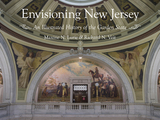
See New Jersey history as you read about it! Envisioning New Jersey brings together 650 spectacular images that illuminate the course of the state’s history, from prehistoric times to the present. Readers may think they know New Jersey’s history—the state’s increasing diversity, industrialization, and suburbanization—but the visual record presented here dramatically deepens and enriches that knowledge.
Compiled by the authors of New Jersey: A History of the Garden State, this volume is intended as an illustrated companion to that earlier volume. Envisioning New Jersey also stands on its own because essays synthesizing each era accompany the illustrations. A fascinating gold mine of images from the state’s past, Envisioning New Jersey is the first illustrated book on the Garden State that covers its complete history, capturing the amazing transformation of New Jersey over time.
View sample pages (http://issuu.com/rutgersuniversitypress/docs/lurie_veit_envisioning_sample)
Thanks to the New Jersey Historical Commission, the New Jersey Council for the Humanities, and generous individual donors for making this project possible.


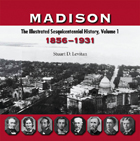
This engaging illustrated history, full of photographs, maps, and bird’s-eye views, captures Madison’s early history from its first days as a city to the Great Depression. Biographical vignettes tell the stories of early movers and shakers in the city. The volume includes many archival images of Madison that have never been published or have not been seen for a century or more.
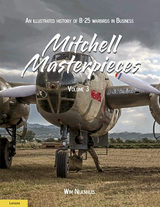
After the Second World War, the B-25 got a role in civil aviation. Many airplanes were stripped of their armament and other military equipment and often came through auctions in the civilian market. They came in private hands and were deployed for transportation of personnel or goods, for training, fire fighting, agricultural spraying of other purposes. Some were converted into a luxury business plane and some were used in the film industry.
This book should serve as a general view of the companies, organisations and owners and the B-25s they flew. Moreover, the book would not be complete if no attention was paid to the civilian B-25s in the various museums and the warbird circuit. All this is described in detail and provided with about 750 pictures, many of which are in full colour.
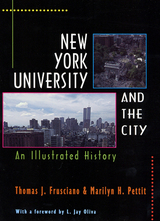
In New York University and the City, Thomas J. Frusciano and Marilyn H. Pettit situate the history of a unique urban university within the context of the social, political, and economic history of New York City. The authors trace the movement northward on Manhattan Island of both university and city, from the commercial hustle and bustle around City Hall, where the first classes were held in 1832, to the rural environs of Greenwich Village, and ultimately even farther north in 1894 to the undergraduate extension on the "secluded hilltop" of University Heights in the Bronx.
Vividly illustrated with both historical and contemporary images, New York University and the City explores various themes in the history of higher education and how NYU responded to changes in urban demographics, curriculum demands, and physical space during critical periods in the city's development. The relationship between university and city is further examined through extensive biographical portraits of the many historical personalities who made contributions to the development of both city and university.
The founding of New York University in 1831 is a watershed in the history of higher education in the United States. Albert Gallatin, former secretary of the treasury, led a group that proposed the creation of an institution of higher learning in New York City that would "correspond with the spirit and wants of the age and country," a nondenominational institution that would enlarge the opportunities of education for those qualified and inclined. NYU was expected to educate not only gentlemen scholars but also the sons of the great commercial metropolis. It also reflected and symbolized the aspirations of the city. By 1931, NYU was the nation's largest private university. Frusciano and Pettit chronicle the university's growth and struggles to its ultimate position as one of the most prestigious academic research institutions in the world.
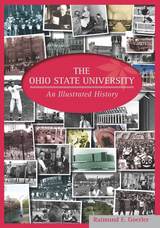
Raimund E. Goerler, acclaimed archivist and historian, has written the definitive guidebook to the history of The Ohio State University, one of the world's largest universities and a prominent land-grant institution. Using a topical strategy—ranging widely through critical events in OSU's history, vignettes of prominent alumni, and stories of well known campus buildings, historic sites, presidents, student life, traditions, and athletics—The Ohio State University: An Illustrated History is the first one-volume history of the University to appear in more than fifty years.
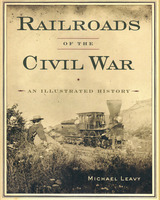
The Photographic Record of the First Wide-Scale Mechanization of War
Over the course of the first half of the nineteenth century, America would find itself following two increasingly divergent tracks: an industrialized North and an agricultural South. By 1860 railroads were firmly entrenched in our culture, reshaping our cities and steering us through the industrial age towards worldwide prominence. From sleepy post towns to the largest east coast cities, the distant hooting of the locomotive whistle drew ever closer and louder, filling listeners with fascination while brightening the eyes of profit-driven industrialists. But this admirable invention, lavishly adorned in brass and iron trimmings, was about to take on a new and deadly role. America’s regional differences would result in a spectacular collision over slavery, and between 1861–1865, the nation fought a savage war. The “iron horse” became a major weapon in the first war fully dependent on railroads. Moreover railroads would escalate and prolong the war, leading to its terrible carnage. Trains were used to move troops rapidly and over great distances, completely changing military strategy. Trains were also used as mobile artillery, armed with large-caliber cannons that could pound cities and fortifications. Trains were a crucial means for supplying the armies on both sides, and it was the severing of the railway lines providing food and munitions to the Army of Northern Virginia that led to Robert E. Lee’s surrender at Appomattox Court House.
In Railroads of the Civil War: An Illustrated History, Michael Leavy uses compelling period photographs and drawings and a rich narrative to reevaluate and illuminate the role of railroads in the Civil War. In addition to identifying details about the various trains and ancillary equipment and buildings in the illustrations, the author explains how trains influenced the outcome of battles and the war in general.
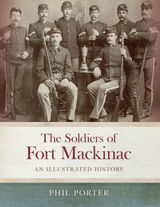
Superior Achievement, Illinois State Historical Society, 2013
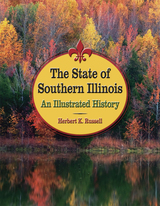
In The State of Southern Illinois: An Illustrated History, Herbert K. Russell offers fresh interpretations of a number of important aspects of Southern Illinois history. Focusing on the area known as “Egypt,” the region south of U.S. Route 50 from Salem south to Cairo, he begins his book with the earliest geologic formations and follows Southern Illinois’s history into the twenty-first century. The volume is richly illustrated with maps and photographs, mostly in color, that highlight the informative and straightforward text.
Perhaps most notable is the author’s use of dozens of heretofore neglected sources to dispel the myth that Southern Illinois is merely an extension of Dixie. He corrects the popular impressions that slavery was introduced by early settlers from the South and that a majority of Southern Illinoisans wished to secede. Furthermore, he presents the first in-depth discussion of twelve pre–Civil War, free black communities located in the region. He also identifies the roles coal mining, labor violence, gangsters, and the media played in establishing the area’s image. He concludes optimistically, unveiling a twenty-first-century Southern Illinois filled with myriad attractions and opportunities for citizens and tourists alike.
The State of Southern Illinois is the most accurate all-encompassing volume of history on this unique area that often regards itself as a state within a state. It offers an entirely new perspective on race relations, provides insightful information on the cultural divide between north and south in Illinois, and pays tribute to an often neglected and misunderstood region of this multidimensional state, all against a stunning visual backdrop.
Published by the University of Cincinnati Press
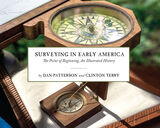
In Surveying in Early America: The Point of Beginning, An Illustrated History, award-winning photographer Dan Patterson and American historian Clinton Terry vividly examine the profession of surveying in the eighteenth century. Retracing the steps Washington and other surveyors took to map the Ohio River Valley, readers are immersed in historically accurate details of early surveying techniques and practices. Terry's narrative describes the practice of land and survey measurement—methods that did not substantially change until the invention of GPS technology 200 years later. Over 100 full color photographs exclusively shot for the book depict authentic and historically accurate reproductions of tools along with early American reenactors to provide an interpretive look at surveying as a primary means to building the American nation. Working with the Department of the Geographer, Patterson restages actual expeditions, brilliantly displaying the techniques and instruments Washington would have employed 260 years ago. Through the lens of Patterson's camera and Terry's accompanying narrative, readers see what Washington saw as he learned his trade, explored the vast American wilderness, and occasionally laid personal claim to great expanses of land along the way.

Explore the scientific crescendo of the Manhattan Project through newly contextualized and never-before-seen photographs from Los Alamos National Laboratory’s legacy collections—some just declassified.
Twenty-one days before the world learned of the atomic bomb through its wartime use against Japan, a team of scientists led by J. Robert Oppenheimer detonated the first nuclear device on a remote stretch of New Mexico desert, in an operation codenamed Trinity. Both a military proof test and an elaborate, well-documented scientific experiment, the Trinity shot on July 16, 1945, brought under the control of humankind a new fire: the energy of the atom.
In this expertly curated journey through the beginning of the atomic age, hundreds of carefully restored photographs, still frames, and once-secret documents bring new and vivid focus to a watershed moment in science and history. Written for all to understand, Trinity weaves steadily through subplots and surprises set against the evolving, looming backdrop of a world at war. It shadows the humans and hardware at work in the rugged landscape of the test operation; dissects a fiery mushroom cloud unfurling frame by frame, frozen in time; and follows soldiers, scientists, and two atomic bombs across the Pacific Ocean to Tinian Island, onto the strike planes Enola Gay and Bockscar, and to Hiroshima and Nagasaki, the two Japanese cities devastated on August 6 and 9, 1945.
Inviting readers into the clandestine spaces where a new era began—behind the cameras, the bunker doors, the gates and guard posts—Trinity strives, grieves, celebrates, and ponders. It artfully captures that extraordinary summer when scientists invented urgently in the waning months of the “before”—and the tension between violence and progress, hope and fear, that persists into the after.
READERS
Browse our collection.
PUBLISHERS
See BiblioVault's publisher services.
STUDENT SERVICES
Files for college accessibility offices.
RECENTLY PUBLISHED





UChicago Accessibility Resources
home | accessibility | search | about | contact us
BiblioVault ® 2001 - 2026
The University of Chicago Press