
 A SCHOLARLY BOOK REPOSITORY
In a major new book, Lucian W. Pye reconceptualizes Asian political development as a product of cultural attitudes about power and authority. He contrasts the great traditions of Confucian East Asia with the Southeast Asian cultures and the South Asian traditions of Hinduism and Islam, and explores the national differences within these larger civilizations.
Breaking with modern political theory, Pye believes that power differs profoundly from one culture to another. In Asia the masses of the people are group-oriented and respectful of authority, while their leaders are more concerned with dignity and upholding collective pride than with problem-solving. As culture decides the course of political development, Pye shows how Asian societies, confronted with the task of setting up modern nation-states, respond by fashioning paternalistic forms of power that satisfy their deep psychological craving for security. This new paternalism may appear essentially authoritarian to Western eyes, but Pye maintains that it is a valid response to the people’s needs and will ensure community solidarity and strong group loyalties. He predicts that we are certain to see emerging from Asia’s accelerating transformation some new version of modern society that may avoid many of the forms of tension common to Western civilization but may also produce a whole new set of problems.
This book revitalizes Asian political studies on a plane that comprehends the large differences between Asia and the West and at the same time is sensitive to the subtle variations among the many Asian cultures. Its comparative perspective will provide indispensable insights to anyone who wishes to think more deeply about the modern Asian states.
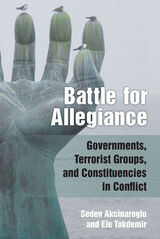
Using a multimethod approach based on exclusive interviews and focus groups from Turkey and large N original data from around the world, Seden Akcinaroglu and Efe Tokdemir present the first systematic empirical analysis of the ways in which terrorist groups, the government, and the citizens relate to each other in a triadic web of action. They study the nonviolent actions of terrorist groups toward their constituencies, the nonviolent actions of governments toward terrorists, and the nonviolent actions of governments toward the terrorist group’s constituencies. By investigating the causes, targets, and consequences of accommodative actions, this book sheds light on an important, but generally ignored, aspect of terrorism: interactive nonviolent strategies.
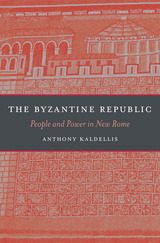
Although Byzantium is known to history as the Eastern Roman Empire, scholars have long claimed that this Greek Christian theocracy bore little resemblance to Rome. Here, in a revolutionary model of Byzantine politics and society, Anthony Kaldellis reconnects Byzantium to its Roman roots, arguing that from the fifth to the twelfth centuries CE the Eastern Roman Empire was essentially a republic, with power exercised on behalf of the people and sometimes by them too. The Byzantine Republic recovers for the historical record a less autocratic, more populist Byzantium whose Greek-speaking citizens considered themselves as fully Roman as their Latin-speaking “ancestors.”
Kaldellis shows that the idea of Byzantium as a rigid imperial theocracy is a misleading construct of Western historians since the Enlightenment. With court proclamations often draped in Christian rhetoric, the notion of divine kingship emerged as a way to disguise the inherent vulnerability of each regime. The legitimacy of the emperors was not predicated on an absolute right to the throne but on the popularity of individual emperors, whose grip on power was tenuous despite the stability of the imperial institution itself. Kaldellis examines the overlooked Byzantine concept of the polity, along with the complex relationship of emperors to the law and the ways they bolstered their popular acceptance and avoided challenges. The rebellions that periodically rocked the empire were not aberrations, he shows, but an essential part of the functioning of the republican monarchy.
Sharing a common focus on the interplay between constitutional identity and individual or group diversity, these essays offer challenging new insights on subjects ranging from universal constitutional norms and whether constitutional norms can be successfully transplanted between cultures to a consideration of whether constitutionalism affords the means to reconcile a diverse society’s quest for identity with its need to properly account for its differences; from the relation between constitution-making and revolution to that between collective interests and constitutional liberty and equality.
This collection’s broad scope and nontechnical style will engage scholars from the fields of political theory, social theory, international studies, and law.
Contributors. Andrew Arato, Aharon Barak, Jon Elster, George P. Fletcher, Louis Henkin, Arthur J. Jacobson, Carlos Santiago Nino, Ulrich K. Preuss, David A. J. Richards, Michel Rosenfeld, Dominique Rousseau, András Sajó, Frederick Schauer, Bernhard Schlink, M. M. Slaughter, Cass R. Sunstein, Ruti G. Teitel, Robin West
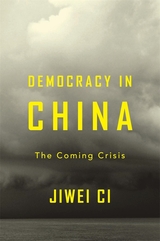
A respected Chinese political philosopher calls for the Communist Party to take the lead in moving China along the path to democracy before it is too late.
With Xi Jinping potentially set as president for life, China’s move toward political democracy may appear stalled. But Jiwei Ci argues that four decades of reform have created a mentality in the Chinese people that is just waiting for the political system to catch up, resulting in a disjunction between popular expectations and political realities. The inherent tensions in a largely democratic society without a democratic political system will trigger an unprecedented crisis of legitimacy, forcing the Communist Party to act or die.
Two crises loom for the government. First is the waning of the Communist Party’s revolutionary legacy, which the party itself sees as a grave threat. Second is the fragility of the next leadership transition. No amount of economic success will compensate for the party’s legitimacy deficit when the time comes. The only effective response, Ci argues, will be an orderly transition to democracy. To that end, the Chinese government needs to start priming its citizens for democracy, preparing them for new civil rights and civic responsibilities. Embracing this pragmatic role offers the Communist Party a chance to survive. Its leaders therefore have good reason to initiate democratic change.
Sure to challenge the Communist Party and stir debate, Democracy in China brings an original and important voice to an issue with far-reaching consequences for China and the world.

State fragility is a much-debated yet underinvestigated concept in the development and international security worlds. Based on years of research as part of the Country Indicators for Foreign Policy project at Carleton University, Exiting the Fragility Trap marks a major step toward remedying the lack of research into the so-called fragility trap. In examining the nature and dynamics of state transitions in fragile contexts, with a special emphasis on states that are trapped in fragility, David Carment and Yiagadeesen Samy ask three questions: Why do some states remain stuck in a fragility trap? What lessons can we learn from those states that have successfully transitioned from fragility to stability and resilience? And how can third-party interventions support fragile state transitions toward resilience?
Carment and Samy consider fragility’s evolution in three state types: countries that are trapped, countries that move in and out of fragility, and countries that have exited fragility. Large-sample empirical analysis and six comparative case studies—Pakistan and Yemen (trapped countries), Mali and Laos (in-and-out countries), and Bangladesh and Mozambique (exited countries)—drive their investigation, which breaks ground toward a new understanding of why some countries fail to see sustained progress over time.

With Ramos as a guide, we are not only dazzled by the trappings of power—the silk canopies, brocaded robes, and exploding fireworks—but are also witnesses to the public spectacles through which municipal councilmen consolidated local and imperial rule. By sponsoring a wide variety of carefully choreographed rituals, the municipal council made locals into audience, participants, and judges of the city’s tumultuous political life. Public rituals encouraged residents to identify with the Roman Catholic Church, their respective corporations, the Spanish Empire, and their city, but also provided arenas where individuals and groups could vie for power.
As Ramos portrays the royal oath ceremonies, funerary rites, feast-day celebrations, viceregal entrance ceremonies, and Holy Week processions, we have to wonder who paid for these elaborate rituals—and why. Ramos discovers and decodes the intense debates over expenditures for public rituals and finds them to be a central part of ongoing efforts of councilmen to negotiate political relationships. Even with the Spanish Crown’s increasing disapproval of costly public ritual and a worsening economy, Puebla’s councilmen consistently defied all attempts to diminish their importance.
Ramos innovatively employs a wealth of source materials, including council minutes, judicial cases, official correspondence, and printed sermons, to illustrate how public rituals became pivotal in the shaping of Puebla’s complex political culture.
Legality and Legitimacy is sure to provide a compelling reference point in contemporary debates over the challenges facing constitutional democracies today. In addition to Jeffrey Seitzer’s translation of the 1932 text itself, this volume contains his translation of Schmitt’s 1958 commentary on the work, extensive explanatory notes, and an appendix including selected articles of the Weimar constitution. John P. McCormick’s introduction places Legality and Legitimacy in its historical context, clarifies some of the intricacies of the argument, and ultimately contests Schmitt’s claims regarding the inherent weakness of parliamentarism, constitutionalism, and the rule of law.

At an unsettled time for liberal democracy, with global eruptions of authoritarian and arbitrary rule, here is one of the first full-fledged philosophical accounts of what makes governments legitimate.
What makes a government legitimate? The dominant view is that public officials have the right to rule us, even if they are unfair or unfit, as long as they gain power through procedures traceable to the consent of the governed. In this rigorous and timely study, Arthur Isak Applbaum argues that adherence to procedure is not enough: even a properly chosen government does not rule legitimately if it fails to protect basic rights, to treat its citizens as political equals, or to act coherently.
How are we to reconcile every person’s entitlement to freedom with the necessity of coercive law? Applbaum’s answer is that a government legitimately governs its citizens only if the government is a free group agent constituted by free citizens. To be a such a group agent, a government must uphold three principles. The liberty principle, requiring that the basic rights of citizens be secured, is necessary to protect against inhumanity, a tyranny in practice. The equality principle, requiring that citizens have equal say in selecting who governs, is necessary to protect against despotism, a tyranny in title. The agency principle, requiring that a government’s actions reflect its decisions and its decisions reflect its reasons, is necessary to protect against wantonism, a tyranny of unreason.
Today, Applbaum writes, the greatest threat to the established democracies is neither inhumanity nor despotism but wantonism, the domination of citizens by incoherent, inconstant, and incontinent rulers. A government that cannot govern itself cannot legitimately govern others.
In Guinea-Bissau, as elsewhere in Africa, there is a disjuncture between the central state and rural civil society. It is this significant and overlooked aspect of Guinea-Bissau’s political evolution—the continuing ability of civil society to evade and thwart state power—that is at the heart of Joshua B. Forrest’s Lineages of State Fragility.
Professor Forrest argues that despite European influences, the contemporary fragility of African states can be fully appreciated only by examining the indigenous social context in which these states evolved. Focusing on Guinea-Bissau, Forrest exposes the emergence of a strong and adaptable “rural civil society” that can be traced back to precolonial times.
Lineages of State Fragility analyzes the social, political, and military experiences of this rural civil society to account for the origins of Guinea-Bissau’s soft state. For example, Forrest identifies interethnic social and military practices that became entrenched in rural social structures and continued to evolve through the colonial period, enabling Guinea-Bissauans to resist state predation.
Lineages of State Fragility offers an unorthodox explanation of African politics by tracing the direct social links among the precolonial, colonial, and postcolonial periods and affirms the role of rural actors in determining present-day political outcomes.
Based on remarkably extensive research conducted in archives in Guinea-Bissau, Senegal, and Portugal, Lineages of State Fragility represents both a new approach to the region’s past and present and an important synthesis of the political analysis that has come before.

The nature of popular support is first considered in broad, theoretical terms, then from the standpoint of those agents most responsible for maintaining support in Canadian democracy, then as influenced by particular issues and policies, and finally as it affects and is affected by the separatist movement in Quebec.
In a series of stimulating essays, William E. Connolly explores the element of ambiguity in politics. He argues that democratic politics in a modern society requires, if it is to flourish, an appreciation of the ambiguous character of the standards and principles we cherish the most. Connolly’s work, lucidly, presented and intellectually challenging, will be of interest to students and scholars of political science, philosophy, rhetoric, and law, and to all whose interests include the connections between contemporary epistemological arguments and politics and, more broadly, between thought and language.
Connolly criticizes the ways in which contemporary politics extends normalization into various areas of modern existence. He argues, against this trend, for an approach that would provide relief from the rigid identity formations that result from normalization.
In supporting his thesis, Connolly shows how the imperative for growth must be relaxed if normalizing pressures are to be obviated. His, however, is not the familiar antigrowth argument; rather, he ties his thesis to his general antinormalization argument, asking how one could create an ethic that would sustain itself when the growth imperatives are relaxed. Connolly’s chapters on the work of other thinkers (including Michel Foucault, Jürgen Habermas, Richard Rorty, and Charles Taylor) are linked with his main theme, as he shows how various tendencies in the philosophy of the social sciences and in political theory aid and abed the normalizing tendency.
His analyses of Rorty and Taylor are especially important. Connolly shows the significance of antifoundationalism (Rorty’s contribution to the debate on epistemology), while providing a compelling critique both of Rorty’s stance and Taylor's alternative to it.
Especially important to Connolly’s thesis is the ontology on which it rests. He shows how the endorsement of an ontology of discordance within concord—a view that all systems of meaning impose order on that which was not designed to fit neatly within them—can support a more democratizing process. His final chapter, “Where the Word Breaks Off,” vindicates the ontology of discordance, which has governed the argument throughout the text.
Throughout these essays, Connolly builds a consistent argument for the politicalization of normalization, disclosing forms of normalization where others have seen unproblematic modes of communication and problem solving. Original in concept and bold in presentation, Connolly’s work will form the basis for considerable debate in the several disciplines it serves.
Decolonization after World War II led to a significant global increase in the number of states. Each new nation was born with high expectations. But these hopes were soon eroded by the ineffectiveness and capriciousness of many of the new regimes. In many states military juntas have become the order of the day, and even where juntas have not taken power, political differences have repeatedly degenerated into violent exchanges that do not readily lend themselves to political settlement. Not only the new states have suffered from these problems; indeed, political solutions to conflict have become depressingly conspicuous by their absence.
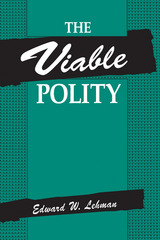
Against this background, the last decade has seen a resurgence of interest in evaluating the political capacity or strength of modern nation-states. In Power without Force, Robert Jackman argues that political capacity has two broad components: organizational age and legitimacy. Thus, it is essential to focus both on institutions conceived in organizational terms and the amount of compliance and consent that leaders are able to engender. The emphasis on each reflects the view that political life centers on the exercise of power, and that, unlike physical force, power is intrinsically relational. Although all states have he capability to inflict physical sanctions, their ability to exercise power is the key element of their political capacity.
Drawing on a wide range of studies from political science, sociology, and political economy, Power without Force redirects attention to the central issues of political capacity. By stressing that effective conflict resolution must be addressed in political terms, this volume underscores perennial issues of governance and politics that form the heart of comparative politics and political sociology.
A fresh exploration of apologetic material that pushes beyond form criticism
Andrew Knapp applies modern genre theory to seven ancient Near Eastern royal apologies that served to defend the legitimacy of kings who came to power under irregular circumstances. Knapp examines texts and inscriptions related to Telipinu, Hattusili III, David, Solomon, Hazael, Esarhaddon, and Nabonidus to identify transhistorical common issues that unite each discourse.
Features:
- Compares Hittite, Israelite, Aramean, Assyrian, and Babylonian apologies
- Examination of apologetic as a mode instead of a genre
- Charts and illustrations
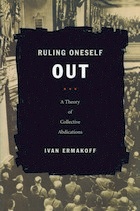
Ermakoff distinguishes several mechanisms of alignment in troubled and uncertain times and assesses their significance through a fine-grained examination of actors’ beliefs, shifts in perceptions, and subjective states. To this end, he draws on the analytical and methodological resources of perspectives that usually stand apart: primary historical research, formal decision theory, the phenomenology of group processes, quantitative analyses, and the hermeneutics of testimonies. In elaborating this dialogue across disciplinary boundaries, Ruling Oneself Out restores the complexity and indeterminate character of pivotal collective decisions and demonstrates that an in-depth historical exploration can lay bare processes of crucial importance for understanding the formation of political preferences, the paradox of self-deception, and the makeup of historical events as highly consequential.


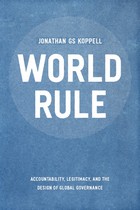
Dilemmas from climate change to financial meltdowns make it clear that global interconnectedness is the norm in the twenty-first century. As a result, global governance organizations (GGOs)—from the World Trade Organization to the Forest Stewardship Council—have taken on prominent roles in the management of international affairs. These GGOs create and promulgate rules to address a host of pressing problems. But as World Rule reveals, they struggle to meet two challenges: building authority despite limited ability to impose sanctions and maintaining legitimacy while satisfying the demands of key constituencies whose support is essential to a global rulemaking regime.
Through a novel empirical study of twenty-five GGOs, Jonathan GS Koppell provides a clearer picture of the compromises within and the competition among these influential institutions by focusing attention on their organizational design. Analyzing four aspects of GGO organization in depth—representation and administration, the rulemaking process, adherence and enforcement, and interest group participation—Koppell describes variation systemically, identifies patterns, and offers explanations that link GGO design to the fundamental challenge of accountability in global governance.
READERS
Browse our collection.
PUBLISHERS
See BiblioVault's publisher services.
STUDENT SERVICES
Files for college accessibility offices.
RECENTLY PUBLISHED






UChicago Accessibility Resources
home | accessibility | search | about | contact us
BiblioVault ® 2001 - 2025
The University of Chicago Press