
 A SCHOLARLY BOOK REPOSITORY
This immensely readable introduction to animal acoustics explains not only how animals hear but why they listen. It is a unique blend of audition, auditory anatomy, physics of sound, and methods of psychophysics, combined with behavior, natural history, and evolution. The Acoustic Sense of Animals is ideal for graduate and undergraduate courses, and for professionals in fields such as sensory physiology and animal behavior.
In his broadly comparative approach, Stebbins explores the function of hearing for each animal in its particular ecological setting and the significance of communication for members of a species. He renders the evolution of hearing with special emphasis on the peripheral auditory system and basic auditory function. Although ample evidence is brought to bear, both from the laboratory and from field studies, the book is not burdened with excessive detail. The writing is crisp, and the references are tailored to those most useful for nonspecialists.
The Acoustic Sense of Animals covers a complex field with balance and clarity within a solid evolutionary framework. Equally important, it conveys the controversy and excitement that will motivate students.
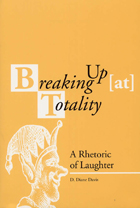
Rhetoric and composition theory has shown a renewed interest in sophistic countertraditions, as seen in the work of such "postphilosophers" as Jacques Derrida, Michel Foucault, and Hélène Cixous, and of such rhetoricians as Susan Jarratt and Steven Mailloux. As D. Diane Davis traces today’s theoretical interest to those countertraditions, she also sets her sights beyond them.
Davis takes a “third sophistics” approach, one that focuses on the play of language that perpetually disrupts the “either/or” binary construction of dialectic. She concentrates on the nonsequential third—excess—that overflows language’s dichotomies. In this work, laughter operates as a trope for disruption or breaking up, which is, from Davis’s perspective, a joyfully destructive shattering of our confining conceptual frameworks.
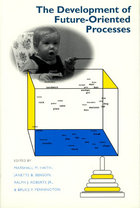
Following Marshall Haith's seminal studies on early infant anticipation, this collection begins with a survey of current knowledge about the early development of expectations. Addressing both the state of neural research in this field and the role of language and social context in the development of future orientation, the authors discuss the nature of planning in action, future orientation in humans and in nonhuman primates, and the development of intermediate and long-term expectations with regard to cognitive skills and scientific activity.
Combining developmental and cognitive perspectives, this volume will interest professionals in developmental psychology, child development, and neuropsychology.
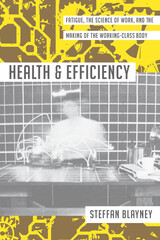
A new model of health emerged in Britain between 1870 and 1939. Centered on the working body, organized around the concept of efficiency, and grounded in scientific understandings of human labor, scientists, politicians, and capitalists of the era believed that national economic productivity could be maximized by transforming the body of the worker into a machine. At the core of this approach was the conviction that worker productivity was intimately connected to worker health.
Under this new “science of work,” fatigue was seen as the ultimate pathology of the working-class body, reducing workers’ capacity to perform continued physical or mental labor. As Steffan Blayney shows, the equation between health and efficiency did not go unchallenged. While biomedical and psychological experts sought to render the body measurable, governable, and intelligible, ordinary men and women found ways to resist the logics of productivity and efficiency imposed on them, and to articulate alternative perspectives on work, health, and the body.
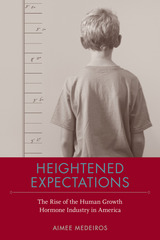
This book documents how the rise of modern capitalism and efforts to protect those most vulnerable to its harmful effects contributed to the social stigmatization of short statured children. Short boys bore the brunt of this discrimination by the mid-twentieth century, as cultural notions of masculinity deemed smallness a troubling trait in need of remedy. These boys became targets of growth hormone treatment, a trend accelerated by the development of effective HGH therapy in the late 1950s.
With a revisionist twist, Medeiros argues that HGH therapy was not plagued by a limited number of sources of the hormone but rather a difficult-to-access supply during the 1960s and 1970s. The advent of synthetic HGH remedied this situation. Therapy was available, however, only to those who could afford it. Very few could, which made short stature once again a mark of the underprivileged class.
Today, small boys with dreams of being taller remain the key customer base of the legitimate arm of the HGH industry. As gender and economic class disparities in treatment continue, some medical experts have alluded to patients’ parents as culprits of this trend. This book sheds light on how medicine’s attempt to make up for perceived physical shortcomings has deep roots in American culture.
Of interest to historians and scholars of medicine, gender studies, and disability studies, Heightened Expectations also offers much to policy makers and those curious about where standards and therapies originate.
As anyone who takes up a new sport quickly discovers, even basic athletic moves require high levels of coordination and control. Whether dribbling a basketball or hitting a backhand, limbs must be synchronized and bodies balanced, all with precise timing. But no matter how diligently we watch the pros or practice ourselves, the body’s inner workings remain invisible.
The Hidden Mechanics of Exercise reveals the microworld of the human body in motion, from the motor proteins that produce force, to the signaling molecules that activate muscles, to the enzymes that extract energy from nutrients. Christopher Gillen describes how biomolecules such as myosin, collagen, hemoglobin, and creatine kinase power our athletic movements. During exercise, these molecules dynamically morph into different shapes, causing muscles, tendons, blood, and other tissues to perform their vital functions. Gillen explores a wide array of topics, from how genetic testing may soon help athletes train more effectively, to how physiological differences between women and men influence nutrition. The Hidden Mechanics of Exercise tackles questions athletes routinely ask. What should we ingest before and during a race? How does a hard workout trigger changes in our muscles? Why does exercise make us feel good?
Athletes need not become biologists to race in a triathlon or carve turns on a snowboard. But Gillen, who has run ten ultramarathons, points out that athletes wishing to improve their performance will profit from a deeper understanding of the body’s molecular mechanisms.
In this book, Alexander offers the first major intellectual history of kinaesthetic knowing and its influence on the formation of modern art and architecture and especially modern design education. Focusing in particular on Germany and tracing the story up to the start of World War II, Alexander reveals the tension between intellectual meditation and immediate experience to be at the heart of the modern discourse of aesthetics, playing a major part in the artistic and teaching practices of numerous key figures of the period, including Heinrich Wölfflin, Hermann Obrist, August Endell, László Moholy-Nagy, and many others. Ultimately, she shows, kinaesthetic knowing did not become the foundation of the human sciences, as some of its advocates had hoped, but it did lay the groundwork—at such institutions as the Bauhaus—for modern art and architecture in the twentieth century.
Drawing on past speculation and present knowledge, reproductive biologist David Bainbridge conducts us through the forty weeks of a human pregnancy, from conception to breastfeeding, explaining the complex biology behind human gestation in a clear and unassuming manner.
Making Babies sets the latest findings in pregnancy biology in a challenging evolutionary, historical, and sociological context, proving that when it comes to drama, pregnancy has it all: sibling rivalry, a battle of the sexes, and a crisis of gender identity. Along the way, Bainbridge revisits some of the key puzzles about pregnancy: What's sex got to do with it? How does the fetus hijack its mother's immune system? What is the point, if any, of morning sickness? Just how does a fertilized ovum develop into eight pounds or so of baby, with ten fingers and ten toes? Does the baby or the mother control the onset of labor, and why is it such an ordeal for them both?
Entertaining and informative, Making Babies shows how the study of human pregnancy can help us understand our genesis as individuals and our evolution as a species, and provide insight into who we are and why we behave as we do.
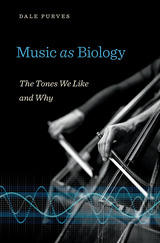
The universality of musical tones has long fascinated philosophers, scientists, musicians, and ordinary listeners. Why do human beings worldwide find some tone combinations consonant and others dissonant? Why do we make music using only a small number of scales out of the billions that are possible? Why do differently organized scales elicit different emotions? Why are there so few notes in scales? In Music as Biology, Dale Purves argues that biology offers answers to these and other questions on which conventional music theory is silent.
When people and animals vocalize, they generate tonal sounds—periodic pressure changes at the ear which, when combined, can be heard as melodies and harmonies. Human beings have evolved a sense of tonality, Purves explains, because of the behavioral advantages that arise from recognizing and attending to human voices. The result is subjective responses to tone combinations that are best understood in terms of their contribution to biological success over evolutionary and individual history. Purves summarizes evidence that the intervals defining Western and other scales are those with the greatest collective similarity to the human voice; that major and minor scales are heard as happy or sad because they mimic the subdued and excited speech of these emotional states; and that the character of a culture’s speech influences the tonal palette of its traditional music.
Rethinking music theory in biological terms offers a new approach to centuries-long debates about the organization and impact of music.
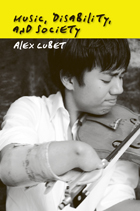
Musical talent in Western culture is regarded as an extraordinary combination of technical proficiency and interpretative sensitivity. In Music, Disability, and Society, Alex Lubet challenges the rigid view of technical skill and writes about music in relation to disability studies. He addresses the ways in which people with disabilities are denied the opportunity to participate in music.
Elaborating on the theory of "social confluence," Lubet provides a variety of encounters between disability and music to observe radical transformations of identity. Considering hand-injured and one-handed pianists; the impairments of jazz luminaries Django Reinhardt, Horace Parlan, and "Little" Jimmy Scott; and the "Blind Orchestra" of Cairo, he shows how the cultural world of classical music contrasts sharply with that of jazz and how musicality itself is regarded a disability in some religious contexts. Music, Disability, and Society also explains how language difference can become a disability for Asian students in American schools of music, limiting their education and careers.
Lubet offers pungent criticism of the biases in music education and the music profession, going so far as to say that culture disables some performers by adhering to rigid notions of what a musician must look like, how music must be played, who may play it, and what (if any) is the legitimate place of music in society. In Music, Disability, and Society, he convincingly argues that where music is concerned, disability is a matter of culture, not physical impairment.
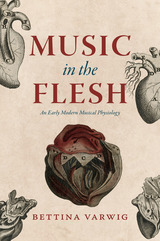
Music in the Flesh reimagines the lived experiences of music-making subjects—composers, performers, listeners—in the long seventeenth century. There are countless historical testimonies of the powerful effects of music upon the early modern body; it is described as moving, ravishing, painful, dangerous, curative, and miraculous while affecting “the circulation of the humors, the purification of the blood, the dilation of the vessels and pores.”
How were these early modern European bodies constituted that music generated such potent bodily-spiritual effects? Bettina Varwig argues that early modern music-making practices challenge our modern understanding of human nature as a mind-body dichotomy. Instead, they persistently affirm a more integrated anthropology, in which body, soul, and spirit remain inextricably entangled. Moving with ease across repertories and regions, sacred and vernacular musics, and domestic and public settings, Varwig sketches a “musical physiology” that is as historically illuminating as it is relevant for present-day performance. This book makes a significant contribution not just to the history of music, but also to the history of the body, the senses, and the emotions, revealing music as a unique access point for reimagining early modern modes of being-in-the-world.
Contributors. George Blake, David Borgo, Judith Butler, Rebecca Caines, Louise Campbell, Illa Carrillo Rodríguez, Berenice Corti, Andrew Raffo Dewar, Nina Eidsheim, Tomie Hahn, Jaclyn Heyen, Christine Sun Kim, Catherine Lee, Andra McCartney, Tracy McMullen, Kevin McNeilly, Leaf Miller, Jovana Milovic, François Mouillot, Pauline Oliveros, Jason Robinson, Neil Rolnick, Simon Rose, Gillian Siddall, Julie Dawn Smith, Jesse Stewart, Clara Tomaz, Sherrie Tucker, Lindsay Vogt, Zachary Wallmark, Ellen Waterman, David Whalen, Pete Williams, Deborah Wong, Mandy-Suzanne Wong
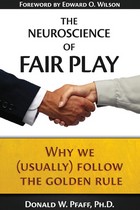
Pfaff, the researcher who first discovered the connections between specific brain circuits and certain behaviors, contends that the basic ethics governing our everyday lives can be traced directly to brain circuitry. Writing with popular science journalist Sandra J. Ackerman, he explains in this clear and concise account how specific brain signals induce us to consider our actions as if they were directed at ourselves—and subsequently lead us to treat others as we wish to be treated. Brain hormones are a part of this complicated process, and The Neuroscience of Fair Play discusses how brain hormones can catalyze behaviors with moral implications in such areas as self-sacrifice, parental love, friendship, and violent aggression.
Drawing on his own research and other recent studies in brain science, Pfaff offers a thought-provoking hypothesis for why certain ethical codes and ideas have remained constant across human societies and cultures throughout the world and over the centuries of history. An unprecedented and provocative investigation, The Neuroscience of Fair Play offers a new perspective on the increasingly important intersection of neuroscience and ethics.
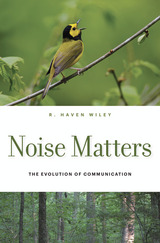
Noise, as we usually think of it, is background sound that interferes with our ability to hear more interesting sounds. In general terms, though, it is anything that interferes with the reception of signals of any sort. It includes extraneous energy in the environment, degradation of signals in transit, and spontaneous random activity in receivers and signalers. Whatever the cause, the consequence of noise is error by receivers, and these errors are the key to understanding how noise shapes the evolution of communication.
Noise Matters breaks new ground in the scientific understanding of how communication evolves in the presence of noise. Combining insights of signal detection theory with evidence from decades of his own original research, Haven Wiley explains the profound effects of noise on the evolution of communication. The coevolution of signalers and receivers does not result in ideal, noise-free communication, Wiley finds. Instead, signalers and receivers evolve to a joint equilibrium in which communication is effective but never error-free. Noise is inescapable in the evolution of communication.
Wiley’s comprehensive approach considers communication on many different levels of biological organization, from cells to individual organisms, including humans. Social interactions, such as honesty, mate choice, and cooperation, are reassessed in the light of noisy communication. The final sections demonstrate that noise even affects how we think about human language, science, subjectivity, and freedom. Noise Matters thus contributes to understanding the behavior of animals, including ourselves.

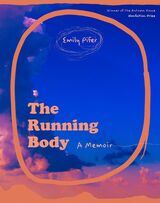
Emily Pifer’s debut memoir, The Running Body, wrestles and reckons with power and agency, language and story, body dysphoria and beauty standards, desire and addiction, loss and healing. Pifer employs multiple modes of storytelling—memoir, meditation, and cultural analysis—interweaving research, argument, and experience as she describes how, during her time as a collegiate distance runner, she began to run more while eating less. Many around her, including her coaches, praised her for these practices. But as she became faster, and as her body began to resemble the bodies that she had seen across start-lines and on the covers of running magazines, her bones began to fracture. Pifer tells her story alongside the stories of her teammates, competitors, and others as they all face trouble regarding their bodies.
Through the lens of long-distance running, Pifer examines the effects of idolization and obsession, revealing the porous boundaries between what counts as success and what is considered failure. While grounded in truth, The Running Body interrogates its relationship to magical thinking, the stories we tell ourselves, and the faultiness of memory. Fractures, figurative and literal, run through the narrative as Pifer explores the ways bodies become entangled in stories.
The Running Body was selected by Steve Almond as the winner of the 2021 Autumn House Nonfiction Prize.
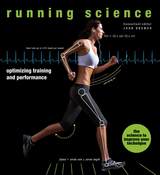
As a sports scientist and Running Fitness columnist, John Brewer has reviewed hundreds of scientific studies, and he offers runners the benefit of their findings in Running Science. Each chapter explores a different aspect of the sport through a series of questions. Many of the questions address practical matters: Do you really need to stretch? Which running shoes best suit your form and foot strike? Does carbo-loading lore stand up to scientific scrutiny—could a big bowl of spaghetti be the difference between a PR and a DNF? Other questions enhance appreciation for the incredible feats of the sport’s great athletes. (What would it take to run a two-hour marathon? Perfect weather, a straight, flat course, competition, and a lot of luck!) The answer to each question is presented in a straightforward, accessible manner, with accompanying infographics.
Whether you’re a beginner or a seasoned runner with many miles and medals behind you, Running Science is a must-have for anyone interested in the fascinating science behind the sport.
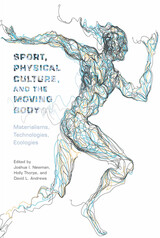
The moving body—pervasively occupied by fitness activities, intense training and dieting regimes, recreational practices, and high-profile sporting mega-events—holds a vital function in contemporary society. As the body moves—as it performs, sweats, runs, and jumps—it sets in motion an intricate web of scientific rationalities, spatial arrangements, corporate imperatives, and identity politics (i.e. politics of gender, race, social class, etc.). It represents vitality in its productive and physiological capacities, it drives a complex economy of experiences and products, and it is a meaningful site of cultural identities and politics.
Contributors to Sport, Physical Culture, and the Moving Body work from a simple premise: as it moves, the material body matters. Adding to the burgeoning fields of sport studies and body studies, the works featured here draw upon the traditions of feminist theory, posthumanism, actor network theory, and new materialism to reposition the physical, moving body as crucial to the cultural, political, environmental, and economic systems that it constitutes and within which is constituted. Once assembled, the book presents a study of bodies in motion—made to move in contexts where technique, performance, speed, strength, and vitality not only define the conduct therein, but provide the very reason for the body’s being within those economies and environments. In so doing, the contributors look to how the body moving for and about rational systems of science, medicine, markets, and geopolity shapes the social and material world in important and unexpected ways.
In Sport, Physical Culture, and the Moving Body, contributors explore the extent to which the body, when moving about both ostensibly active body spaces (i.e., the gymnasium, the ball field, exercise laboratory, the track or running trail, the beach, or the sport stadium) and those places less often connected to physical activity (i.e. the home, the street, the classroom, the automobile), is bounded to technologies of life and living; and to the political arrangements that seek to capitalize upon such frames of biological vitality. To do so, the authors problematize the rise of active body science (i.e. kinesiology, sport and exercise sciences, performance biotechnology) and the effects these scientific interventions have on embodied, lived experience.
Contributors to Sport, Physical Culture, and the Moving Body will be engaging a range of new and emerging theoretical perspectives, including new materialist, political ecology, developmental systems theory, and new material feminist approaches, to examine the actors and assemblages of movement-based material, political, and economic production. In so doing, contributors will vividly and powerfully illustrate the extent to which a focus on the fleshed body and its material conditions can bring forth new insights or ontological and epistemological innovation to the sociology of sport and physical activity. They will also explore the agency of the body as and amongst things. Such a performative materialist approach explicates how complex assemblages of sport and physical activity—bringing into association everything from muscle fibers and dietary proteins to stadium concrete or regional aquifers—are not only meaningful, but ecological.
By focusing on the confluence of agentive materialities, disciplinary technologies, vibrant assemblages, speculative realities, and vital performativities, Sport, Physical Culture, and the Moving Body promises to offer a groundbreaking departure from representationalist tendencies and orthodoxies brought about by the cultural turn in sport and physical cultural studies. It brings the moving body and its physics back into focus: recentering moving flesh and bones as locus of social order, environmental change, and the global political economy.
READERS
Browse our collection.
PUBLISHERS
See BiblioVault's publisher services.
STUDENT SERVICES
Files for college accessibility offices.
RECENTLY PUBLISHED



UChicago Accessibility Resources
home | accessibility | search | about | contact us
BiblioVault ® 2001 - 2024
The University of Chicago Press