
 A SCHOLARLY BOOK REPOSITORY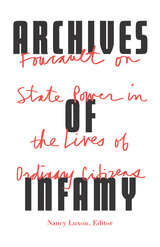
Expanding the insights of Arlette Farge and Michel Foucault’s Disorderly Families into policing, public order, (in)justice, and daily life
What might it mean for ordinary people to intervene in the circulation of power between police and the streets, sovereigns and their subjects? How did the police come to understand themselves as responsible for the circulation of people as much as things—and to separate law and justice from the maintenance of a newly emergent civil order? These are among the many questions addressed in the interpretive essays in Archives of Infamy.
Crisscrossing the Atlantic to bring together unpublished radio broadcasts, book reviews, and essays by historians, geographers, and political theorists, Archives of Infamy provides historical and archival contexts to the recent translation of Disorderly Families by Arlette Farge and Michel Foucault. This volume includes new translations of key texts, including a radio address Foucault gave in 1983 that explains the writing process for Disorderly Families; two essays by Foucault not readily available in English; and a previously untranslated essay by Farge that describes how historians have appropriated Foucault.
Archives of Infamy pushes past old debates between philosophers and historians to offer a new perspective on the crystallization of ideas—of the family, gender relations, and political power—into social relationships and the regimes of power they engender.
Contributors: Roger Chartier, Collège de France; Stuart Elden, U of Warwick; Arlette Farge, Centre national de recherche scientifique; Michel Foucault (1926–1984); Jean-Philippe Guinle, Catholic Institute of Paris; Michel Heurteaux; Pierre Nora, École des Hautes Études en Sciences Sociales; Michael Rey (1953–1993); Thomas Scott-Railton; Elizabeth Wingrove, U of Michigan.
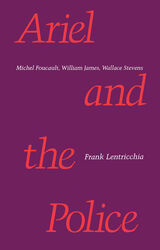
In Ariel and the Police, Frank Lentricchia searches through the totalizing desires for power that have built and help to maintain tangible and intangible structures of confinement and purification within, and sometimes as, the house of modernism. And what he finds, in his lyrical effort to redeem the subject for history, is that someone lives there, slyly, sometimes even playfully defiant.
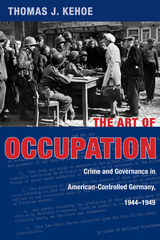
The literature describing social conditions during the post–World War II Allied occupation of Germany has been divided between seemingly irreconcilable assertions of prolonged criminal chaos and narratives of strict martial rule that precluded crime. In The Art of Occupation, Thomas J. Kehoe takes a different view on this history, addressing this divergence through an extensive, interdisciplinary analysis of the interaction between military government and social order.
Focusing on the American Zone and using previously unexamined American and German military reports, court records, and case files, Kehoe assesses crime rates and the psychology surrounding criminality. He thereby offers the first comprehensive exploration of criminality, policing, and both German and American fears around the realities of conquest and potential resistance, social and societal integrity, national futures, and a looming threat from communism in an emergent Cold War. The Art of Occupation is the fullest study of crime and governance during the five years from the first Allied incursions into Germany from the West in September 1944 through the end of the military occupation in 1949. It is an important contribution to American and German social, military, and police histories, as well as historical criminology.
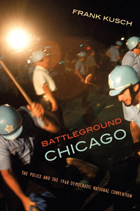
Working from interviews with eighty former Chicago police officers who were on the scene, Frank Kusch uncovers the other side of the story of ’68, deepening our understanding of a turbulent decade.
“Frank Kusch’s compelling account of the clash between Mayor Richard Daley’s men in blue and anti-war rebels reveals why the 1960s was such a painful era for many Americans. . . . to his great credit, [Kusch] allows ‘the pigs’ to speak up for themselves.”—Michael Kazin
“Kusch’s history of white Chicago policemen and the 1968 Democratic National Convention is a solid addition to a growing literature on the cultural sensibility and political perspective of the conservative white working class in the last third of the twentieth century.”—David Farber, Journal of American History
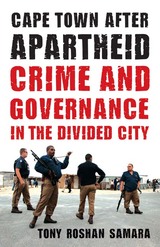
Cape Town after Apartheid focuses on urban renewal and urban security policies and practices in the city center and townships as this aspiring world-class city actively pursues a neoliberal approach to development. The city’s attempt to escape its past is, however, constrained by crippling inequalities, racial and ethnic tensions, political turmoil, and persistent insecurity. Samara shows how governance in Cape Town remains rooted in the perceived need to control dangerous populations and protect a somewhat fragile and unpopular economic system. In urban areas around the world, where the affluent minority and poor majority live in relative proximity to each other, aggressive security practices and strict governance reflect and reproduce the divided city.
A critical case for understanding a transnational view of urban governance, especially in highly unequal, majority-poor cities, this closely observed study of postapartheid Cape Town affords valuable insight into how security and governance technologies from the global North combine with local forms to create new approaches to social control in cities across the global South.
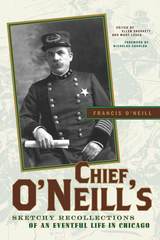
This remarkable memoir of immigration and assimilation provides a rare view of urban life in Chicago in the late 1800s by a newcomer to the city and the Midwest, and the nation as well. Francis O’Neill left Ireland in 1865. After five years traveling the world as a sailor, he and his family settled in Chicago just shortly before the Great Fire of 1871.
As O’Neill looked back on his life, writing in Chicago at the age of 83, he could give first-hand accounts of the Pullman strike of 1894, the railway strike of 1903, and the packing-house strike of 1904. He could also reflect on the corruption that kept him, in spite of his innovations, extremely high exam scores, and performance, subject to powerful aldermen who prevented his advance as a member of the Chicago Police Department. Despite these obstacles, O’Neill eventually rose to be chief of police—a position from which he could enact much-needed civil service reform. In addition to his professional success, O’Neill is also remembered and beloved for his hobby, preserving traditional Irish music.
O’Neill’s story offers perspective on the inner workings of the police department at the turn of the twentieth century. His memoir also brings to life the challenges involved in succeeding in a new land, providing for his family, and integrating into a new culture. Francis O’Neill serves as a fine documentarian of the Irish immigrant experience in Chicago.
Valle investigated an untapped archive of Industry's built landscape, media coverage, and public records, including sealed FBI reports, to uncover a cascading series of scandals. A kaleidoscopic view of the corruption that resulted when local land owners, media barons, and railroads converged to build the city, this suspenseful narrative explores how new governmental technologies and engineering feats propelled the rationality of privatization using their property-owning servants as tools.
Valle's tale of corporate greed begins with the city's founder James M. Stafford and ends with present day corporate heir, Edward Roski Jr., the nation's biggest industrial developerùco-owner of the L.A. Staples Arena and possible future owner of California's next NFL franchise. Not to be forgotten in Valle's captivating story are Latino working class communities living within Los Angeles's distribution corridors, who suffer wealth disparities and exposure to air pollution as a result of diesel-burning trucks, trains, and container ships that bring global trade to their very doorsteps. They are among the many victims of City of Industry.
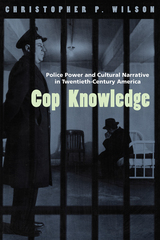
Christopher P. Wilson explores these questions by examining narratives of police power in crime news, popular fiction, and film, showing how they both reflect and influence the real strategies of law enforcement on the beat, in the squad room, and in urban politics. He takes us from Theodore Roosevelt's year of reform with the 1890s NYPD to the rise of "community policing," from the classic "police procedural" film The Naked City to the bestselling novels of LAPD veteran Joseph Wambaugh. Wilson concludes by demonstrating the ways in which popular storytelling about police power has been intimately tied to the course of modern liberalism, and to the rising tide of neoconservatism today.
"A thorough, brilliant blend that crosses disciplines."—Choice
"[S]ophisticated, highly theoretical and ambitious. . . . Connects the history of policing to cultural representations of crime, criminals and cops."—Times Literary Supplement
"[A] deeply satisfying approach to the crime narrative. . . . [Wilson] focuses, ultimately, on the role of police power in cultural storytelling."—American Quarterly

The new edition of Cops, Teachers, Counselors furthers the exploration of forces that shape the contours of frontline work. This line of inquiry is at the heart of street-level bureaucracy research, a field of study cutting across disciplines, including public administration, political science, social work, law and society, education, and criminal justice. The oft-cited 2003 edition pioneered a qualitative method of inquiry using workers’ own voices and storytelling about fairness in the delivery of services. This NSF-supported field research reveals the ways workers engage in moral judgments, more than implementing laws and policies, to account for their decisions and actions.
The new edition wraps an expanded framing around the original chapters, while maintaining a lively, approachable presentation style. It takes on a more enriched perspective of legality than the original, while retaining a focus on frontline work as a powerful source of cultural ordering. In addition to examining workers’ stories of encounters, attention is given to the agency of the governed during interactional moments, the power dynamics in play during both interpersonal and group encounters, and patterns of practice that converge across distinctive service domains. The original edition describes two narratives that shape frontline workers’ decisional judgments and the interplay between legality and morality: the state-agent and citizen-agent narratives. This edition adds the knowledge-agent narrative that stresses the importance of professional and field learning to decisional judgments.
The book examines routine encounters of cops, teachers, and counselors with diverse publics when questions of justice and fairness are at play. This new edition speaks to contemporary issues at a time when frontline workers gained broad recognition for their heroic contributions to communities during the Covid 19 pandemic, as well as sustained condemnation for their embodiment of the brutal expression of racialized state power in police actions. The authors conclude with a focus on the significance of place and trust in building social inclusion on the frontlines of public service.
Steven Maynard-Moody is Director of the Policy Research Institute and Professor of Public Administration at the University of Kansas.
Michael Musheno is Professor of Justice and Policy Studies at Lycoming College and Professor Emeritus of Justice Studies, Arizona State University.

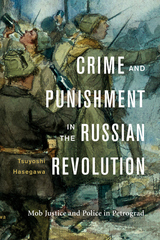
Russians from all walks of life poured into the streets of the imperial capital after the February Revolution of 1917, joyously celebrating the end of Tsar Nicholas II’s monarchy. One year later, with Lenin’s Bolsheviks now in power, Petrograd’s deserted streets presented a very different scene. No celebrations marked the Revolution’s anniversary. Amid widespread civil strife and lawlessness, a fearful citizenry stayed out of sight.
In Crime and Punishment in the Russian Revolution, Tsuyoshi Hasegawa offers a new perspective on Russia’s revolutionary year through the lens of violent crime and its devastating effect on ordinary people. When the Provisional Government assumed power after Nicholas II’s abdication, it set about instituting liberal reforms, including eliminating the tsar’s regular police. But dissolving this much-hated yet efficient police force and replacing it with a new municipal police led rapidly to the breakdown of order and services. Amid the chaos, crime flourished. Gangs of criminals, deserters, and hooligans brazenly roamed the streets. Mass prison escapes became common. And vigilantism spread widely as ordinary citizens felt compelled to take the law into their own hands, often meting out mob justice on suspected wrongdoers.
The Bolsheviks swept into power in the October Revolution but had no practical plans to reestablish order. As crime continued to escalate and violent alcohol riots almost drowned the revolutionary regime, they redefined it as “counterrevolutionary activity,” to be dealt with by the secret police, whose harshly repressive, extralegal means of enforcement helped pave the way for a Communist dictatorship.
Crime in the U.S. and the institutions for its control are deeply embedded in and shaped by history. The historical origins have often become invisible, and their recovery difficult, but any understanding of the contemporary situation requires historical context. For over twenty-five years Eric H. Monkkonen has worked on some of the puzzles and problems in recovering the history of crime and police.
Much of his work has appeared in articles, often in specialized journals or not in English, which this book collects for the first time. In addition to Monkkonen’s major published articles, this volume includes several new ones. The topics embrace violence, public disorder, policing, popular culture, and contrasts between the U.S. and Europe. Some articles illuminate special methodological and source issues that challenge historians of criminal justice. As well as dealing with serious crime, this book includes several articles on specifically urban problems and solutions associated with disorder, crime, and poverty.
In contrast to the more technical articles, several chapters, which originally appeared as op-ed pieces, show how historical understanding can help address current policy issues in crime and crime control. All too often, current policy debates occur without proper historical background. As a result, old ideas that have been tried and rejected are re-introduced, or new and sometimes simple ideas are ignored.


The recorded use of deadly force against unarmed suspects and sustained protest from the Black Lives Matter movement, among others, have ignited a national debate about excessive violence in American policing. Missing from the debate, however, is any discussion of a factor that is almost certainly contributing to the violence—the use of anabolic steroids by police officers. Mounting evidence from a wide range of credible sources suggests that many cops are abusing testosterone and its synthetic derivatives. This drug use is illegal and encourages a “steroidal” policing style based on aggressive behaviors and hulking physiques that diminishes public trust in law enforcement.
Dopers in Uniform offers the first assessment of the dimensions and consequences of the felony use of anabolic steroids in major urban police departments. Marshalling an array of evidence, John Hoberman refutes the frequent claim that police steroid use is limited to a few “bad apples,” explains how the “Blue Wall of Silence” stymies the collection of data, and introduces readers to the broader marketplace for androgenic drugs. He then turns his attention to the people and organizations at the heart of police culture: the police chiefs who often see scandals involving steroid use as a distraction from dealing with more dramatic forms of misconduct and the police unions that fight against steroid testing by claiming an officer’s “right to privacy” is of greater importance. Hoberman’s findings clearly demonstrate the crucial need to analyze and expose the police steroid culture for the purpose of formulating a public policy to deal with its dysfunctional effects.
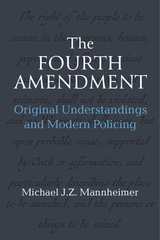
Police are required to obey the law. While that seems obvious, courts have lost track of that requirement due to misinterpreting the two constitutional provisions governing police conduct: the Fourth and Fourteenth Amendments. The Fourth Amendment forbids "unreasonable searches and seizures" and is the source of most constitutional constraints on policing. Although that provision technically applies only to the federal government, the Fourteenth Amendment, ratified in the wake of the Civil War, has been deemed to apply the Fourth Amendment to the States.
This book contends that the courts’ misinterpretation of these provisions has led them to hold federal and state law enforcement mistakenly to the same constitutional standards. The Fourth Amendment was originally understood as a federalism, or “states’ rights,” provision that, in effect, required federal agents to adhere to state law when searching or seizing. Thus, applying the same constraint to the States is impossible. Instead, the Fourteenth Amendment was originally understood in part as requiring that state officials (1) adhere to state law, (2) not discriminate, and (3) not be granted excessive discretion by legislators. These principles should guide judicial review of modern policing. Instead, constitutional constraints on policing are too strict and too forgiving at the same time. In this book, Michael J.Z. Mannheimer calls for a reimagination of what modern policing could look like based on the original understandings of the Fourth and Fourteenth Amendments.
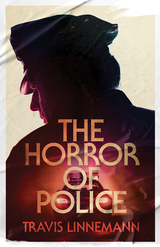
Unmasks the horrors of a social order reproduced and maintained by the violence of police
Year after year the crisis churns: graft and corruption, violence and murder, riot cops and armored vehicles claim city streets. Despite promises of reform, police operate with impunity, unaccountable to law. In The Horror of Police, Travis Linnemann asks why, with this open record of violence and corruption, policing remains for so many the best, perhaps only means of security in an insecure world.
Drawing on the language and texts of horror fiction, Linnemann recasts the police not only as self-proclaimed “monster fighters” but as monsters themselves, a terrifying force set loose in the world. Purposefully misreading a collection of everyday police stories (TV cop dramas, detective fiction, news media accounts, the direct words of police) not as morality tales of innocence avenged and order restored but as horror, Linnemann reveals the monstrous violence at the heart of liberal social order.
The Horror of Police shows that police violence is not a deviation but rather a deliberate and permanent fixture of U.S. “law and order.” Only when viewed through the refracted motif of horror stories, Linnemann argues, can we begin to reckon the limits of police and imagine a world without them.
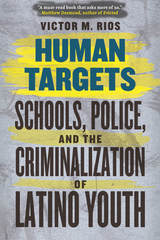
In Human Targets, Rios takes us to the streets of California, where we encounter young men who find themselves in much the same situation as fifteen-year-old Victor. We follow young gang members into schools, homes, community organizations, and detention facilities, watch them interact with police, grow up to become fathers, get jobs, get rap sheets—and in some cases get killed. What is it that sets apart young people like Rios who succeed and survive from the ones who don’t? Rios makes a powerful case that the traditional good kid/bad kid, street kid/decent kid dichotomy is much too simplistic, arguing instead that authorities and institutions help create these identities—and that they can play an instrumental role in providing young people with the resources for shifting between roles. In Rios’s account, to be a poor Latino youth is to be a human target—victimized and considered an enemy by others, viewed as a threat to law enforcement and schools, and burdened by stigma, disrepute, and punishment. That has to change.
This is not another sensationalistic account of gang bangers. Instead, the book is a powerful look at how authority figures succeed—and fail—at seeing the multi-faceted identities of at-risk youths, youths who succeed—and fail—at demonstrating to the system that they are ready to change their lives. In our post-Ferguson era, Human Targets is essential reading.
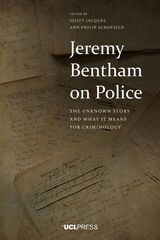
Jeremy Bentham theorized the panopticon as modern policing emerged across the British Empire, yet while his theoretical writing became canonical in criminology, his perspective on the police remains obscure. Jeremy Bentham on Police recovers the reformer’s writings on policing alongside a series of essays that demonstrate their significance to the past, present, and future of criminology.
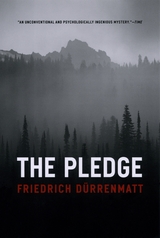
One of Dürrenmatt’s most diabolically imagined and constructed novels, The Pledge was adapted for the screen in 2000 in a film directed by Sean Penn and starring Jack Nicholson.
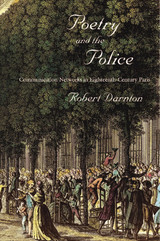
In spring 1749, François Bonis, a medical student in Paris, found himself unexpectedly hauled off to the Bastille for distributing an “abominable poem about the king.” So began the Affair of the Fourteen, a police crackdown on ordinary citizens for unauthorized poetry recitals. Why was the official response to these poems so intense?
In this captivating book, Robert Darnton follows the poems as they passed through several media: copied on scraps of paper, dictated from one person to another, memorized and declaimed to an audience. But the most effective dispersal occurred through music, when poems were sung to familiar tunes. Lyrics often referred to current events or revealed popular attitudes toward the royal court. The songs provided a running commentary on public affairs, and Darnton brilliantly traces how the lyrics fit into song cycles that carried messages through the streets of Paris during a period of rising discontent. He uncovers a complex communication network, illuminating the way information circulated in a semi-literate society.
This lucid and entertaining book reminds us of both the importance of oral exchanges in the history of communication and the power of “viral” networks long before our internet age.
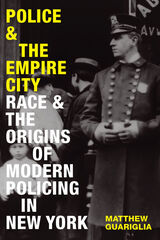

As zero-tolerance discipline policies have been instituted at high schools across the country, police officers are employed with increasing frequency to enforce behavior codes and maintain order, primarily at poorly performing, racially segregated urban schools. Actions that may once have sent students to the detention hall or resulted in their suspension may now introduce them to the criminal justice system. In Police in the Hallways, Kathleen Nolan explores the impact of policing and punitive disciplinary policies on the students and their educational experience.
Through in-depth interviews with and observations of students, teachers, administrators, and police officers, Nolan offers a rich and nuanced account of daily life at a Bronx high school where police patrol the hallways and security and discipline fall under the jurisdiction of the NYPD. She documents how, as law enforcement officials initiate confrontations with students, small infractions often escalate into “police matters” that can lead to summonses to criminal court, arrest, and confinement in juvenile detention centers.
Nolan follows students from the classroom and the cafeteria to the detention hall, the dean’s office, and the criminal court system, clarifying the increasingly intimate relations between the school and the criminal justice system. Placing this trend within the context of recent social and economic changes, as well as developments within criminal justice and urban school reform, she shows how this police presence has created a culture of control in which penal management overshadows educational innovation.
Police in the Hallways also examines the prevalent forms of oppositional behavior through which students express their frustrations and their deep sense of exclusion. With compassion and clear-eyed analysis, Nolan sounds a warning about this alarming convergence of prison and school cultures and the negative impact that it has on the real lives of low-income students of color—and, in turn, on us all.
Muñiz illuminates the degree to which the definitions of “gangs” and “deviants” are politically constructed labels born of public policy and court decisions, offering an innovative look at the process of criminalization and underscoring the ways in which a politically powerful coalition can define deviant behavior. As she does so, Muñiz also highlights the various grassroots challenges to such policies and the efforts to call attention to their racist effects. Muñiz describes the fight over two very different methods of policing: community policing (in which the police and the community work together) and the “broken windows” or “zero tolerance” approach (which aggressively polices minor infractions—such as loitering—to deter more serious crime). Police, Power, and the Production of Racial Boundaries also explores the history of the area to explain how Cadillac-Corning became viewed by outsiders as a “violent neighborhood” and how the city’s first gang injunction—a restraining order aimed at alleged gang members—solidified this negative image. As a result, Muñiz shows, Cadillac-Corning and other sections became a test site for repressive practices that eventually spread to the rest of the city.
"Other social scientists have observed policemen on patrol, or have interviewed them systematically. Professor Muir has brought the two together, and, because of the philosophical depth he brings to his commentaries, he has lifted the sociology of the police on to a new level. He has both observed the men and talked with them at length about their personal lives, their conceptions of society and of the place of criminals within it. His ambition is to define the good policeman and to explain his development, but his achievement is to illuminate the philosophical and occupational maturation of patrol officers in 'Laconia' (a pseudonym) . . . . His discussions of [the policemen's] moral development are threaded through with analytically suggestive formulations that bespeak a wisdom very rarely encountered in reports of sociological research."—Michael Banton, Times Literary Supplement
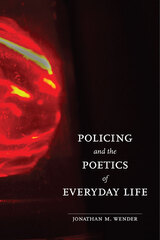
This book reflects a conscious attempt to follow the general model of Martin Heidegger’s Zollikon Seminars, in which Heidegger engaged psychiatrists and psychologists in a sustained dialogue aimed at developing their critical awareness of the unexamined philosophical foundations informing their everyday clinical practice. Wender draws on Heidegger to argue that “praxis is poetry” and from this standpoint interprets all social action as intentional creation (or “poiesis”), which by its very nature is intrinsically meaningful. Using an interpretive framework that he calls a “phenomenological aesthetics of encounter,” Wender takes up a number of case studies of police-citizen encounters, including cases of domestic violence, contacts with juveniles, drug-related situations, instances of mental and emotional crisis, and death.
Manning begins by developing a model of policing as drama—a way of communicating various messages to the public in an effort to enforce moral boundaries. Unexpected outcomes, or contingencies, continually rewrite the plot of this drama, requiring officers to adjust accordingly. New information technologies, media scrutiny and representations, and community policing also play important roles, and Manning studies these influences in detail. He concludes that their impacts have been quite limited, because the basic structure of policing—officer assessments based on encounters during routine patrols—has remained unchanged. For policing to really change, Manning argues, its focus will need to shift to prevention.
Written with precision and judiciously argued, Policing Contingencies will be of value to scholars of sociology, criminology, information technology, and cultural theory.
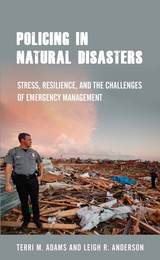
When natural disasters and emergencies strike, the short- and long-term effects of these events on first responders—the very people society relies upon in the midst of a catastrophe—are often overlooked. Policing in Natural Disasters provides a comprehensive analysis of the major challenges faced by law enforcement officers during extreme crisis events. Terri Adams and Leigh Anderson examine the dilemmas police departments face as well as the impact of the disasters on the professional and personal lives of the officers. Case studies explore the response and recovery phases of emergencies including Hurricane Katrina, the 2010 earthquake and subsequent tsunami in Santiago, Chile, and the Superstorm Tornado Outbreak in 2011.
Policing in Natural Disasters was inspired by the personal accounts of triumph and tragedy shared by first responders. It provides an understanding of first-responder behaviors during disasters, as well as the preparedness, mitigation, response and recovery policy implications for first responders and emergency managers. As first responders must frequently cope with stress, uncertainty, and threats to their health and safety during high-consequence events, Adams and Anderson provide lessons from first-hand experiences of police officers that can lead to better management in times of crisis.
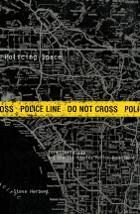
Policing Space is a fascinating firsthand account of how the Los Angeles Police Department attempts to control its vast, heterogeneous territory. As such, the book offers a rare, ground-level look at the relationship between the control of space and the exercise of power.
Author Steve Herbert spent eight months observing one patrol division of the LAPD on the job. A compelling story in itself, his fieldwork with the officers in the Wilshire Division affords readers a close view of the complex factors at play in how the police define and control territory, how they make and mark space. A remarkable ethnography of a powerful police department, underscored throughout with telling on-the-scene vignettes, this book is also an unusually intensive analysis of the exercise of territorial power-and of territoriality as a key component of police power. Unique in its application of fieldwork and theory to this complex subject, it should prove valuable to readers in urban and political geography, urban and political sociology, and criminology, as well as those who wonder about the workings of the LAPD.

After a historical review of policing in the United States and Europe over the past century, Huggins reveals how the United States, in order to protect and strengthen its position in the world system, has used police assistance to establish intelligence and other social control infrastructures in foreign countries. The U.S.-encouraged centralization of Latin American internal security systems, Huggins claims, has led to the militarization of the police and, in turn, to an increase in state-sanctioned violence. Furthermore, Political Policing shows how a domestic police force—when trained by another government—can lose its power over legitimate crime as it becomes a tool for the international interests of the nation that trains it.
Pointing to U.S. responsibility for violations of human rights by foreign security forces, Political Policing will provoke discussion among those interested in international relations, criminal justice, human rights, and the sociology of policing.
Americans find street crime terrifying and repellent. Yet we vicariously seek it out in virtually all of our media: books, newspapers, television, films, and the theatre. Stuart Scheingold confronts this cultural contradiction and asks why street crime is generally regarded in the trivializing and punitive images of cops and robbers that attribute crime to the willful acts of flawed individuals rather than to the structural shortcomings of a flawed society. In his case study of the police and criminal courts in the community he calls "Cedar City," a medium-sized city in the Western United States, Scheingold examines the effects of this cultural contradiction and these punitive predispositions on politics and policy making.
What transpired during this troubled time cast a bright light on the contemporary relationship between the press and police in the United States. The relationship between these two fundamental institutions is, however, a long and complicated one, dating back to colonial British North America. In the mid-19th century, (1830s–1850s) both the press and the police began to take their modern forms, and since then have continued to develop, routinely interacting with each other as journalists and police officers often found themselves responding to the same crimes and events. At times, members of both institutions managed to co-exist or even cooperate and made efforts to help one another, while at other times they butted heads to the point of conflict, the professional boundaries between journalists and police officers seemingly blurred.
As both the press and the police have fallen under deep scrutiny in more modern times, the present moment marks what is, perhaps, an opportune time to focus on the political, economic, social, and technological problems they face. In “Pressing the Police and Policing the Press,” Scott Memmel offers the first book-length study of the history and legal landscape of the press-police relationship. Each chapter focuses on interactions between the press and the police during a particular era, introducing relevant societal context and how both institutions evolved and responded to that context. Memmel concludes his study with recommendations on how, going forward, the press and the police might work together to tackle some of the similar issues they face and better serve the public.

The increasing reliance on private security services raises questions about the effects of privatization on the quality of public police forces, particularly in high-crime, low-income areas. In an effective pro-and-con format, two experts on policing offer two strikingly different perspectives on this trend towards privatization. In the process, they provide an unusually thoughtful discussion of the origins of both the public police and the private security sectors, the forces behind the recent growth of private security operations, and the risks to public safety posed by privatization.
In his critique of privatization, Peter K. Manning focuses on issues of free market theory and management practices such as Total Quality Management that he believes are harmful to the traditional police mandate to control crime. He questions the appropriateness of strategies that emphasize service to consumers. For Brian Forst, the free market paradigm and economic incentives do not carry the same stigma. He argues that neither public nor private policing should have a monopoly on law enforcement activities, and he predicts an even more varied mix of public and private police activities than are currently available.
Following the two main sections of the book, each author assesses the other's contribution, reflecting on not just their points of departure but also on the areas in which they agree. The breadth and depth of the discussion makes this book essential for both scholars and practitioners interested in policing generally and privatization in particular.
Jauregui explores the paradoxical demands placed on Indian police, who are at once routinely charged with abuses of authority at the same time that they are asked to extend that authority into any number of both official and unofficial tasks. Her ethnography of their everyday life and work demonstrates that police authority is provisional in several senses: shifting across time and space, subject to the availability and movement of resources, and dependent upon shared moral codes and relentless instrumental demands. In the end, she shows that police authority in India is not simply a vulgar manifestation of raw power or the violence of law but, rather, a contingent and volatile social resource relied upon in different ways to help realize human needs and desires in a pluralistic, postcolonial democracy.
Provocative and compelling, Provisional Authority provides a rare and disquieting look inside the world of police in India, and shines critical light on an institution fraught with moral, legal and political contradictions.
Pulled Over deftly traces the strange history of the investigatory police stop, from its discredited beginning as “aggressive patrolling” to its current status as accepted institutional practice. Drawing on the richest study of police stops to date, the authors show that who is stopped and how they are treated convey powerful messages about citizenship and racial disparity in the United States. For African Americans, for instance, the experience of investigatory stops erodes the perceived legitimacy of police stops and of the police generally, leading to decreased trust in the police and less willingness to solicit police assistance or to self-censor in terms of clothing or where they drive. This holds true even when police are courteous and respectful throughout the encounters and follow seemingly colorblind institutional protocols. With a growing push in recent years to use local police in immigration efforts, Hispanics stand poised to share African Americans’ long experience of investigative stops.
Race and Police corrects the Eurocentrism in the orthodox history of American police and in predominating critical theories of police. That orthodoxy rests on an origin story that begins with Sir Robert Peel and the London Metropolitan Police Service. Predating the Met by more than a century, America’s first police, often called slave patrols, did more than maintain order—it fabricated a racial order. Prior to their creation, all white citizens were conscripted to police all Blacks. Their participation in the coercive control of Blacks gave definition to their whiteness. Targeted as threats to the security of the economy and white society, being policed defined Blacks who, for the first time, were treated as a single racial group. The boundaries of whiteness were first established on the basis of who was required to regulate slaves, given a specific mandate to prevent Black insurrection, a mandate that remains core to the police role to this day.
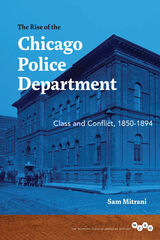
In this book, Sam Mitrani cogently examines the making of the police department in Chicago, which by the late 1800s had grown into the most violent, turbulent city in America. Chicago was roiling with political and economic conflict, much of it rooted in class tensions, and the city's lawmakers and business elite fostered the growth of a professional municipal police force to protect capitalism, its assets, and their own positions in society. Together with city policymakers, the business elite united behind an ideology of order that would simultaneously justify the police force's existence and dictate its functions.
Tracing the Chicago police department's growth through events such as the 1855 Lager Beer riot, the Civil War, the May Day strikes, the 1877 railroad workers strike and riot, and the Haymarket violence in 1886, Mitrani demonstrates that this ideology of order both succeeded and failed in its aims. Recasting late nineteenth-century Chicago in terms of the struggle over order, this insightful history uncovers the modern police department's role in reconciling democracy with industrial capitalism.
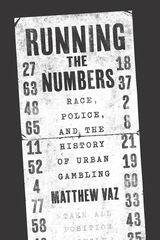
As Vaz highlights, early urban gamblers favored low-stakes games built around combinations of winning numbers. When these games became one of the largest economic engines in nonwhite areas like Harlem and Chicago’s south side, police took notice of the illegal business—and took advantage of new opportunities to benefit from graft and other corrupt practices. Eventually, governments found an unusual solution to the problems of illicit gambling and abusive police tactics: coopting the market through legal state-run lotteries, which could offer larger jackpots than any underground game. By tracing this process and the tensions and conflicts that propelled it, Vaz brilliantly calls attention to the fact that, much like education and housing in twentieth-century America, the gambling economy has also been a form of disputed terrain upon which racial power has been expressed, resisted, and reworked.
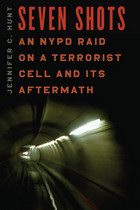
On July 31, 1997, a six-man Emergency Service team from the NYPD raided a terrorist cell in Brooklyn and narrowly prevented a suicide bombing of the New York subway that would have cost hundreds, possibly thousands of lives.
Seven Shots tells the dramatic story of that raid, the painstaking police work involved, and its paradoxical aftermath, which drew the officers into a conflict with other rank-and-file police and publicity-hungry top brass. Jennifer C. Hunt draws on her personal knowledge of the NYPD and a network of police contacts extending from cop to four-star chief, to trace the experience of three officers on the Emergency Service entry team and the two bomb squad detectives who dismantled the live device. She follows their lives for five years, from that near-fatal day in 1997, through their encounters inside the brutal world of departmental politics, and on to 9/11, when they once again put their lives at risk in the fight against terrorism, racing inside the burning towers and sorting through the ash, debris, and body parts. Throughout this fast paced narrative, Hunt maintains a strikingly fine-grained, street-level view, allowing us to understand the cops on their own terms—and often in their own words. The result is a compelling insider’s picture of the human beings who work in two elite units in the NYPD and the moral and physical danger and courage involved.
As gripping as an Ed McBain novel—and just as steeped in New York cop culture and personalities—Seven Shots takes readers on an unforgettable journey behind the shield and into the hearts of New York City police.
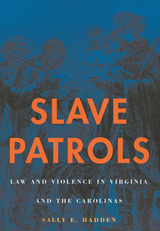
Obscured from our view of slaves and masters in America is a critical third party: the state, with its coercive power. This book completes the grim picture of slavery by showing us the origins, the nature, and the extent of slave patrols in Virginia and the Carolinas from the late seventeenth century through the end of the Civil War. Here we see how the patrols, formed by county courts and state militias, were the closest enforcers of codes governing slaves throughout the South.
Mining a variety of sources, Sally Hadden presents the views of both patrollers and slaves as she depicts the patrols, composed of "respectable" members of society as well as poor whites, often mounted and armed with whips and guns, exerting a brutal and archaic brand of racial control inextricably linked to post-Civil War vigilantism and the Ku Klux Klan. City councils also used patrollers before the war, and police forces afterward, to impose their version of race relations across the South, making the entire region, not just plantations, an armed camp where slave workers were controlled through terror and brutality.
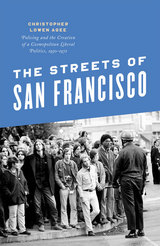
The Streets of San Francisco uncovers the seldom reported, street-level interactions between police officers and San Francisco residents and finds that police discretion was the defining feature of mid-century law enforcement. Postwar police officers enjoyed great autonomy when dealing with North Beach beats, African American gang leaders, gay and lesbian bar owners, Haight-Ashbury hippies, artists who created sexually explicit works, Chinese American entrepreneurs, and a wide range of other San Franciscans. Unexpectedly, this police independence grew into a source of both concern and inspiration for the thousands of young professionals streaming into the city's growing financial district. These young professionals ultimately used the issue of police discretion to forge a new cosmopolitan liberal coalition that incorporated both marginalized San Franciscans and rank-and-file police officers. The success of this model in San Francisco resulted in the rise of cosmopolitan liberal coalitions throughout the country, and today, liberal cities across America ground themselves in similar understandings of democracy, emphasizing both broad diversity and strong policing.
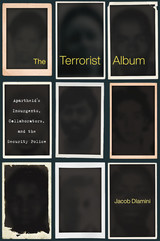
An award-winning historian and journalist tells the very human story of apartheid’s afterlife, tracing the fates of South African insurgents, collaborators, and the security police through the tale of the clandestine photo album used to target apartheid’s enemies.
From the 1960s until the early 1990s, the South African security police and counterinsurgency units collected over 7,000 photographs of apartheid’s enemies. The political rogue’s gallery was known as the “terrorist album,” copies of which were distributed covertly to police stations throughout the country. Many who appeared in the album were targeted for surveillance. Sometimes the security police tried to turn them; sometimes the goal was elimination.
All of the albums were ordered destroyed when apartheid’s violent collapse began. But three copies survived the memory purge. With full access to one of these surviving albums, award-winning South African historian and journalist Jacob Dlamini investigates the story behind these images: their origins, how they were used, and the lives they changed. Extensive interviews with former targets and their family members testify to the brutal and often careless work of the police. Although the police certainly hunted down resisters, the terrorist album also contains mug shots of bystanders and even regime supporters. Their inclusion is a stark reminder that apartheid’s guardians were not the efficient, if morally compromised, law enforcers of legend but rather blundering agents of racial panic.
With particular attentiveness to the afterlife of apartheid, Dlamini uncovers the stories of former insurgents disenchanted with today’s South Africa, former collaborators seeking forgiveness, and former security police reinventing themselves as South Africa’s newest export: “security consultants” serving as mercenaries for Western nations and multinational corporations. The Terrorist Album is a brilliant evocation of apartheid’s tragic caprice, ultimate failure, and grim legacy.
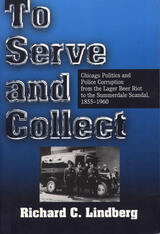
Crooked politicians, gangsters, madams, and cops on the take: To Serve and Collect tells the story of Chicago during its formative years through the history of its legendary police department.
Although laws governing moving-traffic violations are fairly uniform throughout the United States, the effective levels of enforcement of these laws vary dramatically from city to city. Basing this study on statistics from nearly seven hundred police departments, census data, personal interviews, on-the-spot observation, and detailed case studies of four Massachusetts cities--Lynn, Waltham, Malden, and Cambridge--Mr. Gardiner identifies and discusses the factors that determine police decisionmaking in relation to traffic violations.
After a brief description of the role of various state and local agencies in settling traffic-enforcement policy, the author analyzes in depth the traffic activities of the four Massachusetts cities. He examines in particular the extent of public pressure in seeking modification of enforcement standards, intradepartmental practices, or "norms," and the role of traffic enforcement in the total spectrum of police activities.
Following the case studies, the author discusses the variations among the traffic policies of municipal police departments, and questions the "public pressure" interpretation of police policies. Mr. Gardiner finds that, although citizens and city officials frequently seek to influence individual decisions, they seldom know how strict or lenient their department's general policies are, and seldom care. In addition, the author finds no significant connection between the severity of ticketing policies and such factors as income, race, or education, but does find some correlation with the geographical stability of a city's population.
Finally, the author concludes that the chief source of departmental traffic policy is an internally established set of norms concerning the importance of traffic work and the frequency with which officers should write tickets. Evidence from cities that change their traffic policies indicates that individual preferences on the part of chiefs or ranking officers are the primary source of these norms.
This book is an important contribution to the growing area in social sciences that deals with law enforcement and, more broadly, local political systems.
The Truth Machines examines the emergence and use of these three scientific techniques to analyze two primary themes. First, the book questions whether existing theoretical frameworks for understanding state power and legal violence are adequate to explain constant innovations of the state. Second, it explores the workings of law, science, and policing in the everyday context to generate a theory of state power and legal violence, challenging the monolithic frameworks about this relationship, based on a study of both state and non-state actors.
Jinee Lokaneeta argues that the attempt to replace physical torture with truth machines in India fails because it relies on a confessional paradigm that is contiguous with torture. Her work also provides insights into a police institution that is founded and refounded in its everyday interactions between state and non-state actors. Theorizing a concept of Contingent State, this book demonstrates the disaggregated, and decentered nature of state power and legal violence, creating possible sites of critique and intervention.
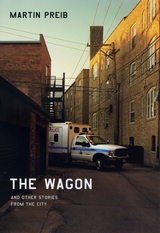
Martin Preib is an officer in the Chicago Police Department—a beat cop whose first assignment as a rookie policeman was working on the wagon that picks up the dead. Inspired by Preib’s daily life on the job, The Wagon and Other Stories from the City chronicles the outer and inner lives of both a Chicago cop and the city itself.
The book follows Preib as he transports body bags, forges an unlikely connection with his female partner, trains a younger officer, and finds himself among people long forgotten—or rendered invisible—by the rest of society. Preib recounts how he navigates the tenuous labyrinths of race and class in the urban metropolis, such as a domestic disturbance call involving a gang member and his abused girlfriend or a run-in with a group of drunk yuppies. As he encounters the real and imagined geographies of Chicago, the city reveals itself to be not just a backdrop, but a central force in his narrative of life and death. Preib’s accounts, all told in his breathtaking prose, come alive in ways that readers will long remember.
“A remarkable book.”—Malcolm Gladwell, San Francisco Chronicle
Deaths of civilians at the hands of on-duty police are in the national spotlight as never before. How many killings by police occur annually? What circumstances provoke police to shoot to kill? Who dies? The lack of answers to these basic questions points to a crisis in American government that urgently requires the attention of policy experts. When Police Kill is a groundbreaking analysis of the use of lethal force by police in the United States and how its death toll can be reduced.
Franklin Zimring compiles data from federal records, crowdsourced research, and investigative journalism to provide a comprehensive, fact-based picture of how, when, where, and why police resort to deadly force. Of the 1,100 killings by police in the United States in 2015, he shows, 85 percent were fatal shootings and 95 percent of victims were male. The death rates for African Americans and Native Americans are twice their share of the population.
Civilian deaths from shootings and other police actions are vastly higher in the United States than in other developed nations, but American police also confront an unusually high risk of fatal assault. Zimring offers policy prescriptions for how federal, state, and local governments can reduce killings by police without risking the lives of officers. Criminal prosecution of police officers involved in killings is rare and only necessary in extreme cases. But clear administrative rules could save hundreds of lives without endangering police officers.
“Roughly 1,000 Americans die each year at the hands of the police…The civilian body count does not seem to be declining, even though violent crime generally and the on-duty deaths of police officers are down sharply…Zimring’s most explosive assertion—which leaps out…—is that police leaders don’t care…To paraphrase the French philosopher Joseph de Maistre, every country gets the police it deserves.”
—Bill Keller, New York Times
“If you think for one second that the issue of cop killings doesn’t go to the heart of the debate about gun violence, think again. Because what Zimring shows is that not only are most fatalities which occur at the hands of police the result of cops using guns, but the number of such deaths each year is undercounted by more than half!…[A] valuable and important book…It needs to be read.”
—Mike Weisser, Huffington Post
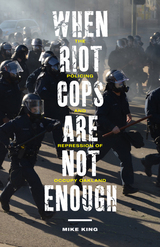
Drawn from King’s intensive field work, the book focuses on the physical, legal, political, and ideological dimensions of repression—in the streets, in courtrooms, in the media, in city hall, and within the movement itself—When Riot Cops Are Not Enough highlights the central role of political legitimacy, both for mass movements seeking to create social change, as well as for governmental forces seeking to control such movements. Although Occupy Oakland was different from other Occupy sites in many respects, King shows how the contradictions it illuminated within both social movement and police strategies provide deep insights into the nature of protest policing generally, and a clear map to understanding the full range of social control techniques used in North America in the twenty-first century.
A modern-day neo-noir, The Wolf at the End of the Block remixes several different genres to present a new kind of thriller that is socially conscious, relentlessy suspenseful, and bitingly funny. Praised for its power and grace, the play is one of Holter’s most unforgettable.
The Wolf at the End of the Block is one of seven plays in Holter’s Rightlynd Saga, set in Chicago’s fictional fifty-first ward. The other plays in the cycle are Rightlynd, Exit Strategy, Sender, Prowess, Red Rex, and Lottery Day.
READERS
Browse our collection.
PUBLISHERS
See BiblioVault's publisher services.
STUDENT SERVICES
Files for college accessibility offices.
RECENTLY PUBLISHED



UChicago Accessibility Resources
home | accessibility | search | about | contact us
BiblioVault ® 2001 - 2024
The University of Chicago Press