
 A SCHOLARLY BOOK REPOSITORY
64 start with A start with A
Abiding Grace navigates the competing Hegelian and Kierkegaardian trajectories born out of the Reformation and finds Taylor arguing from spaces in between, showing how both narratives have shaped recent philosophy and culture. For Hegel, Luther’s internalization of faith anticipated the modern principle of autonomy, which reached its fullest expression in speculative philosophy. The closure of the Hegelian system still endures in the twenty-first century in consumer society, financial capitalism, and virtual culture. For Kierkegaard, by contrast, Luther’s God remains radically transcendent, while finite human beings and their world remain fully dependent. From this insight, Heidegger and Derrida developed an alternative view of time in which a radically open future breaks into the present to transform the past, demonstrating that, far from autonomous, life is a gift from an Other that can never be known.
Offering an alternative genealogy of deconstruction that traces its pedigree back to readings of Paul by way of Luther, Abiding Grace presents a thoroughgoing critique of modernity and postmodernity’s will to power and mastery. In this new philosophical and theological vision, history is not over and the future remains endlessly open.

A comprehensive history of abortion in Renaissance Italy.
In this authoritative history, John Christopoulos provides a provocative and far-reaching account of abortion in sixteenth- and seventeenth-century Italy. His poignant portraits of women who terminated or were forced to terminate pregnancies offer a corrective to longstanding views: he finds that Italians maintained a fundamental ambivalence about abortion. Italians from all levels of society sought, had, and participated in abortions. Early modern Italy was not an absolute anti-abortion culture, an exemplary Catholic society centered on the “traditional family.” Rather, Christopoulos shows, Italians held many views on abortion, and their responses to its practice varied.
Bringing together medical, religious, and legal perspectives alongside a social and cultural history of sexuality, reproduction, and the family, Christopoulos offers a nuanced and convincing account of the meanings Italians ascribed to abortion and shows how prevailing ideas about the practice were spread, modified, and challenged. Christopoulos begins by introducing readers to prevailing ideas about abortion and women’s bodies, describing the widely available purgative medicines and surgeries that various healers and women themselves employed to terminate pregnancies. He then explores how these ideas and practices ran up against and shaped theology, medicine, and law. Catholic understanding of abortion was changing amid religious, legal, and scientific debates concerning the nature of human life, women’s bodies, and sexual politics. Christopoulos examines how ecclesiastical, secular, and medical authorities sought to regulate abortion, and how tribunals investigated and punished its procurers—or did not, even when they could have. Abortion in Early Modern Italy offers a compelling and sensitive study of abortion in a time of dramatic religious, scientific, and social change.
Drawing on archival research, Dromi traces the genesis of the Red Cross to a Calvinist movement working in mid-nineteenth-century Geneva. He shows how global humanitarian policies emerged from the Red Cross founding members’ faith that an international volunteer program not beholden to the state was the only ethical way to provide relief to victims of armed conflict. By illustrating how Calvinism shaped the humanitarian field, Dromi argues for the key role belief systems play in establishing social fields and institutions. Ultimately, Dromi shows the immeasurable social good that NGOs have achieved, but also points to their limitations and suggests that alternative models of humanitarian relief need to be considered.
Adam’s visit prompted Creech to re-evaluate his belief that homosexuality was a sin, and to research the scriptural basis for the church’s position. He determined that the church was mistaken, that scriptural translations and interpretations had been botched and dangerously distorted. As a Christian, Creech came to believe that discriminating against lesbian, gay, bisexual, and transgender people was morally wrong. This understanding compelled him to perform same-gender commitment ceremonies, which conflicted with church directives. Creech was tried twice by The United Methodist Church, and, after the second trial, his ordination credentials were revoked. Adam’s Gift is a moving story and an important chapter in the unfinished struggle for lesbian, gay, bisexual, and transgender civil and human rights.
Investigate how Deuteronomy incorporates vulnerable, displaced people
Deuteronomy addresses social contexts of widespread displacement, an issue affecting 65 million people today. In this book Mark R. Glanville investigates how Deuteronomy fosters the integration of the stranger as kindred into the community of Yahweh. According to Deuteronomy, displaced people are to be enfolded within the household, within the clan, and within the nation. Glanville argues that Deuteronomy demonstrates the immense creativity that communities may invest in enfolding displaced and vulnerable people. Inclusivism is nourished through social law, the law of judicial procedure, communal feasting, and covenant renewal. Deuteronomy’s call to include the stranger as kindred presents contemporary nation-states with an opportunity and a responsibility to reimagine themselves and their disposition toward displaced strangers today.
Features:
- Exploration of the relationship of ancient Israel’s social history to biblical texts
- An integrative methodology that brings together literary-historical, legal, sociological, comparative, literary, and theological approaches
- A thorough study of Israelite identity and ethnicity

In Calvin’s Geneva, the changes associated with the Reformation were particularly abrupt and far-reaching, in large part owing to John Calvin himself. Adultery and Divorce in Calvin’s Geneva makes two major contributions to our understanding of this time. The first is to the history of divorce. The second is in illustrating the operations of the Consistory of Geneva—an institution designed to control in all its variety the behavior of the entire population—which was established at Calvin’s insistence in 1541. This mandate came shortly after the city officially adopted Protestantism in 1536, a time when divorce became legally possible for the first time in centuries.
Robert Kingdon illustrates the changes that accompanied the earliest Calvinist divorces by examining in depth a few of the most dramatic cases and showing how divorce affected real individuals. He considers first, and in the most detail, divorce for adultery, the best-known grounds for divorce and the best documented. He also covers the only other generally accepted grounds for these early divorces—desertion.
The second contribution of the book, to show the work of the Consistory of Geneva, is a first step toward a fuller study of the institution. Kingdon has supervised the first accurate and complete transcription of the twenty-one volumes of registers of the Consistory and has made the first extended use of these materials, as well as other documents that have never before been so fully utilized.

How aesthetic religious experiences can create solidarity in marginalized communities
Latine Catholics have used Our Lady of Guadalupe as a symbol in democratic campaigns ranging from the Chicano movement and United Farm Workers’ movements to contemporary calls for just immigration reform. In diverse ways, these groups have used Guadalupe’s symbol and narrative to critique society’s basic structures—including law, policy, and institutions—while seeking to inspire broader participation and representation among marginalized peoples in US democracy.
Yet, from the outside, Guadalupe’s symbol is illegible within a liberal political framework that seeks to protect society’s basic structures from religious encroachment by relegating religious speech, practices, and symbols to the background.
The Aesthetics of Solidarity argues for the capacity of Our Lady of Guadalupe—and similar religious symbols—to make democratic claims. Author Nichole M. Flores exposes the limitations of political liberalism’s aesthetic responses to religious difference, turning instead to Latine theological aesthetics and Catholic social thought to build a framework for interpreting religious symbols in our contemporary pluralistic and participatory democratic life. By offering a lived theology of Chicanx Catholics in Denver, Colorado, and their use of Guadalupe in the pursuit of justice in response to their neighborhood’s gentrification, this book provides an important framework for a community of interpretation where members stand in solidarity to respond to justice claims made from diverse religious and cultural communities.
Contributors. Astrid Bochow, Marian Burchardt, Rafael Cazarin, Hansjörg Dilger, Alessandro Gusman, Murtala Ibrahim, Peter Lambertz, Isabelle L. Lange, Isabel Mukonyora, Benedikt Pontzen, Hanspeter Reihling, Matthew Wilhelm-Solomon
Building on the vitality and enthusiasm of the Church in Africa, it is important to lift their faith through scholarly research and academic reflections. We cannot fully appreciate the dedication, commitment and perseverance of the Catholic community throughout the African continent if we do not know the truth of their sufferings and persecution and understand their resilience in the light of faith. This collection, drawn from the halls of academia, provides an important contribution to the understanding and advancement of Catholic Africa, following the insights and enlightenment of Pope Emeritus Benedict. It is my hope that these essays will enrich your understanding and experience of the Catholic faith.
— From the Preface by Seán Patrick Cardinal O’Malley
In this first major study of its kind, Suzanne Preston Blier examines the artworks of the contemporary vodun cultures of southern Benin and Togo in West Africa as well as the related voudou traditions of Haiti, New Orleans, and historic Salem, Massachusetts. Blier employs a variety of theoretically sophisticated psychological, anthropological, and art historical approaches to explore the contrasts inherent in the vodun arts—commoners versus royalty, popular versus elite, "low" art versus "high." She examines the relation between art and the slave trade, the psychological dynamics of artistic expression, the significance of the body in sculptural expression, and indigenous perceptions of the psyche.
Throughout, Blier pushes African art history to a new height of cultural awareness that recognizes the complexity of traditional African societies as it acknowledges the role of social power in shaping aesthetics and meaning generally. This book will be of critical importance not only to those concerned with African, African American, and Caribbean art, but also to anthropologists, African diaspora scholars, students of comparative religion and comparative psychology, and anyone fascinated by the traditions of voudou and vodun.
"An extraordinary tour de force."—Choice
"Extraordinarily detailed....Blier's examination of the entire, often mysterious history of vodun is...in a word, definitive."—Booklist
"A serious study that concentrates on the hidden power of objects and the meaning behind that potency is long overdue. Welcome Susan Blier's African Vodun....Certainly a must for...those concerned with the psychology of art."—Janet L. Stanley, Art Documentation
"[Blier] is usually sensitive to the need to resist imposing Western artistic values and academic methodologies inappropriately upon such art. But she offers the reader a gift even more precious; she offers rare insights into how various art forms—sculpture and home architecture in particular—yield meanings for the African users of such art.—Norman Weinstein, Boston Book Review
Religion, Mark C. Taylor argues in After God, is more complicated than either its defenders or critics think and, indeed, is much more influential than any of us realize. Our world, Taylor maintains, is shaped by religion even when it is least obvious. Faith and value, he insists, are unavoidable and inextricably interrelated for believers and nonbelievers alike.
The first comprehensive theology of culture since the pioneering work of Paul Tillich, After God redefines religion for our contemporary age. This volumeis a radical reconceptualization of religion and Taylor’s most pathbreaking work yet, bringing together various strands of theological argument and cultural analysis four decades in the making.
Praise for Mark C. Taylor
“The distinguishing feature of Taylor’s career is a fearless, or perhaps reckless, orientation to the new and to whatever challenges orthodoxy. . . . Taylor’s work is playful, perverse, rarefied, ingenious, and often brilliant.”—New York Times Magazine
Without Trinitarian framework ancient and new idols emerge, as the Covid-19 tragedies have shown. Yet post-pandemic must be a moment of clarity and realism, as we can see how necessary it is that humanity place itself in relation to something beyond. The post-modern journey, however, must be in the spirit of Christian humanism or else any so-called progress will no longer be unable to speak authentically of our humanity. That is to say, the relational dimension of human life will be erased right along with the other ills that plague our earth.
The tradition of agape, or unconditional love, is not exclusive to any religion. It is a primary underlying principle found in religions worldwide. The concept of altruistic love challenges the spiritual person to "love your enemies" or to "love without thought of return." It is a love that flows out to others through compassion, kindness, tenderness, and charitable giving.
Buddhists have a path of compassion, where caring for others becomes the motivating force behind existence. Hindus have a branch of yoga, the heart-centered path, that leads to enlightenment through an overwhelming love for God that takes the form of loving all humanity. Eastern religions, such as Taoism and Confucianism, see transcendent love as essential to true wisdom.
Love is a universal theme of love found in all religious traditions, Buddhist, Christian, Islam, or others. As we realize that all religions have this spiritual principle of love at their core, we can develop a sense of shared humanity. The religious tradition of agape love examined in this book will inspire those who are learning to grow in compassion and love for all people.
A growing number of studies indicate that older people in the church form social ties that have a significant positive impact on their physical and mental health. In Aging in the Church, Neal Krause comprehensively assesses the various relationships that stem from church involvement.
Among the many types of relationships Krause explores are close companion friendships, social-support structures (such as assistance provided by fellow church members during difficult times), and interactions that arise from Bible study and prayer groups. Through his thorough investigation of the underlying links between these relationships and the ways they relate to attributes like forgiveness, hope, gratitude, and altruism, the author hopes to explain why older adults who are involved in religious activities tend to enjoy better physical and mental health than those who are not engaged in religious communities. Going beyond merely reviewing the existing research on this subject, Aging in the Church provides a blueprint for taking research on church-based social relationships and health to the next level by identifying conceptual and methodological issues that investigators will confront as they delve more deeply into these connections.
Though these are complex issues, readers will find plain language and literature drawn from a wide array of disciplines, including sociology, psychology, public health, medicine, psychiatry, nursing, social work, gerontology, and theology. Literature, poetry, philosophy, and ethical ideas supplement the insights from these diverse fields. As a result, Aging in the Church takes on a genuinely interdisciplinary focus that will appeal to various scholars, researchers, and students.
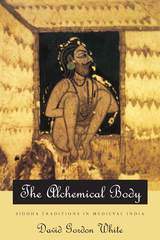
"White proves a skillful guide in disentangling historical and theoretical complexities that have thus far bedeviled the study of these influential aspects of medieval Indian culture."—Yoga World
"Anyone seriously interested in finding out more about authentic tantra, original hatha yoga, embodied liberation . . . sacred sexuality, paranormal abilities, healing, and of course alchemy will find White's extraordinary book as fascinating as any Tom Clancy thriller."—Georg Feuerstein, Yoga Journal
Mauss describes a complex process of the broadening of these self-defined lineages during the last part of the twentieth century as the modern Mormon church continued its world-wide expansion through massive missionary work.
Mauss contends that Mormon constructions of racial identity have not necessarily affected actual behavior negatively and that in some cases Mormons have shown greater tolerance than other groups in the American mainstream.
Employing a broad intellectual historical analysis to identify shifts in LDS behavior over time, All Abraham’s Children is an important commentary on current models of Mormon historiography.
The book is the first of its kind to draw together in conversation the views of the early Church, contemporary biblical and theological scholarship, and post-conciliar teachings. Steck develops a comprehensive, Catholic theology of animals based on an in-depth exploration of Catholicism's fundamental doctrines—trinitarian theology, Christology, pneumatology, eschatology, and soteriology.
All God's Animals makes two central claims. First, we can hope that God will include animals of the present age in the kingdom inaugurated by Christ. Second, because of this inclusion, our responses to animals should be guided by the values of the kingdom.
As Christians await the final liberation of all creation, they are to be witnesses to God’s kingdom by embodying its ideals in their relations with animal life. Because the kingdom's fullness is yet to come and because our world remains marked by the wounds of sin, however, Christian treatment of animals will at times require acts that are at odds with the kingdom’s ideals (for example, those causing suffering and death). Steck examines each of these ideas and explores all of their complexities.
This anthology brings together, for the first time, leading essays and book chapters from theologians, philosophers, and scientists on their research on ethics, altruism, and love. Because the general consensus today is that scholarship in moral theory requires empirical research, the arguments of the leading scholars presented in this book will be fundamental to those examining issues in love, ethics, religion, and science.
The first half of The Altruism Reader offers essential selections from religious texts, leading contemporary scholars, and cutting-edge ethicists. Buddhism, Christianity, Hinduism, Islam, and Judaism are represented. Among the highly respected writers are Thomas Aquinas, the Dalai Lama, Thich Nhat Hanh, John Polkinghorne, Stephen Pope, Louis Fischer, Amira Shamma Abdin, Katharine Doob Sakenfeld, and Daniel Day Williams.
The book’s second half features primary readings on love and altruism from the sciences. Here the focus is on anthropology, psychology, sociology, biology, and neurology, with material written by Daniel C. Batson, David Sloan Wilson, Robert Wright, Stephen G. Post, Robert Axelrod, Richard Dawkins, Holmes Rolston III, and other renowned scientists and philosophers.
“Virtually all people act—and often talk—as if they have some clue about love. We speak about loving food, falling in love, loving God, feeling loved, and loving a type of music. We say that love hurts, love waits, love stinks, and love means never having to say you’re sorry. We use the word and its derivatives in a wide variety of ways . . . . My definition of love is this: To love is to act intentionally, in sympathetic response to others (including God), to promote well-being.” —Thomas Jay Oord
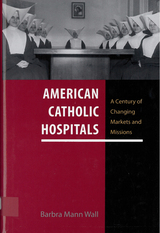
In American Catholic Hospitals, Barbra Mann Wall chronicles changes in Catholic hospitals during the twentieth century, many of which are emblematic of trends in the American healthcare system.
Wall explores the Church's struggle to safeguard its religious values. As hospital leaders reacted to increased political, economic, and societal secularization, they extended their religious principles in the areas of universal health care and adherence to the Ethical and Religious Values in Catholic Hospitals, leading to tensions between the Church, government, and society. The book also examines the power of women--as administrators, Catholic sisters wielded significant authority--as well as the gender disparity in these institutions which came to be run, for the most part, by men. Wall also situates these critical transformations within the context of the changing Church policy during the 1960s. She undertakes unprecedented analyses of the gendered politics of post-Second Vatican Council Catholic hospitals, as well as the effect of social movements on the practice of medicine.

Thiess’s interdisciplinary study examines America’s past and present imperial projects, from the Hawaiian Islands to the Eastern Seaboard, as they proliferate in popular story forms. By interrogating American myths, legends, and fantastic narratives across an impressive array of genres, including folk narratives, science fiction, movies, and more, Thiess exposes how the “myth of redemptive violence” manifests in contemporary constructions of America’s fantastic imaginaries.
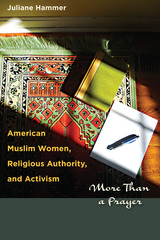
Following the events of September 11, 2001, American Muslims found themselves under unprecedented scrutiny. Muslim communities in the United States suffered from negative representations of their religion, but they also experienced increased interest in aspects of their faith and cultures. They seized the opportunity to shape the intellectual contribution of American Muslims to contemporary Muslim thought as never before. Muslim women in particular—often assumed to be silenced, oppressed members of their own communities—challenged stereotypes through their writing, seeking to express what it means to be a Muslim woman in America and carrying out intra-Muslim debates about gender roles and women’s participation in society. Hammer looks at the work of significant female American Muslim writers, scholars, and activists, using their writings as a lens for a larger discussion of Muslim intellectual production in America and beyond.
Centered on the controversial women-led Friday prayer in March 2005, Hammer uses this event and its aftermath to address themes of faith, community, and public opinion. Tracing the writings of American Muslim women since 1990, the author covers an extensive list of authors, including Amina Wadud, Leila Ahmed, Asma Barlas, Riffat Hassan, Mohja Kahf, Azizah al-Hibri, Asra Normani, and Asma Gull Hasan. Hammer deftly examines each author’s writings, demonstrating that the debates that concern American Muslim women are at the heart of modern Muslim debates worldwide. While gender is the catalyst for Hammer’s study, her examination of these women’s intellectual output touches on themes central to contemporary Islam: authority, tradition, Islamic law, justice, and authenticity.

Revolutions and aborted revolutions and bitter civil and "local" wars in the 1980s and since have raised new questions about national security, its definition, and its implementation. Nevertheless, a number of basic philosophical and political issues remain constant at a level deeper than tactical considerations. These are what eight accomplished philosophers, political scientists, Christian ethicists, and policymakers came together to discuss. They ask the fundamental and perduring questions of pacifism, war, intervention, and political negotiation. They focus on such problems as ascertaining the role of the churches in the quest for peace, defining "national interest" and "national purpose," and construing intervention in other that strictly unilateral terms.

"O'Brien's bravura performance [is] seductive in its intellectual sweep and literary assurance."—Toby Barnard, Times Literary Supplement
"Has the magical insistence which Conor Cruise O'Brien can produce at his best. . . . Where he looks back to his own childhood the book shines. He writes of his mother and father with effortless grace and candor, with a marvelous, elegant mix of affection and detachment."—Observer
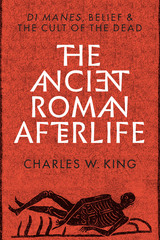
In ancient Rome, it was believed some humans were transformed into special, empowered beings after death. These deified dead, known as the manes, watched over and protected their surviving family members, possibly even extending those relatives’ lives. But unlike the Greek hero-cult, the worship of dead emperors, or the Christian saints, the manes were incredibly inclusive—enrolling even those without social clout, such as women and the poor, among Rome's deities. The Roman afterlife promised posthumous power in the world of the living.
While the manes have often been glossed over in studies of Roman religion, this book brings their compelling story to the forefront, exploring their myriad forms and how their worship played out in the context of Roman religion’s daily practice. Exploring the place of the manes in Roman society, Charles King delves into Roman beliefs about their powers to sustain life and bring death to individuals or armies, examines the rituals the Romans performed to honor them, and reclaims the vital role the manes played in the ancient Roman afterlife.
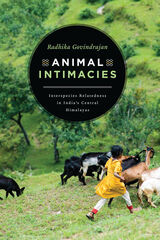
Built on extensive ethnographic fieldwork in the mountain villages of India’s Central Himalayas, Radhika Govindrajan’s book explores the number of ways that human and animal interact to cultivate relationships as interconnected, related beings. Whether it is through the study of the affect and ethics of ritual animal sacrifice, analysis of the right-wing political project of cow-protection, or examination of villagers’ talk about bears who abduct women and have sex with them, Govindrajan illustrates that multispecies relatedness relies on both difference and ineffable affinity between animals. Animal Intimacies breaks substantial new ground in animal studies, and Govindrajan’s detailed portrait of the social, political and religious life of the region will be of interest to cultural anthropologists and scholars of South Asia as well.
The issues of animal rights and the use of animals in scientific experimentation are fraught with controversy. In an effort to define the bases of such strong emotional response towards an ethical issue, this book presents the teachings of the major religions of the world concerning animals and, more specifically, their use in science. Judaism, Christianity, Islam, Hinduism, Jainism, Buddhism, and Confucianism are represented in this collection of eight essays by religious authorities.
Scriptural writings, written and oral tradition, law, religious parables, and even folklore are used to illustrate the position of each religion on this question. When there are no specific teachings regarding the relatively recent use of animals in scientific research, conclusions are derived from the view of man’s relations with the rest of the world.
In addition to the essays dealing with specific religions, there is also a chapter detailing recent uses of animals in scientific research throughout the world. It is estimated that 500 million animals a year are sacrificed to science. This volume attempts to find out for what purposes they are used, under what conditions, and with what legal protection.
Based on a conference which explored the views of religion toward scientific experimentation on animals, this collection of essays addresses an explosive issue from a number of different perspectives. Animal Sacrifices is a fair-minded and informative discussion of a contemporary ethical dilemma.
Contributors: John Bowker, Sidney Gendin, Rabbi Dr. J. David Bleich, Andrew Linzey, James Gaffney, Al-Hafiz, B. Z. Masri, Basant K. Lal, Christopher Chapple, Rodney L. Taylor, and the editor.

In Linzey’s view, animal rights is synonymous with animal theology. Linzey argues that historical theology, creatively defined, must reject humanocentricity. Questioning the assumption that if theology is to speak on this issue, “it must only do so on the side of the oppressors,” Linzey investigates not only the abstractions of theory, but also the realities of hunting, animal experimentation, and genetic engineering. His is a pioneering, vital, and unequivocally Christian voice advocating on behalf of the countless creatures who share our world and our lives but cannot speak for themselves.
studies on animals and theology ever published. Contributors from both
sides of the Atlantic tackle fundamental questions about theology and
how it is put into practice.
Do animals have immortal souls? Does Christ's reconciling work include
animals? Contributors address these issues and more in the context of
scriptural perspectives, the Christian tradition, historical disputes,
and obligations to animals.
As Andrew Linzey points out in his introduction, it cannot be right for
theological practitioners to carry on their business as though the world
of animals were invisible. Mainstream Christianity still propagates a
range of ideas about animals that are hugely detrimental to their status
and welfare. This important volume argues that it is time for a change.
American evangelicalism often appears as a politically monolithic, textbook red-state fundamentalism that elected George W. Bush, opposes gay marriage, abortion, and evolution, and promotes apathy about global warming. Prominent public figures hold forth on these topics, speaking with great authority for millions of followers. Authors Stephens and Giberson, with roots in the evangelical tradition, argue that this popular impression understates the diversity within evangelicalism—an often insular world where serious disagreements are invisible to secular and religiously liberal media consumers. Yet, in the face of this diversity, why do so many people follow leaders with dubious credentials when they have other options? Why do tens of millions of Americans prefer to get their science from Ken Ham, founder of the creationist Answers in Genesis, who has no scientific expertise, rather than from his fellow evangelical Francis Collins, current Director of the National Institutes of Health?
Exploring intellectual authority within evangelicalism, the authors reveal how America’s populist ideals, anti-intellectualism, and religious free market, along with the concept of anointing—being chosen by God to speak for him like the biblical prophets—established a conservative evangelical leadership isolated from the world of secular arts and sciences.
Today, charismatic and media-savvy creationists, historians, psychologists, and biblical exegetes continue to receive more funding and airtime than their more qualified counterparts. Though a growing minority of evangelicals engage with contemporary scholarship, the community’s authority structure still encourages the “anointed” to assume positions of leadership.
The contributors examine the contours of Christianity among diverse groups: Catholics in India, the Philippines, and Bolivia, and Seventh-Day Adventists in Madagascar; the Swedish branch of Word of Life, a charismatic church based in the United States; and Protestants in Amazonia, Melanesia, and Indonesia. Highlighting the wide variation in what it means to be Christian, the contributors reveal vastly different understandings and valuations of conversion, orthodoxy, Scripture, the inspired word, ritual, gifts, and the concept of heaven. In the process they bring to light how local Christian practices and beliefs are affected by encounters with colonialism and modernity, by the opposition between Catholicism and Protestantism, and by the proximity of other religions and belief systems. Together the contributors show that it not sufficient for anthropologists to assume that they know in advance what the Christian experience is; each local variation must be encountered on its own terms.
Contributors. Cecilia Busby, Fenella Cannell, Simon Coleman, Peter Gow, Olivia Harris, Webb Keane, Eva Keller, David Mosse, Danilyn Rutherford, Christina Toren, Harvey Whitehouse
"A penetrating analysis of the Christian Right's antigay agenda and of how that agenda is derived from the Christian Right's peculiar vision of American history and the Christian faith."—Rev. Peter J. Gomes, Boston Book Review
"Public intellectualism at its best. . . . A comprehensive summary of the conservative Protestant worldview."—Michael Joseph Gross, Boston Phoenix Literary Section
"Presents considerable information not previously part of the nation's political discourse. . . . [Herman] dissects the Christian Right's antigay stance dispassionately giving, as it were, the devil his due. For anyone on either side of this passionate and important conflict, that is an impressive accomplishment."—Hastings Wyman, Jr., Washington Post Book World

Originally published in German in 1988, The Apocalypse in Germany is now available for the first time in English. A fitting subject for the dawn of the new millennium, the apocalypse has intrigued humanity for the last two thousand years, serving as both a fascinating vision of redemption and a profound threat.
A cross-disciplinary study, The Apocalypse in Germany analyzes fundamental aspects of the apocalypse as a religious, political, and aesthetic phenomenon. Author Klaus Vondung draws from religious, philosophical, and political texts, as well as works of art and literature. Using classic Jewish and Christian apocalyptic texts as symbolic and historical paradigms, Vondung determines the structural characteristics and the typical images of the apocalyptic worldview. He clarifies the relationship between apocalyptic visions and utopian speculations and explores the question of whether modern apocalypses can be viewed as secularizations of the Judeo-Christian models.
Examining sources from the eighteenth century to the present, Vondung considers the origins of German nationalism, World War I, National Socialism, and the apocalyptic tendencies in Marxism as well as German literature—from the fin de siècle to postmodernism. His analysis of the existential dimension of the apocalypse explores the circumstances under which particular individuals become apocalyptic visionaries and explains why the apocalyptic tradition is so prevalent in Germany.
The Apocalypse in Germany offers an interdisciplinary perspective that will appeal to a broad audience. This book will also be of value to readers with an interest in German studies, as it clarifies the riddles of Germany's turbulent history and examines the profile of German culture, particularly in the past century.
An alternative understanding of apocalyptic eschatology in the Gospel of Matthew
Matthew’s eschatological imageries of judgment are often identified as apocalyptic and referred to as Matthew’s apocalyptic discourses. In this volume Elekosi F. Lafitaga reexamines Matthew’s vision of the sheep and goats in the judgment of the nations, which are often interpreted as metaphors for the saved and the condemned. Lafitaga views these images in the wider context of the rhetoric of apocalyptic communication stretching back to Matthew 3. This broader context reveals that the vision of Matthew 25 serves to exhort Israel in the here and now according to the torah, with salvation for Israel involving an indispensable responsibility to love and serve humanity. Central to Lafitaga’s analysis is the highly probable scenario that the material in Matthew is dependent on the Book of Dreams (1 Enoch 83–90).
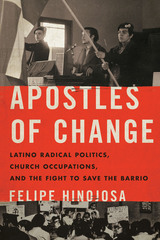
2021 Finalist Raul Yzaguirre Best Political/Current Affairs Book, International Latino Book Awards
Winner of the Texas Association of Chicanos in Higher Education Inaugural Book Award
Unraveling the intertwined histories of Latino radicalism and religion in urban America, this book examines how Latino activists transformed churches into staging grounds for protest against urban renewal and displacement.
In the late 1960s, the American city found itself in steep decline. An urban crisis fueled by federal policy wreaked destruction and displacement on poor and working-class families. The urban drama included religious institutions, themselves undergoing fundamental change, that debated whether to stay in the city or move to the suburbs. Against the backdrop of the Black and Brown Power movements, which challenged economic inequality and white supremacy, young Latino radicals began occupying churches and disrupting services to compel church communities to join their protests against urban renewal, poverty, police brutality, and racism.
Apostles of Change tells the story of these occupations and establishes their context within the urban crisis; relates the tensions they created; and articulates the activists' bold, new vision for the church and the world. Through case studies from Chicago, Los Angeles, New York City, and Houston, Felipe Hinojosa reveals how Latino freedom movements frequently crossed boundaries between faith and politics and argues that understanding the history of these radical politics is essential to understanding the dynamic changes in Latino religious groups from the late 1960s to the early 1980s.

How do mothers reconcile conflicting loyalties--to their religious traditions, and to the daughters whose freedoms are also constrained by those traditions? Searching for answers, Tova Hartman Halbertal interviewed mothers of teenage daughters in religious communities: Catholics in the United States, Orthodox Jews in Israel.
Sounding surprisingly alike, both groups described conscious struggles between their loyalties and talked about their attempts to make sense of and pass on their multiple commitments. They described accommodations and rationalizations and efforts to make small changes where they felt that their faith unjustly subordinated women. But often they did not feel they could tell their daughters how troubled they were. To keep their daughters safe within the protective culture of their ancestors, the mothers had to hide much of themselves in the hope that their daughters would know them more completely in the future.
Moving and unique, this book illuminates one of the moral questions of our time--how best to protect children and preserve community, without being imprisoned by tradition.
Economists and theologians usually inhabit different intellectual worlds. Economists investigate the workings of markets and tend to set ethical questions aside. Theologians, anxious to take up concerns raised by market outcomes, often dismiss economics and lose insights into the influence of market incentives on individual behavior. Mary L. Hirschfeld, who was a professor of economics for fifteen years before training as a theologian, seeks to bridge these two fields in this innovative work about economics and the thought of St. Thomas Aquinas.
According to Hirschfeld, an economics rooted in Thomistic thought integrates many of the insights of economists with a larger view of the good life, and gives us critical purchase on the ethical shortcomings of modern capitalism. In a Thomistic approach, she writes, ethics and economics cannot be reconciled if we begin with narrow questions about fair wages or the acceptability of usury. Rather, we must begin with an understanding of how economic life serves human happiness. The key point is that material wealth is an instrumental good, valuable only to the extent that it allows people to flourish. Hirschfeld uses that insight to develop an account of a genuinely humane economy in which pragmatic and material concerns matter but the pursuit of wealth for its own sake is not the ultimate goal.
The Thomistic economics that Hirschfeld outlines is thus capable of dealing with our culture as it is, while still offering direction about how we might make the economy better serve the human good.
To dismiss the work of philosophers and theologians of the past because of their limited perceptions of the whole of humankind is tantamount to tossing the tot out with the tub water. Such is the case when feminist scholars of religion and ethics confront Thomas Aquinas, whose views of women can only be described as misogynistic. Rather than dispense with him, Susanne DeCrane seeks to engage Aquinas and reflect his otherwise compelling thought through the prism of feminist theology, hermeneutics, and ethics.
Focusing on one of Aquinas's great intellectual contributions, the fundamental notion of "the common good"—in short, the human will toward peace and justice—DeCrane demonstrates the currency of that notion through a contemporary social issue: women's health care in the United States and, specifically, black women and breast cancer. In her skillful re-engagement with Aquinas, DeCrane shows that certain aspects of religious traditions heretofore understood as oppressive to women and minority groups can actually be parsed, "retrieved," and used to rectify social ills.
Aquinas, Feminism, and the Common Good is a bold and intellectually rigorous feminist retrieval of an important text by a Catholic scholar seeking to remain in the tradition, while demanding that the tradition live up to its emphasis on human equity and justice.
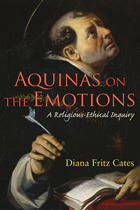
All of us want to be happy and live well. Sometimes intense emotions affect our happiness—and, in turn, our moral lives. Our emotions can have a significant impact on our perceptions of reality, the choices we make, and the ways in which we interact with others. Can we, as moral agents, have an effect on our emotions? Do we have any choice when it comes to our emotions?
In Aquinas on the Emotions, Diana Fritz Cates shows how emotions are composed as embodied mental states. She identifies various factors, including religious beliefs, intuitions, images, and questions that can affect the formation and the course of a person's emotions. She attends to the appetitive as well as the cognitive dimension of emotion, both of which Aquinas interprets with flexibility. The result is a powerful study of Aquinas that is also a resource for readers who want to understand and cultivate the emotional dimension of their lives.
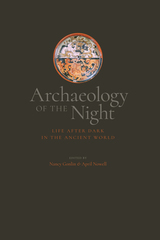
How did ancient peoples experience, view, and portray the night? What was it like to live in the past when total nocturnal darkness was the norm? Archaeology of the Night explores the archaeology, anthropology, mythology, iconography, and epigraphy of nocturnal practices and questions the dominant models of daily ancient life. A diverse team of experienced scholars uses a variety of methods and resources to reconstruct how ancient peoples navigated the night and what their associated daily—and nightly—practices were.
This collection challenges modern ideas and misconceptions regarding the night and what darkness and night symbolized in the ancient world, and it highlights the inherent research bias in favor of “daytime” archaeology. Numerous case studies from around the world (including Oman, Mesoamerica, Scandinavia, Rome, Great Zimbabwe, Indus Valley, Peru, and Cahokia) illuminate subversive, social, ritual, domestic, and work activities, such as witchcraft, ceremonies, feasting, sleeping, nocturnal agriculture, and much more. Were there artifacts particularly associated with the night? Authors investigate individuals and groups (both real and mythological) who share a special connection to nighttime life.
Reconsidering the archaeological record, Archaeology of the Night views sites, artifacts, features, and cultures from a unique perspective. This book is relevant to anthropologists and archaeologists and also to scholars of human geography, history, astronomy, sensory studies, human biology, folklore, and mythology.
Contributors: Susan Alt, Anthony F. Aveni, Jane Eva Baxter, Shadreck Chirikure, Minette Church, Jeremy D. Coltman, Margaret Conkey, Tom Dillehay, Christine C. Dixon, Zenobie Garrett, Nancy Gonlin, Kathryn Kamp, Erin Halstad McGuire, Abigail Joy Moffett, Jerry D. Moore, Smiti Nathan, April Nowell, Scott C. Smith, Glenn R. Storey, Meghan Strong, Cynthia Van Gilder, Alexei Vranich, John C. Whittaker, Rita Wright
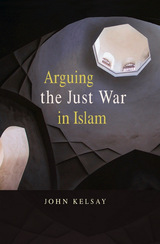
Jihad, with its many terrifying associations, is a term widely used today, though its meaning is poorly grasped. Few people understand the circumstances requiring a jihad, or "holy" war, or how Islamic militants justify their violent actions within the framework of the religious tradition of Islam. How Islam, with more than one billion followers, interprets jihad and establishes its precepts has become a critical issue for both the Muslim and the non-Muslim world.
John Kelsay's timely and important work focuses on jihad of the sword in Islamic thought, history, and culture. Making use of original sources, Kelsay delves into the tradition of shari'a--Islamic jurisprudence and reasoning--and shows how it defines jihad as the Islamic analogue of the Western "just" war. He traces the arguments of thinkers over the centuries who have debated the legitimacy of war through appeals to shari'a reasoning. He brings us up to the present and demonstrates how contemporary Muslims across the political spectrum continue this quest for a realistic ethics of war within the Islamic tradition.
Arguing the Just War in Islam provides a systematic account of how Islam's central texts interpret jihad, guiding us through the historical precedents and Qur'anic sources upon which today's claims to doctrinal truth and legitimate authority are made. In illuminating the broad spectrum of Islam's moral considerations of the just war, Kelsay helps Muslims and non-Muslims alike make sense of the possibilities for future war and peace.

The relationship between religious belief and sexuality as personal attributes exhibits some provocative comparisons. Despite the nonestablishment of religion in the United States and the constitutional guarantee of free exercise, Christianity functions as the religious and moral standard in America. Ethical views that do not fit within this consensus often go unrecognized as moral values. Similarly, in the realm of sexual orientation, heterosexuality is seen as the yardstick by which sexual practices are measured. The notion that "alternative" sexual practices like homosexuality could possess ethical significance is often overlooked or ignored.
In her new book, An Argument for Same-Sex Marriage, political scientist Emily Gill draws an extended comparison between religious belief and sexuality, both central components of one’s personal identity. Using the religion clause of the First Amendment as a foundation, Gill contends that, just as US law and policy ensure that citizens may express religious beliefs as they see fit, it should also ensure that citizens may marry as they see fit. Civil marriage, according to Gill, is a public institution, and the exclusion of some couples from a state institution is a public expression of civic inequality.
An Argument for Same-Sex Marriage is a passionate and timely treatment of the various arguments for and against same-sex marriage and how those arguments reflect our collective sense of morality and civic equality. It will appeal to readers who have an interest in gay and lesbian studies, political theory, constitutional law, and the role of religion in the contemporary United States.
During the past few decades, high-profile cases like that of Terry Schiavo have fueled the public debate over forgoing or withdrawing artificial nutrition and hydration from patients in a persistent vegetative state (PVS). These cases, whether involving adults or young children, have forced many to begin thinking in a measured and careful way about the moral legitimacy of allowing patients to die. Can families forgo or withdraw artificial hydration and nutrition from their loved ones when no hope of recovery seems possible?
Many Catholics know that Catholic moral theology has formulated a well-developed and well-reasoned position on this and other end-of-life issues, one that distinguishes between "ordinary" and "extraordinary" treatment. But recent events have caused uncertainty and confusion and even acrimony among the faithful. In his 2004 allocution, Pope John Paul II proposed that artificial nutrition and hydration is a form of basic care, thus suggesting that the provision of such care to patients neurologically incapable of feeding themselves should be considered a moral obligation. The pope's address, which seemed to have offered a new development to decades of Catholic health care ethics, sparked a contentious debate among the faithful over how best to treat permanently unconscious patients within the tenets of Catholic morality.
In this comprehensive and balanced volume, Ronald Hamel and James Walter present twenty-one essays and articles, contributed by physicians, clergy, theologians, and ethicists, to reflect the spectrum of perspectives on the issues that define the Catholic debate. Organized into six parts, each with its own introduction, the essays offer clinical information on PVS and feeding tubes; discussions on the Catholic moral tradition and how it might be changing; ecclesiastical and pastoral statements on forgoing or withdrawing nutrition and hydration; theological and ethical analyses on the issue; commentary on Pope John Paul II's 2004 allocution; and the theological commentary, court decisions, and public policy resulting from the Clarence Herbert and Claire Conroy legal cases.
A valuable resource for students and scholars, this teachable volume invites theological dialogue and ethical discussion on one of the most contested issues in the church today.
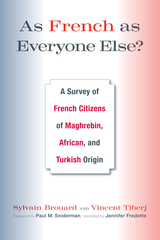
France is often depicted as the model of assimilationist or republican integration in the international literature on immigration. However, rarely have surveys drilled down to provide individual responses from a double representative sample. In As French as Everyone Else?, Sylvain Brouard and Vincent Tiberj provide a comprehensive assessment of the state of integration in France and challenge the usual crisis of integration by systematically comparing the "new French" immigrants, as well as their children and grandchildren born in France, with a sample of the French general population.
The authors' survey considers a wide range of topics, including religious affiliation and religiosity, political attitudes and political efficacy, value systems (including gender roles, work ethics, and anti-Semitism), patterns of integration, multiple identities and national belongings, and affirmative action. As the authors show, despite existing differences, immigrants of Maghrebin, African, and Turkish origin share a wide scope of commonality with other French citizens.

Ask the animals, and they will tell you.
Birds, beasts, and creeping things swarm throughout the Bible’s pages. Despite their prevalence, most biblical scholars have viewed them merely as metaphors, passive objects, or background embellishment to the human experience. This collection seeks to move beyond this traditional view of biblical animals by engaging the growing interdisciplinary field of animal studies. Contributors Peter Joshua Atkins, Jared Beverly, William P. Brown, Margaret Cohen, Jacob R. Evers, Michael J. Gilmour, William “Chip” Gruen, Dong Hyeon Jeong, Brian Fiu Kolia, Anne Létourneau, Robert R. MacKay, Suzanna R. Millar, Timothy J. Sandoval, Robert Paul Seesengood, Ken Stone, Brian James Tipton, Arthur W. Walker-Jones, and Jaime L. Waters showcase the breadth and depth of inquiry that animal studies can foster in biblical studies as well as what animal studies can gain from a more rigorous engagement with biblical texts. Together the essays offer an animal hermeneutic that supports the flourishing of all creatures.
As environmental, political, and public health crises multiply on Earth, we are also at the dawn of a new space race in which governments team up with celebrity billionaires to exploit the cosmos for human gain. The best-known of these pioneers are selling different visions of the future: while Elon Musk and SpaceX seek to establish a human presence on Mars, Jeff Bezos and Blue Origin work toward moving millions of earthlings into rotating near-Earth habitats. Despite these distinctions, these two billionaires share a core utopian project: the salvation of humanity through the exploitation of space.
In Astrotopia, philosopher of science and religion Mary-Jane Rubenstein pulls back the curtain on the not-so-new myths these space barons are peddling, like growth without limit, energy without guilt, and salvation in a brand-new world. As Rubenstein reveals, we have already seen the destructive effects of this frontier zealotry in the centuries-long history of European colonialism. Much like the imperial project on Earth, this renewed effort to conquer space is presented as a religious calling: in the face of a coming apocalypse, some very wealthy messiahs are offering an other-worldly escape to a chosen few. But Rubenstein does more than expose the values of capitalist technoscience as the product of bad mythologies. She offers a vision of exploring space without reproducing the atrocities of earthly colonialism, encouraging us to find and even make stories that put cosmic caretaking over profiteering.
Most scholars dismiss research into the paranormal as pseudoscience, a frivolous pursuit for the paranoid or gullible. Even historians of religion, whose work naturally attends to events beyond the realm of empirical science, have shown scant interest in the subject. But the history of psychical phenomena, Jeffrey J. Kripal contends, is an untapped source of insight into the sacred and by tracing that history through the last two centuries of Western thought we can see its potential centrality to the critical study of religion.
Kripal grounds his study in the work of four major figures in the history of paranormal research: psychical researcher Frederic Myers; writer and humorist Charles Fort; astronomer, computer scientist, and ufologist Jacques Vallee; and philosopher and sociologist Bertrand Méheust. Through incisive analyses of these thinkers, Kripal ushers the reader into a beguiling world somewhere between fact, fiction, and fraud. The cultural history of telepathy, teleportation, and UFOs; a ghostly love story; the occult dimensions of science fiction; cold war psychic espionage; galactic colonialism; and the intimate relationship between consciousness and culture all come together in Authors of the Impossible, a dazzling and profound look at how the paranormal bridges the sacred and the scientific.
Denounced by some as a dangerous cult and lauded by others as a miraculous faith community, the International Churches of Christ was a conservative evangelical Christian movement that grew rapidly in the 1980s and 1990s.
Among its followers, promises to heal family relationships were central to the group's appeal. Members credit the church for helping them develop so-called "awesome families"-successful marriages and satisfying relationships with children, family of origin, and new church "brothers and sisters." The church engaged an elaborate array of services, including round-the-clock counseling, childcare, and Christian dating networks-all of which were said to lead to fulfilling relationships and exciting sex lives. Before the unified movement's demise in 2003-2004, the lure of blissful family-life led more than 100,000 individuals worldwide to be baptized into the church.
In Awesome Families, Kathleen Jenkins draws on four years of ethnographic research to explain how and why so many individuals-primarily from middle- to upper-middle-class backgrounds-were attracted to this religious group that was founded on principles of enforced community, explicit authoritative relationships, and therapeutic ideals. Weaving classical and contemporary social theory, she argues that members were commonly attracted to the structure and practice of family relationships advocated by the church, especially in the context of contemporary society where gender roles and family responsibilities are often ambiguous.
Tracing the rise and fall of this fast-growing religious movement, this timely study adds to our understanding of modern society and offers insight to the difficulties that revivalist movements have in sustaining growth.
READERS
Browse our collection.
PUBLISHERS
See BiblioVault's publisher services.
STUDENT SERVICES
Files for college accessibility offices.
RECENTLY PUBLISHED


UChicago Accessibility Resources
home | accessibility | search | about | contact us
BiblioVault ® 2001 - 2025
The University of Chicago Press