
 A SCHOLARLY BOOK REPOSITORY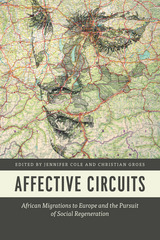
The contributors point to the intersecting streams of goods, people, ideas, and money as they circulate between African migrants and their kin who remain back home. They also show the complex ways that emotions become entangled in these exchanges. Examining how these circuits operate in domains of social life ranging from child fosterage to binational marriages, from coming-of-age to healing and religious rituals, the book also registers the tremendous impact of state officials, laws, and policies on migrant experience. Together these essays paint an especially vivid portrait of new forms of kinship at a time of both intense mobility and ever-tightening borders.
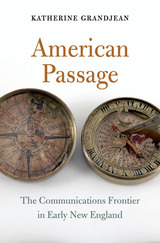
New England was built on letters. Its colonists left behind thousands of them, brittle and browning and crammed with curls of purplish script. How they were delivered, though, remains mysterious. We know surprisingly little about the way news and people traveled in early America. No postal service or newspapers existed—not until 1704 would readers be able to glean news from a “public print.” But there was, in early New England, an unseen world of travelers, rumors, movement, and letters. Unearthing that early American communications frontier, American Passage retells the story of English colonization as less orderly and more precarious than the quiet villages of popular imagination.
The English quest to control the northeast entailed a great struggle to control the flow of information. Even when it was meant solely for English eyes, news did not pass solely through English hands. Algonquian messengers carried letters along footpaths, and Dutch ships took them across waterways. Who could travel where, who controlled the routes winding through the woods, who dictated what news might be sent—in Katherine Grandjean’s hands, these questions reveal a new dimension of contest and conquest in the northeast. Gaining control of New England was not solely a matter of consuming territory, of transforming woods into farms. It also meant mastering the lines of communication.
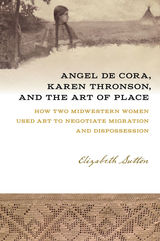
Angel De Cora (c. 1870–1919) was a Native Ho-Chunk artist who received relative acclaim during her lifetime. Karen Thronson (1850–1929) was a Norwegian settler housewife who created crafts and folk art in obscurity along with the other women of her small immigrant community. The immigration of Thronson and her family literally maps over the De Cora family’s forced migration across Wisconsin, Iowa, and onto the plains of Nebraska and Kansas. Tracing the parallel lives of these two women artists at the turn of the twentieth century, art historian Elizabeth Sutton reveals how their stories intersected and diverged in the American Midwest.
By examining the creations of these two artists, Sutton shows how each woman produced art or handicrafts that linked her new home to her homeland. Both women had to navigate and negotiate between asserting their authentic self and the expectations placed on them by others in their new locations. The result is a fascinating story of two women that speaks to universal themes of Native displacement, settler conquest, and the connection between art and place.
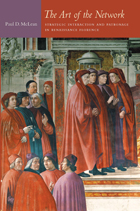
McLean scrutinized thousands of letters to and from Renaissance Florentines. He describes the social protocols the letters reveal, paying particular attention to the means by which Florentines crafted credible presentations of themselves. The letters, McLean contends, testify to the development not only of new forms of self-presentation but also of a new kind of self to be presented: an emergent, “modern” conception of self as an autonomous agent. They also bring to the fore the importance that their writers attached to concepts of honor, and the ways that they perceived themselves in relation to the Florentine state.

Asia Inside Out reveals the dynamic forces that have historically linked regions of the world’s largest continent, stretching from Japan and Korea to the South China Sea, the Indian Ocean, and the Middle East. Connected Places, the second installment in this pioneering three-volume survey, highlights the transregional flows of goods, ideas, and people across natural and political boundaries—sea routes, delta ecologies, and mountain passes, ports and oasis towns, imperial capitals and postmodern cities. It challenges the conventional idea that defines geopolitical regions as land-based, state-centered, and possessing linear histories.
Exploring themes of maritime connections, mobile landscapes, and spatial movements, the authors examine significant sites of linkage and disjuncture from the early modern period to the present. Readers discover how eighteenth-century pirates shaped the interregional networks of Vietnam’s Tonkin Gulf, how Kashmiri merchants provided intelligence of remote Himalayan territories to competing empires, and how for centuries a vibrant trade in horses and elephants fueled the Indian Ocean economy. Other topics investigated include cultural formations in the Pearl River delta, global trade in Chittagong’s transformation, gendered homemaking among mobile Samurai families, border zones in Qing China and contemporary Burma, colonial spaces linking India and Mesopotamia, transnational marriages in Oman’s immigrant populations, new cultural spaces in Korean pop, and the unexpected adoption of the Latin script by ethnically Chinese Muslims in Central Asia.
Connected Places shows the constant fluctuations over many centuries in the making of Asian territories and illustrates the confluence of factors in the historical construction of place and space.

Black Wave illuminates two critical factors that had a direct influence on why survival rates varied so much across the Tōhoku region following the 3/11 disasters and why the rebuilding process has also not moved in lockstep across the region. Individuals and communities with stronger networks and better governance, Daniel P. Aldrich shows, had higher survival rates and accelerated recoveries. Less-connected communities with fewer such ties faced harder recovery processes and lower survival rates. Beyond the individual and neighborhood levels of survival and recovery, the rebuilding process has varied greatly, as some towns and cities have sought to work independently on rebuilding plans, ignoring recommendations from the national government and moving quickly to institute their own visions, while others have followed the guidelines offered by Tokyo-based bureaucrats for economic development and rebuilding.
Legislative member organizations (LMOs)—such as caucuses in the U.S. Congress and intergroups in the European Parliament—exist in lawmaking bodies around the world. Unlike parties and committees, LMOs play no obvious, predefined role in the legislative process. They provide legislators with opportunities to establish social networks with colleagues who share common interests. In turn, such networks offer valuable opportunities for the efficient exchange of policy-relevant—and sometimes otherwise unattainable—information between legislative offices. Building on classic insights from the study of social networks, the authors provide a comparative overview of LMOs across advanced, liberal democracies. In two nuanced case studies of LMOs in the European Parliament and the U.S. Congress, the authors rely on a mix of social network analysis, sophisticated statistical methods, and careful qualitative analysis of a large number of in-depth interviews.


Chippewa Lake is an idyllic waterfront community in north-central Michigan, popular with retirees and weekenders. The lake is surrounded by a rural farming community, but the area is facing a difficult transition as local demographics shift, and as it transforms from an agriculture-based economy to one that relies on wage labor. As farms have disappeared, local residents have employed a variety of strategies to adapt to a new economic structure. The community, meanwhile, has been indelibly affected by the advent of newcomers and retirees challenging the rural cultural values. An anthropologist with a background in sociology, Cindy L. Hull deftly weaves together oral accounts, historic documents, and participant surveys compiled from her nearly thirty years of living in the area to create a textured portrait of a community in flux.

Published by University of Delaware Press. Distributed worldwide by Rutgers University Press.
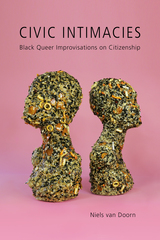
Black queer lives often exist outside conventional civic institutions and therefore have to explore alternative intimacies to experience a sense of belonging. Civic Intimacies examines how—and to what extent—these different forms of intimacy catalyze the values, aspirations, and collective flourishing of Black queer denizens of Baltimore. Niels van Doorn draws on 18 months of immersive ethnographic fieldwork for his innovative cross-disciplinary analysis of contemporary debates in political and cultural theory.
Van Doorn describes the way that these systematically marginalized communities improvise on citizenship not just to survive but also to thrive despite the proliferation of violence and insecurity in their lives. By reimagining citizenship as the everyday reparative work of building support structures, Civic Intimacies highlights the extent to which sex, kinship, memory, religious faith, and sexual health are rooted in collective practices that are deeply political. These systems sustain the lives of Black queer Baltimoreans who find themselves stuck in a city they cannot give up on—even though it has in many ways given up on them.
A Confluence of Transatlantic Network demonstrates how portions of interconnected trust-based kinship, business, and ideational transatlantic networks evolved over roughly a century and a half and eventually converged to engender, promote, and facilitate the migration of southern elites to Brazil in the post–Civil War era. Placing that migration in the context of the Atlantic world sharpens our understanding of the transborder dynamic of such mainstream nineteenth-century historical currents as international commerce, liberalism, Protestantism, and Freemasonry. The manifestation of these transatlantic forces as found in Brazil at midcentury provided disaffected Confederates with a propitious environment in which to try to re-create a cherished lifestyle.
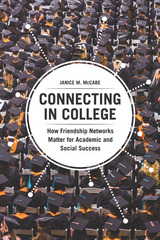
As McCabe and the students she talks to show, the friendships we forge in college are deeply meaningful, more meaningful than we often give them credit for. They can also vary widely. Some students have only one tight-knit group, others move between several, and still others seem to meet someone new every day. Some students separate their social and academic lives, while others rely on friendships to help them do better in their coursework. McCabe explores how these dynamics lead to different outcomes and how they both influence and are influenced by larger factors such as social and racial inequality. She then looks toward the future and how college friendships affect early adulthood, ultimately drawing her findings into a set of concrete solutions to improve student experiences and better guarantee success in college and beyond.

Martin Meeker here argues that over the course of the twentieth century, a series of important innovations occurred in the networks that linked individuals to a larger social knowledge of homosexuality. He points to three key innovations in particular: the emergence of the homophile movement in the 1950s; the mass media treatments of homosexuals in the late 1950s and early 1960s; and the popularization of do-it-yourself publishing from the late 1940s to the 1970s, which offered bar guides, handmade magazines, and other materials that gay men and lesbians could use to seek one another out. In the process, Meeker unearths a treasure trove of archival materials that reveals how homosexuals played a crucial role in transforming the very structure of communications and urban communities since the postwar era.
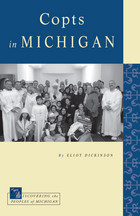
The Copts, or Egyptian Christians, are a relatively small and tight-knit ethno-religious group, numbering perhaps three thousand people and living mostly in the Detroit metropolitan area. Since they began immigrating to Michigan in the mid-1960s, their community has grown exponentially.
Granted exceptional access to the Coptic community, Eliot Dickinson provides the first in- depth profile of this unique and remarkably successful immigrant group. Drawing on personal interviews to infuse the book with warmth and depth. Copts in Michigan offers readers a compelling view into this vibrant community.
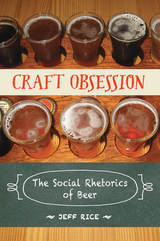
Rice weaves together theories of writing, narrative, new media, and rhetoric with a personal story of his passion for craft beer. He identifies six key elements of social media rhetoric—anecdotes, repetition, aggregation, delivery, sharing, and imagery—and examines how each helps to transform small, personal experiences with craft into a more widespread movement. When shared via social media, craft anecdotes—such as the first time one had a beer—interrupt and repeat one another, building a sense of familiarity and identity among otherwise unconnected people. Aggregation, the practice of joining unlike items into one space, builds on this network identity, establishing a connection to particular brands or locations, both real and virtual. The public releases of craft beers are used to explore the concept of craft delivery, which involves multiple actors across multiple spaces and results in multiple meanings. Finally, Rice highlights how personal sharing operates within the community of craft beer enthusiasts, who share online images of acquiring, trading for, and consuming a wide variety of beers. These shared stories and images, while personal for each individual, reflect the dependence of craft on systems of involvement. Throughout, Rice relates and reflects on his own experience as a craft beer enthusiast and his participation via social media in these systems.
Both an objective scholarly study and an engaging personal narrative about craft beer, Craft Obsession provides valuable insights into digital writing, storytelling, and social media.
Analyzing the development of a Swedish American identity
The Creation of an Ethnic Identity: Being Swedish American in the Augustana Synod, 1860–1917 analyzes how Swedish American identity was constructed, maintained, and changed in the late nineteenth and early twentieth centuries. The Augustana Synod, the largest religious-based organization created by Swedish immigrants in the United States, played an important role in establishing what it meant to be Swedish American.
In this study, author Dag Blanck poses three fundamental questions: How did an ethnic identity develop in the Augustana Synod? What was that identity? Why was an ethnic identity formed? Based on primary sources formerly unknown or neglected, The Creation of an Ethnic Identity examines the Lutheran Augustana Synod, Augustana College, and the Augustana Book Concern to provide insights into how ethnic identity is constructed within a major religious body, a central educational institution, and a major publishing house.
Starting from the concept of ethnicity as something created or invented, Blanck goes on to explore how it was possible for a white European immigrant group like the Swedes to use its ethnicity as a tool of integration into American society. The nature of their ethnicity, says Blanck, was both determined by their cultural origins and also the values and nature of American society as they perceived it. Becoming Swedish American was also a way of becoming American.
The volume, which is augmented by illustrations, integrates the most critical scholarship on immigration and ethnicity over the past half century and provides a strong argument about how ethnicity is shaped over time within an immigrant group.
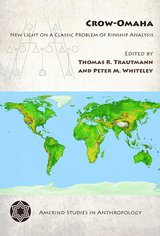
This volume examines the Crow-Omaha problem from a variety of perspectives—historical, linguistic, formalist, structuralist, culturalist, evolutionary, and phylogenetic. It focuses on the regions where Crow-Omaha systems occur: Native North America, Amazonia, West Africa, Northeast and East Africa, aboriginal Australia, northeast India, and the Tibeto-Burman area. The international roster of authors includes leading experts in their fields.
The book offers a state-of-the-art assessment of Crow-Omaha kinship and carries forward the work of the landmark volume Transformations of Kinship, published in 1998. Intended for students and scholars alike, it is composed of brief, accessible chapters that respect the complexity of the ideas while presenting them clearly. The work serves as both a new benchmark in the explanation of kinship systems and an introduction to kinship studies for a new generation of students.
Series Note: Formerly titled Amerind Studies in Archaeology, this series has recently been expanded and retitled Amerind Studies in Anthropology to incorporate a high quality and number of anthropology titles coming in to the series in addition to those in archaeology.

Cyberspaces of Everyday Life provides a critical framework for understanding how the Internet takes part in the production of social space. Mark Nunes draws on the spatial analysis work of Henri Lefebvre to make sense of cyberspace as a social product. Looking at online education, he explores the ways in which the Internet restructures the university. Nunes also examines social uses of the World Wide Web and illustrates the ways online communication alters the relation between the global and the local. He also applies Deleuzian theory to emphasize computer-mediated communications’ performative elements of spatial production.
Addressing the social and cultural implications of spam and anti-spam legislation, as well as how the burst Internet stock bubble and the Patriot Act have affected the relationship between networked spaces and daily living, Cyberspaces of Everyday Life sheds new light on the question of virtual space and its role in the offline world.
Mark Nunes is associate professor and chair of the English, Technical Communication, and Media Arts Department at Southern Polytechnic State University.


Combining theoretical perspective with a down-to-earth exposition of present-day digital institutions, Following Searle on Twitter explores how all of our interactions with these emerging institutions are deeply rooted in language, and are the true foundation of social media and contemporary institutions.
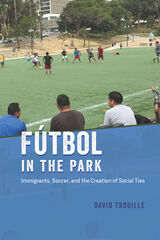

Nardi explores the meaning of friends to some gay men, how friends often become a surrogate family, how sexual behavior and attraction affects these friendships, and how, for many, friends mean more and last longer than romantic relationships. While looking at the psychological joys and sorrows of friendship, he also considers the cultural constraints limiting gay men in contemporary urban America—especially those that deal with dominant images of masculinity and heterosexuality—and how they relate to friendship.
By listening to gay men talk about their interactions, Nardi offers a rare glimpse into the mechanisms of gay life. We learn how gay men meet their friends, what they typically do and talk about, and how these strong relationships contain the roots of larger cultural forces such as social movements and gay identities and neighborhoods. Nardi also points out the political and social consequences when friendships fail to provide support against oppression.
An intimate and informative look at gay life in urban America, Gay Men's Friendships ultimately shows how these relationships challenge the gender order of our society by questioning how masculinity is constructed and by offering a model for a more creative blending of gay and heterosexual masculinity.

In Close Association is the first English-language study of the local networks of women and men who built modern Japan in the Meiji period (1868–1912). Marnie Anderson uncovers in vivid detail how a colorful group of Okayama-based activists founded institutions, engaged in the Freedom and People’s Rights Movement, promoted social reform, and advocated “civilization and enlightenment” while forging pathbreaking conceptions of self and society. Alongside them were Western Protestant missionaries, making this story at once a local history and a transnational one.
Placing gender analysis at its core, the book offers fresh perspectives on what women did beyond domestic boundaries, while showing men’s lives, too, were embedded in home and kin. Writing “history on the diagonal,” Anderson documents the gradual differentiation of public activity by gender in the late nineteenth and early twentieth centuries. Meiji-era associations became increasingly sex-specific, though networks remained heterosocial until the twentieth century.
Anderson attends to how the archival record shapes what historians can know about individual lives. She argues for the interdependence of women and men and the importance of highlighting connections between people to explain historical change. Above all, the study sheds new light on how local personalities together transformed Japan.
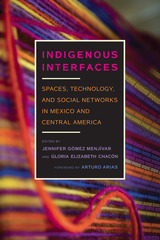
Indigenous Interfaces provides the first thorough examination of indigeneity at the interface of cyberspace. Correspondingly, it examines the impact of new media on the struggles for self-determination that Indigenous peoples undergo in Mexico and Central America. The volume’s contributors highlight the fresh approaches that Mesoamerica’s Indigenous peoples have given to new media—from YouTubing Maya rock music to hashtagging in Zapotec. Together, they argue that these cyberspatial activities both maintain tradition and ensure its continuity. Without considering the implications of new technologies, Indigenous Interfaces argues, twenty-first-century indigeneity in Mexico and Central America cannot be successfully documented, evaluated, and comprehended.
Indigenous Interfaces rejects the myth that indigeneity and information technology are incompatible through its compelling analysis of the relationships between Indigenous peoples and new media. The volume illustrates how Indigenous peoples are selectively and strategically choosing to interface with cybertechnology, highlights Indigenous interpretations of new media, and brings to center Indigenous communities who are resetting modes of communication and redirecting the flow of information. It convincingly argues that interfacing with traditional technologies simultaneously with new media gives Indigenous peoples an edge on the claim to autonomous and sovereign ways of being Indigenous in the twenty-first century.
Contributors
Arturo Arias
Debra A. Castillo
Gloria Elizabeth Chacón
Adam W. Coon
Emiliana Cruz
Tajëëw Díaz Robles
Mauricio Espinoza
Alicia Ivonne Estrada
Jennifer Gómez Menjívar
Sue P. Haglund
Brook Danielle Lillehaugen
Paul Joseph López Oro
Rita M. Palacios
Gabriela Spears-Rico
Paul Worley
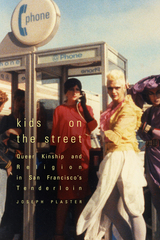

Throughout the world, the kitchen is the heart of family and community life. Yet, while everyone has a story to tell about their grandmother's kitchen, the myriad activities that go on in this usually female world are often devalued, and little scholarly attention has been paid to this crucial space in which family, gender, and community relations are forged and maintained. To give the kitchen the prominence and respect it merits, Maria Elisa Christie here offers a pioneering ethnography of kitchenspace in three central Mexican communities, Xochimilco, Ocotepec, and Tetecala.
Christie coined the term "kitchenspace" to encompass both the inside kitchen area in which everyday meals for the family are made and the larger outside cooking area in which elaborate meals for community fiestas are prepared by many women working together. She explores how both kinds of meal preparation create bonds among family and community members. In particular, she shows how women's work in preparing food for fiestas gives women status in their communities and creates social networks of reciprocal obligation. In a culture rigidly stratified by gender, Christie concludes, kitchenspace gives women a source of power and a place in which to transmit the traditions and beliefs of older generations through quasi-sacramental food rites.
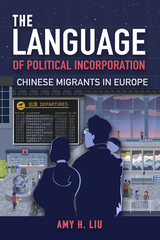
In this groundbreaking study, The Language of Political Incorporation, Amy Liu focuses on Chinese migrants in Central-Eastern Europe and their varying levels of political incorporation in the local community. She examines the linguistic diversity of migrant networks, finding institutional trust and civic engagement depend not on national identity, but on the network’s linguistic diversity—namely, whether the operating language is a migrant’s mother tongue or a lingua franca.
The Language of Political Incorporation uses original survey data to assess when the Chinese engage positively with the authorities and when they become civic minded. The results are surprising. In Hungary, the Chinese community has experienced high levels of political incorporation in part because they have not been targeted by anti-immigrant rhetoric and policies. In contrast, migrants in Romania sought the assistance of the Chinese embassy to fight an effort to collect back taxes.
Liu also compares the Chinese experiences in Central-Eastern Europe with those of Muslims in the region, as well as how the Chinese are treated in Western Europe. Additionally, she considers how the local communities perceive the Chinese. The Language of Political Incorporation concludes by offering best practices for how governments can help migrants become more trusting of—and have greater involvement with—locals in their host countries. Ultimately, Liu demonstrates the importance of linguistic networks for the incorporation of immigrants.
Lineages Embedded in Temple Networks explores the key role played by elite Daoists in social and cultural life in Ming China, notably by mediating between local networks—biological lineages, territorial communities, temples, and festivals—and the state. They did this through their organization in clerical lineages—their own empire-wide networks for channeling knowledge, patronage, and resources—and by controlling central temples that were nodes of local social structures.
In this book, the only comprehensive social history of local Daoism during the Ming largely based on literary sources and fieldwork, Richard G. Wang delineates the interface between local organizations (such as lineages and temple networks) and central state institutions. The first part provides the framework for viewing Daoism as a social institution in regard to both its religious lineages and its service to the state in the bureaucratic apparatus to implement state orthodoxy. The second part follows four cases to reveal the connections between clerical lineages and local networks. Wang illustrates how Daoism claimed a universal ideology and civilizing force that mediated between local organizations and central state institutions, which in turn brought meaning and legitimacy to both local society and the state.
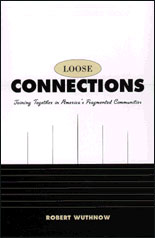
It has become common to lament Americans' tendency to pursue individual interests apart from any institutional association. But to those who charge that Americans are at home watching television rather than getting involved in their communities, Robert Wuthnow answers that while certain kinds of civic engagement may be declining, innovative new forms are taking their place.
Acknowledging that there has been a significant change in group affiliations--away from traditional civic organizations--Wuthnow shows that there has been a corresponding movement toward affiliations that respond to individual needs and collective concerns. Many Americans are finding new and original ways to help one another through short-term task-oriented networks. Some are combining occupational skills with community interests in nonprofit and voluntary associations. Others use communication technologies, such as the World Wide Web, to connect with like-minded people in distant locations. And people are joining less formal associations, such as support groups and lobbying efforts, within their home communities.
People are still connected, but because of the realities of daily life, they form "loose connections." These more fluid groups are better suited to dealing with today's needs than the fraternal orders and ladies' auxiliaries of the past. Wuthnow looks at the challenges that must be faced if these innovative forms of civic involvement are to flourish, and calls for resources to be made available to strengthen the more constructive and civic dimensions of these organizations. This book helps us to understand and encourage the community spirit of today.

Julia Elyachar studied the efforts of bankers, social scientists, ngo members, development workers, and state officials to turn the craftsmen and unemployed youth of Cairo into the vanguard of a new market society based on microenterprise. She considers these efforts in relation to the alternative notions of economic success held by craftsmen in Cairo, in which short-term financial profit is not always highly valued. Through her careful ethnography of workshop life, Elyachar explains how the traditional market practices of craftsmen are among the most vibrant modes of market life in Egypt. Long condemned as backward, these existing market practices have been seized on by social scientists and development institutions as the raw materials for experiments in “free market” expansion. Elyachar argues that the new economic value accorded to the cultural resources and social networks of the poor has fueled a broader process leading to their economic, social, and cultural dispossession.
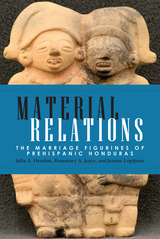
They examine the production, use, and disposal of marriage figurines from six sites—Campo Dos, Cerro Palenque, Copán, Currusté, Tenampua, and Travesia—and explore their role in rituals and ceremonies, as well as in the forming of social bonds and the celebration of relationships among communities. They find evidence of historical traditions reproduced over generations through material media in social relations among individuals, families, and communities, as well as social differences within this network of connected yet independent settlements.
Material Relations provides a new and dynamic understanding of how social houses functioned via networks of production and reciprocal exchange of material objects and will be of interest to Mesoamerican archaeologists, anthropologists, and art historians.
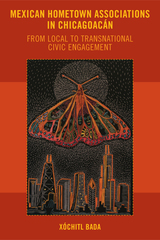
Hometown associations (HTAs) consist of immigrants from the same town in Mexico and often begin quite informally, as soccer clubs or prayer groups. As Bada’s work shows, however, HTAs have become a powerful force for change, advocating for Mexican immigrants in the United States while also working to improve living conditions in their communities of origin. Focusing on a group of HTAs founded by immigrants from the state of Michoacán, the book shows how their activism has bridged public and private spheres, mobilizing social reforms in both inner-city Chicago and rural Mexico.
Bringing together ethnography, political theory, and archival research, Bada excavates the surprisingly long history of Chicago’s HTAs, dating back to the 1920s, then traces the emergence of new models of community activism in the twenty-first century. Filled with vivid observations and original interviews, Mexican Hometown Associations in Chicagoacán gives voice to an underrepresented community and sheds light on an underexplored form of global activism.


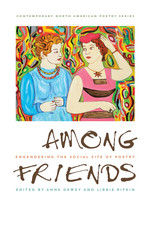
MdM’s political-ethical-spiritual commitments, cultural production, and everyday practices are informed by Indigenous and transnational feminist of color artistic, ceremonial, activist, and intellectual legacies. Contributors fuse stories of celebration, love, and spirit-work with an incisive critique of interlocking oppressions, both intimate and structural, encouraging movement toward “a world where many worlds fit.”
The multidisciplinary, intergenerational, and critical-creative nature of the project coupled with the unique subject matter makes the book a must-have for high school and college students, activist-scholars, artists, community organizers, and others invested in social justice and liberation.
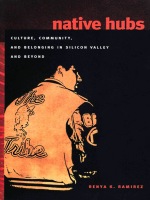
Ramirez’s ethnography revolves around the Paiute American activist Laverne Roberts’s notion of the “hub,” a space that allows for the creation of a sense of belonging away from a geographic center. Ramirez describes “hub-making” activities in Silicon Valley, including sweat lodge ceremonies, powwows, and American Indian Alliance meetings, gatherings at which urban Indians reinforce bonds of social belonging and forge intertribal alliances. She examines the struggle of the Muwekma Ohlone, a tribe aboriginal to the San Francisco Bay area, to maintain a sense of community without a land base and to be recognized as a tribe by the federal government. She considers the crucial role of Native women within urban indigenous communities; a 2004 meeting in which Native Americans from Mexico and the United States discussed cross-border indigenous rights activism; and the ways that young Native Americans in Silicon Valley experience race and ethnicity, especially in relation to the area’s large Chicano community. A unique and important exploration of diaspora, transnationalism, identity, belonging, and community, Native Hubs is intended for scholars and activists alike.

To answer these and related questions, this volume introduces the concept of “neighborhood technologies” as a model for intermediate, or meso-level, research into the links between local agents and neighborhood relations. Bridging the gap between the sciences and humanities, Tobias Harks and Sebastian Vehlken have assembled a group of contributors who are either natural scientists with an interest in interdisciplinary research or technology-savvy humanists. With insights into computer science, mathematics, sociology, media and cultural studies, theater studies, and architecture, the book will inform new research.

Collecting in one volume the work of such well-known scholars on Appalachia and the South as Carl Stack, Mab Segrest, and Sally Maggard, among others, Neither Separate Nor Equal analyzes the complex and dramatic developments in the lives of contemporary Southern women. Case studies vividly portray women's diverse circumstances activities: from rural African American women in the Mississippi Delta taking on new roles as community builders to female textile workers in North Carolina contending with automation and reorganization of the mills.
Focusing on the South's historical legacies as they are manifested and contested in the lives of women today, including the tensions between long-lasting patterns of regional distinctiveness and the disruptions of globalizations, this collection approaches differences of race and class not as forms of separation among women, but as social -- be they often contentious, difficult, or exploitive -- relationships. Unifying around a theme of relationally, Neither Separate Nor Equal offers searching empirical studies of Southern women and a conceptual model for feminist scholarship as a whole.
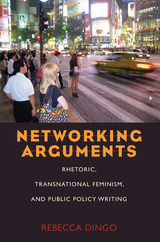
Networking Arguments presents an original study on the use and misuse of global institutional rhetoric and the effects of these practices on women, particularly in developing countries. Using a feminist lens, Rebecca Dingo views the complex networks that rhetoric flows through, globally and nationally, and how it’s often reconfigured to work both for and against women and to maintain existing power structures.
To see how rhetorics travel, Dingo deconstructs the central terminology employed by global institutions—mainstreaming, fitness, and empowerment—and shows how their meanings shift depending on the contexts in which they’re used. She studies programs by the World Bank, the United Nations, and the United States, among others, to view the original policies, then follows the trail of their diffusion and manipulation and the ultimate consequences for individuals.
To analyze transnational rhetorical processes, Dingo builds a theoretical framework by employing concepts of transcoding, ideological traffic, and interarticulation to uncover the intricacies of power relationships at work within networks. She also views transnational capitalism, neoliberal economics, and neocolonial ideologies as primary determinants of policy and arguments over women’s roles in the global economy.
Networking Arguments offers a new method of feminist rhetorical analysis that allows for an increased understanding of global gender policies and encourages strategies to counteract the negative effects they can create.
In recent years U.S. public policy has focused on strengthening the nuclear family as a primary strategy for improving the lives of America's youth. It is often assumed that this normative type of family is an independent, self-sufficient unit adequate for raising children. But half of all households in the United States with young children have two employed parents. How do working parents provide care and mobilize the help that they need?
In Not-So-Nuclear Families: Class, Gender, and Networks of Care, Karen V. Hansen investigates the lives of working parents and the informal networks they construct to help care for their children. She chronicles the conflicts, hardships, and triumphs of four families of various social classes. Each must navigate the ideology that mandates that parents, mothers in particular, rear their own children, in the face of an economic reality that requires that parents rely on the help of others. In vivid family stories, parents detail how they and their networks of friends, paid caregivers, and extended kin collectively close the "care gap" for their school-aged children.
Hansen not only debunks the myth that families in the United States are independent, isolated, and self-reliant units, she breaks new theoretical ground by asserting that informal networks of care can potentially provide unique and valuable bonds that nuclear families cannot.
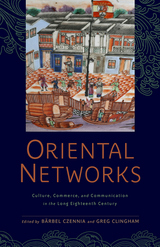
Published by Bucknell University Press. Distributed worldwide by Rutgers University Press.

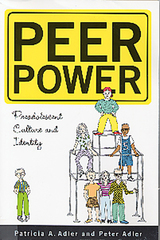
The Adlers explore some of the patterns that develop in this social space, noting both the differences in boys' and girls' gendered cultures and the overlap in many social dynamics, afterschool activities, role behaviour, romantic inclinations and social stratification. For example, children's participation in adult-organized afterschool activities - a now-prominent feature of many American children's social experience - has profound implications for their socialization and development, moving them away from the negotiated, spontaneous character of play into the formal systems of adult norms and values at ever-younger ages. When they retreat from adults, however, they still display distinctive peer group dynamics, forging strong ingroup/outgroup differentiation, loyalty and identification. Peer culture thus contains informal social mechanisms through which children create their social order, determine their place and identity, and develop positive and negative feelings about themselves. Studying children's peer culture is thus valuable as it reveals not only how this subculture parallels the adult world but also how it differs from it.
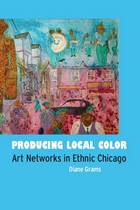
In big cities, major museums and elite galleries tend to dominate our idea of the art world. But beyond the cultural core ruled by these moneyed institutions and their patrons are vibrant, local communities of artists and art lovers operating beneath the high-culture radar. Producing Local Color is a guided tour of three such alternative worlds that thrive in the Chicago neighborhoods of Bronzeville, Pilsen, and Rogers Park.
These three neighborhoods are, respectively, historically African American, predominantly Mexican American, and proudly ethnically mixed. Drawing on her ethnographic research in each place, Diane Grams presents and analyzes the different kinds of networks of interest and support that sustain the making of art outside of the limelight. And she introduces us to the various individuals—from cutting-edge artists to collectors to municipal planners—who work together to develop their communities, honor their history, and enrich the experiences of their neighbors through art. Along with its novel insights into these little examined art worlds, Producing Local Color also provides a thought-provoking account of how urban neighborhoods change and grow.

Redefining the way we view business success, Pamela Laird demolishes the popular American self-made story as she exposes the social dynamics that navigate some people toward opportunity and steer others away. Who gets invited into the networks of business opportunity? What does an unacceptable candidate lack? The answer is social capital—all those social assets that attract respect, generate confidence, evoke affection, and invite loyalty.
In retelling success stories from Benjamin Franklin to Andrew Carnegie to Bill Gates, Laird goes beyond personality, upbringing, and social skills to reveal the critical common key—access to circles that control and distribute opportunity and information. She explains how civil rights activism and feminism in the 1960s and 1970s helped demonstrate that personnel practices violated principles of equal opportunity. She evaluates what social privilege actually contributes to business success, and analyzes the balance between individual characteristics—effort, innovation, talent—and social factors such as race, gender, class, and connections.
In contrasting how Americans have prospered—or not—with how we have talked about prospering, Laird offers rich insights into how business really operates and where its workings fit within American culture. From new perspectives on entrepreneurial achievement to the role of affirmative action and the operation of modern corporate personnel systems, Pull shows that business is a profoundly social process, and that no one can succeed alone.
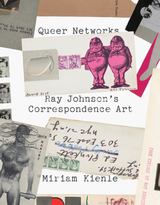
How the queer correspondence art of Ray Johnson disrupted art world conventions and anticipated today’s highly networked culture
Once regarded as “New York’s most famous unknown artist,” Ray Johnson was a highly visible outlier in the art world, his mail art practice reflecting the changing social relations and politics of queer communities in the 1960s. A vital contribution to the growing scholarship on this enigmatic artist, Queer Networks analyzes how Johnson’s practice sought to undermine the dominant mechanisms of the art market and gallery system in favor of unconventional social connections.
Utilizing the postal service as his primary means of producing and circulating art, Johnson cultivated an international community of friends and collaborators through which he advanced his idiosyncratic body of work. Applying both queer theory and network studies, Miriam Kienle explores how Johnson’s radical correspondence art established new modes of connectivity that fostered queer sensibilities and ran counter to the conventional methods by which artists were expected to develop their reputation.
While Johnson was significantly involved with the Pop, conceptual, and neo-Dada art movements, Queer Networks crucially underscores his resistance to traditional art historical systems of categorization and their emphasis on individual mastery. Highlighting his alternative modes of community building and playful antagonism toward art world protocols, Kienle demonstrates how Ray Johnson’s correspondence art offers new ways of envisioning togetherness in today’s highly commodified and deeply networked world.


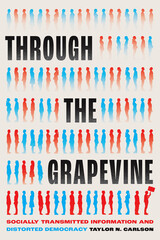
An enlightening examination of what it means when Americans rely on family and friends to stay on top of politics.
Accurate information is at the heart of democratic functioning. For decades, researchers interested in how information is disseminated have focused on mass media, but the reality is that many Americans today do not learn about politics from direct engagement with the news. Rather, about one-third of Americans learn chiefly from information shared by their peers in conversation or on social media. How does this socially transmitted information differ from that communicated by traditional media? What are the consequences for political attitudes and behavior?
Drawing on evidence from experiments, surveys, and social media, Taylor N. Carlson finds that, as information flows first from the media then person to person, it becomes sparse, more biased, less accurate, and more mobilizing. The result is what Carlson calls distorted democracy. Although socially transmitted information does not necessarily render democracy dysfunctional, Through the Grapevine shows how it contributes to a public that is at once underinformed, polarized, and engaged.

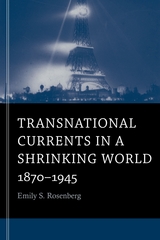
Transnational Currents in a Shrinking World examines the wide variety of social and cultural networks that emerged from the global exchanges of the late-nineteenth and twentieth centuries. Emily Rosenberg shows how transnational connections were being formed many decades before “globalization” became a commonplace term in economic and political discourse.
Suggesting crisscrossing flows of power, “currents” provide an especially apt metaphor for transnational exchanges in the age of the telegraph and incandescent light bulb. Rosenberg traces the internationalizing currents that impelled a desire to create global rule-setting institutions, from the Universal Postal Union to the International Olympic Committee to the League of Nations. Other transnational currents coalesced around social networks of class, ethnic, gender, and religious affiliations; around exhibitions such as world fairs, museums, and botanical gardens; around networks of expertise in engineering, medicine, social science, and urban planning; and around mass media and cultures of consumption.
Rosenberg suggests that these currents brought a modernity that mixed faith in the rationality of science and technology with a fascination for emotional and spectacle-driven entertainments. In this age of nationalism and imperialism, they both assisted and disrupted ambitions for territorial expansion; they ushered in a new world in which fast-moving technologies of representation brought multiple and shifting codes of meaning. Often overlooked in histories centered on nation-states, transnational currents highlight the irregular patterns of global change and underscore the fluidity of spatial and personal identifications in the period from 1870 to the end of World War II.
Exploring and conceptualizing practices, technologies, and politics of disconnecting
How do we think beyond the dominant images and imaginaries of connectivity? Undoing Networks enables a different connectivity: “digital detox” is a luxury for stressed urbanites wishing to lead a mindful life. Self-help books advocate “digital minimalism” to recover authentic experiences of the offline. Artists envision a world without the internet. Activists mobilize against the expansion of the 5G network.
If connectivity brought us virtual communities, information superhighways, and participatory culture, disconnection comes with privacy tools, Faraday shields, and figures of the shy. This book explores nonusage and the “right to disconnect” from work and from the excessive demands of digital capitalism.
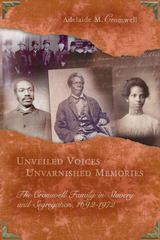
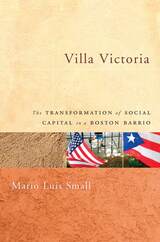
This book examines a neglected Puerto Rican enclave in Boston to consider the pros and cons of social scientific thinking about the true nature of ghettos in America. Mario Luis Small dismantles the theory that poor urban neighborhoods are inevitably deprived of social capital. He shows that the conditions specified in this theory are vaguely defined and variable among poor communities. According to Small, structural conditions such as unemployment or a failed system of familial relations must be acknowledged as affecting the urban poor, but individual motivations and the importance of timing must be considered as well.
Brimming with fresh theoretical insights, Villa Victoria is an elegant work of sociology that will be essential to students of urban poverty.
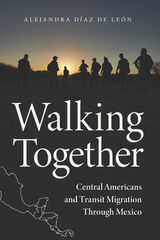
Migrants in transit form several types of social networks, develop trust, and engage in acts of solidarity. The need to be recognized and grieved, compounded by the practical use of pooling information and resources, leads migrants to form small, strong groups called road families. Through the generalized sharing of information and small items such as food and blankets, migrants also form a transient community that includes everyone on the road at the same time. Sociologist Alejandra Díaz de León shows the trajectories of families that left together, showing, surprisingly, that families might not be the best social arrangement in transit.
Drawing on multisited research, this work contributes to debates on the role of social networks in clandestine migration processes and to discussions on how people create social networks and trust under violent and stressful situations. The detailed ethnographic narratives and accessible writing weave together theory with empirical observations to highlight and humanize the migrant experience.
Sitting at the intersection of border studies, immigration studies, and Latinx studies, this concise volume shows how Central American migrants in transit through Mexico survive the precarious and unpredictable road by forming different types of social ties.
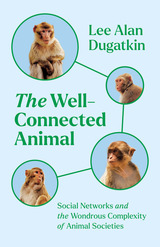
It’s all about who you know. Whether vampire bats sharing blood meals for survival, field crickets remembering champion fighters, macaque monkeys forming grooming pacts after a deadly hurricane, or great tit birds learning the best way to steal milk—it pays to be well connected.
In this tour of the animal kingdom, evolutionary biologist Lee Alan Dugatkin reveals a new field of study, uncovering social networks that existed long before the dawn of human social media. He accessibly describes the latest findings from animal behavior, evolution, computer science, psychology, anthropology, genetics, and neurobiology, and incorporates interviews and insights from researchers he finds swimming with manta rays, avoiding pigeon poop, and stopping monkeys from stealing iPads. With Dugatkin as our guide, we investigate social networks in giraffes, elephants, kangaroos, Tasmanian devils, whales, bats, and more. From animal networks in Australia and Asia to Africa, Europe, and the Americas, The Well-Connected Animal is an eye-opening exposé of wild friends, enemies, and everything in between.
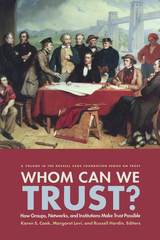
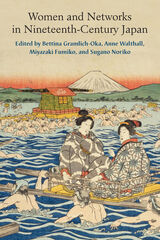
Most of the essays in this volume are by Japanese scholars; their inclusion here provides either an introduction to their work or the opportunity to explore their scholarship further. Because women are often invisible in historical documentation, the authors use a range of sources (such as diaries, letters, and legal documents) to reconstruct the familial, neighborhood, religious, political, work, and travel networks that women maintained, constructed, or found themselves in, sometimes against their will. In so doing, most but not all of the authors try to decenter historical narratives built on men’s activities and men’s occupational and status-based networks, and instead recover women’s activities in more localized groupings and personal associations.
READERS
Browse our collection.
PUBLISHERS
See BiblioVault's publisher services.
STUDENT SERVICES
Files for college accessibility offices.
RECENTLY PUBLISHED





UChicago Accessibility Resources
home | accessibility | search | about | contact us
BiblioVault ® 2001 - 2024
The University of Chicago Press