
 A SCHOLARLY BOOK REPOSITORY
The authors draw on research in neuroscience, physiology, and experimental psychology to conceptualize habit and reason as two mental states that interact in a delicate, highly functional balance controlled by emotion. Applying this approach to more than fifteen years of election results, they shed light on a wide range of political behavior, including party identification, symbolic politics, and negative campaigning.
Remarkably accessible, Affective Intelligence and Political Judgment urges social scientists to move beyond the idealistic notion of the purely rational citizen to form a more complete, realistic model that includes the emotional side of human judgment.
Today we are politically polarized as never before. The presidential elections of 2000 and 2004 will be remembered as two of the most contentious political events in American history. Yet despite the recent election upheaval, The American Voter Revisited discovers that voter behavior has been remarkably consistent over the last half century. And if the authors are correct in their predictions, 2008 will show just how reliably the American voter weighs in, election after election.
The American Voter Revisited re-creates the outstanding 1960 classic The American Voter---which was based on the presidential elections of 1952 and 1956---following the same format, theory, and mode of analysis as the original. In this new volume, the authors test the ideas and methods of the original against presidential election surveys from 2000 and 2004. Surprisingly, the contemporary American voter is found to behave politically much like voters of the 1950s.
"Simply essential. For generations, serious students of American politics have kept The American Voter right on their desk. Now, everyone will keep The American Voter Revisited right next to it."
---Larry J. Sabato, Director of the University of Virginia Center for Politics and author of A More Perfect Constitution
"The American Voter Revisited is destined to be the definitive volume on American electoral behavior for decades. It is a timely book for 2008, with in-depth analyses of the 2000 and 2004 elections updating and extending the findings of the original The American Voter. It is also quite accessible, making it ideal for graduate students as well as advanced undergrads."
---Andrew E. Smith, Director of the University of New Hampshire Survey Center
"A theoretically faithful, empirically innovative, comprehensive update of the original classic."
---Sam Popkin, Professor of Political Science, University of California, San Diego
Michael S. Lewis-Beck is F. Wendell Miller Distinguished Professor of Political Science at the University of Iowa. William G. Jacoby is Professor of Political Science at Michigan State University. Helmut Norpoth is Professor of Political Science at Stony Brook University. Herbert F. Weisberg is Professor of Political Science at Ohio State University.
rampant in the political science literature, Jones and McDermott show that the people are in control, determining not only the direction of policy in Congress, but also who stays, who retires, and who faces difficult reelection efforts. This book makes an important correction to our understanding of how Congress operates."
---Sean M. Theriault, University of Texas at Austin
Since 1896, Ohio voters have failed to favor the next president only twice (in 1944 and 1960). Time after time, Ohio has found itself in the thick of the presidential race, and 2016 is shaping up to be no different. What about the Buckeye State makes it so special? In The Bellwether, Kyle Kondik, managing editor for the nonpartisan political forecasting newsletter Sabato’s Crystal Ball, blends data-driven research and historical documentation to explain Ohio’s remarkable record as a predictor of presidential results and why the state is essential to the 2016 election and beyond.
Part history, part journalism, this entertaining and astute guide proposes that Ohio has been the key state in the Electoral College for more than a century and examines what the idea of the swing state has come to mean. In discussing the evidence, Kondik uses the state’s oft-mentioned status as a microcosm of the nation as a case study to trace the evolution of the American electorate, and identifies which places in Ohio have the most influence on the statewide result. Finally, he delves into the answer to the question voting Ohioans consider every four years: Will their state remain a bellwether, or is their ability to pick the president on its way out?
This book argues that whereas military government stifled democratic activity, public opinion quickly revived when the military liberalized electoral politics in 1974. Voters rapidly aligned themselves with parties for and against military government, acquired new views on major issues, judged leaders by their performance and policies, and grounded their beliefs in concepts of social justice. Kurt von Mettenheim examines how Brazilian voters make choices and cast their ballots runs counter to long-held liberal theories about how democracy works.

For many of us, the presidential election of 2000 was a wake-up call. The controversy following the vote count led to demands for election reform. But the new voting systems that were subsequently introduced to the market have serious security flaws, and many are confusing and difficult to use. Moreover, legislation has not kept up with the constantly evolving voting technology, leaving little to no legal recourse when votes are improperly counted. How did we come to acquire the complex technology we now depend on to count votes? Douglas Jones and Barbara Simons probe this question, along with public policy and regulatory issues raised by our voting technologies. Broken Ballots is a thorough and incisive analysis of the current voting climate that approaches American elections from technological, legal, and historical perspectives. The authors examine the ways in which Americans vote today, gauging how inaccurate, unreliable, and insecure our voting systems are. An important book for election administrators, political scientists, and students of government and technology policy, Broken Ballots is also a vital tool for any voting American.
"Capturing Campaign Effects is an accessible and penetrating account of modern scholarship on electoral politics. It draws critical insights from a range of innovative analyses."
--Arthur Lupia, University of Michigan
"What a wonderful way to usher in the new era of election studies! This book spotlights fascinating paradoxes in the literature of voting behavior, highlights many promising approaches to resolving those paradoxes, and shows how these strategies can yield important findings with terrific payoffs for our understanding of contemporary democracy. Fasten your seatbelts, folks: scholarship on elections is about to speed up thanks to this collection of great essays."
--Jon Krosnick, Stanford University
"The past decade has seen a renewed interest in understanding campaign effects. How and when do voters learn? Does the election campaign even matter at all? Capturing Campaign Effects draws on leading political scientists to address these matters. The result is a collection that will become the major reference for the study of campaigns. The lesson that emerges is that campaigns do affect voter decision making, usually for the better."
--Robert S. Erikson, Columbia University
Henry E. Brady is Class of 1941 Monroe Deutsch Professor of Political Science and Public Policy, and Director of the Survey Research Center at the University of California, Berkeley.
Richard Johnston is Professor and Head of Political Science and Distinguished University Scholar at the University of British Columbia.

Once a keystone of the Democratic Party, American Catholics are today helping to put Republicans in office. This book traces changes in party allegiance and voting behavior of Catholics in national elections over the course of 150 years and explains why much of the voting bloc that supported John F. Kennedy has deserted the Democratic coalition.
William B. Prendergast analyzes the relationship between Catholics and the GOP from the 1840s to 1990s. He documents a developing attachment of Catholics to Republican candidates beginning early in this century and shows that, before Kennedy, Catholics helped elect Eisenhower, returned to the polls in support of Nixon and Reagan, and voted for a Republican Congress in 1994.
To account for this shifting allegiance, Prendergast analyzes transformations in the Catholic population, the parties, and the political environment. He attributes these changes to the Americanization of immigrants, the socioeconomic and educational advancement of Catholics, and the emergence of new issues. He also cites the growth of ecumenicism, the influence of Vatican II, the abatement of Catholic-Protestant hostility, and the decline of anti-Catholicism in the Republican party.
Clearly demonstrating a Catholic move toward political independence, Prendergast's work reveals both the realignment of voters and the influence of religious beliefs in the political arena. Provocative and informative, it confirms the opinion of pollsters that no candidate can take the vote of the largest and most diverse religious group in the nation for granted.

Economic policymaking has perpetually been one of the central dilemmas facing Congress, leading to huge budget deficits and disagreements among legislators about spending priorities and tax policies.
This book examines congressional decision making on economic policy during the Reagan administration. It looks at legislative actions on Reaganomics, tax reform, and the politics of deficit reduction, and shows the importance of looking not just at the consequences of these decisions but also at the legislative processes that led to them.
Using an “activist-based” approach and previously unexamined data, Darrell West shows that district activists, often more conservative than the public at large, exerted a disproportionate and misleading effect on congressional voting. When this support eventually proved unstable, a more skeptical Congress began to eventually back away from the president's policies. This move had serious consequences for deficit reduction and policy initiation, and also influenced the final shape of the tax reform package adopted in 1986.
Ronald Reagan's election in 1980 brought with it a major shift in the composition of the U.S. Congress for the first time in several decades. The subsequent introduction of an enormous amount of new legislation sparked debate among many political observers that a new coalition was being built in American politics and that a significant change in the issues on the agenda before Congress heralded a Republican realignment.
Barbara Sinclair's study is a major contribution to our understanding of realignment politics in the House of Representatives. It also provides important insight into the changes in American political life in the late twentieth century.
Congressional Realignment poses three basic, related questions: What are the sources of agenda change? What determines congressional voting alignments and alignment change? Under what conditions are the barriers to major policy change overcome? Sinclair's answers are impressive both in their scholarship and in the depth and intelligence of her insights.
This study may be the most sophisticated statistical study of legislative voting now in print. The author asks why legislators, especially U.S. senators, vote as they do. Are they influenced by their constituencies, party, committee leaders, the President? By taking a relatively short time span, the years 1961 to 1963, the author is able to give us answers far beyond any we have had before, and some rather surprising ones at that.
Constituencies played a different, but more important role in senators' voting than earlier studies have shown. Senators appeared to be responding both to the opinion held by their constituents on different issues and to the intensity with which these opinions were held. On the interrelation of constituencies and party, Mr. Jackson finds that Republicans and southern Democrats were particularly influenced by their voters.
The clearest cases of leadership influence were among the non-southern members of the Democratic Party. Western Republicans, on the other hand, rejected the leadership of party members for that of committee leaders. Finally, on Presidential leadership, Mr. Jackson shows that John F. Kennedy influenced senators only during the first two years of his administration. All of these findings challenge conventional wisdom and are bound to influence future work in legislative behavior.
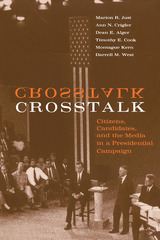
Examining political advertisements, news coverage, ad watches, and talk shows in Los Angeles, Boston, Winston-Salem, and Fargo/Moorhead, the authors chart the impact of different information environments on citizens and show how people developed images of candidates over the course of the campaign. Crosstalk presents persuasive evidence that campaigns do matter, that citizens are active participants in the campaign process, and their perceptions of a candidate's character is the central factor in the voting process.
This innovative study contributes significantly to our understanding of the 1992 presidential campaign and of campaigns in general, and shows how election campaigns can play an important role in the long-term vitality of democracy.
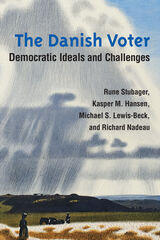
The authors of The Danish Voter investigate a series of interesting questions concerning voters’ reactions to these macrosocial challenges and how their reactions affect the foundations for the ideal. Indeed, due to an electoral system open to new influences, the Danish case is an important test case for theories about political development of contemporary Western societies.
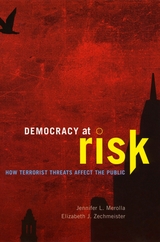
How do threats of terrorism affect the opinions of citizens? Speculation abounds, but until now no one had marshaled hard evidence to explain the complexities of this relationship. Drawing on data from surveys and original experiments they conducted in the United States and Mexico, Jennifer Merolla and Elizabeth Zechmeister demonstrate how our strategies for coping with terrorist threats significantly influence our attitudes toward fellow citizens, political leaders, and foreign nations.
The authors reveal, for example, that some people try to restore a sense of order and control through increased wariness of others—especially of those who exist outside the societal mainstream. Additionally, voters under threat tend to prize “strong leadership” more highly than partisan affiliation, making some politicians seem more charismatic than they otherwise would. The authors show that a wary public will sometimes continue to empower such leaders after they have been elected, giving them greater authority even at the expense of institutional checks and balances. Having demonstrated that a climate of terrorist threat also increases support for restrictive laws at home and engagement against terrorists abroad, Merolla and Zechmeister conclude that our responses to such threats can put democracy at risk.
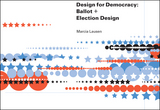
Handsomely designed itself, this volume showcases adaptable design models that can improve almost every part of the election process by maximizing the clarity and usability of ballots, registration forms, posters and signs, informational brochures and guides, and even administrative materials for poll workers. Design for Democracy also lays out specific guidelines—covering issues of color palette, typography, and image use—that anchor the comprehensive election design system devised by the group of design specialists from whose name the book takes its title. Part of a major AIGA strategic program, this group's prototypes and recommendations have already been used successfully in major Illinois and Oregon elections and, collected here, are likely to spread across the country as more people become aware of the myriad benefits and broad applicability of improved election design.
An essential tool for designers and election officials, lawmakers and citizens, Design for Democracy harnesses the power of design to increase voter confidence, promote government transparency, and, perhaps most important, create an informed electorate.
Swers combines quantitative analyses of bills with interviews with legislators and their staff to compare legislative activity on women's issues by male and female members of the House of Representatives during the 103rd (1993-94) and 104th (1995-96) Congresses. Tracking representatives' commitment to women's issues throughout the legislative process, from the introduction of bills through committee consideration to final floor votes, Swers examines how the prevailing political context and members' positions within Congress affect whether and how aggressively they pursue women's issues.
Anyone studying congressional behavior, the role of women, or the representation of social identities in Congress will benefit from Swers's balanced and nuanced analysis.
Michael B. MacKuen is Burton Craige Professor of Political Science at the University of North Carolina. George Rabinowitz is Burton Craige Professor of Political Science at the University of North Carolina.
Questions of minority representation have long plagued the U.S. voting systems. The standard election often leaves political, racial, or ethnic minorities with little chance of being represented. Race-conscious districting remains the primary policy tool used for providing representation of racial and ethnic minorities in the United States—and it continues to generate tremendous conflict. Can alternatives to race-conscious, single-member districts offer benefits that extend beyond simply providing descriptive representations of minorities?
This study examines one such “semi-proportional” representation election system: Cumulative Voting (CV). For over a decade, scores of local U.S. governments have been elected by Cumulative Voting. This provides us with the ability to examine the effects of CV elections over time. Moreover, the use of CV in the United States allows us to compare politics in places that adopted CV to highly similar places that did not. Electoral Reform and Minority Representation shares evidence that CV elections can produce minority representation that matches levels generated with the drawing of race-conscious “majority-minority” districting. It also offers evidence that the quality of democratic processes in CV communities is in several ways higher that those under districts.
Given America’s growing racial and ethnic diversity, and given successful legal challenges that limit the use of race-conscious districting Electoral Reform and Minority Representation suggests that Cumulative Voting may be a better way to achieve minority representation in U.S. politics.
A new Germany has come of age, as democratic, sophisticated, affluent, and modern as any other western nation. This remarkable transition in little more than a generation is the central theme of Germany Transformed. Here all the old stereotypes and conclusions are challenged and new research is marshalled to provide a model for an advanced democratic republic.
Kendall Baker, Russell Dalton, and Kai Hildebrandt, working with massive national election returns from 1953 onward, explain the Old Politics of the postwar period, which was based on the “economic miracle” and the security needs of West Germany, and the shift in the past decade to the New Politics, which emphasizes affluence, leisure, the quality of life, and international accommodation. But more than elections are examined. Rather, the authors delineate the transvaluation of the German civic culture as democracy became embedded in the nation’s institutions, political ways, party structures, and citizen interest in governance. By the 1970s the quiescent German of Prussia, the Empire, and the 1930s had become the active and aware democratic westerner.
This is among the most important books about West Germany written since the late 1950s, when the nation, devastated by war and rebuilding its economy and political life, was still struggling with the possibilities of democracy. It is a political history, recounted in enormous detail and with methodological precision, that will change perceptions about Germany and align them with realities. Germany is now an integrated part of a democratic western community of nations, and an understanding of its true condition not only illuminates better the staunch European identity but also is bound to have an impact on American policy.
Horses in Midstream breaks the mold of midterm election literature by focusing on the consequences of midterm elections rather than on the causes of the anti-administration pattern of those elections. The book concludes that the midterm pattern has two primary consequences: it stymies the President and provides an opportunity for the revitalization of the opposition party—and that numerical losses by the President's party is really only a small part of the equation. Consequently, midterm elections can be considered an additional check in the U.S. political system, acting as a mechanism that helps to assure rough two party balance.
In examining the historical results from midterm elections dating back to 1894 and extending to the surprising result of 1994 and 1998, Busch has uncovered seven consistent ways in which the president and his party are harmed by midterm elections. These elections unfavorably alter the composition of congress, both between the parties and within the President's own party; they deprive the President of the plebiscitary power derived from his original electoral mandate; they give an intangible sense of momentum to the opposition party, leading to renewed opportunities for the opposition to put forward new leaders and to develop winning issues; they exacerbate splits within the President's own party; and they provide the opposition party with expanded party-building opportunities at the state level. Busch also places the midterm elections into four categories: "preparatory" midterms, which contribute to a subsequent change in party control of the Presidency; "calibrating" midterms in which voters slow but do not reverse extraordinary periods of Presidentially-driven change; "normal" midterms when midterm elections stymie the President without contributing to a White House takeover; and the rare "creative exceptions" when an administration escapes the midterm curse at the polls and find themselves invigorated rather than weakened. Busch's new approach to midterm elections, his well supported conclusions, and his clear, consistent style will certainly be of interest to political scientists and will translate well to the classroom.
The idea of voting is simple, but the administration of elections in ways that ensure access and integrity is complex.
In How We Vote, Kathleen Hale and Mitchell Brown explore what is at the heart of our democracy: how elections are run. Election administration determines how ballots are cast and counted, and how jurisdictions try to innovate while also protecting the security of the voting process, as well as how election officials work.
Election officials must work in a difficult intergovernmental environment of constant change and intense partisanship. Voting practices and funding vary from state to state, and multiple government agencies, the judicial system, voting equipment vendors, nonprofit groups, and citizen activists also influence practices and limit change. Despite real challenges and pessimistic media assessments, Hale and Brown demonstrate that election officials are largely successful in their work to facilitate, protect, and evolve the voting process.
Using original data gathered from state and local election officials and policymakers across the United States, Hale and Brown analyze innovations in voter registration, voting options, voter convenience, support for voting in languages other than English, the integrity of the voting process, and voting system technology. The result is a fascinating picture of how we vote now and will vote in the future.
Since their publication in 1957, Downs's seminal ideas -- tweedledum and tweedledee politics and the "rationality" of political ignorance and nonparticipation on the part of voters--have shaped an ongoing debate about how politics actually work. The debate pits a public-choice model inspired by microeconomic precepts against a traditional textbook model that presumes a responsible, informed, and civic-minded citizenry and a set of elected officials motivated by concern for the public interest and policy convictions.
The essays comprising Information, Participation, and Choice, by leading political scientists and economists, provide both a summary of Downs's key theoretical insights and an empirical examination of how well models inspired by Downs accurately describe U.S. political competition for Congress and the presidency.
Bernard Grofman is Professor of Political Science and Social Psychology, University of California, Irvine.
Senator Jim Jeffords left the Republican Party in May 2001 and became an independent. Because he agreed to vote with the Democrats on organizational votes, this gave that party a 51–49 majority in the Senate.
Using the “Jeffords switch,” Chris Den Hartog and Nathan W. Monroe examine how power is shared and transferred in the Senate, as well as whether Democratic bills became more successful after the switch. They also use the data after the switch, when the Republican Party still held a majority on many Democratic Party-led committees, to examine the power of the committee chairs to influence decisions. While the authors find that the majority party does influence Senate decisions, Den Hartog and Monroe are more interested in exploring the method and limits of the majority party to achieve its goals.

Does the movement to a large number of early presidential primaries reduce the ability of voters to learn about the candidates? Do voters who vote early miss important information by not following the entire campaign, or are they, as some argue, more partisan? In a unique study Rebecca B. Morton and Kenneth C. Williams investigate the impact these changes have on the choices voters make. The authors combine a formal, theoretical model to derive hypotheses with experiments, elections conducted in labs, to test the hypotheses.
Their analysis finds that sequence in voting does matter. In simultaneous voting elections well-known candidates are more likely to win, even if that candidate is the first preference of only a minority of the voters and would be defeated by another candidate, if that candidate were better known. These results support the concerns of policy makers that front-loaded primaries prevent voters from learning during the primary process. The authors also find evidence that in sequential elections those who vote on election day have the benefit of information received throughout the whole course of the campaign, thus supporting concerns with mail-in ballots and other early balloting procedures.
This book will interest scholars interested in elections, the design of electoral systems, and voting behavior as well as the use of formal modeling and experiments in the study of politics. It is written in a manner that can be easily read by those in the public concerned with presidential elections and voting.
Rebecca B. Morton is Associate Professor of Political Science, University of Iowa. Kenneth C. Williams is Associate Professor of Political Science, Michigan State University.
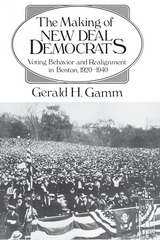
Almost all previous work on the subject has dealt with large-scale national patterns which make it difficult to pin down the precise processes by which the alignment took place. Gamm's work is most remarkable in that it is a close analysis of shifting voter alignments on the precinct and block level in the city of Boston. His extremely detailed and painstaking work of isolating homogeneous ethnic units over a twenty-year period allows one to trace the voting behavior of the particular ethnic groups that ultimately formed the core of the New Deal realignment."—Sidney Verba, Harvard University
Most research on two-party elections has considered the outcome as a single, dichotomous event: either one or the other party wins. In this groundbreaking book, James Fowler and Oleg Smirnov investigate not just who wins, but by how much, and they marshal compelling evidence that mandates-in the form of margin of victory-matter. Using theoretical models, computer simulation, carefully designed experiments, and empirical data, the authors show that after an election the policy positions of both parties move in the direction preferred by the winning party-and they move even more if the victory is large. In addition, Fowler and Smirnov not only show that the divergence between the policy positions of the parties is greatest when the previous election was close, but also that policy positions are further influenced by electoral volatility and ideological polarization.
This pioneering book will be of particular interest to political scientists, game theoreticians, and other scholars who study voting behavior and its short-term and long-range effects on public policy.
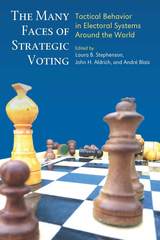
Voters do not always choose their preferred candidate on election day. Often they cast their ballots to prevent a particular outcome, as when their own preferred candidate has no hope of winning and they want to prevent another, undesirable candidate’s victory; or, they vote to promote a single-party majority in parliamentary systems, when their own candidate is from a party that has no hope of winning. In their thought-provoking book The Many Faces of Strategic Voting, Laura B. Stephenson, John H. Aldrich, and André Blais first provide a conceptual framework for understanding why people vote strategically, and what the differences are between sincere and strategic voting behaviors. Expert contributors then explore the many facets of strategic voting through case studies in Great Britain, Spain, Canada, Japan, Belgium, Germany, Switzerland, and the European Union.
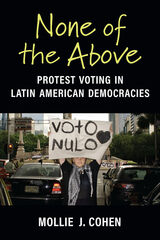
Contrary to received wisdom, this book shows that most citizens cast blank or spoiled votes in presidential elections on purpose. By participating in invalid vote campaigns, citizens can voice their concerns about low-quality candidates while also expressing a preference for high-quality democracy. Campaigns promoting blank and spoiled votes come about more often, and succeed at higher rates, when incumbent politicians undermine the quality of elections. Surprisingly, invalid vote campaigns can shore up the quality of democracy in the short term. None of the Above shows that swings in blank and spoiled vote rates can serve as a warning about the trajectory of a country’s democracy.
A central current in the history of democratic politics is the tensions between the political culture of an informed citizenry and the potentially antidemocratic impulses of the larger mass of individuals who are only marginally involved in the political world. Given the public’s low level of political interest and knowledge, it is paradoxical that the democratic system works at all.
In The Paradox of Mass Politics W. Russell Neuman analyzes the major election surveys in the United States for the period 1948–1980 and develops for each a central index of political sophistication based on measures of political interest, knowledge, and style of political conceptualization. Taking a fresh look at the dramatic findings of public apathy and ignorance, he probes the process by which citizens acquire political knowledge and the impact of their knowledge on voting behavior.
The book challenges the commonly held view that politically oriented college-educated individuals have a sophisticated grasp of the fundamental political issues of the day and do not rely heavily on vague political symbolism and party identification in their electoral calculus. In their expression of political opinions and in the stability and coherence of those opinions over time, the more knowledgeable half of the population, Neuman concludes, is almost indistinguishable from the other half. This is, in effect, a second paradox closely related to the first.
In an attempt to resolve a major and persisting paradox of political theory, Neuman develops a model of three publics, which more accurately portrays the distribution of political knowledge and behavior in the mass population. He identifies a stratum of apoliticals, a large middle mass, and a politically sophisticated elite. The elite is so small (less than 5 percent) that the beliefs and behavior of its member are lost in the large random samples of national election surveys, but so active and articulate that its views are often equated with public opinion at large by the powers in Washington. The key to the paradox of mass politics is the activity of this tiny stratum of persons who follow political issues with care and expertise. This book is essential reading for concerned students of American politics, sociology, public opinion, and mass communication.
Erik J. Engstrom offers a historical perspective on the effects of gerrymandering on elections and party control of the U.S. national legislature. Aside from the requirements that districts be continuous and, after 1842, that each select only one representative, there were few restrictions on congressional districting. Unrestrained, state legislators drew and redrew districts to suit their own partisan agendas. With the rise of the “one-person, one-vote” doctrine and the implementation of the Voting Rights Act of 1965, however, redistricting became subject to court oversight.
Engstrom evaluates the abundant cross-sectional and temporal variation in redistricting plans and their electoral results from all the states, from 1789 through the 1960s, to identify the causes and consequences of partisan redistricting. His analysis reveals that districting practices across states and over time systematically affected the competitiveness of congressional elections, shaped the partisan composition of congressional delegations, and, on occasion, determined party control of the House of Representatives.
There can scarcely be a greater tribute to the vitality of the Fifth Republic's democracy than this monumental work. A searching analysis of how the will of the voters is translated into authoritative political decision making, this book not only uncovers political truths about contemporary France but also provides a model for the study of other popular forms of government.
The authors set out to find an answer to the perplexing question of how representative government operates in France in the seemingly unstable context of multiparties. By interviewing voters as well as legislators in 1967 and in 1968 after the great upheaval, and by monitoring policies of the National Assembly from 1967 to 1973, the authors test relationships between public opinion and decision making. They are able to sort out the abiding political cues that orient the French voter, to establish the normal electoral processes, to gauge the nature of mass perceptions of the political options available to voters, and to interpret the strikes, riots, and demonstrations of 1968 as a channel of communication parallel to the electoral process itself.
Lucid in style, methodologically sophisticated, and often comparative in approach, Political Representation in France is a seminal work for political scientists, sociologists, and historians.
The monumental Harvard Encyclopedia of American Ethnic Groups is the most authoritative single source available on the history, culture, and distinctive characteristics of ethnic groups in the United States. The Dimensions of Ethnicity series is designed to make this landmark scholarship available to everyone in a series of handy paperbound student editions. Selections in this series will include outstanding articles that illuminate the social dynamics of a pluralistic nation or masterfully summarize the experience of key groups.
Written by the best-qualified scholars in each field, Dimensions of Ethnicity will reflect the complex interplay between assimilation and pluralism that is a central theme of the American experience.
other book like it.”
—Norman Schofield, Washington University
“The authors succeed brilliantly in tackling a large
number of important questions concerning the
interaction among voters and elected representatives
in the political arena, using a common, rigorous
language.”
—Antonio Merlo, University of Pennsylvania
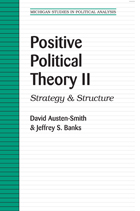
Positive Political Theory II: Strategy and Structure
is the second volume in Jeffrey Banks and David
Austen-Smith’s monumental study of the links
between individual preferences and collective choice.
The book focuses on representative systems, including
both elections and legislative decision-making
processes, clearly connecting individual preferences to
collective outcomes. This book is not a survey. Rather,
it is the coherent, cumulative result of the authors’
brilliant efforts to indirectly connect preferences to
collective choice through strategic behaviors such as
agenda-selection and voting.
The book will be an invaluable reference and teaching
tool for economists and political scientists, and an
essential companion to any scholar interested in the
latest theoretical advances in positive political theory.

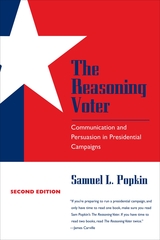
"Professor Popkin has brought V.O. Key's contention that voters are rational into the media age. This book is a useful rebuttal to the cynical view that politics is a wholly contrived business, in which unscrupulous operatives manipulate the emotions of distrustful but gullible citizens. The reality, he shows, is both more complex and more hopeful than that."—David S. Broder, The Washington Post
The rise of an immensely powerful federal government in the twentieth century has tended to obscure the importance of state and local government in American history. Yet government at these lesser levels had the most direct and continuous effect on the lives of ordinary citizens. Through an analysis of late-nineteenth-century state legislatures in Illinois, Iowa, and Wisconsin,Ballard Campbell has written what one expert has called "the best book on legislative politics, past or present." The period he examines was one of rapid change and great challenge. Urbanization, industrialization, and increasing national integration forced innumerable difficult and important decisions on state legislators. Campbell is sensitive to these stresses on law-making, and skillfully analyzes the interplay between personal and constituent factors that affected lawmakers.
The author differentiates clearly between local and general aspects of state policymaking, giving full consideration to its more subjective and idiosyncratic elements. His comparison of partisan, economic, urban, ethnocultural, and regional influences on legislative behavior will serve as a model for all future studies.
By closely examining the substantive dimension of the governmental process and its relation to mass politics, Representative Democracy advances "the new political history." Campbell's discussion of legislative composition and procedure, the content and context of contested issues, and responses to these issues challenges numerous stereotypes about American state legislatures.
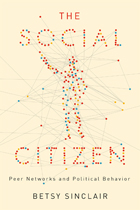
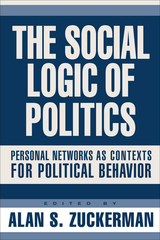
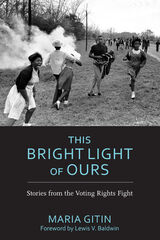
Combining memoir and oral history, Maria Gitin fills a vital gap in civil rights history by focusing on the neglected Freedom Summer of 1965 when hundreds of college students joined forces with local black leaders to register thousands of new black voters in the rural South. Gitin was an idealistic nineteen-year-old college freshman from a small farming community north of San Francisco who felt called to action when she saw televised images of brutal attacks on peaceful demonstrators during Bloody Sunday, in Selma, Alabama.
Atypical among white civil rights volunteers, Gitin came from a rural low-income family. She raised funds to attend an intensive orientation in Atlanta featuring now-legendary civil rights leaders. Her detailed letters include the first narrative account of this orientation and the only in-depth field report from a teenage Summer Community Organization and Political Education (SCOPE) project participant.
Gitin details the dangerous life of civil rights activists in Wilcox County, Alabama, where she was assigned. She tells of threats and arrests, but also of forming deep friendships and of falling in love. More than four decades later, Gitin returned to Wilcox County to revisit the people and places that she could never forget and to discover their views of the “outside agitators” who had come to their community. Through conversational interviews with more than fifty Wilcox County residents and former civil rights workers, she has created a channel for the voices of these unheralded heroes who formed the backbone of the civil rights movement.
What makes people decide to vote? In addressing this simple question, André Blais examines the factors that increase or decrease turnout at the aggregate, cross-national level and considers what affects people’s decision to vote or to abstain. In doing so, Blais assesses the merits and limitations of the rational choice model in explaining voter behavior. The past few decades have witnessed a rise in the popularity of the rational choice model in accounting for voter turnout, and more recently a groundswell of outspoken opposition to rational choice theory.
Blais tackles this controversial subject in an engaging and personal way, bringing together the opposing theories and literatures, and offering convincing tests of these different viewpoints. Most important, he handles the discussion in a clear and balanced manner. Using new data sets from many countries, Blais concludes that while rational choice is an important tool—even when it doesn’t work—its empirical contribution to understanding why people vote is quite limited.
Whether one supports rational choice theory or opposes it, Blais’s evenhanded and timely analysis will certainly be of interest, and is well-suited for advanced undergraduate and graduate-level classes.
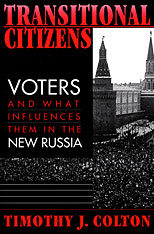
Subjects obey. Citizens choose. Transitional Citizens looks at the newly empowered citizens of Russia's protodemocracy facing choices at the ballot box that just a few years ago, under dictatorial rule, they could not have dreamt of.
The stakes in post-Soviet elections are extraordinary. While in the West politicians argue over refinements to social systems in basically good working order, in the Russian Federation they address graver concerns--dysfunctional institutions, individual freedom, nationhood, property rights, provision of the basic necessities of life in an unparalleled economic downswing. The idiom of Russian campaigns is that of apocalypse and mutual demonization. This might give an impression of political chaos. However, as Timothy Colton finds, voting in transitional Russia is highly patterned. Despite their unfamiliarity with democracy, subjects-turned-citizens learn about their electoral options from peers and the mass media and make choices that manifest a purposiveness that will surprise many readers.
Colton reveals that post-Communist voting is not driven by a single explanatory factor such as ethnicity, charismatic leadership, or financial concerns, but rather by multiple causes interacting in complex ways. He gives us the most sophisticated and insightful account yet of the citizens of the new Russia.
Once again a southern governor has shown Democrats the road to the White House. As a native southerner, President Bill Clinton has the opportunity to rebuild Democratic strength in the region. For the Republicans, carrying the entire South still remains a crucial imperative.
The Vital South is the first book to chronicle the massive shift of southern electoral power to Republican presidential candidates, while also showing how Democrats can again become competitive in the region. Deftly combining political narrative, in-depth analysis, and telling anecdotes, this book will be a definitive source on southern presidential politics for years to come.

manner, leading historians and political scientists trace the history of American
voting from the colonial period to the present incorporating the latest scholarship
on suffrage reform, woman suffrage, black voting rights, and electoral participation.
They explain how voting practices changed over time as the result of broad historical
forces such as economic growth, demographic shifts, the results of war, and
the rise of political reform movements.
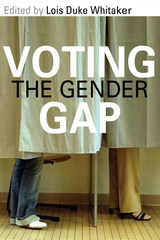
This book concentrates on the gender gap in voting--the difference in the proportion of women and men voting for the same candidate. Evident in every presidential election since 1980, this polling phenomenon reached a high of 11 percentage points in the 1996 election. The contributors discuss the history, complexity, and ways of analyzing the gender gap; the gender gap in relation to partisanship; motherhood, ethnicity, and the impact of parental status on the gender gap; and the gender gap in races involving female candidates. Voting the Gender Gap analyzes trends in voting while probing how women's political empowerment and gender affect American politics and the electoral process.
Contributors are Susan J. Carroll, Erin Cassese, Cal Clark, Janet M. Clark, M. Margaret Conway, Kathleen A. Dolan, Laurel Elder, Kathleen A. Frankovic, Steven Greene, Leonie Huddy, Mary-Kate Lizotte, Barbara Norrander, Margie Omero, and Lois Duke Whitaker.
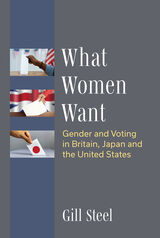
What Women Want analyzes decades of voting preferences, values, and policy preferences to debunk some of the media and academic myths about gender gaps in voting and policy preferences. Findings show that no single theory explains when differences in women’s and men’s voting preferences emerge, when they do not, or when changes—or the lack thereof—occur over time. Steel extends existing theories to create a broader framework for thinking about gender and voting behavior to provide more analytical purchase in understanding gender and its varying effects on individual voters’ preferences. She incorporates the long-term effects of party identification and class politics on political decision-making, particularly in how they influence preferences on social provision and on expectations of the state. She also points to the importance of symbolic politics
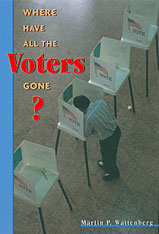
As the confusion over the ballots in Florida in 2000 demonstrated, American elections are complex and anything but user-friendly. This phenomenon is by no means new, but with the weakening of political parties in recent decades and the rise of candidate-centered politics, the high level of complexity has become ever more difficult for many citizens to navigate. Thus the combination of complex elections and the steady decline of the party system has led to a decline in voter turnout.
In this timely book, Martin Wattenberg confronts the question of what low participation rates mean for democracy. At the individual level, turnout decline has been highest among the types of people who most need to have electoral decisions simplified for them through a strong party system--those with the least education, political knowledge, and life experience.
As Wattenberg shows, rather than lamenting how many Americans fail to exercise their democratic rights, we should be impressed with how many arrive at the polls in spite of a political system that asks more of a typical person than is reasonable. Meanwhile, we must find ways to make the American electoral process more user-friendly.
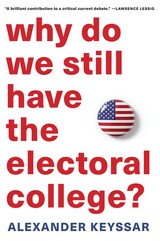
A New Statesman Book of the Year
“America’s greatest historian of democracy now offers an extraordinary history of the most bizarre aspect of our representative democracy—the electoral college…A brilliant contribution to a critical current debate.”
—Lawrence Lessig, author of They Don’t Represent Us
Every four years, millions of Americans wonder why they choose their presidents through an arcane institution that permits the loser of the popular vote to become president and narrows campaigns to swing states. Congress has tried on many occasions to alter or scuttle the Electoral College, and in this master class in American political history, a renowned Harvard professor explains its confounding persistence.
After tracing the tangled origins of the Electoral College back to the Constitutional Convention, Alexander Keyssar outlines the constant stream of efforts since then to abolish or reform it. Why have they all failed? The complexity of the design and partisan one-upmanship have a lot to do with it, as do the difficulty of passing constitutional amendments and the South’s long history of restrictive voting laws. By revealing the reasons for past failures and showing how close we’ve come to abolishing the Electoral College, Keyssar offers encouragement to those hoping for change.
“Conclusively demonstrates the absurdity of preserving an institution that has been so contentious throughout U.S. history and has not infrequently produced results that defied the popular will.”
—Michael Kazin, The Nation
“Rigorous and highly readable…shows how the electoral college has endured despite being reviled by statesmen from James Madison, Thomas Jefferson, and Andrew Jackson to Edward Kennedy, Bob Dole, and Gerald Ford.”
—Lawrence Douglas, Times Literary Supplement
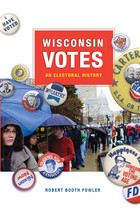
Those who do not have their heads buried too deeply in partisan sands will know that there is something awry with the American form of electoral democracy. Florida's continuing ability to misplace votes recently and in the 2000 Presidential election is only part of the iceberg we have been made privy to-and Steven Schier takes a good, hard, evaluative look not only at what is there in plain sight, but that which lurks below the surface (and not only in Florida and not only with the electoral college). He further proposes practical improvements that will make our surprisingly peculiar democratic processes healthy, whole, and responsive again.
Identifying four essential evaluative criteria for a democracy that genuinely works, Schier asks us to examine the degree to which our system promotes political stability, the degree to which our elected officials are held accountable, what the problems are with voter turnout and how to improve it, and asks for a meaningful scrutiny of governmental policy.
No look at our peculiar democracy would be complete without an examination of other established democracies, nor a look at how special interests warp political parties and the concept of majority rule. The solution to many of our electoral problems, Schier argues, lies in enhancing the roles and influence of political parties. Schier proposes reforms that include broadening voter registration; giving parties large blocks of free TV time; adopting one-punch partisan ballots, making it easier for voters to cast a straight-party vote; abandoning initiatives which clutter up the ballot; and utilizing party-based financing to boost voter turnout. With these proposals, he encourages the creative consideration of election reform, and shows how the Florida 2000 race may have played out had these suggestions been in place.
Schier's book appeals to any and every citizen interested in our electoral system and its role in governmental politics. It is invaluable for professionals in political science and ideal for students in American government, political parties, elections, and political behavior courses, as well for political scientists. Any citizens concerned about the conduct of American elections will discover here a fresh and focused analysis of our problems at the ballot box.
READERS
Browse our collection.
PUBLISHERS
See BiblioVault's publisher services.
STUDENT SERVICES
Files for college accessibility offices.
RECENTLY PUBLISHED






UChicago Accessibility Resources
home | accessibility | search | about | contact us
BiblioVault ® 2001 - 2024
The University of Chicago Press