Results by title
28164 books match the query 'History' and 2536 start with a
A Rain of Darts
The Mexica AztecsBy Burr Cartwright Brundage
University of Texas Press, 1972
This book was the first serious scholarly attempt in nearly a century to put in narrative form the exciting and important history of the Mexican Indians who founded Tenochtitlan and who created from it what is known as the Aztec empire. Although many native sources, often in translations with scholarly annotations. became available in the twentieth century, the corpus of this material was scattered and uncoordinated. Burr Cartwright Brundage has utilized these sources to produce a consecutive narrative that portrays direction and purpose in the evolution of the Aztec empire.
A Rain of Darts is the first one-volume history of the Mexica, historically the most important of the Aztec peoples. The focus of the narrative is on the political state produced by the Mexica during their stormy history. The eleven Mexica reigns that preceded the Spanish Conquest are investigated, their triumphs and errors explained, and the lives of their great leaders illuminated where the sources allow.
The narrative opens with the first appearance of the Mexica out of the arid north; it details their aimless wandering, the founding of the city of Mexico in the waters of Lake Tezcoco, their desperate struggle for independence (successfully achieved in 1428), and the flourishing of the new state and its curiously structured empire. This history concludes with an analysis of the character of Moteuczoma II, and investigates the final sickness of the Mexican state. Cortez and his small army of Spaniards are seen here for the first time in historical literature through the eyes of the people they conquered. The Mexica Aztecs remain at the center of the narrative.
The Mexica were unable to build a tightly knit empire because of the elitist, international warrior class and its peculiar cult of war and sacrifice. To the Mexica, warfare and bloodshed were sacraments; the teuctli or knightly warrior was the priest of this cult. to which he was as loyal as to the state. In this lay the uniqueness of the Mexican state and the seeds of its tragic end in 1521.
A Reader's Guide to Andrei Bely's "Petersburg"
Edited by Leonard Livak
University of Wisconsin Press, 2021
Bely expected his audience to participate in unraveling the work's many meanings, narrative strains, and patterns of details. In their essays, the contributors clarify these complexities, summarize the intellectual and artistic contexts that informed Petersburg's creation and reception, and review the interpretive possibilities contained in the novel. This volume will aid a broad audience of Anglophone readers in understanding and appreciating Petersburg.
A Rebellious People
Basques, Protests, And PoliticsCyrus Ernesto Zirakzadeh
University of Nevada Press, 1991
In this scholarly work, Zirakzadeh argues that there is a calculated reasoning behind ETA's political violence that is often overlooked by researchers. His book is a comprehensive account of the Basque region's grassroots politics.
A Reckoning
Philippine Trials of Japanese War CriminalsSharon W. Chamberlain
University of Wisconsin Press, 2019
Chamberlain highlights the differing views of Filipinos and Japanese about the trials. The Philippine government aimed to show its commitment to impartial proceedings with just outcomes. In Japan, it appeared that defendants were selected arbitrarily, judges and prosecutors were biased, and lower-ranking soldiers were punished for crimes ordered by their superior officers. She analyzes the broader implications of this divergence as bilateral relations between the two nations evolved and contends that these competing narratives were reimagined in a way that, paradoxically, aided a path toward postwar reconciliation.
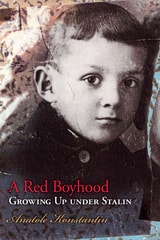
A Red Boyhood
Growing Up Under StalinAnatole Konstantin
University of Missouri Press, 2008
Many children growing up in the Soviet Union before World War II knew the meaning of deprivation and dread. But for the son of an “enemy of the people,” those apprehensions were especially compounded.
When the secret police came for his father in 1938, ten-year-old Anatole Konstantin saw his family plunged into a morass of fear. His memoir of growing up in Stalinist Russia re-creates in vivid detail the daily trials of people trapped in this regime before and during the repressive years of World War II—and the equally horrific struggles of refugees after that conflict.
Evicted from their home, their property confiscated, and eventually forced to leave their town, Anatole’s family experienced the fate of millions of Soviet citizens whose loved ones fell victim to Stalin’s purges. His mother, Raya, resorted to digging peat, stacking bricks, and even bootlegging to support herself and her two children. How she managed to hold her family together in a rapidly deteriorating society—and how young Anatole survived the horrors of marginalization and war—form a story more compelling than any novel.
Looking back on those years from adulthood, Konstantin reflects on both his formal education under harsh conditions and his growing awareness of the contradictions between propaganda and reality. He tells of life in the small Ukrainian town of Khmelnik just before World War II and of how some of its citizens collaborated with the German occupation, lending new insight into the fate of Ukrainian Jews and Nazi corruption of local officials. And in recounting his experiences as a refugee, he offers a new look at everyday life in early postwar Poland and Germany, as well as one of the few firsthand accounts of life in postwar Displaced Persons camps.
A Red Boyhood takes readers inside Stalinist Russia to experience the grim realities of repression—both under a Soviet regime and German occupation. A moving story of desperate people in desperate times, it brings to life the harsh realities of the twentieth century for young and old readers alike.
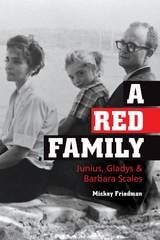
A Red Family
Junius, Gladys, and Barbara ScalesMickey Friedman. Afterword by Barbara Scales. Historical Essay by Gail O'Brien.
University of Illinois Press, 2008
Through the distinct perspectives of Junius, his wife Gladys, and his daughter Barbara, this book deepens and personalizes the story of American radicalism. Conversational, intimate, and exceptionally accessible, A Red Family offers a unique look at the American communist experience from the inside out.

A Reed Shaken with the Wind
A Human and Natural History of the Bear River MarshAndrew H. Hedges
University of Utah Press, 2025
A Reed Shaken with the Wind tells the story of the Bear River Marsh, freshwater and sheltered grasslands on the northeast end of the Great Salt Lake with a complex past. Despite being one of Utah’s most renowned hunting and birdwatching locations, the marsh today holds only a shadow of its former ecological vitality.
Tracing the marsh from its creation during the last ice age to its current status as an imperiled national wildlife refuge, Andrew Hedges draws on geology, ecology, archaeology, wildlife biology, and water resource management to explore the natural and human forces that shaped the marsh and contributed to its decline. Covering Indigenous relationships with land, market economies’ impacts, and the intersection of ecology, science, and politics in establishing the Bear River Migratory Bird Refuge, this volume deepens discussions of humanity’s place in the environment and efforts to restore balance with our planet.
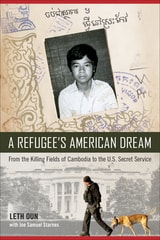
A Refugee's American Dream
From the Killing Fields of Cambodia to the U.S. Secret ServiceLeth Oun with Joe Samuel Starnes
Temple University Press, 2023
“I saw many killed. I almost starved. But I escaped to refugee camps in Thailand and eventually made it to the U.S.” Thus begins Leth Oun’s poignant and vivid memoir. A survivor of the Cambodian Killing Fields—having spent a torturous three years, eight months, and ten days imprisoned by the Khmer Rouge—Oun thrived in America, learning English, becoming a citizen, and working as an officer in the United States Secret Service Uniformed Division.
In A Refugee’s American Dream, Oun shares hard memories of Cambodia, where his father was executed, and his family enslaved in labor camps.
Following the fall of the Khmer Rouge, Oun survived a year of homelessness then nearly four years in refugee camps. Arriving in America, 17 and penniless, Oun struggled, washing dishes at a Chinese restaurant for $3.15 an hour. Still, he persevered, graduating from Widener University and completing thousands of hours of training to pursue a career in the Secret Service.
While on President Obama’s protection team, he returns to Cambodia after 32 years, reunites with family, and bonds with Reik, the Secret Service dog he handles. Through his most difficult moments, Oun displays truly inspiring resilience that ultimately leads to great achievements.
The authors’ proceeds will go to help Cambodians in need
A Region among States
Law and Non-sovereignty in the CaribbeanLee Cabatingan
University of Chicago Press, 2023
How is it that a great swath of the independent, English-speaking Caribbean continues to accept the judicial oversight of their former colonizer via the British institution of the Privy Council? And what possibilities might the Caribbean Court of Justice—a judicial institution responsive to the region, not to any single nation—offer for untangling sovereignty and regionhood, law and modernity, and postcolonial Caribbean identity?
Joining the Court as an intern, Lee Cabatingan studied its work up close: she attended each court hearing and numerous staff meetings, served on committees, assisted with the organization of conferences, and helped prepare speeches and presentations for the judges. She now offers insight into not only how the Court positions itself vis-à-vis the Caribbean region and the world but also whether the Court—and, perhaps, the region itself as an overarching construct—might ever achieve a real measure of popular success. In their quest for an accepting, eager constituency, the Court is undertaking a project of extrajudicial region building that borrows from the toolbox of the nation-state. In each chapter, Cabatingan takes us into an analytical dimension familiar from studies of nation and state building—myth, territory, people, language, and brand—to help us understand not only the Court and its ambitions but also the regionalist project, beset as it is with false starts and disappointments, as a potential alternative to the sovereign state.
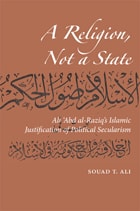
A Religion, Not a State
Ali 'Abd al-Raziq's Islamic justification of Political SecularismSouad T Ali
University of Utah Press, 2009
Utah Series in Middle East Studies
In this notable work, Souad T. Ali examines the seminal writings of Egyptian reformist scholar Ali'Abd al-Raziq, often regarded as the intellectual father of Islamic secularism, and his controversial argument that the caliphate should be considered a human innovation, rather than a religious imperative. 'Abd al Raziq contended that Islam is "a religion, not a state; a message, not a government," a major departure from the traditional view that religious and political spheres are intertwined and inseparable in Islam.
Opponents denounced 'Abd al-Raziq's ideas as a foreign corruption imported from the West. Ali's careful, objective, and scholarly examination of 'Abd al-Raziq's work, however, reveals that his arguments are not based in Western thought. Rather, they sit firmly within the dictates of Islam's sacred texts, particularly the Quran and Hadith, and also enjoy considerable support from the historical record.
This analysis critically challenges prevalent misinterpretations of Islam that have endured for centuries. Ali recognizes the varied models and discourses that have arisen throughout different epochs, especially so the role that Western intervention has played in placing the question of Islam's modernity at the forefront of intellectual debate. Throughout, the study emphasizes the atmosphere of openness and tolerance that is a requisite for free, intelligent debate.
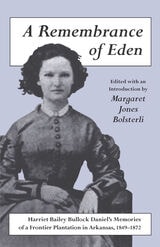
A Remembrance of Eden
Harriet Bailey Bullock Daniel's Memories of a Frontier Plantation in Arkansas, 1849–1872Margaret Jones Bolsterli
University of Arkansas Press, 1993
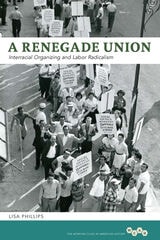
A Renegade Union
Interracial Organizing and Labor RadicalismLisa Phillips
University of Illinois Press, 2013
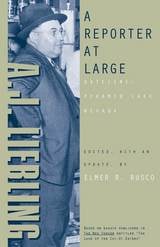
A Reporter At Large
Dateline: Pyramid Lake, NevadaAj Liebling
University of Nevada Press, 1999
Liebling recorded the litigation over the fate of the Pyramid Lake Reservation lands in a series of articles published in The New Yorker in 1955. Reprinted here in their entirety, the essays discuss the affair in detail, following it from the shores of the lake to the halls of Congress, and introducing readers to the colorful world of 1950s Nevada. This is a valuable record of one of Nevada’s most enduring and significant debates over the uses of the land and the precious water that nourishes it. Introduction by Elmer R. Rusco.
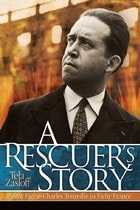
A Rescuer's Story
Pastor Pierre-Charles Toureille in Vichy FranceTela Zasloff
University of Wisconsin Press, 2014
This is the story of a Holocaust rescuer, Pierre Toureille, a French Protestant pastor whose efforts resulted in the rescue of hundreds of refugees, most of them Jewish. Inspired by his Huguenot heritage, Pastor Toureille participated in international Protestant church efforts to combat Nazism during the 1930s and headed a major refugee aid organization in Vichy France during World War II. After the war, Pastor Toureille was honored by the Jewish organization Yad Vashem as one of the "Righteous Among the Nations."
In telling Toureille’s story, Tela Zasloff also depicts the wide-ranging network of Protestant pastors and lay people in southern French villages who participated in an aggressive rescue effort. She delves into their motivations, including their heritage as members of a religious minority. Toureille’s rescue work under the Vichy regime, partly official and then increasingly clandestine as the war progrressed. was a crucial part of the French non-violent "spiritual resistance" against Nazism.
A Restless Search
A History of Persian Translations of the BibleKenneth J. Thomas
SBL Press, 2015
A literary detective story, a historical survey, and an important contribution to translation studies
This book from Kenneth J. Thomas is both a philological and linguistic analysis of Persian translations and a call for interfaith cooperation. Thomas appraises biblical translation efforts from the fifth to the twenty-first centuries of Persian history when successive translators and groups of translators, sometimes of different faiths, worked to reshape and refine versions of the Bible in the supple Persian language of their times. Restless, impelled, and wide-ranging, this is a story of translations commissioned by shahs, undertaken by Christian and Jewish communities, and produced by teams working outside the country.
Features
- Demonstration of the effects of the lack of a standard Persian vocabulary for key biblical terms on literary style and word choice
- Technical analyses and overviews of Persian biblical translations
- A careful examination of sixteen centuries' worth of Bible translations
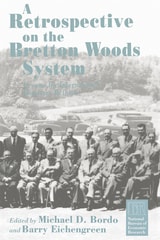
A Retrospective on the Bretton Woods System
Lessons for International Monetary ReformEdited by Michael D. Bordo and Barry Eichengreen
University of Chicago Press, 1993
The contributors explore adjustment, liquidity, and transmission under the System; the way it affected developing countries; and the role of the International Monetary Fund in maintaining a stable rate. The authors examine the reasons for the System's success and eventual collapse, compare it to subsequent monetary regimes, such as the European Monetary System, and address the possibility of a new fixed exchange rate for today's world.
A Retrospective on the Classical Gold Standard, 1821-1931
Edited by Michael D. Bordo and Anna J. Schwartz
University of Chicago Press, 1984
The volume includes a review of the literature on the classical gold standard; studies the experience with gold in England, Germany, Italy, Sweden, and Canada; and perspectives on international linkages and the stability of price-level trends under the gold standard. The articles and commentaries reflect strong, conflicting views among hte participants on issues of central bank behavior, purchasing-power an interest-rate parity, independent monetary policies, economic growth, the "Atlantic economy," and trends in commodity prices and long-term interest rates. This is a thoughtful and provocative book.
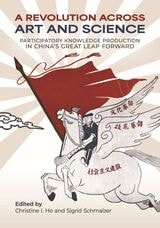
A Revolution Across Art and Science
Participatory Knowledge Production in China’s Great Leap ForwardEdited by Christine I. Ho and Sigrid Schmalzer
Hong Kong University Press, 2026
This volume examines the role of mass knowledge production—whether artistic, scientific, or technical—in China’s Great Leap Forward.
A Revolution Across Art and Science examines how laborers reimagined knowledge during a high point of radicalism in modern Chinese history. Encouraged to become curators, historians, writers, artists, technicians, scientists, and other kinds of experts, Chinese workers and peasants were mobilized to produce new knowledge in the humanities and sciences. Moving beyond the economic questions that have dominated most previous scholarship on the Great Leap Forward, this volume explores the cultural dimensions of the movement to establish the significance of mass knowledge production. Through ten case studies authored by emerging scholars, this volume offers a simultaneously empathetic and critical inquiry into PRC history and its impact on ongoing efforts to democratize knowledge around the world.
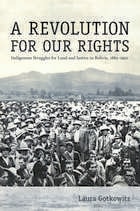
A Revolution for Our Rights
Indigenous Struggles for Land and Justice in Bolivia, 1880-1952Laura Gotkowitz
Duke University Press, 2008
Gotkowitz combines an emphasis on national political debates and congresses with a sharply focused analysis of Indian communities and large estates in the department of Cochabamba. The fragmented nature of Cochabamba’s Indian communities and the pioneering significance of its peasant unions make it a propitious vantage point for exploring contests over competing visions of the nation, justice, and rights. Scrutinizing state authorities’ efforts to impose the law in what was considered a lawless countryside, Gotkowitz shows how, time and again, indigenous activists shrewdly exploited the ambiguous status of the state’s pro-Indian laws to press their demands for land and justice. Bolivian indigenous and social movements have captured worldwide attention during the past several years. By describing indigenous mobilization in the decades preceding the revolution of 1952, A Revolution for Our Rights illuminates a crucial chapter in the long history behind present-day struggles in Bolivia and contributes to an understanding of indigenous politics in modern Latin America more broadly.
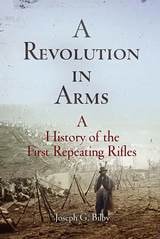
A Revolution in Arms
A History of the First Repeating RiflesJoseph G. Bilby
Westholme Publishing, 2005
Historians often call the American Civil War the first modern war, pointing to the use of observation balloons, the telegraph, trains, mines, ironclad ships, and other innovations. Although recent scholarship has challenged some of these “firsts,” the war did witness the introduction of the first repeating rifles. No other innovation of the turbulent 1860s would have a greater effect on the future of warfare. In A Revolution in Arms: A History of the First Repeating Rifles, historian Joseph G. Bilby unfolds the fascinating story of how two New England inventors, Benjamin Henry and Christopher Spencer, each combined generations of cartridge and rifle technology to develop reliable repeating rifles. In a stroke, the Henry rifle and Spencer rifle and carbine changed warfare forever, accelerating the abandonment of the formal battle line tactics of previous generations and when properly applied, repeating arms could alter the course of a battle. Although slow to enter service, the repeating rifle soon became a sought after weapon by both Union and Confederate troops. Oliver Winchester purchased the rights to the Henry and transformed it into “the gun that won the West.” The Spencer, the most famous of all Civil War small arms, was the weapon of choice for Federal cavalrymen. The revolutionary technology represented by repeating arms used in the American Civil War, including self-contained metallic cartridges, large capacity magazines, and innovative cartridge feeding systems, was copied or adapted by arms manufacturers around the world, and these features remain with us today.
A Revolution in Fragments
Traversing Scales of Justice, Ideology, and Practice in BoliviaMark Goodale
Duke University Press, 2019
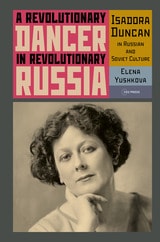
A Revolutionary Dancer in Revolutionary Russia
Isadora Duncan in Russian and Soviet CultureElena Yushkova
Central European University Press, 2026
This monograph offers a compelling exploration of Duncan’s Russian years—both before and after the October Revolution—drawing on rare archival sources and never-before-published Russian materials. It illuminates her artistic vision, her role in shaping early Soviet cultural debates, and the shifting political and aesthetic landscapes she navigated. From Silver Age reimaginations of antiquity to the rise of Socialist Realism and the modern revival of Duncan’s dance, this book traces the enduring legacy of a revolutionary artist in a world undergoing radical transformation.
A Rhetoric of Bourgeois Revolution
The Abbe Sieyes and What is the Third Estate?William H. Jr. Sewell
Duke University Press, 1994
This book studies the powerful rhetoric of the great pamphlet and the brilliant but enigmatic thought of its author. William H. Sewell’s insightful analysis reveals the fundamental role played by the new discourse of political economy in Sieyes’s thought and uncovers the strategies by which this gifted rhetorician gained the assent of his intended readers—educated and prosperous bourgeois who felt excluded by the nobility in the hierarchical social order of the old regime. He also probes the contradictions and incoherencies of the pamphlet’s highly polished text to reveal fissures that reach to the core of Sieyes’s thought—and to the core of the revolutionary project itself.
Combining techniques of intellectual history and literary analysis with a deep understanding of French social and political history, Sewell not only fashions an illuminating portrait of a crucial political document, but outlines a fresh perspective on the history of revolutionary political culture.
A Rhetorical Crime
Genocide in the Geopolitical Discourse of the Cold WarWeiss-Wendt, Anton
Rutgers University Press, 2018
A Rhetorical Crime shows how genocide morphed from a legal concept into a political discourse used in propaganda battles between the United States and the Soviet Union. Over the course of the Cold War era, nearly eighty countries were accused of genocide, and yet there were few real-time interventions to stop the atrocities committed by genocidal regimes like the Cambodian Khmer Rouge.
Renowned genocide scholar Anton Weiss-Wendt employs a unique comparative approach, analyzing the statements of Soviet and American politicians, historians, and legal scholars in order to deduce why their moral posturing far exceeded their humanitarian action.
A Rich and Tantalizing Brew
A History of How Coffee Connected the WorldJeanette M. Fregulia
University of Arkansas Press, 2019
The history of coffee is much more than the tale of one luxury good—it is a lens through which to consider various strands of world history, from food and foodways to religion and economics and sociocultural dynamics.
A Rich and Tantalizing Brew traces the history of coffee from its cultivation and brewing first as a private pleasure in the highlands of Ethiopia and Yemen through its emergence as a sought-after public commodity served in coffeehouses first in the Muslim world, and then traveling across the Mediterranean to Italy, to other parts of Europe, and finally to India and the Americas. At each of these stops the brew gathered ardent aficionados and vocal critics, all the while reshaping patterns of socialization.
Taking its conversational tone from the chats often held over a steaming cup, A Rich and Tantalizing Brew offers a critical and entertaining look at how this bitter beverage, with a little help from the tastes that traveled with it—chocolate, tea, and sugar—has connected people to each other both within and outside of their typical circles, inspiring a new context for sharing news, conducting business affairs, and even plotting revolution.
A Rift in the Clouds
Race and the Southern Federal Judiciary, 1900-1910Brent J. Aucoin
University of Arkansas Press, 2007

A Right to Childhood
The U.S. Children's Bureau and Child Welfare, 1912-46Kriste Lindenmeyer
University of Illinois Press, 1997
for their political agendas as Americans try to determine the role--if
any--of the federal government in the lives of children. But what is the
history of child welfare policy in the United States? What can we learn
from the efforts to found the U.S. Children's bureau in 1903 and its eventual
dismemberment in 1946?
This is the first history of the Children's Bureau and the first in-depth
examination of federal child welfare policy from the perspective of that
agency. Its goal was to promote "a right to childhood," and
Kriste Lindenmeyer unflinchingly examines the successes--and the failures--of
the Bureau. She analyzes infant and maternal mortality, the promotion
of child health care, child labor reform, and the protection of children
with "special needs" from the Bureau's inception through the
Depression, and through all the legislation that impacted on its work
for children. The meaningful accomplishments and the demise of the Children's
Bureau have much to tell parents, politicians, and policy-makers everywhere.

A Right to Health
Medicine, Marginality, and Health Care Reform in Northeastern BrazilBy Jessica Scott Jerome
University of Texas Press, 2015
In 1988, a new health care system, the Sistema Único de Saúde (Unified Health Care System or SUS) was formally established in Brazil. The system was intended, among other goals, to provide universal access to health care services and to redefine health as a citizen’s right and a duty of the state. A Right to Health explores how these goals have unfolded within an urban peripheral community located on the edges of the northeastern city of Fortaleza. Focusing on the decade 1998–2008 and the impact of health care reforms on one low-income neighborhood, Jessica Jerome documents the tensions that arose between the ideals of the reforms and their entanglement with pervasive socioeconomic inequality, neoliberal economic policy, and generational tension with the community.
Using ethnographic and historical research, the book traces the history of political activism in the community, showing that, since the community’s formation in the early 1930s, residents have consistently fought for health care services. In so doing, Jerome develops a multilayered portrait of urban peripheral life and suggests that the notion of health care as a right of each citizen plays a major role not only in the way in which health care is allocated, but, perhaps more importantly, in how health care is understood and experienced.
A Right to Read
Segregation and Civil Rights in Alabama's Public Libraries, 1900–1965Patterson Toby Graham
University of Alabama Press, 2006
This original and significant contribution to the historiography of the civil rights movement and education in the South details a dramatic and disturbing chapter in American cultural history.
The tradition of American public libraries is closely tied to the perception that these institutions are open to all without regard to social background. Such was not the case in the segregated South, however, where public libraries barred entry to millions of African Americans and provided tacit support for a culture of white supremacy. A Right to Read is the first book to examine public library segregation from its origins in the late 19th century through its end during the tumultuous years of the 1960s civil rights movement. Graham focuses on Alabama, where African Americans, denied access to white libraries, worked to establish and maintain their own "Negro branches." These libraries-separate but never equal-were always underfunded and inadequately prepared to meet the needs of their constituencies.
By 1960, however, African Americans turned their attention toward desegregating the white public libraries their taxes helped support. They carried out "read-ins" and other protests designed to bring attention and judicial pressure upon the segregationists. Patterson Toby Graham contends that, for librarians, the civil rights movement in their institutions represented a conflict of values that pitted their professional ethics against regional mores. He details how several librarians in Alabama took the dangerous course of opposing segregationists, sometimes with unsettling results.
This groundbreaking work built on primary evidence will have wide cross-disciplinary appeal. Students and scholars of southern and African-American history, civil rights, and social science, as well as academic and public librarians, will appreciate Graham's solid research and astute analysis.
A Righteous Smokescreen
Postwar America and the Politics of Cultural GlobalizationSam Lebovic
University of Chicago Press, 2022
When the dust settled after World War II, the United States stood as the world’s unquestionably pre-eminent military and economic power. In the decades that followed, the country exerted its dominant force in less visible but equally powerful ways, too, spreading its trade protocols, its media, and—perhaps most importantly—its alleged values. In A Righteous Smokescreen, Sam Lebovic homes in on one of the most prominent, yet ethereal, of those professed values: the free flow of information. This trope was seen as capturing what was most liberal about America’s self-declared leadership of the free world. But as Lebovic makes clear, even though diplomats and public figures trumpeted the importance of widespread cultural exchange, these transmissions flowed in only one direction: outward from the United States. Though other countries did try to promote their own cultural visions, Lebovic shows that the US moved to marginalize or block those visions outright, highlighting the shallowness of American commitments to multilateral institutions, the depth of its unstated devotion to cultural and economic supremacy, and its surprising hostility to importing foreign cultures. His book uncovers the unexpectedly profound global consequences buried in such ostensibly mundane matters as visa and passport policy, international educational funding, and land purchases for embassies. Even more crucially, A Righteous Smokescreen does nothing less than reveal that globalization was not the inevitable consequence of cultural convergence or the natural outcome of putatively free flows of information—it was always political to its core.
A Road Course in Early American Literature
Travel and Teaching from Atzlán to AmherstThomas Hallock
University of Alabama Press, 2021
Essays that fuse literary scholarship and personal travelogue to explore American identity
A Road Course in Early American Literature: Travel and Teaching from Atzlán to Amherst explores a two-part question: what does travel teach us about literature, and how can reading guide us to a deeper understanding of place and identity? Thomas Hallock charts a teacher’s journey to answering these questions, framing personal experiences around the continued need for a survey course covering early American literature up to the mid-nineteenth century.
Hallock approaches literary study from the overlapping perspectives of pedagogue, scholar, unrepentant tourist, husband, father, friend, and son. Building on Ralph Waldo Emerson’s premise that there is “creative reading as well as creative writing,” Hallock turns to the vibrant and accessible tradition of American travel writing, employing the form of biblio-memoir to bridge the impasse between public and academic discourse and reintroduce the dynamic field of early American literature to wider audiences.
Hallock’s own road course begins and ends at the Low country of Georgia and South Carolina, following a circular structure of reflection. He weaves his journey through a wide swath of American literatures and authors: from Native American and African American oral traditions, to Wheatley and Equiano, through Emerson, Poe, and Dickinson, among others. A series of longer, place-oriented narratives explore familiar and lesser-known literary works from the sixteenth-century invasion of Florida through the Mexican War of 1846–1848 and the American Civil War. Shorter chapters bridge the book’s central themes—the mapping of cognitive and physical space, our personal stake in reading, the tensions that follow earlier acts of erasure, and the impossibility of ever fully shutting out the past.
Exploring complex cultural histories and contemporary landscapes filled with ghosts and new voices, this volume draws inspiration from a tradition of travel, place-oriented, and literature-based works ranging from William Carlos Williams’s In the American Grain and Jack Kerouac’s On the Road to Alice Walker’s In Search of Our Mother’s Gardens, Wendy Lesser’s Why I Read: The Serious Pleasure of Books, and Rebecca Mead’s My Life in Middlemarch.
An accompanying bibliographic essay is periodically updated and available at Hallock’s website: www.roadcourse.us.
A Roger Fry Reader
Roger Fry
University of Chicago Press, 1996
A Rogue's Paradise
Crime and Punishment in Antebellum Florida, 1821-1861James M. Denham
University of Alabama Press, 1997
A history of frontier justice and legal systems in early Florida.
The pervasive influence of the frontier is fundamental to an understanding of antebellum Florida. James M. Denham traces the growth and social development of this sparsely settled region through its experience with crime and punishment. He examines such issues as Florida's criminal code, its judicial and law enforcement officers, the accommodation of criminals in jails and courts, outlaw gangs, patterns of punishment, and the attitude of the public toward lawbreakers.
Using court records, government documents, newspapers, and personal papers, Denham explores how crime affected ordinary Floridians—whites and blacks, perpetrators, victims, and enforcers. He contends that although the frontier determined the enforcement and administration of the law, the ethic of honor dominated human relationships.
A Room of His Own
A Literary-Cultural Study of Victorian ClublandBarbara Black
Ohio University Press, 2012
In nineteenth-century London, a clubbable man was a fortunate man, indeed. The Reform, the Athenaeum, the Travellers, the Carlton, the United Service are just a few of the gentlemen’s clubs that formed the exclusive preserve known as “clubland” in Victorian London—the City of Clubs that arose during the Golden Age of Clubs. Why were these associations for men only such a powerful emergent institution in nineteenth-century London? Distinctly British, how did these single-sex clubs help fashion men, foster a culture of manliness, and assist in the project of nation building? What can elite male affiliative culture tell us about nineteenth-century Britishness?
A Room of His Own sheds light on the mysterious ways of male associational culture as it examines such topics as fraternity, sophistication, nostalgia, social capital, celebrity, gossip, and male professionalism. The story of clubland (and the literature it generated) begins with Britain’s military heroes home from the Napoleonic campaign and quickly turns to Dickens’s and Thackeray’s acrimonious Garrick Club Affair. It takes us to Richard Burton’s curious Cannibal Club and Winston Churchill’s The Other Club; it goes underground to consider Uranian desire and Oscar Wilde’s clubbing and resurfaces to examine the problematics of belonging in Trollope’s novels. The trespass of French socialist Flora Tristan, who cross-dressed her way into the clubs of Pall Mall, provides a brief interlude. London’s clubland—this all-important room of his own—comes to life as Barbara Black explores the literary representations of clubland and the important social and cultural work that this urban site enacts. Our present-day culture of connectivity owes much to nineteenth-century sociability and Victorian networks; clubland reveals to us our own enduring desire to belong, to construct imagined communities, and to affiliate with like-minded comrades.

A Room of His Own
A Literary-Cultural Study of Victorian ClublandBarbara Black
Ohio University Press, 0
A Room of His Own sheds light on the mysterious ways of male associational culture as it examines such topics as fraternity, sophistication, nostalgia, social capital, celebrity, gossip, and male professionalism. The story of clubland (and the literature it generated) begins with Britain’s military heroes home from the Napoleonic campaign and quickly turns to Dickens’s and Thackeray’s acrimonious Garrick Club Affair. It takes us to Richard Burton’s curious Cannibal Club and Winston Churchill’s The Other Club; it goes underground to consider Uranian desire and Oscar Wilde’s clubbing and resurfaces to examine the problematics of belonging in Trollope’s novels. The trespass of French socialist Flora Tristan, who cross-dressed her way into the clubs of Pall Mall, provides a brief interlude. London’s clubland—this all-important room of his own—comes to life as Barbara Black explores the literary representations of clubland and the important social and cultural work that this urban site enacts. Our present-day culture of connectivity owes much to nineteenth-century sociability and Victorian networks; clubland reveals to us our own enduring desire to belong, to construct imagined communities, and to affiliate with like-minded comrades.

A Route 66 Companion
Edited by David King Dunaway
University of Texas Press, 2012
Even before there was a road, there was a route. Buffalo trails, Indian paths, the old Santa Fe trace—all led across the Great Plains and the western mountains to the golden oasis of California. America’s insatiable westering urge culminated in Route 66, the highway that ran from Chicago to Los Angeles. Opened in 1926, Route 66 became the quintessential American road. It offered the chance for freedom and a better life, whether you were down-and-out Okies fleeing the Dust Bowl in the 1930s or cool guys cruising in a Corvette in the 1960s. Even though the interstates long ago turned Route 66 into a bylane, it still draws travelers from around the world who long to experience the freedom of the open road.
A Route 66 Companion gathers fiction, poetry, memoir, and oral history to present a literary historical portrait of America’s most storied highway. From accounts of pioneering trips across the western plains to a sci-fi fantasy of traveling Route 66 in a rocket, here are stories that explore the mystique of the open road, told by master storytellers ranging from Washington Irving to Raymond Chandler, Joan Didion, Sylvia Plath, Leslie Marmon Silko, and John Steinbeck. Interspersed among them are reminiscences that, for the first time, honor the varied cultures—Native American, Mexican American, and African American, as well as Anglo—whose experiences run through the Route 66 story like the stripe down the highway. So put the top down, set the cruise control, and “make that California trip” with A Route 66 Companion.
A Rule for Children and Other Writings
Jacqueline Pascal
University of Chicago Press, 2003
This book presents selections from the whole of Pascal's career as a writer, including her witty adolescent poetry and her pioneering treatise on the education of women, A Rule for Children, which drew on her experiences as schoolmistress at Port-Royal. Readers will also find Pascal's devotional treatise, which matched each moment in Christ's Passion with a corresponding virtue that his female disciples should cultivate; a transcript of her interrogation by church authorities, in which she defended the controversial theological doctrines taught at Port-Royal; a biographical sketch of her abbess, which presented Pascal's conception of the ideal nun; and a selection of letters offering spirited defenses of Pascal's right to practice her vocation, regardless of patriarchal objections.

A Rule of Property for Bengal
An Essay on the Idea of Permanent SettlementRanajit Guha
Duke University Press, 1996
By proclaiming the Permanent Settlement in 1793, the British hoped to promote a prosperous capitalist agriculture of the kind that had developed in England. The act renounced for all time the state’s right to raise the assessment already made upon landowners and thus sought to establish a system of property that was, in the British view, necessary for the creation of a stable government. Guha traces the origins of the Permanent Settlement to the anti-feudal ideas of Phillip Francis and the critique of feudalism provided by physiocratic thought, the precursor of political economy. The central question the book asks is how the Permanent Settlement, founded in anti-feudalism and grafted onto India by the most advanced capitalist power of the day became instrumental in the development of a neo-feudal organization of landed property and in the absorption and reproduction of precapitalist elements in a colonial regime.
Guha’s examination of the British attempt to mold Bengal to the contours of its own society without an understanding of the traditions and obligations upon which the Indian agrarian system was based is a truly pioneering work. The implications of A Rule of Property for Bengal remain rich for the current discussions from the postcolonialist perspective on the meaning of modernity and enlightenment.

A Rumor of Revolt
The "Great Negro Plot" in Colonial New YorkT. J. Davis
University of Massachusetts Press, 1990
This groundbreaking historical examination analyzes the 1741 New York Conspiracy trials: a pivotal moment in colonial American history when the city's legal system prosecuted an alleged slave conspiracy with severe and controversial consequences. Thomas J. Davis meticulously reconstructs the trials and executions that resulted from this supposed uprising, providing crucial insights into the intersection of race, ethnicity, legal practice, and social control in colonial New York.
During the spring and summer of 1741, New York authorities conducted dramatic trials in response to fears of a coordinated slave rebellion. Between May 11 and August 29, 1741, the city executed 35 individuals: thirteen Black men were burned at the stake, seventeen Black men were hanged, and two white men and two white women were also executed. These brutal punishments reflected the city's intense fear and the racialized nature of colonial justice.
Davis's analysis examines the primary source material to investigate what this historical episode reveals about colonial New York's racial hierarchies, ethnic tensions, and legal systems. The work scrutinizes the trials themselves, asking critical questions: Was there truly a conspiracy, or was the event primarily a product of hysteria and rumor? How did racial prejudices, economic anxieties, and the structure of colonial authority shape legal proceedings?
Beyond the courtroom drama, Davis explores the broader implications of these trials for understanding slavery in northern colonies, where enslaved people were not as visible but equally integral to colonial society. The book demonstrates how fear, whether grounded in reality or stoked by rumor, could mobilize entire communities and transform legal systems into instruments of racialized control. This work has become essential reading for understanding how colonial societies constructed narratives of racial threat and employed legal mechanisms to enforce racial subordination.
A Russian Prince in the Soviet State
Hunting Stories, Letters from Exile, and Military MemoirsVladimir Trubetskoi
Northwestern University Press, 2006
In his letters from exile, Trubetskoi describes his grim situation in Central Asia-how he snatched moments to write between mornings playing piano in a ballet studio and late nights in a restaurant band, struggling with the heat, the insect-borne illness, and the problems of a large, uprooted family. His memoirs of 1911-12, "Notes of a Cuirassier," are the culmination of his efforts and they convey in vivid detail the glittering prewar world of an elite Russian Guards regiment. These reminiscences as well as his stories offer a glimpse of what life was like for a citizen of Imperial Russia who tried to make a life for himself in the new Soviet state. Instructive, amusing, moving, Trubetskoi's stories are also an inspiring example of how a person of grace and true nobility meets large-scale social and political upheaval.
A Sacred Kingdom
Bishops and the Rise of Frankish Kingship, 300-850Michael Edward Moore
Catholic University of America Press, 2011
A Salem Witch
The Trial, Execution, and Exoneration of Rebecca NurseDaniel A. Gagnon
Westholme Publishing, 2023
The accusations against Nurse, a well-respected member in the community, seemed unbelievable. Unflinchingly, this ailing elderly woman insisted on her innocence and refused to falsely confess. Supported by many in Salem, Nurse’s family and neighbors challenged her accusers in court and prepared a thorough defense for her, yet nothing could surmount the fear of witchcraft, and she was sentenced to death. Nurse, seen as a martyr for the truth, later became the first person accused of witchcraft to be memorialized in North America.
In A Salem Witch: The Trial, Execution, and Exoneration of Rebecca Nurse, the first full account of Nurse’s life, Daniel A. Gagnon vividly recreates seventeenth-century Salem, and in the process challenges previous interpretations of Nurse’s life and the 1692 witch hunt in general. Through primary source research, he reveals how the Nurse family’s role in several disputes prior to the witch hunt was different than previously thought, as well as how Nurse’s case helps answer the important question of whether the accusations of witchcraft were caused by mental illness or malicious intent. A Salem Witch reveals a remarkable woman whose legacy has transformed how the witch hunt has been remembered and memorialized.
A Saltire in the German Lands
Scottish Benedictine Monasteries in Germany 1575-1862Thomas McInally
Aberdeen University Press, 2017
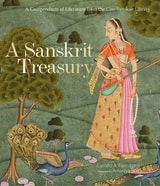
A Sanskrit Treasury
A Compendium of Literature from the Clay Sanskrit LibraryCamillo A. Formigatti
Bodleian Library Publishing, 2020

A Scholar's Guide to Geographical Writing on the American and Canadian Past
Edited by Michael P. Conzen, Thomas A. Rumney, and Graeme Wynn
University of Chicago Press, 1993

A Scientific Peak
How Boulder Became a World Center for Space and Atmospheric ScienceJoseph P. Bassi
American Meteorological Society, 2015
A Scientific Peak chronicles Boulder’s meteoric rise to eventually become “America’s Smartest City” and a leader in space and atmospheric sciences. In just two decades following World War II, a tenacious group of researchers, supported by groups from local citizenry to the State of Colorado, managed to convince the US government and some of the world’s scientific pioneers to make Boulder a center of the new space age. Joseph P. Bassi introduces us to the characters, from citizens to scientists, and the mix of politics, passion, and sheer luck at the start of Boulder’s transformation from “Scientific Siberia” to the research mecca it is today.

A Scientist's War
The war diary of Sir Clifford Paterson, 1939-45Robert Clayton
The Institution of Engineering and Technology, 1991
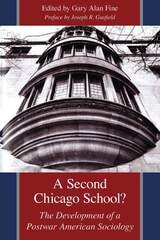
A Second Chicago School?
The Development of a Postwar American SociologyEdited by Gary Alan Fine
University of Chicago Press, 1995
Like its predecessor earlier in the century, the postwar department was again the center for qualitative social research—on everything from mapping the nuances of human behavior in small groups to seeking solutions to problems of race, crime, and poverty. Howard Becker, Joseph Gusfield, Herbert Blumer, David Riesman, Erving Goffman, and others created a large, enduring body of work.
In this book, leading sociologists critically confront this legacy. The eight original chapters survey the issues that defined the department's agenda: the focus on deviance, race and ethnic relations, urban life, and collective behavior; the renewal of participant observation as a method and the refinement of symbolic interaction as a guiding theory; and the professional and institutional factors that shaped this generation, including the leadership of Louis Wirth and Everett C. Hughes; the role of women; and the competition for national influence Chicago sociology faced from survey research at Columbia and grand theory at Harvard. The contributors also discuss the internal conflicts that call into question the very idea of a unified "school."
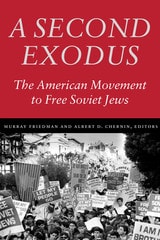
A Second Exodus
The American Movement to Free Soviet JewsEdited by Murray Friedman and Albert D. Chernin
Brandeis University Press, 1999
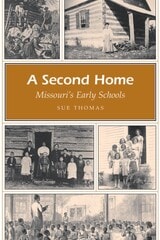
A Second Home
Missouri's Early SchoolsSue Thomas
University of Missouri Press, 2006
The one-room schoolhouse may be a thing of the past, but it is the foundation on which modern education rests. Sue Thomas now traces the progress of early education in Missouri, demonstrating how important early schools were in taming the frontier.
A Second Home offers an in-depth and entertaining look at education in the days when pioneers had to postpone schooling for their children until they could provide shelter for their families and clear their fields for crops, while well-to-do families employed tutors or sent their children back east. Thomas tells of the earliest known English school at the Ramsay settlement near Cape Girardeau, then of the opening of a handful of schools around the time of the Louisiana Purchase—such as Benjamin Johnson’s school on Sandy Creek, Christopher Schewe’s school for boys when St. Louis was still a village, and the Ste. Genevieve Academy, where poor and Indian children were taught free of charge. She describes how, as communities grew, additional private schools opened—including “dame schools,” denominational schools, and subscription schools—until public education came into its own in the 1850s.
Drawing on oral histories collected throughout the state, as well as private diaries and archival research, the book is full of firsthand accounts of what education once was like—including descriptions of the furnishings, teaching methods, and school-day activities in one-room log schools. It also includes the experiences of former slaves and free blacks following the Civil War when they were newly entitled to public education, with discussions of the contributions of John Berry Meachum, James Milton Turner, and other African American leaders.
With its remembrances of simpler times, A Second Home tells of community gatherings in country schools and events such as taffy pulls and spelling bees, and offers tales of stern teachers, student pranks, and schoolyard games. Accompanying illustrations illuminate family and school life in the colonial, territorial, early statehood, and post-Civil War periods. For readers who recall older family members’ accounts or who are simply fascinated by the past, this is a book that will conjure images of a bygone time while opening a new window on Missouri history.