Results by title
3388 books match the query 'Fiction' and 293 start with a
Almost Like Spring
Alex Capus
Haus Publishing, 2014
Along These Highways
Rene S. Perez II
University of Arizona Press, 2012
Along the Journey River
A MysteryCarole laFavor
University of Minnesota Press, 2017
Several sacred artifacts have gone missing from the Minnesota Red Earth Reservation and the suspect list is continuously growing. While it could be the racists from the bordering town, or a young man struggling with problems at home, or the county coroner and his cronies, the need for answers and apprehending the culprit is amplified when Jed Morriseau, the Tribal Chairman, is murdered. Investigating these mysterious occurrences because of tribal traditions and the honor of her family, Renee LaRoche works to track down the people responsible. But can she maintain her intense investigation as well as her new relationship with Samantha Salisbury, the visiting women’s studies professor at the white college nearby? Renee is caught between the traditions of her tribe and efforts to help her chimook lover accept their cultural differences.
Alternative Alcott
Showalter, Elaine
Rutgers University Press, 1988
Alternative Alcott includes works never before reprinted, including "How I Went Out to Service," "My Contraband," and "Psyche's Art." It also contains Behind a Mask, her most important sensation story; the full and correct text of her last unfinished novel, Diana and Persis; "Transcendental Wild Oats"; Hospital Sketches; and Alcott's other important texts on nineteenth-century social history. This anthology brings together for the first time a variety of Louisa May Alcott's journalistic, satiric, feminist, and sensation texts. Elaine Showalter has provided an excellent introduction and notes to the collection.
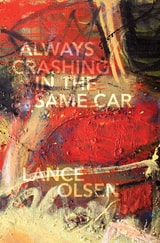
Always Crashing in the Same Car
A Novel after David BowieLance Olsen
University of Alabama Press, 2023
A prismatic, imaginative exploration of David Bowie’s last days
An intricate collage-novel fusing and confusing fact and imagination, Always Crashing in the Same Car is a prismatic exploration of David Bowie through multiple voices and perspectives—the protean musician himself, an academic trying to compose a critical monograph about him, friends, lovers, musicologists, and others in Bowie’s orbit.
At its core beat questions about how we read others, how we are read by them, how (if at all) we can tell the past with something even close to accuracy, what it feels like being the opposite of young and still committed to bracing, volatile innovation.
Set during Bowie’s last months—those during which he worked on his acclaimed final album Black Star while battling liver cancer and the consequences of a sixth heart attack—yet washing back and forth across his exhilarating, kaleidoscopically costumed life, Always Crashing in the Same Car enacts a poetics of impermanence, of art, of love, of truth, even of death, that apparently most permanent of conditions.
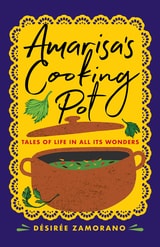
Amarisa's Cooking Pot
Tales of Life in All Its WondersDésirée Zamorano
University of Nevada Press, 2026
Each story is dedicated to capturing something ineffable, an emotional truth, a moment of beauty or realization, a moment of calm, or a spark of fury. What does it mean to be alive in a capricious world? Désirée Zamorano allows readers to explore this question beautifully, and memorably, long after the last page is turned.
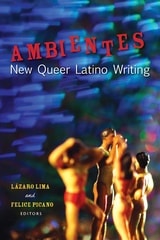
Ambientes
New Queer Latino WritingLázaro Lima and Felice Picano
University of Wisconsin Press, 2011
As the U.S. Latino population grows rapidly, and as the LGBTQ Latino community becomes more visible and a more crucial part of our literary and artistic heritage, there is an increasing demand for literature that successfully highlights these diverse lives. Edited by Lázaro Lima and Felice Picano, Ambientes is a revolutionary collection of fiction featuring stories by established authors as well as emerging voices that present a collective portrait of gay, lesbian, bisexual, and transgender experience in America today. With a preface by Picano and an introduction by Lima that sets the stage for understanding Latino literary and cultural history, this is the first anthology to cross cultural and regional borders by offering a wide variety of urban, rural, East Coast, West Coast, and midwestern perspectives on Latina and Latino queers from different walks of life. Stories range from sensual pieces to comical romances and from inner-city dramas fueled by street language to portraits of gay domesticity, making this a much-needed collection for many different kinds of readers. The stories in this collection reflect a vibrant and creative community and redefine received notions of “gay” and “lesbian.”
Finalist, Over the Rainbow selection, American Library Association
Finalist, LGBT Anthology, Lambda Literary Awards
Best Special Interest Books, selected by the American Association of School Librarians
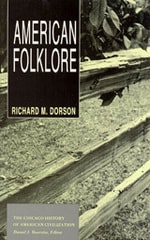
American Folklore
Richard M. Dorson
University of Chicago Press, 1961
Tracing the forms and content of American folklore, Mr. Dorson reveals the richness, pathos, and humor of genuine folklore, which he distinguishes from the "fakelore" of popularizers and chauvinists. At the same time, however, he shows what the creation of spurious folklore (the Paul Bunyan legends, for instance) discloses about our national character. Based upon authentic field collections and research, the examples cited include folkways, jests, boasts, tall tales, ballads, folk and legendary heroes.
"His volume enlarges our understanding of the American past and present through an empirical survey of the extant folk traditions and it also provides us with the means for appreciating what is valuable in these folk traditions."—Virginia Quarterly Review
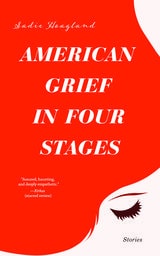
American Grief in Four Stages
StoriesSadie Hoagland
West Virginia University Press, 2019
American Grief in Four Stages is a collection of stories that imagines trauma as a space in which language fails us and narrative escapes us. These stories play with form and explore the impossibility of elegy and the inability of our culture to communicate grief, or sympathy, outside of cliché.
One narrator, for example, tries to understand her brother’s suicide by excavating his use of idioms. Other stories construe grief and trauma in much subtler ways—the passing of an era or of a daughter’s childhood, the seduction of a neighbor, the inability to have children. From a dinner party with Aztecs to an elderly shut-in’s recollection of her role in the Salem witch trials, these are stories that defy expectations and enrich the imagination. As a whole, this collection asks the reader to envisage the ways in which we suffer as both unbearably painful and unbearably American.

American Homes
Ryan Ridge
University of Michigan Press, 2014
From the nostalgia of front porches to the hidden mysteries of basements, Ridge turns ordinary spaces into insightful meditations on homeownership, personal identity, and cultural expectations. American Homes is as much an architectural guidebook as it is a critique of consumerism, presenting a vivid portrait of how we live and the structures that define us. The result is a thought-provoking, humorous, and occasionally surreal commentary on what it means to call a place "home" in America.

American Wives
Beth Helms
University of Iowa Press, 2003
In Beth Helms's American Wives, winner of the 2003 Iowa Short Fiction Award, the women inhabit familiar roles—military wife, wealthy widow, devoted mother, lifetime companion. Yet despite their ordinary appearances, these women have deep secrets hidden beneath the thin veneer of duty, devotion, and privilege.
Set in both the United States and abroad, American Wives is about hope and disappointment, failure and resignation, desire and, occasionally, joy. A military wife abroad has a brief and totally unexpected sexual encounter; a wife watches as her husband, obsessed with the au-pair, has an affair instead with her best friend; a young woman finds herself destined to repeat the patterns of her mother's long-hidden infidelities. At the heart of each encounter is the overwhelming need to connect with others“whether they be lovers, spouses, friends, or family”while balancing personal desires. Too often, Helms's characters discover that being true to oneself means sacrificing the ones we love most.
As each woman seeks control of her life, we are reminded of the ultimate hope and possibility that can be found within our most intimate relationships. In subtle, yet convincing prose, Helms beautifully reveals the emotional depths that are reached in moments of true despair and longing.
Among the Bieresch
Klaus Hoffer
Seagull Books, 2016
Among the Bieresch is Hans’s story—one of bizarre customs, tangled relationships, and the struggle between two mystical sects. The novel, translated by Isabel Fargo Cole, is a German cult favorite and a masterwork of culture shock fiction that revels in exploring oppressive cultural baggage and assimilation. Readers will encounter here an amalgam drawing from Kafka, Borges, and Beckett, among others, combining to make Klaus Hoffer’s novel a world utterly its own.
“One of the few works that will loom from the dust of this century one day.”—Urs Widmer
Amor Eterno
Eleven Lessons in LovePatricia Preciado Martin
University of Arizona Press, 2000
América Is Her Name
Luis J. Rodriguez
Northwestern University Press, 1998
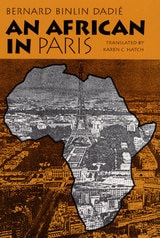
An African in Paris
Bernard Binlin Dadié; Translated by Karen C. Hatch
University of Illinois Press, 1994
In 1959, when Un Negre a Paris first appeared, the French still held West Africa under colonial rule. Dadié's subtle parodies draw on intimate knowledge obtained over decades spent observing the colonizers abroad and now, suddenly, on their own home terrain. His remarks on Parisian living conditions, wordplay, manners, and and morals are entertaining and poignant, charming yet profound.
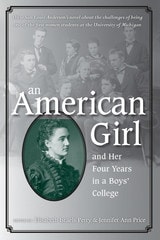
An American Girl, and Her Four Years in a Boys' College
Olive San Louie Anderson
University of Michigan Press, 2006
In 1870, the University of Michigan-one of the oldest, largest, and most prestigious public universities in the United States-admitted its first woman student. An American Girl, and Her Four Years in a Boys' College, written by one of the first woman graduates from the University of Michigan and published pseudonymously in 1878, describes what it was like to be a member of this tiny group of brave coeds. The story is told through the eyes of Wilhelmine Elliot, an untraditional girl who enrolls at the fictional University of Ortonville, a thinly disguised stand-in for the University of Michigan.
Will's challenges mirror those of other women college students of the era, including the reactions of male faculty and students, relationships with other women students and with family and friends back home, and social attitudes toward the women's movement and liberal religious values. The editors' engaging introduction places the novel in its relevant historical and literary contexts, as do helpful annotations throughout the text.
"The 1870s were an important moment of debate over women's roles and responsibilities. What's here is very interesting not only about higher education, and 'strong-minded women,' but about religion, domesticity, independence, marriage, and homosocial bonding."
--Carol Lasser, Oberlin College
Olive San Louie Anderson (ca. 1852-86) graduated from the University of Michigan in 1875 and published An American Girl in 1878 under the name SOLA. Elisabeth Israels Perry is John Francis Bannon Professor of History, Saint Louis University. Jennifer Ann Price is a Ph.D. candidate in American Studies at Saint Louis University.
An Empty Grave
An Andy Hayes MysteryAndrew Welsh-Huggins
Ohio University Press, 2021
Private investigator Andy Hayes takes the assignment against his better judgment.
In 1979, a high-profile burglar shot a cop, was apprehended, and then disappeared without ever being prosecuted. Forty years later, after the wounded cop’s suicide, his son, Preston Campbell, is convinced there’s been a cover-up that allowed his father’s attacker to go free. At first, Hayes dismisses Campbell’s outlandish conspiracy theories. But when a mysterious Cold War connection to the burglar emerges, the investigation heats up, and Hayes discovers a series of deaths that seem to be connected, one way or another, to the missing criminal. Nothing seems to add up, though, and Hayes finds himself hurtling headlong down a decades-old path of deadly secrets.
In the midst of cracking the cold case, Hayes has another mystery to solve closer to home: What’s been troubling his younger son, Joe, and why is his ex-wife so eager to have the boy out of her house? Further complicating matters, Hayes learns that another private eye, the captivating but inscrutable Hillary Quinne, is also on the trail of the vanished burglar and needs Hayes’s help. As their professional and personal lives blur, Hayes wonders what he’s gotten himself into, and whether he really wants out.
An Impossibility of Crows
A NovelKirsten Kaschock
University of Massachusetts Press, 2026
A story of mothers, monsters, and the science of longing
In this daring and evocative tale, Agnes Krahn, a chemist trained in Philadelphia, returns to her childhood home after the death of her father. Just a stone's throw from the haunted fields of Gettysburg, the small town of Letort, Pennsylvania is where the Krahn family has lived for six generations—bound by twisted folk wisdom and an uncanny kinship with the crows that loom over their land.
Back in the grim farmhouse of her youth, Agnes is drawn into the strange legacy she tried to leave behind. When she discovers an abandoned nest in the barn, she becomes consumed by a scientific—and deeply personal—experiment: to breed a crow large and intelligent enough to carry her daughter, Mina, to a freedom Agnes has never known herself. As the bird grows, so does its terrifying potential—manifest in language, cunning, and a violent will of its own. What begins as a gesture of love and liberation turns darkly obsessive, echoing the dangerous ambition of Frankenstein’s monster and the generational trauma buried in the soil of her family’s past.
A thoroughly modern, feminist novel, this is a story of mothers and daughters, inheritance and isolation, and the thin line between care and control. It confronts themes of self-harm and self-preservation, as well as memory and myth, in a narrative as visceral and uncanny as the bird that rises at its heart.
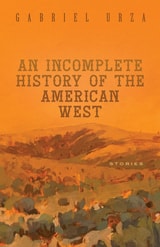
An Incomplete History of the American West
Storiesurza
University of Nevada Press, 2026
Rooted in the traditions of Western literature but unafraid to challenge them, author Gabriel Urza brings a fresh and unflinching perspective to stories that span race, class, and time. Unsentimental yet deeply humane, An Incomplete History of the American West asks readers to reconsider what the West truly means—and why the stories we tell about it still matter.

An Innocent Millionaire
Stephen Vizinczey
University of Chicago Press, 1990
"The virtues of [Vizinczey's] style are those he finds in Hungarian poetry: the moody ferocity of a locked-up beast, and also a classic clarity and complete lack of self-indulgence."—Thomas D'Evelyn, Christian Science Monitor
"Shows where the true values lie—not in wealth or the rule of law but in that as yet inviolate sector where a man and woman make love. . . . I was entertained but also deeply moved: here is a novel set bang in the middle of our decadent, polluted, corrupt world that, in some curious way, breathes a kind of desperate hope."—Anthony Burgess, Punch (London)
"Bravo!"—Graham Greene
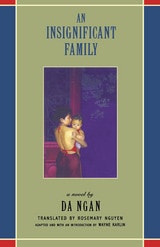
An Insignificant Family
Da Ngan
Northwestern University Press, 2009
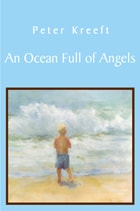
An Ocean Full of Angels
The Autobiography of 'Isa Ben AdamPeter Kreeft
St. Augustine's Press, 2011
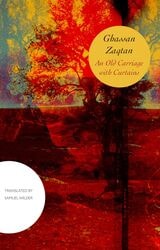
An Old Carriage with Curtains
Ghassan Zaqtan
Seagull Books, 2023
An Old Carriage with Curtains is the third and final book in a masterful trilogy of novels encompassing the history of the people of the Palestinian village of Zakariyya. The novels trace the wandering trajectories and inner lives of characters connected to this village across decades, as well as the vicissitudes of historical change and displacement in the land. Through the return of a middle-aged man to the site of an ancient monastery in the hills near Jericho that he once visited as a boy, the incredibly vivid and surprising stories of Hind, a stage actress and brilliant storyteller, the stories of tortuous routes of checkpoints and bureaucratic blockages, and decades of Occupation, Zaqtan creates a narrative of personal reckoning and reflection.
The vectors of memory and historical reflection interweave in this dreamlike narrative, which delivers a singularly powerful depiction of subjective and collective experience in the face of devastating and sweeping historical change.
An Unarmed Woman
John Bennion
Signature Books, 2019
Anadarko
A Kiowa Country MysteryTom Holm
University of Arizona Press, 2015
J.D. and Hoolie find their simple missing person case hides a web of murder, graft, and injustice tied to a network of bootleggers with links to the Ku Klux Klan. Set in the aftermath of the violent Tulsa race riot of 1921, Anadarko reveals a deadly and corrupt town filled with a toxic cocktail of booze, greed, and bigotry.
Tackling racial prejudice head-on, author Tom Holm expertly weaves a vivid and suspenseful tale set in Prohibition-era Indian Country. This gritty whodunit shows nothing is ever simple in the fight between good and evil.
Analyzing World Fiction
New Horizons in Narrative TheoryEdited by Frederick Luis Aldama
University of Texas Press, 2011
Why are many readers drawn to stories that texture ethnic experiences and identities other than their own? How do authors such as Salman Rushdie and Maxine Hong Kingston, or filmmakers in Bollywood or Mexico City produce complex fiction that satisfies audiences worldwide? In Analyzing World Fiction, fifteen renowned luminaries use tools of narratology and insights from cognitive science and neurobiology to provide answers to these questions and more.
With essays ranging from James Phelan's "Voice, Politics, and Judgments in Their Eyes Were Watching God" and Hilary Dannenberg's "Narrating Multiculturalism in British Media: Voice and Cultural Identity in Television" to Ellen McCracken's exploration of paratextual strategies in Chicana literature, this expansive collection turns the tide on approaches to postcolonial and multicultural phenomena that tend to compress author and narrator, text and real life. Striving to celebrate the art of fiction, the voices in this anthology explore the "ingredients" that make for powerful, universally intriguing, deeply human story-weaving.
Systematically synthesizing the tools of narrative theory along with findings from the brain sciences to analyze multicultural and postcolonial film, literature, and television, the contributors pioneer new techniques for appreciating all facets of the wonder of storytelling.

Anarcho-Hindu
Curtis White
University of Alabama Press, 1995
What if Western revolution and Eastern reincarnation were discovered to be the same thing? What if the Hindu classic The Mahabharata and Hugo's Les Miserables were in fact the same book? And what would it feel like if one person were able to experience this epic east/west continuance in one life? This delightfully eccentric novel orbits about the character of one “Siva,” a woman who is perhaps a Hindi divinity, probably merely a Midwestern housewife, but also very possibly a porn-queen. Her web of tales takes her bewildered husband and the reader on a mythic and philosophic storytelling trek from ancient India, to the Paris Commune, to the St. Louis Hegelians, and finally to a neighborhood very like yours. Curtis White's Anarcho-Hindu is an unabashedly learned investigation of these recondite matters. Like The Bhagavad-Gita, the epic tale of cousin aligned against cousin in monstrous self-destruction, Anarcho-Hindu is a book about people willingly conspiring in their own defeat. Against this self-inflicted human suffering, this novel proposes the gestures of self-understanding and play that can liberate us both politically and personally. The heroes of the book are the ghostly spirits of Marx and Krishna, together for the first time, engaged in the inspired play called Refusal.
Ancestry
Eileen O'Leary
University of Iowa Press, 2020
Ancient Creek
A FolktaleGurney Norman
Ohio University Press, 2012
And Here
100 Years of Upper Peninsula Writing, 1917–2017Ronald Riekki
Michigan State University Press, 2017
And Let the Earth Tremble at Its Centers
By Gonzalo Celorio
University of Texas Press, 2009
Professor Juan Manuel Barrientos prefers footsteps to footnotes. Fighting a hangover, he manages to keep his appointment to lead a group of students on a walking lecture among the historic buildings of downtown Mexico City. When the students fail to show up, however, he undertakes a solo tour that includes more cantinas than cathedrals. Unable to resist either alcohol itself or the introspection it inspires, Professor Barrientos muddles his personal past with his historic surroundings, setting up an inevitable conclusion in the very center of Mexico City.
First published in Mexico in the late 1990s, And Let the Earth Tremble at Its Centers was immediately lauded as a contemporary masterpiece in the long tradition of literary portraits of Mexico City. It is a book worthy of its dramatic title, which is drawn from a line in the Mexican national anthem.
Gonzalo Celorio first earned a place among the leading figures of Mexican letters for his scholarship and criticism, and careful readers will recognize a scholar's attention to accuracy within the novel's dyspeptic descriptions of Mexico City. The places described are indeed real (this edition includes a map that marks those visited in the story), though a few have since closed or been put to new uses. Dick Gerdes's elegant translation now preserves them all for a new audience.
And Never Said a Word
Heinrich Boll
Northwestern University Press, 1994
And Other Stories
Georgi Gospodinov
Northwestern University Press, 2007
And the War Is Over . . .
Shmuel T. Meyer
Seagull Books, 2024
Sharp as a razor and as subtle as gossamer, Shmuel T. Meyer’s masterfully crafted stories evoke unique individual sensibilities and destinies, resonating with the sensual details, smells, tastes, music, and sounds of a specific time and place. And the War Is Over brings together three collections of short stories set on three continents in the aftermath of war: World War II and the Shoah in Grand European Express, the Korean War in The Great American Disaster, and the Arab-Israeli conflict in Kibbutz.
Characters both real and imagined run through a fabric so tightly woven that the threads of history and fiction can barely be separated: the Roman poet Clara who will never write again; Saul, a New York City police detective haunted by memories of the Pusan Perimeter; a brother out to avenge his sister’s murder; the son of a former Nazi who joins the Red Army Faction. Tracing moments of encounter, their paths cross those of Allen Ginsberg, Albert Cossery, John Coltrane, and Duke Ellington. Characters travel by train from Venice to Paris, hike up the Val d’Annivers, listen to jazz in Greenwich Village, and ride a motorcycle along the sandy road to Haifa. Under the shadow of war, with death lurking, these multifaceted, evocative lives move in a space between coincidence and fate.
Angel Acronym
A Mystery Introducing Toom TaggartPaul M. Edwards
Signature Books, 2003
Finding the church archivist dead in the temple complex was somewhat awkward for the RLDS church hierarchy. What was the archivist doing in the temple in the middle of the night and what was he doing with President Fred M. Smith’s declaration of supreme directional control?
For the public relations department, this was all a day’s work—something not so very difficult to explain away with a few carefully worded phrases. That would have been that, had the director of church education, erstwhile philosopher Toom Taggart, not smelled something rotten on the second floor.
Alternately suspenseful and humorous, The Angel Acronym romps through the corridors of religious orthodoxy and the pages of history to probe the perplexities of religious truth, public image, and a bureaucratic mindset.
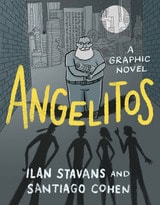
Angelitos
A Graphic NovelIlan Stavans and Santiago Cohen
The Ohio State University Press, 2018
Though Angelitos: A Graphic Novel is a fictional retelling of a desperate time, it draws on autobiographical elements to tell the real-life story of Alejandro García Durán de Lara, popularly known as Padre Chinchachoma, a complicated figure revered by some and reviled by others.
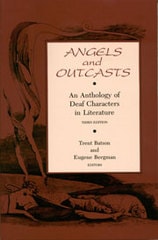
Angels and Outcasts
An Anthology of Deaf Characters in LiteratureTrent Batson
Gallaudet University Press, 1985
Animal Acts
FictionsCris Mazza
University of Alabama Press, 2026
The line between human and animal is thinner than you think.
In a striking first collection of stories, Cris Mazza brings a startling vision to the familiar terrain of intimate relationships. The eleven stories in Animal Acts describe characters navigating an unsteady course through the turbulence of sexial desire. Set in unmistakably American landscapes—from sprawling West Coast cities to the dry, dusty scrub of rural Southern California—the work is populated by gym teachers, aging flower children, secretaries and artists—most of them strong, willful women.
The narrator of the title story holds the guests at a party spellbound with her fantastic retelling of another woman's perverse life—which may, in fact, be her own—thereby seducing a man who has previously eluded her.
Mazza's arresting narrative structures and sharp sense of the absurd make for a dazzling debut collection.
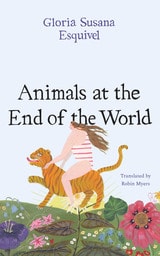
Animals at the End of the World
By Gloria Susana Esquivel, translated by Robin Myers
University of Texas Press, 2020
Animals at the End of the World begins with an explosion, which six-year-old Inés mistakes for the end of the world that she has long feared. In the midst of the chaos, she meets the maid’s granddaughter, Mariá, who becomes her best friend and with whom she navigates the adult world in her grandparents’ confined house. Together, they escape the house and confront the “animals” that populate Bogotá in the 1980s. But Inés soon realizes she cannot count on either María or her preoccupied and conflicted parents. Alone, she must learn to decipher her outer and inner worlds, confronting both armies of beasts and episodes of domestic chaos. In the process, she also learns what it means to test boundaries, break rules, and cope with the consequences.
The first novel by Colombian author Gloria Susana Esquivel, Animals at the End of the World is a poetic and moving coming-of-age story that lingers long after its final page.
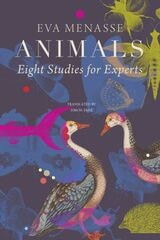
Animals
Eight Studies for ExpertsEva Menasse
Seagull Books, 2023
Animals is a collection of short stories in which each story takes a peculiar item about animals that appears, like fables, to shine a spotlight on different aspects of human behavior—like caterpillars digging their own graves, sharks in need of artificial respiration, ducks that keep an eye out for hungry predators even in their sleep. It is a treat to watch Eva Menasse spin these observations into scenes of people battling their everyday anxieties and doubts. An old tyrant realizes that he is unable to prevent his wife’s worsening dementia from erasing his own past as it erases hers. A mother who tries to protect a Muslim child from hostile accusations finds that her own boundaries between good and evil begin to blur. A woman realizes how starkly her father’s traumatic past has shaped her quirky habits and deepest fears. Combining biting wit, mystery, and melancholy, these tales are the work of a masterful storyteller.
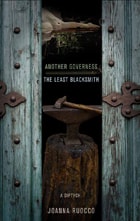
Another Governess / The Least Blacksmith
A DiptychJoanna Ruocco
University of Alabama Press, 2012
In “Another Governess” a woman in a decaying manor tries to piece together her own story. In “The Least Blacksmith” a man cannot help but fail his older brother as they struggle to run their father’s forge.
Each of the stories stands alone, sharing neither characters nor settings. But together, they ask the same question: What are the wages of being? The relentless darkness of these tales is punctured by hope—the violent hope of the speaking subject.

Another Hill
AN AUTOBIOGRAPHICAL NOVELMilton Wolff
University of Illinois Press, 1994
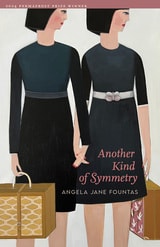
Another Kind of Symmetry
Angela Jane Fountas
University of Alaska Press, 2026
Agni and Effie, identical twins, are inseparable until Agni is sent to Greece one summer to visit their grandmother after their grandfather’s sudden death. Until now the more conventional and accommodating of the two, Agni refuses to return to college, choosing instead to remain in their family’s Greek village.
She is drawn into the daily routines and rural traditions that her parents left behind in exchange for the American dream. But the haunting presence of her grandfather’s ghost is a sign of unresolved family grief.
Without her sister’s companionship, Effie abruptly abandons the stability of her life so far and moves to the East Village to live as an artist. But when Agni’s absence become unbearable for her, a personal crisis brings the sisters together again, this time even closer than before.
Alternating between the sisters’ points of view, letters between them, and stories Agni writes in secret, Another Kind of Symmetry explores the sometimes uneasy relationship that children of immigrants have with their parents’ version of the American dream. It reflects on the challenges of living with cross-cultural traditions and how individuals’ different responses to them can disrupt even the closest of relationships.
Another Life and The House on the Embankment
Yuri Trifonov
Northwestern University Press, 1999
Widely regarded as a major writer of his generation, Yuri Trifonov tolerated attack and admiration in the Soviet Union. His novellas are celebrated as being in the tradition of great nineteenth-century Russian writing. In "Another Life," a woman suddenly widowed attempts to grasp the memory of her brilliant, erratic husband, and to understand their life together. "The House on the Embankment" is the story of an academic opportunist who rises to apparatchik but suffers the oppression of society, friends, and most of all his inability to make decisions.
Antipodes
StoriesHolly Goddard Jones
University of Iowa Press, 2022
A harried and depressed mother of three young children serves on a committee that watches over the bottomless sinkhole that has appeared in her Kentucky town. During COVID lockdown, a thirty-four-year-old gamer moves back home with his parents and is revisited by his long-forgotten childhood imaginary friend. A politician running for a state congressional seat and a young mother, who share the same set of fears about the future, cross paths but don’t fully understand one another. A woman attends a party at the home of a fellow church parishioner and discovers she is on the receiving end of a sales pitch for a doomsday prepper.
These stories and more contemplate our current reality with both frankness and hard-earned hopefulness, realism and fabulism, tackling parenthood, environment, and the absurd-but-unavoidable daily toil of worrying about mundane matters when we’ve entered “an era of unknowability, of persistent strangeness.”
Anton
A NovelAleksandr Chudakov, Timothy D. Sergay
Northwestern University Press, 2027
A landmark work of contemporary Russian literature, now in English for the first time
Set in a fictitious town in North Kazakhstan settled by political and ethnic exiles, this panoramic narrative follows the relationship between the titular character Anton, a Moscow historian of the vital “1960s generation,” and his grandfather, Leonid, a titan of physical and intellectual rigor who is now on the verge of death. As Anton contemplates the fading away of that once-powerful vitality, he lets his thoughts plunge deep into the past, presented in a series of fine-grained sketches, scattered reminiscences, and subtly interconnected episodes, back and forth from childhood to present day. The resulting novel is a “Soviet family Robinson”: the history of rugged and free-thinking intellectuals eking out a tolerable, even enviable homestead existence despite the difficulties of the Stalin years. One of the most vibrant works of literary fiction created since the fall of the Soviet Union, Aleksandr Chudakov’s Anton is a testament to humanity's tenacity and tenderness.
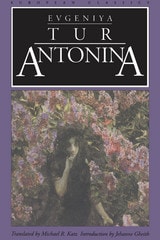
Antonina
Evgeniya Tur
Northwestern University Press, 1995
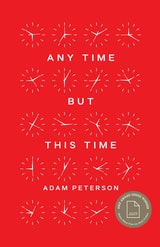
Any Time But This Time
Adam Peterson
The Ohio State University Press, 2026
The stories of Adam Peterson’s funny, daring, and deliciously outrageous debut Any Time But This Time span our history and confront our future. From the first woman on Earth grieving among the Neanderthals to the last man alive nursing the dying flame of love, this collection moves across human history and geography to reveal us at our best and lament our worst. Jesus declares himself a superhero. Lost sailors launch an ill-fated attempt to colonize medieval England. A young woman fights to commandeer the founding of America. A pioneer’s wife satisfies her endless sexual appetite in barren Nebraska. Children hurtle into space to confront alien life—even though they really, really just want love. For fans of George Saunders and Kelly Link, these voices, unbound by time and undaunted by consequence, show us that there are truly no limits to what a short story—so long as it centers our relentless human heart—can do.
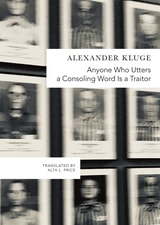
Anyone Who Utters a Consoling Word Is a Traitor
48 Stories for Fritz BauerAlexander Kluge
Seagull Books, 2020
Alexander Kluge’s work has long grappled with the Third Reich and its aftermath, and the extermination of the Jews forms its gravitational center. Kluge is forever reminding us to keep our present catastrophes in perspective—“calibrated”—against this historical monstrosity. Kluge’s newest work is a book about bitter fates, both already known and yet to unfold. Above all, it is about the many kinds of organized machinery built to destroy people. These forty-eight stories of justice and injustice are dedicated to the memory of Fritz Bauer, a determined fighter for justice and district attorney of Hesse during the Auschwitz Trials. “The moment they come into existence, monstrous crimes have a unique ability,” Bauer once said, “to ensure their own repetition.” Kluge takes heed, and in these pages reminds us of the importance of keeping our powers of observation and memory razor sharp.
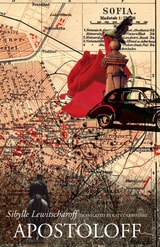
Apostoloff
Sibylle Lewitscharoff
Seagull Books, 2019
“Gone, finito, The End, I say. A father who puts an end to it all before he wears down the whole family deserves more praise than damnation.”
Two sisters travel to Sofia—in a convoy of luxury limousines arranged by a fellow Bulgarian exile—to bury their less-than-beloved father. Like tourists, they are chauffeured by the ever-charming Ruben Apostoloff—one sister in the back seat, one in the passenger seat, one sharp-tongued and aggressive, the other polite and considerate. In a caustic voice, Apostoloff shows them the treasures of his beloved country: the peacock-eye pottery (which contains poisonous dye), the Black Sea coast (which is utterly destroyed), the architecture (a twentieth-century crime). His attempts to win them over seem doomed to fail, as the sisters’ Bulgarian heritage is a heavy burden—their father, a successful doctor and melancholy immigrant, appears in their dreams still dragging the rope with which he hanged himself.
An account of a daughter’s bitterly funny reckoning with her father and his country, laden with linguistic wit and black humor, Apostoloff will introduce the unique voice of Sibylle Lewitscharoff to a new and eager audience.