3369 books match the query 'Cultural & Social' and 286 start with a

cover of Arctic Madness: The Anthropology of a Delusion

Arctic Madness

The Anthropology of a Delusion

Pierre Déléage

HAU, 2020

The French missionary-linguist Émile Petitot (1838–1916) spent twenty years near the Arctic Circle in Canada, publishing numerous works on First Nations languages and practices. Over time, however, he descended into delirium and began to summon imaginary persecutions, pen improbable interpretations of his Indigenous hosts, and burst into schizoid fury. Delving into thousands of pages in letters and memoirs that Petitot left behind, Pierre Déléage has reconstructed the missionary’s tragic story. He takes us on a gripping journey into the illogic and hyperlogic of a mind entranced with Indigenous peoples against the backdrop of repressive church policies and the emergent social sciences of the nineteenth century. Apocalyptic visions from the Bible and prophetic movements among First Nations peoples merged in the missionary’s deteriorating psyche, triggering paroxysms of violence against his colleagues and himself. Whoever wishes to understand the contradictions of living between radically different societies will find this anthropological novella hard to put down.
[more]
cover of Arguing it Out: Discussion in Twelfth-Century Byzantium

Arguing it Out

Discussion in Twelfth-Century Byzantium

Averil Cameron

Central European University Press, 2016
The long twelfth century, from the seizure of the throne by Alexius I Comnenus in 1081, to the sack of Constantinople by the Fourth Crusade in 1204, is a period recognized as fostering the most brilliant cultural development in Byzantine history, especially in its literary production. It was a time of intense creativity as well as of rising tensions, and one for which literary approaches are a lively area in current scholarship. This study focuses on the prose dialogues in Greek from this period—of very varying kinds—and on what they can tell us about the society and culture of an era when western Europe was itself developing a new culture of schools, universities, and scholars. Yet it was also the period in which Byzantium felt the fateful impact of the Crusades, which ended with the momentous sack of Constantinople in 1204. Despite revisionist attempts to play down the extent of this disaster, it was a blow from which, arguably, the Byzantines never fully recovered.
[more]
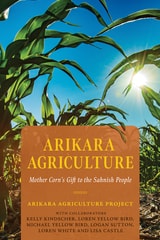
cover of Arikara Agriculture: Mother Corn’s Gift to the Sahnish People

Arikara Agriculture

Mother Corn’s Gift to the Sahnish People

Arikara Agriculture Project; With collaborators Kelly Kindscher, Loren Yellow Bird, Michael Yellow Bird, Logan Sutton, Loren White, and Lisa Castle

University of Arizona Press, 2027

Drawing on a remarkable combination of early twentieth-century field notes, archaeological evidence, historical accounts, and the voices of Arikara collaborators, Arikara Agriculture: Mother Corn’s Gift to the Sahnish People offers a richly layered account of one of the Plains’ most accomplished agricultural societies. 

Living along the Missouri River in present-day North and South Dakota, the Sahnish (Arikara) people cultivated expansive fields of corn, beans, squash, sunflowers, and other crops, sustaining vibrant communities and extensive trade networks. At the heart of this remarkable book are the invaluable records of ethnobotanist Melvin Gilmore, who documented the knowledge of Arikara elders between 1916 and 1924, capturing a lifeway on the cusp of profound change.

More than a historical study, this volume foregrounds the cultural, spiritual, and ecological significance of agriculture in Sahnish life. The contributors discuss how corn was the center of the Arikaras’ world and how it, and other agricultural crops, were important not just as food but also for the culture. The book illuminates traditional horticultural methods, food preparation techniques, and the enduring relevance of these practices today. 

Both a vital contribution to ethnobiology and a community-centered preservation of knowledge, this work speaks to ongoing conversations about Indigenous foodways, resilience, and the revitalization of traditional ecological knowledge.
[more]
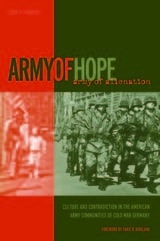
cover of Army of Hope, Army of Alienation: Culture and Contradiction in the American Army Communities of Cold War Germany

Army of Hope, Army of Alienation

Culture and Contradiction in the American Army Communities of Cold War Germany

John P. Hawkins

University of Alabama Press, 2004

An inside look at the promises, pressures, and paradoxes of American military life in Cold War Germany.

Army life has always been known as a life of sacrifice, challenge, and frustration, yet one filled also with deep satisfactions. This is so for the soldiers’ families as much as for the soldiers themselves. Over the years, military and civilian leaders of the US Army have tried to reduce the hardships of military life by creating an array of community services designed to provide social support for soldiers and families and help them live satisfying lives in military communities.

Unfortunately, this effort has not been particularly successful, and frustration, dissatisfaction, and alienation persist among soldiers and family member in the US Army communities in Germany. Discontent continues because the underlying sources of alienation in the Army and among its families are highly complex, poorly understood, and therefore hardly addressed by the Army’s quality-of-life programs that are intended to make soldier and family life more bearable.

In Army of Hope, Army of Alienation: Culture and Contradiction in the American Army Communities of Cold War Germany, the author seeks to penetrate the logic, social structure, and daily practice of life in the American military communities that lay scattered along the frontier between East and West Germany during the final years of the Cold War. In coming to understand the life and thought of these American soldiers and families, ordinary American citizens can learn much about their military forces and about their own society and culture. In addition, a greater understanding about how people work and live around an institution that is at once so important and yet tasked with a mission so different from that of ordinary pursuits can stimulate social scientists and concerned citizens to think differently about culture, society, and behavior in general.

 

[more]
cover of Around the Day in Eighty Worlds: Politics of the Pluriverse

Around the Day in Eighty Worlds

Politics of the Pluriverse

Martin Savransky

Duke University Press, 2021
In Around the Day in Eighty Worlds Martin Savransky calls for a radical politics of the pluriverse amid the ongoing devastation of the present. Responding to an epoch marked by the history of colonialism and ecological devastation, Savransky draws on the pragmatic pluralism of William James to develop what Savransky calls a “pluralistic realism”—an understanding of the world as simultaneously one and many, ongoing and unfinished, underway and yet to be made. Savransky explores the radical multifariousness of reality by weaving key aspects of James's thought together with divergent worlds and stories: of Magellan's circumnavigation, sorcery in Mozambique, God's felt presence among a group of evangelicals in California, visible spirits in Zambia, and ghosts in the wake of the 2011 tsunami in Japan. Throughout, he experiments with these storied worlds to dramatize new ways of approaching the politics of radical difference and the possibility of transforming reality. By exploring and constructing relations between James's pluralism and the ontological turn in anthropology, Savransky offers a new conceptualization of the pluriverse that fosters modes of thinking and living otherwise.
[more]
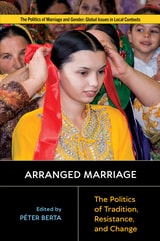
cover of Arranged Marriage: The Politics of Tradition, Resistance, and Change

Arranged Marriage

The Politics of Tradition, Resistance, and Change

Péter Berta

Rutgers University Press, 2023
Arranged Marriage: The Politics of Tradition, Resistance, and Change shows how arranged marriage practices have been undergoing transformation as a result of global and other processes such as the revolution of digital technology, democratization of transnational mobility, or shifting significance of patriarchal power structures. The ethnographically informed chapters not only highlight how the gendered and intergenerational politics of agency, autonomy, choice, consent, and intimacy work in the contexts of partner choice and management of marriage, but also point out that arranged marriages are increasingly varied and they can be reshaped, reinvented, and reinterpreted flexibly in response to individual, family, religious, class, ethnic, and other desires, needs, and constraints. The authors convincingly demonstrate that a nuanced investigation of the reasons, complex dynamics, and consequences of arranged marriages offers a refreshing analytical lens that can significantly contribute to a deeper understanding of other phenomena such as globalization, modernization, and international migration as well as patriarchal value regimes, intergenerational power imbalances, and gendered subordination and vulnerability of women. 
[more]
cover of Arrernte Present, Arrernte Past: Invasion, Violence, and Imagination in Indigenous Central Australia

Arrernte Present, Arrernte Past

Invasion, Violence, and Imagination in Indigenous Central Australia

Diane J. Austin-Broos

University of Chicago Press, 2008

The Arrernte people of Central Australia first encountered Europeans in the 1860s as groups of explorers, pastoralists, missionaries, and laborers invaded their land. During that time the Arrernte were the subject of intense curiosity, and the earliest accounts of their lives, beliefs, and traditions were a seminal influence on European notions of the primitive. The first study to address the Arrernte’s contemporary situation, Arrernte Present, Arrernte Past also documents the immense sociocultural changes they have experienced over the past hundred years.
            Employing ethnographic and archival research, Diane Austin-Broos traces the history of the Arrernte as they have transitioned from a society of hunter-gatherers to members of the Hermannsburg Mission community to their present, marginalized position in the modern Australian economy. While she concludes that these wrenching structural shifts led to the violence that now marks Arrernte communities, she also brings to light the powerful acts of imagination that have sustained a continuing sense of Arrernte identity.
[more]
cover of Arrested Histories: Tibet, the CIA, and Memories of a Forgotten War

Arrested Histories

Tibet, the CIA, and Memories of a Forgotten War

Carole McGranahan

Duke University Press, 2010

In the 1950s, thousands of ordinary Tibetans rose up to defend their country and religion against Chinese troops. Their citizen army fought through 1974 with covert support from the Tibetan exile government and the governments of India, Nepal, and the United States. Decades later, the story of this resistance is only beginning to be told and has not yet entered the annals of Tibetan national history. In Arrested Histories, the anthropologist and historian Carole McGranahan shows how and why histories of this resistance army are “arrested” and explains the ensuing repercussions for the Tibetan refugee community.

Drawing on rich ethnographic and historical research, McGranahan tells the story of the Tibetan resistance and the social processes through which this history is made and unmade, and lived and forgotten in the present. Fulfillment of veterans’ desire for recognition hinges on the Dalai Lama and “historical arrest,” a practice in which the telling of certain pasts is suspended until an undetermined time in the future. In this analysis, struggles over history emerge as a profound pain of belonging. Tibetan cultural politics, regional identities, and religious commitments cannot be disentangled from imperial histories, contemporary geopolitics, and romanticized representations of Tibet. Moving deftly from armed struggle to nonviolent hunger strikes, and from diplomatic offices to refugee camps, Arrested Histories provides powerful insights into the stakes of political engagement and the cultural contradictions of everyday life.
[more]
cover of Art History and Anthropology: Modern Encounters, 1870–1970

Art History and Anthropology

Modern Encounters, 1870–1970

Peter Probst

J. Paul Getty Trust, The, 2023

An in-depth and nuanced look at the complex relationship between two dynamic fields of study.

While today we are experiencing a revival of world art and the so-called global turn of art history, encounters between art historians and anthropologists remain rare. Even after a century and a half of interactions between these epistemologies, a skeptical distance prevails with respect to the disciplinary other. This volume is a timely exploration of the roots of this complex dialogue, as it emerged worldwide in the colonial and early postcolonial periods, between 1870 and 1970.

Exploring case studies from Australia, Austria, Brazil, France, Germany, and the United States, this volume addresses connections and rejections between art historians and anthropologists—often in the contested arena of “primitive art.” It examines the roles of a range of figures, including the art historian–anthropologist Aby Warburg, the modernist artist Tarsila do Amaral, the curator-impresario Leo Frobenius, and museum directors such as Alfred Barr and René d’Harnoncourt. Entering the current debates on decolonizing the past, this collection of essays prompts reflection on future relations between these two fields.
[more]
cover of Art and Society in a Highland Maya Community: The Altarpiece of Santiago Atitlán

Art and Society in a Highland Maya Community

The Altarpiece of Santiago Atitlán

By Allen J. Christenson

University of Texas Press, 2001
A study of a major piece of modern Mayan religious art.
[more]
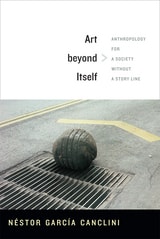
cover of Art beyond Itself: Anthropology for a Society without a Story Line

Art beyond Itself

Anthropology for a Society without a Story Line

Néstor García Canclini

Duke University Press, 2014
First published in Spanish in 2010, Art beyond Itself is Néstor García Canclini's deft assessment of contemporary art. The renowned cultural critic suggests that, ideally, art is the place of imminence, the place where we glimpse something just about to happen. Yet, as he demonstrates, defining contemporary art and its role in society is an ever more complicated endeavor. Museums, auction houses, artists, and major actors in economics, politics, and the media are increasingly chummy and interdependent. Art is expanding into urban development and the design and tourism industries. Art practices based on objects are displaced by practices based on contexts. Aesthetic distinctions dissolve as artworks are inserted into the media, urban spaces, digital networks, and social forums. Oppositional artists are adrift in a society without a clear story line. What, after all, counts as transgression in a world of diverse and fragmentary narratives? Seeking a new analytic framework for understanding contemporary art, García Canclini is attentive to particular artworks; to artists including Francis Alÿs, León Ferrari, Teresa Margolles, Antoni Muntadas, and Gabriel Orozco; and to efforts to preserve, for art and artists, some degree of independence from religion, politics, the media, and the market.
[more]
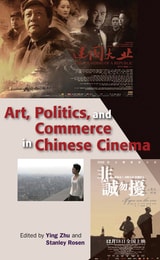
cover of Art, Politics, and Commerce in Chinese Cinema

Art, Politics, and Commerce in Chinese Cinema

Edited by Ying Zhu and Stanley Rosen

Hong Kong University Press, 2010

Art, politics, and commerce are intertwined everywhere, but in China the interplay is explicit, intimate, and elemental, and nowhere more so than in the film industry. Understanding this interplay in the era of market reform and globalization is essential to understanding mainland Chinese cinema. This interdisciplinary book provides a comprehensive reappraisal of Chinese cinema, surveying the evolution of film production and consumption in mainland China as a product of shifting relations between art, politics, and commerce. Within these arenas, each of the twelve chapters treats a particular history, development, genre, filmmaker or generation of filmmakers, adding up to a distinctively comprehensive rendering of Chinese cinema. The book illuminates China’s changing state-society relations, the trajectory of marketization and globalization, the effects of China’s stark historical shifts, Hollywood’s role, the role of nationalism, and related themes of interest to scholars of Asian studies, cinema and media studies, political science, sociology, comparative literature and Chinese language. Contributors include Ying Zhu, Stanley Rosen, Seio Nakajima, Zhiwei Xiao, Shujen Wang, Paul Clark, Stephen Teo, John Lent, Ying Xu, Yingjin Zhang, Bruce Robinson, Liyan Qin, and Shuqin Cui.
[more]
cover of Artifactual: Forensic and Documentary Knowing

Artifactual

Forensic and Documentary Knowing

Elizabeth Anne Davis

Duke University Press, 2023
In Artifactual, Elizabeth Anne Davis explores how Cypriot researchers, scientists, activists, and artists process and reckon with civil and state violence that led to the enduring division of the island, using forensic and documentary materials to retell and recontextualize conflicts between and within the Greek-Cypriot and Turkish-Cypriot communities. Davis follows forensic archaeologists and anthropologists who attempt to locate, identify, and return to relatives the remains of Cypriots killed in those conflicts. She turns to filmmakers who use archival photographs and footage to come to terms with political violence and its legacies. In both forensic science and documentary filmmaking, the dynamics of secrecy and revelation shape how material remains such as bones and archival images are given meaning. Throughout, Davis demonstrates how Cypriots navigate the tension between an ethics of knowledge, which valorizes truth as a prerequisite for recovery and reconciliation, and the politics of knowledge, which renders evidence as irremediably partial and perpetually falsifiable.
[more]
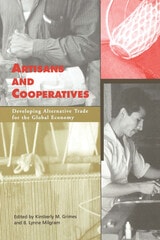
cover of Artisans and Cooperatives: Developing Alternative Trade for the Global Economy

Artisans and Cooperatives

Developing Alternative Trade for the Global Economy

Kimberly M. Grimes

University of Arizona Press, 2000

With new markets opening up for goods produced by artisans from all parts of the world, craft commercialization and craft industries have become key components of local economies. Now with the emergence of the Fair Trade movement and public opposition to sweatshop labor, many people are demanding that artisans in third world countries not be exploited for their labor.

Bringing together case studies from the Americas and Asia, this timely collection of articles addresses the interplay among subsistence activities, craft production, and the global market. It contributes to current debates on economic inequality by offering practical examples of the political, economic, and cultural issues surrounding artisan production as an expressive vehicle of ethnic and gender identity.

Striking a balance between economic and ethnographic analyses, the contributors observe what has worked and what hasn't in a range of craft cooperatives and show how some artisans have expanded their entrepreneurial role by marketing crafts in addition to producing them. Among the topics discussed are the accommodation of craft traditions in the global market, fair trade issues, and the emerging role of the anthropologist as a proactive agent for artisan groups.

As the gap between rich and poor widens, the fate of subsistence economies seems more and more uncertain. The artisans in this book show that people can and do employ innovative opportunities to develop their talents, and in the process strengthen their ethnic identities.

Contents
Introduction: Facing the Challenges of Artisan Production in the Global Market / Kimberly M. Grimes and B. Lynne Milgram
Democratizing International Production and Trade: North American Alternative Trading Organizations / Kimberly M. Grimes
Building on Local Strengths: Nepalese Fair Trade Textiles / Rachel MacHenry
"That They Be in the Middle, Lord": Women, Weaving, and Cultural Survival in Highland Chiapas, Mexico / Christine E. Eber
The International Craft Market: A Double-Edged Sword for Guatemalan Maya Women / Martha Lynd
Of Women, Hope, and Angels: Fair Trade and Artisan Production in a Squatter Settlement in Guatemala City / Brenda Rosenbaum
Reorganizing Textile Production for the Global Market: Women’s Craft Cooperatives in Ifugao, Upland Philippines / B. Lynne Milgram
Textile Production in Rural Oaxaca, Mexico, and the Complexities of the Global Market for Handmade Crafts / Jeffrey H. Cohen
"Part-Time for Pin Money": The Legacy of Navajo Women’s Craft Production / Kathy M’Closkey
The Hard Sell: Anthropologists as Brokers of Crafts in the Global Marketplace / Andrew Causey
Postscript: To Market, To Market / June Nash
[more]
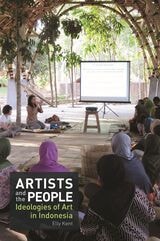
cover of Artists and the People: Ideologies of Art in Indonesia

Artists and the People

Ideologies of Art in Indonesia

Elly Kent

National University of Singapore Press, 2022

Gets to the heart of what is unique about Indonesian art. 

Exploring the work of established and emerging artists in Indonesia’s vibrant art world, this book examines why so many artists in the world’s largest archipelagic nation choose to work directly with people in their art practices. While the social dimension of Indonesian art makes it distinctive in the globalized world of contemporary art, Elly Kent is the first to explore this engagement in Indonesian terms. What are the historical, political, and social conditions that lie beneath these polyvalent practices? How do formal and informal institutions, communities, and artist-run initiatives contribute to the practices and discourses behind socially engaged art in Indonesia? Drawing on interviews with artists, translations of archival material, visual analyses, and participation in artists’ projects, this book presents a unique, interdisciplinary examination of ideologies of art in Indonesia. 

 
[more]
cover of Aryan Cowboys: White Supremacists and the Search for a New Frontier, 1970–2000

Aryan Cowboys

White Supremacists and the Search for a New Frontier, 1970–2000

By Evelyn A. Schlatter

University of Texas Press, 2006

During the last third of the twentieth century, white supremacists moved, both literally and in the collective imagination, from midnight rides through Mississippi to broadband-wired cabins in Montana. But while rural Montana may be on the geographical fringe of the country, white supremacist groups were not pushed there, and they are far from "fringe elements" of society, as many Americans would like to believe. Evelyn Schlatter's startling analysis describes how many of the new white supremacist groups in the West have co-opted the region's mythology and environment based on longstanding beliefs about American character and Manifest Destiny to shape an organic, home-grown movement.

Dissatisfied with the urbanized, culturally progressive coasts, disenfranchised by affirmative action and immigration, white supremacists have found new hope in the old ideal of the West as a land of opportunity waiting to be settled by self-reliant traditional families. Some even envision the region as a potential white homeland. Groups such as Aryan Nations, The Order, and Posse Comitatus use controversial issues such as affirmative action, anti-Semitism, immigration, and religion to create sympathy for their extremist views among mainstream whites—while offering a "solution" in the popular conception of the West as a place of freedom, opportunity, and escape from modern society. Aryan Cowboys exposes the exclusionist message of this "American" ideal, while documenting its dangerous appeal.
[more]
cover of Asian Biotech: Ethics and Communities of Fate

Asian Biotech

Ethics and Communities of Fate

Aihwa Ong and Nancy N. Chen, eds.

Duke University Press, 2010

Providing the first overview of Asia’s emerging biosciences landscape, this timely and important collection brings together ethnographic case studies on biotech endeavors such as genetically modified foods in China, clinical trials in India, blood collection in Singapore and China, and stem-cell research in Singapore, South Korea, and Taiwan. While biotech policies and projects vary by country, the contributors identify a significant trend toward state entrepreneurialism in biotechnology, and they highlight the ways that political thinking and ethical reasoning are converging around the biosciences. As ascendant nations in a region of postcolonial emergence, with an “uncanny surplus” in population and pandemics, Asian countries treat their populations as sources of opportunity and risk. Biotech enterprises are allied to efforts to overcome past humiliations and restore national identity and political ambition, and they are legitimized as solutions to national anxieties about food supplies, diseases, epidemics, and unknown biological crises in the future. Biotechnological responses to perceived risks stir deep feelings about shared fate, and they crystallize new ethical configurations, often re-inscribing traditional beliefs about ethnicity, nation, and race. As many of the essays in this collection illustrate, state involvement in biotech initiatives is driving the emergence of “biosovereignty,” an increasing pressure for state control over biological resources, commercial health products, corporate behavior, and genetic based-identities. Asian Biotech offers much-needed analysis of the interplay among biotechnologies, economic growth, biosecurity, and ethical practices in Asia.

Contributors
Vincanne Adams
Nancy N. Chen
Stefan Ecks
Kathleen Erwin
Phuoc V. Le
Jennifer Liu
Aihwa Ong
Margaret Sleeboom-Faulkner
Kaushik Sunder Rajan
Wen-Ching Sung
Charis Thompson
Ara Wilson
[more]
[more]
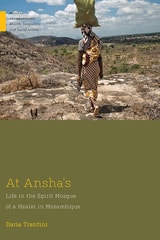
cover of At Ansha's: Life in the Spirit Mosque of a Healer in Mozambique

At Ansha's

Life in the Spirit Mosque of a Healer in Mozambique

Daria Trentini

Rutgers University Press, 2021

At Ansha's takes the reader inside the spirit mosque of a female healer in Nampula, northern Mozambique. It is here that Ansha, a Makonde spirit healer, heals the resisting ailments of her patients, discloses pieces of her story of affliction and healing, and engages the world outside her mosque. We come to know Ansha’s experiences as revolutionary and migrant, her religious trajectories, family, the healers who cured her, the spirits who possessed her, and her declining health. We follow Ansha’s shifts in her life and work in the mosque as these intersect with the visible and invisible borders of Mozambique and of its fraught history. Confronting events in her life and in the mosque between 2009 and 2016, Ansha invites us to make meaning with her, as we sit in her mosque, and engage with her family, spirits, friends, patients, and world.
[more]
cover of At the Edge of the Pampas: Land and Longing in Argentina

At the Edge of the Pampas

Land and Longing in Argentina

Rachel Cypher

University of Arizona Press, 2027

Industrial agriculture has transformed vast stretches of the Earth, but few places reveal its contradictions more clearly than the Pampas of Argentina. 

In At the Edge of the Pampas, anthropologist Rachel Cypher traces the explosive rise of genetically modified soybeans across one of the world’s great agricultural heartlands. Drawing on immersive long-term fieldwork, the book moves from soybean fields and cattle feedlots to dryland forests to show that industrial agriculture takes many forms. Soy—one of the world’s most standardized commodities—must first pass through local ecologies, informal economies, inherited obligations, and intimate relations of trust before it can circulate as a global asset.

Urgent and deeply original, At the Edge of the Pampas offers a major rethinking of how value is gathered within industrial capitalism and how unruly social and ecological life persists inside even the most engineered landscapes.
[more]
cover of At the Limits of Cure

At the Limits of Cure

Bharat Jayram Venkat

Duke University Press, 2021
Can a history of cure be more than a history of how disease comes to an end? In 1950s Madras, an international team of researchers demonstrated that antibiotics were effective in treating tuberculosis. But just half a century later, reports out of Mumbai stoked fears about the spread of totally drug-resistant strains of the disease. Had the curable become incurable? Through an anthropological history of tuberculosis treatment in India, Bharat Jayram Venkat examines what it means to be cured, and what it means for a cure to come undone. At the Limits of Cure tells a story that stretches from the colonial period—a time of sanatoria, travel cures, and gold therapy—into a postcolonial present marked by antibiotic miracles and their failures. Venkat juxtaposes the unraveling of cure across a variety of sites: in idyllic hill stations and crowded prisons, aboard ships and on the battlefield, and through research trials and clinical encounters. If cure is frequently taken as an ending (of illness, treatment, and suffering more generally), Venkat provides a foundation for imagining cure otherwise in a world of fading antibiotic efficacy.
[more]
cover of At the Pivot of East and West: Ethnographic, Literary, and Filmic Arts

At the Pivot of East and West

Ethnographic, Literary, and Filmic Arts

Michael M. J. Fischer

Duke University Press, 2023

In At the Pivot of East and West, Michael M. J. Fischer examines documentary filmmaking and literature from Southeast Asia and Singapore for their para-ethnographic insights into politics, culture, and aesthetics. Women novelists—Lydia Kwa, Laksmi Pamuntjak, Sandi Tan, Jing Jing Lee, and Danielle Lim—renarrate Southeast Asian generational and political worlds as gendered psychodramas, while filmmakers Tan Pin Pin and Daniel Hui use film to probe into what can better be seen beyond textual worlds. Other writers like Daren Goh, Kevin Martens Wong, and Nuraliah Norasid reinvent the detective story for the age of artificial intelligence, use monsters to reimagine the Southeast Asian archipelago, and critique racism and the erasure of ethnic cultural histories. Continuing his project of applying anthropological thinking to the creative arts, Fischer exemplifies how art and fiction trace the ways in which taken-for-granted common sense changes over time, speak to the transnational present, and track signals of the future before they surface in public awareness.
[more]
cover of Atlantis, an Autoanthropology

Atlantis, an Autoanthropology

Nathaniel Tarn

Duke University Press, 2022
Over the course of his long career, Nathaniel Tarn has been a poet, anthropologist, and book editor, while his travels have taken him into every continent. Born in France, raised in England, and earning a Ph.D. from the University of Chicago, he knew André Breton, Salvador Dalí, Marcel Duchamp, Margot Fonteyn, Charles Olson, Claude Lévi-Strauss, and many more of the twentieth century’s major artists and intellectuals. In Atlantis, an Autoanthropology he writes that he has "never (yet) been able to experience the sensation of being only one person.” Throughout this literary memoir and autoethnography, Tarn captures this multiplicity and reaches for the uncertainties of a life lived in a dizzying array of times, cultures, and environments. Drawing on his practice as an anthropologist, he takes himself as a subject of study, examining the shape of a life devoted to the study of the whole of human culture. Atlantis, an Autoanthropology prompts us to consider our own multiple selves and the mysteries contained within.
[more]
cover of Atlas, or the Anxious Gay Science

Atlas, or the Anxious Gay Science

Georges Didi-Huberman

University of Chicago Press, 2018

Aby Warburg’s Mnemosyne Atlas (1925–1929) is a prescient work of mixed media assemblage, made up of hundreds of images culled from antiquity to the Renaissance and arranged into startling juxtapositions. Warburg’s allusive atlas sought to illuminate the pains of his final years, after he had suffered a breakdown and been institutionalized. It continues to influence contemporary artists today, including Gerhard Richter and Mark Dion.
 
In this illustrated exploration of Warburg and his great work, Georges Didi-Huberman leaps from Mnemosyne Atlas into a set of musings on the relation between suffering and knowledge in Western thought, and on the creative results of associative thinking. Deploying writing that delights in dramatic jump cuts reminiscent of Warburg’s idiosyncratic juxtapositions, and drawing on a set of sources that ranges from ancient Babylon to Walter Benjamin, Atlas, or the Anxious Gay Science is rich in Didi-Huberman’s trademark combination of elan and insight.
[more]
cover of Atmospheric Noise: The Indefinite Urbanism of Los Angeles

Atmospheric Noise

The Indefinite Urbanism of Los Angeles

Marina Peterson

Duke University Press, 2021
In Atmospheric Noise, Marina Peterson traces entanglements of environmental noise, atmosphere, sense, and matter that cohere in and through encounters with airport noise since the 1960s. Exploring spaces shaped by noise around Los Angeles International Airport (LAX), she shows how noise is a way of attuning toward the atmospheric: through noise we learn to listen to the sky and imagine the permeability of bodies and matter, sensing and conceiving that which is diffuse, indefinite, vague, and unformed. In her account, the “atmospheric” encompasses the physicality of the ephemeral, dynamic assemblages of matter as well as a logic of indeterminacy. It is audible as well as visible, heard as much as breathed. Peterson develops a theory of “indefinite urbanism” to refer to marginalized spaces of the city where concrete meets sky, windows resonate with the whine of departing planes, and endangered butterflies live under flight paths. Offering a conceptualization of sound as immanent and non-objectified, she demonstrates ways in which noise is central to how we know, feel, and think atmospherically.
[more]
cover of Atmospheric Things: On the Allure of Elemental Envelopment

Atmospheric Things

On the Allure of Elemental Envelopment

Derek P. McCormack

Duke University Press, 2018
In Atmospheric Things Derek P. McCormack explores how atmospheres are imagined, understood, and experienced through experiments with a deceptively simple object: the balloon. Since the invention of balloon flight in the late eighteenth century, balloons have drawn crowds at fairs and expositions, inspired the visions of artists and writers, and driven technological development from meteorology to military surveillance. By foregrounding the distinctive properties of the balloon, McCormack reveals its remarkable capacity to disclose the affective and meteorological dimensions of atmospheres. Drawing together different senses of the object, the elements, and experience, McCormack uses the balloon to show how practices and technologies of envelopment allow atmospheres to be generated, made meaningful, and modified. He traces the alluring entanglement of envelopment in artistic, political, and technological projects, from the 2009 Pixar movie Up and Andy Warhol’s 1966 installation Silver Clouds to the use of propaganda balloons during the Cold War and Google's experiments with delivering internet access with stratospheric balloons. In so doing, McCormack offers new ways to conceive of, sense, and value the atmospheres in which life is immersed.
[more]
cover of Atomic Culture: How We Learned to Stop Worrying and Love the Bomb

Atomic Culture

How We Learned to Stop Worrying and Love the Bomb

Michael A. Amundson

University Press of Colorado, 2004

In Atomic Culture, eight scholars examine the range of cultural expressions of atomic energy from the 1940s to the early twenty-first century, including comic books, nuclear landscapes, mushroom-cloud postcards, the Los Alamos suburbs, uranium-themed board games, future atomic waste facilities, and atomic-themed films such as Dr. Strangelove and The Atomic Kid.

Despite the growing interest in atomic culture and history, the body of relevant scholarship is relatively sparse. Atomic Culture opens new doors into the field by providing a substantive, engaging, and historically based consideration of the topic that will appeal to students and scholars of the Atomic Age as well as general readers.

Contributors include Michael A. Amundson, Mick Broderick, Peter Goin, John Hunner, Ferenc M. Szasz, A. Costandina Titus, Peter C. van Wyck, and Scott C. Zeman.

[more]
cover of Attachments to War: Biomedical Logics and Violence in Twenty-First-Century America

Attachments to War

Biomedical Logics and Violence in Twenty-First-Century America

Jennifer Terry

Duke University Press, 2017
In Attachments to War Jennifer Terry traces how biomedical logics entangle Americans in a perpetual state of war. Focusing on the Afghanistan and Iraq wars between 2002 and 2014, Terry identifies the presence of a biomedicine-war nexus in which new forms of wounding provoke the continual development of complex treatment, rehabilitation, and prosthetic technologies. At the same time, the U.S. military rationalizes violence and military occupation as necessary conditions for advancing medical knowledge and saving lives. Terry examines the treatment of war-generated polytrauma, postinjury bionic prosthetics design, and the development of defenses against infectious pathogens, showing how the interdependence between war and biomedicine is interwoven with neoliberal ideals of freedom, democracy, and prosperity. She also outlines the ways in which military-sponsored biomedicine relies on racialized logics that devalue the lives of Afghan and Iraqi citizens and U.S. veterans of color. Uncovering the mechanisms that attach all Americans to war and highlighting their embeddedness and institutionalization in everyday life via the government, media, biotechnology, finance, and higher education, Terry helps lay the foundation for a more meaningful opposition to war.
[more]
cover of Au Te Waate / We Remember It: Hiaki Survival Through a Bitter War

Au Te Waate / We Remember It

Hiaki Survival Through a Bitter War

Maria Fernanda Leyva; Edited by Heidi Harley

University of Arizona Press, 2025

This compelling work delves into the personal narratives of Hiaki (Yaqui) individuals who endured the tumultuous period from 1900 to 1930, when they faced systematic attacks, conscription, deportation, and enslavement under Mexican government policies. Presented in both the original Hiaki language and English translation, these accounts offer an unparalleled glimpse into the lives of those who resisted and survived the era’s harsh realities. The narratives describe military engagements, the struggles of refugee life, forced labor, and the resilience of families under extreme duress. This work provides a unique and unvarnished account of the impacts of Mexican colonialism and aggression on individuals and families, completely from the Hiaki perspective.

Au Te Waate / We Remember It is not just a historical account but a linguistic treasure, preserving the naturally produced speech of five Hiaki speakers from a previous era. Transcriptions of interviews recorded by author Maria Fernanda Leyva with family members and friends provide invaluable insights into the Hiaki language. The interviews document and preserve the narrative styles, vocabulary, and grammatical constructions of the time.

This work also serves as a crucial resource for scholars of linguistics and history alike, capturing dialect variation and illustrating the linguistic evolution of the Hiaki community. Additionally, for Hiaki people studying their own language, this book stands as a rich repository of cultural and linguistic heritage, meticulously maintained through side-by-side translations and contextual historical introductions.

The narratives in this book are anchored by the experiences of five Hiaki speakers, whose stories of displacement, survival, and resistance provide a deeply personal perspective on the broader historical events of the Porfirio Díaz dictatorship and the early years of the Mexican Revolution. Au Te Waate / We Remember It stands as an important record, preserving these critical voices for future generations and offering profound insights into the resilience of the Hiaki people.

 
[more]
cover of Automatic Religion: Nearhuman Agents of Brazil and France

Automatic Religion

Nearhuman Agents of Brazil and France

Paul Christopher Johnson

University of Chicago Press, 2021

What distinguishes humans from nonhumans? Two common answers—free will and religion—are in some ways fundamentally opposed. Whereas free will enjoys a central place in our ideas of spontaneity, authorship, and deliberation, religious practices seem to involve a suspension of or relief from the exercise of our will. What, then, is agency, and why has it occupied such a central place in theories of the human?

Automatic Religion explores an unlikely series of episodes from the end of the nineteenth century, when crucial ideas related to automatism and, in a different realm, the study of religion were both being born. Paul Christopher Johnson draws on years of archival and ethnographic research in Brazil and France to explore the crucial boundaries being drawn at the time between humans, “nearhumans,” and automata. As agency came to take on a more central place in the philosophical, moral, and legal traditions of the West, certain classes of people were excluded as less-than-human. Tracking the circulation of ideas across the Atlantic, Johnson tests those boundaries, revealing how they were constructed on largely gendered and racial foundations. In the process, he reanimates one of the most mysterious and yet foundational questions in trans-Atlantic thought: what is agency?
[more]
cover of Avian Reservoirs: Virus Hunters and Birdwatchers in Chinese Sentinel Posts

Avian Reservoirs

Virus Hunters and Birdwatchers in Chinese Sentinel Posts

Frédéric Keck

Duke University Press, 2020

After experiencing the SARS outbreak in 2003, Hong Kong, Singapore, and Taiwan all invested in various techniques to mitigate future pandemics involving myriad cross-species interactions between humans and birds. In some locations microbiologists allied with veterinarians and birdwatchers to follow the mutations of flu viruses in birds and humans and create preparedness strategies, while in others, public health officials worked toward preventing pandemics by killing thousands of birds. In Avian Reservoirs Frédéric Keck offers a comparative analysis of these responses, tracing how the anticipation of bird flu pandemics has changed relations between birds and humans in China. Drawing on anthropological theory and ethnographic fieldwork, Keck demonstrates that varied strategies dealing with the threat of pandemics—stockpiling vaccines and samples in Taiwan, simulating pandemics in Singapore, and monitoring viruses and disease vectors in Hong Kong—reflect local geopolitical relations to mainland China. In outlining how interactions among pathogens, birds, and humans shape the way people imagine future pandemics, Keck illuminates how interspecies relations are crucial for protecting against such threats.
[more]
cover of Avocado Dreams: Remaking Salvadoran Life and Art in the Washington, D.C. Metro Area

Avocado Dreams

Remaking Salvadoran Life and Art in the Washington, D.C. Metro Area

Ana Patricia Rodríguez

University of Arizona Press, 2025

For more than four generations, Salvadorans have made themselves at home in the greater Washington, D.C. metropolitan area and have transformed the region, contributing their labor, ingenuity, and culture to the making of a thriving but highly neglected and overlooked community.

In Avocado Dreams, Ana Patricia Rodríguez draws from her own positionality as a Salvadoran transplant to examine the construction of the unique Salvadoran cultural imaginary made in the greater D.C. area. Through a careful reading of the creative works of local writers, performers, artists, and artivists, Rodríguez demonstrates how the people have remade themselves in relation to the cultural, ethnoracial, and sociolinguistic diversity of the area. She discusses how Salvadoran people have developed unique, intergenerational Salvadoreñidades, manifested in particular speech and symbolic acts, ethnoracial embodiments, and local identity formations in relation to the diverse communities, most notably Black Washingtonians, who co-inhabit the region. 

This timely and relevant work not only enriches our understanding of Salvadoran diasporic experiences but also contributes significantly to broader discussions on migration, identity, and cultural production in the United States.
[more]
cover of Aymara Indian Perspectives on Development in the Andes

Aymara Indian Perspectives on Development in the Andes

Amy Eisenberg

University of Alabama Press, 2013

Explores the relationship between indigenous people, the management of natural resources, and the development process in a modernizing region of Chile
 
Aymara Indians are a geographically isolated, indigenous people living in the Andes Mountains near Chile’s Atacama Desert, one of the most arid regions of the world. As rapid economic growth in the area has begun to divert scarce water to hydroelectric and agricultural projects, the Aymara struggle to maintain their sustainable and traditional systems of water use, agriculture, and pastoralism.

In Aymara Indian Perspectives on Development in the Andes, Amy Eisenberg provides a detailed exploration of the ethnoecological dimensions of the tension between the Aymara, whose economic, spiritual, and social life are inextricably tied to land and water, and three major challenges: the paving of Chile Highway 11, the diversion of the Altiplano waters of the Río Lauca for irrigation and power-generation, and Chilean national park policies regarding Aymara communities, their natural resources, and cultural properties within Parque Nacional Lauca, the International Biosphere Reserve.

Pursuing collaborative research, Eisenberg performed ethnographic interviews with Aymara people in more than sixteen Andean villages, some at altitudes of 4,600 meters. Drawing upon botany, agriculture, natural history, physical and cultural geography, history, archaeology, and social and environmental impact assessment, she presents deep, multifaceted insights from the Aymara’s point of view.

Illustrated with maps and dramatic photographs by John Amato, Aymara Indian Perspectives on Development in the Andes provides an account of indigenous perspectives and concerns related to economic development that will be invaluable to scholars and policy-makers in the fields of natural and cultural resource preservation in and beyond Chile.
 
[more]
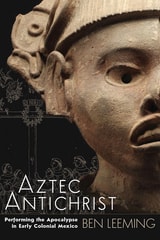
cover of Aztec Antichrist: Performing the Apocalypse in Early Colonial Mexico

Aztec Antichrist

Performing the Apocalypse in Early Colonial Mexico

Ben Leeming

University Press of Colorado, 2022

In Aztec Antichrist, Ben Leeming presents a transcription, translation, and study of two sixteenth-century Nahuatl religious plays that are likely the earliest surviving presentations of the Antichrist legend in the Americas, and possibly the earliest surviving play scripts in the whole of the New World in any language.
 
Discovered in the archives of the Hispanic Society of America in New York inside a notebook of miscellaneous Nahuatl-Christian texts written almost entirely by an Indigenous writer named Fabían de Aquino, the plays are filled with references to human sacrifice, bloodletting, ritual divination, and other religious practices declared “idolatrous” at a time when ecclesiastical authorities actively sought to suppress writing about Indigenous religion. These are Indigenous plays for an Indigenous audience that reveal how Nahuas made sense of Christianity and helped form its colonial image—the title figure is a powerful Indigenous being, an “Aztec Antichrist,” who violently opposes the evangelizing efforts of the church and seeks to draw converted Nahuas back to the religious practices of their ancestors. These practices include devotion to Nahua deities such as Tlaloc, Quetzalcoatl, and Tezcatlipoca who, in one of the most striking moves made by Aquino, are cast as characters in the plays.
 
Along with the translations, Leeming provides context and analysis highlighting these rare and fascinating examples of early Indigenous American literature that offer a window into the complexity of Nahua interactions with Christianity in the early colonial period. The work is extremely valuable to all students and scholars of Latin American religion, colonialism, Indigenous history, and early modern history and theater.
 
[more]
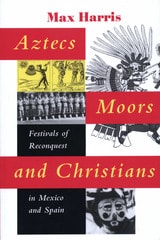
cover of Aztecs, Moors, and Christians: Festivals of Reconquest in Mexico and Spain

Aztecs, Moors, and Christians

Festivals of Reconquest in Mexico and Spain

By Max Harris

University of Texas Press, 2000

In villages and towns across Spain and its former New World colonies, local performers stage mock battles between Spanish Christians and Moors or Aztecs that range from brief sword dances to massive street theatre lasting several days. The festival tradition officially celebrates the triumph of Spanish Catholicism over its enemies, yet this does not explain its persistence for more than five hundred years nor its widespread diffusion.

In this insightful book, Max Harris seeks to understand Mexicans' "puzzling and enduring passion" for festivals of moros y cristianos. He begins by tracing the performances' roots in medieval Spain and showing how they came to be superimposed on the mock battles that had been a part of pre-contact Aztec calendar rituals. Then using James Scott's distinction between "public" and "hidden transcripts," he reveals how, in the hands of folk and indigenous performers, these spectacles of conquest became prophecies of the eventual reconquest of Mexico by the defeated Aztec peoples. Even today, as lively descriptions of current festivals make plain, they remain a remarkably sophisticated vehicle for the communal expression of dissent.
[more]
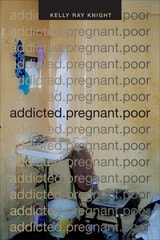
cover of addicted.pregnant.poor

addicted.pregnant.poor

Kelly Ray Knight

Duke University Press, 2015

For the addicted, pregnant, and poor women living in daily-rent hotels in San Francisco's Mission district, life is marked by battles against drug cravings, housing debt, and potential violence. In this stunning ethnography Kelly Ray Knight presents these women in all their complex humanity and asks what kinds of futures are possible for them given their seemingly hopeless situation. During her four years of fieldwork Knight documented women’s struggles as they traveled from the street to the clinic, jail, and family court, and back to the hotels. She approaches addicted pregnancy as an everyday phenomenon in these women's lives and describes how they must navigate the tension between pregnancy's demands to stay clean and the pull of addiction and poverty toward drug use and sex work. By creating the space for addicted women's own narratives and examining addicted pregnancy from medical, policy, and social science perspectives, Knight forces us to confront and reconsider the ways we think about addiction, trauma, health, criminality, and responsibility. 
 
[more]