Results by title
5448 books match the query 'History and criticism' and 404 start with a
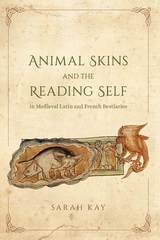
Animal Skins and the Reading Self in Medieval Latin and French Bestiaries
Sarah Kay
University of Chicago Press, 2017
Bestiaries present accounts of animals whose fantastic behaviors should be imitated or avoided, depending on the given trait. In a highly original argument, Kay suggests that the association of beasts with books is here both literal and material, as nearly all surviving bestiaries are copied on parchment made of animal skin, which also resembles human skin. Using a rich array of examples, she shows how the content and materiality of bestiaries are linked due to the continual references in the texts to the skins of other animals, as well as the ways in which the pages themselves repeatedly—and at times, it would seem, deliberately—intervene in the reading process. A vital contribution to animal studies and medieval manuscript studies, this book sheds new light on the European bestiary and its profound power to shape readers’ own identities.
Animal Stories
Narrating across Species LinesSusan McHugh
University of Minnesota Press, 2010
McHugh’s investigations into fictions of people relying on animals in civic and professional life—most obviously those of service animal users and female professional horse riders—showcase distinctly modern and human–animal forms of intersubjectivity. But increasingly graphic violence directed at these figures indicates their ambivalent significance to changing configurations of species.
Reading these developments with narrative adaptations of traditional companion species relations during this period— queer pet memoirs and farm animal fictions—McHugh clarifies the intercorporeal intimacies—the perforations of species boundaries now proliferating in genetic and genomic science—and embeds the representation of animals within biopolitical frameworks.
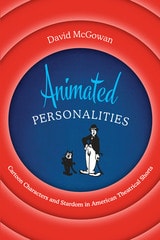
Animated Personalities
Cartoon Characters and Stardom in American Theatrical ShortsBy David McGowan
University of Texas Press, 2019
A CHOICE Outstanding Academic Title, 2019
Mickey Mouse, Betty Boop, Donald Duck, Bugs Bunny, Felix the Cat, and other beloved cartoon characters have entertained media audiences for almost a century, outliving the human stars who were once their contemporaries in studio-era Hollywood. In Animated Personalities, David McGowan asserts that iconic American theatrical short cartoon characters should be legitimately regarded as stars, equal to their live-action counterparts, not only because they have enjoyed long careers, but also because their star personas have been created and marketed in ways also used for cinematic celebrities.
Drawing on detailed archival research, McGowan analyzes how Hollywood studios constructed and manipulated the star personas of the animated characters they owned. He shows how cartoon actors frequently kept pace with their human counterparts, granting “interviews,” allowing “candid” photographs, endorsing products, and generally behaving as actual actors did—for example, Donald Duck served his country during World War II, and Mickey Mouse was even embroiled in scandal. Challenging the notion that studios needed actors with physical bodies and real off-screen lives to create stars, McGowan demonstrates that media texts have successfully articulated an off-screen existence for animated characters. Following cartoon stars from silent movies to contemporary film and television, this groundbreaking book broadens the scope of star studies to include animation, concluding with provocative questions about the nature of stardom in an age of digitally enhanced filmmaking technologies.
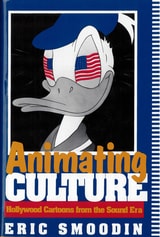
Animating Culture
Hollywood Cartoons from the Sound EraSmoodin, Eric
Rutgers University Press, 1993
Long considered "children's entertainment" by audiences and popular media, Hollywood animation has received little serious attention. Eric Smoodin's Animating Culture is the first and only book to thoroughly analyze the animated short film.
Usually running about seven or eight minutes, cartoons were made by major Hollywood studios––such as MGM, Warner Bros., and Disney––and shown at movie theaters along with a newsreel and a feature-length film. Smoodin explores animated shorta and the system that mass-produced them. How were cartoons exhibited in theaters? How did they tell their stories? Who did they tell them to? What did they say about race, class, and gender? How were cartoons related to the feature films they accompanied on the evening's bill of fare? What were the social functions of cartoon stars like Donald Duck and Minnie Mouse?
Smoodin argues that cartoons appealed to a wide audience––not just children––and did indeed contribute to public debate about political matters. He examines issues often ignored in discussions of animated film––issues such as social control in the U.S. army's "Private Snafu" cartoons, and sexuality and race in the "sites" of Betty Boop's body and the cartoon harem. Smoodin's analysis of the multiple discourses embedded in a variety of cartoons reveals the complex and sometimes contradictory ways that animation dealt with class relations, labor, imperialism, and censorship. His discussion of Disney and the Disney Studio's close ties with the U.S. government forces us to rethink the place of the cartoon in political and cultural life. Smoodin reveals the complex relationship between cartoons and the Hollywood studio system, and between cartoons and their audiences.
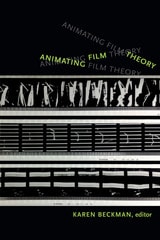
Animating Film Theory
Karen Beckman, ed.
Duke University Press, 2014
Contributors. Karen Beckman, Suzanne Buchan, Scott Bukatman, Alan Cholodenko, Yuriko Furuhata, Alexander R. Galloway, Oliver Gaycken, Bishnupriya Ghosh, Tom Gunning, Andrew R. Johnston, Hervé Joubert-Laurencin, Gertrud Koch, Thomas LaMarre, Christopher P. Lehman, Esther Leslie, John MacKay, Mihaela Mihailova, Marc Steinberg, Tess Takahashi
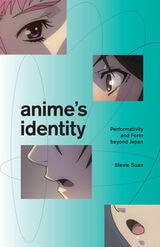
Anime's Identity
Performativity and Form beyond JapanStevie Suan
University of Minnesota Press, 2021
A formal approach to anime rethinks globalization and transnationality under neoliberalism
Anime has become synonymous with Japanese culture, but its global reach raises a perplexing question—what happens when anime is produced outside of Japan? Who actually makes anime, and how can this help us rethink notions of cultural production? In Anime’s Identity, Stevie Suan examines how anime’s recognizable media-form—no matter where it is produced—reflects the problematics of globalization. The result is an incisive look at not only anime but also the tensions of transnationality.
Far from valorizing the individualistic “originality” so often touted in national creative industries, anime reveals an alternate type of creativity based in repetition and variation. In exploring this alternative creativity and its accompanying aesthetics, Suan examines anime from fresh angles, including considerations of how anime operates like a brand of media, the intricacies of anime production occurring across national borders, inquiries into the selfhood involved in anime’s character acting, and analyses of various anime works that present differing modes of transnationality.
Anime’s Identity deftly merges theories from media studies and performance studies, introducing innovative formal concepts that connect anime to questions of dislocation on a global scale, creating a transformative new lens for analyzing popular media.

Anime’s Media Mix
Franchising Toys and Characters in JapanMarc Steinberg
University of Minnesota Press, 2012
In Anime’s Media Mix, Marc Steinberg convincingly shows that anime is far more than a style of Japanese animation. Beyond its immediate form of cartooning, anime is also a unique mode of cultural production and consumption that led to the phenomenon that is today called “media mix” in Japan and “convergence” in the West.
According to Steinberg, both anime and the media mix were ignited on January 1, 1963, when Astro Boy hit Japanese TV screens for the first time. Sponsored by a chocolate manufacturer with savvy marketing skills, Astro Boy quickly became a cultural icon in Japan. He was the poster boy (or, in his case, “sticker boy”) both for Meiji Seika’s chocolates and for what could happen when a goggle-eyed cartoon child fell into the eager clutches of creative marketers. It was only a short step, Steinberg makes clear, from Astro Boy to Pokémon and beyond.
Steinberg traces the cultural genealogy that spawned Astro Boy to the transformations of Japanese media culture that followed—and forward to the even more profound developments in global capitalism supported by the circulation of characters like Doraemon, Hello Kitty, and Suzumiya Haruhi. He details how convergence was sparked by anime, with its astoundingly broad merchandising of images and its franchising across media and commodities. He also explains, for the first time, how the rise of anime cannot be understood properly—historically, economically, and culturally—without grasping the integral role that the media mix played from the start. Engaging with film, animation, and media studies, as well as analyses of consumer culture and theories of capitalism, Steinberg offers the first sustained study of the Japanese mode of convergence that informs global media practices to this day.
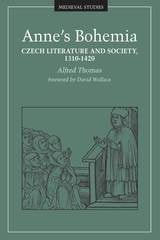
Anne’s Bohemia
Czech Literature And Society, 1310-1420Alfred Thomas
University of Minnesota Press, 1998
The first book in English on medieval Czech literature.
Anne’s Bohemia is the first general book in English to introduce the little-known riches of medieval Bohemian culture. Alfred Thomas considers the development of Czech literature and society from the election of Count John of Luxembourg as king of Bohemia in 1310 to the year 1420, when the papacy declared a Catholic crusade against the Hussite reformers. This period is of particular relevance to the study of medieval England because of the marriage of Richard II to Anne of Bohemia, the figure around whom this book is focused.
Anne’s Bohemia provides a social context for the most important works of literature written in the Czech language, from the earliest spiritual songs and prayers to the principal Hussite and anti-Hussite tracts of the fifteenth century. The picture that emerges from Thomas’s close readings of these texts is one of a society undergoing momentous political and religious upheavals in which kings, queens, clergy, and heretics all played crucial roles. During the reign of Charles IV (1346-78), the Bohemian Lands became the administrative and cultural center of the Holy Roman Empire and Prague its splendid capital. Comparing and contrasting the situation in Bohemia with the England of Richard II, Anne’s Bohemia charts the growth and decline of the international court culture and the gradual ascendancy of the Hussite reformers in the fifteenth century. Expert but accessibly written, the book offers an engaging overview of medieval Bohemian culture for specialist and nonspecialist alike.ISBN 0-8166-3053-4 Cloth $49.95xxISBN 0-8166-3054-2 Paper $19.95x232 pages 6 black-and-white photos 5 7/8 x 9 AprilMedieval Cultures Series, volume 13Translation inquiries: University of Minnesota Press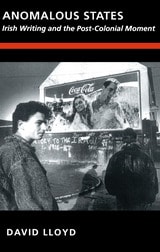
Anomalous States
Irish Writing and the Post-Colonial MomentDavid Lloyd
Duke University Press, 1993
Beginning with Heaney and Beckett, Lloyd shows how in these authors the question of identity connects with the dominance of conservative cultural nationalism and argues for the need to understand Irish culture in relation to the wider experience of colonized societies. A central essay reads Yeats's later works as a profound questioning of the founding of the state. Final essays examine the gradual formation of the state and nation as one element in a cultural process that involves conflict between popular cultural forms and emerging political economies of nationalism and the colonial state. Modern Ireland is thus seen as the product of a continuing process in which, Lloyd argues, the passage to national independence that defines Ireland's post-colonial status is no more than a moment in its continuing history.
Anomalous States makes an important contribution to the growing body of work that connects cultural theory with post-colonial historiography, literary analysis, and issues in contemporary politics. It will interest a wide readership in literary studies, cultural studies, anthropology, and history.
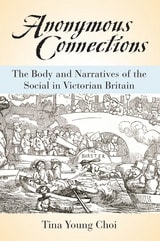
Anonymous Connections
The Body and Narratives of the Social in Victorian BritainTina Young Choi
University of Michigan Press, 2016
Answerable Style
The Idea of the Literary in Medieval EnglandFrank Grady and Andrew Galloway
The Ohio State University Press, 2013
Antebellum American Women's Poetry
A Rhetoric of SentimentWendy Dasler Johnson
Southern Illinois University Press, 2016
Considering the logos, ethos, and pathos—aims, writing personae, and audience appeal—of poems by African American abolitionist Frances Watkins Harper, working-class prophet Lydia Huntley Sigourney, and feminist socialite Julia Ward Howe, Wendy Dasler Johnson demonstrates that sentimental poetry was an inportant component of antebellum social activism. She articulates the ethos of the poems of Harper, who presents herself as a properly domestic black woman, nevertheless stepping boldly into Northern pulpits to insist slavery be abolished; the poetry of Sigourney, whose speaker is a feisty, working-class, ambiguously gendered prophet; and the works of Howe, who juggles her fame as the reformist “Battle Hymn” lyricist and motherhood of five children with an erotic Continental sentimentalism.
Antebellum American Women's Poetry makes a strong case for restoration of a compelling system of persuasion through poetry usually dismissed from studies of rhetoric. This remarkable book will change the way we think about women’s rhetoric in the nineteenth century, inviting readers to hear and respond to urgent, muffled appeals for justice in our own day.
Antebellum at Sea
Maritime Fantasies in Nineteenth-Century AmericaJason Berger
University of Minnesota Press, 2012
In the antebellum years, the Western world’s symbolic realities were expanded and challenged as merchant, military, and scientific activity moved into Pacific and Arctic waters. In Antebellum at Sea, Jason Berger explores the roles that early nineteenth-century maritime narratives played in conceptualizing economic and social transitions in the developing global market system and what these chronicles disclose about an era marked by immense change.
Focusing on the work of James Fenimore Cooper and Herman Melville, Berger enhances our understanding of how the nineteenth century negotiated its own tenuous progress by portraying how a wide range of maritime stories lays bare disturbing experiences of the new. Berger draws on Slavoj Žižek’s Lacanian notion of fantasy in order to reconsider the complex way maritime accounts operated in the political landscape of antebellum America, examining topics such as the function of maritime labor know-how within a transformation of scientific knowledge, anxiety produced by conflict between gender-specific and culture-specific forms of enjoyment, and how legal practices illuminate troubling juridical paradoxes at the heart of Polk-era political life.
Addressing the ideas of the antebellum age from unexpected and revealing perspectives, Berger calls on the conception of fantasy to consider how antebellum maritime literature disputes conventional views of American history, literature, and national identity.
Anthems, Sonnets, and Chants
Recovering the African American Poetry of the 1930sJon Woodson
The Ohio State University Press, 2011

Anthropocene Poetics
Deep Time, Sacrifice Zones, and ExtinctionDavid Farrier
University of Minnesota Press, 2019
How poetry can help us think about and live in the Anthropocene by reframing our intimate relationship with geological time
The Anthropocene describes how humanity has radically intruded into deep time, the vast timescales that shape the Earth system and all life-forms that it supports. The challenge it poses—how to live in our present moment alongside deep pasts and futures—brings into sharp focus the importance of grasping the nature of our intimate relationship with geological time. In Anthropocene Poetics, David Farrier shows how contemporary poetry by Elizabeth Bishop, Seamus Heaney, Evelyn Reilly, and Christian Bök, among others, provides us with frameworks for thinking about this uncanny sense of time.
Looking at a diverse array of lyric and avant-garde poetry from three interrelated perspectives—the Anthropocene and the “material turn” in environmental philosophy; the Plantationocene and the role of global capitalism in environmental crisis; and the emergence of multispecies ethics and extinction studies—Farrier rethinks the environmental humanities from a literary critical perspective. Anthropocene Poetics puts a concern with deep time at the center, defining a new poetics for thinking through humanity’s role as geological agents, the devastation caused by resource extraction, and the looming extinction crisis.

Anti-Apocalypse
Exercises in Genealogical CriticismLee Quinby
University of Minnesota Press, 1994
Anti-Apocalypse was first published in 1994. Minnesota Archive Editions uses digital technology to make long-unavailable books once again accessible, and are published unaltered from the original University of Minnesota Press editions.
As the year 2000 looms, heralding a new millennium, apocalyptic thought abounds-and not merely among religious radicals. In politics, science, philosophy, popular culture, and feminist discourse, apprehensions of the End appear in images of cultural decline and urban chaos, forecasts of the end of history and ecological devastation, and visions of a new age of triumphant technology or a gender-free utopia. There is, Lee Quinby contends, a threatening "regime of truth" prevailing in the United States-and this regime, with its enforcement of absolute truth and morality, imperils democracy. In Anti-Apocalypse, Quinby offers a powerful critique of the millenarian rhetoric that pervades American culture. In doing so, she develops strategies for resisting its tyrannies.
Drawing on feminist and Foucauldian theory, Quinby explores the complex relationship between power, truth, ethics, and apocalypse. She exposes the ramifications of this relationship in areas as diverse as jeanswear magazine advertising, the Human Genome project, contemporary feminism and philosophy, texts by Henry Adams and Zora Neale Hurston, and radical democratic activism. By bringing together such a wide range of topics, Quinby shows how apocalypse weaves its way through a vast network of seemingly unrelated discourses and practices. Tracing the deployment of power through systems of alliance, sexuality, and technology, Quinby reveals how these power relationships produce conflicting modes of subjectivity that create possibilities for resistance. She promotes a variety of critical stances—genealogical feminism, an ethics of the flesh, and "pissed criticism"—as challenges to apocalyptic claims for absolute truth and universal morality. Far-reaching in its implications for social and cultural theory as well as for political activism, Anti-Apocalypse will engage readers across the cultural spectrum and challenge them to confront one of the most subtle and insidious orthodoxies of our day.Lee Quinby is associate professor of English and American studies at Hobart and William Smith Colleges. She is the author of Freedom, Foucault, and the Subject of America (1991) and coeditor (with Irene Diamond) of Feminism and Foucault: Reflections on Resistance (1988).
Anti-Blackness and Human Monstrosity in Black American Horror Fiction
Jerry Rafiki Jenkins
The Ohio State University Press, 2024
Anti-Heimat Cinema
The Jewish Invention of the German LandscapeOfer Ashkenazi
University of Michigan Press, 2020
Anti-Judaism and Christian Orthodoxy
Ephrem's Hymns in Fourth-century Syria (Patristic Monograph Series)Christine Shepardson
Catholic University of America Press, 2008
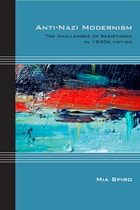
Anti-Nazi Modernism
The Challenges of Resistance in 1930s FictionMia Spiro
Northwestern University Press, 2013
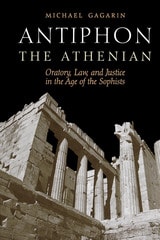
Antiphon the Athenian
Oratory, Law, and Justice in the Age of the SophistsBy Michael Gagarin
University of Texas Press, 2002
Winner, Friends of the Dallas Public Library Award from the Texas Institute of Letters, 2003
Antiphon was a fifth-century Athenian intellectual (ca. 480-411 BCE) who created the profession of speechwriting while serving as an influential and highly sought-out adviser to litigants in the Athenian courts. Three of his speeches are preserved, together with three sets of Tetralogies (four hypothetical paired speeches), whose authenticity is sometimes doubted. Fragments also survive of intellectual treatises on subjects including justice, law, and nature (physis), which are often attributed to a separate Antiphon the Sophist. Were these two Antiphons really one and the same individual, endowed with a wide-ranging mind ready to tackle most of the diverse intellectual interests of his day?
Through an analysis of all these writings, this book convincingly argues that they were composed by a single individual, Antiphon the Athenian. Michael Gagarin sets close readings of individual works within a wider discussion of the fifth-century Athenian intellectual climate and the philosophical ferment known as the sophistic movement. This enables him to demonstrate the overall coherence of Antiphon's interests and writings and to show how he was a pivotal figure between the sophists and the Attic orators of the fourth century. In addition, Gagarin's argument allows us to reassess the work of the sophists as a whole, so that they can now be seen as primarily interested in logos (speech, argument) and as precursors of fourth-century rhetoric, rather than in their usual role as foils for Plato.
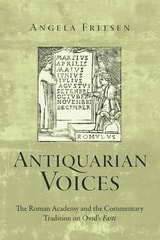
Antiquarian Voices
The Roman Academy and the Commentary Tradition on Ovid's FastiAngela Fritsen
The Ohio State University Press, 2015
Angela Fritsen’s Antiquarian Voices:The Roman Academy and the Commentary Tradition on Ovid’s Fasti offers the first study of the Renaissance exegesis and imitation of Ovid as antiquarian. Fritsen analyzes the Fasti commentaries by Paolo Marsi (1440–1484) and Antonio Costanzi (1436–1490) as well as the connections between the two works. It situates Ovidian Fasti studies in the Roman Academy under the mentorship of Pomponio Leto. Nowhere could the investigation of the Fasti be carried out better than in Rome. The humanists had a guide to the City in Ovid. They also regarded the Fasti as well suited to the ideology of the ancient Roman imperium’s renewal in modern papal Rome.
Antiquarian Voices illustrates how in reviving the Fasti, the humanists returned Rome to its original splendor. The book demonstrates that the humanists were eager to relate the Fasti to their antiquarian pursuits—as well as to their rising personal fame.
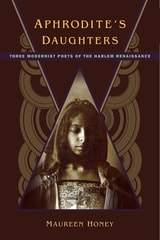
Aphrodite's Daughters
Three Modernist Poets of the Harlem RenaissanceHoney, Maureen
Rutgers University Press, 2016
Apocalypse Cinema
Stephen Prince
Rutgers University Press, 2021
This book provides a lively overview of apocalypse cinema, including alien invasions, nuclear annihilation, asteroid collisions, climate change, and terrifying plagues. Covering pivotal films from the silent era to the present day, including Metropolis, Invasion of the Body Snatchers, Dr. Strangelove, Contagion, and Avengers: Endgame, Stephen Prince explores how these dark visions are rooted in religious and prophetic traditions, and he considers how our love for apocalypse cinema is tied to fundamental existential questions and anxieties that never go out of fashion.
Apocalypse South
Judgment, Cataclysm, and Resistance in the Regional ImaginaryAnthony Dyer Hoefer
The Ohio State University Press, 2012
Apocalyptic Anxiety
Religion, Science, and America's Obsession with the End of the WorldAnthony Aveni
University Press of Colorado, 2016
The book begins with the Millerites, the nineteenth-century religious sect of Pastor William Miller, who used biblical calculations to predict October 22, 1844 as the date for the Second Advent of Christ. Aveni also examines several other religious and philosophical movements that have centered on apocalyptic themes—Christian millennialism, the New Age movement and the Age of Aquarius, and various other nineteenth- and early twentieth-century religious sects, concluding with a focus on the Maya mystery of 2012 and the contemporary prophets who connected the end of the world as we know it with the overturning of the Maya calendar.
Apocalyptic Anxiety places these seemingly never-ending stories of the world’s end in the context of American history. This fascinating exploration of the deep historical and cultural roots of America’s voracious appetite for apocalypse will appeal to students of American history and the histories of religion and science, as well as lay readers interested in American culture and doomsday prophecies.
Apocalyptic Ecologies
From Creation to Doom in Middle English LiteratureShannon Gayk
University of Chicago Press, 2024
When a series of ecological disasters swept medieval England, writers turned to religious storytelling for precedents. Their depictions of biblical floods, fires, storms, droughts, and plagues reveal an unsettled relationship to the natural world, at once unchanging and bafflingly unpredictable. In Apocalyptic Ecologies, Shannon Gayk traces representations of environmental calamities through medieval plays, sermons, and poetry such as Cleanness and Piers Plowman. In premodern disaster writing, she recovers a vision of environmental flourishing that could inspire new forms of ecological care today: a truly apocalyptic sensibility capable of seeing in every ending, every emergency a new beginning waiting to emerge.
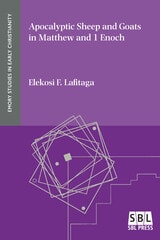
Apocalyptic Sheep and Goats in Matthew and 1 Enoch
Elekosi F. Lafitaga
SBL Press, 2022
An alternative understanding of apocalyptic eschatology in the Gospel of Matthew
Matthew’s eschatological imageries of judgment are often identified as apocalyptic and referred to as Matthew’s apocalyptic discourses. In this volume Elekosi F. Lafitaga reexamines Matthew’s vision of the sheep and goats in the judgment of the nations, which are often interpreted as metaphors for the saved and the condemned. Lafitaga views these images in the wider context of the rhetoric of apocalyptic communication stretching back to Matthew 3. This broader context reveals that the vision of Matthew 25 serves to exhort Israel in the here and now according to the torah, with salvation for Israel involving an indispensable responsibility to love and serve humanity. Central to Lafitaga’s analysis is the highly probable scenario that the material in Matthew is dependent on the Book of Dreams (1 Enoch 83–90).
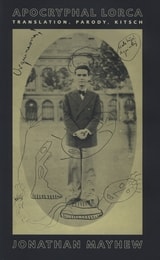
Apocryphal Lorca
Translation, Parody, KitschJonathan Mayhew
University of Chicago Press, 2009
Federico García Lorca (1898–1936) had enormous impact on the generation of American poets who came of age during the cold war, from Robert Duncan and Allen Ginsberg to Robert Creeley and Jerome Rothenberg. In large numbers, these poets have not only translated his works, but written imitations, parodies, and pastiches—along with essays and critical reviews. Jonathan Mayhew’s Apocryphal Lorca is an exploration of the afterlife of this legendary Spanish writer in the poetic culture of the United States.
The book examines how Lorca in English translation has become a specifically American poet, adapted to American cultural and ideological desiderata—one that bears little resemblance to the original corpus, or even to Lorca’s Spanish legacy. As Mayhew assesses Lorca’s considerable influence on the American literary scene of the latter half of the twentieth century, he uncovers fundamental truths about contemporary poetry, the uses and abuses of translation, and Lorca himself.

Apology to Apostrophe
Autobiography and the Rhetoric of Self-Representation in SpainJames D. Fernandez
Duke University Press, 1992
As Fernández demonstrates, recent developments in critical theory provide new and fruitful approaches to autobiographical works that have long been neglected, misunderstood, or, in some cases, virtually unknown. Focusing primarily but not exclusively on nineteenth-century Spain, Fernández exposes a rhetorical tension that often occurs in autobiographical discourse, between self-justification, or "apology," and the transcendence of this worldly impulse, or "apostrophe." This tension, he argues, is of particular interest in the case of Spain, but not peculiar to that nation, and his attention to the theoretical nature of autobiography leads to insightfl considerations of many canonical European autobiographies, including those of Saint Augustine, Rousseau, Saint Teresa, and Cardinal Newman.
Considering Spanish autobiography in the context of first-person narrative in Europe and in the terms of current debates on the relationship between writing and selfhood, Apology to Apostrophe marks a significant advance in our historical understanding and critical discussion of the genre. The book will be of great value not only to Hispanists but also to those interested in autobiography and cultural history.
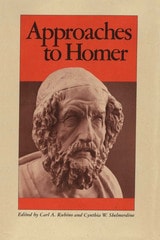
Approaches to Homer
Edited by Carl A. Rubino and Cynthia W. Shelmerdine
University of Texas Press, 1983
Modern Homeric scholarship is distinguished by a dazzling diversity of approaches. That diversity is brilliantly displayed in this volume, in which nine well-known classicists approach the Homeric poems from the various perspectives of archaeology, economic history, philosophy, literary criticism, linguistics, and Byzantine history.
Several essays are primarily concerned with what the Homeric poems teach us about the past. Richard Hope Simpson, for example, reviews the controversy sparked by his and John F. Lazenby's 1970 argument that the Catalogue of Ships in the Iliad accurately reflects the geography of Mycenean Greece. Using archaeology as just one of his starting points, Gregory Nagy reflects upon the death and funeral of Sarpedon as described in the Iliad. Our understanding of the word áté is enhanced by E. D. Francis, who closely examines its prehistory.
Norman Austin's elegant and original discussion of tone in the Odyssey's Cyclops tale is animated by both psychoanalytic theory and his work with two practitioners of optometric visual training. Writing of Odysseus, James M. Redfield dubs that hero "the economic man" and links certain tensions in the Odyssey to the actual economic concerns of Greece in the late eighth century BC. Both Ann L. T. Bergren and Mabel L. Lang concern themselves with problems of narrative in the Homeric epics.
Like Hope Simpson, C. J. Rowe updates a controversy—in this instance, the many objections raised to Arthur Adkins' influential 1960 study of moral values in Homer. Gareth Morgan provides a fascinating glimpse of the Homeric scholarship of another day by focusing on the work of the astonishing John Tzetzes in twelfth-century Byzantium.
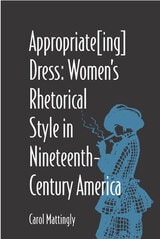
Appropriate[Ing] Dress
Women's Rhetorical Style in Nineteenth-Century AmericaCarol Mattingly
Southern Illinois University Press, 2002
Carol Mattingly examines the importance of dress and appearance for nineteenth-century women speakers and explores how women appropriated gendered conceptions of dress and appearance to define the struggle for representation and power that is rhetoric. Although crucial to women’s effectiveness as speakers, Mattingly notes, appearance has been ignored because it was taken for granted by men.
Because women rarely spoke in public before the nineteenth century, no guidelines existed regarding appropriate dress when they began to speak to audiences. Dress evoked immediate images of gender, an essential consideration for women speakers because of its strong association with place, locating women in the domestic sphere and creating a primary image that women speakers would work with—and against—throughout the century. Opposition to conspicuous change for women often necessitated the subtle transfer of comforting images when women sought to inhabit traditionally masculine spaces. The most successful women speakers carefully negotiated expectations by highlighting some conventions even as they broke others.
Appropriation and Representation
Feng Menglong and the Chinese Vernacular StoryShuhui Yang
University of Michigan Press, 1998
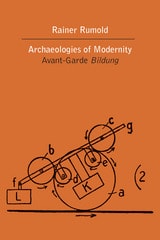
Archaeologies of Modernity
Avant-Garde BildungRainer Rumold
Northwestern University Press, 2015
Archaeologies of Modernity explores the shift from the powerful tradition of literary forms of Bildung—the education of the individual as the self—to the visual forms of “Bildung” (from Bild) that characterize German modernism and the European avant-garde. Interrelated chapters examine the work of Franz Kafka, Jean/Hans Arp, Walter Benjamin, and Carl Einstein, and of artists such as Oskar Kokoschka or Kurt Schwitters, in the light of the surge of an autoformation (Bildung) of verbal and visual images at the core of expressionist and surrealist aesthetics and the art that followed. In this first scholarly focus on modernist avant-garde Bildung in its entwinement of conceptual modernity with forms of the archaic, Rumold resituates the significance of the poet and art theorist Einstein and his work on the language of primitivism and the visual imagination. Archaeologies of Modernity is a major reconsideration of the conception of the modernist project and will be of interest to scholars across the disciplines.
Archaeopoetics
Word, Image, HistoryMandy Bloomfield
University of Alabama Press, 2016
Archaeopoetics explores “archaeological poetry,” ground-breaking and experimental writing by innovative poets whose work opens up broad new avenues by which contemporary readers may approach the past, illuminating the dense web of interconnections often lost in traditional historiography.
Critic Mandy Bloomfield traces the emergence of a significant historicist orientation in recent poetry, exemplified by the work of five writers: American poet Susan Howe, Korean-American artist Theresa Hak Kyung Cha, British poet Maggie O’Sullivan, and diasporic African Caribbean writers Kamau Brathwaite and M. NourbeSe Philip. Bloomfield sets the work of these five authors within a vigorous tradition, including earlier work by Ezra Pound and Walter Benjamin, and then shows how these five poets create poems that engender new encounters with pivotal episodes in history, such as the English regicide or Korea’s traumatized twentieth century.
Exploring our shared but imperfectly understood history as well as omissions and blind spots in historiography, Bloomfield outlines the tension between the irretrievability of effaced historical evidence and the hope that poetry may reconstitute such unrecoverable histories. She posits that this tension is fertile, engendering a form of aesthetically enacted epistemological enquiry.
Fascinating and seminal, Archaeopoetics pays special attention to the sensuous materiality of texts and most especially to the visual manifestations of poetry. The poems in this volume employ the visual imagery of the word itself or incorporate imagery into the poetry to propose persuasive alternatives to narrative or discursive frameworks of historical knowledge.
Archipelagoes
Insular Fictions from Chivalric Romance to the NovelSimone Pinet
University of Minnesota Press, 2010
Pinet looks closely at Amadís de Gaula and the Liber insularum archipelagi as the first examples of these genres. Both isolario and chivalric romance (libros de caballerías) make of the island a flexible yet cohesive framework that becomes intrinsic to the construction of their respective genres. The popularity of these forms throughout the seventeenth century in turn bears witness to the numerous possibilities the archipelagic structure offered, ultimately taken up by the grand genres of each discipline—the atlas and the novel.
Moving from verbal descriptions to engravings and tapestry weavings, and from the chivalric politics and ethics proposed in the Amadís de Gaula to the Insula Barataria episode in Don Quixote, Pinet’s analysis of insularity and the use of the island structure reveals diverging roles for fiction, illuminating both the emergence of the novel and contemporary philosophical discussion on fiction.
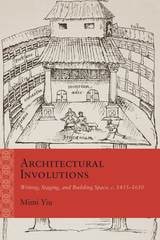
Architectural Involutions
Writing, Staging, and Building Space, c. 1435-1650Mimi Yiu
Northwestern University Press, 2014
Winner of the MLA Prize for Independent Scholars
Taking the reader on an inward journey from façades to closets, from physical to psychic space, Architectural Involutions offers an alternative genealogy of theater by revealing how innovations in architectural writing and practice transformed an early modern sense of interiority. The book launches from a matrix of related “platforms”—a term that in early modern usage denoted scaffolds, stages, and draftsmen’s sketches—to situate Alberti, Shakespeare, Jonson, and others within a landscape of spatial and visual change.
As the English house underwent a process of inward folding, replacing a logic of central assembly with one of dissemination, the subject who negotiated this new scenography became a flashpoint of conflict in both domestic and theatrical arenas. Combining theory with archival findings, Mimi Yiu reveals an emergent desire to perform subjectivity, to unfold an interior face to an admiring public. Highly praised for its lucid writing, comprehensive supplementary material, and engaging tone, Architectural Involutions was the winner of the 2016 MLA Prize for Independent Scholars.

Architecture and Modern Literature
David Spurr
University of Michigan Press, 2012
Architecture and Modern Literature explores the representation and interpretation of architectural space in modern literature from the early nineteenth century to the present, with the aim of showing how literary production and architectural construction are related as cultural forms in the historical context of modernity. In addressing this subject, it also examines the larger questions of the relation between literature and architecture and the extent to which these two arts define one another in the social and philosophical contexts of modernity. Architecture and Modern Literature will serve as a foundational introduction to the emerging interdisciplinary study of architecture and literature. David Spurr addresses a broad range of material, including literary, critical, and philosophical works in English, French, and German, and proposes a new historical and theoretical overview of this area, in which modern forms of "meaning" in architecture and literature are related to the discourses of being, dwelling, and homelessness.
Architexts of Memory
Literature, Science, and AutobiographyEvelyne Ender
University of Michigan Press, 2005
"An important, cogently argued, subtle and rich study of a topic of great interest."
--Mieke Bal, University of Amsterdam
"A work of literary studies positioned at the intersection of tradition and innovation. Evelyne Ender's book brings fashionable cultural concerns to bear on traditional literary texts-her superb pedagogical skills lure and guide the reader through the most difficult psychoanalytical concepts."
--Nelly Furman, Cornell University
Evelyne Ender is Professor of French Studies, University of Washington. She is the author of Sexing the Mind: Nineteenth-Century Fictions of Hysteria.
Archive Feelings
A Theory of Greek TragedyMario Telò
The Ohio State University Press, 2020
With bold readings of thirteen plays by Aeschylus, Sophocles, and Euripides, including the Oedipus cycle, the Oresteia,Medea, and Bacchae; an eclectic synthesis of Freud, Lacan, Derrida, Žižek, Deleuze, and other critical theorists; and an engagement with art, architecture, and film, Mario Telò’s Archive Feelings: A Theory of Greek Tragedy locates Greek tragedy’s aesthetic allure beyond catharsis in a vertiginous sense of giddy suspension, in a spiral of life and death that resists equilibrium, stabilization, and all forms of normativity. In so doing, Telò forges a new model of tragic aesthetics.
Archives of Instruction
Nineteenth-Century Rhetorics, Readers, and Composition Books in the United StatesJean Ferguson Carr, Stephen L. Carr, and Lucille M. Schultz
Southern Illinois University Press, 2005
Both a historical recovery and a critical rethinking of the functions and practices of textbooks, Archives of Instruction: Nineteenth-Century Rhetorics, Readers, and Composition Books in the United States argues for an alternative understanding of our rhetorical traditions. The authors describe how the pervasive influence of nineteenth-century literacy textbooks demonstrate the early emergence of substantive instruction in reading and writing. Tracing the histories of widespread educational practices, the authors treat the textbooks as an important means of cultural formation that restores a sense of their distinguished and unique contributions.
At the beginning of the nineteenth century, few people in the United States had access to significant school education or to the materials of instruction. By century’s end, education was a mass—though not universal—experience, and literacy textbooks were ubiquitous artifacts, used both in home and in school by a growing number of learners from diverse backgrounds. Many of the books have been forgotten, their contributions slighted or dismissed, or they are remembered through a haze of nostalgia as tokens of an idyllic form of schooling. Archives of Instruction suggests strategies for re-reading the texts and details the watersheds in the genre, providing a new perspective on the material conditions of schooling, book publication, and emerging practices of literacy instruction. The volume includes a substantial bibliography of primary and secondary works related to literacy instruction at all levels of education in the United States during the nineteenth century.
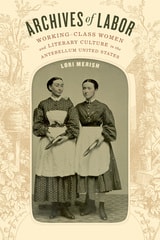
Archives of Labor
Working-Class Women and Literary Culture in the Antebellum United StatesLori Merish
Duke University Press, 2017
Are Girls Necessary?
Lesbian Writing and Modern HistoriesJulie Abraham
University of Minnesota Press, 2008
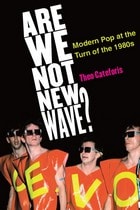
Are We Not New Wave?
Modern Pop at the Turn of the 1980sTheo Cateforis
University of Michigan Press, 2011
“Are We Not New Wave? is destined to become the definitive study of new wave music.”
—Mark Spicer, coeditor of Sounding Out Pop
New wave emerged at the turn of the 1980s as a pop music movement cast in the image of punk rock’s sneering demeanor, yet rendered more accessible and sophisticated. Artists such as the Cars, Devo, the Talking Heads, and the Human League leapt into the Top 40 with a novel sound that broke with the staid rock clichés of the 1970s and pointed the way to a more modern pop style.
In Are We Not New Wave? Theo Cateforis provides the first musical and cultural history of the new wave movement, charting its rise out of mid-1970s punk to its ubiquitous early 1980s MTV presence and downfall in the mid-1980s. The book also explores the meanings behind the music’s distinctive traits—its characteristic whiteness and nervousness; its playful irony, electronic melodies, and crossover experimentations. Cateforis traces new wave’s modern sensibilities back to the space-age consumer culture of the late 1950s/early 1960s.
Three decades after its rise and fall, new wave’s influence looms large over the contemporary pop scene, recycled and celebrated not only in reunion tours, VH1 nostalgia specials, and “80s night” dance clubs but in the music of artists as diverse as Rihanna, Lady Gaga, Miley Cyrus, and the Killers.
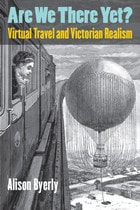
Are We There Yet?
Virtual Travel and Victorian RealismAlison Byerly
University of Michigan Press, 2012
Are We There Yet? Virtual Travel and Victorian Realismconnects the Victorian fascination with "virtual travel" with the rise of realism in nineteenth-century fiction and twenty-first-century experiments in virtual reality. Even as the expansion of river and railway networks in the nineteenth century made travel easier than ever before, staying at home and fantasizing about travel turned into a favorite pastime. New ways of representing place—360-degree panoramas, foldout river maps, exhaustive railway guides—offered themselves as substitutes for actual travel. Thinking of these representations as a form of "virtual travel" reveals a surprising continuity between the Victorian fascination with imaginative dislocation and twenty-first -century efforts to use digital technology to expand the physical boundaries of the self.
Aristophanes and the Cloak of Comedy
Affect, Aesthetics, and the CanonMario Telò
University of Chicago Press, 2016
Telò boldly traces Aristophanes’s rise, ironically, to the defeat of his play Clouds at the Great Dionysia of 423 BCE. Close readings of his revised Clouds and other works, such as Wasps, uncover references to the earlier Clouds, presented by Aristophanes as his failed attempt to heal the audience, who are reflected in the plays as a kind of dysfunctional father. In this proto-canonical narrative of failure, grounded in the distinctive feelings of different comic modes, Aristophanic comedy becomes cast as a prestigious object, a soft, protective cloak meant to shield viewers from the debilitating effects of competitors’ comedies and restore a sense of paternal responsibility and authority. Associations between afflicted fathers and healing sons, between audience and poet, are shown to be at the center of the discourse that has shaped Aristophanes’s canonical dominance ever since.
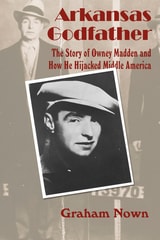
Arkansas Godfather
The Story of Owney Madden and How He Hijacked Middle AmericaGraham Nown
Butler Center for Arkansas Studies, 2013
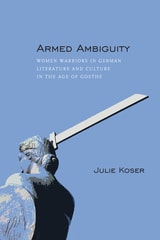
Armed Ambiguity
Women Warriors in German Literature and Culture in the Age of GoetheJulie Koser
Northwestern University Press, 2016
Armed Ambiguity is a fascinating examination of the tropes of the woman warrior constructed by print culture—including press reports, novels, dramatic works, and lyrical texts—during the decades-long conflict in Europe around 1800.
In it, Julie Koser sheds new light on how women’s bodies became a battleground for competing social, cultural, and political agendas in one of the most pivotal periods of modern history. She traces the women warriors in this work as reflections of the social and political climate in German-speaking lands, and she reveals how literary texts and cultural artifacts that highlight women’s armed insurrection perpetuated the false dichotomy of "public" versus "private" spheres along a gendered fault line. Koser illuminates how reactionary visions of "ideal femininity" competed with subversive fantasies of new femininities in the ideological battle being waged over the restructuring of German society.
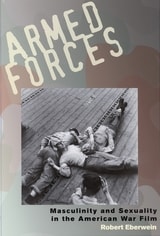
Armed Forces
Masculinity and Sexuality in the American War FilmEberwein, Robert
Rutgers University Press, 2007
In war films, the portrayal of deep friendships between men is commonplace. Given the sexually anxious nature of the American imagination, such bonds are often interpreted as carrying a homoerotic subtext. In Armed Forces , Robert Eberwein argues that an expanded conception of masculinity and sexuality is necessary in order to understand more fully the intricacy of these intense and emotional human relationships. Drawing on a range of examples from silent films such as What Price Glory and Wings to sound era works like The Deer Hunter, Platoon, Three Kings, and Pearl Harbor , he shows how close readings of war films, particularly in relation to their cultural contexts, demonstrate that depictions of heterosexual love, including those in romantic triangles, actually help to define and clarify the nonsexual nature of male love. The book also explores the problematic aspects of masculinity and sexuality when threatened by wounds, as in The Best Years of Our Lives, and considers the complex and persistent analogy between weapons and the male body, as in Full Metal Jacket and Saving Private Ryan .
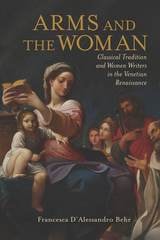
Arms and the Woman
Classical Tradition and Women Writers in the Venetian RenaissanceFrancesca D'Alessandro Behr
The Ohio State University Press, 2018
Arms and the Woman: Classical Tradition and Women Writers in the Venetian Renaissance by Francesca D’Alessandro Behr focuses on the classical reception in the works of female authors active in Venice during the Early Modern Age. Even in this relatively liberal city, women had restricted access to education and were subject to deep-seated cultural prejudices, but those who read and wrote were able, in part, to overcome those limitations.
In this study, Behr explores the work of Moderata Fonte and Lucrezia Marinella and demonstrates how they used knowledge of texts by Virgil, Ovid, and Aristotle to systematically reanalyze the biased patterns apparent both in the romance epic genre and contemporary society. Whereas these classical texts were normally used to bolster the belief in female inferiority and the status quo, Fonte and Marinella used them to envision societies structured according to new, egalitarian ethics. Reflecting on the humanist representation of virtue, Fonte and Marinella insisted on the importance of peace, mercy, and education for women. These authors took up the theme of the equality of genders and participated in the Renaissance querelle des femmes, promoting women’s capabilities and nature.