Results by title
18284 books match the query 'United States' and 1653 start with a
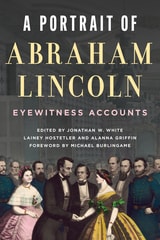
A Portrait of Abraham Lincoln
Eyewitness AccountsEdited by Jonathan W. White, Lainey Hostetler, and Alanna Griffin, with a foreword by Michael Burlingame
University of Illinois Press, 2027
Deeply researched and accessible, A Portrait of Abraham Lincoln is a valuable collection for anyone interested in a towering historical figure.
A Pound of Flesh
Monetary Sanctions as Punishment for the PoorAlexes Harris
Russell Sage Foundation, 2016
Over seven million Americans are either incarcerated, on probation, or on parole, with their criminal records often following them for life and affecting access to higher education, jobs, and housing. Court-ordered monetary sanctions that compel criminal defendants to pay fines, fees, surcharges, and restitution further inhibit their ability to reenter society. In A Pound of Flesh, sociologist Alexes Harris analyzes the rise of monetary sanctions in the criminal justice system and shows how they permanently penalize and marginalize the poor. She exposes the damaging effects of a little-understood component of criminal sentencing and shows how it further perpetuates racial and economic inequality.
Harris draws from extensive sentencing data, legal documents, observations of court hearings, and interviews with defendants, judges, prosecutors, and other court officials. She documents how low-income defendants are affected by monetary sanctions, which include fees for public defenders and a variety of processing charges. Until these debts are paid in full, individuals remain under judicial supervision, subject to court summons, warrants, and jail stays. As a result of interest and surcharges that accumulate on unpaid financial penalties, these monetary sanctions often become insurmountable legal debts which many offenders carry for the remainder of their lives. Harris finds that such fiscal sentences, which are imposed disproportionately on low-income minorities, help create a permanent economic underclass and deepen social stratification.
A Pound of Flesh delves into the court practices of five counties in Washington State to illustrate the ways in which subjective sentencing shapes the practice of monetary sanctions. Judges and court clerks hold a considerable degree of discretion in the sentencing and monitoring of monetary sanctions and rely on individual values—such as personal responsibility, meritocracy, and paternalism—to determine how much and when offenders should pay. Harris shows that monetary sanctions are imposed at different rates across jurisdictions, with little or no state government oversight. Local officials’ reliance on their own values and beliefs can also push offenders further into debt—for example, when judges charge defendants who lack the means to pay their fines with contempt of court and penalize them with additional fines or jail time.
A Pound of Flesh provides a timely examination of how monetary sanctions permanently bind poor offenders to the judicial system. Harris concludes that in letting monetary sanctions go unchecked, we have created a two-tiered legal system that imposes additional burdens on already-marginalized groups.
A Poverty of Imagination
Bootstrap Capitalism, Sequel to Welfare ReformDavid Stoesz
University of Wisconsin Press, 2000
Welfare reform was supposed to end welfare as we know it. And it has. The welfare poor have been largely transformed into the working poor, but their poverty persists. This hard-hitting book takes a close look at where we’ve gone wrong—and where we might go next if we truly want to improve the lot of America’s underclass.
Tracing the roots of recent reforms to the early days of the war on poverty, A Poverty of Imagination describes a social welfare system grown increasingly inept, corrupt, and susceptible to conservative redesign. Investigating the causes of the ongoing failure of welfare assistance, Stoesz focuses on the economic barriers that impede movement out of poverty into the American mainstream. He explores such issues as the heterogeneity of welfare families, generational welfare, inadequate benefits, the negative effects of time limits on welfare recipients, a fringe banking industry that exploits low-income families, the limited capacity of low-wage markets, and the unavailability of credit.
Stoesz suggests that a form of "bootstrap capitalism" would allow individuals and families to participate more fully in American society and achieve upward economic mobility and stability. This proposal, emphasizing wage supplements, asset building, and community capitalism, sets the stage for the next act in poverty policy in the United States. With its valuable insights on the American welfare system and its positive agenda for change, this book makes a significant intervention in our ongoing struggle to come to terms with widespread poverty in the wealthiest nation on earth.
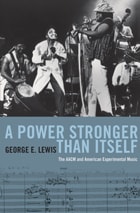
A Power Stronger Than Itself
The AACM and American Experimental MusicGeorge E. Lewis
University of Chicago Press, 2008
Founded in 1965 and still active today, the Association for the Advancement of Creative Musicians (AACM) is an American institution with an international reputation. George E. Lewis, who joined the collective as a teenager in 1971, establishes the full importance and vitality of the AACM with this communal history, written with a symphonic sweep that draws on a cross-generational chorus of voices and a rich collection of rare images.
Moving from Chicago to New York to Paris, and from founding member Steve McCall’s kitchen table to Carnegie Hall, A Power Stronger Than Itself uncovers a vibrant, multicultural universe and brings to light a major piece of the history of avant-garde music and art.
A Prairie Populist
The Memoirs of Luna KellieJane Taylor Nelsen
University of Iowa Press, 1992
Kellie actively sought to organize Nebraska into cooperatives and educate rural people about land, transportation, and money reform. Her compelling, often heartbreaking memoirs—written on the backs of ornate red-and-gold Farmers' Alliance certificates in 1925—give us her own description of how she became motivated to join the Alliance and participate in the Populist party. Kellie writes of her homesteading and political life from the age of eighteen to forty, of failed crops, mortgaged fields, intense hardships, and her devastation at the death of her children.

A Preface to Theology
W. Clark Gilpin
University of Chicago Press, 1996
Gilpin approaches this goal indirectly, by investigating the historic social roles of Protestant theologians and the educational institutions in which they have pursued their scholarship and teaching. Ranging from analyses of the New England Puritan Cotton Mather to contemporary theologians as "public intellectuals," Gilpin proposes that we find out what theology is by asking what theologians do.
By showing how particular cultural problems have always shaped the work of theologians, Gilpin's work profoundly illuminates the foundations of American academic theology, providing insights that will help guide its future.
A Prehistoric Sequence in the Middle Pecos Valley, New Mexico
Arthur J. Jelinek
University of Michigan Press, 1967
A Prelude to the Welfare State
The Origins of Workers' CompensationPrice V. Fishback and Shawn Everett Kantor
University of Chicago Press, 2000
In this highly original and persuasive work, Price V. Fishback and Shawn Everett Kantor challenge widespread historical perceptions, arguing that, rather than being an early progressive victory, workers' compensation succeeded because all relevant parties—labor and management, insurance companies, lawyers, and legislators—benefited from the legislation. Thorough, rigorous, and convincing, A Prelude to the Welfare State: The Origins of Workers' Compensation is a major reappraisal of the causes and consequences of a movement that ultimately transformed the nature of social insurance and the American workplace.
A President, a Church and Trails West
Competing Histories in Independence, MissouriJon E. Taylor
University of Missouri Press, 2008
Over the past century, three nationally significant histories have vied for space and place in Independence, Missouri. Independence was declared Zion by Joseph Smith, served as a gathering and provisioning point for trails west, and was called home by President Harry S. Truman for sixty-four years. Historian Jon E. Taylor has integrated research from newspapers, public documents, oral histories, and private papers to detail how the community has preserved and remembered these various legacies.
Truman’s legacy would appear to have been secured in Independence via three significant designations—his presidential library opened there in 1957, his neighborhood was designated a national historic landmark in 1972, and his home was declared a national historic site in 1982. However, Taylor argues that Truman’s seeming dominance in the community’s memory is in fact endangered by competition from the other aspects of the town’s historical heritage.
Taylor considers the role Mormon history has played in the city's history and chronicles how the Reorganized Church of Jesus Christ of Latter Day Saints returned to Independence to fulfill Joseph Smith's dream of creating Zion in the city, a situation that impacted neighborhoods near the Truman home. Taylor also examines the city's fascination with the Santa Fe, Oregon, and California trails, detailing how that history was lost and remembered and is now immortalized on the Independence square and in the National Frontier Trails Museum.
In the 1980s, the city council reduced the size of the Truman Heritage District, created to maintain Truman’s association with his neighborhood, after church opposition. At the same time, city officials pushed to make Independence a major tourist destination, a move largely dependent upon the city capitalizing on its association with Truman. These inconsistent policies and incongruous goals have led to innumerable changes in the landscape Truman enjoyed during his legendary morning walks.
A President, a Church, and Trails West chronicles one city’s struggle to preserve its history and the built environment. Taylor places the role of preservation in Independence not only within the larger context of preservation in the United States but also within the context of American environmental history. This volume is sure to appeal to anyone interested in public history, historic preservation, history and memory, and local history.
A Presidential Civil Service
FDR's Liaison Office for Personnel ManagementMordecai Lee
University of Alabama Press, 2016
Revealing the overlooked agency that transformed presidential personnel management and modern federal governance.
A Presidential Civil Service offers a comprehensive and definitive study of President Franklin Delano Roosevelt’s Liaison Office for Personnel Management (LOPM). Established in 1939 following the release of Roosevelt’s Brownlow Committee report, LOPM became a key milestone in the evolution of the contemporary executive-focused civil service.
The Progressive Movement of the nineteenth and early twentieth centuries comprised groups across the political spectrum with quite different. All, however, agreed on the need for a politically autonomous and independent federal Civil Service Commission (CSC) to eliminate patronage and political favoritism. In A Presidential Civil Service, public administration scholar Mordecai Lee explores two models open to later reformers: continuing a merit-based system isolated from politics or a management-based system subordinated to the executive and grounded in the growing field of managerial science.
Roosevelt’s 1937 Brownlow Committee, formally known as the President’s Committee on Administrative Management, has been widely studied including its recommendation to disband the CSC and replace it with a presidential personnel director. What has never been documented in detail was Roosevelt’s effort to implement that recommendation over the objections of Congress by establishing the LOPM as a nonstatutory agency.
The role and existence of LOPM from 1939 to 1945 has been largely dismissed in the history of public administration. Lee’s meticulously researched A Presidential Civil Service, however, persuasively shows that LOPM played a critical role in overseeing personnel policy. It was involved in every major HR initiative before and during World War II. Though small, the agency’s deft leadership almost always succeeded at impelling the CSC to follow its lead.
Roosevelt’s actions were in fact an artful and creative victory, a move finally vindicated when, in 1978, Congress abolished the CSC and replaced it with an Office of Personnel Management headed by a presidential appointee. A Presidential Civil Service offers a fascinating account and vital reassessment of the enduring legacy of Roosevelt’s LOPM.
A Primer for Teaching Digital History
Ten Design PrinciplesJennifer Guiliano
Duke University Press, 2022
A Prison in the Woods
Environment and Incarceration in New York's North CountryClarence Jefferson Hall
University of Massachusetts Press, 2020
Clarence Jefferson Hall Jr. reveals that the introduction of correctional facilities—especially in the last three decades of the twentieth century—unearthed long-standing conflicts over the proper uses of Adirondack nature, particularly since these sites have contributed to deforestation, pollution, and habitat decline, even as they've provided jobs and spurred economic growth. Additionally, prison plans have challenged individuals' commitment to environmental protection, tested the strength of environmental regulations, endangered environmental and public health, and exposed tensions around race, class, place, and belonging in the isolated prison towns of America's largest state park.
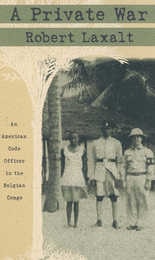
A Private War
An American Code Officer in the Belgian CongoRobert Laxalt
University of Nevada Press, 1998
In this vivid memoir, Laxalt recalls his service during WWII as a code officer in the Belgian Congo. In this remote jungle outpost, a secret war was being fought for control of the world’s future. Deep in the Congo lay a mine that produced a little-known substance called uranium, and for reasons no one then understood, the Allies and the Germans were struggling ferociously to control this mine and its ore. The cloth edition is a limited numbered, signed edition.
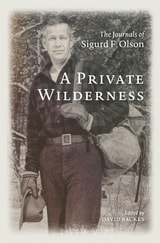
A Private Wilderness
The Journals of Sigurd F. OlsonSigurd F. Olson
University of Minnesota Press, 2024
The personal diaries of one of America’s best-loved naturalists, revealing his difficult and inspiring path to finding his voice and becoming a writer
Few writers are as renowned for their eloquence about the natural world, its power and fragility, as Sigurd F. Olson (1899–1982). Before he could give expression to The Singing Wilderness, however, he had to find his own voice. It is this struggle, the painstaking and often simply painful process of becoming the writer and conservationist now familiar to us, that Olson documented in the journal entries gathered here.
Written mostly during the years from 1930 to 1941, Olson’s journals describe the dreams and frustrations of an aspiring writer honing his skills, pursuing recognition, and facing doubt while following the academic career that allowed him to live and work even as it consumed so much of his time. But even as he speaks with immediacy and intensity about the conditions of his apprenticeship, Olson can be seen developing the singular way of observing and depicting the natural world that would bring him fame—and also, more significantly, alert others to the urgent need to understand and protect that world. Author of Olson’s definitive biography, editor David Backes brings a deep knowledge of the writer to these journals, providing critical context, commentary, and insights along the way.
When Olson wrote, in the spring of 1941, “What I am afraid of now is that the world will blow up just as I am getting it organized to suit me,” he could hardly have known how right he would prove to be. It is propitious that at our present moment, when the world seems once more balanced on the precipice, we have the words of Sigurd F. Olson to remind us of what matters—and of the hard work and the wonder that such a reckoning requires.
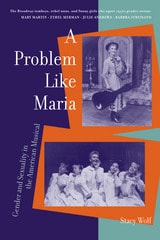
A Problem Like Maria
Gender and Sexuality in the American MusicalStacy Wolf
University of Michigan Press, 2002
Chapter by chapter, the book analyzes the stars' best-known and best-loved roles, including Martin as Nellie in South Pacific, Merman as Momma Rose in GypsyAndrews as Eliza in My Fair Lady and Guinevere in Camelot, and Streisand as Fanny Brice in Funny Girl. The final chapter scrutinizes the Broadway and film versions of The Sound of Music, illuminating its place in the hearts of lesbian spectators and the "delicious queerness" of Andrews's troublesome nun. As the first feminist and lesbian study of the American Broadway musical, A Problem Like Maria is a groundbreaking contribution to feminist studies, queer studies, and American studies and a delight for fans of musical theater.
Stacy Wolf is Associate Professor of Theatre and Dance, University of Texas, Austin.
A Problem of Fit
How the Complexity of College Pricing Hurts Students—and UniversitiesPhillip B. Levine
University of Chicago Press, 2022
How much does it cost to attend college in the United States today? The answer is more complex than many realize. College websites advertise a sticker price, but uncovering the actual price—the one after incorporating financial aid—can be difficult for students and families. This inherent uncertainty leads some students to forgo applying to colleges that would be the best fit for them, or even not attend college at all. The result is that millions of promising young people may lose out on one of society’s greatest opportunities for social mobility. Colleges suffer too, losing prospective students and seeing lower enrollments and less socioeconomic diversity. If markets require prices to function well, then the American higher-education system—rife as it is with ambiguity in its pricing—amounts to a market failure.
In A Problem of Fit, economist Phillip B. Levine explains why institutions charge the prices they do and discusses the role of financial aid systems in facilitating—and discouraging—access to college. Affordability issues are real, but price transparency is also part of the problem. As Levine makes clear, our conversations around affordability and free tuition miss a larger truth: that the opacity of our current college-financing systems is a primary driver of inequities in education and society. In a clear-eyed assessment of educational access and aid in a post-COVID-19 economy, A Problem of Fit offers a trenchant new argument for educational reforms that are well within reach.

A Professional Professoriate
Unionization, Bureaucratization, and the AAUPPhilo A. Hutcheson
Vanderbilt University Press, 2000
Hutcheson examines how tensions between the requirements of institutional bureaucracies and the norms of the academic profession resulted in contentiousness and conflict within the national AAUP, between administrators and faculty members on individual campuses, within the ranks of faculties themselves, and even deep in the consciences of many concerned individuals. The book analyzes the association's ability to respond effectively and to balance the values of collegial representation with the powers of collective bargaining. It thus offers a detailed and authoritative examination of the AAUP's search for ways to sustain professionalism while dealing with the fundamental changes in the nature of the professoriate in the post-World War II era.
A Professor at the End of Time
The Work and Future of the ProfessoriateBest, John
Rutgers University Press, 2017
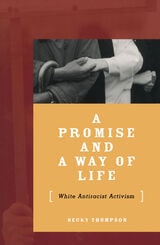
A Promise And A Way Of Life
White Antiracist ActivismBecky Thompson
University of Minnesota Press, 2001
The first in-depth look at white people’s activism in fighting racism during the past fifty years.
Not since the Civil Rights Movement of the 1950s and 1960s, when many white college students went south to fight against Jim Crow laws, has white antiracist activity held the public’s attention. Yet there have always been white people involved in fighting racism. In this passionate work, Becky Thompson looks at white Americans who have struggled against racism, offering examples of both successes and failures, inspirations, practical philosophies, and a way ahead.
A Promise and a Way of Life weaves an account of the past half-century based on the life histories of thirty-nine people who have placed antiracist activism at the center of their lives. Through a rich and fascinating narrative that links individual experiences with social and political history, Thompson shows the ways, both public and personal, in which whites have opposed racism during several social movements: the Civil Rights and Black Power movements, multiracial feminism, the Central American peace movement, the struggle for antiracist education, and activism against the prison industry. Beginning with the diverse catalysts that started these activists on their journeys, this book demonstrates the contributions and limitations of white antiracism in key social justice movements.
Through these stories, crucial questions are raised: Does antiracist work require a repudiation of one’s whiteness or can that identity be transformed through political commitment and alliances? What do white people need to do to undermine white privilege? What would it take to build a multiracial movement in which white people are responsible for creating antiracist alliances while not co-opting people of color?
Unique in its depth and thoroughness, A Promise and a Way of Life is essential for anyone currently fighting racism or wondering how to do so. Through its demonstration of the extraordinary personal and social transformations ordinary people can make, it provides a new paradigm for movement activity, one that will help to incite and guide future antiracist activism.

A Promising Problem
The New Chicana/o HistoryEdited by Carlos Kevin Blanton
University of Texas Press, 2016
Chicana/o history has reached an intriguing juncture. While academic and intellectual studies are embracing new, highly nuanced perspectives on race, class, gender, education, identity, and community, the field itself continues to be viewed as a battleground, subject to attacks from outside academia by those who claim that the discipline promotes racial hatred and anti-Americanism. Against a backdrop of deportations and voter suppression targeting Latinos, A Promising Problem presents the optimistic voices of scholars who call for sophisticated solutions while embracing transnationalism and the reality of multiple, overlapping identities.
Showcasing a variety of new directions, this anthology spans topics such as growth and reassessment in Chicana/o history manifested in a disruption of nationalism and geographic essentialism, the impact of legal history, interracial relations and the experiences of Latino subpopulations in the US South, race and the politics of religious history, transborder feminism in the early twentieth century, and aspirations for a field that increasingly demonstrates the relational dynamics of cultural production. As they reflect on the state of their field, the contributors offer significant insights into sociology, psychology, anthropology, political science, education, and literature, while tracing the history of activism throughout the last century and debating the very concepts of “Chicano” and “Chicano history.” Although the political landscape is fraught with closed-off rhetoric, A Promising Problem encourages diversity of thought and opens the possibilities of historical imagination.
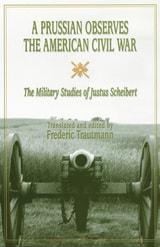
A Prussian Observes the American Civil War
The Military Studies of Justus ScheibertEdited & Translated by Frederic Trautmann
University of Missouri Press, 2001
Prussia, like much of nineteenth-century Germany, was governed by the belief that knowledge, and thus understanding, was best derived from direct observation and communicated through documentation. Justus Scheibert, an officer in the Royal Prussian Engineers, was therefore sent to the United States for seven months to observe the Civil War and report the effects of artillery on fortifications. His interests, however, surpassed that limited assignment, and his observations, as well as the writings translated in this work, went on to include tactics, strategy, logistics, intelligence, combined operations, and the medical service.
Scheibert, an expert on warfare, had access to the Confederate high command, including such luminaries as Robert E. Lee, J. E. B. Stuart, and Stonewall Jackson. He brought to the war not only the fresh perspective of a foreigner, but also the insightful eye of a career military officer and a skillful author and correspondent. Although he was personally sympathetic to the South, Scheibert researched both sides of the conflict in order to write unbiased, informed commentary for his fellow Prussian officers. His firsthand account of many aspects of the Civil War included a theoretical discussion of every branch of service and the Confederate high command, illustrated with his personal observations.
Sheibert's narrative portrays soldiers, weaponry, and battles, including the first, and one of the few, studies of combined operations in the Civil War. Trautmann combines two of Scheibert's publications, The Civil War in the North American States: A Military Study for the German Officer (1874) and Combined Operations by Army and Navy: A Study Illustrated by the War on the Mississippi, 1861-1863 (ca. 1887), which for decades influenced German military writing. Trautmann's translations evince the grace and achieve the readability of Scheibert's intricate and complex works.
A Prussian Observes the American Civil War makes an important addition to Civil War studies and will appeal greatly to professional historians and those interested in, and dedicated to, Civil War and military studies.

A Pryor Commitment
David Pryor
Butler Center for Arkansas Studies, 2009
A Queer Sort of Materialism
Recontextualizing American TheaterDavid Savran
University of Michigan Press, 2003
The selections presented here are by turns entertaining, informative, sophisticated, and polemical, reflecting the author's dual citizenship as rigorous scholar and engaging theater critic. This book also provides a model for a kind of queer historical materialism that will prove useful to a wide range of disciplines, including theater and performance, gender and sexuality, queer/gay/lesbian/transgender studies, American studies, and popular culture.
David Savran is Professor of Theater, the Graduate Center, the City University of New York, and author of Cowboys, Communists, and Queers and Taking It Like a Man.
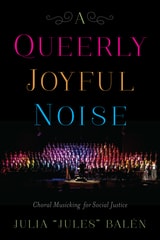
A Queerly Joyful Noise
Choral Musicking for Social JusticeJulia "Jules" Balén
Rutgers University Press, 2017
Honorable Mention, 2019 Herndon Book Prize - (SEM-GST)
A Queerly Joyful Noise examines how choral singing can be both personally transformative and politically impactful. As they blend their different voices to create something beautiful, LGBTIQ singers stand together and make themselves heard. Comparing queer choral performances to the uses of group singing within the civil rights and labor movements, Julia “Jules” Balén maps the relationship between different forms of oppression and strategic musical forms of resistance. She also explores the potential this queer communal space creates for mobilizing progressive social action.
A proud member of numerous queer choruses, Balén draws from years of firsthand observations, archival research, and extensive interviews to reveal how queer chorus members feel shared vulnerability, collective strength, and even moments of ecstasy when performing. A Queerly Joyful Noise serves as a testament to the power of music, intimately depicting how participation in a queer chorus is more than a pastime, but a meaningful form of protest through celebration.
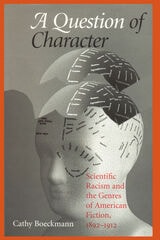
A Question of Character
Scientific Racism and the Genres of American Fiction, 1892-1912Catherine Ann Boeckmann
University of Alabama Press, 2005
Boeckmann links character, literary genre, and science, revealing how major literary works both contributed to and disrupted the construction of race in turn-of-the-century America.
In A Question of Character, Cathy Boeckmann establishes a strong link between racial questions and the development of literary traditions at the end of the 19th century in America. This period saw the rise of "scientific racism," which claimed that the races were distinguished not solely by exterior appearance but also by a set of inherited character traits. As Boeckmann explains, this emphasis on character meant that race was not only a thematic concern in the literature of the period but also a generic or formal one as well.
Boeckmann explores the intersections between race and literary history by tracing the language of character through both scientific and literary writing. Nineteenth-century pseudo-sciences such as phrenology and physiognomy had a vocabulary for discussing racial character that overlapped conceptually with the conventions for portraying race in literature. Through close readings of novels by Thomas Dixon, Mark Twain, William Dean Howells, Charles Chesnutt, and James Weldon Johnson—each of which deals with a black character "passing" as white—Boeckmann shows how this emphasis on character relates to the shift from romantic and sentimental fiction to realism. Because each of these genres had very specific conventions regarding the representation of character, genres often dictated how races could be depicted.
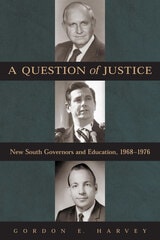
A Question of Justice
New South Governors and Education, 1968-1976Gordon E. Harvey
University of Alabama Press, 2005
The governors who used education to transform the modern South.
In southern politics, 1970 marked a watershed. A group of southern governors entered office that year and changed both the way the nation looked at the South and the way the constituents of those states viewed themselves. Reubin Askew in Florida, John West in South Carolina, Jimmy Carter in Georgia, and Albert Brewer in Alabama all represented a new breed of progressive moderate politician that helped demolish Jim Crow segregation and the dual economies, societies, and educational systems notorious to the Sunbelt South. Historian Gordon Harvey explores the political lives and legacies of three of these governors, examining the conditions that led to such a radical change in political leadership, the effects their legislative agendas had on the identity of their states, and the aftermath of their terms in elected office.
A common thread in each governor's agenda was educational reform. Albert Brewer's short term as Alabama governor resulted in a sweeping education package that still stands as the most progressive the state has seen. Reubin Askew, far more outspoken than Brewer, won the Florida gubernatorial election through a campaign that openly promoted desegregation, busing, and tax reform as a means of equal school funding. John West's commitment to a policy of inclusion helped allay fears of both black and white parents and made South Carolina's one of the smoothest transitions to integrated schools.
As members of the first generation of New South governors, Brewer, Askew, and West played the role of trailblazers. Their successful assaults on economic and racial injustice in their states were certainly aided by such landmark events as Brown v. Board of Education, the civil rights movement, and the expansion of voting rights-all of which sounded the death knell for the traditional one-party segregated South. But in this critical detailing of their work for justice, we learn how these reform-minded men made education central to their gubernatorial terms and, in doing so, helped redefine the very character of the place they called home.

A Question of Quality
Popularity and Value in Modern Creative WritingEdited by Louis Filler
University of Wisconsin Press, 1976
The subjects treated in this symposium have one major characteristic in common, that they have recently, or relatively recently, enjoyed high popularity among readers. Also, they have received from substantial to torrents of comment.
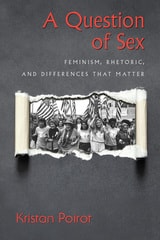
A Question of Sex
Feminism, Rhetoric, and Differences That MatterKristan Poirot
University of Massachusetts Press, 2014
Poirot focuses on five case studies—the circulation of Sojourner Truth's "Ain't I a Woman?" in early and contemporary feminist contexts; the visual rhetorics of the feminist self-help health movement; the public discourse of Elizabeth Cady Stanton and early nineteenth-century ideas about suffrage, sex, and race; the conflicts over lesbian sexuality in the 1960s and 1970s; and the discourse that surrounds twenty-first-century SlutWalks. In the process, Poirot rethinks the terms through which we understand U.S. feminist movements to explore the ways feminism has questioned sexed distinctions and practices over time. She emphasizes the importance of reading feminist engagements with sex as rhetorical endeavors—practices that are shaped by the instrumental demands of movements, the exigent situations that call for feminists to respond, and the enduring philosophical traditions that circulate in U.S. political contexts., reviewing a previous edition or volume
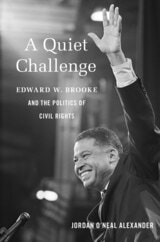
A Quiet Challenge
Edward W. Brooke and the Politics of Civil RightsJordan O'Neal Alexander
University of Massachusetts Press, 2026
The first full-length biography of a consequential figure in twentieth-century American politics
In 1962, Edward W. Brooke (1919–2015) upended political convention by becoming the first popularly elected African American attorney general of Massachusetts. His victory was striking not only because Massachusetts was an overwhelmingly white state with a small Black population, but also because Brooke was a Republican and an Episcopalian in a deeply Democratic, Irish Catholic political culture. Navigating these contradictions, Brooke crafted a distinctive political style—measured, pragmatic, and quietly transformative—that reshaped civil rights politics in the North. In A Quiet Challenge, Jordan O’Neal Alexander offers the first full-length biography of Brooke, revealing him as a Black Republican whose carefully calibrated approach to race, law, and governance won broad white support while often distancing him from Boston’s Black community.
As attorney general, Brooke sought to uphold the rule of law while advancing principles of fairness, equality, and public safety, an approach that reflected both political constraint and moral resolve. Brooke again defied expectations in 1966 when he won election to the United States Senate, becoming the first popularly elected African American senator since Reconstruction. Serving two terms during the height of the civil rights movement, he emerged as a powerful national voice on issues of racial justice. He played a key role in blocking two Supreme Court nominees aligned with President Richard Nixon’s “southern strategy,” even as his support for school desegregation and busing during the Boston Busing Crisis contributed to his eventual political decline. Throughout his career, Brooke remained committed to building a society in which Black Americans—and all Americans—could fully participate and prosper. This volume demonstrates how Brooke’s restrained, yet persistent political strategy helped expand the possibilities for Black leadership within mainstream American politics.
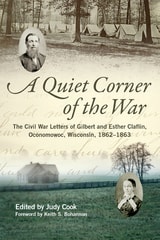
A Quiet Corner of the War
The Civil War Letters of Gilbert and Esther Claflin, Oconomowoc, Wisconsin, 1862–1863Gilbert Claflin and Esther Claflin; Edited by Judy Cook; Foreword by Keith S. Bohannon
University of Wisconsin Press, 2013
In 2002, Judy Cook discovered a packet of letters written by her great-great-grandparents, Gilbert and Esther Claflin, during the American Civil War. An unexpected bounty, these letters from 1862–63 offer visceral witness to the war, recounting the trials of a family separated. Gilbert, an articulate and cheerful forty-year-old farmer, was drafted into the Union Army and served in the Thirty-Fourth Wisconsin Infantry garrisoned in western Kentucky along the Mississippi. Esther had married Gilbert when she was fifteen; now a woman with two teenage sons, she ran the family farm near Oconomowoc, Wisconsin, in Gilbert’s absence.
In his letters, Gilbert writes about food, hygiene, rampant desertions by drafted men, rebel guerrilla raids, and pastimes in the daily life of a soldier. His comments on interactions with Confederate prisoners and ex-slaves before and after the Emancipation Proclamation reveal his personal views on monumental events. Esther shares in her letters the challenges and joys of maintaining the farm, accounts of their boys Elton and Price, concerns about finances and health, and news of their local community and extended family. Esther’s experiences provide insight into family, farm, and village life in the wartime North, an often overlooked aspect of Civil War history.
Judy Cook has made the letters accessible to a wider audience by providing historical context with notes and appendixes. The volume includes a foreword by Civil War historian Keith S. Bohannon.
A Quiet Victory for Latino Rights
FDR and the Controversy Over "Whiteness"Patrick D. Lukens
University of Arizona Press, 2012
In 1935 a federal court judge handed down a ruling that could have been disastrous for Mexicans, Mexican Americans, and all Latinos in the United States. However, in an unprecedented move, the Roosevelt administration wielded the power of "administrative law" to neutralize the decision and thereby dealt a severe blow to the nativist movement. A Quiet Victory for Latino Rights recounts this important but little-known story.
To the dismay of some nativist groups, the Immigration Act of 1924, which limited the number of immigrants who could be admitted annually, did not apply to immigrants from Latin America. In response to nativist legal maneuverings, the 1935 decision said that the act could be applied to Mexican immigrants. That decision, which ruled that the Mexican petitioners were not "free white person[s]," might have paved the road to segregation for all Latinos.
The League of United Latin American Citizens (LULAC), founded in 1929, had worked to sensitize the Roosevelt administration to the tenuous position of Latinos in the United States. Advised by LULAC, the Mexican government, and the US State Department, the administration used its authority under administrative law to have all Mexican immigrants—and Mexican Americans—classified as "white." It implemented the policy when the federal judiciary "acquiesced" to the New Deal, which in effect prevented further rulings.
In recounting this story, complete with colorful characters and unlikely bedfellows, Patrick D. Lukens adds a significant chapter to the racial history of the United States.
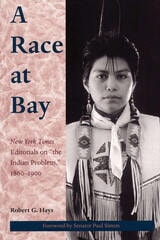
A Race at Bay
New York Times Editorials on "the Indian Problem," 1860 - 1900Robert G. Hays. Foreword by Paul Simon
Southern Illinois University Press, 1997
Robert G. Hays chronicles the "Indian problem" precisely as it was explained to Americans through the editorial columns of the New York Times between 1860 and 1900, the years when battles between white settlers and Native Americans split a nation and its spirit apart.
Covering the final forty-one years of the nineteenth century, Hays’s collection of Times editorials gives readers what current accounts cannot: perspectives by contemporary writers with unique insights into the public images of Native Americans and their place in a nation bent on expansion. The authentic voices of a national newspaper’s daily record speak with an urgency both immediate and real.
These editorials express the unbridled bitterness and raw ambition of a nation immersed in an agenda of conquest. They also resonate with the struggle to find a common ground. Some editorials are patronizing and ironic: "Yet it seems pitiful to cage so fine a savage among a herd of vulgar criminals in a penitentiary." Others include a willingness to poke fun: "Many persons on the platform were astonished to find that an ‘illiterate barbarian’ could handle the weapon of sarcasm. The truth is that the Indians spoke far better than ninety-nine out of a hundred members of congress." And yet others evince an attitude of respect, which set the tone for reconciling national ambition with natural rights.
In some instances, the Times allowed Native Americans to tell their own stories, as in this eloquent, moving account of the testimony of Satanta, the warrior chief of the Kiowas: "A certain dim foreboding of the Indians’ fate swept across his mind, and in its passage lit his eyes up with a fierce light, and his voice rose to a pitch of frenzy as he exclaimed: ‘We don’t want to settle—I love to roam over the prairie; there I am free and happy."
History demonstrates that the costs of owning one’s soil and one’s destiny remain without measure. Many of the problems blocking the progress of Native Americans continue unsolved: unemployment, infant mortality, suicide, crime, alcoholism, and poverty. Following such works as Helen Hunt Jackson’s A Century of Dishonor and Dee Brown’s Bury My Heart at Wounded Knee, Hays looks back on the records of national history for the roots of our challenges today.
A Radical Spirit
The History and Potential of the Latter Day Saint TraditionEdited by Andrew Bolton, Taunalyn Ford, and Patrick Q. Mason
University of Illinois Press, 2027
Early followers of Joseph Smith believed their new faith could organize society from the ground up and create a religious community shaped by justice, equality, and spiritual transformation. The essayists look at the movement’s diverse influences—religious, philosophical, and cultural—alongside the economic, gender, and racial issues that informed its radicalism. They also trace the competing pressures inside and outside the movement that helped determine which radical ideas survived and which faded or were later enhanced.
Eye-opening and expansive, A Radical Spirit rediscovers implications of the original heart of the Restoration tradition that thrived among the marginalized poor in the USA, Canada and in Europe—a radical Spirit of Jesus that offers possibilities for our times.
Contributors: Andrew Bolton, Gerard Charmley, Rebekah Clark, Taunalyn Ford, Russell Arben Fox, Erik J. Freeman, David J. Howlett, Brad A. Martell, Lori Martell, Patrick Q. Mason, Michael Ratcliffe, Jennifer Reeder, Joseph M. Spencer, Jordan T. Watkins, Walker Wright
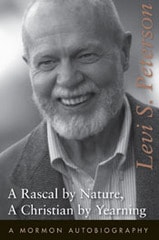
A Rascal by Nature, A Christian by Yearning
A Mormon AutobiographyPeterson, Levi S
University of Utah Press, 2006
Peterson has won a wide readership for his novels and short stories, his prize-winning biography of historian Juanita Brooks, and the essays that have appeared with regularity in western and Mormon literary and historical journals. In his autobiography, Peterson describes growing up on the Mormon frontier of rural Arizona, his growing skepticism with his Mormon faith, his teaching career at Weber State University, and his struggle to understand and master personal crises of confidence that kept him in therapy for almost two decades. Of particular interest to readers familiar with Peterson’s fiction are the many pages devoted to the creative process.
Winner of the Mormon History Association Turner-Bergera Best Biography Award.
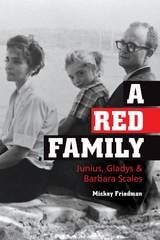
A Red Family
Junius, Gladys, and Barbara ScalesMickey Friedman. Afterword by Barbara Scales. Historical Essay by Gail O'Brien.
University of Illinois Press, 2008
Through the distinct perspectives of Junius, his wife Gladys, and his daughter Barbara, this book deepens and personalizes the story of American radicalism. Conversational, intimate, and exceptionally accessible, A Red Family offers a unique look at the American communist experience from the inside out.

A Reed Shaken with the Wind
A Human and Natural History of the Bear River MarshAndrew H. Hedges
University of Utah Press, 2025
A Reed Shaken with the Wind tells the story of the Bear River Marsh, freshwater and sheltered grasslands on the northeast end of the Great Salt Lake with a complex past. Despite being one of Utah’s most renowned hunting and birdwatching locations, the marsh today holds only a shadow of its former ecological vitality.
Tracing the marsh from its creation during the last ice age to its current status as an imperiled national wildlife refuge, Andrew Hedges draws on geology, ecology, archaeology, wildlife biology, and water resource management to explore the natural and human forces that shaped the marsh and contributed to its decline. Covering Indigenous relationships with land, market economies’ impacts, and the intersection of ecology, science, and politics in establishing the Bear River Migratory Bird Refuge, this volume deepens discussions of humanity’s place in the environment and efforts to restore balance with our planet.
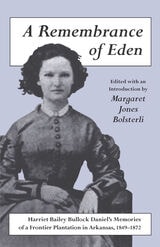
A Remembrance of Eden
Harriet Bailey Bullock Daniel's Memories of a Frontier Plantation in Arkansas, 1849–1872Margaret Jones Bolsterli
University of Arkansas Press, 1993
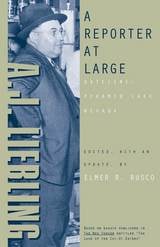
A Reporter At Large
Dateline: Pyramid Lake, NevadaAj Liebling
University of Nevada Press, 1999
Liebling recorded the litigation over the fate of the Pyramid Lake Reservation lands in a series of articles published in The New Yorker in 1955. Reprinted here in their entirety, the essays discuss the affair in detail, following it from the shores of the lake to the halls of Congress, and introducing readers to the colorful world of 1950s Nevada. This is a valuable record of one of Nevada’s most enduring and significant debates over the uses of the land and the precious water that nourishes it. Introduction by Elmer R. Rusco.
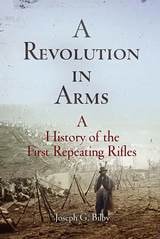
A Revolution in Arms
A History of the First Repeating RiflesJoseph G. Bilby
Westholme Publishing, 2005
Historians often call the American Civil War the first modern war, pointing to the use of observation balloons, the telegraph, trains, mines, ironclad ships, and other innovations. Although recent scholarship has challenged some of these “firsts,” the war did witness the introduction of the first repeating rifles. No other innovation of the turbulent 1860s would have a greater effect on the future of warfare. In A Revolution in Arms: A History of the First Repeating Rifles, historian Joseph G. Bilby unfolds the fascinating story of how two New England inventors, Benjamin Henry and Christopher Spencer, each combined generations of cartridge and rifle technology to develop reliable repeating rifles. In a stroke, the Henry rifle and Spencer rifle and carbine changed warfare forever, accelerating the abandonment of the formal battle line tactics of previous generations and when properly applied, repeating arms could alter the course of a battle. Although slow to enter service, the repeating rifle soon became a sought after weapon by both Union and Confederate troops. Oliver Winchester purchased the rights to the Henry and transformed it into “the gun that won the West.” The Spencer, the most famous of all Civil War small arms, was the weapon of choice for Federal cavalrymen. The revolutionary technology represented by repeating arms used in the American Civil War, including self-contained metallic cartridges, large capacity magazines, and innovative cartridge feeding systems, was copied or adapted by arms manufacturers around the world, and these features remain with us today.
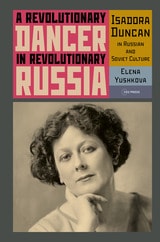
A Revolutionary Dancer in Revolutionary Russia
Isadora Duncan in Russian and Soviet CultureElena Yushkova
Central European University Press, 2026
This monograph offers a compelling exploration of Duncan’s Russian years—both before and after the October Revolution—drawing on rare archival sources and never-before-published Russian materials. It illuminates her artistic vision, her role in shaping early Soviet cultural debates, and the shifting political and aesthetic landscapes she navigated. From Silver Age reimaginations of antiquity to the rise of Socialist Realism and the modern revival of Duncan’s dance, this book traces the enduring legacy of a revolutionary artist in a world undergoing radical transformation.

A Rhetoric of Style
Barry Brummett
Southern Illinois University Press, 2008
Exploring style in a global culture
In A Rhetoric of Style, Barry Brummett illustrates how style is increasingly a global system of communication as people around the world understand what it means to dress a certain way, to dance a certain way, to decorate a certain way, to speak a certain way. He locates style at the heart of popular culture and asserts that it is the basis for social life and politics in the twenty-first century.
Brummett sees style as a system of signification grounded largely in image, aesthetics, and extrarational modes of thinking. He discusses three important aspects of this system—its social and commercial structuring, its political consequences, and its role as the chief rhetorical system of the modern world. He argues that aesthetics and style are merging into a major engine of the global economy and that style is becoming a way to construct individual identity, as well as social and political structures of alliance and opposition. It is through style that we stereotype or make assumptions about others’ political identities, their sexuality, their culture, and their economic standing.
To facilitate theoretical and critical analysis, Brummett develops a systematic rhetoric of style and then demonstrates its use through an in-depth exploration of gun culture in the United States. Armed with an understanding of how this rhetoric of style works methodologically, students and scholars alike will have the tools to do their own analyses. Written in clear and engaging prose, A Rhetoric of Style presents a novel discussion of the workings of style and sheds new light on a venerable and sometimes misunderstood rhetorical concept by illustrating how style is the key to constructing a rhetoric for the twenty-first century.
A Rhetorical Crime
Genocide in the Geopolitical Discourse of the Cold WarWeiss-Wendt, Anton
Rutgers University Press, 2018
A Rhetorical Crime shows how genocide morphed from a legal concept into a political discourse used in propaganda battles between the United States and the Soviet Union. Over the course of the Cold War era, nearly eighty countries were accused of genocide, and yet there were few real-time interventions to stop the atrocities committed by genocidal regimes like the Cambodian Khmer Rouge.
Renowned genocide scholar Anton Weiss-Wendt employs a unique comparative approach, analyzing the statements of Soviet and American politicians, historians, and legal scholars in order to deduce why their moral posturing far exceeded their humanitarian action.
A Rift in the Clouds
Race and the Southern Federal Judiciary, 1900-1910Brent J. Aucoin
University of Arkansas Press, 2007

A Right to Childhood
The U.S. Children's Bureau and Child Welfare, 1912-46Kriste Lindenmeyer
University of Illinois Press, 1997
for their political agendas as Americans try to determine the role--if
any--of the federal government in the lives of children. But what is the
history of child welfare policy in the United States? What can we learn
from the efforts to found the U.S. Children's bureau in 1903 and its eventual
dismemberment in 1946?
This is the first history of the Children's Bureau and the first in-depth
examination of federal child welfare policy from the perspective of that
agency. Its goal was to promote "a right to childhood," and
Kriste Lindenmeyer unflinchingly examines the successes--and the failures--of
the Bureau. She analyzes infant and maternal mortality, the promotion
of child health care, child labor reform, and the protection of children
with "special needs" from the Bureau's inception through the
Depression, and through all the legislation that impacted on its work
for children. The meaningful accomplishments and the demise of the Children's
Bureau have much to tell parents, politicians, and policy-makers everywhere.
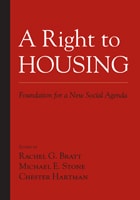
A Right to Housing
Foundation for a New Social AgendaRachel Bratt
Temple University Press, 2006
The contributors to A Right to Housing consider the key issues related to America's housing crisis, including income inequality and insecurity, segregation and discrimination, the rights of the elderly, as well as legislative and judicial responses to homelessness. The book offers a detailed examination of how access to adequate housing is directly related to economic security.
With essays by leading activists and scholars, this book presents a powerful and compelling analysis of the persistent inability of the U.S. to meet many of its citizens' housing needs, and a comprehensive proposal for progressive change.

A Right to Read
Segregation and Civil Rights in Alabama's Public Libraries, 1900–1965Patterson Toby Graham
University of Alabama Press, 2006
This original and significant contribution to the historiography of the civil rights movement and education in the South details a dramatic and disturbing chapter in American cultural history.
The tradition of American public libraries is closely tied to the perception that these institutions are open to all without regard to social background. Such was not the case in the segregated South, however, where public libraries barred entry to millions of African Americans and provided tacit support for a culture of white supremacy. A Right to Read is the first book to examine public library segregation from its origins in the late 19th century through its end during the tumultuous years of the 1960s civil rights movement. Graham focuses on Alabama, where African Americans, denied access to white libraries, worked to establish and maintain their own "Negro branches." These libraries-separate but never equal-were always underfunded and inadequately prepared to meet the needs of their constituencies.
By 1960, however, African Americans turned their attention toward desegregating the white public libraries their taxes helped support. They carried out "read-ins" and other protests designed to bring attention and judicial pressure upon the segregationists. Patterson Toby Graham contends that, for librarians, the civil rights movement in their institutions represented a conflict of values that pitted their professional ethics against regional mores. He details how several librarians in Alabama took the dangerous course of opposing segregationists, sometimes with unsettling results.
This groundbreaking work built on primary evidence will have wide cross-disciplinary appeal. Students and scholars of southern and African-American history, civil rights, and social science, as well as academic and public librarians, will appreciate Graham's solid research and astute analysis.
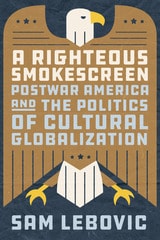
A Righteous Smokescreen
Postwar America and the Politics of Cultural GlobalizationSam Lebovic
University of Chicago Press, 2022
When the dust settled after World War II, the United States stood as the world’s unquestionably pre-eminent military and economic power. In the decades that followed, the country exerted its dominant force in less visible but equally powerful ways, too, spreading its trade protocols, its media, and—perhaps most importantly—its alleged values. In A Righteous Smokescreen, Sam Lebovic homes in on one of the most prominent, yet ethereal, of those professed values: the free flow of information. This trope was seen as capturing what was most liberal about America’s self-declared leadership of the free world. But as Lebovic makes clear, even though diplomats and public figures trumpeted the importance of widespread cultural exchange, these transmissions flowed in only one direction: outward from the United States. Though other countries did try to promote their own cultural visions, Lebovic shows that the US moved to marginalize or block those visions outright, highlighting the shallowness of American commitments to multilateral institutions, the depth of its unstated devotion to cultural and economic supremacy, and its surprising hostility to importing foreign cultures. His book uncovers the unexpectedly profound global consequences buried in such ostensibly mundane matters as visa and passport policy, international educational funding, and land purchases for embassies. Even more crucially, A Righteous Smokescreen does nothing less than reveal that globalization was not the inevitable consequence of cultural convergence or the natural outcome of putatively free flows of information—it was always political to its core.
A River Runs through It
Norman Maclean
University of Chicago Press, 1989
Based on Norman Maclean's childhood experiences, A River Runs through It has established itself as one of the most moving stories of our time; it captivates readers with vivid descriptions of life along Montana's Big Blackfoot River and its near magical blend of fly fishing with the troubling affections of the heart.
This handsome edition is designed and illustrated by Barry Moser. There are thirteen two-color wood engravings.
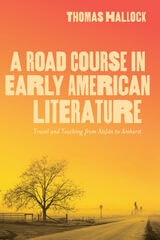
A Road Course in Early American Literature
Travel and Teaching from Atzlán to AmherstThomas Hallock
University of Alabama Press, 2021
Essays that fuse literary scholarship and personal travelogue to explore American identity
A Road Course in Early American Literature: Travel and Teaching from Atzlán to Amherst explores a two-part question: what does travel teach us about literature, and how can reading guide us to a deeper understanding of place and identity? Thomas Hallock charts a teacher’s journey to answering these questions, framing personal experiences around the continued need for a survey course covering early American literature up to the mid-nineteenth century.
Hallock approaches literary study from the overlapping perspectives of pedagogue, scholar, unrepentant tourist, husband, father, friend, and son. Building on Ralph Waldo Emerson’s premise that there is “creative reading as well as creative writing,” Hallock turns to the vibrant and accessible tradition of American travel writing, employing the form of biblio-memoir to bridge the impasse between public and academic discourse and reintroduce the dynamic field of early American literature to wider audiences.
Hallock’s own road course begins and ends at the Low country of Georgia and South Carolina, following a circular structure of reflection. He weaves his journey through a wide swath of American literatures and authors: from Native American and African American oral traditions, to Wheatley and Equiano, through Emerson, Poe, and Dickinson, among others. A series of longer, place-oriented narratives explore familiar and lesser-known literary works from the sixteenth-century invasion of Florida through the Mexican War of 1846–1848 and the American Civil War. Shorter chapters bridge the book’s central themes—the mapping of cognitive and physical space, our personal stake in reading, the tensions that follow earlier acts of erasure, and the impossibility of ever fully shutting out the past.
Exploring complex cultural histories and contemporary landscapes filled with ghosts and new voices, this volume draws inspiration from a tradition of travel, place-oriented, and literature-based works ranging from William Carlos Williams’s In the American Grain and Jack Kerouac’s On the Road to Alice Walker’s In Search of Our Mother’s Gardens, Wendy Lesser’s Why I Read: The Serious Pleasure of Books, and Rebecca Mead’s My Life in Middlemarch.
An accompanying bibliographic essay is periodically updated and available at Hallock’s website: www.roadcourse.us.
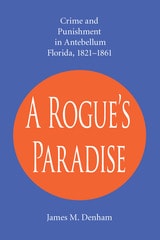
A Rogue's Paradise
Crime and Punishment in Antebellum Florida, 1821-1861James M. Denham
University of Alabama Press, 1997
A history of frontier justice and legal systems in early Florida.
The pervasive influence of the frontier is fundamental to an understanding of antebellum Florida. James M. Denham traces the growth and social development of this sparsely settled region through its experience with crime and punishment. He examines such issues as Florida's criminal code, its judicial and law enforcement officers, the accommodation of criminals in jails and courts, outlaw gangs, patterns of punishment, and the attitude of the public toward lawbreakers.
Using court records, government documents, newspapers, and personal papers, Denham explores how crime affected ordinary Floridians—whites and blacks, perpetrators, victims, and enforcers. He contends that although the frontier determined the enforcement and administration of the law, the ethic of honor dominated human relationships.