Results by title
944 books match the query 'Indians of North America' and 43 start with b
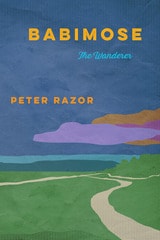
Babimose
The WandererPeter Razor
Michigan State University Press, 2025
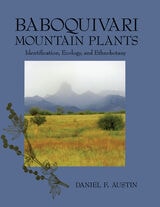
Baboquivari Mountain Plants
Identification, Ecology, and EthnobotanyDaniel F. Austin
University of Arizona Press, 2010
The term “sky island” was first used by Weldon Heald in 1967 to describe mountain ranges that are separated from each other by valleys of grassland or desert. The valleys create barriers to the spread of plant species in a way that is similar to the separation of islands in an ocean. The 70,000-square-mile Sky Islands region of southeastern Arizona, southwestern New Mexico, and northwestern Mexico is of particular interest to botanists because of its striking diversity of plant species and habitats. With more than 3,000 species of plants, the region offers a surprising range of tropical and temperate zones. Although others have written about the region, this is the first book to focus exclusively on the plant life of the Baboquivari Mountains.
The book offers an introduction to the history of the region, along with a discussion of human influences, and includes a useful appendix that lists all of the plants known to be growing in the Baboquivari Mountain chain.

Bad Medicine
Settler Colonialism and the Institutionalization of American IndiansSarah A. Whitt
Duke University Press, 2025
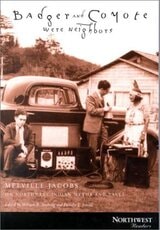
Badger and Coyote Were Neighbors
Melville Jacobs on Northwest Indian Myths and TalesWilliam R. Seaburg
Oregon State University Press, 2000
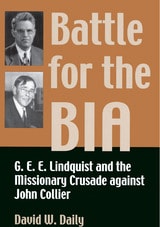
Battle for the BIA
G. E. E. Lindquist and the Missionary Crusade against John CollierDavid W. Daily
University of Arizona Press, 2004
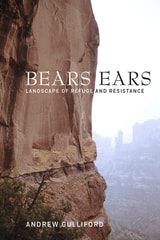
Bears Ears
Landscape of Refuge and ResistanceAndrew Gulliford
University of Utah Press, 2022
Gulliford’s engaging narrative explains prehistoric Pueblo villages and cliff dwellings, Navajo and Ute history, stories of Mormon families who arrived by wagon train in 1880, impacts of the Atomic Age, uranium mining, and the pothunting and looting of Native graves that inspired the passage of the Antiquities Act over a century ago. The book describes how the national monument came about and its deep significance to five native tribes.
Bears Ears National Monument is a bellwether for public land issues in the American West. Its recognition will be relevant for years to come.
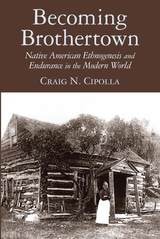
Becoming Brothertown
Native American Ethnogenesis and Endurance in the Modern WorldCraig N. Cipolla
University of Arizona Press, 2013
Covering the eighteenth century to the present, the book explores the emergence of the Brothertown Indians, a "new" community of Native peoples formed in direct response to colonialism and guided by the vision of Samson Occom, a Mohegan Indian and ordained Presbyterian minister. Breaking away from their home settlements of coastal New England during the late eighteenth century, members of various tribes migrated to Oneida Country in central New York State in hopes of escaping East Coast land politics and the corrupting influences of colonial culture. In the nineteenth century, the new community relocated once again, this time to present-day Wisconsin, where the Brothertown Indian Nation remains centered today.
Cipolla combines historical archaeology, gravestone studies, and discourse analysis to tell the story of the Brothertown Indians. The book develops a pragmatic approach to the study of colonialism while adding an archaeological perspective on Brothertown history, filling a crucial gap in the regional archaeological literature.
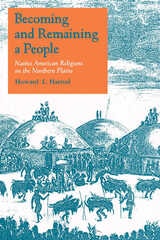
Becoming and Remaining a People
Native American Religions on the Northern PlainsHoward L. Harrod
University of Arizona Press, 1995
This book offers a bold new interpretation of anthropological studies, demonstrating how religious traditions and ritual processes became sources of group and individual identity for many people. Harrod reconstructs the long religious development of two village peoples, the Mandans and the Hidatsas, describing how their oral traditions enabled them to reinterpret their experiences as circumstances changed. He then shows how these and other groups on the Northern Plains remained distinct peoples in the face of increased interactions with Euro-Americans, other Indians,.and the new religion of Christianity.
Harrod proposes that other interpretations of culture change may fail to come to terms with the role that religion plays in motivating both cultural conservatism and social change. For Northern Plains peoples, religion was at the heart of social identity and thus resisted change, but religion was also the source of creative reinterpretation, which produced culture change. Viewed from within the group, such change often seemed natural and was understood as an elaboration of traditions having roots in a deeper shared past. In addition to demonstrating religious continuity and change among the Mandans and the Hidatsas, he also describes instances of religious and social transformation among the peoples who became the Crows and the Cheyennes.
Becoming and Remaining a People adopts a challenging analytical approach that draws on the author's creative interpretations of rituals and oral traditions. By enabling us to understand the relation of religion both to the construction of social identity and to the interpretation of social change, it reveals the richness, depth, and cultural complexity of both past Native American people and their contemporary successors.
Behind the Trail of Broken Treaties
An Indian Declaration of IndependenceBy Vine Deloria, Jr.
University of Texas Press, 1985
Originally published in 1974, just as the Wounded Knee occupation was coming to an end, Behind the Trail of Broken Treaties raises disturbing questions about the status of American Indians within the American and international political landscapes. Analyzing the history of Indian treaty relations with the United States, Vine Deloria presents population and land ownership information to support his argument that many Indian tribes have more impressive landholdings than some small members of the United Nations. Yet American Indians are not even accorded status within the UN's trust territories recognition process.
A 2000 study published by the Annual Survey of International and Comparative Law recommends that the United Nations offer membership to the Iroquois, Cherokee, Navajo, and other Indian tribes. Ironically, the study also recommends that smaller tribes band together to form a confederation to seek membership—a suggestion nearly identical to the one the United States made to the Delaware Indians in 1778—and that a presidential commission explore ways to move beyond the Doctrine of Discovery, under which European nations justified their confiscation of Indian lands. Many of these ideas appear here in this book, which predates the 2000 study by twenty-six years. Thus, Behind the Trail of Broken Treaties anticipates recent events as history comes full circle, making the book imperative reading for anyone wishing to understand the background of the movement of American Indians onto the world political stage.
In the quarter century since this book was written, Indian nations have taken great strides in demonstrating their claims to recognized nationhood. Together with Tribes, Treaties, and Constitutional Tribulations, by Deloria and David E. Wilkins, Behind the Trail of Broken Treaties highlights the historical events that helped bring these changes to fruition. At the conclusion of Behind the Trail of Broken Treaties, Deloria states: "The recommendations made in the Twenty Points and the justification for such a change as articulated in the book may well come to pass in our lifetime." Now we are seeing his statement come true.
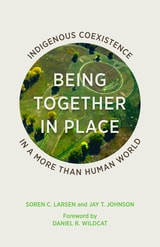
Being Together in Place
Indigenous Coexistence in a More Than Human WorldSoren C. Larsen
University of Minnesota Press, 2017
Being Together in Place explores the landscapes that convene Native and non-Native people into sustained and difficult negotiations over their radically different interests and concerns. Grounded in three sites—the Cheslatta-Carrier traditional territory in British Columbia; the Wakarusa Wetlands in northeastern Kansas; and the Waitangi Treaty Grounds in Aotearoa/New Zealand—this book highlights the challenging, tentative, and provisional work of coexistence around such contested spaces as wetlands, treaty grounds, fishing spots, recreation areas, cemeteries, heritage trails, and traditional village sites. At these sites, activists learn how to articulate and defend their intrinsic and life-supportive ways of being, particularly to those who are intent on damaging or destroying these places.
Using ethnographic research and a geographic perspective, Soren C. Larsen and Jay T. Johnson show how the communities in these regions challenge the power relations that structure the ongoing (post)colonial encounter in liberal democratic settler-states. Emerging from their conversations with activists was a distinctive sense that the places for which they cared had agency, a “call” that pulled them into dialogue, relationships, and action with human and nonhuman others. This being-together-in-place, they find, speaks in a powerful way to the vitalities of coexistence: where humans and nonhumans are working to decolonize their relationships; where reciprocal guardianship is being stitched back together in new and unanticipated ways; and where a new kind of “place thinking” is emerging on the borders of colonial power.
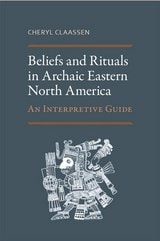
Beliefs and Rituals in Archaic Eastern North America
An Interpretive GuideCheryl Claassen
University of Alabama Press, 2015
A comprehensive and essential field reference, Beliefs and Rituals in Archaic Eastern North America reveals the spiritual landscape in the American Archaic period.
Beliefs and Rituals in Archaic Eastern North America describes, illustrates, and offers nondogmatic interpretations of rituals and beliefs in Archaic America. In compiling a wealth of detailed entries, author Cheryl Claassen has created both an exhaustive reference as well as an opening into new archaeological taxonomies, connections, and understandings of Native American culture.
The material is presented in an introductory essay about Archaic rituals followed by two sections of entries that incorporate reports and articles discussing archaeological sites; studies of relevant practices of ritual and belief; data related to geologic features, artifact attributes, and burial settings; ethnographies; and pilgrimages to specific sites. Claassen’s work focuses on the American Archaic period (marked by the end of the Ice Age approximately 11,000 years ago) and a geographic area bounded by the edge of the Great Plains, Newfoundland, and southern Florida. This period and region share specific beliefs and practices such as human sacrifice, dirt mound burial, and oyster shell middens.
This interpretive guide serves as a platform for new interpretations and theories on this period. For example, Claassen connects rituals to topographic features and posits the Pleistocene-Holocene transition as a major stimulus to Archaic beliefs. She also expands the interpretation of existing data previously understood in economic or environmental terms to include how this same data may also reveal spiritual and symbolic practices. Similarly, Claassen interprets Archaic culture in terms of human agency and social constraint, bringing ritual acts into focus as drivers of social transformation and ethnogenesis.
Richly annotated and cross-referenced for ease of use, Beliefs and Rituals in Archaic Eastern North America will benefit scholars and students of archaeology and Native American culture. Claassen’s overview of the archaeological record should encourage the development of original archaeological and historical connections and patterns. Such an approach, Claassen suggests, may reveal patterns of influence extending from early eastern Americans to the Aztec and Maya.

Benjamin Franklin, Pennsylvania, and the First Nations
The Treaties of 1736-62Edited by Susan Kalter
University of Illinois Press, 2006
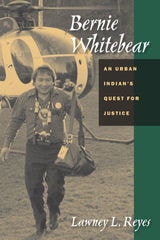
Bernie Whitebear
An Urban Indian's Quest for JusticeLawney L. Reyes
University of Arizona Press, 2006
Bernie Whitebear’s story takes readers from an impoverished youth—including a rare account of life on the Colville Reservation during the 1930s—to the “Red Power” movement as it traces Bernie’s emergence as an activist influenced by contemporaries such as Bob Satiacum, Vine DeLoria, and Joe Delacruz. By choosing this course, Bernie was clearly making a break with his past, but with an eye toward a better future, whether staging the successful protest at Fort Lawton or acting on behalf of Native fishing rights in Puget Sound. When he died in July 2000, Bernie Whitebear had left an inestimable legacy, accomplishing things that no other Indian seemed able to do. His biography is an inspiring story for readers at many levels, an account of how one American Indian overcame hardships and obstacles to make a difference in the lives of his people—and an entire community.
Between Contacts and Colonies
Archaeological Perspectives on the Protohistoric SoutheastEdited by Cameron B. Wesson and Mark A. Rees
University of Alabama Press, 2002
This collection of essays brings together diverse approaches to the analysis of Native American culture in the protohistoric period
For most Native American peoples of the Southeast, almost two centuries passed between first contact with European explorers in the 16th century and colonization by whites in the 18th century—a temporal span commonly referred to as the Protohistoric period. A recent flurry of interest in this period by archaeologists armed with an improved understanding of the complexity of culture contact situations and important new theoretical paradigms has illuminated a formerly dark time frame.
This volume pulls together the current work of archaeologists, historians, and anthropologists to demonstrate a diversity of approaches to studying protohistory. Contributors address different aspects of political economy, cultural warfare, architecture, sedentism, subsistence, foods, prestige goods, disease, and trade. From examination of early documents by René Laudonnière and William Bartram to a study of burial goods distribution patterns; and from an analysis of Caddoan research in Arkansas and Louisiana to an interesting comparison of Apalachee and Powhatan elites, this volume ranges broadly in subject matter. What emerges is a tantalizingly clear view of the protohistoric period in North America.
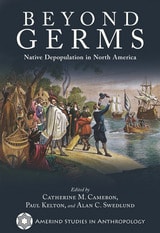
Beyond Germs
Native Depopulation in North AmericaEdited by Catherine M. Cameron, Paul Kelton, and Alan C. Swedlund
University of Arizona Press, 2015
Beyond Germs: Native Depopulation in North America challenges the “virgin soil” hypothesis that was used for decades to explain the decimation of the indigenous people of North America. This hypothesis argues that the massive depopulation of the New World was caused primarily by diseases brought by European colonists that infected Native populations lacking immunity to foreign pathogens. In Beyond Germs, contributors expertly argue that blaming germs lets Europeans off the hook for the enormous number of Native American deaths that occurred after 1492.
Archaeologists, anthropologists, and historians come together in this cutting-edge volume to report a wide variety of other factors in the decline in the indigenous population, including genocide, forced labor, and population dislocation. These factors led to what the editors describe in their introduction as “systemic structural violence” on the Native populations of North America.
While we may never know the full extent of Native depopulation during the colonial period because the evidence available for indigenous communities is notoriously slim and problematic, what is certain is that a generation of scholars has significantly overemphasized disease as the cause of depopulation and has downplayed the active role of Europeans in inciting wars, destroying livelihoods, and erasing identities.
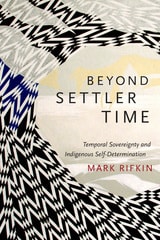
Beyond Settler Time
Temporal Sovereignty and Indigenous Self-DeterminationMark Rifkin
Duke University Press, 2017
Beyond Subsistence
Plains Archaeology and the Postprocessual CritiqueEdited by Philip Duke and Michael C. Wilson
University of Alabama Press, 1995
A series of essays, written by Plains scholars of diverse research interests and backgrounds, that apply postprocessual approaches to the solution of current problems in Plains archaeology
Postprocessual archaeology is seen as a potential vehicle for integrating culture-historical, processual, and postmodernist approaches to solve specific archaeological problems.
The contributors address specific interpretive problems in all the major regions of the North American Plains, investigate different Plains societies (including hunter-gatherers and farmers and their associated archaeological records), and examine the political content of archaeology in such fields as gender studies and cultural resource management. They avoid a programmatic adherence to a single paradigm, arguing instead that a mature archaeology will use different theories, methods, and techniques to solve specific empirical problems. By avoiding excessive infatuation with the correct scientific method, this volume addresses questions that have often been categorized as beyond archaeological investigations.
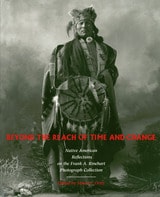
Beyond the Reach of Time and Change
Native American Reflections on the Frank A. Rinehart Photograph CollectionEdited by Simon J. Ortiz
University of Arizona Press, 2004
This book provides an unusual perspective on the Rinehart collection. It features one hundred outstanding images printed from the original negatives made by Rinehart and Muhr at the Congress and over the course of the next two years. It also includes 14 essays by modern Native American writers, artists, and educators—some of them descendants of the individuals photographed—reflecting on the place of these images in their heritage.
Beyond the Reach of Time and Change is not another coffee-table book of historical Indian photographs but rather a conversation between Indian people of a century ago and today. Just as the Rinehart collection offers today's Native Americans a unique connection to the past, this book offers all readers a positive understanding of continuity and endurance within the American Indian community.

Billboard in the Clouds
Suzanne S. Rancourt
Northwestern University Press, 2004
In this remarkable debut book of poems, winner of the Native Writers First Book Award, Suzanne S. Rancourt, presents her experience as a mixed-raced person seeking understanding through relationship with the natural world and dominant culture. Her family portraits are reminiscent of E. A. Robinson; her sensuous nature poems are imbued with love of earth as a "blessing."
Dance
my legs are explosions
expressions
of lustful wind
i converse through cracks in the walls
slipping in my true intention like a snow drift
on the inside
side of a door i pound
your chest
has become my wailing wall
i crave your tongue dusted
with words and implications
i have something you need
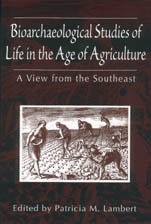
Bioarchaeological Studies of Life in the Age of Agriculture
A View from the SoutheastEdited by Patricia M. Lambert
University of Alabama Press, 2000
Investigations of skeletal remains from key archaeological sites reveal new data and offer insights on prehistoric life and health in the Southeast.
The shift from foraging to farming had important health consequences for prehistoric peoples, but variations in health existed within communities that had made this transition. This new collection draws on the rich bioarchaeological record of the Southeastern United States to explore variability in health and behavior within the age of agriculture. It offers new perspectives on human adaptation to various geographic and cultural landscapes across the entire Southeast, from Texas to Virginia, and presents new data from both classic and little-known sites.
The contributors question the reliance on simple cause-and-effect relationships in human health and behavior by addressing such key bioarchaeological issues as disease history and epidemiology, dietary composition and sufficiency, workload stress, patterns of violence, mortuary practices, and biological consequences of European contact. They also advance our understanding of agriculture by showing that uses of maize were more varied than has been previously supposed.
Representing some of the best work being done today by physical anthropologists, this volume provides new insights into human adaptation for both archaeologists and osteologists. It attests to the heterogeneous character of Southeastern societies during the late prehistoric and early historic periods while effectively detailing the many factors that have shaped biocultural evolution.
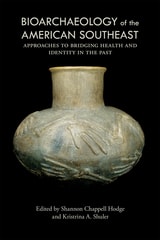
Bioarchaeology of the American Southeast
Approaches to Bridging Health and Identity in the PastEdited by Shannon Chappell Hodge and Kristrina A. Shuler
University of Alabama Press, 2018
Building on the 1991 publication What Mean These Bones? Studies in Southeastern Bioarchaeology, this new edited collection from Shannon Chappell Hodge and Kristrina A. Shuler marks steady advances over the past three decades in the theory, methodology, and purpose of bioarchaeology in the southeastern United States and across the discipline. With a geographic scope that ranges from Louisiana to South Carolina and a temporal span from early prehistory through the nineteenth century, the coverage aims to be holistic.
Bioarchaeology of the American Southeast: Approaches to Bridging Health and Identity in the Past is organized into two main parts. The first, “Context and Culture History in Bioarchaeology,” focuses on the fundamentals of archaeology—figuring out who lived at an archaeological site, when they lived there, what they did, and how they lived their lives.
This builds the framework that allows archaeologists to answer deeper questions, such as the ones addressed in the second part, “Social Identities in Bioarchaeology.” Here contributors explore questions of identity, ethnicity, gender and the status of women, social status, class, power and exploitation, migration, and conflict. These chapters implement and contribute to anthropological theory and showcase improved methods, such as innovative statistical analyses, and incorporate newer technology, including a DNA and geographic information system applications.
Biocultural Histories in La Florida
A Bioarchaeological PerspectiveChristopher Stojanowski
University of Alabama Press, 2005
Examines the effects of the Spanish mission system on population structure and genetic variability in indigenous communities in northern Florida and southern Georgia during the 16th and 17th centuries
This book examines the effects of the Spanish mission system on population structure and genetic variability in indigenous communities living in northern Florida and southern Georgia during the 16th and 17th centuries. Data on tooth size were collected from 26 archaeological samples representing three time periods: Late Precontact (~1200-1500), Early Mission (~1600-1650), and Late Mission (~1650-1700) and were subjected to a series of statistical tests evaluating genetic variability. Predicted changes in phenotypic population variability are related to models of group interaction, population demo-graphy, and genetic admixture as suggested by ethnohistoric and archaeological data.
Results suggest considerable differences in diachronic responses to the mission environment for each cultural province. The Apalachee demonstrate a marked increase in variability while the Guale demonstrate a decline in variability. Demographic models of population collapse are therefore inconsistent with predicted changes based on population geneticsl, and the determinants of population structure seem largely local in nature. This book highlights the specificity with which indigenous communities responded to European contact and the resulting transformations in their social worlds.
Birding While Indian
A Mixed-Blood MemoirThomas C. Gannon
The Ohio State University Press, 2023
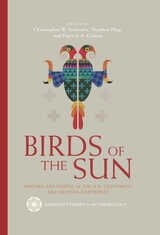
Birds of the Sun
Macaws and People in the U.S. Southwest and Mexican NorthwestEdited by Christopher W. Schwartz, Stephen Plog, and Patricia A. Gilman
University of Arizona Press, 2022
Scarlet macaws are native to tropical forests ranging from the Gulf Coast and southern regions of Mexico to Bolivia, but they are present at numerous archaeological sites in the U.S. Southwest and Mexican Northwest. Although these birds have been noted and marveled at through the decades, new syntheses of early excavations, new analytical methods, and new approaches to understanding the past now allow us to explore the significance and distribution of scarlet macaws to a degree that was previously impossible.
Birds of the Sun explores the many aspects of macaws, especially scarlet macaws, that have made them important to Native peoples living in this region for thousands of years. Leading experts discuss the significance of these birds, including perspectives from a Zuni author, a cultural anthropologist specializing in historic Pueblo societies, and archaeologists who have studied pre-Hispanic societies in Mesoamerica and the U.S. Southwest and Mexican Northwest. Chapters examine the highly variable distribution and frequency of macaws in the past, their presence on rock art and kiva murals, the human experience of living with and transporting macaws, macaw biology and life history, and what skeletal remains suggest about the health of macaws in the past. Experts provide an extensive, region-by-region analysis, from early to late periods, of what we know about the presence, health, and depositional contexts of macaws and parrots, with specific case studies from the Hohokam, Chaco, Mimbres, Mogollon Highlands, Northern Sinagua, and Casas Grandes regions, where these birds are most abundant.
The expertise offered in this stunning new volume, which includes eight full color pages, will lay the groundwork for future research for years to come.
Contributors
Katelyn J. Bishop
Patricia L. Crown
Samantha Fladd
Randee Fladeboe
Patricia A. Gilman
Thomas K. Harper
Michelle Hegmon
Douglas J. Kennett
Patrick D. Lyons
Charmion R. McKusick
Ben A. Nelson
Stephen Plog
José Luis Punzo Díaz
Polly Schaafsma
Christopher W. Schwartz
Octavius Seowtewa
Christine R. Szuter
Kelley L. M. Taylor
Michael E. Whalen
Peter M. Whiteley
Black Eagle Child
The Facepaint NarrativesRay A. Young Bear
University of Iowa Press, 1992
A candid, poetic account of childhood and young manhood through the eyes of a Native American, this vivid narrative is destined to become a central moral text for our time. Through the persona of Edgar Bearchild—a member of the Black Eagle Child Settlement—Ray A. Young Bear takes readers on an unforgettable “journey of words” as he documents grief and anguish countered by an abundance of humor, pride, and insight.
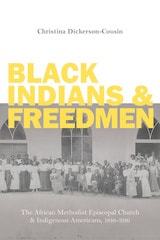
Black Indians and Freedmen
The African Methodist Episcopal Church and Indigenous Americans, 1816-1916Christina Dickerson-Cousin
University of Illinois Press, 2021
Insightful and richly detailed, Black Indians and Freedmen illuminates how faith and empathy encouraged the unique interactions between two peoples.
Blackland Prairies of the Gulf Coastal Plain
Nature, Culture, and SustainabilityEdited by Evan Peacock and Timothy Schauwecker
University of Alabama Press, 2003
Underscores the relevance of archaeological research in understanding long-term cultural change
Taking a holistic approach, this compilation gathers ecological, historical, and archaeological research written on the distinctive region of the Southeast called the Gulf coast blackland prairie. Ranging from the last glacial period to the present day, the case studies provide a broad picture of how the area has changed through time and been modified by humans, first with nomadic bands of Indians trailing the grazing animals and then by Euro-American settlers who farmed the rich agricultural area. Contemporary impacts include industrialization, aquaculture, population growth, land reclamation, and wildlife management.
It is believed that the Black Belt and the Great Plains were contiguous in the past and shared the same prairie vegetation, insects, and large fauna, such as bison. Swaths and patches of limestone-based soils still weave a biological corridor through what is now Alabama, Mississippi, Arkansas, Louisiana, and Texas. In analyzing this distinct grassland ecosystem, the essays compare both the mega and minute flora and fauna sustained by the land in the past and present; reveal what foods were harvested by early inhabitants, their gathering techniques, and diet changes over the 10,000-year period of native occupancy; survey the documents of early explorers for descriptions of the landform, its use, and the lives of inhabitants at the time of contact; and look at contemporary efforts to halt abuse and reverse damage to this unique and shrinking biome.
This book demonstrates that the blackland prairie has always been an important refuge for a teeming array of biological species, including humans. It will have wide scholarly appeal as well as general interest and will be welcomed by archaeologists, biologists, botanists, ecologists, historians, librarians, politicians, land managers, and national, state, and local administrators.
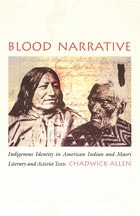
Blood Narrative
Indigenous Identity in American Indian and Maori Literary and Activist TextsChadwick Allen
Duke University Press, 2002
Allen shows how both Maori and Native Americans resisted the assimilationist tide rising out of World War II and how, in the 1960s and 1970s, they each experienced a renaissance of political and cultural activism and literary production that culminated in the formation of the first general assembly of the World Council of Indigenous Peoples. He focuses his comparison on two fronts: first, the blood/land/memory complex that refers to these groups' struggles to define indigeneity and to be freed from the definitions of authenticity imposed by dominant settler cultures. Allen's second focus is on the discourse of treaties between American Indians and the U.S. government and between Maori and Great Britain, which he contends offers strong legal and moral bases from which these indigenous minorities can argue land and resource rights as well as cultural and identity politics.
With its implicit critique of multiculturalism and of postcolonial studies that have tended to neglect the colonized status of indigenous First World minorities, Blood Narrative will appeal to students and scholars of literature, American and European history, multiculturalism, postcolonialism, and comparative cultural studies.
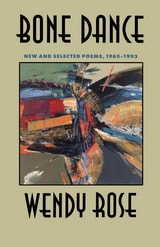
Bone Dance
New and Selected Poems, 1965-1993Wendy Rose
University of Arizona Press, 1994
"Rich in poems which enhance our awareness of the human complexity of our social and moral dilemmas." —Book Review Digest
"There is a whisper in the wind among the chapters . . . and a singing rain beyond the window." —American Indian Culture Research Journal
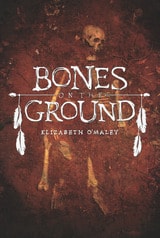
Bones on the Ground
Elizabeth O'Maley
Indiana Historical Society Press, 2014
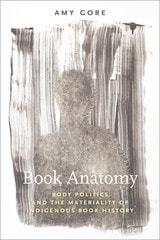
Book Anatomy
Body Politics and the Materiality of Indigenous Book HistoryAmy Gore
University of Massachusetts Press, 2023
Winner of the Beatrice Medicine Award for Scholarship in American Indian Studies
From the marginalia of their readers to the social and cultural means of their production, books bear the imprint of our humanity. Embodying the marks, traces, and scars of colonial survival, Indigenous books are contested spaces. A constellation of nontextual components surrounded Native American–authored publications of the long nineteenth century, shaping how these books were read and understood—including illustrations, typefaces, explanatory prefaces, appendices, copyright statements, author portraits, and more.
Centering Indigenous writers, Book Anatomy explores works from John Rollin Ridge, Sarah Winnemucca Hopkins, Pretty Shield, and D’Arcy McNickle published between 1854 and 1936. In examining critical moments of junction between Indigenous books and a mainstream literary marketplace, Amy Gore argues that the reprints, editions, and paratextual elements of Indigenous books matter: they embody a frontline of colonization in which Native authors battle the public perception and reception of Indigenous books, negotiate representations of Indigenous bodies, and fight for authority and ownership over their literary work.
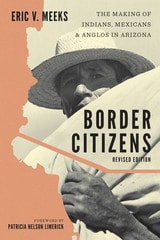
Border Citizens
The Making of Indians, Mexicans, and Anglos in ArizonaBy Eric V. Meeks; foreword by Patricia Nelson Limerick
University of Texas Press, 2007
In Border Citizens, historian Eric V. Meeks explores how the racial classification and identities of the diverse indigenous, mestizo, and Euro-American residents of Arizona’s borderlands evolved as the region was politically and economically incorporated into the United States. First published in 2007, the book examines the complex relationship between racial subordination and resistance over the course of a century. On the one hand, Meeks links the construction of multiple racial categories to the process of nation-state building and capitalist integration. On the other, he explores how the region’s diverse communities altered the blueprint drawn up by government officials and members of the Anglo majority for their assimilation or exclusion while redefining citizenship and national belonging.
The revised edition of this highly praised and influential study features dozens of new images, an introductory essay by historian Patricia Nelson Limerick, and a chapter-length afterword by the author. In his afterword, Meeks details and contextualizes Arizona’s aggressive response to undocumented immigration and ethnic studies in the decade after Border Citizens was first published, demonstrating that the broad-based movement against these measures had ramifications well beyond Arizona. He also revisits the Yaqui and Tohono O’odham nations on both sides of the Sonora-Arizona border, focusing on their efforts to retain, extend, and enrich their connections to one another in the face of increasingly stringent border enforcement.
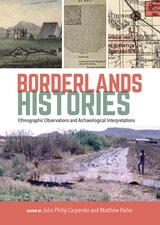
Borderlands Histories
Ethnographic Observations and Archaeological InterpretationsEdited by John Philip Carpenter and Matthew Pailes
University of Utah Press, 2021
Boundary Conditions
Macrobotanical Remains and the Oliver Phase of Central Indiana, A.D. 1200-1450Leslie L. Bush
University of Alabama Press, 2004
Prehistoric plant use in the Late Woodland Period of central Indiana
This book explores the extent to which foodways, an important marker of group identity, can be recognized in charred macrobotanical remains from archaeological sites. From analysis of mere bits of burned plants we can discern what ancient people chose to eat, and how they cooked it, stored it, and preserved it.
Leslie Bush compares archaeobotanical remains from 13 Oliver Phase sites in Indiana to other late prehistoric sites through correspondence analysis. The Oliver area is adjacent to the territories of three of the largest and best-known archaeological cultures of the region—Mississippian, Fort Ancient, and Oneota—so findings about Oliver foodways have implications for studies of migration, ethnogenesis, social risk, and culture contact. Historical records of three Native American tribes (Shawnee, Miami, and Huron) are also examined for potential insights into Oliver foodways.
The study determines that people who inhabited central Indiana during late prehistoric times had a distinctive signature of plant use that separates them from other archaeological groups, not just in space and time but also in ideas about appropriate uses of plants. The uniqueness of the Oliver botanical pattern is found to lie in the choice of particular crops, the intensity of growing versus gathering, and the use of a large number of wild resources.

Boundless
Native American Abundance in Art and LiteratureLisa A. Crossman and Heid E. Erdrich
Amherst College Press, 2025
Amherst College’s Collection of Native American Literature contains thousands of Indigenous-authored works spanning centuries. The Collection’s abundance of books, prints, music, ephemera, and artist-made works, all by Native people, provide rich selections for Boundless. Crosscurrents of Indigenous visual art and literature are considered in this broad and interdisciplinary project. Boundless crosses generations to explore relatedness, kinship, and collegiality.
Boundless brings artists and writers together across generations, often drawing together works by members of the same tribe or even the same family to show the history, presence, and futurity of Native American creative and intellectual production.

Brave Are My People
Indian Heroes Not ForgottenFrank Waters
Ohio University Press, 1998
Pontiac, Sequoyah, Geronimo, Sitting Bull, Chief Joseph, and Chief Seattle. These legendary names are familiar even to the uninitiated in Native American history, yet the life stories of these great spiritual leaders have been largely unknown.
In this, his last book, internationally celebrated author Frank Waters makes vivid the poignant, humorous, and tragic stories of these neglected and heroic Native Americans. From the brilliant tactical abilities of famed warriors to the eloquent oratory of indigenous philosophers, poets, and statesmen, the profiles in Brave Are My People help correct this error of omission.
Now in paperback, Brave Are My People represents a major contribution to Water’s remarkable literary work.
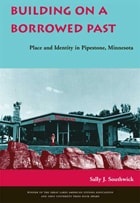
Building on a Borrowed Past
Place and Identity in Pipestone, MinnesotaSally J. Southwick
Ohio University Press, 2005
Why is there a national monument near a small town on the Minnesota prairie? Why do the town’s residents dress as Indians each summer and perform a historical pageant based on a Victorian-era poem? To answer such questions, Building on a Borrowed Past: Place and Identity in Pipestone, Minnesota shows what happens when one culture absorbs the heritage of another for civic advantage.
Founded in 1874, Pipestone was named for the quarries where regional tribes excavated soft stone for making pipes. George Catlin and Henry Wadsworth Longfellow described the place and its tribal history. Promotion by white residents of the quarries as central to America’s Indian heritage helped Pipestone obtain a federal Indian boarding school in the 1890s and a national monument in the 1930s. The annual “Song of Hiawatha” pageant attracted tourists after World War II. Sally J. Southwick’s prizewinning study demonstrates how average, small–town citizens contributed to the generic image of “the Indian” in American culture.
Examining oral histories, memoirs, newspapers, federal documents, civic group records, and promotional literature, Southwick focuses on the role of middle–class individuals in establishing a historical, place–based identity. Building on a Borrowed Past reveals how identities are formed through adaptation of cultural, spiritual, racial, and historical symbols.
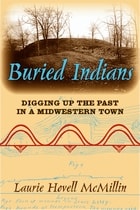
Buried Indians
Digging Up the Past in a Midwestern TownLaurie Hovell McMillin
University of Wisconsin Press, 2006
In Buried Indians, Laurie Hovell McMillin presents the struggle of her hometown, Trempealeau, Wisconsin, to determine whether platform mounds atop Trempealeau Mountain constitute authentic Indian mounds. This dispute, as McMillin subtly demonstrates, reveals much about the attitude and interaction-past and present-between the white and Indian inhabitants of this Midwestern town.
McMillin's account, rich in detail and sensitive to current political issues of American Indian interactions with the dominant European American culture, locates two opposing views: one that denies a Native American presence outright and one that asserts its long history and ruthless destruction. The highly reflective oral histories McMillin includes turn Buried Indians into an accessible, readable portrait of a uniquely American culture clash and a dramatic narrative grounded in people's genuine perceptions of what the platform mounds mean.
Buried Roots and Indestructible Seeds
The Survival Of American Indian Life In Story, History, and SpiritMark A. Lindquist
University of Wisconsin Press, 1995
This anthology highlights central values and traditions in Native American societies, exploring the ongoing struggles and survival power of Native American people today. The essays and stories by well-known writers provide an excellent introduction for general readers as well as high school and college students. The stories and historical events are drawn especially from the tribes of the Great Lakes region, such as the Ojibwa (Chippewa) of Wisconsin, and are part of a continuing, sustaining storytelling tradition.
Starting with the opening selection, “The Circle of Stories,” which reaffirms the relationship of humans to all living things, the anthology emphasizes themes of connectedness and survival in essays on the environment, identity, community allegiance and treaty rights, marginalization and assimilation in American society, and conflict within the educational system. Several selections about Trickster tales introduce traditions of humor, irony, and imagination that have come to embody native survival, liberation, and continuance.
The authors included in Buried Roots and Indestructible Seeds are Kim Blaeser, Joseph Bruchac, George Cornell, Fred Hoxie, James Oberly, Denise Sweet, Tom Vennum, and Gerald Vizenor.
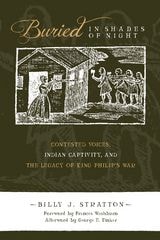
Buried in Shades of Night
Contested Voices, Indian Captivity, and the Legacy of King Philip's WarBilly J. Stratton, Foreword by Frances Washburn, Afterword by George E. Tinker
University of Arizona Press, 2013
In this groundbreaking new book, Billy J. Stratton offers a critical examination of the narrative of Mary Rowlandson. Although it has long been thought that the book’s preface was written by the influential Puritan minister Increase Mather, Stratton’s research suggests that Mather was also deeply involved in the production of the narrative itself, which bears strong traces of a literary form that was already well established in Europe. As Stratton notes, the portrayal of Indian people as animalistic “savages” and of Rowlandson’s solace in Biblical exegesis served as a convenient alibi for the colonial aspirations of the Puritan leadership.
Stratton calls into question much that has been accepted as fact by scholars and historians over the last century, and re-centers the focus on the marginalized perspective of Native American people, including those whose land had been occupied by the Puritan settlers. In doing so, Stratton demands a careful reconsideration of the role that the captivity narrative—which was instrumental in shaping conceptions of “frontier warfare”—has played in the development of both American literary history and national identity.
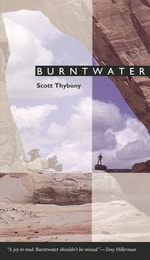
Burntwater
Scott Thybony
University of Arizona Press, 1997
This book takes the backroads, crossing the Colorado Plateau from the headwaters of the Virgin River to the mouth of the Dirty Devil, from the badlands below Twin Angels to a remote mesa in Bandelier. As the miles go by and the stories unfold, there is a growing sense of mystery, of words not spoken, of messages carried on the wind. Reaching the Shrine of the Stone Lions, the writer recounts a near-fatal descent into the Grand Canyon where he finds a way to reconnect with the beauty of life. There his journey ends with an emotional punch that goes straight to the mind and the heart.
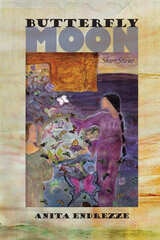
Butterfly Moon
Short StoriesAnita Endrezze
University of Arizona Press, 2012
Anita Endrezze has deep memories. Her father was a Yaqui Indian. Her mother traced her heritage to Slovenia, Germany, Romania, and Italy. And her stories seem to bubble up from this ancestral cauldron. Butterfly Moon is a collection of short stories based on folk tales from around the world. But its stories are set in the contemporary, everyday world. Or are they?
Endrezze tells these stories in a distinctive and poetic voice. Fantasy often intrudes into reality. Alternate “realities” and shifting perspectives lead us to question our own perceptions. Endrezze is especially interested in how humans hide feelings or repress thoughts by developing shadow selves. In “Raven’s Moon,” she introduces the shadow concept with a Black Moon, the “unseen reflection of the known.” (Of course the story is about a witch couple who seem very much in love.) The title character in “The Wife Who Lived on Wind” is an ogress who lives in a world somewhat similar to our own, but only somewhat. “The Vampire and the Moth Woman” reveals shape-shifters living among us.
Not surprisingly, Trickster appears in these tales. As in Native American stories, Trickster might be a fox or a coyote or a raven or a human—or something in between. “White Butterflies” and “Where the Bones Are” both deal with devastating diseases that swept through Yaqui country in the 1530s. Underneath their surfaces are old Yaqui folktales that feature the greatest Trickster of all: Death (and his little brother Fate).
Enjoyably disturbing, these stories linger—deep in our memory.
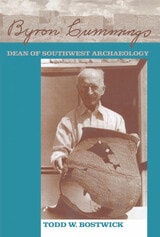
Byron Cummings
Dean of Southwest ArchaeologyTodd W. Bostwick
University of Arizona Press, 2006
This book presents the first comprehensive examination of Cummings’ life, offering readers a greater understanding of his trailblazing work. Todd Bostwick elucidates Cummings’ many intellectual and cultural contributions, investigates the controversies in which he was embroiled, and describes his battles to wrest control of Arizona archaeology from eastern institutions that had long dominated Southwest archaeology.
Cummings saw the Southwest as an American wilderness where the story of cultural development revealed by the archaeologist and anthropologist was as important as it was in Europe. Bostwick’s meticulous account of his life reflects his great reverence for the region and pays tribute to a man whose dedication, mentoring, and friendship have forever sealed his place as The Dean.