Results by title
862 books match the query 'Social History' and 49 start with b
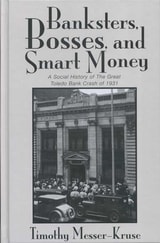
BANKSTERS BOSSES SMART MONEY
SOCIAL HISTORY OF GREAT TOLEDO BANK CRASTIMOTHY MESSER-KRUSE
The Ohio State University Press, 2004

Bachata
A Social History of a Dominican Popular MusicDeborah Pacini
Temple University Press, 1995
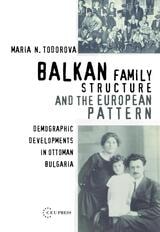
Balkan Family Structure and the European Pattern
Demographic Developments in Ottoman BulgariaMaria Todorova
Central European University Press, 2006
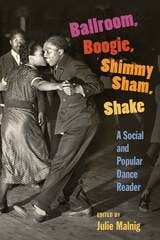
Ballroom, Boogie, Shimmy Sham, Shake
A Social and Popular Dance ReaderEdited by Julie Malnig
University of Illinois Press, 2008
This dynamic collection documents the rich and varied history of social dance and the multiple styles it has generated, while drawing on some of the most current forms of critical and theoretical inquiry. The essays cover different historical periods and styles; encompass regional influences from North and South America, Britain, Europe, and Africa; and emphasize a variety of methodological approaches, including ethnography, anthropology, gender studies, and critical race theory. While social dance is defined primarily as dance performed by the public in ballrooms, clubs, dance halls, and other meeting spots, contributors also examine social dance’s symbiotic relationship with popular, theatrical stage dance forms.
Contributors are Elizabeth Aldrich, Barbara Cohen-Stratyner, Yvonne Daniel, Sherril Dodds, Lisa Doolittle, David F. García, Nadine George-Graves, Jurretta Jordan Heckscher, Constance Valis Hill, Karen W. Hubbard, Tim Lawrence, Julie Malnig, Carol Martin, Juliet McMains, Terry Monaghan, Halifu Osumare, Sally R. Sommer, May Gwin Waggoner, Tim Wall, and Christina Zanfagna.
Barbecue
The History of an American Institution, Revised and Expanded Second EditionRobert F. Moss
University of Alabama Press, 2020
The definitive history of an iconic American food, with new chapters, sidebars, and updated historical accounts.
Expert Robert F. Moss researched hundreds of sources—newspapers, letters, journals, diaries, and travel narratives—to document the origins and evolution of barbecue from its origins among Native Americans to its present status as an icon of American culture. In this definitive guide, he maps out the development of the rich array of regional barbecue styles, chronicles the rise of barbecue restaurants, and profiles the famed pitmasters who made the tradition what it is today.
Barbecue is the story not just of a dish but also of a social institution that helped shape many regional cultures of the United States. The history begins with British colonists’ adoption of barbecuing techniques from Native Americans in the 17th and 18th centuries, moves to barbecue’s establishment as the preeminent form of public celebration in the 19th century, and is carried through to barbecue’s ubiquitous standing today.
From the very beginning, barbecues were powerful social magnets, drawing together people from a wide range of classes and geographic backgrounds. Barbecue played a key role in three centuries of American history, both reflecting and influencing the direction of an evolving society. By tracing the story of barbecue from its origins to today, Barbecue: The History of an American Institution traces the very thread of American social history.
Moss has made significant updates in this new edition, offering a wealth of new historical research, sources, illustrations, and anecdotes.
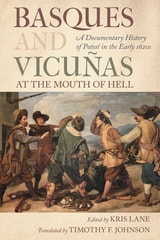
Basques and Vicuñas at the Mouth of Hell
A Documentary History of Potosí in the Early 1620sKris Lane
University of Nevada Press, 2024
As mines flooded and Indigenous workers died or fled, the city descended into a maelstrom of swordfights, gun battles, ambushes, sniper attacks, and summary executions. Though its roots were economic, the Basque-Vicuña conflict strained the sinews of Habsburg global governance even as it exposed festering local tensions, only some of which were unique to Potosí.
This rich collection of original sources, all of them archival documents housed in Bolivia, Spain, the United Kingdom, and the United States, consists of contemporary eyewitness accounts from several perspectives, allowing readers to play historian. All sources have been expertly translated and carefully annotated in a manner that will engage students and scholars alike. Basques and Vicuñas at the Mouth of Hell includes an extensive introduction, seven vital documents in translation, and appendices on everyday life in 1620s Potosí and on the historiography of this watershed episode of colonial violence.
Battles of the North Country
Wilderness Politics and Recreational Development in the Adirondack State Park, 1920-1980Jonathan D. Anzalone
University of Massachusetts Press, 2018
Through a series of case studies, historian Jonathan D. Anzalone highlights the role of public and private interests in the region and shows how partnerships frayed and realigned in the course of several key developments: the rise of camping in the 1920s and 1930s; the 1932 Lake Placid Olympics; the construction of a highway to the top of Whiteface Mountain; the postwar rise of downhill skiing; the completion of I-87 and the resulting demand for second homes; and the 1980 Lake Placid Olympics. Battles of the North Country reveals how class, economic self-interest, state power, and a wide range of environmental concerns have shaped modern politics in the Adirondacks and beyond.
Becoming Catawba
Catawba Indian Women and Nation-Building, 1540–1840Brooke M. Bauer
University of Alabama Press, 2023
WINNER OF THE ANNE B. & JAMES B. MCMILLAN PRIZE IN SOUTHERN HISTORY
WINNER OF THE ERMINIE WHEELER-VOEGELIN BOOK AWARD
WINNER OF THE BERSHIRE CONFERENCE OF WOMEN HISTORIANS BOOK AWARD
WINNER OF THE GEORGE C. ROGERS, JR. AWARD FROM THE SOUTH CAROLINA HISTORICAL SOCIETY
The story of Catawba women who experienced sweeping changes to their world but held onto traditional customs to create and preserve a Catawba identity and build a nation.
Brooke M. Bauer’s Becoming Catawba: Catawba Indian Women and Nation-Building, 1540–1840 is the first book-length study of the role Catawba women played in creating and preserving a cohesive tribal identity over three centuries of colonization and cultural turmoil. Bauer, a citizen of the Catawba Indian Nation of South Carolina, weaves ethnohistorical methodologies, family history, cultural context, and the Catawba language together to generate an internal perspective on the Catawbas’ history and heritage in the area now known as the Carolina Piedmont.
This unique and important study examines the lives and legacies of women who executed complex decision-making and diplomacy to navigate shifting frameworks of kinship, land ownership, and cultural production in dealings with colonial encroachments, white settlers, and Euro-American legal systems and governments from the mid-sixteenth century to the early nineteenth century. Personified in the figure of Sally New River, a Catawba cultural leader to whom 500 remaining acres of occupied tribal lands were deeded on behalf of the community in 1796 and which she managed until her death in 1821, Bauer reveals how women worked to ensure the survival of the Catawba people and their Catawba identity, an effort that resulted in a unified nation.
Bauer’s approach is primarily ethnohistorical, although it draws on a number of interdisciplinary strategies. In particular, Bauer uses “upstreaming,” a critical strategy that moves toward the period under study by using present-day community members’ connections to historical knowledge—for example, family histories and oral traditions—to interpret primary-source data. Additionally, Bauer employs archaeological data and material culture as a means of performing feminist recuperation, filling the gaps and silences left by the records, newspapers, and historical accounts as primarily written by and for white men. Ultimately, Becoming Catawba effects a welcome intervention at the intersections of Native, women’s, and Southern history, expanding the diversity and modes of experience in the fraught, multifaceted cultural environment of the early American South.
Behind Closed Doors
IRBs and the Making of Ethical ResearchLaura Stark
University of Chicago Press, 2011
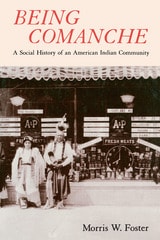
Being Comanche
The Social History of an American Indian CommunityMorris W. Foster
University of Arizona Press, 1991
Comanches have engaged Euro-Americans' curiosity for three centuries. Their relations with Spanish, French, and Anglo-Americans on the southern Plains have become a highly resonant part of the mythology of the American West. Yet we know relatively little about the community that Comanches have shared and continue to construct in southwestern Oklahoma. Morris W. Foster has written the first study of Comanches' history that identifies continuities in their intracommunity organization from the initial period of European contact to the present day. Those continuities are based on shared participation in public social occasions such as powwows, peyote gatherings, and church meetings Foster explains how these occasions are used to regulate social organization and how they have been modified by Comanches to adapt them to changing political and economic relations with Euro-Americans. Using a model of community derived from sociolinguistics, Foster argues that Comanches have remained a distinctive people by organizing their face-to-face relations with one another in ways that maintain Comanche-Comanche lines of communication and regulate a shared sense of appropriate behavior. His book offers readers a significant reinterpretation of traditional anthropological and historical views of Comanche social organization.
Bending the Future
Fifty Ideas for the Next Fifty Years of Historic Preservation in the United StatesEdited by Max Page and Marla R. Miller
University of Massachusetts Press, 2016
The year 2016 marks the fiftieth anniversary of the National Historic Preservation Act, the cornerstone of historic preservation policy and practice in the United States. The act established the National Register of Historic Places, a national system of state preservation offices and local commissions, set up federal partnerships between states and tribes, and led to the formation of the standards for preservation and rehabilitation of historic structures. This book marks its fiftieth anniversary by collecting fifty new and provocative essays that chart the future of preservation.
The commentators include leading preservation professionals, historians, writers, activists, journalists, architects, and urbanists. The essays offer a distinct vision for the future and address related questions, including, Who is a preservationist? What should be preserved? Why? How? What stories do we tell in preservation? How does preservation contribute to the financial, environmental, social, and cultural well-being of communities? And if the “arc of the moral universe . . . bends towards justice,” how can preservation be a tool for achieving a more just society and world?
Betting on Ideas
Wars, Invention, InflationReuven Brenner
University of Chicago Press, 1986
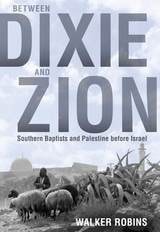
Between Dixie and Zion
Southern Baptists and Palestine before IsraelWalker Robins
University of Alabama Press, 2020
Explores the roots of evangelical Christian support for Israel through an examination of the Southern Baptist Convention
One week after the establishment of the State of Israel in 1948, delegates to the Southern Baptist Convention (SBC) repeatedly and overwhelmingly voted down resolutions congratulating fellow Southern Baptist Harry Truman on his role in Israel’s creation. From today’s perspective, this seems like a shocking result. After all, Christians—particularly the white evangelical Protestants who populate the SBC—are now the largest pro-Israel constituency in the United States. How could conservative evangelicals have been so hesitant in celebrating Israel’s birth in 1948? How did they then come to be so supportive?
Between Dixie and Zion: Southern Baptists and Palestine before Israel addresses these issues by exploring how Southern Baptists engaged what was called the “Palestine question”: whether Jews or Arabs would, or should, control the Holy Land after World War I. Walker Robins argues that, in the decades leading up to the creation of Israel, most Southern Baptists did not directly engage the Palestine question politically. Rather, they engaged it indirectly through a variety of encounters with the land, the peoples, and the politics of Palestine. Among the instrumental figures featured by Robins are tourists, foreign missionaries, Arab pastors, converts from Judaism, biblical interpreters, fundamentalist rebels, editorialists, and, of course, even a president. While all revered Palestine as the Holy Land, each approached and encountered the region according to their own priorities.
Nevertheless, Robins shows that Baptists consistently looked at the region through an Orientalist framework, broadly associating the Zionist movement with Western civilization, modernity, and progress over and against the Arabs, whom they viewed as uncivilized, premodern, and backward. He argues that such impressions were not idle—they suggested that the Zionists were bringing to fruition Baptists’ long-expressed hopes that Israel would regain the prosperity it had held in the biblical era, the Holy Land would one day be revived, and biblical prophecies preceding the return of Christ would be fulfilled.
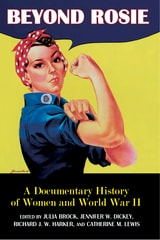
Beyond Rosie
A Documentary History of Women and World War IIJulia Brock
University of Arkansas Press, 2015
Beyond Rosie offers readers an opportunity to see the numerous contributions they made to the fight against the Axis powers and how American women’s roles changed during the war. The primary documents (newspapers, propaganda posters, cartoons, excerpts from oral histories and memoirs, speeches, photographs, and editorials) collected here represent cultural, political, economic, and social perspectives on the diverse roles women played during World War II.
Bicentennial
A Revolutionary History of the 1970sMarc Stein
University of Chicago Press, 2026
“Utterly illuminating. . . . Just a really revelatory book.”—Jill Lepore, The New York Times, The “Book Review” Podcast • “As historian Stein traces in Bicentennial, a national birthday can launch a much broader, more inclusive, and ambitious national project.”—Rebecca Brenner Graham, The New Republic • “A comprehensive and critical look at the Spirit of 1976.”—Library Journal
As the United States marks its semiquincentennial in 2026, renowned historian Marc Stein looks back at the politics of another landmark celebration during a time of striking similarities and surprising differences: the US bicentennial in 1976.
In the aftermath of Vietnam and Watergate, the bicentennial sparked an extraordinary national conversation about the country’s past, present, and future. As patriots, planners, profiteers, and protesters argued about how to commemorate the national birthday, they collectively reimagined the promises and perils of democracy during a transformational decade.
From award-winning historian Marc Stein, Bicentennial: A Revolutionary History of the 1970s is an original, illuminating, and insightful study of that era. While focusing on festivities and fights in Philadelphia, the nation’s birthplace, the book also explores the many proposed and abandoned celebrations that percolated up around the country. It tells a broadly democratic story of both the “official” bicentennial and counter-bicentennial activism, offering revolutionary perspectives on national politics, social movements, and popular culture. From the queer courtship of President Richard Nixon and Philadelphia Mayor Frank Rizzo to parades and protests with millions of participants, and from a deadly outbreak of Legionnaires’ disease at Philadelphia’s most prestigious hotel to the establishment of groundbreaking African American, ethnic, and Jewish museums, the bicentennial reveals a kaleidoscope of American peculiarities, problems, and possibilities.
The lasting influence of 1976 on one of the nation’s great urban centers and the United States as a whole is undeniable. As the nation—once again enmeshed in political and social upheaval—marks its two-hundred-fiftieth birthday in 2026, there is no better time to look back at its two-hundredth and marvel at what has changed, and what has not.
Big Structures, Large Processes, Huge Comparisons
Charles Tilly
Russell Sage Foundation, 1984
Biocosmism
Vitality and the Utopian Imagination in Postrevolutionary MexicoJorge Quintana Navarrete
Vanderbilt University Press, 2024
Most scholars study postrevolutionary Mexico as a period in which cultural production significantly shaped national identity through murals, novels, essays, and other artifacts that registered the changing political and social realities in the wake of the Revolution. In Biocosmism, Jorge Quintana Navarrete shifts the focus to examine how a group of scientists, artists, and philosophers conceived the manifold relations of the human species with cosmological forces and nonhuman entities (animals, plants, inorganic matter, and celestial bodies, among others).
Drawing from recent theoretical trends in new materialisms, biopolitics, and posthumanism, this book traces for the first time the intellectual constellation of biocosmism or biocosmic thought: the study of universal life understood as the vital vibrancy that animates everything in the cosmos from inorganic matter to living organisms to outer space. It combines both analysis of unexplored areas—such as Alfonso L. Herrera’s plasmogeny—and innovative readings of canonical texts like Vasconcelos’s La raza cósmica to examine how biocosmism produced a wide array of utopian projects and theorizations that continue to challenge anthropocentric, biopolitical frameworks.
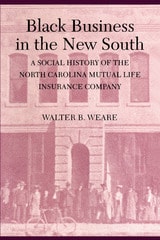
Black Business in the New South
A Social History of the NC Mutual Life Insurance CompanyWalter B. Weare
Duke University Press, 1993
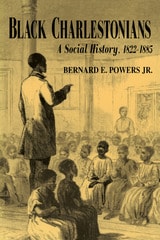
Black Charlestonians
A Social History, 1822-1885Bernard E. Powers
University of Arkansas Press, 2016
This revisionist work delineates the major social and economic contours of the large black population in the pivotal Southern city of Charleston, South Carolina., historic seaport center for the slave trade. It draws upon census data, manuscript collections, and newspaper accounts to expand our knowledge of this particular community of nineteenth-century black urbanites.
Although the federal government codified the rights of African-Americans into law following the Civil War, it was the initiatives taken by black men and women that actually transformed the theoretical benefits of emancipation into clear achievement.
Because of its large free black population, Charleston provided a case study of black social class stratification and social mobility even before the war. Reconstruction only emphasized that stratification, and Powers examines in detail the aspirations and concessions that shaped the lives of the newly freed blacks, who were led by a black upper class tat sometimes seemed more inclined to emulate white social mores than act as a vanguard for fundamental social change.
Unlike most Reconstruction studies, which concentrate on politics, Black Charlestonians explores the era’s vital socioeconomic challenges for blacks as they emerged into full citizenship in an important city in the South.
Choice’s 1996 Outstanding Academic Books List
Black Communists Speak on Scottsboro
A Documentary Historyedited by Walter T. Howard
Temple University Press, 2007
Many white Communists spoke out, but black Communists took the lead in organizing public protests and legal responses. As this surprising book makes clear, they were acting at the direction of the Communist International (Comintern), which had directed them to address the "Negro problem." Now, with the opening of formerly inaccessible Communist party archives, this collection of primary documents reveals the little-known but major roles played by black Communists in the case of "the Scottsboro Boys."
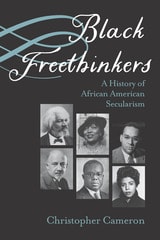
Black Freethinkers
A History of African American SecularismChristopher Cameron
Northwestern University Press, 2019
Christopher Cameron suggests an alternative origin of nonbelief and religious skepticism in America, namely the brutality of the institution of slavery. He also traces the growth of atheism and agnosticism among African Americans in two major political and intellectual movements of the 1920s: the New Negro Renaissance and the growth of black socialism and communism. In a final chapter, he explores the critical importance of freethought among participants in the civil rights and Black Power movements of the 1960s and 1970s.
Examining a wealth of sources, including slave narratives, travel accounts, novels, poetry, memoirs, newspapers, and archival sources such as church records, sermons, and letters, the study follows the lives and contributions of well-known figures, including Frederick Douglass, Zora Neale Hurston, James Baldwin, and Alice Walker, as well as lesser-known thinkers such as Louise Thompson Patterson, Sarah Webster Fabio, and David Cincore.

Black Legacy
America's Hidden HeritageWilliam D. Piersen
University of Massachusetts Press, 1993
Drawing on a vast wealth of evidence—folktales, oral histories, religious rituals, and music—this book explores the pervasive if often unacknowledged influence of African traditions on American life. The result is a bold reinterpretation of American history that disrupts conventional assumptions and turns racial stereotypes inside out.
William D. Piersen begins by examining a series of African and African-American oral narratives that interpret the experience of slavery from a distinctly black perspective. Centered on issues of moral truth, these tales bear witness to the meaning and human cost of the slave trade as perceived by those who were its victims. Piersen then analyzes the ways in which enslaved Africans adapted their rich cultural heritage to the new circumstances they were forced to endure. He shows, for example, how they imaginatively—and often aggressively—devised forms of public satire to resist white authority. He traces the transfer of traditional African medical knowledge to the Americas and demonstrates that in antebellum America many black healers were more skilled than their white counterparts. He further shows how African customs helped shape the evolving contours of American culture—particularly in the South—from holiday celebrations, musical traditions, and architectural styles to modes of speech, habits of work, and ways of cooking. The black legacy to America even extended, ironically, to the Ku Klux Klan, whose founders imitated masking traditions handed down from West African secret societies. By reestablishing the forgotten cultural links between Africa and America, this study enriches our understanding of American history and is a powerful testament to the legacy of African culture in American life.
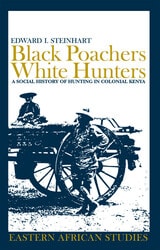
Black Poachers, White Hunters
A Social History of Hunting in Colonial KenyaEdward I. Steinhart
Ohio University Press, 2006
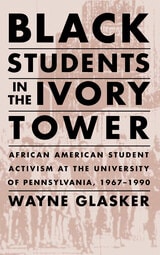
Black Students in the Ivory Tower
African American Student Activism at the University of Pennsylvania, 1967-1990Wayne C. Glasker
University of Massachusetts Press, 2002
Glasker begins his study in the late 1960s, when the university's expansion into a predominantly black Philadelphia neighborhood precipitated a massive sit-in and protest. In response, Penn accelerated the process of admitting more black students, doubling the number of black matriculants by September 1969. Many came from inner city public high schools with backgrounds, ideas, and interests far different from those of the affluent middle- and upper-class white students who constituted the majority of the undergraduate population. As a result, the next decade was marked by recurrent tension and conflict, as black students at Penn rejected assimilation and agitated successfully for the creation of a variety of institutions that recognized their needs. These included an Afro-American studies program, a residence for students interested in black culture, and a Black Student League. Following a 1978 sit-in, they won a demand for an Inter-cultural Center and formed the United Minorities Council, and in 1986 they joined with white activists to press the university to divest its holdings from companies doing business in South Africa.
Throughout the book Glasker interweaves two parallel stories: that of an Ivy League university wrestling with questions of diversity, compensatory education, and the meaning of merit and qualification; and that of black students grappling with issues of assimilation, separatism, and cultural pluralism. In the end, he argues, the students sought to preserve their own distinctive ethnic culture, identity, and heritage while pursuing economic upward mobility. Rather than separatism, they aspired to a form of biculturalism that involved economic empowerment without cultural assimilation.
Black Writing, Culture, and the State in Latin America
Jerome C. Branche
Vanderbilt University Press, 2015
All too often, the disciplines of film studies, literary criticism, and art history ignore the opportunity to collaborate in a dialogue. Branche and his contributors present a unified approach, however, suggesting that cultural production should not be viewed narrowly, especially when studying the achievements of the Afro-Latin world.
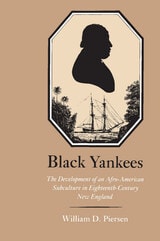
Black Yankees
The Development of an Afro-American Subculture in Eighteenth-Century New EnglandWilliam D. Piersen
University of Massachusetts Press, 1988
On the face of it, the master class called the tunes and slaves danced the beat. Blacks who were taken into New England's bondage were clearly engulfed in a pervasive, narrow-minded Euro-American society that had no interest in fostering Afro-American autonomy. The New England experience was often cruel, and the numbers alone suggest it was among the most unequal of black/white cultural contacts in the New World. Nonetheless, despite the strictures of bondage, the black Yankees of eighteenth-century New England created a sustaining folk culture of their own.
Bleak Houses
Marital Violence in Victorian FictionLisa Surridge
Ohio University Press, 2005
The Offenses Against the Person Act of 1828 opened magistrates' courts to abused working-class wives. Newspapers in turn reported on these proceedings, and in this way the Victorian scrutiny of domestic conduct began. But how did popular fiction treat “private” family violence? Bleak Houses: Marital Violence in Victorian Fiction traces novelists' engagement with the wife-assault debates in the public press between 1828 and the turn of the century.
Lisa Surridge examines the early works of Charles Dickens and reads Dombey and Son and Anne Brontë's The Tenant of Wildfell Hall in the context of the intense debates on wife assault and manliness in the late 1840s and early 1850s. Surridge explores George Eliot's Janet's Repentance in light of the parliamentary debates on the 1857 Divorce Act. Marital cruelty trials provide the structure for both Wilkie Collins's The Woman in White and Anthony Trollope's He Knew He Was Right.
Locating the New Woman fiction of Mona Caird and the reassuring detective investigations of Sherlock Holmes in the context of late-Victorian feminism and the great marriage debate in the Daily Telegraph, Surridge illustrates how fin-de-siècle fiction brought male sexual violence and the viability of marriage itself under public scrutiny. Bleak Houses thus demonstrates how Victorian fiction was concerned about the wife-assault debates of the nineteenth century, debates which both constructed and invaded the privacy of the middle-class home.
Blood Libels, Hostile Archives
Reclaiming Interrupted Jewish LivesMagda Teter
Central European University Press, 2025
As a minority group for most of their history, Jews were often marginalized and persecuted. Traces of their lives can be found in the archives of the dominant societies, but only as they intersected with the concerns of those in power. Just as Natalie Zemon Davis, Emmanuel Le Roy Ladurie, Carlo Ginzburg, and others recovered the voices of the peasants, so, too, scholars of Jewish history and culture have productively mined these reservoirs of evidence to retrieve glimpses of the ordinary lives of Jews. Blood Libels, Hostile Archives explores what can be reclaimed about everyday lives from what can be called “hostile archives”—from archival evidence produced and collected explicitly to manufacture malicious tales and pass them as “facts.” For Jewish history, in some places, these archival sources may be the only remaining records documenting the lives of Jews there.
The book explores two places: Trent, in northern Italy, and Sandomierz, in eastern Poland. Though hundreds of miles away, the towns have many things in common: both had been sites of anti-Jewish libels falsely accusing Jews of killing Christian children, Trent in 1475 and Sandomierz twice—in 1698 and 1710; in both, the instigators of the Jews’ persecution left unique and extensive archives, both towns have physical remnants of these deadly affairs, and, finally, neither town has an existing Jewish population. Yet, centuries later, these anti-Jewish libels have not been relegated to the past; in both towns, their legacies still reverberate today.
Blood Passion
The Ludlow Massacre and Class War in the American West, First Paperback EditionScott Martelle
Rutgers University Press, 2008
By early April 1914, Colorado Governor Elias Ammons thought the violence in his state’s strike-bound southern coal district had eased enough that he could begin withdrawing the Colorado National Guard, deployed six months earlier as military occupiers. But Ammons misread the signals, and on April 20, 1914, a full-scale battle erupted between the remaining militiamen and armed strikers living in a tent colony at the small railroad town of Ludlow. Eight men were killed in the fighting, which culminated in the burning of the colony. The next day, the bodies of two women and eleven children were found suffocated in a below-ground shelter. The “Ludlow Massacre,” as it quickly became known, launched a national call-to-arms for union supporters to join a ten-day guerrilla war along more than two hundred miles of the eastern Rockies. The convulsion of arson and violence killed more than thirty people and didn’t end until President Woodrow Wilson sent in the U.S. Army. Overall at least seventy-five men, women, and children were killed in seven months, likely the nation’s deadliest labor struggle.
In Blood Passion, journalist Scott Martelle explores this little-noted tale of political corruption and repression and immigrants’ struggles against dominant social codes of race, ethnicity, and class. More than a simple labor dispute, the events surrounding Ludlow embraced some of the most volatile social movements of the early twentieth century, pitting labor activists, socialists, and anarchists against the era’s powerful business class, including John D. Rockefeller, Jr., and helped give rise to the modern twins of corporate public relations and political “spin.” But at its heart, Blood Passion is the dramatic story of small lives merging into a movement for change and of the human struggle for freedom and dignity.
Bolivia's Radical Tradition
Permanent Revolution in the AndesS. Sándor John
University of Arizona Press, 2012
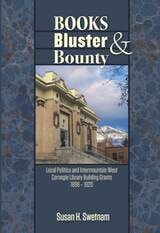
Books, Bluster, and Bounty
Local Politics and Carnegie Library Building Grants in the Intermountain West, 1890-1920Susan H. Swetnam
Utah State University Press, 2012
Books, Bluster, and Bounty examines a cross-section of Carnegie library applications to determine how local support was mustered for cultural institutions in the late nineteenth and early twentieth century West. This comparative study considers the entire region between the Rockies and the Cascades/Sierras, including all of Idaho, Utah, Nevada, and Arizona; western Montana, Wyoming, and Colorado; eastern Oregon and Washington; and small parts of California and New Mexico. The author's purpose is to address not only the how of the process but also the variable why. Although virtually all citizens and communities in the West who sought Carnegie libraries expected tangible benefits for themselves that were only tangentially related to books, what they specifically wanted varied in correlation with the diverse nature of western communities. By looking at the detailed records of the Carnegie library campaigns, the author is able to provide an alternative lens through which to perceive and map the social-cultural makeup and town building of western communities at the turn of the century.
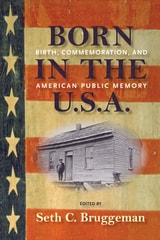
Born in the U.S.A.
Birth, Commemoration, and American Public MemorySeth C. Bruggeman
University of Massachusetts Press, 2012
Beyond asking why it is that Americans care about birthplaces and how they choose which ones to commemorate, Born in the U.S.A. offers insights from historians, curators, interpretive specialists, and others whose experience speaks directly to the challenges of managing historical sites. Each essay points to new ways of telling old stories at these mainstays of American memory. The case of the modern house museum receives special attention in a provocative concluding essay by Patricia West.
In addition to West and the editor, contributors include Christine Arato, Dan Currie, Keith A. Erekson, David Glassberg, Anna Thompson Hajdik, Zachary J. Lechner, Paul Lewis, Hilary Iris Lowe, Cynthia Miller, Laura Lawfer Orr, Robert Paynter, Angela Phelps, and Paul Reber.
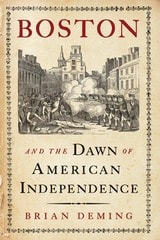
Boston and the Dawn of American Independence
Brian Deming
Westholme Publishing, 2013
In 1760, no one could imagine the American colonies revolting against Great Britain. The colonists were not hungry peasants groaning under the whip of a brute. They lived well. Land was cheap, wages were good, opportunities abounded. While many colonists had been in the New World for generations, they identified with Britain, and England was still “home.” Yet in the space of just fifteen years these sturdy bonds snapped. Boston—a town of just 16,000—lit the fire for American Independence. Brian Deming explains how and why in his lucid, lively, and deeply researched Boston and the Dawn of American Independence.
To dodge British taxes, Boston merchants for as long as anyone could remember had routinely smuggled in molasses from French and Spanish possessions in the Caribbean. Boston distillers transformed this sweet cargo into rum, the liquid gold traded around the world. But British authorities cracked down on smuggling and imposed the Sugar Act to help pay for the debts incurred during their wars against France. Then came the hated Stamp Act, a tax on documents, newspapers, and printed materials of all kinds. In courtrooms, in the press, and in the streets, Bostonians rallied in protest against taxation without representation. As anger swept America, Boston was at the center of the storm, which burst forth with the infamous massacre and the Boston Tea Party. By 1775, open warfare erupted at Lexington, Concord, and Bunker Hill. Boston and the Dawn of American Independence ties these scenes together with the people of the time, including John and Sam Adams, John Hancock, and Paul Revere, as well as Thomas Hutchinson, the beleaguered Massachusetts royal governor, and James Otis, the bombastic, unstable early patriot. Readers hear their voices, but also those of many amazing, colorful, and memorable personalities— feisty mob leaders, defiant Tories, terrified townspeople. Deming illuminates this epic story with views of everyday life inside taverns, outside newspaper offices, and along the wharves, and the political dramas in London and Philadelphia that shaped the destiny of an empire and gave rise to the world’s first modern democracy.
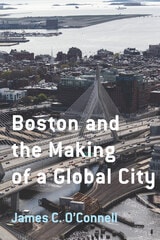
Boston and the Making of a Global City
James C. O’Connell
University of Massachusetts Press, 2025
In the late twentieth century the American and global economy shifted from manufacturing toward a knowledge industry. Following an economic low point several decades earlier, the city of Boston took advantage of the new era of globalization, fueled by dramatic advances in telecommunications, computer power, and air and sea travel, as well as its own impressive intellectual capital.
Boston and the Making of a Global City pulls together scholarship, media stories, personal interviews, and city planning documents to tell the story of Boston’s historical trajectory, as it quickly became a competitive global hub. Starting with its role as a colonial port and nineteenth-century maritime power, but moving quickly forward, the book describes how Boston capitalized on its strengths in higher education and such innovation sectors as life sciences, healthcare, information technology, and finance. Author James O’Connell traces the historical sweep of global flows—trade and supply chains, innovation and the dissemination of knowledge, investment, transportation, tourism, telecommunications, and immigration—that have shaped the city and region’s development. This volume also addresses the economic, social, and environmental challenges that Boston currently faces and how it is strategically positioned to confront them going forward.

Boundaries of Repair
Memory, Emotion, and Mobility across Timor-Leste and IndonesiaVictoria Sakti
National University of Singapore Press, 2026
A study of Timorese communities that offers a human perspective on post-conflict reconciliation.
Violent conflict may end in a kind of peace. But reconciliation processes do not always work, let alone bring healing. How are families and communities to rebuild their lives when old divisions, pain, and memories still linger? Centering on social repair, this beautifully crafted study explores how families and communities in Timor-Leste and exile communities in Indonesia live with the enduring consequences of political violence, forced separation, and displacement after twenty-four years of Indonesian occupation.
Following relationships across borders and between generations, Boundaries of Repair shows how ruptures in kinship and community life reverberate across time and space, and even between the living and the dead. Rather than treating repair as a state-driven undertaking, the book reveals social repair as an uneven, fragile, and ongoing process, sustained through everyday care practices, memory work, emotional labor, and creative acts of negotiation in contexts marked by impunity and unresolved loss.
By foregrounding what it means to live with damage that cannot be fully repaired, the book challenges dominant assumptions about justice, healing, and closure. It offers a powerful account of how people renegotiate relationships, boundaries, and belonging amid traces of violence, contributing new insights to debates on post-conflict recovery, memory, displacement, and the limits of reconciliation.
Bourgeois Dignity
Why Economics Can't Explain the Modern WorldDeirdre Nansen McCloskey
University of Chicago Press, 2010
The big economic story of our times is not the Great Recession. It is how China and India began to embrace neoliberal ideas of economics and attributed a sense of dignity and liberty to the bourgeoisie they had denied for so long. The result was an explosion in economic growth and proof that economic change depends less on foreign trade, investment, or material causes, and a whole lot more on ideas and what people believe.
Or so says Deirdre N. McCloskey in Bourgeois Dignity, a fiercely contrarian history that wages a similar argument about economics in the West. Here she turns her attention to seventeenth- and eighteenth-century Europe to reconsider the birth of the industrial revolution and the rise of capitalism. According to McCloskey, our modern world was not the product of new markets and innovations, but rather the result of shifting opinions about them. During this time, talk of private property, commerce, and even the bourgeoisie itself radically altered, becoming far more approving and flying in the face of prejudices several millennia old. The wealth of nations, then, didn’t grow so dramatically because of economic factors: it grew because rhetoric about markets and free enterprise finally became enthusiastic and encouraging of their inherent dignity.
An utterly fascinating sequel to her critically acclaimed book The Bourgeois Virtues, Bourgeois Dignity is a feast of intellectual riches from one of our most spirited and ambitious historians—a work that will forever change our understanding of how the power of persuasion shapes our economic lives.
Boxcar Politics
The Hobo in U.S. Culture and Literature, 1869-1956John Lennon
University of Massachusetts Press, 2014
John Lennon maps the rise and demise of the political hobo from the nineteenth-century introduction of the transcontinental railroad to the Federal Aid Highway Act of 1956. Intertwining literary, historical, and theoretical representations of the hobo, he explores how riders and writers imagined alternative ways that working-class people could use mobility to create powerful dissenting voices outside of fixed hierarchal political organizations. Placing portrayals of hobos in the works of Jack London, Jim Tully, John Dos Passos, and Jack Kerouac alongside the lived reality of people hopping trains (including hobos of the IWW, the Scottsboro Boys, and those found in numerous long-forgotten memoirs), Lennon investigates how these marginalized individuals exerted collective political voices through subcultural practices.
Bread, Justice, and Liberty
Grassroots Activism and Human Rights in Pinochet's ChileAlison J. Bruey
University of Wisconsin Press, 2020
As Bruey shows, crucial to the popular movement built in the 1970s were the activism of both men and women and the coalition forged by liberation-theology Catholics and Marxist-Left militants. These alliances made possible the mass protests of the 1980s that paved the way for Chile's return to democracy, but the changes fell short of many activists' hopes. Their grassroots demands for human rights encompassed not just an end to state terror but an embrace of economic opportunity and participatory democracy for all.
Deeply grounded by both extensive oral history interviews and archival research, Bread, Justice, and Liberty offers innovative contributions to scholarship on Chilean history, social movements, popular protest and democratization, neoliberal economics, and the Cold War in Latin America.
Brewtown Tales
More Stories from Milwaukee and BeyondJohn Gurda
Wisconsin Historical Society Press, 2022

British Working-Class and Radical Writing Since 1700
Edited by John Goodridge and Adam Bridgen
University of London Press, 2025
At a time when working-class writing is gaining long-overdue recognition, British Working-Class and Radical Writing Since 1700 explores the intersection of class and literature over more than three centuries. This volume brings together leading scholars to examine the problems faced by working-class writers and the impact of class on themes such as feminism and anti-imperialism. Spanning from early laboring-class poets to contemporary memoirists, the collection revisits figures like John Clare and Ethel Carnie Holdsworth and also recovers overlooked voices and texts.
Covering poetry, fiction, drama, and political writing, the book investigates the relationship between class and literary production, offering fresh perspectives on how working-class and radical literature has shaped British cultural history. From the Romantic-era resistance of laboring poets to mid-century miners’ novels and the evolution of contemporary working-class memoirs, these essays reveal how literature has served as both a site of struggle and a tool of empowerment.
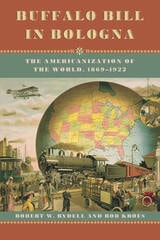
Buffalo Bill in Bologna
The Americanization of the World, 1869-1922Robert W. Rydell and Rob Kroes
University of Chicago Press, 2005
Buffalo Bill in Bologna reveals that the process of globalizing American mass culture began as early as the mid-nineteenth century. In fact, by the end of World War I, the United States already boasted an advanced network of culture industries that served to promote American values. Rydell and Kroes narrate how the circuses, amusement parks, vaudeville, mail-order catalogs, dime novels, and movies developed after the Civil War—tools central to hastening the reconstruction of the country—actually doubled as agents of American cultural diplomacy abroad. As symbols of America's version of the "good life," cultural products became a primary means for people around the world, especially in Europe, to reimagine both America and themselves in the context of America's growing global sphere of influence. Paying special attention to the role of the world's fairs, the exporting of Buffalo Bill's Wild West show to Europe, the release of The Birth of a Nation, and Woodrow Wilson's creation of the Committee on Public Information, Rydell and Kroes offer an absorbing tour through America's cultural expansion at the turn of the century. Buffalo Bill in Bologna is thus a tour de force that recasts what has been popularly understood about this period of American and global history.
Building a New Biocultural Synthesis
Political-Economic Perspectives on Human BiologyAlan H. Goodman and Thomas L. Leatherman, Editors
University of Michigan Press, 1998

Building for the Army in the Age of Empires
Modern Military Infrastructure and the Urban ExperienceDragan Damjanovic
Central European University Press, 2027
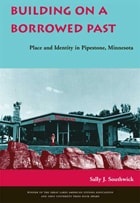
Building on a Borrowed Past
Place and Identity in Pipestone, MinnesotaSally J. Southwick
Ohio University Press, 2005
Why is there a national monument near a small town on the Minnesota prairie? Why do the town’s residents dress as Indians each summer and perform a historical pageant based on a Victorian-era poem? To answer such questions, Building on a Borrowed Past: Place and Identity in Pipestone, Minnesota shows what happens when one culture absorbs the heritage of another for civic advantage.
Founded in 1874, Pipestone was named for the quarries where regional tribes excavated soft stone for making pipes. George Catlin and Henry Wadsworth Longfellow described the place and its tribal history. Promotion by white residents of the quarries as central to America’s Indian heritage helped Pipestone obtain a federal Indian boarding school in the 1890s and a national monument in the 1930s. The annual “Song of Hiawatha” pageant attracted tourists after World War II. Sally J. Southwick’s prizewinning study demonstrates how average, small–town citizens contributed to the generic image of “the Indian” in American culture.
Examining oral histories, memoirs, newspapers, federal documents, civic group records, and promotional literature, Southwick focuses on the role of middle–class individuals in establishing a historical, place–based identity. Building on a Borrowed Past reveals how identities are formed through adaptation of cultural, spiritual, racial, and historical symbols.
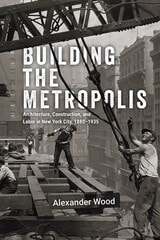
Building the Metropolis
Architecture, Construction, and Labor in New York City, 1880–1935Alexander Wood
University of Chicago Press, 2025
Between the 1880s and the 1930s, New York City experienced explosive growth as nearly a million buildings, dozens of bridges and tunnels, hundreds of miles of subway lines, and thousands of miles of streets were erected to meet the needs of an ever-swelling population. This landscape—jagged with skyscrapers, rattling with the sound of mass transit, alive with people—made the city world-famous.
Building the Metropolis offers a revelatory look at this era of urban development by asking, “Who built New York, and how?” Focusing on the work of architects, builders, and construction workers, Alexander Wood chronicles the physical process of the city’s rapid expansion. New York’s towering buildings and busy thoroughfares aren’t just stylish or structural marvels, Wood shows, but the direct result of the many colorful personalities who worked in one of the city’s largest industries. This development boom drew on the resources of the whole community and required money, political will, creative vision, entrepreneurial drive, skilled workmanship, and hard physical labor. Wood shows this to be an even larger story as well. As cities became nodes in a regional, national, and global economy, the business of construction became an important motor of economic, political, and social development. While they held drastically different views on the course of urban growth, machine politicians, reformers, and radicals alike were all committed to city building on an epic scale.
Drawing on resources that include city archives and the records of architecture firms, construction companies, and labor unions, Building the Metropolis tells the story of New York in a way that’s epic, lively, and utterly original.
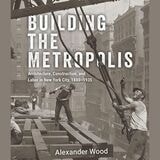
Building the Metropolis
Architecture, Construction, and Labor in New York City, 1880–1935Alexander Wood
University of Chicago Press, 2025
A sweeping history of New York that chronicles the construction of one of the world’s great cities.
Between the 1880s and the 1930s, New York City experienced explosive growth as nearly a million buildings, dozens of bridges and tunnels, hundreds of miles of subway lines, and thousands of miles of streets were erected to meet the needs of an ever-swelling population. This landscape—jagged with skyscrapers, rattling with the sound of mass transit, alive with people—made the city world-famous.
Building the Metropolis offers a revelatory look at this era of urban development by asking, “Who built New York, and how?” Focusing on the work of architects, builders, and construction workers, Alexander Wood chronicles the physical process of the city’s rapid expansion. New York’s towering buildings and busy thoroughfares aren’t just stylish or structural marvels, Wood shows, but the direct result of the many colorful personalities who worked in one of the city’s largest industries. This development boom drew on the resources of the whole community and required money, political will, creative vision, entrepreneurial drive, skilled workmanship, and hard physical labor. Wood shows this to be an even larger story as well. As cities became nodes in a regional, national, and global economy, the business of construction became an important motor of economic, political, and social development. While they held drastically different views on the course of urban growth, machine politicians, reformers, and radicals alike were all committed to city building on an epic scale.
Drawing on resources that include city archives and the records of architecture firms, construction companies, and labor unions, Building the Metropolis tells the story of New York in a way that’s epic, lively, and utterly original.
Bullets and Fire
Lynching and Authority in Arkansas, 1840-1950Guy Lancaster
University of Arkansas Press, 2017
Among the topics discussed are the lynching of slaves, the Arkansas Council of the Association of Southern Women for the Prevention of Lynching, the 1927 lynching of John Carter in Little Rock, and the state’s long opposition to a federal anti-lynching law.
Throughout, the work reveals how the phenomenon of lynching—as the means by which a system of white supremacy reified itself, with its perpetrators rarely punished and its defenders never condemned—served to construct authority in Arkansas. Bullets and Fire will add depth to the growing body of literature on American lynching and integrate a deeper understanding of this violence into Arkansas history.
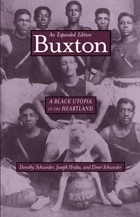
Buxton
A Black Utopia in the Heartland, An Expanded EditionDorothy Schwieder
University of Iowa Press, 2003
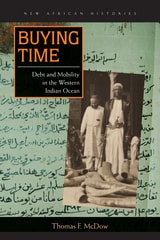
Buying Time
Debt and Mobility in the Western Indian OceanThomas F. McDow
Ohio University Press, 2018
In Buying Time, Thomas F. McDow synthesizes Indian Ocean, Middle Eastern, and East African studies as well as economic and social history to explain how, in the nineteenth century, credit, mobility, and kinship knit together a vast interconnected Indian Ocean region. That vibrant and enormously influential swath extended from the desert fringes of Arabia to Zanzibar and the Swahili coast and on to the Congo River watershed.
In the half century before European colonization, Africans and Arabs from coasts and hinterlands used newfound sources of credit to seek out opportunities, establish new outposts in distant places, and maintain families in a rapidly changing economy. They used temporizing strategies to escape drought in Oman, join ivory caravans in the African interior, and build new settlements.
The key to McDow’s analysis is a previously unstudied trove of Arabic business deeds that show complex variations on the financial transactions that underwrote the trade economy across the region. The documents list names, genealogies, statuses, and clan names of a wide variety of people—Africans, Indians, and Arabs; men and women; free and slave—who bought, sold, and mortgaged property. Through unprecedented use of these sources, McDow moves the historical analysis of the Indian Ocean beyond connected port cities to reveal the roles of previously invisible people.