Results by title
4030 books match the query 'Language Arts & Disciplines' and 126 start with b
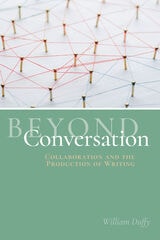
Beyond Conversation
Collaboration and the Production of WritingWilliam Duffy
Utah State University Press, 2020
While interrogating the institutional politics that circulate around debates about collaboration, this book offers a concise history of collaborative writing theory while proposing a new set of commonplaces for understanding the labor of coauthorship. Specifically, Beyond Conversation outlines an interactionist theory that explains collaboration as the rhetorical capacity that manifests in the discursive engagements coauthors enter into with the objects of their writing.
Drawing on new materialist philosophies, post-qualitative inquiry, and interactionist rhetorical theory, Beyond Conversation challenges writing and literacy educators to recognize the pedagogical benefits of collaborative writing in the work they do both as writers and as teachers of writing. The book will reinvigorate how teachers, scholars, and administrators advocate for the importance of collaborative writing in their work.
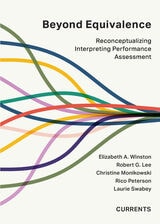
Beyond Equivalence
Reconceptualizing Interpreting Performance AssessmentElizabeth A. Winston
Gallaudet University Press, 2023
There is a longstanding need for valid, reliable measurements of interpreting competence. Although rubrics and checklists are commonly used in both academic and employment settings, a review of available rubrics indicates that many do not focus on interpreting performance. Traditional metrics for sign language interpreting often conflate language proficiency with interpreting proficiency. Conflating fundamental aspects of language in use—vocabulary, grammar, and prosody— with fundamental aspects of interpretation—content, intent, and monitoring—compromises the valid assessment of interpreting proficiency. Beyond Equivalence: Reconceptualizing Interpreting Performance Assessment argues for a shift toward more nuanced and evidence-based conceptualizations of interpreting, communication, and meaning to improve the creation and use of rubrics for assessment in interpreter education, certification, and professional development.
This inaugural volume in the Currents series introduces a rubric and accompanying scale, which can be used to assess both simultaneous and consecutive interpreting performance in terms of both process and product, in both signed and spoken language interpreting, and in a variety of settings. Beyond Equivalence offers an appreciation of the multivarious nature of meaning in the interpreting process and presents a new paradigm for the measurement of interpreting proficiency.
Beyond Grammar
An Experience-Based Theory of LanguageRens Bod
CSLI, 1998
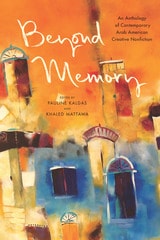
Beyond Memory
An Anthology of Contemporary Arab American Creative NonfictionPauline Kaldas
University of Arkansas Press, 2020
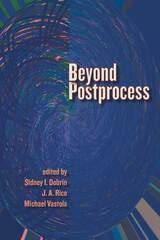
Beyond Postprocess
Sidney I. Dobrin, J.A. Rice, and Michael Vastola
Utah State University Press, 2011
Beyond Postprocess offers a vigorous, provocative discussion of postprocess theory in its contemporary profile. Fueled by something like a fundamental refusal to see writing as self-evident, reducible, and easily explicable, the contributors rethink postprocess, suggesting that there is no easily defined moment or method that could be called postprocess. Instead, each contribution to this collection provides a unique and important example of what work beyond postprocess could be.
Since postprocess theory in writing studies first challenged traditional conceptions of writing and the subject who writes, developments there have continued to push theorists of writing in a number of promising theoretical directions. Spaces for writing have arisen that radically alter ideological notions of space, rational thinking, intellectual property and politics, and epistemologies; and new media, digital, and visual rhetorics have increasingly complicated the scene, as well.
Contributors to Beyond Postprocess reconsider writing and writing studies through posthumanism, ecology, new media, materiality, multimodal and digital writing, institutional critique, and postpedagogy. Through the lively and provocative character of these essays, Beyond Postprocess aims to provide a critical site for nothing less than the broad reevaluation of what it means to study writing today. Its polyvocal considerations and conclusions invest the volume with a unique potential to describe not what that field of study should be, but what it has the capacity to create. The central purpose of Beyond Postprocess is to unleash this creative potential.
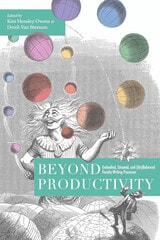
Beyond Productivity
Embodied, Situated, and (Un)Balanced Faculty Writing ProcessesKim Hensley Owens
Utah State University Press, 2023
This collection positions scholarly writers' ways of writing as a form of flexible, evolving knowledge. By exhibiting what is lost and gained through successive rounds of transformation and adaptation over time, the contributors offer a sustainable understanding and practice of process—one that looks beyond productivity as the primary measure of success. Each presents a fluid understanding of the writing process, illustrating its deeply personal nature and revealing how fragmented and disjointed methods and experiences can highlight what is precious about writing.
Beyond Productivity determines anew the use and value of scholarly writing and the processes that produce it, both within and beyond the context of the losses, constraints, and adaptations associated with the COVID-19 pandemic.
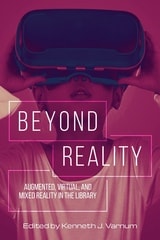
Beyond Reality
Augmented, Virtual, and Mixed Reality in the LibraryKenneth J. Varnum
American Library Association, 2019
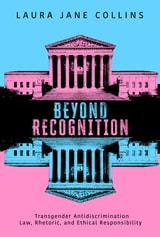
Beyond Recognition
Transgender Antidiscrimination Law, Rhetoric, and Ethical ResponsibilityCollins, Laura Jane
University of Alabama Press, 2026
A bold and original analysis of how the complexity of legal struggles over transgender rights is shaped not only by politics but by a deeper cultural anxiety about the meaning of sex itself.
Beyond Recognition: Transgender Antidiscrimination Law, Rhetoric, and Ethical Responsibility is a timely analysis that challenges the idea of transgender antidiscrimination law as a simple matter of inclusion or exclusion. Far from treating the law as a straightforward recognition project, Laura Jane Collins employs a rhetorically responsive approach that reveals how legal systems both reflect and shape our deepest uncertainties about sex, identity, and justice.
Through close readings of Title VII case law, state-level legislation such as California’s Fair Employment and Housing Act, and legislative debates surrounding bathroom access and trans rights, Collins exposes the deep-seated anxieties driving contemporary legal debates. While courts, policymakers, and advocates struggle to construct legal protections, the very act of defining sex within the law exposes law’s limitations.
Rather than condemning the law’s failures or romanticizing its liberatory potential, Collins calls for a more self-reflective, ethically engaged response. She argues that our demand for legal clarity often conceals a broader discomfort with ambiguity—and that the law’s so-called shortcomings may in fact reflect our own refusal to confront the complexity of sex as a category and system of power.
A vital contribution to scholarship in law and rhetoric, gender studies, and critical legal theory, Beyond Recognition invites a deeper reckoning with both legal frameworks and personal responsibility. It offers a compelling perspective on the evolving landscape of transgender rights and the cultural anxieties that continue to shape it.
Beyond The Barricades
Nicaragua and the Struggle for the Sandinista Press, 1979–1998Adam Jones
Ohio University Press, 2002
Throughout the 1980s, Barricada, the official daily newspaper of the ruling Sandinista Front, played the standard role of a party organ, seeking the mobilize the Nicaraguan public to support the revolutionary agenda. Beyond the Barricades, however, reveals a story that is both more intriguing and much more complex. Even during this period of sweeping transformation and outside military siege, another, more professional agenda also motivated Barricada’s journalists and editors.
When the Sandinistas unexpectedly fell from power in the 1990 elections, Barricada gained a substantial degree of autonomy that allowed it to explore a more balanced and nuanced journalism “in the national interest.” This new orientation, however, ran afoul of more orthodox party leaders, who gradually gained the upper hand in the bitter internal struggle that wracked the Sandinista Front in the early 1990s. The paper closed its doors in January 1998.
Adam Jones’s outstanding study offers an unprecedented behin-the-scenes looks at Barricada’s two decades of evolution and dissolution. It also presents an intimate portrait of a key revolutionary institution and the memorable individuals who were a part of it.

Beyond Translation
Essays toward a Modern PhilologyA. L. Becker
University of Michigan Press, 2000
Beyond the Archives
Research as a Lived ProcessEdited by Gesa E. Kirsch and Liz Rohan Foreword by Lucille M. Schultz
Southern Illinois University Press, 2008
This collection of highly readable essays reveals that research is not restricted to library archives. When researchers pursue information and perspectives from sources beyond the archives—from existing people and places— they are often rewarded with unexpected discoveries that enrich their research and their lives.
Beyond the Archives: Research as a Lived Process presents narratives that demystify and illuminate the research process by showing how personal experiences, family history, and scholarly research intersect. Editors Gesa E. Kirsch and Liz Rohan emphasize how important it is for researchers to tap into their passions, pursuing research subjects that attract their attention with creativity and intuition without limiting themselves to traditional archival sources and research methods.
Eighteen contributors from a number of disciplines detail inspiring research opportunities that led to recently published works, while offering insights on such topics as starting and finishing research projects, using a wide range of types of sources and methods, and taking advantage of unexpected leads, chance encounters and simple clues. In addition, the narratives trace the importance of place in archival research, the parallels between the lives of research subjects and researchers, and explore archives as sites that resurrect personal, cultural, and historical memory.
Beyond the Archives sheds light on the creative, joyful, and serendipitous nature of research, addressing what attracts researchers to their subjects, as well as what inspires them to produce the most thorough, complete, and engaged scholarly work. This timely and essential volume supplements traditional-method textbooks and effectively models concrete practices of retrieving and synthesizing information by professional researchers.
Beyond the Checkpoint
Visual Practices in America's Global War on TerrorRebecca A. Adelman
University of Massachusetts Press, 2014
Tracing the connections between citizenship and spectatorship, and moving beyond the close reading of visual representations, this book focuses on the institutions and actors that create, monitor, and regulate the visual landscape of the GWOT. Adelman looks around and through common images to follow the complex patterns of practice by which institutions and audiences engage them in various contexts. In the process, she proposes a new methodology for studying visual cultures of conflict, and related phenomena like violence, terror, and suffering that are notoriously difficult to represent.
Attending to previously unanalyzed dimensions of this conflict, this book illustrates the complexity of GWOT visual culture and the variegated experiences of citizenship that result as Americans navigate this terrain.
Beyond the Makerspace
Making and Relational RhetoricsAnn Shivers-McNair
University of Michigan Press, 2021
Beyond the Makerspace contributes not only to our understanding of making and makerspaces, but also to our understanding of how to study making—and meaning making, more broadly—in ways that examine and intervene in the marking of difference. Thus, the book examines what (and whose) values and practices we are taking up when we identify as makers or when we turn a writing classroom or a library space into a makerspace.
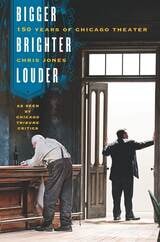
Bigger, Brighter, Louder
150 Years of Chicago Theater as Seen by "Chicago Tribune" CriticsChris Jones
University of Chicago Press, 2013
The Chicago of today, on the other hand, is regarded as one of the world’s premier cities for theater, and no one has had a more consistent front-row seat to its ascendance than the Chicago Tribune theater critics. Bigger, Brighter, Louder weaves together more than 150 years of Tribune reviews into a compelling narrative, pairing full reviews with commentary and history. With a sharp eye for telling details and a keen sense of historical context, Jones, longtime chief Tribune theater critic, takes readers through decades of highs and lows, successes and failures.
The book showcases fascinating early reviews of actors and shows that would go on to achieve phenomenal success, including a tryout of A Raisin in the Sun with newcomer Sidney Poitier and the first major review of The Producers. It also delves into the rare and the unusual, such as a previously unpublished Tennessee Williams interview and a long conversation with Edward Albee’s mother. With reviews from Claudia Cassidy, Peregine Pickle, William Leonard, and more, many never collected before, Bigger, Brighter, Louder offers a unique lasting record of an ephemeral art and a riveting look at the history behind Chicago’s rise to theatrical greatness.
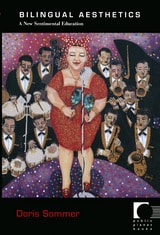
Bilingual Aesthetics
A New Sentimental EducationDoris Sommer
Duke University Press, 2004
Sommer encourages readers to entertain the creative possibilities inherent in multilingualism. With her characteristic wit and love of language, she focuses on humor—particularly bilingual jokes—as the place where tensions between and within cultures are played out. She draws on thinking about humor and language by a range of philosophers and others, including Sigmund Freud, Immanuel Kant, Ludwig Wittgenstein, Hannah Arendt, and Mikhail Bakhtin. In declaring the merits of allowing for crossed signals, Sommer sends a clear message: Making room for more than one language is about value added, not about remediation. It is an expression of love for a contingent and changing world.
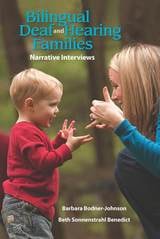
Bilingual Deaf and Hearing Families
Narrative InterviewsBarbara Bodner-Johnson
Gallaudet University Press, 2012
This study emphasizes the importance of family support for deaf members, particularly through the use of both American Sign Language (ASL) and spoken and/or written English. Research has shown how these factors influence such areas as a child’s development, performance in school, and relationships with brothers and sisters. In this volume, authors Barbara Bodner-Johnson and Beth S. Benedict concentrate on the vital, positive effects of bilingualism and how families that share their experiences with other families can enhance all of their children’s achievement and enrichment.
Bilingual Deaf and Hearing Families: Narrative Interviews describes the experiences of ten families who have at least one deaf family member. In five of the families, the parents are hearing and they have a deaf child; two of the children in these families have cochlear implants. In three families, both the parents and children are deaf. In one family, the parents are deaf and their daughter is hearing; and in one family, the parents and one child are deaf and they all have cochlear implants, and the deaf child’s twin is hearing.
The interviews were conducted in the families’ homes using set topics and questions. The family discussions cover a wide range of subjects: cochlear implants, where they live, their thoughts about family relationships, how they participate in the Deaf community, how they arrive at certain decisions, their children’s friendships, and the goals and resiliencies they have as a family.
Bilingualism and Identity in Deaf Communities
Melanie Metzger
Gallaudet University Press, 2000
Is perception reality? Editor Melanie Metzger investigates the cultural perceptions by and of deaf people around the world in Bilingualism and Identity in Deaf Communities.
“All sociocultural groups offer possible solutions to the dilemma that a deaf child presents to the larger group,” write Claire Ramsey and Jose Antonio Noriega in their essay, “Ninos Milagrizados: Language Attitudes, Deaf Education, and Miracle Cures in Mexico.” In this case, Ramsey and Noriega analyze cultural attempts to “unify” deaf children with the rest of the community. Other contributors report similar phenomena in deaf communities in New Zealand, Nicaragua, and Spain, paying particular attention to how society’s view of deaf people affects how deaf people view themselves.
A second theme pervasive in this collection, akin to the questions of perception and identity, is the impact of bilingualism in deaf communities. Peter C. Hauser offers a study of an American child proficient in both ASL and Cued English while Annica Detthow analyzes “transliteration” between Spoken Swedish and Swedish Sign Language. Like its predecessors, this sixth volume of the Sociolinguistics in Deaf Communities series distinguishes itself by the depth and diversity of its research, making it a welcome addition to any scholar’s library.
Binary Tense
Henk J. Verkuyl
CSLI, 2008
Bioscientific Terminology
Words from Latin and Greek StemsDonald M. Ayers
University of Arizona Press, 1972
Separate sections on Latin and Greek derivations. Each section has 20 lessons—with assignments following each lesson—giving the user a vast technical vocabulary and increased word-recognition ability.
A Definitive Reference:
Hundreds of Greek and Latin stems, prefixes, and suffixes show the precise application of the classical languages to biological and medical usage. Topic-organized bibliography, index of bases.
Black Athena
Afroasiatic Roots of Classical Civilization, Volume I: The Fabrication of Ancient Greece, 1785-1985Edited by Martin Bernal
Rutgers University Press, 1987
Could Greek philosophy be rooted in Egyptian thought? Is it possible that the Pythagorean theory was conceived on the shores of the Nile and the Euphrates rather than in ancient Greece? Could it be that much of Western civilization was formed on the “Dark Continent”? For almost two centuries, Western scholars have given little credence to the possibility of such scenarios.
In Black Athena, an audacious three-volume series that strikes at the heart of today’s most heated culture wars, Martin Bernal challenges Eurocentric attitudes by calling into question two of the longest-established explanations for the origins of classical civilization. To use his terms, the Aryan Model, which is current today, claims that Greek culture arose as the result of the conquest from the north by Indo-European speakers, or “Aryans,” of the native “pre-Hellenes.” The Ancient Model, which was maintained in Classical Greece, held that the native population of Greece had initially been civilized by Egyptian and Phoenician colonists and that additional Near Eastern culture had been introduced to Greece by Greeks studying in Egypt and Southwest Asia. Moving beyond these prevailing models, Bernal proposes a Revised Ancient Model, which suggests that classical civilization in fact had deep roots in Afroasiatic cultures.
This long-awaited third and final volume of the series is concerned with the linguistic evidence that contradicts the Aryan Model of ancient Greece. Bernal shows how nearly 40 percent of the Greek vocabulary has been plausibly derived from two Afroasiatic languages—Ancient Egyptian and West Semitic. He also reveals how these derivations are not limited to matters of trade, but extended to the sophisticated language of politics, religion, and philosophy. This evidence, according to Bernal, greatly strengthens the hypothesis that in Greece an Indo-European–speaking population was culturally dominated by Ancient Egyptian and West Semitic speakers
Provocative, passionate, and colossal in scope, this volume caps a thoughtful rewriting of history that has been stirring academic and political controversy since the publication of the first volume.
Black Athena
The Afroasiatic Roots of Classical Civilation Volume III: The Linguistic EvidenceMartin Bernal
Rutgers University Press, 2020
What is classical about Classical civilization? In one of the most audacious works of scholarship ever written, Martin Bernal challenges the foundation of our thinking about this question. Classical civilization, he argues, has deep roots in Afroasiatic cultures. But these Afroasiatic influences have been systematically ignored, denied or suppressed since the eighteenth century—chiefly for racist reasons.
The popular view is that Greek civilization was the result of the conquest of a sophisticated but weak native population by vigorous Indo-European speakers—Aryans—from the North. But the Classical Greeks, Bernal argues, knew nothing of this “Aryan model.” They did not see their institutions as original, but as derived from the East and from Egypt in particular.
This long-awaited third and final volume of the series is concerned with the linguistic evidence that contradicts the Aryan Model of ancient Greece. Bernal shows how nearly 40 percent of the Greek vocabulary has been plausibly derived from two Afroasiatic languages – Ancient Egyptian and West Semitic. He also reveals how these derivations are not limited to matters of trade, but extended to the sophisticated language of politics, religion, and philosophy. This evidence, according to Bernal, greatly strengthens the hypothesis that in Greece an Indo-European-speaking population was culturally dominated by Ancient Egyptian and West Semitic speakers.
Provocative, passionate, and colossal in scope, this volume caps a thoughtful rewriting of history that has been stirring academic and political controversy since the publication of the first volume.
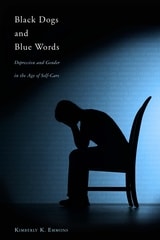
Black Dogs and Blue Words
Depression and Gender in the Age of Self-CareKimberly K. Emmons
Rutgers University Press, 2014
Black Dogs and Blue Words analyzes the rhetoric surrounding depression. Kimberly K. Emmons maintains that the techniques and language of depression marketing strategies--vague words such as "worry," "irritability," and "loss of interest"--target women and young girls and encourage self-diagnosis and self-medication. Further, depression narratives and other texts encode a series of gendered messages about health and illness.
As depression and other forms of mental illness move from the medical-professional sphere into that of the consumer-public, the boundary at which distress becomes disease grows ever more encompassing, the need for remediation and treatment increasingly warranted. Black Dogs and Blue Words demonstrates the need for rhetorical reading strategies as one response to these expanding and gendered illness definitions.
Black Identity
Rhetoric, Ideology, and Nineteenth-Century Black NationalismDexter B. Gordon
Southern Illinois University Press, 2006
Exploring the role of rhetoric in African American identity and political discourse
Dexter B. Gordon’s Black Identity: Rhetoric, Ideology, and Nineteenth-Century Black Nationalism explores the problem of racial alienation and the importance of rhetoric in the formation of black identity in the United States. Faced with alienation and disenfranchisement as a part of their daily experience, African Americans developed collective practices of empowerment that cohere as a constitutive rhetoric of black ideology. Exploring the origins of that rhetoric, Gordon reveals how the ideology of black nationalism functions in contemporary African American political discourse.
Rooting his study in the words and works of nineteenth-century black abolitionists such as Maria Stewart, David Walker, and Henry Garnet, Gordon explores the rapprochement between rhetorical theory, race, alienation, and the role of public memory in identity formation. He argues that abolitionists used language in their speeches, pamphlets, letters, petitions, and broadsides that established black identity in ways that would foster liberation and empowerment. The arguments presented here constitute the only sustained treatment of nineteenth-century black activists from a rhetorical perspective.
Gordon demonstrates the pivotal role of rhetoric in African American efforts to create a viable public voice. Understanding nineteenth-century black alienation—and its intersection with twentieth-century racism—is crucial to understanding the continued sense of alienation that African Americans express about their American experience. Gordon explains how the ideology of black nationalism disciplines and describes African American life for its own ends, exposing a central piece of the ideological struggle for the soul of America. The book is both a platform for further discussion and an invitation for more voices to join the discourse as we search for ways to comprehend the sense of alienation experienced and expressed by African Americans in contemporary society.
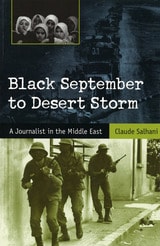
Black September to Desert Storm
A Journalist in the Middle EastClaude Salhani
University of Missouri Press, 1998
For more than twenty years, Claude Salhani traveled throughout the volatile Middle East as a photojournalist and reporter in search of the region's biggest stories. Wars, terrorist acts, demonstrations by religious extremists, and the flight of refugees were among the events he witnessed. "I have seen much through my lens . . . the most terrible cruelties, the most horrible suffering—and the most improbable and moving acts of love and generosity. I have been warmly received by kings, prime ministers, and secretaries of state. I have been shot at, kidnapped, and rifle-butted," writes Salhani in the prologue of this fascinating account.
From exclusive travels with former U.S. Secretary of State Henry Kissinger to intimate moments with combatants in the battle for Beirut to the forbidden world of drug smugglers in Lebanon, to the Iranian Revolution, and finally to the rise of Desert Storm, Salhani transports readers behind the scenes of many groundbreaking news stories. He proves that behind the front-page story we see, an equally intriguing tale is often hidden—that of the difficult, bizarre, even comical circumstances in which news is obtained.
Offering insight into the potent mixture of journalism and warfare, Black September to Desert Storm shares with readers an extraordinary journey into the headline-grabbing sagas that have plagued the Middle East in the last three decades. Salhani's "behind-the-lens" perspective will appeal to students of journalism and the Middle East, as well as anyone simply fascinated by the trials that many journalists undergo to capture "The Story."

Black Street Speech
Its History, Structure, and SurvivalBy John Baugh
University of Texas Press, 1983
In the minds of many, black street speech—the urban dialect of black Americans—bespeaks illiteracy, poverty, and ignorance. John Baugh challenges those prejudices in this brilliant new inquiry into the history, linguistic structure, and survival within white society of black street speech. In doing so, he successfully integrates a scholarly respect for black English with a humanistic approach to language differences that weds rigor of research with a keen sense of social responsibility.
Baugh's is the first book on black English that is based on a long-term study of adult speakers. Beginning in 1972, black men and women in Los Angeles, Philadelphia, Chicago, Austin, and Houston were repeatedly interviewed, in varied social settings, in order to determine the nature of their linguistic styles and the social circumstances where subtle changes in their speech appear. Baugh's work uncovered a far wider breadth of speaking styles among black Americans than among standard English speakers. Having detailed his findings, he explores their serious implications for the employability and education of black Americans.
Black Street Speech is a work of enduring importance for educators, linguists, sociologists, scholars of black and urban studies, and all concerned with black English and its social consequences.
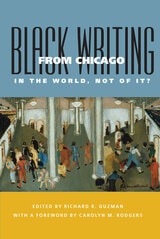
Black Writing from Chicago
In the World, Not of It?Edited by Richard R. Guzman. Foreword by Carolyn M. Rodgers
Southern Illinois University Press, 2006
Black Writing from Chicago: In the World, Not of It? takes readers on a cultural trip through Chicago’s literary history. Editor Richard R. Guzman compiles the first comprehensive collection of the works of Chicago’s black writers from 1861 to the present day. The anthology, which includes works from newspaper writing, poetry, fiction, drama, essays, and historical and social commentary, seeks not only to represent a broad range of writings but also to focus tightly on such themes as hope and despair, racism and equality, spirituality and religion. More than sixty writers, from the anonymous “J. W. M. (Colored)” to Ken Green, unfold a story that reflects the literary periods in black American history. Each author’s selection is preceded by a biographical and a bibliographical introduction. Readers interested in Chicago, race relations, and literature, as well as scholars of history, sociology, urban studies, and cultural studies, will find the collection invaluable.
Black or Right
Anti/Racist Campus RhetoricsLouis M. Maraj
Utah State University Press, 2020
Offering four Black rhetorics as antiracist means for rhetorical reclamation—autoethnography, hashtagging, inter(con)textual reading, and reconceptualized disruption—the book uses Black feminist relationality via an African indigenous approach. Maraj examines fluid, quotidian ways Black folk engage anti/racism at historically white institutions in the United States in response to violent campus spaces, educational structures, protest movements, and policy practice. Black or Right’s experimental, creative style strives to undiscipline knowledge from academic confinement. Exercising different vantage points in each chapter—autoethnographer, digital media scholar/pedagogue, cultural rhetorician, and critical discourse analyst—Maraj challenges readers to ecologically understand shifting, multiple meanings of Blackness in knowledge-making. Black or Right’s expressive form, organization, narratives, and poetics intimately interweave with its argument that Black folk must continuously invent “otherwise” in reiterative escape from oppressive white spaces.
In centering Black experiences, Black theory, and diasporic Blackness, Black or Right mobilizes generative approaches to destabilizing institutional whiteness, as opposed to reparative attempts to “fix racism,” which often paradoxically center whiteness. It will be of interest to both academic and general readers and significant for specialists in cultural rhetorics, Black studies, and critical theory.
Blank Verse
A Guide to Its History and UseRobert B. Shaw
Ohio University Press, 2007
With its compact but inclusive survey of more than four centuries of poetry, Blank Verse is filled with practical advice for poets of our own day who may wish to attempt the form or enhance their mastery of it. Enriched with numerous examples, Shaw’s discussions of verse technique are lively and accessible, inviting not only to apprentice poets but to all readers of poetry.
Shaw’s approach should reassure those who find prosody intimidating, while encouraging specialists to think more broadly about how traditional poetic forms can be taught, learned, practiced, and appreciated in the twenty-first century. Besides filling a conspicuous gap in literary history, Blank Verse points the way ahead for poets interested in exploring blank verse and its multitude of uses.
Blessed Are the Peacemakers
Small Histories during World War II, Letter Writing, and Family History MethodologySuzanne Kesler Rumsey
University of Alabama Press, 2021
Where family letters become history, and ordinary lives reveal the untold story of World War II.
In the summer of 2013, Suzanne Kesler Rumsey discovered hundreds of letters exchanged between her late grandparents, Miriam and Benjamin Kesler. The letters, written between 1941 and 1946, were filled with typical wartime sentiments: love and longing, anguish at being apart, uncertainty about the war and the country’s future, and attempts at humor to keep their spirits up. What is unusual about their story is that Ben Kesler was not writing from a theater of war. Instead, Ben, a member of the Dunkard Brethren Church, was a conscientious objector. He, along with about 12,000 other men, opted to join the Civilian Public Service (CPS) and contribute to “work of national importance” at one of the 218 CPS camps around the country.
In Blessed Are the Peacemakers: Small Histories during World War II, Letter Writing, and Family History Methodology, Rumsey has mined not only her grandparents’ letters but also archival research on CPS camps and historical data from several Mennonite and Brethren archives to recapture the narrative of Ben’s service at two different camps and of Miriam’s struggle to support herself and her husband financially at the young age of seventeen. Ben and Miriam’s life during the war was extraordinarily ordinary, spanning six years of unrecognized and humble work for their country. Ben was not compensated for his work in the camps, and Miriam stayed home and worked as a day laborer, as a live-in maid, as a farmhand, and in the family butcher shop in order to earn enough money to support them both. Small histories like that of her grandparents, Rumsey argues, provide a unique perspective on significant political and historical moments.
Blessed Are the Peacemakers also explores the rhetorical functions of letter writing as well as the methodology of family history writing. Ben and Miriam’s letters provide an apt backdrop to examine the genre, a relatively understudied mode of literacy. Rumsey situates the young couple’s correspondence within ars dictaminis, the art of letter writing, granting new insights into the genre and how personal accounts shape our understanding of historical events.

Blockchain
Sandra Hirsh and Susan Alman
American Library Association, 2019
This book in the Library Futures Series examines blockchain technology, a concept with far-reaching implications for the future of the information professions. Blockchain uses a distributed database (multiple devices not connected to a common processor) that organizes data into records (blocks) that have cryptographic validation. The data are timestamped and linked to previous records so that they can only be changed by those who own the encryption keys to write to the files. In this book, editors Hirsh and Alman offer a primer of what librarians and information professionals need to understand about blockchain technology. Several speculative visions for how blockchain could support the core work of libraries are included to help librarians understand the possibilities for improved operations and services. Featuring essays from a range of information professionals who have interest and experience in blockchain technologies, this book presents valuable ideas for exploration relevant to everyone interested in the future of librarianship.

Blueprint for Your Library Marketing Plan
A Guide to Help You Survive and ThrivePatricia H. Fisher
American Library Association, 2006

Bodies in Flux
Scientific Methods for Negotiating Medical UncertaintyChrista Teston
University of Chicago Press, 2017
Bodies in Flux explores the inventive ways humans and nonhumans work together to manufacture medical evidence. Each chapter draws on rhetorical theory to investigate a specific scientific method for negotiating medical uncertainty in cancer care, including evidential visualization, assessment, synthesis, and computation. Case studies unveil how doctors rely on visuals when deliberating about a patient’s treatment options, how members of the FDA use inferential statistics to predict a drug’s effectiveness, how researchers synthesize hundreds of clinical trials into a single evidence-based recommendation, and how genetic testing companies compute and commoditize human health. Teston concludes by advocating for an ethic of care that pushes back against the fetishization of certainty—an ethic of care that honors human fragility and bodily flux.
Bodies of Knowledge
Embodied Rhetorics in Theory and PracticeA. Abby Knoblauch
Utah State University Press, 2021
The pieces in Bodies of Knowledge draw explicit attention to the impact of the body on text, the impact of the body in text, the impact of the body as text, and the impact of the body upon textual production. The contributors investigate embodied rhetorics through the lenses of race and ethnicity, gender and sexuality, disability and pain, technologies and ecologies, clothing and performance, and scent, silence, and touch. In doing so, they challenge the (false) notion that academic knowledge—that is, “real” knowledge—is disembodied and therefore presumed white, middle class, cis-het, able-bodied, and male. This collection lays bare how myriad bodies invent, construct, deliver, and experience the processes of knowledge building.
Experts in the field of writing studies provide the necessary theoretical frameworks to better understand productive (and unproductive) uses of embodied rhetorics within the academy and in the larger social realm. To help meet the theoretical and pedagogical needs of the discipline, Bodies of Knowledge addresses embodied rhetorics and embodied writing more broadly though a rich, varied, and intersectional approach. These authors address larger questions around embodiment while considering the various impacts of the body on theories and practices of rhetoric and composition.
Contributors: Scot Barnett, Margaret Booker, Katherine Bridgman, Sara DiCaglio, Kristie S. Fleckenstein, Vyshali Manivannan, Temptaous Mckoy, Julie Myatt, Julie Nelson, Ruth Osorio, Kate Pantelides, Caleb Pendygraft, Nadya Pittendrigh, Kellie Sharp-Hoskins, Anthony Stagliano, Megan Strom
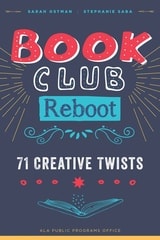
Book Club Reboot
71 Creative TwistsSarah Ostman
American Library Association, 2019
Book Repair
A How-To-Do-It ManualArtemis BonaDea
American Library Association, 2011
Book Repair
A How-To-Do-It ManualAmerican Library Association, 2011
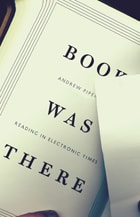
Book Was There
Reading in Electronic TimesAndrew Piper
University of Chicago Press, 2012
Booklist's 1000 Best Young Adult Books Since 2000
American Library Association, 2014
Books Under Fire
Pat R. Scales
American Library Association, 2015
Books Under Fire
A Hit List of Banned and Challenged Children's BooksPat R. Scales
American Library Association, 2021
In our polarized environment, the censorship and outright banning of children’s books which some deem to be controversial or objectionable remains a major concern for libraries. Intellectual freedom champion Scales returns to the fray with a new edition of her matchless guide, updating the focus to titles published since 2015 which have been the target of challenges. School and public librarians, LIS students, and classroom educators will find the assistance and support they need to defend these challenged books with an informed response while ensuring access to young book lovers. For each of the dozens of titles covered, readers will find
- a book summary;
- a report of the specific challenges;
- quotes from reviews, plus a list of awards and accolades;
- talking points for discussing the book's issues and themes;
- links to the book's website, additional resources about the book, and suggested further reading; and
- read-alikes that have been challenged for similar reasons.
Books in Motion
Connecting Preschoolers with Books through Art, Games, Movement, Music, Playacting, and PropsJulie Dietzel-Glair
American Library Association, 2013
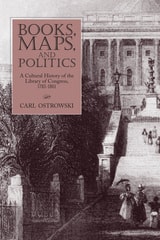
Books, Maps, and Politics
A Cultural History of the Library of Congress, 1783-1861Carl Ostrowski
University of Massachusetts Press, 2004
The author explores the relationship between the Library and the period's expanding print culture. He identifies the books that legislators required to be placed in the Library and establishes how these volumes were used. His analysis of the earliest printed catalogs of the Library reveals that law, politics, economics, geography, and history were the subjects most assiduously collected. These books provided government officials with practical guidance in domestic legislation and foreign affairs, including disputes with European powers over territorial boundaries.
Ostrowski also discusses a number of secondary functions of the Library, one of which was to provide reading material for the entertainment and instruction of government officials and their families. As a result, the richness of America's burgeoning literary culture from the 1830s to the 1860s was amply represented on the Library's shelves. For those with access to its Capitol rooms, the Library served an important social function, providing a space for interaction and the display and appreciation of American works of art.
Ostrowski skillfully demonstrates that the history of the Library of Congress offers a lens through which we can view changing American attitudes toward books, literature, and the relationship between the federal government and the world of arts and letters.

Borah
Marian C. McKenna
University of Michigan Press, 1961

Boss-Busters and Sin Hounds
Kansas City and Its StarHarry Haskell
University of Missouri Press, 2007
At the turn of the twentieth century, the Kansas City Star was a trust-busting newspaper acclaimed for its crusading progressive spirit; fifty years later it was a busted trust, targeted in the most important antitrust action ever brought against an American daily. Now Harry Haskell tells the tale of the Star’s rise and decline against the richly textured backdrop of Kansas City—the story of how a newspaper and a city grew together and ultimately grew apart.
Boss-Busters and Sin Hounds takes readers into the city room and executive offices of one of the most respected American newspapers, whose influence extended beyond its own community to international affairs. Re-creating life at the Star from the inside, the book traces the shifting fortunes of a great newspaper and the compelling “power of purpose” it exerted from the birth of the progressive movement in the 1880s to the 1950s.
This fascinating tale—with underlying themes of sin and redemption, high-minded ideals and gutter politics—is populated by a cast of larger-than-life characters, ranging from power brokers to presidents and including such Kansas City notables as Tom Pendergast, J. C. Nichols, and Frank Walsh. But at heart this is the story of three men with contrasting personalities and agendas who shaped the newspaper over more than three-quarters of a century: William Rockhill Nelson, among the last of the great “personal” editors from journalism’s golden age; the scholarly Henry J. Haskell, who led the Star to its peak of influence in the 1930s and ’40s; and Roy A. Roberts, who went on to combine the roles of newspaper publisher and political kingmaker.
Along the way, Haskell recounts such milestones as the Star’s role in the City Beautiful movement that helped transform America’s urban centers; the nation’s entry into two global wars; a bold but ill-starred experiment in employee ownership; and the paper’s on-again, off-again battle with Boss Pendergast’s legendary political machine. And he brings into focus issues that remain timely today, from social and political reform to the very role of newspapers in a democracy, while also drawing parallels with recent American history—disillusionment with liberalism, the hijacking of the GOP by the far right, America’s go-it-alone attitude—that are as alarming as they are instructive.
As Haskell shows, the evolution of American journalism from crusading newspapers to pawns of corporate culture was already under way in the early 1900s and was substantially complete by midcentury. Boss-Busters and Sin Hounds chronicles the glory days of an illustrious newspaper as it opens new windows on a city’s history.
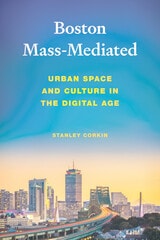
Boston Mass-Mediated
Urban Space and Culture in the Digital AgeStanley Corkin
University of Massachusetts Press, 2024
In the mid-nineteenth century, Boston fashioned itself as a global hub. By the early 1970s, it was barely a dot on the national picture. It had gained a reputation as a decaying city rife with crime and dysfunctional politics, as well as decidedly retrograde race relations, prominently exemplified by white resistance to school integration. Despite this historical ebb in its national and international presence, it still possessed the infrastructure—superb educational institutions such as Harvard and MIT, world-class sports teams like the Celtics and Red Sox, powerful media outlets like The Boston Globe, and extensive shipping capacity—required to eventually thrive in an age of global trade and mass communication.
In Boston Mass-Mediated, Stanley Corkin explores the power of mass media to define a place. He examines the tensions between the emergent and prosperous city of the late twentieth and early twenty-first centuries and its representation in a range of media genres such as news journalism, professional sports broadcasting, and popular films like Mystic River and The Departed. This mass media, with its ever-increasing digital reach, has emphasized a city restricted by tropes suggestive of an earlier Boston—racism, white ethnic crime, Catholicism, and a pre-modern insularity—even as it becomes increasingly international and multicultural. These tropes mediate our understanding and experience of the city. Using Boston as a case study, Corkin contends that our contemporary sense of place occurs through a media saturated world, a world created by the explosion of digital technology that is steeped in preconceptions.
Boundaries That Divide
How Journalists in Turkey Surrendered Their Power over PoliticsDefne Över
Rutgers University Press, 2026
Turkey presents a striking example of the most recent wave of global authoritarian turns. The two-decade-long transition in the country’s political system also transformed its media environment. As mainstream journalists gradually yielded their places to sycophants, much more willing to praise the government in their news, the mainstream media that once oversaw—however imperfectly—political decisions started devoting its full service to cheerleading the government. Simultaneously, a new sphere of critical journalism began to emerge, with mainstream media journalists joining their fellows in the peripheries of the media. Considering the transformation of Turkey’s news media as the decay of a democratic institution, this book asks, How does the media break down under the rule of an elected government?
Drawing on fieldwork and in-depth interviews, the book traces the ruling AKP’s manipulation of social divides to consolidate power and journalists’ navigation of the resulting climate of fear, hope, doubt, and anger. The book shows how Turkey’s news media surrendered its power over politics as some journalists embraced disinformation as a path to heightened status, others turned to self-censorship for protection, and still others resisted capture through continuous but fragmented efforts.
The book portrays journalists as central actors in media decay, while also revealing that resilience to decay emerges where rising demand for “news” meets the contentious mobilization of journalists. Although focused on Turkey, the book’s insights extend far beyond, offering urgent lessons about the future of journalism in an age of populism, polarization, and institutional erosion.
Boundaries of the Text
Epic Performances in South and Southeast AsiaJoyce Burkhalter Flueckiger and Laurie Sears, Editors
University of Michigan Press, 1991
Bounding Biomedicine
Evidence and Rhetoric in the New Science of Alternative MedicineColleen Derkatch
University of Chicago Press, 2016
Bounding Biomedicine centers on this boundary-changing era, looking at how consumer demand shook the health care hierarchy. Drawing on scholarship in rhetoric and science and technology studies, the book examines how the medical profession scrambled to maintain its position of privilege and prestige, even as its foothold appeared to be crumbling. Colleen Derkatch analyzes CAM-themed medical journals and related discourse to illustrate how members of the medical establishment applied Western standards of evaluation and peer review to test health practices that did not fit easily (or at all) within standard frameworks of medical research. And she shows that, despite many practitioners’ efforts to eliminate the boundaries between “regular” and “alternative,” this research on CAM and the forms of communication that surrounded it ultimately ended up creating an even greater division between what counts as safe, effective health care and what does not.
At a time when debates over treatment choices have flared up again, Bounding Biomedicine gives us a possible blueprint for understanding how the medical establishment will react to this new era of therapeutic change.
Boxing the Kangaroo
A Reporter's MemoirRobert J. Donovan
University of Missouri Press, 2000
"The host had brought out a pair of boxing gloves and asked the president if any of his friends would like to indulge in the Australian sport of boxing kangaroos. Once the president of the United States had selected me, there was almost no way out, unless I ran home to tell my mother."
In Boxing the Kangaroo: A Reporter's Memoir, Robert J. Donovan shares many exciting events that highlighted his stellar journalistic career. As an investigative reporter during five presidential administrations, Donovan has had many "insider" experiences. His memoir delightfully humanizes each of the five presidents he reported on: Truman, Eisenhower, Kennedy, Johnson, and Nixon.
Donovan began his career working as a night copyboy for the Buffalo Courier-Express, earning seven dollars a week. In 1937, he got a job as a reporter for the New York Herald Tribune, where he worked for many years. By 1942 the Herald Tribune had assigned Donovan to cover City Hall and the lively activities of Fiorello La Guardia. After his service in World War II he returned to the Herald Tribune to cover the man from Missouri who followed FDR. Ultimately, Donovan served as chief of the New York Herald Tribune Washington bureau and the Los Angeles Times Washington bureau.
Donovan traveled across the country with Harry S. Truman during his "Give 'Em Hell, Harry" campaign. He covered Dwight D. Eisenhower's election, about which he says there was never a doubt--Ike, the war hero, mesmerized the country. He was a personal friend of John F. Kennedy, having written about the President's PT-109 heroics in World War II, and was on the scene the day Kennedy was assassinated: "The drama in the second press bus, in which I rode in the presidential motorcade in Dallas, is unforgettable. `Why has the motorcade stopped?' a reporter asked as we drew near the Texas School Book Depository. . . . `I heard a shot,' another said. A voice in the rear contradicted him. `That was a motorcycle backfiring.'" Donovan would find out shortly before the rest of the world that, in fact, it was not a motorcycle backfiring, but the firing of an assassin's bullet that killed the nation's thirty-fifth president.
Boxing the Kangaroo is one of the best "I was there" accounts of American history. This fascinating book will appeal to journalists, American history buffs, and the general reader alike.
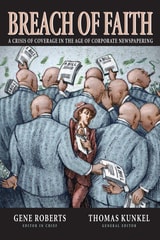
Breach of Faith
A Crisis of Coverage in the Age of Corporate NewspaperingGene Roberts
University of Arkansas Press, 2005
For more than two years, legendary editor Gene Roberts led a group of journalists in an unprecedented study of the newspaper industry for the American Journalism Review. This is the second volume of their findings. The first, Leaving Readers Behind: The Age of Corporate Newspapering, documented the storm of buying, selling, and consolidation that is transforming the American press. This second volume explores the consequences of these changes for ordinary communities and for the nation, arguing that they place democracy itself in peril.
Contributors include Peter Arnett, Mary Walton, Charles Layton, John Herbers, James McCartney, Carl Sessions Stepp, Lewis M. Simons, Chip Brown and Winnie Hu.