Results by title
2706 books match the query 'European' and 102 start with d

D. H. Lawrence
An Unprofessional StudyAnaïs Nin
Ohio University Press, 1964
In 1932, two years after D. H. Lawrence’s death, a young woman wrote a book about him and presented it to a Paris publisher. She recorded the event in her diary: “It will not be published and out by tomorrow, which is what a writer would like when the book is hot out of the oven, when it is alive within oneself. He gave it to his assistant to revise.” The woman was Anaïs Nin.
Nin examined Lawrence’s poetry, novels, essays, and travel writing. She analyzed and explained the more important philosophical concepts contained in his writings, particularly the themes of love, death, and religion, as well as his attention to primitivism and to women. But what Anaïs Nin brought to the explication of Lawrence’s writing was an understanding of the fusion of imaginative, intuitive, and intellectual elements from which he drew his characters, themes, imagery and symbolism.
D. H. Lawrence
The Croydon YearsBy Helen Corke, introduction by Warren Roberts
University of Texas Press, 1965
Croydon, England, was the setting of the famous three-way friendship of D. H. Lawrence, Jessie Chambers, and Helen Corke, all of whom made literary records of their association, and all of whom appeared as characters in Lawrence novels. Perhaps the most objective of these records were Helen Corke’s, which became difficult to acquire. Their scarcity and their continuing usefulness were the stimulus for publication of this volume, which contains in four statements Helen Corke’s “major comment on Lawrence the man and Lawrence the artist.”
The “Portrait of D. H. Lawrence, 1909–1910,” a section from Corke’s unpublished autobiography, gives the reader glimpses into the earliest stages of the Lawrence-Corke friendship, when Lawrence worked to bring meaning back into Corke’s life after she had suffered a tragic loss. The “Portrait” tells of conversations before a log fire, German lessons, the reading of poetry, and sessions over Lawrence’s manuscript “Nethermere,” which the publishers renamed The White Peacock. In “Portrait,” Corke tells of working with Lawrence on revising the proofs of this book, of Lawrence’s encouragement of her own literary efforts, of their wandering together in the Kentish hill country, and of her first meeting with Jessie Chambers.
“Lawrence’s ‘Princess’” continues the narrative of the triple friendship, carrying it to its sad ending, but with the focus on Jessie Chambers. Perceptively and sympathetically written, it throws a clarifying light on the psychology of Lawrence and presents with literary charm another human being—Jessie, the Miriam of Sons and Lovers.
In combined narrative-critique method, Corke, in the essay “Concerning The White Peacock,” relates Lawrence’s problems in writing this novel and gives an analysis of its literary quality.
Lawrence and Apocalypse is cast in the form of a “deferred conversation” in which Lawrence and Corke discuss his philosophical ideas as presented in his Apocalypse. Although the book was written to present Lawrence’s ideas, its significance reposes equally in Corke’s reaction to his thought. As a succinct statement of Lawrence’s teachings about the nature of humanity, it has unique value.
D. H. Lawrence
The Failure and the Triumph of ArtEliseo Vivas
Northwestern University Press, 1960
DECIPHERING RACE
WHITE ANXIETY, RACIAL CONFLICT, & THE TURN TO FICTION IN MID-VICTORIAN ENGLISH PROSELaura Callanan
The Ohio State University Press, 2005
In this manner these narratives confront the complexity, indeterminacy, and irrationality of both racial difference and the systems put in place to understand that difference. Deciphering Race unpacks this narrative turn to the aesthetic in writings by white English individuals and thus reveals the instability at the heart of cultural understanding of race and racial tropes at mid-century. This series of readings will help to see how figurative structures, while providing a bridge between different cultures and epistemologies, also reinforce a distance that keeps groups separate. Only by disentangling these structures, by addressing and unpacking our assumptions and narratives about those different from ourselves, and by understanding our deep cultural anxiety and investment in these ways of talking about one another, can we begin to create the conditions for productive, local understanding between different cultures, races, and communities.
DETECTING THE NATION
FICTIONS OF DETECTION AND THE IMPERIAL VENTURECaroline Reitz
The Ohio State University Press, 2004
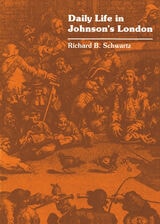
Daily Life in Johnson's London
Richard B. Schwartz
University of Wisconsin Press, 1983
"Outstanding. . . . The author packs a remarkable quantity of detail into a small space, even including a discussion of price and wage figures that will be intelligible to Americans [today]. . . . His prose is lucid, graceful, lively. Generously illustrated, the book also includes an extensive bibliography."—Choice
"An excellent source for English Literature and history students studying this period or Samuel Johnson."—Booklist
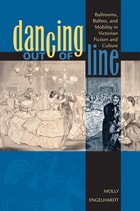
Dancing out of Line
Ballrooms, Ballets, and Mobility in Victorian Fiction and CultureMolly Engelhardt
Ohio University Press, 2009
Dancing out of Line transports readers back to the 1840s, when the craze for social and stage dancing forced Victorians into a complex relationship with the moving body in its most voluble, volatile form.
By partnering cultural discourses with representations of the dance and the dancer in novels such as Jane Eyre, Bleak House, and Daniel Deronda, Molly Engelhardt makes explicit many of the ironies underlying Victorian practices that up to this time have gone unnoticed in critical circles. She analyzes the role of the illustrious dance master, who created and disseminated the manners and moves expected of fashionable society, despite his position as a social outsider of nebulous origins. She describes how the daughters of the social elite were expected to “come out” to society in the ballroom, the most potent space in the cultural imagination for licentious behavior and temptation. These incongruities generated new, progressive ideas about the body, subjectivity, sexuality, and health.
Engelhardt challenges our assumptions about Victorian sensibilities and attitudes toward the sexual/social roles of men and women by bringing together historical voices from various fields to demonstrate the versatility of the dance, not only as a social practice but also as a forum for Victorians to engage in debate about the body and its pleasures and pathologies.
Dangerous Children
On Seven Novels and a StoryKenneth Gross
University of Chicago Press, 2022
Ranging from Victorian to modern works—Lewis Carroll’s Alice in Wonderland, Carlo Collodi’s Pinocchio, Henry James’s What Maisie Knew, J. M. Barrie’s Peter and Wendy, Franz Kafka’s “The Cares of a Family Man,” Richard Hughes’s A High Wind in Jamaica, Elizabeth Bowen’s The Death of the Heart, and Vladimir Nabokov’s Lolita—Kenneth Gross’s book delves into stories that center around the figure of a strange and dangerous child.
Whether written for adults or child readers, or both at once, these stories all show us odd, even frightening visions of innocence. We see these children’s uncanny powers of speech, knowledge, and play, as well as their nonsense and violence. And, in the tales, these child-lives keep changing shape. These are children who are often endangered as much as dangerous, haunted as well as haunting. They speak for lost and unknown childhoods. In looking at these narratives, Gross traces the reader’s thrill of companionship with these unpredictable, often solitary creatures—children curious about the adult world, who while not accommodating its rules, fall into ever more troubling conversations with adult fears and desires. This book asks how such imaginary children, objects of wonder, challenge our ways of seeing the world, our measures of innocence and experience, and our understanding of time and memory.
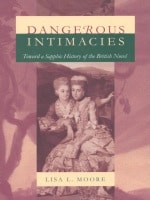
Dangerous Intimacies
Toward a Sapphic History of the British NovelLisa L. Moore
Duke University Press, 1997
Moore demonstrates that intimacy between women was vividly imagined in the British eighteenth century as not only chaste and virtuous, but also insistently and inevitably sexual. She looks at instances of sapphism in such novels as Millenium Hall, Memoirs of a Woman of Pleasure, Belinda, and Emma and analyzes how the new literary form of the novel made the bourgeois heroine’s successful negotiation of female friendship central to the establishment of her virtue. Moore also examines representations of sapphism through the sweeping economic and political changes of the period and claims that middle-class readers’ identifications with the heroine’s virtue helped the novel’s bourgeois audience justify the violent bases of their new prosperity, including slavery, colonialism, and bloody national rivalry.
In revealing the struggle over sapphism at the heart of these novels of female friendship—and at the heart of England’s national identity—Moore shows how feminine sexual agency emerged as an important cultural force in post-Enlightenment England

Dangerous Work
Diary of an Arctic AdventureArthur Conan Doyle
University of Chicago Press, 2012
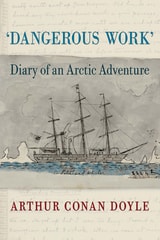
In 1880 a young medical student named Arthur Conan Doyle embarked upon the “first real outstanding adventure” of his life, taking a berth as ship’s surgeon on an Arctic whaler, the Hope. The voyage took him to unknown regions, showered him with dramatic and unexpected experiences, and plunged him into dangerous work on the ice floes of the Arctic seas. He tested himself, overcame the hardships, and, as he wrote later, “came of age at 80 degrees north latitude.”
A special limited, numbered edition of the clothbound book is also available. In addition, a text-only e-book edition is published as Dangerous Work: Diary of an Arctic Adventure, Text-only Edition.
Dangerous Work
Diary of an Arctic Adventure, Text-only EditionArthur Conan Doyle
University of Chicago Press, 2012
This e-book features the complete text found in the print edition of Dangerous Work, without the illustrations or the facsimile reproductions of Conan Doyle's notebook pages.
Dante and the Limits of the Law
Justin Steinberg
University of Chicago Press, 2013
Examining how Dante probes the limits of the law in this juridical otherworld, Steinberg argues that exceptions were vital to the medieval legal order and that Dante’s otherworld represents an ideal “system of exception.” In the real world, Dante saw this system as increasingly threatened by the dual crises of church and empire: the abuses and overreaching of the popes and the absence of an effective Holy Roman Emperor. Steinberg shows that Dante’s imagination of the afterlife seeks to address this gap between the universal validity of Roman law and the lack of a sovereign power to enforce it. Exploring the institutional role of disgrace, the entwined phenomena of judicial discretion and artistic freedom, medieval ideas about privilege and immunity, and the place of judgment in the poem, this cogently argued book brings to life Dante’s sense of justice.
Dante in Deutschland
An Itinerary of Romantic MythDaniel DiMassa
Bucknell University Press, 2022
Dante's Aesthetics of Being
Warren Ginsberg
University of Michigan Press, 1999
Despite the absence of tracts about beauty and art, aesthetic issues did command the attention of people in the Middle Ages. Whenever poets or philosophers turned their thoughts to the order of the heavens, whenever they delighted in music or art, they contemplated how the pleasure they took in the artistry of the universe was related to the God who created it. For Dante, aesthetics was the discourse of being and could not be narrowly defined. The aesthetic became the domain in which he considered not only form and proportion, but questions of love, identity, and perfection of the self.
Warren Ginsberg expertly guides us through Dante's work. He distinguishes between early texts such as the Vita Nuova, in which the aesthetic offers only a form of knowledge between sensation and reason, and the Comedy, in which the aesthetic is transformed into a language of existence. Among other subjects, Dante's Aesthetics of Being treats poeticism, literary history, language theory, the relation of philosophy to poetry, and of course, aesthetics. Its readers will include not only experts in Dante and medievalists in general, but literary critics of all periods. Indeed, anyone interested in poetic theory, the philosophy of beauty, or interdisciplinary studies will profit from reading Ginsberg's thoughtful offering.
Warren Ginsberg is Professor of English, University at Albany, State University of New York. He is author of The Cast of Character: The Representation of Personality in Ancient and Medieval Literature and editor of two Middle English poems, Wynnere and Wastoure and The Parlement of the Thre Ages.
Dante's Epistle to Cangrande
Robert Hollander
University of Michigan Press, 1994
In Dante's Epistle to Cangrande Robert Hollander commandingly marshals new evidence to demonstrate that the epistle should be considered authentically Dantean. He further provides enlightening discussion of the nature of tragedy and comedy in the Divine Comedy. The author draws authoritatively on the extensive array of medieval and modern commentaries stored in electronic form by the Dartmouth Dante Project, of which he is the director.
Dante's Epistle to Cangrande makes a signal contribution to Dante studies. Naturally of interest to students of Dante's work, it will also be important reading for those concerned with literary critical questions such as authorial intent, programmatic statements, and allegorical interpretations of literature.
Dante's Interpretive Journey
William Franke
University of Chicago Press, 1996
Reading the poem through the lens of hermeneutical theory, Franke focuses particularly on Dante's address to the reader as the site of a disclosure of truth. The event of the poem for its reader becomes potentially an experience of truth both human and divine. While contemporary criticism has concentrated on the historical character of Dante's poem, often insisting on it as undermining the poem's claims to transcendence, Franke argues that precisely the poem's historicity forms the ground for its mediation of a religious revelation. Dante's dramatization, on an epic scale, of the act of interpretation itself participates in the self-manifestation of the Word in poetic form.
Dante's Interpretive Journey is an indispensable addition to the field of Dante studies and offers rich insights for philosophy and theology as well.
Danteworlds
A Reader's Guide to the InfernoGuy P. Raffa
University of Chicago Press, 2007
One of the greatest works of world literature, Dante Alighieri’s The Divine Comedy has, despite its enormous popularity and importance, often stymied readers with its multitudinous characters, references, and themes. But until now, students of the Inferno have lacked a suitable resource to guide their reading.
Welcome to Danteworlds, the first substantial guide to the Inferno in English. Guy P. Raffa takes readers on a geographic journey through Dante’s underworld circle by circle—from the Dark Wood down to the ninth circle of Hell—in much the same way Dante and Virgil proceed in their infernal descent. Each chapter—or “region”—of the book begins with a summary of the action, followed by detailed entries, significant verses, and useful study questions. The entries, based on a close examination of the poet’s biblical, classical, and medieval sources, help locate the characters and creatures Dante encounters and assist in decoding the poem’s vast array of references to religion, philosophy, history, politics, and other works of literature.
Written by an established Dante scholar and tested in the fire of extensive classroom experience, Danteworlds will be heralded by readers at all levels of expertise, from students and general readers to teachers and scholars.
Dante’s Volume from Alpha to Omega
Edited by Christiana Purdy Moudarres and Carol Chiodo
Arizona Center for Medieval and Renaissance Studies, 2020

Dark Lens
Imaging Germany, 1945Françoise Meltzer
University of Chicago Press, 2019
The ruins of war have long held the power to stupefy and appall. Can such ruins ever be persuasively depicted and comprehended? Can images of ruins force us to identify with the suffering of the enemy and raise uncomfortable questions about forgiveness and revenge?
Françoise Meltzer explores these questions in Dark Lens, which uses the images of war ruins in Nazi Germany to investigate problems of aestheticization and the representation of catastrophe. Through texts that give accounts of bombed-out towns in Germany in the last years of the war, painters’ attempts to depict the destruction, and her own mother’s photographs taken in 1945, Meltzer asks if any medium offers a direct experience of war ruins for the viewer. Refreshingly accessible and deeply personal, Dark Lens is a compelling look at the role images play in constructing memory.
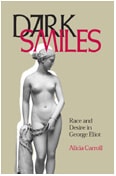
Dark Smiles
Race and Desire in George EliotAlicia Carroll
Ohio University Press, 2002
Although George Eliot has long been described as “the novelist of the Midlands,” she often brought the outer reaches of the empire home in her work. Dark Smiles: Race and Desire in George Eliot studies Eliot’s problematic, career-long interest in representing racial and ethnic Otherness.
Placing Eliot’s diverse and wide-ranging treatment of Otherness in its contemporary context, Alicia Carroll argues that Eliot both engages and resists traditional racial and ethnic representations of Otherness. Carroll finds that Eliot, like other women writers of her time, often appropriates narratives of Otherness to explore issues silenced in mainstream Victorian culture, particularly the problem of the desirous woman. But if Otherness in Eliot’s century was usually gendered as woman and constructed as the object of white male desire, Eliot often seeks to subvert that vision. Professor Carroll demonstrates Eliot’s tendency to “exoticize” images of girlhood, vocation, and maternity in order to critique and explore gendered subjectivities. Indeed, the disruptive presence of a racial or ethnic outsider often fractures Eliot’s narratives of community, creating a powerful critique of home culture.
The consistent reliance of Eliot’s work upon racial and ethnic Otherness as a mode of cultural critique is explored here for the first time in its entirety.
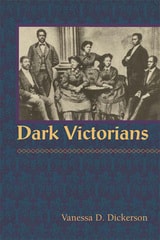
Dark Victorians
Vanessa D. Dickerson
University of Illinois Press, 2007

Darwin and the Novelists
Patterns of Science in Victorian FictionGeorge Levine
University of Chicago Press, 1991
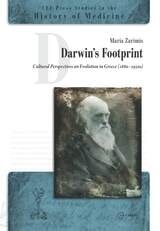
Darwin's Footprint
Cultural Perspectives on Evolution in Greece (1880–1930s)Maria Zarimis
Central European University Press, 2015
Darwin’s Footprint examines the impact of Darwinism in Greece, investigating how it has shaped Greece in terms of its cultural and intellectual history, and in particular its literature.
The book demonstrates that in the late 19th to early 20th centuries Darwinism and associated science strongly influenced celebrated Greek literary writers and other influential intellectuals, which fueled debate in various areas such as ‘man’s place in nature’, eugenics, the nature-nurture controversy, religion, as well as class, race and gender.
In addition, the study reveals that many of these individuals were also considering alternative approaches to these issues based on Darwinian and associated biological post-Darwinian ideas. Their concerns included the Greek “race” or nation, its culture, language and identity; also politics and gender equality.
Zarimis’s monograph devotes considerable space to Xenopoulos (1867-1951), notable novelist, journalist and playwright.
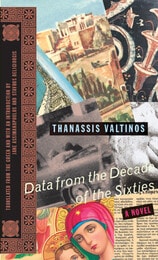
Data from the Decade of the Sixties
A NovelThanassis Valtinos
Northwestern University Press, 2000
Just as Greece today struggles to adapt to a shifting political landscape, so Greece in the 1960s was convulsed by the collision of tradition and cultural transformation. In Data from the Decade of the Sixties, Valtinos assembles voices, stories, and news clips that capture the transformation of Greece, the monarchy giving way to a republic via dictatorship, the industrialization of its agricultural society, and the replacement of arranged marriages with love matches.
The many voices in this tour de force coalesce in a bricolage of documents: personal letters between friends and family, news reports, advertisements, and other written ephemera. As governments fall, sexologists, fortune-tellers, garage owners, and lonely matrons advertise their specialties and fantasies in want ads, while the young and lonely find escape within the cheap novels, movies, and gossip columns that enliven their barren existence.
Together these testimonies illuminate the tumult of 1960s Greece, where generations and values clash and Greek society struggles to adapt. Valtinos captures the pulse of a decade, portraying the spirit of the century in Greece and throughout the world.
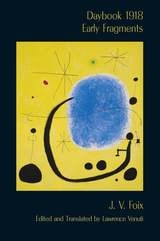
Daybook 1918
Early FragmentsJ. V. Foix, Edited and translated by Lawrence Venuti
Northwestern University Press, 2019
Winner of the Global Humanities Prize
Daybook 1918: Early Fragments is the first substantial selection in English from the prose poetry of the major Catalan writer J. V. Foix. The core of Lawrence Venuti’s edition is forty-five prose poems from the beginning of Foix’s career, supplemented by additional poems in prose and verse, prose fictions, and essays that immerse the reader in the heady cultural ferment of early twentieth-century Catalonia.
Deeply committed to the European avant-gardes, Foix explored experimental poetics in the service of Catalan nationalism as Catalonia itself carried out its notable experiments with autonomous government on the eve of Franco’s dictatorship. Foix was particularly attracted to the revolutionary energy of French surrealism, and he endows Catalan life and landscapes with a dreamlike quality while staging a series of unsettling encounters with the femme fatale Gertrudis.
In translations praised as both fluid and resonant, Venuti plumbs the expressive capabilities of English to evoke the profound impact that the Catalan texts had on their first readers. Daybook 1918: Early Fragments establishes Foix as a key figure in international modernism.
Dead Fathers
The Logic of Transference in Modern NarrativeNina Schwartz
University of Michigan Press, 1994

Dear Friend
Rainer Maria Rilke and Paula Modersohn-BeckerEric Torgersen
Northwestern University Press, 2000
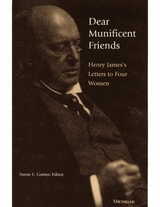
Dear Munificent Friends
Henry James's Letters to Four WomenSusan E. Gunter, Editor
University of Michigan Press, 2000

Dearly Beloved Friends
Henry James's Letters to Younger MenSusan E. Gunter and Steven H. Jobe, Editors
University of Michigan Press, 2004
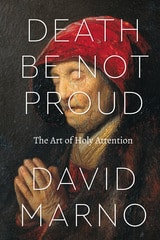
Death Be Not Proud
The Art of Holy AttentionDavid Marno
University of Chicago Press, 2016
If, in Malebranche’s view, attention is a hidden bond between religion and philosophy, devotional poetry is the area where this bond becomes visible. Marno shows that in works like “Death be not proud,” Donne’s most triumphant poem about the resurrection, the goal is to allow the poem’s speaker to experience a given doctrine as his own thought, as an idea occurring to him. But while the thought must feel like an unexpected event for the speaker, the poem itself is a careful preparation for it. And the key to this preparation is attention, the only state in which the speaker can perceive the doctrine as a cognitive gift. Along the way, Marno illuminates why attention is required in Christian devotion in the first place and uncovers a tradition of battling distraction that spans from ascetic thinkers and Church Fathers to Catholic spiritual exercises and Protestant prayer manuals.
Death and the Pearl Maiden
Plague, Poetry, EnglandDavid K. Coley
The Ohio State University Press, 2019
Death and the Pearl Maiden: Plague, Poetry, England asks why one of the singular historical traumas of the later Middle Ages appears to be evoked so fleetingly in fourteenth-century Middle English poetry, a body of work as daring and socially engaged as any in English literary history. By focusing on under-recognized pestilential discourses in Pearl, Cleanness, Patience, and Sir Gawain and the Green Knight—the four poems uniquely preserved British Library MS Cotton Nero A.x —this study resists the idea that the Black Death had only a slight impact on medieval English literature, and it strives to account for the understated shape of England’s literary response to the plague and our contemporary understandings of it.
Death by Philosophy
The Biographical Tradition in the Life and Death of the Archaic Philosophers Empedocles, Heraclitus, and DemocritusAva Chitwood
University of Michigan Press, 2004
How does one die by philosophy? In Diogenes Laertius, philosophers jump into volcanoes, bury themselves in dung, get eaten by dogs, hang themselves, drown, and vanish into thin air -- sometimes all in a single lifetime. But what happens when we look beyond the fantastic and absurd to examine the particular ways that the philosophers' lives and deaths are recounted?
Ava Chitwood's reexamination of Diogenes Laertius's philosophical biographies opens a new window on the intellectual culture and context in which the work of philosophers like Empedocles, Heraclitus, and Democritus was read, received, and transmitted. Chitwood's analysis also suggests a methodology for understanding the interplay between biography and philosophy and for evaluating biographical sources.
While Chitwood's approach combines the disciplines of classical philology and philosophy, Death by Philosophy is not intended solely for the specialist. This investigation offers the modern reader a fascinating, fresh, and entertaining view of the ancient literary and philosophical world.
Ava Chitwood is Assistant Professor of Classics, at the University of South Florida.
Death in Babylon
Alexander the Great and Iberian Empire in the Muslim OrientVincent Barletta
University of Chicago Press, 2010
Though Alexander the Great lived more than seventeen centuries before the onset of Iberian expansion into Muslim Africa and Asia, he loomed large in the literature of late medieval and early modern Portugal and Spain. Exploring little-studied chronicles, chivalric romances, novels, travelogues, and crypto-Muslim texts, Vincent Barletta shows that the story of Alexander not only sowed the seeds of Iberian empire but foreshadowed the decline of Portuguese and Spanish influence in the centuries to come.
Death in Babylon depicts Alexander as a complex symbol of Western domination, immortality, dissolution, heroism, villainy, and death. But Barletta also shows that texts ostensibly celebrating the conqueror were haunted by failure. Examining literary and historical works in Aljamiado, Castilian, Catalan, Greek, Latin, and Portuguese, Death in Babylon develops a view of empire and modernity informed by the ethical metaphysics of French phenomenologist Emmanuel Levinas. A novel contribution to the literature of empire building, Death in Babylon provides a frame for the deep mortal anxiety that has infused and given shape to the spread of imperial Europe from its very beginning.
Death's Homeland
Dragan Dragojlovic
Northwestern University Press, 2008
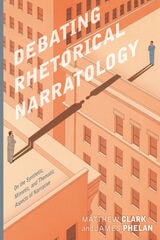
Debating Rhetorical Narratology
On the Synthetic, Mimetic, and Thematic Aspects of NarrativeMatthew Clark and James Phelan
The Ohio State University Press, 2020
Clark and Phelan’s deep dive into the synthetic, mimetic, and thematic leads them to explore many other aspects of narrative and narrative theory: style, audiences, the mimetic illusion, fictionality, and more. Their investigation also leads them into questions about rhetorical narratology’s relation to other projects in narrative theory, especially unnatural narratology, and, indeed, about how to assess the explanatory power of competing theories. Ultimately, their debate is compelling testimony about the power of both narrative theory and narrative itself.
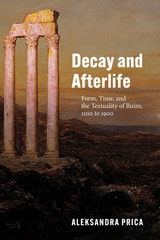
Decay and Afterlife
Form, Time, and the Textuality of Ruins, 1100 to 1900Aleksandra Prica
University of Chicago Press, 2022
Western ruins have long been understood as objects riddled with temporal contradictions, whether they appear in baroque poetry and drama, Romanticism’s nostalgic view of history, eighteenth-century paintings of classical subjects, or even recent photographic histories of the ruins of postindustrial Detroit. Decay and Afterlife pivots away from our immediate, visual fascination with ruins, focusing instead on the textuality of ruins in works about disintegration and survival. Combining an impressive array of literary, philosophical, and historiographical works both canonical and neglected, and encompassing Latin, Italian, French, German, and English sources, Aleksandra Prica addresses ruins as textual forms, examining them in their extraordinary geographical and temporal breadth, highlighting their variability and reflexivity, and uncovering new lines of aesthetic and intellectual affinity. Through close readings, she traverses eight hundred years of intellectual and literary history, from Seneca and Petrarch to Hegel, Goethe, and Georg Simmel. She tracks European discourses on ruins as they metamorphose over time, identifying surprising resemblances and resonances, ignored contrasts and tensions, as well as the shared apprehensions and ideas that come to light in the excavation of these discourses.
Decisiveness and Fear of Disorder
Political Decision-Making in Times of CrisisJulius Maximilian Rogenhofer
University of Michigan Press, 2024
Rogenhofer shows how his theoretical approach allows us to reinterpret a range of crisis situations beyond the irregular migration context, including democracies’ initial responses to Covid-19, the European Sovereign Debt Crisis, and United States climate politics. These additional case studies help position concerns with decisiveness amid the challenges that populism and technocracy increasingly pose to representative democracies.
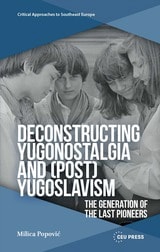
Deconstructing Yugonostalgia and (Post)Yugoslavism
The Generation of the Last PioneersMilica Popovic
Central European University Press, 2027
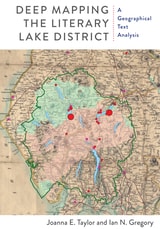
Deep Mapping the Literary Lake District
A Geographical Text AnalysisJoanna E. Taylor
Bucknell University Press, 2022
Defects
Engendering the Modern BodyHelen Deutsch and Felicity Nussbaum, Editors
University of Michigan Press, 2000
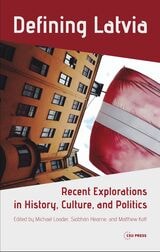
Defining Latvia
Recent Explorations in History, Culture, and PoliticsMatthew Kott
Central European University Press, 2022
In just over a century, Latvia has transitioned from imperial periphery to nation-state, then Soviet republic, and finally following the collapse of the Soviet Union to an independent republic. Defining Latvia brings together the latest research on the multiple social, political, and cultural contexts of Latvia throughout this turbulent period. Its ten chapters are written by leading political scientists, historians, and area studies specialists from across Europe and North America.
The volume moves beyond an exclusively political context to incorporate a variety of social and cultural perspectives, ranging from the experiences of Latvian mapmakers in the Russian Empire, to the participation of Latvians in the Wehrmacht and Red Army during World War II, Latvian national communism, and the development of extremist politics following Latvia’s accession to the European Union. Other chapters address developing trends in the fields of history and political science, including the history of antisemitism, memory, language politics, photography, and political extremism.
Based on the book’s temporal span from the nineteenth century to the present, the authors and editors of Defining Latvia understand the construction of Latvian identity as a continuous and interconnected process across significant political and ideological ruptures.

Defoe's Britain
jeremy black
St. Augustine's Press, 2023
Defoe was an outsider, a man of many interests whom Black asserts evades too precise a portrait or coherent description of character and career. But he is a traveler, in the literal and imaginative senses, and in his engagement with life and its issues and willingness to associate with 'low-life' prefigures later literary giants like Smollett and Fielding. More than the establishment of genre, Defoe created the writer "whose business is observation." Black's account of this parcel of the British past is impeccable because it is in fact an account that the past, in Defoe, gives of itself. "As a writer, Defoe brought together a reality usually presented as, and endorsed by, history, with the imaginative focus of storytelling, and the direction of, variously, propaganda, analysis, and exemplary tale."
Dehexing Sex
Russian Womanhood During and After GlasnostHelena Goscilo
University of Michigan Press, 1996
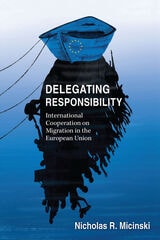
Delegating Responsibility
International Cooperation on Migration in the European UnionNicholas R. Micinski
University of Michigan Press, 2022
Delegating Responsibility explores the politics of migration in the European Union and explains how the EU responded to the 2015–17 refugee crisis. Based on 86 interviews and fieldwork in Greece and Italy, Nicholas R. Micinski proposes a new theory of international cooperation on international migration. States approach migration policies in many ways—such as coordination, collaboration, subcontracting, and unilateralism—but which policy they choose is based on capacity and on credible partners on the ground. Micinski traces the fifty-year evolution of EU migration management, like border security and asylum policies, and shows how EU officials used “crises” as political leverage to further Europeanize migration governance. In two in-depth case studies, he explains how Italy and Greece responded to the most recent refugee crisis. He concludes with a discussion of policy recommendations regarding contemporary as well as long-term aspirations for migration management in the EU.
Democratic Education
The Complete Prose Works of Matthew ArnoldMatthew Arnold; Edited by R. H. Super
University of Michigan Press, 1962
Democratic Purgatory
Failure of Consolidated Democracies in Latin America and East-Central EuropeChristopher M. Brown
Central European University Press, 2026
Rather than structural inevitability, these breakdowns stem from contingent choices: negotiated transitions, successor party dominance, and technocratic insulation created fertile ground for popularism, a top-down appropriation of populist rhetoric to dismantle liberal norms. From Orbán’s Hungary to Chávez’s Venezuela, the analysis reveals how democratic procedures can hollow out democracy itself.
In an era of global democratic backsliding, this book offers a timely framework for understanding the fragility of liberal democracy and the decisive role of political agency in preventing breakdown or enabling renewal.
Democratization and the Politics of Constitution-Making in Turkey
Ömer Faruk Gençkaya
Central European University Press, 2009
Demonic History
From Goethe to the PresentKirk Wetters
Northwestern University Press, 2014
In this ambitious book, Kirk Wetters traces the genealogy of the demonic in German literature from its imbrications in Goethe to its varying legacies in the work of essential authors, both canonical and less well known, such as Gundolf, Spengler, Benjamin, Lukács, and Doderer. Wetters focuses especially on the philological and metaphorological resonances of the demonic from its core formations through its appropriations in the tumultuous twentieth century.
Propelled by equal parts theoretical and historical acumen, Wetters explores the ways in which the question of the demonic has been employed to multiple theoretical, literary, and historico-political ends. He thereby produces an intellectual history that will be consequential both to scholars of German literature and to comparatists.
Desiring Freedom
Counter-Imaginaries of Work, Sex, and Family After West Indian EmancipationKaneesha Cherelle Parsard
University of Chicago Press, 2026
A groundbreaking account of concepts of freedom in West Indian literature and visual culture.
Desiring Freedom examines post-emancipation West Indian literature and visual culture to ask how they reimagine freedom. Ranging from emancipation in the 1830s to the arrival of independence in the 1960s, Kaneesha Cherelle Parsard analyzes a literary and visual repertoire through which West Indians and Britons cast doubt on wage labor and domesticity as freedom. Whereas freedom was traditionally conceived around narratives of the self-governing individual, Parsard unearths a diverse range of materials—fiction, poetry, painting, photography, imperial correspondence, social scientific discourse, and economic history—in which this plot breaks down, finding practices of freedom in hoarding, pleasure-seeking, hustling, and siphoning.
Parsard focuses on conceptions of freedom in Trinidad, British Guiana, and Jamaica. Along the way, she shows how indentured Indian women’s jewelry reveals contradictions in imperial capital, studies the short fiction of a 1930s Trinidadian literary collective called the Beacon group to reveal how women find both profit and pleasure in their affairs, and offers a fascinating reading of C. L. R. James’s only novel, Minty Alley—including a little-known alternative ending. In a key methodological contribution, Parsard develops proposition as a critical tool, drawing on its many valences—a sexual advance, a contract before its signing, and, in philosophy, the act of saying “this is how things stand.” Parsard’s own propositions show that West Indian culture offers new ways of seeing the relationships among race, labor, capital, gender, and sexuality after emancipation.
Devotions Upon Emergent Occasions
Together with Death's DuelJohn Donne
University of Michigan Press, 1959