Results by title
28167 books match the query 'History' and 909 start with d
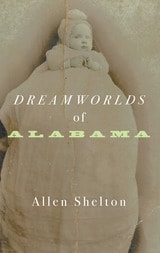
Dreamworlds of Alabama
Allen Shelton
University of Minnesota Press, 2007
“I speak in what others often hear as a strange accent. My past can’t be located. I live in Buffalo, New York, an exile from the South. But these aren’t Yankee dreams, even though my past seems like a fabrication, a dreamworld in which I’m a paper character and not a historical participant, with scars from barbed wire ripping under the pressure and flying through the air like a swarm of bees, or a horse rearing up and banging its head into mine from within, exploding my forehead.” —from the Preface
Wisteria draped on a soldier’s coffin, sent home to Alabama from a Virginia battlefield. The oldest standing house in the county, painted gray and flanked by a pecan orchard. A black steel fence tool, now perched atop a pile of books like a prehistoric bird of prey. In Dreamworlds of Alabama, Allen Shelton explores physical, historical, and social landscapes of northeastern Alabama. His homeplace near the Appalachian foothills provides the setting for a rich examination of cultural practices, a place where the language of place and things resonates with as much vitality and emotional urgency as the language of humans.
Throughout the book, Shelton demonstrates how deeply culture is inscribed in the land and in the most intimate spaces of the person—places of belonging and loss, insight and memory.
Born and raised in Jacksonville, Alabama, Allen Shelton is associate professor of sociology at Buffalo State College.
Dreiser and Veblen, Saboteurs of the Status Quo
Clare Virginia Eby
University of Missouri Press, 1999
In this important interdisciplinary study, Clare Eby argues that the writings of Theodore Dreiser and Thorstein Veblen form a neglected chapter in the history of United States cultural criticism that is especially relevant today.
This study leaves behind the narrow frameworks through which most of Veblen's and Dreiser's writings have been interpreted, covering a wide range of both authors' major and minor works. Moving beyond Veblen's The Theory of the Leisure Class and Dreiser's Sister Carrie, Eby shows how the two writers, as saboteurs of the status quo, anticipated many preoccupations of cultural critics today: the cultural role of the intellectual, the relationship of science to society, the place of consumption in modern life, and the intersection of class, gender, and power.
Eby uses cultural criticism as a unifying concept that shows how Veblen fuses satire, sociology, economics, history, psychology, anthropology, political science, and philosophy; and how Dreiser connects fiction, travelogue, literary manifesto, occasional essay, autobiography, biography, and philosophy. By reading Veblen through Dreiser, and Dreiser through Veblen, Eby illustrates the striking parallels between their works, demonstrating how literature and social science can merge in cultural criticism.
Although Dreiser's interest in the natural and social sciences has often been noted, this study provides the only extended analysis of how his works actually resemble, and strive to become, critically informed social science. Similarly, despite the singularity of Veblen's rhetoric, the centrality of literary devices to his works has never been systematically examined. By placing the works of Veblen and Dreiser into dialogue, this study contributes significantly to the recent attempts to bring together the concerns of literary analysts and social scientists.
Dreiser and Veblen, Saboteurs of the Status Quo makes an important contribution not only to Dreiser and Veblen studies but also to cultural criticism itself.
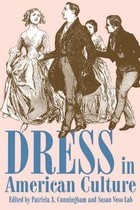
Dress in American Culture
Edited by Patricia A. Cunningham and Susan Voso Lab
University of Wisconsin Press, 1993
The contributors reveal the politics, or power, of dress, especially in its function as a symbol of American ideals, and examine changes in clothing behavior that occurred as Americans faced new experiences.
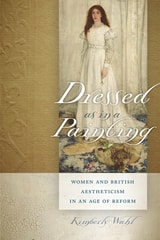
Dressed as in a Painting
Women and British Aestheticism in an Age of ReformKimberly Wahl
University of New Hampshire Press, 2013

Dressed for Freedom
The Fashionable Politics of American FeminismEinav Rabinovitch-Fox
University of Illinois Press, 2021
A fascinating account of clothing as an everyday feminist practice, Dressed for Freedom brings fashion into discussions of American feminism during the long twentieth century.
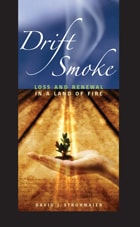
Drift Smoke
Loss and Renewal in a Land of FireDavid J. Strohmaier
University of Nevada Press, 2009
David Strohmaier’s long career as a firefighter has given him intimate knowledge of wildfire and its complex role in the natural world of the American West. It has also given him rare understanding of the painful losses that are a consequence of fire. Strohmaier addresses our ambivalence about fire and the realities of loss to it—of life, human and animal, of livelihoods, of beloved places. He also examines the process of renewal that is yet another consequence of fire, from the infusion of essential nutrients into the soil, to the sprouting of seeds that depend on fire for germination, to the renewal of species as the land restores itself. Ultimately, according to Strohmaier, living with fire is a matter of choices, of “seeing the connection between loss on a personal scale and loss on a landscape scale: in relationship with persons, and in relationship to and with the land.” We must cultivate a longer perspective, he says, accepting that loss is a part of life and that “humility and empathy and care are not only core virtues between humans but are also essential virtues in our attitudes and actions toward the earth.” Drift Smoke is a powerful and moving meditation on wildfire by someone who has seen it in all its terror and beauty, who has lost colleagues and beloved terrain to its ferocity, and who has also seen the miracle of new life sprouting in the ashes. The debate over the role and control of fire in the West will not soon end, but Strohmaier’s contribution to the debate will help all of us better appreciate both the complexity of the issues and the possibilities of hitherto unconsidered solutions that will allow us to inhabit a place where fire is a natural, and needed, part of life.
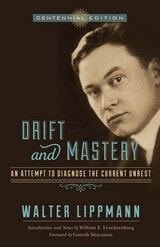
Drift and Mastery
An Attempt to Diagnose the Current UnrestWalter Lippmann, Introduction and notes by William E. Leuchtenburg, Foreword by Ganesh Sitaraman
University of Wisconsin Press, 2015
Lippman’s Drift and Mastery became one of the most important and influential documents of the Progressive Movement. It remains a valuable text for understanding the political thought of early twentieth-century America and a lucid exploration of timeless themes in American government and politics. Distinguished historian Walter Leuchtenberg’s 1986 introduction and notes are retained in this edition.
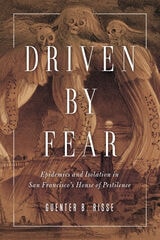
Driven by Fear
Epidemics and Isolation in San Francisco's House of PestilenceGuenter B. Risse
University of Illinois Press, 2015
Filling a significant gap in contemporary scholarship, Driven by Fear looks at the past to offer critical lessons for our age of bioterror threats and emerging infectious diseases.
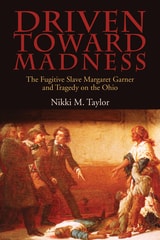
Driven toward Madness
The Fugitive Slave Margaret Garner and Tragedy on the OhioNikki M. Taylor
Ohio University Press, 2016
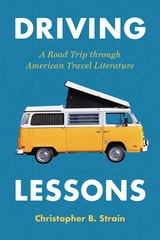
Driving Lessons
A Road Trip through American Travel LiteratureChristopher B. Strain
University of Alabama Press, 2025
Weaves the author’s own four-month cross-country sojourn in a VW van with thoughts on travel narratives across the history of American literature
In Driving Lessons, Christopher B. Strain sets out on a quintessential American road trip, exploring not just the roads and byways of the country but the road trip’s place in American culture. Strain dives into the well of American travel writing, illuminating fascinating aspects of the road trip, such as how race, class, and gender shape the experiences of road trippers.
In the summer of 1998, amid a professional crisis of confidence, Strain settled on a plan to reconnect with both himself and the country he studies. He purchased a 1972 Volkswagen Westfalia van and set off on his own cross-country odyssey. In the weeks that followed, he ruminated on his own ongoing journey alongside great journeys from the past and how they reveal the heart of the traveler as well as the landscape of the nation.
Visiting archives and landmarks across the United States, Strain's journey became a parallel to the stories he studied—an opportunity to see and experience the cities, national parks, and monuments that define US history. Driving Lessons is a compelling blend of literary analysis and memoir, offering readers an insightful and heartfelt reflection on the enduring power of the American road trip.

Drop Dead
Performance in Crisis, 1970s New YorkHillary Miller
Northwestern University Press, 2016
Winner, 2017 American Theater and Drama Society John W. Frick Book Award
Winner, 2017 ASTR Barnard Hewitt Award for Outstanding Research in Theater History
Hillary Miller’s Drop Dead: Performance in Crisis, 1970s New York offers a fascinating and comprehensive exploration of how the city’s financial crisis shaped theater and performance practices in this turbulent decade and beyond.
New York City’s performing arts community suffered greatly from a severe reduction in grants in the mid-1970s. A scholar and playwright, Miller skillfully synthesizes economics, urban planning, tourism, and immigration to create a map of the interconnected urban landscape and to contextualize the struggle for resources. She reviews how numerous theater professionals, including Ellen Stewart of La MaMa E.T.C. and Julie Bovasso, Vinnette Carroll, and Joseph Papp of The Public Theater, developed innovative responses to survive the crisis.
Combining theater history and close readings of productions, each of Miller’s chapters is a case study focusing on a company, a production, or an element of New York’s theater infrastructure. Her expansive survey visits Broadway, Off-, Off-Off-, Coney Island, the Brooklyn Academy of Music, community theater, and other locations to bring into focus the large-scale changes wrought by the financial realignments of the day.
Nuanced, multifaceted, and engaging, Miller’s lively account of the financial crisis and resulting transformation of the performing arts community offers an essential chronicle of the decade and demonstrates its importance in understanding our present moment.

Droppin Science
William Perkins
Temple University Press, 1996

Drought, Water Law, and the Origins of California's Central Valley Project
Tim Stroshane
University of Nevada Press, 2016

Drudgery Divine
On the Comparison of Early Christianities and the Religions of Late AntiquityJonathan Z. Smith
University of Chicago Press, 1990
"An important book, and certainly one of the most significant in the career of Jonathan Z. Smith, whom one may venture to call the greatest pathologist in the history of religions. As in many precedent cases, Smith follows a standard procedure: he carefully selects his victim, and then dissects with artistic finesse and unequaled acumen. The operation is always necessary, and a deconstructor of Smith's caliber is hard to find."—Ioan P. Coulianu, Journal of Religion
Drug Cartels Do Not Exist
Narcotrafficking in US and Mexican CultureOswaldo Zavala
Vanderbilt University Press, 2022
Yet the realities of violence in Mexico and along the border are obscured by the books, films, and TV series we consume. In truth, works like Sicario, The Queen of the South, and Narcos hide Mexico's political realities. Alongside these examples, Zavala discusses Charles Bowden, 2666 by Roberto Bolaño, and other important Latin American writers as examples of those who do capture the realities of the drug war.
Translated into English by William Savinar, Drug Cartels Do Not Exist will be useful for journalists, political scientists, philosophers, and writers of any kind who wish to break down the constructed barriers—physical and mental—created by those in power around the reality of the Mexican drug trade.
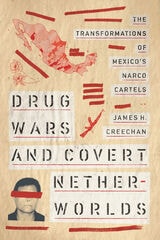
Drug Wars and Covert Netherworlds
The Transformations of Mexico's Narco CartelsJames H. Creechan
University of Arizona Press, 2021
In Drug Wars and Covert Netherworlds sociologist and criminologist James H. Creechan draws on decades of research to paint a much more nuanced picture of the transformation of Mexico’s narco cartels. Creechan details narco cartel history, focusing on the decades since Richard Nixon declared the War on Drugs. With sobering detail, Creechan unravels a web of government dependence, legitimate enterprises, covert connections, and violent infighting. He details how drug smuggling organizations have grown into powerful criminal mafias with the complicit involvement of powerful figures in civil society to create covert netherworlds.
Mexico is at a moment of change—a country on the verge of transition or perdition. It can only move forward by examining its history of narco-connections spun and re-spun over the last fifty years.
Drugs, Labor and Colonial Expansion
William Jankowiak
University of Arizona Press, 2003
This book explores how Europeans introduced and used drugs in colonial contexts for the exploitation and placation of indigenous labor. Combining history and anthropology, it examines the role of drugs in trade and labor during the age of western colonial expansion. From considering the introduction of alcohol in the West African slave trade to the use of coca as a labor enhancer in the Andes, these original contributions examine both the encouragement of drug use by colonial powers and the extent to which local peoples' previous experience with psychoactive substances shaped their use of drugs introduced by Europeans.
The authors show that drugs possessed characteristics that made them a particularly effective means for propagating trade or increasing the extent and intensity of labor. In the early stages of European expansion, drugs were introduced to draw people, quite literally, into relations of dependency with European trade partners. Over time, the drugs used to intensify the amount and duration of labor shifted from alcohol, opium, and marijuana—which were used to overcome the drudgery and discomfort of physical labor—to caffeine-based stimulants, which provided a more alert workforce.
Valuable not only for its ethnographic detail but also for its broader insight into the nature of capitalist expansion, this collection reveals the surprising consistency of drug use in the colonial process. Drugs, Labor and Colonial Expansion is a book rich with cross-cultural insights that ranges widely across disciplines to provide a new and needed look at the colonial experience.

Dry Place
Landscapes Of Belonging And ExclusionPatricia L. Price
University of Minnesota Press, 2004
Gathers tales from the Southwestern United States and Northern Mexico to understand the relationship between people and place in a borderland
Landscape is the space of negotiation between human beings and the physical world, and rarely are the negotiations more complex and subtle than those conducted through the desert landscape along the Mexico-U.S. border.
Patricia L. Price views the shaping of the landscape on and around the border through various narratives that have sought to establish claims to these dry lands. Most prominent are the accounts of Anglo-American expansionism and Manifest Destiny juxtaposed with the Chicano nationalist tale of Aztlán in the twentieth century, all constituting collective, contending claims to the U.S. Southwest. Demonstrating how stories can become vehicles for changing places and identities, Price considers characters old and new who inhabit the contemporary borderlands between Mexico and the United States—ranging from longstanding manifestations of good and evil in the figures of the Virgin of Guadalupe and the Devil to a collection of lay saints embodying current concerns. Dry Place weaves together theoretical insights with field-based inquiry, autobiography, and creative writing to arrive at a textured understanding of the bordered landscape of late modern subjectivity.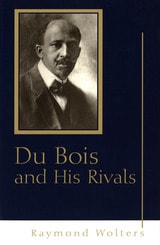
Du Bois and His Rivals
Raymond Wolters
University of Missouri Press, 2002
In Du Bois and His Rivals, Raymond Wolters provides a distinctive biography of this great pioneer of the American civil rights movement. Readers are able to follow the outline of Du Bois’s life, but the book’s main emphasis is on discrete scenes in his life, especially the controversies that pitted Du Bois against his principal black rivals. He challenged Booker T. Washington because he could not abide Washington’s conciliatory approach toward powerful whites. At the same time, Du Bois’s pluralism led him to oppose the leading separatists and integrationists of his day. He berated Marcus Garvey for giving up on America and urging blacks to pursue a separate destiny. He also rejected Walter White’s insistence that integration was the best way to promote the advancement of black people.
Du Bois felt that American blacks should be full-fledged Americans, with all the rights of other American citizens. However, he believed that they should also preserve and develop enough racial distinctiveness to enable them to maintain and foster a sense of racial identity, community, and pride. Du Bois and His Rivals shows that Du Bois stood for much more than protest against racial oppression. He was also committed to pluralism, and his pluralism emphasized the importance of traditional standards and of internal cooperation within the black community. Anyone interested in the civil rights movement, black history, or the history of the United States during the early twentieth century will find this book valuable.
Dual Justice
America’s Divergent Approaches to Street and Corporate CrimeAnthony Grasso
University of Chicago Press, 2024
A far-reaching examination of how America came to treat street and corporate crime so differently.
While America incarcerates its most marginalized citizens at an unparalleled rate, the nation has never developed the capacity to consistently prosecute corporate wrongdoing. Dual Justice unearths the intertwined histories of these two phenomena and reveals that they constitute more than just modern hypocrisy.
By examining the carceral and regulatory states’ evolutions from 1870 through today, Anthony Grasso shows that America’s divergent approaches to street and corporate crime share common, self-reinforcing origins. During the Progressive Era, scholars and lawmakers championed naturalized theories of human difference to justify instituting punitive measures for poor offenders and regulatory controls for corporate lawbreakers. These ideas laid the foundation for dual justice systems: criminal justice institutions harshly governing street crime and regulatory institutions governing corporate misconduct.
Since then, criminal justice and regulatory institutions have developed in tandem to reinforce politically constructed understandings about who counts as a criminal. Grasso analyzes the intellectual history, policy debates, and state and federal institutional reforms that consolidated these ideas, along with their racial and class biases, into America’s legal system.
Dubious Alliance
The Making of Minnesota’s DFL PartyJohn Earl Haynes
University of Minnesota Press, 1984
Dubious Alliance was first published in 1984. Minnesota Archive Editions uses digital technology to make long-unavailable books once again accessible, and are published unaltered from the original University of Minnesota Press editions.
The formation of the Democratic-Farmer-Labor party of Minnesota took place in a context of intense factional struggle that lasted from the death of Governor Floyd B. Olson in 1936 to the election of Hubert Humphrey to the U.S. Senate in 1948. Dubious Alliance, the first full account of this critical chapter in the state's political history, has wider significance not only because many of the leading figures in the story have played a role in national politics, but also because it deals with issues—chief among them, the origins of Cold War liberalism— that matter far beyond the boundaries of a single state.
John Haynes follows the struggle from its inception to the postwar battle within the new DFL between Popular Front adherents and anti-Communist liberals led by Minneapolis Mayor Hubert Humphrey. He makes clear that the struggle with the Popular Front was the formative political experience of Humphrey's generation; those who fought with him, and who became active in national politics—Orville Freeman, Eugene McCarthy, Walter Mondale, Donald Fraser—did not seriously question Cold War foreign policy till well into the Vietnam era.
Thorough and dispassionate, this book will help today's readers better understand the DFL's birth and the struggle that surrounded it—complex events long obscured by Cold War fears and political myth-making.
John Earl Haynes is a historian by training—he earned his Ph.D. at the University of Minnesota—and also a specialist in tax policy. He was an adviser to Governor Wendell Anderson and later served as a congressional aide to Anderson and to Representative Martin Sabo. Haynes is now Director of Tax and Credit Analysis for the state of Minnesota.

Dubious Mandate
A Memoir of the UN in Bosnia, Summer 1995Phillip Corwin
Duke University Press, 1999
Sympathetic to the UN’s achievements, yet skeptical of its acquiescence to the use of military force, Corwin is critical both of the Bosnian government’s tactics for drawing NATO into the conflict and of NATO’s eagerness to make peace by waging war. He challenges the popular depiction of the Bosnian government as that of noble victim, arguing that the leaders of all three sides in the conflict were “gangsters wearing coats and ties.” Highly caustic about Western reportage, he examines the policies of various Western political and military leaders and gives a detailed account of a pivotal phase of the war in Bosnia, a period that culminated with NATO’s massive bombing of Bosnian Serb targets and ultimately led to the Dayton Peace Agreement. Without a proper understanding of this critical period, he argues, it is difficult to understand the greater scope of the conflict. Corwin also offers insightful portraits of some of the leading players in the Bosnian drama, including Yasushi Akashi, the UN’s top official in the former Yugoslavia in 1994–95; General Rupert Smith, the British commander in Sarajevo in 1995; and Hasan Muratovic, a future Bosnian prime minister.
Capturing the essence of a tense and difficult time, Dubious Mandate will interest diplomats, politicians, military personnel, scholars, and those still trying to fathom the continuing mission of the United Nations and the unfolding of events in the former Yugoslavia during the 1990s.
Dubuque's Forgotten Cemetery
Excavating a Nineteenth-Century Burial Ground in a Twenty-first Century CityRobin M. Lillie and Jennifer E. Mack
University of Iowa Press, 2015
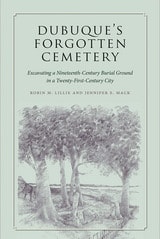
The excavation fieldwork was just the beginning. Once the digging was done each summer, skeletal biologist Robin M. Lillie and archaeologist Jennifer E. Mack still faced the enormous task of teasing out life histories from fragile bones, disintegrating artifacts, and the decaying wooden coffins the families had chosen for the deceased. Poring over scant documents and sifting through old newspapers, they pieced together the story of the cemetery and its residents, a story often surprising and poignant. Weaving together science, history, and local mythology, the tale of the Third Street Cemetery provides a fascinating glimpse into Dubuque’s early years, the hardships its settlers endured, and the difficulties they did not survive.
While they worked, Lillie and Mack also grappled with the legal and ethical obligations of the living to the dead. These issues are increasingly urgent as more and more of America’s unmarked (and marked) cemeteries are removed in the name of progress. Fans of forensic crime shows and novels will find here a real-world example of what can be learned from the fragments left in time’s wake.
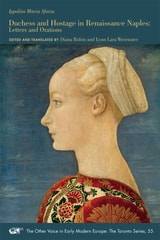
Duchess and Hostage in Renaissance Naples
Letters and OrationsIppolita Maria Sforza
Iter Press, 2017

Duchess of Palms
A MemoirBy Nadine Eckhardt
University of Texas Press, 2009
A “fifties girl” tells the fascinating story of her marriages to novelist Billy Lee Brammer and Congressman Bob Eckhardt, and how these relationships propelled her into the multifaceted life she led on her own terms.
Child of the Great Depression, teenage "Duchess of Palms" beauty queen, wife of an acclaimed novelist and later of a brilliant U.S. congressman, and ultimately a successful single working woman and mother, Nadine Eckhardt has lived a fascinating life. In this unique, funny, and honest memoir, she recounts her journey from being a "fifties girl" who lived through the men in her life to becoming a woman in her own right, working toward her own goals.
Eckhardt's first marriage to writer Billy Lee Brammer gave her entrée to liberal political and literary circles in Austin and Washington, where she and Brammer both worked for Senator Lyndon B. Johnson. She describes the heady excitement of LBJ's world—a milieu that Brammer vividly captured in his novel The Gay Place. She next recalls her second marriage to Bob Eckhardt, whom she helped get elected to the U.S. House of Representatives, as well as her growing involvement with the counterculture of social protest, sexual revolution, and drug use. Eckhardt honestly recounts how the changing times changed her perception of herself, recalling that "I didn't know how to achieve for myself, only for others, and I felt ripped off and empty." This painful realization opened the door to a new life for Eckhardt. Her memoir concludes with a joyful description of her multifaceted later life as a restaurateur, assistant to Molly Ivins, writer, and center of a wide circle of friends.
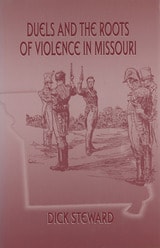
Duels and the Roots of Violence in Missouri
Dick Steward
University of Missouri Press, 2000
In early-nineteenth-century Missouri, the duel was a rite of passage for many young gentlemen seeking prestige and power. In time, however, other social groups, influenced by the ruling class, engaged in a variety of violent acts and symbolic challenges under the rubric of the code duello. In Duels and the Roots of Violence in Missouri, Dick Steward takes an in-depth look at the evolution of dueling, tracing the origins, course, consequences, and ultimate demise of one of the most deadly art forms in Missouri history. By focusing on the history of dueling in Missouri, Steward details an important part of our culture and the long-reaching impact this form of violence has had on our society.
Drawing upon accounts of at least a hundred duels—from little-known encounters to those involving celebrated figures such as Senator Thomas Hart Benton, Charles Lucas, Thomas Biddle, Spencer Pettis, and John Smith T—Steward shows how the roots of violence have penetrated our modern culture. He traces the social and cultural changes in the nature of the duel from its earliest form as a defense of honor to its use as a means of revenge. By the latter part of the nineteenth century, the formal southern duel had for the most part given way to the improvised western duel, better known as the gunfight. Involving such gunslingers as Wild Bill Hickok and Jesse James, these violent acts captivated people not only in the state but also across the nation. Although the violence entailed different methods of killing, its allure remained as strong as ever.
Steward re-creates the human drama and tragedy in many of these hostile encounters, revealing how different groups operating under the code duello justified family and clan feuds, vigilante justice, and revenge killings. This often-glamorized violence, Steward argues, was viewed as a symbol of honor and courage throughout the century and greatly influenced behavior and attitudes toward violence well into the twentieth century.
While this work centers mainly on Missouri and the history of dueling in the state, its inferences extend well past the region itself. Well-written and thoroughly researched, Duels and the Roots of Violence in Missouri provides valuable insight into the violent social climate of yesterday.

Duffy Daugherty
A Man Ahead of His TimeDavid Claerbaut
Michigan State University Press, 2018
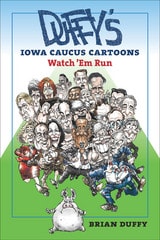
Duffy's Iowa Caucus Cartoons
Watch 'Em RunBrian Duffy
University of Iowa Press, 2015
Whether you’re anticipating or dreading the onset of another caucus season in 2016, this book will put it all into perspective. From Jimmy Carter’s innovative 1976 effort to Barack Obama’s come-from-behind win in 2008, from George H. W. Bush’s storming to victory in 1980 to George W. Bush’s coasting to his win in 2000, from Gary Hart’s peccadillos in 1988 to John Edwards’s missteps in 2008, from Elizabeth Dole’s determination to breach the White House boys’ club in 2000 to Hillary Clinton’s fall from frontrunner to third place in 2008, here is American presidential campaigning in all its glory. With pigs.
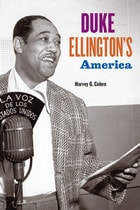
Duke Ellington's America
Harvey G. Cohen
University of Chicago Press, 2010
Few American artists in any medium have enjoyed the international and lasting cultural impact of Duke Ellington. From jazz standards such as “Mood Indigo” and “Don’t Get Around Much Anymore,” to his longer, more orchestral suites, to his leadership of the stellar big band he toured and performed with for decades after most big bands folded, Ellington represented a singular, pathbreaking force in music over the course of a half-century. At the same time, as one of the most prominent black public figures in history, Ellington demonstrated leadership on questions of civil rights, equality, and America’s role in the world.
With Duke Ellington’s America, Harvey G. Cohen paints a vivid picture of Ellington’s life and times, taking him from his youth in the black middle class enclave of Washington, D.C., to the heights of worldwide acclaim. Mining extensive archives, many never before available, plus new interviews with Ellington’s friends, family, band members, and business associates, Cohen illuminates his constantly evolving approach to composition, performance, and the music business—as well as issues of race, equality and religion. Ellington’s own voice, meanwhile, animates the book throughout, giving Duke Ellington’s America an intimacy and immediacy unmatched by any previous account.
By far the most thorough and nuanced portrait yet of this towering figure, Duke Ellington’s America highlights Ellington’s importance as a figure in American history as well as in American music.
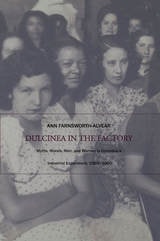
Dulcinea in the Factory
Myths, Morals, Men, and Women in Colombia's Industrial Experiment, 1905-1960Ann Farnsworth-Alvear
Duke University Press, 2000
Ann Farnsworth-Alvear’s analyses of archived personnel records, internal factory correspondence, printed regulations, and company magazines are combined with illuminating interviews with retired workers to allow a detailed reconstruction of the world behind the mill gate. In a place where the distinction between virgins and nonvirgins organized the labor market for women, the distance between chaste and unchaste behavior underlay a moral code that shaped working women’s self-perceptions. Farnsworth-Alvear challenges the reader to understand gender not as an opposition between female and male but rather as a normative field, marked by “proper” and “improper” ways of being female or male. Disputing the idea that the shift in the mills’ workforce over several decades from mainly women to almost exclusively men was based solely on economic factors, the author shows how gender and class, as social practices, converged to shape industrial development itself.
Innovative in its creative employment of subtle and complex material, Dulcinea in the Factory addresses long-standing debates within labor history about proletarianization and work culture. This book’s focus on Colombia will make it valuable to Latin Americanists, but it will also appeal to a wide readership beyond Latin American and labor studies, including historians and sociologists, as well as students of women’s studies, social movements, and anthropology.
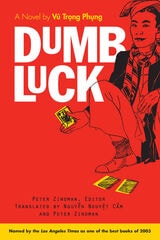
Dumb Luck
A Novel by Vu Trong PhungPeter Zinoman, Editor
University of Michigan Press, 2002
Dumb Luck is the first translation of a major work by Vu Trong Phung, arguably the greatest Vietnamese writer of the twentieth century. The novel's clever plot, richly drawn characters and humorous tone and its preoccupation with sex, fashion and capitalism will appeal to a wide audience. It will appeal to students and scholars of Vietnam, comparative literature, colonial and postcolonial studies, and Southeast Asian civilization.
Vu Trong Phung died in Hanoi, in 1939 at the age of twenty-seven. He is the author of at least eight novels, seven plays, and several other works of fiction in addition to Dumb Luck.
Peter Zinoman is Associate Professor of Southeast Asian History, University of California, Berkeley. Nguyen Nguyet Cam is Vietnamese Language Instructor, University of California, Berkeley.
Duncan Upshaw Fletcher
Dixie’s Reluctant ProgressiveWayne Flynt
University of Alabama Press, 2026
A Southern senator at the crossroads of change.
Duncan Upshaw Fletcher: Dixie’s Reluctant Progressive is the definitive portrait of one of Florida’s most influential yet overlooked political figures. Serving in the U.S. Senate from 1909 to 1936, Fletcher bridged the gap between Wilsonian progressivism and Roosevelt’s New Deal, shaping landmark legislation such as the Federal Farm Loan Act, the Shipping Act, and major banking reforms. Far from a demagogue, Fletcher was a methodical, pragmatic leader who championed moderation, urban progressivism, and economic development while resisting racial and religious extremism.
Wayne Flynt’s deeply researched biography illuminates Fletcher’s paradoxical career—a Unitarian in a fundamentalist state, a reformer who later embraced conservatism, and a Southern Democrat who became a loyal New Dealer. Through vivid analysis of Florida’s turbulent political landscape, the book explores themes of coalition-building, economic modernization, and the South’s evolving role in national politics. This work will captivate readers interested in Southern history, political biography, and the roots of modern progressivism. Scholars of the New Deal, reform movements, and Florida history will find it indispensable, while general readers will appreciate its lucid style and insights into a leader whose story resonates with today’s debates over moderation, governance, and social change.
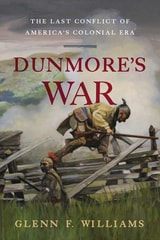
Dunmore's War
The Last Conflict of America's Colonial EraGlenn F. Williams
Westholme Publishing, 2017
Known to history as “Dunmore’s War,” the 1774 campaign against a Shawnee-led Indian confederacy in the Ohio Country marked the final time an American colonial militia took to the field in His Majesty’s service and under royal command. Led by John Murray, the fourth Earl of Dunmore and royal governor of Virginia, a force of colonials including George Rogers Clark, Daniel Morgan, Michael Cresap, Adam Stephen, and Andrew Lewis successfully enforced the western border established by treaties in parts of present-day West Virginia and Kentucky. The campaign is often neglected in histories, despite its major influence on the conduct of the Revolutionary War that followed. In Dunmore’s War: The Last Conflict of America’s Colonial Era, award-winning historian Glenn F. Williams describes the course and importance of this campaign. Supported by extensive primary source research, the author corrects much of the folklore concerning the war and frontier fighting in general, demonstrating that the Americans did not adopt Indian tactics for wilderness fighting as is often supposed, but rather used British methods developed for fighting irregulars in the woods of Europe, while incorporating certain techniques learned from the Indians and experience gained from earlier colonial wars.
As an immediate result of Dunmore’s War, the frontier remained quiet for two years, giving the colonies the critical time to debate and declare independence before Britain convinced its Indian allies to resume attacks on American settlements. Ironically, at the same time Virginia militiamen were fighting under command of a king’s officer, the colony was becoming one of the leaders in the move toward American independence. Although he was hailed as a hero at the end of the war, Lord Dunmore’s attempt to maintain royal authority put him in direct opposition to many of the subordinates who followed him on the frontier, and in 1776 he was driven from Virginia and returned to England.

Duquesne and the Rise of Steel Unionism
James D. Rose
University of Illinois Press, 2001
Dismissed as a flimsy front for management interests, industrial unions nonetheless carved out a role in the Carnegie Steel Company empire and then at U.S. Steel. James D. Rose examines the pivotal role played by these company-sponsored employee representation plans (ERPs) at the legendary steel works in Duquesne, Pennsylvania.
As Rose reveals, ERPs matured from tools of the company into worker-led organizations that represented the interests of the mills' skilled tradesmen and workers. ERPs and management created a sophisticated bargaining structure. Meanwhile, the independent trade union gave way to the Steel Workers Organizing Committee (SWOC), a professionalized organization that expended huge resources on companywide unionization. Yet even when the SWOC secured a collective bargaining agreement in 1937, it failed to sign up a majority of the Duquesne workforce.
Sophisticated and persuasive, Duquesne and the Rise of Steel Unionism confirms that what people did on the shop floor played a critical role in the course of steel unionism.
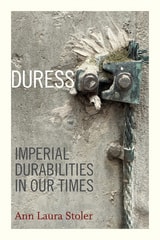
Duress
Imperial Durabilities in Our TimesAnn Laura Stoler
Duke University Press, 2016

Durham County
A History of Durham County, North CarolinaJean Bradley Anderson
Duke University Press, 2011
During Wind and Rain
The Jones Family Farm in the Arkansas Delta 1848-2006Margaret Jones Bolsterli
University of Arkansas Press, 2008

Durkheim and the Jews of France
Ivan Strenski
University of Chicago Press, 1997
Strenski begins each chapter by weighing particular claims (some anti-Semitic, some not) for the Jewishness of Durkheim's work. In each case Strenski overturns the claim while showing that it can nonetheless open up a fruitful inquiry into the relation of Durkheim to French Jewry. For example, Strenski shows that Durkheim's celebration of ritual had no innately Jewish source but derived crucially from work on Hinduism by the Jewish Indologist Sylvain Lévi, whose influence on Durkheim and his followers has never before been acknowledged.

Durkheim's Philosophy of Science and the Sociology of Knowledge
Creating an Intellectual NicheWarren Schmaus
University of Chicago Press, 1994
Schmaus shows how Durkheim sought to make sociology more rigorous by introducing scientific methods of analysis and explanation into the study of society. Durkheim tried to reveal how implicit, commonly held beliefs actually govern people's lives. Through an original interpretation of Durkheim's landmark writings, Schmaus argues that Durkheim, in his empirical studies, refined both the methods of sociology and a theory about society's shared knowledge and practices.
This book opens a new window on the development of Durkheim's thought and demonstrates how a philosophy of science can inspire the rise of a new science.
Dust Bowl, USA
Depression America and the Ecological Imagination, 1929–1941Brad D. Lookingbill
Ohio University Press, 2001
Whether romantic or tragic, accounts of the dramatic events surrounding the North American Dust Bowl of the “dirty thirties” unearthed anxieties buried deep in America’s ecological imagination. Moreover, the images of a landscape of fear remain embedded in the national consciousness today. In vivid form, the aesthetic of suffering captured in Dorothea Lange’s photographs and Woody Guthrie’s folk songs created the myths and memories of the Depression generation.
Dust Bowl, USA is a critical examination of the stories that grew out of the Dust Bowl experience. Across the nation, newspapers, magazines, books, films, and songs produced imagery of blight for local and mass audiences. As new technology, irrigation innovations, and conservation programs were introduced on a wide scale during the 1930s, the saga of the frontier continued to unfold through accounts of dust, drought, and desertification.
In piercing the myths brought forth in legends, lore, allegories, and anecdotes, Brad Lookingbill provides a revelatory insight into the history of the cultural narratives that have come to define an era.
Dust
The Archive and Cultural HistoryCarolyn Steedman
Rutgers University Press, 2002
In this witty, engaging, and challenging book, Carolyn Steedman has produced an originaland sometimes irreverentinvestigation into how modern historiography has developed. Dust: The Archive and Cultural History considers our stubborn set of beliefs about an objective material worldinherited from the nineteenth centurywith which modern history writing and its lack of such a belief, attempts to grapple. Drawing on her own published and unpublished writing, Carolyn Steedman has produced a sustained argument about the way in which history writing belongs to the currents of thought shaping the modern world.
Steedman begins by asserting that in recent years much attention has been paid to the archive by those working in the humanities and social sciences; she calls this practice "archivization." By definition, the archive is the repository of "that which will not go away," and the book goes on to suggest that, just like dust, the "matter of history" can never go away or be erased.
This unique work will be welcomed by all historians who want to think about what it is they do.

Dusty, Deek, and Mr. Do-Right
High School Football in IllinoisTaylor Bell
University of Illinois Press, 2010
Dutch Marine Painting in the Nineteenth Century
Cécile Bosman
Amsterdam University Press, 2026
It turns out that throughout the nineteenth century, marine painting was seen in Dutch art circles as a vehicle for patriotism. This kind of cultural nationalism was rooted in the country's historical connection with the water and, in particular, the glorification of the Netherlands as a seafaring nation. An enduring myth that is now the subject of intense public debate. This beautifully illustrated book fills a gap in art and cultural-historical knowledge of marine painting, while offering an insightful look at the still influential nineteenth century.
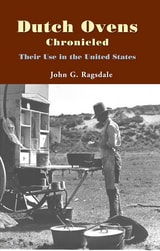
Dutch Ovens Chronicled
Their Use in the United StatesJohn G. Ragsdale
University of Arkansas Press, 2015
Dutch Ovens Chronicled offers a history of the development, care, and use of these ovens, complete with photos and recipes. This authoritative, informative, and eminently readable guide will be appreciated by outdoor enthusiasts, antiquarians, and history buffs alike.
Dutch in Michigan
Larry Ten Harmsel
Michigan State University Press, 2002
Even though they are historically one of the smaller immigrant streams, nineteenth-century Dutch migrants and their descendants have made parts of West Michigan their own. The first Dutch in Michigan were religious dissenters whose commitment to Calvinism had long-reaching effects on their communities, even in the face of later waves of radicalized industrial immigrants and the challenges of modern life. From Calvin College to Meijer Thrifty Acres and the Tulip Festival, the Dutch presence has enriched and informed people throughout the state. Larry ten Harmsel skillfully weaves together the strands of history and modern culture to create a balanced and sensitive portrayal of this vibrant community.

Dutch is Beautiful
Fifty Years of Dutch and Flemish Studies at the University of MichiganTon Broos, Annemarie Toebosch, and Karla Vandersypen
Michigan Publishing Services, 2019
Dutch is Beautiful tells the story of the fifty years of Dutch and Flemish Studies at the University of Michigan in Ann Arbor, Michigan, USA. It is an account of the efforts to promote Dutch and Flemish culture and language, as well as a description of how the teaching of Dutch language, literature, history and culture can be a tool to look at a world of diverse identities. It also offers a comprehensive overview of the beginnings of a successful program that included Dutch writers-in-residence, visiting Netherlands professors, cultural and educational events, arts, music, films, conferences and publications. Several alumni of the program look back at their college years with appreciation. Articles and essays on history, Anne Frank, and conversations on colonialism discuss critical and educational views on Dutch and Flemish Studies in past, present and future, when diversity, equity and inclusion are important goals and objectives, and public scholarship and academic activism will be a larger part of the curriculum. This book will inform, entertain, stimulate and impress everyone who is interested in the culture of the Low Countries. The title says it all!
Duties, Pleasures, and Conflicts
Essays in StruggleMichael M. Thelwell
University of Massachusetts Press, 1987
This powerful collection of essays and short stories provides a unique perspective on the black civil rights movement over the past twenty-five years. A long-time activist, Michael Thelwell was a member of the Student Non-Violent Coordinating Committee (SNCC) and the Mississippi Freedom Democratic Party in the early 1960s, a founder of the W.E.B. Du Bois Department of Afro-American Studies at the University of Massachusetts in 1970, author of the widely praised novel The Harder They Come published in 1980, and an organizer for Jesse Jackson's presidential campaign in 1984. Thelwell is a writer of rare grace, integrity, and strong political convictions.
The collection begins with three stories. Set in the Mississippi Delta in the 1960s, the stories explore how individuals manage to preserve their dignity in a world of racism and violence. The next six essays, also written in the 1960s, are historical and journalistic. They discuss the March on Washington for Jobs and Freedom, the situation in the South as seen by SNCC workers, the political challenges in Mississippi, the articulation of the Black Power movement, the causes of the black student revolt at Cornell, and the need for Black Studies as the intellectual offensive in the struggle for black liberation.
The section that follows is composed of literary pieces: two appreciative essays on James Baldwin, two critical reviews of William Styron and his treatment of Nat Turner, an excoriating assessment of V. S. Naipaul, a profile of Amos Tutuola, and a thoughtful analysis of the social responsibility of the black writer.
The final essay examines the history of Jesse Jackson's presidential campaign and comments on the political climate of the 1980s.

Dutton's Dirty Diggers
Bertha P. Dutton and the Senior Girl Scout Archaeological Camps in the American Southwest, 1947–1957Catherine S. Fowler
University of Utah Press, 2020
Catherine Fowler chronicles a significant yet little-known program for Girl Scouts in post–WWII America. At a time when women were just beginning to enter fields traditionally dominated by men, these two-week camping caravans and archaeological excavations introduced teenage girls not only to the rich cultural and scientific heritage of the American Southwest but to new career possibilities. Dr. Bertha Dutton, curator at the Museum of New Mexico, served as trip leader.
While on the road and in camp, Dutton and other experts in anthropology, archaeology, geology, natural history, and more helped the campers appreciate what they were seeing and learning. This book details the history of the program, sharing trip itineraries and selected memories from the nearly three hundred girls who attended the camps. It also serves as a mini-biography and tribute to Bertha Dutton, who, through her knowledge, teaching, and strong persona, provided a role model for these young women, many of whom later pursued careers in anthropology and related fields.
Duty beyond the Battlefield
African American Soldiers Fight for Racial Uplift, Citizenship, and Manhood, 1870–1920Le'Trice D. Donaldson
Southern Illinois University Press, 2020
Through extensive research, Donaldson not only illuminates this evolution but also interrogates the association between masculinity and citizenship and the ways in which performing manhood through military service influenced how these men struggled for racial uplift. Following the Buffalo soldier units and two regular army infantry units from the frontier and the Mexican border to Mexico, Cuba, and the Philippines, Donaldson investigates how these locations and the wars therein provide windows into how the soldiers’ struggles influenced black life and status within the United States.
Continuing to probe the idea of what it meant to be a military race man—a man concerned with the uplift of the black race who followed the philosophy of progress—Donaldson contrasts the histories of officers Henry Flipper and Charles Young, two soldiers who saw their roles and responsibilities as black military officers very differently.
Duty beyond the Battlefield demonstrates that from the 1870s to 1920s military race men laid the foundation for the “New Negro” movement and the rise of Black Nationalism that influenced the future leaders of the twentieth century Civil Rights movement.

Duval County Tejanos
An Epic narrative of Liberty and DemocracyAlfredo Cardenas
University of North Texas Press, 2024