Results by title
4531 books match the query 'Cultural & Ethnic Studies' and 165 start with i
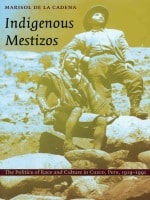
Indigenous Mestizos
The Politics of Race and Culture in Cuzco, Peru, 1919-1991Marisol de la Cadena
Duke University Press, 2000
De la Cadena’s ethnographically and historically rich study examines how indigenous citizens of the city of Cuzco have been conceived by others as well as how they have viewed themselves and places these conceptions within the struggle for political identity and representation. Demonstrating that the terms Indian and mestizo are complex, ambivalent, and influenced by social, legal, and political changes, she provides close readings of everyday concepts such as marketplace identity, religious ritual, grassroots dance, and popular culture, as well as of such common terms as respect, decency, and education. She shows how Indian has come to mean an indigenous person without economic and educational means—one who is illiterate, impoverished, and rural. Mestizo, on the other hand, has come to refer to an urban, usually literate, and economically successful person claiming indigenous heritage and participating in indigenous cultural practices. De la Cadena argues that this version of de-Indianization—which, rather than assimilation, is a complex political negotiation for a dignified identity—does not cancel the economic and political equalities of racism in Peru, although it has made room for some people to reclaim a decolonized Andean cultural heritage.
This highly original synthesis of diverse theoretical arguments brought to bear on a series of case studies will be of interest to scholars of cultural anthropology, postcolonialism, race and ethnicity, gender studies, and history, in addition to Latin Americanists.
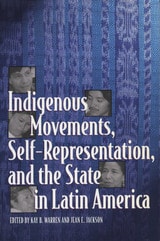
Indigenous Movements, Self-Representation, and the State in Latin America
Edited by Kay B. Warren and Jean E. Jackson
University of Texas Press, 2003
Throughout Latin America, indigenous peoples are responding to state violence and pro-democracy social movements by asserting their rights to a greater measure of cultural autonomy and self-determination. This volume's rich case studies of movements in Colombia, Guatemala, and Brazil weigh the degree of success achieved by indigenous leaders in influencing national agendas when governments display highly ambivalent attitudes about strengthening ethnic diversity.
The contributors to this volume are leading anthropologists and indigenous activists from the United States and Latin America. They address the double binds of indigenous organizing and "working within the system" as well as the flexibility of political tactics used to achieve cultural goals outside the scope of state politics. The contributors answer questions about who speaks for indigenous communities, how indigenous movements relate to the popular left, and how conflicts between the national indigenous leadership and local communities play out in specific cultural and political contexts. The volume sheds new light on the realities of asymmetrical power relations and on the ways in which indigenous communities and their representatives employ Western constructions of subjectivity, alterity, and authentic versus counterfeit identity, as well as how they manipulate bureaucratic structures, international organizations, and the mass media to advance goals that involve distinctive visions of an indigenous future.
Indigenous Reparations and Settler Colonial Reckoning
Re-Braiding Rights and Redress in CanadaPauline Wakeham
University of Minnesota Press, 2026
How Indigenous communities are transforming the idea and practice of reparations through their laws and leadership
In recent decades, a growing number of Indigenous groups across Canada have initiated movements for colonial reparations. Too often, the settler state has responded by attempting to enfold their work into a narrative of reconciliation that consigns colonialism to “sad chapters” of history. In this book, Pauline Wakeham calls attention to the ways that Indigenous reparations movements exceed state reconciliatory frameworks and prompt a deeper reckoning with the enduring structures of settler colonialism.
To expose and redress colonial injustices, Indigenous reparations movements draw upon long local traditions of political organizing as well as transformations on the global stage since World War II. As international law formulated new instruments regarding gross human rights violations, atrocity crimes, and the reparative obligations of states, colonized peoples across the world have sought to mobilize these mechanisms in their struggles for decolonization and reparations. While international law has provided strategic tools for this work, the colonial foundations of the field continue to limit how it conceptualizes and shapes access to justice. Indigenous Reparations and Settler Colonial Reckoning traces the specific implications for Indigenous nations whose land is occupied by settler states—nations whose legal orders remain subordinated to both settler “domestic” and international legal systems.
Amid this complex multijurisdictional terrain, how are Indigenous peoples carving out space to articulate their own visions of justice? To answer this question, Wakeham learns from the Inuit-led Qikiqtani Truth Commission as well as reparations movements for residential schools and the High Arctic Relocations of 1953 and 1955. These movements offer powerful lessons about the importance of centering Indigenous leadership and laws in redress processes, thereby connecting reparations to the living enactment of Indigenous rights.
Retail e-book files for this title are screen-reader friendly with images accompanied by short alt text and/or extended descriptions.
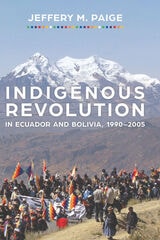
Indigenous Revolution in Ecuador and Bolivia, 1990–2005
Jeffery M. Paige
University of Arizona Press, 2020
Uprisings by indigenous peoples of Ecuador and Bolivia between 1990 and 2005 overthrew the five-hundred-year-old racial and class order inherited from the Spanish Empire. It started in Ecuador with the Great Indigenous Uprising, which was fought for cultural and economic rights. A few years later massive indigenous mobilizations began in Bolivia, culminating in 2005 with the election of Evo Morales, the first indigenous president.
Jeffrey M. Paige, an internationally recognized authority on the sociology of revolutionary movements, interviewed forty-five indigenous leaders who were actively involved in the uprisings. The leaders recount how peaceful protest and electoral democracy paved the path to power. Through the interviews, we learn how new ideologies of indigenous socialism drew on the deep commonalities between the communal dreams of their ancestors and the modern ideology of democratic socialism. This new discourse spoke to the people most oppressed by both withering racism and neoliberal capitalism.
Emphasizing mutual respect among ethnic groups (including the dominant Hispanic group), the new revolutionary dynamic proposes a communal worldview similar to but more inclusive than Western socialism because it adds indigenous cultures and nature in a spiritual whole. Although absent in the major revolutions of the past century, the themes of indigenous revolution—democracy, indigeneity, spirituality, community, and ecology—are critically important.
Paige’s interviews present the powerful personal experiences and emotional intensity of the revolutionary leadership. They share the stories of mass mobilization, elections, and indigenous socialism that created a new form of twenty-first-century revolution with far-reaching applications beyond the Andes.
Individualism and Holism
Studies in Confucian and Taoist ValuesDonald J. Munro, Editor
University of Michigan Press, 1985
Industry at the Crossroads
Robert E. Cole, Editor
University of Michigan Press, 1982
Inequalities of Love
College-Educated Black Women and the Barriers to Romance and FamilyAveril Y. Clarke
Duke University Press, 2011
Information Brokers
Political Socialization in Latino Immigrant FamiliesRoberto F. Carlos
University of Chicago Press, 2026
An insightful rethinking of political socialization within Latino immigrant households.
Conventional wisdom tells us that children are passive recipients of political lessons from their parents, with caregivers being the ones who mold the developing behavior and beliefs of the children under their roof. Roberto F. Carlos challenges this preconception by revealing how Latino children, especially those with immigrant parents, often become key sources of political information and guidance in their families. As migrant parents navigate unfamiliar institutions and customs in the United States, they often turn to their children to broker information about everything from daily life to civic engagement. These roles not only place unique responsibilities on children but also create new pathways for them to shape the political behavior of their parents. Moreover, by taking on these roles, children learn the skills that can make them effective advocates later in life, even as they face resource disadvantages that normally correlate with reduced political participation and sense of political efficacy.
Drawing on six original surveys, multiple experiments, and in-depth interviews, including the accounts of youth helping protect their families from deportation, InformationBrokers shows how these dynamics influence both immigrant parents and their children in politically consequential ways. With the Latino population now over 64 million, Information Brokers offers vital insight into the political incorporation of America’s largest ethnic group.

Infrastructural Attachments
Austerity, Sovereignty, and Expertise in KenyaEmma Park
Duke University Press, 2024

Inhabitants of the Deep
The Blueness of BlacknessJonathan Howard
Duke University Press, 2025
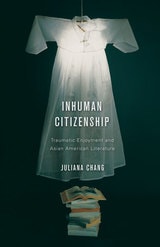
Inhuman Citizenship
Traumatic Enjoyment and Asian American LiteratureJuliana Chang
University of Minnesota Press, 2012
In Inhuman Citizenship, Juliana Chang claims that literary representations of Asian American domesticity may be understood as symptoms of America’s relationship to its national fantasies and to the “jouissance”—a Lacanian term signifying a violent yet euphoric shattering of the self—that both overhangs and underlies those fantasies. In the national imaginary, according to Chang, racial subjects are often perceived as the source of jouissance, which they supposedly embody through their excesses of violence, sexuality, anger, and ecstasy—excesses that threaten to overwhelm the social order.
To examine her argument that racism ascribes too much, rather than a lack of, humanity, Chang analyzes domestic accounts by Asian American writers, including Fae Myenne Ng’s Bone, Brian Ascalon Roley’s American Son, Chang-rae Lee’s Native Speaker, and Suki Kim’s The Interpreter. Employing careful reading and Lacanian psychoanalysis, Chang finds sites of excess and shock: they are not just narratives of trauma; they produce trauma as well. They render Asian Americans as not only the objects but also the vehicles and agents of inhuman suffering. And, claims Chang, these novels disturb yet strangely exhilarate the reader through characters who are objects of racism and yet inhumanly enjoy their suffering and the suffering of others.
Through a detailed investigation of “family business” in works of Asian American life, Chang shows that by identifying with the nation’s psychic disturbance, Asian American characters ethically assume responsibility for a national unconscious that is all too often disclaimed.

Inscrutable Eating
Asian Appetites and the Rhetorics of Racial ConsumptionJennifer Lin LeMesurier
The Ohio State University Press, 2023
“You are what you eat,” but what if you’re seen as a rat eater, bat lover, or MSG user? In Inscrutable Eating, Jennifer Lin LeMesurier considers how everyday assumptions about Asian food influence the perception of Asian and Asian American identity within the US racial landscape, demonstrating that beliefs about how certain people eat are inseparable from attitudes that support hierarchies around race, gender, and sexuality. Drawing on rhetorical theory, affect theory, and Asian American studies, LeMesurier analyzes messages in US popular culture about Asian eating to develop the concept of gut orientations: rhetorically dominant ways of interacting with food that scale upward to feelings of desire and disgust toward social groups. Looking at examples from fears around MSG to uproar over wet markets as the source of COVID-19, she argues that these “gut” reactions establish certain racial views as common-sense truths rather than cultural biases, reinforcing dominant norms about what belongs on whose plate, or who belongs at what table. In demystifying marginalizing discourse around food and eating, LeMesurier shows how exposing the tacit, felt ideas of consumption is necessary to contest broader forms of discrimination.
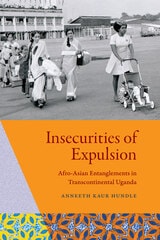
Insecurities of Expulsion
Afro-Asian Entanglements in Transcontinental UgandaAnneeth Kaur Hundle
Duke University Press, 2025
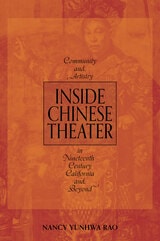
Inside Chinese Theater
Community and Artistry in Nineteenth-Century California and BeyondNancy Yunhwa Rao
University of Illinois Press, 2025
In the mid-nineteenth century, Chinese opera theater arrived as one of the significant performing art forms in California. Nancy Yunhwa Rao excavates and contextualizes the important history of Chinese Opera Theater, bringing to light the ways it became woven into the financial, political, social, and family life in California and beyond.
Chinese opera theater found brick-and-mortar homes with San Francisco theaters like the Hing Chuen Yuen and the Donn Qui Yuen. But troupes had already followed Chinese immigrants to mining and railroad towns, and across the American West. As Chinese theater became part of California and San Francisco culture, popular Chinese actors advocated for their art alongside appeals for civil rights. Rao draws on personal diaries, newspapers and artifacts to place Chinese theater within the everyday lives of San Francisco. She also examines the costumes, singing, staging, and storytelling that impacted mainstream reception and influenced how Chinese communities saw themselves.
Illustrated with seventy photographs, Inside Chinese Theater is an expert and eloquent journey into the early decades of Chinese opera in America.
Inside Colombia
Drugs, Democracy, and WarLivingstone, Grace
Rutgers University Press, 2004
The South American nation of Colombia has seen more than forty years of unrest, conflict, and civil war. It is a country in which social violence and warfare are intricately intertwined. Colombia is also notorious for its drug trade, being one of the leading producers of cocaine in the world, and for its central role as a staging ground for the U.S. “war on drugs.” Since 9/11 the Bush administration has sought to draw political links between the Colombian drug trade, guerrilla organizations, and terrorism.
Inside Colombia offers a valuable introduction and quick reference guide to this complex nation. With chapters devoted to history, human rights issues, the economy, drugs, the controversial antidrug intervention known as Plan Colombia, and relations with the United States, the book offers an easily accessible and comprehensive overview. Readers will learn about the major players in the conflicts, significant political figures, how Colombia’s economy has fared in the twentieth century, how the country’s geography influences its politics and economy, and how U.S. intervention shapes Colombia’s political scene.
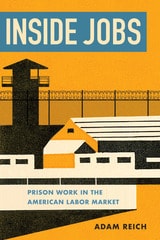
Inside Jobs
Prison Work in the Making of the American Labor Marketreich
Russell Sage Foundation, 2026
From the stone quarries of Sing Sing that supplied marble for early New York City landmarks, to twenty-first-century construction projects staffed by formerly incarcerated workers, Inside Jobs traces the relationship between prison work and the labor market over the past two hundred years. Sociologist Adam Reich demonstrates how prison labor has repeatedly been used to solve economic problems—disciplining workers, lowering labor costs, managing unemployment—revealing unexpected connections that challenge our assumptions about freedom, coercion, and labor itself.
Reich examines the history of work in prisons to understand how it has related to the free labor market. He finds that the organization of prison work, and debates over it, have changed dramatically over time. In the mid to late nineteenth century, prisons helped shape the emerging factory system as the apprentice-based labor market gave way to industrial production. Labor unions opposed prison labor as immoral, and in the early to mid-twentieth century, the moral character of the workforce became central to economic life within the prison and without. Therapeutic professionals worked in prisons to rehabilitate the incarcerated and determine what motivated them to work. Following prison uprisings in the late twentieth century, prison work became a tool of population control. Yet, paradoxically, work programs were remodeled to mirror the free labor market, requiring applications and hiring processes.
Blending archival research, political economy, and sociological theory, Inside Jobs offers a powerful new framework for understanding mass incarceration and reentry today. Reich examines how the dynamics of mass incarceration have begun to shift. He explores how the "mark of a criminal record"—the stigma traditionally associated with felony convictions—has given way to a "market" for criminal records, as employers discover advantages in hiring disadvantaged, dependent, and disciplined workers recently released from prison. Looking toward the future, Reich focuses on promising efforts to transform this system.
Inside Jobs is an illuminating examination of prison work's history, its relationship to work outside prison walls, and how the criminal justice system disempowers workers both behind bars and beyond.
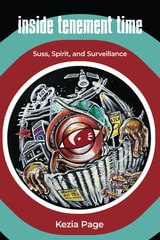
Inside Tenement Time
Suss, Spirit, and SurveillanceKezia Page
Rutgers University Press, 2025
Inside Tenement Time is the first comprehensive treatment of literary and cultural texts on surveillance in the Caribbean. Covering the long historical arc of the twentieth to the twenty-first centuries, Inside Tenement Time uses Jamaica as a case study to examine moments of crisis and particular spaces, especially urban yard enclaves and their environs, in the Caribbean encounter with surveillance. Making the argument that the Caribbean situation reveals flexible hegemonies rather than provinces of exclusive control, the book demonstrates the countervailing force of sussveillance and spiritveillance, Afro-Indigenous variations on surveillance. Sussveillance and spiritveillance are exemplars of vernacular arts and sciences that operate at and within the frangible borders of state power, exposing the unique dynamics of surveillance in the region and marshalling the acts of imagination with which it contends. For example, the Smile Jamaica concert of 1976, headlined by reggae Superstar Bob Marley, and the reputedly US government-backed 2010 Tivoli Gardens incursion in West Kingston, both moments that have dramatic, even mythic residue in Caribbean and global memory, are among the real-life events brought into conversation with literary representations of this history.
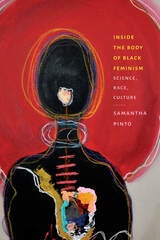
Inside the Body of Black Feminism
Science, Race, CultureSamantha Pinto
Duke University Press, 2026
Inside the Body of Black Feminism charts a cultural genealogy of antiracist and feminist engagement with some of the most objectified internal “parts” of racist medical and scientific inquiry: bones and blood, brains and hearts, guts and wombs. In a move counterintuitive to Black feminism’s emphasis on externalized representations of the body, Samantha Pinto reinterprets the relationship between embodiment, health, and race through cultural archives that reimagine the inside of the Black body. Working through materials such as medical textbooks, memoirs, data visualizations, museum displays, speculative fiction, and horror films, Pinto explores how a visually inaccessible corporeal interior becomes discernible and racialized in the public sphere. Inside the Body of Black Feminism engages expressive cultural work to ask how we might know the inside of the Black body differently through Black feminist theory and how scientific and medical inquiry might enable us to understand political subjectivity anew.
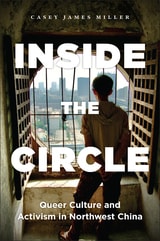
Inside the Circle
Queer Culture and Activism in Northwest ChinaCasey James Miller
Rutgers University Press, 2023

Insiders, Outliers
Centering Adult Student Writers at an HBCUCollie Fulford
Rutgers University Press, 2025
Winner of the 2026 Outstanding Book Award in the Monograph category from the Conference on College Composition and Communication
Insiders, Outliers invites readers into the lives of adult HBCU students for whom college is one meaningful activity among many. Although adults over the age of twenty-four comprise a quarter of all undergraduates, they are institutionally segregated and only partially served by a US higher education system that remains organized around traditional-aged learners. Even as such students are regarded as a market for postsecondary institutions, they are routinely marginalized by institutional barriers. Students’ stories of their personal, professional, community, and academic writing experiences illuminate a critical need for more age-inclusive practices across academia. Their cases also offer new conceptual models of writing as an ethical and emotional practice that fuels changes for individuals and the people and institutions that they care about—including higher education. What adult students reveal about writing across their life domains has powerful implications for conceptualizing writing as a complex form of agency and for teaching writing across the curriculum.
Institutions and Investments
Foreign Direct Investment in China during an Era of ReformsJun Fu
University of Michigan Press, 2000
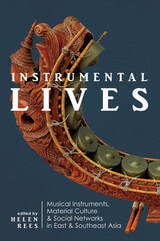
Instrumental Lives
Musical Instruments, Material Culture, and Social Networks in East and Southeast AsiaEdited by Helen Rees
University of Illinois Press, 2024
Original and expert, Instrumental Lives brings a new understanding of how musical instruments interact with their environments and societies. Contributors: Supeena Insee Adler, Marie-Pierre Lissoir, Terauchi Naoko, Jennifer C. Post, Helen Rees, Xiao Mei, Tyler Yamin, and Bell Yung
Insurgent Aesthetics
Security and the Queer Life of the Forever WarRonak K. Kapadia
Duke University Press, 2019
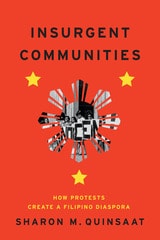
Insurgent Communities
How Protests Create a Filipino DiasporaSharon M. Quinsaat
University of Chicago Press, 2024
When people migrate and settle in other countries, do they automatically form a diaspora? In Insurgent Communities, Sharon M. Quinsaat explains the dynamic process through which a diaspora is strategically constructed. Quinsaat looks to Filipinos in the United States and the Netherlands—examining their resistance against the dictatorship of Ferdinand Marcos, their mobilization for migrants’ rights, and the construction of a collective memory of the Marcos regime—to argue that diasporas emerge through political activism. Social movements provide an essential space for addressing migrants’ diverse experiences and relationships with their homeland and its history. A significant contribution to the interdisciplinary field of migration and social movements studies, Insurgent Communities illuminates how people develop collective identities in times of social upheaval.
Insurgent Visions
Feminism, Justice, SolidarityChandra Talpade Mohanty
Duke University Press, 2025

Integrating the Gridiron
Black Civil Rights and American College FootballDemas, Lane
Rutgers University Press, 2011
Integrating the Gridiron, the first book devoted to exploring the racial politics of college athletics, examines the history of African Americans on predominantly white college football teams from the nineteenth century through today. Lane Demas compares the acceptance and treatment of black student athletes by presenting compelling stories of those who integrated teams nationwide, and illuminates race relations in a number of regions, including the South, Midwest, West Coast, and Northeast. Focused case studies examine the University of California, Los Angeles in the late 1930s; integrated football in the Midwest and the 1951 Johnny Bright incident; the southern response to black players and the 1955 integration of the Sugar Bowl; and black protest in college football and the 1969 University of Wyoming "Black 14." Each of these issues drew national media attention and transcended the world of sports, revealing how fans—and non-fans—used college football to shape their understanding of the larger civil rights movement.
Integrating the Inner City
The Promise and Perils of Mixed-Income Public Housing TransformationRobert J. Chaskin and Mark L. Joseph
University of Chicago Press, 2015
In the most thorough examination of mixed-income public housing redevelopment to date, Robert J. Chaskin and Mark L. Joseph draw on five years of field research, in-depth interviews, and volumes of data to demonstrate that while considerable progress has been made in transforming the complexes physically, the integrationist goals of the policy have not been met. They provide a highly textured investigation into what it takes to design, finance, build, and populate a mixed-income development, and they illuminate the many challenges and limitations of the policy as a solution to urban poverty. Timely and relevant, Chaskin and Joseph’s findings raise concerns about the increased privatization of housing for the poor while providing a wide range of recommendations for a better way forward.
Interior States
Institutional Consciousness and the Inner Life of Democracy in the Antebellum United StatesChristopher Castiglia
Duke University Press, 2008
In the late eighteenth century and early nineteenth, as discourses of interiority gained prominence, so did powerful counter-narratives. Castiglia reveals the flamboyant pages of antebellum popular fiction to be an archive of unruly democratic aspirations. Through close readings of works by Maria Monk and George Lippard, Walt Whitman and Timothy Shay Arthur, Hannah Webster Foster and Hannah Crafts, and Nathaniel Hawthorne and Herman Melville, Castiglia highlights a refusal to be reformed or self-contained. In antebellum authors’ representations of nervousness, desire, appetite, fantasy, and imagination, he finds democratic strivings that refused to disappear. Taking inspiration from those writers and turning to the present, Castiglia advocates a humanism-without-humans that, denied the adjudicative power of interiority, promises to release democracy from its inner life and to return it to the public sphere where U.S. citizens may yet create unprecedented possibilities for social action.
Interplay of Things
Religion, Art, and Presence TogetherAnthony B. Pinn
Duke University Press, 2021
Interpreting 2 Peter through African American Women’s Moral Writings
Shively T. J. Smith
SBL Press, 2023
Interrogating the Future of Puerto Rican Studies
Aurora Santiago Ortiz and Jorell A. Meléndez-Badillo, editors
Duke University Press, 2026
Contributors. José Atiles, Bárbara Abadía Rexach, Yarimar Bonilla, daniela crespo-miró, Marie Cruz Soto, Yomaira Figueroa-Vásquez, Marcela Guerrero, Gustavo García López, Mónica Jiménez, Lawrence LaFountain Stokes, Marisol LeBrón, Pedro Lebrón Ortiz, Beatriz Llenín Figueroa, Jorell Meléndez-Badillo, Sarah Molinari, Marisel Moreno, Daniel Nevárez Araújo, Aurora Santiago Ortiz, Karrieann Soto Vega, Daniel Vázquez Sanabria, Roberto Vélez-Vélez, Joaquín Villanueva, Jacqueline Villarrubia-Mendoza
Intersectional Chicana Feminisms
Sitios y LenguasAída Hurtado
University of Arizona Press, 2020
Aída Hurtado, a leading Chicana feminist and scholar, traces the origins of Chicanas’ efforts to bring attention to the effects of gender in Chicana and Chicano studies. Highlighting the innovative and pathbreaking methodologies developed within the field of Chicana feminisms—such as testimonio, conocimiento, and autohistoria—this book offers an accessible introduction to Chicana theory, methodology, art, and activism. Hurtado also looks at the newest developments in the field and the future of Chicana feminisms.
The book includes short biographies of key Chicana feminists, additional suggested readings, and exercises with each chapter to extend opportunities for engagement in classroom and workshop settings.
Intersectional Inequality
Race, Class, Test Scores, and PovertyCharles C. Ragin and Peer C. Fiss
University of Chicago Press, 2016
Ragin and Fiss begin by taking up the controversy regarding the relative importance of test scores versus socioeconomic background on life chances, a debate that has raged since the 1994 publication of Richard Herrnstein and Charles Murray’s TheBell Curve. In contrast to prior work, Ragin and Fiss bring an intersectional approach to the evidence, analyzing the different ways that advantages and disadvantages combine in their impact on life chances. Moving beyond controversy and fixed policy positions, the authors propose sophisticated new methods of analysis to underscore the importance of attending to configurations of race, gender, family background, educational achievement, and related conditions when addressing social inequality in America today.
Intersectionality and Higher Education
Identity and Inequality on College CampusesW. Carson Byrd
Rutgers University Press, 2019
Intersectionality as Critical Social Theory
Patricia Hill Collins
Duke University Press, 2019
Intersections in Turkish Literature
Essays in Honor of James Stewart-RobinsonWalter G. Andrews, Editor
University of Michigan Press, 2001
Intersections in Turkish Literature is a collection of essays on Turkish literature by former students of James Stewart-Robinson. The topics and methods cover a broad range--from a careful thematic analysis of a traditional Turkish folktale, which reveals its resemblance to well-known Western tales; to an analysis of the "saint tales" recounted by present-day Albanian Bektasi adepts; to a study of narrative rhythm in Nazim Hikhmet's rendition of an account of a fifteenth-century popular uprising.
Walter G. Andrews has assembled the writings of a number of scholars who bridge traditional chasms, inviting us to rethink our approaches to the study of Turkish and Ottoman literature. This collection forms a nucleus that clearly demonstrates the great potential now existing for study in this area, the essays displaying a variety of unusual approaches that bring together seemingly disparate materials: the Turkish story "The Pomegranate Seed" and Disney's "Snow White"; a fifteenth-century chronicle and the poetry of a modern socialist poet; Albanian dervishes in Detroit; a modern Turkish novel; Virginia Woolf; a Yale critic; traditional Japanese poetry; and Ottoman lyrics.
Intersections in Turkish Literature will provide an important stimulus to work that reaches beyond the limits of area studies, intersecting with the interests of scholars and students of literary theory, folklore studies, anthropology, French, Japanese, and Persian.
Walter G. Andrews is Affiliate Professor of Near Eastern Languages and Civilization, University of Washington.
Intersections of Harm
Narratives of Latina Deviance and DefianceHalperin, Laura
Rutgers University Press, 0
Interventions into Modernist Cultures
Poetry from Beyond the Empty ScreenAmie Elizabeth Parry
Duke University Press, 2007
Reading various works by US expatriates Ezra Pound and Gertrude Stein, Parry compares the cultural politics of U.S. canonical modernism with alternative representations of temporality, hybridity, erasure, and sexuality in the work of the Taiwanese writers Yü Kwang-chung and Hsia Yü and the Asian American immigrant author Theresa Hak Kyung Cha. Juxtaposing poems by Pound and Yü Kwang-chung, Parry shows how Yü’s fragmented, ambivalent modernist form reveals the effects of neocolonialism while Pound denies and obscures U.S. imperialism in Asia, asserting a form of nondevelopmental universalism through both form and theme. Stein appropriates discourses of American modernity and identity to represent nonnormative desire and sexuality, and Parry contrasts this tendency with representations of sexuality in the contemporary experimental poetry of Hsia Yü. Finally, Parry highlights the different uses of modernist forms by Pound in his Cantos—which incorporate a multiplicity of decontextualized and ahistorical voices—and by Cha in her 1982 novel Dictee, a historicized, multilingual work. Parry’s sophisticated readings provide a useful critical framework for apprehending how “minor modernisms” illuminate the histories erased by certain canonical modernist texts.

Intimacy Across Borders
Race, Religion, and Migration in the U.S. MidwestJane Juffer
Temple University Press, 2013
Examining how encounters produced by migration lead to intimacies-ranging from sexual, spiritual, and neighborly to hateful and violent, Jane Juffer considers the significant changes that have occurred in small towns following an influx of Latinos to the Midwest.
Intimacy across Borders situates the story of the Dutch Reformed Church in Iowa and South Africa within a larger analysis of race, religion, and globalization. Drawing on personal narrative, ethnography, and sociopolitical critique, Juffer shows how migration to rural areas can disrupt even the most thoroughly entrenched religious beliefs and transform the schools, churches, and businesses that form the heart of small-town America. Conversely, such face-to-face encounters can also generate hatred, as illustrated in the increasing number of hate crimes against Latinos and the passage of numerous anti-immigrant ordinances.
Juffer demonstrates how Latino migration to new areas of the U.S. threatens certain groups because it creates the potential for new kinds of families—mixed race, mixed legal status, and transnational—that challenge the conservative definition of community based on the racially homogeneous, coupled, citizen family.
Intimate Connections
Love and Marriage in Pakistan’s High MountainsAnna-Maria Walter
Rutgers University Press, 2022

Intimate Eating
Racialized Spaces and Radical FuturesAnita Mannur
Duke University Press, 2022

Intimate Fathers
The Nature and Context of Aka Pygmy Paternal Infant CareBarry S. Hewlett
University of Michigan Press, 1991

Intimate Strangers
Shin Issei Women and Contemporary Japanese American Community, 1980-2020Toyota, Tritia
Temple University Press, 2023
Intimate Strangers charts the experiences of shin Issei lives: their existence in Japan prior to migration, their motivations for moving to the United States, their settlement, and their growing awareness of their place in American society. Toyota chronicles how these resilient young women became active agents in circumventing social restrictions to fashion new lives of meaning. The Nikkei community (Americans of Japanese ancestry who were born in the United States) has been transformed by the inclusion of shin Issei, and Toyota describes the tensions around intergroup negotiations over race, identity, and the possibility of common belonging.
Intimate Strangers is a perceptive study of migration and community incorporation enacted around cultural differences and processes.

Intoxicated
Race, Disability, and Chemical Intimacy across EmpireMel Y. Chen
Duke University Press, 2023
Invisible Asians
Korean American Adoptees, Asian American Experiences, and Racial ExceptionalismPark Nelson, Kim
Rutgers University Press, 2016
Invisible Asians offers an engaging account that makes an important contribution to our understanding of race in America, and illuminates issues of power and identity in a globalized world.
Invisible Hawkeyes
African Americans at the University of Iowa during the Long Civil Rights EraLena M. Hill and Michael D. Hill
University of Iowa Press, 2016
By examining the quieter collisions between Iowa’s polite midwestern progressivism and African American students’ determined ambition, Invisible Hawkeyes focuses attention on both local stories and their national implications. By looking at the University of Iowa and a smaller midwestern college town like Iowa City, this collection reveals how fraught moments of interracial collaboration, meritocratic advancement, and institutional insensitivity deepen our understanding of America’s painful conversion into a diverse republic committed to racial equality.
SUBJECTS COVERED
Edison Holmes Anderson, George Overall Caldwell, Elizabeth Catlett, Fanny Ellison, Oscar Anderson Fuller, Michael Harper, James Alan McPherson, Herbert Franklin Mells, Herbert Nipson, Thomas Pawley, William Oscar Smith, Mitchell Southall, Margaret Walker
CONTRIBUTORS
Dora Martin Berry, Richard M. Breaux, Kathleen A. Edwards, Lois Eichaker, Brian Hallstoos, Lena M. Hill, Michael D. Hill, Dianna Penny, Donald W. Tucker, Ted Wheeler
Invitations to Love
Literacy, Love Letters, and Social Change in NepalLaura M. Ahearn
University of Michigan Press, 2001
The love-letter correspondences examined by Ahearn also provide a deeper understanding of the social effects of literacy. While the acquisition of literary skills may open up new opportunities for some individuals, such skills can also impose new constraints, expectations, and disappointments. The increase in female literacy rates in Junigau in the 1990s made possible the emergence of new courtship practices and facilitated self-initiated marriages, but it also reinforced certain gender ideologies and undercut some avenues to social power, especially for women.
Scholars, and students in such fields as anthropology, women's studies, linguistics, development studies, and South Asian studies will find this book ethnographically rich and theoretically insightful.
Iranians in Texas
Migration, Politics, and Ethnic IdentityBy Mohsen M. Mobasher
University of Texas Press, 2012
Thousands of Iranians fled their homeland when the 1978–1979 revolution ended the fifty-year reign of the Pahlavi Dynasty. Some fled to Europe and Canada, while others settled in the United States, where anti-Iranian sentiment flared as the hostage crisis unfolded. For those who chose America, Texas became the fourth-largest settlement area, ultimately proving to be a place of paradox for any Middle Easterner in exile. Iranians in Texas culls data, interviews, and participant observations in Iranian communities in Houston, Dallas, and Austin to reveal the difficult, private world of cultural pride, religious experience, marginality, culture clashes, and other aspects of the lives of these immigrants.
Examining the political nature of immigration and how the originating and receiving countries shape the prospects of integration, Mohsen Mobasher incorporates his own experience as a Texas scholar born in Iran. Tracing current anti-Muslim sentiment to the Iranian hostage crisis, two decades before 9/11, he observes a radically negative shift in American public opinion that forced thousands of Iranians in the United States to suddenly be subjected to stigmatization and viewed as enemies. The book also sheds light on the transformation of the Iranian family in exile and some of the major challenges that second-generation Iranians face in their interactions with their parents.
Bringing to life a unique population in the context of global politics, Iranians in Texas overturns stereotypes while echoing diverse voices.
Iranians in Texas
Migration, Politics, and Ethnic IdentityMohsen Mostafavi MobasherForeword by Nestor Rodriguez
University of Texas Press, 2025
An exploration of the link between politics of migration, prospects of integration, and ethnic identity among Iranian immigrants and their descendants in the United States, spanning from the 1970s to the present day.
Thousands of Iranians fled their homeland when the 1978–1979 revolution ended the fifty-year reign of the Pahlavi dynasty. Some fled to Europe and Canada, while others settled in the United States, where anti-Iranian sentiment flared as the hostage crisis unfolded. For those who chose America, Texas became the fourth-largest settlement area. Iranians in Texas culls data, interviews, and participant observations in Iranian communities in Houston, Dallas, and Austin to reveal the difficult, private world of cultural pride, religious experience, marginality, culture clashes, and other aspects of the lives of these immigrants.
Examining the political nature of immigration between Iran and the United States and social, cultural, and economic life for Iranian immigrants and their American-born children, Mohsen Mostafavi Mobasher incorporates his own experience as a Texas scholar born in Iran. In this revised edition, two new chapters and a new introduction and conclusion provide updates on what has happened in the Obama, Trump, and Biden administrations, including the Iran nuclear deal and resulting controversy, the Muslim ban, and the global protests over the death of twenty-two-year-old Mahsa Amini for not wearing a hijab. Bringing to life a unique immigrant population in the context of global politics, Iranians in Texas overturns stereotypes and echoes diverse voices.
Irish Mormons
Reconciling Identity in Global MormonismHazel O'Brien
University of Illinois Press, 2023
Examining the Latter-day Saint experience against one nation’s rapid social and religious changes, Irish Mormons blends participant observation and interviews with analysis to offer a rare view of the Latter-day Saints in contemporary Ireland.