Results by title
5550 books match the query 'Biography & Autobiography' and 204 start with j

J'étais plus américain que les Américains
Sylvère Lotringer en conversation avec Donatien GrauSylvère Lotringer and Donatien Grau
Diaphanes, 2021
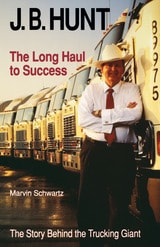
J. B. Hunt
The Long Haul to SuccessMarvin Schwartz
University of Arkansas Press, 1992
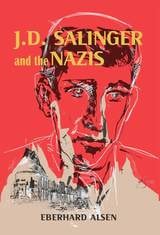
J. D. Salinger and the Nazis
Eberhard Alsen
University of Wisconsin Press, 2018
Alsen, a longtime Salinger scholar who witnessed the Nazi regime firsthand as a child in Germany, tracks Salinger's prewar experiences in the army, his work for the CIC during significant military campaigns, and his reactions to three military disasters that killed more than a thousand fellow soldiers in his Fourth Infantry Division. Alsen also identifies the Nazi death camp where Salinger saw mounds of recently burned bodies. Revealing details shed light on Salinger's outspoken disgust for American military leaders, the personality changes that others saw in him after the war, and his avoidance of topics related to the Holocaust.
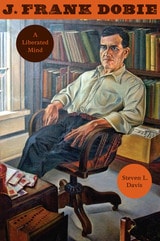
J. Frank Dobie
A Liberated MindBy Steven L. Davis
University of Texas Press, 2009
The first Texas-based writer to gain national attention, J. Frank Dobie proved that authentic writing springs easily from the native soil of Texas and the Southwest. In best-selling books such as Tales of Old-Time Texas, Coronado's Children, and The Longhorns, Dobie captured the Southwest's folk history, which was quickly disappearing as the United States became ever more urbanized and industrial. Renowned as "Mr. Texas," Dobie paradoxically has almost disappeared from view—a casualty of changing tastes in literature and shifts in social and political attitudes since the 1960s.
In this lively biography, Steven L. Davis takes a fresh look at a J. Frank Dobie whose "liberated mind" set him on an intellectual journey that culminated in Dobie becoming a political liberal who fought for labor, free speech, and civil rights well before these causes became acceptable to most Anglo Texans. Tracing the full arc of Dobie's life (1888–1964), Davis shows how Dobie's insistence on "free-range thinking" led him to such radical actions as calling for the complete integration of the University of Texas during the 1940s, as well as taking on governors, senators, and the FBI (which secretly investigated him) as Texas's leading dissenter during the McCarthy era.
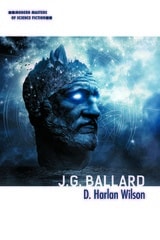
J. G. Ballard
D. Wilson
University of Illinois Press, 2017
D. Harlan Wilson offers the first career-spanning analysis of an author who helped steer SF in new, if startling, directions. Here was a writer committed to moral ambiguity, one who drowned the world and erected a London high-rise doomed to descend into savagery--and coolly picked apart the characters trapped within each story. Wilson also examines Ballard's methods, his influence on cyberpunk, and the ways his fiction operates within the sphere of our larger culture and within SF itself.

J.D. Salinger - American Writers 51
University of Minnesota Pamphlets on American WritersJames E. Miller Jr.
University of Minnesota Press, 1965
J.D. Salinger - American Writers 51 was first published in 1965. Minnesota Archive Editions uses digital technology to make long-unavailable books once again accessible, and are published unaltered from the original University of Minnesota Press editions.

JOHN PEALE BISHOP
A BIOGRAPHYELIZABETH C. SPINDLER
West Virginia University Press, 1980
JOURNAL OF A VOYAGE AROUND THE WORLD
A YEAR ON THE SHIP HELENA (1841-1842)THOMAS WORTHINGTON KING
The Ohio State University Press, 2002
In 1841 Thomas Worthington King accepted a position as supercargo on the Helena, a ship some have called “the first American clipper,” as it was about to make its maiden voyage to China. Journal of a Voyage around the World recounts the travel of Thomas Worthington King on the Helena from 1841 to 1842.
In full and well-written entries, King recounts the routines and surprises of life at sea, where storms and calms could be equally threatening, and the next day might bring a stop at St. Helena to see Napoleon’s tomb or an encounter with pirates. King provides details often missing from histories that give a real sense of the period. In his description of Chile and Peru we learn about activities as diverse as cockfighting and courtship. We learn about produce and prisons, mints and monasteries, fruits and fashions. In his account of China, King vividly describes rivers so full of boats that one could “see no water—nothing but the large mat sales” and calm groves of “green lychee, or broad leaved & rustling plantain.”
Perhaps the most important subject of the diary is the diarist himself, whose talent and confidence develop on the pages of his record. Thomas Worthington King was born and raised in Chillicothe, Ohio, and was the grandson of two Ohio Senators: Rufus King and Thomas Worthington.
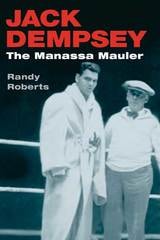
Jack Dempsey
THE MANASSA MAULERRandy Roberts
University of Illinois Press, 1979
In this incisive, fast-paced biography, Randy Roberts charts the life and career of a man widely regarded as one of the toughest ever to enter the ring. He details Dempsey's transition from barroom fights to professional boxing and his emerging reputation for fast, brutal knockouts. Roberts draws on a wealth of newspaper articles and interviews to chronicle Dempsey's rise to the heavyweight championship and his six title defenses. Also included are accounts of the eventual loss of his title to Gene Tunney in 1926, and the rematch in 1927, which Dempsey also lost in the infamous "long count." After continuing to fight in exhibitions, Dempsey retired from boxing in 1940 with an astonishing 64 victories, 49 of them knockouts.
Roberts tells of the building of this record, including accounts of Dempsey's forays into Hollywood, the controversy over his alleged draft-dodging, his long life after retirement, and his enduring legacy as one of the greatest fighters in boxing history.
Jack London - American Writers 57
University of Minnesota Pamphlets on American WritersCharles Child Walcutt
University of Minnesota Press, 1966
Jack London - American Writers 57 was first published in 1966. Minnesota Archive Editions uses digital technology to make long-unavailable books once again accessible, and are published unaltered from the original University of Minnesota Press editions.
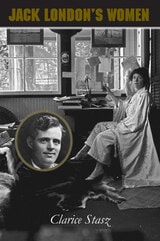
Jack London's Women
Clarice Stasz
University of Massachusetts Press, 2001
Using newly available letters and diaries from private collections, Stasz brings this diverse constellation of women to life. London was the son of freethinking Flora Wellman, yet found more maternal comfort from freed slave Jennie Prentiss and his stepsister Eliza. His early loves included a British-born consumptive, a Jewish socialist, and an African American. His first wife, Bess Maddern, was a teacher and devoted mother to daughters Bess and Joan, while his second wife, Charmian Kittredge, shared his passion for adventure and served as a model for many characters in his writings. Following his death, the various women who survived him both promoted his legacy and suffered the consequences of being constantly identified with a famous man.
In recasting London's life through the eyes of three generations of women, Stasz manages to untangle his seemingly contradictory attitudes and actions. She also reveals the struggle that ensued, after his death, among family members and scholars over how he should be remembered. What emerges from this well-researched book is a new understanding of London and a compelling portrayal of the women who knew him best.

Jack Parker's Wiseguys
The National Champion BU Terriers, the Blizzard of ’78, and the Road to the Miracle on IceTim Rappleye
University Press of New England, 2017
Jacob H. Schiff
A Study in American Jewish LeadershipNaomi W. Cohen
Brandeis University Press, 1999
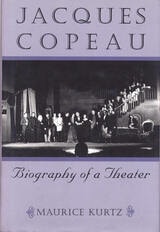
Jacques Copeau
Biography of a TheaterMaurice Kurtz
Southern Illinois University Press, 1999
The French writer, editor, and drama critic Jacques Copeau (1879–1949) opened his Théâtre du Vieux-Colombier in Paris in 1913. Copeau was well on his way to exerting a major influence in the theater in the year that saw the end of the career of the dominant innovator of an earlier generation, André Antoine, whose Théâtre Libre (Free Stage) had featured an uncompromising realism.
In marked contrast to Antoine, Copeau returned the poetry and freshness to Shakespeare and Moliére. By May 1914, Paris and Europe had recognized his genius and his special gift to the theater. Yet like Antoine, Copeau wanted to sweep "staginess" from the stage, to banish overacting, overdressing, and flashy house trappings. To cleanse the stage of its artificiality, he created a fixed, architectural acting space where dramatic literature and theater technique could live in harmony and thrive in freedom of thought and movement. A major part of his program was teaching actors and actresses their craft.
Maurice Kurtz points out that the Théâtre du Vieux-Colombier incarnates the "ideal of Copeau's stubborn struggle to remain strong in the face of indifference, independent in the face of success, proud in the face of defeat. It is the story of group spirit in its purest, most eloquent form, the spirit of personal sacrifice of all for the dignity of their art."
Kurtz here re-creates the vitality Copeau imbued in theater artists throughout the world. He conveys Copeau's enthusiasm, the crusading spirit that enabled Copeau and his Théâtre du Vieux-Colombier to transform experimentation into tradition, into the heritage of civilization. He has written a biography of a theater that was tremendously influential in Europe and America.
Jacques Derrida
Geoffrey Bennington and Jacques Derrida
University of Chicago Press, 1993
"Bennington is a shrewd and well-informed commentator whose book should do something to convince the skeptics . . . that Jacques Derrida's work merits serious attention."—Christopher Norris, New Statesman & Society
"Geoffrey Bennington and Jacques Derrida have presented a fascinating example of what might be called post-structuralist autobiography."—Laurie Volpe, French Review
"Bennington's account of what Derrida is up to is better in almost all respects—more intelligent, more plausible, more readable, and less pretentious—than any other I have read."—Richard Rorty, Contemporary Literature
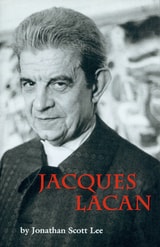
Jacques Lacan
Jonathan Scott Lee
University of Massachusetts Press, 1991
Originally published as part of Twayne's World Authors Series, Jacques Lacan offers a comprehensive and rigorous introduction to the life and work of the French psychoanalyst Jacques Lacan, one of the most influential and challenging thinkers of the twentieth century. Written by a philosopher with a deep engagement in both continental philosophy and psychoanalytic theory, Jonathan Scott Lee traces the development of Lacan's theoretical project from his early psychiatric writings through the landmark Écrits and the renowned seminars that Lacan delivered over more than two decades.
Lee's approach is distinctive in its philosophical clarity, making complex Lacanian ideas available to readers in the humanities and social sciences. His careful analysis of the mirror stage, the role of the Other, and Lacan's three fundamental registers—the Imaginary, the Symbolic, and the Real— provides new insight into the ways they structure human subjectivity, language, and desire. This book situates Lacan within the broader intellectual currents of twentieth-century French thought, drawing connections to structuralism, post-structuralism, and the philosophical traditions that shaped and were shaped by Lacan's radical "return to Freud."
Widely cited in scholarly literature across disciplines, including literary criticism, philosophy, theology, film studies, and cultural theory, Jacques Lacan remains a valued introduction for students, scholars, and general readers seeking a careful and comprehensive guide to one of the most formidable intellectual figures of the modern era.
Jacques Legardeur De Saint-Pierre
Officer, Gentleman, EntrepeneurJoseph L. Peyser
Michigan State University Press, 1996
The documentary biography of Jacques Legardeur de Saint-Pierre, an officer in the Troupes de la Marine, who served throughout New France, sheds new light on the business activity of French colonial officers stationed in the West. Many of the eighty previously untranslated documents in Jacques Legardeur de Saint-Pierre demonstrate the extent and profitability of Saint-Pierre's pursuit of business activities while performing official duties in eighteenth-century French North America. The quest for profit permeated Saint- Pierre's career, particularly his command of the Western Sea Post after he succeeded the fabled Pierre Gaultier de Varennes et de la Vérendrye. Saint-Pierre and his secret partner General Jacques-Pierre de Taffanel de La Jonquière, Intendant François Bigot, and Meret, secretary to La Jonquière, used their positions to engage in extensive trade, especially brandy, with the Cree and Assiniboine northwest of Lake Superior. Saint-Pierre's activities provide fresh insights into the North American fur trade.
Jacques Maritain
An Intellectual ProfileJude P. Dougherty
Catholic University of America Press, 2003
Jacques Rivette
Mary M. Wiles
University of Illinois Press, 2012
Jail Speak
Ben Langston
Ohio University Press, 2020
“Call me what you want—corrections officer, C.O., guard, jailcop, turnkey—I helped keep people there against their will. For this, the jail rewarded me with food.”
When Ben Langston took a job at the State Correctional Institute at Rockview, it was because there were few other options. At his previous job—putting labels on water bottles—he did not have cups of human waste thrown in his face. He did not have to finger sweaty armpits in search of weapons. There were no threats against his life. But the jail paid better.
Jail Speak is a memoir written from a guard’s perspective. It’s about the grind, about dehumanization, drama, punishment, and the cycles of harm perpetrated by the prison industry. It’s about masculinity and conformity and emotional detachment. It’s a look at the inside that you didn’t want to know about, and it’s for mature audiences only. Know your limits.
Jake
By Jake Pickle and Peggy Pickle
University of Texas Press, 1997
"My life has been given special purpose," Jake Pickle says. "Some men live to make money, drink, chase women, collect art, excel at a sport, or pursue other things that give them pleasure. The thing I got hooked on was helping people. And I've had the privilege of helping people by the thousands. Serving in Congress was the greatest honor of my life."
In this book, Jake Pickle tells the story of a lifetime in public service, including thirty-one years as Representative for Texas' Tenth Congressional District. Jake tells his story by telling stories—most of them humorous, some poignant—that add up to a warmly personal account of his life and career.
At the heart of the book are Jake's stories of political life in Washington, Austin, and on the campaign trail. These range from hilarious accounts of all that can and does happen at small-town Texas parades and rallies to clear, no-baloney explanations of some of the major legislation that Jake helped to pass. His stories about Social Security reform, tax-exempt organizations, and pension fund reform legislation make these complex topics easy to understand.
This book was written as a collaboration between Jake and his daughter, Peggy Pickle. It offers the fun of listening to a born raconteur spin his tales, while it reveals the ethics and integrity of a man who never forgot that the people elected him to serve them.
James Agee - American Writers 95
University of Minnesota Pamphlets on American WritersErling Larsen
University of Minnesota Press, 1971
James Agee - American Writers 95 was first published in 1971. Minnesota Archive Editions uses digital technology to make long-unavailable books once again accessible, and are published unaltered from the original University of Minnesota Press editions.

James Baldwin's Turkish Decade
Erotics of ExileMagdalena J. Zaborowska
Duke University Press, 2008
Following Baldwin’s footsteps through Istanbul, Ankara, and Bodrum, Zaborowska presents many never published photographs, new information from Turkish archives, and original interviews with Turkish artists and intellectuals who knew Baldwin and collaborated with him on a play that he directed in 1969. She analyzes the effect of his experiences on his novel Another Country (1962) and on two volumes of his essays, The Fire Next Time (1963) and No Name in the Street (1972), and she explains how Baldwin’s time in Turkey informed his ambivalent relationship to New York, his responses to the American South, and his decision to settle in southern France. James Baldwin’s Turkish Decade expands the knowledge of Baldwin’s role as a transnational African American intellectual, casts new light on his later works, and suggests ways of reassessing his earlier writing in relation to ideas of exile and migration.
James Barbour, a Jeffersonian Repulican
Charles D. Lowery
University of Alabama Press, 1984
Barbour, a Virginia contemporary of Thomas Jefferson and James Madison, during a long public career spanning the years 1798-1842, exerted a constructive influence on the nation’s history. Active in state and national politics during the formative decades of the republic, Barbour was a political nationalist who grafted to the dominant political philosophy of the day those elements of the Hamiltonian Federalist creed necessary for governing a dynamic, changing nation.
James Fenimore Cooper - American Writers 48
University of Minnesota Pamphlets on American WritersRobert E. Spiller
University of Minnesota Press, 1965
James Fenimore Cooper - American Writers 48 was first published in 1965. Minnesota Archive Editions uses digital technology to make long-unavailable books once again accessible, and are published unaltered from the original University of Minnesota Press editions.
James Gould Cozzens - American Writers 58
University of Minnesota Pamphlets on American WritersGranville Hicks
University of Minnesota Press, 1966
James Gould Cozzens - American Writers 58 was first published in 1966. Minnesota Archive Editions uses digital technology to make long-unavailable books once again accessible, and are published unaltered from the original University of Minnesota Press editions.
James Hall, Literary Pioneer of the Ohio Valley
John T. Flanagan
University of Minnesota Press, 1941
James Hall, Literary Pioneer of the Ohio Valley was first published in 1941. Minnesota Archive Editions uses digital technology to make long-unavailable books once again accessible, and are published unaltered from the original University of Minnesota Press editions.
For generations the attention of students of American literature has been directed toward the Atlantic seaboard, but the rise of regional literature and the development of genuine artists in various parts of the United States has caused them to turn their scrutiny westward. High on the western horizon of the early 1800's stands James Hall, a literary pioneer in the Ohio Valley, one of the minor literary figures whose influence on the artistic consciousness of the frontier was widely felt.
Author, critic, journalist, editor, publisher, and historian—few men have had more to do with the early cultural development of the Middle West. Every historian of the Ohio and Mississippi valleys is indebted to Hall for facts and details of life in America in the early nineteenth century.
A circuit judge when there were only 55,000 people in all Illinois—he had an unparalleled opportunity to observe the life and customs of the times. A publisher of the first literary magazine west of the Ohio when there were more Indians and horse thieves in the state than there were literate readers—he had a virgin field for awakening the artistic, literary, even scientific, interest of the frontier.
He organized the first State Historical Society of Illinois, was state treasurer, published two newspapers, welcomed Lafayette on his triumphal tour, edited the first literary annual in the West, awarded a prize to Harriet Beecher (Stowe) for her "New England Sketch," published in his magazine. Moving to Cincinnati when it was at the peak of its sectional importance, an intellectual and cultural oasis on the frontier, Hall continued his sponsorship of education and culture.
James Hall's own published works were multitudinous in the fields of fiction, biography, poetry, criticism, history, and anthropology. His picture of the prairies in his day is still one of the best accounts ever written and his Indian Tribes of North America a monumental volume, but none of his works is of first-rate importance. Nevertheless, because of the tremendous variety of his activities and the breadth of his influence, he left his stamp upon the history and the literature of the region.
Hall's work is an honest, vigorous record of the path of the American pioneer in the days of the rapid growth and expansion of a new nation, and an understanding of his contribution is obligatory for every serious student of American literature.
James Jesse Strang
The Rise and Fall of Michigan's Mormon KingDon Faber
University of Michigan Press, 2016
This captivating new biography by Don Faber recounts the fascinating story of Strang’s path from impoverished New York farm boy to one of the most colorful and contentious personalities in Michigan history. Avoiding the nonsense, misinformation, and twisted facts so prevalent about the man, readers meet the historical Strang stripped of myth, demonization, and popular fancy—a true celebrity of the mid-nineteenth century who both shaped and was shaped by the colorful times in which he lived. This book will appeal to readers interested in the history of Michigan, the nineteenth century, and the Second Great Awakening.

James Jesus Angleton, the CIA, and the Craft of Counterintelligence
Michael Holzman
University of Massachusetts Press, 2008
As chief of counterintelligence for the Central Intelligence Agency from the early 1950s to the early 1970s, James Jesus Angleton built a formidable reputation. Although perhaps best known for leading the agency's notorious “Molehunt”—the search for a Soviet spy believed to have infiltrated the upper levels of the American government—Angleton also played a key role in the U.S. intervention in the Italian election of 1948, in Israel's development of nuclear weapons, and in the management of the CIA's investigation of the assassination of John F. Kennedy. He later led CIA efforts to contain the Vietnam-era antiwar movement, including the campaign to destroy the liberal Catholic magazine Ramparts.
In this deeply researched biography, Michael Holzman uses Angleton's story to illuminate the history of the CIA from its founding in the late 1940s to the mid-1970s. Like many of his colleagues in the CIA, James Angleton learned the craft of espionage during World War II as an officer in the Office of Strategic Services (OSS), where he became a friend and protégé of the British double agent Kim Philby. Yet Angleton's approach to counterintelligence was also influenced by his unusual Mexican American family background and his years at Yale as a student of the New Critics and publisher of modernist poets. His marriage to Cicely d'Autremont and the couple's friendship with E. E. and Marion Cummings became part of a network of cultural connections that linked the U.S. secret intelligence services and American writers and artists during the postwar period.
Drawing on a broad range of sources, including previously unexamined archival documents, personal letters, and interviews, Holzman looks beneath the surface of Angleton's career to reveal the sensibility that governed not only his personal aims and ambitions but those of the organization he served and helped shape.
James Laughlin, New Directions Press, and the Remaking of Ezra Pound
Greg Barnhisel
University of Massachusetts Press, 2005
For much of the 1930s prior to World War II, Laughlin and Pound were friends, business associates, collaborators, student and teacher, and even at times son and surrogate father. But Laughlin's investment in Pound—and their friendship—was severely tested by Pound's wartime propaganda broadcasts for Italian state radio, his capture and abortive trial for treason, and his thirteen-year stay as a mental patient in St. Elizabeth's Hospital. Following this scandal and disgrace, the reading public no longer wanted to buy Pound's books, and the critical establishment dismissed him as a Fascist crank.
Laughlin and New Directions responded by marketing Pound in such a way as to convince consumers that the poet's importance needed to be judged solely on aesthetic grounds, and that his political beliefs were irrelevant to his accomplishments as a pioneering literary artist. With Pound's encouragement, and despite the poet's oft-expressed opposition to the mixture of commerce and art, Laughlin used such marketing tools as advertising, the cultivation of friendly critics, and the development of the trade paperback to enhance Pound's reputation.
Drawing on a wide range of sources—including interviews with Laughlin and other New Directions staffers and published materials from numerous literary archives—Gregory Barnhisel tells the story of the personal and professional relationship between one of the twentieth century's most controversial writers and his loyal and innovative American publisher—a relationship that eventually helped remake literary history and continues to shape our understanding of modernism itself
James Madison
Liberty's AdvocateJohn P. Kaminski
Wisconsin Historical Society Press, 2018
America has had few political thinkers who have rivalled James Madison. The son of a wealthy planter, Madison was an unhealthy child and was beset by physical infirmities throughout his long life, and grew into a cerebral man. Madison left Virginia to attend the College of New Jersey, but returned to his native state after completing his studies. Though he aspired to be a college professor, Madison instead went into public service and became one of the most influential, guiding voices of the Founding Era. Madison’s Virginia Plan would be used as a blueprint for the Constitutional Convention, where the Articles of Confederation would be replaced with a new Constitution that bore traces of Madison’s influence throughout.
Editor John Kaminski has gathered a remarkable collection of quotations by and about James Madison for the third installment of his Word Portraits of America’s Founders series. Through these words by and about Madison, we learn more about one of the country’s most influential Founding Fathers, who held a lifelong commitment to liberty and opposed oppression.
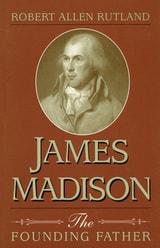
James Madison
The Founding FatherRobert Allen Rutland
University of Missouri Press, 1997
Available for the first time in paperback, James Madison: The Founding Father is a lively portrait of the man who essentially fathered our constitutional guarantees of civil and religious liberty. Focusing on the role Madison played at the Continental Congress and in each stage of the formation of the American Republic, Robert Allen Rutland also covers Madison's relationship with his beloved wife, Dolley, his fifty-year friendship with Thomas Jefferson, and his years as a respected elder statesman after serving as secretary of state and fourth president of the United States.
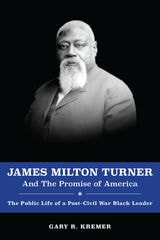
James Milton Turner and the Promise of America
The Public Life of a Post-Civil War Black LeaderGary R. Kremer
University of Missouri Press, 2020
Born a slave, Turner gained freedom when he was a child and received his education in clandestine St. Louis schools, later briefly attending Oberlin College. A self-taught lawyer, Turner earned a statewide reputation and wielded power far out of proportion to Missouri's relatively small black population.
After working nearly a decade in Liberia, Turner never regained the prominence he had enjoyed during Reconstruction.
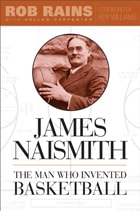
James Naismith
The Man Who Invented BasketballRob Rains with Hellen Carpenter, Foreword by Roy Williams
Temple University Press, 2009
James Naismith reveals how Naismith invented basketball in part to find an indoor activity to occupy students in the winter months. When he realized that the key to his game was that men could not run with the ball, and that throwing and jumping would eliminate the roughness of force, he was on to something. And while Naismith thought that other sports provided better exercise, he was pleased to create a game that “anyone could play.”
With unprecedented access to the Naismith archives and documents, Rains and Carpenter chronicle how Naismith developed the 13 rules of basketball, coached the game at the University of Kansas—establishing college basketball in the process—and was honored for his work at the 1936 Olympic games in Berlin.

James Oliver Curwood
God's Country and the ManJudith A. Eldridge
University of Wisconsin Press, 1993
When the wounded bear he faced on a mountain ledge that day turned aside, James Curwood felt that he had been spared. From this encounter he became an avid conservationist. He wrote relentlessly—magazine stories and books and then for the new medium of motion pictures. Like many authors of his time, he was actively involved in movie-making until the plight of the forests and wildlife in his home state of Michigan turned his energies toward conservation.
A man ahead of his time, and quickly forgotten after his death in 1927, his gift of himself to his readers and to nature has finally come to be appreciated again two generations later.
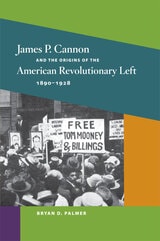
James P. Cannon and the Origins of the American Revolutionary Left, 1890-1928
Bryan D. Palmer
University of Illinois Press, 2010
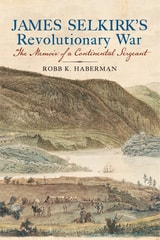
James Selkirk's Revolutionary War
The Memoir of a Continental SergeantRobb K. Haberman
Westholme Publishing, 2027
A Significant Personal Account by a Continental Soldier, in Print for the First Time
In the twilight years of his life, James Selkirk (1757–1820), a modest tailor and Revolutionary War veteran residing in Bethlehem, New York, composed a memoir about his wartime experiences in the Continental Army. Selkirk’s memoir tells the story of a young Scottish immigrant who served well and faithfully as a non-commissioned officer in three different corps from April 1776 through June 1783. During this period, Selkirk fought in several engagementsthat ranged from the wilderness of northern New York to the waters of Chesapeake Bay. In addition to chronicling his participation in these campaigns, the memoir contains Selkirk’s personal observations and anecdotes about the daily rigors and duties common to an enlisted soldier in Continental service. James Selkirk’s Revolutionary War, edited by historian Robb K. Haberman, discusses how Selkirk endured over seven years of soldiering with the Continental Army. It also explores how Selkirk’s decision to write his memoir occurred as politicians and citizens debated whether the federal government should enact a pension program in support of the nation’s aged and mostly impoverished community of Revolutionary-era veterans. Through his writing, Selkirk weighed in on this issue, drawing attention to the deserved rights and recognition due to his surviving brothers in arms. Just as he had taken up a musket in earlier decades in the struggle for national independence, Selkirk now wielded a pen on behalf of the aging cohort of American veterans who were experiencing hardship in the era of the early republic. Selkirk planned to share his recollections of the war with a broader audience, but his death in December 1820 precluded the publication of the manuscript memoir as a printed book until now. James Selkirk’s memoir ranks among the earliest known writings that reveal unique and personal assessments of a common soldier’s existence during the American Revolution, from slogging on the march and performing duties in camp to facing the terrors of the battlefield.
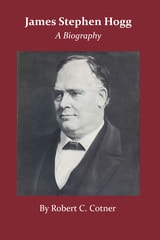
James Stephen Hogg
A BiographyBy Robert C. Cotner
University of Texas Press, 1959
No other governor has become so completely identified with Texas and its citizens as Jim Hogg, the first native Texan to hold the state's highest office. His fame was not, however, easily earned. Orphaned at twelve, he worked as farmhand, typesetter, and country editor to finance his study of law, an endeavor that eventually led him into public life.
Even before his admission to the bar in 1875 he served as justice of the peace in Wood County. Later, in two terms as district attorney (1881–1885), he proved himself a fearless prosecutor. His growing reputation, with his magnetic personality, brought him the attorney generalship in 1887, and in that office he fulfilled his campaign promises to enforce all laws. During Hogg's tenure, suits brought by his department resulted in the restoration of more than a million acres of state lands held by the railroads.
In 1890 Hogg was elected governor. Early the next year he began urging his reform program, the keystone of which was establishment of the Railroad Commission. He also brought about the passage of laws preventing the watering of railroad securities, the indiscriminate issuance of municipal securities, and the establishment of landholding companies. Land ownership by aliens was likewise restricted.
Throughout Hogg's public life, from iustice of the peace to governor, he was motivated by his concern for the welfare of the people. Invariably his criterion for evaluation of an issue was the effect of a decision upon the common welfare. In this democratic progressivism he was the Texas version of Thomas Jefferson or Theodore Roosevelt. Molded by his varied experiences, Jim Hogg was a man of many professions—printer, lawyer, politician, statesman, oil magnate. In these relationships he was still a warmly human person, a loving son, brother, husband, father, friend. His ambition to provide abundantly for his family was expansive enough to include all Texans; so his love for "the people" was reiterated in his public benefactions, through which Texans are even today still sharing his wealth.
Jim Hogg's varied public life and his heart-warming personal life are dramatically presented in this absorbing biography. In it, the far-sweeping panorama of Texas development in the late nineteenth and early twentieth centuries is shown in relation to his dreams and achievements.
James T. Farrell - American Writers 29
University of Minnesota Pamphlets on American WritersEdgar M. Branch
University of Minnesota Press, 1963
James T. Farrell - American Writers 29 was first published in 1963. Minnesota Archive Editions uses digital technology to make long-unavailable books once again accessible, and are published unaltered from the original University of Minnesota Press editions.
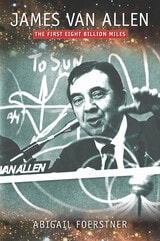
James Van Allen
The First Eight Billion MilesAbigail Foerstner
University of Iowa Press, 2009
Astrophysicist and space pioneer James Van Allen (1914–2006), for whom the Van Allen radiation belts were named, was among the principal scientific investigators for twenty-four space missions, including Explorer I in 1958, the first successful U.S. satellite; Mariner 2’s 1962 flyby of Venus, the first successful mission to another planet; and the 1970s Pioneer 10 and Pioneer 11 missions that surveyed Jupiter and Saturn. Although he retired as a University of Iowa professor of physics and astronomy in 1985, he remained an active researcher, using his campus office to monitor data from Pioneer 10—on course to reach the edge of the solar system when its signal was lost in 2003—until a short time before his death at the age of ninety-one. Now Abigail Foerstner blends space science drama, military agendas, cold war politics, and the events of Van Allen’s lengthy career to create the first biography of this highly influential physicist.
Drawing on Van Allen’s correspondence and publications, years of interviews with him as well as with more than a hundred other people, and declassified documents from such archives as the Jet Propulsion Laboratory, the Kennedy Space Center, and the Applied Physics Laboratory, Foerstner describes Van Allen’s life from his Iowa childhood to his ?rst experiments at White Sands to the years of Explorer I until his death in 2006.
Often called the father of space science, James Van Allen led the way to mapping a new solar system based on the solar wind, massive solar storms, and cosmic rays. Pioneer 10 alone sent him more than thirty years of readings that helped push our recognition of the boundary of the solar system billions of miles past Pluto. Abigail Foerstner’s compelling biography charts the eventful life and time of this trailblazing physicist.
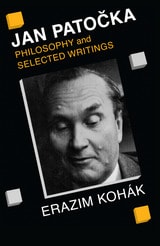
Jan Patocka
Philosophy and Selected WritingsErazim Kohák
University of Chicago Press, 1989
As a student and personal friend of Husserl, Patocka was keenly aware of the focal role of reason in the constitution of experienced reality. Simultaneously, as a student of Heidegger, he was no less aware of the irreducible autonomy of that reality. This double recognition led Patocka on a lifelong philosophical quest for a synthesis that would bridge modernity's split between the freedom of humans and the givenness of the world and, more broadly, between the Enlightenment and romanticism. For the philosophical reader, Patocka's perceptive writings provide the most helpful key to understanding the basic modern dialogue acted out by Husserl and Heidegger. Yet Patocka, widely respected for his writings on culture and the arts as well as for his studies of J. A. Comenius and the history of science, offers much more: a comprehensive attempt to come to terms with our intellectual heritage and our divided present.
Kohák, as well as translating the writings, provides a comprehensive introduction, covering the full scope of Patocka's thought, and a complete bibliography of his writings. The result is an intellectually rich volume equally well suited as an introduction to Patocka, an advanced study in phenomenology, and a historical insight into philosophy behind the Iron Curtain since 1938.
Jan Svankmajer
Keith Johnson
University of Illinois Press, 2017
Jane Addams, a Writer's Life
Katherine Joslin
University of Illinois Press, 2003
Jane Addams, a Writer's Life is an expansive, revealing, and refreshing reexamination of the renowned reformer as an imaginative writer. Jane Addams is best known for her groundbreaking social work at Hull-House, the force of her efforts toward Progressive political and social reform, and the bravery of her commitment to pacifism, for which she received the Nobel Peace Prize. Katherine Joslin moves beyond this history to present Addams as a literary figure, one whose writing employed a synthesis of fictional and analytical prose that appealed to a wide audience.
Joslin traces Addams's style from her early works, Philanthropy and Social Progress and her contributions to Hull House Maps and Papers, influenced by Florence Kelley, to her modernist and experimental last books, The Second Twenty Years at Hull-House and My Friend, Julia Lathrop, placing Addams in the context of other Chicago writers including Theodore Dreiser, Upton Sinclair, Harriet Monroe, Frank Norris and James T. Farrell. Joslin's close readings showcase Addams's distinguishing literary devices, such as using stories about people rather than sociological argument to make moral points. As Joslin pursues the argument that Addams's power as a public figure stemmed from the success of her books and essays, Addams herself emerges as a literary woman.

Jane Addams
The Most Dangerous Woman in AmericaMarlene Targ Brill
Ohio University Press, 2024
Jane Austen
A CompanionRoss, Josephine
Rutgers University Press, 2003
This illuminating, entertaining, up-to-date companion is the only general guide to Jane Austen, her work, and her world. Josephine Ross explores the literary scene during the time Austen's works first appeared: the books considered classics then, the "horrid novels" and romances, and the grasping publishers. She looks at the architecture and décor of Austen's era that made up "the profusion and elegance of modern taste." Regency houses for instance, Chippendale furniture, and "picturesque scenery." On a smaller scale she answers questions that may baffle modern readers. What, for example, was "hartshorn"? How did Lizzy Bennet "let down" her gown to hide her muddy petticoat? Ross shows us the fashions, and the subtle ways Jane Austen used clothes to express character. Courtship, marriage, adultery, class and "rank," mundane tasks of ordinary life, all appear, as does the wider political and military world.
This book will add depth to all readers' enjoyment of Jane Austen, whether confirmed addicts or newcomers wanting to learn about one of the world's most popular and enduring writers.
Jane Campion
Kathleen McHugh
University of Illinois Press, 2006
In considering Jane Campion's early award-winning short films on through international sensation The Piano and beyond, Kathleen McHugh traces the director's distinctive visual style as well as her commitment to consistently renovating the conventions of "women's films." By refusing to position her female protagonists as victims, McHugh argues, Campion scrupulously avoids the moral structures of melodrama, and though she often works with the narratives, mise-en-scene, and visual tropes typical of that genre, her films instead invite a distanced or even amused engagement.
Jane Campion concludes with four brief, revelatory interviews and a filmography. Campion spoke twice with Michel Ciment—after the screening of her short and medium-length films at the Cannes Film Festival 1986, and three years later, after the Cannes screening of Sweetie. Judith Lewis narrates a Beverly Hills interview with Campion that followed the release of Holy Smoke, and Lizzie Francke's interview, reprinted from Sight and Sound,centers on Campion's film In the Cut, adapted from Susanna Moore's novel.
A volume in the series Contemporary Film Directors, edited by James R. Naremore

Jane Fonda
There's a Great Deal to SayMarilyn S. Greenwald
Rutgers University Press, 0
Since the late 1960s, Jane Fonda has identified as an activist first and an actor second, using her celebrity as a vehicle to convey her views and her advocacy. Few stars of her stature have been as simultaneously acclaimed and vilified as Fonda. Even as she won two Academy Awards and was a major box office draw of the 1970s and 1980s, she received reams of hate mail for her political activism and antiwar stances. This book explores Fonda’s devotion to movement politics—sometimes at the expense of her career and her personal safety.
Digging deep into rare material from cinema archives and Fonda’s own personal papers, journalist Marilyn Greenwald tells the story of how Fonda came to view acting as a “side gig” that gives her a worldwide platform to convey her personal and political views. Charting the evolution of her activism and the merging of her acting and producing with her advocacy, Greenwald focuses on the years from 1968—when she was jarred out of complacency by the Vietnam War—to 1980, after the release of The China Syndrome and the advent of the Three Mile Island nuclear crisis, which brought to light the possible dangers of nuclear energy. Greenwald details how three of her films—Klute (1971), Coming Home (1978), and The China Syndrome (1979)—were designed to further her personal beliefs. She also considers how Fonda has weathered changes in the entertainment industry and public tastes to produce and star in decades' worth of socially conscious projects. Charting Fonda’s personal and professional growth while offering a candid account of her struggles, this book shows how Fonda viewed movies as an influential storytelling tool that can influence public opinion, change minds, and trigger social change.
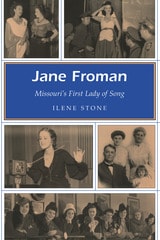
Jane Froman
Missouri's First Lady of SongIlene Stone
University of Missouri Press, 2003
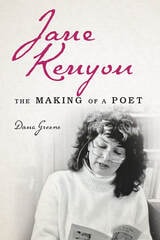
Jane Kenyon
The Making of a PoetDana Greene
University of Illinois Press, 2023
Pleasure-loving, sarcastic, stubborn, determined, erotic, deeply sad--Jane Kenyon’s complexity and contradictions found expression in luminous poems that continue to attract a passionate following. Dana Greene draws on a wealth of personal correspondence and other newly available materials to delve into the origins, achievement, and legacy of Kenyon’s poetry and separate the artist’s life story from that of her husband, the award-winning poet Donald Hall.
Impacted by relatives’ depression during her isolated childhood, Kenyon found poetry at college, where writers like Robert Bly encouraged her development. Her graduate school marriage to the middle-aged Hall and subsequent move to New Hampshire had an enormous impact on her life, moods, and creativity. Immersed in poetry, Kenyon wrote about women’s lives, nature, death, mystical experiences, and melancholy--becoming, in her own words, an “advocate of the inner life.” Her breakthrough in the 1980s brought acclaim as “a born poet” and appearances in the New Yorker and elsewhere. Yet her ongoing success and artistic growth exacerbated strains in her marriage and failed to stave off depressive episodes that sometimes left her non-functional. Refusing to live out the stereotype of the mad woman poet, Kenyon sought treatment and confronted her illness in her work and in public while redoubling her personal dedication to finding pleasure in every fleeting moment. Prestigious fellowships, high-profile events, residencies, and media interviews had propelled her career to new heights when leukemia cut her life short and left her husband the loving but flawed curator of her memory and legacy.
Revelatory and insightful, Jane Kenyon offers the first full-length biography of the elusive poet and the unquiet life that shaped her art.

Janelle Monáe's Queer Afrofuturism
Defying Every LabelDan Hassler-Forest
Rutgers University Press, 2022
Janelle Monáe is all these things and more, making her one of the most fascinating artists to emerge in the twenty-first century. This provocative new study explores how Monáe’s work has connected different media platforms to strengthen and enhance new movements in art, theory, and politics. It considers not only Monáe’s groundbreaking albums The ArchAndroid, The Electric Lady, and Dirty Computer, but also Monáe’s work as an actress in such films as Hidden Figures and Antebellum, as well as her soundtrack appearances in socially-engaged projects ranging from I May Destroy You to Us. Examining Monáe as a cultural icon whose work is profoundly intersectional, this book maps how she is actively reshaping discourses around race, gender, sexuality, and capitalism. Tracing Monáe’s performances of joy, desire, pain, and hope across a wide range of media forms, it shows how she imagines Afrofuturist, posthumanist, and postcapitalist utopias, while remaining grounded in the realities of being a Black woman in a white-dominated industry. This is an exciting introduction to an audacious innovator whose work offers us fresh ways to talk about identity, desire, and power.