Results by title
28164 books match the query 'History' and 165 start with k
Kings And Clans
Ijwi Island And The Lake Kivu Rift, 1780-1840David Newbury
University of Wisconsin Press, 1992
Drawing on detailed ethnographic observations of the social and ritual organizations of Ijwi society, an extensive body of oral data, and evidence from written sources, Newbury shows that the clans of Ijwi were not static formations, nor did the establishment of a royal family on the island emerge from military conquest and internal social breakdown. Instead, clan identities changed over time, and these changes actually facilitated the creation of kingship on Ijwi. Through a detailed examination of succession struggles, of local factors influencing the outcome of such struggles, and of specific clan participation in public rituals that legitimize royalty, Newbury’s study illustrates the importance of clan identities in both the creation of state power and its reproduction over time.
Kings for Three Days
The Play of Race and Gender in an Afro-Ecuadorian FestivalJean Muteba Rahier
University of Illinois Press, 2013
Kings of Disaster
Dualism, Centralism and the Scapegoat King in Southeastern SudanSimon Simonse
Michigan State University Press, 2018
Kingship and Justice in the Ottonian Empire
Laura E. Wangerin
University of Michigan Press, 2019
Scholars have recognized the importance of ritual and symbolic behaviors in the Ottonian political sphere, while puzzling over the apparent lack of administrative organization, a contradiction between what we know about the Ottonians as successful rulers and their traditional characterization as rulers of a disorganized polity. Trying to account for the apparent disparity between their political and military achievements, cultural and artistic efflorescence, and relative dynastic stability, which seemingly accompanied a disinterest in writing law or creating a centralized hierarchical administration, is a tension that persists in the scholarship. This book argues that far from being accidental successes or employing primitive methods of governance, the Ottonians were shrewd rulers and administrators who exploited traditional methods of conflict resolution and delegated jurisdictional authority to keep control over their vast empire. Thus, one of the important things that this book aims to accomplish is to challenge our preconceived notions of what successful government looks like.
Kinshasa in Transition
Women's Education, Employment, and FertilityDavid Shapiro and B. Oleko Tambashe
University of Chicago Press, 2003
In this book, David Shapiro and B. Oleko Tambashe trace the impact of these changes on the lives of women, and their findings add dramatically to the field's limited knowledge of African demographic trends. They find that fertility has declined significantly in Kinshasa since the 1970s, and that women's increasing access to secondary education has played a key role in this decline. Better access to education has also given women greater access to employment opportunities. And by examining the impact of such factors as economic well-being and household demographic composition on the schooling of children, Shapiro and Tambashe reveal how one generation's fertility affects the next generation's education.
This book will be a valuable guide for anyone who wants to understand the complex and ongoing social, demographic, economic, and developmental changes in contemporary sub-Saharan Africa.
Kinship Myth in Ancient Greece
By Lee E. Patterson
University of Texas Press, 2010
In ancient Greece, interstate relations, such as in the formation of alliances, calls for assistance, exchanges of citizenship, and territorial conquest, were often grounded in mythical kinship. In these cases, the common ancestor was most often a legendary figure from whom both communities claimed descent.
In this detailed study, Lee E. Patterson elevates the current state of research on kinship myth to a consideration of the role it plays in the construction of political and cultural identity. He draws examples both from the literary and epigraphical records and shows the fundamental difference between the two. He also expands his study into the question of Greek credulity—how much of these founding myths did they actually believe, and how much was just a useful fiction for diplomatic relations? Of central importance is the authority the Greeks gave to myth, whether to elaborate narratives or to a simple acknowledgment of an ancestor. Most Greeks could readily accept ties of interstate kinship even when local origin narratives could not be reconciled smoothly or when myths used to explain the link between communities were only "discovered" upon the actual occasion of diplomacy, because such claims had been given authority in the collective memory of the Greeks.
Kinship and History in South Asia
Four LecturesThomas R. Trautmann, Editor
University of Michigan Press, 1974
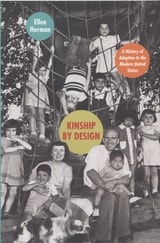
Kinship by Design
A History of Adoption in the Modern United StatesEllen Herman
University of Chicago Press, 2008
Beginning in the early 1900s, when children were still transferred between households by a variety of unregulated private arrangements, Ellen Herman details efforts by the U.S. Children’s Bureau and the Child Welfare League of America to establish adoption standards in law and practice. She goes on to trace Americans’ shifting ideas about matching children with physically or intellectually similar parents, revealing how research in developmental science and technology shaped adoption as it navigated the nature-nurture debate.
Concluding with an insightful analysis of the revolution that ushered in special needs, transracial, and international adoptions, Kinship by Design ultimately situates the practice as both a different way to make a family and a universal story about love, loss, identity, and belonging. In doing so, this volume provides a new vantage point from which to view twentieth-century America, revealing as much about social welfare, statecraft, and science as it does about childhood, family, and private life.
Kinship with the Land
Regionalist Thought In Iowa, 1894-1942E. Bradford Burns
University of Iowa Press, 1996
Pioneers moving into Iowa in the nineteenth century created a distinctly rural culture: family, farm, church, and school were its dominant institutions. After decades of settlement, however, several lively and perceptive generations interpreted their political, economic, and cultural environment—their Iowa—much more imaginatively; they offered such abundant insight, understanding, meaning, and mission that they mentally and spiritually recreates Iowa. In Kinship with the Land historian Brad Burns celebrates this intense period of intellectual and cultural development.
Through their novels, short stories, poems, essays, drawings, and paintings, Iowa's regionalists expressed a rich abstraction of people and place. They conferred meaning, imparted understanding, defined the soil and the folk, conveyed a sense of place. Grant Wood in his overalls—the quintessential symbol of sophisticated talent and rural values—clearly represented regionalism's spiritual solidarity with the land and the people who worked it. Burns lets these Iowans speak for themselves, then interprets their distinctive voices to present a cogent case for and an understanding of the rural in an overwhelming urban America.
Kinship with the Land emphasizes the importance of Iowa's intellectual and cultural history and reaffirms the state's identity at the very moment that standardization threatened to eradicate it. By endowing Iowa with vibrant, independent art and literature, regionalists made refreshing sense of their environment. Readers from every state will appreciate their generous legacy.
Kinship, Business, and Politics
The Martinez Del Rio Family in Mexico, 1823-1867By David W. Walker
University of Texas Press, 1987
The Martínez del Río family was a vigorous contestant in the highly politicized economy of early national Mexico. David Walker’s case study of its successes and failures provides a unique insider’s view of the trials and tribulations of doing business in a hostile environment. The family’s ordeal in Mexico—a series of personal dislocations and traumas—mirrored the painful contractions of an old society reluctantly giving birth to a new nation.
Using previously undiscovered primary source materials (including the private correspondence and business records of the family, public notary documents, transcripts of judicial proceedings, and the archives of Mexico’s Ministry of Foreign Relations and the British Foreign Office), Walker employs family history to analyze problems relating more generally to the development of state and society in newly independent Mexico.
The processes of socioeconomic formation in Mexico differed from those of Western Europe and the United States; accordingly, entrepreneurial activity had markedly contrasting implications for economic development and class formation. In the downwardly spiraling economy of nineteenth-century Mexico, economic activity was a zero-sum game. No new wealth was being created; most sectors remained stagnant and unproductive. To make their fortunes, empresarios, the Mexican capitalists, could not rely on income generated from authentic economic growth. Instead, they exploited the arbitrary acts of the interventionist Mexican state, which proscribed the free movement of factors within the marketplace. Speculation in the public debt took the place of more substantive undertakings. Coercive state power was diverted to create artificial environments in which otherwise inefficient and unproductive enterprises could flourish. But however well the empresarios might imitate the outward forms of industrial capitalism, they could not unlock the productive capacity of the Mexican economy. Instead, they and their allies and rivals engaged in destructive struggles to manipulate the state for personal gain, to the detriment of class interests, economic growth, and political stability.
Kirby Smith's Confederacy
The TransMississippi South, 1863-1865Robert L. Kerby
University of Alabama Press, 1991
Cut off, but not surrendered—one region’s desperate stand in the twilight of the Confederacy.
With the surrender of Vicksburg in July 1863, the Confederacy’s TransMississippi Department, which included Texas, Arkansas, Missouri, western Louisiana, and Indian Territory, was cut off from the remainder of the South. Robert Kerby’s insightful volume, originally published in 1972, “has gone far toward filling one of the most conspicuous gaps in the literature on the Confederacy,” according to The Journal of Southern History.
Kerby investigates the many factors that led to the Department’s disintegrating and offers a case study of a segment of American society that consumed itself by surrendering everything, including its principles and ideals, in pursuit of an unattainable military victory.
Kirtland Temple
The Biography of a Shared Mormon Sacred SpaceDavid J. Howlett
University of Illinois Press, 2014
David J. Howlett sets the biography of Kirtland Temple against the backdrop of religious rivalry. The two sides have long contested the temple's ownership, purpose, and significance in both the courts and Mormon literature. Yet members of each denomination have occasionally cooperated to establish periods of co-worship, host joint tours, and create friendships. Howlett uses the temple to build a model for understanding what he calls parallel pilgrimage--the set of dynamics of disagreement and alliance by religious rivals at a shared sacred site. At the same time, he illuminates social and intellectual changes in the two main branches of Mormonism since the 1830s, providing a much-needed history of the lesser-known Community of Christ.
Kiska
The Japanese Occupation of an Alaska IslandBrendan Coyle
University of Alaska Press, 2014
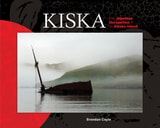
The bastion of Japan’s possessions in Alaska, Kiska was soon fortified with 7,500 enemy troops, their equipment, and a labyrinth of tunnels. For thirteen months Japanese troops withstood constant bombardment from American forces while retaining a tenuous hold on the island. Finally forced to abandon their position, the Japanese occupiers evacuated without their equipment and personal effects, leaving behind a trail of artifacts.
Brendan Coyle spent fifty-one days on the island searching out the tunnels, the equipment, and the objects, all frozen in time. Kiska brings together the images Coyle amassed during his exploration and his archival research. Accompanying explanations put the images in historical perspective, opening a window on a little-known battlefield and shining a rare light on a shadowy occupation.
Kiss My Relics
Hermaphroditic Fictions of the Middle AgesDavid Rollo
University of Chicago Press, 2011

Kiss the Blood Off My Hands
On Classic Film NoirEdited by Robert Miklitsch
University of Illinois Press, 2014
But a new generation of writers is pushing aside the fog of cigarette smoke surrounding classic noir scholarship. In Kiss the Blood Off My Hands: On Classic Film Noir, Robert Miklitsch curates a bold collection of essays that reassesses the genre's iconic style, history, and themes. Contributors analyze the oft-overlooked female detective and little-examined aspects of filmmaking like love songs and radio aesthetics, discuss the significance of the producer and women's pulp fiction, and investigate topics as disparate as Disney noir and the Fifties heist film, B-movie back projection and blacklisted British directors. At the same time the writers' collective reconsideration shows the impact of race and gender, history and sexuality, technology and transnationality on the genre.
As bracing as a stiff drink, Kiss the Blood Off My Hands writes the future of noir scholarship in lipstick and chalk lines for film fans and scholars alike.
Contributors: Krin Gabbard, Philippa Gates, Julie Grossman, Robert Miklitsch, Robert Murphy, Mark Osteen, Vivian Sobchack, Andrew Spicer, J. P. Telotte, and Neil Verma.
Kitchen Sink Realisms
Domestic Labor, Dining, and Drama in American TheatreDorothy Chansky
University of Iowa Press, 2015
In analyzing kitchen sink realisms, Dorothy Chansky reveals the ways that food preparation, domestic labor, dining, serving, entertaining, and cleanup saturate the lives of dramatic characters and situations even when they do not take center stage. Offering resistant readings that rely on close attention to the particular cultural and semiotic environments in which plays and their audiences operated, she sheds compelling light on the changing debates about women’s roles and the importance of their household labor across lines of class and race in the twentieth century.
The story begins just after World War I, as more households were electrified and fewer middle-class housewives could afford to hire maids. In the 1920s, popular mainstream plays staged the plight of women seeking escape from the daily grind; African American playwrights, meanwhile, argued that housework was the least of women’s worries. Plays of the 1930s recognized housework as work to a greater degree than ever before, while during the war years domestic labor was predictably recruited to the war effort—sometimes with gender-bending results. In the famously quiescent and anxious 1950s, critiques of domestic normalcy became common, and African American maids gained a complexity previously reserved for white leading ladies. These critiques proliferated with the re-emergence of feminism as a political movement from the 1960s on. After the turn of the century, the problems and comforts of domestic labor in black and white took center stage. In highlighting these shifts, Chansky brings the real home.
Kitchen Table History
Contending with My Family’s Radical PastDaniel Czitrom
University of Illinois Press, 2027
Czitrom follows three generations of his family as they fled violence in Eastern Europe, built new lives in America, and committed themselves to radical political movements. Their works and trials included union organizing, volunteering to fight fascism in Spain and elsewhere, harassment by the FBI, and everyday acts of survival. Czitrom describes what he discovered in his years of historical detective work while pondering the still-unanswered questions wrapped in silence and pain. He also recounts his years-long journey to balance loyalty to his family’s values with a desire to succeed, question authority, and become his own person.
An engaging blend of memoir and history, Kitchen Table History is the chronicle of a family and a personal search for the meaning of the past.
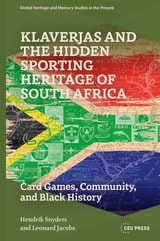
Klaverjas and the Hidden Sporting Heritage of South Africa
Card Games, Community, and Black HistoryHendrik Snyders
Central European University Press, 2026
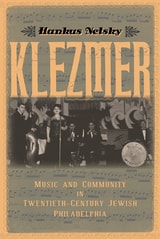
Klezmer
Music and Community in Twentieth-Century Jewish PhiladelphiaHankus Netsky
Temple University Press, 2017
Netsky defines what klezmer music is, how it helped define Jewish immigrant culture in Philadelphia, and how its current revival has changed klezmer’s meaning historically. Klezmer also addresses the place of musicians and celebratory music in Jewish society, the nature of klezmer culture, the tensions between sacred and secular in Jewish music, and the development of Philadelphia's distinctive “Russian Sher” medley, a unique and masterfully crafted composition.
Including a significant amount of musical transcriptions, Klezmer chronicles this special musical genre from its heyday in the immigrant era, through the mid-century period of its decline through its revitalization from the 1980s to today.

Klondike Saga
The Chronicle of a Minnesota Gold Mining CompanyCarl L. Lokke
University of Minnesota Press, 1965
Klondike Saga was first published in 1965. Minnesota Archive Editions uses digital technology to make long-unavailable books once again accessible, and are published unaltered from the original University of Minnesota Press editions.
This is the story of the Monitor Gold Mining and Trading Company, an organization of sixteen Minnesotans who went to the Canadian Klondike region in the late 1890's to prospect for gold. It is based on diaries and letters written by the men during their venture. Most of the company members were of Scandinavian origin, recent immigrants to America, and a number of the letters were written to Nye Normanden, a Norwegian-language newspaper published in Minneapolis at the time.
The leader of the company, Lars Gunderson, was the grandfather of the late Carl L. Lokke, author of the book. Mr. Lokke, a historian, was chief of the foreign affairs branch of the National Archives at the time of his death in 1960.
This is the first book issued under a joint publishing arrangement between the University of Minnesota Press and the Norwegian-American Historical Association. It is Volume 7 in the association's Travel and Description Series. There is a preface by Kenneth O. Bjork, editor of the association, and Senator Ernest Gruening of Alaska writes a foreword.

Klondike Women
True Tales of the 1897–1898 Gold RushMelanie J. Mayer
Ohio University Press, 1989
Challenging the myth that the only women who participated in gold rushes were prostitutes and gold-diggers of the euphemistic sort, Melanie Mayer shows us that Klondike women came from all walks of life—socialites to poor immigrants, single women, wives, widows, and children. They planned to make their money through many different undertakings including mining, business, entertainment, professional, and service enterprises. Their approaches to life were as varied as their roles—optimistic or skeptical; cautious or adventuresome; gregarious or self-contained; contemplative or active. There was no typical Klondike woman. Individually, their stories can be funny, hopeful, tragic, or poignant. Taken together, they give rich, complex images of the people, times, and places of the gold rush.
A visually exciting book, Klondike Women features over 150 photographs and illustrations. This volume should appeal not only to the general reader, but to those interested in history, women’s studies, and the Pacific Northwest as well.
Kneeling Theology
Anton Strukelj
Catholic University of America Press, 2022
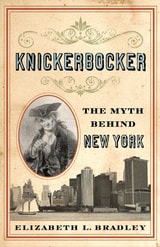
Knickerbocker
The Myth behind New YorkBradley, Elizabeth L
Rutgers University Press, 2009
Includes a gallery of images that brings Diedrich Knickerbocker, his myth, time, and place to life Knickerbocker engagingly traces the creation, evolution, and prevalence of Irving's imaginary historian in New York literature and history, art and advertising, from the early nineteenth century to the present day. Who would imagine this satiric character, at once a snob and a champion of the people, would endure for two hundred years? In Elizabeth L. Bradley's words, "Whether you call it 'blood,' style, attitude, or moxie, the little Dutchman could deliver." And, from this engaging work, it is clear that he does.
Bradley's stunning volume offers a surprising and delightful glimpse behind the scenes of New York history, and invites readers into the world of Knickerbocker, the antihero who surprised everyone by becoming the standard-bearer for the city's exceptional sense of self, or what we now call a New York "attitude."

Knish
In Search of the Jewish Soul FoodLaura Silver
Brandeis University Press, 2014
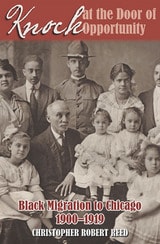
Knock at the Door of Opportunity
Black Migration to Chicago, 1900-1919Christopher Robert Reed
Southern Illinois University Press, 2014
Disputing the so-called ghetto studies that depicted the early part of the twentieth century as the nadir of African American society, this thoughtful volume by Christopher Robert Reed investigates black life in turn-of-the-century Chicago, revealing a vibrant community that grew and developed on Chicago’s South Side in the early 1900s. Reed also explores the impact of the fifty thousand black southerners who streamed into the city during the Great Migration of 1916–1918, effectively doubling Chicago’s African American population. Those already residing in Chicago’s black neighborhoods had a lot in common with those who migrated, Reed demonstrates, and the two groups became unified, building a broad community base able to face discrimination and prejudice while contributing to Chicago’s growth and development.
Reed not only explains how Chicago’s African Americans openly competed with white people for jobs, housing and an independent political voice but also examines the structure of the society migrants entered and helped shape. Other topics include South Side housing, black politics and protest, the role of institutionalized religion, the economic aspects of African American life, the push for citizenship rights and political power for African Americans, and the impact of World War I and the race riot of 1919. The first comprehensive exploration of black life in turn-of-the-century Chicago beyond the mold of a ghetto perspective, this revealing work demonstrates how the melding of migrants and residents allowed for the building of a Black Metropolis in the 1920s.
2015 ISHS Superior Achievement Award
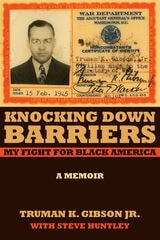
Knocking Down Barriers
My Fight for Black AmericaTruman K. Gibson Jr. with Steve Huntley
Northwestern University Press, 2005
Recipient, 2007 Hyde Park Historical Society Paul Cornell Award
Sixty years ago, when Truman Gibson reported for duty at the War Department, Washington, D.C. was a southern city in its unbending segregation as well as in its steamy summers. Gibson had no illusions, but as someone who'd enjoyed the best of the vibrant black culture of prewar America, he was shocked to find the worst of the Jim Crow South in the nation's capital. What Gibson accomplished as an advocate for African American soldiers-first as a lawyer working for the Secretary of War, then as a member of President Truman's "Black Cabinet"--is a large part of the history of the struggle for civil rights in the American military; and it is a compelling part of the story that Gibson tells in this book, a memoir of a life spent making a difference in the world one step at a time.
A graduate of the University of Chicago Law School, Gibson took his fight for racial justice to the corridors of powers, arguing against restrictive real estate covenants before the U.S. Supreme Court, opposing such iconic figures as Generals Dwight Eisenhower and George C. Marshall in campaigning for the integration of the armed forces, and challenging white control of professional sports by creating a boxing promotion empire that made television history. A firsthand account of the nitty-gritty of twentieth-century race relations in the worlds of law, the military, sports, and entertainment, Gibson's memoir is also an engaging recollection of encounters with the likes of Thurgood Marshall, W. E. B. DuBois, Eleanor Roosevelt, George Patton, Jackie Robinson, and Joe Louis, among others. As a historical record and as an intimate look at a bygone era with all its charms and hardships, the book is an essential chapter in our nation's story.
Knossos and the Prophets of Modernism
Cathy Gere
University of Chicago Press, 2009
In the spring of 1900, British archaeologist Arthur Evans began to excavate the palace of Knossos on Crete, bringing ancient Greek legends to life just as a new century dawned amid far-reaching questions about human history, art, and culture. With Knossos and the Prophets of Modernism, Cathy Gere relates the fascinating story of Evans’s excavation and its long-term effects on Western culture. After the World War I left the Enlightenment dream in tatters, the lost paradise that Evans offered in the concrete labyrinth—pacifist and matriarchal, pagan and cosmic—seemed to offer a new way forward for writers, artists, and thinkers such as Sigmund Freud, James Joyce, Giorgio de Chirico, Robert Graves, and Hilda Doolittle.
Assembling a brilliant, talented, and eccentric cast at a moment of tremendous intellectual vitality and wrenching change, Cathy Gere paints an unforgettable portrait of the age of concrete and the birth of modernism.
Knots, or the Violence of Desire in Renaissance Florence
Emanuele Lugli
University of Chicago Press, 2023
In this innovative cultural history, hair is the portal through which Emanuele Lugli accesses the cultural production of Lorenzo il Magnifico’s Florence. Lugli reflects on the ways writers, doctors, and artists expressed religious prejudices, health beliefs, and gender and class subjugation through alluring works of art, in medical and political writings, and in poetry. He considers what may have compelled Sandro Botticelli, the young Leonardo da Vinci, and dozens of their contemporaries to obsess over braids, knots, and hairdos by examining their engagement with scientific, philosophical, and theological practices.
By studying hundreds of fifteenth-century documents that engage with hair, Lugli foregrounds hair’s association to death and gathers insights about human life at a time when Renaissance thinkers redefined what it meant to be human and to be alive. Lugli uncovers overlooked perceptions of hair when it came to be identified as a potential vector for liberating culture, and he corrects a centuries-old prejudice that sees hair as a trivial subject, relegated to passing fashion or the decorative. He shows hair, instead, to be at the heart of Florentine culture, whose inherent violence Lugli reveals by prompting questions about the entanglement of politics and desire.
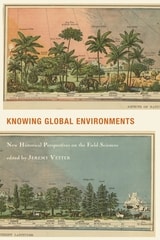
Knowing Global Environments
New Historical Perspectives on the Field SciencesVetter, Jeremy
Rutgers University Press, 2011
Collectively their essays explore the history of the field sciences, through the lens of place, practice, and the production of scientific knowledge, with a wide-ranging perspective extending outwards from the local to regional, national, imperial, and global scales. The book also shows what the history of the field sciences can contribute to environmental history-especially how knowledge in the field sciences has intersected with changing environments-and addresses key present-day problems related to sustainability, such as global climate, biodiversity, oceans, and more.
Contributors to Knowing Global Environments reveal how the field sciences have interacted with practical economic activities, such as forestry, agriculture, and tourism, as well as how the public has been involved in the field sciences, as field assistants, students, and local collaborators.
Knowing God by Experience
The Spiritual Senses in the Theology of William of AuxerreBoyd Taylor Coolman
Catholic University of America Press, 2004
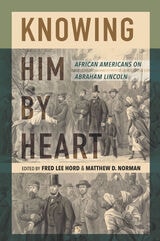
Knowing Him by Heart
African Americans on Abraham LincolnEdited by Frederick Hord and Matthew D. Norman
University of Illinois Press, 2023
Winner of an Abraham Lincoln Institute Book Award
Though not blind to Abraham Lincoln's imperfections, Black Americans long ago laid a heartfelt claim to his legacy. At the same time, they have consciously reshaped the sixteenth president's image for their own social and political ends. Frederick Hord and Matthew D. Norman's anthology explores the complex nature of views on Lincoln through the writings and thought of Frederick Douglass, Ida B. Wells-Barnett, Mary McLeod Bethune, Thurgood Marshall, Malcolm X, Gwendolyn Brooks, Barbara Jeanne Fields, Barack Obama, and dozens of others. The selections move from speeches to letters to book excerpts, mapping the changing contours of the bond--emotional and intellectual--between Lincoln and Black Americans over the span of one hundred and fifty years.
A comprehensive and valuable reader, Knowing Him by Heart examines Lincoln’s still-evolving place in Black American thought.
Knowing Jesus Christ
An Introduction to ChristologyFrancis Selman
Catholic University of America Press, 2026
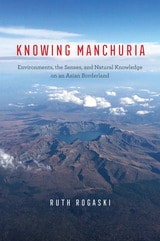
Knowing Manchuria
Environments, the Senses, and Natural Knowledge on an Asian BorderlandRuth Rogaski
University of Chicago Press, 2022
According to Chinese government reports, hundreds of plague-infected rodents fell from the skies over Gannan county on an April night in 1952. Chinese scientists determined that these flying voles were not native to the region, but were vectors of germ warfare, dispatched over the border by agents of imperialism. Mastery of biology had become a way to claim political mastery over a remote frontier. Beginning with this bizarre incident from the Korean War, Knowing Manchuria places the creation of knowledge about nature at the center of our understanding of a little-known but historically important Asian landscape.
At the intersection of China, Russia, Korea, and Mongolia, Manchuria is known as a site of war and environmental extremes, where projects of political control intersected with projects designed to make sense of Manchuria’s multiple environments. Covering more than 500,000 square miles, Manchuria’s landscapes include temperate rainforests, deserts, prairies, cultivated plains, wetlands, and Siberian taiga. With analysis spanning the seventeenth century to the present day, Ruth Rogaski reveals how an array of historical actors—Chinese poets, Manchu shamans, Russian botanists, Korean mathematicians, Japanese bacteriologists, American paleontologists, and indigenous hunters—made sense of the Manchurian frontier. She uncovers how natural knowledge, and thus the nature of Manchuria itself, changed over time, from a sacred “land where the dragon arose” to a global epicenter of contagious disease; from a tragic “wasteland” to an abundant granary that nurtured the hope of a nation.
Knowing Nature
Conversations at the Intersection of Political Ecology and Science StudiesEdited by Mara J. Goldman, Paul Nadasdy, and Matthew D. Turner
University of Chicago Press, 2011
Political ecology and science studies have found fertile meeting ground in environmental studies. While the two distinct areas of inquiry approach the environment from different perspectives—one focusing on the politics of resource access and the other on the construction and perception of knowledge—their work is actually more closely aligned now than ever before.
Knowing Nature brings together political ecologists and science studies scholars to showcase the key points of encounter between the two fields and how this intellectual mingling creates a lively and more robust ecological framework for the study of environmental politics. The contributors all actively work at the interface between these two fields, and here they use empirical material to explore questions of theoretical and practical import for understanding the politics that surround nature-society relations, from wildlife management in the Yukon to soil fertility in Kenya. In addition, they examine how various environmental knowledge claims are generated, packaged, promoted, and accepted (or rejected) by the different actors involved in specific cases of environmental management, conservation, and development. Finally, they ask what is at stake in the struggles surrounding environmental knowledge, how such struggles shape conceptions of the environment, and whose interests are served in the process.
Knowing an Empire
Early Modern Chinese and Spanish Worlds in DialogueEdited by Mackenzie Cooley and Huiyi Wu
Lever Press, 2025
Knowing an Empire does not see the conveyance of information across an empire as a top-down process with an active center as a knowledge-maker. Instead, it amplifies a blend of voices that speak as much to imperial bureaucracy as to the rich local and Indigenous cultures, revealing these two early modern empires as diverse polities whose equilibria were constantly rebalanced among local powers. Comprised of 18 chapters, this edited collection reflects on the historical evolution and inner structures of the imperial epistemologies, as well as the many ways historians today read difangzhi and relaciones geográficas to understand the spatial, natural, and social order in both the Chinese and the Spanish empires. At once a comparative and a connected history, it places Chinese and Spanish imperial knowledge in the globalizing early modern world, highlighting the migration of people, goods, and ideas and revealing how these wide-ranging influences are reflected—or not—in the difangzhi and the relaciones. The book concludes by broadening our scope beyond China and Spain to reflect how other early modern empires, such as the Portuguese, failed to develop such systematized imperial genres.
With contributions from leading scholars across Latin American and Asian Studies, this book synthesizes political, environmental, and socio-economic history with historical anthropology to highlight parallel governance and knowledge structures. The contributors challenge conventional binaries of Western versus Eastern, and colonial versus non-colonial, presenting a nuanced perspective of early modern empires as dynamic, interconnected entities through the shared challenges of scale, diversity, and increasing globalization. Through these dialogues, Knowing an Empire illuminates the complex entanglement of ruling and understanding. This groundbreaking collection offers a highly innovative and dialogic approach to comparative studies of empires, with major implications for Asian, European, Latin American, transnational, and global history.
Knowing by Ear
Listening to Voice Recordings with African Prisoners of War in German Camps (1915–1918)Anette Hoffmann
Duke University Press, 2024
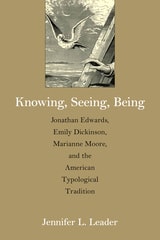
Knowing, Seeing, Being
Jonathan Edwards, Emily Dickinson, Marianne Moore, and the American Typological TraditionJennifer L. Leader
University of Massachusetts Press, 2016
Scholars no longer see Jonathan Edwards as the fire-and-brimstone preacher who deemed his parishioners “sinners in the hands of an angry god.” Edwards now figures as caring and socially conscious and exerts increased influence as a philosopher of the American school of Protestantism. In this study, he becomes the progenitor of an alternative tradition in American letters.
In Knowing, Seeing, Being, Jennifer L. Leader argues that Edwards, the nineteenth-century poet Emily Dickinson, and the twentieth-century poet Marianne Moore share a heretofore underrecognized set of religious and philosophical preoccupations. She contends that they represent an alternative tradition within American literature, one that differs from Transcendentalism and is grounded in Reformed Protestantism and its ways of reading and interpreting the King James Bible and the natural world. According to Leader, these three writers' most significant commonality is the Protestant tradition of typology, a rigorous mode of interpreting scripture and nature through which certain figures or phenomena are read as the fulfillment of prophecy and of God's work. Following from their similar ways of reading, they also share philosophical and spiritual questions about language, epistemology (knowing), perception (seeing), and physical and spiritual ontology (being). In connecting Edwards to these two poets, in exploring each writer's typological imagination, and through a series of insightful readings, this innovative book reevaluates three major figures in American intellectual and literary history and compels a reconsideration of these writers and their legacies.
Knowledge Flows in a Global Age
A Transnational ApproachEdited by John Krige
University of Chicago Press, 2022
The contributors to this collection focus on what happens to knowledge and know-how at national borders. Rather than treating it as flowing like currents across them, or diffusing out from center to periphery, they stress the human intervention that shapes how knowledge is processed, mobilized, and repurposed in transnational transactions to serve diverse interests, constraints, and environments. The chapters consider both what knowledge travels and how it travels across borders of varying permeability that impede or facilitate its movement. They look closely at a variety of platforms and objects of knowledge, from tangible commodities—like hybrid wheat seeds, penicillin, Robusta coffee, naval weaponry, seed banks, satellites and high-performance computers—to the more conceptual apparatuses of plant phenotype data and statistics. Moreover, this volume decenters the Global North, tracking how knowledge moves along multiple paths across the borders of Mexico, India, Portugal, Guinea-Bissau, the Soviet Union, China, Angola, Palestine and the West Bank, as well as the United States and the United Kingdom. An important new work of transnational history, this collection recasts the way we understand and analyze knowledge circulation.
Knowledge Power And Discipline
German Studies And National IdentityPier Carlo Bontempelli
University of Minnesota Press, 2003
An essential critical history of German studies as an academic discipline
German Studies has confronted many crises, as well as severe criticism and self-criticism, and yet it has managed to maintain its disciplinary system through every upheaval—the revolution of 1848, the establishment of the Second Reich in 1871, the Weimar Republic, the Nazi Third Reich, the Second World War and the reconstruction era, the creation and reunification of the two German states. Pier Carlo Bontempelli focuses on this continuity, dating back to the early nineteenth century, when the “founding fathers” of Germanistik secured its status by grounding it in a set of fixed principles, revived by each successive generation of scholars in order to legitimize their position of power—and to ensure their capacity for cultural reproduction.
Using the works of Michel Foucault and Pierre Bourdieu, Bontempelli investigates the institution and principles of German Studies and critically reconstructs its history. Mindful of the mechanisms of choice and domination operating at every turn, his book exposes the repressed social and political history of German Studies.
Knowledge Regulation and National Security in Postwar America
Mario Daniels and John Krige
University of Chicago Press, 2022
In this groundbreaking book, Mario Daniels and John Krige set out to show the enormous political relevance that export control regulations have had for American debates about national security, foreign policy, and trade policy since 1945. Indeed, they argue that from the 1940s to today the issue of how to control the transnational movement of information has been central to the thinking and actions of the guardians of the American national security state. The expansion of control over knowledge and know-how is apparent from the increasingly systematic inclusion of universities and research institutions into a system that in the 1950s and 1960s mainly targeted business activities. As this book vividly reveals, classification was not the only—and not even the most important—regulatory instrument that came into being in the postwar era.
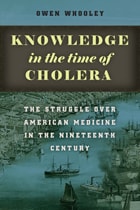
Knowledge in the Time of Cholera
The Struggle over American Medicine in the Nineteenth CenturyOwen Whooley
University of Chicago Press, 2013
These cholera outbreaks raised fundamental questions about medical knowledge and its legitimacy, giving fuel to alternative medical sects that used the confusion of the epidemic to challenge both medical orthodoxy and the authority of the still-new American Medical Association. In Knowledge in the Time of Cholera, Owen Whooley tells us the story of those dark days, centering his narrative on rivalries between medical and homeopathic practitioners and bringing to life the battle to control public understanding of disease, professional power, and democratic governance in nineteenth-century America.
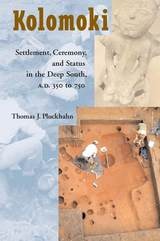
Kolomoki
Settlement, Ceremony, and Status in the Deep South, A.D. 350 to 750Thomas J. Pluckhahn
University of Alabama Press, 2003
A Dan Josselyn Memorial Publication
The first comprehensive and systematic investigation of a Woodland period ceremonial center.
Kolomoki, one of the most impressive archaeological sites in the southeastern United States, includes at least nine large earthen mounds in the lower Chattahoochee River valley of southwest Georgia. The largest, Mound A, rises approximately 20 meters above the terrace that borders it. From its flat-topped summit, a visitor can survey the string of smaller mounds that form an arc to the south and west.
Archaeological research had previously placed Kolomoki within the Mississippian period (ca. A.D. 1000-1500) primarily because of the size and form of the mounds. But this book presents data for the main period of occupation and mound construction that confirm an earlier date, in the Woodland period (ca. A.D. 350-750). Even though the long-standing confusion over Kolomoki’s dating has now been settled, questions remain regarding the lifeways of its inhabitants. Thomas Pluckhahn's research has recovered evidence concerning the level of site occupation and the house styles and daily lives of its dwellers. He presents here a new, revised history of Kolomoki from its founding to its eventual abandonment, with particular attention to the economy and ceremony at the settlement.
This study makes an important contribution to the understanding of middle range societies, particularly the manner in which ceremony could both level and accentuate status differentiation within them. It provides a readable overview of one of the most important but historically least understood prehistoric Native American sites in the United States.
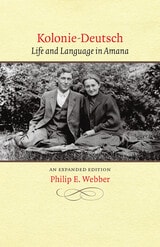
Kolonie-Deutsch
Life and Language in Amana, An Expanded EditionPhilip E. Webber
University of Iowa Press, 1993
Founded as a communal society in 1855 by German Pietists, the seven villages of Iowa’s Amana Colonies make up a community whose crafts, architecture, and institutions reflect—and to an extent perpetuate—the German heritage of earlier residents. In this intriguing blend of sociolinguistic research and stories from Colonists both past and present, Philip Webber examines the rich cultural and linguistic traditions of the Amanas.
Although the Colonies are open to the outside world, particularly after the Great Change of 1932, many distinctive vestiges of earlier lifeways survive, including the local variety of German known by its speakers as Kolonie-Deutsch. Drawing upon interviews with more than fifty Amana-German speakers in 1989 and 1990, Webber explores the nuances of this home-grown German, signaling the development of local microdialects, the changing pattern in the use of German in the Colonies, and the reciprocal influence of English and German on residents’ speech. By letting his sources tell their own stories of earlier days, in which the common message seems to be wir haben fun gehabt or “we had fun working together,” he illuminates the history and unique qualities of each Colony through the prism of language study.
Webber’s introduction to this paperback edition provides an up-to-date itinerary for visitors to the Colonies, information about recent publications on Amana history and culture, and an overview of expanded research opportunities for language study and historical inquiry. The result is an informative and engaging study that will be appreciated by linguists, anthropologists, and historians as well as by general readers interested in these historic villages.
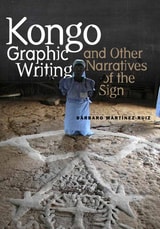
Kongo Graphic Writing and Other Narratives of the Sign
Barbaro Martinez-Ruiz
Temple University Press, 2013
Author Bárbaro Martínez-Ruiz, a practitioner of the Palo Monte devotional arts, illustrates with graphics and rock art how the Bakongo’s ideographic and pictographic signs are used to organize daily life, enable interactions between humans and the natural and spiritual worlds, and preserve and transmit cosmological and cosmogonical belief systems.
Exploring cultural diffusion and exchange, collective memory and identity, Kongo Graphic Writing and Other Narratives of the Sign artfully brings together analyses of the complex interconnections among Kongo traditions of religion, philosophy and visual/gestural communication on both sides of the African Atlantic world.
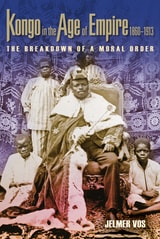
Kongo in the Age of Empire, 1860–1913
The Breakdown of a Moral OrderJelmer Vos
University of Wisconsin Press, 2015
Vos underlines that Kongo's incorporation in the European state system also had tragic consequences, including the undermining of local African structures of authority—on which the colonial system actually depended. Kongo in the Age of Empire carefully documents the involvement of Kongo's royal court in the exercise of Portuguese rule in northern Angola and the ways that Kongo citizens experienced colonial rule as an increasingly illegitimate extension of royal power.
Kore-eda Hirokazu
Marc Yamada
University of Illinois Press, 2023

Korea Letters in the William Elliot Griffis Collection
An Annotated SelectionYoung-mee Yu Cho
Rutgers University Press, 2024
The Korean materials in the Griffis Collection at Rutgers University consist of journals, correspondence, articles, maps, prints, photos, postcards, manuscripts, scrapbooks, and ephemera. These papers reflect Griffis's interests and activities in relation to Korea as a historian, scholar, and theologian. They provide a rare window into the turbulent period of late nineteenth- and twentieth-century Korea, witnessed and evaluated by Griffis and early American missionaries in East Asia. The Korea Letters in the William Elliot Griffis Collection are divided into two parts: letters from missionaries and letters from Japanese and Korean political figures. Newly available and accessible through this collection, these letters develop a multifaceted history of early American missionaries in Korea, the Korean independence movement, and Griffis's views on Korean culture.
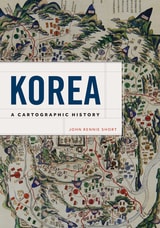
Korea
A Cartographic HistoryJohn Rennie Short
University of Chicago Press, 2012
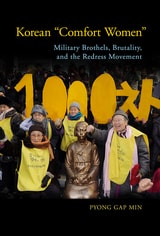
Korean "Comfort Women"
Military Brothels, Brutality, and the Redress MovementPyong Gap Min
Rutgers University Press, 2021
Korean “Comfort Women” synthesizes the previous major findings about Japanese military sexual slavery and legal recommendations, and provides new findings about the issues “comfort women” faced for an English-language audience. It also examines the transnational redress movement, revealing that the Japanese government has tried to conceal the crime of sexual slavery and to resolve the women’s human rights issue with diplomacy and economic power.
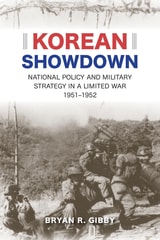
Korean Showdown
National Policy and Military Strategy in a Limited War, 1951–1952Bryan R. Gibby
University of Alabama Press, 2021
WINNER OF THE 2023 ANDREW F. KREPINEVICH JR. WRITING AWARD
A historical analysis of the policies and military strategies applied during the Korean War stalemate period.
Korean Showdown: National Policy and Military Strategy in a Limited War, 1951–1952 takes a holistic and integrative approach to strategy, operations, and tactics during the Korean War’s stalemate period and demonstrates how these matters shaped each other and influenced, or were influenced by, political and strategic policy decision-making. Bryan R. Gibby offers an analysis of the major political and military decisions affecting how the war was conducted operationally and diplomatically by examining American, Chinese, North Korean, and South Korean operations in the context of fighting a limited war with limited means, but for objectives that were not always limited in scope or ambition. The foundational political decision was Harry Truman’s voluntary repatriation policy, which extended the war by up to eighteen months. Its military counterpart was the American-led Operation Showdown, the last deliberate military offensive to coerce concessions at the negotiation table. Showdown’s failure (and the Communists’ own equally disappointing military efforts) opened up new avenues for solving the war short of a militarily imposed solution.
Gibby’s research draws on primary sources from American, Korean, and Chinese archives and publications. Many of these sources have not yet been mined in diplomatic and military histories of the Korean War. This innovative book also addresses a significant gap in the study of Korean military operations—the linkage between ground and air pressure campaigns, as well as the many Chinese and American operations conducted to establish negotiation positions. Gibby also explores many political and propagandist developments that assumed great importance in the summer of 1952, such as prisoner of war riots, the bombing of hydroelectric dams, and the South Korean constitutional crisis, which significantly influenced American and Chinese military decision-making.
Ultimately, this volume serves as a cautionary analysis of the limits of force, the necessity to understand an adversary, and the importance of strategic consensus. It also offers an effective case study on an underappreciated period of civil-military tension during the Cold War and on how civilian politicians and military leaders must collaborate to determine a realistic and effective strategy.