Results by title
8113 books match the query 'Literary Criticism' and 255 start with l

Laughing at the End of the World
Unsettling Laughter in Black LiteratureDiego A. Millan
Duke University Press, 2027
Laughing to Keep from Dying
African American Satire in the Twenty-First CenturyDanielle Fuentes Morgan
University of Illinois Press, 2020
Adventurous and perceptive, Laughing to Keep from Dying reveals how African American satirists unmask the illusions and anxieties surrounding race in the twenty-first century.
Laughter and Civility
The Theater of Emma GadLynn R. Wilkinson
University of Wisconsin Press, 2020
Laughter and Civility, the first biographical and scholarly volume to examine and contextualize her dramas, deeply explores how and why influential women are so often excluded from the canon. Lynn R. Wilkinson provides insightful readings into all twenty-five of Gad’s plays and demonstrates how writers and intellectuals of the time, including Georg and Edvard Brandes, took her critically acclaimed work seriously. This volume rightfully reinstates Emma Gad’s work into the repertory of European drama and is crucial for scholars interested in turn‐of‐the‐century Scandinavian drama, literature, culture, and politics.
Laughter at the Foot of the Cross
Michael A. Screech
University of Chicago Press, 2015
But we are fortunate in our guide: drawing on his immense knowledge of the classics and of humanists like Erasmus and Rabelais—who used Plato and Aristotle to interpret the Gospels—and incorporating the thoughts of Aesop, Calvin, Lucian of Samosata, Luther, Socrates, and others, Screech shows that Renaissance thinkers revived ancient ideas about what inspires laughter and whether it could ever truly be innocent. As Screech argues, in the minds of Renaissance scholars, laughter was to be taken very seriously. Indeed, in an era obsessed with heresy and reform, this most human of abilities was no laughing matter.
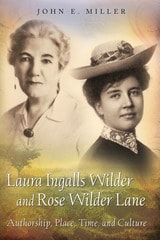
Laura Ingalls Wilder and Rose Wilder Lane
Authorship, Place, Time, and CultureJohn E. Miller
University of Missouri Press, 2008
Interpreting these writers in their larger historical and cultural contexts, Miller reconsiders their formidable artistic, political, and literary contributions to American cultural life in the 1930s. He looks at what was happening in 1932—from depression conditions and politics to chain stores and celebrity culture—to shed light on Wilder’s life, and he shows how actual “little houses” established ideas of home that resonated emotionally for both writers.
In considering each woman’s ties to history, Miller compares Wilder with Frederick Jackson Turner as a frontier mythmaker and examines Lane’s unpublished history of Missouri in the context of a contemporaneous project, Thomas Hart Benton’s famous Jefferson City mural. He also looks at Wilder’s Missouri Ruralist columns to assess her pre–Little House values and writing skills, and he readdresses her literary treatment of Native Americans. A final chapter shows how Wilder’s and Lane’s conservative political views found expression in their work, separating Lane’s more libertarian bent from Wilder’s focus on writing moralist children’s fiction.
These nine thoughtful essays expand the critical discussion on Wilder and Lane beyond the Little House. Miller portrays them as impassioned and dedicated writers who were deeply involved in the historical changes and political challenges of their times—and contends that questions over the books’ authorship do not do justice to either woman’s creative investment in the series. Miller demystifies the aura of nostalgia that often prevents modern readers from seeing Wilder as a real-life woman, and he depicts Lane as a kindred artistic spirit, helping readers better understand mother and daughter as both women and authors.
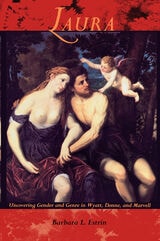
Laura
Uncovering Gender and Genre in Wyatt, Donne and MarvellBarbara L. Estrin
Duke University Press, 1994
Through close readings of the Rime sparse and the works of Wyatt, Donne, and Marvell, Estrin uncovers three Lauras: Laura-Daphne, who denies sexuality; Laura-Eve, who returns the poet’s love; and Laura-Mercury, who reinvents her own life. Estrin claims that in these three guises Laura subverts both genre and gender, thereby introducing multiple desires into the many layers of the poems. Drawing upon genre and gender theories advanced by Jean-François Lyotard and Judith Butler to situate female desire in the poem’s framework, Estrin shows how genre and gender in the Petrarchan tradition work together to undermine the stability of these very concepts.
Estrin’s Laura constitutes a fundamental reconceptualization of the Petrarchan tradition and contributes greatly to the postmodern reassessment of the Renaissance period. In its descriptions of how early modern poets formulate questions about sexuality, society and poetry, Laura will appeal to scholars of the English and Italian Renaissance, of gender studies, and of literary criticism and theory generally.
Laurence Sterne’s A Sentimental Journey
A Legacy to the WorldW. B. Gerard
Bucknell University Press, 2021

Law and Liberty in Early New England
Criminal Justice and Due Process, 1620-1692Edgar J. McManus
University of Massachusetts Press, 2009
Law's Madness
Austin Sarat, Lawrence Douglas, and Martha Merrill Umphrey, Editors
University of Michigan Press, 2006
The distinguished contributors to Law's Madness propose a fascinating interdisciplinary approach to the instability and mutual permeability of law and madness. Their essays examine a variety of discursive forms—from the literary to the historical to the psychoanalytic—in which law is driven more by narrative than by reason. Their studies delineate the ways in which the law takes its definition in part from that which it excludes, suppresses, or excises from itself, illuminating the drive to enforce barriers between non-reason and legality, while simultaneously shedding new light on the constitutive force of the irrational in legal doctrine.
Law's Madness suggests that the tense and paradoxical relationship between law and madness is precisely what erects and sustains law. This provocative collection asks what must be forgotten in order to uphold the rule of law.
Austin Sarat is William Nelson Cromwell Professor of Jurisprudence and Political Science at Amherst College. Lawrence Douglas is Associate Professor of Law, Jurisprudence, and Social Thought at Amherst College. Martha Merrill Umphrey is Associate Professor of Law, Jurisprudence, and Social Thought at Amherst College.
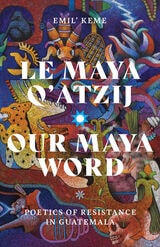
Le Maya Q’atzij/Our Maya Word
Poetics of Resistance in GuatemalaEmil’ Keme
University of Minnesota Press, 2021
Bringing to the fore the voices of Maya authors and what their poetry tells us about resistance, sovereignty, trauma, and regeneration
In 1954, Guatemala suffered a coup d’etat, resulting in a decades-long civil war. During this period, Indigenous Mayans were subject to displacement, disappearance, and extrajudicial killing. Within the context of the armed conflict and the postwar period in Guatemala, K’iche’ Maya scholar Emil’ Keme identifies three historical phases of Indigenous Maya literary insurgency in which Maya authors use poetry to dignify their distinct cultural, political, gender, sexual, and linguistic identities.
Le Maya Q’atzij / Our Maya Word employs Indigenous and decolonial theoretical frameworks to critically analyze poetic works written by ten contemporary Maya writers from five different Maya nations in Iximulew/Guatemala. Similar to other Maya authors throughout colonial history, these authors and their poetry criticize, in their own creative ways, the continuing colonial assaults to their existence by the nation-state. Throughout, Keme displays the decolonial potentialities and shortcomings proposed by each Maya writer, establishing a new and productive way of understanding Maya living realities and their emancipatory challenges in Iximulew/Guatemala.
This innovative work shows how Indigenous Maya poetics carries out various processes of decolonization and, especially, how Maya literature offers diverse and heterogeneous perspectives about what it means to be Maya in the contemporary world.
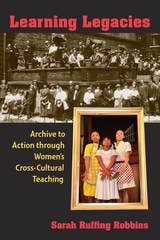
Learning Legacies
Archive to Action through Women's Cross-Cultural TeachingSarah Ruffing Robbins
University of Michigan Press, 2017
Learning from Other Worlds
Estrangement, Cognition, and the Politics of Science Fiction and UtopiaPatrick Parrinder, ed.
Duke University Press, 2001
In exploring the relationship between imaginative invention and that of allegory or fable, the essays in Learning from Other Worlds comment on the field’s most abiding concerns and employ a variety of critical approaches—from intellectual history and genre studies to biographical criticism, feminist cultural studies, and political textual analysis. Among the topics discussed are the works of John Wyndham, Kim Stanley Robinson, Stanislau Lem, H.G. Wells, and Ursula Le Guin, as well as the media’s reactions to the 1997 cloning of Dolly the Sheep. Darko Suvin’s characteristically outspoken and penetrating afterword responds to the essays in the volume and offers intimations of a further stage in his long and distinguished career.
This useful compendium and companion offers a coherent view of science fiction studies as it has evolved while paying tribute to the debt it owes Suvin, one of its first champions. As such, it will appeal to critics and students of science fiction, utopia, and fantasy writing.
Contributors. Marc Angenot, Marleen S. Barr, Peter Fitting, Carl Freedman, Edward James, Fredric Jameson, David Ketterer, Gerard Klein, Tom Moylan, Rafail Nudelman, Darko Suvin
Learning to Be Everyone and No One
Interviews with Twelve Contemporary PoetsChard deNiord
University of Alabama Press, 2026
Intimate, unfiltered conversations with major contemporary poets that reveal how craft, conscience, and lived experience shape poetry
Learning to Be Everyone and No One is a compelling collection of intimate interviews that captures poets speaking with uncommon candor about the making of their art. Through lively, unguarded conversations, Chard deNiord draws out moments of insight, humor, struggle, and revelation, revealing how poetry grows from lived experience and sustained attention. The result is an experience that feels immediate and alive, offering readers a sense of presence inside the creative act as it unfolds in real time.
Gathering voices that have helped shape contemporary poetry, the book features conversations with Robert Hass, T. R. Hummer, Major Jackson, Ali Kinsella, Halyna Kruk, Li-Young Lee, Ada Limón, Dennis Nurske, Dzvinia Orlowsky, Robert Pinsky, Charles Simic, Bruce Smith, Gerald Stern, Ruth Stone, and Chase Twichell. Together, these poets reflect on identity, politics, race, gender, memory, and the natural world with wit, urgency, and precision. More than a record of distinguished careers, this volume forms a chorus of perspectives that affirms poetry’s enduring power to challenge, console, and remain “the news that stays the news.”
Learning to Live with Crime
American Crime Narrative in the Neoconservative TurnChristopher P. Wilson
The Ohio State University Press, 2010
Since the mid-1960s, the war on crime has reshaped public attitudes about state authority, criminal behavior, and the responsibilities of citizenship. But how have American writers grappled with these changes? What happens when a journalist approaches the workings of organized crime not through its legendary Godfathers but through a workaday, low-level figure who informs on his mob? Why is it that interrogation scenes have become so central to prime-time police dramas of late? What is behind writers’ recent fascination with “cold case” homicides, with private security, or with prisons?
In Learning to Live with Crime, Christopher P. Wilson examines this war on crime and how it has made its way into cultural representation and public consciousness. Under the sway of neoconservative approaches to criminal justice and public safety, Americans have been urged to see crime as an inevitable risk of modern living and to accept ever more aggressive approaches to policing, private security, and punishment. The idea has been not simply to fight crime but to manage its risks; to inculcate personal vigilance in citizens; and to incorporate criminals’ knowledge through informants and intelligence gathering. At its most scandalous, this study suggests, contemporary law enforcement has even come to mimic crime’s own operations.
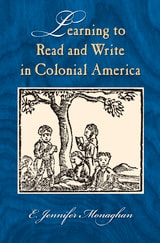
Learning to Read and Write in Colonial America
E. Jennifer Monaghan
University of Massachusetts Press, 2005
An experienced teacher of reading and writing and an award-winning historian, E. Jennifer Monaghan brings to vibrant life the process of learning to read and write in colonial America. Ranging throughout the colonies from New Hampshire to Georgia, she examines the instruction of girls and boys, Native Americans and enslaved Africans, the privileged and the poor, revealing the sometimes wrenching impact of literacy acquisition on the lives of learners.
For the most part, religious motives underlay reading instruction in colonial America, while secular motives led to writing instruction. Monaghan illuminates the history of these activities through a series of deeply researched and readable case studies. An Anglican missionary battles mosquitoes and loneliness to teach the New York Mohawks to write in their own tongue. Puritan fathers model scriptural reading for their children as they struggle with bereavement. Boys in writing schools, preparing for careers in counting houses, wield their quill pens in the difficult task of mastering a “good hand.” Benjamin Franklin learns how to compose essays with no teacher but himself. Young orphans in Georgia write precocious letters to their benefactor, George Whitefield, while schools in South Carolina teach enslaved black children to read but never to write.
As she tells these stories, Monaghan clears new pathways in the analysis of colonial literacy. She pioneers in exploring the implications of the separation of reading and writing instruction, a topic that still resonates in today's classrooms.
Monaghan argues that major improvements occurred in literacy instruction and acquisition after about 1750, visible in rising rates of signature literacy. Spelling books were widely adopted as they key text for teaching young children to read; prosperity, commercialism, and a parental urge for gentility aided writing instruction, benefiting girls in particular. And a gentler vision of childhood arose, portraying children as more malleable than sinful. It promoted and even commercialized a new kind of children's book designed to amuse instead of convert, laying the groundwork for the “reading revolution” of the new republic.
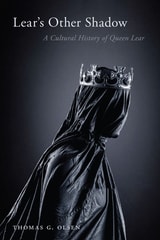
Lear’s Other Shadow
A Cultural History of Queen LearThomas G. Olsen
University of Delaware Press, 2025
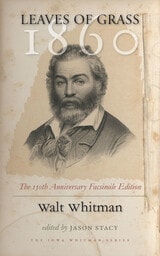
Leaves of Grass, 1860
The 150th Anniversary Facsimile EditionWhitman, Walt
University of Iowa Press, 2009
In May 1860, Walt Whitman published a third edition of Leaves of Grass. His timing was compelling. Printed during a period of regional, ideological, and political divisions, written by a poet intimately concerned with the idea of a United States as “essentially the greatest poem,” this new edition was Whitman’s last best hope for national salvation. Now available in a facsimile edition, Leaves of Grass, 1860 faithfully reproduces Whitman’s attempt to create a “Great construction of the New Bible” to save the nation on the eve of civil war and, for the first time, frames the book in historical rather than literary terms.
In his third edition, Whitman added 146 new poems to the 32 that comprised the second edition, reorganized the book into a bible of American civic religion that could be cited chapter and verse, and included erotic poetry intended to bind the nation in organic harmony. This 150th anniversary edition includes a facsimile reproduction of the original 1860 volume, a thought-provoking introduction by antebellum historian and Whitman scholar Jason Stacy that situates Whitman in nineteenth-century America, and annotations that provide detailed historical context for Whitman’s poems.
A profoundly rich product of a period when America faced its greatest peril, this third edition finds the poet transforming himself into a prophet of spiritual democracy and the Whitman we celebrate today—boisterous, barbaric, and benevolent. Reprinting it now continues the poet’s goal of proclaiming for “the whole of America for each / individual, without exception . . . uncompromising liberty and equality.”
Lectures and Essays in Criticism
The Complete Prose Works of Matthew ArnoldMatthew Arnold; Edited by R. H. Super
University of Michigan Press, 1962
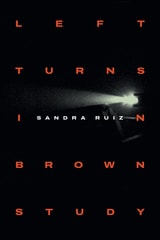
Left Turns in Brown Study
Sandra Ruiz
Duke University Press, 2024
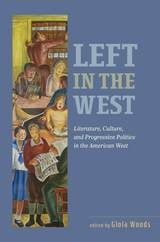
Left in the West
Literature, Culture, and Progressive Politics in the American WestGioia Woods
University of Nevada Press, 2018
From the early 19th century to the present, a remarkably complex and varied body of literary and cultural production has emerged out of progressive social movements. While the literary left in the West shared many interests with other regional expressions—labor, class, anti-fascism, and anti-imperialism, the influence of Manifest Destiny—the distinct history of settler colonialism in western territories caused western leftists to develop concerns unique to the region.
Chapters in the volume provide an impressive range of analysis, covering artists and movements from suffragist writers to bohemian Californian photographers, from civil rights activists to popular folk musicians, from Latinx memoirists to Native American experimental writers, to name just a few.
The unique consideration of the West as a socio-political region establishes a framework for political critique that moves beyond class consequences, anti-fascism, and civil liberties, and into distinct Western concerns such as Native American sovereignty, environmental exploitation, and the legacies of settler colonialism. What emerges is a deeper understanding of the region and its unique people, places, and concerns.
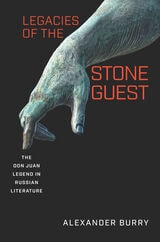
Legacies of the Stone Guest
The Don Juan Legend in Russian LiteratureAlexander Burry
University of Wisconsin Press, 2023
The story of Don Juan first appeared in writing in seventeenth-century Spain, reaching Russia about a century later. Its real impact, however, was delayed until Russia’s most famous poet, Alexander Pushkin, put his own, unique, and uniquely inspirational, spin on the tale. Published in 1830, TheStone Guest is now recognized, with other Pushkin masterpieces, as part of the Russian literary canon. Alexander Burry traces the influence of Pushkin’s brilliant innovations to the legend, which he shows have proven repeatedly fruitful through successive ages of Russian literature, from the Realist to the Silver Age, Soviet, and contemporary periods. Burry shows that, rather than creating a simple retelling of an originally religious tale about a sinful, consummate seducer, Pushkin offered open-ended scenes, re-envisioned and complicated characters, and new motifs that became recursive and productive parts of Russian literature, in ways that even Pushkin himself could never have predicted.
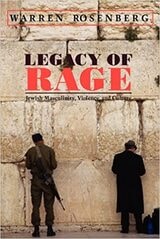
Legacy of Rage
Jewish Masculinity, Violence, and CultureWarren Rosenberg
University of Massachusetts Press, 2009
From Biblical depictions of heroic warriors like King David to the medieval Jewish legend of the Golem (a fierce man of clay created by Cabalistic magic) to the fictional Alexander Portnoy, Jewish ideas of manhood reflect a simultaneous resistance and attraction to violence. According to Rosenberg, it is an ambivalence shaped by millennia of oppression as well as by the clash of Western ideas of masculinity with Eastern European rabbinical injunctions against violent action. The result has been not only gender confusion, but a suppressed rage evident in a broad range of texts created by Jewish men, from nineteenth-century Yiddish stories to contemporary Hollywood films. Isaac Babel, Henry Roth, Norman Mailer, Saul Bellow, Philip Roth, David Mamet, Barry Levinson, and Steven Spielberg are just some of the writers and filmmakers whose lives and works are marked by this legacy of rage.
Yet if the need to affirm masculinity through violence remains an unacknowledged aspect of Jewish male identity, Rosenberg argues, it is not a historical inevitability. As the work of Cynthia Ozick and Tony Kushner suggests, it is possible to construct new ideas of Jewish manhood by exposing the hidden fallacies of the old.
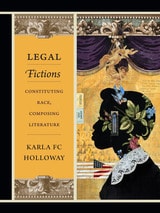
Legal Fictions
Constituting Race, Composing LiteratureKarla FC Holloway
Duke University Press, 2014

Leibniz
Critical and Interpretive EssaysMichael Hooker, Editor
University of Minnesota Press, 1982
Leibniz was first published in 1982. Minnesota Archive Editions uses digital technology to make long-unavailable books once again accessible, and are published unaltered from the original University of Minnesota Press editions.
The past fifteen years have witnessed a renaissance in the study of the history of philosophy, with special attention devoted to the seventeenth century and the work of Descartes and Leibniz. The essays in this collection open new pathways to the study of Leibniz, and will be welcomed not only by historians of philosophy but also by those contemporary philosophers who use logic and the philosophy of language to address metaphysical questions — since Leibniz was the first philosopher to do just that.
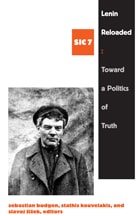
Lenin Reloaded
Toward a Politics of Truth, sic viiSebastian Budgen, Stathis Kouvelakis, and Slavoj Žižek, eds.
Duke University Press, 2007
These essays, some of which are appearing in English for the first time, bring Lenin face-to-face with the problems of today, including war, imperialism, the imperative to build an intelligentsia of wage earners, the need to embrace the achievements of bourgeois society and modernity, and the widespread failure of social democracy. Lenin Reloaded demonstrates that truth and partisanship are not mutually exclusive as is often suggested. Quite the opposite—in the present, truth can be articulated only from a thoroughly partisan position.
Contributors. Kevin B. Anderson, Alain Badiou, Etienne Balibar, Daniel Bensaïd, Sebastian Budgen, Alex Callinicos, Terry Eagleton, Fredric Jameson, Stathis Kouvelakis, Georges Labica, Sylvain Lazarus, Jean-Jacques Lecercle, Lars T. Lih, Domenico Losurdo, Savas Michael-Matsas, Antonio Negri, Alan Shandro, Slavoj Žižek
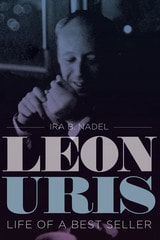
Leon Uris
Life of a Best SellerBy Ira B. Nadel
University of Texas Press, 2010
As the best-selling author of Exodus, Mila 18, QB VII, and Trinity, Leon Uris blazed a path to celebrity with books that readers could not put down. Uris's thirteen novels sold millions of copies, spent months on the best-seller lists, appeared in fifty languages, and have been adapted into equally popular movies and TV miniseries. Few other writers equaled Uris's fame in the mid-twentieth century. His success fueled the rise of mass-market paperbacks, movie tie-ins, and celebrity author tours. Beloved by the public, Uris was, not surprisingly, dismissed by literary critics. Until now, his own life—as full of drama as his fiction—has never been the subject of a book.
In Leon Uris: Life of a Best Seller, Ira Nadel traces Uris from his disruptive youth to his life-changing experiences as a marine in World War II. These experiences, coupled with Uris's embrace of his Judaism and desire to write, led to his unprecedented success and the lavish excesses of a career as a best-selling author. Nadel reveals that Uris lived the adventures he described, including his war experiences in the Pacific (Battle Cry), life-threatening travels in Israel (Exodus), visit to Communist Poland (Mila 18), libel trial in Britain (QB VII), and dangerous sojourn in fractious Northern Ireland and the Irish Republic (Trinity). Nadel also demonstrates that Uris's talent for writing action-packed, yet thoroughly researched, novels meshed perfectly with the public's desire to revisit and understand the tumultuous events of recent history. This made him far more popular (and wealthy) than more literary authors, while paving the way for writers such as Irving Wallace and Tom Clancy.
Lermontov's "A Hero of Our Time"
A Critical CompanionLewis Bagby
Northwestern University Press, 2001
Lermontov's Narratives of Heroism
Vladimir Golstein
Northwestern University Press, 2012
Lermontov's explorations of the virtues and limitations of heroic, self-reliant conduct have subsequently become obscured or misread. This new book focuses upon the peculiar, disturbing, and arguably most central feature of Russian culture: its suspicion of and hostility toward individual achievement and self-assertion. The analysis and interpretation of Lermontov's texts enables Golstein to address broader cultural issues by exploring the reasons behind the persistent misreading of Lermontov's major works and by investigating the cultural attitudes that shaped Russia's reaction to the challenges of modernity.

Lermontov’s "A Hero of Our Time"
A Critical CompanionLewis Bagby
Northwestern University Press, 0
Lessons and Legacies IX
Memory, History, and Responsibility: Reassessments of the Holocaust, Implications for the FutureJonathan Petropoulos
Northwestern University Press, 2010
Memory, History, and Responsibility: Reassessments of the Holocaust, Implications for the Future contains the highlights from the ninth "Lessons and Legacies" conference. The conference, held during the height of the genocide in Darfur, sought to reexamine how the darkness of the Holocaust continues to shadow human existence more than sixty years after World War II left the Third Reich in ruins.
The collection opens with Saul Friedländer’s call for interdisciplinary approaches to Holocaust research. The essays that follow draw on the latest methodologies in the fields of history, literature, philosophy, religion, film, and gender studies, among others. Together both the leading scholars of the Holocaust and the next generation of scholars engage the difficult reality—as raised by editors Petropoulos, Rapaport, and Roth in their introduction—that the legacies of the Holocaust have not proved sufficient in intervening against human-made mass death, let alone preventing or eliminating it.
Lessons and Legacies VIII
From Generation to GenerationDoris L. Bergen
Northwestern University Press, 2008
Primo Levi opened his memoir Survival in Auschwitz with a call to remember, reflect upon, and teach about the Holocaust—or to face the rejection of subsequent generations. The transmittal of this urgent knowledge between generations was the theme of the eighth Lessons and Legacies Conference on the Holocaust, and it is the focus of this volume. The circular formulation—from generation to generation—points backward and forward: where do we locate the roots of the Holocaust, and how do its repercussions manifest themselves? The contributors address these questions from various perspectives—history, cultural studies, psychiatry, literature, and sociology. They also bring to bear the personal aspect of associated issues such as continuity and rupture. What has the generation of the Shoah passed on to its descendants? What have subsequent generations taken from these legacies? Contributions by scholars, some of whom are survivors and children of survivors, remind us that the Holocaust does—and must—remain present from generation to generation.
Lessons and Legacies, Volume XV
The Holocaust: Global Perspectives, National Narratives, Local ContextsErin McGlothlin; Avinoam Patt
Northwestern University Press, 2024
The contributions to this volume not only indicate the intellectual vibrancy and diversity of cutting-edge research in Holocaust studies but also reflect multiple approaches to the necessary work of expanding the canon of research in the field and of adopting varied disciplinary perspectives, engaging with global perspectives as well as local studies.
This collection’s chapters manifest three broad categories: history, literature, and memory; at the same time, however, as the interdisciplinary nature of these chapters indicate, these categories should not be regarded as mutually exclusive or discrete. On the contrary, they overlap and intersect in compelling ways, demonstrating the dynamic character of contemporary Holocaust studies, which views history, narrative representation, and commemoration as mutually informative. Further, the contributors continue the recent trend in Holocaust studies whereby specific regional and national narratives are integrated into a more global approach to the event: Newer studies have continued to incorporate what was once termed the periphery into a more global examination of the experiences of Jewish refugees in flight to Latin America, Africa, and the Soviet Union. At the same time, very specific local studies deepen our knowledge of the mechanics of genocide, along with the experiences of refugees in flight, and the subsequent dimensions of Holocaust memory and representation.
Lessons from Sarajevo
A War Stories PrimerJim Hicks
University of Massachusetts Press, 2013
Hicks explores the limitations of the sentimental tradition in war representation and asks how the work of artists and writers can help us to move beyond the constraints of that tradition. Ranging from Walt Whitman's writings on the Civil War to the U.S. wars in Iraq and Afghanistan, and focusing on the innovative and creative artistic expressions arising out of the wars of the former Yugoslavia, Hicks examines how war has been perceived, described, and interpreted. He analyzes the limitations on knowledge caused by perspective and narrative position and looks closely at the distinct yet overlapping roles of victims, observers, and aggressors. In the end, he concludes, war stories today should be valued according to the extent they make it impossible for us to see these positions as assigned in advance, and immutable.
Lessons from the Past
The Moral Use of History in Fourth-Century ProseFrances Pownall
University of Michigan Press, 2003
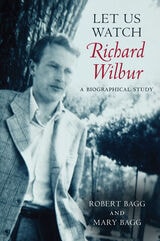
Let Us Watch Richard Wilbur
A Biographical StudyRobert Bagg
University of Massachusetts Press, 2017
Pulitzer Prize–winning poet Richard Wilbur (b. 1921) is part of a notable literary cohort, American poets who came to prominence in the mid-twentieth century. Wilbur's verse is esteemed for its fluency, wit, and optimism; his ingeniously rhymed translations of French drama by Molière, Racine, and Corneille remain the most often staged in the English-speaking world; his essays possess a scope and acumen equal to the era's best criticism. This biography examines the philosophical and visionary depth of his world-renowned poetry and traces achievements spanning seventy years, from political editorials about World War II to war poems written during his service to his theatrical career, including a contentious collaboration with Leonard Bernstein and Lillian Hellman.
Wilbur's life has been mistakenly seen as blessed, lacking the drama of his troubled contemporaries. Let Us Watch Richard Wilbur corrects that view and explores how Wilbur's perceived “normality” both enhanced and limited his achievement. The authors augment the life story with details gleaned from access to his unpublished journals, family archives, candid interviews they conducted with Wilbur and his wife, Charlee, and his correspondence with Robert Lowell, Elizabeth Bishop, John Berryman, John Malcolm Brinnin, James Merrill, and others.
Letras y Limpias
Decolonial Medicine and Holistic Healing in Mexican American LiteratureAmanda Ellis
University of Arizona Press, 2021
Ellis explores the curandera in relationship to decoloniality, bioethics, and the topic of healing while recognizing the limitations and spiritual shortcomings of Western medicine. Ellis argues that our contemporary western health-care system does not know how to fully grapple with illnesses that patients face. Ellis reads the curandera’s perennial representation as an ongoing example of decolonial love useful for deconstructing narrow definitions of health and personhood, and for grappling with the effects of neoliberalism and colonialism on the health-care industry.
Letras y Limpias draws from Chicana feminist theory to assert the importance of the mindbodyspirit connection. Ellis conveys theoretical insights about the continual reimagining of the figure of the curandera as a watermark across Mexican American literary texts. This literary figure points to the oppressive forces that create susto and reminds us that healing work requires specific attention to colonialism, its legacy, and an intentional choice to carry forward the traditional practices rooted in curanderismo passed on from prior generations. By turning toward the figure of the curandera, readers are better poised to challenge prevailing ideas about health, and imagine ways to confront the ongoing problems that coloniality creates. Letras y Limpias shows how the figure of the curandera offers us ways to heal that have nothing to do with copays or medical professionals refusing care, and everything to do with honoring the beauty and complexity of any, every, and all humans.
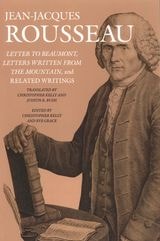
Letter to Beaumont, Letters Written from the Mountain, and Related Writings
Jean-Jacques Rousseau
Dartmouth College Press, 2012
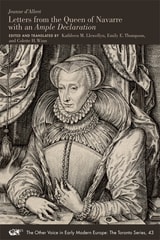
Letters from the Queen of Navarre with an Ample Declaration
Jeanne d’Albret
Iter Press, 2016
This edition presents in English, for the first time, Jeanne d’Albret’s Letters to the king, his mother, his brother, her own brother-in-law, and the queen of England, together with her Ample Declaration (1568) defending her decampment to the Protestant stronghold of La Rochelle. A historical-biographical introduction situates these writings in the larger context of Reformation politics and examines in detail the specific literary characteristics of her memoir. In her works, Jeanne d’Albret asserts her own position as legal sovereign of Béarn and Navarre and situates herself at the nexus of overlapping political, religious, and familial tensions.
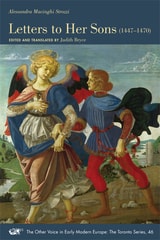
Letters to Her Sons, 1447–1470
Alessandra Macinghi Strozzi
Iter Press, 2016
The seventy-three surviving letters written by Florentine widow, Alessandra Macinghi Strozzi (c.1406–1471), to her distant sons first appeared in print well over a century ago, but are here translated into English in their entirety for the first time. Whether for the professional historian or for the general reader interested in Renaissance Florence, they constitute a most precious testimony regarding both private and public life in the mid-fifteenth century, with themes ranging from familial relations, motherhood, marriage, and aspects of material culture to the harsh realities of political exile meted out by the Medici to their perceived opponents, these latter including her husband and, subsequently, her sons.
Letters to J. D. Salinger
Edited by Chris Kubica and Will Hochman
University of Wisconsin Press, 2014
Salinger continues to maintain his silence, but Holden Caulfield, Franny and Zooey, and Seymour Glass—the unforgettable characters of his novel and short stories—continue to speak to generations of readers and writers. Letters to Salinger includes more than 150 personal letters addressed to Salinger from well-known writers, editors, critics, journalists, and other luminaries, as well as from students, teachers, and readers around the world, some of whom have just discovered Salinger for the first time. Their voices testify to the lasting impressions Salinger’s ideas and emotions have made on so many diverse lives.
Contributors include Marvin Bell, Frederick Busch, Stephen Collins, Nicholas Delbanco, Warren French, Herbert Gold, W. P. Kinsella, Molly McQuade, Stewart O’Nan, Robert O’Connor, Ellis Paul, Molly Peacock, Sanford Pinsker, George Plimpton, Gerald Rosen, Sid Salinger, David Shields, Joseph Skibell, Melanie Rae Thon, Alma Luz Villanueva, Katharine Weber, and many others
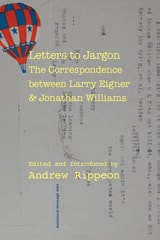
Letters to Jargon
The Correspondence between Larry Eigner and Jonathan WilliamsEdited and Introduced by Andrew Rippeon
University of Alabama Press, 2019
Celebrated by both the Black Mountain poets in the 1950s and 1960s and the Language poets in the 1970s and 1980s, Larry Eigner’s poems occupy an important place in American poetry and poetics, and his reputation and legacy grow seemingly stronger with each passing year. Letters to Jargon collects all of the known correspondence between Larry Eigner and Jonathan Williams, the influential publisher of Jargon Society Press and himself a poet.
Eigner’s correspondence with Williams began in the early 1950s, as the two were in conversation over the manuscript of On My Eyes, published by Jargon in 1960. Their correspondence continued for many years thereafter, extending into the period when Eigner’s work started to gain recognition from the nascent movement that would become known as “Language” writing.
The letters are quite broad in their range of reference and provide a fuller context for Eigner’s poetry and thinking. Eigner and Williams discuss their own poetic practices, including the source material for specific poems, general writing practices, and small press and little magazine publication. This volume offers considerable insight into their shared literary communities as Eigner reports on his readings in contemporary poetry and poetics, as well as his correspondence and contact with other poets including Charles Olson, Vincent Ferrini, Robert Duncan, Denise Levertov, Robert Grenier, and Barrett Watten.
Also recorded are Eigner’s reactions to current events and explications of his own poems, including the contexts for appropriated lines and distinctions of character spacing. Eigner also shares with Williams details of his home life, his financial difficulties and the daily challenges of his cerebral palsy. Finally, the book features a series of images of the original letters, enabling readers to see Eigner’s specific material-textual practices.
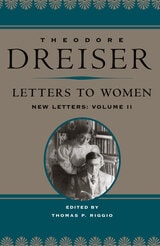
Letters to Women
New Letters, volume 2Theodore Dreiser. Edited by Thomas P. Riggio
University of Illinois Press, 2008
Theodore Dreiser led a long and controversial life, almost always pursuing some serious question, and not rarely pursuing women. This collection, the second volume of Dreiser correspondence to be published by the University of Illinois Press, gathers previously unpublished letters Dreiser wrote to women between 1893 and 1945, many of them showing personal feelings Dreiser revealed nowhere else. Here he both preens and mocks himself, natters and scolds, relates his jaunts with Mencken and his skirmishes with editors and publishers. He admits his worries, bemoans his longings, and self-consciously embarks on love letters that are unafraid to smolder and flame. To one reader he sends “Kisses, Kisses, Kisses, for your sweety mouth” and urges his needy requests: “Write me a love-letter Honey girl.” Alongside such amorous play, he often expressed his deepest feelings on philosophical, religious, and social issues that characterize his public writing.
Chronologically arranged and meticulously edited by Thomas P. Riggio, these letters reveal how wide and deep Dreiser’s needs were. Dreiser often discussed his writing in his letters to women friends, telling them what he wanted to do, where he thought he succeeded and failed, and seeking approval or criticism. By turns seductive, candid, coy, and informative, these letters provide an intimate view of a master writer who knew exactly what he was after.
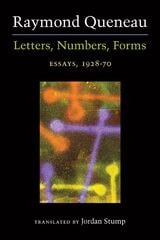
Letters, Numbers, Forms
Essays, 1928-70Raymond Queneau
University of Illinois Press, 2007
Compiled from two volumes of Raymond Queneau's essays (Bâtons, chiffres et lettres and Le Voyage en Grèce), these selections find Queneau at his most playful and at his most serious, eloquently pleading for a certain classicism even as he reveals the roots of his own wildly original oeuvre. Ranging from the funny to the furious, they follow Queneau from modernism to postmodernism by way of countless fascinating detours, including his thoughts on language, literary fashions, myth, politics, poetry, and other writers (Faulkner, Flaubert, Hugo, and Proust). Translator Jordan Stump provides an introduction as well as explanatory notes about key figures and Queneau himself.
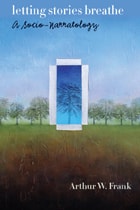
Letting Stories Breathe
A Socio-NarratologyArthur W. Frank
University of Chicago Press, 2010
Stories accompany us through life from birth to death. But they do not merely entertain, inform, or distress us—they show us what counts as right or wrong and teach us who we are and who we can imagine being. Stories connect people, but they can also disconnect, creating boundaries between people and justifying violence. In Letting Stories Breathe, Arthur W. Frank grapples with this fundamental aspect of our lives, offering both a theory of how stories shape us and a useful method for analyzing them. Along the way he also tells stories: from folktales to research interviews to remembrances.
Frank’s unique approach uses literary concepts to ask social scientific questions: how do stories make life good and when do they endanger it? Going beyond theory, he presents a thorough introduction to dialogical narrative analysis, analyzing modes of interpretation, providing specific questions to start analysis, and describing different forms analysis can take. Building on his renowned work exploring the relationship between narrative and illness, Letting Stories Breathe expands Frank’s horizons further, offering a compelling perspective on how stories affect human lives.
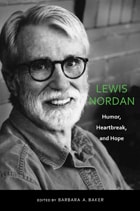
Lewis Nordan
Humor, Heartbreak, and HopeEdited by Barbara A. Baker
University of Alabama Press, 2012
A vibrant tribute to Lewis Nordan’s unforgettable blend of Southern surrealism, dark humor, and deep humanity.
Lewis Nordan: Humor, Heartbreak, and Hope is a rich collection of essays that examines the life and work of one of the South’s most distinctive literary voices. Edited by Barbara A. Baker, this volume brings together scholars and writers who explore Nordan’s use of magical realism, dark humor, and emotional vulnerability to portray the complexities of life in the Mississippi Delta. Through themes of race, poverty, family, and resilience, the contributors illuminate how Nordan’s fiction captures both the pain and beauty of the Southern experience. This book is essential reading for fans of Southern literature, cultural studies, and American fiction.
Written by scholars and fiction writers who represent a fascinating range of experience—from a Shakespearean scholar to English professors to a former student of Nordan’s—this is a rich array of essays, poems, and visual arts in tribute to this increasingly important writer. The collection deepens the base of scholarship on Nordan, and contextualizes his work in relation to other important southern writers such as William Faulkner and Eudora Welty.
Nordan was born and raised in Mississippi before moving to Alabama to pursue his Ph.D. at Auburn University. He taught for several years at the University of Arkansas in Fayetteville and retired from the University of Pittsburgh, where he was a professor of English. Nordan has written four novels, three collections of short stories, and a memoir entitled Boy with Loaded Gun. His second novel, Wolf Whistle, won the Southern Book Award, and his subsequent novel, The Sharpshooter Blues, won the Notable Book Award from the American Library Association and the Fiction Award from the Mississippi Institute of Arts and Letters. Nordan is renowned for his distinctive comic writing style, even while addressing more serious personal and cultural issues such as heartbreak, loss, violence, and racism. He transforms tragic characters and events into moments of artistic transcendence, illuminating what he calls the “history of all human beings.”

Lexicon for an Affective Archive
Edited by Giulia Palladini and Marco Pustianaz
Intellect Books, 2017
A co-publication with NInA and Live Art Development Agency.
Liberalism and the Culture of Security
The Nineteenth-Century Rhetoric of ReformKatherine Henry
University of Alabama Press, 2011
Rethinking the language of liberty, protection, and citizenship in nineteenth-century America.
Figures of protection and security are everywhere in American public discourse, from the protection of privacy or civil liberties to the protection of marriage or the unborn, and from social security to homeland security. Liberalism and the Culture of Security traces a crucial paradox in historical and contemporary notions of citizenship: in a liberal democratic culture that imagines its citizens as self-reliant, autonomous, and inviolable, the truth is that claims for citizenship—particularly for marginalized groups such as women and slaves—have just as often been made in the name of vulnerability and helplessness.
Katherine Henry traces this turn back to the eighteenth-century opposition of liberty and tyranny, which imagined our liberties as being in danger of violation by the forces of tyranny and thus in need of protection. She examines four particular instances of this rhetorical pattern. The first chapters show how women’s rights and antislavery activists in the antebellum era exploited the contradictions that arose from the liberal promise of a protected citizenry: first by focusing primarily on arguments over slavery in the 1850s that invoke the Declaration of Independence, including Harriet Beecher Stowe’s fiction and Frederick Douglass’s “Fourth of July” speech; and next by examining Angelina Grimké’s brief but intense antislavery speaking career in the 1830s.
New conditions after the Civil War and Emancipation changed the way arguments about civic inclusion and exclusion could be advanced. Henry considers the issue of African American citizenship in the 1880s and 1890s, focusing on the mainstream white Southern debate over segregation and the specter of a tyrannical federal government, and then turning to Frances E. W. Harper’s fictional account of African American citizenship in Iola Leroy. Finally, Henry examines Henry James’s 1886 novel The Bostonians, in which arguments over the appropriate role of women and the proper place of the South in post–Civil War America are played out as a contest between Olive Chancellor and Basil ransom for control over the voice of the eloquent girl Verena Tarrant.
Liberating Our Imaginations
The Bible and Minoritized LiteratureDavid Janzen
SBL Press, 2025
Liberating Shahrazad
Feminism, Postcolonialism, and IslamSuzanne Gauch
University of Minnesota Press, 2006
In Liberating Shahrazad, Suzanne Gauch analyzes how postcolonial writers and filmmakers from Algeria, Morocco, and Tunisia have reclaimed the storyteller in order to portray Muslim women in ways that highlight their power to shape their own destinies. Gauch looks at Maghrebian works that incorporate Shahrazad’s storytelling techniques into unexpected and unforeseen narratives. Highlighting the fluid nature of storytelling, Gauch demonstrates how these new depictions of Shahrazad—from artists such as Moufida Tlatli, Fatima Mernissi, Tahar Ben Jelloun, Assia Djebar, Leïla Sebbar—navigate the demands of a global marketplace, even as they reshape the stories told about the Islamic world.
In the face of both rising fundamentalism and proliferating Western media representations of Arab and Muslim women as silent, exploited, and uneducated victims, Gauch establishes how contemporary works of literature and film revive the voice of a long-silenced Shahrazad—and, ultimately, overthrow oppressive images of Muslim women. Suzanne Gauch is assistant professor of English and women’s studies at Temple University.
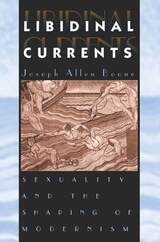
Libidinal Currents
Sexuality and the Shaping of ModernismJoseph Allen Boone
University of Chicago Press, 1997
Challenging overarching theories of the novel by carefully mapping the historical contexts that have influenced modern experimental narratives, Boone constructs a model for interpreting sexuality that reaches from Freud's theory of the libidinal instincts to Foucault's theory of sexual discourse. The most ambitious study yet written on the links between literary modernity and the psychology of sex, Boone's Libidinal Currents will be a landmark book in the study of modernist fiction, gay studies/queer theory, feminist criticism, and studies in sexuality and gender.