Results by title
767 books match the query 'Hispanic & Latino Studies' and 75 start with m
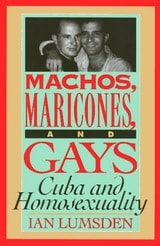
Machos Maricones & Gays
Cuba and HomosexualityIan Lumsden
Temple University Press, 1996
This remarkable account of gays in Cuba links the treatment of male homosexuality under Castro with prejudices and preconceptions prevalent in Cuban society before the Revolution. Ian Lumsden argues that much of the present discussion does not acknowledge the significant improvements that have occurred in the last decade. As an antidote to what he considers wide-spread misinformation, Lumsden locates the current issues surrounding homosexual identity within the broad context of Cuban culture, history, and social policy and makes revealing comparisons to the experience of homosexuals in other Latin American countries.
Lumsden explores the historic roots of the oppression of homosexuals through such issues as race, religion, and gender. He considers the cultural history and current erosion of traditional "machismo," the correlation between traditional women's roles and the relationships between gay men, and homosexuality as defined by the law and as presented in typical sexual education. He addresses the international controversy over state-imposed sanatoriums for HIV/AIDS patients, and details the social scene, the varying ideals among different generations of gay Cubans, gay life and family ties, and the difference between being publicly and privately gay in Cuba.
Lumsden's involvement over the years in gay culture in Cuba, his interviews with gay Cuban men, and his formidable scholarship produce a strikingly honest, accurate portrayal of the changes in homosexual life.
Made in NuYoRico
Fania Records, Latin Music, and Salsa’s Nuyorican MeaningsMarisol Negrón
Duke University Press, 2024
Madre and I
A Memoir of Our Immigrant LivesGuillermo Reyes
University of Wisconsin Press, 2010
In one memorable scene, after realizing that her friend Carmen is cleaning the house of one of the producers of Annie Hall, María recruits her to take her picture as she poses dramatically with Mr. Joffe’s Oscar in hand. It is María’s defiant yet determined attitude amidst her sacrifices that allows for Guillermo’s spirited coming of age and coming out.
Their common ground is the drama of their encounters with discovery, heartbreak, and passion—the explosive emotions that light up the stage of their two-actor theater.

Magical Habits
Monica Huerta
Duke University Press, 2021
Making Hispanics
How Activists, Bureaucrats, and Media Constructed a New AmericanG. Cristina Mora
University of Chicago Press, 2014
Some argue that these cultures are fundamentally similar and that the Spanish language is a natural basis for a unified Hispanic identity. But Mora shows very clearly that the idea of ethnic grouping was historically constructed and institutionalized in the United States. During the 1960 census, reports classified Latin American immigrants as “white,” grouping them with European Americans. Not only was this decision controversial, but also Latino activists claimed that this classification hindered their ability to portray their constituents as underrepresented minorities. Therefore, they called for a separate classification: Hispanic. Once these populations could be quantified, businesses saw opportunities and the media responded. Spanish-language television began to expand its reach to serve the now large, and newly unified, Hispanic community with news and entertainment programming. Through archival research, oral histories, and interviews, Mora reveals the broad, national-level process that led to the emergence of Hispanicity in America.

Making Home in Havana
Pietropaolo, Vincenzo
Rutgers University Press, 2002
Havana is a city that rarely fails to captivate. But much of the unique beauty and culture of this historic city is rapidly disappearing. As Cuban society finds itself at a crossroads, Havana is more than ever a city on the edge, for although frozen in time as a consequence of Fidel Castro’s revolution, it has certainly not been well preserved. Time, climate, and neglect have eroded a rare architectural legacy, making the need to document this heritage even more pressing than ever before.
Making Home in Havana is an elegant book of photographs and testimonies, recording, questioning, and evoking the meaning of place — in particular, the meaning of home. The combination of fine photography and the words of residents of former palaces, humble apartments, and other dwellings offer us an irresistible portrait of Havana that might otherwise be lost forever.Vincenzo Pietropaolo and Cecelia Lawless have made numerous visits to Havana in order to fully understand and convey the essence of what home means to the inhabitants of the dwellings of the El Vedado and Centro Habana neighborhoods. Together, they—and we—explore how a building becomes a home through its human history as well as its architectural features. With some renovation already underway in colonial Havana, they concentrate on largely unexplored and unrecognized sections that continue to fall into ruin. The intimacy of their connection with the buildings and people offers us a rare combination of documentary realism and high art. Buildings and people speak their histories to us in classic humanistic style. Residents of Havana tell their stories of lifelong efforts to turn decay into beauty, while the photographer’s evocative pictures enable us to feel exactly what they are talking about — a creation of time and space called home.
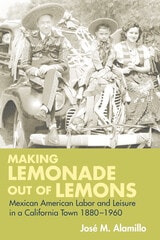
Making Lemonade out of Lemons
Mexican American Labor and Leisure in a California Town 1880-1960José M. Alamillo
University of Illinois Press, 2006
Out of the “lemons” handed to Mexican American workers in Corona, California--low pay, segregated schooling, inadequate housing, and racial discrimination--Mexican men and women made “lemonade” by transforming leisure spaces such as baseball games, parades, festivals, and churches into politicized spaces where workers voiced their grievances, debated strategies for advancement, and built solidarity. Using oral history interviews, extensive citrus company records, and his own experiences in Corona, José Alamillo argues that Mexican Americans helped lay the groundwork for civil rights struggles and electoral campaigns in the post-World War II era.
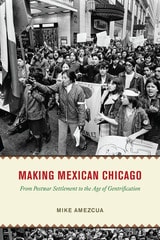
Making Mexican Chicago
From Postwar Settlement to the Age of GentrificationMike Amezcua
University of Chicago Press, 2022
Though Chicago is often popularly defined by its Polish, Black, and Irish populations, Cook County is home to the third-largest Mexican-American population in the United States. The story of Mexican immigration and integration into the city is one of complex political struggles, deeply entwined with issues of housing and neighborhood control. In Making Mexican Chicago, Mike Amezcua explores how the Windy City became a Latinx metropolis in the second half of the twentieth century.
In the decades after World War II, working-class Chicago neighborhoods like Pilsen and Little Village became sites of upheaval and renewal as Mexican Americans attempted to build new communities in the face of white resistance that cast them as perpetual aliens. Amezcua charts the diverse strategies used by Mexican Chicagoans to fight the forces of segregation, economic predation, and gentrification, focusing on how unlikely combinations of social conservatism and real estate market savvy paved new paths for Latinx assimilation. Making Mexican Chicago offers a powerful multiracial history of Chicago that sheds new light on the origins and endurance of urban inequality.
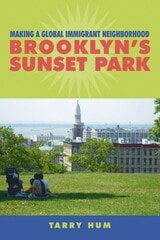
Making a Global Immigrant Neighborhood
Brooklyn's Sunset ParkTarry Hum
Temple University Press, 2014
Based on more than a decade of research, Making a Global Immigrant Neighborhood charts the evolution of Sunset Park--with a densely concentrated working-poor and racially diverse immigrant population--from the late 1960s to its current status as one of New York City's most vibrant neighborhoods.
Tarry Hum shows how processes of globalization, such as shifts in low-wage labor markets and immigration patterns, shaped the neighborhood. She explains why Sunset Park's future now depends on Asian and Latino immigrant collaborations in advancing common interests in community building, civic engagement, entrepreneurialism, and sustainability planning. She shows, too, how residents' responses to urban development policies and projects and the capital represented by local institutions and banks foster community activism.
Hum pays close attention to the complex social, political, and spatial dynamics that forge a community and create new models of leadership as well as coalitions. The evolution of Sunset Park so astutely depicted in this book suggests new avenues for studying urban change and community development.
Making the MexiRican City
Migration, Placemaking, and Activism in Grand Rapids, MichiganDelia Fernández-Jones
University of Illinois Press, 2023
A Choice Outstanding Academic Title for 2023
Large numbers of Latino migrants began to arrive in Grand Rapids, Michigan, in the 1950s. They joined a small but established Spanish-speaking community of people from Texas, Mexico, and Puerto Rico. Delia Fernández-Jones merges storytelling with historical analysis to recapture the placemaking practices that these Mexicans, Tejanos, and Puerto Ricans used to create a new home for themselves. Faced with entrenched white racism and hostility, Latinos of different backgrounds formed powerful relationships to better secure material needs like houses and jobs and to recreate community cultural practices. Their pan-Latino solidarity crossed ethnic and racial boundaries and shaped activist efforts that emphasized working within the system to advocate for social change. In time, this interethnic Latino alliance exploited cracks in both overt and structural racism and attracted white and Black partners to fight for equality in social welfare programs, policing, and education.
Groundbreaking and revelatory, Making the MexiRican City details how disparate Latino communities came together to respond to social, racial, and economic challenges.
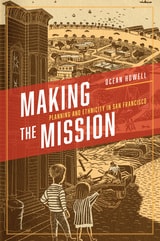
Making the Mission
Planning and Ethnicity in San FranciscoOcean Howell
University of Chicago Press, 2015
In Making the Mission, Ocean Howell tells the story of how residents of the Mission District organized to claim the right to plan their own neighborhood and how they mobilized a politics of place and ethnicity to create a strong, often racialized identity—a pattern that would repeat itself again and again throughout the twentieth century. Surveying the perspectives of formal and informal groups, city officials and district residents, local and federal agencies, Howell articulates how these actors worked with and against one another to establish the very ideas of the public and the public interest, as well as to negotiate and renegotiate what the neighborhood wanted. In the process, he shows that national narratives about how cities grow and change are fundamentally insufficient; everything is always shaped by local actors and concerns.
Maldito Cáncer
Testimonios of Latinx Solidarity, Love, and ResistanceNatalia Deeb-Sossa
University of Arizona Press, 2027
This poignant collection brings together powerful testimonios from Chicanx and Latinx patients, family members, caregivers, and community advocates who have faced el maldito cáncer. Authors share first-person narratives of illness, fear, love, solidarity, and resilience, illuminating how Latinx communities navigate cancer journeys within a complex and often inequitable health-care system.
The contributors—ranging from students and community members to renowned scholars and artists—offer their stories through essays, creative nonfiction, poetry, bilingual chapters, and drawings.
These testimonios honor the diverse ways Latinxs process and communicate the emotional, physical, and cultural realities of cancer. Each section is framed by a short editor introduction that highlights key themes and invites readers to reflect on the resonant insights each story brings. Across four sections—patient voices, family members, community perspectives, and closing reflections—the book reveals how individuals confront illness with courage and how families and communities create networks of care grounded in culture, love, and collective strength.
Exposing physical and emotional vulnerabilities, instances of pain, suffering, worry, and anguish, Maldito Cáncer also opens a space for healing and connection. It offers a new lens to understanding cancer through culturally informed, justice-centered narratives. These acts of testimoniando offer a gift to us: resistance, connection, and hope.
Contributors
Alfonso Aranda
Cathy Arellano
Estela Mara Bensimon
Cindy Camacho-Gutierrez
Daniela A. Carreon
Angie Chabram
Natalia Deeb-Sossa
Yvette G. Flores
Fran García Vásquez
Jennifer Gottlieb
Osa Hidalgo de la Riva
Ekta Kandhway
Skye Kelty
Jorge Antonio Losoya
Dalia Magaña
Maribel Martínez
Pedro Noguera
Lorraine Ramos
Mónica Torreiro-Casal
Rita E. Urquijo-Ruiz
Patricia Zavella

Man of Fire
Selected WritingsErnesto Galarza, Edited by Armando Ibarra and Rodolfo D. Torres
University of Illinois Press, 2013
Managed Migrations
Growers, Farmworkers, and Border Enforcement in the Twentieth CenturyBy Cristina Salinas
University of Texas Press, 2018
2020 National Association for Chicana and Chicano Studies (NACCS) Book Award Winner
Honorable Mention, Ramirez Family Award for Most Significant Scholarly Book, Texas Institute of Letters, 2019
Managed Migrations examines the concurrent development of a border agricultural industry and changing methods of border enforcement in the Rio Grande Valley of Texas during the past century.
Needed at one moment, scorned at others, Mexican agricultural workers have moved back and forth across the US–Mexico border for the past century. In South Texas, Anglo growers’ dreams of creating a modern agricultural empire depended on continuous access to Mexican workers. While this access was officially regulated by immigration laws and policy promulgated in Washington, DC, in practice the migration of Mexican labor involved daily, on-the-ground negotiations among growers, workers, and the US Border Patrol. In a very real sense, these groups set the parameters of border enforcement policy.
Managed Migrations examines the relationship between immigration laws and policy and the agricultural labor relations of growers and workers in South Texas and El Paso during the 1940s and 1950s. Cristina Salinas argues that immigration law was mainly enacted not in embassies or the halls of Congress but on the ground, as a result of daily decisions by the Border Patrol that growers and workers negotiated and contested. She describes how the INS devised techniques to facilitate high-volume yearly deportations and shows how the agency used these enforcement practices to manage the seasonal agricultural labor migration across the border. Her pioneering research reveals the great extent to which immigration policy was made at the local level, as well as the agency of Mexican farmworkers who managed to maintain their mobility and kinship networks despite the constraints of grower paternalism and enforcement actions by the Border Patrol.
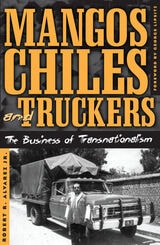
Mangos, Chiles, and Truckers
The Business of TransnationalismRobert Alvarez Jr.
University of Minnesota Press, 2005
Contrary to common perceptions in postnational studies, Alvarez shows how the nation-state enacts and connects with the transnational, crossing borders in ways that underwrite new technology and trade. Emphasizing the importance and control of the nation-state in the global process, Mangos, Chiles, and Truckers demonstrates how people make meaning as they struggle with the economic circumstances of their lives, creating cultural traditions and giving new value to old customs and practices.
Robert R. Alvarez Jr. is professor of ethnic studies at the University of California, San Diego.
George Lipsitz is professor of American studies at the University of California, Santa Cruz.

Manufacturing Celebrity
Latino Paparazzi and Women Reporters in HollywoodVanessa Diaz
Duke University Press, 2020
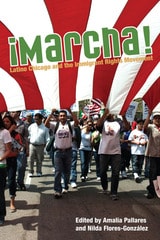
Marcha
Latino Chicago and the Immigrant Rights MovementEdited by Amalia Pallares and Nilda Flores-Gonzalez
University of Illinois Press, 2010
Marcha is a multidisciplinary survey of the individuals, organizations, and institutions that have given shape and power to the contemporary immigrant rights movement in Chicago. A city with longstanding historic ties to immigrant activism, Chicago has been the scene of a precedent-setting immigrant rights mobilization in 2006 and subsequent mobilizations in 2007 and 2008.
Positing Chicago as a microcosm of the immigrant rights movement on national level, these essays plumb an extraordinarily rich set of data regarding recent immigrant rights activities, defining the cause as not just a local quest for citizenship rights, but a panethnic, transnational movement. The result is a timely volume likely to provoke debate and advance the national conversation about immigration in innovative ways.
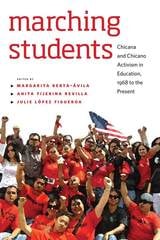
Marching Students
Chicana and Chicano Activism in Education, 1968 to the PresentMargarita Berta-Avila
University of Nevada Press, 2011
Contributors: Alejandro Covarrubias, Xico González, Eracleo Guevara, Adriana Katzew, Lilia R. De Katzew, Rita Kohli, Edward M. Olivos, Alejo Padilla, Carmen E. Quintana, Evelyn M. Rangel-Medina, Marianna Rivera, Daniel G. Solórzano, Carlos Tejeda
Marfa, Marfa
Rasquachismo and Minimalism in Far West TexasJosh T Franco
Duke University Press, 2026
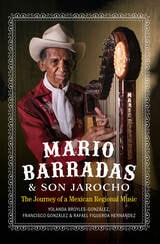
Mario Barradas and Son Jarocho
The Journey of a Mexican Regional MusicYolanda Broyles-González, Rafael Figueroa Hernández, and Francisco González
University of Texas Press, 2022
Son Jarocho was born as the regional sound of Veracruz but over time became a Mexican national genre, even transnational, genre—a touchstone of Chicano identity in the United States. Mario Barradas and Son Jarocho traces a musical journey from the Gulf Coast to interior Mexico and across the border, describing the transformations of Son Jarocho along the way.
This comprehensive cultural study pairs ethnographic and musicological insights with an oral history of the late Mario Barradas, one of Son Jarocho’s preeminent modern musicians. Chicano musician Francisco González offers an insider’s account of Barradas’s influence and Son Jarocho’s musical qualities, while Rafael Figueroa Hernández delves into Barradas’s recordings and films. Yolanda Broyles-González examines the interplay between Son Jarocho’s indigenous roots and contemporary role in Mexican and US society. The result is a nuanced portrait of a vital and evolving musical tradition.
Matters of Choice
Puerto Rican Women's Struggle for Reproductive FreedomLopez, Iris
Rutgers University Press, 2008
In Matters of Choice, Iris Lopez presents a comprehensive analysis of the dichotomous views that have portrayed sterilization either as part of a coercive program of population control or as a means of voluntary, even liberating, fertility control by individual women. Drawing upon her twenty-five years of research on sterilized Puerto Rican women from five different families in Brooklyn, Lopez untangles the interplay between how women make fertility decisions and their social, economic, cultural, and historical constraints. Weaving together the voices of these women, she covers the history of sterilization and eugenics, societal pressures to have fewer children, a lack of adequate health care, patterns of gender inequality, and misinformation provided by doctors and family members.
Lopez makes a stirring case for a model of reproductive freedom, taking readers beyond victim/agent debates to consider a broader definition of reproductive rights within a feminist anthropological context.
Maya Achi Marimba Music In Guatemala
Sergio Navarrete Pellicer
Temple University Press, 2005
Maya Diaspora
Guatemalan Roots, New American Livesedited by James Loucky and Marilyn M. Moors
Temple University Press, 2000
This widespread poverty was endemic throughout northwestern Guatemala, where 80 percent of Maya children were chronically malnourished, and forced wide-scale migration to the Pacific coast. The self-help aid that flowed into the area in the 1960s and 1970s raised hopes for justice and equity that were brutally suppressed by Guatemala's military government. This military reprisal led to a massive diaspora of Maya throughout Canada, the United States, Mexico, and Central America.
This collection describes that process and the results. The chapters show the dangers and problems of the migratory/refugee process and the range of creative cultural adaptations that the Maya have developed. It provides the first comparative view of the formation and transformation of this new and expanding transnational population, presented from the standpoint of the migrants themselves as well as from a societal and international perspective. Together, the chapters furnish ethnographically grounded perspectives on the dynamic implications of uprooting and resettlement, social and psychological adjustment, long-term prospects for continued links to migration history from Guatemala, and the development of a sense of co-ethnicity with other indigenous people of Maya descent. As the Maya struggle to find their place in a more global society, their stories of quiet courage epitomize those of many other ethnic groups, migrants, and refugees today.

Mayan Drifter
Chicano Poet in the Lowlands of AmericaJuan Herrera
Temple University Press, 1997
Meanings of Mobility
Family, Education, and Immigration in the Lives of Latino YouthLeah Schmalzbauer
Russell Sage Foundation, 2023
To better understand these experiences, Schmalzbauer draws on interviews with 60 low-income Latino youth who graduated or were set to graduate from Amherst College, one of the most selective private colleges in the United States. The vast majority of these students were the first in their immigrant families to go to college in the U.S. She finds that while most of the students believed attending Amherst provided them with previously unimaginable opportunities, adjusting to life on campus came with significant challenges. Many of the students Schmalzbauer spoke with had difficulties adapting to the cultural norms at Amherst as well as with relating to their non-Latino, non-low-income peers. The challenges these students faced were not limited to life on campus. As they attempted to adapt to Amherst, many felt distanced from the family and friends they left behind who could not understand the new challenges they faced.
The students credit their elite education for access to extraordinary educational and employment opportunities. However, their experiences while in college and afterward reveal that the relationship between educational and social mobility is much more complicated and less secure than popular conversations about the “American Dream” suggest. Many students found that their educational attainment was not enough to erase the core challenges of growing up in a marginalized immigrant family: many were still poor, faced racism, and those who were undocumented or had undocumented family members still feared deportation.
Schmalzbeauer suggests ways elite colleges can better support low-income Latino students and lower the emotional price of educational mobility, including the creation of immigration offices on campus to provide programming and support for undocumented students and their families. She recommends educating staff to better understand the centrality of family for these students and the challenges they face, as well as educating more privileged students about inequality and the life experiences of their marginalized peers.
Meanings of Mobility provides compelling insights into the difficulties faced by low-income Latinos pursuing educational and social mobility in America’s elite institutions.
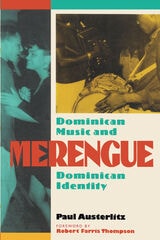
Merengue
Dominican Music and Dominican IdentityPaul Austerlitz
Temple University Press, 1997
Merengue—the quintessential Dominican dance music—has a long and complex history, both on the island and in the large immigrant community in New York City. In this ambitious work, Paul Austerlitz unravels the African and Iberian roots of merengue and traces its growth under dictator Rafael Trujillo and its renewed popularity as an international music.
Using extensive interviews as well as written commentaries, Austerlitz examines the historical and contemporary contexts in which merengue is performed and danced, its symbolic significance, its social functions, and its musical and choreographic structures. He tells the tale of merengue's political functions, and of its class and racial significance. He not only explores the various ethnic origins of this Ibero-African art form, but points out how some Dominicans have tried to deny its African roots.
In today's global society, mass culture often marks ethnic identity. Found throughout Dominican society, both at home and abroad, merengue is the prime marker of Dominican identity. By telling the story of this dance music, the author captures the meaning of mass and folk expression in contemporary ethnicity as well as the relationship between regional, national, and migrant culture and between rural/regional and urban/mass culture. Austerlitz also traces the impact of migration and global culture on the native music, itself already a vibrant intermixture of home-grown merengue forms.
From rural folk idiom to transnational mass music, merengue has had a long and colorful career. Its well-deserved popularity will make this book a must read for anyone interested in contemporary music; its complex history will make the book equally indispensable to anyone interested in cultural studies.
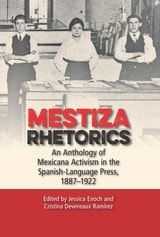
Mestiza Rhetorics
An Anthology of Mexicana Activism in the Spanish-Language Press, 1887-1922Edited by Jessica Enoch and Cristina Devereaux Ramirez
Southern Illinois University Press, 2019
Mestiza Rhetorics is the first anthology dedicated to mexicana rhetors and provides unmatched access to mexicana rhetorics. This collection puts forward the work of mexicana newspaperwomen in Spanish and English, provides evidence of their participation in political and educational debates at the turn of the twentieth century, and demonstrates how the Spanish-language press operated as a rhetorical space for mexicanas.
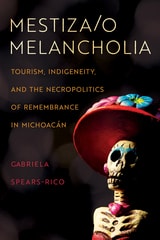
Mestiza/o Melancholia
Tourism, Indigeneity, and the Necropolitics of Remembrance in MichoacánGabriela Spears-Rico
University of Arizona Press, 2027
Through the concept of mestiza/o melancholia, scholar Gabriela Spears-Rico offers a new way to think about the relationship between mestizaje and indigeneity in Mexico. For Spears-Rico, the concept is a longing for the lost part of one’s identity, manifested in touristic visits and material appropriations of folklorized indigeneity, yet unconcerned with political reparations for Indigenous people.
Relying on a rich ethnography in mestiza/o and P’urhépecha pueblos in Michoacán, the book examines mestiza/o mourning and melancholia as it appears in Day of the Dead tourism and in Virgin of Guadalupe worship among Mexican mestizos. This book centers Indigenous resistance, articulating a P’urhépecha critique of regional necropolitics and obstinate appropriations, arguing for the need to decolonize mestizaje. A deep conversation with P’urhépecha dissent, this book elevates the need for solidarity with current Indigenous movements in a region fraught by extractive settler colonialism.
Mestiza/o Melancholia challenges readers to rethink identity, tourism, and belonging in Mexico.
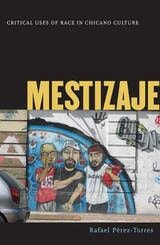
Mestizaje
Critical Uses of Race in Chicano CultureRafael Perez-Torres
University of Minnesota Press, 2005
Informed by a broad-ranging theoretical investigation of identity politics and race and incorporating feminist and queer critiques, Pérez-Torres skillfully analyzes Chicano cultural production. Contextualizing the history of mestizaje, he shows how the concept of mixed race has been used to engage issues of hybridity and voice and examines the dynamics that make mestizo and mestiza identities resistant to, as well as affirmative of, dominant forms of power. He also addresses the role that mestizaje has played in expressive culture, including the hip-hop music of Cypress Hill and the vibrancy of Chicano poster art. Turning to issues of mestizaje in literary creation, Pérez-Torres offers critical readings of the works of Emma Pérez, Gil Cuadros, and Sandra Cisneros, among others. This book concludes with a consideration of the role that the mestizo body plays as a site of elusive or displaced knowledge.
Moving beyond the oppositions—nationalism versus assimilation, men versus women, Texans versus Californians—that have characterized much of Chicano studies, Mestizaje synthesizes and assesses twenty-five years of pathbreaking thinking to make a case for the core components, sensibilities, and concerns of the discipline.
Rafael Pérez-Torres is professor of English at the University of California, Los Angeles. He is author of Movements in Chicano Poetry: Against Myths, Against Margins, coauthor of To Alcatraz, Death Row, and Back: Memories of an East LA Outlaw, and coeditor of The Chicano Studies Reader: An Anthology of Aztlán, 1970–2000.
Mestizo State
Reading Race in Modern MexicoJoshua Lund
University of Minnesota Press, 2012
The Mestizo State examines how the ideas, images, and public discourse around race, nation, and citizen formation have been transformed in Mexico from the mid-nineteenth century to the present. Starting with the Porfiriato, Joshua Lund investigates the rise of a racialized “mestizo state,” its reinvention after the Mexican Revolution, and its mobilization as a critical lever that would act both on behalf of and against mainstream Mexican political culture during the long hegemony of the Partido Revolucionario Institucional.
Lund takes race as his object of critical reflection in the context of modern Mexico. An analysis that does not confuse race with mestizaje, indigeneity, African identity, or whiteness, the book sheds light on the history of the materialism of race as it unfolds within the cultural production of modern Mexico, grounded on close readings of four writers whose work explicitly challenged the politics of race in Mexico: Luis Alva, Ignacio Manuel Altamirano, Rosario Castellanos, and Elena Garro.
In seeking to address race as a cultural-political problematic, Lund considers race as integral to the production of the materiality of Mexican national history: constitutive of the nation form, a mediator of capitalist accumulation, and a central actor in the rise of modernity.
Mestizo in America
Generations of Mexican Ethnicity in the Suburban SouthwestThomas Macias
University of Arizona Press, 2006

Mexican American Fertility Patterns
By Frank D. Bean and Gray Swicegood
University of Texas Press, 1985
The Mexican American population is the fastest growing major racial/ethnic group in the United States. During the decade 1970–1980, the Mexican origin population increased from 4.5 million to 8.7 million persons. High fertility, not immigration, was responsible for nearly two-thirds of this growth.
Recent and historical evidence shows that women of Mexican origin or descent bear significantly more children than other white women in the United States. Mexican American Fertility Patterns clarifies the nature and magnitude of these fertility differences by analyzing patterns of childbearing both across ethnic groups and within the Mexican American population.
Using data from the 1970 and 1980 U.S. Censuses and from the 1976 Survey of Income and Education, the authors evaluate various hypotheses of cultural, social, demographic, and/or economic factors as determinants of fertility differences. Empirical analyses center on the interrelationships between fertility and generational status, language usage and proficiency, and female education. This timely report concludes that Mexican American fertility is closest to that of other whites under conditions of greater access to the opportunity structures of the society.
Mexican American Mojo
Popular Music, Dance, and Urban Culture in Los Angeles, 1935–1968Anthony Macías
Duke University Press, 2008
Macías conducted numerous interviews for Mexican American Mojo, and the voices of little-known artists and fans fill its pages. In addition, more famous musicians such as Ritchie Valens and Lalo Guerrero are considered anew in relation to their contemporaries and the city. Macías examines language, fashion, and subcultures to trace the history of hip and cool in Los Angeles as well as the Chicano influence on urban culture. He argues that a grass-roots “multicultural urban civility” that challenged the attempted containment of Mexican Americans and African Americans emerged in the neighborhoods, schools, nightclubs, dance halls, and auditoriums of mid-twentieth-century Los Angeles. So take a little trip with Macías, via streetcar or freeway, to a time when Los Angeles had advanced public high school music programs, segregated musicians’ union locals, a highbrow municipal Bureau of Music, independent R & B labels, and robust rock and roll and Latin music scenes.
Mexican American Religions
Spirituality, Activism, and CultureGastón Espinosa and Mario T. García, eds.
Duke University Press, 2008
Turning to literature, contributors consider Gloria Anzaldúa’s view of the borderlands as a mystic vision and the ways that Chicana writers invoke religious symbols and rhetoric to articulate a moral vision highlighting social injustice. They investigate the role of healing, looking at it in relation to both the Latino Pentecostal movement and the practice of the curanderismo tradition in East Los Angeles. Delving into to popular culture, they reflect on Luis Valdez’s video drama La Pastorela: “The Shepherds’ Play,” the spirituality of Chicana art, and the religious overtones of the reverence for the slain Tejana music star Selena. This volume signals the vibrancy and diversity of the practices, arts, traditions, and spiritualities that reflect and inform Mexican American religion.
Contributors: Rudy V. Busto, Davíd Carrasco, Socorro Castañeda-Liles, Gastón Espinosa, Richard R. Flores, Mario T. García, María Herrera-Sobek, Luís D. León, Ellen McCracken, Stephen R. Lloyd-Moffett, Laura E. Pérez, Roberto Lint Saragena, Anthony M. Stevens-Arroyo, Kay Turner
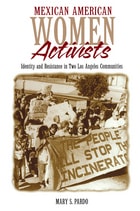
Mexican American Women Activists
Mary Pardo
Temple University Press, 1998
By focusing on women in two contiguous but very different communities -- the working-class, inner-city neighborhood of Boyle Heights in Eastside Los Angeles and the racially mixed middle-class suburb of Monterey Park -- Pardo is able to bring class as ell as gender and ethnic concerns to bear on her analysis in ways that shed light on the complexity of mobilizing for urban change.
Unlike many studies, the stories told here focus on women's strengths rather than on their problems. We follow the process by which these women empowered themselves by using their own definitions of social justice and their own convictions about the importance of traditional roles. Rather than becoming political participants in spite of their family responsibilities, women in both neighborhoods seem to have been more powerful because they had responsibilities, social networks, and daily routines separate from the men in their communities.
Pardo asserts that the decline of real wages and the growing income gap means that unforunately most women will no longer be able to focus their energies on unpaid community work. She reflects on the consequences of this change for women's political involvement, as well as on the politics of writing about women and politics.
Mexican Americans and Education
El saber es poderEstela Godinez Ballón
University of Arizona Press, 2015
Mexican Americans and Education begins with a brief overview of historical educational conditions that have impacted the experiences and opportunities of Mexican American students, and moves into an examination of major contemporary institutional barriers to academic success, including segregation, high-stakes testing, and curriculum tracking. Ballón also explores the status of Mexican American students in higher education and introduces theories and pedagogies that aim to understand and improve school conditions. Through her extensive examination of the major issues impacting Mexican American students, Ballón provides a broad introduction to an increasingly relevant topic.
Ballón uses understandable and accessible language to examine institutional and ideological factors that have negatively impacted Mexican Americans’ public school experiences, while also focusing on their strengths and possibilities for future action. This unique overview serves as a foundation for both education and Chicana/o studies courses, as well as in teacher and professional development.

Mexican Americans and Health
¡Sana! ¡Sana!Adela de la Torre and Antonia Estrada
University of Arizona Press, 2001
- how values such as machismo, familismo, and marianismo influence care-seeking decisions and treatment of illness;
- how factors such as cultural values, socioeconomic status, peer pressure, and family concerns can contribute to substance abuse;
- how cultural attitudes toward sex can heighten the risk of AIDS—and how approaches to AIDS prevention and education need to reflect core cultural values such as familismo, respeto, and confianza. The book also addresses concerns of Mexican Americans regarding the health care system. These include not only access to care and to health insurance but also the shortage of bilingual and bicultural health care professionals. This coverage stresses not only the importance of linguistic competency but also the need to understand folklore illnesses, herbal remedies, and spiritual practices that can delay the treatment of illness and either complement or compromise treatment. Of all the issues that face the contemporary Mexican American community, none is as important to its very survival as health and health care. This timely book gives readers a broad understanding of these complex issues and points the way toward a healthier future for all people of Mexican origin. Mexican Americans and Health and Chicano Popular Culture are the first volumes in the series The Mexican American Experience, a cluster of modular texts designed to provide greater flexibility in undergraduate education. Each book deals with a single topic concerning the Mexican American population. Instructors can create a semester-length course from any combination of volumes, or may choose to use one or two volumes to complement other texts.

Mexican Americans and Health
¡Sana! ¡Sana!Adela de la Torre and Antonio Estrada
University of Arizona Press, 2015
Given recent developments in health care and policy and a steadily increasing population of people of Mexican origin in the United States, a comprehensive look at Mexican American health has never been more necessary. Adela de la Torre and Antonio Estrada first accomplished such an overview with Mexican Americans and Health in 2001, and they have since continued to revise and expand their initial work. With a multitude of additions and renovations, Mexican Americans and Health, 2nd Edition provides a timely and accessible description of current topics in Latino health.
De la Torre and Estrada once again present a broad and nuanced understanding of recent issues involving Mexican American health and well-being, this time with the addition of discussions on:
* the new U.S. Human Development Index to contextualize the health, education, and income status of Mexican Americans relative to other population groups,
* emerging diseases, such as diabetes and obesity,
* recent health-care reforms under the Obama administration,
* substance abuse, sexual risk, and psychological distress among HIV-positive individuals in the gay/bisexual community,
* and predictions of future trends for the next decade.
This new volume has been updated throughout to reflect the many developments in health care since its first edition. Mexican Americans and Health, 2nd Edition continues to present data on a large number of health issues that are important and relevant to the Mexican American population, while describing the social contexts in which they are occurring. Its comprehensive and interdisciplinary approach brings originality and focus to a dynamic literature.
Mexican Americans and Language
Del dicho al hechoGlenn A. Martínez
University of Arizona Press, 2006
This book offers an overview of some of the central issues in the Mexican American language experience, describing it in terms of both bilingualism and minority status. It is the first book to focus on the historical, social, political, and structural aspects of multiple languages in the Mexican American experience and to address the principles and methods of applied sociolinguistic research in the Mexican American community. Spanish and non-Spanish speakers in the Mexican American community share a common set of social and ethnic bonds. They also share a common experience of bilingualism.
As Martínez observes, the ideas that have been constructed around bilingualism are as important to understanding the Mexican American language experience as bilingualism itself. Mexican Americans and Language gives students the background they need to respond to the multiple social problems that can result from the language differences that exist in the Mexican American community. By showing students how to go from word to deed (del dicho al hecho), it reinforces the importance of language for their community, and for their own lives and futures.
Mexican Americans and the Environment
Tierra y VidaDevon G. Peña
University of Arizona Press, 2005
Mexican Americans and the Law
¡El pueblo unido jamás será vencido!Reynaldo Anaya Valencia, Sonia R. García, Henry Flores, and José Roberto Juárez Jr.
University of Arizona Press, 2004
Each chapter highlights historical contexts, relevant laws, and policy concerns for a specific issue and features abridged versions of significant state and federal cases involving Mexican Americans. Beginning with People v. Zammora (1940), the trial that was a precursor to the Zoot Suit Riots in Los Angeles during World War II, the authors lead students through some of the most important and precedent-setting cases in American law:
- Educational equality: from segregation concerns in Méndez v. Westminster (1946) to unequal funding in San Antonio Independent School District vs. Rodríguez (1973)
- Gender issues: reproductive rights in Madrigal v. Quilligan (1981), workplace discrimination in EEOC v. Hacienda Hotel (1989), sexual violence in Aguirre-Cervantes v. INS (2001)
- Language rights: Ýñiguez v. Arizonans for Official English (1995), García v. Gloor (1980), Serna v. Portales Municipal Schools (1974)
- Immigration-: search and seizure questions in U.S. v. Brignoni-Ponce (1975) and U.S. v. Martínez-Fuerte (1976); public benefits issues in Plyler v. Doe (1982) and League of United Latin American Citizens v. Wilson (1997)
- Voting rights: redistricting in White v. Regester (1973) and Bush v. Vera (1996)
- Affirmative action: Hopwood v. State of Texas (1996) and Coalition for Economic Equity v. Wilson (1997)
- Criminal justice issues: equal protection in Hernández v. Texas (1954); jury service in Hernández v. New York (1991); self incrimination in Miranda v. Arizona (1966); access to legal counsel in Escobedo v. Illinois (1964)
With coverage as timely as the 2003 Supreme Court decision on affirmative action, Mexican Americans and the Law offers invaluable insight into legal issues that have impacted Mexican Americans, other Latinos, other racial minorities, and all Americans. Discussion questions, suggested readings, and Internet sources help students better comprehend the intricacies of law.
Mexican Americans and the Politics of Diversity
¡Querer es poder!Lisa Magaña
University of Arizona Press, 2005
Mexican Americans and the Question of Race
By Julie A. Dowling
University of Texas Press, 2014
Honorable Mention, Oliver Cromwell Cox Book Award, presented by the Racial and Ethnic Minorities Section of the American Sociological Association, 2015
With Mexican Americans constituting a large and growing segment of U.S. society, their assimilation trajectory has become a constant source of debate. Some believe Mexican Americans are following the path of European immigrants toward full assimilation into whiteness, while others argue that they remain racialized as nonwhite. Drawing on extensive interviews with Mexican Americans and Mexican immigrants in Texas, Dowling’s research challenges common assumptions about what informs racial labeling for this population. Her interviews demonstrate that for Mexican Americans, racial ideology is key to how they assert their identities as either in or outside the bounds of whiteness. Emphasizing the link between racial ideology and racial identification, Dowling offers an insightful narrative that highlights the complex and highly contingent nature of racial identity.
Mexican Americans and the U.S. Economy
Quest for Buenos DíasArturo González
University of Arizona Press, 2002
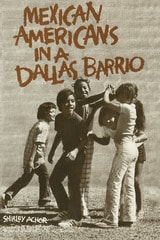
Mexican Americans in a Dallas Barrio
Shirley Achor
University of Arizona Press, 1978
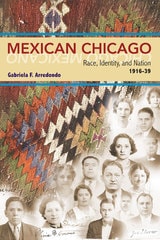
Mexican Chicago
Race, identity and Nation, 1916-39Gabriela F. Arredondo
University of Illinois Press, 2007
Mexican Chicago builds on previous studies of Mexicans in the United States while challenging static definitions of “American” and underlying assumptions of assimilation. Gabriela F. Arredondo contends that because of the revolutionary context from which they came, Mexicans in Chicago between 1916 and 1939 were not just another ethnic group working to be assimilated into a city that has a long history of incorporating newcomers. Suggesting a new understanding of identity formation, she argues that Mexicans wielded tools of identification forged in revolutionary Mexico to collectively battle the prejudices of ethnic groups that included Poles, Italians, and the Irish, as well as African Americans. By turning inward, however, Mexicans also highlighted tremendous differences among themselves, such as gender and class. In discussing this distinctive process of becoming “Mexican” in Chicago during the early twentieth century, Arredondo not only explores how that identity was constructed but also provides telling insight into the repercussions of that identity formation process.
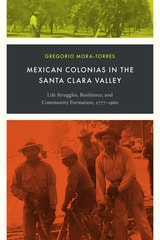
Mexican Colonias in the Santa Clara Valley
Life Struggles, Resilience, and Community Formation, 1777–1960Gregorio Mora-Torres
University of Nevada Press, 2027
Today, ethnic Mexicans and other Latinos make up the largest population group in California, and in the Santa Clara Valley they represent roughly 30 percent of residents, a proportion that has remained steady for nearly two centuries. Despite this population’s long presence as some of the earliest non-Indigenous settlers in the region and their major contributions to its economy, culture, and development, the history of ethnic Mexicans and other Latinos in the valley has been left untold. Much historical writing by local scholars has focused on ethnic Mexicans before 1846, often implying that their meaningful presence declined after the U.S. gained control of California. As a result, few scholarly works address ethnic Mexican history in the Santa Clara Valley after statehood.
Mexican Colonias in the Santa Clara Valley examines the formation and growth of ethnic Mexican neighborhoods from the late nineteenth century through the mid-twentieth century. Author Gregorio Mora-Torres traces continuity from Californios in the San José Pueblo to later arrivals of ethnic Mexicans from Mexico and the U.S. Southwest, highlighting their efforts to build community while working in agriculture and other manual labor. Despite economic hardship, these communities developed rich cultural and social traditions, including celebrations, entertainment, sports, and civic life. The book also explores midcentury transformation, including tensions between assimilation and cultural retention and the rise of political activism in the early 1960s.
Drawing on Anglo-American newspaper accounts and Mexican, Mexican American, and other Latino perspectives from El Excentrico (1949–1981), the study reconstructs narratives of identity, visibility, and change in the Santa Clara Valley over time.
Mexican Folk Narrative from the Los Angeles Area
Introduction, Notes, and ClassificationBy Elaine K. Miller
University of Texas Press, 1973
Urban Los Angeles is the setting in which Elaine Miller has collected her narratives from Mexican-Americans. The Mexican folk tradition, varied and richly expressive of the inner life not only of a people but also of the individual as each lives it and personalizes it, is abundantly present in the United States. Since it is in the urban centers that most Mexican-Americans have lived, this collection represents an important contribution to the study of that tradition and to the study of the changes urban life effects on traditional folklore.
The collection includes sixty-two legendary narratives and twenty traditional tales. The legendary narratives deal with the virgins and saints as well as with such familiar characters as the vanishing hitchhiker, the headless horseman, and the llorona. Familiar characters appear in the traditional tales—Juan del Oso, Blancaflor, Pedro de Ordimalas, and others. Elaine Miller concludes that the traditional tales are dying out in the city because tale telling itself is not suited to the fast pace of modern urban life, and the situations and characters in the tales are not perceived by the people to be meaningfully related to the everyday challenges and concerns of that life. The legendary tales survive longer in an urban setting because, although containing fantastic elements, they are related to the beliefs and hopes of the narrator—even in the city one may be led to buried treasure on some dark night by a mysterious woman.
The penchant of the informants for the fantastic in many of their tales often reflects their hopes and fears, such as their dreams of suddenly acquiring wealth or their fears of being haunted by the dead. Miller closely observes the teller's relation to the stories—to the duendes, the ánimas, Death, God, the devil—and she notes the tension on the part of the informant in his relation to their religion.
The material is documented according to several standard tale and motif indices and is placed within the context of the larger body of Hispanic folk tradition by the citation of parallel versions throughout the Hispanic world. The tales, transcribed from taped interviews, are presented in colloquial Spanish accompanied by summaries in English.
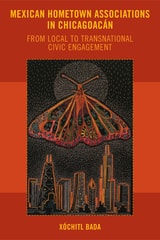
Mexican Hometown Associations in Chicagoacán
From Local to Transnational Civic EngagementBada, Xóchitl
Rutgers University Press, 0
Hometown associations (HTAs) consist of immigrants from the same town in Mexico and often begin quite informally, as soccer clubs or prayer groups. As Bada’s work shows, however, HTAs have become a powerful force for change, advocating for Mexican immigrants in the United States while also working to improve living conditions in their communities of origin. Focusing on a group of HTAs founded by immigrants from the state of Michoacán, the book shows how their activism has bridged public and private spheres, mobilizing social reforms in both inner-city Chicago and rural Mexico.
Bringing together ethnography, political theory, and archival research, Bada excavates the surprisingly long history of Chicago’s HTAs, dating back to the 1920s, then traces the emergence of new models of community activism in the twenty-first century. Filled with vivid observations and original interviews, Mexican Hometown Associations in Chicagoacán gives voice to an underrepresented community and sheds light on an underexplored form of global activism.
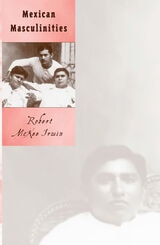
Mexican Masculinities
Robert McKee Irwin
University of Minnesota Press, 2003
A fascinating examination of masculinity in nineteenth- and twentieth-century Mexico
The first of its kind and a powerful challenge to customary views of gender and sexuality in the life and literature of Mexico, this book traces literary representations of masculinity in Mexico from independence in 1810 to the 1960s, and shows how these intersect with the constructions of nation and nationality.
The rhetoric of “Mexicanness” makes constant use of images of masculinity, though it does so in shifting and often contradictory ways. Robert McKee Irwin’s work follows these shifts from the male homosocial bonding that was central to notions of national integration in the nineteenth century, to questioning of gender norms stirred by science and scandals at the turn of the century, to the virulent reaction against gender chaos after the Mexican revolution, to the association of Mexicanness with machismo and homophobia in the literature of the 1940s and 1950s—even as male homosexuality was established as an integral part of national culture.As the first historical study of how masculinity and, particularly, homosexuality were understood in Mexico in the national era, this book not only provides “queer readings” of most major canonical texts of the period in question, but also uncovers a variety of unknown texts from queer Mexican history, including the 1906 novel Los 41, which reenacts the scandal of a turn-of-the-century transvestite ball that launched modern discussion of homosexuality in Mexico. It is a radical undermining of the simple hetero/homosexual and masculine/feminine oppositions that have for so long informed views of the country’s national character.