Results by title
1441 books match the query 'World' and 74 start with m
M Archive
After the End of the WorldAlexis Pauline Gumbs
Duke University Press, 2018
Macachiavellian Intelligence
How Rhesus Macaques and Humans Have Conquered the WorldDario Maestripieri
University of Chicago Press, 2007
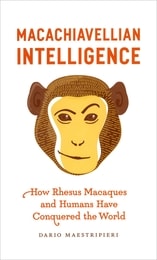
Dario Maestripieri thinks it is high time we shelve that misperception, and with Macachiavellian Intelligence he gives rhesus macaques their rightful turn in the spotlight. The product of more than twenty years studying these fascinating creatures, Macachiavellian Intelligence caricatures a society that is as much human as monkey, with hierarchies and power struggles that would impress Machiavelli himself. High-status macaques, for instance, maintain their rank through deft uses of violence and manipulation, while altruism is almost unknown and relationships are perpetually subject to the cruel laws of the market. Throughout this eye-opening account, Maestripieri weds his thorough knowledge of macaque behavior to his abiding fascination with human society and motivations. The result is a book unlike any other, one that draws on economics as much as evolutionary biology, politics as much as primatology.
Rife with unexpected connections and peppered with fascinating anecdotes, Macachiavellian Intelligence has as much to teach us about humans as it does about macaques, presenting a wry, rational, and wholly surprising view of our humanity as seen through the monkey in the mirror.
Mad Men, Mad World
Sex, Politics, Style, and the 1960sLauren M. E. Goodlad, Lilya Kaganovsky, and Robert A. Rushing, eds.
Duke University Press, 2013
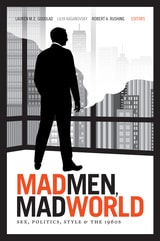
In the introduction, the editors explore the show's popularity; its controversial representations of race, class, and gender; its powerful influence on aesthetics and style; and its unique use of period historicism and advertising as a way of speaking to our neoliberal moment. Mad Men, Mad World also includes an interview with Phil Abraham, an award-winning Mad Men director and cinematographer. Taken together, the essays demonstrate that understanding Mad Men means engaging the show not only as a reflection of the 1960s but also as a commentary on the present day.
Contributors. Michael Bérubé, Alexander Doty, Lauren M. E. Goodlad, Jim Hansen, Dianne Harris, Lynne Joyrich, Lilya Kaganovsky, Clarence Lang, Caroline Levine, Kent Ono, Dana Polan, Leslie Reagan, Mabel Rosenheck, Robert A. Rushing, Irene Small, Michael Szalay, Jeremy Varon
Making Money
Life, Death, and Early Modern Trade on Africa’s Guinea CoastColleen E. Kriger
Ohio University Press, 2017
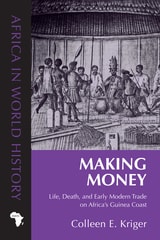
A new era in world history began when Atlantic maritime trade among Africa, Asia, Europe, and the Americas opened up in the fifteenth century, setting the stage for massive economic and cultural change. In Making Money, Colleen Kriger examines the influence of the global trade on the Upper Guinea Coast two hundred years later—a place and time whose study, in her hands, imparts profound insights into Anglo-African commerce and its wider milieu.
A stunning variety of people lived in this coastal society, struggling to work together across deep cultural divides and in the process creating a dynamic creole culture. Kriger digs further than any previous historian of Africa into the records of England’s Royal African Company to illuminate global trade patterns, the interconnectedness of Asian, African, and European markets, and—most remarkably—the individual lives that give Making Money its human scale.
By inviting readers into the day-to-day workings of early modern trade in the Atlantic basin, Kriger masterfully reveals the rich social relations at its core. Ultimately, this accessible book affirms Africa’s crucial place in world history during a transitional period, the early modern era.
Making Sense of the Arab State
Steven Heydemann and Marc Lynch, Editors
University of Michigan Press, 2024
Making Sense of the Arab State brings together top scholars from diverse theoretical orientations to address some of the most critically important questions facing the region today. The authors grapple with enduring questions such as the uneven development of state capacity, the failures of developmentalism and governance, the centrality of regime security and survival concerns, the excesses of surveillance and control, and the increasing personalization of power. Making Sense of the Arab State will be a must-read for scholars of the Middle East and of comparative politics more broadly.
Making a Great Ruler
Grand Duke Vytautas of LithuaniaGiedre Mickunaite
Central European University Press, 2006
Making a New World
Founding Capitalism in the Bajío and Spanish North AmericaJohn Tutino
Duke University Press, 2011
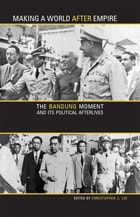
Making a World after Empire
The Bandung Moment and Its Political AfterlivesChristopher J. Lee
Ohio University Press, 2010
In April 1955, twenty-nine countries from Africa, Asia, and the Middle East came together for a diplomatic conference in Bandung, Indonesia, intending to define the direction of the postcolonial world. Representing approximately two-thirds of the world’s population, the Bandung conference occurred during a key moment of transition in the mid-twentieth century—amid the global wave of decolonization that took place after the Second World War and the nascent establishment of a new cold war world order in its wake. Participants such as Jawaharlal Nehru of India, Gamal Abdel Nasser of Egypt, Zhou Enlai of China, and Ahmed Sukarno of Indonesia seized this occasion to attempt the creation of a political alternative to the dual threats of Western neocolonialism and the cold war interventionism of the United States and the Soviet Union.
The essays in this volume explore the diverse repercussions of this event, tracing the diplomatic, intellectual, and sociocultural histories that have emanated from it. Making a World after Empire consequently addresses the complex intersection of postcolonial history and cold war history and speaks to contemporary discussions of Afro-Asianism, empire, and decolonization, thus reestablishing the conference’s importance in twentieth-century global history.
Contributors: Michael Adas, Laura Bier, James R. Brennan, G. Thomas Burgess, Antoinette Burton, Dipesh Chakrabarty, Julian Go, Christopher J. Lee, Jamie Monson, Jeremy Prestholdt, Denis M. Tull
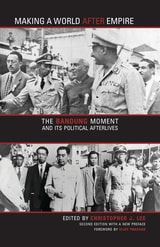
Making a World after Empire
The Bandung Moment and Its Political AfterlivesChristopher J. Lee
Ohio University Press, 2019
With a new foreword by Vijay Prashad
In April 1955, twenty-nine countries from Africa, Asia, and the Middle East came together for a diplomatic conference in Bandung, Indonesia, intending to define the direction of the postcolonial world. Ostensibly representing two-thirds of the world’s population, the Bandung conference occurred during a key moment of transition in the mid-twentieth century—amid the global wave of decolonization that took place after the Second World War and the nascent establishment of a new Cold War world order in its wake. Participants such as Jawaharlal Nehru of India, Gamal Abdel Nasser of Egypt, Zhou Enlai of China, and Sukarno of Indonesia seized this occasion to attempt the creation of a political alternative to the dual threats of Western neocolonialism and the Cold War interventionism of the United States and the Soviet Union.
The essays collected here explore the diverse repercussions of this event, tracing diplomatic, intellectual, and sociocultural histories that ensued as well as addressing the broader intersection of postcolonial and Cold War history. With a new foreword by Vijay Prashad and a new preface by the editor, Making a World after Empire speaks to contemporary discussions of decolonization, Third Worldism, and the emergence of the Global South, thus reestablishing the conference’s importance in twentieth-century global history.
Contributors: Michael Adas, Laura Bier, James R. Brennan, G. Thomas Burgess, Antoinette Burton, Dipesh Chakrabarty, Julian Go, Christopher J. Lee, Jamie Monson, Jeremy Prestholdt, and Denis M. Tull.
Making the Modern Middle East
Second EditionT.G. Fraser, Andrew Mango, and Robert McNamara
Gingko, 2015
This fully revised and updated second edition of The Makers of the Modern Middle East traces those changes and the ensuing history of the region through the rest of the twentieth century and on to the present. Focusing in particular on three leaders—Emir Feisal, Mustafa Kemal, and Chaim Weizmann—the book offers a clear, authoritative account of the region seen from a transnational perspective, one that enables readers to understand its complex history and the way it affects present-day events.
Malaysia's Original People
Past, Present and Future of the Orang AsliEdited by Kirk Endicott
National University of Singapore Press, 2015
The chapters in the present volume provide a comprehensive survey of current understandings of Malaysia’s Orang Asli communities, covering their origins and history, cultural similarities and differences, and they ways they are responding to the challenges posed by a rapidly changing world. The authors, a distinguished group of Malaysian (including Orang Asli) and international scholars with expertise in anthropology, archaeology, biology, education, therapy, geography and law, also show the importance of Orang Asli studies for the anthropological understanding of small-scale indigenous societies in general.
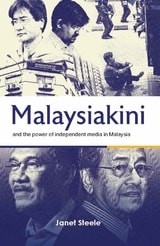
Malaysiakini and the Power of Independent Media in Malaysia
Janet Steele
National University of Singapore Press, 2023
Founded in 1999 by Steven Gan and Premesh Chandran, Malaysiakini was one of many online portals that sprung up in the wake of Reformasi, a period of public protests sparked by Prime Minister Mahathir Mohammad’s 1998 firing of his deputy Anwar Ibrahim. At first, there was no reason to think that Malaysiakini would be anything momentous. However, Malaysiakini wanted to do something much more important than just reporting on Reformasi—its founders intended to bring independent journalism to Malaysia in hopes of changing the country for the better.
Based on more than fifteen years of observation of Malaysiakini's newsroom practices, Malaysiakini and the Power of Independent Media in Malaysia is an intimate portrait of the people and issues behind Malaysia’s only truly independent media outlet. The author illustrates Malaysiakini’s unique mix of idealism in action, studying how sensitive issues such as race, religion, politics, and citizenship are discussed in the newsroom. This attention to the inner workings of one of the most important media institutions in the region yields not only a deep newsroom ethnography but a nuanced, rich history of modern Malaysia.
Malaysian "Bail Outs"?
Capital Controls, Restructuring and RecoveryTranslated by Wong Sook, K.S. Jomo, and Chin Kok Fay
National University of Singapore Press, 2005
Man in a Hurry
Murray MacLehose and Colonial Autonomy in Hong KongRay Yep
Hong Kong University Press, 2024
Man in a Hurry explores the latest available archival materials and re-examines MacLehose’s pivotal governorship in Hong Kong (1971–1982). MacLehose arrived in the challenging 1970s, when there were expectations for social reforms, uneasiness in the relationship between Hong Kong and London, and the 1997 factor looming large. The governor successfully carried out various social reforms and he also handled various major issues, including the anti-corruption campaign, the Vietnamese refugee crisis, and the granting of land lease of the New Territories beyond 1997. Yep unveils the tension and bargaining between the British government and explains how interest of the colony could be asserted, defended, and negotiated. This book is an important study of Hong Kong’s "golden years" when the city’s economy took off. It is a significant contribution to our understanding of how local autonomy was defined.
Managing the Counterrevolution
The United States and Guatemala, 1954–1961Stephen M. Streeter
Ohio University Press, 2001
The Eisenhower administration’s intervention in Guatemala is one of the most closely studied covert operations in the history of the Cold War. Yet we know far more about the 1954 coup itself than its aftermath. This book uses the concept of “counterrevolution” to trace the Eisenhower administration’s efforts to restore U.S. hegemony in a nation whose reform governments had antagonized U.S. economic interests and the local elite.
Comparing the Guatemalan case to U.S.-sponsored counterrevolutions in Iran, the Dominican Republic, Brazil, and Chile reveals that Washington’s efforts to roll back “communism” in Latin America and elsewhere during the Cold War represented in reality a short-term strategy to protect core American interests from the rising tide of Third World nationalism.
Mandela's Dark Years
A Political Theory of DreamingSharon Sliwinski
University of Minnesota Press, 2015
Inspired by one of Nelson Mandela’s recurring nightmares, Mandela’s Dark Years offers a political reading of dream-life. Sharon Sliwinski guides the reader through the psychology of apartheid, recasting dreaming as a vital form of resistance to political violence, away from a rational binary of thinking.
This short, provocative study blends political theory with clinical psychoanalysis, opening up a new space to consider the politics of reverie.
Forerunners is a thought-in-process series of breakthrough digital works. Written between fresh ideas and finished books, Forerunners draws on scholarly work initiated in notable blogs, social media, conference plenaries, journal articles, and the synergy of academic exchange. This is gray literature publishing: where intense thinking, change, and speculation take place in scholarship.
Manitoba Politics and Government
Issues, Institutions, TraditionsPaul Thomas
University of Manitoba Press, 2010
Mano Dura
The Politics of Gang Control in El SalvadorBy Sonja Wolf
University of Texas Press, 2017
In 1992, at the end of a twelve-year civil war, El Salvador was poised for a transition to democracy. Yet, after longstanding dominance by a small oligarchy that continually used violence to repress popular resistance, El Salvador’s democracy has proven to be a fragile one, as social ills (poverty chief among them) have given rise to neighborhoods where gang activity now thrives. Mano Dura examines the ways in which the ruling ARENA party used gang violence to solidify political power in the hands of the elite—culminating in draconian “iron fist” antigang policies that undermine human rights while ultimately doing little to address the roots of gang membership.
Drawing on extensive ethnographic fieldwork and policy analysis, Mano Dura examines the activities of three nongovernmental organizations (NGOs) that have advocated for more nuanced policies to eradicate gangs and the societal issues that are both a cause and an effect of gang proliferation. While other studies of street gangs have focused on relatively distant countries such as Colombia, Argentina, and Jamaica, Sonja Wolf’s research takes us to a country closer to the United States, where forced deportation has brought with it US gang culture. Charting the limited success of NGOs in influencing El Salvador’s security policies, the book brings to light key contextual aspects—including myopic media coverage and the ironic populist support for ARENA, despite the party’s protection of the elite at the expense of the greater society.
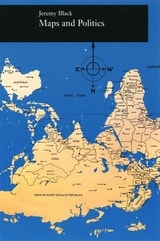
Maps and Politics
Jeremy Black
University of Chicago Press, 1997
Maps
Finding Our Place in the WorldEdited by James R. Akerman and Robert W. Karrow Jr.
University of Chicago Press, 2007
The book begins by examining the use of maps for wayfinding, revealing that even maps as common and widely used as these are the product of historical circumstances and cultural differences. The second chapter considers maps whose makers employed the smallest of scales to envision the broadest of human stages—the world, the heavens, even the act of creation itself. The next chapter looks at maps that are, literally, at the opposite end of the scale from cosmological and world maps—maps that represent specific parts of the world and provide a close-up view of areas in which their makers lived, worked, and moved.
Having shown how maps help us get around and make sense of our greater and lesser worlds, Maps then turns to the ways in which certain maps can be linked to particular events in history, exploring how they have helped Americans, for instance, to understand their past, cope with current events, and plan their national future. The fifth chapter considers maps that represent data from scientific instruments, population censuses, and historical records. These maps illustrate, for example, how diseases spread, what the ocean floor looks like, and how the weather is tracked and predicted. Next comes a turn to the imaginary, featuring maps that depict entire fictional worlds, from Hell to Utopia and from Middle Earth to the fantasy game World of Warcraft. The final chapter traces the origins of map consumption throughout history and ponders the impact of cartography on modern society.
A companion volume to the most ambitious exhibition on the history of maps ever mounted in North America, Maps will challenge readers to stretch conventional thought about what constitutes a map and how many different ways we can understand graphically the environment in which we live. Collectors, historians, mapmakers and users, and anyone who has ever “gotten lost” in the lines and symbols of a map will find much to love and learn from in this book.
Mario Vargas Llosa
Public Intellectual in Neoliberal Latin AmericaJuan E. De Castro
University of Arizona Press, 2011
The idea of a sitting president debating a novelist may seem surprising to readers unfamiliar with Latin American politics, but Vargas Llosa has enjoyed considerable influence in the political arena, thanks in no small part to his run for the Peruvian presidency in 1990. Though he was awarded the Nobel Prize in 2010 for his literary achievements, he is as well known in the Spanish-speaking world for his political columns as he is for his novels. In his widely syndicated political pieces, Vargas Llosa asserts a position he calls “liberal” in the classical sense of affirming the importance of a free market and individual rights, though as De Castro argues, he has often aligned himself with groups that emphasize the former at the expense of the latter.
What makes Vargas Llosa’s rise to political prominence compelling is “not only that he is still a vibrantly active writer, but that he was at the time of the beginning of his rise to literary fame, and throughout the 1960s, a staunch defender of the Cuban Revolution.” While his early literary output seemed to proclaim an allegiance with the Left, Vargas Llosa was soon to take a right turn that De Castro argues was anticipatory and representative of the Latin American embrace of the free market in the 1990s. Understanding Vargas Llosa’s political thought is thus of more than biographical interest. It is a key to understanding the social and cultural shifts that have taken place not only in Peru but throughout Latin America.
Mariupol 2013-2022
Stories of Mobilization and ResistanceHana Josticova
Central European University Press, 2024
The chapters in this book represent successive phases of one story – that of Mariupol, formerly Ukraine’s tenth largest city, and the second largest in the Donbas region. The author, a young Slovak academic, conducted her ethnographic fieldwork in this coastal town between November 2018 and August 2021. She was one of the last academics to do research in Mariupol before its invasion and eventual occupation by Russia.
During these years, Hana Jošticová was overwhelmed by acts of mobilization and resistance that went in opposite directions: support for a Western direction of Ukraine’s future, and support for the status quo that the victory of the Euromaidan seemed to threaten.
She noted the sequence of events presented in the media and through the lens of individual frames and narratives. Her book is a collection and interpretation of memories and testimonies from both sides: those who actively resisted Russian influence; and those who sparked their own revolution, the ‘Russian Spring.’ Her focus is on self-mobilized individuals who resorted to action outside of established organizational structures spontaneously, autonomously, without resources and guarantees of safety. Her evidence indicates that popular support for the Russian Spring had less to do with Russia than with the social, economic, or cultural characteristics of the Donetsk region.
Years of immersive research convinced the author that individuals are as important as masses, ideas are as powerful as material resources, and beliefs and emotions are as critical as weapons.
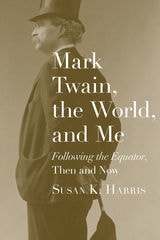
Mark Twain, the World, and Me
"Following the Equator," Then and NowSusan K. Harris
University of Alabama Press, 2020
A scholar accompanies Twain on his journey around the world
In Mark Twain, the World, and Me: “Following the Equator,” Then and Now, Susan K. Harris follows Twain’s last lecture tour as he wound his way through the British Empire in 1895–1896. Deftly blending history, biography, literary criticism, reportage, and travel memoir, Harris gives readers a unique take on one of America’s most widely studied writers.
Structured as a series of interlocking essays written in the first person, this engaging volume draws on Twain’s insights into the histories and cultures of Australia, India, and South Africa and weaves them into timely reflections on the legacies of those countries today. Harris offers meditations on what Twain’s travels mean for her as a scholar, a white woman, a Jewish American, a wife, and a mother. By treating topics as varied as colonial rule, the clash between indigenous and settler communities, racial and sexual “inbetweenness,” and species decimation, Harris reveals how the world we know grew out of the colonial world Twain encountered. Her essays explore issues of identity that still trouble us today: respecting race and gender, preserving nature, honoring indigenous peoples, and respecting religious differences.
Martial
The World of the EpigramWilliam Fitzgerald
University of Chicago Press, 2007
In this age of the sound bite, what sort of author could be more relevant than a master of the epigram? Martial, the most influential epigrammatist of classical antiquity, was just such a virtuoso of the form, but despite his pertinence to today’s culture, his work has been largely neglected in contemporary scholarship. Arguing that Martial is a major author who deserves more sustained attention, William Fitzgerald provides an insightful tour of his works, shedding new and much-needed light on the Roman poet’s world—and how it might speak to our own.
Writing in the late first century CE—when the epigram was firmly embedded in the social life of the Roman elite—Martial published his poems in a series of books that were widely read and enjoyed. Exploring what it means to read such a collection of epigrams, Fitzgerald examines the paradoxical relationship between the self-enclosed epigram and the book of poems that is more than the sum of its parts. And he goes on to show how Martial, by imagining these books being displayed in shops and shipped across the empire to admiring readers, prophetically behaved like a modern author. Chock-full of epigrams itself—in both Latin and English versions—Fitzgerald’s study will delight classicists, literary scholars, and anyone who appreciates an ingenious witticism.

Mass Torts in a World of Settlement
Richard A. Nagareda
University of Chicago Press, 2007
The traditional definition of torts involves bizarre, idiosyncratic events where a single plaintiff with a physical impairment sues the specific defendant he believes to have wrongfully caused that malady. Yet public attention has focused increasingly on mass personal-injury lawsuits over asbestos, cigarettes, guns, the diet drug fen-phen, breast implants, and, most recently, Vioxx. Richard A. Nagareda’s Mass Torts in a World of Settlement is the first attempt to analyze the lawyer’s role in this world of high-stakes, multibillion-dollar litigation.
These mass settlements, Nagareda argues, have transformed the legal system so acutely that rival teams of lawyers operate as sophisticated governing powers rather than litigators. His controversial solution is the replacement of the existing tort system with a private administrative framework to address both current and future claims. This book is a must-read for concerned citizens, policymakers, lawyers, investors, and executives grappling with the changing face of mass torts.
Mass–Elite Representation Gap in Old and New Democracies
Critical Junctures and Elite AgencyEdited by Jaemin Shim
University of Michigan Press, 2024
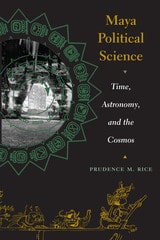
Maya Political Science
Time, Astronomy, and the CosmosBy Prudence M. Rice
University of Texas Press, 2004
How did the ancient Maya rule their world? Despite more than a century of archaeological investigation and glyphic decipherment, the nature of Maya political organization and political geography has remained an open question. Many debates have raged over models of centralization versus decentralization, superordinate and subordinate status—with far-flung analogies to emerging states in Europe, Asia, and Africa. But Prudence Rice asserts that neither the model of two giant "superpowers" nor that which postulates scores of small, weakly independent polities fits the accumulating body of material and cultural evidence.
In this groundbreaking book, Rice builds a new model of Classic lowland Maya (AD 179-948) political organization and political geography. Using the method of direct historical analogy, she integrates ethnohistoric and ethnographic knowledge of the Colonial-period and modern Maya with archaeological, epigraphic, and iconographic data from the ancient Maya. On this basis of cultural continuity, she constructs a convincing case that the fundamental ordering principles of Classic Maya geopolitical organization were the calendar (specifically a 256-year cycle of time known as the may) and the concept of quadripartition, or the division of the cosmos into four cardinal directions. Rice also examines this new model of geopolitical organization in the Preclassic and Postclassic periods and demonstrates that it offers fresh insights into the nature of rulership, ballgame ritual, and warfare among the Classic lowland Maya.
Measuring Cuban Economic Performance
By Jorge F. Pérez-López
University of Texas Press, 1987
Analysts attempting to assess economic growth in revolutionary Cuba are faced with two formidable obstacles: (1) official macroeconomic indicators published by the government are scarce and sometimes inconsistent because of frequent changes in the method of calculation; and (2) these indicators are not compatible with those produced by market economies because of differences in national income concepts. Because of these obstacles, it is difficult to analyze the performance of Cuba’s economy over time and to compare its economic performance directly with that of other nations.
Using a variant of the method developed by Abram Bergson to estimate the growth rates of the Soviet Union and subsequently applied to centrally planned economies in Eastern Europe, Jorge Perez-López has estimated the growth rate of the Cuban economy in real terms for the 1965–1982 period. His estimated indexes suggest that the Cuban economy expanded at a considerably slower pace than would be implied by official data.
By constructing yardsticks of economic performance for revolutionary Cuba that are compatible with those used by Western nations, Perez-López provides for the first time a basis for analyzing the real growth of the Cuban economy during the revolutionary period.
Measuring Time, Making History
Lynn Hunt
Central European University Press, 2008
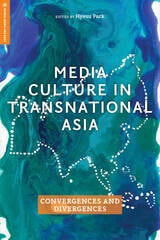
Media Culture in Transnational Asia
Convergences and DivergencesHyesu Park
Rutgers University Press, 2020
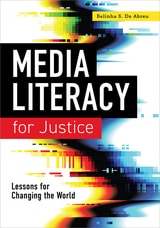
Media Literacy for Justice
Lessons for Changing the WorldBelinha S. De Abreu
American Library Association, 2022
Foreword by Yohuru Williams, Racial Justice Initiative, Dean of the College of Arts and Sciences. St. Thomas University, Minneapolis; Preface by Asha Rangappa, former FBI agent and Senior Lecturer, Yale University’s Jackson Institute for Global Affairs
Providing context, reflection points, and ready-to-use lesson plans, this powerful book illuminates the intersections of social justice and media literacy for educators, school and public librarians, teachers of history and civics, information literacy instructors, and community leaders.The corrosive effects of today’s relentless tide of media are pernicious. We are conditioned in many ways by our media environments to accept and not question, making it crucial that young people master the skills necessary to access, analyze, evaluate, and create media. De Abreu and her fellow contributors propose that a key solution to our society’s crisis of misinformation, misrepresentation, and misunderstanding lies in melding social justice aims with media literacy concepts and skills. Featuring reflective activities and lesson ideas that can be adapted for educational settings from higher education to the K-12 spectrum, community centers, and libraries, this resource
- spotlights the work of school library media specialists, classroom teachers, academic educators, and representatives of non-profits from around the world;
- presents ten chapters which explore such timely issues as how to deal with controversial topics in the classroom, the effects of misinformation/disinformation on civics in society, why the media underrepresents certain people in their programming, the digital divide and where libraries fit in, how injustice exacerbates public health issues, and global conceptions of social justice and media literacy examined through various world events; and
- provides information about additional resources like social action/advocacy organizations, classroom resources, and films that will assist readers as they reflect upon, teach, and discuss media literacy and social justice.
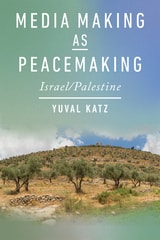
Media Making as Peacemaking
Israel/PalestineYuval Katz
Rutgers University Press, 2026
The horrific events of October 7 and the devastating war in Gaza have brought Israel/Palestine to the headlines once again. We have seen this all play out before: another ambitious peace plan, which secured a ceasefire, is imagined as the dawn of a new era of peace in the Middle East. But is it? Critiquing traditional state-centered approaches to peace, which usually highlight the work of diplomats and politicians, and which historically failed miserably in Israel/Palestine, Media Making as Peacemaking shifts our attention to the experiences of ordinary people. Investigating the idea of media encounters, this book shows how the collaboration of Palestinian and Jewish media practitioners and the popular texts they create together in television dramas, digital activism and mainstream journalism offer a new and exciting way to think about peace—a peace which does not maintain a repressive status quo, but seeks to deliver equality and justice to all people, Palestinians and Jews, living between the Jordan River and the Mediterranean Sea.
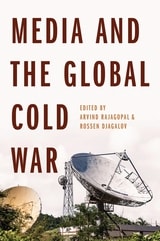
Media and the Global Cold War
Edited by Rossen Djagalov and Arvind Rajagopal
University of Illinois Press, 2027
Arvind Rajagopal and Rossen Djagalov present essays on the uses of Cold War media. Focusing on the Global South, the contributors illuminate how postcolonial nations and others defied superpower pressure to use media for nation-building and international cooperation. At the same time, communication infrastructures linked global regions in unequal ways that often reinforced the power of the United States. Throughout, the essays show how Cold War media practices like secrecy, propaganda, and cultural diplomacy cemented patterns that still influence global communication systems and international politics today.
Cutting-edge and timely, Media and the Global Cold War reveals the workings of media beyond the superpower rivalry.
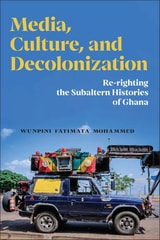
Media, Culture, and Decolonization
Re-righting the Subaltern Histories of GhanaWunpini Fatimata Mohammed
Rutgers University Press, 2026
Media, Culture, and Decolonization: Re-righting the Subaltern Histories of Ghana invites us to look at media and culture from a decolonial perspective. Through Dagbaŋ epistemologies and knowledge systems, this book examines media by highlighting how African languages, cultures, and traditions can shift how we think of knowledge. It is an offering to anyone curious about the relationship between culture, language, and media. By focusing on African language media in Ghana such as film, television, and radio, the book emphasizes the importance of espousing a decolonial politic and praxis in the process of co-creating knowledge with Indigenous communities. It connects the struggles of global majority countries and demonstrates the ways in which (neo)colonialism and imperialism impede the work toward liberatory futures. This book demonstrates the potential that African language media hold as tools of cultural and epistemological decolonization.
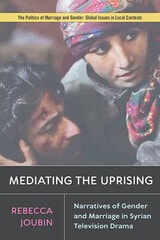
Mediating the Uprising
Narratives of Gender and Marriage in Syrian Television DramaRebecca Joubin
Rutgers University Press, 2020
While for some screenwriters a return to pre-2011 life would be welcome after so much bloodshed, others advocated profound cultural and social transformation, instead. They employed marriage and gender metaphors in the stories they wrote to engage in political critique, even at the risk of creating marketing difficulties for the shows or they created escapist stories such as transnational adaptations and Old Damascus tales. Serving as heritage preservation, Mediating the Uprising underscores that television drama creators in Syria have many ways of engaging in protest, with gender and marriage at the heart of the polemic.
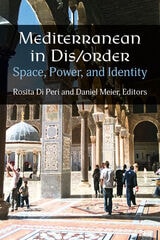
Mediterranean in Dis/order
Space, Power, and IdentityRosita Di Peri and Daniel Meier, Editors
University of Michigan Press, 2023
Mediterranean in Dis/order reveals the connection between space and politics by examining the role that space has played in insurgencies, conflicts, uprisings, and mobilities in the Mediterranean region. With this approach, the authors are able to challenge well-established beliefs about the power structure of the state across different disciplines (including political science, history, sociology, geography, and anthropology), and its impact on the conception, production, and imagination of space in the broader Mediterranean. Further, they contribute to particular areas of studies, such as migration, political Islam, mobilization, and transition to democracy, among others. The book, infusing critical theory, unveils original and revelatory case studies in Tunisia, Libya, Lebanon, Turkey, Syria, Morocco, and the EU Mediterranean policy, through a various set of actors and practices—from refugees and migrations policies, to Islamist or students’ movements, architectural sites, or movies. This multidisciplinary perspective on space and power provides a valuable resource for practitioners interested in how space, context, and time interact to produce institutions, political subjectivities, and asymmetries of power, particularly since the turning point of the Arab uprisings. The book also helps readers understand the conditions under which the uprisings develop, giving a clearer picture about various national, regional, and international dynamics.
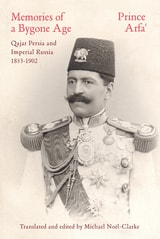
Memories of a Bygone Age
Qajar Persia and Imperial Russia 1853-1902Prince Arfa
Gingko, 2016
Prince Arfa writes with arresting wit about the deadly intrigues of the Qajar court. Lamentingly, but resolutely, he chronicles the decline of Iran from a once great empire to an almost bankrupt, lawless state, in which social unrest is channelled and exploited by the clergy. He describes the complex interactions between Iran and Europe, including an account of Naser-od-Din Shah’s profligate visits to Britain and France; the splendor and eccentricities of the doomed Tsar Nicholas II’s court; the Tsar’s omen-laden coronation; and his own favor with the Tsarina, who would grant him concessions on matters of vital importance to his country. The result is a memoir of extraordinary political intrigue.
Memory Activism
Reimagining the Past for the Future in Israel-PalestineYifat Gutman
Vanderbilt University Press, 2017
Set in Israel in the first decade of the twenty-first century and based on long-term fieldwork, this rich ethnographic study offers an innovative analysis of the Israeli-Palestinian conflict. It explores practices of "memory activism" by three groups of Jewish-Israeli and Arab-Palestinian citizens--Zochrot, Autobiography of a City, and Baladna--showing how they appropriated the global model of truth and reconciliation while utilizing local cultural practices such as tours and testimonies.
These activist efforts gave visibility to a silenced Palestinian history in order to come to terms with the conflict's origins and envision a new resolution for the future. This unique focus on memory as a weapon of the weak reveals a surprising shift in awareness of Palestinian suffering among the Jewish majority of Israeli society in a decade of escalating violence and polarization--albeit not without a backlash.
Contested memories saturate this society. The 1948 war is remembered as both Independence Day by Israelis and al-Nakba ("the catastrophe") by Palestinians. The walking tour and survivor testimonies originally deployed by the state for national Zionist education that marginalized Palestinian citizens are now being appropriated by activists for tours of pre-state Palestinian villages and testimonies by refugees.
Memory and the Impact of Political Transformation in Public Space
Daniel J. Walkowitz and Lisa Maya Knauer, eds.
Duke University Press, 2004
This collection expands the scope of what is considered public history by pointing to silences and absences that are as telling as museums and memorials. Contributors remind us that for every monument that is erected, others—including one celebrating Sri Lanka’s independence and another honoring the Unknown Russian Soldier of World War II—remain on the drawing board. While some sites seem woefully underserved by a lack of public memorials—as do post–Pinochet Chile and post–civil war El Salvador—others run the risk of diluting meaning through overexposure, as may be happening with Israel’s Masada. Essayists examine public history as it is conveyed not only in marble and stone but also through cityscapes and performances such as popular songs and parades.
Contributors
James Carter
John Czaplicka
Kanishka Goonewardena
Lisa Maya Knauer
Anna Krylova
Teresa Meade
Bill Nasson
Mary Nolan
Cynthia Paces
Andrew Ross
Daniel Seltz
T. M. Scruggs
Irina Carlota Silber
Daniel J. Walkowitz
Yael Zerubavel
Men at the Center
Redemptive Governance under Louis IXWilliam Chester Jordan
Central European University Press, 2012
Taking Professor Natalie Zemon Davis’ fascinating biographical studies of three Women on the Margins in the seventeenth century as an inspiration, the author of this book offers three portraits of men who were at the very center of governance in thirteenth-century France, men who strove in the shadow of King Louis IX (Saint Louis) to impose a redemptive regime on the realm. Professor Jordan treats them as individuals, but in a sense they are also types: Robert of Sorbon, a churchman; Etienne Boileau, a bourgeois; and Simon de Nesle, an aristocrat. Robert was the founder of the Sorbonne; Boileau was the prévôt or royal administrator of Paris; and Simon was twice co-regent of the kingdom. Thinking about them and their relations with Louis IX opens up a new and altogether sobering vista for exploring the nature of the king’s rule and the impact of his rule on his subjects.
Metaculture
How Culture Moves through the WorldGreg Urban
University of Minnesota Press, 2001
It is one thing to comprehend how culture makes its way through the world in those cases where something old is reproduced in the same physical shape-where, for example, a song is sung or a story retold. It is another thing altogether, as Greg Urban demonstrates, to think about cultural motion when something new is created-a new song or a new story. And this, the creating of new culture, is the overarching value of the contemporary world, as well as the guiding principle of the capitalist entrepreneur.
From the Declaration of Independence to the movie Babe, from the Amazon River to the film studio, from microscopic studies of the words making up myths and books to the large-scale forces of conquest, conversion, and globalization that drive history, Urban follows the clues to a startling revelation: "metaculture" makes the modern, entrepreneurial form of culture possible. In Urban’s work we see how metaculture, in its relationship to newness, explains the peculiar shape of modern society and its institutions, from the prevalence of taste and choice to the processes of the public sphere, to the centrality of persuasion and hegemony within the nation.
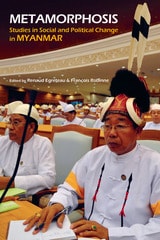
Metamorphosis
Studies in Social and Political Change in MyanmarEdited by Renaud Egreteau and François Robinne
National University of Singapore Press, 2015
But underlying recent political transitions are other wrenching social changes and shocks, a set of transformations less clearly mapped out. Relations between ethnic and religious groups, in the context of Burma’s political model of a state composed of ethnic groups, are a particularly important “unsolved equation”.
The editors use the notion of metamorphosis to look at Myanmar today and tomorrow—a term that accommodates linear change, stubborn persistence and the possibility of dramatic transformation. Divided into four sections, on politics, identity and ethnic relations, social change in fields like education and medicine, and the evolutions of religious institutions, the volume takes a broad view, combining an anthropological approach with views from political scientists and historians. This volume is an essential guide to the political and social challenges ahead for Myanmar.
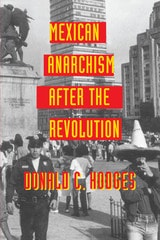
Mexican Anarchism after the Revolution
By Donald C. Hodges
University of Texas Press, 1995
Formal anarchist organizations disappeared in Mexico after the 1910 Revolution, but anarchist principles survive in the popular resistance movements against the post-revolutionary governments. In this book, Donald Hodges offers the first comprehensive treatment of the intellectual foundations, history, politics, and strategy of Mexican anarchism since the Revolution.
Hodges interviewed leading Mexican anarchists, including Mónico Rodríguez Gómez, and gained access to documents of numerous guerrilla organizations, such as the previously missing "Plan de Cerro Prieto." Using both original and published sources, he shows how the political heirs of Ricardo Flores Magón, Mexico's foremost anarchist, agitated for workers' self-management and agrarian reform under the cover of the Mexican Communist party, how they played an important role in the student rebellion, and how, in the face of a labor movement that has come under government control, anarchism is currently experiencing a rebirth under another name.
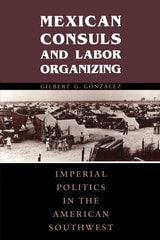
Mexican Consuls and Labor Organizing
Imperial Politics in the American SouthwestBy Gilbert G. González
University of Texas Press, 1999
Chicano history, from the early decades of the twentieth century up to the present, cannot be explained without reference to the determined interventions of the Mexican government, asserts Gilbert G. González. In this pathfinding study, he offers convincing evidence that Mexico aimed at nothing less than developing a loyal and politically dependent emigrant community among Mexican Americans, which would serve and replicate Mexico's political and economic subordination to the United States.
González centers his study around four major agricultural workers' strikes in Depression-era California. Drawing on a wide variety of sources, he documents how Mexican consuls worked with U.S. growers to break the strikes, undermining militants within union ranks and, in one case, successfully setting up a grower-approved union. Moreover, González demonstrates that the Mexican government's intervention in the Chicano community did not end after the New Deal; rather, it continued as the Bracero Program of the 1940s and 1950s, as a patron of Chicano civil rights causes in the 1960s and 1970s, and as a prominent voice in the debates over NAFTA in the late 1980s and early 1990s.
Mexican Political Biographies, 1884–1934
By Roderic Ai Camp
University of Texas Press, 1991
Here is an authoritative reference work that makes biographies of prominent Mexican national politicians from the period 1884–1934 available in English. Like the author's biographical directory for the years 1935–2009, it draws on many years of research in Mexico and the United States and seeks not only to provide accurate biographical information about each entry but also, where possible and appropriate, to connect these politicians to more recent leadership generations. Thus, Mexican Political Biographies, 1884-1934 not only is a useful historical source but also provides additional information on the family backgrounds of many contemporary figures.
The work includes those figures who have held specific posts at the national level or who have served as state governors. Each biographical entry contains the following information: date of birth, birthplace, education, elective political office, political party positions, appointive governmental posts at all levels, group activities, nongovernmental positions and professions, relatives, mentors and important friends, military experience, unusual career activities, and published biographical sources.
Another unique feature of the directory is appendixes with complete lists of the names and dates of cabinet members, supreme court justices, senators, deputies, selected ambassadors, and party leaders.
Mexican Political Biographies, 1935-2009
Fourth EditionBy Roderic Ai Camp
University of Texas Press, 2011
This fourth edition of Roderic Camp's highly respected Mexican Political Biographies is an updated comprehensive biographical directory of leading state and national politicians in Mexico, covering the years 1935–2009. The original edition, published in 1976, was the first and only comprehensive biographical work on contemporary political figures in any language and served as the prototype for the Mexican government's brief foray into its own official biographical directory. The Mexican Supreme Court has cited every biography of justices in the third edition as the basis of its biographies in the late 1980s.
With updates of the existing biographies and appendices, plus almost 1,000 additional biographies, this fourth edition now features close to 3,000 entries and serves as a unique resource list of the chronological occupants of all leading national political posts. The need for such information has become even more pronounced since Mexico's political transformation from a semi-authoritarian to a democratic model.
This latest edition allows readers access to information about Mexican politicians into the new century, and like its earlier versions, will be a valuable tool for government officials, journalists, historians, social scientists, the business community, and students.
Finally, it includes a detailed bibliographic essay that identifies and explains the significance of biographical sources and has been enhanced by numerous up-to-date Internet sources. An added convenience is an accompanying CD that allows readers to search the biographies and appendices, enhancing the longevity, usefulness, and uniqueness of this edition.
Mexico's Recent Economic Growth
The Mexican ViewTranslated by Marjory Urquidi; Essays by Enrique Pérez López and others, introduction by Tom E. Davis
University of Texas Press, 1967
The Mexican economy underwent a process of growth and transformation in the twentieth century, which was confirmed by the indexes and figures that economists use to chart the rate of growth, even allowing for possible inaccuracies in these figures.
This volume of six essays makes readily available to English-speaking readers a selection of significant contributions by outstanding Mexican economists dealing with the mid-twentieth-century growth of the Mexican economy.
Enrique Pérez López provides an overview of the development of the gross national product in the economy and the structural changes that were imperative if basic social goals were to be implemented and the optimal adjustments to changing world conditions effected. Ernesto Fernández Hurtado discusses the process of accommodation and cooperation between the public and the private sectors that has contributed significantly to economic growth, stressing particularly the role of agriculture. Mario Ramón Beteta describes central bank policy and the functioning of the Central Bank, showing how control over credit and the banking system assures stability and accelerating growth through its credit rationing.
Alfredo Navarrete R. traces the sources of domestic savings that have provided 90 percent of the capital employed in the economy since the Revolution, and Ifigenia M. de Navarrete demonstrates that rapid economic growth has not resulted in a more equitable distribution of income. Victor Urquidi stresses the balanced growth, achieved by allocating public capital formation to basic infrastructure, that has helped develop agriculture as well as industry, and indicates the nature of the structural change that must occur if the economy is to expand rapidly.
In his introduction Tom E. Davis compares growth in Mexico with developments during the same period in Chile and Argentina.
The country reached its midcentury standard of living after fifty years of drastic social and political changes under a constitution that altered the system and the concept of private property and the role of the state. These new concepts brought about changes in the structure of production and social relationships, together with a rise to new cultural, technical, and moral levels. These changes, in turn, placed Mexico in a new position with new problems. A question that must be answered is whether the economic goals of the future require a reappraisal of social relationships and of the ways of administering and utilizing the country’s resources and potential productivity.
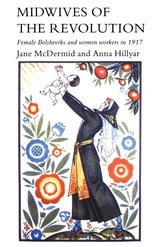
Midwives of the Revolution
Female Bolsheviks and Women Workers in 1917Jane McDermid
Ohio University Press, 1999
The Bolshevik seizure of power in 1917 and the ensuing communist regime have often been portrayed as a man’s revolution, with women as bystanders or even victims. Midwives of the Revolution examines the powerful contribution made by women to the overthrow of tsarism in 1917 and their importance in the formative years of communism in Russia.
Focusing on the masses as well as the high-ranking intelligentsia, Midwives of the Revolution is the first sustained analysis of female involvement in the revolutionary era of Russian history. The authors investigate the role of Bolshevik women and the various forms their participation took. Drawing on the experiences of representative individuals, the authors discuss the important relationship between Bolshevik women and the workers in the turbulent months of 1917.
The authors demonstrate that women were an integral part of the revolutionary process and challenge assumptions that they served merely to ignite an essentially masculine revolt. By placing women center stage, without exaggerating their roles, this study enriches our understanding of a momentous event in twentieth-century history.
Migrants for Export
How the Philippine State Brokers Labor to the WorldRobyn Magalit Rodriguez
University of Minnesota Press, 2010

Migration
Changing the WorldGuy Arnold
Pluto Press, 2011
Constant migration is a worldwide phenomenon that creates sharp divisions between those who accept the need for migrants and welcome the contributions they make and those who oppose them on xenophobic grounds. Guy Arnold provides a comprehensive survey of the consequences of migration.
Arnold studies both the massive internal migrations in China and India that drive economic development and the influx of cheap labour into the advanced economies of the USA and EU. He shows that migrants are essential to advanced countries, filling skills gaps and bolstering ageing and static populations. He argues that the constant flow of people in all directions should be welcomed as a positive assault upon outdated, narrow nationalism.
Packed with statistics that support the argument that migration is a force for positive change, Arnold's analysis will be an excellent resource for journalists, policy makers and students of sociology, human geography and anthropology.