Results by title
1993 books match the query 'Latin America' and 137 start with m
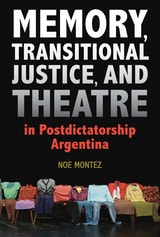
Memory, Transitional Justice, and Theatre in Postdictatorship Argentina
Noe Montez
Southern Illinois University Press, 2018
Montez explores how the sociohistorical phenomenon of the Teatroxlaidentidad—an annual showcase staged with the support of Argentina’s Grandmothers of the Plaza de Mayo—acted as a vehicle for drawing attention to the hundreds of children kidnapped from their families during the dictatorship and looks at why the memory narratives regarding the Malvinas Islands (also known as the Falklands) range from ideological appropriations of the islands, to absurdist commentaries about the failed war that signaled the dictatorship’s end, to the islands’ heavily contested status today.
Memory, Transitional Justice, and Theatre in Postdictatorship Argentina explores the vibrant role of theatrical engagement in postdictatorship Argentina, analyzes plays by artists long neglected in English-language articles and books, and explores the practicalities of staging performances in Latin America.
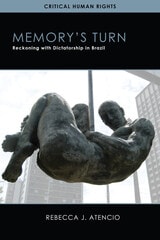
Memory’s Turn
Reckoning with Dictatorship in BrazilRebecca J. Atencio
University of Wisconsin Press, 2014
In clear and engaging prose, Rebecca J. Atencio tells the story of the slow turn to memory in Brazil, a turn that has taken place in both politics and in cultural production. She shows how testimonial literature, telenovelas, literary novels, theatrical plays, and memorials have interacted with policies adopted by the Brazilian state, often in unexpected ways. Under the right circumstances, official and cultural forms of reckoning combine in Brazil to produce what Atencio calls cycles of cultural memory. Novel meanings of the past are forged, and new cultural works are inspired, thus creating the possibility for further turns in the cycle.
The first book to analyze Brazil’s reckoning with dictatorship through both institutional and cultural means, Memory’s Turn is a rich, informative exploration of the interplay between these different modes of memory reconstruction.
Winner, Alfred B. Thomas Award, Southeastern Council of Latin American Studies
Honorable Mention, Roberto Reis Book Prize, Brazilian Studies Association
Men in a Developing Society
Geographic and Social Mobility in Monterrey, MexicoBy Jorge Balán, Harley L. Browning, and Elizabeth Jelin
University of Texas Press, 1973
The central objective of Men in a Developing Society is to show, as concretely as possible, how men experience a period of rapid economic development, particularly in the areas of migration, occupational mobility, and status attainment. It is based mainly on a sample of 1,640 men in Monterrey, Mexico, a large and rapidly growing manufacturing metropolis in northern Mexico with much in-migration, and a sample of 380 men in Cedral, San Luis Potosí, a small, economically depressed community with high rates of out-migration, much of it to Monterrey.
The study of men in Monterrey is perhaps the most thorough one yet conducted of geographic and social mobility in a Latin American city. In part, this was possible because of the innovation of collecting complete life histories that record what each man was doing for any given year in the lay areas of residence, education, family formation, and work. These data permit the effective use of the concepts of life cycle and cohort analysis in the interpretation of the men's geographic and occupational mobility.
The experience of the Monterrey men in adapting to the varied changes required by their mobility was not found to be as difficult as is often indicated in the social science literature on the consequences of economic development. In part this may be because Monterrey, in comparison with most other Latin American cities, has been unusually successful in its economic growth. The impact of migration also was lessened because most of the men had visited the city prior to moving there and many had friends or relatives in the city.
The age of the migrants upon arrival in Monterrey made a significant difference in subsequent occupational mobility; those of nonfarm background who arrived before age 25 fared better than natives of the city. Although it appears that status inheritance in Monterrey is somewhat higher than in industrialized countries, a considerable proportion of men do move up the occupational ladder. And perhaps as important, the Monterrey men, whether or not they themselves are moving up, perceive the society as an open one.
The very success of Monterrey's development created conditions that would bring about changes in the educational, economic, and cultural expectations of its inhabitants. Thus, paradoxically, the general satisfaction and the lack of group and class conflict in Monterrey over the previous decades may well have given rise to future dissatisfaction and conflict.
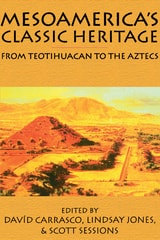
Mesoamerica's Classic Heritage
From Teotihuacan to the AztecsDavíd Carrasco
University Press of Colorado, 2000
The contributors to Mesoamerica's Classic Heritage offer a wide range of individual interpretations, but they agree that Teotihuacan, more than any other pre-Hispanic center, was a paradigmatic source that formed the art and architecture, cosmology and ritual life, and conceptions of urbanism and political authority for significant parts of the Mesoamerican world. This great city achieved the prestige of being the site of the creation of the cosmos and of effective social and political space in Mesoamerica through its capacity to symbolize, perform, and export its imperial authority. These essays reveal the different ways in which Teotihuacan's classic heritage both fed and fed on the dynamic interactivity of the entire area. Whether or not a paradigm shift in Mesoamerican studies is taking place, certainly a new contextual understanding of Teotihuacan and the diversities and unities of Mesoamerica is emerging in these pages.
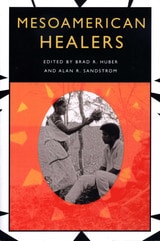
Mesoamerican Healers
Edited by Brad R. Huber and Alan R. Sandstrom
University of Texas Press, 2001
Healing practices in Mesoamerica span a wide range, from traditional folk medicine with roots reaching back into the prehispanic era to westernized biomedicine. These sometimes cooperating, sometimes competing practices have attracted attention from researchers and the public alike, as interest in alternative medicine and holistic healing continues to grow.
Responding to this interest, the essays in this book offer a comprehensive, state-of-the-art survey of Mesoamerican healers and medical practices in Mexico and Guatemala. The first two essays describe the work of prehispanic and colonial healers and show how their roles changed over time. The remaining essays look at contemporary healers, including bonesetters, curers, midwives, nurses, physicians, social workers, and spiritualists. Using a variety of theoretical approaches, the authors examine such topics as the intersection of gender and curing, the recruitment of healers and their training, healers' compensation and workload, types of illnesses treated and recommended treatments, conceptual models used in diagnosis and treatment, and the relationships among healers and between indigenous healers and medical and political authorities.
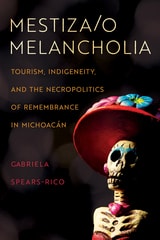
Mestiza/o Melancholia
Tourism, Indigeneity, and the Necropolitics of Remembrance in MichoacánGabriela Spears-Rico
University of Arizona Press, 2027
Through the concept of mestiza/o melancholia, scholar Gabriela Spears-Rico offers a new way to think about the relationship between mestizaje and indigeneity in Mexico. For Spears-Rico, the concept is a longing for the lost part of one’s identity, manifested in touristic visits and material appropriations of folklorized indigeneity, yet unconcerned with political reparations for Indigenous people.
Relying on a rich ethnography in mestiza/o and P’urhépecha pueblos in Michoacán, the book examines mestiza/o mourning and melancholia as it appears in Day of the Dead tourism and in Virgin of Guadalupe worship among Mexican mestizos. This book centers Indigenous resistance, articulating a P’urhépecha critique of regional necropolitics and obstinate appropriations, arguing for the need to decolonize mestizaje. A deep conversation with P’urhépecha dissent, this book elevates the need for solidarity with current Indigenous movements in a region fraught by extractive settler colonialism.
Mestiza/o Melancholia challenges readers to rethink identity, tourism, and belonging in Mexico.
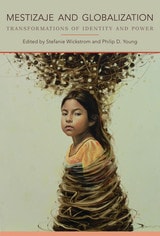
Mestizaje and Globalization
Transformations of Identity and PowerEdited by Stefanie Wickstrom and Philip D. Young
University of Arizona Press, 2014
Mestizaje and Globalization presents perspectives on the underlying transformation of identity and power associated with the term during times of great change in the Americas. The volume offers a comprehensive and empirically diverse collection of insights concerning mestizaje’s complex relationship with indigeneity, the politics of ethnic identity, transnational social movements, the aesthetic of cultural production, development policies, and capitalist globalization, with particular attention to cases in Latin America and the United States.
Beyond the narrow and often inadequate meaning of mestizaje as biological and racial mixing, the concept deserves an innovative theoretical consideration due to its multidimensional, multifaceted character and its resilience as an ideological construct. The contributors argue that historical analyses of mestizaje do not sufficiently understand contemporary ways that racism, ethnic discrimination, and social injustice intermingle with current discourse and practice of cultural recognition and multiculturalism in the Americas.
Mestizaje and Globalization contributes to an emerging multidisciplinary effort to explore how identities are imposed, negotiated, and reconstructed. The chapter authors clearly set forth the issues and obstacles that indigenous peoples and subjugated minorities face, as well as the strategies they have employed to gain empowerment in the face of globalization.
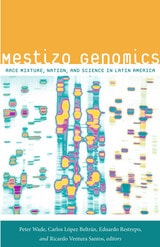
Mestizo Genomics
Race Mixture, Nation, and Science in Latin AmericaPeter Wade, Carlos López Beltrán, Eduardo Restrepo and Ricardo Ventura Santos, eds.
Duke University Press, 2014
Drawing on ethnographic research in Brazil, Colombia, and Mexico, the contributors to Mestizo Genomics explore how the concepts of race, ethnicity, nation, and gender enter into and are affected by genomic research. In Latin America, national identities are often based on ideas about mestizaje (race mixture), rather than racial division. Since mestizaje is said to involve relations between European men and indigenous or African women, gender is a key factor in Latin American genomics and in the analyses in this book. Also important are links between contemporary genomics and recent moves toward official multiculturalism in Brazil, Colombia, and Mexico. One of the first studies of its kind, Mestizo Genomics sheds new light on the interrelations between "race," identity, and genomics in Latin America.
Contributors. Adriana Díaz del Castillo H., Roosbelinda Cárdenas, Vivette García Deister, Verlan Valle Gaspar Neto, Michael Kent, Carlos López Beltrán, María Fernanda Olarte Sierra, Eduardo Restrepo, Mariana Rios Sandoval, Ernesto Schwartz-Marín, Ricardo Ventura Santos, Peter Wade
Mestizo Modernism
Race, Nation, and Identity in Latin American Culture, 1900-1940Hedrick, Tace
Rutgers University Press, 2003
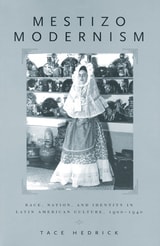
We use the term “modernism” almost exclusively to characterize the work of European and American writers and artists who struggled to portray a new kind of fractured urban life typified by mechanization and speed. Between the 1880s and 1930s, Latin American artists were similarly engaged--but with a difference. While other modernists drew from “primitive” cultures for an alternative sense of creativity, Latin American modernists were taking a cue from local sources, primarily indigenous and black populations in their own countries. Although these artists remained outsiders to modernism elsewhere as a result of their race, nation, and identity, their racial heritage served as a positive tool in negotiating their relationship to the dichotomy between tradition and modernity.
In Mestizo Modernism Tace Hedrick focuses on four key artists who represent Latin American modernism—Peruvian poet Cesar Vallejo, Chilean poet Gabriela Mistral, Mexican muralist Diego Rivera, and Mexican artist Frida Kahlo. Hedrick interrogates what being “modern” and “American” meant for them and illuminates the cultural contexts within which they worked, as well as the formal methods they shared, including the connection they drew between ancient cultures and modern technologies. In so doing, she defines “modernism” more as a time frame at the turn of the twentieth century, marked broadly across the arts and national boundaries, than as a strict aesthetic or formal category. In fact, this look at Latin American artists will force the reconceptualization of what modernism has meant in academic study and what it might mean for future research.
Mestizo Nations
Culture, Race, and Conformity in Latin American LiteratureJuan E. De Castro
University of Arizona Press, 2002
Through them, he delineates some of the ambiguities and contradictions that have beset this discourse. Among texts considered are the Indianist novel Iracema by the nineteenth-century Brazilian author José de Alencar; the Tradiciones peruanas, Peruvian Ricardo Palma's fictionalizations of national difference; and historical and sociological essays by the Peruvian Marxist José Carlos Mariátegui and the Brazilian intellectual Gilberto Freyre. And because questions raised by this discourse are equally relevant to postmodern concerns with national and transnational heterogeneity, De Castro also analyzes such recent examples as the Cuban dance band Los Van Van's use of Afrocentric lyrics; Richard Rodriguez's interpretations of North American reality; and points of contact and divergence between José María Arguedas's novel The Fox from Up Above and the Fox from Down Below and writings of Gloria Anzaldúa and Julia Kristeva.
By updating the concept of mestizaje as a critical tool for analyzing literary text and cultural trends—incorporating not only race, culture, and nationality but also gender, language, and politics—De Castro shows the implications of this Latin American discursive tradition for current critical debates in cultural and area studies. Mestizo Nations contains important insights for all Latin Americanists as a tool for understanding racial relations and cultural hybridization, creating not only an important commentary on Latin America but also a critique of American life in the age of multiculturalism.
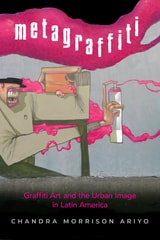
Metagraffiti
Graffiti Art and the Urban Image in Latin AmericaChandra Morrison Ariyo
Rutgers University Press, 2025
Mex-Ciné
Mexican Filmmaking, Production, and Consumption in the Twenty-first CenturyFrederick Luis Aldama
University of Michigan Press, 2013
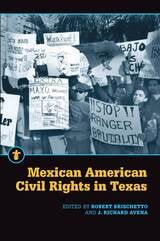
Mexican American Civil Rights in Texas
Robert Brischetto
Michigan State University Press, 2022
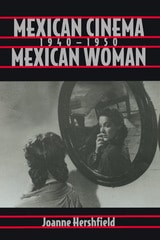
Mexican Cinema/Mexican Woman, 1940-1950
Joanne Hershfield
University of Arizona Press, 1996
Mexican Emigration to the United States, 1897–1931
Lawrence A. Cardoso
University of Arizona Press, 1980
During the same era, capitalist modernization in the United States was creating a strong demand for low-paid, unskilled labor, especially for agricultural and railroad work. Mexico's newly created class of migrant workers rushed across the border to fill this demand, setting in motion a social, economic, and political phenomenon that Lawrence Cardoso analyzed here in detail. What set this study apart, however, is the author's focus on the ' Human element," as revealed through the Mexican workers' hopes, fears, and reactions to events of their time.
Mexican Financial Development
By Dwight S. Brothers and Leopoldo Solís M.
University of Texas Press, 1966
The development of the Mexican financial system as it has related to the remarkable growth of the Mexican economy is examined in this book.
Believing that a better understanding of the past will permit a more nearly accurate appraisal of contemporary problems and facilitate the choice of intelligent policies in the future, the authors present a detailed chronicle and analysis of components of the Mexican financial system, with primary emphasis on the period from 1940 to the mid-1960s.
Separate chapters are devoted to the money and capital market, the formulation and execution of monetary and financial policies, and the nature of Mexican financial experience in both the public and private sectors of the economy. The authors offer a theoretical explanation of the record of Mexican experience, based upon their analysis of relationships between monetary policy, domestic stability, and external equilibrium, as well as upon their analysis of factors governing the growth of domestic indebtedness, the development of financial intermediation, and the operation of the loanable funds market. The final chapter of the book, a review of Mexican experience from 1960 to 1965, speculates with respect to the future course of Mexican financial development and offers specific proposal for future monetary and financial policies.
This record of Mexican financial development contains much that should be of interest to others engaged in related theoretical and empirical studies, including many lessons for those countries confronted with circumstances and problems not too unlike those encountered in Mexico.
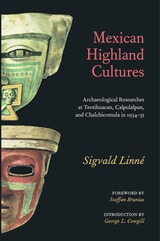
Mexican Highland Cultures
Archaeological Researches at Teotihuacan, Calpoulalpan and Chalchicomula in 1934-35Sigvald Linné
University of Alabama Press, 2003
Presents the broad picture and analysis of excavations at three cultural centers in central Mexico
This classic work published in 1942, ten years after archaeological excavations were begun in the Valley of Mexico by Linné's team, presents additional data that had not been fully detailed in the previously published Archaeological Researches at Teotihuacan. It provides comparative information on the high-status ruins situated on the fringes of the Valley of Mexico and excavation results from a compound within the city of Teotihuacan. This information is of critical use to archaeologists still excavating at Teotihuacan in projecting compound extent, types of artifacts expected to be discovered, and patterns of artifacts to be found in particular types of rooms. The characteristics of burials is also explored.
This book, along with its predecessor, is an important primary resource for Americanists. Staffan Brunius's foreword offers a broad background of Linné's life and work. The introduction by George Cowgill focuses more specifically on the conduct and impact of the archaeological exavations.
G. C. Vaillant has stated, "The greatest achievement of Dr. Linné from the viewpoint of the general student is the presentation of a technical field excavation in such terms that anyone can follow his text and see the relationship between the details of position of specimens and the larger problems of history and anthropology."
Sigvald Linné was Professor of Ethnography at the University of Stockholm and Director of the Swedish National Museum of Ethnography until 1969. He published several other books, including The Technique of South American Ceramics. Staffan Brunius
is Curator of the Americas at the National Museum of Ethnography in Stockholm. George L. Cowgill is Professor of Anthropology at Arizona State University and coeditor of The Collapse of Ancient States and Civilizations.
Additional reviews:
This book . . . makes Linne's work widely available again to those interested and may prompt a new generation of specialists to examine the original material either in Stockholm's National Museum of Ethnography, Mexico's Museo Nacional de Antropologia or the Teotihuacan site itself. Testament to the lasting value of Linne's work is given in a succinct and helpful new introduction by anthropologist George L. Cowgill. A more recent curator of the Americas at Stockholm's ethnographical museum, Steffan Brunius, also chips in with a brief contextualization of Linne's work against the background of the early Swedish-American tradition.—The Historian
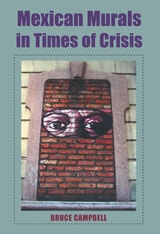
Mexican Murals in Times of Crisis
Bruce Campbell
University of Arizona Press, 2003
This book traces the ongoing critical contributions of mural arts to public life in Mexico to show how postrevolutionary murals have been overshadowed both by the Mexican School and by the exclusionary nature of official public arts. By documenting a range of mural practices—from fixed-site murals to mantas (banner murals) to graffiti—Bruce Campbell evaluates the ways in which the practical and aesthetic components of revolutionary Mexican muralism have been appropriated and redeployed within the context of Mexico's ongoing economic and political crisis. Four dozen photographs illustrate the text. Blending ethnography, political science, and sociology with art history, Campbell traces the emergence of modern Mexican mural art as a composite of aesthetic, discursive, and performative elements through which collective interests and identities are shaped.
He focuses on mural activists engaged combatively with the state—in barrios, unions, and street protests—to show that mural arts that are neither connected to the elite art world nor supported by the government have made significant contributions to Mexican culture. Campbell brings all previous studies of Mexican muralism up to date by revealing the wealth of art that has flourished in the shadows of official recognition. His work shows that interpretations by art historians preoccupied with contemporary high art have been incomplete—and that a rich mural tradition still survives, and thrives, in Mexico.
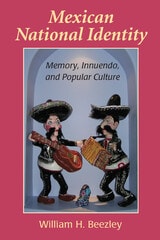
Mexican National Identity
Memory, Innuendo, and Popular CultureWilliam H. Beezley
University of Arizona Press, 2008
In the century that followed Mexico’s independence from Spain in 1821, Beezley maintains, sentiments of nationality were promulgated by people who were concerned not with the promotion of nationalism but with something far more immediate—the need to earn a living. These peddlers, vendors, actors, artisans, writers, publishers, and puppeteers sought widespread popular appeal so that they could earn money. According to Beezley, they constantly refined their performances, as well as the symbols and images they employed, in order to secure larger revenues.
Gradually they discovered the stories, acts, and products that attracted the largest numbers of paying customers. As Beezley convincingly asserts, out of “what sold to the masses” a collective national identity slowly emerged. Mexican National Identity makes an important contribution to the growing body of literature that explores the influences of popular culture on issues of national identity. By looking at identity as it was fashioned “in the streets,” it opens new avenues for exploring identity formation more generally, not just in Mexico and Latin American countries but in every nation.
Check out the New Books in History Interview with Bill Beezley!
Mexican Political Biographies, 1884–1934
By Roderic Ai Camp
University of Texas Press, 1991
Here is an authoritative reference work that makes biographies of prominent Mexican national politicians from the period 1884–1934 available in English. Like the author's biographical directory for the years 1935–2009, it draws on many years of research in Mexico and the United States and seeks not only to provide accurate biographical information about each entry but also, where possible and appropriate, to connect these politicians to more recent leadership generations. Thus, Mexican Political Biographies, 1884-1934 not only is a useful historical source but also provides additional information on the family backgrounds of many contemporary figures.
The work includes those figures who have held specific posts at the national level or who have served as state governors. Each biographical entry contains the following information: date of birth, birthplace, education, elective political office, political party positions, appointive governmental posts at all levels, group activities, nongovernmental positions and professions, relatives, mentors and important friends, military experience, unusual career activities, and published biographical sources.
Another unique feature of the directory is appendixes with complete lists of the names and dates of cabinet members, supreme court justices, senators, deputies, selected ambassadors, and party leaders.
Mexican Political Biographies, 1935-2009
Fourth EditionBy Roderic Ai Camp
University of Texas Press, 2011
This fourth edition of Roderic Camp's highly respected Mexican Political Biographies is an updated comprehensive biographical directory of leading state and national politicians in Mexico, covering the years 1935–2009. The original edition, published in 1976, was the first and only comprehensive biographical work on contemporary political figures in any language and served as the prototype for the Mexican government's brief foray into its own official biographical directory. The Mexican Supreme Court has cited every biography of justices in the third edition as the basis of its biographies in the late 1980s.
With updates of the existing biographies and appendices, plus almost 1,000 additional biographies, this fourth edition now features close to 3,000 entries and serves as a unique resource list of the chronological occupants of all leading national political posts. The need for such information has become even more pronounced since Mexico's political transformation from a semi-authoritarian to a democratic model.
This latest edition allows readers access to information about Mexican politicians into the new century, and like its earlier versions, will be a valuable tool for government officials, journalists, historians, social scientists, the business community, and students.
Finally, it includes a detailed bibliographic essay that identifies and explains the significance of biographical sources and has been enhanced by numerous up-to-date Internet sources. An added convenience is an accompanying CD that allows readers to search the biographies and appendices, enhancing the longevity, usefulness, and uniqueness of this edition.
Mexican Revolution
Genesis under MaderoBy Charles C. Cumberland
University of Texas Press, 1974
The Mexican Revolution is one of the most important and ambitious sociopolitical experiments in modem times. The Revolution developed in three distinct stages: the overthrow of the Díaz dictatorship, the subsequent era of bloodshed and devastation during which radical ideas were written into the constitution, and the much longer span during which the ideas have been put into practice.
The present volume covers the first stage of this development. Idealistic, patriotic hacendado Francisco I. Madero became the catalyst of the Revolution. All peaceful means having failed to secure democratic elections, Madero reluctantly undertook to mold the discontented factions into an effective force for insurrection. But victory brought disunity. Opposition to the Díaz regime, not a positive desire for reform, had held the revolutionaries together. Díaz deposed, Madero could not muster sufficient support to realize more than a fraction of his objectives, and he himself fell victim to counterrevolution.
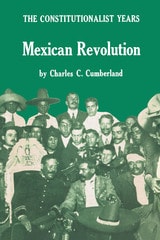
Mexican Revolution
The Constitutionalist YearsBy Charles C. Cumberland
University of Texas Press, 1972
The years 1913-1920 were the most critical years of the Mexican revolution. This study of the period, a sequel to Cumberland's Mexican Revolution: Genesis under Madero (University of Texas Press, 1952), traces Mexico's course through the anguish of civil war to the establishment of a tenuous new government, the codification of revolutionary aspirations in a remarkable constitution, and the emergence of an activist leadership determined to propel Mexico into the select company of developed nations.
The narrative begins with Huerta's overthrow of Madero in 1913 and the rise of Carranza's Constitutionalist counterchallenge. It concludes with a summary of Carranza's stormy term as constitutional president climaxed by his ouster and overthrow in a revolt spearheaded by Alvaro Obregón. Professor Cumberland has based his study on a wide range of Mexican and U.S. primary sources as well as pertinent secondary studies. He has utilized much new material and has brought to it a mature and sophisticated analysis; the result is a major contribution to the understanding of one of the twentieth century's most significant revolutionary movements.

Mexican Soundings
Essays in Honour of David A. BradingEdited by Susan Deans-Smith and Eric Van Young
University of London Press, 2007

Mexican Waves
Radio Broadcasting Along Mexico's Northern Border, 1930–1950Sonia Robles
University of Arizona Press, 2019
Historian Sonia Robles examines the transnational business practices of Mexican radio entrepreneurs between the Golden Age of radio and the early years of television history. Intersecting Mexican history and diaspora studies with communications studies, this book explains how Mexican radio entrepreneurs targeted the Mexican population in the United States decades before U.S. advertising agencies realized the value of the Spanish-language market.
Robles’s robust transnational research weaves together histories of technology, performance, entrepreneurship, and business into a single story. Examining the programming of northern Mexican commercial radio stations, the book shows how radio stations from Tijuana to Matamoros courted Spanish-language listeners in the U.S. Southwest and local Mexican audiences between 1930 and 1950. Robles deftly demonstrates Mexico’s role in creating the borderlands, adding texture and depth to the story.
Scholars and students of radio, Spanish-language media in the United States, communication studies, Mexican history, and border studies will see how Mexican radio shaped the region’s development and how transnational listening communities used broadcast media’s unique programming to carve out a place for themselves as consumers and citizens of Mexico and the United States.
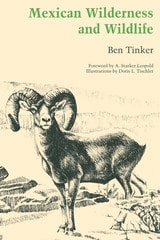
Mexican Wilderness and Wildlife
By Ben Tinker
University of Texas Press, 1978
From the mountainous area bordering Arizona and New Mexico, the western range of the Sierra Madres reaches south into Mexico to the state of Jalisco. The eastern range stretches from the Texas border down to Morelia and the Valley of Mexico. Ben Tinker spent years exploring this rugged wilderness and the vast deserts of Sonora and Baja California. Mexican Wilderness and Wildlife condenses a lifetime of outdoor lore and learning.
Tinker provides detailed life sketches of Mexico's Desert Bighorn Sheep, Pronghorn Antelope, Mule Deer, Whitetail Deer, Peccary, Grizzly and Black Bears, Wild Turkey, Jaguar, Mountain Lion, Timber Wolf, Coyote, and Bobcat. Each is illustrated by wildlife artist Doris Tischler, and Tinker describes their habitats, habits, reproduction, and peculiarities. Information is supplied on the physical measurements of several species of major wildlife. Tinker's observations are laced with anecdotes about his experiences in Mexico's remote backcountry—encounters with bandits, survival in the desert mountains, and the chance discovery of archaeological ruins.
The book describes the terrain and flora of the four life zones inhabited by major game and predatory animals. The section on desert water is a fascinating account of how animals thrive among cacti, thorn trees, and creosote bush remote from streams and waterholes. There is also a brief discussion of conservation efforts in Mexico, chapters on trout fishing in the Sierra Madre Occidental and Baja California, and a guide to big game habitats. This volume will be valuable to hunters, conservationists, naturalists, and others interested in the wilderness and wildlife of Mexico.
Ben Tinker collected much of the material for this book during the years he roamed northern Mexico as Federal Game Guardian. Though an American, Tinker had long been familiar with Mexican wildlife through his Sonoran ranching operation and was known for his interest in conservation when he was appointed by Alvaro Obregón in 1922.
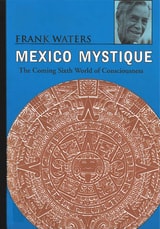
Mexico Mystique
The Coming Sixth World of ConsciousnessFrank Waters
Ohio University Press, 1989
In Mexico Mystique Frank Waters draws us deeply into the ancient but still-living myths of Mexico. To reveal their hidden meanings and their powerful symbolism, he brings to bear his gift for intuitive imagination as well as a broad knowledge of anthropology, Jungian psychology, astrology, and Eastern and esoteric religions. He offers a startling interpretation of the Mayan Great Cycle — our present Fifth World — whose beginning has been projected to 3113 B.C., and whose cataclysmic end has been predicted by 2011 A.D.
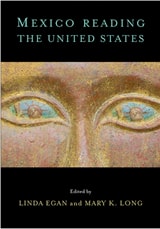
Mexico Reading the United States
Linda Egan
Vanderbilt University Press, 2009
In a time of ever-increasing migration of capital and human beings, this book turns on its head the usual perspective of U.S. economic and cultural dominance in order to deepen understanding of the bi-national relationship.
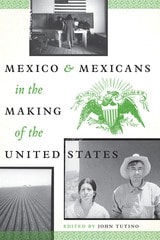
Mexico and Mexicans in the Making of the United States
Edited by John Tutino
University of Texas Press, 2012
Mexico and Mexicans have been involved in every aspect of making the United States from colonial times until the present. Yet our shared history is a largely untold story, eclipsed by headlines about illegal immigration and the drug war. Placing Mexicans and Mexico in the center of American history, this volume elucidates how economic, social, and cultural legacies grounded in colonial New Spain shaped both Mexico and the United States, as well as how Mexican Americans have constructively participated in North American ways of production, politics, social relations, and cultural understandings.
Combining historical, sociological, and cultural perspectives, the contributors to this volume explore the following topics: the Hispanic foundations of North American capitalism; indigenous peoples’ actions and adaptations to living between Mexico and the United States; U.S. literary constructions of a Mexican “other” during the U.S.-Mexican War and the Civil War; the Mexican cotton trade, which helped sustain the Confederacy during the Civil War; the transformation of the Arizona borderlands from a multiethnic Mexican frontier into an industrializing place of “whites” and “Mexicans”; the early-twentieth-century roles of indigenous Mexicans in organizing to demand rights for all workers; the rise of Mexican Americans to claim middle-class lives during and after World War II; and the persistence of a Mexican tradition of racial/ethnic mixing—mestizaje—as an alternative to the racial polarities so long at the center of American life.
Mexico and the Spanish Cortes, 1810–1822
Eight EssaysEdited by Nettie Lee Benson
University of Texas Press, 1966
Few developments in the history of the Spanish colonial system in Mexico have been more carelessly treated or more often misinterpreted than the attempt to establish constitutional government in New Spain under the Spanish monarchy during the 1809–1814 and 1820–1822 periods. Yet the broad outlines of the Mexican constitutional system were laid then, largely through the insistent efforts of the Mexican deputies to the Cortes, the Spanish legislative body. Some of the delegates also grasped this opportunity to inform their countrymen and train them in the effectiveness of parliamentary debate and resolution as a more intelligent road to democratic and representative government.
The 70 Mexican deputies (of the 160 elected) who actively participated in the sessions of the Cortes either helped draw up the Constitution of 1812, which initiated provisions for many needed reforms relating to military, religious, economic, educational, judicial, and governmental affairs in Mexico, or contributed to the enabling acts consequent to these provisions. The prime reason for calling the Cortes, however, and especially for inviting the participation of the Mexicans, was to attempt to maintain New Spain’s loyalty to the mother country, an unrealized objective in the long run, although much constructive discussion of this goal was offered by the Mexican delegates.
These eight essays trace the establishment and implementation of the Mexican electoral system, both national and municipal, and of reforms in the economic, journalistic, religious, and military systems. They serve as an informative introduction to the revolutionary role the Cortes of Spain played in Mexican history and as a record of the contribution of Mexican delegates to the beginning of liberal reform in their country.
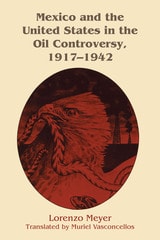
Mexico and the United States in the Oil Controversy, 1917–1942
By Lorenzo Meyer; translated by Muriel Vasconcellos
University of Texas Press, 1977
From reviews of the Spanish edition:
“Meyer’s perceptive commentary on Mexican power politics presents new insights into the petroleum lobbies in Mexico City and Washington. With unbiased empathy he shows the validity of Mexico’s complaints about foreigners’ deriving an overabundance of profit from a nonrenewable natural resource. He understands United States history and never abuses his license to criticize.” —Hispanic American Historical Review
“This useful addition to the literature on twentieth-century Mexican–United States diplomatic relations is a scholarly work, worthy of consideration by all students of the subject.”—American Historical Review
Mexico and the United States in the Oil Controversy, 1917–1942 explores the relationship between the United States and Mexico during the first half of the twentieth century, with special attention to the Mexican nationalization of the oil industry. Relying on Mexican archival material never before analyzed, the author presents a unique perspective on the period following the Mexican Revolution and Mexico’s efforts to diminish its economic dependency on the United States. This work not only describes the political and economic struggle between the Mexican government and the U.S. oil companies but also serves to illustrate in general the nature of dependency between Latin American countries and the United States. It will be of interest not only to Mexican specialists but also to diplomatic and economic historians.
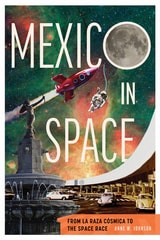
Mexico in Space
From la Raza Cósmica to the Space RaceAnne W. Johnson
University of Arizona Press, 2026
From Aztec sun stones to satellite launches, from muralist visions to dark sky parks, Mexico’s engagement with outer space is fundamental to its identity. Mexico in Space offers a groundbreaking look at how the country has navigated the tensions between technological dependence and sovereign dreams.
Anthropologist Anne W. Johnson reveals Mexico’s unique relationship with outer space, describing Indigenous knowledge, nationalist projects, artistic visions, and community practices. Through rich ethnographic detail and historical insight, Johnson challenges the notion that space is for everyone and shows whose voices truly shape the world’s cosmic futures. Johnson introduces us to satellite engineers, community astronomers, space generation youth, and artists imagining Mars, each crafting alternative cosmic futures.
As space exploration increasingly becomes the domain of billionaires and superpowers, this book offers a compelling counternarrative, demonstrating how Mexican cosmic engagements suggest more just, inclusive ways of inhabiting Earth and beyond and providing vital lessons for reimagining humanity’s place in the cosmos.
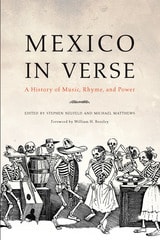
Mexico in Verse
A History of Music, Rhyme, and PowerEdited by Stephen Neufeld and Michael Matthews; Foreword by William H. Beezley
University of Arizona Press, 2015
Focusing on modern Mexico, from 1840 to the 1980s, this volume examines the cultural venues in which people articulated their understanding of the social, political, and economic change they witnessed taking place during times of tremendous upheaval, such as the Mexican-American War, the Porfiriato, and the Mexican Revolution. The words of diverse peoples—people of the street, of the field, of the cantinas—reveal the development of the modern nation. Neufeld and Matthews have chosen sources so far unexplored by Mexicanist scholars in order to investigate the ways that individuals interpreted—whether resisting or reinforcing—official narratives about formative historical moments.
The contributors offer new research that reveals how different social groups interpreted and understood the Mexican experience. The collected essays cover a wide range of topics: military life, railroad accidents, religious upheaval, children’s literature, alcohol consumption, and the 1985 earthquake. Each chapter provides a translated song or poem that encourages readers to participate in the interpretive practice of historical research and cultural scholarship. In this regard, Mexico in Verse serves both as a volume of collected essays and as a classroom-ready primary document reader.
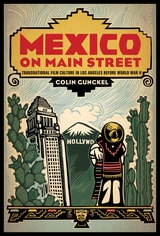
Mexico on Main Street
Transnational Film Culture in Los Angeles before World War IIGunckel, Colin
Rutgers University Press, 2015
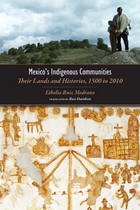
Mexico's Indigenous Communities
Their Lands and Histories, 1500-2010Ethelia Ruiz Medrano
University Press of Colorado, 2010
Ethelia Ruiz Medrano focuses on a series of individual cases, falling within successive historical epochs, that illustrate how the practice of drawing up and preserving historical documents-in particular, maps, oral accounts, and painted manuscripts-has been a determining factor in the history of Mexico's Indian communities for a variety of purposes, including the significant issue of land and its rightful ownership. Since the sixteenth century, numerous Indian pueblos have presented colonial and national courts with historical evidence that defends their landholdings.
Because of its sweeping scope, groundbreaking research, and the author's intimate knowledge of specific communities, Mexico's Indigenous Communities is a unique and exceptional contribution to Mexican history. It will appeal to students and specialists of history, indigenous studies, ethnohistory, and anthropology of Latin America and Mexico
Mexico's Merchant Elite, 1590-1660
Silver, State, and SocietyLouisa Schell Hoberman
Duke University Press, 1991
Through extensive archival research, Hoberman brings to light new data that illuminate the formation, behavior, and power of the merchant class in New Spain. She documents sources and uses of merchant wealth, tracing the relative importance of mining, agriculture, trade, and public office. By delving into biographical information on prominent families, Hoberman also reveals much about the longevity of the first generation’s social and economic achievements.
The author’s broad analysis situates her study in the overall environment in which the merchants thrived. Among the topics discussed are the mining and operation of the mint, Mexico’s political position vis-a-vis Spain, and the question of an economic depression in the seventeenth century.
Mexico's Middle Class in the Neoliberal Era
Dennis Gilbert
University of Arizona Press, 2007
Blending the personal narratives of middle-class Mexicans with analyses of national surveys of households and voters, Dennis Gilbert traces the development of the middle class since the 1940s. He describes how middle-class Mexicans were affected by the economic upheavals of the 1980s and 1990s and examines their shifting relations with the ruling Partido Revolucionario Institucional (PRI).
Long faithful to the PRI, the middle class gradually grew disenchanted. Gilbert examines middle-class reactions to the 1968 Tlatelolco massacre, the 1982 debt crisis, the government’s feeble response to the 1985 Mexico City earthquake, and its brazen manipulation of the vote count in the 1988 presidential election. Drawing on detailed interviews with Mexican families, he describes the effects of the 1994–95 peso crisis on middle-class households and their economic and political responses to it. His analysis of exit poll data from the 2000 elections shows that the lopsided middle-class vote in favor of opposition candidate Vicente Fox played a critical role in the election that drove the PRI from power after seven decades.
The book closes with an epilogue on the middle class and the July 2006 presidential elections.
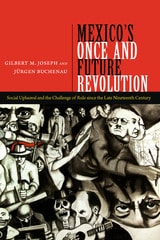
Mexico's Once and Future Revolution
Social Upheaval and the Challenge of Rule since the Late Nineteenth CenturyGilbert M. Joseph and Jürgen Buchenau
Duke University Press, 2013
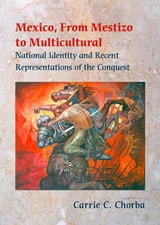
Mexico, From Mestizo to Multicultural
National Identity and Recent Representations of the ConquestCarrie C. Chorba
Vanderbilt University Press, 2006
Throughout the twentieth century, the post-revolutionary Mexican State had used mestizaje as a symbol of national unity and social integration. By the end of the millennium, however, Mexico had gone from a PRI-dominated, economically protectionist nation to a more democratic, economically globalizing one. More importantly, the homogenizing, mestizophile national identity that pervaded Mexico throughout the past century had given way to official admission of Mexico's ethnic and linguistic diversity--or 'pluriculture' according to President Salinas's 1992 constitutional revision.
This book is the first interdisciplinary study of literary, cinematic, and graphic images of Mexican national identity in the 1980s and '90s. Discussing, in depth, writings, films, and cartoons from a vast array of contemporary sources, Carrie C. Chorba creates a social history of this important shift.
Mexico, Interrupted
Labor, Idleness, and the Economic Imaginary of IndependenceSergio Gutiérrez Negrón
Vanderbilt University Press, 2023
Mexican independence was, in a sense, an economic event. Through economic concerns, elites created a common ground with non-elites in their demands against foreign domination, and independence was imagined by the lettered men of Mexico as a feat that would nationalize a rich and productive economic apparatus.
Mexico, Interrupted investigates these economic hopes during the difficult decades between 1821, the year of the country’s definite separation from Spain, and 1852, a period of political polarization after the US-Mexico War that led the country to the brink of another armed conflict. Drawing on political and popular media, this book studies the Mexican intelligentsia’s obsession with labor and idleness in their attempts to create a wealthy, independent nation.
Focusing on figures of work and its opposites, Mexico, Interrupted reconstructs these decades’ “economic imaginaries of independence”: the political and cultural discourses that structured understandings, beliefs, and fantasies of the relationship between “the economy” and the life of an independent polity. By bringing together intellectual history, critical theory, and cultural studies, Gutiérrez Negrón offers a new account of the Mexican nineteenth century and complicates the history of the “spirit of capitalism” in the Americas.
Mexico’s Community Forest Enterprises
Success on the Commons and the Seeds of a Good AnthropoceneDavid Barton Bray
University of Arizona Press, 2020
Mexico presents a unique case in which much of the nation’s forests were placed as commons in the hands of communities, who, with state support and their own entrepreneurial vigor, created community forest enterprises (CFEs). David Barton Bray, who has spent more than thirty years engaged with and researching Mexican community forestry, shows that this reform has transformed forest management in that country at a scale and level of maturity unmatched anywhere else in the world.
For decades Mexico has been conducting a de facto large-scale experiment in the design of a national social-ecological system (SES) focused on community forests. What happens when you give subsistence communities rights over forests, as well as training, organizational support, equipment, and financial capital? Do the communities destroy the forest in the name of economic development, or do they manage them sustainably, generating current income while maintaining intergenerational value as a resource for their children? Bray shares the scientific and social evidence that can now begin to answer these questions. This is an invaluable resource for students, researchers, and the interested public on the future of global forest resilience and the possibilities for a good Anthropocene.
Michoacán and Eden
Vasco de Quiroga and the Evangelization of Western MexicoBy Bernardino Verástique
University of Texas Press, 2000
Don Vasco de Quiroga (1470-1565) was the first bishop of Michoacán in Western Mexico. Driven by the desire to convert the native Purhépecha-Chichimec peoples to a purified form of Christianity, free of the corruptions of European Catholicism, he sought to establish New World Edens in Michoacán by congregating the people into pueblo-hospital communities, where mendicant friars could more easily teach them the fundamental beliefs of Christianity and the values of Spanish culture.
In this broadly synthetic study, Bernardino Verástique explores Vasco de Quiroga's evangelizing project in its full cultural and historical context. He begins by recreating the complex and not wholly incompatible worldviews of the Purhépecha and the Spaniards at the time of their first encounter in 1521. With Quiroga as a focal point, Verástique then traces the uneasy process of assimilation and resistance that occurred on both sides as the Spaniards established political and religious dominance in Michoacán. He describes the syncretisms, or fusions, between Christianity and indigenous beliefs and practices that arose among the Purhépecha and relates these to similar developments in other regions of Mexico.
Written especially for students and general readers, this book demonstrates how cultural and geographical environments influence religious experience, while it adds to our understanding of the process of indigenous appropriation of Christian theological concepts in the New World.
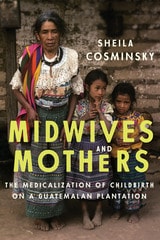
Midwives and Mothers
The Medicalization of Childbirth on a Guatemalan PlantationBy Sheila Cosminsky
University of Texas Press, 2016
The World Health Organization is currently promoting a policy of replacing traditional or lay midwives in countries around the world. As part of an effort to record the knowledge of local midwives before it is lost, Midwives and Mothers explores birth, illness, death, and survival on a Guatemalan sugar and coffee plantation, or finca, through the lives of two local midwives, Doña Maria and her daughter Doña Siriaca, and the women they have served over a forty-year period.
By comparing the practices and beliefs of the mother and daughter, Sheila Cosminsky shows the dynamics of the medicalization process and the contestation between the midwives and biomedical personnel, as the latter try to impose their system as the authoritative one. She discusses how the midwives syncretize, integrate, or reject elements from Mayan, Spanish, and biomedical systems. The midwives’ story becomes a lens for understanding the impact of medicalization on people’s lives and the ways in which women’s bodies have become contested terrain between traditional and contemporary medical practices. Cosminsky also makes recommendations for how ethno-obstetric and biomedical systems may be accommodated, articulated, or integrated. Finally, she places the changes in the birthing system in the larger context of changes in the plantation system, including the elimination of coffee growing, which has made women, traditionally the primary harvesters of coffee beans, more economically dependent on men.

Mier Expedition Diary
A Texan Prisoner's AccountJoseph D. McCutchan
University of Texas Press, 1979
Few episodes in Texas history have excited more popular interest than the Mier Expedition of 1842. Nineteen-year-old Joseph D. McCutchan was among the 300 Texans who, without the cover of the Lone Star flag, launched their own disastrous invasion across the Rio Grande.
McCutchan's diary provides a vivid account of his experience—the Texans' quick dispatch by Mexican troops at the town of Mier, the hardships of a forced march to Mexico City, over twenty months of imprisonment, and the journey back home after release. Although there are other firsthand accounts of the Mier Expedition, McCutchan was the only diarist who followed the Tampico route to Mexico City. His account documents a different experience than that of the main body of prisoners who marched to the national capital by way of Monterrey, Saltillo, and Agua Nueva.
Among the last of the prisoners to be freed, McCutchan covers in his journal the whole period of confinement from December 26, 1842, to the final release on September 16, 1844.
The McCutchan diary is set apart from other Mier accounts not only by the new information it provides, but also by Joseph Milton Nance's superb editing. Nance is an acknowledged authority on the hostilities between Texas and Mexico during the era of the Texas Republic. He has transcribed, edited, and annotated the diary with characteristic scholarship and painstaking attention to detail.
Migration and the Making of Industrial São Paulo
Paulo Fontes
Duke University Press, 2016
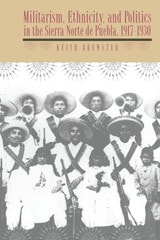
Militarism, Ethnicity, and Politics in the Sierra Norte de Puebla, 1917-1930
Keith Brewster
University of Arizona Press, 2003
Gabriel Barrios Cabrera, leader of the Brigada Serrana, rose from rural obscurity in the tiny village of Cuacuila to a position of unprecedented military strength during the Revolution, and throughout the 1920s he and his brother Demetrio came to enjoy the confidence of the nation's presidents. This work provides an in-depth look at how a local political boss held on to power. Keith Brewster reveals how the story of the Sierra is inextricably linked to that of the Barrios Cabrera family, and he investigates the ways in which this interconnection developed.
Brewster argues that Barrios owed his long prominence to his sensitivity to the region's culture, but also shows that the extent of his power was exaggerated by both contemporaries and historians. Barrios was able to develop a working relationship with the federal government by endorsing its objectives and convincing them of his own indispensability, but his authority depended on the weakness of the federal government and on infighting within the Puebla state government; once both governments stabilized, Barrios quickly lost his grip on power.
Masterfully blending archival sources and oral history, Brewster captures life in the Sierra during the 1920s and examines the decision-making processes that determined how communities responded to new pressures, such as requests for soldiers or support for development projects. He shows that subaltern groups were able to shape and even resist state reforms, mustering evidence that the Sierra's indigenous communities drove hard bargains over issues affecting their everyday lives. Although many communities used Barrios as an intermediary, Brewster reveals that they did not universally accept his legitimacy but simply used his connections to pursue their own local agendas.
Brewster depicts the Sierra de Puebla of the 1920s as a scene of shifting balances of power where political, economic, social, and ethnic factors combined to produce the temporary ascendancy of different interest groups beyond and within the region. His study forces us to question assumptions about how power was exercised at the local and regional levels in postrevolutionary Mexico and will be of lasting interest to all concerned with the dynamics of caciquismo and the evolution of the Mexican political system.
Millenarian Vision, Capitalist Reality
Brazil’s Contestado Rebellion, 1912–1916Todd A. Diacon
Duke University Press, 1991
Combining oral history with detailed archival research, Millenarian Vision, Capitalist Reality depicts a peasant community whose security in economic, social, and religious relations was suddenly disrupted by the intrusion of international capital. Diacon shows how a “deadly triumvirate” comprised to foreign capital, state power, and local bosses engineered a land tenure revolution that threatened smallholders’ subsistence, sparking rebellion among the Contestado peasants.
Unlike most analysis of millenarian movements, Diacon combines a material analysis with a careful exploration of the movement’s millenarian ideology to demonstrate how a particular combination of external and internal forces produced a crisis of values in the Contestado society. Such a crisis, Diacon concludes, gave a special power to the millenarian vision that promised not only outward reform, but inner salvation as well. This work offers a significant contribution to the literature of millenarian movements, popular religion, peasant rebellions, and the transition to capitalism in Brazil.
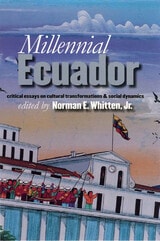
Millennial Ecuador
Critical Essays Cultural TransformationsNorman E Whitten
University of Iowa Press, 2003
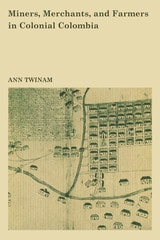
Miners, Merchants, and Farmers in Colonial Colombia
By Ann Twinam
University of Texas Press, 1982
The inhabitants of the department of Antioquía in north-central Colombia have played a unique role in that country’s economic history. During the colonial period Antioqueño placer miners supplied a substantial portion of New Granada’s gold exports. Their nineteenth-century descendants pioneered investments in lode mining, colonization, international commerce, banking, stock raising, tobacco, and coffee. In the twentieth century, Antioqueños initiated the industrialization of the regional capital, Medellín.
Many theories have been set forth to account for the special energy and initiative of Antioqueños. They range from ethnic and psychological interpretations (Antioqueños are descended from Jews or Basques; they are driven to succeed because of status deprivation) to historical explanations that emphasize their geographic isolation, mining heritage, or the coffee-export economy. In Miners, Merchants, and Farmers in Colonial Colombia, Ann Twinam critiques these theories and sets forth her own revisionist interpretation of Antioqueño enterprise. Rather than emphasize the alien or deviant in Antioqueño psychology or culture, Twinam re-creates the region’s late colonial economic and social structure and attributes the origins of Antioqueño enterprise to a particular mix of human and natural resources that directed the region’s development toward capital accumulation and reinvestment.
Although the existing limitations of their colonial environment may have forced Antioqueños along enterprising pathways initially, the continuation of Antioqueño investments to the present day suggests that their adaptation to a specific economic reality became a way of life transcending the historical conditions that created it.

Miniature Messages
The Semiotics and Politics of Latin American Postage StampsJack Child
Duke University Press, 2008
Child combines history and political science with philatelic research of nearly forty thousand Latin American stamps. He focuses on Argentina and the Southern Cone, highlighting stamps representing the consolidation of the Argentine republic and those produced under its Peronist regime. He compares Chilean stamps issued by the leftist government of Salvador Allende and by Augusto Pinochet’s dictatorship. Considering postage stamps produced under other dictatorial regimes, he examines stamps from the Dominican Republic, Guatemala, Nicaragua, and Paraguay. Child studies how international conflicts have been depicted on the stamps of Argentina, Chile, and Peru, and he pays particular attention to the role of South American and British stamps in establishing claims to the Malvinas/Falkland Islands and to Antarctica. He also covers the cultural and political history of stamps in Bolivia, Brazil, Colombia, Cuba, Grenada, Mexico, Uruguay, Venezuela and elsewhere. In Miniature Messages, Child finds the political history of modern Latin America in its “tiny posters.”