Results by title
8812 books match the query 'Political Science' and 592 start with p
People's Wars in China, Malaya, and Vietnam
Marc Opper
University of Michigan Press, 2020
People’s Wars in China, Malaya, and Vietnam explains why some insurgencies collapse after a military defeat while under other circumstances insurgents are able to maintain influence, rebuild strength, and ultimately defeat the government. The author argues that ultimate victory in civil wars rests on the size of the coalition of social groups established by each side during the conflict. When insurgents establish broad social coalitions (relative to the incumbent), their movement will persist even when military defeats lead to loss of control of territory because they enjoy the support of the civilian population and civilians will not defect to the incumbent. By contrast, when insurgents establish narrow coalitions, civilian compliance is solely a product of coercion. Where insurgents implement such governing strategies, battlefield defeats translate into political defeats and bring about a collapse of the insurgency because civilians defect to the incumbent. The empirical chapters of the book consist of six case studies of the most consequential insurgencies of the 20th century including that led by the Chinese Communist Party from 1927 to 1949, the Malayan Emergency (1948–1960), and the Vietnam War (1960–1975). People’s Wars breaks new ground in systematically analyzing and comparing these three canonical cases of insurgency. The case studies of China and Malaya make use of Chinese-language archival sources, many of which have never before been used and provide an unprecedented level of detail into the workings of successful and unsuccessful insurgencies. The book adopts an interdisciplinary approach and will be of interest to both political scientists and historians.
Peoplehood in the Nordic World
Ove Korsgaard
University of Wisconsin Press, 2022
Perceptions of a Polarized Court
How Division among Justices Shapes the Supreme Court's Public ImageMichael F. Salamone
Temple University Press, 2018
Like our divided nation, the Supreme Court is polarized. But does a split among Supreme Court justices—particularly when it occurs along ideological lines—hurt public perception and the Court’s ability to muster popular support for its rulings? Michael Salamone’s Perceptions of a Polarized Court offers the first comprehensive, empirical analysis of how divisiveness affects the legitimacy of the Court’s decisions.
Salamone looks specifically at the Roberts Court years—which are characterized by unprecedented ideological and partisan polarization among the justices—to evaluate the public consequences of divided Supreme Court rulings. He also analyzes both the media’s treatment of Supreme Court decisions and public opinion toward the Court’s rulings to show how public acceptance is (or is not) affected.
Salmone contends that judicial polarization has had an impact on the manner in which journalists report on the Supreme Court. However, contrary to expectation, Court dissent may help secure public support by tapping into core democratic values.

Percy Bysshe Shelley
Poet and RevolutionaryJaqueline Mulhallen
Pluto Press, 2015
An engaging look at one of English history and literature’s most compelling, complicated, and talented figures, Percy Bysshe Shelley will be a valuable contribution to our understanding of the man and his work.
Performance Constellations
Networks of Protest and Activism in Latin AmericaMarcela A. Fuentes
University of Michigan Press, 2019
Performance, Transparency, and the Cultures of Surveillance
James M. Harding
University of Michigan Press, 2018
Performances of Violence
Austin Sarat
University of Massachusetts Press, 2011
Performing Populism
Visions of Spanish Politics from 15-M to PodemosRuben Perez Hidalgo
Vanderbilt University Press, 2023
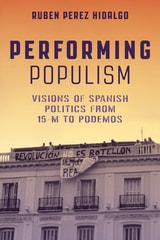
The book's first part examines how the 15-M movement created a new way of seeing that in turn led to a new way of doing politics in Spain. Part Two focuses on the multiple ramifications of that new vision once the people stopped marching and the movement became less visible.
From electoral posters to fiction films, documentaries, and internet memes, Performing Populism traces the ways that collective Spanish identities evolved from a period when "the people" seemed to have been willingly subsumed under the apathetic ideation of the middle-class consumer to the moment in 2011 when a crisis of representation forced many into political consciousness. This rude awakening kickstarted the reconstruction of a Spanish "us" that staged exhibitions of popular will on par with and parallel to the Arab Spring, but in a European register that embraced the countercultural through art that disremembered its political past but could not escape the ghostly shadow of its history.

Performing Revolutionary
Art, Action, ActivismNicole Garneau and Anne Cushwa
Intellect Books, 2018
Performing Unification
History and Nation in German Theater after 1989Matt Cornish
University of Michigan Press, 2017

Peril in the Ponds
Deformed Frogs, Politics, and a Biologist's QuestJudy Helgen
University of Massachusetts Press, 2012
By the 1990s, wetlands across the United States were endangered from pollution and decades of drainage to convert them into farmland and urban developments. But when deformed frogs—many with missing legs or eyes, footless stumps, or misshapen jaws—began to emerge from Minnesota wetlands, alarm bells went off. What caused such deformities? Pollution? Ultraviolet rays? Biological agents? And could the mysterious cause also pose a threat to humans?
Judy Helgen writes with passionate concern about vulnerable frogs and wetlands as she navigates through a maze of inquisitive media and a reluctant government agency. She reports on the complexity of a growing catastrophe for frogs and broadens the issue as she researches and meets with scientists from around the world. She affirms the importance of examining aquatic life to understand pollution and the need to rescue our remaining wetlands. She also shares the fears expressed by the teachers, students, and other citizens who found these creatures, sensed a problem, and looked to her for answers. Ultimately, this is a story about the biological beauty of wetlands and our need to pay attention to the environment around us.
Perilous States
Conversations on Culture, Politics, and NationEdited by George E. Marcus
University of Chicago Press, 1993
politics, history, comparative literature, and
philosophy—the unprecedented annual publication Late
Editions exposes unsettling dilemmas and unprecedented
challenges facing cultural studies on the brink of the
twenty-first century. Successive volumes will appear
annually until the year 2000, each engaging the predicaments
of particular institutions, nations, and persons at this
point of social, cultural, and political change. The
project will test the limits of scholarly conventions by
finding new ways to expose cultural formations emerging from
the maturation or exhaustion of once-powerful ideas whose
validity is now deeply in question.
Perilous States, the first volume of Late
Editions, presents conversations between American
scholars, most of whom are anthropologists, and individuals
situated amidst political and social upheaval. Pimarily but
not exclusively from Eastern Europe, the cast includes
Russian writers, Hungarian scientists and academics, Armenian
politicians, Siberian religious and medical leaders, a Gypsy
leader, a Polish poet, a French politician, and a white South
African musician who is a self-styled Zulu. Their voices
unite around themes of democracy, market economy, individual
rights, and the reawakened force of suppressed ethnic and
racial identities.
To obtain fresh perspectives on these cultural and social
transformations, the volumes will consist of in-depth
conversations, relayed in essay form, between scholars and
individuals in other cultures with whom they share
affinities. This novel approach blends the immediacy of
interviews, the objectivity of journalism, and the
intellectual rigor of scholarship.
Contributors to this volume are Marjorie Balzer, Sam
Beck, David B. Coplan, Michael M. J. Fischer, Nia Georges,
Bruce Grant, Douglas R. Holmes, Stella Gregorian, George E.
Marcus, Kathryn Milun, Eleni Papagaroufali, Paul Rabinow,
Julie Taylor, and Tom White.

Peripheral Visions
Deterrence Theory and American Foreign Policy in the Third World, 1965-1990Ted Hopf
University of Michigan Press, 1994
Peripheral Visions
Politics, Society, and the Challenges of Modernity in YucatanEdward D. Terry
University of Alabama Press, 2010
The essays in this collection illuminate both the processes of change and the negative reactions that they frequently elicited
Yucatan has been called “a world apart”—cut off from the rest of Mexico by geography and culture. Yet, despite its peripheral location, the region experienced substantial change in the decades after independence. As elsewhere in Mexico, apostles of modernization introduced policies intended to remold Yucatan in the image of the advanced nations of the day. Indeed, modernizing change began in the late colonial era and continued throughout the 19th century as traditional patterns of land tenure were altered and efforts were made to divest the Catholic Church of its wealth and political and intellectual influence. Some changes, however, produced fierce resistance from both elites and humbler Yucatecans and modernizers were frequently forced to retreat or at least reach accommodation with their foes.
Covering topics from the early 19th century to the late 20th century, the essays in this collection illuminate both the processes of change and the negative reactions that they frequently elicited. The diversity of disciplines covered by this volume—history, anthropology, sociology, economics—illuminates at least three overriding challenges for study of the peninsula today. One is politics after the decline of the Institutional Revolutionary Party: What are the important institutions, practices, and discourses of politics in a post-postrevolutionary era? A second trend is the scholarly demystification of the Maya: Anthropologists have shown the difficulties of applying monolithic terms like Maya in a society where ethnic relations are often situational and ethnic boundaries are fluid. And a third consideration: researchers are only now beginning to grapple with the region’s transition to a post-henequen economy based on tourism, migration, and the assembly plants known as maquiladoras. Challenges from agribusiness and industry will no doubt continue to affect the peninsula’s fragile Karst topography and unique environments.
Contributors: Eric N. Baklanoff, Helen Delpar, Paul K. Eiss, Ben W. Fallaw, Gilbert M. Joseph, Marie Lapointe, Othón Baños Ramírez, Hernán Menéndez Rodríguez, Lynda S. Morrison, Terry Rugeley, Stephanie J. Smith
Peripheral Visions
Publics, Power, and Performance in YemenLisa Wedeen
University of Chicago Press, 2008
Lisa Wedeen, who spent a year and a half in Yemen observing and interviewing its residents, argues that national solidarity in such weak states tends to arise not from attachments to institutions but through both extraordinary events and the ordinary activities of everyday life. Yemenis, for example, regularly gather to chew qat, a leafy drug similar to caffeine, as they engage in wide-ranging and sometimes influential public discussions of even the most divisive political and social issues. These lively debates exemplify Wedeen’s contention that democratic, national, and pious solidarities work as ongoing, performative practices that enact and reproduce a citizenry’s shared points of reference. Ultimately, her skillful evocations of such practices shift attention away from a narrow focus on government institutions and electoral competition and toward the substantive experience of participatory politics.
Perpetual War
Cosmopolitanism from the Viewpoint of ViolenceBruce Robbins
Duke University Press, 2012
Under these conditions, cosmopolitanism in the traditional sense—primary loyalty to the good of humanity as a whole, even if it conflicts with loyalty to the interests of one's own nation—becomes a necessary resource in the struggle against military aggression. To what extent does the "new" cosmopolitanism also include or support this "old" cosmopolitanism? In an attempt to answer this question, Robbins engages with such thinkers as Noam Chomsky, Edward Said, Anthony Appiah, Immanuel Wallerstein, Louis Menand, W. G. Sebald, and Slavoj Zizek. The paradoxes of detachment and belonging they embody, he argues, can help define the tasks of American intellectuals in an era when the first duty of the cosmopolitan is to resist the military aggression perpetrated by his or her own country.

Persecution and Rescue
The Politics of the “Final Solution” in France, 1940-1944Wolfgang Seibel
University of Michigan Press, 2016
Drawing on German and French sources, Wolfgang Seibel traces the twisted process of political decision-making that shaped the fate of the Jews in German-occupied France during World War II. By analyzing the German-French negotiations, he reveals the underlying logic as well as the actual course of the bargaining process as both the Vichy Regime and the Germans sought a stable relationship. Yet that relationship was continually reshaped by the progress of the war, Germany’s deteriorating prospects, France’s economic and geopolitical position, and the Vichy government’s quest for domestic political support. The Jews’ suffering intensified when the Germans had the upper hand; but when the French felt empowered, the Vichy Regime stopped collaborating in the completion of the “final solution.” Persecution and Rescue: The Politics of the “Final Solution” in France, 1940–1944 demonstrates the ways in which political circumstances can mitigate—or foster—mass crime.

Persecution and the Art of Writing
Leo Strauss
University of Chicago Press, 1988
Personal Demons
Possession Narratives of Late LiberalismGrace Lavery
Duke University Press, 2026
Persons of the Market
Conservatism, Corporate Personhood, and Economic TheologyKevin Musgrave
Michigan State University Press, 2022
light on their seemingly odd marriage in contemporary American politics. Author Kevin Musgrave highlights the ways that theories of corporate and human personhood have long been and remain bound together by examining four case studies: the U.S. Supreme Court’s 1886 Santa Clara decision, the role of early twentieth-century advertisers in endowing corporations with souls, Justice Lewis Powell Jr.’s eponymous memo of 1971, and the arc of the conservative movement from Ronald Reagan to Donald Trump. Tracing this rhetorical history of the extension and attribution of personhood to the corporate form illustrates how the corporation has for many increasingly become a normative model or ideal to which human persons should aspire. In closing, the book offers preliminary ideas about how we might fashion a more democratic and humane understanding of what it means to be a person.

Perspectives on War and Peace in Central America
Mis Lam#19Sung Ho Kim
Ohio University Press, 1992
Persuasion in Parallel
How Information Changes Minds about PoliticsAlexander Coppock
University of Chicago Press, 2022
Many mistakenly believe that it is fruitless to try to persuade those who disagree with them about politics. However, Persuasion in Parallel shows that individuals do, in fact, change their minds in response to information, with partisans on either side of the political aisle updating their views roughly in parallel. This book challenges the dominant view that persuasive information can often backfire because people are supposedly motivated to reason against information they dislike. Drawing on evidence from a series of randomized controlled trials, the book shows that the backfire response is rare to nonexistent. Instead, it shows that most everyone updates in the direction of information, at least a little bit. The political upshot of this work is that the other side is not lost. Even messages we don't like can move us in the right direction.

Phantom Politics
Bots, Humans, AI, and Social MediaMina Momeni
Rutgers University Press, 2027
Phantom Politics develops a new framework for understanding how humans, bots, and AI systems interact on social media platforms and structure political communication. Focusing primarily on X (formerly Twitter), it analyzes three cases: the 2017 Women’s March, the 2019 “Build the Wall” discourse, and U.S. federal election discourse in 2024, to demonstrate how X functions not only as a mirror of political trends but also as a driver of change in the digital public sphere. The book shows how political participation is shaped by both authentic political expression and bot-driven narratives. It introduces new concepts to explain how AI-generated political speech can appear human while remaining detached from a human speaker, raising urgent questions about agency, accountability, and political voice. At a time when AI technologies are becoming increasingly integrated into public life, the book examines how emerging forms of automation are reshaping democratic discourse, challenging traditional understandings of participation, and transforming the ways political ideas circulate, gain visibility, and influence public debate.

Phenomenal Justice
Violence and Morality in ArgentinaEva van Roekel
Rutgers University Press, 2020
Short-listed for the Juan E. Méndez Book Award for Human Rights in Latin America from Duke University Libraries
How do victims and perpetrators of political violence caught up in a complicated legal battle experience justice on their own terms? Phenomenal Justice is a compelling ethnography about the reopened trials for crimes against humanity committed during the brutal military dictatorship that ruled Argentina between 1976 and 1983. Grounded in phenomenological anthropology and the anthropology of emotion, this book establishes a new theoretical basis that is faithful to the uncertainties of justice and truth in the aftermath of human rights violations. The ethnographic observations and the first-person stories about torture, survival, disappearance, and death reveal the enduring trauma, heartfelt guilt, happiness, battered pride, and scratchy shame that demonstrate the unreserved complexities of truth and justice in post-conflict societies. Phenomenal Justice will be an indispensable contribution to a better understanding of the military dictatorship in Argentina and its aftermath.
Philadelphia Battlefields
Disruptive Campaigns and Upset Elections in a Changing CityJohn Kromer
Temple University Press, 2020
Should the surprisingly successful outcomes achieved by outsider candidates in Philadelphia elections be interpreted as representing fundamental changes in the local political environment, or simply as one-off victories, based largely on serendipitous circumstances that advanced individual political careers? John Kromer’s insightful Philadelphia Battlefields considers key local campaigns undertaken from 1951 to 2019 that were extraordinarily successful despite the opposition of the city’s political establishment.
Kromer draws on election data and data-mapping tools that explain these upset elections as well as the social, economic, and demographic trends that influenced them to tell the story of why these campaign strategies were successful. He deftly analyzes urban political dynamics through case studies of newcomer Rebecca Rhynhart’s landslide victory over a veteran incumbent for Philadelphia City Controller; activist Chaka Fattah’s effective use of grassroots organizing skills to win a seat in Congress; and Maria Quiñones-Sánchez’s hard-fought struggle to become the first Hispanic woman to win a City Council seat, among others.
Philadelphia Battlefields shows how these candidates’ efforts to increase civic engagement, improve municipal governance, and become part of a new generation of political leadership at the local and state level were critical to their successes.
Philadelphia, Corrupt and Consenting
A City’s Struggle against an EpithetBrett H. Mandel
Temple University Press, 2023
He examines the costs of corruption, both financial and nonpecuniary, and considers the opportunity cost that corruption imposes. Mandel explores the nature and development of Philadelphia’s unique culture of corruption, emphasizing how machine politics and self-dealing are entwined with city history, creating a culture that allows corruption to thrive. In addition, he provides practical, achievable policies and actions that can produce positive change in Philadelphia and elsewhere.
Mandel seeks to provide insight into how our collective actions or inattention give consent to the corruption, as well as its roots and effects, and the reasons for its persistence. Philadelphia, Corrupt and Consenting is a critique, but above all, it is a call to action.
Philanthropy in Democratic Societies
History, Institutions, ValuesEdited by Rob Reich, Chiara Cordelli, and Lucy Bernholz
University of Chicago Press, 2016
The contributors balance empirical and normative approaches, exploring both the roles philanthropy has actually played in societies and the roles it should play. They ask a multitude of questions: When is philanthropy good or bad for democracy? How does, and should, philanthropic power interact with expectations of equal citizenship and democratic political voice? What makes the exercise of philanthropic power legitimate? What forms of private activity in the public interest should democracy promote, and what forms should it resist? Examining these and many other topics, the contributors offer a vital assessment of philanthropy at a time when its power to affect public outcomes has never been greater.
Philanthropy, Conflict Management and International Law
The 1914 Carnegie Report on the Balkan Wars of 1912/13Stefan Troebst
Central European University Press, 2022
This book centers on the Report of the International Commission to Inquire into the Causes and Conduct of the Balkan Wars, published in Washington in the early summer of 1914 by the Carnegie Endowment for International Peace. The volume was born from the conviction that the full assessment of the significance of the Carnegie Report—one of the first international non-governmental fact-finding missions with the intention to promote peace—requires a deeper exploration of the context of its birth.
The authors examine how the countries involved in the wars handled the inquires of the Carnegie Commission and the role of the report in the remembrance of the wars in the respective states. Although the report considered both the Ottoman Empire and the Balkan nation-states insufficiently civilized to wage wars within the limits of the codes of conduct of international law, this orientalist conclusion can in part be explained by the liberal internationalist strategy of the Carnegie Endowment, and of the commission members’ professional, political, and ethnic background. Overshadowed by the outbreak of World War I, the Carnegie Report’s direct impact on international arbitration or international criminal law was limited, yet—in the authors’ opinion—it ultimately contributed to the further juridification of international relations

Philip Pendleton Barbour in Jacksonian America
An Old Republican in King Andrew’s CourtWilliam S. Belko
University of Alabama Press, 2016
Barbour, a Virginia lawyer, participated in America’s transition from a mostly republican government to a truer majority democracy, notably while serving as the twelfth Speaker of the United States House of Representatives and later as an associate justice of the United States Supreme Court. After being elected to the US Congress during the War of 1812, Barbour also emerged as one of the foremost champions of states’ rights, consistently and energetically fighting against expansions of federal powers. He, along with other Jeffersonian Old Republicans, opposed federal plans for a national tariff and internal improvements. Later, Barbour became one of the first Jeffersonian politicians to join the Jacksonian Democrats in Jackson’s war against a national bank.
Barbour continued to make crucial strides in support of states’ rights after taking his seat on the United States Supreme Court in 1836 under Chief Justice Roger Taney. He contributed to the Charles River Bridge v. Warren Bridge and Briscoe v. Bank of Kentucky decisions, which bolstered states’ rights. He also delivered the opinion of the court in New York v. Miln, which provided the basis for the State Police Powers Doctrine.
Expertly interweaving biography, history, political science, and jurisprudence, Philip Pendleton Barbour in Jacksonian America remembers the man whose personal life and career were emblematic of the decades in which the United States moved from the Age of Jefferson to the Age of Jackson, contributing to developments that continue to animate American politics today.

Philosophizing the Everyday
Revolutionary Praxis and the Fate of Cultural TheoryJohn Roberts
Pluto Press, 2006
John Roberts argues that this understanding of the everyday downgrades its revolutionary meaning and philosophical implications. Bringing radical political theory back to the centre of the discussion, he shows how notions of cultural democratization have been oversimplified. Asserting that the everyday should not be narrowly identified with the popular, Roberts critiques the way in which the concept is now overly associated with consumption and 'ordinariness'.
Engaging with the work of key thinkers including, Lukács, Arvatov, Benjamin, Lefebvre, Gramsci, Barthes, Vaneigem, and de Certeau, Roberts shows how the concept of the everyday continues to be central to debates on ideology, revolution and praxis. He offers a lucid account of different approaches that developed over the course of the twentieth century, making this an ideal book for anyone looking for a politicised approach to cultural theory.
John Roberts is a Senior Research Fellow in Fine Art at the University of Wolverhampton. He is the author of The Art of Interruption: Realism, Photography and the Everyday (Manchester University Press, 1997) and The Philistine Controversy (Verso, with Dave Beech, 2002), plus other books and numerous articles, in Radical Philosophy and elsewhere.
Philosophy Between the Lines
The Lost History of Esoteric WritingArthur M. Melzer
University of Chicago Press, 2014
Arthur M. Melzer serves as our deeply knowledgeable guide in this capacious and engaging history of philosophical esotericism. Walking readers through both an ancient (Plato) and a modern (Machiavelli) esoteric work, he explains what esotericism is—and is not. It relies not on secret codes, but simply on a more intensive use of familiar rhetorical techniques like metaphor, irony, and insinuation. Melzer explores the various motives that led thinkers in different times and places to engage in this strange practice, while also exploring the motives that lead more recent thinkers not only to dislike and avoid this practice but to deny its very existence. In the book’s final section, “A Beginner’s Guide to Esoteric Reading,” Melzer turns to how we might once again cultivate the long-forgotten art of reading esoteric works.
Philosophy Between the Lines is the first comprehensive, book-length study of the history and theoretical basis of philosophical esotericism, and it provides a crucial guide to how many major writings—philosophical, but also theological, political, and literary—were composed prior to the nineteenth century.

Philosophy in a Time of Terror
Dialogues with Jurgen Habermas and Jacques DerridaGiovanna Borradori
University of Chicago Press, 2003

Philosophy, Crime, and Criminology
Edited by Bruce A. Arrigo and Christopher R. Williams
University of Illinois Press, 2006
Charting a provocative and original direction, editors Bruce A. Arrigo and Christopher R. Williams couple theoretically oriented chapters with those centered on application and case study. In doing so, they develop an insightful, sensible, and accessible approach for a philosophical criminology in step with the political and economic challenges of the twenty-first century. Revealing the ways in which philosophical conceits inform prevailing conceptions of crime, Philosophy, Crime, and Criminology is required reading for any serious student or scholar concerned with crime and its impact on society and in our lives.

Philosophy, Literature, and Politics
Essays Honoring Ellis SandozEdited by Charles R. Embry & Barry Cooper
University of Missouri Press, 2005
Physical Space and Spatiality in Muslim Societies
Notes on the Social Production of CitiesMahbub Rashid
University of Michigan Press, 2021
Mahbub Rashid embarks on a fascinating journey through urban space in all of its physical and social aspects, using the theories of Foucault, Bourdieu, Lefebvre, and others to explore how consumer capitalism, colonialism, and power disparity consciously shape cities. Using two Muslim cities as case studies, Algiers (Ottoman/French) and Zanzibar (Ottoman/British), Rashid shows how Western perceptions can only view Muslim cities through the lens of colonization—a lens that distorts both physical and social space. Is it possible, he asks, to find a useable urban past in a timeline broken by colonization? He concludes that political economy may be less relevant in premodern cities, that local variation is central to the understanding of power, that cities engage more actively in social reproduction than in production, that the manipulation of space is the exercise of power, that all urban space is a conscious construct and is therefore not inevitable, and that consumer capitalism is taking over everyday life. Ultimately, we reconstruct a present from a fragmented past through local struggles against the homogenizing power of abstract space.
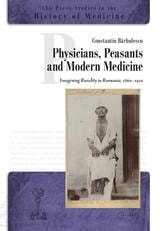
Physicians, Peasants, and Modern Medicine
Imagining Rurality in Romania, 1860-1910Constantin Barbulescu
Central European University Press, 2019

Picturing Class
Lewis W. Hine Photographs Child Labor in New EnglandRobert Macieski
University of Massachusetts Press, 2015
In this richly illustrated book, Robert Macieski examines Lewis W. Hine's art and advocacy on behalf of child laborers as part of the National Child Labor Committee (NCLC) between 1909 and 1917. A “social photographer”—as he called himself—Hine created images that documented children at work throughout New England, revealing their exploitation in the North as he had for rural working children in the South. Hine staged his images, highlighting particular types of labor in specific places: the “newsies” in Connecticut cities; sardine canners in Eastport, Maine; cranberry pickers in Cape Cod bogs; industrial homeworkers in Boston and Providence; and cotton textile workers throughout the region. His association with the NCLC connected him to a network of local and national reformers, social workers, and child welfare professionals, a broad coalition he supported in their fight to end this unethical labor practice. Macieski also chronicles Hine's efforts to mount major exhibitions that would help move public opinion against child labor.
In Picturing Class, Macieski explores the historical context of Hine's photographs and the social worlds of his subjects. He offers a detailed analysis of many of the images, unearthing the stories behind the creation of these photographs and the lives of their subjects. In telling the story of these photographs, their creation, and their reception, Macieski demonstrates how Hine worked to advance an unvarnished picture of a rapidly changing region and the young workers at the center of this important shift.
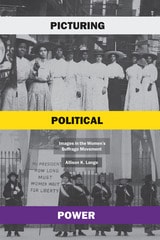
Picturing Political Power
Images in the Women’s Suffrage MovementAllison K. Lange
University of Chicago Press, 2020
For as long as women have battled for equitable political representation in America, those battles have been defined by images—whether illustrations, engravings, photographs, or colorful chromolithograph posters. Some of these pictures have been flattering, many have been condescending, and others downright incendiary. They have drawn upon prevailing cultural ideas of women’s perceived roles and abilities and often have been circulated with pointedly political objectives.
Picturing Political Power offers perhaps the most comprehensive analysis yet of the connection between images, gender, and power. In this examination of the fights that led to the ratification of the Nineteenth Amendment in 1920, Allison K. Lange explores how suffragists pioneered one of the first extensive visual campaigns in modern American history. She shows how pictures, from early engravings and photographs to colorful posters, proved central to suffragists’ efforts to change expectations for women, fighting back against the accepted norms of their times. In seeking to transform notions of womanhood and win the right to vote, white suffragists emphasized the compatibility of voting and motherhood, while Sojourner Truth and other leading suffragists of color employed pictures to secure respect and authority. Picturing Political Power demonstrates the centrality of visual politics to American women’s campaigns throughout the nineteenth and early twentieth centuries, revealing the power of images to change history.

Piecemeal Protest
Animal Rights in the Age of NonprofitsCorey Lee Wrenn
University of Michigan Press, 2019
Given their tendency to splinter over tactics and goals, social movements are rarely unified. Following the modern Western animal rights movement over thirty years, Corey Lee Wrennapplies the sociological theory of Bourdieu, Goffman, Weber, and contemporary social movement researchers to examine structural conditions in the animal rights movement, facilitating factionalism in today’s era of professionalized advocacy.
Modern social movements are dominated by bureaucratically oriented nonprofits, a special arrangement that creates tension between activists and movement elites who compete for success in a corporate political arena. Piecemeal Protest examines the impact of nonprofitization on factionalism and a movement’s ability to mobilize, resonate, and succeed. Wrenn’sexhaustive analysis of archival movement literature and exclusive interviews with movement leaders illustrate how entities with greater symbolic capital are positioned to monopolize claims-making, disempower competitors, and replicate hegemonic power, eroding democratic access to dialogue and decision-making essential for movement health.
Piecemeal Protest examines social movement behavior shaped by capitalist ideologies and state interests. As power concentrates to the disadvantage of marginalized factions in the modern social movement arena, Piecemeal Protest shines light on processes of factionalism and considers how, in the age of nonprofits, intra-movement inequality could stifle social progress.
Pierre Bourdieu
A Critical IntroductionJeremy F. Lane
Pluto Press, 2000

Pigskin Nation
How the NFL Remade American PoliticsJesse Berrett
University of Illinois Press, 2018

Pilaf, Pozole, and Pad Thai
American Women and Ethnic FoodSherrie A. Inness
University of Massachusetts Press, 2001
For many Americans, eating ethnic food is so commonplace as to be taken for granted. Yet, whether we acknowledge it or not, such foods create a powerful social language that speaks of cultural traditions and tastes that have been handed down from one generation to the next and, in some cases, appropriated and commodified by American commercial culture. Ethnic cooking represents both a source of sustenance and a complex form of communication.
In this volume, eleven scholars explore the role of ethnic food in American culture, with a particular focus on women. The first six chapters offer personal accounts of the ways in which ethnic meals are embedded in women's memories and fortify their connections to one another. From a Sicilian-born mother who affirms her allegiance to her heritage through the loving preparation of traditional tomato sauce and pasta, to a Swedish American woman whose dozens of boxes of recipe cards document a process of cultural assimilation, to an Armenian American who uses a shared passion for cooking to forge a relationship with her lover's family—these essays speak in a personal voice about the power of food as a marker of women's identity. The final five chapters take a more analytic approach, scrutinizing the social and political aspects of ethnic food and the phenomenon of “culinary tourism.” One essay offers a brilliant meditation on the gendered discourse of cooking in the Mexican American community, showing how food preparation provides many Chicanas with a vital language of self-expression. Another essay probes the author's penchant for Thai food and other cuisines from economically dominated cultures, situating it in the context of a larger system of privilege and oppression and as a form of cultural colonialism. By going beyond the obvious, these essays challenge our assumptions and expand our understanding of the significance of ethnic food in women's lives.
Contributors include Meredith E. Abarca, Arlene Voski Avakian, Linda Murray Berzok, Benay Blend, Lynn Z. Bloom, Paul Christensen, Cathie English, Doris Friedensohn, Lisa Heldke, Heather Schell, and Leanne Trapedo Sims.

Pink Gold
Women, Shrimp, and Work in MexicoMaria L. Cruz-Torres
University of Texas Press, 2023
A rich, long-term ethnography of women seafood traders in Mexico.
The "shrimp ladies," locally known as changueras in southern Sinaloa, Mexico, sell seafood in open-air markets, forming an extralegal but key part of the economy built around this "pink gold.” Over time, they struggled to evolve from marginalized peddlers to local icons depicted in popular culture, even as they continue to work at an open-air street market.
Pink Gold documents the shrimp traders' resilience and resourcefulness, from their early conflicts with the city, state, and federal authorities and forming a union, to carving out a physical space for a seafood market, and even engaging in conflicts with the Mexican military. Drawing from her two decades of fieldwork, María L. Cruz-Torres explores the inspiring narrative of this overlooked group of women involving grassroots politics, trans-border and familial networking, debt and informal economic practices, personal sacrifices, and simple courage. She argues that, amid intense economic competition, their success relies on group solidarity that creates interlocking networks of mutual trust, or confianza, that in turn enable them to cross social and political boundaries that would typically be closed to them. Ultimately, Pink Gold offers fresh insights into issues of gender and labor, urban public space, the street economy, commodities, and globalization.
Pink Revolutions
Globalization, Hindutva, and Queer Triangles in Contemporary IndiaNishant Shahani
Northwestern University Press, 2021
Eschewing structures of absolute complicity or abject alterity, Pink Revolutions pays attention to the logics of triangulation in various contexts: gay tourism, university campus politics, diasporic cultural productions, and AIDS activism. The book articulates a framework through which queer politics can challenge rather than participate in neoliberal imperatives, an approach that will interest scholars engaged with queer studies and postcolonial scholarship, as well as activists and academics wrestling with global capitalism and right-wing regimes around the world.
Pipeline Populism
Grassroots Environmentalism in the Twenty-First CenturyKai Bosworth
University of Minnesota Press, 2022
How contemporary environmental struggles and resistance to pipeline development became populist struggles
Stunning Indigenous resistance to the Keystone XL and the Dakota Access pipelines has made global headlines in recent years. Less remarked on are the crucial populist movements that have also played a vital role in pipeline resistance. Kai Bosworth explores the influence of populism on environmentalist politics, which sought to bring together Indigenous water protectors and environmental activists along with farmers and ranchers in opposition to pipeline construction.
Here Bosworth argues that populism is shaped by the “affective infrastructures” emerging from shifts in regional economies, democratic public-review processes, and scientific controversies. With this lens, he investigates how these movements wax and wane, moving toward or away from other forms of environmental and political ideologies in the Upper Midwest. This lens also lets Bosworth place populist social movements in the critical geographical contexts of racial inequality, nationalist sentiments, ongoing settler colonialism, and global empire—crucial topics when grappling with the tensions embedded in our era’s immense environmental struggles.
Pipeline Populism reveals the complex role populism has played in shifting interpretations of environmental movements, democratic ideals, scientific expertise, and international geopolitics. Its rich data about these grassroots resistance struggles include intimate portraits of the emotional spaces where opposition is first formed. Probing the very limits of populism, Pipeline Populism presents essential work for an era defined by a wave of people-powered movements around the world.
Pitching Democracy
Baseball and Politics in the Dominican RepublicApril Yoder
University of Texas Press, 2023
How Dominicans contribute to Major League Baseball and what they receive in return.
From Juan Marichal and Pedro Martínez to Albert Pujols and Juan Soto, Dominicans have long been among Major League Baseball’s best. How did this small Caribbean nation become a hothouse of baseball talent? To many fans, the answer is both obvious and disconcerting: pro teams use their riches to develop talent abroad, creating opportunities for superhuman athletes and corrupt officials, while the rest of the population sees little benefit.
Yet this interpretation of history is incomplete. April Yoder traces how baseball has empowered Dominicans in their struggles for democracy and social justice. While the dictatorship of Rafael Trujillo saw the sport as a means of cementing its power at home and abroad, the Dominican people fashioned an emancipated civic sphere by seeing their potential for democratic success in their compatriots’ baseball success. Later, Dominicans articulated demands for democracy, economic opportunity, and civil rights through successful calls for public support of amateur and professional baseball. Today, Dominicans continue to demand that incentives for the baseball industry foster human as well as economic development. A revelatory and innovative history, Pitching Democracy restores agency to the Dominican people and honors their true love of the game.
Pivotal Politics
A Theory of U.S. LawmakingKeith Krehbiel
University of Chicago Press, 1998
Place and Politics in Modern Italy
John A. Agnew
University of Chicago Press, 2002
For Agnew, place is not just a static backdrop against which events occur, but a dynamic component of social, economic, and political processes. He shows, for instance, how the lack of a common "landscape ideal" or physical image of Italy delayed the development of a sense of nationhood among Italians after unification. And Agnew uses the post-1992 victory of the Northern League over the Christian Democrats in many parts of northern Italy to explore how parties are replaced geographically during periods of intense political change.
Providing a fresh new approach to studying the role of space and place in social change, Place and Politics in Modern Italy will interest geographers, political scientists, and social theorists.
Places of Quiet Beauty
Parks, Preserves, and EnvironmentalismRebecca Conard
University of Iowa Press, 1997
Resource protection and public recreation policies have always been subject to the shifting winds of management philosophy governing both national and state parks. Somewhere in the balance, however, parks and preserves have endured as unique places of mind as well as matter. Places of Quiet Beauty allows us to see parks and preserves, forests and wildlife refuges—all those special places that the term “park” conjures up—as measures of our own commitment to caring for the environment. In this broad-ranging book, historian Rebecca Conard examines the complexity of American environmentalism in the twentieth century as manifest in Iowa's state parks and preserves.
Plan Colombia
U.S. Ally Atrocities and Community ActivismJohn Lindsay-Poland
Duke University Press, 2018