Results by title
3785 books match the query 'Poetry' and 342 start with s
Sentences
Howard Nemerov
University of Chicago Press, 1980
"In [Sentences], not only has Nemerov continued to accommodate himself to the literary tradition without falling back on parody; he has also . . . extended the resources of blank verse beyond what any modern practitioner, himself included, has managed to. This extension comprises more than a mere prosodic advance; it is a rhetorical and imaginative advance. 'By Al Lebowitz's Pool,' 'The Makers,' 'Monet,' and 'A Christmas Storm,' for example, are dazzling in their very naturalness. . . . No one since Frost has done as much to move blank verse from where Wordsworth and Coleridge had left it."—Mary Kinzie, Poetry
September
PoemsRachel Jamison Webster
Northwestern University Press, 2013
The poems in Rachel Webster’s debut collection September often address a fleeting moment. Like the month, the moment can be a single leaf falling or a season of life. Webster’s pastoral poems address personal physical change in the seasons of life, including childhood, love, motherhood, and death. Together they lead the reader through a lyrical landscape of conversation, meditation, and healing. The work of a poet sensitive to worlds external and internal, September speaks to the core of life and the simplicity of human events and the natural world around us.

Serapion Sister
The Poetry of Exizaveta PolonskajaLeslie Dorfman Davis
Northwestern University Press, 2001
Series | India
Elizabeth T. Gray
Four Way Books, 2015
Set in Motion
Essays, Interviews, and DialoguesA. R. Ammons
University of Michigan Press, 1996

Settler
Maggie Queeney
Tupelo Press, 2021
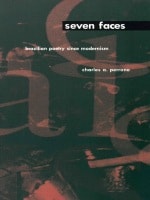
Seven Faces
Brazilian Poetry Since ModernismCharles A. Perrone
Duke University Press, 1996
Perrone introduces the most important poetic themes of the second half of this century with a look back at Brazilian modernismo and the avant-garde legacy of poets of the 1920s and 30s. Brazilian poets, the author reveals, have long drawn inspiration from the other arts, experimenting with the inclusion of music, graphic arts, and other nontraditional elements within lyric forms. Relating aesthetic concerns to cultural issues, Perrone elucidates the major poetic movements in Brazil since modernismo: concretism and vanguard poetry, politically committed verse of the 60s, youth poetry of the 70s, the lyricism of Brazil’s renowned popular music, and the rethinking of poetry through postmodernism in the final decades of this century.
Providing a window on the ways in which poetry reflects a national spirit and offers a measure of the status of culture in a consumer society, Seven Faces is the only book-length study in English of contemporary Brazilian poetry. It will be welcomed by students and scholars of Latin American literature as well as by general readers interested in poetry and its influence on culture and society.

Seven Modern American Poets
An IntroductionLeonard Unger
University of Minnesota Press, 1967
Seven Modern American Poets was first published in 1967. Minnesota Archive Editions uses digital technology to make long-unavailable books once again accessible, and are published unaltered from the original University of Minnesota Press editions.
This volume provides concise critical introductions to seven of the most important twentieth-century American poets, bringing together in convenient book form the material from some of the University of Minnesota Pamphlets on American Writers. The poets discussed and the contributing authors are Robert Frost by Lawrance Thompson, Wallace Stevens by William York Tindall, William Carlos Williams by John Malcolm Brinnin, Ezra Pound by William Van O'Connor, John Crowe Ransom by John L. Stewart, T.S. Eliot by Leonard Unger, and Allen Tate by George Hemphill.
Biographical information about the poets as well as critical discussions of their work is provided. A selected bibliography for each poet lists his works and critical and biographical writing about him.
In an introduction Mr. Unger, who is one of the editors of the pamphlet series, discusses the poets and their place in the development of modern American poetry. Mr. Unger is a professor of English at the University of Minnesota and the author of a number of critical works, including T. S. Eliot: Moments and Patterns.
Teachers, librarians, and others who use the material of the University of Minnesota Pamphlets on American Writers for frequent reference or as classroom texts will find this book particularly useful. It serves also as an excellent guide for the general reader.
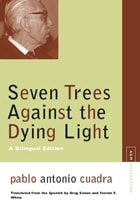
Seven Trees Against the Dying Light
A Bilingual EditionPablo Antonio Cuadra
Northwestern University Press, 2007
Standing against the visible landscape—the mountainous volcanoes, the jungles and savannahs—the seven trees conjured in these narrative poems by one of Latin America's masters also evoke another, more mysterious terrain. It is this other landscape, as invisible as poetry before it is written down but etched by history and animated by the collective memory of a people, that speaks through Pablo Antonio Cuadra’s Seven Trees against the Dying Light.
Storing experience as they exist, these tree-poems conserve local soil and memory in the place they inhabit. They are figures of life, stained by seawater and gun powder, by the bright red, bittersweet juice of the many life-giving plums that flourish in Nicaragua, and blood that has been spilled there. And they offer a way of remembering who we are, where we come from, and, above all, where we are bound if we cannot learn to root language in the earth that sustains us.
Printed here in Spanish with facing English translations, the edition includes an introduction with ecocritical focus, as well as complete notes on botanical, historical, mythological, and socio-political references.
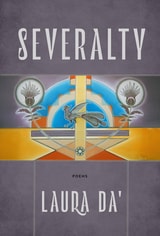
Severalty
PoemsLaura Da'
University of Arizona Press, 2025
With clear roots in her first two books of poetry, Tributaries and Instruments of the True Measure, this volume joins the author’s poetic trilogy with a deeply personal accounting of history, community, and selfhood.
Weaving the past and present into a stunning tapestry, this collection is a powerful testament to Indigenous endurance and creativity, offering readers a deeply insightful and necessary work.
Severance Songs
Joshua Corey
Tupelo Press, 2011
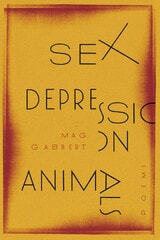
Sex Depression Animals
PoemsMag Gabbert
The Ohio State University Press, 2023
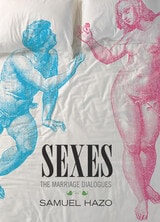
Sexes
The Marriage DialoguesSamuel Hazo
Northwestern University Press, 2014
The poems in Samuel Hazo’s Sexes: The Marriage Dialogues are concerned with how husbands and wives confront each other at life’s various intersections—sometimes casually, sometimes profoundly. It is at these points that the most interesting differences in gender reveal themselves. From the first poem (“Banterers”) to the last (“Ballad of the Old Lovers”) Hazo’s attuned ear picks up quotidian conversational exchanges, but the words are never window dressing. They hint at inevitable insights and misunderstandings born out of conjugal love. Each poem is a vignette of the moving and surprising moments that are married life.
Shadeland
Andrew Grace
The Ohio State University Press, 2008
Shadow Mountain
Claire Kageyama-Ramakrishnan
Four Way Books, 2008
Shadow of a Cloud but No Cloud
Killarney Clary
University of Chicago Press, 2014
Shadowboxing
poems & impersonationsJoseph Rios
Omnidawn, 2017
Shadowed Dreams
Women's Poetry of the Harlem RenaissanceMcKay, Nellie
Rutgers University Press, 2006
The first edition of Shadowed Dreams was a groundbreaking anthology that brought to light the contributions of women poets to the Harlem Renaissance. This revised and expanded version contains twice the number of poems found in the original, many of them never before reprinted, and adds eighteen new voices to the collection to once again strike new ground in African American literary history. Also new to this edition are nine period illustrations and updated biographical introductions for each poet.
Shadowed Dreams features new poems by Gwendolyn Bennett, Anita Scott Coleman, Mae Cowdery, Blanche Taylor Dickinson, Alice Dunbar-Nelson, Jessie Fauset, Angelina Weld Grimké, Gladys Casely Hayford (a k a Aquah Laluah), Virginia Houston, Georgia Douglas Johnson, Helene Johnson, Effie Lee Newsome, Esther Popel, and Anne Spencer, as well as writings from newly discovered poets Carrie Williams Clifford, Edythe Mae Gordon, Alvira Hazzard, Gertrude Parthenia McBrown, Beatrice Murphy, Lucia Mae Pitts, Grace Vera Postles, Ida Rowland, and Lucy Mae Turner, among others.
Covering the years 1918 through 1939 and ranging across the period’s major and minor journals, as well as its anthologies and collections, Shadowed Dreams provides a treasure trove of poetry from which to mine deeply buried jewels of black female visions in the early twentieth century.
Shadows Burning
W.S. Di Piero
Northwestern University Press, 1995
Shahr-E-Jaanaan
The City of the BelovedAdeeba Shahid Talukder
Tupelo Press, 2020
Shakespeare Observed
Studies in Performance on Stage and ScreenSamuel Crowl
Ohio University Press, 1993
Crowl’s study demonstrates the surprising resonances between Roman Polanski's 1971 film of Macbeth and Adrian Noble's heralded recent production of the play for The Royal Shakespeare Company; argues that Orson Welles's films of Othello and Cabins at Midnight are not only brilliant remaining of Shakespeare in another art form but make a powerful contribution to our contemporary understanding of performance as interpretation; and chronicles the impact of Peter Hall's creation of the Royal Shakespeare Company in 1960 on performance approaches to Shakespeare in the past thirty years.
Shakespeare Observed provides full interpretative readings of key recent Shakespeare productions in England and includes an intimate behind-the-scenes glimpse into the rehearsal process which produced Ron Daniels's emotionally charged version of Romeo and Juliet for the RSC in 1980. The final chapter uses Kenneth Branagh's highly successful film of Henry V as a summary example of the trends and influences Crowl's study traces, seeing the film as gathering its interpretative energies from both Olivier's famous film version of the play and Adrian Noble's stage production featuring Branagh as the king.
Written in a style which places a premium on capturing the vivid and often dazzling moments of stage and film performances of Shakespeare, Crowl's study will be of interest to the avid film and theatergoer as well as to the scholar and student. Shakespeare Observed joins a growing list of recent critical works which have significantly expanded and redefined the boundaries of Shakespeare studies in our time.
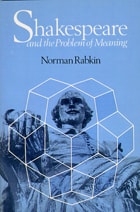
Shakespeare and the Problem of Meaning
Norman Rabkin
University of Chicago Press, 1981
"Norman Rabkin's new book is a very different kind of good book. Elegantly spare, sharp, undogmatic. . . . The relationship between the perception of unity and the perception of artistic achievement is a basic conundrum, and it is one that Mr. Rabkin has courageously placed at the center of his discussion." –G. K. Hunter, Sewanee Review
"Rabkin's book is brilliant, taut, concise, beautifully argued, and sensitively responsive to the individuality of particular Shakespeare plays." –Anne Barton, New York Review of Books
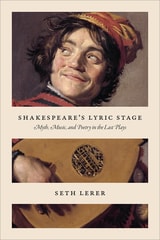
Shakespeare's Lyric Stage
Myth, Music, and Poetry in the Last PlaysSeth Lerer
University of Chicago Press, 2018
As Seth Lerer shows in this pioneering book, Shakespeare’s late plays invite us to contemplate that very question, offering up lyric as a displaced and sometimes desperate antidote to situations of duress or powerlessness. Lerer argues that the theme of lyric misalignment running throughout The Tempest, The Winter’s Tale, Henry VIII, and Cymbeline serves a political purpose, a last-ditch effort at transformation for characters and audiences who had lived through witch-hunting, plague, regime change, political conspiracies, and public executions.
A deep dive into the relationship between aesthetics and politics, this book also explores what Shakespearean lyric is able to recuperate for these “victims of history” by virtue of its disjointed utterances. To this end, Lerer establishes the concept of mythic lyricism: an estranging use of songs and poetry that functions to recreate the past as present, to empower the mythic dead, and to restore a bit of magic to the commonplaces and commodities of Jacobean England. Reading against the devotion to form and prosody common in Shakespeare scholarship, Lerer’s account of lyric utterance’s vexed role in his late works offers new ways to understand generational distance and cultural change throughout the playwright’s oeuvre.
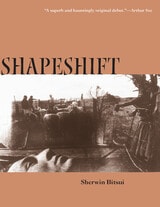
Shapeshift
Sherwin Bitsui
University of Arizona Press, 2003
In words drawn from urban and Navajo perspectives, Sherwin Bitsui articulates the challenge a Native American person faces in reconciling his or her inherited history of lore and spirit with the coldness of postmodern civilization.
Shapeshift is a collection of startling new poetry that explores the tensions between the worlds of nature and man. Through brief, imagistic poems interspersed with evocative longer narratives, it offers powerful perceptions of American culture and politics and their lack of spiritual grounding. Linking story, history, and voice, Shapeshift is laced with interweaving images—the gravitational pull of a fishbowl, the scent of burning hair, the trickle of motor oil from a harpooned log—that speak to the rich diversity of contemporary Diné writing.
"Tonight, I draw a raven's wing inside a circle
measured a half second
before it expands into a hand.
I wrap its worn grip over our feet
As we thrash against pine needles inside the earthen pot."
With complexities of tone that shift between disconnectedness and wholeness, irony and sincerity, Bitsui demonstrates a balance of excitement and intellect rarely found in a debut volume. As deft as it is daring, Shapeshift teases the mind and stirs the imagination.
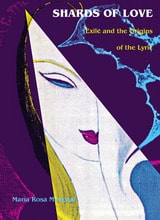
Shards of Love
Exile and the Origins of the LyricMaría Rosa Menocal
Duke University Press, 1994
It is in exile that Menocal locates the founding conditions for philology--as a discipline that loves origins--and for the genre of love songs that philology reveres. She crosses the boundaries, both temporal and geographical, of 1492 to recover the "original" medieval culture, with its Mediterranean mix of European, Arabic, and Hebrew poetics. The result is a form of literary history more lyrical than narrative and, Menocal persuasively demonstrates, more appropriate to the Middle Ages than to the revisionary legacy of the Renaissance. In discussions ranging from Eric Clapton's adaption of Nizami's Layla and Majnun, to the uncanny ties between Jim Morrison and Petrarch, Shards of Love deepens our sense of how the Middle Ages is tied to our own age as it expands the history and meaning of what we call Romance philology.
She Has a Name
Kamilah Aisha Moon
Four Way Books, 2013
She Took Off Her Wings And Shoes
Suzette Bishop
Utah State University Press, 2004
She Walks Into the Sea
Patricia Clark
Michigan State University Press, 2009
Patricia Clark's poems explore not only refuge but also wonder and appreciation, as well as astonishment.
A number of the 56 poems collected here show her grappling with loss, especially the loss of her mother, though she isn't one to indulge in misery. Instead, she goes walking. It is the harp tree in "The Poplar Adrift" that Clark imagines giving voice to sorrow, thus sparing those who stroll by—"all the grief that passes" becoming, in the tree’s very fibers, sound on the air, a wind through branches and leaves.
Clark also finds opportunities for learning, for meditation, and for contemplation. Octavio Paz has written, "Nature speaks as though it were a lover." In many of the poems collected here, Clark listens to nature speaking and revels in this lover, aiming to capture some of the qualities of Michigan's trees, birds, and landscapes in lyric poems.
It is Clark's particular gift to give us "tasted" as she draws her readers into the world, inhabiting the worlds of nature, head, and heart.
Shedding Skins
Four Sioux PoetsAdrian C. Louis
Michigan State University Press, 2008
Here's the myth: Native Americans are people of great spiritual depth, in touch with the rhythms of the earth, rhythms that they celebrate through drumming and dancing. They love the great outdoors and are completely in tune with the natural world. They can predict the weather by glancing at the sky, or hearing a crow cry, or somehow. Who knows exactly how? The point of the myth is that Indians are, well, special. Different from white people, but in a good way.
The four young male Native American poets whose work is brought together in this startling collection would probably raise high their middle fingers in salute to this myth. These guys and "guys" they are—don't buy into the myth. Their poems aren't about hunting and fishing or bonding with animal spirits. Their poems are about urban decay and homelessness, about loneliness and despair, about Payday Loans and 40-ounce beers, about getting enough to eat and too much to drink. And there is nothing romantic about their poetry, either. It is written in the vernacular of mean streets: often raw and coarse and vulgar, just like the lives it describes. Sure, they write about life on the reservation. However, for the Indians in their poems, life on the reservation is a lot like life in the city, but without the traffic. These poets are sick to death of the myth. You can feel it in their poems.
These poets are bound by a common attitude as well as a common heritage. All four—Joel Waters, Steve Pacheco, Luke Warm Water, and Trevino L. Brings Plenty—are Sioux, and all four identify themselves as "Skins" (as in "Redskins"). In their poems, they grapple with their heritage, wrestling with what it means to be a Sioux and a Skin today. It's a fight to the finish.
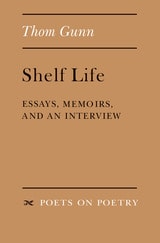
Shelf Life
Essays, Memoirs, and an InterviewThom Gunn
University of Michigan Press, 1993
Gunn’s criticism communicates his own enthusiasm for poetry. He tries to show his readers how to get a first foothold into the work of some of his favorite poets, whether Wyatt or Whitman, Mina Loy or Robert Creeley.
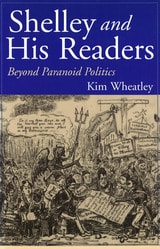
Shelley and His Readers
Beyond Paranoid PoliticsKim Wheatley
University of Missouri Press, 1999
In Shelley and His Readers, the first full-length critical analysis of the dialogue between Shelley's poetry and its contemporary reviewers, Kim Wheatley argues that Shelley's idealism can be recovered through the study of his poetry's reception. Incorporating extensive research in major early-nineteenth-century British periodicals, Wheatley integrates a reception-based methodology with careful textual analysis to demonstrate that the early reception of Shelley's work registers the immediate impact of the poet's increasingly idealistic passion for reforming the world.
Wheatley examines Shelley's poetry within the context of Romantic-era "paranoid politics," a simultaneously empowering and disabling dynamic in which the reviewers employ a heightened language of defensiveness and persecution that paints their adversaries as Satanic rebels against orthodoxy. This "paranoid style" displays a preoccupation with the efficacy of the printed word and singles out radical writers such as Shelley as sources of social contamination.
Using Shelley's Queen Mab to illustrate his early radicalism, Wheatley demonstrates that the poet, like his contemporary reviewers, is caught up in paranoid rhetoric. Failing to challenge the assumptions underlying the paranoid style-conspiracy and contagion-in this poem Shelley takes merely a defiant, oppositional stance. However, Shelley's later poems, exemplified by Prometheus Unbound and Adonais, circumvent the reviewers' rhetoric through their boldly experimental language, a process registered by the reviewers' own responses. These less explicitly political poems transcend the dynamics of cultural paranoia by shifting to an apolitical conception of the aesthetic. In collaboration with its early readers, Shelley's poetry thus moves momentarily beyond paranoid politics.
The final chapter of this study argues that the posthumous reception of Adonais uniquely replicates the elegiac moves and complex idealism of the poem, concluding with a discussion of how the Shelley circle aestheticized the poet after his death.
Shelley and His Readers offers a new approach to the question of how to recuperate Romantic idealism in the face of challenges from both deconstructive and historicist criticism. Its innovative use of reception-based analysis will make this book invaluable not only to specialists of the Romantic period but also to anyone interested in new developments in literary criticism.
Shelley and Synesthesia
Glenn O'Malley
Northwestern University Press, 1964
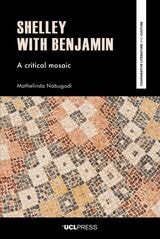
Shelley with Benjamin
A Critical MosaicMathelinda Nabugodi
University College London, 2023
Shelley with Benjamin is an experiment in comparative reading. Born a century apart, Percy Bysshe Shelley and Walter Benjamin are separated by time, language, temperament, and genre. One is a Romantic poet known for his revolutionary politics and delicate lyricism, and the other is a melancholy intellectual who pioneered a dialectical method of thinking in constellations. Yet, taken together, their ideas are mutually illuminating.
In a series of close readings that are by turns playful, erotic, and violent, Mathelinda Nabugodi unveils affinities between two writers whose works are simultaneously interventions in literary history and blueprints for an emancipated future. In addition to offering fresh interpretations of both major and minor writings, she elucidates the personal and ethical stakes of literary criticism. The book will appeal to readers of Shelley and Benjamin as well as those with an interest in comparative literature, literary theory, romantic poetics, and creative critical writing.
Shelley’s Religion
Ellsworth Barnard
University of Minnesota Press, 1936
Shift
Jeredith Merrin
University of Chicago Press, 1996
Shine
Joseph Millar
Carnegie Mellon University Press, 2024
Joseph Millar’s lyrical poems explore work, love, filial connection, life, and death. This is Millar’s sixth collection, and it reaches a deeper, more sonic level than his usual narrative voice. A collection of half songs rendered in a hardscrabble lyricism, they are propelled by their shifting, irregular rhymes, half rhymes, and off rhymes. The poems’ subjects grow from moments of daily life and their deeper obsessions—love, work, death, desire—and the making of art itself. Touched with more humor than earlier work, and with an unpredictable timing that seems to listen to itself as it travels down the page, the poems are part wonder and part reflection, carried along by their music.

Shining Sheep
PoemsUlrike Almut Sandig
Seagull Books, 2024
In the beginning, was the light, or was it the Lumières? In Ulrike Almut Sandig’s latest volume of poetry, it is only a leap from the creation of the world to the symphony of the Berlin metropolis. And there is a question holding out off the coast of Lampedusa: Can shining sheep be used as night storage for the dark hours, when we are overwhelmed with fears of God, of a gym teacher with a whistle, of mothers with eyes as black as coal? In devastating sequences, Sandig charts the reality of an abused child, victims of contemporary war, or a fourteenth-century Madonna. Full of humor, musicality, lightness, and rage, Shining Sheep is not just visual poetry—it has loops in your ear and filmic explosions of imagery for all your senses.
Shiva's Drum
Stephen Cramer
University of Illinois Press, 2004
Shooting the Works
On Poetry and PicturesW. Simone Di Piero
Northwestern University Press, 1996
Shopping, or The End of Time
Emily Bludworth de Barrios
University of Wisconsin Press, 2022
A detective’s red thread spiderweb mapping the constellations among parenting, capitalism, aging, and ghosts, this stunning collection is wistful, unmoored, glamorous, and immense. These tour-de-force poems simultaneously capture an impression of emptiness and pleasure, of existing in a liminal space filled with both hollowness and potential.
It was difficult to tell when the world broke.
—Excerpt from “Ravine”
Shorty's Yarns
Western Stories and Poems of Bruce Kiskaddonedited by Bill Siems, illustrations by Katherine Field
Utah State University Press, 2004
In the world of cowboy poetry, no poet is better known or more widely appreciated than Bruce Kiskaddon. Though he died in 1950 his poems have been at the forefront of the cowboy poetry revival that began in the 1980s and have been reprinted frequently in published collections and anthologies. What is less known is that Kiskaddon during his lifetime also published stories. These humorous, realistic prose sketches of cowboy life were almost lost, but they are in their own right gems of literary Americana on a par with the poems. Originally published in the Western Livestock Journal between 1932 and 1939, the short stories drew on Kiskaddon's own experience of ranching in the Southwest and Australia to portray real life on the range. Bill Siems has recovered these stories and compiled and introduced them in this new collection, to which he has added a selection of Kiskaddon's poems and the original drawings that accompanied them, by Katherine Field, a fine, underappreciated western artist.
Set in Colorado, New Mexico, and Arizona, the stories are a loosely tied string of old timer's yarns with a continuing cast of engaging characters, whom Kiskaddon avoids reducing to cowboy stereotypes. They include, as Siems describes them, "Kiskaddon himself as the character Shorty. As a common waddy with a small man's feistiness and a young man's mischief, Shorty encounters the wicked world with a succession of companions: Bill, high-headed and a bit of an outlaw; Rildy Briggs, untamable and unstoppable young cowgirl; and Ike, an old-fashioned dandy and 'a very fortunate person.' More or less in the background is the Boss-actually a series of Bosses-generally affectionately respected as long as he remains democratic in his dealings with the waddies. Buffoonery is provided by a succession of pompous characters, from townspeople who look down their noses on wild, unwashed waddies to professors from the East who have read books on how ranches should be run."
Show Me Your Environment
Essays on Poetry, Poets, and PoemsDavid Baker
University of Michigan Press, 2014
In Show Me Your Environment, a penetrating yet personable collection of critical essays, David Baker explores how a poem works, how a poet thinks, and how the art of poetry has evolved—and is still evolving as a highly diverse, spacious, and inclusive art form. The opening essays offer contemplations on the “environment” of poetry from thoughts on physical places and regions as well as the inner aesthetic environment. Next, Baker looks at the highly distinctive achievements and styles of poets ranging from George Herbert and Emily Dickinson through poets writing today. Finally, he takes joy in reading individual poems—from the canonical to the contemporary; simply and closely.
Show and Tell
New and Selected PoemsJim Daniels
University of Wisconsin Press, 2003
Sidney's Poetics
Imitating CreationMichael Mack
Catholic University of America Press, 2005
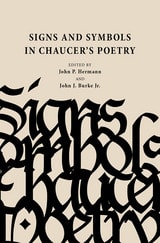
Signs and Symbols in Chaucer's Poetry
John P. Hermann
University of Alabama Press, 1981
Unlocking the rich symbolic world of Chaucer through the lens of medieval culture and meaning.
Innovative and thorough, Signs and Symbols in Chaucer’s Poetry presents nine essays that reexamine the literary iconography of Middle English. Chaucer’s work is the most well-known, and possibly the most significant, remnant of the Middle Ages; investigations into his writing and meanings are fruitful even today. The essays collected by John P. Hermann and John J. Burke Jr. invite scholars to consider new interpretations of old symbols while acknowledging the intricacies of historical context.
Each highly distinguished scholar responds to D. W. Robertson’s seminal, if controversial, approach to Chaucer’s work. Robertson’s scholarship, which also provides the opening essay of the collection, uses a historicist approach to contextualize Chaucer’s imagery within the literary and cultural conventions of the Middle Ages. Sources for such contextualization include etymology, topology, the classics, pictorial art, the Bible, and the developing sciences of the time. Robertson, as well as his contemporary Bernard F. Huppé, provided a fascinating new direction for modern Chaucer studies that focused on daily life.
Each essay uses this approach to draw attention to various examples of Chaucer’s iconography. The texts span several of Chaucer’s works and a plethora of subjects, including music, disappointed expectations, repeated or conflicting signs, and more. This volume provides insight into Chaucer’s work as well as the Middle Ages as a whole, examining conventions and expectations of society at that time. Scholars, instructors, and lovers of Chaucer will all find value in this finely edited collection.
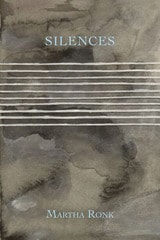
Silences
Martha Ronk
Omnidawn, 2019
These poems endeavor to give a much-deserved voice to silence, addressing the power of what is not seen. While silence remains perpetually out of reach, Ronk invites us to follow the language that creeps up to its edges. The poems in this collection form an inquiry that moves through the presence of silence and reveals insights into the character of the visual art in which it lives.
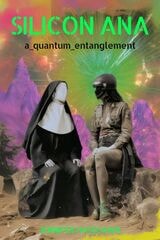
Silicon Ana
A Quantum EntanglementJennifer Hasegawa
Omnidawn, 2026
Poetry tracing the parallel lives of two characters as they grapple with transcendence, selfhood, technology, and desire.
In Silicon Ana: A Quantum Entanglement, two narratives weave across each page: Ana, a stigmatic visionary navigating miraculous healings and supernatural visitations, and Nan, discovering sexuality and selfhood through a found Penthouse magazine. Across seven movements, their stories braid and diverge—hospital beds mirror bedroom paralysis, religious ecstasy meets erotic awakening, strange prophecies echo in both realms. Through tightly wound five-line stanzas, this double helix of consciousness explores possession in all its forms: spiritual, sexual, psychological, and technological. Each stanza creates a chamber where sacred and profane collapse into each other. Written in an era of AI awakening and quantum computing, where consciousness becomes suspect, this collection asks what happens when the experiment becomes self-aware. As Ana ascends toward cosmic transcendence and Nan navigates earthly desire, their entangled fates ask if we are observing one entity being split across an unfathomable divide or two that are bound by invisible threads. Silicon Ana is a fevered meditation on bodies that refuse singular interpretation in an age of infinite possible selves.
Silver Road
Kazim Ali
Tupelo Press, 2018
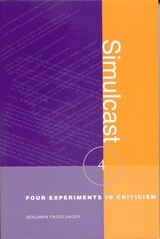
Simulcast
Four Experiments in CriticismBenjamin Friedlander
University of Alabama Press, 2004
A provocative overview of avant-garde American poetry of the past 25 years that raises important questions about the practice of criticism.
Simulcast offers long overdue, highly opinionated, and penetrating examinations of a flourishing movement in American letters by one of its most perceptive practitioners. The four “experiments” in literary criticism gathered in this volume vary in style and point of view. Taken together, they reassess the fundamental relationship between poetry and criticism.
“The Anti-Hegemony Project” is a satire, employing the rhetoric of journalism and the colloquial exchanges of online fan groups to analyze one of the earliest appearances of a poetry community on the World Wide Web: the “Poetics List” maintained at the State University of New York, Buffalo. “Poe’s Poetics and Selected Essays” is a collection of polemical essays on subjects ranging from modernism to language poetry. The third experiment, “The Literati of San Francisco,” is a detailed portrait of the figures and ideas at the heart of an important literary scene a decade after language poetry’s inception. The final essay, “A Short History of Language Poetry,” provides a less polemical, more sober and even-handed analysis of that movement from its origins to the present and its prospects for the future.
These critical interventions and essays are important studies of an evolving poetic field, but they also represent an evolution in criticism itself. Friedlander’s unorthodox methodology is to create a critical text by rewriting prior examples of criticism, among them Jean Wahl’s A Short History of Existentialism and Edgar Allan Poe’s "Literati of New York City." The resulting critiques are themselves a kind of poetry. They explore the issues of style versus substance, artifice versus authenticity, and plausibility versus truth, while the shifts in perspective call into question the authority of any one critical account.
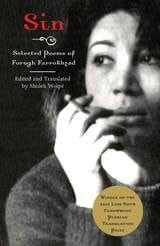
Sin
Selected Poems of Forugh FarrokhzadSholeh Wolpe
University of Arkansas Press, 2010