Results by title
234 books match the query 'Americas (North, Central, South, West Indies)' and 55 start with t
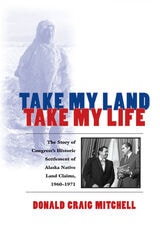
Take My Land, Take My Life
The Story of Congress's Historic Settlement of Alaska Native Land Claims 1960-1971Donald Craig Mitchell
University of Alaska Press, 2001
In Take My Land, Take My Life, Mitchell concludes the story of the 134-year history of the U.S. government's relations with Alaska's Native people begun in Sold American:The Story of Alaska Natives and Their Land, 1867-1959. The culmination of that tale occurred in 1971 when Congress enacted the Alaska Native Claims Settlement Act. ANCSA authorized Alaska Natives to be paid $962.5 million and to be conveyed title to 44 million acres of land. Though highly controversial, ANCSA remains the most generous settlement of aboriginal land claims in the nation's history. Mitchell's insightful, exhaustively researched work also describes the political history during the first decade of Alaska statehood, from the rise of Native organizations such as the Alaska Federation of Natives to the battles for power in the subcommittees of Congress.
Insightful and drawn from years of painstaking research of primary source materials, Sold American and Take My Land, Take My Life are an indispensable resource for readers who are interested in the history of the nation's largest state and of the federal government's involvement with Alaska's indigenous peoples.
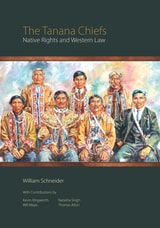
Tanana Chiefs
Native Rights and Western LawEdited by William Schneider
University of Alaska Press, 2018
This is the story of a historic meeting between Native Athabascan leaders and government officials, held in Fairbanks, Alaska in 1915. It was one of the first times that Native voices were part of the official record. They sought education and medical assistance, and they wanted to know what they could expect from the federal government. They hoped for a balance between preserving their way of life with seeking new opportunities under the law.
The Tanana Chiefs chronicles the efforts by Alaska Natives to gain recognition for rights under Western law and the struggles to negotiate government-to-government relationships with the federal government. It contains the first full transcript of the historic meeting as well as essays that connect that first gathering with the continued efforts of the Tanana Chiefs Conference, which continues to meet and fight for Native rights.
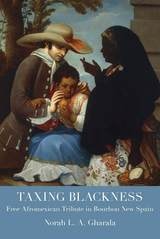
Taxing Blackness
Free Afromexican Tribute in Bourbon New SpainNorah L. A. Gharala
University of Alabama Press, 2019
A definitive analysis of the most successful tribute system in the Americas as applied to Afromexicans
During the eighteenth century, hundreds of thousands of free descendants of Africans in Mexico faced a highly specific obligation to the Spanish crown, a tax based on their genealogy and status. This royal tribute symbolized imperial loyalties and social hierarchies. As the number of free people of color soared, this tax became a reliable source of revenue for the crown as well as a signal that colonial officials and ordinary people referenced to define and debate the nature of blackness.
Taxing Blackness: Free Afromexican Tribute in Bourbon New Spain examines the experiences of Afromexicans and this tribute to explore the meanings of race, political loyalty, and legal privileges within the Spanish colonial regime. Norah L. A. Gharala focuses on both the mechanisms officials used to define the status of free people of African descent and the responses of free Afromexicans to these categories and strategies. This study spans the eighteenth century and focuses on a single institution to offer readers a closer look at the place of Afromexican individuals in Bourbon New Spain, which was the most profitable and populous colony of the Spanish Atlantic.
As taxable subjects, many Afromexicans were deeply connected to the colonial regime and ongoing debates about how taxpayers should be defined, whether in terms of reputation or physical appearance. Gharala shows the profound ambivalence, and often hostility, that free people of African descent faced as they navigated a regime that simultaneously labeled them sources of tax revenue and dangerous vagabonds. Some free Afromexicans paid tribute to affirm their belonging and community ties. Others contested what they saw as a shameful imposition that could harm their families for generations. The microhistory includes numerous anecdotes from specific cases and people, bringing their history alive, resulting in a wealth of rural and urban, gender, and family insight.
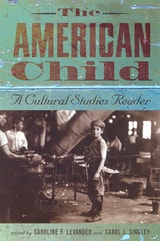
The American Child
A Cultural Studies ReaderLevander, Caroline F
Rutgers University Press, 2003
Although the volume is grounded heavily in the literary, it draws on other disciplines, revealing that representations of children and childhood are not isolated artifacts but cultural productions that in turn affect the social climates around them. Essayists look at games, pets, adolescent sexuality, death, family relations, and key texts such as The Adventures of Huckleberry Finn and the movie Pocahontas; they reveal the ways in which the figure of the child operates as a rich vehicle for writers to consider evolving ideas of nation and the diverse role of citizens within it.
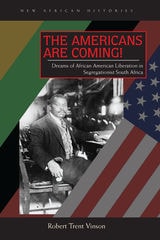
The Americans Are Coming!
Dreams of African American Liberation in Segregationist South AfricaRobert Trent Vinson
Ohio University Press, 2011
For more than half a century before World War II, black South Africans and “American Negroes”—a group that included African Americans and black West Indians—established close institutional and personal relationships that laid the necessary groundwork for the successful South African and American antiapartheid movements. Though African Americans suffered under Jim Crow racial discrimination, oppressed Africans saw African Americans as free people who had risen from slavery to success and were role models and potential liberators.
Many African Americans, regarded initially by the South African government as “honorary whites” exempt from segregation, also saw their activities in South Africa as a divinely ordained mission to establish “Africa for Africans,” liberated from European empires. The Jamaican-born Marcus Garvey’s Universal Negro Improvement Association, the largest black-led movement with two million members and supporters in forty-three countries at its height in the early 1920s, was the most anticipated source of liberation. Though these liberation prophecies went unfulfilled, black South Africans continued to view African Americans as inspirational models and as critical partners in the global antiapartheid struggle.
The Americans Are Coming! is a rare case study that places African history and American history in a global context and centers Africa in African Diaspora studies.

The Art of Defiance
Graffiti, Politics and the Reimagined City in PhiladelphiaTyson Mitman
Intellect Books, 2018
In order to both demystify and complicate our understanding of the practice of graffiti writing, this book pushes past the narrative that links the origins of graffiti to criminal gangs and instead offers a detailed portrait of graffiti as a rich urban culture with its own rules and practices. To do so, it examines the cultural history of graffiti in Philadelphia from the early 1970s onward and explores what it is like to be a graffiti writer in the city today. Ultimately, Tyson Mitman aims to humanize graffiti writers and to show that what they do is not merely destructive or puerile, but, rather, adds something important to the urban experience that is a conscious and deliberate act on the part of its practitioners.
The Birth of Head Start
Preschool Education Policies in the Kennedy and Johnson AdministrationsMaris A. Vinovskis
University of Chicago Press, 2005
Policymakers proposing to reform Head Start often invoke its origins to justify their position, but until now no comprehensive political history of the program has existed. Maris A. Vinovskis here provides an in-depth look at the nation's largest and best known—yet politically challenged—early education program. The Birth of Head Start sets the record straight on the program's intended aims, documenting key decisions made during its formative years. While previous accounts of Head Start have neglected the contributions of important participants such as federal education officials and members of Congress, Vinovskis's history is the first to consider the relationship between politics and policymaking and how this interaction has shaped the program. This thorough and incisive book will be essential for policymakers and legislators interested in prekindergarten education and will inform future discussions on early intervention services for disadvantaged children.
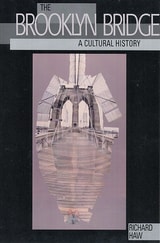
The Brooklyn Bridge
A Cultural HistoryHaw, Richard
Rutgers University Press, 2008
Hailed by some as the Eighth Wonder of the World when it opened in 1883, the Brooklyn Bridge is one of the world’s most recognizable and beloved icons. For over one hundred years it has excited and fascinated with stories of ingenuity and heroism, and it has been endorsed as a flawless symbol of municipal improvement and a prime emblem of American technological progress.
Despite its impressive physical presence, however, Brooklyn’s grand old bridge is much more than a testament of engineering and architectural achievement. As Richard Haw shows in this first of its kind cultural history, the Brooklyn Bridge owes as much to the imagination of the public as it does to the historical events and technical prowess that were integral to its construction.
Bringing together more than sixty images of the bridge that, over the years, have graced postcards, magazine covers, and book jackets and appeared in advertisements, cartoons, films, and photographs, Haw traces the diverse and sometimes jarring ways in which this majestic structure has been received, adopted, and interpreted as an American idea. Haw’s account is not a history of how the bridge was made, but rather of what people have made of the Brooklyn Bridge—in film, music, literature, art, and politics—from its opening ceremonies to the blackout of 2003.
Classic accounts from such writers and artists as H. G. Wells, Charles Reznikoff, Hart Crane, Lewis Mumford, Joseph Pennell, Walker Evans, and Georgia O’Keeffe, among many others, present the bridge as a deserted, purely aestheticized romantic ideal, while others, including Henry James, Joseph Stella, Yun Gee, Ernest Poole, Alfred Kazin, Paul Auster, and Don DeLillo, offer a counter-narrative as they question not only the role of the bridge in American society, but its function as a profoundly public, communal place. Also included are never-before-published photographs by William Gedney and a discussion of Alexis Rockman’s provocative new mural Manifest Destiny.
Drawing on hundreds of cultural artifacts, from the poignant, to the intellectual, to the downright quirky, The Brooklyn Bridge sheds new light on topics such as ethnic and foreign responses to America, nationalism, memory, parade culture, commemoration, popular culture, and post-9/11 America icons. In the end, we realize that this impressive span is as culturally remarkable today as it was technologically and physically astounding in the nineteenth century.
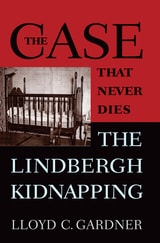
The Case That Never Dies
The Lindbergh KidnappingLloyd C. Gardner
Rutgers University Press, 2004
The Case That NeverDies places the Lindbergh kidnapping, investigation, and trial in the context of the Depression, when many feared the country was on the edge of anarchy. Gardner delves deeply into the aspects of the case that remain confusing to this day, including Lindbergh’s dealings with crime baron Owney Madden, Al Capone’s New York counterpart, as well as the inexplicable exploits of John Condon, a retired schoolteacher who became the prosecution’s best witness. The initial investigation was hampered by Colonel Lindbergh, who insisted that the police not attempt to find the perpetrator because he feared the investigation would endanger his son’s life. He relented only when the child was found dead.
After two years of fruitless searching, Bruno Richard Hauptmann, a German immigrant, was discovered to have some of the ransom money in his possession. Hauptmann was arrested, tried, and sentenced to death. Throughout the book, Gardner pays special attention to the evidence of the case and how it was used and misused in the trial. Whether Hauptmann was guilty or not, Gardner concludes that there was insufficient evidence to convict him of first-degree murder.
Set in historical context, the book offers not only a compelling read, but a powerful vantage point from which to observe the United States in the 1930s as well as contemporary arguments over capital punishment.
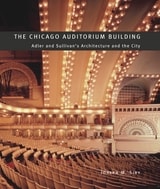
The Chicago Auditorium Building
Adler and Sullivan's Architecture and the CityJoseph M. Siry
University of Chicago Press, 2002
When the magnificent Auditorium Building opened on Chicago's Michigan Avenue in December 1889, it marked Chicago's emergence both as the leading city of the Midwest and as a metropolis of international stature. In this lavishly illustrated book, Joseph M. Siry explores not just the architectural history of the Auditorium Building but also the crucial role it played in Chicago's social history. Covering the Auditorium from the early design stage to its opening, its later renovations, its links to culture and politics in Chicago, and its influence on later Adler and Sullivan works (including the Schiller Building and the Chicago Stock Exchange Building), this volume recounts the fascinating tale of a building that helped to define a city and an era.
The Communist Party of the United States
From the Depression to World War IIOttanelli, Fraser
Rutgers University Press, 1991
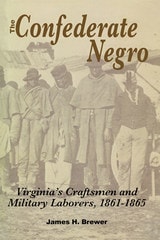
The Confederate Negro
Virginia's Craftsmen and Military Laborers, 1861-1865James H. Brewer
University of Alabama Press, 2007
A superb work in the social history of American industry
A Gettysburg College "Top 200 Civil War Books" selection
Mayflower Award Winner for 1970
The Constitution in Congress
Descent into the Maelstrom, 1829-1861David P. Currie
University of Chicago Press, 2005
This acclaimed series serves as a biography of the U.S. Constitution, offering an indispensable survey of the congressional history behind its development. In a rare examination of the role that both the legislative and executive branches have played in the development of constitutional interpretation, The Constitution in Congress shows how the actions and proceedings of these branches reveal perhaps even more about constitutional disputes than Supreme Court decisions of the time.
The centerpiece for the fourth volume in this series is the great debate over slavery and how this divisive issue led the country into the maelstrom of the Civil War. From the Jacksonian revolution of 1829 to the secession of Southern states from the Union, legal scholar David P. Currie provides an unrivaled analysis of the significant constitutional events—the Wilmot Proviso, the Compromise of 1850, the Kansas-Nebraska Act, the Lincoln-Douglas Debates, and "Bleeding Kansas"—that led up to the war. Exploring how slavery was addressed in presidential speeches and debated in Congress, Currie shows how the Southern Democrats dangerously diminished federal authority and expanded states' rights, threatening the nation's very survival.
Like its predecessors, this fourth volume of The Constitution in Congress will be an invaluable reference for legal scholars and constitutional historians alike.
The Coronado Expedition to Tierra Nueva
The 1540-1542 Route across the SouthwestRichard Flint
University Press of Colorado, 1997
In search of where the expedition went and what peoples it encountered, this volume explores the fertile valleys of Sonora, the basins and ranges of southern Arizona, the Zuni pueblos and the Rio Grande Valley of New Mexico, and the Llano Estacado of the Texas panhandle.
The twenty-one contributors to the volume have pursued some of the most significant lines of research in the field in the last fifty years; their techniques range from documentary analysis and recording traditional stories to detailed examination of the landscape and excavation of campsites and Indian towns. With more confidence than ever before, researchers are closing in on the route of the conquistadors.
The Decline of Organized Labor in the United States
Michael Goldfield
University of Chicago Press, 1987
The Dominican Racial Imaginary
Surveying the Landscape of Race and Nation in HispaniolaRicourt, Milagros
Rutgers University Press, 2016
This book begins with a simple question: why do so many Dominicans deny the African components of their DNA, culture, and history?
The Elementary Forms of Corruption
Moral Imagination and Political Change in BrazilAaron Ansell
HAU, 2025
The Elementary Forms of Corruption is an ethnographic history of rural Brazilians’ shifting moral imagination in the context of their country’s recent corruption scandals and political crises. The book explores how Brazil’s cosmopolitan models of corruption, both left-wing and right-wing varieties, found their way to a small sertanejo (hinterland) municipality in the northeast, where people understood corruption very differently. Reckoning with both the leftist Workers’ Party, which sought to liberate sertanejos from patron-client relations, and the New Right populists who sought to stamp out the “communists” threatening the patriarchal family, the people of the sertanejo made recourse to older ideas about corruption—such as the betrayal of kinship obligations and communal trust—to decipher and shape national politics.
Challenging the discipline’s current aversion to generalizable, analytic categories that are useful for comparison across cultures or historical periods, The Elementary Forms of Corruption posits a general framework for understanding corruption at its most elementary level: the degradation of a moral gradient through the transgressive rechanneling of those currencies (e.g., gifts, favors) that sustain communal bonds when properly directed.
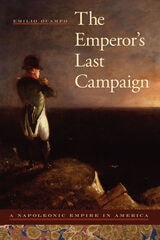
The Emperor's Last Campaign
A Napoleonic Empire in AmericaEmilio Ocampo
University of Alabama Press, 2009
WINNER OF THE 2009 LITERARY AWARD, SPONSORED BY THE INTERNATIONAL NAPOLEONIC SOCIETY/LA SOCIETE NAPOLEONIENNE INTERNATIONALE OF MONTREAL, QUEBEC'S LITERARY COMMITTEE
The fascinating story of the breakdown of the Spanish empire in America and the rise of the United States as a world power
Napoleon’s last campaign didn’t end at Waterloo. After that fateful day on June 1815, hundreds if not thousands of veterans of Napoleon’s army emigrated to America. Many went farther south and joined the rebels fighting for independence in the Spanish colonies, from Mexico to Buenos Aires. The Bonapartists roiled the Western World as they sought fortune, fame, and glory in the expanding United States and in the tumultuous Spanish Americas suffering from repression and civil disorder, and even in the states of Europe. They were joined by adventurers from other nations who shared their admiration for the fallen emperor.
This is the first full-length examination of the Bonapartists who emigrated from France after Napoleon’s defeat and exile, who formed a loose confederation with adventurers and romantics, and who contemplated a new empire in the Western Hemisphere. The scheme had the support and encouragement of the fallen emperor himself and his brother Joseph, former King of Spain, who lived in exile in the United States.
Emilio Ocampo has examined archives on three continents and sources in several languages to ferret out the evidence—a monumental task considering that conspirators tried to leave no evidence of their plans, and that a failed plot, like failure in general, leaves few claimants. Ocampo reinterprets Latin American independence as an international event that drew in all the major powers. By illuminating the complex connections between the shattered France of the Bourbon restoration; an England threatened by radical politician inspired by the French Revolution; Napoleon in exile at St. Helena; the United States, where home-grown adventurers and French émigrés alike saw opportunity; and the collapsing Spanish colonial empire, where revolutionaries were allying themselves with the veterans of Napoleon’s Grande Armée, Ocampo brings together two bodies of scholarship: Napoleonic history and Latin American independence. He does so by tracing the steps of four of the most fascinating characters of the era: two Britons disaffected with their own government—Lord Thomas Cochrane and Sir Robert Wilson—and two former generals of Napolean’s army named Charles Lallemand and Michel Brayer.
The Emperor’s Last Campaign is a fascinating story, well told, and peopled with all sorts of improbable characters and schemes that perhaps just missed coming to full fruition but that in the process contributed to one of the most important events of the nineteenth century: the breakdown of the Spanish empire in America and the rise of the United States as a world power.
The FBI in Latin America
The Ecuador FilesMarc Becker
Duke University Press, 2017
The Federal Civil Service System and the Problem of Bureaucracy
The Economics and Politics of Institutional ChangeRonald N. Johnson and Gary D. Libecap
University of Chicago Press, 1994
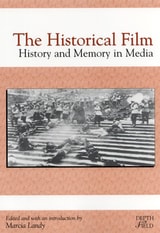
The Historical Film
History and Memory in MediaLandy, Marcia
Rutgers University Press, 2000
What is history? How do we represent it? How do our notions of history change over time? The essays in The Historical Film: History and Memory in Media probe the roles that cinema and television play in altering and complicating our understanding of historical events.
The book brings together representative examples of how both media critics and historians write about history as it is created and disseminated through film and television. The essays explore what is at stake culturally and politically in media history and how this form of history-making is different from traditional historiography. The volume is divided into four parts--Regarding History; History as Trauma; History, Fiction, and Postcolonial Memory; and History and Television--that progressively deepen our understanding of just how complex the issues are. Essays by top scholars analyze many different kinds of film: historical film, documentary, costume drama, and heritage films. The section on television is equally broad, examining phenomena as diverse as news broadcasts and Ken Burns's documentary The Civil War.
Contributors are Mbye Cham, George F. Custen, Mary Ann Doane, Richard Dienst, Taylor Downing, Gary Edgerton, Naomi Greene, Miriam Bratu Hansen, Sue Harper, Sumiko Higashi, Anton Kaes, Marcia Landy, Shawn Rosenheim, Robert A. Rosenstone, Pierre Sorlin, Maria Wyke, and Ismail Xavier.
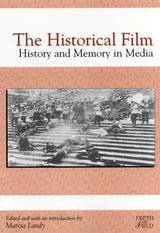
The Historical Film
History and Memory in MediaLandy, Marcia
Rutgers University Press, 2000
What is history? How do we represent it? How do our notions of history change over time? The essays in The Historical Film: History and Memory in Media probe the roles that cinema and television play in altering and complicating our understanding of historical events.
The book brings together representative examples of how both media critics and historians write about history as it is created and disseminated through film and television. The essays explore what is at stake culturally and politically in media history and how this form of history-making is different from traditional historiography. The volume is divided into four parts--Regarding History; History as Trauma; History, Fiction, and Postcolonial Memory; and History and Television--that progressively deepen our understanding of just how complex the issues are. Essays by top scholars analyze many different kinds of film: historical film, documentary, costume drama, and heritage films. The section on television is equally broad, examining phenomena as diverse as news broadcasts and Ken Burns's documentary The Civil War.
Contributors are Mbye Cham, George F. Custen, Mary Ann Doane, Richard Dienst, Taylor Downing, Gary Edgerton, Naomi Greene, Miriam Bratu Hansen, Sue Harper, Sumiko Higashi, Anton Kaes, Marcia Landy, Shawn Rosenheim, Robert A. Rosenstone, Pierre Sorlin, Maria Wyke, and Ismail Xavier.
The Hollywood War Film
Critical Observations from World War I to IraqDaniel Binns
Intellect Books, 2017
Looking closely at films such as All Quiet on the Western Front, Full Metal Jacket, and The Hurt Locker, Binns reveals the commonalities in Hollywood films despite the distinct conflicts and eras they represent, and he shows how contemporary war films closely echo earlier films in their nationalistic and idealistic depictions. Offering a trenchant analysis of some of the most important war films from the past century, this book will be of interest to anyone who has been captivated by how film has dealt with one of humanity’s most difficult, but far too common, realities.
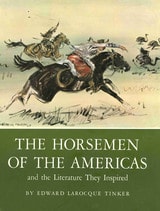
The Horsemen of the Americas and the Literature They Inspired
Edward Larocque Tinker
University of Texas Press, 1967
Wherever cattle have been raised on a large scale horsemen have been there to handle them; and wherever these horsemen have existed they have left an indelible mark upon the history of the land. Frequently they have been ignorant, violent, and brutal. Always they have been vigorous and individualistic. They have taken their herds into frontier areas, opened new country, fought and driven off earlier inhabitants, participated in revolutions, battled among themselves, and generally lived lives which, colorful and somewhat frightening to their contemporaries, have become robust legends to those who followed them.
Edward Larocque Tinker portrays the life of these people in the two Americas, the conditions which created them, and those that ultimately destroyed or transformed them.
"Ever since I was a small boy, when my parents returned from Mexico bringing me a charro outfit complete with saddle and bridle, Latin America has beckoned with the finger of romance," Mr. Tinker recalls. "As soon as I was old enough, I made many trips to Mexico and, in the days of Porfirio Díaz, learned to know it from the border to the Isthmus of Tehuantepec. During the Revolution I was with General Álvaro Obregón when he was a Teniente Coronel in his Sonora Campaign, and, although I was only a lawyer on a holiday, took care of his wounded in the battel of San Joaquín. Later, in Pancho Villa's train, I was present at Celaya when he was defeated by Obregón.
"Always an ardent horseman, I worked many a roundup with the vaqueros of Sonora and Chihuahua, and with the cowboys of our Southwest. . . .
"I saw the similarity between the American cowboy, the Argentine Gaucho, and the Vaquero of Mexico. They all received their gear and technique of cattle handling from Spain, and developed the same independence, courage, and hardihood. I thought if these qualities were better known they might serve as a bridge to closer understanding throughout the Americas."
From his study of the lives of these horsemen, Tinker proceeds to an examination of the literature that evolved among and then about them.
The first and largest part of the book deals with the gaucho of Argentina and Uruguay. The second and third sections examine the charro of Mexico and the cowboy of the United States.

The Humane Economy
Populism, Capitalism, and DemocracyPollack, Norman
Rutgers University Press, 1990
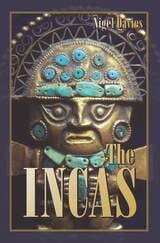
The Incas
Nigel Davies
University Press of Colorado, 1995
In this classic work, Nigel Davies offers a clear view into Inca political history, economy, governance, religion, art, architecture, and daily life. The Incas has become a classic in its many years in print; readers and scholars interested in ancient American cultures will relish this paperback edition.
The Intruders
Unreasonable Searches and Seizures from King John to John AshcroftDash, Samuel
Rutgers University Press, 2004
What led to the Fourth Amendment’s protection of the people against unreasonable searches and seizures, codified in written law for the first time in history, and are we in danger of losing that protection? Celebrated lawyer Samuel Dash, known for his role as Chief Counsel of the Watergate Committee, explores the struggle for privacy. He does so by telling the dramatic tales of the people who were involved in influential legal battles, including landmark Supreme Court cases.
Covering almost eight-hundred years of history, Dash begins with the time of King John of England and the Magna Carta, then moves to colonial America as colonists resisted searches mandated under King George. These tensions contributed to the birth of the United States and the adoption of our Bill of Rights with its Fourth Amendment, protecting people against unreasonable searches and seizures.
How effective that protection has been is the story of the next two centuries. Dash explores U.S. Supreme Court cases through the sometimes humorous experiences of the people involved, including the unlucky gambler with a shoplifting wife and the police lieutenant turned king of bootleggers. To some extent, judicial safeguarding of Fourth Amendment protections depended on who made up the majority of the Court at any given time.
By 2001 a conservative majority of the Court had given law enforcement agents greater search powers than ever before. Dash challenges the legal justification of the Bush Administration’s grab for greater search, seizure, and wiretap powers after the 9/11 terrorists’ attacks. He reminds us of government abuses of power in prior emergencies in American history. For Dash, the best security is our belief in individual liberty and the enforcement of our Bill of Rights.
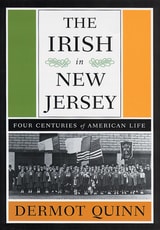
The Irish in New Jersey
Four Centuries of American Life, First Paperback EditionDermot Quinn
Rutgers University Press, 2004
In this richly illustrated history, Dermot Quinn uncovers the story of how the Irish in New Jersey maintained their cultural roots while also laying the foundations for the social, economic, political, and religious landscapes of their adopted country. Quinn chronicles the emigration of families from a conflict-torn and famine-stricken Ireland to the unfamiliar land whose unwelcoming streets often fell far short of being paved with gold.
Using case histories from Paterson, Jersey City, and Newark, Quinn examines the transition of the Irish from a rejected minority to a middle-class, secular, and suburban identity. The Irish in New Jersey will appeal to everyone with an interest in the cultural heritage of a proud and accomplished people.
The Latin American Literary Boom and U.S. Nationalism during the Cold War
Deborah Cohn
Vanderbilt University Press, 2012
The high level of interest in Latin America paradoxically led the U.S. government to restrict these authors' physical presence in the United States through the McCarranWalter Act's immigration blacklist, even as cultural organizations cultivated the exchange of ideas with writers and sought to market translations of their work for the U.S. market.
The Life of the Admiral Christopher Columbus
by his son FerdinandKeen, Benjamin
Rutgers University Press, 1959
The Lost Promise of Patriotism
Debating American Identity, 1890-1920Jonathan M. Hansen
University of Chicago Press, 2003
Intellectuals such as William James, John Dewey, Jane Addams, Eugene V. Debs, and W. E. B. Du Bois repudiated liberalism's association with acquisitive individualism and laissez-faire economics, advocating a model of liberal citizenship whose virtues and commitments amount to what Hansen calls cosmopolitan patriotism. Rooted not in war but in dedication to social equity, cosmopolitan patriotism favored the fight against sexism, racism, and political corruption in the United States over battles against foreign foes. Its adherents held the domestic and foreign policy of the United States to its own democratic ideals and maintained that promoting democracy universally constituted the ultimate form of self-defense. Perhaps most important, the cosmopolitan patriots regarded critical engagement with one's country as the essence of patriotism, thereby justifying scrutiny of American militarism in wartime.
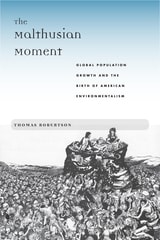
The Malthusian Moment
Global Population Growth and the Birth of American EnvironmentalismRobertson, Thomas
Rutgers University Press, 2012
Weaving together the international and the domestic in creative new ways, The Malthusian Moment charts the explosion of Malthusian thinking in the United States from World War I to Earth Day 1970, then traces the just-as-surprising decline in concern beginning in the mid-1970s. In addition to offering an unconventional look at World War II and the Cold War through a balanced study of the environmental movement’s most contentious theory, the book sheds new light on some of the big stories of postwar American life: the rise of consumption, the growth of the federal government, urban and suburban problems, the civil rights and women’s movements, the role of scientists in a democracy, new attitudes about sex and sexuality, and the emergence of the “New Right.”
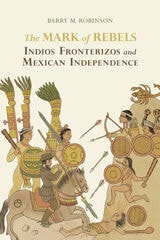
The Mark of Rebels
Indios Fronterizos and Mexican IndependenceBarry M. Robinson
University of Alabama Press, 2016
Explores social and cultural transformations among the indigenous communities of western Mexico, especially the indios fronterizos (Frontier Indians), preceding and during the struggle for independence
In The Mark of Rebels Barry Robinson offers a new look at Mexican Independence from the perspective of an indigenous population caught in the heart of the struggle. During the conquest and settlement of Mexico’s Western Sierra Madre, Spain’s indigenous allies constructed an indio fronterizo identity for their ethnically diverse descendants. These communities used their special status to maintain a measure of autonomy during the colonial era, but the cultural shifts of the late colonial period radically transformed the relationship between these indios fronterizos and their neighbors.
Marshalling an extensive array of archival material from Mexico, the United States, and Spain, Robinson shows that indio fronterizo participation in the Mexican wars of independence grafted into the larger Hidalgo Revolt through alignment with creole commanders. Still, a considerable gulf existed between the aims of indigenous rebels and the creole leadership. Consequently, the privileges that the indios fronterizos sought to preserve continued to diminish, unable to survive either the late colonial reforms of the Spanish regime or creole conceptions of race and property in the formation of the new nation-state.
This story suggests that Mexico’s transition from colony to nation can only be understood by revisiting the origins of the colonial system and by recognizing the role of Spain’s indigenous allies in both its construction and demolition. The study relates events in the region to broader patterns of identity, loyalty, and subversion throughout the Americas, providing insight into the process of mestizaje that is commonly understood to have shaped Latin America. It also foreshadows the popular conservatism of the nineteenth century and identifies the roots of post-colonial social unrest.
This book provides new context for scholars, historians, ethnographers, anthropologists, and anyone interested in the history of Mexico, colonization, Native Americans, and the Age of Revolutions.

The Medical Delivery Business
Health Reform, Childbirth, and the Economic OrderPerkins, Barbara Bridgman
Rutgers University Press, 2004
Americans at the end of the twentieth century worried that managed care had fundamentally transformed the character of medicine. In The Medical Delivery Business, Barbara Bridgman Perkins uses examples drawn from maternal and infant care to argue that the business approach in medicine is not a new development. Health care reformers throughout the century looked to industrial, corporate, and commercial enterprises as models for the institutions, specialties, and technological strategies that defined modern medicine.
In the case of perinatal care, the business model emphasized specialized over primary care, encouraged the use of surgical and technological procedures, and unnecessarily turned childbirth into an intensive care situation. Active management techniques, for example, encouraged obstetricians to accelerate labor with oxytocin to augment their productivity. Despite the achievements of the childbirth and women’s health movement in the 1970s, aggressive medical intervention has remained the birth experience for millions of American women (and their babies) every year.
The Medical Delivery Business challenges the conventional view that a dose of the market is good for medicine. While Perkins is sympathetic to the goals of progressive and feminist reformers, she questions whether their strategies will succeed in making medicine more equitable and effective. She argues that the medical care system itself needs to be fundamentally "re-formed," and the reforms must be based on democracy, caring, and social justice as well as economics.
The Menace of Prosperity
New York City and the Struggle for Economic Development, 1865–1981Daniel Wortel-London
University of Chicago Press, 2025
Many local policymakers make decisions based on a deep-seated belief: what’s good for the rich is good for cities. Convinced that local finances depend on attracting wealthy firms and residents, municipal governments lavish public subsidies on their behalf. Whatever form this strategy takes—tax-exempt apartments, corporate incentives, debt-financed mega projects—its rationale remains consistent and assumed to be true. But this wasn’t always the case. Between the 1870s and the 1970s, a wide range of activists, citizens, and intellectuals in New York City connected local fiscal crises to the greed and waste of the rich. These figures saw other routes to development, possibilities rooted in alternate ideas about what was fiscally viable.
In The Menace of Prosperity, Daniel Wortel-London argues that urban economics and politics are shaped by what he terms the “fiscal imagination” of policymakers, activists, advocates, and other figures. His survey of New York City during a period of explosive growth shows how residents went beyond the limits of redistributive liberalism to imagine how their communities could become economically viable without the largesse of the wealthy. Their strategies—which included cooperatives, public housing, land-value taxation, public utilities, and more—centered the needs and capabilities of ordinary residents as the basis for local economies that were both prosperous and just.
Overturning stale axioms about economic policy, The Menace of Prosperity shows that not all growth is productive for cities. Wortel-London’s ambitious history demonstrates the range of options we’ve abandoned and hints at the economic frameworks we could still realize—and the more democratic cities that might result.
The Menace of Prosperity
New York City and the Struggle for Economic Development, 1865–1981Daniel Wortel-London
University of Chicago Press, 2025
Upends entrenched thinking about cities, demonstrating how urban economies are defined—or constrained—by the fiscal imagination of policymakers, activists, and residents.
Many local policymakers make decisions based on a deep-seated belief: what’s good for the rich is good for cities. Convinced that local finances depend on attracting wealthy firms and residents, municipal governments lavish public subsidies on their behalf. Whatever form this strategy takes—tax-exempt apartments, corporate incentives, debt-financed mega projects—its rationale remains consistent and assumed to be true. But this wasn’t always the case. Between the 1870s and the 1970s, a wide range of activists, citizens, and intellectuals in New York City connected local fiscal crises to the greed and waste of the rich. These figures saw other routes to development, possibilities rooted in alternate ideas about what was fiscally viable.
In The Menace of Prosperity, Daniel Wortel-London argues that urban economics and politics are shaped by what he terms the “fiscal imagination” of policymakers, activists, advocates, and other figures. His survey of New York City during a period of explosive growth shows how residents went beyond the limits of redistributive liberalism to imagine how their communities could become economically viable without the largesse of the wealthy. Their strategies—which included cooperatives, public housing, land-value taxation, public utilities, and more—centered the needs and capabilities of ordinary residents as the basis for local economies that were both prosperous and just.
Overturning stale axioms about economic policy, The Menace of Prosperity shows that not all growth is productive for cities. Wortel-London’s ambitious history demonstrates the range of options we’ve abandoned and hints at the economic frameworks we could still realize—and the more democratic cities that might result.
The Mexican Dream
Or, The Interrupted Thought of Amerindian CivilizationsJ. M. G. Le Clézio
University of Chicago Press, 1993
Winner of the 2008 Nobel Prize for Literature, J. M. G. Le Clézio here conjures the consciousness of Mexico, powerfully evoking the dreams that made and unmade an ancient culture. Le Clézio’s haunting book takes us into the dream that was the religion of the Aztecs, a religion whose own apocalyptic visions anticipated the coming of the Spanish conquerors. Here the dream of the conquistadores rises before us, too, the glimmering idea of gold drawing Europe into the Mexican dream. Against the religion and thought of the Aztecs and the Tarascans and the Europeans in Mexico, Le Clézio also shows us those of the “barbarians” of the north, the nomadic Indians beyond the pale of the Aztec frontier.
Finally, Le Clézio’s book is a dream of the present, a meditation on what in Amerindian civilizations—in their language, in their way of telling tales, of wanting to survive their own destruction—moved the poet, playwright, and actor Antonin Artaud and motivates Le Clézio in this book. His own deep identification with pre-Columbian cultures, whose faith told them the wheel of time would bring their gods and their beliefs back to them, finds fitting expression in this extraordinary book, which brings the dream around.
“We are lucky to have in Le Clézio a writer of great quality who brings his particular sensibility and talent here to remind us of the very nature of the rituals and myths of the civilizations of ancient Mexico; he provides us with descriptions as precise as they are mysterious.”—Le Figaro
The Missouri Mormon Experience
Edited by Thomas M. Spencer
University of Missouri Press, 2010
The Morality of Everyday Life
Rediscovering an Ancient Alternative to the Liberal TraditionThomas Fleming
University of Missouri Press, 2007
In TheMorality of Everyday Life, Thomas Fleming offers an alternative to the enlightened liberalism espoused by thinkers as different as Kant, Mill, Rand, and Rawls. Philosophers in the liberal tradition, although they disagree on many important questions, agree that moral and political problems should be looked at from an objective point of view and a decision made from a rational perspective that is universally applied to all comparable cases.
Fleming instead places importance on the particular, the local, and moral complexity. He advocates a return to premodern traditions, such as those exemplified in the texts of Aristotle, the Talmud, and the folk wisdom in ancient Greek literature, for a solution to ethical predicaments. In his view, liberalism and postmodernism ignore the fact that human beings by their very nature refuse to live in a world of universal abstractions.
While such modern philosophers as Kant and Kohlberg have regarded a mother’s self-sacrificing love for her children as beneath their level of morality, folk wisdom tells us it is nearly the highest morality, taking precedence over the duties of citizenship or the claims of humanity. Fleming believes that a modern type of “casuistry” should be applied to these moral conflicts in which the line between right and wrong is rarely clear.
This volume will appeal to students of ethics and classics, as well as the general educated reader, who will appreciate Fleming’s jargon-free prose. Teachers will find this text useful because each chapter is a self-contained essay that could be used as the basis for classroom discussion.
The New South Faces the World
Foreign Affairs and the Southern Sense of Self,1877-1950Tennant S. McWilliams
University of Alabama Press, 2007
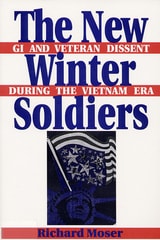
The New Winter Soldiers
GI and Veteran Dissent During the Vietnam EraMoser, Richard
Rutgers University Press, 1996
Richard Moser uses interviews and personal stories of Vietnam veterans to offer a fundamentally new interpretation of the Vietnam War and the antiwar movement. Although the Vietnam War was the most important conflict of recent American history, its decisive battle was not fought in the jungles of Vietnam, or even in the streets of the United States, but rather in the hearts and minds of American soldiers. To a degree unprecedented in American history, soldiers and veterans acted to oppose the very war they waged. Tens of thousands of soldiers and veterans engaged in desperate conflicts with their superiors and opposed the war through peaceful protest, creating a mass movement of dissident organizations and underground newspapers.
Moser shows how the antiwar soldiers lived out the long tradition of the citizen soldier first created in the American Revolution and Civil War. Unlike those great upheavals of the past, the Vietnam War offered no way to fulfill the citizen-soldier's struggle for freedom and justice. Rather than abandoning such ideals, however, tens of thousands abandoned the war effort and instead fulfilled their heroic expectations in the movements for peace and justice. According to Moser, this transformation of warriors into peacemakers is the most important recent development of our military culture.
The struggle for peace took these new winter soldiers into America rather than away from it. Collectively these men and women discovered the continuing potential of American culture to advance the values of freedom, equality, and justice on which the nation was founded.
The President in the Legislative Arena
Jon R. Bond and Richard Fleisher
University of Chicago Press, 1990
In The President in the Legislative Arena, Jon R. Bond and Richard Fleisher depart dramatically from the concern with presidential influence that has dominated research on presidential-congressional relations for the past thirty years. Of the many possible factors involved in presidential success, those beyond presidential control have long been deemed unworthy of study. Bond and Fleisher disagree. Turning to democratic theory, they insist that it is vitally important to understand the conditions under which the executive brance prevails, regardless of the source of that success. Accordingly, they provide a thorough and unprecedented analysis of presidential success on congressional roll-call votes from 1953 through 1984. Their research demonstrates that the degree of cooperation between the two branches is much more systematically linked to the partisan and ideological makeup of Congress than to the president's bargaining ability and popularity. Thus the composition of Congress "inherited" by the president is the single most significant determinant of the success or failure of the executive branch.
The Response to Industrialism, 1885-1914
Samuel P. Hays
University of Chicago Press, 1995
Hays draws on the vast knowledge of America's urban and social history that has been developed over the last thirty-eight years to make the second edition an unusually well-rounded study. He enhances the original coverage of politics, labor, and business with new accounts of the growth of cities, the rise of modern values, cultural conflicts with Native Americans and foreign nations, and changing roles for women, African-Americans, education, religion, medicine, law, and leisure. The result is a tightly woven portrait of America in transition that underscores the effects of impersonal market forces and greater personal freedom on individuals and chronicles such changes as the rise of social inequality, shifting power, in the legal system, the expansion of the federal government, and the formation of the Populist, Progressive, and Socialist parties.
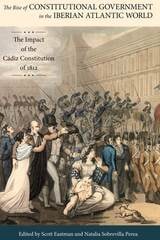
The Rise of Constitutional Government in the Iberian Atlantic World
The Impact of the Cádiz Constitution of 1812Scott Eastman
University of Alabama Press, 2015
Exploring the constitution that transformed governance, citizenship, and political culture across the Hispanic Atlantic world.
In March 1812, while Napoleon’s brother Joseph sat on the throne of Spain and the armies of France occupied much of the country, legislators elected from Spain and its overseas territories met in the Andalusian city of Cádiz. There, as the cornerstone of a government in exile, they drafted and adopted the first liberal constitution in the Hispanic world, a document that became known as the Cádiz Constitution of 1812.
The 1812 Constitution was extremely influential in and beyond Europe, and this collection of essays explores how its enduring legacy not only shaped the history of state-building, elections, and municipal governance in Iberian America, but also affected national identities and citizenship as well as the development of race and gender in the region.
A bold blueprint for governing a global, heterogeneous monarchy, the Constitution represented a rupture with Spain’s Antiguo Régimen (Old Regime) in numerous ways—in the limits it placed on the previously autocratic Bourbon monarchs, in the admission to its governing bodies of deputies from Spain’s American viceroyalties as equals, and in its framers’ vociferous debate over the status of castas (those of mixed ancestry) and slaves. The Rise of Constitutional Government in the Iberian Atlantic World covers these issues and adopts a transatlantic perspective that recovers the voices of those who created a vibrant political culture accessible to commoners and elite alike.
The bicentenary of the Constitution of 1812 offered scholars an excellent moment to reexamine the form and role of constitutions across the Spanish-speaking world. Constitutionalism remains a topic of intense debate in Latin America, while contemporary Spain itself continues to seek ways to balance a strong central government with centripetal forces in its regions, notably the Basque and Catalan provinces. The multifaceted essays compiled here by Scott Eastman and Natalia Sobrevilla Perea both shed new light on the early, liberal Hispanic societies and show how the legacies of those societies shape modern Spain and Latin America.
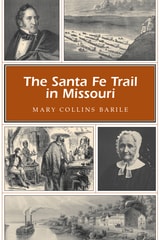
The Santa Fe Trail in Missouri
Mary Collins Barile
University of Missouri Press, 2010
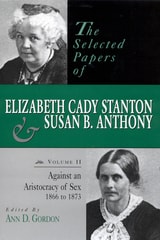
The Selected Papers of Elizabeth Cady Stanton and Susan B. Anthony
Against an Aristocracy of Sex, 1866 to 1873Gordon, Ann D
Rutgers University Press, 2000
The second volume picks up the story of Stanton and Anthony at the end of 1866, when they launched their drive to make universal suffrage the priority of Reconstruction. Through letters, speeches, articles, and diaries, this volume recounts their years as editor and publisher of the weekly paper the Revolution, their extensive travels, and their lobbying with Congress. It touches on the bitter division that occurred among suffragists over such controversial topics as marriage and divorce, and a national debate over the citizenship of women under the Fourteenth and Fifteenth Amendments. By the summer of 1873, when this volume ends, Anthony stood convicted of the federal crime of illegal citizenship of women under the Fourteenth and Fifteenth Amendments. By the summer of 1873, when this volume ends, Anthony stood convicted of the federal crime of illegal voting. An irate Stanton warned, "I felt afresh the mockery of this boasted chivalry of man towards woman."
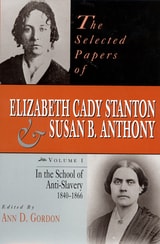
The Selected Papers of Elizabeth Cady Stanton and Susan B. Anthony
In the School of Anti-Slavery, 1840 to 1866Gordon, Ann D
Rutgers University Press, 1997
In the School of Anti-Slavery, 1840-1866 is the first of six volumes of The Selected Papers of Elizabeth Cady Stanton and Susan B. Anthony. The collection documents the lives and accomplishments of two of America's most important social and political reformers. Though neither Stanton nor Anthony lived to see the passage of the Nineteenth Amendment in 1920, each of them devoted fifty-five years to the cause. Their names were synonymous with woman suffrage in the United States and around the world as they mobilized thousands of women to fight for the right to a political voice.
Opening when Stanton was twenty-five and Anthony was twenty, and ending when Congress sent the Fourteenth Amendment to the states for ratification, this volume recounts a quarter of a century of staunch commitment to political change. Readers will enjoy an extraordinary collection of letters, speeches, articles, and diaries that tells a story-both personal and public-about abolition, temperance, and woman suffrage.
When all six volumes are complete, the Selected Papers of Stanton and Anthony will contain over 2,000 texts transcribed from their originals, the authenticity of each confirmed or explained, with notes to allow for intelligent reading. The papers will provide an invaluable resource for examining the formative years of women's political participation in the United States. No library or scholar of women's history should be without this original and important collection.
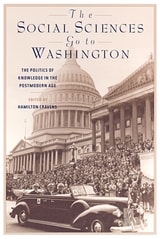
The Social Sciences Go to Washington
The Politics of Knowledge in the Postmodern AgeEdited by Hamilton Cravens
Rutgers University Press, 2003
What happens when the allegedly value-free social sciences enter the national political arena? In The Social Sciences Go to Washington, scholars examine the effects of the massive influx of sociologists, demographers, economists, educators, and others to the federal advisory process in the postwar period. Essays look at how these social scientists sought to change existing policies in welfare, public health, urban policy, national defense, environmental policy, and science and technology policy, and the ways they tried to influence future policies.
Policymakers have been troubled that followers of postmodernism have questioned the legitimacy of scientific and political authority to speak for the desires of social groups. As the social sciences increasingly become expressions of individual preferences, the contributors ask, how can they continue to be used to set public policy for us all?
This collection is a useful resource for anyone studying the relationship between science and the government in the postwar years.
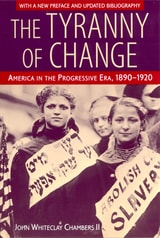
The Tyranny of Change
America in the Progressive Era, 1890-1920Chambers, John Whiteclay II
Rutgers University Press, 2000
Between 1890 and 1920, the forces accompanying industrialization sent the familiar nineteenth-century world plummeting toward extinction. The traditional countryside with its villages and family farms was eclipsed by giant corporations and sprawling cities. America appeared headed into an unknown future.
In lively, accessible prose, John Chambers incorporates the latest scholarship about the social, cultural, political, and economic changes which produced modern America. He illuminates the experiences of blacks, Asians, Latinos, as well as other working men and women in the cities and countryside as they struggled to improve their lives in a transformed economy. He explores the dimensions of the new consumer society and the new information and entertainment industries: newspapers, magazines, the movies. Striding these pages are many of the prominent individuals who shaped the attitudes and institutions of modern America: J. P. Morgan and corporate reorganization; Jane Addams and the origin of modern social work; Mary Pickford and the new star-oriented motion picture industry; and the radical labor challenge of “Big Bill” Haywood and the “Wobblies.”
While recognizing a “progressive ethos”—a mixture of idealistic vision and pragmatic reforms—which dominated the mainstream reforms that characterized the period, Chambers elaborates the role of civic volunteerism as well as the state in achieving directed social change. He also emphasizes the importance of radical and conservative political forces in shaping the so-called “Progressive Era.”
The revised edition in this classic work has an updated bibliography and a new preface, both of which incorporate particularly the new social and cultural research of the past decade.
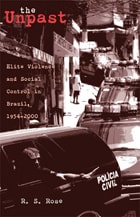
The Unpast
Elite Violence and Social Control in Brazil, 1954–2000R. S. Rose
Ohio University Press, 2005
Portuguese and Brazilian slave-traders shipped at least four million slaves to Brazil—in contrast to the five hundred thousand slaves that English vessels brought to the Americas. Controlling the vast number of slaves in Brazil became of primary importance. The Unpast: Elite Violence and Social Control in Brazil, 1954–2000 documents the ways in which the brutal methods used on plantations led directly to the phenomenon of Brazilian death squads.
The Unpast examines how and why, after the abolition of slavery, elites in Brazil imported new methods of killing, torturing, or disfiguring dissidents and the poor to maintain dominance. Bringing a critical-historical analysis to events following the 1954 suicide of President Getúlio Vargas, R. S. Rose takes the reader along a fifty-year path that helped to shape a nation’s morals. He covers the misunderstood presidency of João Goulart; the overthrow of his government by a U.S.-assisted military; the appalling dictatorship that followed; the efforts to rid the countryside of troublemakers; and the ongoing attempt to cleanse the urban environment of the needy, an endeavor that produced 32,675 victims in just two Brazilian states between 1954 and 2000.
The largest and most comprehensive documentation of suspected death-squad victims ever undertaken, The Unpast is an exposé of practices and attitudes toward the poor in Latin America’s largest country.