Results by title
668 books match the query 'History & Surveys' and 161 start with t
Tarrying with the Negative
Kant, Hegel, and the Critique of IdeologySlavoj Zizek
Duke University Press, 1993
In Tarrying with the Negative, Žižek challenges the contemporary critique of ideology, and in doing so opens the way for a new understanding of social conflict, particularly the recent outbursts of nationalism and ethnic struggle. Are we, Žižek asks, confined to a postmodern universe in which truth is reduced to the contingent effect of various discursive practices and where our subjectivity is dispersed through a multitude of ideological positions? No is his answer, and the way out is a return to philosophy. This revisit to German Idealism allows Žižek to recast the critique of ideology as a tool for disclosing the dynamic of our society, a crucial aspect of which is the debate over nationalism, particularly as it has developed in the Balkans—Žižek's home. He brings the debate over nationalism into the sphere of contemporary cultural politics, breaking the impasse centered on nationalisms simultaneously fascistic and anticolonial aspirations. Provocatively, Žižek argues that what drives nationalistic and ethnic antagonism is a collectively driven refusal of our own enjoyment.
Using examples from popular culture and high theory to illuminate each other—opera, film noir, capitalist universalism, religious and ethnic fundamentalism—this work testifies to the fact that, far more radically than the postmodern sophists, Kant and Hegel are our contemporaries.
Tears and Saints
E. M. Cioran
University of Chicago Press, 1995
"Who can tell?" he wrote in the first paragraph of this book, first published in Romania in 1937. "To be sure, tears are their trace. Tears did not enter the world through the saints; but without them we would never have known that we cry because we long for a lost paradise." By following in their traces, "wetting the soles of one's feet in their tears," Cioran hoped to understand how a human being can renounce being human. Written in Cioran's characteristic aphoristic style, this flamboyant, bold, and provocative book is one of his most important—and revelatory—works.
Cioran focuses not on martyrs or heroes but on the mystics—primarily female—famous for their keening spirituality and intimate knowledge of God. Their Christianity was anti-theological, anti-institutional, and based solely on intuition and sentiment. Many, such as Catherine of Siena, Teresa of Avila, and Saint John of the Cross, have produced classic works of mystical literature; but Cioran celebrates many more minor and unusual figures as well.
Following Nietzsche, he focuses explicitly on the political element hidden in saints' lives. In his hands, however, their charitable deeds are much less interesting than their thirst for pain and their equally powerful capacity to endure it. Behind their suffering and their uncanny ability to renounce everything through ascetic practices, Cioran detects a fanatical will to power.
"Like Nietzsche, Cioran is an important religious thinker. His book intertwines God and music with passion and tears. . . . [Tears and Saints] has a chillingly contemporary ring that makes this translation important here and now."—Booklist
The Actual and the Rational
Hegel and Objective SpiritJean-Francois Kervegan
University of Chicago Press, 2018
Kervégan begins with Hegel’s term “objective spirit,” the public manifestation of our deepest commitments, the binding norms that shape our existence as subjects and agents. He examines objective spirit in three realms: the notion of right, the theory of society, and the state. In conversation with Tocqueville and other theorists of democracy, whether in the Anglophone world or in Europe, Kervégan shows how Hegel—often associated with grand metaphysical ideas—actually had a specific conception of civil society and the state. In Hegel’s view, public institutions represent the fulfillment of deep subjective needs—and in that sense, demonstrate that the real is the rational, because what surrounds us is the product of our collective mindedness. This groundbreaking analysis will guide the study of Hegel and nineteenth-century political thought for years to come.
The Aristotelian Tradition of Natural Kinds and Its Demise
Stewart Umphrey
Catholic University of America Press, 2018
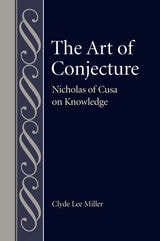
The Art of Conjecture
Nicholas of Cusa on KnowledgeClyde Lee Miller
Catholic University of America Press, 2021
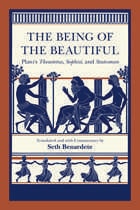
The Being of the Beautiful
Plato's Theaetetus, Sophist, and StatesmanPlato
University of Chicago Press, 1984
“The translations are masterpieces of literalness. . . . They are honest, accurate, and give the reader a wonderful sense of the Greek.”—Drew A. Hyland, Review of Metaphysics
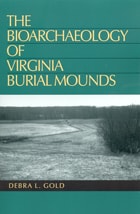
The Bioarchaeology of Virginia Burial Mounds
Debra L. Gold
University of Alabama Press, 2004
Uncovering the stories of Virginia's ancient peoples through the science of bioarchaeology.
By the 14th century more than a dozen accretional burial mounds—reaching heights of 12 to 15 feet—marked the floodplains of interior Virginia. Today, none of these mounds built by the nearly forgotten Monacan Indians remain on the landscape, having been removed over the centuries by a variety of natural and cultural causes. This study uses what remains of the mounds—excavated from the 1890s to the 1980s— to gain a new understanding of the Monacans and to gauge their importance in the realm of the late prehistoric period in the Eastern Woodlands.
Based on osteological examinations of dozens of complete skeletons and thousands of isolated bones and bone fragments, this work constructs information on Monacan demography, diet, health, and mortuary ritual in the 10th through the 15th centuries. The results show an overall pattern of stability and local autonomy among the Late Woodland village societies of interior Virginia in which a mixture of maize farming and the collection of wild food resources were successful for more than 600 years.
This book—uniting biological and cultural aspects of the data for a holistic understanding of everyday life in the period—will be of interest to ethnohistorians, osteologists, bioarchaeologists, and anyone studying Late Woodland, Mississippian, and contact periods, as well as middle range societies, in the Eastern Woodlands.
The Birth of Theory
Andrew Cole
University of Chicago Press, 2014
By uncovering these theoretical filiations across time, The Birth of Theory will not only change the way we read Hegel, but also the way we think about the histories of theory. With chapters that powerfully reanimate the overly familiar topics of ideology, commodity fetishism, and political economy, along with a groundbreaking reinterpretation of Hegel’s famous master/slave dialectic, The Birth of Theory places the disciplines of philosophy, literature, and history in conversation with one another in an unprecedented way. Daring to reconcile the sworn enemies of Hegelianism and Deleuzianism, this timely book will revitalize dialectics for the twenty-first century.
The Burden of Responsibility
Blum, Camus, Aron, and the French Twentieth CenturyTony Judt
University of Chicago Press, 1998
Through the prism of the lives of Leon Blum, Albert Camus, and Raymond Aron, Judt examines pivotal issues in the history of contemporary French society—antisemitism and the dilemma of Jewish identity, political and moral idealism in public life, the Marxist moment in French thought, the traumas of decolonization, the disaffection of the intelligentsia, and the insidious quarrels rending Right and Left. Judt focuses particularly on Blum's leadership of the Popular Front and his stern defiance of the Vichy governments, on Camus's part in the Resistance and Algerian War, and on Aron's cultural commentary and opposition to the facile acceptance by many French intellectuals of communism's utopian promise. Severely maligned by powerful critics and rivals, each of these exemplary figures stood fast in their principles and eventually won some measure of personal and public redemption.
Judt constructs a compelling portrait of modern French intellectual life and politics. He challenges the conventional account of the role of intellectuals precisely because they mattered in France, because they could shape public opinion and influence policy. In Blum, Camus, and Aron, Judt finds three very different men who did not simply play the role, but evinced a courage and a responsibility in public life that far outshone their contemporaries.
"An eloquent and instructive study of intellectual courage in the face of what the author persuasively describes as intellectual irresponsibility."—Richard Bernstein, New York Times
The Catholic Enlightenment
A Global AnthologyUlrich L. Lehner
Catholic University of America Press, 2021
The Christian Structure of Politics
The De Regno of Thomas AquinasWilliam McCormick, SJ
Catholic University of America Press, 2022
The Complete Works
Handbook, Discourses, and FragmentsEpictetus
University of Chicago Press, 2022
“Some things are up to us and some are not.”
Epictetus was born into slavery around the year 50 CE, and, upon being granted his freedom, he set himself up as a philosophy teacher. After being expelled from Rome, he spent the rest of his life living and teaching in Greece. He is now considered the most important exponent of Stoicism, and his surviving work comprises a series of impassioned discourses, delivered live and recorded by his student Arrian, and the Handbook, Arrian’s own take on the heart of Epictetus’s teaching.
In Discourses, Epictetus argues that happiness depends on knowing what is in our power to affect and what is not. Our internal states and our responses to events are up to us, but the events themselves are assigned to us by the benevolent deity, and we should treat them—along with our bodies, possessions, and families—as matters of indifference, simply making the best use of them we can. Together, the Discourses and Handbook constitute a practical guide to moral self-improvement, as Epictetus explains the work and exercises aspirants need to do to enrich and deepen their lives. Edited and translated by renowned scholar Robin Waterfield, this book collects the complete works of Epictetus, bringing to modern readers his insights on how to cope with death, exile, the people around us, the whims of the emperor, fear, illness, and much more.
CUSTOMER NOTE: THE HARDCOVER IS FOR LIBRARIES AND HAS NO JACKET.
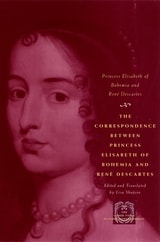
The Correspondence between Princess Elisabeth of Bohemia and René Descartes
Princess Elisabeth of Bohemia and René Descartes
University of Chicago Press, 2007
Between the years 1643 and 1649, Princess Elisabeth of Bohemia (1618–80) and René Descartes (1596–1650) exchanged fifty-eight letters—thirty-two from Descartes and twenty-six from Elisabeth. Their correspondence contains the only known extant philosophical writings by Elisabeth, revealing her mastery of metaphysics, analytic geometry, and moral philosophy, as well as her keen interest in natural philosophy. The letters are essential reading for anyone interested in Descartes’s philosophy, in particular his account of the human being as a union of mind and body, as well as his ethics. They also provide a unique insight into the character of their authors and the way ideas develop through intellectual collaboration.
Philosophers have long been familiar with Descartes’s side of the correspondence. Now Elisabeth’s letters—never before available in translation in their entirety—emerge this volume, adding much-needed context and depth both to Descartes’s ideas and the legacy of the princess. Lisa Shapiro’s annotated edition—which also includes Elisabeth’s correspondence with the Quakers William Penn and Robert Barclay—will be heralded by students of philosophy, feminist theorists, and historians of the early modern period.
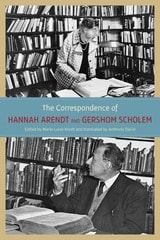
The Correspondence of Hannah Arendt and Gershom Scholem
Hannah Arendt and Gershom Scholem
University of Chicago Press, 2017
Arendt and Scholem met in 1932 in Berlin and quickly bonded over their mutual admiration for and friendship with Walter Benjamin. They began exchanging letters in 1939, and their lively correspondence continued until 1963, when Scholem’s vehement disagreement with Arendt’s Eichmann in Jerusalem led to a rupture that would last until Arendt’s death a dozen years later. The years of their friendship, however, yielded a remarkably rich bounty of letters: together, they try to come to terms with being both German and Jewish, the place and legacy of Germany before and after the Holocaust, the question of what it means to be Jewish in a post-Holocaust world, and more. Walter Benjamin is a constant presence, as his life and tragic death are emblematic of the very questions that preoccupied the pair. Like any collection of letters, however, the book also has its share of lighter moments: accounts of travels, gossipy dinner parties, and the quotidian details that make up life even in the shadow of war and loss.
In a world that continues to struggle with questions of nationalism, identity, and difference, Arendt and Scholem remain crucial thinkers. This volume offers us a way to see them, and the development of their thought, anew.
The Critique of Pure Modernity
Hegel, Heidegger, and AfterDavid Kolb
University of Chicago Press, 1986
Kolb offers his own views, proposing the possibility of a meaningful life that is free but still rooted in shared contexts. He concludes with comments on "postmodernity" as discussed by Lyotard and others, arguing persuasively against the presupposition of a unified Modern or Postmodern Age.
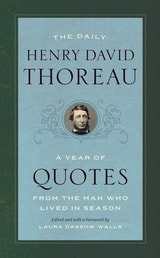
The Daily Henry David Thoreau
A Year of Quotes from the Man Who Lived in SeasonHenry David Thoreau
University of Chicago Press, 2020
Modernity rules our lives by clock and calendar, dividing the stream of time into units and coordinating every passing moment with the universal globe. Henry David Thoreau subverted both clock and calendar, using them not to regulate time’s passing but to open up and explore its presence. This little volume thus embodies, in small compass, Thoreau’s own ambition to “live in season”—to turn with the living sundial of the world, and, by attuning ourselves to nature, to heal our modern sense of discontinuity with our surroundings.
Ralph Waldo Emerson noted with awe that from flowers alone, Thoreau could tell the calendar date within two days; children remembered long into adulthood how Thoreau showed them white waterlilies awakening not by the face of a clock but at the first touch of the sun. As Thoreau wrote in Walden, “Time is but the stream I go a-fishing in. I drink at it; but while I drink I see the sandy bottom and detect how shallow it is.”
Drawn from the full range of Thoreau’s journals and published writings, and arranged according to season, The Daily Henry David Thoreau allows us to discover the endless variation and surprise to be found in the repetitions of mundane cycles. Thoreau saw in the kernel of each day an earth enchanted, one he honed into sentences tuned with an artist’s eye and a musician’s ear. Thoreau’s world lives on in his writing so that we, too, may discover, even in a fallen world, a beauty worth defending.
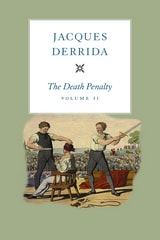
The Death Penalty, Volume II
Jacques Derrida
University of Chicago Press, 2017
Of central importance in this second volume is Kant’s explicit justification of the death penalty in the Metaphysics of Morals. Thoroughly deconstructing Kant’s position—which holds the death penalty as exemplary of the eye-for-an-eye Talionic law—Derrida exposes numerous damning contradictions and exceptions. Keeping the current death penalty in the United States in view, he further explores the “anesthesial logic” he analyzed in volume one, addressing the themes of cruelty and pain through texts by Robespierre and Freud, reading Heidegger, and—in a fascinating, improvised final session—the nineteenth-century Spanish Catholic thinker Donoso Cortés. Ultimately, Derrida shows that the rationality of the death penalty as represented by Kant involves an imposition of knowledge and calculability on a fundamental condition of non-knowledge—that we don’t otherwise know what or when our deaths will be. In this way, the death penalty acts out a phantasm of mastery over one’s own death.
Derrida’s thoughts arrive at a particular moment in history: when the death penalty in the United States is the closest it has ever been to abolition, and yet when the arguments on all sides are as confused as ever. His powerful analysis will prove to be a paramount contribution to this debate as well as a lasting entry in his celebrated oeuvre.
The Derrida-Habermas Reader
Edited by Lasse Thomassen
University of Chicago Press, 2006
Jacques Derrida and Jürgen Habermas have long represented opposite camps in contemporary thought. Derrida, who pioneered the intellectual style of inquiry known as deconstruction, ushered in the postmodern age with his dramatic critique of reason; Habermas, on the other hand, has consistently argued in defense of reason, modernity, and the legacy of the Enlightenment. Their many differences led to a long-standing, if scattered, dialogue, evidence of which has been available in only bits and pieces. But now, for the first time, TheDerrida-Habermas Reader brings these pieces together, along with a collection of essays documenting the intellectual relationship between two of the twentieth century’s preeminent thinkers.
Taken together, Derrida and Habermas’s writings—combined here with contributions by other prominent philosophers and social theorists—tell the story of the two thinkers’ provocative engagement with each other’s ideas. Beyond exploring the conflict between Derrida’s deconstruction and Habermas’s communicative rationality, they show how the Derrida-Habermas encounter changed over the years, becoming more theoretically productive without ever collapsing into mutual rejection or simple compromise.
Lasse Thomassen has divided the essays—including works on philosophy and literature, ethics, politics, and international law—into four parts that cover the full range of thought in which Derrida and Habermas engaged. The last of these sections fittingly includes the thinkers’ jointly signed work on European solidarity and the Iraq War, highlighting the hopes they held in common despite their differences. The wide breadth of this book, along with Thomassen’s lucid introductions to each section, makes The Derrida-Habermas Reader an ideal starting point for anyone interested in one of the most dynamic intellectual debates of our time.
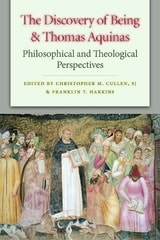
The Discovery of Being and Thomas Aquinas
Christopher M. Cullen, SJ
Catholic University of America Press, 2019
The collection of essays within The Discovery of Being and Thomas Aquinas is divided into three major parts: the first set of essays concerns the foundation of metaphysics within Thomism; the second set exemplifies the use of metaphysics in fundamental philosophical issues within Thomism; and the third set employs metaphysics in central theological issues.
The Discovery of Being and Thomas Aquinas allows major scholars of the different types of Thomism to engage in a full-scale defense of their position, as well as expanding Thomistic metaphysics to the discipline of theology in important ways.
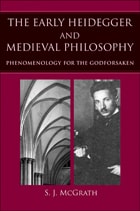
The Early Heidegger and Medieval Philosophy
Phenomenology for the GodforsakenS. J. McGrath
Catholic University of America Press, 2006
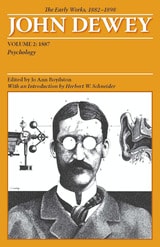
The Early Works of John Dewey, Volume 2, 1882 - 1898
Psychology, 1887John Dewey. Edited by Jo Ann Boydston
Southern Illinois University Press, 2008
With an original publication date of 1887, Psychology us Volume 2 of "The Early Works." It appears first in the series to introduce scholars and general readers to the use of modern textual criticism in a work outside the literary field. Designed as a "scholar's reading edition," the volumes presents the text of Dewey's work as the author intended, clear of editorial footnotes. All apparatus is conveniently arranged in appendix form. As evidence of its wide adoption and use as a college textbook, Psychology had a publishing history of twenty-six printings. For two of the reprintings, Dewey made extensive revisions in content to incorporate developments in the field of psychology as well as in his own thinking. The textual appendices include a thorough tabulation of these changes and detailed evidence for editorial decisions.
In recognition of the high quality and scholarly standards of the textual editing, this edition of Psychology is the first nonliterary work awarded the Seal of the Modern Language Association Center for Editions of American Authors. By applying to the work of a philosopher the procedures used in modern textual editions of American writers such as Hawthorne, the Southern Illinois University Dewey edition is establishing a pattern for future collected editions of the writings of American philosophers.
At the time Dewey wrote Psychology, the relation between psychology and philosophy was in dispute, and he attempted to incorporate the new physiological psychology represented by G. Stanley Hall into the philosophical system and ethics of George Sylvester Morris. He wrote in May, 1886, that he wanted his textbook in psychology to be one "with the greatest possible unity of principle, so that without ceasing to be a psychology, it shall be an introduction to philosophy in general." His goal, expressed in these terms, foreshadowed the direction of his work in the years that followed, with its continuing emphasis on the interrelations among the various disciplines rather than on separate specializations. In his long and fruitful professional career, this was to be his only attempt to treat the whole field of psychology systematically. Although he maintained a lively interest in psychology, that interest was expressed in connection with his writing in other areas such as ethics, education, logic, social philosophy and aesthetics.
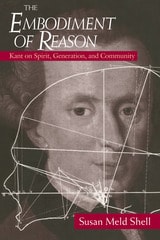
The Embodiment of Reason
Kant on Spirit, Generation, and CommunitySusan Meld Shell
University of Chicago Press, 1996
Shell argues that the central animating issues of Kant's lifework concerned the perplexing relation of spirit to body. Through an exacting analysis of individual writings, Shell maps the philosophical contours of Kant's early intellectual struggles and their relation to his more mature thought. The paradox of mind in matter and the tensions it generates—between freedom and determinacy, independence and community, ideal and real—are shown to inform the whole of his work. Shell's fresh, penetrating analysis of the precritical works will surely catapult them to new prominence in Kant studies.
Shell's critique goes further to consider the context of contemporary intellectual life. She explores the fascinating realm of Kant's sexual and medical idiosyncracies, linking them to the primary concerns of his critical philosophy. She develops a sure-to-be controversial treatment of the connection between Kant's philosophy and his chronic hypochondria, and illuminates previously unforeseen connections in a remarkable convergence of life and thought, with important theoretical and practical implications for modern times.
The Emergence of Dialectical Theory
Philosophy and Political InquiryScott Warren
University of Chicago Press, 1984
Scott Warren’s ambitious and enduring work sets out to resolve the ongoing identity crisis of contemporary political inquiry. In the Emergence of Dialectical Theory, Warren begins with a careful analysis of the philosophical foundations of dialectical theory in the thought of Kant, Hegel, and Marx. He then examines how the dialectic functions in the major twentieth-century philosophical movements of existentialism, phenomenology, neomarxism, and critical theory. Numerous major and minor philosophers are discussed, but the emphasis falls on two of the greatest dialectical thinkers of the previous century: Maurice Merleau-Ponty and Jürgen Habermas.
Warren’s shrewd critique is indispensable to those interested in the history of social and political thought and the philosophical foundations of political theory. His work offers an alternative for those who find postmodernism to be at a philosophical impasse.
The Emergence of German Idealism
Michael Baur
Catholic University of America Press, 2018
The Emerging Good in Plato's Philebus
John V. Garner
Northwestern University Press, 2017
John V. Garner convincingly refines previous interpretations and uncovers a profound thesis in the Philebus: genuine learners find value not only in stable being but also in the process of becoming. Further, since genuine learning arises in pluralistic communities where people form and inform one another, those who are truly open to learning are precisely those who actively shape the betterment of humanity.
The Emerging Good in Plato’s "Philebus" thus connects the Philebus’s grand philosophical ideas about the order of values, on the one hand, to its intimate and personal account of the experience of learning, on the other. It shows that this dialogue, while agreeing broadly with themes in more widely studied works by Plato such as the Republic, Gorgias, and Phaedo, also develops a unique way of salvaging the whole of human life, including our ever-changing nature.
The Ethics of History
John McCumber
Northwestern University Press, 2004
The First Moderns
Profiles in the Origins of Twentieth-Century ThoughtWilliam R. Everdell
University of Chicago Press, 1997
"This exceptionally wide-ranging history is chock-a-block with anecdotes, factoids, odd juxtapositions, and useful insights. Most impressive. . . . For anyone interested in learning about late 19th- and early 20th- century imaginative thought, this engagingly written book is a good place to start."—Washington Post Book World
"The First Moderns brilliantly maps the beginning of a path at whose end loom as many diasporas as there are men."—Frederic Morton, The Los Angeles Times Book Review
"In this truly exciting study of the origins of modernist thought, poet and teacher Everdell roams freely across disciplinary lines. . . . A brilliant book that will prove useful to scholars and generalists for years to come; enthusiastically recommended."—Library Journal, starred review
"Everdell has performed a rare service for his readers. Dispelling much of the current nonsense about 'postmodernism,' this book belongs on the very short list of profound works of cultural analysis."—Booklist
"Innovative and impressive . . . [Everdell] has written a marvelous, erudite, and readable study."-Mark Bevir, Spectator
"A richly eclectic history of the dawn of a new era in painting, music, literature, mathematics, physics, genetics, neuroscience, psychiatry and philosophy."—Margaret Wertheim, New Scientist
"[Everdell] has himself recombined the parts of our era's intellectual history in new and startling ways, shedding light for which the reader of The First Moderns will be eternally grateful."—Hugh Kenner, The New York Times Book Review
"Everdell shows how the idea of "modernity" arose before the First World War by telling the stories of heroes such as T. S. Eliot, Max Planck, and Georges Serault with such a lively eye for detail, irony, and ambiance that you feel as if you're reliving those miraculous years."—Jon Spayde, Utne Reader
The Fold
Leibniz and the BaroqueGilles Deleuze
University of Minnesota Press, 1992
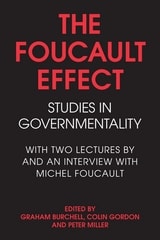
The Foucault Effect
Studies in GovernmentalityEdited by Graham Burchell, Colin Gordon, and Peter Miller
University of Chicago Press, 1991
Foucault's thoughts on political discourse and governmentality are supplemented by the essays of internationally renowned scholars. United by the common influence of Foucault's approach, they explore the many modern manifestations of government: the reason of state, police, liberalism, security, social economy, insurance, solidarity, welfare, risk management, and more. The central theme is that the object and the activity of government are not instinctive and natural things, but things that have been invented and learned.
The Foucault Effect analyzes the thought behind practices of government and argues that criticism represents a true force for change in attitudes and actions, and that extending the limits of some practices allows the invention of others. This unique and extraordinarily useful collection of articles and primary materials will open the way for a whole new set of discussions of the work of Michel Foucault as well as the status of liberalism, social policy, and insurance.
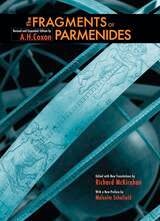
The Fragments of Parmenides
A Critical Text With Introduction and Translation, the Ancient Testimonia and a CommentaryA. H, Coxon
Parmenides Publishing, 2009
With a New Preface by Malcolm Schofield
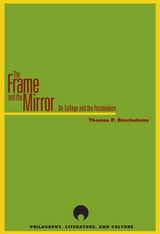
The Frame and the Mirror
On Collage and the PostmodernThomas P. Brockelman
Northwestern University Press, 2001
More than an introduction to the postmodern, The Frame and the Mirror advances our understanding of the contemporary world by relating its features to the peculiar characteristics of collage. Ultimately, Brockelman shows how collage demands that we reinterpret modernity, conceiving of it as suspended between a loss of certainty and a new kind of knowledge about the human condition. In doing so, his work challenges many of the claims made in the name of postmodernism—and offers in their place a new and ironic view of the cultural space in which contemporary and historical events occur.
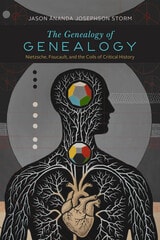
The Genealogy of Genealogy
Nietzsche, Foucault, and the Coils of Critical HistoryJason Ananda Josephson Storm
University of Chicago Press, 2026
The genealogical method—a mode of historical analysis that shows that what looks timeless is in fact contingent, bound to shifting relations of meaning, knowledge, and power—has become the dominant paradigm of humanistic inquiry. In The Genealogy of Genealogy, Jason Ānanda Josephson Storm turns this influential practice back on itself, tracing its unlikely rise through Nietzsche and Foucault and uncovering its suppressed ties to eugenics and racism. He rethinks the very stakes of critical history and proposes new tools for thinking about historical continuity, change, and difference.
Provocative and timely, The Genealogy of Genealogy offers both a diagnosis and a vision, challenging scholars across the humanities and social sciences to rethink how we write history and whether our most trusted methods are fit for the futures we seek to build.
The Gift of Death
Jacques Derrida
University of Chicago Press, 1995
A major work, The Gift of Death resonates with much of Derrida's earlier writing and will be of interest to scholars in anthropology, philosophy, and literary criticism, along with scholars of ethics and religion.
"The Gift of Death is Derrida's long-awaited deconstruction of the foundations of the project of a philosophical ethics, and it will long be regarded as one of the most significant of his many writings."—Choice
"An important contribution to the critical study of ethics that commends itself to philosophers, social scientists, scholars of relgion . . . [and those] made curious by the controversy that so often attends Derrida."—Booklist
"Derrida stares death in the face in this dense but rewarding inquiry. . . . Provocative."—Publishers Weekly

The Good European
Nietzsche's Work Sites in Word and ImageDavid Farrell Krell and Donald L. Bates
University of Chicago Press, 1997
"A brilliant juxtaposition of life and thought. . . . The sympathy of this pictorial biography is rivaled by few books on Nietzsche."—Charles M. Stang, Boston Book Review
"[A] distinguished addition to the Nietzsche-friendly corpus."—Alain de Botton, Los Angeles Times Book Review
"An odd and oddly endearing record of Nietzsche's travels."—John Banville, New York Review of Books
The Good Life in the Scientific Revolution
Descartes, Pascal, Leibniz, and the Cultivation of VirtueMatthew L. Jones
University of Chicago Press, 2006
Amid the unrest, dislocation, and uncertainty of seventeenth-century Europe, readers seeking consolation and assurance turned to philosophical and scientific books that offered ways of conquering fears and training the mind—guidance for living a good life.
The Good Life in the Scientific Revolution presents a triptych showing how three key early modern scientists, René Descartes, Blaise Pascal, and Gottfried Leibniz, envisioned their new work as useful for cultivating virtue and for pursuing a good life. Their scientific and philosophical innovations stemmed in part from their understanding of mathematics and science as cognitive and spiritual exercises that could create a truer mental and spiritual nobility. In portraying the rich contexts surrounding Descartes’ geometry, Pascal’s arithmetical triangle, and Leibniz’s calculus, Matthew L. Jones argues that this drive for moral therapeutics guided important developments of early modern philosophy and the Scientific Revolution.
The Grace and the Severity of the Ideal
John Dewey and the TranscendentVictor Kestenbaum
University of Chicago Press, 2002
Kestenbaum argues that to Dewey, the pragmatic struggle for ideal meaning occurs at the frontier of the visible and the invisible, the tangible and the intangible. Penetrating analyses of Dewey's early and later writings, as well as comparisons with the works of Hans-Georg Gadamer, Michael Oakeshott, and Wallace Stevens, shed new light on why Dewey regarded the human being's relationship to the ideal as "the most far-reaching question" of philosophy. For Dewey, the pragmatic struggle for the good life required a willingness "to surrender the actual experienced good for a possible ideal good." Dewey's pragmatism helps us to understand the place of the transcendent ideal in a world of action and practice.
The Great Debate
Nietzsche, Culture, and the Scandinavian Welfare SocietyGeorg Brandes and Harald Høffding
University of Wisconsin Press, 2024
Marking the moment at which the uniquely Nordic concept of social democratic welfare was first contested in the public sphere, this debate provides insights into not only Nietzschean philosophy and its immediate reception but also the foundational concept of modern Scandinavian social, cultural, and political organization. This volume presents, for the first time in any language other than Danish, the debate in its entirety: three essays by Brandes and three by Høffding. A critical introduction by editor and translator William Banks explores the exchange in its context and convincingly argues that the principles contested by the two Danish luminaries still very much resonate in Western society today.
The History of Continental Philosophy
Edited by Alan D. Schrift
University of Chicago Press, 2010
From Kant to Kierkegaard, from Hegel to Heidegger, continental philosophers have indelibly shaped the trajectory of Western thought since the eighteenth century. Although much has been written about these monumental thinkers, students and scholars lack a definitive guide to the entire scope of the continental tradition. The most comprehensive reference work to date, this eight-volume History of Continental Philosophy will both encapsulate the subject and reorient our understanding of it. Beginning with an overview of Kant’s philosophy and its initial reception, the History traces the evolution of continental philosophy through major figures as well as movements such as existentialism, phenomenology, hermeneutics, and poststructuralism. The final volume outlines the current state of the field, bringing the work of both historical and modern thinkers to bear on such contemporary topics as feminism, globalization, and the environment. Throughout, the volumes examine important philosophical figures and developments in their historical, political, and cultural contexts.
The first reference of its kind, A History of Continental Philosophy has been written and edited by internationally recognized experts with a commitment to explaining complex thinkers, texts, and movements in rigorous yet jargon-free essays suitable for both undergraduates and seasoned specialists. These volumes also elucidate ongoing debates about the nature of continental and analytic philosophy, surveying the distinctive, sometimes overlapping characteristics and approaches of each tradition. Featuring helpful overviews of major topics and plotting road maps to their underlying contexts, A History of Continental Philosophy is destined to be the resource of first and last resort for students and scholars alike.
The History of Philosophy
A Reader's GuideDonald Phillip Verene
Northwestern University Press, 2008
With the aim of guiding readers along, in Hegel’s words, “the long process of education towards genuine philosophy,” this introduction emphasizes the importance of striking up a conversation with the past. Only by looking to past masters and their works, it holds, can old memories and prior thought be brought fully to bear on the present. This living past invigorates contemporary practice, enriching today’s study and discoveries.
In this book, groundbreaking philosopher and author Donald Verene addresses two themes: why should one study the historically “great” texts and, if such a study is necessary, how can one undertake it? Acting out against the rejection of the idea that there is a philosophical canon, he centers his argument on the “tetralogy” of Plato, Aristotle, Kant, and Hegel. From his opening look at the rhetorical tradition, he brings those core ideals forward to classical Roman and medieval philosophers and then on into Renaissance and modern philosophy, including contemporary thinkers such as Derrida and Foucault. This vital chronological outline is supplemented by Verene’s contextualizing commentary. In ensuing sections, he offers guidance on reading philosophical works with “intellectual empathy,” suggests 100 essential works to establish a canon, illustrates the role of philosophers in history and society, and examines the nature of history itself. Ultimately, Verene concludes that history may be essential to philosophy, but philosophy is more than just its history.
The Human Condition
Second EditionHannah Arendt
University of Chicago Press, 1998
Hannah Arendt (1906-1975) was one of the leading social theorists in the United States. Her Lectures on Kant's Political Philosophy and Love and Saint Augustine are also published by the University of Chicago Press.
The Human Person
Steven J. Jensen
Catholic University of America Press, 2018
The Hungry Soul
Eating and the Perfecting of Our NatureLeon R. Kass M.D.
University of Chicago Press, 1999
"Kass is a distinguished and graceful writer. . . . It is astonishing to discover how different is our world from that of the animals, even in that which most evidently betrays that we too are animals—our need and desire for food."—Roger Scruton, Times Literary Supplement
"Yum."—Miss Manners
The Impact of Aristotelianism on Modern Philosophy
Riccardo Pozzo
Catholic University of America Press, 2019
The Importance of Nietzsche
Erich Heller
University of Chicago Press, 1988
Nietzsche prided himself on having broken with all traditional ways of thinking and feeling, and once even claimed that he would someday be recognized for having ushered in a new millennium. While acknowledging Nietzsche's radicalism, Heller also insists on the continuity of the story in which he does indeed occupy a central place. By considering Nietzsche in relation to Goethe, Rilke, Wittgenstein, Yeats, and others, Heller shows the philosopher's ambivalence toward the tradition he inherited as well as his profound effect on the thought and sensibility of those who followed him. It is hardly an exaggeration to say, as Heller does in his first essay, that Nietzsche is to many modern writers and thinkers—including Mann, Musil, Kafka, Freud, Heidegger, Jaspers, Gide, and Sartre—what St. Thomas Aquinas was to Dante: the categorical interpreter of a world, which they contemplate imaginatively and theoretically without ever much upsetting its Nietzschean structure.
Thus it is Nietzsche's thought, so pervasively present in the themes of modernity, that gives coherence and unity to Heller's essays. What emerges from them is that, despite his iconoclastic declarations and unorthodox philosophical practices, Nietzsche deals with the human spirit's persistent concerns. His questions remain urgent, and even the answers, in all their contradictoriness, possess the commanding force of his inquiry. An example is the incompatibility of the famous extremes, the teaching of the Übermensch and the Eternal Recurrence of All Things. These cancel each other out and yet grow from the same intellectual and spiritual roots, as is shown lucidly and cogently by one of Heller's most forceful essays, "Nietzsche's Terrors: Time and the Inarticulate." In fathoming the depth of this contradiction, Heller at the same time reveals the importance of Nietzsche for those who seek to understand the wellsprings of the epoch's disquiet, turmoil, and creativity.
The Individual and the Cosmos in Renaissance Philosophy
Ernst Cassirer
University of Chicago Press, 2010
This provocative volume, one of the most important interpretive works on the philosophical thought of the Renaissance, has long been regarded as a classic in its field. Ernst Cassirer here examines the changes brewing in the early stages of the Renaissance, tracing the interdependence of philosophy, language, art, and science; the newfound recognition of individual consciousness; and the great thinkers of the period—from da Vinci and Galileo to Pico della Mirandola and Giordano Bruno. The Individual and the Cosmos in Renaissance Philosophy discusses the importance of fifteenth-century philosopher Nicholas Cusanus, the concepts of freedom and necessity, and the subject-object problem in Renaissance thought.
“This fluent translation of a scholarly and penetrating original leaves little impression of an attempt to show that a ‘spirit of the age’ or ‘spiritual essence of the time’ unifies and expresses itself in all aspects of society or culture.”—Philosophy
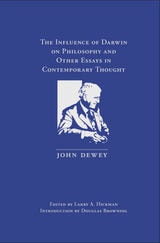
The Influence of Darwin on Philosophy and Other Essays in Contemporary Thought
John Dewey. Edited by Larry A. Hickman. Introduction by Douglas Browning
Southern Illinois University Press, 2007
Presenting Dewey’s new view of philosophical inquiry
This critical edition of The Influence of Darwin on Philosophy and Other Essays in Contemporary Thought presents the results of John Dewey’s patient construction, throughout the previous sixteen years, of the radically new view of the methods and concerns of philosophical inquiry. It was a view that he continued to defend for the rest of his life.
In the 1910 The Influence of Darwin on Philosophy and Other Essays in Contemporary Thought—the first collection of Dewey’s previously published, edited essays—John Dewey provided readers with an overview of the scope and direction of his philosophical vision in one volume. The order in which the eleven essays were presented was a reverse chronology, with more recently published essays appearing first. The collection of eleven essays offered a detailed portrait of Dewey’s proposed reconstruction of the traditional concepts of knowledge and truth. It furthermore elaborated on how his new logic and his proposal regarding knowledge and truth fit comfortably together, not only with each other but also with a pragmatically proper understanding of belief, reality, and experience.
Because material in the Collected Works of John Dewey, 1882–1953 was published chronologically, however, the essays published together in the 1910 Darwin book have appeared in seven different volumes in the Collected Works. This new, critical edition restores a classic collection of essays authored and edited by John Dewey as they originally appeared in the volume. The edition is presented with ancillary materials, including responses by Dewey’s critics and an introduction by Douglas Browning.
The Intellectual Earthquake
How Pragmatism Leveled Philosophy, Caused French Theory, and Reinvented SelfhoodJames Livingston
University of Chicago Press, 0
A look at how pragmatism—a quintessentially “American” philosophy—was the vanguard of a cultural revolution that altered the entire world.
As shaped by William James, John Dewey, Jane Addams, and others, pragmatism is considered the most American of philosophical currents, brashly privileging action, experience, embodiment, contingency, and real-world impact. In The Intellectual Earthquake, James Livingston recaptures pragmatism’s initial scandalous vitality and its worldwide influence. Livingston ambitiously covers more than a century, showing pragmatist roots in countless strains of thought, and connecting seemingly far-flung and disparate thinkers. He also aims to explain how pragmatism has been steadily maligned and misunderstood, and he makes the case for fresh attention to its lineal influence on “French Theory.”
The Intellectual Legacy of Herman Dooyeweerd (1894-1977)
A Hopeful Philosophy for our TimeMaarten Verkerk
Amsterdam University Press, 2025
The work of Herman Dooyeweerd is currently attracting global interest. From the United States to Korea, from New Zealand to Brazil, and from the United Kingdom to South Africa, professionals across various disciplines—philosophers, engineers, politicians, economists, and others—are expanding upon his ideas within their respective fields. At the same time, his work is becoming increasingly relevant as contemporary society displays characteristics reminiscent of those observed in European culture a century ago. The Intellectual Legacy of Herman Dooyeweerd (1894-1977): A Hopeful Philosophy for our Time introduces his most significant concepts and numerous examples of their contemporary applications.
The Intellectual Legacy of Herman Dooyeweerd (1894-1977)
A Hopeful Philosophy for our TimeMaarten Verkerk
Amsterdam University Press, 2025
The work of Herman Dooyeweerd is currently attracting global interest. From the United States to Korea, from New Zealand to Brazil, and from the United Kingdom to South Africa, professionals across various disciplines—philosophers, engineers, politicians, economists, and others—are expanding upon his ideas within their respective fields. At the same time, his work is becoming increasingly relevant as contemporary society displays characteristics reminiscent of those observed in European culture a century ago. The Intellectual Legacy of Herman Dooyeweerd (1894-1977): A Hopeful Philosophy for our Time introduces his most significant concepts and numerous examples of their contemporary applications.
The Key to Natural Philosophy
Barbara Honorius Augustodunensis
Catholic University of America Press, 2026