Results by title
456 books match the query 'India' and 94 start with t
Tales of Ancient India
Edited by J. A. B. van Buitenen
University of Chicago Press, 1959
"Fourteen tales from India, newly translated with a terse and vibrant effectiveness. These tales will appeal to any reader who enjoys action, suspense, characterization, and suspension of disbelief in the supernatural."—The Personalist
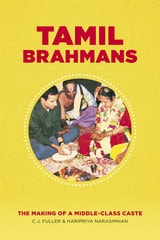
Tamil Brahmans
The Making of a Middle-Class CasteC. J. Fuller and Haripriya Narasimhan
University of Chicago Press, 2014
Fuller and Narasimhan offer one of the most comprehensive looks at Tamil Brahmans around the world to date. They examine Brahman migration from rural to urban areas, more recent transnational migration, and how the Brahman way of life has translated to both Indian cities and American suburbs. They look at modern education and the new employment opportunities afforded by engineering and IT. They examine how Sanskritic Hinduism and traditional music and dance have shaped Tamil Brahmans’ particular middle-class sensibilities and how middle-class status is related to the changing position of women. Above all, they explore the complex relationship between class and caste systems and the ways in which hierarchy has persisted in modernized India.

Telemodernities
Television and Transforming Lives in AsiaTania Lewis, Fran Martin, and Wanning Sun
Duke University Press, 2016

Tension
Mental Distress and Embodied Inequality in the Western HimalayasNikita Kaur Simpson
Duke University Press, 2026
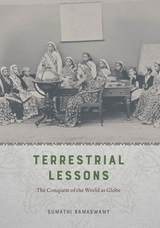
Terrestrial Lessons
The Conquest of the World as GlobeSumathi Ramaswamy
University of Chicago Press, 2017
In Terrestrial Lessons, Ramaswamy provides the first in-depth analysis of the globe’s history in and impact on the Indian subcontinent during the colonial era and its aftermath. Drawing on a wide array of archival sources, she delineates its transformation from a thing of distinction possessed by elite men into that mass-produced commodity used in classrooms worldwide—the humble school globe. Traversing the length and breadth of British India, Terrestrial Lessons is an unconventional history of this master object of pedagogical modernity that will fascinate historians of cartography, science, and Asian studies.

Territory of Desire
Representing the Valley of KashmirAnanya Jahanara Kabir
University of Minnesota Press, 2009
Moves beyond traditional analysis to understand the conflict over Kashmir
A result of territorial disputes between India and Pakistan since 1947, exacerbated by armed freedom movements since 1989, the ongoing conflict over Kashmir is consistently in the news. Taking a unique multidisciplinary approach, Territory of Desire asks how, and why, Kashmir came to be so intensely desired within Indian, Pakistani, and Kashmiri nationalistic imaginations. Literary historian Ananya Jahanara Kabir finds an answer to this question in the Valley of Kashmir’s repeated portrayal as a “special” place and the missing piece of Pakistan and India.
Analyzing the conversion of natural beauty into collective desire—through photography, literature, cinema, art, and souvenir production—Kabir exposes the links between colonialism, modernity, and conflict within the postcolonial nation. Representations of Kashmir as a space of desire emerge in contemporary film, colonial “taming” of the valley through nineteenth-century colonialist travelogues, the fetishization of traditional Kashmiri handicrafts like papier maché, and Pandit and Muslim religious revivalisms in the region. Linking a violent modernity to the fantasies of nationhood, Kabir proposes nonmilitaristic ways in which such desire may be overcome. In doing so she offers an innovative approach to complex and protracted conflict and, ultimately, its resolution.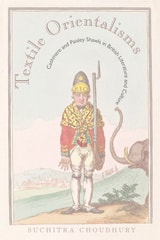
Textile Orientalisms
Cashmere and Paisley Shawls in British Literature and CultureSuchitra Choudhury
Ohio University Press, 2023

The Analyst and the Mystic
Psychoanalytic Reflections on Religion and MysticismSudhir Kakar
University of Chicago Press, 1992
The Archive of Loss
Lively Ruination in Mill Land MumbaiMaura Finkelstein
Duke University Press, 2019
The Bachelor of Arts
R. K. Narayan
University of Chicago Press, 1978
Offering rare insight into the complexities of Indian middle-class society, R. K. Narayan traces life in the fictional town of Malgudi. The Dark Room is a searching look at a difficult marriage and a woman who eventually rebels against the demands of being a good and obedient wife. In Mr. Sampath, a newspaper man tries to keep his paper afloat in the face of social and economic changes sweeping India. Narayan writes of youth and young adulthood in the semiautobiographical Swami and Friends and The Bachelor of Arts. Although the ordinary tensions of maturing are heightened by the particular circumstances of pre-partition India, Narayan provides a universal vision of childhood, early love and grief.
"The experience of reading one of his novels is . . . comparable to one's first reaction to the great Russian novels: the fresh realization of the common humanity of all peoples, underlain by a simultaneous sense of strangeness—like one's own reflection seen in a green twilight."—Margaret Parton, New York Herald Tribune
The Calling of History
Sir Jadunath Sarkar and His Empire of TruthDipesh Chakrabarty
University of Chicago Press, 2015
Through close readings of more than twelve hundred letters to and from Sarkar along with other archival documents, Dipesh Chakrabarty demonstrates that historians in colonial India formulated the basic concepts and practices of the field via vigorous—and at times bitter and hurtful—debates in the public sphere. He furthermore shows that because of its non-technical nature, the discipline as a whole remains susceptible to pressure from both the public and the academy even today. Methodological debates and the changing reputations of scholars like Sarkar, he argues, must therefore be understood within the specific contexts in which particular histories are written.
Insightful and with far-reaching implications for all historians, The Calling of History offers a valuable look at the double life of history and how tensions between its public and private sides played out in a major scholar’s career.
The Chinese Love Pavilion
A NovelPaul Scott
University of Chicago Press, 2013
The Chinese Love Pavilion follows a young British clerk, Tom Brent, who must track down a former friend—now suspected of murder—in Malaya. Tom faces great danger, both from the mysterious Malayan jungles and the political tensions between British officers, but the novel is perhaps most memorable for the strange, beautiful romance between Tom and a protean Eurasian beauty whom he meets in the eponymous Chinese Love Pavilion.
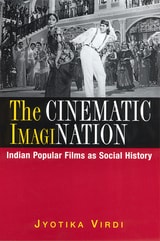
The Cinematic ImagiNation
Indian Popular Films as Social HistoryVirdi, Jyotika
Rutgers University Press, 2003
--Gina Marchetti, author of Romance and the "Yellow Peril": Race, Sex, and Discursive Strategies in Hollywood Fiction
India produces more films than any other country in the world, and these works are avidly consumed by non-Western cultures in Africa, Eastern Europe, the Middle East, and by the Indian communities in Australia, Britain, the Caribbean Islands, and North America. Jyotika Virdi focuses on how this dominant medium configures the "nation" in post-Independence Hindi cinema. She scrutinizes approximately thirty films that have appeared since 1950 and demonstrates how concepts of the nation form the center of this cinema's moral universe. As a kind of storytelling, Indian cinema provides a fascinating account of social history and cultural politics, with the family deployed as a symbol of the nation. Virdi demonstrates how the portrayal of the nation as a mythical community in Hindi films collapses under the weight of its own contradictions--irreconcilable differences that encompass gender, sexuality, family, class, and religious communities. Through these film narratives, the author traces transactions among the various constituencies that struggle, accommodate, coexist uneasily, or reconstitute each other over time, and, in the process, reveal the topography of postcolonial culture.

The Colors of Violence
Cultural Identities, Religion, and ConflictSudhir Kakar
University of Chicago Press, 1996
With honesty, insight, and unsparing self-reflection, Kakar confronts the profoundly enigmatic relations that link individual egos to cultural moralities and religious violence. His innovative psychological approach offers a framework for understanding the kind of ethnic-religious conflict that has so vexed social scientists in India and throughout the world.
Through riveting case studies, Kakar explores cultural stereotypes, religious antagonisms, ethnocentric histories, and episodic violence to trace the development of both Hindu and Muslim psyches. He argues that in early childhood the social identity of every Indian is grounded in traditional religious identifications and communalism. Together these bring about deep-set psychological anxieties and animosities toward the other. For Hindus and Muslims alike, violence becomes morally acceptable when communally and religiously sanctioned. As the changing pressures of modernization and secularism in a multicultural society grate at this entrenched communalism, and as each group vies for power, ethnic-religious conflicts ignite. The Colors of Violence speaks with eloquence and urgency to anyone concerned with the postmodern clash of religious and cultural identities.
The Common Cause
Postcolonial Ethics and the Practice of Democracy, 1900-1955Leela Gandhi
University of Chicago Press, 2014
Reframing the way we think about some of the most consequential political events of the era, Gandhi presents moral imperfectionism as the lost tradition of global democratic thought and offers it to us as a key to democracy’s future. In doing so, she defends democracy as a shared art of living on the other side of perfection and mounts a postcolonial appeal for an ethics of becoming common.

The Corporation That Changed the World
How the East India Company Shaped the Modern MultinationalNick Robins
Pluto Press, 2012
"Elegantly written and sharply argued, Nick Robins' gripping account of the rise and fall of the English East India Company brings to life a crucial episode in the history of globalization."—Sankar Muthu, University of Chicago
The English East India Company was the mother of the modern multinational. Its trading empire encircled the globe, importing Asian luxuries such as spices, textiles, and teas. But it also conquered much of India with its private army and broke open China's markets with opium. The Company's practices shocked its contemporaries and still reverberate today, offering lessons about unfettered capitalism, corporate responsibility, and the legacy of colonialism.
The Corporation That Changed the World is the first book to reveal the Company's enduring legacy as a corporation. This expanded edition explores how the four forces of scale, technology, finance, and regulation drove its spectacular rise and fall. For decades, the Company was simply too big to fail, and stock market bubbles, famines, drug-running, and even duels between rival executives are to be found in this new account.
Table of Contents:
Introduction
Chronology
1 The Hidden Wound
2 The Imperious Company
3 Out of the Shadows
4 The Bengal Revolution
5 The Great East Indian Crash
6 Regulating the Company
7 Justice Will Be Done
8 The Toxic Exchange
10 The Unfettered Business
Epilogue
For Robins, the Company's story provides vital lessons on both the role of corporations in world history and the steps required to make global business accountable today.
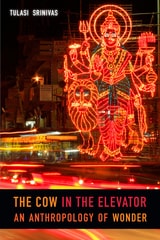
The Cow in the Elevator
An Anthropology of WonderTulasi Srinivas
Duke University Press, 2018
The Crisis of Secularism in India
Anuradha Dingwaney Needham and Rajeswari Sunder Rajan, eds.
Duke University Press, 2007
Scholars of history, anthropology, religion, politics, law, philosophy, and media studies take on a broad range of concerns. Some consider the history of secularism in India; others explore theoretical issues such as the relationship between secularism and democracy or the shortcomings of the categories “majority” and “minority.” Contributors examine how the debates about secularism play out in schools, the media, and the popular cinema. And they address two of the most politically charged sites of crisis: personal law and the right to practice and encourage religious conversion. Together the essays inject insightful analysis into the fraught controversy about the shortcomings and uncertain future of secularism in the world today.
Contributors. Flavia Agnes, Upendra Baxi, Shyam Benegal, Akeel Bilgrami, Partha Chatterjee, V. Geetha, Sunil Khilnani, Nivedita Menon, Ashis Nandy, Anuradha Dingwaney Needham, Gyanendra Pandey, Gyan Prakash, Arvind Rajagopal, Paula Richman, Sumit Sarkar, Dwaipayan Sen, Rajeswari Sunder Rajan, Shabnum Tejani, Romila Thapar, Ravi S. Vasudevan, Gauri Viswanathan
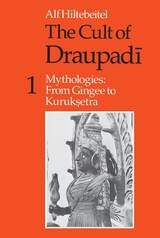
The Cult of Draupadi, Volume 1
Mythologies: From Gingee to KuruksetraAlf Hiltebeitel
University of Chicago Press, 1988
Volume 1 focuses on the Draupadī cult’s own double mythology, moving from its stories about Draupadī’s “primal temple” near the capital of the medieval South Indian Kingdom of Gingee to its version of the Mahābhārata war on the North Indian plain of Kurukṣetra. Throughout, Hiltebeitel intertwines “regional” data, gathered from both oral and written sources, with the “epic,” drawn from the cult’s own performative traditions as well as from classical versions of the Mahābhārata in both Tamil and Sanskrit. Pivotal to the overlap of these Gingee and Kurukṣetra mythologies are two folk figures unknown to classical epic traditions: Draupadī’s two guardians, Pōttu Rāja and Muttāl Rāvuttaṉ.
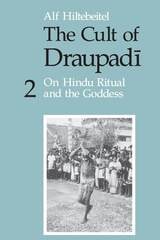
The Cult of Draupadi, Volume 2
On Hindu Ritual and the GoddessAlf Hiltebeitel
University of Chicago Press, 1991
Volume 2 looks at the cultic rituals and argues that these rituals cannot be interpreted independent of other Hindu traditions. Hiltebeitel draws upon his recent fieldwork to demonstrate the remarkable regional and local variations in the practice of the Draupadī cult rituals, from the core area around the ancient center of gingee to the thanjavur area just to the south. He brings to the forefront the differences between the complex rituals of cities, towns, and villages and discusses variations related to their proximity to the central temple in gingee and to the castes from which their customs are derived. using as its model the festival of the Tindivanam temple, Hiltebeitel’s study follows the order of the festival itself and investigates in turn the festival’s four interrelated arenas: the Draupadī temple, a drama stage, a ritual battlefield (paṭukaḷam), and a firewalking area. He explains how the Draupadī festival orchestrates movements back and forth between these arenas to produce a “ritual of battle” in which Draupadī emerges as the victorious goddess.
The Dalai Lama's Smile
StoriesPaula Closson Buck
Acre Books, 2025
A grieving American father visits Dharamsala to investigate the murder of the son he’s never understood and finds himself delving into the mystery of the young man’s life. A Turkish-Cypriot teacher is tasked with making an inventory of household goods in an occupied tourist resort the inhabitants have fled. A Greek sculptor whose marriage is failing covers for a student from the US who, instead of learning the art, engages in an affair. A Buddhist nun enlists the help of a Peace Corps worker to kill a suffering dog. A wannabe eco-activist in Kentucky writes confessional letters to Boyan Slat, the young CEO of The Ocean Cleanup. A woman in a Rajasthan tourist caravan bears helpless witness to a dire culture clash.
As Closson Buck’s characters encounter circumstances that challenge their understanding of themselves and the world around them, they are forced to negotiate fallout stemming from religious dogma, environmental crisis, and political violence. Ranging from fabulism to realism, the stories in The Dalai Lama’s Smile invite us to explore the perils and the possibilities that come from engaging the unknown.
The Dancer's Voice
Performance and Womanhood in Transnational IndiaRumya Sree Putcha
Duke University Press, 2023

The Deer and the Tiger
George B. Schaller
University of Chicago Press, 1984
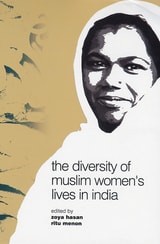
The Diversity of Muslim Women's Lives in India
Hasan, Zoya
Rutgers University Press, 2005
To what extent does Muslim personal law, such as polygamy and triple talaq (the allowance for men to instantly divorce their wives), affect the lives of Muslim women? Are these factors more or less important than other lifestyle issues such as socioeconomic status?
Over the past several decades, the most influential approaches to the study of Muslim women and nearly all the significant campaigns for their rights have focused on religious practices and the urgency to reform Islamic laws. Such focused views, however, give the false sense that religion is the main, if not the only, aspect of Muslim women’s lives.
In order to broaden the lens through which this demographic is typically seen, a group of researchers in India carried out a large and unprecedented study of one of the most disadvantaged sections of Indian society. The editors of The Diversity of Muslim Women’s Lives in India bring together this research in a comprehensive collection of informative and revealing case studies. The essays examine Muslim identity, not only in terms of religious doctrine, but as a heterogeneous set of characteristics produced at the intersections of class, religion, and gender.
Addressing issues of law, politics, education, race, and other neglected secular subjects, this volume is essential reading for policy-makers, social activists, and scholars.
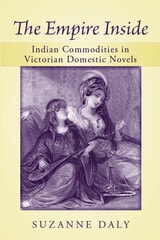
The Empire Inside
Indian Commodities in Victorian Domestic NovelsSuzanne Daly
University of Michigan Press, 2011
"The Empire Inside is unique in its tight focus on the objects from one geographical location, and their deployment in one genre of fiction. This combination results in a powerful study with a wealth of fine formal analyses of literary texts and a similar trove of marvelous historical data."
---Elaine Freedgood, New York University
"In The Empire Inside, Suzanne Daly does a wonderful job integrating an array of primary materials, especially novels and journal essays, to show the extent to which these ‘foreign’ colonial products of India represented absolutely central aspects of domestic life, at once part of the unremarkable everyday experience of Victorians and rich with meanings."
---Timothy Carens, College of Charleston
By the early nineteenth century, imperial commodities had become commonplace in middle-class English homes. Such Indian goods as tea, textiles, and gemstones led double lives, functioning at once as exotic foreign artifacts and as markers of proper Englishness. The Empire Inside: Indian Commodities in Victorian Domestic Novels reveals how Indian imports encapsulated new ideas about both the home and the world in Victorian literature and culture. In novels by Charlotte Brontë, Charles Dickens, and Anthony Trollope, the regularity with which Indian commodities appear bespeaks their burgeoning importance both ideologically and commercially. Such domestic details as the drinking of tea and the giving of shawls as gifts point us toward suppressed connections between the feminized realm of private life and the militarized realm of foreign commerce.
Tracing the history of Indian imports yields a record of the struggles for territory and political power that marked the coming-into-being of British India; reading the novels of the period for the ways in which they infuse meaning into these imports demonstrates how imperialism was written into the fabric of everyday life in nineteenth-century England. Situated at the intersection of Victorian studies, material cultural studies, gender studies, and British Empire studies, The Empire Inside is written for academics, graduate students, and advanced undergraduates in all of these fields.
Suzanne Daly is Associate Professor of English, University of Massachusetts Amherst.
The End of Empires
African Americans and IndiaGerald Horne
Temple University Press, 2009
In the past fifty years, according to Christine So, the narratives of many popular Asian American books have been dominated by economic questions-what money can buy, how money is lost, how money is circulated, and what labor or objects are worth. Focusing on books that have achieved mainstream popularity, Economic Citizens unveils the logic of economic exchange that determined Asian Americans’ transnational migrations and national belonging.
With penetrating insight, So examines literary works that have been successful in the U.S. marketplace but have been read previously by critics largely as narratives of alienation or assimilation, including Fifth Chinese Daughter, Flower Drum Song, Falling Leaves and Turning Japanese. In contrast to other studies that have focused on the marginalization of Asian Americans, Economic Citizens examines how Asian Americans have entered into the public sphere.
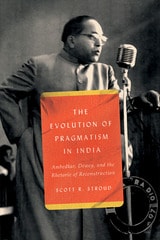
The Evolution of Pragmatism in India
Ambedkar, Dewey, and the Rhetoric of ReconstructionScott R. Stroud
University of Chicago Press, 2023
In The Evolution of Pragmatism in India, Scott R. Stroud delivers a comprehensive exploration of the influence of John Dewey’s pragmatism on Bhimrao Ambedkar, architect of the Republic of India’s constitution. Stroud traces Ambedkar’s development in Dewey’s Columbia University classes in 1913–1916 through his final years in 1950s India when he rewrote the story of Buddhism. Stroud examines pragmatism’s influence not only on the philosophical ideas underpinning Ambedkar’s fight against caste oppression but also how his persuasive techniques drew on pragmatism’s commitment to reconstruction and meliorism. At the same time, Stroud is careful to point out the ways that Ambedkar pushed back against Dewey’s paradigm and developed his own approach to challenges in India. The result is a nuanced study of one of the most important figures in Indian history.
The Evolution of a Cricket Fan
My Shapeshifting JourneySamir Chopra
Temple University Press, 2021
Samir Chopra is an immigrant, a “voluntary exile,” who discovers he can tell the story of his life through cricket, a game that has long been an influence—really, an obsession—for him. In so doing, he reveals how his changing views on the sport mirror his journey of self-discovery. In The Evolution of a Cricket Fan, Chopra is thus able to reflect on his changing perceptions of self, and of the nations and cultures that have shaped his identity, politics, displacement, and fandom.
Chopra’s passion for the sport began as a child, when he rooted for Pakistan and against his native India. When he migrated, he became a fan of the Indian team that gave him a sense of home among the various cultures he encountered in North America and Australia. This “shapeshifting” exposes the rift between the Old and the New world, which Chopra acknowledges is “cricket’s greatest modern crisis.” But it also illuminates the identity dilemmas of post-colonial immigrants in the Indian diaspora.
Chopra’s thoughts about the sport and its global influence are not those of a player. He provides access to the inner world of the global cricket fan navigating the world that colonial empire wrought and that cricket continues to connect and animate. He observes that the Indian cricket team carries many burdens—not only must they win cricket matches, but their style of play must generate a pride that assuages generations of wounds inflicted by history. And Chopra must navigate where he stands in that history.
The Evolution of a Cricket Fan shows Chopra’s own wins and losses as his life takes new directions and his fandom changes allegiances.
The Female Voice in Sufi Ritual
Devotional Practices of Pakistan and IndiaBy Shemeem Burney Abbas
University of Texas Press, 2002
The female voice plays a more central role in Sufi ritual, especially in the singing of devotional poetry, than in almost any other area of Muslim culture. Female singers perform sufiana-kalam, or mystical poetry, at Sufi shrines and in concerts, folk festivals, and domestic life, while male singers assume the female voice when singing the myths of heroines in qawwali and sufiana-kalam. Yet, despite the centrality of the female voice in Sufi practice throughout South Asia and the Middle East, it has received little scholarly attention and is largely unknown in the West.
This book presents the first in-depth study of the female voice in Sufi practice in the subcontinent of Pakistan and India. Shemeem Burney Abbas investigates the rituals at the Sufi shrines and looks at women's participation in them, as well as male performers' use of the female voice. The strengths of the book are her use of interviews with both prominent and grassroots female and male musicians and her transliteration of audio- and videotaped performances. Through them, she draws vital connections between oral culture and the written Sufi poetry that the musicians sing for their audiences. This research clarifies why the female voice is so important in Sufi practice and underscores the many contributions of women to Sufism and its rituals.

The Feminization of Famine
Expressions of the Inexpressible?Margaret Kelleher
Duke University Press, 1997
Kelleher begins with a critical reading of the novels and short stories written about the Irish famine over the last 150 years, from the novels of William Carleton and Anthony Trollope to the writings of Liam O’Flaherty and John Banville. She then moves on to unveil a lesser-known body of literature—works written by women. This literature is read in the context of a rich variety of other sources, including eye-witness accounts, memoirs, journalistic accounts, and famine historiography. Concluding with a reading of the twentieth-century accounts of the famine in Bengal, this book reveals how gendered representations have played a crucial role in defining notions of famine.
The First and Second Sikh Wars
Reginald George Burton
Westholme Publishing, 2008
The First and Second Sikh Wars of the 1840s were the final battles that secured British domination of the Indian subcontinent for the next century. Noted for both their brutality and sophistication in tactics—with large-scale cavalry clashes, sieges, and artillery and infantry engagements—the wars against the Sikh principalities not only handed control of India to Great Britain, but the defeated Sikh armies ended up becoming some of the most loyal and ablest soldiers of the British Empire. The lessons from these wars also influenced changes in British military policy and strategies, particularly against indigenous peoples. In 1911, the British Army command asked its historical branch in India to prepare a military history of the Sikh Wars. The result, The First and Second Sikh Wars, is a publication rich in detail and analysis and a treasure trove of background information about the British Army in India, Sikh culture at the time, and the battles of Ferozeshah, Aliwal, Chillianwala, and Gujrat. Despite the importance of these wars in the history of both the nineteenth century and the modern era, there are no similar complete narrative accounts of these conflicts available that rely on official records of the period. This facsimile is enhanced by historian Jon Coulston's new introduction and suggestions for further reading.
The Forgotten Army
India's Armed Struggle for Independence 1942-1945Peter Ward Fay
University of Michigan Press, 1995
The Future of Futurity
Affective Capitalism and Potentiality in a Global CityPurnima Mankekar and Akhil Gupta
Duke University Press, 2025
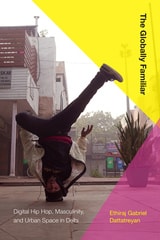
The Globally Familiar
Digital Hip Hop, Masculinity, and Urban Space in DelhiEthiraj Gabriel Dattatreyan
Duke University Press, 2020
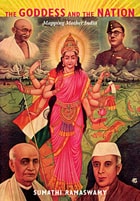
The Goddess and the Nation
Mapping Mother IndiaSumathi Ramaswamy
Duke University Press, 2010
By exploring the mutual entanglement of the scientifically mapped image of India and a (Hindu) mother/goddess, Sumathi Ramaswamy reveals Mother India as a figure who relies on the British colonial mapped image of her dominion to distinguish her from the other goddesses of India, and to guarantee her novel status as embodiment, sign, and symbol of national territory. Providing an exemplary critique of ideologies of gender and the science of cartography, Ramaswamy demonstrates that images do not merely reflect history; they actively make it. In The Goddess and the Nation, she teaches us about pictorial ways of learning the form of the nation, of how to live with it—and ultimately to die for it.
The Goddess in the Mirror
An Anthropology of BeautyTulasi Srinivas
Duke University Press, 2025
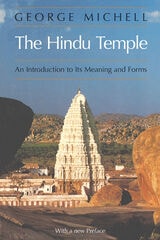
The Hindu Temple
An Introduction to Its Meaning and FormsGeorge Michell
University of Chicago Press, 1988
Michell's discussion of the meaning and forms of the temple in Hindu society encompasses the awe-inspiring rock-cut temples at Ellora and Elephanta, the soaring superstructures and extraordinary sexual exhibitionism of the sculptures at Khajuraho, and the colossal mortuary temple of Angkor Vat, as well as the tiny iconic shrines that many Hindus wear around their necks and the simple shrines found under trees or near ponds.
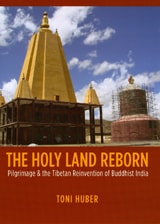
The Holy Land Reborn
Pilgrimage and the Tibetan Reinvention of Buddhist IndiaToni Huber
University of Chicago Press, 2008
Focusing on the Tibetan creation and recreation of India as a destination, a landscape, and a kind of other, in both real and idealized terms, Huber explores how Tibetans have used the idea of India as a religious territory and a sacred geography in the development of their own religion and society. In a timely closing chapter, Huber also takes up the meaning of India for the Tibetans who live in exile in their Buddhist holy land.
A major contribution to the study of Buddhism, The Holy Land Reborn describes changes in Tibetan constructs of India over the centuries, ultimately challenging largely static views of the sacred geography of Buddhism in India.
The Idea of India
A DialogueGayatri Chakravorty Spivak and Romila Thapar
Seagull Books, 2024
Through a stimulating dialogue, two old friends trace the history of the idea of India through digressions, anecdotes, and observations. Historian Romila Thapar and theorist Gayatri Chakravorty Spivak reflect on the challenges posed by essentialism and exclusion whenever cultures attempt to define and assert themselves. They also emphasize the role of education in fostering a more inclusive and accurate understanding of the nation’s complex history. Their conversation revolves around the narratives that have shaped Indian identity—from Vedic times to the present—and those whose voices and visions for this land remain unheard and unseen.
Ranging from nationalism to religion and beyond, TheIdea of India discusses an urgent question: What does it mean to be an Indian in contemporary society?
The Impact of Trade and Domestic Policy Reforms in India
A CGE Modeling ApproachRajesh Chadha, Alan V. Deardorff, Sanjib Pohit, and Robert M. Stern
University of Michigan Press, 1998
The Inner Conflict of Tradition
Essays in Indian Ritual, Kingship, and SocietyJ. C. Heesterman
University of Chicago Press, 1985
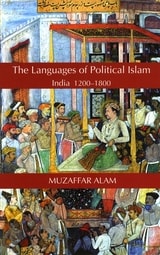
The Languages of Political Islam
India 1200-1800Muzaffar Alam
University of Chicago Press, 2004
Muzaffar Alam shows that the adoption of Arabo-Persian Islam in India changed the manner in which Islamic rule and governance were conducted. Islamic regulation and statecraft in a predominately Hindu country required strategic shifts from the original Islamic injunctions. Islamic principles could not regulate beliefs in a vast country without accepting cultural limitations and limits on the exercise of power. As a result of cultural adaptation, Islam was in the end forced to reinvent its principles for religious rule. Acculturation also forced key Islamic terms to change so fundamentally that Indian Islam could be said to have acquired a character substantially different from the Islam practiced outside of India.
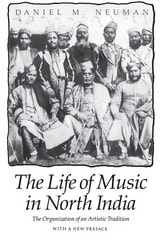
The Life of Music in North India
The Organization of an Artistic TraditionDaniel M. Neuman
University of Chicago Press, 1990
Drawing primarily from fieldwork performed in Delhi in 1969-71—from interviewing musicians, learning and performing on the Indian fiddle, and speaking with music connoisseurs—Neuman examines the cultural and social matrix in which Hindustani music is nurtured, listened and attended to, cultivated, and consumed in contemporary India. Through his interpretation of the impact that modern media, educational institutions, and public performances exert on the music and musicians, Neuman highlights the drama of a great musical tradition engaging a changing world, and presents the adaptive strategies its practitioners employ to practice their art. His work has gained the distinction of introducing a new approach to research on Indian music, and appears in this edition with a new preface by the author.
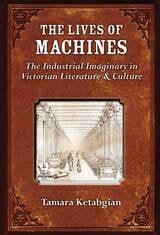
The Lives of Machines
The Industrial Imaginary in Victorian Literature and CultureTamara Ketabgian
University of Michigan Press, 2011
"The Lives of Machines is intelligent, closely argued, and persuasive, and puts forth a contention that will unsettle the current consensus about Victorian attitudes toward the machine."
---Jay Clayton, Vanderbilt University
Today we commonly describe ourselves as machines that "let off steam" or feel "under pressure." The Lives of Machines investigates how Victorian technoculture came to shape this language of human emotion so pervasively and irrevocably and argues that nothing is more intensely human and affecting than the nonhuman. Tamara Ketabgian explores the emergence of a modern and more mechanical view of human nature in Victorian literature and culture.
Treating British literature from the 1830s to the 1870s, this study examines forms of feeling and community that combine the vital and the mechanical, the human and the nonhuman, in surprisingly hybrid and productive alliances. Challenging accounts of industrial alienation that still persist, the author defines mechanical character and feeling not as erasures or negations of self, but as robust and nuanced entities in their own right. The Lives of Machines thus offers an alternate cultural history that traces sympathies between humans, animals, and machines in novels and nonfiction about factory work as well as in other unexpected literary sites and genres, whether domestic, scientific, musical, or philosophical. Ketabgian historicizes a model of affect and community that continues to inform recent theories of technology, psychology, and the posthuman.
The Lives of Machines will be of interest to students of British literature and history, history of science and of technology, novel studies, psychoanalysis, and postmodern cultural studies.
Cover image: "Power Loom Factory of Thomas Robinson," from Andrew Ure, The Philosophy of Manufactures (London: Charles Knight, 1835), frontispiece.
DIGITALCULTUREBOOKS: a collaborative imprint of the University of Michigan Press and the University of Michigan Library
The Madness of the Saints
Ecstatic Religion in BengalJune McDaniel
University of Chicago Press, 1989
The Memory of Elephants
A NovelBoman Desai
University of Chicago Press, 2001
The Mertiyo Rathors of Merto, Rajasthan
Select Translations Bearing on the History of a Rajput Family, 1462–1660, Volumes 1–2Richard Saran and Norman P. Ziegler, translators and annotators
University of Michigan Press, 2001
The Migrants Table
Meals And Memories InKrishnendu Ray
Temple University Press, 2004
The Modernity of Tradition
Political Development in IndiaLloyd I. Rudolph and Susanne Hoeber Rudolph
University of Chicago Press, 1984
Three areas of Indian life are analyzed: social stratification, charismatic leadership, and law. The authors question whether objective historical conditions, such as advanced industrialization, urbanization, or literacy, are requisites for political modernization.
The Music of Stones
Sohail Hashmi
Seagull Books, 2025
In The Music of Stones, Sohail Hashmi delves into the intricate history and misconceptions surrounding Islamic architecture and culture. Challenging colonial and orientalist narratives, Hashmi reveals that iconic elements like domes and minarets were not originally part of early Islamic structures but later additions influenced by various cultures, primarily Persian and Turkish. Through engaging anecdotes and thought-provoking theories, Hashmi deconstructs the monolithic view of Islamic culture, emphasizing its rich and diverse heritage shaped by Sufi, Central Asian, and other regional influences. He highlights the importance of historical context and the dangers of oversimplifying complex cultural identities.
The Music of Stones invites readers to reconsider the architectural and cultural legacy of Islam, advocating for a more inclusive and evidence-based understanding that transcends reductive labels and celebrates the richness of its diverse traditions.