Results by title
87 books match the query 'Iraq' and 22 start with t

Tell Me Lies
Propaganda and Media Distortion in the Attack on IraqEdited by David Miller
Pluto Press, 2003
Did the US and UK governments lie about weapons of mass destruction to promote an attack on Iraq?
Did the media hold them to account or act as cheerleaders for war?
Tell me Lies reveals the systematic propaganda used by both the US and UK governments to convince us of the 'threat' from Iraq. It shows how we were deliberately misled into a war that has resulted in a humanitarian disaster in Iraq and threatens to create further instability and resentment of the US and UK throughout the Middle East.
Written by some of the world's leading journalists and commentators, it's a scathing indictment of the role of the mainstream media in legitimising government actions and undermining dissent. Critics, activists and journalists from both sides of the Atlantic explore alternatives such as the internet and Al Jazeera and provide analysis and guidance on resisting the media war.
Contributors include John Pilger, Noam Chomsky, Robert Fisk, Edward Herman, Mark Thomas, Mark Steel, Phillip Knightley, Tim Llewelyn (BBC Middle East Correspondent), Abdul Hadi Jiad (Iraqi journalist sacked by the BBC before the war), David Cromwell and David Edwards (Media Lens), Mark Curtis, John Stauber and Sheldon Rampton (PR Watch, and co-authors of Weapons of Mass Deception and Toxic Sludge is Good For You), Pat Holland, Norman Solomon (columnist and director of the Institute for Public Accuracy), Nancy Snow (California State University, Fullerton, author of Propaganda Inc. and Information War), Doug Kellner (UCLA), Julian Petley, Yvonne Ridley (Aljazeera.net and author of In the Hands of the Taliban), Tim Gopsill (Campaign for Press and Broadcasting Freedom), Faisal Bodi (UK Guardian, Aljazeera.net), Alistair Alexander (Stop the War Coalition), Greg Philo (Glasgow University Media Group), Steve Dorrill, Andy Rowell, Granville Williams and cartoonists Steve Bell, Steve Caplin and Polyp.
The Aggada of the Bavli and Its Cultural World
Geoffrey Herman
SBL Press, 2018
Essays that explore the rich engagement of the Talmud with its cultural world
The Babylonian Talmud (Bavli), the great compilation of Jewish law edited in the late Sasanian era (sixth–seventh century CE), also incorporates a great deal of aggada, that is, nonlegal material, including interpretations of the Bible, stories, folk sayings, and prayers. The Talmud’s aggadic traditions often echo conversations with the surrounding cultures of the Persians, Eastern Christians, Manichaeans, Mandaeans, and the ancient Babylonians, and others. The essays in this volume analyze Bavli aggada to reveal this rich engagement of the Talmud with its cultural world.
Features:
- A detailed analysis of the different conceptions of martyrdom in the Talmud as opposed to the Eastern Christian martyr accounts
- Illustration of the complex ways rabbinic Judaism absorbed Christian and Zoroastrian theological ideas
- Demonstration of the presence of Persian-Zoroastrian royal and mythological motifs in talmudic sources
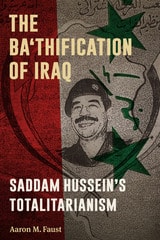
The Ba'thification of Iraq
Saddam Hussein's TotalitarianismBy Aaron M. Faust
University of Texas Press, 2015
Saddam Hussein ruled Iraq as a dictator for nearly a quarter century before the fall of his regime in 2003. Using the Ba’th party as his organ of meta-control, he built a broad base of support throughout Iraqi state and society. Why did millions participate in his government, parrot his propaganda, and otherwise support his regime when doing so often required betraying their families, communities, and beliefs? Why did the “Husseini Ba’thist” system prove so durable through uprisings, two wars, and United Nations sanctions?
Drawing from a wealth of documents discovered at the Ba’th party’s central headquarters in Baghdad following the US-led invasion in 2003, The Ba’thification of Iraq analyzes how Hussein and the party inculcated loyalty in the population. Through a grand strategy of “Ba’thification,” Faust argues that Hussein mixed classic totalitarian means with distinctly Iraqi methods to transform state, social, and cultural institutions into Ba’thist entities, and the public and private choices Iraqis made into tests of their political loyalty. Focusing not only on ways in which Iraqis obeyed, but also how they resisted, and using comparative examples from Hitler’s Germany and Stalin’s Russia, The Ba’thification of Iraq explores fundamental questions about the roles that ideology and culture, institutions and administrative practices, and rewards and punishments play in any political system.
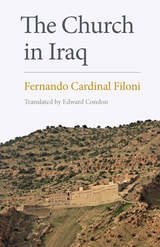
The Church in Iraq
Fernando Cardinal Filoni
Catholic University of America Press, 2017
The Church in Iraq is both a diligent record and loving testimonial to a community that is struggling desperately to exist. Filoni guides the reader through almost two thousand years of history, telling the story of a people who trace their faith back to the Apostle Thomas. The diversity of peoples and churches is brought deftly into focus through the lens of their interactions with the papacy, but The Church in Iraq does not shy away from discussing the local political, ethnic, and theological tensions that have resulted in centuries of communion and schism. Never losing his focus on the people to whom this book is so clearly dedicated, Cardinal Filoni has produced a personal and engaging history of the relationship between Rome and the Eastern Churches. This book has much to teach its reader about the church in the near East. Perhaps its most brutal lesson is the ease with which such a depth of history and culture can be wiped away in a few short decades.

The Hollywood War Film
Critical Observations from World War I to IraqDaniel Binns
Intellect Books, 2017
Looking closely at films such as All Quiet on the Western Front, Full Metal Jacket, and The Hurt Locker, Binns reveals the commonalities in Hollywood films despite the distinct conflicts and eras they represent, and he shows how contemporary war films closely echo earlier films in their nationalistic and idealistic depictions. Offering a trenchant analysis of some of the most important war films from the past century, this book will be of interest to anyone who has been captivated by how film has dealt with one of humanity’s most difficult, but far too common, realities.
The Idols of ISIS
From Assyria to the InternetAaron Tugendhaft
University of Chicago Press, 2020
Beginning with the Islamic State’s claim that the smashed objects were idols of the “age of ignorance,” Aaron Tugendhaft questions whether there can be any political life without idolatry. He then explores the various roles Mesopotamian sculpture has played in European imperial competition, the development of artistic modernism, and the formation of Iraqi national identity, showing how this history reverberates in the choice of the Mosul Museum as performance stage. Finally, he compares the Islamic State’s production of images to the ways in which images circulated in ancient Assyria and asks how digitization has transformed politics in the age of social media. An elegant and accessibly written introduction to the complexities of such events, The Idols of ISIS is ideal for students and readers seeking a richer cultural perspective than the media usually provides.
The Kurds in Iraq - Second Edition
The Past, Present and FutureKerim Yildiz
Pluto Press, 2007
The book is a unique account of the problems that all political groups face in bringing stability to the country. It explores Kurdish links to those political groups and their role in international relations in the broader sense. It should be required reading for policymakers and anyone interested in the current position of the Kurds in Iraq.
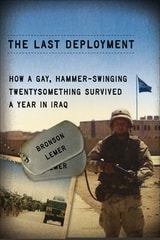
The Last Deployment
How a Gay, Hammer-Swinging Twentysomething Survived a Year in IraqBronson Lemer
University of Wisconsin Press, 2011
In 2003, after serving five and a half years as a carpenter in a North Dakota National Guard engineer unit, Bronson Lemer was ready to leave the military behind. But six months short of completing his commitment to the army, Lemer was deployed on a yearlong tour of duty to Iraq. Leaving college life behind in the Midwest, he yearns for a lost love and quietly dreams of a future as an openly gay man outside the military. He discovers that his father’s lifelong example of silent strength has taught him much about being a man, and these lessons help him survive in a war zone and to conceal his sexuality, as he is required to do by the U.S. military.
Finalist, Minnesota Book Awards
Finalist, Over the Rainbow Selection, American Library Association
Amazon Top Ten 10 Gay & Lesbian Books of 2011
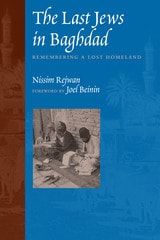
The Last Jews in Baghdad
Remembering a Lost HomelandBy Nissim Rejwan
University of Texas Press, 2004
Once upon a time, Baghdad was home to a flourishing Jewish community. More than a third of the city's people were Jews, and Jewish customs and holidays helped set the pattern of Baghdad's cultural and commercial life. On the city's streets and in the bazaars, Jews, Muslims, and Christians—all native-born Iraqis—intermingled, speaking virtually the same colloquial Arabic and sharing a common sense of national identity. And then, almost overnight it seemed, the state of Israel was born, and lines were drawn between Jews and Arabs. Over the next couple of years, nearly the entire Jewish population of Baghdad fled their Iraqi homeland, never to return.
In this beautifully written memoir, Nissim Rejwan recalls the lost Jewish community of Baghdad, in which he was a child and young man from the 1920s through 1951. He paints a minutely detailed picture of growing up in a barely middle-class family, dealing with a motley assortment of neighbors and landlords, struggling through the local schools, and finally discovering the pleasures of self-education and sexual awakening. Rejwan intertwines his personal story with the story of the cultural renaissance that was flowering in Baghdad during the years of his young manhood, describing how his work as a bookshop manager and a staff writer for the Iraq Times brought him friendships with many of the country's leading intellectual and literary figures. He rounds off his story by remembering how the political and cultural upheavals that accompanied the founding of Israel, as well as broad hints sent back by the first arrivals in the new state, left him with a deep ambivalence as he bid a last farewell to a homeland that had become hostile to its native Jews.
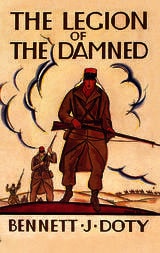
The Legion of the Damned
The Adventures of Bennett J. Doty in the French Foreign Legion as Told by HimselfBennett J. Doty
Westholme Publishing, 2020
“You see there was down South a girl I liked. And she is now married . . . not to me.” So Bennett J. Doty confessed when he sailed for France and enlisted in the French Foreign Legion in 1924. A World War I veteran and University of Virginia student, Doty first trained in Morocco and Algeria before being shipped off to the French-controlled State of Syria. There, he and his fellow “bleus,” who hailed from Belgium, Poland, Italy, Senegal, Spain, Germany, Russia, and other countries, found themselves at the spearhead of the attempt to quell the revolt against French rule in the area. The fighting, mostly against the Druze, was fierce, merciless, and unrelenting. Fought in villages and at isolated outposts, there was no quarter. Entire villages were razed, fields destroyed, and prisoners were not taken by either side. In the engagement where Doty and several other of his “copains”—“buddies”—earned the Croix de Guerre, his unit became isolated and withstood days of attacks which claimed more than half of the Legionnaires until they were finally relieved by a French colonial column. With the immediate fighting over, the Legion was put to heavy manual labor under the hot desert sun. Doty became disillusioned, and with four other soldiers, fled in an attempt to reach British-controlled Jordan. They were caught, tried, and Doty was sentenced to eight years in a French prison. When word reached the United States, diplomatic efforts ultimately gained Doty a pardon and honorable discharge from service.
Originally published in 1928, Legion of the Damned, Doty’s acclaimed account of his time in the Legion, is a remarkable memoir that requires no additional drama to allow the reader to experience the desperation, exhilaration, fear, and disgust of a colonial war. Here, Doty shows how drunken, unruly, vicious veterans would transform into capable, cool, and orderly soldiers as soon as a battle began—the élan that earned the French Foreign Legion its reputation as a legendary fighting unit.
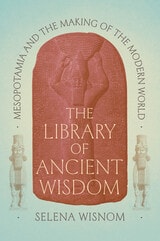
The Library of Ancient Wisdom
Mesopotamia and the Making of the Modern WorldSelena Wisnom
University of Chicago Press, 2025
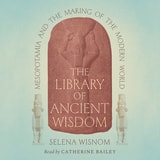
The library of Ashurbanipal, Assyria’s last great king, held an astonishing collection at the forefront of knowledge in its day, from ancient traditions in religion and literature to the latest developments in magic and medicine. When the Assyrian empire fell, the library burned to the ground, and its contents, clay tablets inscribed with cuneiform writing, lay buried for thousands of years until a team of Victorian archaeologists discovered the remnants in modern-day Iraq. The clay had baked and hardened; the very fire that consumed the library had helped its texts to survive for millennia.
In The Library of Ancient Wisdom, scholar Selena Wisnom, one of only a few hundred experts able to read cuneiform script today, guides us inside this important collection and, through its contents, brings ancient Mesopotamia and its people to life. Introducing us to Ashurbanipal and his family, scribes, astrologers, physicians, and more, Wisnom explores the library’s tablets and the details they divulge about how these ancient people thought about the world. Like us, they had concerns about job security, jealous rivalries, and profound friendships, and questions about the meaning of life. Wisnom ushers us into a world where magic was commonplace, where the gods spoke to you in dreams, and where the secrets of the universe were revealed through puns—taking us to the heart of what it means to be human.
Offering a close look at a major historical landmark as well as a readable account of the world’s earliest civilizations, The Library of Ancient Wisdom lays bare the ideas, hopes, fears, and desires that survive on humble clay.
The Library of Ancient Wisdom
Mesopotamia and the Making of the Modern WorldSelena Wisnom
University of Chicago Press, 2025
A tour of an ancient library transports us to Mesopotamia, introducing us to its people, their ideas, and their humanity.
The library of Ashurbanipal, Assyria’s last great king, held an astonishing collection at the forefront of knowledge in its day, from ancient traditions in religion and literature to the latest developments in magic and medicine. When the Assyrian empire fell, the library burned to the ground, and its contents, clay tablets inscribed with cuneiform writing, lay buried for thousands of years until a team of Victorian archaeologists discovered the remnants in modern-day Iraq. The clay had baked and hardened; the very fire that consumed the library had helped its texts to survive for millennia.
In The Library of Ancient Wisdom, scholar Selena Wisnom, one of only a few hundred experts able to read cuneiform script today, guides us inside this important collection and, through its contents, brings ancient Mesopotamia and its people to life. Introducing us to Ashurbanipal and his family, scribes, astrologers, physicians, and more, Wisnom explores the library’s tablets and the details they divulge about how these ancient people thought about the world. Like us, they had concerns about job security, jealous rivalries, and profound friendships, and questions about the meaning of life. Wisnom ushers us into a world where magic was commonplace, where the gods spoke to you in dreams, and where the secrets of the universe were revealed through puns—taking us to the heart of what it means to be human.
Offering a close look at a major historical landmark as well as a readable account of the world’s earliest civilizations, The Library of Ancient Wisdom lays bare the ideas, hopes, fears, and desires that survive on humble clay.
The Oldest Cuisine in the World
Cooking in MesopotamiaJean Bottéro
University of Chicago Press, 2004
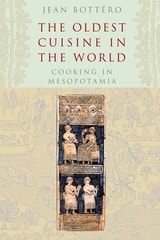
In this intriguing blend of the commonplace and the ancient, Jean Bottéro presents the first extensive look at the delectable secrets of Mesopotamia. Bottéro’s broad perspective takes us inside the religious rites, everyday rituals, attitudes and taboos, and even the detailed preparation techniques involving food and drink in Mesopotamian high culture during the second and third millennia BCE, as the Mesopotamians recorded them.
Offering everything from translated recipes for pigeon and gazelle stews, the contents of medicinal teas and broths, and the origins of ingredients native to the region, this book reveals the cuisine of one of history’s most fascinating societies. Links to the modern world, along with incredible recreations of a rich, ancient culture through its cuisine, make Bottéro’s guide an entertaining and mesmerizing read.
The Rape of Mesopotamia
Behind the Looting of the Iraq MuseumLawrence Rothfield
University of Chicago Press, 2009
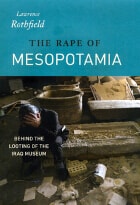
On April 10, 2003, as the world watched a statue of Saddam Hussein come crashing down in the heart of Baghdad, a mob of looters attacked the Iraq National Museum. Despite the presence of an American tank unit, the pillaging went unchecked, and more than 15,000 artifacts—some of the oldest evidence of human culture—disappeared into the shadowy worldwide market in illicit antiquities. In the five years since that day, the losses have only mounted, with gangs digging up roughly half a million artifacts that had previously been unexcavated; the loss to our shared human heritage is incalculable.
With The Rape of Mesopotamia, Lawrence Rothfield answers the complicated question of how this wholesale thievery was allowed to occur. Drawing on extensive interviews with soldiers, bureaucrats, war planners, archaeologists, and collectors, Rothfield reconstructs the planning failures—originating at the highest levels of the U.S. government—that led to the invading forces’ utter indifference to the protection of Iraq’s cultural heritage from looters. Widespread incompetence and miscommunication on the part of the Pentagon, unchecked by the disappointingly weak advocacy efforts of worldwide preservation advocates, enabled a tragedy that continues even today, despite widespread public outrage.
Bringing his story up to the present, Rothfield argues forcefully that the international community has yet to learn the lessons of Iraq—and that what happened there is liable to be repeated in future conflicts. A powerful, infuriating chronicle of the disastrous conjunction of military adventure and cultural destruction, The Rape of Mesopotamia is essential reading for all concerned with the future of our past.
The Sacking of Fallujah
A People's HistoryRoss Caputi
University of Massachusetts Press, 2019
The Iraqi city of Fallujah has become an epicenter of geopolitical conflict, where foreign powers and non-state actors have repeatedly waged war in residential neighborhoods with staggering humanitarian consequences. The Sacking of Fallujah is the first comprehensive study of the three recent sieges of this city, including those by the United States in 2004 and the Iraqi-led operation to defeat ISIS in 2016.
Unlike dominant military accounts that focus on American soldiers and U.S. leaders and perpetuate the myth that the United States “liberated” the city, this book argues that Fallujah was destroyed by coalition forces, leaving public health crises, political destabilization, and mass civilian casualties in their wake. This meticulously researched account cuts through the propaganda to uncover the lived experiences of Fallujans under siege and occupation, and contextualizes these events within a broader history of U.S. policy in the Middle East. Relying on testimony from Iraqi civilians, the work of independent journalists, and documentation from human rights organizations, Ross Caputi, Richard Hil, and Donna Mulhearn place the experiences of Fallujah's residents at the center of this city's recent history.
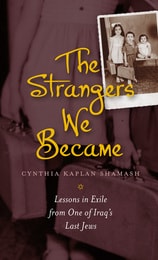
The Strangers We Became
Lessons in Exile from One of Iraq's Last JewsCynthia Kaplan Shamash
Brandeis University Press, 2015
The USSR and Iraq
The Soviet Quest for InfluenceOles M. Smolansky, with Bettie M. Smolansky
Duke University Press, 1991
Drawing on ten years of research in Western, Arab, and Soviet sources, Smolansky analyzes the complex issues at the center of Soviet-Iraqi relations from 1968 through 1988, including the nationalization of the oil industry, the Kurdish question, the Iraqi Communist Party, the affairs of the Persian/Arabian Gulf, and, ultimately, the war between Iraq and Iran.
Smolansky concludes that Iraq has never been under the dominant influence of Moscow, nor has it even been a loyal Soviet ally. In fact, Iraq has managed to reap major benefits from the relationship without losing its autonomy or sacrificing its major interests. The author discusses the Soviet Union and Iraq within the larger framework of the nature of influence relationships between great and small powers.
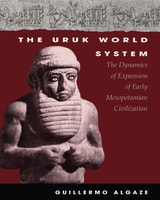
The Uruk World System
The Dynamics of Expansion of Early Mesopotamian CivilizationGuillermo Algaze
University of Chicago Press, 1993
In The Uruk World System, Guillermo Algaze concentrates instead on the unprecedented and wide-ranging process of external expansion that coincided with the rapid initial crystallization of Mesopotamian civilization. He contends that the rise of early Sumerian polities cannot be understood without also taking into account developments in surrounding peripheral areas.
Algaze reviews an extensive body of archaeological evidence for cross-cultural exchange between the nascent city-states in the Mesopotamian lowlands and communities in immediately surrounding areas. He shows that at their very inception the more highly integrated lowland centers succeeded in establishing a variety of isolated, far-flung outposts in areas at the periphery of the Mesopotamian lowlands. Embedded in an alien hinterland characterized by demonstrably less complex societies, the outposts were commonly established at the apex of preexisting regional settlement hierarchies and invariably at focal nodes astride important trade routes. Algaze argues that these early colonial out-posts served as collection points for coveted peripheral resources acquired in exchange for core manufactures and that they reflect an inherently asymmetrical system of economic hegemony that extended far beyond areas under the direct political control of Sumerian polities in southern Mesopotamia. From this he concludes that economic exploitation of less developed peripheral areas was integral to the earliest development of civilization in the ancient Near East.
The Uruk World System
The Dynamics of Expansion of Early Mesopotamian Civilization, Second EditionGuillermo Algaze
University of Chicago Press, 2005
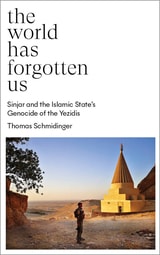
The World Has Forgotten Us
Sinjar and the Islamic State’s Genocide of the YezidisThomas Schmidinger
Pluto Press, 2022
The persecution of the Yezidis, a religious community originating in Upper Mesopotamia, has been ongoing since at least the 10th century. On 3 August 2014, Islamic State attacked the Yezidi community in Sinjar, Kurdistan. Thousands were enslaved or killed in this genocide, and 100,000 people fled to Mount Sinjar, permanently exiled from their homes.
Here, Thomas Schmidinger talks to the Yezidis in Iraq who tell the history of their people, why the genocide happened and how it affects their lives today. This is the first full account of these events, as told by the Yezidis in their own words, to be published in English.
The failure of the Kurdistan Peshmerga of the PDK in Iraq to protect the Yezidis is explored, as is the crucial support given by the Syrian-Kurdish YPG. This multi-faceted and important history brings the fight and trauma of the Yezidis back into focus, calling for the world to remember their struggle.

The World Says No to War
Demonstrations against the War on IraqStefaan Walgrave
University of Minnesota Press, 2010
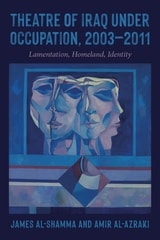
Theatre of Iraq Under Occupation, 2003-2011
Lamentation, Homeland, IdentityJames Al-Shamma
University of Iowa Press, 2025
However, in 2003, the United States invasion of Iraq propelled Iraqi theatre in an altogether different direction. Global media published photographs documenting the torture of Iraqi detainees by American soldiers and sectarian violence broke out, as Shiʿa and Sunni militias struggled for power. Theatre of Iraq Under Occupation examines the occupation’s impact on Iraqi theatre as eliciting lamentation over loss of homeland and identity, and as an assault on the Iraqi character itself. The first volume in English dedicated solely to theatre in Iraq, James Al-Shamma and Amir Al-Azraki’s insights don’t just offer a significant contribution to cultural studies, they bridge foreign policy and art in real time.