Results by title
3576 books match the query 'American' and 770 start with t
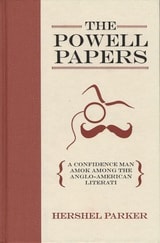
The Powell Papers
A Confidence Man Amok Among the Anglo-American LiteratiHershel Parker
Northwestern University Press, 2011
In 1849—months before the term “confidence man” was coined to identify a New York crook—Thomas Powell (1809–1887), a spherical, monocled, English poetaster, dramatist, journalist, embezzler, and forger, landed in Manhattan. Powell in London had capped a career of grand theft and literary peccadilloes by feigning a suicide attempt and having himself committed to a madhouse, after which he fled England. He had been an intimate of William Wordsworth, Elizabeth Barrett, Robert Browning, Charles Dickens, and a crowd of lesser literary folk.
Thoughtfully bearing what he presented as a volume of Tennyson with a few trifling revisions in the hand of the poet, Powell was embraced by the slavishly Anglophile New York literary establishment, including a young Herman Melville. In two pot-boilers—The Living Authors of England (1849) and The Living Authors of America (1850)—Powell denounced the most revered American author, Washington Irving, for plagiarism; provoked Charles Dickens to vengeful trans-Atlantic outrage and then panic; and capped his insolence by identifying Irving and Melville as the two worst “enemies of the American mind.” For almost four more decades he sniped at Dickens, put words in Melville’s mouth, and survived even the most conscientious efforts to expose him. Long fascinated by this incorrigible rogue, Hershel Parker in The Powell Papers uses a few familiar documents and a mass of freshly discovered material (including a devastating portrait of Powell in a serialized novel) to unfold a captivating tale of skullduggery through the words of great artists and then-admired journalists alike.
The Practical Past
Hayden White
Northwestern University Press, 2014
Hayden White borrows the title for The Practical Past from philosopher Michael Oakeshott, who used the term to describe the accessible material and literary-artistic artifacts that individuals and institutions draw on for guidance in quotidian affairs. The Practical Past, then, forms both a summa of White’s work to be drawn upon and a new direction in his thinking about the writing of history.
White’s monumental Metahistory: The Historical Imagination in Nineteenth-Century Europe (1973) challenged many of the commonplaces of professional historical writing and wider assumptions about the ontology of history itself. It formed the basis of his argument that we can never recover “what actually happened”in the past and cannot really access even material culture in context. Forty years on, White sees “professional history" as falling prey to narrow specialization, and he calls upon historians to take seriously the practical past of explicitly “artistic” works, such as novels and dramas, and literary theorists likewise to engage historians.
The Presidents We Imagine
Two Centuries of White House Fictions on the Page, on the Stage, Onscreen, and OnlineJeff Smith
University of Wisconsin Press, 2009
In The Presidents We Imagine, Jeff Smith examines the presidency’s ever-changing place in the American imagination. Ranging across different media and analyzing works of many kinds, some familiar and some never before studied, he explores the evolution of presidential fictions, their central themes, the impact on them of new and emerging media, and their largely unexamined role in the nation’s real politics.
Smith traces fictions of the presidency from the plays and polemics of the eighteenth century—when the new office was born in what Alexander Hamilton called “the regions of fiction”—to the digital products of the twenty-first century, with their seemingly limitless user-defined ways of imagining the world’s most important political figure. Students of American culture and politics, as well as readers interested in political fiction and film, will find here a colorful, indispensable guide to the many surprising ways Americans have been “representing” presidents even as those presidents have represented them.
“Especially timely in an era when media image-mongering increasingly shapes presidential politics.”—Paul S. Boyer, series editor
“Smith's understanding of the sociopolitical realities of US history is impressive; likewise his interpretations of works of literature and popular culture. . . .In addition to presenting thoughtful analysis, the book is also fun. Readers will enjoy encounters with, for example, The Beggar's Opera, Duck Soup, Edward Bellamy's Looking Backward, Philip Roth's Plot against America, the comedic campaigns of W. C. Fields for President and Pogo for President, and presidential fictions that continue up to the last President Bush. . . . His writing is fluid and conversational, but every page reveals deep understanding and focus. Summing Up: Highly recommended. All readers.”—CHOICE
The Primitive Observatory
Gregory Kimbrell
Southern Illinois University Press, 2016
Kimbrell explores such themes as memory, class prejudice, family violence, and greed in a flamboyant, yet matter-of-fact style to create verse that is both amusing and unsettling. Combining prose that evokes H. P. Lovecraft, classical mythology, and Marcel Proust with the look and taut line of traditional formalist verse, the poems appear on the page as perfect rectangles, yet revel in narrative and linguistic absurdities.
The Primitive Observatory offers a dark and evocative experience through the tangible grotesque. Fans of David Lynch, Franz Kafka, Edward Gorey and the like will be startled, excited, and pleased by this entertaining and disturbing book of poetry.
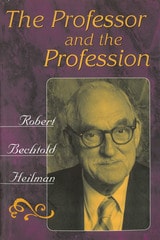
The Professor and the Profession
Robert Bechtold Heilman
University of Missouri Press, 1999
Robert Bechtold Heilman is one of the last survivors of a remarkable generation of American critics that included such literary giants as Cleanth Brooks, Allen Tate, and Edmund Wilson, men to whom literary criticism was not a profession or an academic necessity but a calling. In a distinguished career that has spanned nearly six decades, Heilman has influenced generations of scholars and critics through his exquisitely written commentaries on subjects ranging from William Shakespeare to Thomas Hardy.
In The Professor and the Profession, Heilman looks back over his life and times from his perspective as both an academic and an American. Differing in theme and subject matter, the essays included in this collection are ultimately unified by the author himself. Whether the topic is football, Robert Penn Warren, or education, Heilman's generous and intelligent voice emerges on every page. Yet this collection is more than one academic's personal reminiscences; it is a reflection upon American literary history itself.
In the first section of essays, "The Self Displayed," Heilman reveals how he developed from a small-town boy into a distinguished critic and teacher, touching upon his participation in baseball and love of football along the way. "Writers Portrayed" and "Literary Types and Problems Inspected," the following sections, offer his opinions on the past and on the current state of American literary criticism, including personal portraits of such renowned friends as Eric Voegelin, Robert Penn Warren, Theodore Roethke, and Malcolm Cowley. The final section, "Education Examined," is an enlightening inquiry into the development of American universities in the twentieth century.
A fascinating chronicle of a significant academic life, The Professor and the Profession will appeal to a broad array of scholars, from young academics wanting to know where they came from to those of Heilman's generation who can appreciate this personal reminiscence into the world of letters.
The Promised Folly
Judith Hall
Northwestern University Press, 2003
The Province of Piety
Moral History in Hawthorne's Early TalesMichael J. Colacurcio
Duke University Press, 1995
Informed by comprehensive historical research, the author shows that Hawthorne was steeped in New England historiography, particularly the sermon literature of the seventeenth century. But, as Colacurcio shows, Hawthorne did not merely borrow from the historical texts he deliberately studied; rather, he is best understood as having written history. In The Province of Piety, originally published in 1984 (Harvard University Press), Hawthorne is seen as a moral historian working with fictional narratives—a writer brilliantly involved in examining the moral and political effects of Puritanism in America and recreating the emotional and cultural contexts in which earlier Americans had lived.
The Public Life of Privacy in Nineteenth-Century American Literature
Stacey Margolis
Duke University Press, 2005
Margolis provides readings of fiction by Hawthorne and James as well as Susan Warner, Mark Twain, Charles Chesnutt, and Pauline Hopkins. In these writers’ works, she traces a distinctive novelistic tradition that viewed social developments—such as changes in political partisanship and childhood education and the rise of new politico-legal forms like negligence law—as means for understanding how individuals were shaped by their interactions with society. The Public Life of Privacy in Nineteenth-Century American Literature adds a new level of complexity to understandings of nineteenth-century American culture by illuminating a literary tradition full of accidents, mistakes, and unintended consequences—one in which feelings and desires were often overshadowed by all that was external to the self.
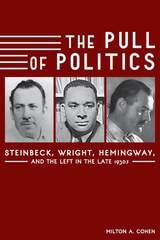
The Pull of Politics
Steinbeck, Wright, Hemingway, and the Left in the Late 1930sMilton A. Cohen
University of Missouri Press, 2018
The Quaker City, or The Monks of Monk Hall
A Romance of Philadelphia Life, Mystery, and CrimeGeorge Lippard
University of Massachusetts Press, 1995
The Quarry
PoemsDan Lechay
Ohio University Press, 2004
Once or twice in a generation a poet comes along who captures the essential spirit of the American Midwest and gives name to the peculiar nature that persists there. Like James Wright, Robert Bly, Ted Kooser, and Jared Carter before him, Dan Lechay reshapes our imagination to include his distinct and profound vision of this undersung region.
The poetry of Dan Lechay, collected in The Quarry, constructs a myth of the Midwest that is at once embodied in the permanence of the landscape, the fleeting nature of the seasons, and the eternal flow of the river. Lechay writes of memory and the mutability of memory, of the change brought on a person by the years lived and lost, and of the stoic attempts made by those around him to elicit an order and rationale to their lives.
The Quarry is the first full-length collection from this seasoned poet. Final judge Alan Shapiro in writing about The Quarry said: “If Dan Lechay’s poems often begin with the ordinary details and circumstances of life in a small Midwestern town or city, they always end by reminding us that no moment of life is ever ordinary, that ‘Nothing is more mysterious than the way things are.’
The Quarry is a marvelous, disquieting, extraordinarily beautiful book that meditates on fundamental questions of time and change in and through a clear-eyed yet loving evocation of everyday existence. Under Lechay’s soulful gaze, the backyards, neighborhoods, animals, and landscapes he describes dramatize the often wrenching connection between beauty and loss, evanescence and memory. The Quarry is a thoroughly mature and accomplished book.”
The Queen's Desertion
PoemsCarol Frost
Northwestern University Press, 2006
Pretty to think of the mind at its end
as a metaphysician beekeeping
after the leaves have fallen at autumn's end.
The bee metaphor is handled brilliantly and subtly throughout the collection as a reminder of how often our constant activity, whether it is mental or physical, is taken for granted.
Frost continues her investigation of the mortal plight by entering into a Dantesque descent into the ebb and flow of the seascape. Body consumes body over and over again as fish are caught and killed and the poet observes the flora and fauna as they partake in the darker cycles of nature. A long narrative poem about the Spanish explorer de Baca and his harrowing travels from southern Florida to Mexico powerfully reinforces the certainty of consumption and loss as it comments on the colonizing of the new world. In the final section, Frost returns once more to the need for movement and summons the Greek god Pan, who dances a rite of acceptance through a metaphysical landscape on the verge of seasonal change--the bees are not dead, the dark woods are filled with music.
The REVEREND MARK TWAIN
THEOLOGICAL BURLESQUE, FORM, AND CONTENTJoe B. Fulton
The Ohio State University Press, 2006
Twain adopted such religious personae to burlesque the religious literary genres associated with those vocations. He wrote catechisms, prophecies, psalms, and creeds, all in the theological tradition, but with a comic twist. Twain even wrote a burlesque life of Christ that has the son of God sporting blue jeans and cowboy boots. With his distinctive comic genius, Twain entered the religious dialogue of his time, employing the genres of belief as his vehicle for criticizing church and society.
Twain’s burlesques of religious form and content reveal a writer fully engaged with the religious ferment of his day. Works like The Innocents Abroad, Adventures of Huckleberry Finn, Personal Recollections of Joan of Arc, Roughing It, and What Is Man? are the productions of a writer skilled at adopting and adapting established literary and religious forms for his own purposes. Twain is sometimes viewed as a haphazard writer, but in The Reverend Mark Twain, Fulton demonstrates how carefully Twain studied established literary and theological genres to entertain—and criticize—his society.
The Racial Imaginary of the Cold War Kitchen
From Sokol’niki Park to Chicago’s South SideKate A. Baldwin
Dartmouth College Press, 2016
The Real and the Sacred
Picturing Jesus in Nineteenth-Century FictionJefferson J. A. Gatrall
University of Michigan Press, 2014
The Reckoning of Jeanne d'Antietam
PoemsMatthew Moore
University of Nevada Press, 2023
The collection of poems in The Reckoning of Jeanne d’Antietam circles the U.S. Civil War and the failed revolution of Reconstruction, and Matthew Moore makes incursions into the histories and beliefs of the era through architectures of sound, but also via ancillary histories and histories stacked upon histories—densely and visibly scrawled—like Anselm Kiefer's sculptures of lead books, melted and dripping with the texts of illegible songs. His poems include the figure of Joan of Arc (Jeanne d'Arc) and her voices; the explosion of the U.S. prison system and racial legal fictions amid the groundswell of mass terror in the wake of the U.S. Civil War; the politically poisoned poetic lineage that moves from Modernism, to New Criticism, and dead-ends in Southern Agrarianism; and the destructive colonial histories of the sugar and cotton industries.
The Reckoning of Jeanne d’Antietam stands imbricated with the spell of language-the-testament; language as hard rhyme and difficult music, evanescence and violence; and the invocation of names and events at their meeting places in history. Moore’s poems stand against sentiment and pity, and against the consolation of that which cannot be consoled.
The Reef
Elizabeth Arnold
University of Chicago Press, 1998
"Arnold's poetry, much more mature than most writers' first book, links lyrics, slight narratives, and a bit of satire into a work of glorious affirmation. The book is a splendid read."—Mary Sue Koeppel, Florida Times-Union
"For this commitment to both the autobiographical honesty and aesthetic risk, The Reef should be valuable to anyone who has been waiting for where contemporary American poetry is going."—Agni
The Registry of Forgotten Objects
StoriesMiles Harvey
The Ohio State University Press, 2024
The Religion of Hands
Prose Poems and Flash FictionsRay Gonzalez
University of Arizona Press, 2005
The Religion of Hands does not foster sleep. Look quickly and you will catch the hint of a fox streaking in front of your car’s headlights at night. Look more carefully out your bedroom window and you may see your life going by, lost loved ones waving hello.
"Who were you when the stars were misinterpreted as the fingertips of God?"
Ray Gonzalez blends symbolic play with lyrical beauty as he works from a vast and complex palette to infuse popular culture with myth. The Religion of Hands is imbued with magical realism: a suffocating dream of tamales, mysterious reptilian allusions, a man who "finds God walking down the stairs to hand him an old, tattered phonebook from the year he was born." It offers strange prophecies: "A steady vegetation will grow across the empire as more homeboys are killed in drive-bys. . . . Microscopic scratches on an old vinyl record will form a message discovered in twenty more years when the album is bought at a garage sale." And in 14 flash fictions, it tells of a tiny old man kept in a glass jar, an accordion stored in an old family trunk, tales of sharks and bandits. The religion of hands has its own unspoken sacraments. "The fingers take over, teaching whoever holds the moment that the rapid weight of the open hands is a dangerous way to live."
Seamlessly, effortlessly, multi-dexterously, Ray Gonzalez spins words that speak our very dreams.
The Remembered Gate
Memoirs by Alabama WritersJay Lamar
University of Alabama Press, 2002
Nineteen acclaimed writers reflect on the Alabama landscapes, memories, and experiences that shaped their voices.
In The Remembered Gate, nationally prominent fiction writers, essayists, and poets recall how their formative years in Alabama shaped them as people and as writers. The essays range in tone from the pained and sorrowful to the wistful and playful, in class from the privileged to the poverty-stricken, in geography from the rural to the urban, and in time from the first years of the 20th century to the height of the Civil Rights era and beyond.
In all the essays we see how the individual artists came to understand something central about themselves and their art from a changing Alabama landscape. Whether from the perspective of C. Eric Lincoln, beaten for his presumption as a young black man asking for pay for his labors, or of Judith Hillman Paterson, floundering in her unresolved relationship with her troubled family, these personal renderings are intensely realized visions of a writer's sense of being a writer and a human being. Robert Inman tells of exploring his grandmother's attic, and how the artifacts he found there fired his literary imagination. William Cobb profiles the lasting influence of the town bully, the diabolical Cletus Hickey. And in “Growing up in Alabama: A Meal in Four Courses, Beginning with Dessert,” Charles Gaines chronicles his upbringing through the metaphor of southern cooking.
What emerges overall is a complex, richly textured portrait of men and women struggling with, and within, Alabama’s economic and cultural evolution to become major voices of our time.
The Resistance to Poetry
James Longenbach
University of Chicago Press, 2005
But the resistance to poetry is quite specifically the wonder of poetry. Considering a wide array of poets, from Virgil and Milton to Dickinson and Glück, Longenbach suggests that poems convey knowledge only inasmuch as they refuse to be vehicles for the efficient transmission of knowledge. In fact, this self-resistance is the source of the reader's pleasure: we read poetry not to escape difficulty but to embrace it.
An astute writer and critic of poems, Longenbach makes his case through a sustained engagement with the language of poetry. Each chapter brings a fresh perspective to a crucial aspect of poetry (line, syntax, figurative language, voice, disjunction) and shows that the power of poetry depends less on meaning than on the way in which it means—on the temporal process we negotiate in the act of reading or writing a poem. Readers and writers who embrace that process, Longenbach asserts, inevitably recoil from the exaggeration of the cultural power of poetry in full awareness that to inflate a poem's claim on our attention is to weaken it.
A graceful and skilled study, The Resistance to Poetry honors poetry by allowing it to be what it is. This book arrives at a critical moment—at a time when many people are trying to mold and market poetry into something it is not.
The Restorers
W. S. Di Piero
University of Chicago Press, 1992

The Revealing Moment and Other Plays
Oscar W. Firkins
University of Minnesota Press, 1932
The Revealing Moment and Other Plays was first published in 1932. Minnesota Archive Editions uses digital technology to make long-unavailable books once again accessible, and are published unaltered from the original University of Minnesota Press editions.
"Sparkling wit, brilliancy of phrase, vivid character portrayal, erudition, taste, a delicate sense of proportion, and a genuinely felicitous style"—these are only a few of the critics' judgments on Mr. Ferkins' previously published plays.
The Reverend Jacob Bailey, Maine Loyalist
For God, King, Country, and for SelfJames S. Leamon
University of Massachusetts Press, 2012
Reverend Bailey's persistence in praying for the king and his refusal to publicize the Declaration of Independence from his Pownalborough pulpit aroused hostilities that drove him and his family to the safety of Nova Scotia. There, in exile, Bailey devoted himself to assisting fellow refugees while defending himself from others. During this time, he wrote almost obsessively: poems, dramas, novels, histories. Though few were ever completed, and even fewer published, in one way or another most of his writings depicted the trauma he underwent as a loyalist.
Leamon's study of the Reverend Jacob Bailey depicts the complex nature and burdens of one person's loyalism while revealing much about eighteenth-century American life and culture.
The Right Hand
Christina Pugh
Tupelo Press, 2024
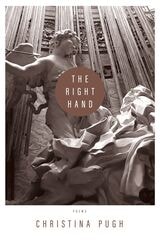
Pain, piercing, and language: with urgent lyricism and lacunae on the page, The Right Hand explores the physical, emotional, and philosophical experiences of chronic pain, bodywork (especially acupuncture), and healing. In the second half of the collection, the poet spends extended time with Bernini's sculpture of St. Teresa in Ecstasy in Rome, finding this famous scene of wounding to be in dialogue with her own experience of pain, as well as her suspension between languages and spiritual isolation. In The Right Hand, the hidden sites of the body speak, and Bernini’s centuries-old arrow pierces us with hurting eloquence.
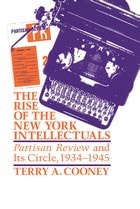
The Rise of the New York Intellectuals
Partisan Review and Its Circle, 1934–1945Terry A. Cooney
University of Wisconsin Press, 1986
Cosmopolitan visions
Terry A. Cooney traces the evolution of the Partisan Review—often considered to be the most influential little magazine ever published in America—during its formative years, giving a lucid and dispassionate view of the magazine and its luminaries who played a leading role in shaping the public discourse of American intellectuals. Included are Lionel Trilling, Philip Rahv, William Phillips, Dwight Macdonald, F. W. Dupee, Mary McCarthy, Sidney Hook, Harold Rosenberg, and Delmore Schwartz, among others.
“An excellent book, which works at each level on which it operates. It succeeds as a straightforward narrative account of the Partisan Review in the 1930s and 1940s. The magazine’s leading voices—William Phillips, Philip Rahv, Dwight MacDonald, Lionel Trilling, and all the rest—receive their due. . . . Among the themes that engage Cooney. . . . are: how they dealt with ‘modernism’ in culture and radicalism in politics, each on its own and in combination; how Jewishness played a complex and fascinating role in many of the thinkers’ lives; and, especially, how ‘cosmopolitanism’ best explains what the Partisan Review was all about.”—Robert Booth Fowler, Journal of American History
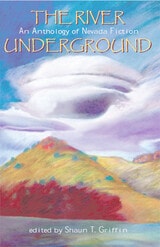
The River Underground
An Anthologyof Nevada FictionShaun T. Griffin
University of Nevada Press, 2001
Here we find a delightful and long-forgotten story by the doyen of Nevada writers, Robert Laxalt; a moving story by Adrian C. Louis, a Native American from Lovelock who has found national acclaim for his powerful fiction and poetry about reservation life; and excerpts from work by best-selling writers Teresa Jordan, Steven Nightingale, Douglas Unger, and Richard Wiley.
Settings range from rural Nevada to rural post-revolutionary China, from the glitz of Las Vegas to a Basque immigrant household in Carson City, from the hills of Appalachia to the Pacific during World War II. Characters include a pair of Mormon teenagers trying to escape the moral rigors of their faith, a fugitive Shoshone Indian trying to preserve the ways of his ancestors against the pressures of history, an immigrant family in Las Vegas coping with the father’s final illness, a trio of escaped prisoners bent on revenge, and an aging African American jazz musician. There is work by writers whose names are known to readers of fine fiction everywhere and work by talented newcomers.
Editor Griffin has provided for each selection a brief biographical sketch of the author and some comments on the qualities of the piece that prompted its inclusion in the anthology. As a collection of fiction, this is exciting reading—provocative, often moving, sometimes startling in its brilliance. It demonstrates unequivocally that writing, and writers, are flourishing in Nevada, and that the state’s literary community is remarkably abundant in talent, creativity, and the range of its voices and concerns.
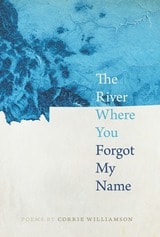
The River Where You Forgot My Name
Corrie Williamson
Southern Illinois University Press, 2019
The River Where You Forgot My Name travels between early 1800s Virginia and Missouri and present-day western Montana, a place where “bats sail the river of dark.” In their crosscutting, the poems in this collection reflect on American progress; technology, exploration, and environment; and the ever-changing landscape at the intersection of wilderness and civilization.
Three of the book’s five sections follow poet Corrie Williamson’s experiences while living for five years in western Montana. The remaining sections are persona poems written in the voice of Julia Hancock Clark, wife of William Clark, who she married soon after he returned from his western expedition with Meriwether Lewis. Julia lived with Clark in the then-frontier town of St. Louis until her early death in 1820. She offers a foil for the poet’s first-person Montana narrative and enriches the historical perspective of the poetry, providing a female voice to counterbalance the often male-centered discovery and frontier narrative.
The collection shines with all-too human moments of levity, tragedy, and beauty such as when Clark names a river Judith after his future wife, not knowing that everyone calls her Julia, or when the poet on a hike to Goldbug Hot Springs imagines a mercury-poisoned Lewis waking “with the dawn between his teeth.” Williamson turns a curious and critical eye on the motives and impact of expansionism, unpacking some of the darker ramifications of American hunger for land and resources. These poems combine breathtaking natural beauty with backbreaking human labor, all in the search for something that approaches grace.
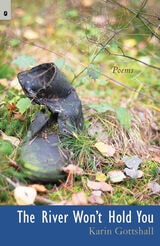
The River Won’t Hold You
Karin Gottshall
The Ohio State University Press, 2014
Haunting and haunted, The River Won’t Hold You navigates loneliness and loss with a quiet, relentless clarity. In poems shaped at the uneasy crossroads of imagination and lived experience, Karin Gottshall searches for solace in the charged spaces between them. “I tell myself I can be content with the pleasures / permitted ghosts,” she writes in “Afterlife,” “but my body wakes up / leaking saltwater, and won’t let my ghost-self be.”
Across the collection, poetic structure and the music of language become vessels for memory, philosophy, and ache. Generous in their formal range and attentive to both sound and silence, these poems resist tidy answers. The beauty of Gottshall's work arises from the steadiness of her gaze, and the startling precision of the images it lands on:
“Wide-open, staring eyes of the tiger / I drew and had to destroy because it wouldn’t sleep.”
The River Won’t Hold You shows how the places we fear most—the gaps, the afterlives, the undefinable spaces—can also be the ones that hold us.
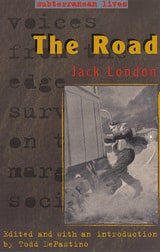
The Road
DePastino, Todd
Rutgers University Press, 2006
In 1894, an eighteen-year-old Jack London quit his job shoveling coal, hopped a freight train, and left California on the first leg of a ten thousand-mile odyssey. His adventure was an exaggerated version of the unemployed migrations made by millions of boys, men, and a few women during the original "great depression of the 1890s. By taking to the road, young wayfarers like London forged a vast hobo subculture that was both a product of the new urban industrial order and a challenge to it. As London's experience suggests, this hobo world was born of equal parts desperation and fascination. "I went on 'The Road,'" he writes, "because I couldn't keep away from it . . . Because I was so made that I couldn't work all my life on 'one same shift'; because-well, just because it was easier to than not to."
The best stories that London told about his hoboing days can be found in The Road, a collection of nine essays with accompanying illustrations, most of which originally appeared in Cosmopolitan magazine between 1907 and 1908. His virile persona spoke to white middle-class readers who vicariously escaped their desk-bound lives and followed London down the hobo trail. The zest and humor of his tales, as Todd DePastino explains in his lucid introduction, often obscure their depth and complexity. The Road is as much a commentary on London's disillusionment with wealth, celebrity, and the literary marketplace as it is a picaresque memoir of his youth.
The Room Within
PoemsMoore Moran
Ohio University Press, 2010
The Room Withinis a retrospective survey of a poetic career dating back to the late fifties. A student of Yvor Winters at Stanford, Moore Moran has deservedly earned a reputation, along with fellow Winters students Turner Cassity and Edgar Bowers, as a “poet’s poet.” He stands, though, not as a disciple, but as a poet who has earned his own voice over the decades, a voice at once familiar and haunting, down-to-earth and carefully wrought—a unique sensibility that emerges not full blown, but rather line by careful line.
The Route as Briefed
James Tate
University of Michigan Press, 1999
In typical Tate style, the book continually straddles the line between fiction and autobiography, entertaining readers with amusing accounts of the poet's own experiences while drawing on these to narrate the fictional stories as well.
James Tate is Professor of Poetry, University of Massachusetts. He is the author of a number of books of poetry, including Worshipful Company of Fletchers: Poems, 1994; Selected Poems, 1991; Distance from Loved Ones, 1990. He has received several awards for his work, including the Pulitzer Prize for poetry in 1992.
The SILENT SINGER
NEW AND SELECTED POEMSLen Roberts
University of Illinois Press, 2001
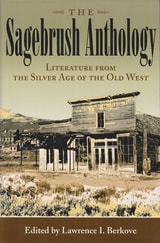
The Sagebrush Anthology
Literature from the Silver Age of the Old WestEdited by Lawrence I. Berkove
University of Missouri Press, 2006
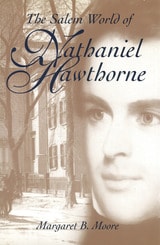
The Salem World of Nathaniel Hawthorne
Margaret B. Moore
University of Missouri Press, 2001
Although most writers on Nathaniel Hawthorne touch on the importance of Salem, Massachusetts, to his life and career, no detailed study has been published on the powerful heritage bequeathed to him by his ancestors and present to him during his years in that town. In The Salem World of Nathaniel Hawthorne, Margaret B. Moore thoroughly investigates Hawthorne's family, his education before college (about which almost nothing has been known), and Salem's religious and political influences on him. She details what Salem had to offer Hawthorne in the way of entertainment and stimulation, discusses his friends and acquaintances, and examines the significant role of women in his life—particularly Mary Crowninshield Silsbee and Sophia Peabody.
Nathaniel Hawthorne felt a strong attachment to Salem. No matter what he wrote about the town, it was the locale for many of his stories, sketches, a novel, and a fragmentary novel. Salem history haunted him, and Salem people fascinated him. And Salem seems to have a perennial fascination for readers, not just for Hawthorne scholars. New information from primary sources, including letters (many unpublished), diaries, and contemporary newspapers, adds much not previously known about Salem in the early nineteenth century. Moore has found new sources in various manuscript collections, such as the privately owned Felt-White Collection and the Richards and Ashburner Papers in the National Library in Scotland. She also uses extensively the many manuscript collections at the Peabody Essex Museum.
By tracing the effect of Salem on Hawthorne's writing, The Salem World of Nathaniel Hawthorne makes clear that Hawthorne not only was aware of his "own dear native place" but also drew upon it consciously and subconsciously in his work. This book contributes to a better understanding of Hawthorne as man and writer and of Salem's vital part in his life and work.
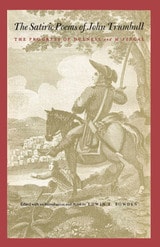
The Satiric Poems of John Trumbull
The Progress of Dulness and M'FingalEdited with an introduction and notes by Edwin T. Bowden
University of Texas Press, 1962
John Trumbull, the colonial American satiric poet, is one of the most readable, and certainly one of the most amusing, of our early men of letters. His poems, with all their wit and bite, bring back to life again the days of the Revolutionary War—powdered wigs, flirting belles, political quarrels, town meetings, brawling mobs, inept generals, flaming national purpose, and all. And if the colonial period seems a long way back in time, his satiric poem on the Progress of Dulness in education will show that time—or at least time in the colleges—has not moved so fast after all.
Trumbull's two long poems, so important to the beginnings of America's national poetry and to an understanding of America's literary heritage, were out of print for a number of years and had, in fact, never before been accurately reprinted from the original versions. Here they are available, complete with the original biting prefaces, in a dependable text for the scholar, annotated for the general reader interested in the literature and history of the American eighteenth century. The annotation is inclusive but kept to a minimum.
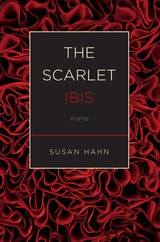
The Scarlet Ibis
PoemsSusan Hahn
Northwestern University Press, 2007
It’s all about disappearance.
About a bird in a cage
with a mirror, a simple twist
on the handle at the side
that makes it come and go
at the magician’s insistence.
It’s all about innocence.
It’s all about acceptance.
It’s all about compliance.
It’s all about deference.
It’s all about silence.
It’s all about disappearance.
The Science Fiction of Poetics and the Avant-Garde Imagination
Michael Golston
University of Alabama Press, 2024
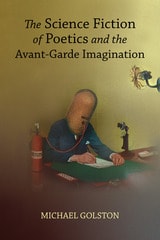
This insightful, playful monograph from Golston does exactly what it advertises: modeling poetics based on how poetry (and some parallel artistic endeavors) has filtered through a century-plus of science fiction. This is not a book about science fiction in and of itself, but it is a book about the resonances of science-fiction tropes and ideas in poetic language.
The germ of Golston’s project is a throwaway line in Robert Smithson’s Entropy and the New Monuments about how cinema supplanted nature as inspiration for many of his fellow artists: “The movies give a ritual pattern to the lives of many artists, and this induces a kind of ‘low budget’ mysticism, which keeps them in a perpetual trance.” Golston charts how the demotic appeal of sci-fi, much like that of the B-movie, cross-pollinated into poetry and other branches of the avant garde.
Golston creates what he calls a “regular Rube Goldberg machine” of a critical apparatus, drawing on Walter Benjamin, Roman Jakobson, and Gilles Deleuze. He starts by acknowledging that, per the important work of Darko Suvin to situate science fiction critically, the genre is premised on cognitive estrangement. But he is not interested in the specific nuts and bolts of science fiction as it exists but rather how science fiction has created a model not only for other poets but also for musicians and landscape artists.
Golston’s critical lens moves around quite a bit, but he begins with familiar enough subjects: Edgar Rice Burroughs, Mina Loy, William S. Burroughs. From there he moves into more “alien” terrain: Ed Dorn’s long poem Gunslinger, the discombobulated work of Clark Coolidge. Sun Ra, Ornette Coleman, and Jimi Hendrix all come under consideration. The result of Golston’s restless, rich scholarship is the first substantial monograph on science fiction and avant-garde poetics, using Russian Formalism, Frankfurt School dialectics, and Deleuzian theory to show how the avant-garde inherently follows the parameters of sci fi, in both theme and form.
The Sculpture of Robyn Horn
Robyn Horn
University of Arkansas Press, 2018
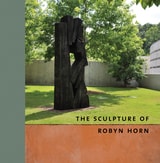
The essays and images in The Sculpture of Robyn Horn sketch the industrious career of this Little Rock, Arkansas-based sculptor, illuminating her attention to geometry, physics, and the philosophy of design, and exploring the context and origin of the various series—Geodes, Millstones, Standing Stones, and Slipping Stones, among others—that characterize her body of work.
The Sea Is a Continual Miracle
Sea Poems and Other Writings by Walt WhitmanWalt Whitman
University Press of New England, 2017
The Second Man and Other Poems
Louis Coxe
University of Minnesota Press, 1955
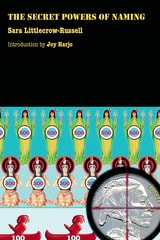
The Secret Powers of Naming
Sara Littlecrow-Russell; Introduction by Joy Harjo
University of Arizona Press, 2006
As Littlecrow-Russell explores how names imposed by outsiders both collide and merge with the identities that Natives create for themselves, these poems decisively counter the images of Indians as colorful dancers, stoic saints, and defeated warriors. These verses are not constructed of beautiful images, nor are they stories of redemption. Instead, Littlecrow-Russell offers stark and honest witness to urban and reservation life at the beginning of the twenty-first century. In short snaps of honed lyric and voice, she tackles topics ranging from family, love, and spirituality, to welfare, addiction, and the thorny politics of tribal identity. Her work displays tremendous bitterness and anger, but there is also dignity, humor, and plenty of irony.
Candid and compelling, this collection brings fluent verse and human face to the commonly misrepresented experiences of Native Americans.
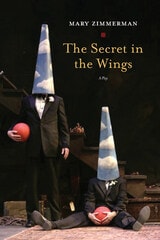
The Secret in the Wings
A PlayMary Zimmerman
Northwestern University Press, 2014
A dark and mysterious homage to lesser-known fairy tales
Mary Zimmerman’s The Secret in the Wings adapts a group of lesser-known fairy tales to create a theatrical work that sets their dark mystery against her signature wit and humor. The framing story concerns a child and the frightening babysitter with whom her parents leave her. As the babysitter reads from a book, the characters in each of the tales materialize, with each tale breaking off just at its bleakest moment before giving way to the next one.
The central tale is told without interruption, after which each previous tale is successively resumed, with each looming disaster averted. As in Zimmerman’s other productions, here she uses costumes, props, sets, and lighting to brilliant effect, creating images and feelings that render the fairy tales in all their elemental and enduring power.

The Selected Poems Of Howard Nemerov
Howard Nemerov
Ohio University Press, 2003
Howard Nemerov—poet laureate of the United States, winner of the Pulitzer Prize and National Book Award, and chancellor of the Academy of American Poets—was one of the most prolific and significant American poets of the twentieth century. By the time of his death in 1991, he had published fourteen collections of poetry.
Judiciously selected and introduced by poet Daniel Anderson, The Selected Poems of Howard Nemerov represents the broad spectrum of Nemerov’s virtues as a poet—his intelligence, his wit, his compassion, and his irreverence. It stands as the retrospective collection of the best of what Nemerov left behind, which is some of the finest poetry that the twentieth century produced.
“To keep his errors down to a minimum,” W. H. Auden wrote, “the internal Censor to whom a poet submits his work in progress should be a Censorate. It should include, for instance, a sensitive only child, a practical housewife, a logician, a monk, an irreverent buffoon a nd even, perhaps, hated by all others and returning their dislike, a brutal, foul-mouthed drill sergeant who considers all poetry rubbish.”
Such are the readers to whom the poetry of Howard Nemerov might appeal. He distinguished himself on the landscape of American letters as a writer of great versatility. More than a decade after his death, that claim still holds true.
In this, the only edition of Nemerov’s work that surveys his entire poetic output, first-time readers of these poems will find an introduction to a truly remarkable creative mind. Longtime admirers of Nemerov will be reminded once again of his significance as a craftsman and philosopher, and as a poetic steward of the many ways in which we experience the world.
The Selected Poems Of Yvor Winters
Yvor Winters
Ohio University Press, 1999

The Senses of Nonsense
Alison Rieke
University of Iowa Press, 1992
The Senses of Walden
An Expanded EditionStanley Cavell
University of Chicago Press, 1992
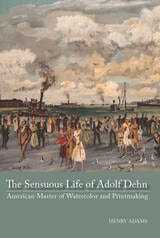
The Sensuous Life of Adolf Dehn
American Master of Watercolor and PrintmakingHenry Adams
University of Missouri Press, 2020
In this wide-ranging biography, Henry Adams explores how a once central figure can come to be forgotten. Noting that Dehn’s watercolor Spring in Central Park has been widely reproduced on calendars, postcards, and other Metropolitan Museum of Art souvenirs, Adams asks why it is that some artists are celebrated as key figures while others, even those who created images that form an integral part of our visual culture, are relatively unknown. With his account of the life of the prolific and influential Dehn, and a look at the circles of artists and writers in which Dehn moved, Adams helps to fill in what he calls the “secret or subterranean history of art.”
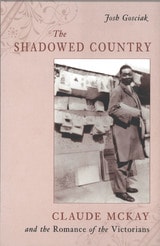
The Shadowed Country
Claude McKay and the Romance of the VictoriansGosciak, Josh
Rutgers University Press, 2006
One of the most important voices of the Harlem Renaissance, Claude McKay is largely recognized for his work during the 1920s, which includes a major collection of poems, Harlem Shadows, as well as a critically acclaimed novel, Home to Harlem. But McKay was never completely comfortable with his literary reputation during this period. Throughout his world travels, he saw himself as an English lyricist.
In this compelling examination of the life and works of this complex poet, novelist, journalist, and short story writer, Josh Gosciak sheds light on McKay’s literary contributions beyond his interactions with Harlem Renaissance artists and writers. Working within English literary traditions, McKay crafted a verse out of hybridity and diaspora. Gosciak shows how he reinvigorated a modern pastoral through his encounters with some of the major aesthetic and political movements of the late Victorian and early modern periods.
Exploring new archival material as well as many of McKay’s lesser known poetic works, TheShadowed Country provides a unique interpretation of the writings of this major author.
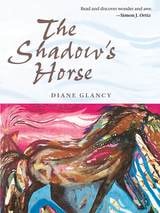
The Shadow’s Horse
Diane Glancy
University of Arizona Press, 2003
The Shadow's Horse is a new collection of poems in which Glancy walks the margin between her white and Indian heritage. In poems that conjure the persistence of fallen leaves or juxtapose images of Christ and the stockyards, she powerfully evokes place and spirit to address with intelligence and beauty issues of family, work, and faith.
In some of these poems Glancy recalls growing up with her Cherokee father, who worked in a stockyard, radically applying Christian theology to the slaughter of non-human creatures: The cattle go up the ramp
dragging their crosses.
Their voices are Gregorian chants
rising to the blue sky,
the cold clouds.
In others she examines the walk of history through the ordinary details of life-history seen from two points of view, early Euro-American and contemporary Native American. She sees her Native heritage as shortlived and fragile, yet as enduring as leaves, and she asks, "If you line up all the leaves that fall / how many times will they go around the earth?"
Writing in a cross-boundaried, fragmented voice—a voice based on the memory of the way language sounded when it was stretched across the cultures or walked in both worlds—Glancy has fashioned a book about speaking oneself into existence. The Shadow's Horse is the story of one culture made to sing the song of another until the Native voice is so erased it is nearly an illusion. Yet as readers of these poems will discover, the shadow of the past is as real as the horse it rides.