Results by title
5448 books match the query 'History and criticism' and 1116 start with t
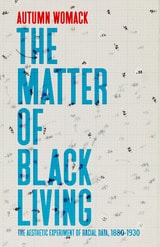
The Matter of Black Living
The Aesthetic Experiment of Racial Data, 1880–1930Autumn Womack
University of Chicago Press, 2022
As the nineteenth century came to a close and questions concerning the future of African American life reached a fever pitch, many social scientists and reformers approached post-emancipation Black life as an empirical problem that could be systematically solved with the help of new technologies like the social survey, photography, and film. What ensued was nothing other than a “racial data revolution,” one which rendered African American life an inanimate object of inquiry in the name of social order and racial regulation. At the very same time, African American cultural producers and intellectuals such as W. E. B. Du Bois, Kelly Miller, Sutton Griggs, and Zora Neale Hurston staged their own kind of revolution, un-disciplining racial data in ways that captured the dynamism of Black social life.
The Matter of Black Living excavates the dynamic interplay between racial data and Black aesthetic production that shaped late nineteenth-century social, cultural, and literary atmosphere. Through assembling previously overlooked archives and seemingly familiar texts, Womack shows how these artists and writers recalibrated the relationship between data and Black life. The result is a fresh and nuanced take on the history of documenting Blackness. The Matter of Black Living charts a new genealogy from which we can rethink the political and aesthetic work of racial data, a task that has never been more urgent.
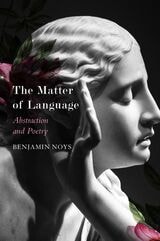
The Matter of Language
Abstraction and PoetryBenjamin Noys
Seagull Books, 2023
If the twentieth century was the century in which language was at the center of thought, the twenty-first century has, so far, been the century of matter. The Matter of Language is a critical intervention that aims to return to the relationship between language and matter to think of our present moment as one dominated by abstractions that rule our lives. In a series of dated chapters, that form punctual moments of intervention, this book both rehabilitates key thinkers, like Marx, Freud, and Saussure, and engages with poetic thinking on matter in David Jones, Diane di Prima, William Blake, Leslie Kaplan, and others. It is a matter of understanding language as a site of struggle, which is intimately bound to the material but also crucial in formulating and expressing the material and the abstractions that shape language and matter. Working between theory and poetry, The Matter of Language reconceives notions of alienation and class struggle as essential modes of reading and analysis for our fractured present.
The Meaning of Music
Leo Samama
Amsterdam University Press, 2016
Musician Leo Samama discusses these and many other questions while shaping a vibrant picture of music's importance in human lives both past and present. What is remarkable is that music is recognised almost universally as a type of language that we can use to wordlessly communicate. We can hardly shut ourselves off from music, and considering its primal role in our lives, it comes as no surprise that few would ever want to. Able to transverse borders and appeal to the most disparate of individuals, music is both a tool and a gift, and as Samama shows, a unifying thread running throughout the cultural history of mankind.
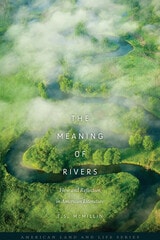
The Meaning of Rivers
Flow and Reflection in American LiteratureT. S. McMillin
University of Iowa Press, 2011
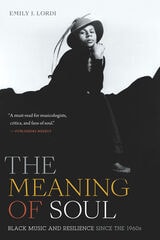
The Meaning of Soul
Black Music and Resilience since the 1960sEmily J. Lordi
Duke University Press, 2020
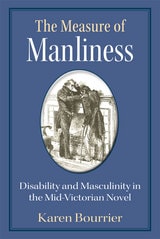
The Measure of Manliness
Disability and Masculinity in the Mid-Victorian NovelKaren Bourrier
University of Michigan Press, 2015
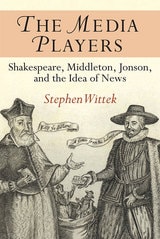
The Media Players
Shakespeare, Middleton, Jonson, and the Idea of NewsStephen Wittek
University of Michigan Press, 2015
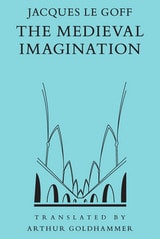
The Medieval Imagination
Jacques Le Goff
University of Chicago Press, 1988
"Le Goff is one of the most distinguished of the French medieval historians of his generation . . . he has exercised immense influence."—Maurice Keen, New York Review of Books
"The whole book turns on a fascinating blend of the brutally materialistic and the generously imaginative."—Tom Shippey, London Review of Books
"The richness, imaginativeness and sheer learning of Le Goff's work . . . demand to be experienced."—M. T. Clanchy, Times Literary Supplement
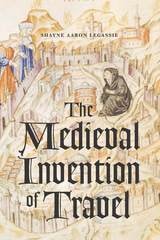
The Medieval Invention of Travel
Shayne Aaron Legassie
University of Chicago Press, 2017
Exploring this phenomenon, The Medieval Invention of Travel draws on an impressive array of sources to develop original readings of canonical figures such as Marco Polo, John Mandeville, and Petrarch, as well as a host of lesser-known travel writers. As Shayne Aaron Legassie demonstrates, the Middle Ages inherited a Greco-Roman model of heroic travel, which viewed the ideal journey as a triumph over temptation and bodily travail. Medieval travel writers revolutionized this ancient paradigm by incorporating practices of reading and writing into the ascetic regime of the heroic voyager, fashioning a bold new conception of travel that would endure into modern times. Engaging methods and insights from a range of disciplines, The Medieval Invention of Travel offers a comprehensive account of how medieval travel writers and their audiences reshaped the intellectual and material culture of Europe for centuries to come.
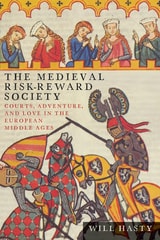
The Medieval Risk-Reward Society
Courts, Adventure, and Love in the European Middle AgesWill Hasty
The Ohio State University Press, 2016
The Medieval Risk-Reward Society: Courts, Adventure, and Love in the European Middle Ages takes a descriptive approach to the competitions in religion, politics, and poetry that are constitutive of medieval culture. Culture is considered always to be happening, and to be happening on the cultural cutting edge as competitions for rewards involving the element of chance. This study finds adventure and love—the principal concerns of medieval European romance poetry—to be cultural game changers, and thereby endeavors to make a humanist contribution to the development of a cultural game theory.
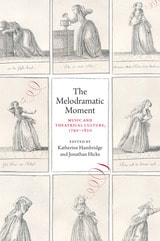
The Melodramatic Moment
Music and Theatrical Culture, 1790–1820Edited by Katherine G Hambridge and Jonathan Hicks
University of Chicago Press, 2018
This anthology proposes to address the sometimes bewilderingly broad understandings of melodrama by insisting on the historical specificity of its genesis on the stage in late-eighteenth-century Europe. Melodrama emerged during this time in the metropolitan centers of London, Paris, Vienna, and Berlin through stage adaptations of classical subjects and gothic novels, and they became famous for their use of passionate expression and spectacular scenery. Yet, as contributors to this volume emphasize, early melodramas also placed sound at center stage, through their distinctive—and often disconcerting—alternations between speech and music. This book draws out the melo of melodrama, showing the crucial dimensions of sound and music for a genre that permeates our dramatic, literary, and cinematic sensibilities today.
A richly interdisciplinary anthology, The Melodramatic Moment will open up new dialogues between musicology and literary and theater studies.
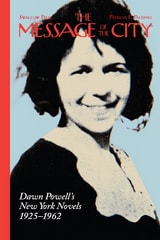
The Message of the City
Dawn Powell’s New York Novels, 1925–1962Patricia E. Palermo
Ohio University Press, 2016
Dawn Powell was a gifted satirist who moved in the same circles as Dorothy Parker, Ernest Hemingway, renowned editor Maxwell Perkins, and other midcentury New York luminaries. Her many novels are typically divided into two groups: those dealing with her native Ohio and those set in New York. “From the moment she left behind her harsh upbringing in Mount Gilead, Ohio, and arrived in Manhattan, in 1918, she dove into city life with an outlander’s anthropological zeal,” reads a recent New Yorker piece about Powell, and it is those New York novels that built her reputation for scouring wit and social observation.
In this critical biography and study of the New York novels, Patricia Palermo reminds us how Powell earned a place in the national literary establishment and East Coast social scene. Though Powell’s prolific output has been out of print for most of the past few decades, a revival is under way: the Library of America, touting her as a “rediscovered American comic genius,” released her collected novels, and in 2015 she was posthumously inducted into the New York State Writer’s Hall of Fame.
Engaging and erudite, The Message of the City fills a major gap in in the story of a long-overlooked literary great. Palermo places Powell in cultural and historical context and, drawing on her diaries, reveals the real-life inspirations for some of her most delicious satire.
The Metanarrative of Blindness
A Re-reading of Twentieth-Century Anglophone WritingDavid Bolt
University of Michigan Press, 2013
Although the theme of blindness occurs frequently in literature, literary criticism has rarely engaged the experiential knowledge of people with visual impairments. The Metanarrative of Blindness counters this trend by bringing to readings of twentieth-century works in English a perspective appreciative of impairment and disability. Author David Bolt examines representations of blindness in more than forty literary works, including writing by Kipling, Joyce, Synge, Orwell, H. G. Wells, Susan Sontag, and Stephen King, shedding light on the deficiencies of these representations and sometimes revealing an uncomfortable resonance with the Anglo-American science of eugenics.
What connects these seemingly disparate works is what Bolt calls “the metanarrative of blindness,” a narrative steeped in mythology and with deep roots in Western culture. Bolt examines literary representations of blindness using the analytical tools of disability studies in both the humanities and social sciences. His readings are also broadly appreciative of personal, social, and cultural aspects of disability, with the aim of bringing literary scholars to the growing discipline of disability studies, and vice versa. This interdisciplinary monograph is relevant to people working in literary studies, disability studies, psychology, sociology, applied linguistics, life writing, and cultural studies, as well as those with a general interest in education and representations of blindness.
The Metaphysics of Sound in Wallace Stevens
Anca Rosu
University of Alabama Press, 1995
Where sound speaks louder than meaning—Stevens’s poetry as a metaphysical echo.
Wallace Stevens dedicated his poetry to challenging traditional notions about reality, truth, knowledge, and the role of language as a means of representation. Rosu demonstrates that Stevens's experimentation with sound is not only essential to his poetics but also profoundly linked to the pragmatist ideas that informed his way of thinking about language. Her readings of Stevens's poems focus on revealing the dynamic through which meaning emerges in language patterns—a dynamic she calls "images of sound."
Rosu argues that the formal aspects of poetry are deeply ingrained in cultural realities and are, in fact, generated by their context. The sound pattern pervading Stevens's poems at once addresses and violates the reader's assumptions about the functioning of language and, along with them, ideas about reality, knowledge, and subjectivity. Sound is thus the starting point of an argument concerned with Stevens's epistemology and poetics—the way his poems insist on a movement past or through a normal poetic representation of the world to gesture toward a reality that lies outside or beyond systems of representation.
The relationship between sound and meaning isolated and analyzed in The Metaphysics of Sound in Wallace Stevens is firmly situated among critical debates concerning the poet's aesthetic and philosophical convictions. Rosu claims that Stevens's poetry is not ultimately about the powerlessness of language, nor is it a deconstructive enterprise of destabilizing culturally consecrated truths; rather it achieves meaning most frequently through patterns of sound. Sound helps Stevens make a deeply philosophical point in a language unavailable to philosophers.
The Mexican American Orquesta
Music, Culture, and the Dialectic of ConflictBy Manuel Peña
University of Texas Press, 1999
The Mexican American orquesta is neither a Mexican nor an American music. Relying on both the Mexican orquesta and the American dance band for repertorial and stylistic cues, it forges a synthesis of the two. The ensemble emerges historically as a powerful artistic vehicle for the expression of what Manuel Peña calls the "dialectic of conflict." Grounded in ethnic and class conflict, this dialectic compels the orquesta and its upwardly mobile advocates to waver between acculturation and ethnic resistance. The musical result: a complex mesh of cultural elements—Mexican and American, working- and middle-class, traditional and contemporary.
In this book, Manuel Peña traces the evolution of the orquesta in the Southwest from its beginnings in the nineteenth century through its pinnacle in the 1970s and its decline since the 1980s. Drawing on fifteen years of field research, he embeds the development of the orquesta within a historical-materialist matrix to achieve the optimal balance between description and interpretation. Rich in ethnographic detail and boldly analytical, his book is the first in-depth study of this important but neglected field of artistic culture.
The Mexican Transpacific
Nikkei Writing, Visual Arts, and PerformanceIgnacio López-Calvo
Vanderbilt University Press, 2022
This book, a continuation of author Ignacio López-Calvo’s previous research on cultural production by Latin American authors of Asian ancestry, focuses mostly on literature, theater, and visual arts produced by Japanese immigrants in Mexico and their descendants, rather than on the Japanese community as a mere object of study. With this interdisciplinary project, López-Calvo aims to bring to the fore this silenced community’s voice and agency to historicize its own experience.
The Midwestern Pastoral
Place and Landscape in Literature of the American HeartlandWilliam Barillas
Ohio University Press, 2006
The Migration of Musical Film
From Ethnic Margins to American MainstreamGarcia, Desirée J
Rutgers University Press, 2014
The Migration of Musical Film shows how the folk musical was rooted in the challenges faced by immigrants and migrants who had to adapt to new environments, balancing American individualism with family values and cultural traditions. Uncovering fresh material from film industry archives, Garcia considers how folk musicals were initially marginal productions, designed to appeal to specific minority audiences, and yet introduced themes that were gradually assimilated into the Hollywood mainstream.
No other book offers a comparative historical study of the folk musical, from the first sound films in the 1920s to the genre’s resurgence in the 1970s and 1980s. Using an illustrative rather than comprehensive approach, Garcia focuses on significant moments in the sub-genre and rarely studied films such as Allá en el Rancho Grande along with familiar favorites that drew inspiration from earlier folk musicals—everything from The Wizard of Oz to Zoot Suit. If you think of movie musicals simply as escapist mainstream entertainment, The Migration of Musical Film is sure to leave you singing a different tune.
The Miles Davis Lost Quintet and Other Revolutionary Ensembles
Bob Gluck
University of Chicago Press, 2015
Gluck listens deeply to the uneasy tension between this group’s driving rhythmic groove and the sonic and structural openness, surprise, and experimentation they were always pushing toward. There he hears—and outlines—a fascinating web of musical interconnection that brings Davis’s funk-inflected sensibilities into conversation with the avant-garde worlds that players like Ornette Coleman and John Coltrane were developing. Going on to analyze the little-known experimental groups Circle and the Revolutionary Ensemble, Gluck traces deep resonances across a commercial gap between the celebrity Miles Davis and his less famous but profoundly innovative peers. The result is a deeply attuned look at a pivotal moment when once-disparate worlds of American music came together in explosively creative combinations.

The Militant Hackwriter
French Popular Literature 1800–1848 and Its Influence, Artistic and PoliticalLucian W. Minor
University of Wisconsin Press, 1975
While Louis XVIII, Charles X, and Louis Philippe ruled in France, a vast majority of politically unenfranchised Frenchmen were developing their own subculture. Only recently literate, they fashioned their own literature. It consisted of two important genres: the popular novel and the melodrama. As we trace these genres from the turn of the nineteenth century until that moment of February 25, 1848, when the Second Republic was declared, we are also led to a detailed scrutiny of the injustices which the immense majority of the French suffered and of the political causes they espoused. The succession of heroes and villains in their literature mirrored accurately the fears and hopes they felt.
The Miniaturists
Barbara Browning
Duke University Press, 2022
The Mistakes of Yesterday, the Hopes of Tomorrow
The Story of the PrisonairesJohn Dougan
University of Massachusetts Press, 2012
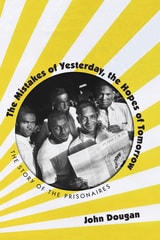
Early in the morning on June 1, 1953, five African American men boarded a van to make the 200-mile trip from Nashville to Memphis for a daylong recording session at the legendary Sun Studios, to be overseen by Sun founder Sam Phillips. One of the two tracks cut that day, “Just Walkin' in the Rain,” would go on to become a regional R&B hit, Sun Records' biggest record of the pre-Elvis era. It would, however, be the group's only hit. They were the Prisonaires, a vocal quintet who had honed their skills while inmates at the Tennessee State Penitentiary in Nashville.
In this book, John Dougan tells the story of the Prisonaires, their hit single, and the afterlife of this one remarkable song. The group and the song itself represent a compelling concept: imprisoned men using music as a means of cultural and personal survival. The song was re-recorded by white singer Johnnie Ray, who made it a huge hit in 1956. Over the years, other singers and groups would move the song further away from its origins, recasting the deep emotions that came from creating music in a hostile, controlled environment.
The story of the Prisonaires, for all of its triumphs, reflects the disappointment of men caught in a paradoxical search for personal independence while fully cognizant of a future consigned to prison. Their brief career and the unusual circumstances under which it flourished sheds light on the harsh realities of race relations in the pre–Civil Rights South. The book also provides a portrait of Nashville just as it was gaining traction as a nationally recognized music center.
The Modern Brazilian Stage
By David George
University of Texas Press, 1992
Reading a play and watching it performed onstage are quite different experiences. Likewise, studying a country's theatrical tradition with reference only to playtexts overlooks the vital impact of a play's performance on the audience and on the whole artistic community. In this performance-centered approach to Brazilian theatre since the 1940s, David George explores a total theatrical language—the plays, the companies that produced them, and the performances that set a standard for all future stagings.
George structures the discussion around several important companies. He begins with Os Comediantes, whose revolutionary 1943 staging of Nelson Rodrigues' Vestido de Noiva (Bridal Gown) broke with the outmoded comedy-of-manners formula that had dominated the national stage since the nineteenth century. He considers three companies of the 1950s and 1960s—Teatro Brasileiro de Comédia, Teatro de Arena, and Teatro Oficina—along with the 1967 production of O Rei da Vela (The Candle King) by Teatro Oficina.
The 1970s represented a wasteland for Brazilian theatre, George finds, in which a repressive military dictatorship muzzled artistic expression. The Grupo Macunaíma brought theatre alive again in the 1980s, with its productions of Macunaíma and Nelson 2 Rodrigues.
Common to all theatrical companies, George concludes, was the desire to establish a national aesthetic, free from European and United States models. The creative tension this generated and the successes of modern Brazilian theatre make lively reading for all students of Brazilian and world drama.
The Modern British Horror Film
Gerrard, Steven
Rutgers University Press, 2017
Tracking the revitalization of the British horror film industry over the past two decades, media expert Steven Gerrard also investigates why audiences have flocked to these movies. To answer that question, he focuses on three major trends: “hoodie horror” movies responding to fears about Britain’s urban youth culture; “great outdoors” films where Britain’s forests, caves, and coasts comprise a terrifying psychogeography; and psychological horror movies in which the monster already lurks within us.
Offering in-depth analysis of numerous films, including The Descent, Outpost, and The Woman in Black, this book takes readers on a lively tour of the genre’s highlights, while provocatively exploring how these films reflect viewers’ gravest fears about the state of the nation. Whether you are a horror buff, an Anglophile, or an Anglophobe, The Modern British Horror Film is sure to be a thrilling read.
The Modern Movement
A TLS CompanionEdited by John Gross
University of Chicago Press, 1993
In The Modern Movement, John Gross has assembled an entertaining selection of 155 articles and reviews about and by the great figures of literary modernism. The focus is on twelve key modernist writers: W. B. Yeats, Ezra Pound, D. H. Lawrence, James Joyce, T. S. Eliot, Wyndham Lewis, Virginia Wolf, W. H. Auden, Marcel Proust, Thomas Mann, Rainer Maria Rilke, and Franz Kafka. Another section gathers ten reviews and articles by Eliot and Woolf on then current writers and writing. In addition, there are more general articles on literary trends and issues by such prominent writers and critics as Anthony Burgess, Wallace Stevens, Anthony Powell, and Erich Heller.
This fascinating array reveals early opinions on what have come to be the classics of modernist literature. Readers will be treated to astute and often surprising opinions of their favorite writers on the most important literature of this century.
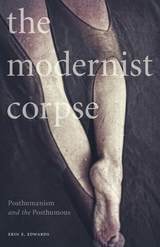
The Modernist Corpse
Posthumanism and the PosthumousErin E. Edwards
University of Minnesota Press, 2018
An unconventional take on the corpse challenges traditional conceptions of who—and what—counts as human, while offering bold insights into the modernist project
Too often regarded as the macabre endpoint of life, the corpse is rarely discussed and largely kept out of the public eye. In The Modernist Corpse, Erin E. Edwards unearths the critically important but previously buried life of the corpse, which occupies a unique place between biology and technology, the living and the dead. Exploring the posthumous as the posthuman, Edwards argues that the corpse is central to understanding relations between the human and its “others,” including the animal, the machine, and the thing.
From photographs of lynchings to documentation of World War I casualties, the corpse is also central to the modernist project. Edwards turns critical attention to the corpse through innovative, posthumanist readings of canonical thinkers such as William Faulkner, Jean Toomer, W. E. B. Du Bois, Mina Loy, Djuna Barnes, and Gertrude Stein, offering new insights into the intersections among race, gender, technical media, and matter presumed to be dead. Edwards’s expansive approach to modernism includes diverse materials such as Hollywood film, experimental photography, autopsy discourses, and the comic strip Krazy Kat, producing a provocatively broad understanding of the modernist corpse and its various “lives.”
The Modernist Corpse both establishes important new directions for modernist inquiry and overturns common thought about the relationship between living and dead matter.
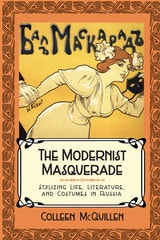
The Modernist Masquerade
Stylizing Life, Literature, and Costumes in RussiaColleen McQuillen
University of Wisconsin Press, 2013
The Modernist Nation
Generation, Renaissance, and Twentieth-Century American LiteratureMichael Soto
University of Alabama Press, 2007
The Modernist Nation examines why America's modern literary movements have come to be characterized as "generations" and "renaissances," such as the Lost Generation and the Beat Generation or the Harlem, Southern, and San Francisco Renaissances. The metaphor of rebirth, Michael Soto argues, offered and continues to offer American writers a kind of shorthand for imagining American cultural history, especially as a departure from Old World (English) trappings.
Soto highlights the interracial dynamics of American literary movements, touching on authors as varied as James Weldon Johnson, Malcolm Cowley, W. E. B. DuBois, Gertrude Stein, Ernest Hemingway, Zora Neale Hurston, and Jack Kerouac. After assessing the origins of the Lost Generation and the Harlem Renaissance, Soto traces the rise of the "bohemian artist" narrative, and demonstrates how a polyethnic cast of writers and critics constructed American literary production in terms of symbolic rebirth.
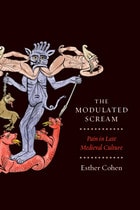
The Modulated Scream
Pain in Late Medieval CultureEsther Cohen
University of Chicago Press, 2010
In the late medieval era, pain could be a symbol of holiness, disease, sin, or truth. It could be encouragement to lead a moral life, a punishment for wrong doing, or a method of healing. Exploring the varied depictions and descriptions of pain—from martyrdom narratives to practices of torture and surgery—The Modulated Scream attempts to decode this culture of suffering in the Middle Ages.
Esther Cohen brings to life the cacophony of howls emerging from the written record of physicians, torturers, theologians, and mystics. In considering how people understood suffering, explained it, and meted it out, Cohen discovers that pain was imbued with multiple meanings. While interpreting pain was the province only of the rarified elite, harnessing pain for religious, moral, legal, and social purposes was a practice that pervaded all classes of Medieval life. In the overlap of these contradicting attitudes about what pain was for—how it was to be understood and who should use it—Cohen reveals the distinct and often conflicting cultural traditions and practices of late medieval Europeans. Ambitious and wide-ranging, The Modulated Scream is intellectual history at its most acute.
The Monstered Self
Narratives of Death and Performance in Latin American FictionEduardo González
Duke University Press, 1992
What interests González is the signature of authorial selfhood in narrative and performance, which he finds willfully and temptingly disfigured in the works he examines: horrific and erotic, subservient and tyrannical, charismatic and repellent. Searching out the personal image and plot, González uncovers two fundamental types of narrative: one that strips character of moral choice; and another in which characters' choices deprive them of personal autonomy and hold them in ritual bondage to a group. Thus The Monstered Self becomes a study of the conflict between individual autonomy and the stereotypes of solidarity.
Written in a characteristically allusive, elliptical style, and drawing on psychoanalysis, religion, mythology, and comparative literature, The Monstered Self is in itself a remarkable performance, one that will engage readers in anthropology, psychology, and cultural history as well as those specifically interested in Latin American narrative.
The Moral Electricity of Print
Transatlantic Education and the Lima Women's Circuit, 1876-1910Ronald Briggs
Vanderbilt University Press, 2017
Moral electricity—a term coined by American transcendentalists in the 1850s to describe the force of nature that was literacy and education in shaping a greater society. This concept wasn't strictly an American idea, of course, and Ronald Briggs introduces us to one of the greatest examples of this power: the literary scene in Lima, Peru, in the nineteenth century.
As Briggs notes in the introduction to The Moral Electricity of Print, "the ideological glue that holds the American hemisphere together is a hope for the New World as a grand educational project combined with an anxiety about the baleful influence of a politically and morally decadent Old World that dominated literary output through its powerful publishing interests." The very nature of living as a writer and participating in the literary salons of Lima was, by definition, a revolutionary act that gave voice to the formerly colonized and now liberated people. In the actions of this literary community, as men and women worked toward the same educational goals, we see the birth of a truly independent Latin American literature.

The Moral Imagination
Essays On Literature EthicsChristopher Clausen
University of Iowa Press, 1986
The Moral Obligation to Be Intelligent
Selected EssaysLionel Trilling
Northwestern University Press, 2009
Bringing together the thoughts of one of American literature’s sharpest cultural critics, this compendium will open the eyes of a whole new audience to the work of Lionel Trilling. Trilling was a strenuous thinker who was proud to think “too much.” As an intellectual he did not spare his own kind, and though he did not consider himself a rationalist, he was grounded in the world.
This collection features 32 of Trilling’s essays on a range of topics, from Jane Austen to George Orwell and from the Kinsey Report to Lolita. Also included are Trilling’s seminal essays “Art and Neurosis” and “Manners, Morals, and the Novel.” Many of the pieces made their initial appearances in periodicals such as The Partisan Review and Commentary; most were later reprinted in essay collections. This new gathering of his writings demonstrates again Trilling’s patient, thorough style. Considering “the problems of life”—in art, literature, culture, and intellectual life—was, to him, a vital occupation, even if he did not expect to get anything as simple or encouraging as “answers.” The intellectual journey was the true goal.
No matter the subject, Trilling’s arguments come together easily, as if constructing complicated defenses and attacks were singularly simple for his well-honed mind. The more he wrote on a subject and the more intricate his reasoning, the more clear that subject became; his elaboration is all function and no filler. Wrestling with Trilling’s challenging work still yields rewards today, his ideas speaking to issues that transcend decades and even centuries.
The Mosaic Constitution
Political Theology and Imagination from Machiavelli to MiltonGraham Hammill
University of Chicago Press, 2012
It is a common belief that scripture has no place in modern, secular politics. Graham Hammill challenges this notion in The Mosaic Constitution, arguing that Moses’s constitution of Israel, which created people bound by the rule of law, was central to early modern writings about government and state.
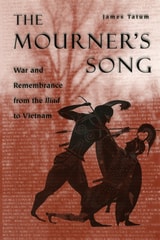
The Mourner's Song
War and Remembrance from the Iliad to VietnamJames Tatum
University of Chicago Press, 2002
Tatum's touchstone throughout is the Iliad, not just one of the earliest war poems, but also one of the most powerful examples of the way poetry can be a tribute to and consolation for what is lost in war. Reading the Iliad alongside later works inspired by war, Tatum reveals how the forms and processes of art convert mourning to memorial. He examines the role of remembrance and the distance from war it requires; the significance of landscape in memorialization; the artifacts of war that fire the imagination; the intimate relationship between war and love and its effects on the ferocity with which soldiers wage battle; and finally, the idea of memorialization itself. Because all survivors suffer the losses of war, Tatum's is a story of both victims and victors, commanders and soldiers, women and men. Photographs of war memorials in Vietnam, France, and the United States beautifully augment his testimonials.
Eloquent and deeply moving, The Mourner's Song will speak to anyone interested in the literature of war and the relevance of the classics to our most pressing contemporary needs.
The Mourning After
Loss and Longing among Midcentury American MenJohn Ibson
University of Chicago Press, 2018
The Mouth That Begs
Hunger, Cannibalism, and the Politics of Eating in Modern ChinaGang Yue
Duke University Press, 1999
Yue’s discussion begins with a brief look at ancient Chinese alimentary writing and then moves on to its main concern: the exploration and textual analysis of themes of eating in modern Chinese literature from the May Fourth period through the post-Tiananmen era. The broad historical scope of this volume illustrates how widely applicable eating-related metaphors can be. For instance, Yue shows how cannibalism symbolizes old China under European colonization in the writing of Lu Xun. In Mo Yan’s 1992 novel Liquorland, however, cannibalism becomes the symbol of overindulgent consumerism. Yue considers other writers as well, such as Shen Congwen, Wang Ruowang, Lu Wenfu, Zhang Zianliang, Ah Cheng, Zheng Yi, and Liu Zhenyun. A special section devoted to women writers includes a chapter on Xiao Hong, Wang Anyi, and Li Ang, and another on the Chinese-American women writers Jade Snow Wong, Maxine Hong Kingston, and Amy Tan. Throughout, the author compares and contrasts the work of these writers with similarly themed Western literature, weaving a personal and political semiotics of eating.
The Mouth That Begs will interest sinologists, literary critics, anthropologists, cultural studies scholars, and everyone curious about the semiotics of food.
The Movie Musical
Desirée J. Garcia
Rutgers University Press, 2021
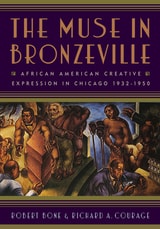
The Muse in Bronzeville
African American Creative Expression in Chicago, 1932-1950Bone, Robert
Rutgers University Press, 2011
The Muse in Bronzeville, a dynamic reappraisal of a neglected period in African American cultural history, is the first comprehensive critical study of the creative awakening that occurred on Chicago's South Side from the early 1930s to the cold war. Coming of age during the hard Depression years and in the wake of the Great Migration, this generation of Black creative artists produced works of literature, music, and visual art fully comparable in distinction and scope to the achievements of the Harlem Renaissance.
This highly informative and accessible work, enhanced with reproductions of paintings of the same period, examines Black Chicago's "Renaissance" through richly anecdotal profiles of such figures as Richard Wright, Gwendolyn Brooks, Margaret Walker, Charles White, Gordon Parks, Horace Cayton, Muddy Waters, Mahalia Jackson, and Katherine Dunham. Robert Bone and Richard A. Courage make a powerful case for moving Chicago's Bronzeville, long overshadowed by New York's Harlem, from a peripheral to a central position within African American and American studies.
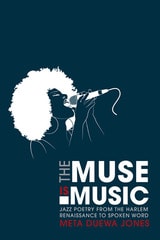
The Muse is Music
Jazz Poetry from the Harlem Renaissance to Spoken WordMeta DuEwa Jones
University of Illinois Press, 2013
This wide-ranging, ambitiously interdisciplinary study traces jazz's influence on African American poetry from the Harlem Renaissance to contemporary spoken word poetry. Examining established poets such as Langston Hughes, Ntozake Shange, and Nathaniel Mackey as well as a generation of up-and-coming contemporary writers and performers, Meta DuEwa Jones highlights the intersections of race, gender, and sexuality within the jazz tradition and its representation in poetry. Applying prosodic analysis to emphasize the musicality of African American poetic performance, she examines the gendered meanings evident in collaborative performances and in the criticism, images, and sounds circulating within jazz cultures.
The Music of Brazil
By David P. Appleby
University of Texas Press, 1983
Here is the most comprehensive history of Brazilian music available in English. Concise yet remarkably detailed, it provides professional musicologists and music lovers alike with a clear outline of the major trends, important composers, and currents of thought that have shaped the folk, popular, and art music that are an important part of Brazil's unique cultural heritage.
The Music of Brazil contains over seventy musical examples representing musical idiom and form throughout recent history. A useful glossary introduces the reader to the key terms of Brazilian music, from agogô—a percussion instrument composed of two bells—to xocalho—a wooden or metal rattler.
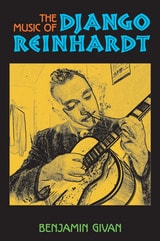
The Music of Django Reinhardt
Benjamin Givan
University of Michigan Press, 2009
"The Music of Django Reinhardt is an impressive contribution to the field of jazz studies. The book offers a penetrating view into the music of one of jazz's most intriguing early figures."
---Keith Waters, coauthor, Jazz: The First Hundred Years
"An important addition to the literature on jazz, Givan's book provides many insights into Reinhardt’s solo building and unorthodox guitar playing; it is richly illustrated with many excellent musical transcriptions."
---Thomas Owens, author of Bebop: The Music and Its Players
"Givan has painstakingly assembled an analytical interpretation of Reinhardt's music that is rigorous, compelling, and illuminating. This book makes a unique contribution to the field of jazz studies and guitar music in general."
---Brian Harker, author of Jazz: An American Journey
When most people think of the great jazz guitarist Django Reinhardt, they conjure up the unusual details of his colorful life: a childhood spent in gypsy encampments outside of Paris; the tragic caravan fire when he was eighteen that rendered his left hand nearly unusable; and his survival during World War II, when gypsies were massacred by the hundreds of thousands. The amazing story of Reinhardt’s life even became the basis for Woody Allen's Sweet and Lowdown.
Yet, it is the music of Django Reinhardt that made him one of the most original guitarists in history. In particular, his partnership with violinist Stéphane Grappelli, in the Quintette du Hot Club de France, brought him international renown and the attention of some of the most important American jazz musicians of the day, including Coleman Hawkins, Benny Carter, and Duke Ellington.
The Music of Django Reinhardt explores the story of the man and his music as never before. Benjamin Givan shows how one of jazz's greatest guitarists created his unparalleled sound. This book is an analytical study of his music, including his process, his improvisational style, and his instrumental technique.
The book features transcriptions from records of the 1920s through the 1950s and includes detailed discussion of selected performances from one of the most important guitarists in history.
Benjamin Givan is Assistant Professor of Music at Skidmore College. His writings on jazz have appeared in scholarly publications such as Current Musicology and the Musical Quarterly, as well as the popular jazz magazine Down Beat. He received his Ph.D. in music theory from Yale University.
The Music of James Tenney
Volume 1: Contexts and ParadigmsRobert Wannamaker
University of Illinois Press, 2021
Robert Wannamaker's monumental two-volume study explores the influential music and ideas of American composer, theorist, writer, performer, and educator James Tenney. Delving into the whole of Tenney's far-ranging oeuvre, Wannamaker provides in-depth, aurally grounded analyses of works linked to the artist's revolutionary theories of musical form, timbre, and harmonic perception.
Volume 1, Contexts and Paradigms, chronologically surveys Tenney's creative development and output. Wannamaker begins each section with biographical, aesthetic, and technical context that illuminates a distinct period in Tenney's career. From there, he analyzes a small number of pieces that illuminate the concerns, characteristics, and techniques that emerged in Tenney's music during that time. Wannamaker supplements the text with musical examples, graphs, and diagrams while also drawing on unpublished material and newly available primary sources to flesh out each work and the ideas that shaped it.
A landmark in experimental music scholarship, The Music of James Tenney is a first-of-its-kind consideration of the experimental music titan and his work.
The Music of James Tenney
Volume 2: A Handbook to the PiecesRobert Wannamaker
University of Illinois Press, 2021
Robert Wannamaker's monumental two-volume study explores the influential music and ideas of American composer, theorist, writer, performer, and educator James Tenney. Delving into the whole of Tenney's far-ranging oeuvre, Wannamaker offers close, aurally grounded analyses of works linked to the artist's revolutionary theories of musical form, timbre, and harmonic perception.
Written as a reference work, Volume 2, A Handbook to the Pieces, presents detailed entries on Tenney's significant post-1959 experimental works (excepting pieces covered in volume 1). Wannamaker includes technical information, an analysis of intentions and goals, graphs and musical examples, historical and biographical context, and thoughts from Tenney and others on specific works. Throughout, he discusses the striking compositional ideas found in Tenney's music and, where appropriate, traces an idea's appearance from one piece to the next to reveal the evolution of the composer's art and thought.
A landmark in experimental music scholarship, The Music of James Tenney is a first-of-its-kind consideration of the experimental music titan and his work.
The Music of Thought in the Poetry of George Oppen and William Bronk
Henry Weinfield
University of Iowa Press, 2009
From his careful readings of Oppen’s and Bronk’s poetry to his fascinating examination of the letters they exchanged, Weinfield provides important aesthetic, epistemological, and historical insights into their poetry and poetic careers. In bringing together for the first time the work of two of the most important poets of the postwar generation, The Music of Thought not only illuminates their poetry but also raises important questions about American literary history and the categories in terms of which it has generally been interpreted.
The Myth of Emptiness and the New American Literature of Place
Wendy Harding
University of Iowa Press, 2014
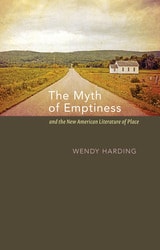
In The Myth of Emptiness and the New American Literature of Place, Wendy Harding identifies an important recent development in the literature of place that corrects the misperceptions resulting from these tropes. Works by Rick Bass, Charles Bowden, Ellen Meloy, Jonathan Raban, Rebecca Solnit, and Robert Sullivan move away from the tradition of nature writing, with its emphasis on the solitary individual communing with nature in uninhabited places, to recognize the interactions of human and other-than-human presences in the land. In different ways, all six writers reveal a more historically complex relationship between Americans and their environments. In this new literature of place, writers revisit abandoned, threatened, or damaged sites that were once represented as devoid of human presence and dig deeper to reveal that they are in fact full of the signs of human activity. These writers are interested in the role of social, political, and cultural relationships and the traces they leave on the landscape.
Throughout her exploration, Harding adopts a transdisciplinary perspective that draws on the theories of geographers, historians, sociologists, and philosophers to understand the reasons for the enduring perception of emptiness in the American landscape and how this new literature of place works with and against these ideas. She reminds us that by understanding and integrating human impacts into accounts of the landscape, we are better equipped to fully reckon with the natural and cultural crisis that engulfs all landscapes today.
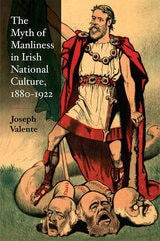
The Myth of Manliness in Irish National Culture, 1880-1922
Joseph Valente
University of Illinois Press, 2011
The Mythologizing of Mark Twain
Sara Davis
University of Alabama Press, 1984
How Samuel Clemens became Mark Twain—and Mark Twain became a myth.
The Mythologizing of Mark Twain explores the enduring fascination with one of America's most celebrated literary figures and examines how Samuel Langhorne Clemens became the cultural icon known around the world as Mark Twain. Bringing together a distinguished group of scholars, this thought-provoking collection investigates Twain not simply as an author, but as a powerful symbol whose life, works, and public persona have become inseparable from larger ideas about American identity, humor, democracy, individualism, and national character.
Readers and critics have long recognized Twain's literary genius, yet explaining the origins and significance of that genius remains an ongoing challenge. The essays in this volume address that challenge by exploring the many ways Twain has been interpreted, celebrated, debated, and transformed into a mythic figure. They examine how his writings helped define an American literary tradition while simultaneously contributing to the creation of a broader cultural mythology that continues to shape public perceptions of the United States and its history.
Rather than seeking a single interpretation of Twain, the contributors employ a range of critical approaches to illuminate the complexity of both the man and the legend. Their analyses reveal how the boundaries between Samuel Clemens, Mark Twain, and the popular image of "America's author" have often blurred, generating new layers of meaning for successive generations of readers and scholars.
The Mythologizing of Mark Twain is an essential resource for students and scholars of American literature, cultural history, and literary criticism. By examining the evolution of Twain's reputation and influence, the collection offers a deeper understanding of how literary figures become cultural myths and why Mark Twain remains one of the most enduring voices in the American imagination.
The Myths of Fiction
Studies in the Canonical Greek NovelsEdmund P. Cueva
University of Michigan Press, 2004
The tradition of historical literature begun by Herodotus and Thucydides molded the early Greek novel. As the genre evolved, however, Greek novels moved away from their historical roots to become more heavily influenced by mythological traditions. Edmund Cueva's new book examines the literary uses to which the ancient novelists put their mythological material. His work offers a stimulating discussion of myths and their rise to prominence as the key feature of the fully developed Greek novel. He also takes into account the impact of the Roman conquest on the development of the Greek novel, the last true literary creation of the Greek world. The Myths of Fiction will interest scholars of Greek literarure, imperial history, literary myth, intertextuality, and comparative literature.
Edmund Cueva is Associate Professor and Chair of Classics at Xavier University.
The Names of Minimalism
Authorship, Art Music, and Historiography in DisputePatrick Nickleson
University of Michigan Press, 2023
Expanding the place of Jacques Rancière’s philosophy within musicology, Nickleson draws attention to disciplinary practices of guarding compositional authority against artists who set out to undermine it. The book reimagines the canonic artists and works of minimalism as “(early) minimalism,” to show that art music histories refuse to take seriously challenges to conventional authorship as a means of defending the very category “art music.” Ultimately, Nickleson asks where we end up if we imagine the early minimalist project—artists forming bands to perform their own music, rejecting the score in favor of recording, making extensive use of magnetic type as compositional and archival medium, hosting performances in lofts and art galleries rather than concert halls—not as a utopian moment within a 1960s counterculture doomed to fail, but as the beginning of a process with a long and influential afterlife.