Results by title
2728 books match the query 'Education' and 609 start with t
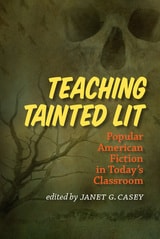
Teaching Tainted Lit
Popular American Fiction in Today's ClassroomJanet G. Casey
University of Iowa Press, 2015
The essays in this collection presume that the popular is here to stay and that its instructive implications are not merely noteworthy, but richly nuanced and deeply compelling. They address a broad variety of issues concerning canonicity, literature, genre, and the classroom, as its contributors teach everything from Stephen King and Lady Gaga to nineteenth-century dime novels and the 1852 best-seller Uncle Tom’s Cabin.
It is no secret that teaching popular texts fuels controversies about the value of cultural studies, the alleged relaxation of aesthetic standards, and the possible “dumbing down” of Americans. By implicitly and explicitly addressing such contentious issues, these essays invite a broader conversation about the place of the popular not only in higher education but in the reading lives of all Americans.

Teaching U.S. History through Sports
Edited by Brad Austin and Pamela Grundy
University of Wisconsin Press, 2022
Teaching U.S. History through Sports provides strategies for incorporating sports into any U.S. history curriculum. Drawing upon their own classroom experiences, the authors suggest creative ways to use sports as a lens to examine a broad range of historical subjects, including Puritan culture, the rise of Jim Crow, the Cold War, the civil rights movement, and the women's movement. Essays focus on the experiences of African American women, working-class southerners, Latinos, and members of LGBTQ communities, as well as topics including the controversy over Native American mascots and the globalization of U.S. sports.
Teaching Undergraduates with Archives
Nancy Bartlett
Michigan Publishing Services, 2019
"The contributions to this volume capture exceptionally well the passion and the creativity that archivists and special collections librarians who teach and do outreach with primary sources are bringing to their work in this increasingly important activity domain."
-- Martha O’Hara Conway, Director, Special Collections Research Center, University of Michigan Library
"As teaching with archival materials has moved to the foreground of the archival mission for many institutions, this timely, inspiring, and practical volume, which comes out of the multi-day symposium solely devoted to teaching undergraduates with archival materials, is a required reading for anyone who teaches with archival materials, or who would like to. It really captures the spirit and enthusiasm that these authors brought to that symposium."
-- Josué Hurtado, Coordinator of Public Services & Outreach, Special Collections Research Center, Temple University Libraries
"Reflecting the increasing priority of teaching in archives and special collections libraries, this book captures a variety of perspectives, insights, approaches, and prognostications that will enlighten, challenge, and inspire a growing community of practitioners."
-- Bill Landis, Head of Public Services, Manuscripts and Archives, Yale University Library
"Building on the momentum generated at the symposium, this book is a treasure trove for professionals in the field who are eager for innovative ideas regarding collaboration and experimentation in teaching with archival material."
-- Elizabeth Williams-Clymer, Special Collections Librarian, Kenyon College
Teaching Vocabulary Is the Writing Teacher's Job
Why and HowKeith S. Folse
University of Michigan Press, 2020
Teaching Working Class
Sherry Lee Linkon
University of Massachusetts Press, 1999
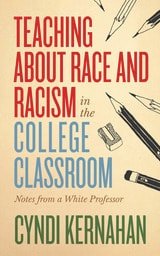
Teaching about Race and Racism in the College Classroom
Notes from a White ProfessorCyndi Kernahan
West Virginia University Press, 2019
Teaching about race and racism can be a difficult business. Students and instructors alike often struggle with strong emotions, and many people have robust preexisting beliefs about race. At the same time, this is a moment that demands a clear understanding of racism. It is important for students to learn how we got here and how racism is more than just individual acts of meanness. Students also need to understand that colorblindness is not an effective anti-racism strategy.
In this book, Cyndi Kernahan argues that you can be honest and unflinching in your teaching about racism while also providing a compassionate learning environment that allows for mistakes and avoids shaming students. She provides evidence for how learning works with respect to race and racism along with practical teaching strategies rooted in that evidence to help instructors feel more confident. She also differentiates between how white students and students of color are likely to experience the classroom, helping instructors provide a more effective learning experience for all students.
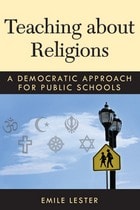
Teaching about Religions
A Democratic Approach for Public SchoolsEmile Lester
University of Michigan Press, 2013
"This provocative and timely book challenges Americans to rethink what it means to take democracy and religious freedom seriously in public education. Emile Lester takes the reader beyond culture war conflicts rooted in religious divisions and offers bold, new solutions for addressing our differences with fairness and robust toleration. Instead of battlegrounds, he argues, public schools can and should be places that include all voices in ways that prepare citizens to engage one another with civility and respect. Teaching about Religions is essential reading for all who care about the future of public schools---and the health of American democracy."
--- Charles C. Haynes, Senior Scholar, Freedom Forum First Amendment Center
"More than simply a synthesis of existing scholarship, [this book is] an original contribution to the field. [The] major themes are timely, and this book might well contribute to public discussion of important issues in our culture wars."
---Warren Nord, University of North Carolina–Chapel Hill
"Arriving in the wake of a bitter battle over the place of Islam in America and in the midst of calls for greater understanding and civility, Emile Lester's new book is a timely contribution to the debate about the best ways to teach about religion in our nation's public schools. A pioneering researcher in this field, Lester offers thoughtful critiques of existing proposals as well as fresh ideas. His recommendations reflect painstaking efforts to understand the concerns of groups (most notably, conservative Christians) to which he does not belong, and a firm grasp of the difference between fostering understanding of other faiths and pressing for acceptance of them. Lester's prescriptions, always informed and fair-minded and sometimes provocative, should drive the debate forward in productive ways."
---Melissa Rogers, Director, Center for Religion and Public Affairs at Wake Forest University School of Divinity and Nonresident Senior Fellow, The Brookings Institution
Frequent news stories about the debates waged between secularists and religious conservatives have convinced most Americans that public schools must choose between promoting respect for religious minorities and respecting the interests of conservative Christians. As a result, public schools fail to teach students about the meaning and value of protecting religious liberty and consequently perpetuate mistrust across the cultural divide, further empower extremists, and obscure the fact that most Americans of all religious backgrounds share a commitment to basic democratic principles.
In response, the public schools in the religiously diverse and divided community of Modesto, California, have introduced a widely acclaimed required world religions course. Drawing on groundbreaking research on the creation of and response to the Modesto course as well as on political philosophy, Emile Lester advocates a civic approach to teaching about religion in public schools that at once emphasizes respect for all views about religion and provides a special recognition of conservative Christian beliefs.
Teaching against Violence
The Reassessing ToolboxInez Testoni
Central European University Press, 2014
Teaching and Learning in Bilingual Classrooms
New ScholarshipKristin J. Mulrooney
Gallaudet University Press, 2014
After extensive SoTL training, the GSTLI professors reviewed interaction in their respective classrooms. Through meticulous study of class videos and written assignments in three General Studies Requirements courses for first-year students, the teachers learned how to ensure connecting with students who have a variety of language differences and communication methods.
The other professors assessed bottlenecks in classes on the linguistic structure of ASL, and on criminal justice. The linguistics professor identified the bottleneck as the students’ inability to conceptualize the interrelationship between definitions and examples, a fundamental skill to scientific thinking. In the criminal justice class, the professor saw the need to guide students through linguistic bottlenecks by providing materials in both ASL and English. The successes of the GSTLI presented in this unique volume can benefit other teachers by better preparing them to meet the needs of bilingual diverse learners in more effective ways.
Teaching and Learning in Jewish Day Schools
Edited by Jonathan B. Krasner, Jon A. Levisohn, and Sharon Avni
Brandeis University Press, 2025
Teaching and Learning in Jewish Day Schools offers an important analysis of Jewish day school classrooms today. In light of difficulties initiating, evaluating, and sustaining educational innovation, this volume takes stock of what is happening among students and teachers in contemporary Jewish day school classrooms. The authors of this volume confront and question several bedrock principles of Jewish education to address how day schools intersect with broader societal issues including race and gender. They point to themes and topics that scholars and practitioners are grappling with to explore new potential pathways to evaluating student learning and learning outcomes: assessing core subject areas; understanding the ways social and environmental factors contribute to learning; and studying how race, ethnicity, class, and gender shape student learning and school culture. The chapters address topics relevant to educators working in contemporary Jewish day schools including Zionism, the outcomes of Israel education, Jewish engagement, the experience of Latinx students, community building, and more.
Teaching as Story Telling
An Alternative Approach to Teaching and Curriculum in the Elementary SchoolKieran Egan
University of Chicago Press, 1989
Teaching for a Better World
Cultivating Social-Emotional Learning in English Language PedagogyEdited by Luis Javier Pentón Herrera, Gilda Martínez-Alba, and Michal B. Paradowski
University of Michigan Press, 2026
In a world where language connects people across cultures, Teaching for a Better World invites readers to imagine classrooms where words do more than teach grammar; they build empathy, resilience, and understanding. This groundbreaking volume is the first to focus on the integration of social-emotional learning (SEL) into English language teaching from a global perspective, bringing together educators and researchers from diverse cultural and educational contexts. Through conceptual discussions, research, and practical examples, the authors demonstrate how English lessons can also be lessons in compassion, collaboration, and global citizenship.
Organized into three sections—Conceptual Pieces, Empirical Studies, and Practical Examples—the book offers a comprehensive examination of SEL’s theoretical foundations, evidence-based practices, and real-world classroom applications. Contributors explore SEL through lenses such as culturally responsive pedagogy, trauma-sensitive practices, teacher and student well-being, ecolinguistics, and intercultural dialogue. Readers will find innovative and practical ways to create inclusive, culturally responsive classrooms; support student and teacher well-being; and use English as a bridge for intercultural dialogue. Accessible and inspiring, this book’s combination of conceptual depth, empirical rigor, and applied strategies position it as a foundational resource for advancing research and practice in SEL-informed English language pedagogy worldwide.
Readers of Teaching for a Better World will
- Learn pedagogically sound ways to foster empathy and resilience while creating inclusive, culturally responsive classrooms.
- Find ready-to-use lesson plans and activities.
- Encounter diverse perspectives of educators from a range of contexts, including conflict-affected regions, refugee resettlement contexts, and higher education.
Teaching in the Terrordome
Two Years in West Baltimore with Teach for AmericaHeather Kirn Lanier
University of Missouri Press, 2012

Teaching the Quadrivium
A Guide for InstructorsPeter Ulrickson
Catholic University of America Press, 2023
Teaching the Bible through Popular Culture and the Arts
Mark Roncace
SBL Press, 2007
Teaching the Bible with Undergraduates
Jocelyn McWhirter
SBL Press, 2022
Teaching the Bible with Undergraduates offers concrete strategies for Bible instruction in college classrooms. Each essay pays special attention to the needs of tech-savvy students whose sensibilities, aspirations, expectations, and preferred ways of learning may differ significantly from those of their instructors. The volume’s contributors, all biblical scholars and undergraduate instructors, focus on best pedagogical practices using concrete examples while sharing effective strategies. Essays and quick tips treat topics, including general education, reading skills, student identities, experiential learning, and instructional technology. Contributors include Kimberly Bauser McBrien, George Branch-Trevathan, Callie Callon, Lesley DiFransico, Nicholas A. Elder, Timothy A. Gabrielson, Kathleen Gallagher Elkins, Susan E. Haddox, Seth Heringer, John Hilton III, Melanie A. Howard, Christopher M. Jones, Steve Jung, Katherine Low, Timothy Luckritz Marquis, Kara J. Lyons-Pardue, Jocelyn McWhirter, Sylvie T. Raquel, Eric A. Seibert, Hanna Tervanotko, Carl N. Toney, John Van Maaren, and Robby Waddell. This book provides an essential resource not only for instructors at the undergraduate level but also for anyone who teaches biblical studies in the classroom.
Teaching the Bible
Practical Strategies for Classroom InstructionMark Roncace
SBL Press, 2005
Teaching the Eighteenth Century Now
Pedagogy as Ethical EngagementKate Parker
Bucknell University Press, 2024
Published by Bucknell University Press. Distributed worldwide by Rutgers University Press.
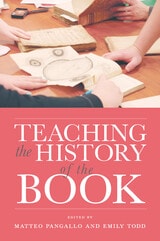
Teaching the History of the Book
Edited by Matteo Pangallo and Emily B. Todd
University of Massachusetts Press, 2023
With original contributions from a diverse range of teachers, scholars, and practitioners in literary studies, history, book arts, library science, language studies, and archives, Teaching the History of the Book is the first collection of its kind dedicated to book history pedagogy. Presenting a variety of methods for teaching book history both as its own subject and as an approach to other material, each chapter describes lessons, courses, and programs centered on the latest and best ways of teaching undergraduate and graduate students.
Expansive and instructive, this volume introduces ways of helping students consider how texts were produced, circulated, and received, with chapters that cover effective ways to organize courses devoted to book history, classroom activities that draw on this subject in other courses, and an overview of selected print and digital tools. Contributors, many of whom are leading figures in the field, utilize their own classroom experiences to bring to life some of the rich possibilities for teaching book history in the twenty-first century.
In addition to the volume editors, contributors include Ryan Cordell, Brigitte Fielder, Barbara Hochman, Leslie Howsam, Matthew Kirschenbaum, Clare Mullaney, Kate Ozment, Leah Price, Jonathan Rose, Jonathan Senchyne, Sarah Wadsworth, and others.
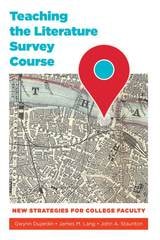
Teaching the Literature Survey Course
New Strategies for College FacultyJames M. Lang
West Virginia University Press, 2018
From mapping early English literature to a team-based approach to the American survey, and from multimedia galleries to a “blank syllabus,” contributors propose alternatives to the traditional emphasis on lectures and breadth of coverage. The volume is at once a set of practical suggestions for working teachers (including sample documents like worksheets and syllabi) and a provocative engagement with the question of what introductory courses can and should be.
Teaching the Practitioners of Care
New Pedagogies for the Health ProfessionsEdited by Nancy L. Diekelmann
University of Wisconsin Press, 2003
Nancy L. Diekelmann
Karin Dahlberg
Margaretha Ekebergh
Pamela M. Ironside
Kathryn Hopkins Kavanagh
Melinda M. Swenson
Sharon L. Sims
Rosemary A. McEldowney
Jan D. Sinnott
Teaching the Pronunciation of English
Focus on Whole CoursesJohn Murphy, Editor
University of Michigan Press, 2017
Teaching the Pronunciation of English illustrates that pronunciation teaching is compatible with communicative, task-based, post-method, and technology-mediated approaches to language teaching. This theme permeates the volume as a whole and is well represented in Chapters 3-12, which are dedicated to specialist-teachers’ firsthand depictions of pronunciation-centered courses. Each of these ten chapters features a set of innovative teaching strategies and contemporary course design structures developed by the chapter contributor(s).
To prepare readers to more fully appreciate the substance and quality of Chapters 3-12, the volume’s two initial chapters are more foundational. Chapters 1 and 2 provide an overview of core topics language teachers need to know about to become pronunciation teachers: suprasegmentals (thought groups, prominence, word stress, intonation, and pitch jumps) and the English consonants and vowel sounds.
Teaching with Digital Humanities
Tools and Methods for Nineteenth-Century American LiteratureJennifer Travis, Jessica DeSpain
University of Illinois Press, 2018
Travis and DeSpain curate conversations on the value of project-based, collaborative learning; examples of real-world assignments where students combine close, collaborative, and computational reading; how digital humanities aids in the consideration of marginal texts; the ways in which an ethics of care can help students organize artifacts; and how an activist approach affects debates central to the study of difference in the nineteenth century.
A supplemental companion website with substantial appendixes of syllabi and assignments is now available for readers of Teaching with Digital Humanities.
Teaching with Tenderness
Toward an Embodied PracticeBecky Thompson
University of Illinois Press, 2017
Teaching with Tenderness follows in the tradition of bell hooks's Teaching to Transgress and Paulo Freire's Pedagogy of the Oppressed, inviting us to draw upon contemplative practices (yoga, meditation, free writing, mindfulness, ritual) to keep our hearts open as we reckon with multiple injustices. Teaching with tenderness makes room for emotion, offers a witness for experiences people have buried, welcomes silence, breath and movement, and sees justice as key to our survival. It allows us to rethink our relationship to grading, office hours, desks, and faculty meetings, sees paradox as a constant companion, moves us beyond binaries; and praises self and community care.
Tenderness examines contemporary challenges to teaching about race, gender, class, nationality, sexuality, religion, and other hierarchies. It examines the ethical, emotional, political, and spiritual challenges of teaching power-laden, charged issues and the consequences of shifting power relations in the classroom and in the community. Attention to current contributions in the areas of contemplative practices, trauma theory, multiracial feminist pedagogy, and activism enable us to envision steps toward a pedagogy of liberation. The book encourages active engagement and makes room for self-reflective learning, teaching, and scholarship.
Teaching with Tension
Race, Resistance, and Reality in the ClassroomEdited by Philathia Bolton, Cassander L. Smith, and Lee Bebout
Northwestern University Press, 2019
Drawing together personal reflection, pedagogical strategies, and critical theory, Teaching with Tension offers concrete examinations that will foster student learning. The essays are organized into three thematic sections: "Teaching in Times and Places of Struggle" examines the dynamics of teaching race during the current moment, marked by neoconservative politics and twenty-first century freedom struggles. "Teaching in the Neoliberal University" focuses on how pressures and exigencies of neoliberalism (such as individualism, customer-service models of education, and online courses) impact the way in which race is taught and conceptualized in college classes. The final section, "Teaching How to Read Race and (Counter)Narratives," homes in on direct strategies used to historicize race in classrooms comprised of millennials who grapple with race neutral ideologies. Taken together, these sections and their constitutive essays offer rich and fruitful insight into the complex dynamics of contemporary race and ethnic studies education.
Technical Theatre Education
A Vehicle for Critical LearningEdward S. Kraus
Southern Illinois University Press, 2027
Technical Theatre Education: A Vehicle for Critical Learning explores how the environment and process of producing theatrical or live entertainment events foster critical thinking and problem-solving skills. As a learning setting, the problem-based and experiential nature of designing and creating the sets, lighting, and costumes that support a production gives students ample opportunities to test theories, evaluate their growth, and experience the real-world consequences of success or failure.
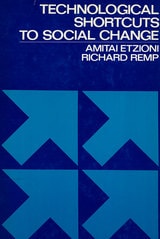
Technological Shortcuts to Social Change
Amitai Etzioni
Russell Sage Foundation, 1973
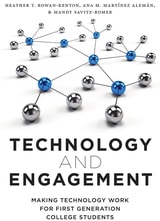
Technology and Engagement
Making Technology Work for First Generation College StudentsRowan-Kenyon, Heather T.
Rutgers University Press, 2018
Technology and Engagement is based on a four-year study of how first generation college students use social media, aimed at improving their transition to and engagement with their university. Through web technology, including social media sites, students were better able to maintain close ties with family and friends from home, as well as engage more with social and academic programs at their university. This ‘ecology of transition’ was important in keeping the students focused on why they were in college, and helped them become more integrated into the university setting. By showing the gains in campus capital these first-generation college students obtained through social media, the authors offer concrete suggestions for how other universities and college-retention programs can utilize the findings to increase their own retention of first-generation college students.

Technology and the Future of Schooling in America
Edited by Stephen T. Kerr
University of Chicago Press, 1996
Guiding this volume is the conviction that advances in technology do not necessarily translate into improvements in education even as the basic structure of teaching programs must be changed to fully exploit the educational uses of technology. The contributors argue that technology should be distributed throughout the educational system, not just in wealthy districts; they examine the impact of communications technologies on relationships between teachers and students, parents and children, and men and women; they consider the ways in which new technologies change the dynamics of learning and teaching; and they show how teachers and administrators can tailor technology-based programs to the particular needs of their school or district.
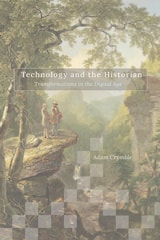
Technology and the Historian
Transformations in the Digital AgeAdam Crymble
University of Illinois Press, 2021
Historians have seen their field transformed by the digital age. Research agendas, teaching and learning, scholarly communication, the nature of the archive—all have undergone a sea change that in and of itself constitutes a fascinating digital history. Yet technology's role in the field's development remains a glaring blind spot among digital scholars.
Adam Crymble mines private and web archives, social media, and oral histories to show how technology and historians have come together. Using case studies, Crymble merges histories and philosophies of the field, separating issues relevant to historians from activities in the broader digital humanities movement. Key themes include the origin myths of digital historical research; a history of mass digitization of sources; how technology influenced changes in the curriculum; a portrait of the self-learning system that trains historians and the problems with that system; how blogs became a part of outreach and academic writing; and a roadmap for the continuing study of history in the digital era.

Technology for the Process
Teaching Academic Writing to Multilingual Students in the Age of AIM. Sidury Christiansen and Qian Du
University of Michigan Press, 2027
As digital tools and artificial intelligence (AI) reshape how writing is taught and learned, instructors face new questions about how to integrate technology without losing sight of sound pedagogy. Technology for the Process offers a research-informed and practice-driven response. Written by experienced writing teachers, the book presents ready-to-use, adaptable, classroom-tested approaches for teaching academic writing to multilingual students through purposeful use of digital tools, including generative AI. Rather than treating technology as an add-on or a substitute for instruction, the book shows how it can meaningfully support writing as a process: from generating ideas and revising drafts to making rhetorical decisions and developing academic voice. Designed for university-level and adult learning contexts, this book serves as both a practical resource and a thoughtful guide for educators, librarians, and institutions seeking accessible, effective, and sustainable approaches to writing instruction in the age of AI.
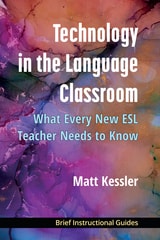
Technology in the Language Classroom
What Every New ESL Teacher Needs to KnowMatt Kessler
University of Michigan Press, 2026
Technology in the Language Classroom provides early-career and pre-service second language (L2) instructors with an overview of important issues involved in effectively integrating technology into the L2 classroom. Each chapter provides practical strategies, resources, and application activities to help new teachers gain familiarity with utilizing a variety of digital tools for teaching different skills, including listening, speaking, reading, grammar, vocabulary, and writing. Readers will be encouraged to think critically about the key factors to consider when choosing tools that work for them, their lessons, and their students.
Teen Mothers--Citizens or Dependents?
Ruth Horowitz
University of Chicago Press, 1994
"Rich vignettes reveal the complexities of teenage mothers' lives, particularly the disjuncture between classroom and street identities, 'inside' and 'outside.' . . . Original and illuminating as well as timely."—Sharon Thompson, Women's Review of Books
"Horowitz offers insights that should be considered in the debate over welfare reform. . . . Teen Mothers . . . places Horowitz's results in the context of major theories about the role of welfare in the U.S. and offers a microlevel critique of the implicit assumptions and probable consequences of each theory's approach to welfare reform."—Booklist
Teens, Digital Media, and the Chicago Public Library
Penny Bender Sebring, Eric R. Brown, Kate M. Julian, Stacy B. Ehrlich, Susan E. Sporte, Erin Bradley, and Lisa Meyer
University of Chicago Press, 2013
Consortium on Chicago School Research finds.
-Illuminates how the design of YOUmedia shapes youth participation
-Describes the teens that YOUmedia serves, their patterns of participation, and the activities in which they engage
-Provides examples of the benefits youth perceive from their participation
-Characterizes the roles adults play in engaging teens and the ways programmatic choices have shifted
-Offers suggestions for organizations intending to launch similar initiatives
-Illustrates how YOUmedia instantiates elements of the emerging Connected Learning Model
Tell Me How It Reads
Tutoring Deaf and Hearing Students in the Writing CenterRebecca Day Babcock
Gallaudet University Press, 2012
Deaf students are attending mainstream postsecondary institutions in increasing numbers, raising the stakes for the complicated and multifaceted task of tutoring deaf students at these schools. Common tutoring practices used with hearing students do not necessarily work for deaf people. Rebecca Day Babcock researched and wrote Tell Me How It Reads: Tutoring Deaf and Hearing Students in the Writing Center to supply writing instructors an effective set of methods for teaching Deaf and other students how to be better writers.
Babcock’s book is based on the resulting study of tutoring writing in the college context with both deaf and hearing students and their tutors. She describes in detail sessions between deaf students, hearing tutors, and the interpreters that help them communicate, using a variety of English or contact signing rather than ASL in the tutorials. These experiences illustrate the key differences between deaf-hearing and hearing-hearing tutorials and suggest ways to modify tutoring and tutor-training practices accordingly. Although this study describes methods for tutoring deaf students, its focus on students who learn differently can apply to teaching writing to Learning Disabled students, ESL students, and other students with different learning styles. Ultimately, the well-grounded theory analysis within Tell Me How It Reads provides a complete paradigm for tutoring in all writing centers.
Telling Stories
Perspectives on Longitudinal Writing ResearchJenn Fishman
Utah State University Press, 2023
In Telling Stories, more than a dozen longitudinal writing researchers look beyond conventional project findings to story their work and, in doing so, offer otherwise unavailable glimpses into the logics and logistics of long-range studies of writing. The result is a volume that centers interrelations among people, places, and politics across two decades of praxis and an array of educational sites: two-year colleges, a senior military college, an adult literacy center, a small liberal arts college, and both public and private four-year universities.
Contributors share direct knowledge of longitudinal writing research, citing project data (e.g., interview transcripts, research notes, and journals), descriptions drawn from memory, and extended personal reflections. The resulting stories, tempered by the research and scholarship of others, convey a sense of longitudinal research as a lived activity as well as a prominent and consequential approach to inquiry. Yet Telling Stories is not a how-to guide, nor is it written for longitudinal researchers alone. Instead, this volume addresses issues about writing research that are germane to all who conduct or count on it. Such topics include building and sustaining good interpersonal research relations, ethically negotiating the institutional power dynamics that undergird writing research, effectively using knowledge from longitudinal studies to advocate for writers and writing educators, and improving both conceptual and concrete resources for long-range research in writing studies.
Telling a Research Story
Writing a Literature ReviewChristine B. Feak and John M. Swales
University of Michigan Press, 2009
Telling a Research Story: Writing a Literature Review is concerned with the writing of a literature review and is not designed to address any of the preliminary processes leading up to the actual writing of the literature review.
This volume represents a revision and expansion of the material on writing literature reviews that appeared in English in Today's Research World.
This volume progresses from general to specific issues in the writing of literature reviews. It opens with some orientations that raise awareness of the issues that surround the telling of a research story. Issues of structure and matters of language, style, and rhetoric are then discussed. Sections on metadiscourse, citation, and paraphrasing and summarizing are included.
Tempests into Rainbows
Managing TurbulenceRobben W. Fleming
University of Michigan Press, 1996
Temple University
125 Years of Service to Philadelphia, the Nation, and the WorldJames W. Hilty with Matthew M. Hanson, foreword by Ann Weaver Hart
Temple University Press, 2010
Temple University: 125 Years of Service to Philadelphia, the Nation, and the World, by noted historian and Temple professor James Hilty offers the first full history of Temple University. Lovingly written and beautifully designed, it presents a rich chronicle from founder Russell Conwell’s vision to democratize, diversify, and broaden the reach of higher education to Temple's present-day status as the twenty-eighth largest university and the fifth largest provider of professional education in the United States. With its state-of-the-art technological capabilities, improved amenities, and new multi-million- dollar facilities, Temple remains at the forefront of America’s modern urban universities.
The book captures Temple’s long record of service to its North Philadelphia neighbors, its global reach to Rome, Tokyo, and beyond, and its development from a rowhouse campus into a lively 11,000- resident urban village—all the while assuring “Access to Excellence.” Along the way, we learn how Temple reacted to and helped shape major developments in the history of American higher education.
Featuring 250 full-color photos, Temple University provides a wonderful keepsake for those who already know the university and will become a valued resource for anyone interested in the urban university.

Temporary Stages II
Critically Oriented Drama EducationJo Beth Gonzalez
Intellect Books, 2013
Ten Years After
A History of Roma School Desegregation in Central and Eastern EuropeIulius Rostas
Central European University Press, 2012
Tenured Bosses and Disposable Teachers
Writing Instruction in the Managed UniversityEdited by Marc Bousquet, Tony Scott, and Leo Parascondola. Foreword by Randy Martin
Southern Illinois University Press, 2003
Tenured Bosses and Disposable Teachers: Writing Instruction in the Managed University exposes the poor working conditions of contingent composition faculty and explores practical alternatives to the unfair labor practices that are all too common on campuses today.
Editors Marc Bousquet, Tony Scott, and Leo Parascondola bring together diverse perspectives from pragmatism to historical materialism to provide a perceptive and engaging examination of the nature, extent, and economics of the managed labor problem in composition instruction—a field in which as much as ninety-three percent of all classes are taught by graduate students, adjuncts, and other “disposable” teachers. These instructors enjoy few benefits, meager wages, little or no participation in departmental governance, and none of the rewards and protections that encourage innovation and research. And it is from this disenfranchised position that literacy workers are expected to provide some of the core instruction in nearly everyone's higher education experience.
Twenty-six contributors explore a range of real-world solutions to managerial domination of the composition workplace, from traditional academic unionism to ensemble movement activism and the pragmatic rhetoric, accommodations, and resistances practiced by teachers in their daily lives.
Contributors are Leann Bertoncini, Marc Bousquet, Christopher Carter, Christopher Ferry, David Downing, Amanda Godley, Robin Truth Goodman, Bill Hendricks, Walter Jacobsohn, Ruth Kiefson, Paul Lauter, Donald Lazere, Eric Marshall, Randy Martin, Richard Ohmann, Leo Parascondola, Steve Parks, Gary Rhoades, Eileen Schell, Tony Scott, William Thelin, Jennifer Seibel Trainor, Donna Strickland, William Vaughn, Ray Watkins, and Katherine Wills.
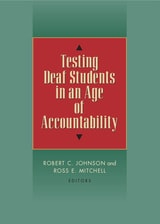
Testing Deaf Students in an Age of Accountability
Robert C. Johnson
Gallaudet University Press, 2008
Despite the idealism represented by the No Child Left Behind law’s mandate for accountability in education, deaf students historically and on average have performed far below grade level on standardized tests. To resolve this contradiction in deaf education, this collection presents a spectrum of perspectives from a diverse corps of education experts to suggest a constructive synthesis of worthy ideals, hard realities, and pragmatic solutions. Contributors to this study include volume editors Robert C. Johnson and Ross E. Mitchell, Ed Bosso, Michael Bello, Betsy J. Case, Patrick Costello, Stephanie W. Cawthon, Joseph E. Fischgrund, Courtney Foster, Christopher Johnstone, Michael Jones, Jana Lollis, Pat Moore, Barbara Raimondo, Suzanne Recane, Richard C. Steffan, Jr., Sandra J. Thompson, Martha L. Thurlow, and Elizabeth Towles-Reeves.
These noted educators and researchers employ experiences from Massachusetts, Delaware, Maryland, North Carolina, Illinois and California to support their findings about the dilemma facing deaf students and their teachers. They assess the intent and flexibility of federal law; achievement data regarding deaf students; potential accommodations and universal design to make tests more accessible; possible alternatives for deaf student not ready for conventional assessments; accounts of varying degrees of cooperation and conflict between schools and state education departments; and the day-to-day efforts of teachers and school administrators to help deaf students measure up to the new standards. By presenting these wide-ranging insights together, Testing Deaf Students in an Age of Accountability provides a unique opportunity to create genuine means to educate deaf students for the only test that matters, that of life.
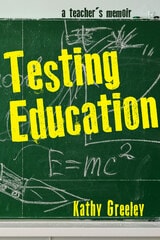
Testing Education
A Teacher's MemoirKathy Greeley
University of Massachusetts Press, 2024
Since the 2002 implementation of No Child Left Behind, the American public education system has been fundamentally changed. Excessive testing, standardized curriculums, destructive demands on children, corporate-style evaluations, and top-down mandates have become the norm. In response, record numbers of demoralized educators have quit, and millions of students have been left educationally impoverished. This troubling transformation has been exhaustively critiqued by scholars and commentators. Yet one crucial voice has been missing, until now.
In Testing Education, Kathy Greeley recounts the impact of education reform from a teacher’s point of view. Based on a teaching career spanning nearly forty years, Greeley details how schools went from learning communities infused with excitement, intellectual stimulation, and joy to sterile spaces of stress, intimidation, and fear. In this ultimately hopeful memoir, Greeley asks us to learn from the past to reimagine the future of public education.
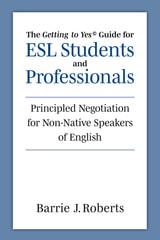
The "Getting to Yes" Guide for ESL Students and Professionals
Principled Negotiation for Non-Native Speakers of EnglishBarrie J. Roberts
University of Michigan Press, 2024
The Getting to Yes Guide for ESL Students and Professionals prepares non-native speakers of English to join the global community of people who use Getting to Yes to negotiate win-win agreements in English. It provides page-by-page explanations of over 1,000 words, phrases, concepts, and examples that these readers may misunderstand; short stories that use these new words and concepts to help readers apply them to new contexts; delightful cartoons to highlight main ideas; optional ESL activities; and a glossary of the key negotiation idioms and terms used in Getting to Yes. In this guide, author Barrie J. Roberts applies her experience as a public interest attorney, court Alternative Dispute Resolution administrator, ESL instructor, and court interpreter trainer to help readers improve their professional-level English along with their negotiation skills.
Benefits for teachers:
- Each Chapter Guide provides a ready-made lesson plan with activities to do before, while, and after reading each chapter of Getting to Yes
- The book can be used as a recommended self-study reference
- This book can be used for selected chapters of Getting to Yes or for a complete standalone course on Getting to Yes for non-native speakers of English or Generation 1.5 students
- Optional activities throughout the book can be assigned for in or out of the classroom. These include activities for reading comprehension, vocabulary building, paraphrasing, critical thinking, discussing, and writing
- Short stories written to accompany each chapter require students to apply new vocabulary and negotiation concepts to real-world disputes
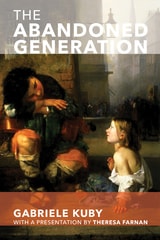
The Abandoned Generation
Gabriele Kuby
St. Augustine's Press, 2021
Reading Kuby’s analysis of cultural, sociological and biological data, the danger is clear and present. Yet Kuby asserts that, generally, our plight goes unnoticed and is veiled from our eyes. We need to see children for who and what they really are to us, to the family, and society at large. In the words of Fulton Sheen, “Children play a redeemer role in the family. The represent the victory of love over the insatiable ego. They symbolize the defeat of selfishness and the triumph of giving love.” Tragically, children are increasingly less a part of Western culture. This leaves the family, in the best case scenario, an artifact, and in the worst case, a casualty.
The topics addressed by Kuby cover towering influences in postmodern family life: Gender politics, the abortion mentality, daycare (“Socialism 2.0”), premature stress, rights of children, digital distractions, pornography, and divorce. A native German, Kuby’s work is, heartbreakingly, as relevant to American society as her own. This European perspective drives home the urgent need to recognize our situation as global and embedded, and one that requires more than political mobilization of mainstream efforts and responses. What really is good and normal, and how to we realize it? Listen to the heartstrings that yearn for true knowledge of oneself, Kuby implores, of God, and how in the surprise of God’s mercy we are guided through life. Kuby backs up this invitation to personal conversion and betterment with hard data.
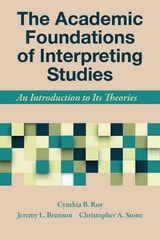
The Academic Foundations of Interpreting Studies
An Introduction to Its TheoriesCynthia B. Roy
Gallaudet University Press, 2018
As sign language interpreting has emerged and evolved in the last 20 years as an academic field of study, the scope of learning has broadened to include fields beyond the language and culture of deaf people. This text surveys six disciplines that have informed the study of sign language interpreting: history, translation, linguistics, sociology, social psychology, and cognitive psychology, along with their major ideas, principal scholars, and ways of viewing human interaction. Each chapter includes clear learning goals, definitions, discussion questions, and images to aid understanding. The Academic Foundations of Interpreting Studies is required reading for upper-level undergraduate or first-year graduate students in interpreting, Deaf studies, and sign language programs.
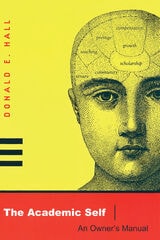
The Academic Self
An Owner’s ManualDonald E. Hall
The Ohio State University Press, 2002
Donald E. Hall offers a self-help book designed for academics, from graduate students to tenured faculty. He helps readers engage in an active process of career management, goal setting, prioritization, and reflection on the norms that constitute what he calls “academic selfhood.” Drawing broadly on the insights of Anthony Giddens’ notions of reflexivity and self-identity, Hall encourages new and seasoned scholars to “own up to” the behaviors, attitudes, and complicities that compromise their professional identities. This book couples all its exhortations with clear, concrete, and practical strategies for responding productively to the many uncertainties of academic life.
Separate chapters of the book examine the textuality of the academic self, profession, academic processes and collegiality. Among the topics candidly discussed are careerism, burnout, procrastination, and insecurity. Throughout the book readers will find anecdotes, real-life examples, and concrete tips for constructing and maintaining a successful career defined on their own terms.
The Academic Self: An Owner’s Manual opens up a new and frank discussion on academic life and academics’ basic responsibility for their own actions and attitudes.
The Academic's Handbook
A. Leigh DeNeef and Craufurd D. Goodwin, eds.
Duke University Press, 2006
Faculty members, administrators, and professionals with experience at all levels of higher education offer candid, practical advice to help beginning academics understand matters including:
— The different kinds of institutions of higher learning and expectations of faculty at each.
— The advantages and disadvantages of teaching at four-year colleges instead of research universities.
— The ins and outs of the job market.
— Alternatives to tenure-track, research-oriented positions.
— Salary and benefits.
— The tenure system.
— Pedagogy in both large lecture courses and small, discussion-based seminars.
— The difficulties facing women and minorities within academia.
— Corporations, foundations, and the federal government as potential sources of research funds.
— The challenges of faculty mentoring.
— The impact of technology on contemporary teaching and learning.
— Different types of publishers and the publishing process at university presses.
— The modern research library.
— The structure of university governance.
— The role of departments within the university.
With the inclusion of eight new chapters, this edition of The Academic’s Handbook is designed to ease the transition from graduate school to a well-rounded and rewarding career.
Contributors. Judith K. Argon, Louis J. Budd, Ronald R. Butters, Norman L. Christensen, Joel Colton, Paul L. Conway, John G. Cross, Fred E. Crossland, Cathy N. Davidson, A. Leigh DeNeef, Beth A. Eastlick, Matthew W. Finkin, Jerry G. Gaff, Edie N. Goldenberg, Craufurd D. Goodwin, Stanley M. Hauerwas, Deborah L. Jakubs, L. Gregory Jones, Nellie Y. McKay, Patrick M. Murphy, Elizabeth Studley Nathans, A. Kenneth Pye, Zachary B. Robbins, Anne Firor Scott, Sudhir Shetty, Samuel Schuman, Philip Stewart, Boyd R. Strain, Emily Toth, P. Aarne Vesilind, Judith S. White, Henry M. Wilbur, Ken Wissoker
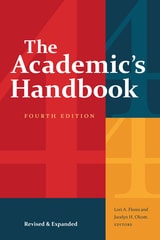
The Academic's Handbook, Fourth Edition
Revised and ExpandedLori A. Flores and Jocelyn H. Olcott, editors
Duke University Press, 2020
Contributors. Luis Alvarez, Steven Alvarez, Eladio Bobadilla, Genevieve Carpio, Marcia Chatelain, Ernesto Chávez, Miroslava Chávez-García, Nathan D. B. Connolly, Jeremy V. Cruz, Cathy N. Davidson, Sarah Deutsch, Brenda Elsey, Sylvanna M. Falcón, Michelle Falkoff, Kelly Fayard, Matthew W. Finkin, Lori A. Flores, Kathryn J. Fox, Frederico Freitas, Neil Garg, Nanibaa’ A. Garrison, Joy Gaston Gayles, Tiffany Jasmin González, Cynthia R. Greenlee, Romeo Guzmán, Lauren Hall-Lew, David Hansen, Heidi Harley, Laura M. Harrison, Sonia Hernández, Sharon P. Holland, Elizabeth Q. Hutchison, Deborah Jakubs, Bridget Turner Kelly, Karen Kelsky, Stephen Kuusisto, Magdalena Maczynska, Sheila McManus, Cary Nelson, Jocelyn H. Olcott, Rosanna Olsen, Natalia Mehlman Petrzela, Charles Piot, Bryan Pitts, Sarah Portnoy, Laura Portwood-Stacer, Yuridia Ramirez, Meghan K. Roberts, John Elder Robison, David Schultz, Lynn Stephen, James E. Sutton, Antar A. Tichavakunda, Keri Watson, Ken Wissoker, Karin Wulf