Results by title
2916 books match the query 'Politics and government' and 650 start with t

The Basque Insurgents
ETA, 1952–1980Robert P. Clark
University of Wisconsin Press, 1984
Blamed, at first, by the Spanish government for the recent Madrid train bombings, ETA (Euzkadi ta Askatasuna), the Basque nationalist organization, has been perhaps the most violent insurgent group on the European continent. Yet little is known about it outside of Spain. This book, now back in print, offers a full analytical study of ETA.
The Battle for the University of Alabama
The Perilous Path of Higher Education in the Reconstruction SouthWilliam Warren Rogers, Jr.
University of Alabama Press, 2025
Traces the little-known story of the bitter contest for the fate of the University of Alabama after the Civil War.
In The Battle for the University of Alabama, William Warren Rogers Jr. gives a fascinating account of the fierce struggle over the nature of the University of Alabama after the Civil War. Union forces reduced the campus to ruins as the war ended, and the university did not reopen until 1869. In the interregnum, powerful forces shifted the trajectory of the school. Alabama Republicans authored an egalitarian state constitution that delivered oversight of the university to the Republican Party. That set the stage for turmoil and confrontation. This book tells the story of that conflict.
In the next few years, Democrats charged Republicans with turning the university into a “radical” institution. They alleged that a handful of unqualified individuals had gained faculty positions because of their political allegiance, which resulted in the university’s academic desecration. Professors were bitterly denounced in the state newspaper press and quite personally in Tuscaloosa. Administration of the university became part of the fratricidal political debate in the state. Political violence and questions concerning race, specifically the possible integration of the university, illuminated the controversies of the Reconstruction years. Many of these questions resonate even today.
This authoritative account sets events at the University of Alabama against the backdrop of what occurred at other state universities in the Reconstruction South. The University of North Carolina experienced controversy similar to Alabama’s. At the University of Georgia, however, calm prevailed. This story of the incendiary events at Alabama’s flagship university charts new ground and provides a revelatory look into the extraordinary partisanship that characterized the South after the Civil War.
The Bellwether
Why Ohio Picks the PresidentKyle Kondik
Ohio University Press, 2016
Since 1896, Ohio voters have failed to favor the next president only twice (in 1944 and 1960). Time after time, Ohio has found itself in the thick of the presidential race, and 2016 is shaping up to be no different. What about the Buckeye State makes it so special? In The Bellwether, Kyle Kondik, managing editor for the nonpartisan political forecasting newsletter Sabato’s Crystal Ball, blends data-driven research and historical documentation to explain Ohio’s remarkable record as a predictor of presidential results and why the state is essential to the 2016 election and beyond.
Part history, part journalism, this entertaining and astute guide proposes that Ohio has been the key state in the Electoral College for more than a century and examines what the idea of the swing state has come to mean. In discussing the evidence, Kondik uses the state’s oft-mentioned status as a microcosm of the nation as a case study to trace the evolution of the American electorate, and identifies which places in Ohio have the most influence on the statewide result. Finally, he delves into the answer to the question voting Ohioans consider every four years: Will their state remain a bellwether, or is their ability to pick the president on its way out?

The Berber Identity Movement and the Challenge to North African States
By Bruce Maddy-Weitzman
University of Texas Press, 2011
Like many indigenous groups that have endured centuries of subordination, the Berber/Amazigh peoples of North Africa are demanding linguistic and cultural recognition and the redressing of injustices. Indeed, the movement seeks nothing less than a refashioning of the identity of North African states, a rewriting of their history, and a fundamental change in the basis of collective life. In so doing, it poses a challenge to the existing political and sociocultural orders in Morocco and Algeria, while serving as an important counterpoint to the oppositionist Islamist current.
This is the first book-length study to analyze the rise of the modern ethnocultural Berber/Amazigh movement in North Africa and the Berber diaspora. Bruce Maddy-Weitzman begins by tracing North African history from the perspective of its indigenous Berber inhabitants and their interactions with more powerful societies, from Hellenic and Roman times, through a millennium of Islam, to the era of Western colonialism. He then concentrates on the marginalization and eventual reemergence of the Berber question in independent Algeria and Morocco, against a background of the growing crisis of regime legitimacy in each country. His investigation illuminates many issues, including the fashioning of official national narratives and policies aimed at subordinating Berbers in an Arab nationalist and Islamic-centered universe; the emergence of a counter-movement promoting an expansive Berber "imagining" that emphasizes the rights of minority groups and indigenous peoples; and the international aspects of modern Berberism.
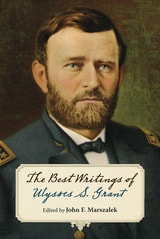
The Best Writings of Ulysses S. Grant
Edited by John F. Marszalek
Southern Illinois University Press, 2015
Famous for his military acumen and for his part in saving the Union during the American Civil War, Ulysses S. Grant also remains known for his two-volume memoirs, considered among the greatest military memoirs ever written. Grant’s other writings, however, have not received the same acclaim, even though they show the same literary skill. Originally published in the thirty-two volumes of The Papers of Ulysses S. Grant, the letters and speeches are the major source of information about Grant’s life and era and have played a key role in elevating his reputation to that of the leading general of the Civil War and the first of the modern presidents. In this collection, editor John F. Marszalek presents excerpts from Grant’s most insightful and skillfully composed writings and provides perspective through introductory comments tying each piece to the next. The result is a fascinating overview of Grant’s life and career.
In sixteen chronological chapters, selections from Grant’s letters and other writings reveal his personal thoughts on the major events of his momentous life, including the start of the Civil War, the capture of Vicksburg, Lincoln’s reelection, Lee’s surrender, his terms as president, the Panic of 1873, and his bouts of mouth and throat cancer. Throughout, Grant’s prose reveals clearly the power of his words and his ability to present them well. Although some historians have maligned his presidency as one of the most corrupt periods in American history, these writings reinforce Grant’s greatness as a general, demonstrate the importance of his presidency, and show him to be one of the driving forces of the nineteenth century.
With this compendium, Marszalek not only celebrates the literary talent of one of America’s greatest military figures but also vindicates an individual who, for so long, has been unfairly denigrated. A concise reference for students of American history and Civil War enthusiasts as well as a valuable introduction for those who are new to Grant’s writings, this volume provides intriguing insight into one of the nineteenth century’s most important Americans.

The Best of Fisher
28 years of Editorial Cartoons from Faubus to ClintonGeorge Fisher
University of Arkansas Press, 1993

The Betrayal of Dissent
Beyond Orwell, Hitchens and the New American CenturyScott Lucas
Pluto Press, 2004
political writer, and the standard-bearer of honesty and decency for the honourable 'Left'. In this controversial polemic, Scott Lucas argues that the exaltation of Orwell, far from upholding dissent against the State, has sought to quash such opposition. Indeed, Orwell has become the icon of those who, in the pose of the contrarian, try to silence public opposition to US and U K foreign policy in the 'War on Terror'.
Lucas's lively and readable critique of public intellectuals including Christopher Hitchens, Michael Walzer, David Aaronovitch, and Johann Hari – who have all invoked Orwellian honesty and decency to shut down dissent – will appeal to anyone disillusioned with the wars in Afghanistan and Iraq.
Lucas contends that these leading journalists and commentators have used Orwell to justify their own political transition from radicals to upholders of the establishment. All of them play influential roles in supporting the UK and US governments' charge that opponents of war -- and those who question the motives behind American foreign policy and its implementation -- should be condemned as 'appeasers of mass murder'.
This controversial book shows how Orwell has been used since 9/11 to justify, in the guise of independent thought, the suppression of dissent. We must rescue ourselves from Orwell and from those who take on his guise so, as Lucas puts it, our ‘silencing is… vital to a "manufacture of consent" for the wars which are supposedly being fought in our name and for our good’.

The Big Empty
The Great Plains in the Twentieth CenturyR. Douglas Hurt
University of Arizona Press, 2011
Using the voices of women homesteaders, agrarian socialists, Jewish farmers, Mexican meatpackers, New Dealers, and Native Americans, this book creates a sweeping survey of contested race relations, radical politics, and agricultural prosperity and decline during the twentieth century. This narrative shows that even though Great Plains history is fraught with personal and group tensions, violence, and distress, the twentieth century also brought about compelling social, economic, and political change.
The only book of its kind, this account will be of interest to historians studying the region and to anyone inspired by the story of the men and women who found an opportunity for a better life in the Great Plains.
The Black Boom
Riley, Jason L.
Templeton Press, 2021
Economic inequality continues to be one of America’s most hotly debated topics. Still, there has been relatively little discussion of the fact that black-white gaps in joblessness, income, poverty and other measures were shrinking before the pandemic. Why was it happening, and why did this phenomenon go unacknowledged by so much media?
In The Black Boom, Jason L. Riley—acclaimed Wall Street Journal columnist and senior fellow at the Manhattan Institute—digs into the data and concludes that the economic lives of black people improved significantly under policies put into place during the Trump administration. To acknowledge as much is not to endorse the 45th president but to champion policies that achieve a clear moral objective shared by most Americans.
Riley argues that before the Covid-19 pandemic of 2020, the economic fortunes of blacks improved under Trump to an extent unseen under Obama and unseen going back several generations. Black unemployment and poverty reached historic lows, and black wages increased faster than white wages.
Less inequality is something that everyone wants, but disapproval of Trump’s personality and methods too often skewed the media’s appraisal of effective policies advocated by his administration. If we're going to make real progress in improving the lives of low-income minorities, says Riley, we must look beyond our partisan differences at what works and keep doing it. Unfortunately, many press outlets were unable or unwilling to do that.
Riley notes that political reporters were not unaware of this data. Instead, they chose to ignore or downplay it because it was inconvenient. In their view, Trump, because he was a Republican and because he was Trump, had it in for blacks, and thus his policy preferences would be harmful to minorities. To highlight that significant racial disparities were narrowing on his watch—that the administration’s tax and regulatory reforms were mainly boosting the working and middle classes rather than ‘the rich’—would have undermined a narrative that the media preferred to advance, regardless of its veracity.”
As with previous books in our New Threats to Freedom series, The Black Boom includes two essays from prominent experts who take issue with the author’s perspective. Juan Williams, a veteran journalist, and Wilfred Reilly, a political scientist, contribute thoughtful responses to Riley and show that it is possible to share a deep concern for disadvantaged groups while disagreeing on how best to help them.
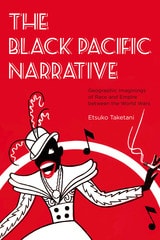
The Black Pacific Narrative
Geographic Imaginings of Race and Empire between the World WarsEtsuko Taketani
Dartmouth College Press, 2014

The Black Public Sphere
Edited by The Black Public Sphere Collective
University of Chicago Press, 1995
To think about the black public sphere we have to be willing to rethink the relationship between markets and freedom, commodity and identity, property and pleasure. This book provides more sophisticated approaches to matters historically consigned to inadequate rubrics—"the Negro problem," "subcultures," "minorities," "inner city," and "multicultural." While these rubrics constrict and stereotype, the analytic potential of the black public sphere is that it facilitates new ways to discuss democratic values and citizenship.
The Black and White Rainbow
Reconciliation, Opposition, and Nation-Building in Democratic South AfricaCarolyn E. Holmes
University of Michigan Press, 2020
Based on ethnographic and interview-based fieldwork conducted in 2012–13, The Black and White Rainbow: Reconciliation, Opposition, and Nation-Building in Democratic South Africa explores various themes of nation- and democracy-building, including the emotional and banal content of symbols of the post-apartheid state, the ways that gender and race condition nascent nationalism, the public performance of nationalism and other group-based identities, integration and sharing of space, language diversity, and the role of democratic functioning including party politics and modes of opposition. Each of these thematic chapters aims to explicate a feature of the multifaceted nature of identity-building, and link the South African case to broader literatures on both nationalism and democracy.
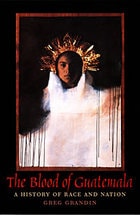
The Blood of Guatemala
A History of Race and NationGreg Grandin
Duke University Press, 2000
Focusing on Mayan elites in the community of Quetzaltenango, Grandin shows how their efforts to maintain authority over the indigenous population and secure political power in relation to non-Indians played a crucial role in the formation of the Guatemalan nation. To explore the close connection between nationalism, state power, ethnic identity, and political violence, Grandin draws on sources as diverse as photographs, public rituals, oral testimony, literature, and a collection of previously untapped documents written during the nineteenth century. He explains how the cultural anxiety brought about by Guatemala’s transition to coffee capitalism during this period led Mayan patriarchs to develop understandings of race and nation that were contrary to Ladino notions of assimilation and progress. This alternative national vision, however, could not take hold in a country plagued by class and ethnic divisions. In the years prior to the 1954 coup, class conflict became impossible to contain as the elites violently opposed land claims made by indigenous peasants.
This “history of power” reconsiders the way scholars understand the history of Guatemala and will be relevant to those studying nation building and indigenous communities across Latin America.
The Bloodless Revolution
England, 1688Stuart E. Prall
University of Wisconsin Press, 1985
The Glorious Revolution of 1688 represented a crucial turning point in modern British history by decisively shifting political power from the monarchy to Parliament. In this cogent study, first published in 1972, Stuart Prall offers a well-balanced account of the Revolution, its roots, and its consequences. The events of 1688, Prall argues, cannot be viewed in isolation. Examining the tempestuous half-century that preceded and precipitated William and Mary’s accession, he provides a comprehensive overview of the Revolution’s context and of its historical meaning.
“[Prall] insists that the Revolution of 1688 was the culmination of a long crisis begun back in 1640, and the revolution settlement was the resolution of problems which the Puritan Revolution and the Restoration had left unsolved. This is an admirable combination of analysis, commentary upon views of historians, and chronological narrative, starting with the Restoration in 1660 and continuing through the Act of Settlement in 1701.”—Choice
The Bolivia Reader
History, Culture, PoliticsSinclair Thomson, Rossana Barragán, Xavier Albó, Seemin Qayum, and Mark Goodale, editors
Duke University Press, 2018
The Book of Politics
China in TheoryMichael Dutton
Duke University Press, 2024
The Boundaries of Blackness
AIDS and the Breakdown of Black PoliticsCathy Cohen
University of Chicago Press, 1999
The Boundaries of Blackness is the first full-scale exploration of the social, political, and cultural impact of AIDS on the African-American community. Informed by interviews with activists, ministers, public officials, and people with AIDS, Cathy Cohen unflinchingly brings to light how the epidemic fractured, rather than united, the black community. She traces how the disease separated blacks along different fault lines and analyzes the ensuing struggles and debates.
More broadly, Cohen analyzes how other cross-cutting issues—of class, gender, and sexuality—challenge accepted ideas of who belongs in the community. Such issues, she predicts, will increasingly occupy the political agendas of black organizations and institutions and can lead to either greater inclusiveness or further divisiveness.
The Boundaries of Blackness, by examining the response of a changing community to an issue laced with stigma, has much to teach us about oppression, resistance, and marginalization. It also offers valuable insight into how the politics of the African-American community—and other marginal groups—will evolve in the twenty-first century.

The Boy Governor
Stevens T. Mason and the Birth of Michigan PoliticsDon Faber
University of Michigan Press, 2012
In 1831, Stevens T. Mason was named Secretary of the Michigan Territory at the tender age of 19, two years before he could even vote. The youngest presidential appointee in American history, Mason quickly stamped his persona on Michigan life in large letters. After championing the territory's successful push for statehood without congressional authorization, he would defend his new state's border in open defiance of the country's political elite and then orchestrate its expansion through the annexation of the Upper Peninsula---all before his official election as Michigan's first governor at age 24, the youngest chief executive in any state's history.
The Boy Governor tells the complete story of this dominant political figure in Michigan's early development. Capturing Mason's youthful idealism and visionary accomplishments, including his advocacy for a strong state university and legislating for the creation of the Soo Locks, this biography renders a vivid portrait of Michigan's first governor---his conflicts, his desires, and his sense of patriotism. This book will appeal to anyone with a love of American history and interest in the many, larger-than-life personalities that battled on the political stage during the Jacksonian era.

The Boy from Altheimer
From the Depression to the BoardroomWilliam H. Bowen
University of Arkansas Press, 2006
The Brazil Reader
History, Culture, PoliticsJames N. Green, Victoria Langland, and Lilia Moritz Schwarcz, editors
Duke University Press, 2019
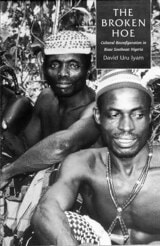
The Broken Hoe
Cultural Reconfiguration in Biase Southeast NigeriaDavid Uru Iyam
University of Chicago Press, 1995
The Biase today face social and economic pressures that seriously strain their ability to cope with the realities of modern Nigeria. Iyam, an anthropologist and a Biase, examines the relationship between culture and development as played out in projects in local communities.
Western technologies and beliefs alone cannot ensure economic growth and modernization, Iyam shows, and should not necessarily be imposed on poor rural groups who may not be prepared to incorporate them; neither, however, is it possible to recover indigenous coping strategies given the complexities of the postcolonial world. A successful development strategy, Iyam argues, needs to strengthen local managerial capacity, and he offers suggestions as to how this can be done in a range of cultural and social settings.

The Brown Plague
Travels in Late Weimar and Early Nazi GermanyDaniel Guérin
Duke University Press, 1994
Guérin’s travels took him across the countryside and into the cities of Germany. He describes with extraordinary clarity, for example, his encounters with large groups of unemployed workers in Berlin and the spectacle of Goering presiding over the Reichstag. Staying in youth hostels, Guérin met individuals representing a range of various groups and movements, including the Wandervögel, leftist brigades, Hitler Youth, and the strange, semicriminal sexual underground of the Wild-frei. Devoting particular attention to the cultural politics of fascism and the lure of Nazism for Germany’s disaffected youth, he describes the seductive rituals by which the Nazis were able to win over much of the population. As Robert Schwartzwald makes clear in his introduction, Guérin’s interest in Germany at this time was driven, in part, by a homoerotic component that could not be stated explicitly in his published material. This excellent companion essay also places The Brown Plague within a broad historical and literary context while drawing connections between fascism, aesthetics, and sexuality.
Informed by an epic view of class struggle and an admiration for German culture, The Brown Plague, a notable primary source in the literature of modern Europe, provides a unique view onto the rise of Nazism.
The Bureaucrats
Honore De Balzac
Northwestern University Press, 1993
The novel contains the recognizable themes of Balzac's work: obsessive ambition, conspiracy and human pettiness, and a melodramatic struggle between the social good and the evils of folly and stupidity. It is also an unusual, dramatized analysis of a developing political institution and its role in shaping social class and mentality.
The Bureaucrats of Buenos Aires, 1769-1810
Amor al Real ServicioSusan Migden Socolow
Duke University Press, 1988
The late eighteenth century was a critical time for the southernmost regions of Latin America, for in this period they became a separate political entity, the Viceroyalty of the Rio de la Plata. Socolow's work, part of a continuing study of the political, economic, and social elites of the emerging city of Buenos Aires, here considers the bureaucracy put into place by the Bourbon reforms. The author examines the professional and personal circumstances of all bureaucrats, from the high-ranking heads of agencies to the more lowly clerks, contrasting their expectations and their actual experiences. She pays particular attention to their recruitment, promotion, salary, and retirement, as well as their marriage and kinship relationships in the local society.
The CIA in Ecuador
Marc Becker
Duke University Press, 2021
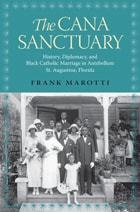
The Cana Sanctuary
History, Diplomacy, and Black Catholic Marriage in Antebellum St. Augustine, FloridaFrank Marotti, Jr.
University of Alabama Press, 2012
In the late seventeenth century a group of about a dozen escaped African slaves from the English colony of Carolina reached the Spanish settlement of St. Augustine. In a diplomatic bid for sanctuary, to avoid extradition and punishment, they requested the sacrament of Catholic baptism from the Spanish Catholic Church. Their negotiations brought about their baptism and with it their liberation. The Cana Sanctuary focuses on what author Frank Marotti terms “folk diplomacy”—political actions conducted by marginalized, non-state sectors of society—in this instance by formerly enslaved African Americans in antebellum East Florida. The book explores the unexpected transformations that occurred in seventeenth- and eighteenth-century St. Augustine as more and more ex-slaves arrived to find their previously disregarded civil rights upheld under sacred codes by an international, nongovernmental, authoritative organization.
With the Catholic Church acting as an equalizing, empowering force for escaped African slaves, the Spanish religious sanctuary policy became part of popular historical consciousness in East Florida. As such, it allowed for continual confrontations between the law of the Church and the law of the South. Tensions like these survived, ultimately lending themselves to an “Afro-Catholicism” sentiment that offered support for antislavery arguments.
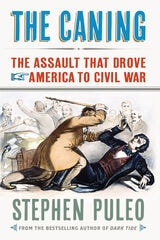
The Caning
The Assault That Drove America to Civil WarStephen Puleo
Westholme Publishing, 2012
Early in the afternoon of May 22, 1856, ardent pro-slavery Congressman Preston S. Brooks of South Carolina strode into the United States Senate Chamber in Washington, D.C., and began beating renowned anti-slavery Senator Charles Sumner with a gold-topped walking cane. Brooks struck again and again—more than thirty times across Sumner’s head, face, and shoulders—until his cane splintered into pieces and the helpless Massachusetts senator, having nearly wrenched his desk from its fixed base, lay unconscious and covered in blood. It was a retaliatory attack. Forty-eight hours earlier, Sumner had concluded a speech on the Senate floor that had spanned two days, during which he vilified Southern slaveowners for violence occurring in Kansas, called Stephen A. Douglas of Illinois a “noise-some, squat, and nameless animal,” and famously charged Brooks’s second cousin, South Carolina Senator Andrew Butler, as having “a mistress. . . who ugly to others, is always lovely to him. . . . I mean, the harlot, Slavery.” Brooks not only shattered his cane during the beating, but also destroyed any pretense of civility between North and South.
One of the most shocking and provocative events in American history, the caning convinced each side that the gulf between them was unbridgeable and that they could no longer discuss their vast differences of opinion regarding slavery on any reasonable level.The Caning: The Assault That Drove America to Civil War tells the incredible story of this transformative event. While Sumner eventually recovered after a lengthy convalescence, compromise had suffered a mortal blow. Moderate voices were drowned out completely; extremist views accelerated, became intractable, and locked both sides on a tragic collision course.
The caning had an enormous impact on the events that followed over the next four years: the meteoric rise of the Republican Party and Abraham Lincoln; the Dred Scott decision; the increasing militancy of abolitionists, notably John Brown’s actions; and the secession of the Southern states and the founding of the Confederacy. As a result of the caning, the country was pushed, inexorably and unstoppably, to war. Many factors conspired to cause the Civil War, but it was the caning that made conflict and disunion unavoidable five years later.
The Career of Nicodemus Dyzma
A NovelTadeusz Dolega-Mostowicz; Translated from the Polish by Ewa Malachowska-Pasek and Megan Thomas and with an introduction by Benjamin Paloff
Northwestern University Press, 2020
Winner of the 2021 Found in Translation Award
First published in Polish in 1932, The Career of Nicodemus Dyzma was Tadeusz Dołęga-Mostowicz’s breakout novel. Dyzma is an unemployed clerk who crashes a swanky party, where he makes an offhand crass remark that sets him on a new course. Soon high society—from government ministers to drug-fueled aristocrats—wants a piece of him. As Dyzma’s status grows, his vulgarity is interpreted as authenticity and strength. He is unable to comprehend complicated political matters, but his cryptic responses are celebrated as wise introspection. His willingness to do anything to hold on to power—flip-flopping on political positions, inventing xenophobic plots, even having enemies assaulted—only leads to greater success.
Dołęga-Mostowicz wrote his novel in a newly independent Poland rampant with political corruption and populist pandering. Jerzy Kosinski borrowed heavily from the novel when he wrote Being There, and readers of both books will recognize similarities between their plots. This biting political satire—by turns hilarious and disturbing, contemptuous and sympathetic—is an indictment of a system in which money and connections matter above all else, bluster and ignorance are valorized, and a deeply incompetent man rises to the highest spheres of government.
The Causes of Post-Mobilization Leadership Change and Continuity
A Comparative Analysis of Post-Color Revolution in Ukraine, Kyrgyzstan, and GeorgiaVasili Rukhadze
University of Michigan Press, 2021
Vasili Rukhadze examines the factors that contributed to post-uprising leadership durability in the Ukraine, Kyrgyzstan, and Georgia in 2004–12, after these countries underwent their so-called “Color Revolutions.” Using structured, focused comparison and process tracing, he argues that the key independent variable influencing post-mobilization leadership durability is ruling coalition size and cohesion. He demonstrates that if the ruling coalitions are large and fragmented, as in the Ukraine and Kyrgyzstan, the coalitions disintegrate, thus facilitating the downfall of the governments. Alternatively, if the ruling coalition is small and cohesive, as in Georgia, the coalition maintains unity, hence helping the government to stay in power.
This study advances the debate on regime changes. By drawing a clear distinction between political leaderships that come to power as a result of popular uprisings and governments that take power through normal democratic processes, military coup, or any other means, the research offers one of the first studies on post-mobilization leadership. Rukhadze helps scholars differentiate between the factors that affect durability of post-uprising leadership from those factors that impact durability of all other political leadership, in turn equipping researchers with new tools to study power politics.
The Center Cannot Hold
Decolonial Possibility in the Collapse of a Tanzanian NGOJenna N. Hanchey
Duke University Press, 2023
The Center of a Great Empire
The Ohio Country in the Early RepublicAndrew R. L. Cayton
Ohio University Press, 2005
“The people who lived in what became the seventeenth state in the American Union in 1803 were not only at the center of a great empire, they were at the center of the most important historical developments in the revolutionary Atlantic World.”
—From the introduction
Nowhere did the revolutions in politics, commerce, and society in the late eighteenth and early nineteenth centuries occur more quickly or more thoroughly than in the Ohio country. A forested borderland dominated by American Indians in 1780, Ohio was a landscape of farms and towns inhabited by people from all over the world by 1830. The Center of a Great Empire: The Ohio Country in the Early Republic chronicles this dramatic and all-encompassing change.
Andrew R. L. Cayton and Stuart D. Hobbs have assembled an impressive collection of articles by established and rising scholars. They address the conquest of Native Americans, the emergence of a democratic political culture, the origins of capitalism, the formation of public culture, the growth of evangelical Protestantism, the ambiguous status of African Americans, and social life in a place that most regarded as the cutting edge of human history.
For The Center of a Great Empire, distinguished historians of the American nation in its first decades question conventional wisdom. They emphasize contingency rather than inevitability and contention rather than progress. Downplaying the frontier character of Ohio, they offer new interpretations and open new paths of inquiry through investigations of race, education, politics, religion, family, commerce, colonialism, and conquest. As it underscores key themes in the history of the United States, The Center of a Great Empire pursues issues that have fascinated people for two centuries.

The Challenge of Modernity
German Social and Cultural Studies, 1890-1960Adelheid von Saldern
University of Michigan Press, 2002
The essays contained in The Challenge of Modernity cover three distinct subject areas: the history of the Social Democratic labor movement, housing, and popular and mass culture. More specifically, von Saldern addresses the self-modernizing Social Democratic Party; Social Democrats' and Communists' opposing views of modernization; social rationalization in the private sphere (particularly with regard to women and hygiene); sport; the arrival of "trashy" literature, movies, and radio in Germany; and cultural conservatives' attempts to enhance a national and Volks-culture in opposition to mass-culture, Americanization, and the avant-garde. The variety of responses to the modernization process, as well as von Saldern's focus on social agents, makes this book unique.
Required reading for scholars of social, cultural, and gender history, The Challenge of Modernity will also find an audience among urban anthropologists, political scientists, and sociologists. Von Saldern's ability to combine a strong theoretical framework with concrete historical examples will also make this outstanding reading for undergraduate and graduate students seeking to familiarize themselves with the history of German society and culture.
Adelheid von Saldern is Professor of Modern History and Director, Historisches Seminar, Universität Hanover.
The Challenges of Sovereignty
Essays on Israel and ZionismDavid Ellenson
Brandeis University Press, 2026
Key essays by a notable scholar address some of the most pressing questions facing Israel today.
Over the course of his rich career, David Ellenson—one of the most outstanding Jewish scholars, intellectuals, and thinkers of our time—probed the tension between tradition and modernity, especially as reflected in the ceaseless reinterpretation of liturgical and halakhic texts. Alongside that scholarly interest, largely centered on European Jewry, Ellenson produced an impressive body of work on Zionism and Israel.
This volume follows the arc of this body of work from Ellenson’s early articles on the Zionism of American rabbis to his last essay on the struggle between Jewish and democratic impulses in Israeli society. He draws on familiar sources of inquiry—Jewish prayers and legal sources—to chart changes in Israeli religious life and to excavate its theological-political foundation. What emerges is a profound meditation on some of the most important questions that Israel faces today: what does it mean to be Jewish in the state? What role should Halakhah play in a self-defined Jewish state? How should the state treat its non-Jewish minority? How deeply rooted is democracy in the state and its foundational texts? And can the state ever escape seemingly irrepressible internal and external conflict?
The Change Election
Money, Mobilization, and Persuasion in the 2008 Federal ElectionsEdited by David Magleby
Temple University Press, 2010
The 2008 election was an extraordinary event that represented change at many levels. The candidates’ innovative campaigns changed how funds were raised, how voters were mobilized, and how messages were communicated through advertising and the internet. Parties and interest groups played their own important role in this historic election. In The Change Election, David Magleby assembles a team of accomplished political scientists to provide an in-depth analysis of this groundbreaking presidential election. These scholars through a set of compelling case studies examine the competition for votes in a dozen competitive House and Senate contests and for the White House in five states: Ohio, North Carolina, New Hampshire, Colorado, and New Mexico.
Backed by a wealth of data, and extensive interviews, the contributors offer an up-close look at the interactions of candidates' individual skills and personalities with the larger political forces at work in the election year. The book offers insights into the rapidly evolving organizational and technical aspects of campaigning. The dramatic success Obama and other candidates had in raising money—especially from small donors—is addressed along with how money was raised and spent by the candidates, party committees, and interest groups competing for votes.
Building on a tested methodology, The Change Election explores the interplay of money and electioneering. Magleby builds on more than a decade of prior studies to show the ways participants in our electoral process have adapted to statutory and judicial decisions and how the 2008 election has the potential to transform American electoral politics.
The Changing American Mind
How and Why American Public Opinion Changed Between 1960 and 1988William G. Mayer
University of Michigan Press, 1992
Have Americans become more or less tolerant of racial discrimination? More or less supportive of abortion? Is a new tax revolt underway? Did a "new conservative mood" dominate elections and policy discussions in the early 1980s? Popular and academic discussions about the past and future of American politics often turn on the question of whether and how public opinion has changed. Yet for all the talk about such matters, observes political scientist William G. Mayer, there is surprisingly little hard evidence on many of these questions. The Changing American Mind is designed to fill that gap, by presenting a comprehensive history of American public opinion over the last three decades: how it changed, why it changed, and what difference that makes for American politics. The Changing American Mind is important reading for all who are interested in American politics and public opinion. Its appendices, which include the results of more than 250 survey questions that have been asked regularly of national samples over the last three decades, make it an indispensable reference source for everyone who studies or participates in American politics.
The Changing Face of Representation
The Gender of U.S. Senators and Constituent CommunicationsKim L. Fridkin and Patrick J. Kenney
University of Michigan Press, 2015
As the number of women in the U.S. Senate grows, so does the number of citizens represented by women senators. At the same time, gender remains a key factor in senators’ communications to constituents as well as in news media portrayals of senators. Focusing on 32 male and female senators during the 2006 congressional election year, Kim L. Fridkin and Patrick J. Kenney examine in detail senators’ official websites, several thousand press releases and local news stories, and surveys of 18,000 citizens to discern constituents’ attitudes about their senators.
The authors conclude that gender role expectations and stereotypes do indeed constrain representational and campaign messages and influence news coverage of both candidates and elected senators. Further, while citizens appear to be less influenced by entrenched stereotypes, they pay more attention to female senators’ messages and become more knowledgeable about them, in comparison to male senators.
The Changing Pattern of Black Politics in Britain
Kalbir Shukra
Pluto Press, 1998
The Chattahoochee Chiefdoms
John H. Blitz and Karl G. Lorenz
University of Alabama Press, 2006
As objects from the mounds were unearthed, occasionally illustrated and discussed in print, attention became focused on the aesthetic qualities of the artifacts, the origins of the remains, and the possible relationship to the Creek Indians. Beginning in the 20th century, new concerns emerged as the developing science of archaeology was introduced to the region. As many of the sites became threatened or destroyed by reservoir construction, trained archaeologists initiated extensive excavations of the mounds. Although classification of artifacts and sites into a chronological progression of cultures was the main objective of this effort, a second concern, sometimes more latent than manifest, was the reconstruction of a past way of life. Archaeologists hoped to achieve a better understanding of the sociopolitical organization of the peoples who built the mounds and of how those organizations changed through time.
Contemporary archaeologists, while in agreement on many aspects of the ancient cultures, debate the causes, forms, and degrees of sociopolitical complexity in the ancient Southeast. Do the mounds mark the capitals of political territories? If so, what was the scale and scope of these ancient “provinces”? What manner of society constructed the mound settlements? What was the sociopolitical organization of these long-dead populations? How can archaeologists answer such queries with the mute and sometimes ordinary materials with which they work: pottery, stone tools, organic residues, and the strata of remnant settlements, buildings, and mounds?
The Cherokees and Their Chiefs
In the Wake of EmpireStan Hoig
University of Arkansas Press, 1999
The Chiapas Rebellion
The Struggle for Land and DemocracyNeil Harvey
Duke University Press, 1998
Beginning with an exploration of the history of ethnic and class conflict in Chiapas since the Conquest, Harvey moves specifically to trace the development of peasant and indigenous organizations in Chiapas since the early 1970s. He compares the struggles for agrarian rights of three grassroots movements facing hostility from both local elites and federal bureaucrats. His examination of the complexities of political change in Chiapas includes the impact of neoliberal economic policies, the origins of the Zapatista army of National Liberation (EZLN), and the political impact of the rebellion itself. Engaging with current theoretical debates on the role and significance of social movements in Mexico and Latin America, Harvey focuses on the primacy of political struggle and on the importance of these movements in the construction and meaning of citizenship. While suggesting that the Zapatista revolution has heightened awareness among the people of Chiapas of such democratic issues as ethnicity, gender, and land distribution, he concludes with an analysis of the obstacles to peace in the region today.
This unprecedented study of the Zapatista rebellion will provoke discussion among students and scholars of contemporary Mexico, political science, Latin American studies, history, sociology, and anthropology.
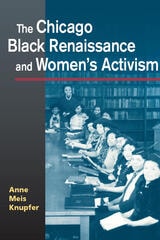
The Chicago Black Renaissance and Women's Activism
Anne Meis Knupfer
University of Illinois Press, 2006
The book examines various groups of black female activists, including writers and actresses, social workers, artists, school teachers, and women's club members to document the impact of social class, gender, nativity, educational attainment, and professional affiliations on their activism. Together, these women worked to sponsor black history and literature, to protest overcrowded schools, and to act as a force for improved South Side housing and employment opportunities. Knupfer also reveals the crucial role these women played in founding and sustaining black cultural institutions, such as the first African American art museum in the country; the first African American library in Chicago; and various African American literary journals and newspapers. As a point of contrast, Knupfer also examines the overlooked activism of working-class and poor women in the Ida B. Wells and Altgeld Gardens housing projects.
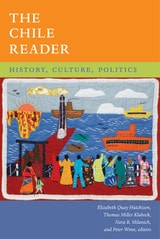
The Chile Reader
History, Culture, PoliticsElizabeth Quay Hutchison, Thomas Miller Klubock, Nara B. Milanich, and Peter Winn, eds.
Duke University Press, 2013
Texts and images, each introduced by the editors, provide insights into the ways that Chile's unique geography has shaped its national identity, the country's unusually violent colonial history, and the stable but autocratic republic that emerged after independence from Spain. They shed light on Chile's role in the world economy, the social impact of economic modernization, and the enduring problems of deep inequality. The Reader also covers Chile's bold experiments with reform and revolution, its subsequent descent into one of Latin America's most ruthless Cold War dictatorships, and its much-admired transition to democracy and a market economy in the years since dictatorship.
The City on the Hill From Below
The Crisis of Prophetic Black PoliticsAuthored by Stephen Marshall
Temple University Press, 2012
Within the discipline of American political science and the field of political theory, African American prophetic political critique as a form of political theorizing has been largely neglected. Stephen Marshall, in The City on the Hill from Below, interrogates the political thought of David Walker, Frederick Douglass, W. E. B. DuBois, James Baldwin, and Toni Morrison to reveal a vital tradition of American political theorizing and engagement with an American political imaginary forged by the City on the Hill.
Originally articulated to describe colonial settlement, state formation, and national consolidation, the image of the City on the Hill has been transformed into one richly suited to assessing and transforming American political evil. The City on the Hill from Below shows how African American political thinkers appropriated and revised languages of biblical prophecy and American republicanism.
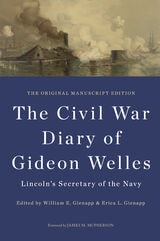
The Civil War Diary of Gideon Welles, Lincoln's Secretary of the Navy
The Original Manuscript EditionGideon Welles, Edited by William E. Gienapp and Erica L. Gienapp; Foreword by James M. McPherson
University of Illinois Press, 2014
Perhaps the hardest-working member of the cabinet, Welles still found time to keep a detailed diary that has become one of the key documents for understanding the inner workings of the Lincoln administration. In this new edition, William E. and Erica L. Gienapp have restored Welles’s original observations, gleaned from the manuscript diaries at the Library of Congress and freed from his many later revisions, so that the reader can experience what he wrote in the moment. With his vitriolic pen, Welles captures the bitter disputes over strategy and war aims, lacerates colleagues from Secretary of State William H. Seward to General-in-Chief Henry Halleck, and condemns the actions of the self-serving southern elite he sees as responsible for the war. He just as easily waxes eloquent about the Navy's wartime achievements, extols the virtues of Lincoln, and drops in a tidbit of Washington gossip.
Carefully edited and extensively annotated, this edition contains a wealth of supplementary material. The appendixes include short biographies of the members of Lincoln’s cabinet, the retrospective Welles wrote after leaving office covering the period missing from the diary proper, and important letters regarding naval matters and international law.
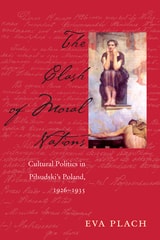
The Clash of Moral Nations
Cultural Politics in Pilsudski’s Poland, 1926–1935Eva Plach
Ohio University Press, 2006
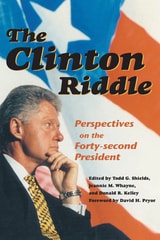
The Clinton Riddle
Perspectives on the Forty-second PresidentTodd G. Shields
University of Arkansas Press, 2004

The Collected Works of William Howard Taft, Volume I
Four Aspects of Civic Duty and Present Day ProblemsDavid H. Burton
Ohio University Press, 2001
The inaugural volume of The Collected Works of William Howard Taft is composed of two of his earliest books, Four Aspects of Civic Duty and Present Day Problems. Based on a series of lectures delivered at Yale in 1906, Four Aspects of Civic Duty is an attempt by then Secretary of War Taft to bring to the attention of his audience the importance of civic duty from the perspective of the university graduate, the judge on the bench, the colonial administrator, and the national executive branch of government. His remarks were drawn from his own experience, while at the same time he laid down the principles of citizenship with which all people could identify. In Present Day Problems, William Howard Taft demonstrates the depth of his knowledge and the seriousness of his reflections on a wide range of topics including Sino-American relations and the ongoing contest between capital and labor in America’s increasingly industrial socioeconomy. The problems he takes up are met head-on and discussed in a fashion likely to persuade his audience that he is well prepared to tackle the burdens of the presidency.
The Collected Works of William Howard Taft, in eight volumes, will include Taft’s complete published works as well as his presidential and state addresses and selected court opinions from his days as chief justice of the Supreme Court.
The Collected Works of William Howard Taft, Volume II
Political Issues and Outlooks: Speeches Delivered Between August 1908 and February 1909David H. Burton
Ohio University Press, 2001
The second volume of The Collected Works of William Howard Taft is dedicated to the speeches and writings that displayed his thinking in the autumn of 1908 and the following winter.
At this time he was campaigning for the presidency against the well-known William Jennings Bryan, and in Taft’s writings is evidence of the contrast in style between Taft and Bryan and between Taft and his predecessor, Teddy Roosevelt. as well. Although uncomfortable with campaigning, he thoughtfully addresses the concerns of the day that framed the election, including race, the Philippines, and socialism.
Political Issues and Outlooks also contains speeches made after the election and leading up to his inauguration as the twenty-seventh president of the United States. Introduced by a commentary from the general series editor Professor David H. Burton, the second volume of The Collected Works of William Howard Taft is a revealing look at the machinations of United States politics at the beginning of the twentieth century and a glimpse into the mind of one of the century’s most influential political architects.
The Collected Works of William Howard Taft, Volume III
Presidential Addresses and State PapersDavid H. Burton
Ohio University Press, 2001
The third volume of The Collected Works of William Howard Taft imparts an appreciation of the range of the twenty-seventh president’s interests. Beginning with his inaugural address and concluding with a detailed exposition of governmental expenses and needed economies, President William Howard Taft showed himself willing to tackle the routine as well as the rarified responsibilities of executive rule.
Whether he was addressing the issue of strikes and labor unions or conservation, President Taft consistently demonstrated that, in word and action, he was prepared to be a modern president. What impresses the reader of these remarks is Taft’s willingness to administer to virtually every part of the nation, thereby proving that he was not a mere figurehead but a chief executive truly concerned about problems across the country. Perhaps, as his words here indicate, Taft was not a good politician after all but a kind man who saw himself as president of all the people. As the first of two volumes directly related to Taft’s tenure as president, Presidential Addresses and State Papers documents a pivotal time in the public life of this man from Ohio. Introduced by a commentary from the general series editor Professor David H. Burton, the third volume of The Collected Works of William Howard Taft underscores the presidential stature of William Howard Taft.
The Collected Works of William Howard Taft, Volume IV
Presidential Messages to CongressDavid H. Burton
Ohio University Press, 2002
“A time when panics seem far removed is the best time to prepare our financial system to withstand a storm. The most crying need this country has is a proper banking and currency system. The existing one is inadequate, and everyone who has studied the question admits it.”—William Howard Taft
The interaction between President William Howard Taft and the Congress provides a window on his leadership. Volume IV of The Collected Works of William Howard Taft is devoted to his messages to the legislative branch and concerns some of the pressing issues of the day, issues that have relevance still.
Oftentimes President Taft was at odds with a somewhat reactionary Congress, causing him to veto legislation that he thought unwise. For example, his commitment to the independence of elected judges led him to reject statehood for Arizona until its constitution was altered to address his objection.
His messages also touched on subjects for which he led the way over the objections of Congress, such as his recommendation of a federal law to protect resident aliens against denial of their civil rights and his advocacy of free trade with Canada.
In his commentary to the volume, Professor Burton points out: “There is exhibited time after time concern for the American people, for men and women from different walks of life. Taft comes across less as a judge, which he had been, or the chief justice he was to become, and more as a sitting president of all the people.”
Taft’s Presidential Messages to Congress provides the documentary evidence to support that claim.