Results by title
8812 books match the query 'Political Science' and 1911 start with t
The Myth of Coequal Branches
Restoring the Constitution’s Separation of FunctionsDavid J. Siemers
University of Missouri Press, 2026
The Myth of Democratic Failure
Why Political Institutions Are EfficientDonald A. Wittman
University of Chicago Press, 1995
Wittman first considers the characteristic of efficient markets—informed, rational participants competing for well-defined and easily transferred property rights—and explains how they operate in democratic politics. He then analyzes how specific political institutions are organized to operate efficiently. "Markets" such as the the Congress in the United States, bureaucracies, and pressure groups, he demonstrates, contribute to efficient political outcomes. He also provides a theory of institutional design to explain how these political "markets" arise. Finally, Wittman addresses the methodological shortcomings of analyses of political market failure, and offers his own suggestions for a more effective research strategy.
Ultimately, he demonstrates that nearly all of the arguments claiming that economic markets are efficient apply equally well to democratic political markets; and, conversely, that economic models of political failure are not more valid than the analogous arguments for economic market failure.
The Myth of Political Correctness
The Conservative Attack on Higher EducationJohn K. Wilson
Duke University Press, 1995
The phrase "political correctness" is on everyone’s lips, on radio and television, and in newspapers and magazines. The phenomenon itself, however, has been deceptively described. Wilson steps into the nation’s favorite cultural fray to reveal that many of the most widely publicized anecdotes about PC are in fact more myth than reality. Based on his own experience as a student and in-depth research, he shows what’s really going on beneath the hysteria and alarmism about political correctness and finds that the most disturbing examples of thought policing on campus have come from the right. The image of the college campus as a gulag of left-wing totalitarianism is false, argues Wilson, created largely through the exaggeration of deceptive stories by conservatives who hypocritically seek to silence their political opponents.
Many of today’s most controversial topics are here: multiculturalism, reverse discrimination, speech codes, date rape, and sexual harassment. So are the well-recognized protagonists in the debate: Dinesh D’Souza, William Bennett, and Lynne Cheney, among others. In lively fashion and in meticulous detail, Wilson compares fact to fiction and lays one myth after another to rest, revealing the double standard that allows "conservative correctness" on college campuses to go unchallenged.
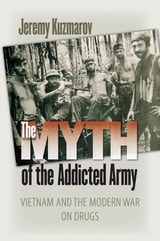
The Myth of the Addicted Army
Vietnam and the Modern War on DrugsJeremy Kuzmarov
University of Massachusetts Press, 2009
The image of the drug-addicted American soldier—disheveled, glassy-eyed, his uniform adorned with slogans of antiwar dissent—has long been associated with the Vietnam War. More specifically, it has persisted as an explanation for the U.S. defeat, the symbol of a demoralized army incapable of carrying out its military mission.
Yet as Jeremy Kuzmarov documents in this deeply researched book, popular assumptions about drug use in Vietnam are based more on myth than fact. Not only was alcohol the intoxicant of choice for most GIs, but the prevalence of other drugs varied enormously. Although marijuana use among troops increased over the course of the war, for the most part it remained confined to rear areas, and the use of highly addictive drugs like heroin was never as widespread as many imagined.
Like other cultural myths that emerged from the war, the concept of an addicted army was first advanced by war hawks seeking a scapegoat for the failure of U.S. policies in Vietnam, in this case one that could be linked to “permissive” liberal social policies and the excesses of the counterculture. But conservatives were not alone. Ironically, Kuzmarov shows, elements of the antiwar movement also promoted the myth, largely because of a presumed alliance between Asian drug traffickers and the Central Intelligence Agency. While this claim was not without foundation, as new archival evidence confirms, the left exaggerated the scope of addiction for its own political purposes.
Exploiting bipartisan concern over the perceived “drug crisis,” the Nixon administration in the early 1970s launched a bold new program of federal antidrug measures, especially in the international realm. Initially, the “War on Drugs” helped divert attention away from the failed quest for “peace with honor” in Southeast Asia. But once institutionalized, it continued to influence political discourse as well as U.S. drug policy in the decades that followed.
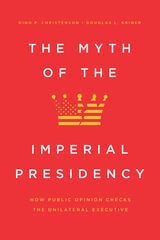
The Myth of the Imperial Presidency
How Public Opinion Checks the Unilateral ExecutiveDino P. Christenson and Douglas L. Kriner
University of Chicago Press, 2020
With robust empirical data and compelling case studies, the authors reveal the extent to which domestic public opinion limits executive might. Presidents are emboldened to pursue their own agendas when they enjoy strong public support, and constrained when they don’t, since unilateral action risks inciting political pushback, jeopardizing future initiatives, and further eroding their political capital. Although few Americans instinctively recoil against unilateralism, Congress and the courts can sway the public’s view via their criticism of unilateral policies. Thus, other branches can still check the executive branch through political means. As long as presidents are concerned with public opinion, Christenson and Kriner contend that fears of an imperial presidency are overblown.
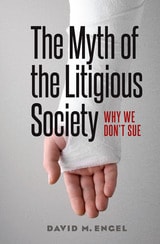
The Myth of the Litigious Society
Why We Don't SueDavid M. Engel
University of Chicago Press, 2016
With this book, David M. Engel demolishes the myth that America is a litigious society. The sobering reality is that the vast majority of injury victims—more than nine out of ten—rely on their own resources, family and friends, and government programs to cover their losses. When real people experience serious injuries, they don’t respond as rational actors. Trauma and pain disrupt their thoughts, and potential claims are discouraged by negative stereotypes that pervade American television and popular culture. (Think Saul Goodman in Breaking Bad, who keeps a box of neck braces in his office to help clients exaggerate their injuries.) Cultural norms make preventable injuries appear inevitable—or the victim’s fault. We’re taught to accept setbacks stoically and not blame someone else. But this tendency to “lump it” doesn’t just hurt the victims; it hurts us all. As politicians continue to push reforms that miss the real problem, we risk losing these claims as a way to quickly identify unsafe products and practices. Because injuries disproportionately fall on people with fewer resources, the existing framework creates a social underclass whose needs must be met by government programs all citizens shoulder while shielding those who cause the harm.
It’s time for America to have a more responsible, blame-free discussion about injuries and the law. With The Myth of the Litigious Society, Engel takes readers clearly and powerfully through what we really know about injury victims and concludes with recommendations for how we might improve the situation.
The Narrow Path of Freedom and Other Essays
Eugene Davidson
University of Missouri Press, 2002
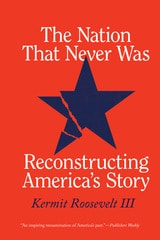
The Nation That Never Was
Reconstructing America's StoryKermit Roosevelt III
University of Chicago Press, 2022
There’s a common story we tell about America: that our fundamental values as a country were stated in the Declaration of Independence, fought for in the Revolution, and made law in the Constitution. But, with the country increasingly divided, this story isn’t working for us anymore—what’s more, it’s not even true. As Kermit Roosevelt argues in this eye-opening reinterpretation of the American story, our fundamental values, particularly equality, are not part of the vision of the Founders. Instead, they were stated in Lincoln’s Gettysburg Address and were the hope of Reconstruction, when it was possible to envision the emergence of the nation committed to liberty and equality.
We face a dilemma these days. We want to be honest about our history and the racism and oppression that Americans have both inflicted and endured. But we want to be proud of our country, too. In The Nation That Never Was, Roosevelt shows how we can do both those things by realizing we’re not the country we thought we were. Reconstruction, Roosevelt argues, was not a fulfillment of the ideals of the Founding but rather a repudiation: we modern Americans are not the heirs of the Founders but of the people who overthrew and destroyed that political order. This alternate understanding of American identity opens the door to a new understanding of ourselves and our story, and ultimately to a better America.
America today is not the Founders’ America, but it can be Lincoln’s America. Roosevelt offers a powerful and inspirational rethinking of our country’s history and uncovers a shared past that we can be proud to claim and use as a foundation to work toward a country that fully embodies equality for all.

The Nation and the States, Rivals or Partners
William Anderson
University of Minnesota Press, 1955
The Nation and the States, Rivals or Partners was first published in 1955. Minnesota Archive Editions uses digital technology to make long-unavailable books once again accessible, and are published unaltered from the original University of Minnesota Press editions.
Are the states losing their self-government? What did the framers of the Constitution intend with respect to states' rights? Are federal grants-in-aid to the states a boon or a bane? Is big government too big? Are overlapping taxes a necessary evil?
These are the kinds of questions -- basic, complex, and difficult yet essential to answer -- that Professor Anderson clarifies in this handbook, which is intended for general readers as well as for students of government. The language has been kept simple and clear, and the viewpoint does not presuppose any extensive knowledge of the subject on the part of the reader.
As a member of the President's Commission on Intergovernmental Relations, Professor Anderson has recognized a real need on the part of the public for a better understanding of the background issues involved in any discussion of the balance of authority, functions, and finances between the nation, the states, and the local governments of America. This book will help responsible citizens, government officials, and students of political science, history, and other social sciences to reach informed decisions on the merits of any proposals for readjustments in intergovernmental relations.
After providing the historical background for the subject and scrutinizing the current issues in fact as well as in propaganda, Professor Anderson presents a constructive program designed for the strengthening of all three levels of American government.
The Nation in History
Historiographical Debates about Ethnicity and NationalismAnthony D. Smith
Brandeis University Press, 2000
The National Collegiate Athletic Association
A Study in Cartel BehaviorArthur A. Fleisher III, Brian L. Goff, and Robert D. Tollison
University of Chicago Press, 1992
Probing the history and business practices of the most powerful sports organization of colleges and universities in the United States, the authors present a persuasive case that the NCAA is in fact a cartel, its members engaged in classically defined restrictive practices for the sole purpose of jointly maximizing their profits.
This fresh perspective on the NCAA's institutional structure helps to explain why illicit payments to athletes persist, why non-NCAA organizations have not flourished, and why members have readily agreed on certain suspect rules.
Offering a valuable case study for sports analysts and students of economics and cartel behavior, this book is a revealing glimpse inside the embattled NCAA program.

The National Stage
Theatre and Cultural Legitimation in England, France, and AmericaLoren Kruger
University of Chicago Press, 1992
The National Stage answers this question by tracing the relation between theatre institution and public sphere in the discourses of national identity in Britain, France, and the United States. Exploring the boundaries between history and theory, text and performance, this book speaks to theatre and social historians as well as those interested in the theoretical range of cultural studies.
The Nationalization of the Masses
Political Symbolism and Mass Movements in Germany from the Napoleonic Wars Through the Third ReichGeorge L. Mosse
University of Wisconsin Press, 2023

The Natural Goodness of Man
On the System of Rousseau's ThoughtArthur M. Melzer
University of Chicago Press, 1990
Arthur M. Melzer adopts this approach in The Natural Goodness of Man. The first two parts of the book restore the original, revolutionary significance of this now time-worn principle and examine the arguments Rousseau offers in proof of it. The final section unfolds and explains Rousseau’s programmatic thought, especially the Social Contract, as a precise solution to the human problem as redefined by the principle of natural goodness.
The result is a systematic reconstruction of Rousseau’s philosophy that discloses with unparalleled clarity both the complex weave of his argument and the majestic unity of his vision. Melzer persuasively resolves one after another of the famous Rousseauian paradoxes–enlarging, in the process, our understanding of modern philosophy and politics. Engagingly and lucidly written, The Natural Goodness of Man will be of interest to general as well as scholarly readers.
The Nature of Political Philosophy
And Other Studies and CommentariesJames V. Schall
Catholic University of America Press, 2022

The Nature of Politics
State Building and the Conservation Estate in Postcolonial BotswanaAnnette A. LaRocco
Ohio University Press, 2024

The Nature of Spectacle
On Images, Money, and Conserving CapitalismJim Igoe
University of Arizona Press, 2017
In The Nature of Spectacle, Jim Igoe embarks on multifaceted explorations of how we imagine nature and how nature shapes our imaginations. The book traces spectacular productions of imagined nature across time and space—from African nature tourism to transnational policy events to green consumer appeals in which the push of a virtual button appears to initiate a chain of events resulting in the protection of polar bears in the Arctic or jaguars in the Amazon rainforest. These explorations illuminate the often surprising intersections of consumerism, entertainment, and environmental policy. They show how these intersections figure in a strengthening and problematic policy consensus in which economic growth and ecosystem health are cast as mutually necessitating conditions. They also take seriously the potential of these intersections and how they may facilitate other alignments and imaginings that may become the basis of alternatives to our current socioecological predicaments.
The Nazi Olympics
Sport, Politics, and Appeasement in the 1930sEdited by Arnd Krüger and William Murray
University of Illinois Press, 2003
The 1936 Olympic Games played a key role in the development of both Hitler’s Third Reich and international sporting competition. The Nazi Olympics gathers essays by modern scholars from prominent participating countries and lays out the issues--sporting as well as political--surrounding the involvement of individual nations.
The volume opens with an analysis of Germany’s preparations for the Games and the attempts by the Nazi regime to allay the international concerns about Hitler’s racist ideals and expansionist ambitions. Essays follow on the United States, Great Britain, and France--top-tier Olympian nations with misgivings about participation--as well as Germany's future Axis partners Italy and Japan. Other contributions examine the issues involved for Finland, Sweden, Norway, Denmark, and the Netherlands. Throughout, the authors reveal the high political stakes surrounding the Games and how the Nazi Olympics distilled critical geopolitical issues of the time into a spectacle of sport.
The Necessity of Politics
Reclaiming American Public LifeChristopher Beem
University of Chicago Press, 1999
In response to this bleak assessment, advocates of "civil society" argue that rejuvenating our neighborhoods, churches, and community associations will lead to a more moral, civic-minded polity. Christopher Beem argues that while the movement's goals are laudable, simply restoring local institutions will not solve the problem; a civil society also needs politics and government to provide a sense of shared values and ideas. Tracing the concept back to Tocqueville and Hegel, Beem shows that both thinkers faced similar problems and both rejected civil society as the sole solution. He then shows how, in the case of the Civil Rights movement, both political groups and the federal government were necessary to effect a new consensus on race.
Taking up the arguments of Robert Putnam, Michael Sandel, and others, this timely book calls for a more developed sense of what the state is for and what our politics ought to be about.
"This book is bound to incite controversy and to contribute to our ongoing grappling with where our own democratic political culture is going. . . . Beem helps us to get things right by offering a corrective to any and all visions of civil society sanitized from politics."—Jean Bethke Elshtain, from the Foreword
"[Beem] makes an impressive case. At the end of the day, there really is no substitute for governmental authority in fostering the moral identity of the body politic."—Robert P. George, Times Literary Supplement
The Necropolitical Theater
Race and Immigration on the Contemporary Spanish StageJeffrey K. Coleman
Northwestern University Press, 2020
Coleman identifies an inherent racial hierarchy informed by the legacies of colonization and religious intolerance.
Drawing on theatrical texts, performances, legal documents, interviews, and critical reviews, this book challenges Spanish theater to develop a new theatrical space. Jeffrey K. Coleman proposes a “convivial theater” that portrays immigrants as contributors to the Spanish state and better represents the multicultural reality of the nation today.

The Neocolonialism of the Global Village
Ginger Nolan
University of Minnesota Press, 2018
Uncovering a vast maze of realities in the media theories of Marshall McLuhan
The term “global village”—coined in the 1960s by Marshall McLuhan—has persisted into the twenty-first century as a key trope of techno-humanitarian discourse, casting economic and technical transformations in a utopian light. Against that tendency, this book excavates the violent history, originating with techniques of colonial rule in Africa, that gave rise to the concept of the global village. To some extent, we are all global villagers, but given the imbalances of semiotic power, some belong more thoroughly than others. Reassessing McLuhan’s media theories in light of their entanglement with colonial and neocolonial techniques, Nolan implicates various arch-paradigms of power (including “terra-power”) in the larger prerogative of managing human populations.
Forerunners: Ideas First is a thought-in-process series of breakthrough digital publications. Written between fresh ideas and finished books, Forerunners draws on scholarly work initiated in notable blogs, social media, conference plenaries, journal articles, and the synergy of academic exchange. This is gray literature publishing: where intense thinking, change, and speculation take place in scholarship.
The Neoliberal Age?
Britain Since the 1970sEdited by Aled Davies, Ben Jackson, and Florence Sutcliffe-Braithwaite
University College London, 2021
The rise of British neoliberalism—a renewed emphasis on privatization and market-oriented economics—over the last fifty years is often characterized as the product of right-wing political economists, think tanks, and politicians. The Neoliberal Age? argues that this pat narrative ignores broader forces in British left-wing culture that collaborated to transform twentieth-century social life. Through a variety of case studies, the authors demonstrate that our austere, individualistic age emerged from more complex sociopolitical negotiations than typically described.
The Neoliberal Deluge
Hurricane Katrina, Late Capitalism, and the Remaking of New OrleansCedric Johnson
University of Minnesota Press, 2011
Katrina was not just a hurricane. The death, destruction, and misery wreaked on New Orleans cannot be blamed on nature’s fury alone. This volume of essays locates the root causes of the 2005 disaster squarely in neoliberal restructuring and examines how pro-market reforms are reshaping life, politics, economy, and the built environment in New Orleans.
The authors—a diverse group writing from the disciplines of sociology, political science, education, public policy, and media theory—argue that human agency and public policy choices were more at fault for the devastation and mass suffering experienced along the Gulf Coast than were sheer forces of nature. The harrowing images of flattened homes, citizens stranded on rooftops, patients dying in makeshift hospitals, and dead bodies floating in floodwaters exposed the moral and political contradictions of neoliberalism—the ideological rejection of the planner state and the active promotion of a new order of market rule.
Many of these essays offer critical insights on the saga of postdisaster reconstruction. Challenging triumphal narratives of civic resiliency and universal recovery, the authors bring to the fore pitched battles over labor rights, gender and racial justice, gentrification, the development of city master plans, the demolition of public housing, policing, the privatization of public schools, and roiling tensions between tourism-based economic growth and neighborhood interests. The contributors also expand and deepen more conventional critiques of “disaster capitalism” to consider how the corporate mobilization of philanthropy and public good will are remaking New Orleans in profound and pernicious ways.
Contributors: Barbara L. Allen, Virginia Polytechnic U; John Arena, CUNY College of Staten Island; Adrienne Dixson, Ohio State U; Eric Ishiwata, Colorado State U; Avis Jones-Deweever, National Council of Negro Women; Chad Lavin, Virginia Polytechnic U; Paul Passavant, Hobart and William Smith Colleges; Linda Robertson, Hobart and William Smith Colleges; Chris Russill, Carleton U; Kanchana Ruwanpura, U of Southampton; Nicole Trujillo-Pagán, Wayne State U; Geoffrey Whitehall, Acadia U.
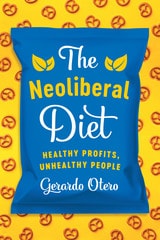
The Neoliberal Diet
Healthy Profits, Unhealthy PeopleBy Gerardo Otero
University of Texas Press, 2018
Why are people getting fatter in the United States and beyond? Mainstream explanations argue that people simply eat too much “energy-dense” food while exercising too little. By swapping the chips and sodas for fruits and vegetables and exercising more, the problem would be solved. By contrast, The Neoliberal Diet argues that increased obesity does not result merely from individual food and lifestyle choices. Since the 1980s, the neoliberal turn in policy and practice has promoted trade liberalization and retrenchment of the welfare regime, along with continued agricultural subsidies in rich countries. Neoliberal regulation has enabled agribusiness multinationals to thrive by selling highly processed foods loaded with refined flour and sugars—a diet that originated in the United States—as well as meat. Drawing on extensive empirical data, Gerardo Otero identifies the socioeconomic and political forces that created this diet, which has been exported around the globe, often at the expense of people’s health.
Otero shows how state-level actions, particularly subsidies for big farms and agribusiness, have ensured the dominance of processed foods and made healthful fresh foods inaccessible to many. Comparing agrifood performance across several nations, including the NAFTA region, and correlating food access to class inequality, he convincingly demonstrates the structural character of food production and the effect of inequality on individual food choices. Resolving the global obesity crisis, Otero concludes, lies not in blaming individuals but in creating state-level programs to reduce inequality and make healthier food accessible to all.
The Neopopular Bubble
Speculating on "the People" in Late Modern DemocracyPéter Csigó
Central European University Press, 2017

The New American City Faces its Regional Future
A Cleveland PerspectiveDavid C. Sweet
Ohio University Press, 1999
The fate of Cleveland, Ohio, rides on a web of interdependencies on a regional scale. People and communities throughout that area of Ohio are being forced to adjust to new civic roles. The city of Cleveland must understand how it fits into Greater Cleveland. And suburbs must understand their dependence on the historic central city and be drawn into the Cleveland community.
In this sweeping study by local and national experts, these and more specific issues are raised and examined in depth. The New American City Faces Its Regional Future captures the dynamic thinking concerned with Cleveland and its surrounding region. The authors address questions of importance not only to Cleveland and its region but also to communities across the country that are facing similar issues. How does the city want to grow in the future? How can it become a more livable community? As the population of the region moves farther and farther out from the established urban areas, consuming more and more land, and as it enters its third century, these questions will need to be addressed. This book takes some first, important steps toward providing the answers.
The New Babel
Toward a Poetics of the Mid-East CrisesLeonard Schwartz
University of Arkansas Press, 2016
The New Babel: Toward a Poetics of the Mid-East Crises evokes and investigates—from a Jewish American perspective and in the forms of poetry, essays, and interviews—the Israeli-Palestinian conflict, America’s involvement as both perpetrator and victim of events in the Middle East and Afghanistan, and the multiple ways that poetics can respond to political imperatives.
The poems range from the immediately lyrical to the experimental forms of the “Apple Anyone Sonnets” series, which relies heavily on the Arabic but has Shakespeare as its scaffolding.
In the essays, Schwartz calls on the power of poetry—and of some of the great poets in the Arabic, Jewish, and American traditions—to help rethink the battle lines of the contemporary Mid-East, with the Jewish philosopher Martin Buber looming large.
The interviews provide Schwartz’s discussions with Israeli poet and activist Aharon Shabtai, political philosopher Michael Hardt, and the late, great American poet Amiri Baraka.
In these creative, analytical, and conversational moments, Leonard Schwartz rethinks the battle lines of the contemporary Middle East and calls on the power of language as the essence of our humanity, endlessly fluid, but also the source of an intentional confusion there is a necessity to counter.
The New Black Middle Class in the Twenty-First Century
Landry, Bart
Rutgers University Press, 2018
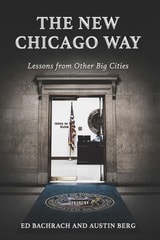
The New Chicago Way
Lessons from Other Big CitiesEd Bachrach and Austin Berg
Southern Illinois University Press, 2019
Rather than simply lament the situation, criticize specific leaders, or justify an ideology, Bachrach and Berg compare the decisions about Chicago’s governance and finances with choices made in fourteen other large U.S. cities. The problems that seem unique to Chicago have been encountered elsewhere, and Chicagoans, the authors posit, can learn from the successful solutions other cities have embraced.
Chicago government and its citizens must let go of the past to prepare for the future, argue Bachrach and Berg. A future filled with demographic, technological, and economic change requires a government capable of responding and adapting. Reforms can transform the city. The prescriptions for change provided in this book point toward a hopeful future: the New Chicago Way.
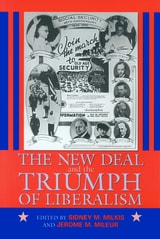
The New Deal and the Triumph of Liberalism
Sidney M. Milkis
University of Massachusetts Press, 2002
For scholars who have studied it, as for many Americans who experienced it firsthand, Franklin Roosevelt's New Deal has long represented a turning point in the modern history of the United States. More than simply a bold program of political change, it marked a critical departure in the governing principles, institutional arrangements, and policies that shape American life.
In this collection of original essays, a distinguished group of political scientists and historians reevaluate the legacy of the New Deal, showing how Roosevelt and his allies forged an enduring public philosophy—modern liberalism—that redefined the relationship of government and governed. Adapting broad principles from the past to the unprecedented circumstances of a worldwide depression, the New Dealers shifted American politics away from its traditional emphasis on self-reliance, private property, and decentralized power. In its place they advocated a new “economic constitutional order”—in effect, a new social contract—in which the government guaranteed protection to individuals against the uncertainties of the marketplace.
Although the contributors differ in their assessment of the successes and failures of New Deal liberalism, all agree that its implications for American political life were profound and far-reaching—in the realm of foreign as well as domestic affairs, for the theory as well as the practice of government. Taken together, the essays offer a fresh look at the many ways the New Deal, in Harry Hopkins's phrase, “made America over.”
In addition to the editors, contributors are William E. Leuchtenburg, Marc Landy, Nelson Lichtenstein, Donald R. Brand, Jyette Klausen, Suzanne Mettler, Ronald Story, Seyom Brown, and Morton Keller.
The New Electoral Politics of Race
Matthew Justin Streb
University of Alabama Press, 2002
Historically, race has always been at the heart of American politics, and southern politics more specifically. Southern elections revolved almost entirely around racial issues during the 1950s and 1960s as debates raged over integration of schools, voting rights, and busing patterns. The election of George Wallace as governor of Alabama in 1962 underscored the electoral power of ruthless racial rhetoric, not only in Alabama, but throughout the South and the entire country. Almost 40 years later, segregation is no longer legal, tensions between blacks and whites have lessened, and the influx of large numbers of African Americans into the electorate has forced politicians to court black voters.
Matthew Streb finds, however, that although extreme racial rhetoric has disappeared from the modern campaign trail, voters are still polarized along racial lines. By comparing gubernatorial campaigns in four southern and three northern states-Alabama, Georgia, Arkansas, Virginia, Ohio, Iowa, and Massachusetts-the author examines how candidates use, or fail to use, race in their campaign strategies. He demonstrates that race indeed remains a significant factor in American elections, couched in alternative issues, such as affirmative action, profiling, and social welfare.
Streb's analysis of the appeal by politicians for the elite vote and the public vote reveals that class has replaced race as a definitive issue in American politics. This book will, therefore, be important not only to academic libraries and students and scholars of political science, southern history, and civil rights, but also to pollsters, campaign strategists, and state political party officials.
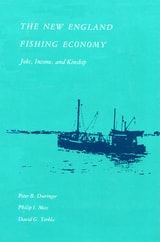
The New England Fishing Economy
Jobs, Income, and KinshipPeter B. Doeringer
University of Massachusetts Press, 1987
The authors also present new data on the skills, job attachment, and economic options of workers in key New England ports, particularly Gloucester and New Bedford. The fishing industry is concentrated in economically fragile ports, and the authors show the importance of a strong fishing industry and a growth economy for easing adjustment problems. The study develops a set of innovative recommendations for fisheries management and addresses policies for promoting stabilization and growth in port economies.
The New Freedom and the Radicals
Woodrow Wilson, Progressive Views of Radicalism, and the Origins of Repressive ToleranceJacob Kramer
Temple University Press, 2017
In The New Freedom and the Radicals, Jacob Kramer deftly examines how progressivism emerged at a time of critical transformation in American life. Using original archival sources, Kramer presents a study of Wilsonian-era politics to convey an understanding of the progressives’ views on radical America.
The New Freedom and the Radicals shows how the reactions of progressives to radicals accelerated the pace of reform in the United States, but how the movement was at times predisposed to repressing the radical elements to its left. In addition, Kramer asks to what extent progressives were responding to and influenced by those who opposed the state, capitalism, and the class structure altogether, as well as how progressives’ views of them changed in relation to events.
The New Imperial Presidency
Renewing Presidential Power after WatergateAndrew Rudalevige
University of Michigan Press, 2006
"Well written and, while indispensable for college courses, should appeal beyond academic audiences to anyone interested in how well we govern ourselves. . . . I cannot help regarding it as a grand sequel for my own The Imperial Presidency."
---Arthur Schlesinger, Jr.
Has the imperial presidency returned? This question has been on the minds of many contemporary political observers, as recent American administrations have aimed to consolidate power.
In The New Imperial Presidency, Andrew Rudalevige suggests that the congressional framework meant to advise and constrain presidential conduct since Watergate has slowly eroded. Rudalevige describes the evolution of executive power in our separated system of governance. He discusses the abuse of power that prompted what he calls the "resurgence regime" against the imperial presidency and inquires as to how and why---over the three decades that followed Watergate---presidents have regained their standing.
Chief executives have always sought to interpret constitutional powers broadly. The ambitious president can choose from an array of strategies for pushing against congressional authority; finding scant resistance, he will attempt to expand executive control. Rudalevige's important and timely work reminds us that the freedoms secured by our system of checks and balances do not proceed automatically but depend on the exertions of public servants and the citizens they serve. His story confirms the importance of the "living Constitution," a tradition of historical experiences overlaying the text of the Constitution itself.
The New Left and Labor in 1960s
Peter B. Levy
University of Illinois Press, 1994
It is a powerful story: the relationship between the 1960s New Left and organized labor was summed up by hardhats confronting students and others over US involvement in Vietnam. But the real story goes beyond the "Love It or Leave It" signs and melees involving blue-collar types attacking protesters.
Peter B. Levy challenges these images by exploring the complex relationship between the two groups. Early in the 1960s, the New Left and labor had cooperated to fight for civil rights and anti-poverty programs. But diverging opinions on the Vietnam War created a schism that divided these one-time allies. Levy shows how the war, combined with the emergence of the black power movement and the blossoming of the counterculture, drove a permanent wedge between the two sides and produced the polarization that remains to this day.
The New Metropolis
Power, Place, and Inequality in Twenty-First-Century AmericaMargaret Weir
University of Chicago Press, 2027
A path-breaking investigation of changing patterns of inequality and contestation in America’s metropolises.
Since 1990, a new political geography of winners and losers has emerged in metros across America. This new metropolis looks nothing like the old. In many exurbs, suburban mansions abut declining towns and distressed communities. In historic central cities, African American communities reel from institutional stripping, even as gentrification and immigration revitalize once forgotten neighborhoods. The New Metropolis considers why, despite all the changes over the past four decades, we have recreated a metropolis that makes it harder for low-income Americans—especially low-income Americans of color—to thrive and why some efforts to promote equitable opportunity succeed against the odds.
With a focus on Chicago, Atlanta, and Houston, The New Metropolis shows how multi-level political actors and translocal networks build power across political boundaries to determine the pool of local public resources and the scope of local powers. Weir demonstrates how the timing of urbanization set up distinct conflicts over the public sector in Frostbelt versus Sunbelt metropolises, explaining how partisan divisions now supercharge these conflicts.
The New Metropolis shows why the battle over the metropolis sits at the center of American politics. It determines the shape of the public arenas where we make decisions and, ultimately, the kinds of connections Americans have with one another.
The New Pluralism
William Connolly and the Contemporary Global ConditionDavid Campbell and Morton Schoolman, eds.
Duke University Press, 2008
The contributors show how Connolly has continually revised his ideas about pluralism to take into account radical changes in global politics, incorporate new theories of cognition, and reflect on the centrality of religion in political conflict. They engage his arguments for an agonistic democracy in which all fundamentalisms become the objects of politicization, so that differences are not just tolerated but are productive of debate and the creative source of a politics of becoming. They also explore the implications of his work, often challenging his views to widen the reach of even his most recently developed theories. Connolly’s new pluralism will provoke all citizens who refuse to subordinate their thinking to the regimes in which they reside, to religious authorities tied to the state, or to corporate interests tied to either. The New Pluralism concludes with an interview with Connolly in which he reflects on the evolution of his ideas and expands on his current work.
Contributors: Roland Bleiker, Wendy Brown, David Campbell, William Connolly, James Der Derian, Thomas L. Dumm, Kathy E. Ferguson, Bonnie Honig, George Kateb, Morton Schoolman
Michael J. Shapiro, Stephen K. White
The New Politics of Beijing–Hong Kong Relations
Ideological Conflicts and FactionalismSonny Shiu-Hing Lo
Hong Kong University Press, 2024
The New Politics of Beijing–Hong Kong Relations particularly examines the paternalistic authoritarianism that can be seen in Beijing's policy toward Hong Kong since the promulgation of the national security law in late June 2020. Lo analyzes the ideological shift from liberal nationalism to conservative nationalism on the mainland Chinese side since late 2012. The increasingly radical localism on the Hong Kong side after 2014 altered Beijing-Hong Kong relations and introduced factional struggles. While the imposition of the national security law in Hong Kong in late June 2020 has stabilized the city politically, Beijing's policy toward Hong Kong is now guided by the principles of protecting its national security and maintaining economic pragmatism, with implications for Beijing's relations with Taipei in the coming years.
The New Politics of Indian Gaming
The Rise of Reservation Interest GroupsKenneth N. Hansen
University of Nevada Press, 2015
The New Politics of Pornography
Donald Alexander Downs
University of Chicago Press, 1989
The New Politics of Protest
Indigenous Mobilization in Latin America's Neoliberal EraRoberta Rice
University of Arizona Press, 2012
In June 1990, Ecuador saw the first major indigenous rebellion within its borders since the colonial era. For weeks, indigenous protesters participated in marches, staged demonstrations, seized government offices, and blockaded roads. Since this insurrection, indigenous movements have become increasingly important in the fight against Latin American Neoliberalism.
Roberta Rice's New Politics of Protest seeks to analyze when, where, and why indigenous protests against free-market reforms have occurred in Latin America. Comparing cases in Ecuador, Peru, Bolivia, and Chile, this book details the emergence of indigenous movements under and against Neoliberal governments. Rice uses original field research and interviews with indigenous leaders to examine long-term patterns of indigenous political activism and overturn accepted theories on the role of the Indian in democracy.
A useful and engaging study, The New Politics of Protest seeks to determine when indigenous movements become viable political parties. It covers the most recent rounds of protest to demonstrate how a weak and unresponsive government is more likely to experience revolts against unpopular reforms. This influential work will be of interest to scholars of Latin American politics and indigenous studies as well as anyone studying oppressed peoples who have organized nationwide strikes and protests, blocked economic reforms, toppled corrupt leaders, and even captured presidencies.
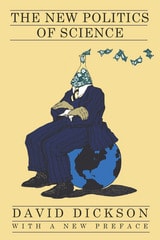
The New Politics of Science
David Dickson
University of Chicago Press, 1988
In The New Politics of Science, David Dickson points out that "the scientific community has its own internal power structures, its elites, its hierarchies, its ideologies, its sanctioned norms of social behavior, and its dissenting groups. And the more that science, as a social practice, forms an integral part of the economic structures of the society in which it is imbedded, the more the boundaries and differences between the two dissolve. Groups inside the scientific community, for example, will use groups outside the community—and vice versa—to achieve their own political ends." In this edition, Dickson has included a new preface commenting on the continuing and increasing influence of industrial and defense interests on American scientific research in the 1980s.
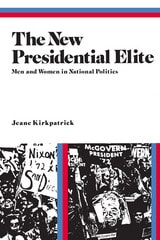
The New Presidential Elite
Men and Women in National PoliticsJeane J. Kirkpatrick
Russell Sage Foundation, 1976
The New Science of Politics
An IntroductionEric Voegelin
University of Chicago Press, 1987
What Eric Voegelin attempts in The New Science of Politics is nothing less ambitious than a complete theory of humanity, society, and history. To build his theory, Voegelin draws on a breathtaking range of subjects from throughout history, including the Mongol Orders of Submission, the Behistun Inscription, and a controversy over an alter to the goddess Victoria in the Roman Forum. Addressing the access to truth afforded by myth, revelation, and philosophy, Voegelin then carefully contrasts each with gnosticism. The resulting book is a heady exploration of the development of European politics through the Western tradition and the ongoing importance of the inner quest for transcendent reality. =
The New Science of Politics
An IntroductionEric Voegelin
University of Chicago Press, 1987
"Thirty-five years ago few could have predicted that The New Science of Politics would be a best-seller by political theory standards. Compressed within the Draconian economy of the six Walgreen lectures is a complete theory of man, society, and history, presented at the most profound and intellectual level. . . . Voegelin's [work] stands out in bold relief from much of what has passed under the name of political science in recent decades. . . . The New Science is aptly titled, for Voegelin makes clear at the outset that a 'return to the specific content' of premodern political theory is out of the question. . . . The subtitle of the book, An Introduction, clearly indicates that The New Science of Politics is an invitation to join the search for the recovery of our full humanity."—From the new Foreword by Dante Germino
"This book must be considered one of the most enlightening essays on the character of European politics that has appeared in half a century. . . . This is a book powerful and vivid enough to make agreement or disagreement with even its main thesis relatively unimportant."—Times Literary Supplement
"Voegelin . . . is one of the most distinguished interpreters to Americans of the non-liberal streams of European thought. . . . He brings a remarkable breadth of knowledge, and a historical imagination that ranges frequently into brilliant insights and generalizations."—Francis G. Wilson, American Political Science Review
"This book is beautifully constructed . . . his erudition constantly brings a startling illumination."—Martin Wright, International Affairs
"A ledestar to thinking men who seek a restoration of political science on the classic and Christian basis . . . a significant accomplishment in the retheorization of our age."—Anthony Harrigan, Christian Century
The New Urban Renewal
The Economic Transformation of Harlem and BronzevilleDerek S. Hyra
University of Chicago Press, 2008
As public housing is torn down and money floods back into cities across the United States, countless neighborhoods are being monumentally altered. The New Urban Renewal is a compelling study of the shifting dynamics of class and race at work in the contemporary urban landscape.
The New Welfare Bureaucrats
Entanglements of Race, Class, and Policy ReformCeleste Watkins-Hayes
University of Chicago Press, 2009
As the recession worsens, more and more Americans must turn to welfare to make ends meet. Once inside the agency, the newly jobless will face a bureaucracy that has undergone massive change since the advent of welfare reform in 1996. A behind-the-scenes look at bureaucracy’s human face, The New Welfare Bureaucrats is a compelling study of welfare officers and how they navigate the increasingly tangled political and emotional terrain of their jobs.
Celeste Watkins-Hayes here reveals how welfare reform engendered a shift in focus for caseworkers from simply providing monetary aid to the much more complex process of helping recipients find work. Now both more intimately involved in their clients’ lives and wielding greater power over their well-being, welfare officers’ racial, class, and professional identities have become increasingly important factors in their work. Based on the author’s extensive fieldwork in two very different communities in the northeast, The New Welfare Bureaucrats is a boon to anyone looking to understand the impact of the institutional and policy changes wrought by welfare reform as well as the subtle social dynamics that shape the way welfare is meted out at the individual level.
The New Winter Soldiers
GI and Veteran Dissent During the Vietnam EraMoser, Richard
Rutgers University Press, 1996
Richard Moser uses interviews and personal stories of Vietnam veterans to offer a fundamentally new interpretation of the Vietnam War and the antiwar movement. Although the Vietnam War was the most important conflict of recent American history, its decisive battle was not fought in the jungles of Vietnam, or even in the streets of the United States, but rather in the hearts and minds of American soldiers. To a degree unprecedented in American history, soldiers and veterans acted to oppose the very war they waged. Tens of thousands of soldiers and veterans engaged in desperate conflicts with their superiors and opposed the war through peaceful protest, creating a mass movement of dissident organizations and underground newspapers.
Moser shows how the antiwar soldiers lived out the long tradition of the citizen soldier first created in the American Revolution and Civil War. Unlike those great upheavals of the past, the Vietnam War offered no way to fulfill the citizen-soldier's struggle for freedom and justice. Rather than abandoning such ideals, however, tens of thousands abandoned the war effort and instead fulfilled their heroic expectations in the movements for peace and justice. According to Moser, this transformation of warriors into peacemakers is the most important recent development of our military culture.
The struggle for peace took these new winter soldiers into America rather than away from it. Collectively these men and women discovered the continuing potential of American culture to advance the values of freedom, equality, and justice on which the nation was founded.
The New Woman in Alabama
Social Reforms and Suffrage, 1890–1920Mary Martha Thomas
University of Alabama Press, 1992
How Alabama women reshaped public life during the Progressive Era.
Between 1890 and 1920, middle-class white and black Alabama women created many clubs and organizations that took them out of the home and provided them with roles in the public sphere. Beginning with the Alabama Woman’s Christian Temperance Union in the 1880s and followed by the Alabama Federation of Women’s Clubs and the Alabama Federation of Colored Women’s Clubs in the 1890s, women spearheaded the drive to eliminate child labor, worked to improve the educational system, upgraded the jails and prisons, and created reform schools for both boys and girls.
Suffrage was also an item on the Progressive agenda. After a brief surge of activity during the 1890s, the suffrage drive lay dormant until 1912, when women created the Alabama Equal Suffrage Association. During their campaigns in the 1915 and 1919 to persuade the legislature to enfranchise women, the leaders learned the art of politics—how to educate, organize, lobby, and count votes. Women seeking validation for their roles as homemakers and mother demanded a hearing in the political arena for issues that affected them and their families. In the process they began to erase the line between the public world of men and the private world of women. These were the New Women who tackled the problems created by the industrialization and urbanization of the New South. By 1920 Alabama women had created new public spaces for themselves in these voluntary associations. As a consequence of their involvement in reform crusades, the women’s club movement, and the campaign for woman suffrage, women were no longer passive and dependent. They were willing and able to be rightful participants.
Thomas’s book is the first of its kind to focus on the reform activities of women during the Progressive Era, and the first to consider the southern woman and all the organizations of middle-class black and white women in the South and particularly in Alabama. It is also the first to explore the drive of Alabama women to obtain the vote. The development of political power among southern women progressed slowly. Demolishing as it did the myth of the “Southern Lady.” Traditionally confined to the domestic sphere, southern women had no experience in public decision making and were discouraged from attaining the skills necessary for participation in public debate. The division of women by race and class further impeded their political education. But through their participation in so-called women’s issues—child labor laws, temperance, and educational reform—women gained experience in influencing political leaders. Black and white women’s clubs provided the framework for state-wide lobbying.
Only in the wake of their success with domestic issues tackled through club organizations and temperance unions did women dare seek the right to vote. They learned how to wield political power through acceptable “ladylike” avenues, and it was this experience that led to their long but eventually successful drive for woman suffrage. The New Woman eventually found a way to replace the Southern Lady.
The Newark Frontier
Community Action in the Great SocietyMark Krasovic
University of Chicago Press, 2016
The Newark Frontier shows how, during the Great Society, urban liberalism adapted and grew, defining itself less by centralized programs and ideals than by administrative innovation and the small-scale, personal interactions generated by community action programs, investigative commissions, and police-community relations projects. Paying particular attention to the fine-grained experiences of Newark residents, Krasovic reveals that this liberalism was rooted in an ethic of experimentation and local knowledge. He illustrates this with stories of innovation within government offices, the dynamic encounters between local activists and state agencies, and the unlikely alliances among nominal enemies. Krasovic makes clear that postwar liberalism’s eventual fate had as much to do with the experiments waged in Newark as it did with the violence that rocked the city in the summer of 1967.