Results by title
914 books match the query 'Medieval' and 244 start with t
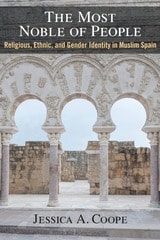
The Most Noble of People
Religious, Ethnic, and Gender Identity in Muslim SpainJessica A. Coope
University of Michigan Press, 2017
The opening chapters define Arab and Muslim identity as those categories were understood in Muslim Spain, highlighting the unique aspects of this society as well as its similarities with other parts of the medieval Islamic world. The book goes on to discuss what it meant to be a Jew or Christian in Spain under Islamic rule, and the degree to which non-Muslims were full participants in society. Following this is a consideration of gender identity as defined by Islamic law and by less normative sources like literature and mystical texts. It concludes by focusing on internal rebellions against the government of Muslim Spain, particularly the conflicts between Muslims who were ethnically Arab and those who were Berber or native Iberian, pointing to the limits of Muslim solidarity.
Drawn from an unusually broad array of sources—including legal texts, religious polemic, chronicles, mystical texts, prose literature, and poetry, in both Arabic and Latin—many of Coope’s illustrations of life in al-Andalus also reflect something of the larger medieval world. Further, some key questions about gender, ethnicity, and religious identity that concerned people in Muslim Spain—for example, women’s status under Islamic law, or what it means to be a Muslim in different contexts and societies around the world—remain relevant today.
The Mystic Fable, Volume One
The Sixteenth and Seventeenth CenturiesMichel de Certeau
University of Chicago Press, 1992
The Myth of Pope Joan
Alain Boureau
University of Chicago Press, 2001
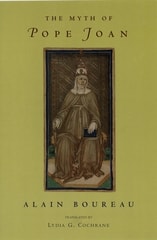
Or so the legend goes—a legend that was fabricated sometime in the thirteenth century, according to Alain Boureau, and which has persisted in one form or another down to the present day. In this fascinating saga of belief and rhetoric, politics and religion, Boureau investigates the historical and ecclesiastical circumstances under which the myth of Pope Joan was constructed and the different uses to which it was put over the centuries. He shows, for instance, how Catholic clerics justified the exclusion of women from the papacy and the priesthood by employing the myth in misogynist moral tales, only to find the popess they had created turned against them in anti-Catholic propaganda during the Reformation.
The Nature of Natural Philosophy in the Late Middle Ages (Studies in Philosophy and the History of Philosophy, Volume 52)
Edward Grant
Catholic University of America Press, 2010
The Neapolitan Recipe Collection
Cuoco NapoletanoTerence Scully
University of Michigan Press, 2015
The Normans in South Wales, 1070–1171
By Lynn H. Nelson
University of Texas Press, 1966
A frontier has been called "an area inviting entrance." For the Norman invaders of England the Welsh peninsula was such an area. Fertile forested lowlands invited agricultural occupation; a fierce but primitive and disunited native population was scarcely a formidable deterrent.
In The Normans in South Wales, Lynn H. Nelson provides a comprehensive history of the century during which the Normans accomplished this occupation. Skillfully he combines facts and statistics gleaned from a variety of original sources—The Anglo-Saxon Chronicle, the Domesday Book, Church records, charters of the kings and of the marcher lords, and more imaginative literary sources such as the chanson de geste and the frontier epic—to give a vivid picture of a century of strife. He describes the fluctuating conflict between Norman invaders in the lowlands and Welsh tribesmen in the highlands; the hard struggle of medieval frontiersmen to take from the new land a profit commensurate with their labors; the development of a Cambro-Norman society distinct and quite different from the Anglo-Norman culture which engendered it; and the attempt of the frontiersman to prevent the Anglo-Norman authorities from taking control of the lands he had won.
The turbulent Welsh tribes provided an ever present harassment along the frontier, and Nelson begins his presentation with an account of the failure of the Saxons to control them. He examines the methods adopted by William the Conqueror to cope with the problem—the creation of the great marcher lordships and the subsequent problems in controlling these lordships—and the weakness of some Anglo-Norman kings and the strength of others.
By 1171 the conquest of the Welsh frontier was complete; but as Nelson points out, this conquest was strangely limited. The frontier, which extended throughout the lowlands of Wales, stopped at the 600-foot contour line in the mountains. In his final chapter Nelson speculates upon the curious fact that large areas of seemingly inviting moorlands lying above this line remained closed to the Cambro-Norman, and his speculations lead him to some interesting inferences about the nature of the frontier's influence upon the civilization which moves in to occupy it.
The Odyssey of Ibn Battuta
Uncommon Tales of a Medieval AdventurerDavid Waines
University of Chicago Press, 2010
Ibn Battuta was, without doubt, one of the world’s truly great travelers. Born in fourteenth-century Morocco, and a contemporary of Marco Polo, Ibn Battuta left an account in his own words of his remarkable journeys, punctuated by adventure and peril, throughout the Islamic world and beyond. Whether sojourning in Delhi and the Maldives, wandering through the mazy streets of Cairo and Damascus, or contesting with pirates and shipwreck, the indefatigable Ibn Battuta brought to vivid life a medieval world brimming with marvel and mystery. Carefully observing the great diversity of civilizations that he encountered, Ibn Battuta exhibited an omnivorous interest in such matters as food and drink; religious differences among Christians, Hindus, and Shia Muslims; and ideas about purity and impurity, disease, women, and sex.
David Waines offers here a graceful analysis of Ibn Battuta’s travelogue. This is a gripping treatment of the life and times of one of history’s most daring, and at the same time most human, adventurers.
The Oedipus Casebook
Reading Sophocles' Oedipus the KingMark R. Anspach
Michigan State University Press, 2019
The Old English Poem Seasons for Fasting
A Critical EditionMary P. Richards
West Virginia University Press, 2014
Seasons for Fasting, a late Old English poem probably composed in the early eleventh century, focuses on proper fasting observances in England. This poem, composed in eight-line stanzas, survives only in a sixteenth-century transcript made by the antiquary Laurence Nowell. With its topics, vocabulary, sources, and style derived from those of contemporary ecclesiastical prose, it belongs to a school of late tenth/early eleventh century poetry that only now is coming to be recognized and defined.
The Old English Poem Seasons for Fasting: A Critical Edition provides a new text and translation of the poem, accompanied by an extensive introduction, commentary, and glossary. The introduction includes analyses of the poem’s manuscript origins, sources, language, meter, style, and structure. The text is collated with all previous editions. The commentary elucidates points of grammar and style, and justifies all editorial decisions. The glossary covers every instance of each word in the poem.
Since its discovery among the papers of Laurence Nowell in 1934, the poem has had only four editions, two of the text with basic notes, and two in doctoral theses with more commentary and analysis. This new edition brings the latest resources on manuscript study, lexicon (through the Concordance and Dictionary of Old English A-G), poetics, and cultural milieu to bear on this fascinating poem. The apparatus, including the glossary, will allow fellow scholars to extend these findings through links to their own work.
The Oldest Legend
Acts of the Canonization Process, and Miracles of Saint Margaret of HungaryBence Péterfi
Central European University Press, 2018

The Ordering of Time
From the Ancient Computus to the Modern ComputerArno Borst
University of Chicago Press, 1993
Arno Borst examines the various ways that time has been calculated by numbers and measured by instruments over several centuries, from the computus—an ancient method of determining times and dates—to the present-day computer. In a wide-ranging discussion, he analyzes the classical Greek concepts of divine, natural, and human time; the universal time of ancient Rome; the Easter cycle of the Middle Ages; the development of the mechanical clock in the fourteenth and fifteenth centuries; early modern chronology; and twentieth-century data processing.
Borst argues that although many centuries and countless different instruments—sundials, horologia, abaci, astrolabes, calendars, and calculating machines—separate the medieval computus from the modern computer, each generation has had to answer the same question: how can we make the best use of our available time to improve our lives? The computer, he suggests, is merely a new instrument employed for an ancient purpose.
Lively and accessible, The Ordering of Time will be welcomed by students and researchers in social and cultural history, the history of science and mathematics, as well as anyone interested in the history of time and numbers.
The Origins of Mexican Catholicism
Nahua Rituals and Christian Sacraments in Sixteenth-Century MexicoOsvaldo F. Pardo
University of Michigan Press, 2004
---Fernando Cervantes, Bristol University, UK
"Pardo does an excellent job of balancing and contrasting sixteenth-century Catholic theology with Nahua thought and belief."
---John F. Schwaller, University of Minnesota
At first glance, religious conversion may appear to be only a one-way street. When studying sixteenth-century Mexico, one might assume that colonial coercion was the driving force behind the religious conversion of the native population. But The Origins of Mexican Catholicism shows how Spanish missionaries instead drew on existing native ceremonies in order to make Christianity more accessible to the Nahua population whom they were trying to convert.
Osvaldo F. Pardo explains that religious figures not only shaped native thought, but that indigenous rituals had an impact on the religion itself. This work illustrates the complex negotiations that took place in the process of making the Christian sacraments available to the native peoples, and at the same time, forced the missionaries to reexamine the meaning of their sacraments through the eyes of an alien culture.
For Spanish missionaries, ritual not only became a focus of evangelical concern but also opened a window to the social world of the Nahuas. Missionaries were able to delve into the Nahua's notions of self, emotions, and social and cosmic order. By better understanding the sociological aspects of Nahua culture, Christians learned ways to adequately convey their religion through mutual understanding instead of merely colonial oppression.
Given its interdisciplinary approach, this book will be of interest to specialists in Latin American intellectual and literary history, the history of religion, and anthropology, and to anyone interested in cross-cultural processes.
The Orphans of Byzantium
Child Welfare in the Christian EmpireTimothy S. Miller
Catholic University of America Press, 2003
The Philosophical Vision of John Duns Scotus
An IntroductionMary Beth Ingham
Catholic University of America Press, 2004
The Pipes of Pan
Intertextuality and Literary Filiation in the Pastoral Tradition from Theocritus to MiltonThomas K. Hubbard
University of Michigan Press, 1999
Pastoral poetry highlights the didactic relationship of older and younger shepherds, whether as rivals or as patron and successor. As such it is an ideal form for young poets' self-representation vis-à-vis their elders, whose work they simultaneously appropriated and transformed, even as the elder poets were represented in the new texts. This influence is reenacted in every generation: Theocritus vs. his Alexandrian forebears, Vergil vs. Theocritus, Calpurnius vs. Vergil, Nemesianus vs. Vergil and Calpurnius, Petrarch vs. Vergil, Boccaccio vs. Petrarch, Spenser vs. Vergil, along with Chaucer and Milton vs. Spenser.
The Pipes of Pan combines multiple strands of contemporary intertextual theory with reception aesthetics and Harold Bloom's theory of intersubjective conflict between generations of poets. It also provides one of the first systematic studies of intertextual and intersubjective dynamics within a whole genre.
This work will be of interest to classicists, students of literary theory, comparative literature, medieval and Renaissance literature, Italian humanism, and English literature of the sixteenth and seventeenth centuries. All texts are translated.
Thomas Hubbard is Associate Professor of Classics, University of Texas at Austin.
The Poems of Aimeric de Peguilhan
Aimeric de Peguilhan, edited and translated with introduction and commentary by William P. Shepard and Frank M. Chambers
Northwestern University Press, 1950

The Politics of Ecology
Land, Life, and Law in Medieval BritainEdited by Randy P. Schiff and Joseph Taylor
The Ohio State University Press, 2016
This volume, edited by Randy P. Schiff and Joseph Taylor, presents a diverse and stimulating group of interconnected essays that respond to these questions by infusing biopolitical material and theory into ecocentric studies of medieval life. The Politics of Ecology: Land, Life, and Law in Medieval Britain pursues the political power of sovereign law as it disciplines and manages various forms of natural life, and discloses the literary biopolitics played out in texts that work out the fraught interactions of life and law, in all its forms. Contributors to this volume explore such issues as legal networks and death, Arthurian bare life, Chaucerian medical biopolitics, the biopolitics of fur, ecologies of sainthood, arboreal political theology, conservation and political ecology, and geographical melancholy.
Bringing together both established and rising critical voices, The Politics of Ecology creates a place for cutting-edge medievalist ecocriticism focused on the intersections of land, life, and law in medieval English, French, and Latin literature.
The Pope's Body
Agostino Paravicini-Bagliani
University of Chicago Press, 2000
Masterfully translated from the Italian, this engaging history of the pope's body provides a new perspective for readers to understand the papacy, both historically and in our own time.
The Postmodern Beowulf
A Critical CasebookEILEEN A. JOY
West Virginia University Press, 2006
This work includes twenty-four essays including a preface, introduction, afterword, and sections containing seminal methodological pieces by such giants as Edward Said and Michel Foucault, as well as contemporary applications to Beowulf and other Old English and Germanic texts focusing on historicism, psychoanalysis, gender, textuality, and post-colonialism.
The Power of Words
Anglo-Saxon Studies Presented to Donald G. Scragg on his Seventieth BirthdayANGLO-SAXON STUDIES PRESENTED TO DONALD G. SCRAGG ON HIS SEVENTIETH BIRTHDAYHugh Magennis
West Virginia University Press, 2006
The Power of Words: Anglo-Saxon Studies Presented to Donald G. Scragg on his Seventieth Birthday edited by Jonathan Wilcox and Hugh Magennis will find its place on the same shelf with these and other such valuable tomes in the discipline. This is a complex and carefully edited book, that showcases the work of some of Professor Scragg’s best students and most admiring professional friends. The contents range from several studies in homiletic literature, one of Professor Scragg’s own passions, to other of his pursuits, including editing theory and orthography. These are not, however, derivative essays that recommend a single adjustment in a reading or to a source study; instead, they are studies that do what Professor Scragg himself did: they observe clues to larger realities, and they point the way to a broader comprehension of our discipline and its several methodologies.
The Power of Words
Studies on Charms and Charming in EuropeJames Kapalo
Central European University Press, 2013
The Premodern Condition
Medievalism and the Making of TheoryBruce Holsinger
University of Chicago Press, 2005
Holsinger shows that the preoccupation with medieval cultures and practices among Bataille, Derrida, Lacan, Barthes, Bourdieu, and their cohorts was so wide ranging that it merits recognition as one of the most significant epiphenomena of postwar French thought. Not simply an object of nostalgic longing or an occasional source of literary exempla, the medieval epoch was continually mined by these thinkers for specific philosophical vocabularies, social formations, and systems of thought.
To supplement its master thesis, The Premodern Condition also contains original essays by Bataille and Bourdieu—translated here for the first time into English—that testify in various ways to the strange persistence of medievalisms in French postwar avant-garde writings. What results is an important and original work that will be a touchstone for specialists in medieval studies and critical theory alike.
The Profession of Widowhood
Widows, Pastoral Care, and Medieval Models of HolinessKatherine Clark Walter
Catholic University of America Press, 2018
The Rhetorics of Life-Writing in Early Modern Europe
Forms of Biography from Cassandra Fedele to Louis XIVThomas Mayer and D. R. Woolf, Editors
University of Michigan Press, 1995
The volume is especially timely in light of the growing interest in "microhistory," and in the histories that are emerging from nonliterary documents. Chapters consider numerous genres, including hagiography, epistolary and verse biography, and less familiar forms such as parodic prosopography, life-writing in funeral sermons, and comic martyrology.
Contributors to the volume come from history, art history, and literature, and they include F.W. Conrad, Sheila ffolliott, Robert Kolb, James Mehl, Diana Robin, T.C. Price Zimmerman, and Elizabeth Goldsmith and Abby Zanger, among others.
Thomas F. Mayer is Associate Professor of History, Augustana College. D. R. Woolf is Professor of History, Dalhousie University.
The Romance of Tristan and Isolt
Norman B. Spector
Northwestern University Press, 1992
The Romance of the Middle Ages
Nicholas Perkins and Alison Wiggins
Bodleian Library Publishing, 2012
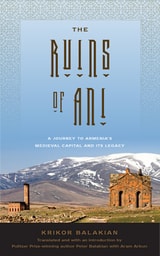
The Ruins of Ani
A Journey to Armenia's Medieval Capital and its LegacyKrikor Balakian
Rutgers University Press, 2019
From the tenth to the thirteenth centuries, the city of Ani was the jewel of the Armenian kingdom, renowned far and wide for its magnificent buildings. Known as the city of 1001 churches, Ani was a center for artistic innovation, and its architecture is a potential missing link between Byzantine and Gothic styles. By the fifteenth century, Ani was virtually abandoned, its stunning buildings left to crumble. Yet its ruins have remained a symbol of cultural accomplishment that looms large in the Armenian imagination.
The Ruins of Ani is a unique combination of history, art criticism, and travel memoir that takes readers on a thousand-year journey in search of past splendors. Today, Ani is a popular tourist site in Turkey, but the city has been falsified in its presentation by the Turkish government in order to erase Armenian history in the wake of the Armenian Genocide. This timely publication also raises questions about the preservation of major historic monuments in the face of post atrocity campaigns of cultural erasure.
Originally written by young priest Krikor Balakian in 1910, just a few years before the Armenian genocide, this book offers a powerful and poignant counterpart to Balakian’s acclaimed genocide memoir Armenian Golgotha. This new translation by the author’s great-nephew, Pulitzer Prize-winning poet Peter Balakian, eloquently renders the book’s vivid descriptions and lyrical prose into English. Including a new introduction that explores Ani’s continued relevance in the twenty-first century, The Ruins of Ani will give readers a new appreciation for this lost city’s status as a pinnacle of both Armenian civilization and human achievement.
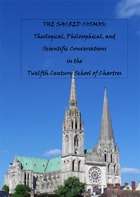
The Sacred Cosmos
Theological, Philosophical, and Scientific Conversations in the Twelfth Century School of ChartresPeter Ellard
University of Scranton Press, 2007
The School of Chartres was a bold intellectual movement of the twelfth century that introduced the World Soul and the Chartrian cosmology to Christendom. In his controversial book, The Sacred Cosmos, theologian Peter Ellard analyzes the most radical aspects of Chartrian thought and traces their relation to classical and late-antique philosophers such as Boethius and Plato. In addition, Ellard investigates the Cathedral of Chartres as an important proof and example of Chartrian theology in this essential volume for anyone interested in the intersection of spirituality and philosophy.
The Saga of St. Jón of Hólar
Translated by Margaret Cormack, With an Introduction byPeter Foote
Arizona Center for Medieval and Renaissance Studies, 2020
This volume contains a translation of the version of the Saga of St. Jón of Hólar that is probably closest to the first Latin vita. It is only the second saga of an Icelandic episcopal saint to appear in a modern translation in the present century. The volume consists of two parts, the first comprising a general introduction and a translation by Margaret Cormack. The second part provides a detailed scholarly analysis of the manuscripts, contents, style, and literary connections of the saga by the late Peter Foote, one of the foremost scholars of Old Norse and Icelandic literature.
The Jóns saga was written in the early thirteenth century, nearly a century after the death of its protagonist, the first bishop of the diocese of Hólar in Northern Iceland. The author of the saga combined Latin learning with native folklore to produce a readable narrative that is contemporary with the earliest family and contemporary sagas. This text provides valuable insight into the religious life of ordinary Icelanders in the thirteenth century, and the introduction corrects common misconceptions about ecclesiastical history and the cult of saints in Iceland. It will be of value to scholars of medieval Icelandic literature, hagiography, and history.
The Saga of the Jomsvikings
Translated from the Old Icelandic by Lee M. Hollander
University of Texas Press, 1955
In A.D. 986, Earl Hákon, ruler of most of Norway, won a triumphant victory over an invading fleet of Danes in the great naval battle of Hjórunga Bay. Sailing under his banner were no fewer than five Icelandic skalds, the poet-historians of the Old Norse world. Two centuries later their accounts of the battle became the basis for one of the liveliest of the Icelandic sagas, with special emphasis on the doings of the Jómsvikings, the famed members of a warrior community that feared no one and dared all. In Lee M. Hollander's faithful translation, all of the unknown twelfth-century author's narrative genius and flair for dramatic situation and pungent characterization is preserved.

The Saint and the Atheist
Thomas Aquinas and Jean-Paul SartreJoseph S. Catalano
University of Chicago Press, 2021
Compact and open to readers of varying backgrounds, this book represents Catalano’s efforts to bring a lifetime of work on Sartre into an accessible consideration of philosophical questions by placing him in conversation with Aquinas, and it serves as a primer on key ideas of both philosophers. By bringing together these two figures, Catalano offers a fruitful space for thinking through some of the central questions about faith, conscience, freedom, and the meaning of life.
The Sanctity of the Leaders
Holy Kings, Princes, Bishops and Abbots from Central Europe (11th to 13th Centuries)Gábor Klaniczay
Central European University Press, 2023
The latest title in the Central European Medieval Texts series contains the lives of saints who were canonized in the eleventh through thirteenth centuries in the newly Christianized countries of Central and Eastern Europe (Bohemia, Poland, Hungary, and Dalmatia). A rejoinder to the earlier volume in the series, the Saints of the Christianization Age of Central Europe (CEMT, Vol. 6), containing hermits, missionaries, and martyrs, this second volume of hagiography is dominated by political or ecclesiastical leaders who became saintly patrons of their region and were highly venerated throughout the Middle Ages.
The legends in the volume present the two Hungarian holy kings Stephen and Ladislas, the holy duke Emeric, the Czech holy abbot Prokop of Sázava, three bishops, the Venetian-Hungarian Gellért of Csanád, the Polish Stanislas of Cracow (both martyrs), and the Dalmatian holy bishop Saint John of Trogir. Each “vita” is published in Latin original with an English translation and with prefaces discussing the textual tradition.
Saints’ lives have been recognized as an invaluable source of information on social and economic history, the history of mentalities and everyday life, cultural history, and, above all, as a special genre with crucial importance and prevalence in medieval literature.
The Sasanian Empire at War
Persia, Rome, and the Rise of Islam, 224–651Michael J. Decker
Westholme Publishing, 2025
A comprehensive military history of one of the most important empires of Late Antiquity
The Sasanian Empire at War: Persia, Rome, and the Rise of Islam, 224–651 is the first comprehensive study in English examining war and society in one of the most important empires in world history: the Persian Empire of 224-651 AD, ruled by the Sasanian clan. At its height the Sasanians governed lands from the Indus River in the east to Egypt and the Mediterranean in the west. Adversaries of Rome, they also faced grave challenges from nomadic powers from Central Asia, notably the Huns and Turks. The Sasanians were able to maintain their empire for hundreds of years through nearly constant warfare, but when their expansion was checked in the north by the Byzantines at Constantinople in 626, and with the Muslim invasions to their south and west beginning in the 630s, the empire could no longer be sustained, and it finally collapsed.
In this book, Michael J. Decker examines Sasanian warfare, including military capabilities, major confrontations, organization and weapons of the Persian army. In addition to providing a comprehensive overview of the conflicts that marked this vital period in the history of Eurasia, The Sasanian Empire at War challenges long cherished notions of the inferiority of Sasanian military capabilities and renders a new image of a sophisticated, confident culture astride the heart of Eurasia at the end of the ancient world and birth of the Silk Road. Persian arms were among the many features of their culture that drew widespread admiration and was one of the keys to the survival of Iranian culture beyond the Arab Conquest and into the present day.
The Saxon War
Bruno of Merseburg
Catholic University of America Press, 2022
The Scandal of the Fabliaux
R. Howard Bloch
University of Chicago Press, 1986
By showing how the medieval poet's obsession with the outrageous, the low, and the lewd was intimately bound to poetry, Bloch forces a revision of traditional approaches to Old French literature. His final chapter, on castration anxiety, fetishism, and the comic, links the fabliaux with the development of modern notions of the self and makes a case for the medieval roots of our own sense of humor.
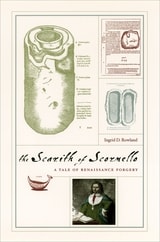
The Scarith of Scornello
A Tale of Renaissance ForgeryIngrid D. Rowland
University of Chicago Press, 2004
As recounted here with relish by Ingrid D. Rowland, Curzio preyed on the Italian fixation with ancestry to forge an array of ancient Latin and Etruscan documents. For authenticity's sake, he stashed the counterfeit treasure in scarith (capsules made of hair and mud) near Scornello. To the seventeenth-century Tuscans who were so eager to establish proof of their heritage and history, the scarith symbolized a link to the prestigious culture of their past. But because none of these proud Italians could actually read the ancient Etruscan language, they couldn't know for certain that the documents were frauds. The Scarith of Scornello traces the career of this young scam artist whose "discoveries" reached the Vatican shortly after Galileo was condemned by the Inquisition, inspiring participants on both sides of the affair to clash again—this time over Etruscan history.
An expert on the Italian Renaissance and one of only a few people in the world to work with the Etruscan language, Rowland writes a tale so enchanting it seems it could only be fiction. In her investigation of this seventeenth-century caper, Rowland will captivate readers with her sense of humor and obvious delight in Curzio's far-reaching prank. And even long after the inauthenticity of Curzio's creation had been established, this practical joke endured: the scarith were stolen in the 1980s by a thief who mistook them for the real thing.
The Scope of History
Studies in the Historiography of Alfonso el SabioCharles F. Fraker
University of Michigan Press, 1996
In his introduction the author addresses the place of Alfonso's work in its own time, giving the reader a notion of what other works in the genre were like and how they differ. The connecting thread running through these chapters is a continuing focus on the art of the compiler. Medieval historical compilations are by definition scissors-and-paste jobs, stringing older texts together to tell new, different stories. But the Alfonsine editors bend the rules: in the short run they make their work yield the themes they think important, and in the long run they build a literary monument of impressive architecture.
Charles F. Fraker is Professor Emeritus in Romance Languages, University of Michigan.
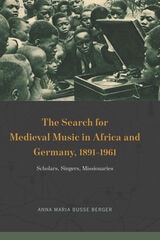
The Search for Medieval Music in Africa and Germany, 1891-1961
Scholars, Singers, MissionariesAnna Maria Busse Berger
University of Chicago Press, 2020
The book unfolds in three parts. Busse Berger starts with the origins of comparative musicology circa 1900, when early proponents used ideas from comparative linguistics to test whether parallels could be drawn between nonwestern and medieval European music. She then turns to youth movements of the era—the Wandervogel, Jugendmusikbewegung, and Singbewegung—whose focus on joint music making influenced many musicologists. Finally, she considers case studies of Protestant and Catholic mission societies in what is now Tanzania, where missionaries—many of them musicologists and former youth-group members—extended the discipline via ethnographic research and a focus on local music and communities. In highlighting these long-overlooked transnational connections and the role of global music in early musicology, Busse Berger shapes a fresh conception of music scholarship during a pivotal part of the twentieth century.
The Secret of Secrets
The Scholarly Career of a Pseudo-Aristotelian Text in the Latin Middle AgesSteven J. Williams
University of Michigan Press, 2003
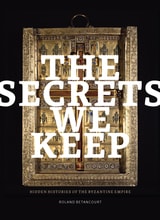
The Secrets We Keep
Hidden Histories of the Byzantine EmpireRoland Betancourt
J. Paul Getty Trust, The, 2024
Secrecy has played a role throughout human history and continues to capture the popular imagination. Some of the most seductive aspects of the Byzantine Empire—such as the relics of the imperial palace and the military uses of Greek fire—have been shrouded in mystery for centuries. This book provides a brief history of secrecy in Byzantium and examines the role of the art historian in uncovering the truth, demonstrating how visual evidence can not only reveal new findings but also purposely conceal answers.
Art historians face many challenges in their search for hidden knowledge, including accessing accounts preserved in fragmentary glimpses and reconciling how practices of speculation and reconstruction result in different, and sometimes contradictory, understandings. With pressing urgency, this book asks scholars to consider their role in articulating the stories of marginalized people, particularly for queer and trans history.
At the core of these investigations is the quest to discover how clandestine knowledge was transmitted and how relationships were strengthened by collective secret keeping, as well as how concealment is used as a strategy for exercising power. With insights into the religious, imperial, military, and cultural uses of secrecy, this book offers an intriguing look at the ways secrecy manifested itself during the Byzantine Empire and the implications it has for the issues we face today.
The Shock of Medievalism
Kathleen Biddick
Duke University Press, 1998
Biddick describes how the discipline of medieval studies was defined by a process of isolation and exclusion—a process that not only ignored significant political and cultural issues of the nineteenth century but also removed the period from the forces of history itself. Wanting to separate themselves from popular studies of medieval culture, and valuing their own studies as scientific, nineteenth-century academics created an exclusive discipline whose structure is consistently practiced today, despite the denials of most contemporary medieval scholars. Biddick supports her argument by discussing the unavowed melancholy that medieval Christians felt for Jews and by revealing the unintentional irony of nineteenth-century medievalists’ fabrication of sentimental objects of longing (such as the “gothic peasant”). The subsequent historical distortions of this century-old sentimentality, the relevance of worker dislocation during the industrial revolution, and other topics lead to a conclusion in which Biddick considers the impact of an array of factors on current medieval studies.
Simultaneously displacing disciplinary stereotypes and altering an angle of historical inquiry, The Shock of Medievalism challenges accepted thinking even as it produces a new direction for medieval studies. This book will provoke scholars in this field and appeal to readers who are interested in how historicizing processes can affect the development of academic disciplines.
The Social Politics of Medieval Diplomacy
Anglo-German Relations (1066-1307)Joseph P. Huffman
University of Michigan Press, 2000
The Story of Wamba
Julian of Toledo's Historia Wambae regisJoaquín Martínez Julian of Toledo
Catholic University of America Press, 2005
The Stranger in Medieval Society
Frank. R. P. Akehurst and Stephanie Cain Van D’Elden, Editors
University of Minnesota Press, 1998
The Stranger in Medieval Society was first published in 1998. Minnesota Archive Editions uses digital technology to make long-unavailable books once again accessible, and are published unaltered from the original University of Minnesota Press editions.
The Stranger in Medieval Society examines the presence of outsiders in medieval Europe. Whether welcome or unwelcome, voluntary or involuntary, strangers appear in every society; they leave their own communities, venture into new environments, confront differences, and often spark changes. The first collection in medieval studies to concentrate on the notion of the stranger, these essays show how outsiders influenced the culture of Europe in the Middle Ages.
Among the topics explored are Edward III and Sir Gawain and the Green Knight as historical and literary instances of chivalric skill and courage; political conflict in the late French epic Renaut de Montauban; and a group of people who were doubly strangers-some thirty thousand Jews, who after being expelled from France in 1306 returned under an experimental agreement a few years later.
Contributors: William Calin, U of Florida; Susan Crane, Rutgers; Maria Dobozy, U of Utah; Edward R. Haymes, Cleveland State U; William Chester Jordan, Princeton U; Derek Pearsall, Harvard U; William D. Phillips Jr., U of Minnesota; Kathryn L. Reyerson, U of Minnesota; and Janet L. Solberg, Kalamazoo College.
F. R. P. Akehurst is professor of French in the Department of French and Italian at the University of Minnesota. Stephanie Cain Van D'Elden is director of graduate studies for the program in Germanic philology at the University of Minnesota.
This is volume 12 in the Medieval Cultures Series
The Strozzi of Florence
Widowhood and Family Solidarity in the RenaissanceAnn Crabb
University of Michigan Press, 2000
The Strozzi correspondence tells the story of the decline and recovery of one Florentine patrician family. Eventually, the Strozzi brothers earned the greatest fortune of their era, and, after the repeal of their exile, Filippo, the eldest, most successful, and longest lived, spent the last years of his life in Florence as one of its foremost citizens. Set in the context of other documentary evidence and of modern historical and anthropological studies, Crabb's study illuminates the role of women, kinship, solidarity, honor, and profit. These letters provide nuanced insights into values and practices that more impersonal sources cannot rival.
As well as appealing to those interested in the Renaissance, Florence, and Italy, this book will attract those wanting to read about topics in social history that cross time periods: women, family and kinship, business, and honor. It confronts issues of Renaissance Florentine historiography by presenting a more positive view of the role of women than does current orthodoxy, by providing evidence of the impact of extended kinship ties, a controversial issue, and by illuminating further the value placed on honor and profit.
Ann Crabb teaches medieval history at James Madison University.
The Subject of Crusade
Lyric, Romance, and Materials, 1150 to 1500Marisa Galvez
University of Chicago Press, 2020
In The Subject of Crusade, Marisa Galvez offers a nuanced view of holy war and crusade poetry, reading these lyric works within a wider conversation with religion and culture. Arguing for an interdisciplinary treatment of crusade lyric, she shows how such poems are crucial for understanding the crusades as a complex cultural and historical phenomenon. Placing them in conversation with chronicles, knightly handbooks, artworks, and confessional and pastoral texts, she identifies a particular “crusade idiom” that emerged out of the conflict between pious and earthly duties. Galvez fashions an expanded understanding of the creative works made by crusaders to reveal their experiences, desires, ideologies, and reasons for taking up the cross.
The Teutonic Knights
Rise and Fall of a Religious CorporationAleksander Pluskowski
Reaktion Books, 2024
This book provides a concise and incisive introduction to the knights of the Teutonic Order, the last of the great military orders established in the twelfth century. The book traces the Order’s evolution from a crusader field hospital into a major territorial ruler in northeastern Europe. Notably, the knights constructed distinctive fortified convents, including their headquarters in Western Christendom’s largest castle. The narrative concludes with the Order’s fifteenth-century decline due to the combined effects of a devastating war with Poland-Lithuania and the Protestant Reformation. The result is an accessible overview of this pivotal corporation in European history.
The Theater of Devotion
East Anglian Drama and Society in the Late Middle AgesGail McMurray Gibson
University of Chicago Press, 1989
The Three Orders
Feudal Society ImaginedGeorges Duby
University of Chicago Press, 1980
The Tocco of the Greek Realm
Nobility, Power and Migration in Latin Greece (14th – 15th centuries)Nada Zečević
Central European University Press, 2015