Results by title
2285 books match the query 'Women' and 321 start with w
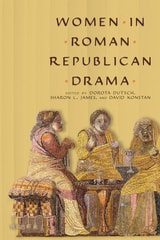
Women in Roman Republican Drama
Edited by Dorota Dutsch, Sharon L. James, and David Konstan
University of Wisconsin Press, 2015
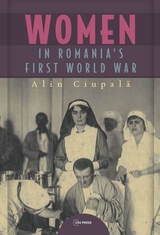
Women in Romania’s First World War
Alin Ciupalã
Central European University Press, 2025
Beyond women’s contribution to the war, the book also examines the effects of the First World War on gender roles in Romania. Feminist leaders expected that a wartime “training service” would entitle women to a life with full rights as citizens. Yet after the war, the situation returned to “normal,” and women largely continued to be excluded from the public sphere.
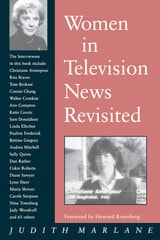
Women in Television News Revisited
Into the Twenty-first CenturyBy Judith Marlane
University of Texas Press, 1999
Women in television news have made great strides in the past twenty-five years. No longer limited to being the token pretty face on the nightly newscast, women have taken their places as working journalists in newsrooms, on the campaign trail, in war zones, and in the highest echelons of network news management. Barbara Walters and Connie Chung have even occupied the coveted network anchor's chair, if only briefly.
In this book, 70 of the foremost women in television news reflect on their professional successes, the personal and professional sacrifices that often bought those successes, and the barriers that still confront women in the news business. Weaving their interviews into a compelling text, Judith Marlane covers a wide range of issues, including looks versus ability and experience, sexual harassment, the resistance to women news anchors, the difficulties of balancing work and family life, women's and men's salaries, and the willingness of women to help other women in the business.
This book builds from Marlane's 1976 work, Women in Television News. Interviews with many of the same women highlight the gains that women have made in broadcast journalism. Simultaneously, Marlane has expanded her range of informants to include fifteen of America's most famous male anchors and correspondents to gather their assessments of the role of women in broadcasting today.

Women in Texas Music
Stories and SongsBy Kathleen Hudson
University of Texas Press, 2007
Across the state and across a wide variety of musical genres, women are making their mark on Texas music. Some have become international superstars, while others are just starting to make their voices heard. But every woman who goes out and plays her music proves that "baring one's heart and soul takes courage, and Texas women artists have a lot of courage," as Lloyd Maines observes in the opening interview of this book. To pay tribute to these dedicated musicians and to capture their unique perspectives on what it means to be a woman in the music business, Kathleen Hudson has spent many years interviewing Texas women musicians for the Texas Heritage Music Foundation.
In Women in Texas Music, Hudson lets us listen in on conversations with thirty-nine musical artists, including Emily Robison, Terri Hendrix, Lee Ann Womack, Rosie Flores, Betty Buckley, Marcia Ball, Lavelle White, and Bobbie Nelson. Hudson encourages and allows the women to tell their own stories as she delves into their life journeys, creative processes, and the importance of writing and performing music, be it blues, rock, country, folk, jazz, or pop. The interviews are warm and open, like good friends sharing the lessons that a life of playing music has taught them.
What emerges from this collection is a solid sense of the strength and integrity that women bring to and gain from Texas music. Everyone who cares about music and culture in Texas will want to join the conversation.
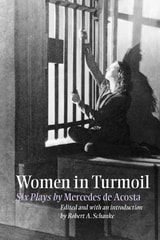
Women in Turmoil
Six Plays by Mercedes de AcostaEdited and with an introduction by Robert A. Schanke
Southern Illinois University Press, 2003
In this first publication of six plays by the flamboyantly uninhibited author, poet, and playwright Mercedes de Acosta (1893–1968), theater historian Robert A. Schanke rescues these lost theatrical writings from the dusty margins of obscurity. Often autobiographical, always rife with gender struggle, and still decidedly stageworthy, Women in Turmoil: Six Plays by Mercedes de Acosta constitutes a significant find for the canon of gay and lesbian drama.
In her 1960 autobiography Here Lies the Heart, de Acosta notes that as she was contemplating marriage to a man in 1920, she was "in a strange turmoil about world affairs, my own writing, suffrage, sex, and my inner spiritual development." The voice in these plays is that of a lesbian in turmoil, marginalized and ignored. Her same-sex desires and struggles for acceptance fueled her writings, and nowhere is that more evident than in the plays contained herein. The women characters struggle with unfulfilling marriages, divorce, unrequited sexual desire, suppressed identity, and a longing for recognition.
Of the six plays, only the first two were ever produced. Jehanne d’Arc (1922) premiered in Paris with de Acosta’s lover at the time, Eva Le Gallienne, starring and Norman Bel Geddes designing the set and lights. In 1934, de Acosta adapted it into a screenplay for Greta Garbo, then her lover, but it was never filmed. Portraying rampant anti-Semitism in a small New England town, Jacob Slovak (1923) was performed both on Broadway and in London, with the London production starring John Gielgud and Ralph Richardson.
The Mother of Christ (1924) is a long one-act play written for the internationally known actress Eleonora Duse. After Duse’s death, several other actresses including Eva Bartok, Jeanne Eagels, and Lillian Gish explored productions of the play. Igor Stravinsky wrote a score, Norman Bel Geddes designed a set, and Gladys Calthrop designed costumes. However, the play was never produced.
Her most autobiographical play, World Without End (1925), and her most sensational play, The Dark Light (1926), both unfold through plots of sibling rivalry, incest, and suicide. With overtones of Ibsen, Illusion (1928) continues the themes of de Acosta’s previous plays with her rough and seedy cast of characters, but here the playwright’s drama grows to incorporate a yearning for belonging as well as strong elements of class conflict.
What notoriety remains associated with de Acosta has less to do with her writing than with her infamous romances with the likes of Greta Garbo, Marlene Dietrich, Isadora Duncan, Alla Nazimova, Eva Le Gallienne, Tamara Karsavina, Pola Negri, and Ona Munson. Through this collection of six powerfully poignant dramas, editor Robert A. Schanke strives to correct myths about Mercedes de Acosta and to restore both her name and her literary achievements to their proper place in history.
Robert A. Schanke has authored the original biography, “That Furious Lesbian:” The Story of Mercedes de Acosta, also available from Southern Illinois University Press.
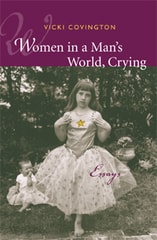
Women in a Man's World, Crying
EssaysVicki Covington
University of Alabama Press, 2002
This thoughtful, engaging collection examines resilience, identity, and inequality in the modern workplace produced by one of the nation's most observant and incisive writers.
This collection of warm, heartfelt essays from award-winning novelist Vicki Covington chronicles the multitude of "in between" moments in the writer's life. These are her stolen moments in between the writing of four novels-Gathering Home, Bird of Paradise, Night Ride Home, and The Last Hotel for Women; in between coauthoring the edgy memoir Cleaving: The Story of a Marriage with her husband Dennis Covington; in between raising two daughters; in between her husband's struggle with cancer and the author's own heart attack; in between a life full of trials and triumphs, disappointments and celebrations - moments that, as Covington demonstrates here, are always rich and revealing.
In the title essay, the author questions why all seven middle-class women who live on her street confess at a neighborhood cookout that in the past 48 hours each of them has cried. In "A Southern Thanksgiving," Covington reflects on the "family dance" that is Thanksgiving in the South: "In the North they put their crazy family members in institutions, but in the South we put them in the living room for everyone to enjoy." In "My Mother's Brain," the author recounts the onset of Alzheimer's in her mother and how, with the spread of the disease, an untapped vein of love is revealed.
Some of these essays were written as weekly newspaper columns for the Birmingham News. Others were written for specific literary occasions, such as the First Annual Eudora Welty Symposium. They are divided into six thematic sections: "Girls and Women," "Neighborhood," "Death," "The South," "Spiritual Matters," and “Writing.”
Throughout, as Covington casts her candid, attentive eye on a situation, confusion yields to comprehension, fear flourishes into faith, and anger flows into understanding. In memorializing the small moments of her life, she finds that they are far from peripheral; indeed, they are central to a life full of value and meaning.
Women in the Club
Gender and Policy Making in the SenateMichele L. Swers
University of Chicago Press, 2013
In the run-up to the 2012 presidential election, Democrats and Republicans were locked in a fierce battle for the female vote. Democrats charged Republicans with waging a “war on women,” while Republicans countered that Democratic policies actually undermined women’s rights. The women of the Senate wielded particular power, planning press conferences, appearing on political programs, and taking to the Senate floor over gender-related issues such as workplace equality and reproductive rights.
The first book to examine the impact of gender differences in the Senate, Women in the Club is an eye-opening exploration of how women are influencing policy and politics in this erstwhile male bastion of power. Gender, Michele L. Swers shows, is a fundamental factor for women in the Senate, interacting with both party affiliation and individual ideology to shape priorities on policy. Women, for example, are more active proponents of social welfare and women’s rights. But the effects of gender extend beyond mere policy preferences. Senators also develop their priorities with an eye to managing voter expectations about their expertise and advancing their party’s position on a given issue. The election of women in increasing numbers has also coincided with the evolution of the Senate as a highly partisan institution. The stark differences between the parties on issues pertaining to gender have meant that Democratic and Republican senators often assume very different roles as they reconcile their policy views on gender issues with the desire to act as members of partisan teams championing or defending their party’s record in an effort to reach various groups of voters.
Women in the History of Science
A SourcebookEdited by Hannah Wills, Sadie Harrison, Erika Lynn Jones, Rebecca Martin, Farrah Lawrence-Mackey
University College London, 2023
Women in the History of Science brings together primary sources that highlight women’s involvement in scientific knowledge production around the world. Including texts, images, and objects, the primary sources are each accompanied by an explanatory text, questions to prompt discussion, and a bibliography to aid further research. Arranged by time period, from 1200 BCE to the twenty-first century, and covering twelve inclusive and far-reaching themes, this book is an invaluable companion to students and lecturers alike in exploring women’s history in the fields of science, technology, mathematics, medicine, and culture.
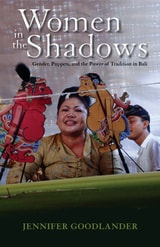
Women in the Shadows
Gender, Puppets, and the Power of Tradition in BaliJennifer Goodlander
Ohio University Press, 2016
Wayang kulit, or shadow puppetry, connects a mythic past to the present through public ritual performance and is one of most important performance traditions in Bali. The dalang, or puppeteer, is revered in Balinese society as a teacher and spiritual leader. Recently, women have begun to study and perform in this traditionally male role, an innovation that has triggered resistance and controversy.
In Women in the Shadows, Jennifer Goodlander draws on her own experience training as a dalang as well as interviews with early women dalang and leading artists to upend the usual assessments of such gender role shifts. She argues that rather than assuming that women performers are necessarily mounting a challenge to tradition, “tradition” in Bali must be understood as a system of power that is inextricably linked to gender hierarchy.
She examines the very idea of “tradition” and how it forms both an ideological and social foundation in Balinese culture. Ultimately, Goodlander offers a richer, more complicated understanding of both tradition and gender in Balinese society. Following in the footsteps of other eminent reflexive ethnographies, Women in the Shadows will be of value to anyone interested in performance studies, Southeast Asian culture, or ethnographic methods.
Women in the South African Parliament
FROM RESISTANCE TO GOVERNANCEHannah Evelyn Britton
University of Illinois Press, 2005
Although the international press closely chronicled the dismantling of South Africa's apartheid policies, it paid little attention to the unique role women from a variety of political parties played in establishing the new government. Utilizing interviews, participant observation, and archival research, Women in the South African Parliament tells an inspiring story of liberation, showing how these women achieved electoral success, learned to work with lifelong enemies, and began to transform Parliament by creating more space for women's voices during a critical time in the life of their democracy.
Arguing from her detailed analysis of the strategies and political tactics used by these South African women, both individually and collectively, Hannah Britton contends that, contrary claims in earlier studies of the developing world, mobilization by women prior to a transition to democracy can lead to gains after the transition--including improvements in constitutional mandates, party politics, and representation. At the same time, Britton demonstrates that not even national leadership can ensure power for all women and that many who were elected to South Africa's first democratic parliament declined to run again, feeling they could have a greater impact working in their own communities.

Women in the United States, 1830-1945
S.J. Kleinberg
Rutgers University Press, 1999
Women in the Vanishing Cloister
Organizational Decline in Catholic Religious Orders in the United StatesEbaugh, Helen Rose Fuchs
Rutgers University Press, 1993
To illustrate the problem, Ebaugh takes us into a declining order, here named the Sisters of Service. In 1990, only one candidate sought admission to the order, and the median age of members reached 70. While these demographic changes were occurring, the sisters adapted themselves to the reforms of Vatican II. The concept of a cloistered life faded. Nuns sought college degrees, gave up their habits, moved into apartments, and began to identify with the outside world. Vatican II further encouraged the nuns to democratize and decentralize. Many nuns accepted jobs that paid poorly but were consistent with their goal of social service. They identified with the feminist movement and in turn influenced it.
Ebaugh shows how declining orders have not followed the sociological model of organizational decline, one typically marked by centralized authority, a fear of risk taking, lack of direction, internal conflicts over turf, and low morale. Rather, they have established democratic structures, reduced internal positions in favor of committing resources to empowering the poor, abandoned security in favor of diversity in jobs and missions, minimized conflicts over scarce resources, and exhibited a sense of freedom rather than poor morale.
Although Ebaugh is convinced that Catholic orders in the U.S. will not continue for long, non-canonical communities of women and associate programs are growing. Dedicated women can perpetuate the mission and spirit of the order without becoming vowed members.
Women of Assur and Kanesh
Texts from the Archives of Assyrian MerchantsCécile Michel
SBL Press, 2020
Vivid sources for reconstructing the lives of Assyrian women
In this collection Cécile Michel translates into English texts related to wives and daughters of merchants and to their activities in nineteenth-century BCE Aššur and Kaneš. Discovered in excavations of the Old Assyrian private archives at Kültepe (ancient Kaneš) in Central Anatolia, these letters sent from Aššur reflect the preeminent role of Assyrian women within the family and in the domestic economy, as well as their contribution to long-distance trade. Contracts and other legal texts excavated at Kültepe attest to Assyrian and Anatolian women as parties in marriage and divorce contracts, last wills, loans, and purchase contracts. These unique finds paint a vivid portrait of women who aspire to be socially respected and provide a rare opportunity to reconstruct their daily lives as both businesswomen and housewives.
Features
- More than three hundred letters and documents transliterated and translated with commentary
- An overview of the study of women and gender in Assyriology
- A reconstruction of women's roles as textile producers, investors, and creditors within a long-distance commercial network
Cécile Michel is Senior Researcher at the National Center for Scientific Research (CNRS, France) and Professor at Hamburg University (Germany). She is a member of the international group of scholars in charge of the decipherment of the 23,000 tablets found at Kültepe (ancient Kaneš) and of the Kültepe archaeological team. She is the coeditor of and contributor to The Role of Women in Work and Society in the Ancient Near East (2016), Textile Terminologies from the Orient to the Mediterranean and Europe, 1000 BC to 1000 AD (2017), and Mathematics, Administrative and Economic Activities in Ancient Worlds (2020).
Women of Belize
Gender and Change in Central AmericaMcClaurin, Irma
Rutgers University Press, 1996
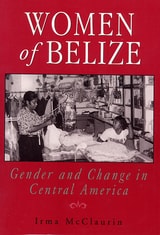
This engaging ethnography is set in the remote district of Toledo in Belize, Central America, where three women weave personal stories about the events in their lives. Each describes her experiences of motherhood, marriage, family illness, emigration, separation, work, or domestic violence that led her to recognize gender inequality and then to do something about it. All three challenge the culture of gender at home and in the larger community.
Zola, an East Indian woman without primary school education, invents her own escape from a life of subordination by securing land, then marries the man she's lived with since the age of fourteen--but on her terms. Once she needed permission to buy a dress, now she advocates against domestic violence. Evelyn, a thirty-nine-year old Creole woman, has raised eight children virtually alone, yet she remains married "out of habit." A keen entrepreneur, she has run a restaurant, a store, and a sewing business, and she now owns a mini-mart attached to her home. Rose, a Garifuna woman, is a mother of two whose husband left when she would not accept his extra-marital affairs. While she ekes out a survival in the informal economy by making tamales, she gets spiritual comfort from her religious beliefs, love of music, and two children.
The voices of these ordinary Belizean women fill the pages of this book. Irma McClaurin reveals the historical circumstances, cultural beliefs, and institutional structures that have rendered women in Belize politically and socially disenfranchised and economically dependent upon men. She shows how some ordinary women, through their participation in women's grassroots groups, have found the courage to change their lives. Drawing upon her own experiences as a black woman in the United States, and relying upon cross-cultural data about the Caribbean and Latin America, she explains the specific way gender is constructed in Belize.

Women of Color in U.S. Society
edited by Maxine Baca Zinn and Bonnie Thornton Dill
Temple University Press, 1993
The theme of race, class, and gender as interlocking systems of oppression unites these original essays about the experience of women of color—African Americans, Latinas, Native Americans, and Asian Americans. The contributing scholars discuss the social conditions that simultaneously oppress women of color and provide sites for opposition.
Though diverse in their focus, the essays uncover similar experiences in the classroom, workplace, family, prison, and other settings. Working-class women, poor women, and professional women alike experience subordination, restricted participation in social institutions, and structural placement in roles with limited opportunities.
How do women survive, resist, and cope with these oppressive structures? Many articles tell how women of color draw upon resources from their culture, family, kin, and community. Others document defenses against cultural assaults by the dominant society—Native American mothers instilling tribal heritage in their children; African American women engaging in community work; and Asian American women opposing the patriarchy of their own communities and the stereotypes imposed by society at large.
These essays challenge some of our basic assumptions about society, revealing that experiences of inequality are not only diverse but relational.
Women of Color
Mother-Daughter Relationships in 20th-Century LiteratureEdited by Elizabeth Brown-Guillory
University of Texas Press, 1996
Interest in the mother-daughter relationship has never been greater, yet there are few books specifically devoted to the relationships between daughters and mothers of color. To fill that gap, this collection of original essays explores the mother-daughter relationship as it appears in the works of African, African American, Asian American, Mexican American, Native American, Indian, and Australian Aboriginal women writers.
Prominent among the writers considered here are Toni Morrison, Alice Walker, Maxine Hong Kingston, Cherrie Moraga, Leslie Marmon Silko, and Amy Tan. Elizabeth Brown-Guillory and the other essayists examine the myths and reality surrounding the mother-daughter relationship in these writers' works. They show how women writers of color often portray the mother-daughter dyad as a love/hate relationship, in which the mother painstakingly tries to convey knowledge of how to survive in a racist, sexist, and classist world while the daughter rejects her mother's experiences as invalid in changing social times.
This book represents a further opening of the literary canon to twentieth-century women of color. Like the writings it surveys, it celebrates the joys of breaking silence and moving toward reconciliation and growth.
Women of Jeme
Lives in a Coptic Town in Late Antique EgyptT.G. Wilfong
University of Michigan Press, 2002
Contrary to the submissive, demure ideals for women proposed by the religious writers of Christian Egypt, the evidence from Jeme points to a more complex, dynamic situation. Women were active in the home, but some also played important and visible parts in the religious and economic life of their community. A bishop's attempts to monitor the behavior of the women in his district, the intricate inheritance dispute between an aunt and her niece, one woman's pious donations of murals to a church, three women's agonized decisions to give up their children to the local monastery, and the transactions of a family of women moneylenders--all these episodes paint a vivid picture of life in a Coptic town.
Although the remains of Jeme have long been known to scholars, little synthetic work has been done on this rich source for social history in Egypt before and after the Muslim conquests. The Women of Jeme is the first book-length study of the evidence. It will be of interest to Egyptologists and papyrologists, as well as to scholars of Coptic studies, early Christianity, social history and women's studies. The book assumes no prior knowledge of the subject, and the author has taken care to make it accessible to anyone with an interest in the ancient world.
T. G. Wilfong is Assistant Professor of Egyptology and Assistant Curator for Greco-Roman Egypt, University of Michigan.

Women of Trachis
Rachel Kitzinger
Lever Press, 2021

Women of Valor
Orthodox Jewish Troll Fighters, Crime Writers, and Rock Stars in Contemporary Literature and CultureKaren E. H. Skinazi
Rutgers University Press, 2018
Media portrayals of Orthodox Jewish women frequently depict powerless, silent individuals who are at best naive to live an Orthodox lifestyle, and who are at worst, coerced into it. Karen E. H. Skinazi delves beyond this stereotype in Women of Valor to identify a powerful tradition of feminist literary portrayals of Orthodox women, often created by Orthodox women themselves. She examines Orthodox women as they appear in memoirs, comics, novels, and movies, and speaks with the authors, filmmakers, and musicians who create these representations. Throughout the work, Skinazi threads lines from the poem “Eshes Chayil,” the Biblical description of an Orthodox “Woman of Valor.” This proverb unites Orthodoxy and feminism in a complex relationship, where Orthodox women continuously question, challenge, and negotiate Orthodox and feminist values. Ultimately, these women create paths that unite their work, passions, and families under the framework of an “Eshes Chayil,” a woman who situates religious conviction within her own power.
Women of the Andes
Patriarchy and Social Change in Two Peruvian TownsSusan C. Bourque and Kay Barbara Warren
University of Michigan Press, 1981
Pilar is a capable, energetic merchant in the small, Peruvian highland settlement of Chiuchin. Genovena, an unmarried day laborer in the same town, faces an impoverished old age without children to support her. Carmen is the wife of a prosperous farmer in the agricultural community of Mayobamba, eleven thousand feet above Chiuchin in the Andean sierra. Mariana, a madre soltera—single mother—without a husband or communal land of her own, also resides in Mayobamba.
These lives form part of an interlocking network that the authors carefully examine in Women of the Andes. In doing so, they explore the riddle of women’s structural subordination by analyzing the social, political, and economic realities of life in Peru. They examine theoretical explanations of sexual hierarchies against the backdrop of life histories. The result is a study that pinpoints the mechanisms perpetuating sexual repression and traces the impact of social change and national policy on women’s lives.
Women of the Commonwealth
Work, Family, and Social Change in Ninteenth-Century MassachusettsSusan L. Porter
University of Massachusetts Press, 1996
These essays reflect the complexity and richness of current scholarship in women's history. Informed by a variety of source materials and methodologies, the ten chapters break down a generalized construct of “womanhood” to explore the dynamics between gender, race, ethnicity, and class.
The first section of the book focuses on women's work, paid and unpaid, and the effects of class, ethnicity, and gender on the structure of the job market and on power relations within the family. The second section revisits the concept of “sisterhood” by looking at women in relation to their families, social and cultural networks, and civic and private institutions. The editor's introduction sets the essays in the current historiographical context of women's studies and provides a bibliographical essay for the nonspecialist reader.
Women of the Far Right
The Mothers' Movement and World War IIGlen Jeansonne
University of Chicago Press, 1996
Unlike leftist antiwar movements, the mothers' movement was not pacifist; its members opposed the war on Germany because they regarded Hitler as an ally against the spread of atheistic communism. They also differed from leftist women in their endorsement of patriarchy and nationalism. God, they believed, wanted them to fight the New Deal liberalism that imperiled their values and the internationalists, communists, and Jews, whom they saw as subjugating Christian America.
Jeansonne examines the motivations of these women, the political and social impact of their movement, and their collaborations with men of the far right and also with mainstream isolationists such as Charles Lindbergh. Drawing on files kept by the FBI and other confidential documents, this book sheds light on the history of the war era and on women's place within the far right.
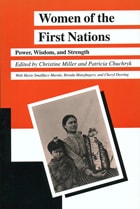
Women of the First Nations
Power, Wisdom, and StrengthChristine Miller
University of Manitoba Press, 1996
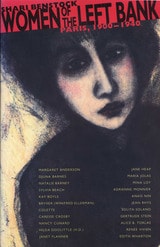
Women of the Left Bank
Paris, 1900-1940By Shari Benstock
University of Texas Press, 1986
Now available in a durable paperback edition, Shari Benstock's critically acclaimed, best-selling Women of the Left Bank is a fascinating exploration of the lives and works of some two dozen American, English, and French women whose talent shaped the Paris expatriate experience in the century's early years.
This ambitious historical, biographical, and critical study has taken its place among the foremost works of literary criticism. Maurice Beebe calls it "a distinguished contribution to modern literary history." Jane Marcus hails it as "the first serious literary history of the period and its women writers, making along the way no small contribution to our understanding of the relationships between women artists and their male counterparts, from Henry James to Hemingway, Joyce, Picasso, and Pound."
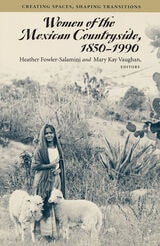
Women of the Mexican Countryside, 1850-1990
Creating Spaces, Shaping TransitionsHeather Fowler-Salamini
University of Arizona Press, 1994
Drawing on Mexican community studies, gender studies, and rural studies, these essays overturn the stereotypes of Mexican peasant women by exploring the complexity of their lives and roles and examining how these have changed over time. The book emphasizes the active roles of women in the periods of civil war, 1854-76, and the commercialization of agriculture, 1880-1910. It highlights their vigorous responses to the violence of revolution, their increased mobility, and their interaction with state reforms in the period from 1910 to 1940. The final essays focus on changing gender relations in the countryside under the impact of rapid urbanization and industrialization since 1940. Because histories of Latin American women have heretofore neglected rural areas, this volume will serve as a touchstone for all who would better understand women's lives in a region of increasing international economic importance. Women of the Mexican Countryside demonstrates that, contrary to the peasant stereotype, these women have accepted complex roles to meet constantly changing situations.
CONTENTS
I—Women and Agriculture in Nineteenth-Century Mexico
1. Exploring the Origins of Democratic Patriarchy in Mexico: Gender and Popular Resistance in the Puebla Highlands, 1850-1876, Florencia Mallon
2. "Cheaper Than Machines": Women and Agriculture in Porfirian Oaxaca (1880-1911), Francie R. Chassen-López
3. Gender, Work, and Coffee in C¢rdoba, Veracruz, 1850-1910, Heather Fowler-Salamini
4. Gender, Bridewealth, and Marriage: Social Reproduction of Peons on Henequen Haciendas in Yucatán (1870-1901), Piedad Peniche Rivero
II—Rural Women and Revolution in Mexico
5. The Soldadera in the Mexican Revolution: War and Men's Illusions, Elizabeth Salas
6. Rural Women's Literacy and Education During the Mexican Revolution: Subverting a Patriarchal Event?, Mary Kay Vaughan
7. Doña Zeferina Barreto: Biographical Sketch of an Indian Woman from the State of Morelos, Judith Friedlander
8. Seasons, Seeds, and Souls: Mexican Women Gardening in the American Mesilla (1900-1940), Raquel Rubio Goldsmith
III—Rural Women, Urbanization, and Gender Relations
9. Three Microhistories of Women's Work in Rural Mexico, Patricia Arias
10. Intergenerational and Gender Relations in the Transition from a Peasant Economy to a Diversified Economy, Soledad González Montes
11. From Metate to Despate: Rural Women's Salaried Labor and the Redefinition of Gendered Spaces and Roles, Gail Mummert
12. Changes in Rural Society and Domestic Labor in Atlixco, Puebla (1940-1990), Maria da Glória Marroni de Velázquez
13. Antagonisms of Gender and Class in Morelos, Mexico, JoAnn Martin
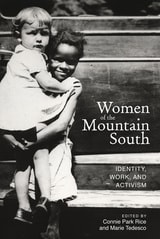
Women of the Mountain South
Identity, Work, and ActivismConnie Park Rice
Ohio University Press, 2015
Scholars of southern Appalachia have largely focused their research on men, particularly white men. While there have been a few important studies of Appalachian women, no one book has offered a broad overview across time and place. With this collection, editors Connie Park Rice and Marie Tedesco redress this imbalance, telling the stories of these women and calling attention to the varied backgrounds of those who call the mountains home.
The essays of Women of the Mountain South debunk the entrenched stereotype of Appalachian women as poor and white, and shine a long-overdue spotlight on women too often neglected in the history of the region. Each author focuses on a particular individual or group, but together they illustrate the diversity of women who live in the region and the depth of their life experiences. The Mountain South has been home to Native American, African American, Latina, and white women, both rich and poor. Civil rights and gay rights advocates, environmental and labor activists, prostitutes, and coal miners—all have lived in the place called the Mountain South and enriched its history and culture.

Women of the New Right
Rebecca E. Klatch
Temple University Press, 1988
Although an array of commentary and analyses focus on the New Right, little has been done to tell us who the women are on this side of the political spectrum. Are they social conservatives who call for the reassertion of traditional family values as promulgated by the federal government? Or do they align themselves with laissez-faire conservatives who abhor government intervention yet, like social conservatives, favor increased defense spending, and condemn communism and secular humanism. Rebecca E. Klatch provides the first coherent picture of who joins such movements and how they think.
This book draws upon a rich data source which includes in-depth interviews and field research at right-wing conferences and meetings. Rather than the image of right-wing women as a monolithic group of angry housewives who oppose feminism, the author finds a fundamental division among women of the New Right, with one constituency of women actually supporting part of the feminist vision. Analyzing varying perceptions of women of the New Right, the book examines their beliefs and values, their vision of America, their interpretations of Communism, big government, and feminism, as well as their view of themselves as women and as political actors.
In the series Women in the Political Economy, edited by Ronnie J. Steinberg.
Women of the Renaissance
Margaret L. King
University of Chicago Press, 1991
Utilizing the perspectives of social, church, and intellectual history, King looks at women of all classes, in both usual and unusual settings. She first describes the familial roles filled by most women of the day—as mothers, daughters, wives, widows, and workers. She turns then to that significant fraction of women in, and acted upon, by the church: nuns, uncloistered holy women, saints, heretics, reformers,and witches, devoting special attention to the social and economic independence monastic life afforded them. The lives of exceptional women, those warriors, queens, patronesses, scholars, and visionaries who found some other place in society for their energies and strivings, are explored, with consideration given to the works and writings of those first protesting female subordination: the French Christine de Pizan, the Italian Modesta da Pozzo, the English Mary Astell.
Of interest to students of European history and women's studies, King's volume will also appeal to general readers seeking an informative, engaging entrance into the Renaissance period.
Women of the Storm
Civic Activism after Hurricane KatrinaEmmanuel David
University of Illinois Press, 2017
Women of the Twelfth Century, Volume 1
Eleanor of Aquitaine and Six OthersGeorges Duby
University of Chicago Press, 1997
The historical personages include Eleanor of Aquitaine whose several marriages brought her wealth and autonomy; the virtuous Héloïse; and the visionary recluse Juette. Duby also studies the literary figures of St. Marie-Madeleine, a composite figure who personified the essential female traits of frailty, ardent love, and evangelicalism; Iseut, literary beloved of Tristan; and two other emblematic figures, Dorée d'Amour and Phénix—women who became ladies through chivalrous love.
Provocative, informative, and entertaining, this book offers new insight on courtly love and the representations of women under medieval patriarchy.
Women of the Twelfth Century, Volume 2
Remembering the DeadGeorges Duby
University of Chicago Press, 1997
The first section outlines the ways in which the dead—in both memory and legend—served to bond noble society in the twelfth century. Drawing on the Gesta by Dudo of Saint Quentin, the second section reflects on the roles that wives, concubines, and other women played during times of war and in the great exchanges of power that established the grand lineages of the Middle Ages. The third section reconstructs women as wives, mothers, and widows through the work of Lambert, Priest of Ardres.

Women of the Twelfth Century, Volume 3
Eve and the ChurchGeorges Duby
University of Chicago Press, 1998
Drawing on these writings, Duby describes how women were thought to embody particular sins, such as sorcery, disobedience, and licentiousness. He evaluates Eve's role in man's fall from grace in the Garden of Eden and analyzes the reasoning behind the view that women are unstable, curious, frivolous creatures. He also notes that these charges are leveled against women, even as praise is heaped upon them for the conventional virtues they exhibit in their roles as wives and mothers.
As the final installment in Duby's three-volume study of French noblewomen of the twelfth century, Eve and the Church is the last work of this superb historian. It will be of interest to scholars of medieval history and women's history as well as to anyone interested in current debates about women and religion.
Georges Duby (1919-1996) was a member of the Académie française and for many years held the distinguished chair in medieval history at the Collège de France. His books include The Three Orders; The Age of Cathedrals; The Knight, the Lady, and the Priest; Love and Marriage in the Middle Ages; and History Continues, all published by the University of Chicago Press.

Women of the Upper Class
Susan A. Ostrander
Temple University Press, 1986
In the series Women in the Political Economy, edited by Ronnie J. Steinberg.
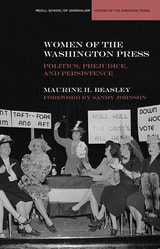
Women of the Washington Press
Politics, Prejudice, and PersistenceMaurine H. Beasley
Northwestern University Press, 2012
Women of the Washington Press argues that for nearly two centuries women journalists have persisted in their efforts to cover politics in the nation’s capital in spite of blatant prejudice and restrictive societal attitudes. They have been held back by the difficulties of combining two competing roles – those of women and journalists. As a group they have not agreed among themselves on feminist goals, while declaring that they aspire to be seen as professional journalists, not as advocates of a particular ideology. Still, they have brought a different perspective to the news, as they have fought hard to prove that they are capable of covering political issues just like male journalists. Over the years women have networked with each other and carved out areas of expertise – such as reporting of politically-oriented social events and coverage of first ladies – that men disdained, while they pressed to gain entrance to sex-segregated institutions like the National Press Club. Attempting to merge the personal and the political, they have raised issues like sexual harassment that men journalists left untouched. At a point today where they represent about half of accredited correspondents, women still face shifting barriers that make it difficult to combine the roles of both women and journalists in Washington, but they are continuing to broaden the definition of political journalism.

Women of the West
Caleb Seeling
University Press of Colorado, 2017
The 2017 volume in the Manifest West series, Women of the West, delves into the rich mixing pot created in the West, derived from assorted cultures and ethnicities and from a variety of beliefs and traditions across the world, all manifested in today’s Western culture.
There is no one type of Western woman. They are beautifully diverse in race, religion, and sexual orientation, yet they are bonded through the shared experiences and approaches to life that identify them as distinctly Western. Like individual squares of a quilt, women’s interactions with the culture, landscape, and geography of the West, as well as with their families and one another, offer us a unified variety.
In this collection of poems, short stories, and creative nonfiction, twenty-five writers and poets present a broad understanding of the Western woman, sometimes defying and sometimes reinforcing expectations and stereotypes. Perspectives vary from daughters grieving the loss of fathers whose rugged ways resonated with them to mothers striving to share an adoration for the delicacy of nature with their sons. For every woman seeking to conquer the wilderness, another yearns to be tamed by it. These are the stories of natives and Natives, of immigrants from around the world, spanning from eastern states of America to Vietnam in the East. From historical figures toting guns and whips to those who must overcome today’s manifestations of violence against women, these ladies, and so many more, are the Women of the West.
Manifest West is Western Press Books’ literary anthology series. The press, affiliated with Western State Colorado University, produces one anthology annually and focuses on Western regional writing.

Women on Ice
Methamphetamine Use among Suburban WomenMiriam Boeri
Rutgers University Press, 2013
2013 Choice Outstanding Academic Title
Methamphetamine (ice, speed, crystal, shard) has been called epidemic in the United States. Yet few communities were ready for increased use of methamphetamine by suburban women. Women on Ice is the first book to study exclusively the lives of women who use the drug and its effects on their families.
In-depth interviews with women in the suburban counties of one of the largest metropolitan areas in the U.S. chronicle the details of their initiation into methamphetamine, the turning points into problematic drug use, and for a few, their escape from lives veering out of control. Their life course and drug careers are analyzed in relation to the intersecting influences of social roles, relationships, social/political structures, and political trends. Examining the effects of punitive drug policy, inadequate social services, and looming public health risks, including HIV/AIDS and hepatitis C, the book gives voice to women silenced by shame.
Boeri introduces new and developing concepts in the field of addiction studies and proposes policy changes to more broadly implement initiatives that address the problems these women face. She asserts that if we are concerned that the war on drugs is a war on drug users, this book will alert us that it is also a war on suburban families.
Women on Their Own
Interdisciplinary Perspectives on Being SingleEdited by Rudolph M. Bell and Virginia Yans
Rutgers University Press, 2007
Modern American culture has raised generations of women who believed that their true and most important role in society was to get married and have children. Anything short of this role was considered abnormal, unfulfilling, and suspect. This female stereotype has been exploited and perpetuated by some key films in the late 40's and early 50's. But more recently we have seen a shift in the cultural view of the spinster. The erosion of the traditional nuclear family, as well as a larger range of acceptable life choices, has caused our perceptions of unmarried women to change. The film industry has reflected this shift with updated stereotypes that depict this cultural trend. The shift in the way we perceive spinsters is the subject of current academic research which shows that a person's perception of particular societal roles influences the amount of stress or depression they experience when in that specific role. Further, although the way our culture perceives spinsters and the way the film industry portrays them may be evolving, we still are still left with a negative stereotype.
Themes of choice and power have informed the lives of single women in all times and places. When considered at all in a scholarly context, single women have often been portrayed as victims, unhappily subjected to forces beyond their control. This collection of essays about "women on their own" attempts to correct that bias, by presenting a more complex view of single women in nineteenth- and twentieth-century United States and Europe.
Topics covered in this book include the complex and ambiguous roles that society assigns to widows, and the greater social and financial independence that widows have often enjoyed; widow culture after major wars; the plight of homeless, middle-class single women during the Great Depression; and comparative sociological studies of contemporary single women in the United States, Britain, Ireland, and Cuba.
Composed of papers presented to the Rutgers Center for Historical Analysis project on single women, this collection incorporates the work of specialists in anthropology, art history, history, and sociology. It is deeply connected with the emerging field of singleness studies (to which the RCHA has contributed an Internet-based bibliography of more than 800 items). All of the essays are new and have not been previously published.

Women on a Journey
Between Baghdad and LondonBy Haifa Zangana
University of Texas Press, 2006
Exiled, displaced, tortured, and grieving—each of the five Iraqi women whose lives and losses come to us through Haifa Zangana's skillfully wrought novel is searching in her own way for peace with a past that continually threatens to swallow up the present.
Majda, the widow of a former Ba'ath party official who was killed by the government he served. Adiba, a political dissident tortured under Saddam Hussein's regime. Um Mohammed, a Kurdish refugee who fled her home for political asylum. Iqbal, a divorced mother whose family in Iraq is suffering the effects of Western economic sanctions. And Sahira, the wife of a Communist politician, struggling with his disillusionment and her own isolation. Bound to one another by a common Iraqi identity and a common location in 1990s London, these women come together across differences in politics, ethnic and class background, age, and even language. In narrating the friendship that develops among them, Zangana captures their warmth and humor as well as their sadness, their feelings of despair along with their search for hope, their sense of uprootedness, and their yearnings for home.
Weaving between the women's memories of Iraq—nostalgic and nightmarish—and their lives as exiles in London, Zangana's novel gives voice to the richness and complexity of Iraqi women's experiences. Through their stories, the novel represents a powerful critique of the violence done to ordinary people by those who hold power both in Iraq and in the West.

Women on the Defensive
Living through Conservative TimesSylvia Bashevkin
University of Chicago Press, 1998
Prevailing accounts of the fate of women's movements in that decade ascribe their hardships to a postfeminist ideology or the result of a "backlash" against women, particularly in America. Sylvia Bashevkin's study excavates, however, a much more complex situation. By identifying the policies and goals held in common by feminists in all three countries and tracing their collision course with the conservative policies of the three administrations, she is able to document setbacks but also some progress, despite the right-of-center leaders. She also challenges the assumption that organized interests in the United States are less vulnerable in hard times than those in parliamentary systems, finding that the elections of Ronald Reagan, Brian Mulroney, and Margaret Thatcher had similar effects on both sides of the Atlantic. Her comparative analysis reveals that the policies of current leaders, while marginally better than their predecessors, will not allow women and women's movements to regain lost ground.
Organized thematically, rather than by country, Women on the Defensive describes the difficult relationship between feminists and conservatives during a time of bitter ideological and policy battles when the vibrant social movements of the 1960s and 1970s were seriously threatened.
Women on the Polish Labor Market
Henryk Domanski
Central European University Press, 2001

Women on the Verge
Japanese Women, Western DreamsKaren Kelsky
Duke University Press, 2001
In exploring the promises, limitations, and contradictions of these “occidental longings,” Women on the Verge exposes the racial and erotic politics of transnational mobility. Kelsky shows how female cosmopolitanism recontextualizes the well-known Western male romance with the Orient: Japanese women are now the agents, narrating their own desires for the “modern” West in ways that seem to defy Japanese nationalism as well as long-standing relations of power not only between men and women but between Japan and the West. While transnational movement is not available to all Japanese women, Kelsky shows that the desire for the foreign permeates many Japanese women’s lives. She also reveals how this feminine allegiance to the West—and particularly to white men—can impose its own unanticipated hegemonies of race, sexuality, and capital.
Combining ethnography and literary analysis, and bridging anthropology and cultural studies, Women on the Verge will also appeal to students and scholars of Japan studies, feminism, and global culture.
Women with Disabilities
Essays in Psychology, Culture, and Politicsedited by Michelle Fine and Adrienne Asch
Temple University Press, 1989
Women with disabilities are women first, sharing the dreams and disappointments common to women in a male-dominated society. But because society persists in viewing disability as an emblem of passivity and incompetence, disabled women occupy a devalued status in the social hierarchy. This book represents the intersection of the feminist and disability rights perspectives; it analyzes the forces that push disabled women towards the margins of social life, and it considers the resources that enable these women to resist the stereotype.
Drawing on law, social science, folklore, literature, psychoanalytic theory, and political activism, this book describes the experience of women with disabilities. The essays consider the impact of social class, race, the age at which disability occurs, and sexual orientation on the disabled woman's self esteem as well as on her life options. The contributors focus their inquiry on the self perceptions of disabled women and ask: From what sources do these women draw positive self images? How do they resist the culture's power to label them as deviant? The essays describe the ways in which disabled women face discrimination in the workplace and the failure of the mainstream women's movement to address their concerns.
In the series Health, Society, and Policy, edited by Sheryl Ruzek and Irving Kenneth Zola.

Women with a Thirst for Destruction
The Bad Mother in Russian CultureJenny Kaminer
Northwestern University Press, 2014
Winner, 2014 AWSS Best Book in Slavic/East European/Eurasian Women's Studies
In Russian culture, the archetypal mother is noble and self-sacrificing. In Women with a Thirst for Destruction, however, Jenny Kaminer shows how this image is destabilized during periods of dramatic rupture in Russian society, examining in detail the aftermath of three key moments in the country’s history: the emancipation of the serfs in 1861, the Russian Revolution of 1917, and the fall of the Communist regime in 1991. She explores works both familiar and relatively unexamined: Leo Tolstoy’s Anna Karenina, Mikhail Saltykov-Shchedrin’s The Golovlev Family, Fyodor Gladkov’s Cement, and Liudmila Petrushevskaia’s The Time: Night, as well as a late Soviet film (Vyacheslav Krishtofovich’s Adam’s Rib, 1990) and media coverage of the Chechen conflict. Kaminer’s book speaks broadly to the mutability of seemingly established cultural norms in the face of political and social upheaval.

Women's Activism in Contemporary Russia
Linda Racioppi
Temple University Press, 1997
Linda Racioppi and Katherine O'Sullivan See present a concise history of women's situation in tsarist Soviet Russia, which shows how their ability to organize was constrained by social strictures and state policies. They also analyze how the state-sponsored Soviet Women's Committee and new groups like the Independent Women's Forum, the Women's League, and the International Institute for Entrepreneurial Development responded to the challenges and opportunities of the transition. The authors examine the dynamics among these groups as well. The personal life histories of the activists reflect the ways women have responded to the changing political, economic, and social landscape in the former Soviet Union.
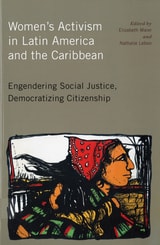
Women's Activism in Latin America and the Caribbean
Engendering Social Justice, Democratizing CitizenshipEdited and with an introduction by Elizabeth Maier and Nathalie Lebon
Rutgers University Press, 2010

Women's Activist Organizing in US History
A University of Illinois Press AnthologyCompiled by Dawn Durante; Introduction by Deborah Gray White
University of Illinois Press, 2022
Insightful and provocative, Women’s Activist Organizing in US History draws on both classic texts and recent bestsellers to reveal the breadth of activism by women in the United States in the nineteenth and twentieth centuries.
Contributors: Daina Ramey Berry, Melinda Chateauvert, Tiffany M. Gill, Nancy A. Hewitt, Treva B. Lindsey, Anne Firor Scott, Charissa J. Threat, Anne M. Valk, Lara Vapnek, and Deborah Gray White
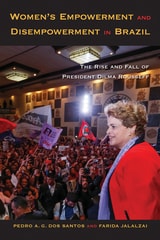
Women's Empowerment and Disempowerment in Brazil
The Rise and Fall of President Dilma RousseffPedro A. G. dos Santos and Farida Jalalzai
Temple University Press, 2021
In 2010, Dilma Rousseff was the first woman to be elected President in Brazil. She was re-elected in 2014 before being impeached in 2016 for breaking budget laws. Her popularity and controversy both energized and polarized the country. In Women’s Empowerment and Disempowerment in Brazil, dos Santos and Jalalzai examine Rousseff’s presidency and what it means for a woman to hold (and lose) the country’s highest power.
The authors examine the ways Rousseff exercised dominant authority and enhanced women’s political empowerment. They also investigate the extent her gender played a role in the events of her presidency, including the political and economic crises and her ensuing impeachment. Emphasizing women’s political empowerment rather than representation, the authors assess the effects of women executives to more directly impact female constituencies—how they can empower women by appointing them to government positions; make policies that advance women’s equality; and, through visibility, create greater support for female politicians despite rampant sexism.
Women’s Empowerment and Disempowerment in Brazil uses Rousseff’s presidency as a case study to focus on the ways she succeeded and failed in using her authority to empower women. The authors’ findings have implications throughout the world.
Women's History in Global Perspective, Volume 1
Edited by Bonnie G. Smith
University of Illinois Press, 2004
The American Historical Association's Committee on Women Historians commissioned some of the pioneering figures in women's history to prepare essays in their respective areas of expertise. Volume 1 of the three-volume series addresses the comparative themes that the editors and contributors see as central to understanding women's history around the world. Authors like Margaret Strobel, Alice Kessler-Harris, and Mrinalini Sinha provide overviews of the theory and practice of women's and gender history and analyze family history, nationalism, and work. Editor Bonnie G. Smith rounds out the collection with essays on religion, race, ethnicity, and the different varieties of feminism.
Authoritative and wide-ranging, Women's History in Global Perspective, Volume 1, offers an invaluable resource on the thought and methods of a generation's leading figures in feminist scholarship.
Contributors: Marjorie Bingham, Julia Clancy-Smith, Susan Kent, Alice Kessler-Harris, Mary Jo Maynes, Pamela Scully, Mrinalini Sinha, Margaret Strobel, and Ann B. Waltner
Women's History in Global Perspective, Volume 2
Edited by Bonnie G. Smith
University of Illinois Press, 2005
In Volume 2 of Women's History in Global Perspective, Bonnie G. Smith curates more essays by pioneering thinkers on issues that have shaped the history of women, this time with a focus on particular places and particular eras. The collection examines women from prehistory to ancient civilizations in Egypt, Israel, India, and beyond; a survey of women history in China, Japan, and Korea; women and gender in South and South East Asia; medieval women; women and gender in Colonial Latin America; and the history of women in the United States to 1865.
Inclusive and wide-ranging, Women's History in Global Perspective, Volume 2, offers an invaluable collection of feminist scholarship on overlooked and marginalized topics.
Contributors: Judith M. Bennett, Kathleen Brown, Brady Hughes, Sarah Shaver Hughes, Susan Mann, Barbara N. Ramusack, and Ann Twinam.
Women's History in Global Perspective, Volume 3
Edited by Bonnie G. Smith
University of Illinois Press, 2005
The concluding volume of Women's History in Global Perspective discusses contemporary trends in gender and women's history. Bonnie G. Smith edits essays that include women and gender in the history of sub-Saharan Africa and Middle Eastern women since the rise of Islam. Other contributors offer a transnational approach to women in early and modern Europe; look at women's history in Russia and the Soviet Union; discuss the national period in Latin American women's history; and provide a global perspective on women in North American history after 1865.
Contributors: Bonnie S. Anderson, Ellen Dubois, Barbara Engel, Cheryl Johnson-Odim, Nikki R. Keddie, Asunción Lavrin, and Judith P. Zinsser