Results by title
8812 books match the query 'Political Science' and 354 start with w
Work Of Cities
Susan E. Clarke
University of Minnesota Press, 1998
Examines the new role of cities in a global economy.
Are cities obsolete relics of an earlier era? In this pathbreaking book, Susan E. Clarke and Gary L. Gaile contend that contrary to this conventional wisdom, cities are growing in importance. Far from irrelevant, local governments are vital political arenas for the new work of cities-empowering their citizens to adapt and serve as catalysts for the global economy.
Using Robert Reich’s The Work of Nations as a point of departure, the authors argue that globalism, coupled with increasing disparities of wealth and power, changes not only the work of nations but also the role of communities. Clarke and Gaile begin by detailing the transformation of the United States to a postindustrial economy situated in a “global web.” They then examine the emergence of local entrepreneurial policy choices in the context of economic and political restructuring and in the absence of federal resources. Using empirical data to test assumptions about what leads cities to choose new policies, Clarke and Gaile explore local context through four case studies: Cleveland, Tacoma, Syracuse, and Jacksonville. They discuss human capital as the linchpin of globalization, arguing that analytical ability, information skills, and the capacity to innovate are all key to wealth creation. In conclusion, they contend that inattention to the decline in human and social capital will ultimately undermine any local development efforts-unless local policymakers craft responses to globalization that integrate rather than isolate citizens.The Work of Cities is both bold and nuanced, pragmatic yet compassionate in its recommendations. It is essential reading for anyone who cares about the fate of our metropolitan communities and the people who live there. 0-8166-2892-0 Cloth $47.95xx0-8166-2893-9 Paper $18.95240 pages 9 tables, 2 figures 5 7/8 x 9 July Globalization and Community Series, volume 1Translation inquiries: University of Minnesota Press
Work Without End
Abandoning Shorter Hours for the Right to WorkBenjamin Kline Hunnicutt
Temple University Press, 1990
Work, Retire, Repeat
The Uncertainty of Retirement in the New EconomyTeresa Ghilarducci
University of Chicago Press, 2024
A damning portrait of the dire realities of retirement in the United States—and how we can fix it.
While the French went on strike in 2023 to protest the increase in the national retirement age, workers in the United States have all but given up on the notion of dignified retirement for all. Instead, Americans—whose elders face the highest risk of poverty compared to workers in peer nations—are fed feel-good stories about Walmart clerks who can finally retire because a customer raised the necessary funds through a GoFundMe campaign.
Many argue that the solution to the financial straits of American retirement is simple: people need to just work longer. Yet this call to work longer is misleading in a multitude of ways, including its endangering of the health of workers and its discrimination against people who work in lower-wage occupations. In Work, Retire, Repeat, Teresa Ghilarducci tells the stories of elders locked into jobs—not because they love to work but because they must.
But this doesn’t need to be the reality. Work, Retire, Repeat shows how relatively low-cost changes to how we finance and manage retirement will allow people to truly choose how they spend their golden years.
Work, Retire, Repeat
The Uncertainty of Retirement in the New EconomyTeresa Ghilarducci
University of Chicago Press, 2024
A damning portrait of the dire realities of retirement in the United States—and how we can fix it.
While the French went on strike in 2023 to protest the increase in the national retirement age, workers in the United States have all but given up on the notion of dignified retirement for all. Instead, Americans—whose elders face the highest risk of poverty compared to workers in peer nations—are fed feel-good stories about Walmart clerks who can finally retire because a customer raised the necessary funds through a GoFundMe campaign.
Many argue that the solution to the financial straits of American retirement is simple: people need to just work longer. Yet this call to work longer is misleading in a multitude of ways, including its endangering of the health of workers and its discrimination against people who work in lower-wage occupations. In Work, Retire, Repeat, Teresa Ghilarducci tells the stories of elders locked into jobs—not because they love to work but because they must.
But this doesn’t need to be the reality. Work, Retire, Repeat shows how relatively low-cost changes to how we finance and manage retirement will allow people to truly choose how they spend their golden years.
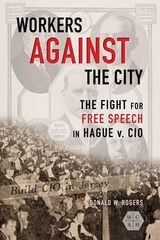
Workers against the City
The Fight for Free Speech in Hague v. CIODonald W. Rogers
University of Illinois Press, 2020
Clear-eyed and comprehensive, Workers against the City revises the view of a milestone case that continues to impact Americans' constitutional rights today.
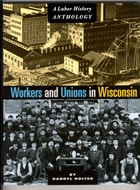
Workers and Unions in Wisconsin
A Labor History AnthologyDarryl Holter
Wisconsin Historical Society Press, 1999
Wisconsin accounts for about two percent of the nation's total population, but its contribution to the history of working people and social reform extends far beyond these numbers. In the early years of the twentieth century, Wisconsin became a veritable laboratory for social and political reform, producing such landmark legislation as workers' compensation, unemployment insurance, and other laws that became models for several states and helped shape federal labor policies. The study of the history of labor also began in Wisconsin when University of Wisconsin economics professor John R. Commons started to document the history of work and labor in America.
Workers and Unions in Wisconsin includes nearly one hundred selections covering the period from 1850 to 1990, illustrated by scores of historic photos, most of which have never before been reprinted. Editor Darryl Holter has included accounts of episodes that took place in more than twenty-five cities and towns in Wisconsin, including labor activities at such nationally known companies as Oscar Mayer, Kohler, Case, Allis-Chalmers, and Ray-O-Vac and workers as diverse as dairy farmers and university teaching assistants, lumberjacks and hosiery makers, municipal employees and paper mill workers. The result is a book that will fascinate and inform anyone interested in American labor history and economics, as well as in the personal stories that are part of any great societal change.
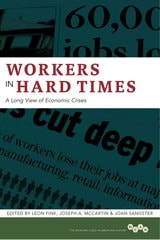
Workers in Hard Times
A Long View of Economic CrisesEdited by Leon Fink, Joseph A. McCartin, and Joan Sangster
University of Illinois Press, 2020
Since the Industrial Revolution, contributors argue, factors such as race, sex, and state intervention have mediated both the effect of economic depressions on workers' lives and workers' responses to those depressions. Contributors also posit a varying dynamic between political upheaval and economic crises, and between workers and the welfare state.
The volume ends with an examination of today's "Great Recession": its historical distinctiveness, its connection to neoliberalism, and its attendant expressions of worker status and agency around the world. A sobering conclusion lays out a likely future for workers--one not far removed from the instability and privation of the nineteenth century.
The essays in this volume offer up no easy solutions to the challenges facing today's workers. Nevertheless, they make clear that cogent historical thinking is crucial to understanding those challenges, and they push us toward a rethinking of the relationship between capital and labor, the waged and unwaged, and the employed and jobless.
Contributors are Sven Beckert, Sean Cadigan, Leon Fink, Alvin Finkel, Wendy Goldman, Gaetan Heroux, Joseph A. McCartin, David Montgomery, Edward Montgomery, Scott Reynolds Nelson, Melanie Nolan, Bryan D. Palmer, Joan Sangster, Judith Stein, Hilary Wainright, and Lu Zhang.
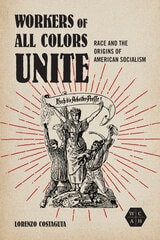
Workers of All Colors Unite
Race and the Origins of American SocialismLorenzo Costaguta
University of Illinois Press, 2023
Costaguta charts the socialist movement’s journey through the conflict and down a path that ultimately abandoned scientific racism in favor of an internationalist class-focused and racial-conscious American socialism. As he shows, the shift relied on a strong immigrant influence personified by the cosmopolitan Marxist thinker and future IWW cofounder Daniel De Leon. The class-focused movement that emerged became American socialism’s most common approach to race in the twentieth century and beyond.
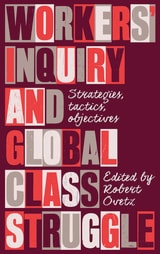
Workers' Inquiry and Global Class Struggle
Strategies, Tactics, ObjectivesRobert Ovetz
Pluto Press, 2020
By engaging in what Karl Marx called a workers' inquiry, workers and militant co-researchers are studying their working conditions, the technical composition of capital, and how to recompose their own power in order to devise new tactics, strategies, organisational forms and objectives. These workers' inquiries, from call centre workers to teachers, and adjunct professors, are re-energising unions, bypassing unions altogether or innovating new forms of workers' organisations.
In one of the first major studies to critically assess this new cycle of global working class struggle, Robert Ovetz collects together case studies from over a dozen contributors, looking at workers' movements in China, Mexico, the US, South Africa, Turkey, Argentina, Italy, India and the UK. The book reveals how these new forms of struggle are no longer limited to single sectors of the economy or contained by state borders, but are circulating internationally and disrupting the global capitalist system as they do.
Workforce Development Politics
Civic Capacity And Performanceedited by Robert P. Giloth, Published in association with the Annie E. Casey Foundation.
Temple University Press, 2004
Workforce Intermediaries
For The 21St Centuryedited by Robert P. Giloth, Published in association with The American Assembly, Columbia University
Temple University Press, 2003
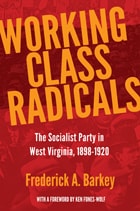
Working Class Radicals
The Socialist Party in West Virginia, 1898-1920Frederick A. Barkey
West Virginia University Press, 2012
Working Class Radicals: The Socialist Party in West Virginia, 1898-1920 examines the rise and fall of organized socialism in West Virginia through an exploration of the demographics of membership, oral interview material gathered in the 1960s from party members, and the collapse of the party in the wake of the Paint Creek-Cabin Creek coal-mining strike of 1912. The first local branch of the West Virginia Socialist Party was established in Wheeling in 1901 and by 1914 several thousand West Virginians were dues-paying members of local branches. By 1910 local Socialists began to elect candidates to office and in 1912 more than 15,000 West Virginian voters cast their ballots for Socialist presidential candidate Eugene Debs. The progress that West Virginia socialists achieved on the electoral front was a reflection of the party’s strategy of increasing class-consciousness by working with existing unions to build the power of the labor movement. The party appealed to a fairly broad cross section of wage earners and its steady growth also owed much to the fact that many members of the middle class were attracted to the cause. Several factors combined to send the party into rapid decline, most importantly deep fissures between class and craft factions of the party and 1915 legislation making third party political participation difficult. Working Class Radicals offers insight into the various internal and external forces that doomed the party and serves as a cautionary tale to contemporary political leaders and organizers.
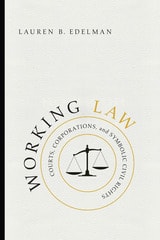
Working Law
Courts, Corporations, and Symbolic Civil RightsLauren B. Edelman
University of Chicago Press, 2016
One reason for the limited success of antidiscrimination policies, argues Lauren B. Edelman, is that the law regulating companies is broad and ambiguous, and managers therefore play a critical role in shaping what it means in daily practice. Often, what results are policies and procedures that are largely symbolic and fail to dispel long-standing patterns of discrimination. Even more troubling, these meanings of the law that evolve within companies tend to eventually make their way back into the legal domain, inconspicuously influencing lawyers for both plaintiffs and defendants and even judges. When courts look to the presence of antidiscrimination policies and personnel manuals to infer fair practices and to the presence of diversity training programs without examining whether these policies are effective in combating discrimination and achieving racial and gender diversity, they wind up condoning practices that deviate considerably from the legal ideals.
Working Under Different Rules
Richard B. Freeman
Russell Sage Foundation, 1994
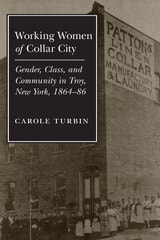
Working Women of Collar City
Gender, Class, and Community in Troy, 1864-86Carole Turbin
University of Illinois Press, 1992
Why have some working women succeeded at organizing in spite of obstacles to labor activity? Under what circumstances were they able to form alliances with male workers?
Carole Turbin explores these and other questions by examining the case of Troy, New York. In the 1860s, Troy produced nearly all the nation's detachable shirt collars and cuffs. The city's collar laundresses were largely Irish immigrants. Their union was officially the nation's first women's labor organization, and one of the best organized. Turbin provides a new perspective on gender and shows that women's family ties are not necessarily a conservative influence but may encourage women's and men's collective action.

Working for Democracy
American Workers from the Revolution to the PresentEdited by Paul Buhle and Alan Dawley
University of Illinois Press, 1985
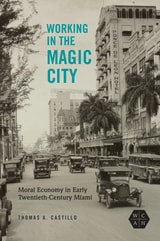
Working in the Magic City
Moral Economy in Early Twentieth-Century MiamiThomas A. Castillo
University of Illinois Press, 2022
Working, Shirking, and Sabotage
Bureaucratic Response to a Democratic PublicJohn Brehm and Scott Gates
University of Michigan Press, 1999
Working-Class Girls Don’t Become Artists
Looking at Art and ClassJanet Zandy
University of Illinois Press, 2026
Ambitious and original, Working-Class Girls Don’t Become Artists rewrites art history from a working-class perspective.
Workingmen's Democracy
The Knights of Labor and American PoliticsLeon Fink
University of Illinois Press, 1983
Runner-up in both the John H. Dunning Prize and Albert J. Beveridge Award competitions

World Crisis Effects on Social Security in Latin America and the Caribbean
Lessons and PoliciesCarmelo Mesa-Lago
University of London Press, 2010

World Development
An IntroductionProdromos Panayiotopoulos
Pluto Press, 2001
World Development offers answers to these questions. A comprehensive introductory guide for students, teachers, volunteers and NGO workers in development, World Development examines the substantive issues surrounding development, industrialisation and globalization and places them within a historic context. It outlines the historical development of the world economy and assesses the current prospects for developing countries. The book contains in-depth analyses of how particular industries operate at local and global levels, drawing from case studies on textiles, tourism and copper. There are also case studies of specific countries, including South Korea, Cyprus, Mexico, China and Spain.
World Orders, Old and New
Noam Chomsky
Pluto Press, 1997
World Politics Simulations in a Global Information Age
Hemda Ben-Yehuda, Luba Levin-Banchik, and Chanan Naveh
University of Michigan Press, 2015
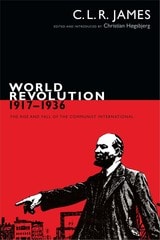
World Revolution, 1917–1936
The Rise and Fall of the Communist InternationalC. L. R. James
Duke University Press, 2017
World Rule
Accountability, Legitimacy, and the Design of Global GovernanceJonathan GS Koppell
University of Chicago Press, 2010
Dilemmas from climate change to financial meltdowns make it clear that global interconnectedness is the norm in the twenty-first century. As a result, global governance organizations (GGOs)—from the World Trade Organization to the Forest Stewardship Council—have taken on prominent roles in the management of international affairs. These GGOs create and promulgate rules to address a host of pressing problems. But as World Rule reveals, they struggle to meet two challenges: building authority despite limited ability to impose sanctions and maintaining legitimacy while satisfying the demands of key constituencies whose support is essential to a global rulemaking regime.
Through a novel empirical study of twenty-five GGOs, Jonathan GS Koppell provides a clearer picture of the compromises within and the competition among these influential institutions by focusing attention on their organizational design. Analyzing four aspects of GGO organization in depth—representation and administration, the rulemaking process, adherence and enforcement, and interest group participation—Koppell describes variation systemically, identifies patterns, and offers explanations that link GGO design to the fundamental challenge of accountability in global governance.
World War and World Peace in the Age of Digital Capitalism
By Christian Fuchs
University of Westminster Press, 2025
In World War and World Peace in the Age of Digital Capitalism, Christian Fuchs asks: how do violence and war manifest themselves in global digital capitalism? How do digital capitalism and digital technologies manifest themselves in violence and warfare? What are the prospects for world peace today?
To prevent world war and advance world peace we need a better understanding of war and violence and their contexts and causes. We need to ask what war is, what violence is, what war and peace look like today and how they have changed in the 21st century. This book addresses these urgent questions and provides possible answers.
World-Systems Analysis
An IntroductionImmanuel Wallerstein
Duke University Press, 2004
Wallerstein explains the defining characteristics of world-systems analysis: its emphasis on world-systems rather than nation-states, on the need to consider historical processes as they unfold over long periods of time, and on combining within a single analytical framework bodies of knowledge usually viewed as distinct from one another—such as history, political science, economics, and sociology. He describes the world-system as a social reality comprised of interconnected nations, firms, households, classes, and identity groups of all kinds. He identifies and highlights the significance of the key moments in the evolution of the modern world-system: the development of a capitalist world-economy in the sixteenth-century, the beginning of two centuries of liberal centrism in the French Revolution of 1789, and the undermining of that centrism in the global revolts of 1968. Intended for general readers, students, and experienced practitioners alike, this book presents a complete overview of world-systems analysis by its original architect.
Worldly Ethics
Democratic Politics and Care for the WorldElla Myers
Duke University Press, 2013

Worlds Apart
Bosnian Lessons for Global SecuritySwanee Hunt
Duke University Press, 2011

Worlds Beyond Bios
The Life of Matter and the Matter of LifeSophie Chao, Christine J. Winter, and David Schlosberg, editors
Duke University Press, 2026
Worse than the Devil
Anarchists, Clarence Darrow, and Justice in a Time of TerrorDean A. Strang
University of Wisconsin Press, 2013
Largely overlooked for almost a century, the compelling story of this case emerges vividly in this meticulously researched book by Dean A. Strang. In its focus on a moment when patriotism, nativism, and terror swept the nation, Worse than the Devil exposes broad concerns that persist even today as the United States continues to struggle with administering criminal justice to newcomers and outsiders.
Worse than the Devil
Anarchists, Clarence Darrow, and Justice in a Time of TerrorDean A. Strang
University of Wisconsin Press, 2016
Worst Cases
Terror and Catastrophe in the Popular ImaginationLee Clarke
University of Chicago Press, 2005
We consider the few who live in fear of such scenarios to be alarmist or even paranoid. But Worst Cases shows that such individuals—like Cassandra foreseeing the fall of Troy—are more reasonable and prescient than you might think. In this book, Lee Clarke surveys the full range of possible catastrophes that animate and dominate the popular imagination, from toxic spills and terrorism to plane crashes and pandemics. Along the way, he explores how the ubiquity of worst cases in everyday life has rendered them ordinary and mundane. Fear and dread, Clarke argues, have actually become too rare: only when the public has more substantial information and more credible warnings will it take worst cases as seriously as it should.
A timely and necessary look into how we think about the unthinkable, Worst Cases will be must reading for anyone attuned to our current climate of threat and fear.
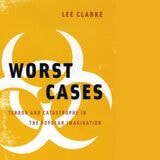
Worst Cases
Terror and Catastrophe in the Popular ImaginationLee Clarke
University of Chicago Press, 2005
Al Qaeda detonates a nuclear weapon in Times Square during rush hour, wiping out half of Manhattan and killing 500,000 people. A virulent strain of bird flu jumps to humans in Thailand, sweeps across Asia, and claims more than fifty million lives. A single freight car of chlorine derails on the outskirts of Los Angeles, spilling its contents and killing seven million. An asteroid ten kilometers wide slams into the Atlantic Ocean, unleashing a tsunami that renders life on the planet as we know it extinct.
We consider the few who live in fear of such scenarios to be alarmist or even paranoid. But Worst Cases shows that such individuals—like Cassandra foreseeing the fall of Troy—are more reasonable and prescient than you might think. In this book, Lee Clarke surveys the full range of possible catastrophes that animate and dominate the popular imagination, from toxic spills and terrorism to plane crashes and pandemics. Along the way, he explores how the ubiquity of worst cases in everyday life has rendered them ordinary and mundane. Fear and dread, Clarke argues, have actually become too rare: only when the public has more substantial information and more credible warnings will it take worst cases as seriously as it should.
A timely and necessary look into how we think about the unthinkable, Worst Cases will be must reading for anyone attuned to our current climate of threat and fear.
Wounded I Am More Awake
Finding Meaning after TerrorJulia Lieblich
Vanderbilt University Press, 2012
This gripping account raises questions for healers, survivors, and readers striving to understand the reality of war and the aftermath of terror. Is it possible to find meaning after enduring crimes against humanity? Can people heal after trauma?
Human rights journalist Julia Lieblich takes the reader through Boskailo's early years under Tito to the wars when friends turned on friends. She documents his harrowing experiences in the camps, where the men he once joined for coffee murder his best friend from childhood.
But the story does not end there. Boskailo moves to the United States and decides to become a psychiatrist so he can guide survivors through the long-term process of restoring hope. Today, inspired by the late psychiatrist and Holocaust survivor Viktor Frankl, Boskailo uses his own experience to help patients mourn their losses and find meaning in the aftermath of terror.
Wrecked
Deinstitutionalization and Partial Defenses in State Higher Education PolicyBarrett J. Taylor
Rutgers University Press, 2022
Wrestling with Starbucks
Conscience, Capital, CappuccinoFellner, Kim
Rutgers University Press, 2008
Armed with an open mind and a sense of humor, Fellner takes readers on an expedition into the muscle and soul of the coffee company. She finds a corporation filled with contradictions: between employee-friendly processes and anti-union practices; between an internationalist vision and a longing for global dominance; between community individuality and cultural hegemony. On a daily basis Starbucks walks a fine line. It must be profitable enough to please Wall Street and principled enough to please social justice advocates. Although observers might argue that the company has done well at achieving a balance, Starbucks's leaders run the risk of satisfying neither constituency and must constantly justify themselves to both.
Through the voices of Central American coffee farmers, officers at corporate headquarters, independent café owners, unionists, baristas, traders, global justice activists, and consumers, Fellner explores the forces that affect Starbucks's worth and worthiness. Along the way, she subjects her own unabashedly progressive perspective to scrutiny and emerges with a compelling and unexpected look at Starbucks, the global economy, our economic convictions, and the values behind our morning cup of joe.
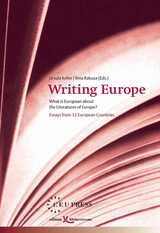
Writing Europe
What is European about the Literatures of Europe? Essays from 33 European CountriesUrsula Keller
Central European University Press, 2004
What do we mean by Europe? Thirty-three renowned authors from 33 European countries attempt an answer-in serious, ironic, skeptical, or optimistic tones. Their essays, written for the symposium held at the Literaturhaus Hamburg in 2003, reflect the astonishing diversity of European cultures. Not only are the style and experience of the individual authors remarkable for their distinctiveness, but their perspectives and views also appear to have little in common-at first glance.
The editors have created a unique literary project, a milestone in the vitally necessary cultural discourse about Europe.
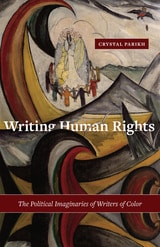
Writing Human Rights
The Political Imaginaries of Writers of ColorCrystal Parikh
University of Minnesota Press, 2017
The legal texts and aspirational ideals of human rights are usually understood and applied in a global context with little bearing on the legal discourse, domestic political struggles, or social justice concerns within the United States. In Writing Human Rights, Crystal Parikh uses the international human rights regime to read works by contemporary American writers of color—Toni Morrison, Chang-rae Lee, Ana Castillo, Aimee Phan, and others—to explore the conditions under which new norms, more capacious formulations of rights, and alternative kinds of political communities emerge.
Parikh contends that unlike humanitarianism, which views its objects as victims, human rights provide avenues for the creation of political subjects. Pairing the ethical deliberations in such works as Beloved and A Gesture Life with human rights texts like the United Nations Convention Against Torture, she considers why principles articulated as rights in international conventions and treaties—such as the right to self-determination or the right to family—are too often disregarded at home. Human rights concepts instead provide writers of color with a deeply meaningful method for political and moral imagining in their literature.
Affiliating transnational works of American literature with decolonization, socialist, and other political struggles in the global south, this book illuminates a human rights critique of idealized American rights and freedoms that have been globalized in the twenty-first century. In the absence of domestic human rights enforcement, these literatures provide a considerable repository for those ways of life and subjects of rights made otherwise impossible in the present antidemocratic moment.
Writing Political History Today
Edited by Willibald Steinmetz, Ingrid Gilcher-Holtey, and Heinz-Gerhard Haupt
Campus Verlag, 2013
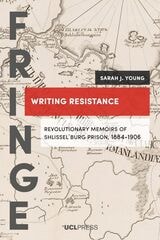
Writing Resistance
Revolutionary Memoirs of Shlissel´burg Prison, 1884-1906Sarah J. Young
University College London, 2021
In 1884, sixty-eight prisoners convicted of terrorism and revolutionary activity were transferred to a new maximum-security prison at Shlissel´burg Fortress near St. Petersburg. Inhuman conditions in the prison caused severe mental and physical deterioration among the prisoners, and over half died. However, the survivors fought back to reform the prison and improve the inmates’ living conditions. Their memoirs enshrined their experience in revolutionary mythology and served as an indictment of the Tsarist autocracy’s loss of moral authority. This book features three of these memoirs—translated into English for the first time—as well as an introductory essay that analyzes the memoirs’ construction of a collective narrative of resilience, resistance, and renewal. The first extended study of these memoirs in English, this book uncovers an important episode in the history of political imprisonment. It will be of interest to scholars and students of the Russian revolution, carceral history, penal practice and behaviors, and prison and life writing.
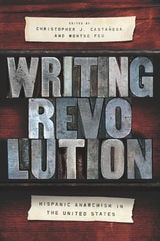
Writing Revolution
Hispanic Anarchism in the United StatesEdited by Christopher J. Castañeda and Montse Feu
University of Illinois Press, 2019
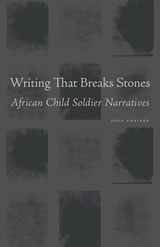
Writing That Breaks Stones
African Child Soldier NarrativesJoya Uraizee
Michigan State University Press, 2020

Writing Underground
Reflections on Samizdat Literature in Totalitarian CzechoslovakiaMartin Machovec
Karolinum Press, 2019
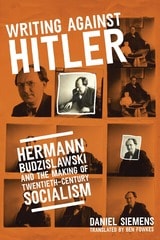
Writing against Hitler
Hermann Budzislawski and the Making of Twentieth-Century SocialismDaniel Siemens, Translated by Ben Fowkes
University of Wisconsin Press, 2025
Through the twin stories of a highly ambitious figure and the legendary publication he headed, Siemens charts the course of the intellectual Left’s rise and decline in power during the decades that shaped the political divides of the mid-twentieth century. Crucially, his account challenges the widely held belief that post-1989 German unification has represented a victory over the traumas of the past. Instead, Siemens shows the complexity of different strains of socialist thought and activity and reveals the contested place of Nazi Germany’s exiles at the center of Cold War Germany’s cultural history.

Writing against War
Literature, Activism, and the British Peace MovementCharles Andrews
Northwestern University Press, 2017
The cataclysm of the First World War gave rise to the British Peace Movement, a spectrum of pacifist, internationalist, and antiwar organizations and individuals. Antiwar sentiments found expression not only in editorials, criticism, and journalism but also in novels and other works of literature. Writing against War examines the work of Aldous Huxley, Storm Jameson, Siegfried Sassoon, Rose Macaulay, and Virginia Woolf to analyze the effects of their attempts to employ fiction in the service of peace activism. It further traces how Huxley, Woolf, and others sought to reconcile their antiwar beliefs with implacable military violence.
The British Peace Movement's failure to halt the rise of fascism and the Second World War continues to cast a shadow over contemporary pacifist movements. Writing about War will fascinate scholars of peace studies and literature and offers valuable insights for current-day peace activists and artists who seek to integrate creativity with activism.
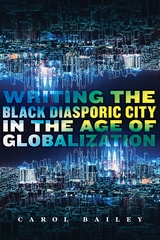
Writing the Black Diasporic City in the Age of Globalization
Carol Bailey
Rutgers University Press, 2023
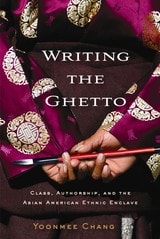
Writing the Ghetto
Class, Authorship, and the Asian American Ethnic EnclaveChang, Yoonmee
Rutgers University Press, 2010
Yoonmee Chang examines the class structure of Chinatowns, Koreatowns, Little Tokyos, and Little Indias, arguing that ghettoization in these spaces is disguised. She maintains that Asian American literature both contributes to and challenges this masking through its marginalization by what she calls the "ethnographic imperative." Chang discusses texts from the late nineteenth century to the present, including those of Sui Sin Far, Winnifred Eaton, Monica Sone, Fae Myenne Ng, Chang-rae Lee, S. Mitra Kalita, and Nam Le. These texts are situated in the contexts of the Chinese Exclusion Era, Japanese American internment during World War II, the globalization of Chinatown in the late twentieth century, the Vietnam War, the 1992 Los Angeles riots, and the contemporary emergence of the "ethnoburb."