Results by title
39 books match the query 'Translating'

A History of German Jewish Bible Translation
Abigail Gillman
University of Chicago Press, 2018
This book is the first in English to offer a close analysis of German Jewish translations as part of a larger cultural project. Looking at four distinct waves of translations, Abigail Gillman juxtaposes translations within each that sought to achieve similar goals through differing means. As she details the history of successive translations, we gain new insight into the opportunities and problems the Bible posed for different generations and gain a new perspective on modern German Jewish history.
A Restless Search
A History of Persian Translations of the BibleKenneth J. Thomas
SBL Press, 2015
A literary detective story, a historical survey, and an important contribution to translation studies
This book from Kenneth J. Thomas is both a philological and linguistic analysis of Persian translations and a call for interfaith cooperation. Thomas appraises biblical translation efforts from the fifth to the twenty-first centuries of Persian history when successive translators and groups of translators, sometimes of different faiths, worked to reshape and refine versions of the Bible in the supple Persian language of their times. Restless, impelled, and wide-ranging, this is a story of translations commissioned by shahs, undertaken by Christian and Jewish communities, and produced by teams working outside the country.
Features
- Demonstration of the effects of the lack of a standard Persian vocabulary for key biblical terms on literary style and word choice
- Technical analyses and overviews of Persian biblical translations
- A careful examination of sixteen centuries' worth of Bible translations
Arabic Computational Linguistics
Edited by Ali Farghaly
CSLI, 2010
This comprehensive volume explores new Arabic machine translation systems, innovations in speech recognition and mention detection, tree banks, and linguistic corpora. Arabic Computational Linguistics will be an indispensable reference for language researchers and practitioners alike.

Beyond Translation
Essays toward a Modern PhilologyA. L. Becker
University of Michigan Press, 2000
Designing Multilingual Experiences in Technical Communication
Laura Gonzales
Utah State University Press, 2022
Through grounded case studies of multilingual technical communication projects in the US, Mexico, and Nepal, Laura Gonzales illustrates the multiple tensions at play in transnational research and demonstrates how technical communicators can leverage contemporary translation practices and methodologies to engage in research with multilingual communities that is justice-driven, participatory, and reciprocal.
Designing Multilingual Experiences in Technical Communication is of value to researchers and students across fields who are interested in designing projects alongside multilingual communities from historically marginalized backgrounds.
Faithful Renderings
Jewish-Christian Difference and the Politics of TranslationNaomi Seidman
University of Chicago Press, 2006
Bringing together central issues in translation studies with episodes in Jewish–Christian history, Naomi Seidman considers a range of texts, from the Bible to Elie Wiesel’s Night, delving into such controversies as the accuracy of various Bible translations, the medieval use of converts from Judaism to Christianity as translators, the censorship of anti-Christian references in Jewish texts, and the translation of Holocaust testimony. Faithful Renderings ultimately reveals that translation is not a marginal phenomenon but rather a crucial issue for understanding the relations between Jews and Christians and indeed the development of each religious community.
Grammar Lessons
Translating a Life in SpainMichele Morano
University of Iowa Press, 2007
Morano focuses first on her year of living in Oviedo, in the early 1990s, a time spent immersing herself in a new culture and language while working through the relationship she had left behind with an emotionally dependent and suicidal man. Next, after subsequent trips to Spain, she explores the ways that travel sparks us to reconsider our personal histories in the context of larger historical legacies. Finally, she turns to the aftereffects of travel, to the constant negotiations involved in retelling and understanding the stories of our lives. Throughout she details one woman’s journey through vocabulary and verb tense toward a greater sense of her place in the world.
Grammar Lessons illustrates the difficulty and delight, humor and humility of living in a new language and of carrying that pivotal experience forward. Michele Morano’s beautifully constructed essays reveal the many grammars and many voices that we collect, and learn from, as we travel.

How Comics Travel
Publication, Translation, Radical LiteraciesKatherine Kelp-Stebbins
The Ohio State University Press, 2022
Honorable Mention, 2023 CSS Charles Hatfield Book Prize
In How Comics Travel: Publication, Translation, Radical Literacies, Katherine Kelp-Stebbins challenges the clichéd understanding of comics as a “universal” language, circulating without regard for cultures or borders. Instead, she develops a new methodology of reading for difference. Kelp-Stebbins’s anticolonial, feminist, and antiracist analytical framework engages with comics as sites of struggle over representation in a diverse world. Through comparative case studies of Metro, Tintin, Persepolis, and more, she explores the ways in which graphic narratives locate and dislocate readers in every phase of a transnational comic’s life cycle according to distinct visual, linguistic, and print cultures. How Comics Travel disengages from the constrictive pressures of nationalism and imperialism, both in comics studies and world literature studies more broadly, to offer a new vision of how comics depict and enact the world as a transcultural space.
Ideology, Culture, and Translation
Scott S. Elliott
SBL Press, 2012
Interpreting in Legal Settings
Debra Russell
Gallaudet University Press, 2009
The work of interpreters in legal settings, whether they are spoken or signed language interpreters, is filled with enormous complexity and challenges. This engrossing volume presents six, data-based studies from both signed and spoken language interpreter researchers on a diverse range of topics, theoretical underpinnings, and research methodologies.
In the first chapter, Ruth Morris analyzes the 1987 trial of Ivan (John) Demjanjuk in Jerusalem, and reveals that what might appear to be ethical breaches often were no more than courtroom dynamics, such as noise and overlapping conversation. Waltraud Kolb and Franz Pöchhacker studied 14 asylum appeals in Austria and found that interpreters frequently aligned themselves with the adjudicators. Bente Jacobsen presents a case study of a Danish-English interpreter whose discourse practices expose her attempts to maintain, mitigate, or enhance face among the participants.
In the fourth chapter, Jemina Napier and David Spencer investigate the effectiveness of interpreting in an Australian courtroom to determine if deaf citizens should participate as jurors. Debra Russell analyzed the effectiveness of preparing sign language interpreter teams for trials in Canada and found mixed results. The final chapter presents Zubaidah Ibrahim-Bell’s research on the inadequate legal services in Malaysia due to the fact that only seven sign interpreters are available. Taken together, these studies point to a “coming of age” of the field of legal interpreting as a research discipline, making Interpreting in Legal Settings an invaluable, one-of-a-kind acquisition.
Justice as Translation
An Essay in Cultural and Legal CriticismJames Boyd White
University of Chicago Press, 1990
"White has given us not just a novel answer to the traditional jurisprudential questions, but also a new way of reading and evaluating judicial opinions, and thus a new appreciation of the liberty which they continue to protect."—Robin West, Times Literary Supplement
"James Boyd White should be nominated for a seat on the Supreme Court, solely on the strength of this book. . . . Justice as Translation is an important work of philosophy, yet it is written in a lucid, friendly style that requires no background in philosophy. It will transform the way you think about law."—Henry Cohen, Federal Bar News & Journal
"White calls us to rise above the often deadening and dreary language in which we are taught to write professionally. . . . It is hard to imagine equaling the clarity of eloquence of White's challenge. The apparently effortless grace of his prose conveys complex thoughts with deceptive simplicity."—Elizabeth Mertz, Yale Journal of Law and the Humanities
"Justice as Translation, like White's earlier work, provides a refreshing reminder that the humanities, despite the pummelling they have recently endured, can be humane."—Kenneth L. Karst, Michigan Law Review
L'influence de l'arameen sur les traducteurs de la LXX principalement sur les traducteurs grecs poste
Anne-Françoise Loiseau
SBL Press, 2016
Further your understanding of the methods and peculiarities of the ancient Greek translators and revisers of the Hebrew Bible
Loiseau presents examples of Greek translations of verses from the Hebrew Bible that clearly illustrate the influence of Aramaic or Late Hebrew on the semantics of the Septuagint translators. The author postulates that the Greek translators based their translations on Hebrew-Aramaic equivalents maintained as lists or even on proto-targumim such as those found at Qumran, both predecessors of the later Aramaic targumic translations. Loiseau's examples provide convincing explanations for different coincidences occurring between the Greek translations and the interpretative traditions found in the targumim and help elucidate a number of puzzling translations where two Aramaic words that are very similar graphically or phonetically were erroneously interchanged.
Features
- Unique insight into ancient Jewish exegesis
- English summary
- The first extensive illustration of the influence of the Aramaic or Late Hebrew on the Septuagint
Legal Interpreting
Teaching, Research, and PracticeJeremy L. Brunson
Gallaudet University Press, 2022
Each chapter features discussion questions and prompts that interpreter educators can use in the classroom. While intended as a foundational text for use in courses, this body of work also provides insight into the current state of the legal interpreting field and will be a valuable resource for scholars, practitioners, and consumers.

MacArthur's Japanese Constitution
Kyoko Inoue
University of Chicago Press, 1991
"This is an important book. . . . This is the most significant work on postwar Japanese constitutional history to appear in the West. It is highly instructive about the century-long process of cultural conflict in the evolution of government and society in modern Japan."—Thomas W. Burkman, Monumenta Nipponica

Manifold Greatness
The Making of the King James BibleEdited by Helen Moore and Julian Reid
Bodleian Library Publishing, 2011
Published to commemorate the four hundredth anniversary of the publication of the King James Bible, Manifold Greatness tells the story of the creation and immediate afterlife of the King James translation of the Bible, first published in 1611. Revolutionary at its time, the King James translation quickly became the dominant authorized translation of the Christian Bible in English. There are more than one billion copies in print, making it the best-selling book of all time, and its effect on the English language is incalculable, both in common speech and in literature.
This accessible and richly illustrated visual history contains eighty color illustrations, including images of rare manuscripts, artifacts, and archival material such as the annotated Bodleian Bishops’ Bible of 1602, pages from the Wycliffite and Tyndale Bibles, and an edition of the Bishop’s Bible owned by Elizabeth I. Eight chapters contributed by leading academics in the field discuss the history of biblical translation, the political background of the project, the Oxford Translators—including Henry Savile, John Rainolds, and John Harmar—and their working milieu, the cultural politics, and the reception and influence of the King James Bible up until the 1769 publication of the Oxford Standard Edition, which was the first revision of the original 1611 translation. Also included is a look at the later reception of the King James Bible in America, including a chapter specifically on the King James Bible and the Folger Shakespeare Library.
Manifold Greatness brings together key research and documentation to provide a lively and comprehensive visual account to celebrate one of the most important occasions in publishing and modern religious history.
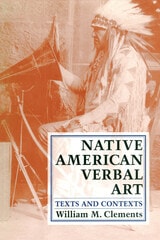
Native American Verbal Art
Texts and ContextsWilliam M. Clements
University of Arizona Press, 1996
He examines in depth Henry Timberlake’s 1765 translation of a Cherokee war song that was probably the first printed English rendering of a Native American "poem." He discusses early-nineteenth-century textualizers and translators who saw in Native American verbal art a literature manqué that they could transform into a fully realized literature, with particular attention to the work of Henry Rowe Schoolcraft, an Indian agent and pioneer field collector who developed this approach to its fullest. He discusses the "scientific" textualizers of the late nineteenth century who viewed Native American discourse as a data source for historical, ethnographic, and linguistic information, and he examines the work of Natalie Curtis, whose field research among the Hopis helped to launch a wave of interest in Native Americans and their verbal art that continues to the present.
In addition, Clements addresses theoretical issues in the textualization, translation, and anthologizing of American Indian oral expression. In many cases the past records of Native American expression represent all we have left of an entire verbal heritage; in most cases they are all that we have of a particular heritage at a particular point in history. Covering a broad range of materials and their historical contexts, Native American Verbal Art identifies the agendas that have informed these records and helps the reader to determine what remains useful in them. It will be a welcome addition to the fields of Native American studies and folklore.

New World Maker
Radical Poetics, Black Internationalism, and the Translations of Langston HughesRyan James Kernan, foreword by Robin D. G. Kelley
Northwestern University Press, 2022
Through original research and close readings alert to the foreign prosody underlying Hughes’s work, New World Maker recuperates his political writing, which had been widely maligned by Cold War detractors and adherents of New Criticism, and affirms his place as a progenitor of African diasporic literature and within the pantheon of US modernists. Demonstrating the integral part translation played in Hughes’s creative process, this book challenges a number of common assumptions about this canonical thinker and offers important insights for scholars of African diasporic literature, comparative literature, and American, Caribbean, and translation studies.

Norwegian-English Dictionary
A Pronouncing and Translating Dictionary of Modern Norwegian (Bokmål and Nynorsk) with a Historical and Grammatical IntroductionEditor-in-Chief Einar Haugen
University of Wisconsin Press, 1974
For more than forty years, the Haugen Norwegian–English Dictionary has been regarded as the foremost resource for both learners and professionals using English and Norwegian. With more than 60,000 entries, it is esteemed for its breadth, its copious grammatical detail, and its rich idiomatic examples. In his introduction, Einar Haugen, a revered scholar and teacher of Norwegian to English speakers, provides a concise overview of the history of the language, presents the pronunciation of contemporary Norwegian, and introduces basic grammatical structures, including the inflection of nouns and adjectives and the declension of verbs.
Paradise from behind the Iron Curtain
Reading, Translating and Staging Milton in Communist HungaryMiklós Péti
University College London, 2022
This book provides a detailed survey of the key responses to Milton’s work in Hungarian state socialism. The four decades between 1948 and 1989 saw a radical revision of previous critical and artistic positions and resulted in the emergence of some characteristically Eastern European responses to Milton’s works. Appraisals of Milton’s works in the communist era proved more controversial than receptions of other major Western authors: on the one hand, Milton’s participation in the Civil War earned him the title of a “revolutionary hero,” on the other hand, religious aspects of his works were often disregarded and sometimes proactively suppressed. This book highlights these diverging responses and places them in the wider context of socialist cultural policy. In addition, it presents the full Hungarian script of the 1970 theatrical performance of Milton’s Paradise Lost, the first of its kind since the work’s publication, alongside a parallel English translation, enabling a deeper reflection on Milton’s original theodicy and its possible interpretations in communist Hungary.
Rhetorical Mediator
Understanding Agency in Indigenous Translation and Interpretation through Indigenous Approaches to UXNora K. Rivera
Utah State University Press, 2023
In places where Indigenous language translation and interpretation are greatly needed, Indigenous language mediators often lack adequate systems to professionalize their field while withstanding Western practices that do not align with their worldviews. Through a “design thinking” methodology based on her work organizing and participating in an Indigenous-focused interpreter and translator conference, Rivera examines testimonios and semi-structured interviews conducted with Indigenous interpreters and translators to emphasize dialogue and desahogo (emotional release) as Indigenous communication practices.
The Rhetorical Mediator advocates for Indigenous language practices that have been sidelined by Western scholarship and systems, helping to create more equitable processes to directly benefit Indigenous individuals and other underrepresented groups. This book benefits specialists, including UX researchers, technical and professional communicators, interpreters and translators, and Indigenous professionals, as well as academics teaching graduate and undergraduate methods, Indigenous rhetoric and translation, and UX courses.
Science in Translation
Movements of Knowledge through Cultures and TimeScott L. Montgomery
University of Chicago Press, 2000
"[A] book of great richness, as much for its examples as for its ideas, which keenly illustrate the development of knowledge across languages and epochs. It is a book to read and reread. Its subject is important; it is ours, it is our history." -André Clas, Meta: Journal des Traducteurs
"[T]his book . . . seems to stand alone on the shelf. A good thing, therefore, that it is so full of good things, both in the content and the prose." —William R. Everdell, MAA Online
"[A]n impressive work. . . . By reminding us of the role of diverse cultures in the elevation of science within a particular nation or civilization, the book makes a substantial contribution to the postmodern worldview that emphasizes multiculturalism." —Choice
Sign Language Interpreting
Deconstructing the Myth of NeutralityMelanie Metzger
Gallaudet University Press, 1998
Sign Language Interpreting relies upon an interactional sociolinguistic approach to ask fundamental questions regarding interpreter neutrality. First, do interpreters influence discourse, and if so, how? Also, what kind of expectations do the participants bring to the event, and what do the interpreters bring to discussions? Finally, how do their remarks affect their alignment with participants in the interaction? Using careful assessments of how these interviews were framed, and also re-interviewing the participants for their perspectives, this penetrating book discloses the ways in which interpreters influence these situations. It also addresses the potential implications of these findings regarding sign language interpretation in medical, educational, and all other general interactions. Interpreter trainers and their students will join certified interpreters and Deaf studies scholars in applauding and benefiting from the fresh ground broken by this provocative study.
Sites of Translation
What Multilinguals Can Teach Us about Digital Writing and RhetoricLaura Gonzales
University of Michigan Press, 2018
Winner of the 2016 Sweetland Digital Rhetoric Collaborative Book Prize
Sites of Translation illustrates the intricate rhetorical work that multilingual communicators engage in as they translate information for their communities. Blending ethnographic and empirical methods from multiple disciplines, Laura Gonzales provides methodological examples of how linguistic diversity can be studied in practice, both in and outside the classroom, and provides insights into the rhetorical labor that is often unacknowledged and made invisible in multilingual communication. Sites of Translation is relevant to researchers and teachers of writing as well as technology designers interested in creating systems, pedagogies, and platforms that will be more accessible and useful to multilingual audiences. Gonzales presents multilingual communication as intellectual labor that should be further valued in both academic and professional spaces, and supported by multilingual technologies and pedagogies that center the expertise of linguistically diverse communicators.
Strange Cocktail
Translation and the Making of Modern Hebrew PoetryAdriana X. Jacobs
University of Michigan Press, 2018
For centuries, poets have turned to translation for creative inspiration. Through and in translation, poets have introduced new poetic styles, languages, and forms into their own writing, sometimes changing the course of literary history in the process. Strange Cocktail is the first comprehensive study of this phenomenon in modern Hebrew literature of the late nineteenth century to the present day. Its chapters on Esther Raab, Leah Goldberg, Avot Yeshurun, and Harold Schimmel offer close readings that examine the distinct poetics of translation that emerge from reciprocal practices of writing and translating. Working in a minor literary vernacular, the translation strategies that these poets employed allowed them to create and participate in transnational and multilingual poetic networks. Strange Cocktail thereby advances a comparative and multilingual reframing of modern Hebrew literature that considers how canons change and are undone when translation occupies a central position—how lines of influence and affiliation are redrawn and literary historiographies are revised when the work of translation occupies the same status as an original text, when translating and writing go hand in hand.

The Afterlife of Images
Translating the Pathological Body between China and the WestAri Larissa Heinrich
Duke University Press, 2008
Combining literary studies, the history of science, and visual culture studies, Heinrich analyzes the rhetoric and iconography through which medical missionaries transmitted to the West an image of China as “sick” or “diseased.” He also examines the absorption of that image back into China through missionary activity, through the earliest translations of Western medical texts into Chinese, and even through the literature of Chinese nationalism. Heinrich argues that over time “scientific” Western representations of the Chinese body and culture accumulated a host of secondary meanings, taking on an afterlife with lasting consequences for conceptions of Chinese identity in China and beyond its borders.
The Coming of the King James Gospels
A Collection of the Translators’ Work-in-ProgressWard S. Allen
University of Arkansas Press, 1994
The Coming of the King James Gospels is a primary publication exploring the handwritten annotations of the Oxford New Testament Company, made as members completed Matthew, Mark, Luke, and John. Their original edited pages, gathered into one binding as the Bodleian Bishops’ Bible ([1602] b.1), offer us the only known surviving record of their monumental work.
Ward Allen’s painstakingly produced collation of this Bishops’ Bible is available for the first time in acessible visual layout. It allows a reader to study simultaneously the three texts, that of the original Bishops’ Bible, the revisions suggested for the 1602 text, and the final King James version of the Gospels. Rejected readings reveal the reasoning which led to the wording of the final text. Beautifully produced, The Coming of the King James Gospels is now a prime resource for all students of the Bible and the English language.

The King James Version at 400
Assessing Its Genius as Bible Translation and Its Literary InfluenceDavid G. Burke
SBL Press, 2013

The Port Royal New Testament
Jansenists and Vernacular Scripture in Seventeenth-Century FranceElizaveta Al-Faradzh
Catholic University of America Press, 2026
The SBL Commentary on the Septuagint
An IntroductionDirk Büchner
SBL Press, 2017
Explore the groundwork for a new commentary series from SBL Press
This book contains verse by verse commentary on selections from the Greek text of the Hebrew Bible known as the Septuagint. Each chapter is from a different bible book, for which there will eventually be a full commentary published in the Society of Biblical Literature Commentary on the Septuagint. The commentary series focuses on the actual process of translation, so its authors try to describe and explain the kinds of decisions the ancient Alexandrian translators made about how to render Hebrew into Greek.
Features
- Translations from and commentary on Genesis, Exodus, Leviticus, Numbers, Esther, Job, and Psalms Contributions from eight experts on the Septuagint
- Guidelines and procedures used in the production of the translations in the series
Thinking While Black
Translating the Politics and Popular Culture of a Rebel GenerationDaniel McNeil
Rutgers University Press, 2023
Listen along with this Spotify playlist inspired by the book!
For copyright reasons, this book is available in the U.S.A only.
Tradition and Innovation
English and German Studies on the SeptuagintMartin Rösel
SBL Press, 2018
Explore the opportunities and challenges of Septuagint studies
Recent research into the Septuagint has revealed numerous examples of modifications of the meaning of the Hebrew text in the course of its translation into Greek. This collection of essays by one of the leading scholars on the Septuagint shows how complex the translation of individual books was, provides reasons for differences between the Hebrew and Greek Bibles, and paves the way for a theology of the Septuagint. Articles introduce the field of Septuagint studies, the problem of the Letter of Aristeas, and the Hellenistic environment and the hermeneutics of Hellenistic Judaism.
Features:
- A methodological discussion of whether and how a theology of the Septuagint can be written
- Essays introducing the field of Septuagint studies and its Hellenistic environment and the hermeneutics of Hellenistic Judaism
- Fifteen English and German essays covering twenty-five years of Septuagint research

Translating from the Portuguese
A Life TranslatedElizabeth Lowe
Tagus Press, 2025
Elizabeth Lowe charts her journey to becoming a translator through a series of vignettes relating her life as a “third-culture kid” and living and working abroad in a kaleidoscope of cultures and languages. She lived in Germany as a young child immediately after the Second World War while her father worked in the Nuremberg trials and as a newly married military spouse during the Vietnam War; she lived in Haiti just prior to Papa Doc's consolidation of power, in Brazil when the military dictatorship seized the country in its two-decade vise, at the University of Coimbra, Portugal during Salazar, and Colombia at the height of the guerrilla conflicts, and in Miami during the heyday of the cartels. The book is a reflection on translation as an art, on five decades teaching languages, literatures, and translation, and on her close relationship with writers from the Lusophone world. It explores theoretical aspects of translation as well as practical challenges faced by translators, especially those working in Portuguese literature. Lowe offers intimate insights into the creative process of the writers she translates and her own philosophy of literary translation.
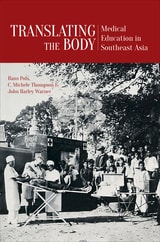
Translating the Body
Medical Education in Southeast AsiaEdited by Hans Pols, C. Michele Thompson, and John Harley Warner
National University of Singapore Press, 2017
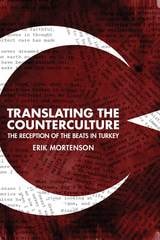
Translating the Counterculture
The Reception of the Beats in TurkeyErik Mortenson
Southern Illinois University Press, 2018
Mortenson examines how in Turkey the Beats have been framed by the label “underground literature”; explores the ways they are repurposed in the counterculture-inspired journal Underground Poetix; looks at the reception of Jack Kerouac’s On the Road and how that reaction provides a better understanding of the construction of “American-ness”; delves into the recent obscenity trial of William S. Burroughs’s novel The Soft Machine and the attention the book’s supporters brought to government repression and Turkish homophobia; and analyzes the various translations of Allen Ginsberg’s Howl to demonstrate the relevance Ginsberg still holds for social rebellion today.
Translating the Counterculture takes a revolutionary look at how contemporary readers in other parts of the world respond to the Beats. Challenging and unsettling an American-centric understanding of the Beats, Mortenson pushes the discipline toward a fuller consideration of their cultural legacy in a globalized twenty-first century.
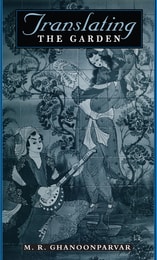
Translating the Garden
By M. R. Ghanoonparvar
University of Texas Press, 2002
Translating a work of literature from one language to another is an art form, in which the translated work becomes a "conduit" through which the reader of one language may pass into the cultural world of another. For the translator, the process of translation offers an intimate experience of the text that is perhaps unavailable even to the author. And yet, as M. R. Ghanoonparvar observes at the outset of this book, "every translation is inevitably a failure, with occasional moments of success."
In Translating the Garden, Ghanoonparvar allows readers to watch him in the process of translating Shahrokh Meskub's Goftogu dar Bagh(Dialogue in the Garden) from Persian into English. This short philosophical work uses a conversation between a writer and a painter to explore Persian perceptions of art, literature, nature, identity, and spirituality. As he translates the text, Ghanoonparvar discusses the myriad decisions that a literary translator faces, from word choices to the problems of conveying cultural concepts and deciphering authorial intent. He also compares some of his translated passages with those of other translators to highlight the uniqueness of each act of translation. The complete English translation of Dialogue in the Garden rounds out the volume.

Translating the Ketubah
The Jewish Marriage Contract in America and EnglandBenjamin Steiner
University of Alabama Press, 2025
A groundbreaking exploration of the Jewish marriage contract and its evolution in English translation
Translating the Ketubah offers a fresh perspective on the ketubah, the Jewish marriage contract. Traditionally composed in Aramaic, ketubot have been examined in other books within the frameworks of Jewish law and Jewish art. Here, however, Benjamin Steiner shows how translations of the ketubah into English helped Jews adapt to changing social and economic circumstances across more than two centuries.
Steiner uses ketubot to trace the intricate relationship between religious law and secular law, the changing status of women within and outside Judaism, and the complex desire of Jews to be both authentically Jewish and fully acculturated. Steiner further shows how ketubah translation aided Jews to achieve different cultural goals. It has been used to uphold rabbinic law in communities where religious affiliation was voluntary to ensure women's economic security. It has also facilitated socialization with non-Jews and addressed perceived crises within the Jewish family.
Through a nuanced analysis of ketubah translations from England and various regions of the United States from the late eighteenth century to the present, Steiner offers a detailed look at how Jews have adapted ancient tradition to meet the challenges and opportunities of different historical contexts. His work sheds new light on the rich history of American and British Jewry.
Translating the Unspeakable
Poetry and the Innovative NecessityKathleen Fraser
University of Alabama Press, 1999
A prominent avant-garde poet charts both her personal artistic development and the difficulties faced by women writers pursuing innovative paths.
An accomplished and influential poet, Kathleen Fraser has been instrumental in drawing attention to other women poets working outside the mainstream. Translating the Unspeakable gathers eighteen of her essays written over nearly twenty years, combining autobiography and criticism to examine what it means for any artist to innovate instead of following an already traveled path.
In autobiographical passages Fraser tells how her generation was influenced by revolutions in art and philosophy during the early 1960s and how she spent years pursuing idiosyncratic means of rediscovering the poem's terms. By the 1970s her evolving poetics were challenged by questions of gender, until immersion in feminist/modernist scholarship led her to initiate greater dialogue among experimentalist poets.
Other essays examine modernist women writers, their contemporary successors, and the visual poetics they have practiced. By exploring the work of such poets as H. D., Mina Loy, Lorine Niedecker, and Barbara Guest, Fraser conveys their struggle to establish a presence within accepted poetic conventions and describes the role experimentation plays in helping women overcome self-imposed silence.
All of Fraser's writings explore how the search to find one's own way of speaking into a very private yet historic space—of translating the unspeakable—drives poetic experimentation for women and men alike. This provocative book provides a glimpse into the thought processes of
the poetic mind, enhancing our understanding of innovative writing.
Translation, Sociolinguistic, and Consumer Issues in Interpreting
Melanie Metzger
Gallaudet University Press, 2007
The Third Volume in the Studies in Interpretation Series
This new volume focuses on scholarship over a refined spectrum of issues that confront interpreters internationally. Editors Melanie Metzger and Earl Fleetwood call upon researchers from the United States, Ireland, Australia, and the Philippines to share their findings in six chapters.
In the first chapter, Roberto R. Santiago and Lisa A. Frey Barrick reveal how interpreters deal with translating source language idioms into American Sign Language (ASL). In Chapter 2, Lorraine Neeson and Susan Foley-Cave review the particular demands for decision-making that face interpreters on several levels in a class on semantics and pragmatics. Liza B. Martinez explains in Chapter 3 the complicated, multilingual process of code switching by Filipino interpreters when voice-interpreting Filipino Sign Language.
Chapter 4 offers a deconstruction by Daniel Roush of the stereotype that Deaf ASL-users are direct or blunt, based on his analysis of two speech/social activities of requests and refusals. Jemina Napier investigates interpreting from the perspective of deaf consumers in Australia in Chapter 5 to explore their agenda for quality interpreting services. In the final chapter, Amy Frasu evaluates methods for incorporating visual aids into interpretations from spoken English to American Sign Language and the potential cognitive dissonance for deaf persons that could result.
Transpoetic Exchange
Haroldo de Campos, Octavio Paz, and Other Multiversal DialoguesMarília Librandi
Bucknell University Press, 2020
The volume is divided into three parts. “Essays” unites seven texts by renowned scholars who focus on the relationship between the two authors, their impact and influence, and their cultural resonance by exploring explore the historical background and the different stylistic and cultural influences on the authors, ranging from Latin America and Europe to India and the U.S. The second section, “Remembrances,” collects four experiences of interaction with Haroldo de Campos in the process of transcreating Paz’s poem and working on Transblanco and Galáxias. In the last section, “Poems,” five poets of international standing--Jerome Rothenberg, Antonio Cicero, Keijiro Suga, André Vallias, and Charles Bernstein.
Paz and Campos, one from Mexico and the other from Brazil, were central figures in the literary history of the second half of the 20th century, in Latin America and beyond. Both poets signal the direction of poetry as that of translation, understood as the embodiment of otherness and of a poetic tradition that every new poem brings back as a Babel re-enacted.
This volume is a print corollary to and expansion of an international colloquium and poetic performance held at Stanford University in January 2010 and it offers a discussion of the role of poetry and translation from a global perspective. The collection holds great value for those interested in all aspects of literary translation and it enriches the ongoing debates on language, modernity, translation and the nature of the poetic object.
Published by Bucknell University Press. Distributed worldwide by Rutgers University Press.