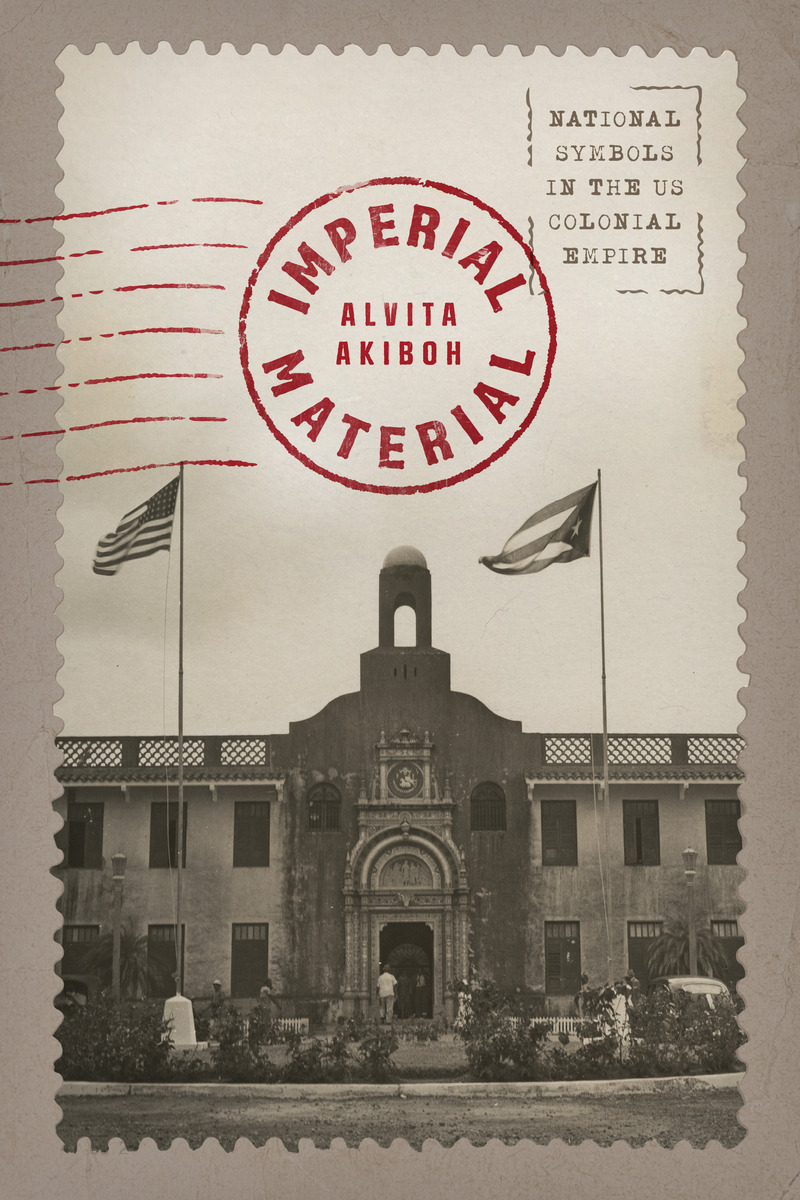
Imperial Material: National Symbols in the US Colonial Empire
University of Chicago Press, 2023
Cloth: 978-0-226-82636-3 | Paper: 978-0-226-82848-0 | eISBN: 978-0-226-82847-3
Library of Congress Classification F965.A35 2023
Dewey Decimal Classification 929.90973
Cloth: 978-0-226-82636-3 | Paper: 978-0-226-82848-0 | eISBN: 978-0-226-82847-3
Library of Congress Classification F965.A35 2023
Dewey Decimal Classification 929.90973
ABOUT THIS BOOK | AUTHOR BIOGRAPHY | REVIEWS | TOC | REQUEST ACCESSIBLE FILE
ABOUT THIS BOOK
An ambitious history of flags, stamps, and currency—and the role they played in US imperialism.
In Imperial Material, Alvita Akiboh reveals how US national identity has been created, challenged, and transformed through embodiments of empire found in US territories, from the US dollar bill to the fifty-star flag. These symbolic objects encode the relationships between territories—including the Philippines, the Hawaiian Islands, Puerto Rico, and Guam—and the empire with which they have been entangled. Akiboh shows how such items became objects of local power, their original intent transmogrified. For even if imperial territories were not always front and center for federal lawmakers and administrators, their inhabitants remained continuously aware of the imperial United States, whose presence announced itself on every bit of currency, every stamp, and the local flag.
In Imperial Material, Alvita Akiboh reveals how US national identity has been created, challenged, and transformed through embodiments of empire found in US territories, from the US dollar bill to the fifty-star flag. These symbolic objects encode the relationships between territories—including the Philippines, the Hawaiian Islands, Puerto Rico, and Guam—and the empire with which they have been entangled. Akiboh shows how such items became objects of local power, their original intent transmogrified. For even if imperial territories were not always front and center for federal lawmakers and administrators, their inhabitants remained continuously aware of the imperial United States, whose presence announced itself on every bit of currency, every stamp, and the local flag.
See other books on: Emblems, National | Imperialism | Money | Signs and symbols | Territories and possessions
See other titles from University of Chicago Press