
 A SCHOLARLY BOOK REPOSITORY
1447 start with A start with A

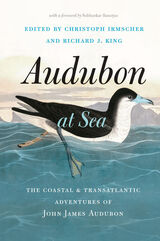
The American naturalist John James Audubon (1785–1851) is widely remembered for his iconic paintings of American birdlife. But as this anthology makes clear, Audubon was also a brilliant writer—and his keen gaze took in far more than creatures of the sky. Culled from his published and unpublished writings, Audubon at Sea explores Audubon’s diverse observations of the ocean, the coast, and their human and animal inhabitants. With Audubon expert Christoph Irmscher and scholar of the sea Richard J. King as our guides, we set sail from the humid expanses of the American South to the shores of England and the chilly landscapes of the Canadian North. We learn not only about the diversity of sea life Audubon documented—birds, sharks, fish, and whales—but also about life aboard ship, travel in early America, Audubon’s work habits, and the origins of beloved paintings. As we face an unfathomable loss of seabirds today, Audubon’s warnings about the fragility of birdlife in his time are prescient and newly relevant.
Charting the course of Audubon’s life and work, from his birth in Haiti to his death in New York City, Irmscher and King’s sweeping introduction and carefully drawn commentary confront the challenges Audubon’s legacy poses for us today, including his participation in American slavery and the thousands of birds he killed for his art. Rounded out by hundreds of historical and ornithological notes and beautiful illustrations, and with a foreword by distinguished photographer and conservationist Subhankar Banerjee, Audubon at Sea is the most comprehensively annotated collection of Audubon’s work ever published.
During the decades of Bourbon ascendancy after 1874, Alabama institutions like those in other southern states were dominated by whites. Former slave and sharecropper Jack Turner refused to accept a society so structured. Highly intelligent, physically imposing, and an orator of persuasive talents, Turner was fearless before whites and emerged as a leader of his race. He helped to forge a political alliance between blacks and whites that defeated and humiliated the Bourbons in Choctaw County, the heart of the Black Belt, in the election of 1882. That summer, after a series of bogus charges and arrests, Turner was accused of planning to lead his private army of blacks in a general slaughter of the county whites. Justice was forgotten in the resultant fear and hysteria.

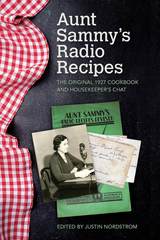
From the 1920s through the 1940s, American kitchens had a welcome guest in “Aunt Sammy,” a creation of the US Department of Agriculture and its Bureau of Home Economics. Through the radio program Housekeeper’s Chat, Aunt Sammy gave lively advice on food preparation, household chores, parenting and children, and gender dynamics as she encouraged women to embrace the radio and a host of modern consumer household products. The recipes she shared were gathered, in 1927, into a cookbook that became a valuable household manual for tens of thousands of Americans.
Aunt Sammy’s Radio Recipes revives the famous cookbook and joins it with extensive excerpts from the accompanying radio broadcasts, providing a fascinating study of how a witty and charming fictionalized personae became one of the early celebrity chefs of the radio age.
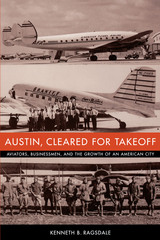
Austin, Texas, entered the aviation age on October 29, 1911, when Calbraith Perry Rodgers landed his Wright EX Flyer in a vacant field near the present-day intersection of Duval and 45th Streets. Some 3,000 excited people rushed out to see the pilot and his plane, much like the hundreds of thousands who mobbed Charles A. Lindbergh and The Spirit of St. Louis in Paris sixteen years later. Though no one that day in Austin could foresee all the changes that would result from manned flight, people here—as in cities and towns across the United States—realized that a new era was opening, and they greeted it with all-out enthusiasm.
This popularly written history tells the story of aviation in Austin from 1911 to the opening of Austin-Bergstrom International Airport in 1999. Kenneth Ragsdale covers all the significant developments, beginning with military aviation activities during World War I and continuing through the barnstorming era of the 1920s, the inauguration of airmail service in 1928 and airline service in 1929, and the dedication of the first municipal airport in 1930. He also looks at the University of Texas's role in training pilots during World War II, the growth of commercial and military aviation in the postwar period, and the struggle over airport expansion that occupied the last decades of the twentieth century. Throughout, he shows how aviation and the city grew together and supported each other, which makes the Austin aviation experience a case study of the impact of aviation on urban communities nationwide.
Winner, Southwest Book Award, Border Regional Library Association, 2015
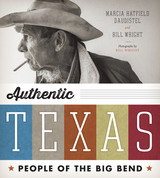
The Texas of vast open spaces inhabited by independent, self-reliant men and women may be more of a dream than a reality for the state’s largely urban population, but it still exists in the Big Bend. One of the most sparsely settled areas of the United States, the Big Bend attracts people who are willing to forego many modern conveniences for a lifestyle that proclaims “don’t fence me in.” Marcia Hatfield Daudistel and Bill Wright believe that the character traits exemplified by folks in the Big Bend—including self-sufficiency, friendliness, and neighborliness—go back to the founding of the state. In this book, they introduce us to several dozen Big Bend residents—old and young, long-settled and recently arrived, racially diverse—who show us what it means to be an authentic Texan.
Interviewing people in Marathon, Big Bend National Park, Terlingua, Redford, Presidio, Alpine, Marfa, Valentine, Balmorhea, Limpia Crossing, and Fort Davis, Daudistel and Wright discover the reasons why residents of the Big Bend make this remote area of Texas their permanent home. In talking to ranchers and writers, entrepreneurs and artists, people living off the grid and urban refugees, they find a common willingness to overcome difficulties through individual skill and initiative. As one interviewee remarks, you have to have a lot of “try” in you to make a life in the Big Bend. Bill Wright’s photographs of the people and landscapes are a perfect complement to the stories of these authentic Texans. Together, these voices and images offer the most complete, contemporary portrait of the Texas Big Bend.

Americans love to hate consumerism. Scholars, intellectuals, musicians, and writers of all kinds take pleasure in complaining that consumer culture endangers the “real” things in life, including self-determination and individualism. In Authenticity Guaranteed, Sally Robinson brings to light the unacknowledged gender and class assumptions of anti-consumerist critique in the second half of the twentieth century. American anti-consumerism, despite its apparent complexity, takes a remarkably consistent and predictable narrative form. From the mid-century Organization Man to the millennial No Logo, anti-consumerist critique reinforces the gender order by insisting that authenticity is threatened, and masculine agency curtailed, by the feminizing forces of consumer culture.
Robinson identifies a tradition of masculine protest and rebellion against feminization in iconic texts such as The Catcher in the Rye and Fight Club, as well as in critiques of postmodernism, academic denunciations of shopping, and a variety of other discourses that aim to diagnose what ails American consumer culture. This fresh and timely argument enters into conversation with a wide range of existing scholarship and opens up new questions for scholarly and political discussion.
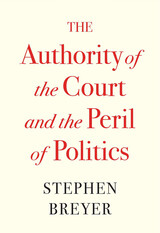
A sitting justice reflects upon the authority of the Supreme Court—how that authority was gained and how measures to restructure the Court could undermine both the Court and the constitutional system of checks and balances that depends on it.
A growing chorus of officials and commentators argues that the Supreme Court has become too political. On this view the confirmation process is just an exercise in partisan agenda-setting, and the jurists are no more than “politicians in robes”—their ostensibly neutral judicial philosophies mere camouflage for conservative or liberal convictions.
Stephen Breyer, drawing upon his experience as a Supreme Court justice, sounds a cautionary note. Mindful of the Court’s history, he suggests that the judiciary’s hard-won authority could be marred by reforms premised on the assumption of ideological bias. Having, as Hamilton observed, “no influence over either the sword or the purse,” the Court earned its authority by making decisions that have, over time, increased the public’s trust. If public trust is now in decline, one part of the solution is to promote better understandings of how the judiciary actually works: how judges adhere to their oaths and how they try to avoid considerations of politics and popularity.
Breyer warns that political intervention could itself further erode public trust. Without the public’s trust, the Court would no longer be able to act as a check on the other branches of government or as a guarantor of the rule of law, risking serious harm to our constitutional system.

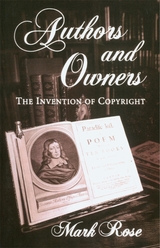
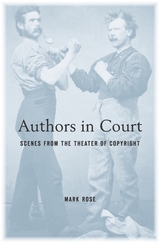
Through a series of vivid case studies, Authors in Court charts the 300-year-long dance between authorship and copyright that has shaped each institution’s response to changing social norms of identity, privacy, and celebrity.
“A literary historian by training, Rose is completely at home in the world of law, as well as the history of photography and art. This is the work of an interdisciplinary scholar at the height of his powers. The arguments are sophisticated and the elegant text is a work of real craftsmanship. It is superb.”
—Lionel Bently, University of Cambridge
“Authors in Court is well-written, erudite, informative, and engaging throughout. As the chapters go along, we see the way that personalities inflect the supposedly impartial law; we see the role of gender in authorial self-fashioning; we see some of the fault lines which produce litigation; and we get a nice history of the evolution of the fair use doctrine. This is a book that should at least be on reserve for any IP–related course. Going forward, no one writing about any of the cases Rose discusses can afford to ignore his contribution.”
—Lewis Hyde, Kenyon College
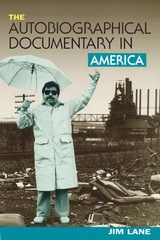
Since the late 1960s, American film and video makers of all genres have been fascinated with themes of self and identity. Though the documentary form is most often used to capture the lives of others, Jim Lane turns his lens on those media makers who document their own lives and identities. He looks at the ways in which autobiographical documentaries—including Roger and Me, Sherman’s March, and Silverlake Life—raise weighty questions about American cultural life. What is the role of women in society? What does it mean to die from AIDS? How do race and class play out in our personal lives? What does it mean to be a member of a family? Examining the history, diversity, and theoretical underpinnings of this increasingly popular documentary form, Lane tracks a fundamental transformation of notions of both autobiography and documentary.
Charles Evans Hughes (1862-1948) was lawyer, governor of New York, Supreme Court Justice, presidential candidate in 1916, Secretary of State in the Harding and Coolidge administrations, a member of the World Court, and Chief Justice of the United States from 1930 until his retirement in 1941. To some, Hughes appeared larger than life. Robert H. Jackson once said of him, "[He] looks like God and talks like God." But to those who knew him well, he was quite human, extraordinarily gifted, but human nonetheless. His Autobiographical Notes portray him as no biography could and provide comment on almost a century of American history as seen by one who played a part in shaping its course.
Hughes's notes reveal two sides of his personality--a serious side when he was at work, and a genial, sometimes humorous, side when he was relaxing or with friends and family. When he writes of unofficial life--especially his boyhood, college years, and early years at the bar--he is raconteur telling his story with a certain amount of humor; when he writes of his official life he tends to be matter-of-fact. The early chapters describe the formative influence which shaped his character: his loving but intellectually demanding parents and deeply religious training; his unusual early education, which took place mostly at home and gave full scope to his precocity. Hughes's accounts of college life in the 1870s at Madison (now Colgate) and Brown University and of his career as a young lawyer in the New York City of the 1880s and 1890s are valuable portraits of an era.
Brought up to a high sense of duty, Hughes, from the start of his career, felt bound to take worthy legal cases and it was his reputation for integrity and thoroughness that led to his selection as counsel in the gas and insurance investigations of 1905-1906. This was the turn of events that precipitated him into the public eye and, subsequently, into politics. The culmination of his career came in 1937 when he led the Supreme Court through a constitutional crisis and confronted Franklin Roosevelt in the Court packing battle. In the intervening thirty years, Hughes was a major figure in American political and legal circles. His Notes record his impressions of presidents, statesmen, and justices. His reflections on the diplomacy of the 1920s and on the causes leading up to the Second World War are of immense historical importance.
The editors have supplied an introduction to the Notes, commenting on Hughes's personality and public image, his political style and rise to fame. They have remained unobtrusive throughout, intervening only to clarify references and provide necessary details. For the rest, they let Hughes speak for himself in the crisp and clear style that reveals his unusual intelligence and the retentive and analytical mind that distinguished his conduct of affairs.
Justice Felix Frankfurther wrote of Hughes: "I have known or know about most of the leading men of my time both here and in England enough to justify me in forming a judgment. There isn't the slightest doubt that C.E.H. is among the few really sizable figures of my lifetime. He is three-dimensional and has impact." Here, in these Notes, is this great man drawn in life-size proportions.
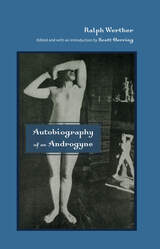
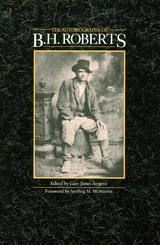
The story-book adventures of Roberts’s life made him a household name during his lifetime. His impassioned speeches incited riots, his reasoned writings defined and codified religious beliefs, and his candid disclosures of Utah history brought him both respect and censure. He is best remembered today as a largely self-educated intellectual. Several of his landmark published works are still in print more than fifty years after his death. His life story, told here in his own words and published for the first time, may well stand as his greatest, most enduring achievement.
For many today, B. H. Roberts is the quintessential Mormon intellectual of the twentieth century. But his theological writings came late in life and his historical views were more subjective than definitive. His autobiography, on the other hand, is a forthright account of the events and acquaintances that contributed to his unique faith and intellectual independence. Troubled by the memory of being abandoned as a child, and of the abusive care of quarrelling and intemperate foster-parents, he survived a stormy youth of poverty and neglect. He describes his nearly ten years as a missionary to the southern United States, his subsequent tenure as an outspoken member of the First Quorum of Seventy, his public opposition to women’s suffrage, and his controversial bid for the U.S. House of Representatives as a Mormon polygamist.
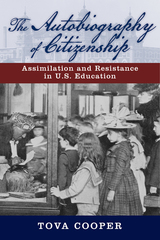
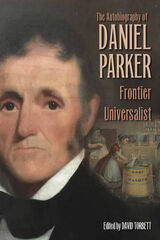
A vastly informative and rare early-American pioneer autobiography rescued from obscurity.
In this remarkable memoir, Daniel Parker (1781–1861) recorded both the details of everyday life and the extraordinary historical events he witnessed west of the Appalachian Mountains between 1790 and 1840. Once a humble traveling salesman for a line of newly invented clothes washing machines, he became an outspoken advocate for abolition and education. With his wife and son, he founded Clermont Academy, a racially integrated, coeducational secondary school—the first of its kind in Ohio.
However, Parker’s real vocation was as a self-ordained, itinerant preacher of his own brand of universal salvation. Raised by Presbyterian parents, he experienced a dramatic conversion to the Halcyon Church, an alternative, millenarian religious movement led by the enigmatic prophet Abel Sarjent, in 1803. After parting ways with the Halcyonists, he continued his own biblical and theological studies, arriving at the universalist conclusions that he would eventually preach throughout the Ohio River Valley.
David Torbett has transcribed Parker’s manuscript and publishes it here for the first time, together with an introduction, epilogue, bibliography, and extensive notes that enrich and contextualize this rare pioneer autobiography.
Autobiography of Silas Thompson Trowbridge M.D. is a remarkable account of nineteenth-century medicine, politics, and personal life that recovers the captivating experiences of a Civil War–era regimental surgeon who was also a president of the Illinois State Medical Society and a United States consul in Mexico. First published in 1872 by Trowbridge’s family and even printed on a family-owned press, only a handful of copies of the initial publication survive. In this first paperback edition, Trowbridge’s memoirs are reprinted as they originally appeared.
Indiana-born Trowbridge moved to Illinois in his early twenties. A teacher by trade, he continued that career while he began the study of medicine, eventually starting a medical practice near New Castle, which he later moved to Decatur. Though respected by the community, Trowbridge lacked an authentic medical degree, so he enrolled in a four-month course of medical lectures at Rush Medical College in Chicago. Autobiography describes the atmosphere of the medical school and delineates Trowbridge’s opinions on the lack of quality control in medical colleges of the day.
Although three years of study and two annual terms of sixteen weeks were the actual requirements for the degree, Trowbridge was allowed to graduate after a single course of lectures and completion of a twenty-page thesis due to his previous experience. He then married a young widow and returned to Decatur, where he began a partnership with two local physicians and inaugurated a county medical society. In addition to practicing medicine, he was known and respected for regulating it, too, having supported legislation that would legalize dissection and prohibit incompetent persons from practicing medicine.
In 1861, Trowbridge began service as a surgeon of the 8th Illinois Volunteer Infantry commanded by Colonel Richard J. Oglesby. Autobiography describes his experiences beginning in Cairo, Illinois, where the infantry was involved in several expeditions and where Trowbridge made his “debut at the operating table.” Revealing a litany of surgical duties, replete with gruesome details, these war-time recollections provide a unique perspective on medical practices of the day. Likewise, his commentaries on political issues and his descriptions of combat serve to correct some of the early written histories of the war’s great battles.
After receiving an honorable discharge in 1864, Trowbridge returned to Decatur to resume his partnership with Dr. W. J. Chenoweth and devote himself to surgery. His reminiscences recount several difficult surgeries, his efforts to reorganize the county medical society (which had collapsed during the war), and his communications to the Illinois legislature to set higher qualifications for practicing physicians. He was later elected president of the Illinois State Medical Society and appointed by President Grant United States Consul to Vera Cruz on the eastern coast of Mexico, where he studied and challenged the treatment of yellow fever. The autobiography ends in 1874 with a six-day family vacation and the marriage of his daughter to a merchant of Vera Cruz.

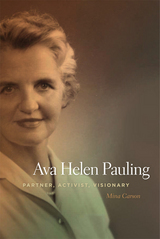
Though she began her public career in the shadow of her spouse, Ava Helen soon found herself tugged between her ardor to support Linus in his career and her desire that he embrace the social and political causes she felt passionate about. She believed it was her destiny to accept duties as a mother and homemaker, but neither of those roles was fully satisfying. Her more complete identity emerged over decades, as she evolved as an influential activist.
Ava Helen Pauling’s story is significant because so many aspects of it were shared with countless American women of her generation and the generations surrounding her. They had new educational opportunities but were expected to conform to the same limited social roles dictated by the gender ideology of the nineteenth century. When second wave feminism erupted in the 1960s, its force did not come solely from the young women rebelling against their elders’ rules and limitations, but also from the frustrated dreams of those elders themselves.
Ava Helen did not experience overt oppression by her husband or community; she even asserted some very non-feminist positions as a young woman. This, combined with a structural lack of opportunity, contributed to the strength and persistence of role expectations in her life. At the same time, she was feisty and willful. Her personality both created her marital loyalty and eventually took her down an openly feminist path.
Ava Helen Pauling: Partner, Activist, Visionary is an important complement to writings about Linus Pauling and a welcome addition to the literature on women’s and family history. It will also appeal to students and scholars of peace and reform movements and the social history of science.

Mike Sell's study is groundbreaking in its consideration of the avant-garde in relationship to a crucial but rarely considered agent: the scholar and critic. The book examines the role of the scholar and critic in the cultural struggles of radical artists and activists and reveals how avant-garde performance identifies the very limits of critical consideration. The book also explores the popularization of the avant-garde: how formerly subversive art is eventually discovered by the mass media, is gobbled up by the marketplace, and eventually finds its way onto the syllabi of college and university courses. Avant-Garde Performance and the Limits of Criticism is a timely and significant book that will become a standard reference for scholars in the fields of avant-garde literary criticism, theater history, critical theory, and performance studies.
"A provocative exploration of relations between the historical avant-garde and Cold War vanguard art and theatre. Sell's compelling historical and cultural narrative shows how the connections between the two exist at a very deep level of radical politics and aesthetics--an amazing concoction of rigorous scholarship, interdisciplinary learning, and progressive theorizing."
--Michael Vanden Heuvel, University of Wisconsin, Madison
"One of the most sophisticated, engaged, and engaging studies of the avant-garde in the United States that I've read-an important study that will raise the bar not only on scholarship of the Black Arts Movement, but on U.S. avant-gardism generally."
--James Smethurst, University of Massachusetts
A volume in the series Theater: Theory/Text/Performance. A list of recent titles in the series appears at the front of this volume.
By examining six mainline white denominations—Episcopalians, Methodists, Presbyterians, Baptists, Disciples of Christ, and Lutherans—Samuel C. Shepherd Jr. emphasizes the extent to which the city fostered religious diversity, even as “blind spots” remained regarding Catholics, African Americans, Mormons, and Jews. Shepherd explores such topics as evangelism, interdenominational cooperation, the temperance campaign, the Sunday school movement, the international peace initiatives, and the expanding role of lay people of both sexes. He also notes the community’s widespread rejection of fundamentalism, a religious phenomenon almost automatically associated with the South, and shows how it nurtured social reform to combat a host of urban problems associated with public health, education, housing, women’s suffrage, prohibition, children, and prisons.
In lucid prose and with excellent use of primary sources, Shepherd delivers a fresh portrait of Richmond Protestants who embraced change and transformed their community, making it an active, progressive religious center of the New South.

Salt Lake City’s oldest residential historic district is a neighborhood known as the Avenues. During the late nineteenth century this area was home to many of the most influential citizens of Salt Lake City. Built from 1860 until 1930, it contains a mix of middle and upper middle class homes of varying architectural styles. This architectural diversity makes the Avenues unique among Utah's historic districts. For the past thirty years, as citizens have rediscovered the value of living in historic properties near downtown and the University of Utah, preservation efforts have soared in the area.
In 1980, the Avenues was established as a historic district and the Utah Historical Society published The Avenues of Salt Lake City. That book’s authors, Karl T. Haglund and Philip F. Notarianni, gleaned much about the area’s history by using information found on the historic district applications. This newly revised edition of The Avenues of Salt Lake City by Cevan J. LeSieur updates the original with a greatly expanded section on the historic homes in the neighborhood, including more than 600 new photos, and additional material covering the history of the Avenues since 1980.
The book is designed so that readers can take it along as a guide when exploring the neighborhoods. All the pictures of Avenues homes are accompanied with architectural information and brief histories of the properties. This volume makes a valuable resource for those interested in the history of the Avenues and its diverse architecture, and for anyone interested in Utah history, Utah architecture, and historic preservation.
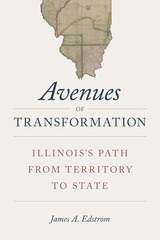
A territory split by slavery, a state forged for union
Avenues of Transformation traces the surprising path, marked by shame, ambition, and will that led to Illinois’s admission to the Union in 1818. Historian James A. Edstrom guides the reader through this story by associating each stage of the narrative—the original statehood campaign, the passage of Illinois’s statehood-enabling act by Congress, and Illinois’s first constitutional convention—with the primary leaders in each of those episodes. The lives of these men—Daniel Pope Cook, Nathaniel Pope, and Elias Kent Kane—reflect the momentous tangle of politics, slavery, and geography. This history maps the drive for statehood in the conflict between nation and state, in the perpetuation of slavery, and in the sweep of water and commerce. It underscores the ways in which the Prairie State is uniquely intertwined—economically, socially, and politically—with every region of the Union: North, South, East, and West—and captures the compelling moment when Illinois statehood stood ready to more perfectly unify the nation.
This volume is the first full-length book in over a century to describe and analyze Illinois’s admission to the Union. It marks the first time that a historian has analyzed in detail the roll-call votes of the first state constitutional convention, seated evenly by pro- and antislavery delegates. Edstrom’s wit and prose weave a lively narrative of political ambition and human failure. Patiently crafted, Avenues of Transformation will be the first source for readers to turn to for gaining a better understanding of Illinois statehood.
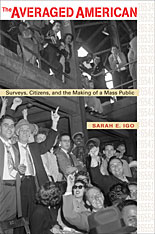
Americans today “know” that a majority of the population supports the death penalty, that half of all marriages end in divorce, and that four out of five prefer a particular brand of toothpaste. Through statistics like these, we feel that we understand our fellow citizens. But remarkably, such data—now woven into our social fabric—became common currency only in the last century. Sarah Igo tells the story, for the first time, of how opinion polls, man-in-the-street interviews, sex surveys, community studies, and consumer research transformed the United States public.
Igo argues that modern surveys, from the Middletown studies to the Gallup Poll and the Kinsey Reports, projected new visions of the nation: authoritative accounts of majorities and minorities, the mainstream and the marginal. They also infiltrated the lives of those who opened their doors to pollsters, or measured their habits and beliefs against statistics culled from strangers. Survey data underwrote categories as abstract as “the average American” and as intimate as the sexual self.
With a bold and sophisticated analysis, Igo demonstrates the power of scientific surveys to shape Americans’ sense of themselves as individuals, members of communities, and citizens of a nation. Tracing how ordinary people argued about and adapted to a public awash in aggregate data, she reveals how survey techniques and findings became the vocabulary of mass society—and essential to understanding who we, as modern Americans, think we are.

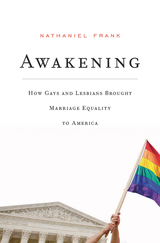
The right of same-sex couples to marry provoked decades of intense conflict before it was upheld by the U.S. Supreme Court in 2015. Yet some of the most divisive contests shaping the quest for marriage equality occurred not on the culture-war front lines but within the ranks of LGBTQ advocates. Nathaniel Frank tells the dramatic story of how an idea that once seemed unfathomable—and for many gays and lesbians undesirable—became a legal and moral right in just half a century.
Awakening begins in the 1950s, when millions of gays and lesbians were afraid to come out, let alone fight for equality. Across the social upheavals of the next two decades, a gay rights movement emerged with the rising awareness of the equal dignity of same-sex love. A cadre of LGBTQ lawyers soon began to focus on legal recognition for same-sex couples, if not yet on marriage itself. It was only after being pushed by a small set of committed lawyers and grassroots activists that established movement groups created a successful strategy to win marriage in the courts.
Marriage equality proponents then had to win over members of their own LGBTQ community who declined to make marriage a priority, while seeking to rein in others who charged ahead heedless of their carefully laid plans. All the while, they had to fight against virulent antigay opponents and capture the American center by spreading the simple message that love is love, ultimately propelling the LGBTQ community—and America—immeasurably closer to justice.

Challenging the formidable tradition that places early New England Puritanism at the center of the American religious experience, Yale historian Jon Butler offers a new interpretation of three hundred years of religious and cultural development. Butler stresses the instability of religion in Europe where state churches battled dissenters, magic, and astonishingly low church participation. He charts the transfer of these difficulties to America, including the failure of Puritan religious models, and describes the surprising advance of religious commitment there between 1700 and 1865. Through the assertion of authority and coercion, a remarkable sacralization of the prerevolutionary countryside, advancing religious pluralism, the folklorization of magic, and an eclectic, syncretistic emphasis on supernatural interventionism, including miracles, America emerged after 1800 as an extraordinary spiritual hothouse that far eclipsed the Puritan achievement—even as secularism triumphed in Europe.
Awash in a Sea of Faith ranges from popular piety to magic, from anxious revolutionary war chaplains to the cool rationalism of James Madison, from divining rods and seer stones to Anglican and Unitarian elites, and from Virginia Anglican occultists and Presbyterians raised from the dead to Jonathan Edwards, Joseph Smith, and Abraham Lincoln. Butler deftly comes to terms with conventional themes such as Puritanism, witchcraft, religion and revolution, revivalism, millenarianism, and Mormonism. His elucidation of Christianity’s powerful role in shaping slavery and of a subsequent African spiritual “holocaust,” with its ironic result in African Christianization, is an especially fresh and incisive account.
Awash in a Sea of Faith reveals the proliferation of American religious expression—not its decline—and stresses the creative tensions between pulpit and pew across three hundred years of social maturation. Striking in its breadth and deeply rooted in primary sources, this seminal book recasts the landscape of American religious and cultural history.
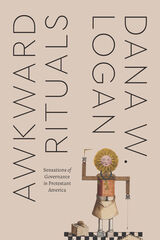
In the years between the American Revolution and the Civil War, there was an awkward persistence of sovereign rituals, vestiges of a monarchical past that were not easy to shed. In Awkward Rituals, Dana Logan focuses our attention on these performances, revealing the ways in which governance in the early republic was characterized by white Protestants reenacting the hierarchical authority of a seemingly rejected king. With her unique focus on embodied action, rather than the more common focus on discourse or law, Logan makes an original contribution to debates about the relative completeness of America’s Revolution.
Awkward Rituals theorizes an under-examined form of action: rituals that do not feel natural even if they sometimes feel good. This account challenges common notions of ritual as a force that binds society and synthesizes the self. Ranging from Freemason initiations to evangelical societies to missionaries posing as sailors, Logan shows how white Protestants promoted a class-based society while simultaneously trumpeting egalitarianism. She thus redescribes ritual as a box to check, a chore to complete, an embarrassing display of theatrical verve. In Awkward Rituals, Logan emphasizes how ritual distinctively captures what does not change through revolution.
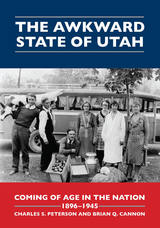
The half century between statehood in 1896 and the end of World War II in 1945 was a period of transformation and transition for Utah. This book interprets those profound changes, revealing sweeping impacts on both institutions and ordinary people. Drawing upon expertise honed over decades of teaching, researching, and writing about Utah’s history, the authors incorporate fresh archival sources, new oral histories, and hundreds of scholarly articles and books as they narrate the little-known story of the crucial formative years when Utah came of age.
During its sometimes awkward years of adolescence and maturation, Utah was gradually incorporated into the American political, social, and economic mainstream. Urban and industrial influences supplanted agrarian traditions, displacing people socially, draining the countryside of population, and galvanizing a critical crisis in values and self-identification. National corporations and mass labor movements took root in the state as commerce expanded. Involvement in world events such as the Spanish-American War, two world wars, and the Great Depression further set the stage for entry into the modern, globalized world as Utahns immersed themselves in national politics and became part of the democratic, corporate culture of twentieth-century America.

Why did abstraction dominate American art, social science, and natural science in the mid-twentieth century? Why, despite opposition, did abstraction and theoretical knowledge flourish across a diverse set of intellectual pursuits during the Cold War? In recovering the centrality of abstraction across a range of modernist projects in the United States, Alma Steingart brings mathematics back into the conversation about midcentury American intellectual thought. The expansion of mathematics in the aftermath of World War II, she demonstrates, was characterized by two opposing tendencies: research in pure mathematics became increasingly abstract and rarified, while research in applied mathematics and mathematical applications grew in prominence as new fields like operations research and game theory brought mathematical knowledge to bear on more domains of knowledge. Both were predicated on the same abstractionist conception of mathematics and were rooted in the same approach: modern axiomatics.
For American mathematicians, the humanities and the sciences did not compete with one another, but instead were two complementary sides of the same epistemological commitment. Steingart further reveals how this mathematical epistemology influenced the sciences and humanities, particularly the postwar social sciences. As mathematics changed, so did the meaning of mathematization.
Axiomatics focuses on American mathematicians during a transformative time, following a series of controversies among mathematicians about the nature of mathematics as a field of study and as a body of knowledge. The ensuing debates offer a window onto the postwar development of mathematics band Cold War epistemology writ large. As Steingart’s history ably demonstrates, mathematics is the social activity in which styles of truth—here, abstraction—become synonymous with ways of knowing.
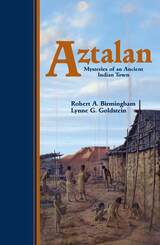
Birmingham and Goldstein attempt to unlock some of the mysteries, providing insights and information about the group of people who first settled here in 1100 AD. Filled with maps, drawings, and photographs of artifacts, this small volume examines a time before modern Native American people settled in this area.

Originally, young Tio wanted to perfect the comic role of the Aztec Love God, his ideal persona. Along the way, he meets Jester, an older, Caucasian comedian who makes Tio an offer he’s like to refuse. Jester offers Tio an opportunity to join his act. The only condition is that he, Tio, has to perform Latino stereotypes. Tio has to decide if he is going to take the blank check for easy thoughts or develop the Aztec Love God on his own.
The Aztec Love God combines humor, politics, and street knowledge. Diaz comes at the reader from all angles. His mixture of styles and influences pushes The Aztec Love God to a multi-multiculturalism.
The Aztec Love God is a vato but not too loco.
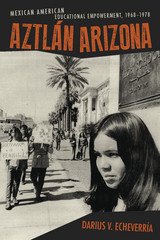
The word Aztlán, originally meaning the legendary ancestral home of the Nahua peoples of Mesoamerica, was adopted as a symbol of independence by Chicano/a activists during the movement of the 1960s and 1970s. In an era when poverty, prejudice, and considerable oppositional forces blighted the lives of roughly one-fifth of Arizonans, the author argues that understanding those societal realities is essential to defining the rise and power of the Chicano Movement.
The book illustrates how Mexican American communities fostered a togetherness that ultimately modified larger Arizona society by revamping the educational history of the region. The concluding chapter outlines key Mexican American individuals and organizations that became politically active in order to address Chicano educational concerns. This Chicano unity, reflected in student, parent, and community leadership organizations, helped break barriers, dispel the Mexican American inferiority concept, and create educational change that benefited all Arizonans.
No other scholar has examined the emergence of Chicano Movement politics and its related school reform efforts in Arizona. Echeverría’s thorough research, rich in scope and interpretation, is coupled with detailed and exact endnotes. The book helps readers understand the issues surrounding the Chicano Movement educational reform and ethnic identity. Equally important, the author shows how residual effects of these dynamics are still pertinent today in places such as Tucson.
READERS
Browse our collection.
PUBLISHERS
See BiblioVault's publisher services.
STUDENT SERVICES
Files for college accessibility offices.
RECENTLY PUBLISHED





UChicago Accessibility Resources
home | accessibility | search | about | contact us
BiblioVault ® 2001 - 2025
The University of Chicago Press