
 A SCHOLARLY BOOK REPOSITORY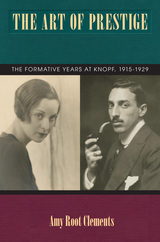
Capturing the little-known early history of Knopf, The Art of Prestige explores the origins of the company's rise to success during the Jazz Age, when Alfred and Blanche established themselves as literary impresarios on both sides of the Atlantic. Drawing on key archival documents from all phases of the publishing process, Amy Root Clements reconstructs the turning points and rhetorical exchanges that made Knopf's initial books noteworthy, from the acquisitions process to design, consumer marketing, and bookselling.
Lasting cornerstones of the young firm include alliances with pivotal figures in the world of graphic arts and book production and with European publishers who brought numerous Nobel Prize winners to the Borzoi list during the company's first fifteen years. Other featured luminaries include the American authors Willa Cather, Dashiell Hammett, and Langston Hughes. The Art of Prestige also examines Alfred Knopf's ancestry, up-bringing, and formal education at Columbia, as well as his apprenticeships with Frank Nelson Doubleday and Mitchell Kennerley—factors that would influence his business decisions for years to come.
The result is a portrait of innovative branding that seamlessly merged book production with book promotion in a literary landscape that was ripe for transformation.
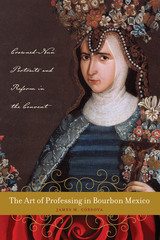
In the eighteenth century, New Spaniards (colonial Mexicans) so lauded their nuns that they developed a local tradition of visually opulent portraits, called monjas coronadas or “crowned nuns,” that picture their subjects in regal trappings at the moment of their religious profession and in death. This study identifies these portraits as markers of a vibrant and changing society that fused together indigenous and Euro-Christian traditions and ritual practices to construct a new and complex religious identity that was unique to New Spain.
To discover why crowned-nun portraits, and especially the profession portrait, were in such demand in New Spain, this book offers a pioneering interpretation of these works as significant visual contributions to a local counter-colonial discourse. James M. Córdova demonstrates that the portraits were a response to the Spanish crown’s project to modify and modernize colonial society—a series of reforms instituted by the Bourbon monarchs that threatened many nuns’ religious identities in New Spain. His analysis of the portraits’ rhetorical devices, which visually combined Euro-Christian and Mesoamerican notions of the sacred, shows how they promoted local religious and cultural values as well as client-patron relations, all of which were under scrutiny by the colonial Church. Combining visual evidence from images of the “crowned nun” with a discussion of the nuns’ actual roles in society, Córdova reveals that nuns found their greatest agency as Christ’s brides, a title through which they could, and did, challenge the Church’s authority when they found it intolerable.
A second edition of the classic introduction to arts in social movements, fully updated and now including Black Lives Matter, Occupy Wall Street, and new digital and social media forms of cultural resistance
The Art of Protest, first published in 2006, was hailed as an “essential” introduction to progressive social movements in the United States and praised for its “fluid writing style” and “well-informed and insightful” contribution (Choice Magazine). Now thoroughly revised and updated, this new edition of T. V. Reed’s acclaimed work offers engaging accounts of ten key progressive movements in postwar America, from the African American struggle for civil rights beginning in the 1950s to Occupy Wall Street and Black Lives Matter in the twenty-first century.
Reed focuses on the artistic activities of these movements as a lively way to frame progressive social change and its cultural legacies: civil rights freedom songs, the street drama of the Black Panthers, revolutionary murals of the Chicano movement, poetry in women’s movements, the American Indian Movement’s use of film and video, anti-apartheid rock music, ACT UP’s visual art, digital arts in #Occupy, Black Lives Matter rap videos, and more.
Through the kaleidoscopic lens of artistic expression, Reed reveals how activism profoundly shapes popular cultural forms. For students and scholars of social change and those seeking to counter reactionary efforts to turn back the clock on social equality and justice, the new edition of The Art of Protest will be both informative and inspiring.
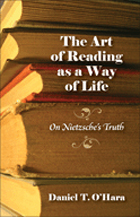
The shape of this critical tracing begins, however, in the middle of his career with The Gay Science andmoves on to Thus Spoke Zarathustra, which Nietzsche believed was the central work of his life. It then revalues Ecce Homo, Nietzsche’s final autobiographical statement about his life and career, and concludes with a comparative analysis of two works from the beginning and end of that career: respectively, The Birth of Tragedy and The Anti-Christ. O’Hara’s highly original study, which uses Badiou’s theory of the truth-event as a guide, will surely provoke larger conversations across many disciplines.
For the Muslim faithful, the familiar sound of the Qurʾanic recitation is the predominant and most immediate means of contact with the Word of God. Heard day and night, on the street, in taxis, in shops, in mosques, and in homes, the sound of recitation is far more than the pervasive background music of daily life in the Arab world. It is the core of religious devotion, the sanctioning spirit of much cultural and social life, and a valued art form in its own right. Participation in recitation, as reciter or listener, is itself an act of worship, for the sound is basic to a Muslim’s sense of religion and invokes a set of meanings transcending the particular occasion.
For the most part, Westerners have approached the Qurʾan much as scriptural scholars have studied the Bible, as a collection of written texts. The Art of Reciting the Qurʾan aims at redirecting that focus toward a deeper understanding of the Qurʾan as a fundamentally oral phenomenon. By examining Muslim attitudes toward the Qurʾan, the institutions that regulate its recitation, and performer-audience expectations and interaction, Kristina Nelson, a trained Arabist and musicologist, casts new light on the significance of Qurʾanic recitation within the world of Islam. Her landmark work is of importance to all scholars and students of the modern Middle East, as well as ethnomusicologists, anthropologists, linguists, folklorists, and religious scholars.
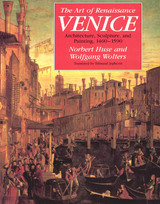
"The historical aspect of this book is splendid, but where it excels is in its fearless and thought-provoking critical judgements. . . . it will lead both beginners and experts to new joys."—David Ekserdjian, Times Literary Supplement

The political and cultural fantasy of home as a retreat from the pressures of the world first emerged in the U.S. alongside two major nineteenth-century literary movements: Romanticism and domestic fiction. Upending accepted gendered narratives from this period, The Art of Retreat posits that these movements originated from a domestic culture already in transition, in which home was frequently a more complicated site of self-interested pleasure, coerced labor, creole social reproduction, homosocial intimacy, bachelor whimsy, petty tyranny, racial abuse, and transgender capacity. The early national periodicals, sketches, and novels examined here lend themselves to this interpretation. Hankins argues that the literary tradition emerging from these decades—one that aligned creative genius with domestic retreat—reminds us that a politics that appeals to private feeling must reckon with new interpretations of labor, kinship, and reform in exchange for the promise of consensual citizenship.
Published by Bucknell University Press. Distributed worldwide by Rutgers University Press.
In this innovative work, James Meyer turns to art criticism, theory, memoir, and fiction to examine the fascination with the long sixties and contemporary expressions of these cultural memories across the globe. Meyer draws on a diverse range of cultural objects that reimagine this revolutionary era stretching from the 1950s to the 1970s, including reenactments of civil rights, antiwar, and feminist marches, paintings, sculptures, photographs, novels, and films. Many of these works were created by artists and writers born during the long Sixties who were driven to understand a monumental era that they missed. These cases show us that the past becomes significant only in relation to our present, and our remembered history never perfectly replicates time past. This, Meyer argues, is precisely what makes our contemporary attachment to the past so important: it provides us a critical opportunity to examine our own relationship to history, memory, and nostalgia.
The Cold War claimed many lives and inflicted tremendous psychological pain throughout the Americas. The extreme polarization that resulted from pitting capitalism against communism held most of the creative and productive energy of the twentieth century captive. Many artists responded to Cold War struggles by engaging in activist art practice, using creative expression to mobilize social change. The Art of Solidarity examines how these creative practices in the arts and culture contributed to transnational solidarity campaigns that connected people across the Americas from the early twentieth century through the Cold War and its immediate aftermath.
This collection of original essays is divided into four chronological sections: cultural and artistic production in the pre–Cold War era that set the stage for transnational solidarity organizing; early artistic responses to the rise of Cold War polarization and state repression; the centrality of cultural and artistic production in social movements of solidarity; and solidarity activism beyond movements. Essay topics range widely across regions and social groups, from the work of lesbian activists in Mexico City in the late 1970s and 1980s, to the exchanges and transmissions of folk-music practices from Cuba to the United States, to the uses of Chilean arpilleras to oppose and protest the military dictatorship. While previous studies have focused on politically engaged artists or examined how artist communities have created solidarity movements, this book is one of the first to merge both perspectives.
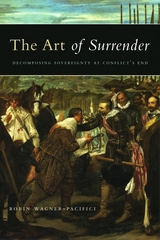
The Art of Surrender explores these ritual concessions as acts of warfare, performances of submission, demonstrations of power, and representations of shifting, unstable worlds. Wagner-Pacifici analyzes three significant military surrenders in the history of warfare—the Thirty Years' War of the seventeenth century, the American Civil War, and World War II—through the use of period documents and forms, maps, literature, witness accounts, photographs, and paintings that were left as proof of victory and defeat. In her analyses of such archival material and iconic works of art, she considers the limits of sovereignty at conflict's end, showing how the ways we concede loss can be as important as the ways we claim victory.

A comprehensive guide to Russian-language instruction combining the latest research, pedagogy, and practice.
The Art of Teaching Russian offers practitioners current research, pedagogical thinking, and specific methodologies for teaching the Russian language and culture in the twenty-first century. With contributions from the leading professionals in the field, this collection covers the most important aspects of teaching the Russian language.
The book begins with an overview of the past and current trends in foreign language education and in Russian instruction in the United States. Other topics include the effects of ACTFL's World-Readiness Standards on the field; different pedagogical approaches to teaching at various levels of proficiency; curriculum and materials development; and teaching Russian culture to develop students' intercultural competence. The collection concludes with a discussion on how to use technology in the Russian-language classroom to enhance students' learning.
The Art of Teaching Russian includes practical approaches for successful teaching, supported by original research. Teachers and graduate students will rely upon this collection to enhance their instruction.
The Art of Teaching Spanish explores in-depth the findings of research in second language acquisition (SLA) and other language-related fields and translates those findings into practical pedagogical tools for current—and future—Spanish-language instructors.
This volume addresses how theoretical frameworks affect the application of research findings to the teaching of Spanish, how logistical factors affect the way research findings can be applied to teach Spanish, and how findings from Spanish SLA research would be applicable to Spanish second language teaching and represented in Spanish curricula through objectives and goals (as evidenced in pedagogical materials such as textbooks and computer-assisted language learning software).
Top SLA researchers and applied linguists lend their expertise on matters such as foreign language across curriculum programs, testing, online learning, the incorporation of linguistic variation into the classroom, heritage language learners, the teaching of translation, the effects of study abroad and classroom contexts on learning, and other pedagogical issues. Other common themes of The Art of Teaching Spanish include the rejection of the concept of a monolithic language competence, the importance of language as social practice and cultural competence, the psycholinguistic component of SLA, and the need for more cross-fertilization from related fields.
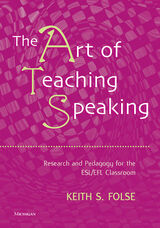
*Which tasks or activities really help build speaking fluency?
*What does the research show regarding speaking activities?
*What mistakes do ESL teachers often make in speaking activity design?
In this highly accessible and practical resource, Keith S. Folse provides a wealth of information to help ESL/EFL teachers design and use speaking tasks that will actually improve students' speaking fluency. The book presents and discusses the relevant research and assessment issues and includes case studies from twenty different settings and classrooms around the world so that readers learn from others about the problems and successes of using various speaking activities.
Teachers will find the chapters on Twenty Successful Activities and Ten Unsuccessful Activities particularly valuable. The successful activities are provided for classroom use and are reproducible. The book also contains five appendixes that explain what teachers need to know about vocabulary, pronunciation, and grammar and how they affect the teaching of speaking. Samples of successful lesson plans and a list of resources useful for teaching speaking are also included.
Keith S. Folse, Ph.D., is Coordinator, TESOL Programs, University of Central Florida (Orlando). He is the author of Vocabulary Myths (University of Michigan Press, 2004) and more than 35 second language textbooks, including texts on grammar, reading, speaking, listening, and writing.

This is the first English-language monograph on the early history of maps in China, centering on those found in three tombs that date from the fourth to the second century BCE and constitute the entire known corpus of early Chinese maps (ditu). More than a millennium separates them from the next available map in the early twelfth century CE. Unlike extant studies that draw heavily from the history of cartography, this book offers an alternative perspective by mobilizing methods from art history, archaeology, material culture, religion, and philosophy. It examines the diversity of forms and functions in early Chinese ditu to argue that these pictures did not simply represent natural topography and built environments, but rather made and remade worlds for the living and the dead. Wang explores the multifaceted and multifunctional diagrammatic tradition of rendering space in early China.
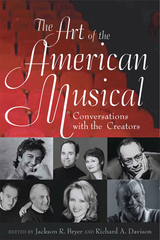
Musical theater has captivated American audiences from its early roots in burlesque stage productions and minstrel shows to the million-dollar industry it has become on Broadway today. What is it about this truly indigenous American art form that has made it so enduringly popular? How has it survived, even thrived, alongside the technology of film and the glitz and glamour of Hollywood? Will it continue to evolve and leave its mark on the twenty-first century?
Bringing together exclusive and previously unpublished interviews with nineteen leading composers, lyricists, librettists, directors, choreographers, and producers from the mid-1900s to the present, this book details the careers of the individuals who shaped this popular performance art during its most prolific period. The interviewees discuss their roles in productions ranging from On the Town (1944) and Finian's Rainbow (1947) to The Producers (2001) and Bounce (2003).
Readers are taken onto the stage, into the rehearsals, and behind the scenes. The nuts and bolts, the alchemy, and the occasional agonies of the collaborative process are all explored. In their discussions, the artists detail their engagements with other creative forces, including such major talents as Leonard Bernstein, Jerome Robbins, Bob Fosse, Liza Minnelli, Judy Garland, Barbra Streisand, Jule Styne, Richard Rodgers and Oscar Hammerstein, Alan Jay Lerner, Zero Mostel, and Gwen Verdon. They speak candidly about their own work and that of their peers, their successes and failures, the creative process, and how a show progresses from its conception through rehearsals and tryouts to opening night.
Taken together, these interviews give fresh insight into what Oscar Hammerstein called "a nightly miracle"—the creation of the American musical.

Art of the Baltics is the first major survey of the development of modernist art in Estonia, Lithuania, and Latvia during the post-World War II Soviet period. The contributors discuss and reappraise the art of Baltic artists working in modernist styles. They argue that Estonian, Lithuanian, and Latvian art did not develop in similar ways. Estonia, for example, had closer contact with Scandinavian countries, while Lithuania clearly was part of Central Europe, and was more influenced by Poland.
This book contains nearly three hundred illustrations—many in color—that serve to visually compare the art of the three Baltic countries. It also has three useful historical timelines that contextualize the art presented. In addition to historical overviews of each country, Art of theBaltics contains essays on the art of the region, written by both Baltic and American scholars. The articles extensively cover the Baltic art of the 1960s through the 1980s, which reflect the Zimmerli Art Museum’s holdings of the Norton and Nancy Dodge Collection of Nonconformist Art from the Soviet Union. To round out the scope of this work, contributors also discuss the pre-Soviet art of the region, as well as the recent creative developments that resulted from these small countries gaining independence in 1991.
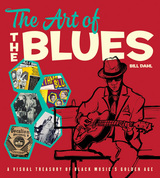
What will astonish readers who thumb through these pages is the amazing range of ways that the blues have been represented—whether via album covers, posters, flyers, 78 rpm labels, advertising, or other promotional materials. We see the blues as it was first visually captured in the highly colorful sheet music covers of the early twentieth century. We see striking and hard-to-find label designs from labels big (Columbia) and small (Rhumboogie). We see William Alexander’s humorous artwork on postwar Miltone Records; the cherished ephemera of concert and movie posters; and Chess Records’ iconic early albums designed by Don Bronstein, which would set a new standard for modern album cover design.
What these images collectively portray is the evolution of a distinctively American art form. And they do so in the richest way imaginable. The result is a sumptuous book, a visual treasury as alive in spirit as the music it so vibrantly captures.
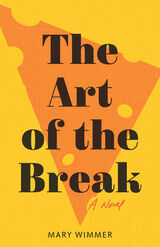
Hyperaware of her own childhood losses and the challenges posed by Rick’s PTSD and heavy drinking, Charlie strives to build a stable home for Lucy. Her degree in biochemistry from the University of Wisconsin gives her a leg up, and the quiet joys of working at the cheese vat provide a deep, healing peace that points the way toward happiness.
But Falls River is too narrow-minded to accept a female business owner, and Charlie is ill-prepared for the pettiness and conventions of small-town life. When debts come due, including a lien against her family’s land, she must quickly figure out who is on her side—and how to keep her dreams alive.
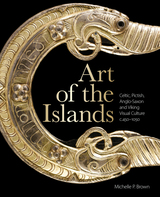
Michelle P. Brown remedies this oversight, presenting an extensively illustrated art historical overview of this formative period in the region’s history. Describing the interactions between the region’s inhabitants, she also explores the formation of national and regional identities. Brown ranges across works as diverse as the Book of Kells, the Tara Brooch, the Aberlemno Stone, the Lindisfarne Gospels, the Alfred Jewel, and the Benedictional of St. Ethelwold, showing how their complex imagery can be best interpreted. She also considers the impact of the art of this period upon the history of art in general, exploring how it has influenced many movements since, from the Carolingian Renaissance and the Romanesque style to the nineteenth-century Arts and Crafts movement.
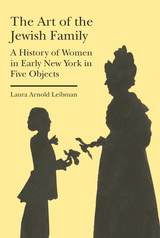
Each chapter creates a biography of a single woman through an object, offering a new methodology that looks past texts alone to material culture in order to further understand early Jewish American women’s lives and restore their agency as creators of Jewish identity. While much of the available history was written by men, the objects that Leibman studies were made for and by Jewish women. Speaking to American Jewish life, women’s studies, and American history, The Art of the Jewish Family sheds new light on the lives and values of these women, while also revealing the social and religious structures that led to Jewish women being erased from historical archives.
The Art of the Jewish Family was the winner of three 2020 National Jewish Book Awards: the Celebrate 350 Award for American Jewish Studies, the Gerrard and Ella Berman Memorial Award for History, and the Barbara Dobkin Award for Women's Studies.

In the first extended sociopolitical interpretation in English of this important group, Albert Boime places the Macchiaioli in the cultural context of the Risorgimento—the political movement that unified Italy, freed from foreign rule, under a secular, constitutional government. Anglo-American art criticism has generally neglected these painters (probably because of their overt political affiliation and nationalist expression), but Boime shows that these artists, while deeply political, nevertheless created aesthetically superior work.
Boime's study departs from previous research on the Macchiaioli by systematically investigating the group's writings, sources, and patronage in relation to the Risogimento. The book also examines both contemporary and later critical responses, revealing how French art criticism has obscured the achievements of Macchiaioli art. Richly illustrated, The Art of the Macchia and the Risorgimento will appeal to anyone interested in nineteenth-century European art or the history of Italy.
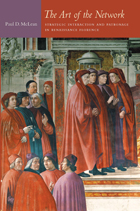
McLean scrutinized thousands of letters to and from Renaissance Florentines. He describes the social protocols the letters reveal, paying particular attention to the means by which Florentines crafted credible presentations of themselves. The letters, McLean contends, testify to the development not only of new forms of self-presentation but also of a new kind of self to be presented: an emergent, “modern” conception of self as an autonomous agent. They also bring to the fore the importance that their writers attached to concepts of honor, and the ways that they perceived themselves in relation to the Florentine state.
This collection of prefaces, originally written for the 1909 multi-volume New York Edition of Henry James’s fiction, first appeared in book form in 1934 with an introduction by poet and critic R. P. Blackmur. In his prefaces, James tackles the great problems of fiction writing—character, plot, point of view, inspiration—and explains how he came to write novels such as The Portrait of a Lady and The American. As Blackmur puts it, “criticism has never been more ambitious, nor more useful.”
The latest edition of this influential work includes a foreword by bestselling author Colm Tóibín, whose critically acclaimed novel The Master is told from the point of view of Henry James. As a guide not only to James’s inspiration and execution, but also to his frustrations and triumphs, this volume will be valuable both to students of James’s fiction and to aspiring writers.
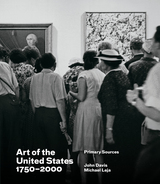
A sourcebook of unprecedented breadth and depth, Art of the United States brings together multiple voices throughout the ages to provide a framework for learning and critical thinking on US art.
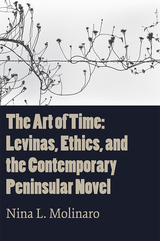
Academicians and journalists in Spain and abroad have recently fastened on an emerging cluster of peninsular writers who, they argue, pertain to a discernible literary generation, provisionally referred to as Generación X. These writers are distinct from their predecessors; they and their literary texts are closely related to the specific socio-political and historical circumstances in Spain and their novels relate stories of more and less proximity, more and less responsibility, and more and less temporality. In short, they trace the temporal movement of alterity through narrative.
Published by Bucknell University Press. Distributed worldwide by Rutgers University Press.
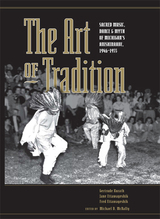
The Art of Tradition documents the complexity of Native life and culture at a critical juncture in Native American history, where the rekindling of pride in Native cultures characteristic of the later twentieth century met the generation of elders who spent their early years speaking Native tongues but who came of age in boarding schools and amid strong pressures of assimilation. Because this period was deemed by most ethnographers of the time to be one of "acculturation," marking the end of traditional Native cultures, the authors' appreciation for the integrity of mid-century Native culture stands out markedly from other scholarship of the day. The songs, dance steps, and stories collected here are evidence of the artful work of maintaining and breathing new life into traditions, often in contexts that seem anything but traditional, by indigenous elders and artists. As the editor notes, there are no "Native informants" in this study, only collaborators whose lives are shown to be as resilient as the repertories they performed.
Masiello views representation as both a political and artistic device, concerned with the tensions between truth and lies, experience and language, and intellectuals and the marginal subjects they study and claim to defend. These often contentious negotiations, she argues, are most provocatively displayed through the spectacle of difference, which constantly crosses the literary stage, the market, and the North/South divide. While forcefully defending the ability of literature and art to advance ethical positions and to foster a critical view of neoliberalism, Masiello especially shows how issues of gender and sexuality function as integrating threads throughout this cultural project. Through discussions of visual art as well as literary work by prominent novelists and poets, Masiello sketches a broad landscape of vivid intellectual debate in the Southern Cone of Latin America.
The Art of Transition will interest Latin Americanists,literary and political theorists, art critics and historians, and those involved with the study of postmodernism and globalization.

The essays in this volume highlight precisely the entanglements that ekphrasis suggests and/or rejects: not merely of word and image, but also of sign and thing, stasis and mobility, medieval and (early) modern, absence and presence, the rhetorical and the visual, thinking and feeling, knowledge and desire, and many more. The Art of Vision furthers our understanding of the complexities of medieval ekphrasis while also complicating later understandings of this device. As such, it offers a more diverse account of medieval ekphrasis than previous studies of medieval text–image relationships, which have normally focused on a single country, language, or even manuscript.
A critical study for those interested in the intersection of art and biblical interpretation
With a special focus on biblical texts and images, this book nurtures new developments in biblical studies and art history during the last two or three decades. Analysis and interpretation of specific works of art introduce guidelines for students and teachers who are interested in the relation of verbal presentation to visual production. The essays provide models for research in the humanities that move beyond traditional disciplinary boundaries erected in previous centuries. In particular, the volume merges recent developments in rhetorical interpretation and cognitive studies with art historical visual exegesis. Readers will master the tools necessary for integrating multiple approaches both to biblical and artistic interpretation.
Features
Machiavelli scholar Christopher Lynch offers a sensitive and entirely new translation of the Art of War, faithful to the original but rendered in modern, idiomatic English. Lynch's fluid translation helps readers appreciate anew Machiavelli's brilliant treatments of the relationships between war and politics, civilians and the military, and technology and tactics. Clearly laying out the fundamentals of military organization and strategy, Machiavelli marshals a veritable armory of precepts, prescriptions, and examples about such topics as how to motivate your soldiers and demoralize the enemy's, avoid ambushes, and gain the tactical and strategic advantage in countless circumstances.
To help readers better appreciate the Art of War, Lynch provides an insightful introduction that covers its historical and political context, sources, influence, and contemporary relevance. He also includes a substantial interpretive essay discussing the military, political, and philosophical aspects of the work, as well as maps, an index of names, and a glossary.


In the series Politics, History and Social Change, edited by John C. Torpey
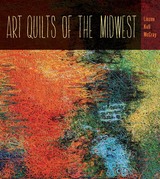
As a writer covering textiles, art, and craft, Linzee Kull McCray wondered just how deeply fiber artists were influenced by their surroundings. Focusing on midwestern art quilters in particular, she put out a call for entries and nearly 100 artists responded; they were free to define those aspects of midwesterness that most affected their work. The artists selected for inclusion in this book embrace the Midwest’s climate, land, people, and culture, and if they don’t always embrace it wholeheartedly, then they use their art to react to it. The proof can be seen in the varied, powerful quilts in this energizing book.
Enlivened by the Midwest’s landscapes and seasons, Sally Bowker paints her fabrics with acrylics, creating marks and meaning with layers of hand stitching and appliqued bits of fabric. Shin-hee Chin uses sketchlike stitching for its ability to penetrate fabric and create depth; living in the Midwest helps her stay balanced between eastern philosophy and western culture. The metals and mesh that Diane Núñez incorporates into her quilts connect to her days as a jeweler as well as to the topography of her home state of Michigan. Pat Owoc prepares papers with disperse dyes, then selects from as many as 150 to create her fabrics; her art-quilt series honors midwestern pioneers. Martha Warshaw photographs old fabrics, tweaks the images in Photoshop, and prints the results for her pieces, which connect her to the legacy of quilting in past generations.
The Midwest has always had strong textile communities. Now the twenty artists featured in this beautifully illustrated book have created a new community of original art forms that bring new life to an old tradition.
The Artists
Marilyn Ampe, St. Paul, Minnesota
Gail Baar, Buffalo Grove, Illinois
Sally Bowker, Cornucopia, Wisconsin
Peggy Brown, Nashville, Indiana
Shelly Burge, Lincoln, Nebraska
Shin-hee Chin, McPherson, Kansas
Sandra Palmer Ciolino, Cincinnati, Ohio
Jacquelyn Gering, Chicago, Illinois
Kate Gorman, Westerville, Ohio
Donna Katz, Chicago, Illinois
Beth Markel, Rochester Hills, Michigan
Diane Núñez, Southfield, Michigan
Pat Owoc, St. Louis, Missouri
BJ Parady, Batavia, Illinois
Bonnie Peterson, Houghton, Michigan
Luanne Rimel, St. Louis, Missouri
Barbara Schneider, Woodstock, Illinois
Susan Shie, Wooster, Ohio
Martha Warshaw, Cincinnati, Ohio
Erick Wolfmeyer, Iowa City, Iowa

Based on his many years in both the art world as a gallery owner and educator, The Art Rules is a practical, operational guide for visual artists that demystifies the art world and empowers practitioners to find success on their own terms. Bringing together the personal experiences of hundreds of major art world leaders, Klein chronicles their success, their staying power, their interests, and their passions. Filling a major void, The Art Rules gives practitioners the tools they need to realize their potential. Ultimately, Klein shows, success is not particularly complicated, but it is rarely taught, shared, or demonstrated for the visual artist. This book does precisely that.
The Art, Science, and Magic of the Data Curation Network: A Retrospective on Cross Institutional Collaboration captures the results of a project retrospective meeting and describes the necessary components of the DCN’s sustained collaboration in the hopes that the insights will be of use to other collaborative efforts. In particular, the authors describe the successes of the community and challenges of launching a cross-institutional network. Additionally, this publication details the administrative, tool-based, and trust-based structures necessary for establishing this community, the “radical collaboration” that is the cornerstone of the DCN, and potential future collaborations to address shared challenges in libraries and research data management. This in-depth case study provides an overview of the critical work of launching a collaborative network and transitioning to sustainability. This publication will be of special interest to research librarians, data curators, and anyone interested in academic community building.

The main aim of Art, Sustainability and Learning Communities is to show how shared spaces for exchange in the fields of art education and continuous professional development can reflect, inspire, and integrate sustainability principles that are becoming crucial in today’s world. The authors propose the idea that coordinated action can lead to a more sustainable future by promoting a sense of community, lifelong learning, and confidence in the possibility of changing current conditions.
Its three parts combine expertise in visual arts education, education for sustainable development, contemporary art practice, and sustainability activism. While Part I focuses on literature in the field and the interrelation of different disciplines, Part II provides concrete examples of professional learning communities and pedagogies that can be used to enrich the field of art education. Finally, Part III presents brief case studies illustrating international projects by contemporary artists, curators, environmentalists, and others, providing educators with several inspirational models of concrete and creative action.
From currency and maps to heavily censored newspapers and television programming, Art Systems explores visual forms of critique and subversion during the height of Brazilian dictatorship, drawing sometimes surprising connections between artistic production and broader processes of social exchange during a period of authoritarian modernization. Positioning the works beyond the prism of politics, Elena Shtromberg reveals subtle forms of subversion and critique that reinvented the artists’ political terrain.
Analyzing key examples from Cildo Meireles, Antonio Manuel, Artur Barrio, Anna Bella Geiger, Sonia Andrade, Geraldo Mello, and others, the book offers a new framework for theorizing artistic practice. By focusing on the core economic, media, technological, and geographic conditions that circumscribed artistic production during this pivotal era, Shtromberg excavates an array of art systems that played a role in the everyday lives of Brazilians. An examination of the specific historical details of the social systems that were integrated into artistic production, this unique study showcases works that were accessed by audiences far outside the confines of artistic institutions. Proliferating during one of Brazil’s most socially and politically fraught decades, the works—spanning cartography to video art—do not conform to an easily identifiable style, form, material use, or medium. As a result of this breadth, Art Systems gives voice to the multifaceted forces at play in a unique chapter of Latin American cultural history.
This volume develops from the studies published in Roy Ascott's highly successful Reframing Consciousness, documenting the very latest research from those connected with the CAiiA-STAR centre and its associated conferences. Their work embodies artistic and theoretical research in new media and telematics including aspects of artificial life, robotics, technoetics, performance, computer music and intelligent architecture, to growing international acclaim.
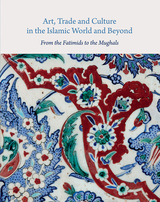
The essays range across a variety of topics. These include a look at tile production during the reign of the Qaytbay, the book bindings associated with Qansuh al-Ghuri, and the relationship between Mamluk metalwork and that found in Rasulid Yemen and Italy. Several essays examine inscriptions found on buildings of the Fatimid, Mamluk, and Ottoman periods, and others look at the debt of European lacquer works to Persian craftsmen, the Armenian patrons of eighteenth-century Chinese exports, and the influences of Islam on art and architecture found all across India. The result is a sweeping but deeply researched look at one of the richest networks of artistic traditions the world has ever known.
People all over the world make art and take pleasure in it, and they have done so for millennia. But acknowledging that art is a universal part of human experience leads us to some big questions: Why does it exist? Why do we enjoy it? And how do the world’s different art traditions relate to art and to each other?
Art Without Borders is an extraordinary exploration of those questions, a profound and personal meditation on the human hunger for art and a dazzling synthesis of the whole range of inquiry into its significance. Esteemed thinker Ben-Ami Scharfstein’s encyclopedic erudition is here brought to bear on the full breadth of the world of art. He draws on neuroscience and psychology to understand the way we both perceive and conceive of art, including its resistance to verbal exposition. Through examples of work by Indian, Chinese, European, African, and Australianartists, Art Without Borders probes the distinction between accepting a tradition and defying it through innovation, which leads to a consideration of the notion of artistic genius. Continuing in this comparative vein, Scharfstein examines the mutual influence of European and non-European artists. Then, through a comprehensive evaluation of the world’s major art cultures, he shows how all of these individual traditions are gradually, but haltingly, conjoining into a single current of universal art. Finally, he concludes by looking at the ways empathy and intuition can allow members of one culture to appreciate the art of another.
Lucid, learned, and incomparably rich in thought and detail, Art Without Borders is a monumental accomplishment, on par with the artistic achievements Scharfstein writes about so lovingly in its pages.

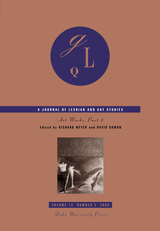
Arguing for the primacy of the arts in queer life, the contributors show how art and performance can constitute a form of critical theorizing rather than simply an illustration of it. In different ways, each author demonstrates how art works to invigorate queer critique. The first issue includes a special dossier on AIDS activist film and video, marking the twenty-fifth year of the AIDS pandemic, and essays on late-nineteenth-century male nudes, lesbian surrealism, homoerotic photography in the Deep South, and the transnational, transgender contexts of the Pulitzer Prize–winning play I Am My Own Wife. Essays in the second issue focus on a series of queer case studies, including gay power graphics and psychedelia, female duets on the Broadway stage, Keith Haring and racial politics, British Vogue in the 1920s, and lesbian-feminist magazines of the 1970s. The issue concludes with a dossier of three shorter pieces on queer art and performance: an interview with the Chicano drag street performer Robert Legoretta (“Cyclona”), an essay on blogs and the Five Lesbian Brothers, and a discussion of a rarely exhibited work about cruising and public space by the contemporary artist Glenn Ligon.
Contributors. Deborah Bright, Jill Dolan, Jens Giersdorf, Jason Goldman, Scott Herring, Lucas Hilderbrand, Alexandra Juhasz, Tirza Latimer, Glenn Ligon, Richard Meyer, Rachel Middleman, Ricardo Montez, Erica Rand, Christopher Reed, David Román, Jennifer Flores Sternad, Margo Hobbs Thompson, Stacy Wolf
Arguing for the primacy of the arts in queer life, the contributors show how art and performance can constitute a form of critical theorizing rather than simply an illustration of it. In different ways, each author demonstrates how art works to invigorate queer critique. The first issue includes a special dossier on AIDS activist film and video, marking the twenty-fifth year of the AIDS pandemic, and essays on late-nineteenth-century male nudes, lesbian surrealism, homoerotic photography in the Deep South, and the transnational, transgender contexts of the Pulitzer Prize–winning play I Am My Own Wife. Essays in the second issue focus on a series of queer case studies, including gay power graphics and psychedelia, female duets on the Broadway stage, Keith Haring and racial politics, British Vogue in the 1920s, and lesbian-feminist magazines of the 1970s. The issue concludes with a dossier of three shorter pieces on queer art and performance: an interview with the Chicano drag street performer Robert Legoretta (“Cyclona”), an essay on blogs and the Five Lesbian Brothers, and a discussion of a rarely exhibited work about cruising and public space by the contemporary artist Glenn Ligon.
Contributors. Deborah Bright, Jill Dolan, Jens Giersdorf, Jason Goldman, Scott Herring, Lucas Hilderbrand, Alexandra Juhasz, Tirza Latimer, Glenn Ligon, Richard Meyer, Rachel Middleman, Ricardo Montez, Erica Rand, Christopher Reed, David Román, Jennifer Flores Sternad, Margo Hobbs Thompson, Stacy Wolf
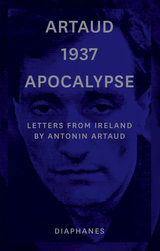
During his fateful journey, Artaud wrote letters to friends in Paris which included several “magic spells,” intended to curse his enemies and protect his friends from the city’s forthcoming incineration and the Antichrist’s appearance. (To André Breton, he wrote: “It’s the Unbelievable—yes, the Unbelievable—it’s the Unbelievable which is the truth.”) This book collects all of Artaud’s surviving correspondence from his time in Ireland, as well as photographs of the locations he traveled through. Featuring an afterword and notes by the book’s translator, Stephen Barber, this edition marks the seventieth anniversary of Artaud’s death.
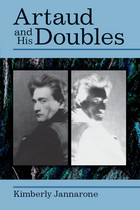
Artaud and His Doublesis a radical re-thinking of one of the most influential theater figures of the twentieth century. Placing Artaud's writing within the specific context of European political, theatrical, and intellectual history, the book reveals Artaud's affinities with a disturbing array of anti-intellectual and reactionary writers and artists whose ranks swelled catastrophically between the wars in Western Europe.
Kimberly Jannarone shows that Artaud's work reveals two sets of doubles: one, a body of peculiarly persistent received interpretations from the American experimental theater and French post-structuralist readings of the 1960s; and, two, a darker set of doubles—those of Artaud's contemporaries who, in the tumultuous, alienated, and pessimistic atmosphere enveloping much of Europe after World War I, denounced the degradation of civilization, yearned for cosmic purification, and called for an ecstatic loss of the self. Artaud and His Doubleswill generate provocative new discussions about Artaud and fundamentally challenge the way we look at his work and ideas.
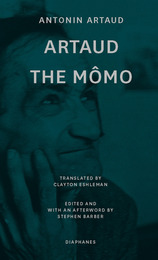
This edition is translated by Clayton Eshleman, the acclaimed foremost translator of Artaud’s work. This will be the first edition since the original 1947 publication to present the work in the spatial format Artaud intended. It also incorporates eight original drawings by Artaud—showing reconfigured bodies as weapons of resistance and assault—which he selected for that edition, after having initially attempted to persuade Pablo Picasso to collaborate with him. Additional critical material draws on Artaud’s previously unknown manuscript letters written between 1946 and 1948 to the book’s publisher, Pierre Bordas, which give unique insights into the work from its origins to its publication.
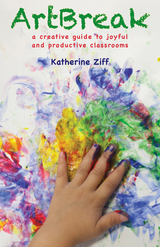
Play is the central, universally significant activity of childhood. Self-directed play in which adults have a supporting rather than directing role is critical to the development and well-being of children. Yet as children have their days and nights increasingly scripted and planned for them, opportunities for play have disappeared over the last half century, especially in schools.
ArtBreak’s innovation lies in its creative framework. Former school counselor, current professor of counseling, and practicing artist Katherine Ziff developed and tested the program over five years, integrating theory and practice from art therapy, counseling, and child-centered education. The result is a choice-based, guided play experience based on the developmental and restorative possibilities of art making.
A detailed how-to guide, this book is the flexible and accessible toolbox that teachers, parents, and counselors need to facilitate relaxing, art-based play that allows children to freely explore, plan, and pursue their own interests with adult support. Easy to implement, ArtBreak can be added to the regular routines of classroom, home, therapy office, or other community setting at whatever scale suits space, time, and budget. No art training is required, only a willingness to embark on a play journey with children.
Tracing the evolution of the Italian avant-garde’s pioneering experiments with art and technology and their subversion of freedom and control
In postwar Italy, a group of visionary artists used emergent computer technologies as both tools of artistic production and a means to reconceptualize the dynamic interrelation between individual freedom and collectivity. Working contrary to assumptions that the rigid, structural nature of programming limits subjectivity, this book traces the multifaceted practices of these groundbreaking artists and their conviction that technology could provide the conditions for a liberated social life.
Situating their developments within the context of the Cold War and the ensuing crisis among the Italian left, Arte Programmata describes how Italy’s distinctive political climate fueled the group’s engagement with computers, cybernetics, and information theory. Creating a broad range of immersive environments, kinetic sculptures, domestic home goods, and other multimedia art and design works, artists such as Bruno Munari, Enzo Mari, and others looked to the conceptual frameworks provided by this new technology to envision a way out of the ideological impasses of the age.
Showcasing the ingenuity of Italy’s earliest computer-based art, this study highlights its distinguishing characteristics while also exploring concurrent developments across the globe. Centered on the relationships between art, technology, and politics, Arte Programmata considers an important antecedent to the digital age.
In The Artemisia Files, Mieke Bal and her coauthors look squarely at this early icon of feminist art history and the question of her status as an artist. Considering the events that shaped her life and reputation—her relationship to her father and her role as the victim in a highly publicized rape case during which she was tortured into giving evidence—the authors make the case that Artemisia's importance is due to more than her role as a poster child in the feminist attack on traditional art history; here, Artemisia emerges more fully as a highly original artist whose work is greater than the sum of the events that have traditionally defined her.
The fresh, engaging discourse in The Artemisia Files will help to both renew the reputation of this artist on the merit of her work and establish her rightful place in the history of art.
Percutaneous cardiac and endovascular procedures are performed by a variety of interventional physicians and continue to evolve and expand. One of the most important steps in performing these procedures is vascular access and their Achilles heel is vascular access site complications. This volume is intended to help the clinician by providing a practical overview of the techniques and technologies used in top catheterization laboratories to access the arterial and venous beds.
Dr. Mazen Abu-Fadel and his contributors, part of the renowned cardiovascular team at the University of Oklahoma Health Sciences Center, carefully walk the reader through the various techniques used to obtain vascular access into most arterial and venous sites. They thoroughly describe current data, techniques, advantages, risks, and benefits of each vascular access site. Covering everything from anatomic landmarks to closures devices, Arterial and Venous Access in the Cardiac Catheterization Lab offers a complete overview of each procedure. In addition, it provides an up-to-date guide to the best medical technologies and equipment used when performing these procedures.
Arterial and Venous Access in the Cardiac Catheterization Lab is an invaluable resource for a wide range of clinical personnel, from attending physicians and trainees to nursing staff and vascular technicians. Written by experienced leaders in the field, it demonstrates how to perform complex, risky procedures while providing patients with expert care.

Sanchez argues that the seemingly hopeless cycle of violence experienced by Mexico in the 20th century, as reflected in its "crime genre," reveals a broader intrinsic cultural and political failure that suggests grave implications for the current state of crisis. Tracing the development of a national Mexican identity from the 1910 Mexican Revolution onward, Sanchez focuses on the indelible presence of violence and crime underlying the major works that contributed to a larger communal narrative.
Artful Assassins ultimately offers a panoramic overview of the evolution of Mexican arts and letters, as well as nationalism, by claiming murder and assassination as literary and cinematic motifs. The collapse of post-revolutionary political unity was presaged all along in Mexican culture, Sanchez argues. It need only to have been sought in the art of the nation.
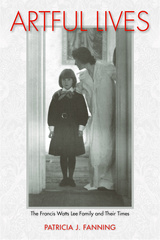
Francis Watts Lee and his family hold a special place in the history of American photography. F. Holland Day completed a series of remarkable photographs of Lee's daughter Peggy, and the striking portrait of the child and her mother titled Blessed Art Thou among Women is one of Gertrude Käsebier's most iconic compositions. In Artful Lives, Patricia J. Fanning uses these and other significant images as guideposts to explore the Lee family and the art and culture of their age.
A social reform advocate, Francis Watts Lee was an artistic photographer and a talented printer, part of the circle of avant-garde artists and intellectuals who formed Boston's bohemia. He married twice, first Agnes Rand, an award-winning poet and children's book author, and later, after their divorce, Marion Lewis Chamberlain, a librarian and MIT-trained architect. Francis and Agnes's eldest daughter, Peggy, who was so integral to the work of pioneer Pictorialists, died at age seven of juvenile diabetes. Her sister, Alice, who lost her hearing in infancy, became a wood carver and sculptor.
Utilizing previously unknown family archives and institutional sources, Fanning traces the Lee family's story in the context of major artistic, political, social, and religious trends, including the Arts and Crafts movement, Christian Socialism, and Aestheticism, while also showing how their experiences reflected the national culture's evolving conceptions of family, gender, childhood, medicine, deaf education, and mourning. This richly drawn and gracefully written account of one family informs our understanding of this vibrant era, in Boston and well beyond.
Percussionist Thomas Siwe organizes and analyzes the groundbreaking musical literature that arose during the twentieth century. Focusing on innovations in style and the evolution of the percussion ensemble, Siwe offers a historical overview that connects the music to scoring techniques, new instrumentation and evolving technologies as well as world events. Discussions of representative pieces by seminal composers examines the resources a work requires, its construction, and how it relates to other styles that developed during the same period. In addition, Siwe details the form and purpose of many of the compositions while providing background information on noteworthy artists. Each chapter is supported with musical examples and concludes with a short list of related works specifically designed to steer musicians and instructors alike toward profitable explorations of composers, styles, and eras.
Artful Truths offers a concise guide to the fundamental philosophical questions that arise when writing a literary work about your own life. Bringing a philosopher’s perspective to a general audience, Helena de Bres addresses what a memoir is, how the genre relates to fiction, memoirists’ responsibilities to their readers and subjects, and the question of why to write a memoir at all. Along the way, she delves into a wide range of philosophical issues, including the nature of the self, the limits of knowledge, the idea of truth, the obligations of friendship, the relationship between morality and art, and the question of what makes a life meaningful.
Written in a clear and conversational style, it offers a resource for those who write, teach, and study memoirs, as well as those who love to read them. With a combination of literary and philosophical knowledge, de Bres takes the many challenges directed at memoirists seriously, while ultimately standing in defense of a genre that, for all its perplexities—and maybe partly because of them—continually proves to be both beloved and valuable.
Offers a philosophical perspective on the nature and value of writing a memoir.
Artful Truths offers a concise guide to the fundamental philosophical questions that arise when writing a literary work about your own life. Bringing a philosopher’s perspective to a general audience, Helena de Bres addresses what a memoir is, how the genre relates to fiction, memoirists’ responsibilities to their readers and subjects, and the question of why to write a memoir at all. Along the way, she delves into a wide range of philosophical issues, including the nature of the self, the limits of knowledge, the idea of truth, the obligations of friendship, the relationship between morality and art, and the question of what makes a life meaningful.
Written in a clear and conversational style, it offers a resource for those who write, teach, and study memoirs, as well as those who love to read them. With a combination of literary and philosophical knowledge, de Bres takes the many challenges directed at memoirists seriously, while ultimately standing in defense of a genre that, for all its perplexities—and maybe partly because of them—continually proves to be both beloved and valuable.
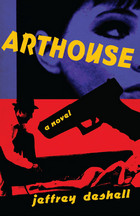
From film to film, Jeffrey DeShell follows a forty-something failed film studies academic—The Professor. While The Professor is reinvented with each new chapter (or film), what remains is DeShell’s inventive deconstruction and representation of modern cinema. At times borrowing imagery, plot, or character elements, and at times rendering lighting, rhythm, costuming, or shot sequences into fictional language, The Professor’s journey sends him from the Southwestern town of Pueblo, Colorado, into the role of rescuer as he aids an attempted-rape victim, and finally to Italy. Ultimately though, The Professor is left alone, struggling to reconcile the real world with his life in cinema.
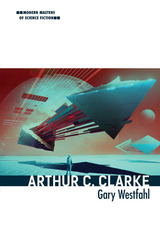
Gary Westfahl closely examines Clarke's remarkable career, ranging from his forgotten juvenilia to the passages he completed for a final novel, The Last Theorem. As Westfahl explains, Clarke’s science fiction offered original perspectives on subjects like new inventions, space travel, humanity’s destiny, alien encounters, the undersea world, and religion. While not inclined to mysticism, Clarke necessarily employed mystical language to describe the fantastic achievements of advanced aliens and future humans. Westfahl also contradicts the common perception that Clarke’s characters were bland and underdeveloped, arguing that these reticent, solitary individuals, who avoid conventional relationships, represent his most significant prediction of the future, as they embody the increasingly common lifestyle of people in the twenty-first century.
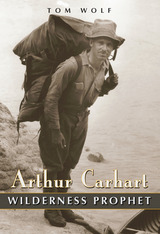
Arthur Carhart (1892-1978), America's first champion of wilderness, the first Forest Service landscape architect, and the most popular conservation writer of mid-century America, never won the titan status of his contemporary, Aldo Leopold. A political maverick, he refused to side with any major advocacy group and none has made him its saint. Carhart was a grassroots thinker in a top-down era.
Arthur Carhart, the first biography of this Republican environmentalist and major American thinker, writer, and activist, reveals the currency of his ideas. Tom Wolf elucidates Carhart 's vision of conservation as "a job for all of us," with citizens, municipal authorities, and national leaders all responsible for the environmental effects of their decisions. Carhart loved the local and decried interest groups—from stockmens' associations to wilderness lobbies—as cliques attempting blanket control. He pressured land management agencies to base decisions on local ecology and local partnerships. A lifelong wilderness advocate who proposed the first wilderness preserve at Trappers Lake, Colorado, in 1919, Carhart chose to oppose the Wilderness Act, heartsick at its compromises with lobbies.
Because he shifted his stance and changed his views in response to new information, Carhart is not an easy subject for a biography. Wolf traces Carhart's twists and turns to show a man whose voice was distinctive and contrary and who spoke from a passionate concern for the land and couldn't be counted on for anything else. Readers of American history and outdoor writing will enjoy this portrait of a historic era in conservation politics and the man who so often eschewed politics in favor of the land and people he loved.
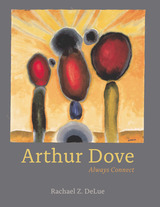
Rachael Z. DeLue rejects the traditional assumption that Dove can only be understood in terms of his nature paintings and association with photographer and gallerist Alfred Stieglitz and his circle. Instead, she uncovers deep and complex connections between Dove’s work and his world, including avant-garde literature, popular music, meteorology, mathematics, aviation, and World War II. Arthur Dove also offers the first sustained account of Dove’s Dadaesque multimedia projects and the first explorations of his animal imagery and the role of humor in his art. Beautifully illustrated with works from all periods of Dove’s career, this book presents a new vision of one of America’s most innovative and captivating artists—and reimagines how the story of modern art in the United States might be told.

Arthur M. Schlesinger, Jr., is a historian and political advocate whose ideas and activities have significantly influenced the shape and direction of American liberalism during the past fifty years. A central feature of Schlesinger’s ideological perspective is his belief that American history has been marked by alternating periods of conservative and liberal dominance, which he has termed the “tides of national politics.” Throughout his career, Schlesinger has used the “tides of national politics” to defend the legitimacy and superiority of active liberal government and leadership.
The study investigates how the “tides” concept has functioned in both Schlesinger’s historical scholarship and his partisan political discourse. Depoe also explores the ways in which the “tides” concept has shaped and channeled Schlesinger’s political thought over time, leading him toward certain definitions of situations and away from others. Finally, Depoe offers Schlesinger’s life and work as a case study of the highs and lows of postwar American liberalism. By tracing Schlesinger’s responses to Eisenhower-era conservatism, Kennedy’s New Frontier, and the problems of Vietnam and violence during the 1960s, and the gradual delegitimation of liberalism from the 1970s to the present, this book offers a road map that can guide the reader toward a better understanding of the past, present, and future of liberalism in America.

Arthur Miller - American Writers 40 was first published in 1964. Minnesota Archive Editions uses digital technology to make long-unavailable books once again accessible, and are published unaltered from the original University of Minnesota Press editions.
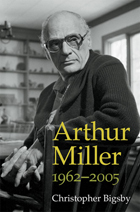
Christopher Bigsby's masterful two-volume biography of Arthur Miller sheds new light on one of the twentieth century's most acclaimed literary figures. Plays such as Death of a Salesman, A View from the Bridge, and The Crucible brought Miller an international following, and events such as his refusal to provide information to the House Un-American Activities Committee and his marriage to Marilyn Monroe kept him in the public eye. The second half of his life, the focus of this volume, proved no less fascinating. In 1962, Monroe died, and he married photographer Inge Morath, a relationship that transformed him as a writer and as a person. His activism in support of political and social causes only increased during the period, including criticism of U.S. foreign policy in Vietnam and contemporary conflicts in the Middle East. In this period of his life, he also became renowned for his work in support of dissident writers in Russia, Czechoslovakia, China, and elsewhere.
The second volume of this magisterial biography offers a compelling narrative of a singular American life, a life story enriched by the biographer's uncommon access to Miller and his unpublished papers while researching this book. The result is an authoritative biography that provides illuminating detail and invaluable insights into the Miller the artist and Miller the man.
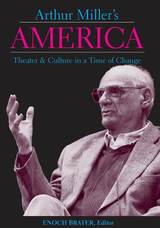
Arthur Miller's America collects new writing by leading international critics and scholars that considers the dramatic world of icon, activist, and playwright Arthur Miller's theater as it reflects the changing moral equations of his time. Written on the occasion of Miller's 85th year, the original essays and interviews in Arthur Miller's America treat the breadth of Miller's work, including his early political writings for the campus newspaper at the University of Michigan, his famous work with John Huston, Clark Gable and Marilyn Monroe on The Misfits, and his signature plays like Death of a Salesman and All My Sons.
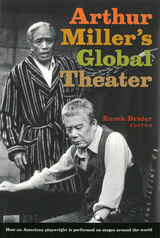
No American playwright is more revered on the international stage than Arthur Miller. In Arthur Miller’s Global Theater—a fascinating collection of new essays by leading international critics and scholars—readers learn how and why audiences around the world have responded to the work of the late theatrical icon. With perspectives from diverse corners of the globe, from Israel to Japan to South Africa, this groundbreaking volume explores the challenges of translating one of the most American of American playwrights and details how disparate nations have adapted meaning in Miller’s most celebrated dramas.
An original and engaging collection that will appeal to theater aficionados, scholars, students, and all those interested in Miller and his remarkable oeuvre, Arthur Miller’s Global Theater illustrates how dramas such as Death of a Salesman,The Crucible, and A View from the Bridge developed a vigorous dialogue with new audiences when they crossed linguistic and national borders. In these times when problems of censorship, repressive regimes, and international discord are increasingly in the news, Arthur Miller’s voice has never been more necessary as it continues to be heard and celebrated around the world.
Enoch Brater is the Kenneth T. Rowe Collegiate Professor of Dramatic Literature at the University of Michigan. His other books include Arthur Miller: A Playwright’s Life and Works and Arthur Miller’s America.
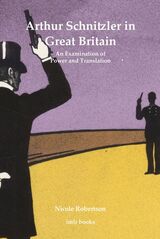
The “amoral voice” of fin-de-siècle Vienna, Arthur Schnitzler (1862–1931) was one of the major figures of European modernist literature. Throughout his lifetime and after his death, his writing enjoyed substantial domestic and international success, yet the arrival of his dramatic works in Great Britain was plagued by false starts, short runs, and inconsistencies. Only with Tom Stoppard’s adaptations of Das weite Land and Liebelei, as Undiscovered Country and Dalliance respectively, were Schnitzler’s plays finally produced at the National Theatre.
This fascinating book studies the history of Schnitzler’s reception in Great Britain to unearth evidence of power in transcultural and translingual migrations. Surveying the field from the end of the nineteenth century to the present day, Nicole Robertson’s analysis of published translations, critical reviews, correspondence, and unpublished drafts provides expansive insight into the process of translating from page to stage. This book presents exhaustive and detailed scholarship on a fascinating, if far from smooth, journey, raising fundamental questions about the nature of authorship.

Arthur Schopenhauer (1788–1860) almost wasn’t one of the greatest philosophers of the nineteenth century. Born in the Free City of Danzig to a family of shipping merchants, he was destined for a life of imports and exports until his father died in a suspected suicide. After much deliberation, the young Schopenhauer invested his inheritance in himself and his philosophical vocation. But the long road to recognition was a difficult one, with Schopenhauer spending all but the last decade of his life in total obscurity. Yet his ideas and style went on to influence great thinkers, including Friedrich Nietzsche, Ludwig Wittgenstein, and Sigmund Freud, as well as artists such as the composer Richard Wagner and writers Marcel Proust, Thomas Mann, Samuel Beckett, and many more.
A singular and remarkably influential thinker, Schopenhauer is usually described as an extreme pessimist. He questioned the purpose of existence in a world where pain and suffering are inescapable and happiness is all too brief. In this engaging philosophical biography, David Bather Woods reevaluates Schopenhauer’s pessimism in the context of his life experiences, revealing the philosopher’s relentless fascination with the world and making a case for his contemporary relevance. Bather Woods weaves together Schopenhauer’s ideas with the story of how he came to be, including such topics as love, loneliness, morality, politics, gender, sexuality, death, suicide, fame, and madness. In doing so, this book answers some of life’s most challenging questions about how to deal with pain and loss, and how to live with ourselves and each other.
Despite his pessimistic outlook on human existence, Schopenhauer didn’t give up on life. Rather, he recognized that the question of how to live becomes even more pressing, and he worked to provide an answer. Bather Woods shows how Schopenhauer’s life informed his ideas and how they still resonate today.
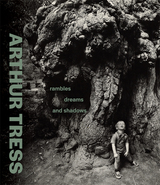
Arthur Tress (b. 1940) is a singular figure in the landscape of postwar American photography. His seminal series, The Dream Collector, depicts Tress’s interests in dreams, nightmares, fantasies, and the unconscious and established him as one of the foremost proponents of magical realism at a time when few others were doing staged photography.
This volume presents the first critical look at Tress’s early career, contextualizing the highly imaginative, fantastic work he became known for while also examining his other interrelated series: Appalachia: People and Places; Open Space in the Inner City; Shadow; and Theater of the Mind. James A. Ganz, Mazie M. Harris, and Paul Martineau plumb Tress’s work and archives, studying ephemera, personal correspondence, unpublished notes, diaries, contact sheets, and more to uncover how he went from earning his living as a social documentarian in Appalachia to producing surreal work of “imaginative fiction.” This abundantly illustrated volume imparts a fuller understanding of Tress’s career and the New York photographic scene of the 1960s and 1970s.
This volume is published to accompany an exhibition on view at the J. Paul Getty Museum at the Getty Center from October 31, 2023, to February 18, 2024.

Originally the editor and publisher of the Grand Rapids Herald, Vandenberg was appointed and later elected to the Senate in 1928, where he became an outspoken opponent of the New Deal and a leader among the isolationists who resisted FDR’s efforts to aid European allies at the onset of World War II. But Vandenberg soon recognized the need for unity at the dawn of a new world order; and as a Republican leader, he worked closely with Democratic administrations to build the strong bipartisan consensus that established the Marshall Plan, the United Nations, and NATO. Vandenberg, as Meijer reveals, was instrumental in organizing Congressional support for these monumental twentieth-century foreign policy decisions.
Vandenberg’s life and career offer powerful lessons for today, and Meijer has given us a story that suggests an antidote to our current democratic challenges. After reading this poignant biography, many will ask: Where is the Vandenberg of today?

Arthurian Intertextualities offers new readings of Malory’s Morte as well as the two English poems that most influenced him. Tolhurst and Whetter situate Malory’s Arthur story in the context of fourteenth- and fifteenth-century England. Combining these contexts with intertextual analysis of scenes and characters from Le Morte Darthur and both sources, the authors illustrate the full extent of Malory’s debt to these two English poems while making a stronger case for Malory’s artistry—and the stanzaic-poet’s artistry—than previous scholarship has acknowledged. These new readings demand a reassessment of Arthurian women, kingship, and warfare and heroism, including reconsidering the alliterative-poet’s attitude to war and to Arthur as conqueror. The authors also offer a spirited defense of Malory’s Guenevere, who remains frequently maligned by scholars, and argue for Palomydes’s acceptance by his Round Table Fellowship. Arthurian Intertextualities will appeal to readers who are interested in the book that serves as the source for most of the Arthuriana (whether novels, plays, works of art, or films) in today’s world: Le Morte Darthur.

A comprehensive guide and workbook for improving ESL/EFL students' understanding of English articles, The Article Book can be used as either a supplement to any ESL/EFL core text or as a self-study tool for intermediate through advanced learners. Cole involves students in "learning by doing" through an integrated approach to skill acquisition that includes other grammar structures, reading, vocabulary, and speaking. Each chapter of the book is organized into teachable units or lessons and includes presentation of a grammatical rule with examples, exercises, quizzes, and a comprehensive test. While the fifty rules (and fifteen exceptions) are taught to provide a logical framework for the text and serve as a handy reference, students will learn through guided practice instead of memorization.

"An admirable analysis. It presents, in succinct form, the results of a generation of study of this chapter of our history and summarizes fairly the conclusions of that study."—Henry Steele Commager, New York Times Book Review
In her award-winning collection, Elizabeth Oness travels a vast emotional terrain, from the loss of innocence to sexual betrayal to the helplessness of parents before their children. In “Momentum, ” a woman carries the burden of a dead friend's secret for years until she finally decides to reveal it, only to discover that other, darker secrets still lie in wait. “Rufus” follows the quandary of a young man who is forced to choose between the affection of his girlfriend and his compassion for a homeless man who has taken up residence in his car.
Articles of Faith is a collection of stories about silence and the complications that arise when a silence is kept too long or suddenly broken. As one narrator relates, “I knew that life was full of these things which matter so enormously and make us what we are—but remain unsaid because to voice them does not make them go away, and instead shakes everything around us apart. ”
This compilation is collaborative; its core is a conflation of items based on the quarterly checklists of "Articles on American Literature Appearing in Current Periodicals" in American Literature from January 1951 through January 1958. Other items have been added frot the annual bibliographies in the Publications of the Modern Language Association of America, the American Quarterly, and the New England Quarterly. And finally, there have been added listings from other more specialized bibliographies on genres or authors.
The accumulated listings are arranged in a single author alphabet, with miscellaneous articles divided into convenient categories. That this volume is nearly twice the length of its predecessor is an indication of the burgeoning scholarship devoted to American literature in the last twenty years. It is of the greatest importance then that the scholar have the kind of comprehensive guide which will free him from the time -consuming task of searching out materials. Lewis Leary's book provides just such a guide.
Appearing concurrently with this volume is a reprinting of the popular Articles on American Literature 1900-1950, originally published in 1954. This compilation (itself a revision and extension of the 1947 Articles on American Literature Appearing in Current Periodicals, 1920-1945) is an alphabetical listing of articles on American literature, primarily in English, appearing in periodicals from 1900 through 1950.
Drawing on a wide range of texts, from understudied ethnographic and scientific works to canonical literature and philosophy, Sophie Salvo uncovers the prehistory of the inextricability of gender and language. Taking German discourses on language as her focus, she argues that we are not the inventors but, rather, the inheritors and adapters of the notion that gender and language are interrelated. Particularly during the long nineteenth century, ideas about sexual differences shaped how language was understood, classified, and analyzed. As Salvo explains, philosophers asserted the patriarchal origins of language, linguists investigated “women’s languages” and grammatical gender, and literary Modernists imagined “feminine” sign systems, and in doing so they not only deemed sex-based divisions to be necessary categories of language but also produced a plethora of gendered tropes and fictions, which they used both to support their claims and delimit their disciplines.
Articulating Difference charts new territory, revealing how gendered conceptions of language make possible the misogynistic logic of exclusion that underlies arguments claiming, for example, that women cannot be great orators or writers. While Salvo focuses on how male scholars aligned language study with masculinity, she also uncovers how women responded, highlighting the contributions of understudied nineteenth-century works on language that women wrote even as they were excluded from academic opportunities.

Articulating Dissent analyses the new communicative strategies of coalition protest movements and how these impact on a mainstream media unaccustomed to fractured articulations of dissent.
Pollyanna Ruiz shows how coalition protest movements against austerity, war and globalisation build upon the communicative strategies of older single issue campaigns such as the anti-criminal justice bill protests and the women’s peace movement. She argues that such protest groups are dismissed in the mainstream for not articulating a ‘unified position’ and explores the way in which contemporary protesters stemming from different traditions maintain solidarity.
Articulating Dissent investigates the ways in which this diversity, so inherent in coalition protest, affects the movement of ideas from the political margins to the mainstream. In doing so this book offers an insightful and original analysis of the protest coalition as a developing political form.
In Articulating the World, Joseph Rouse argues that the most pressing challenge for advocates of naturalism today is precisely this: to understand how to make sense of a scientific conception of nature as itself part of nature, scientifically understood. Drawing upon recent developments in evolutionary biology and the philosophy of science, Rouse defends naturalism in response to this challenge by revising both how we understand our scientific conception of the world and how we situate ourselves within it.
In 1987 poet and physician Jon Mukand published Sutured Words, a volume of contemporary poems to help patients, their families and friends, and all health care professionals embrace the complexity of healing, illness, and death. Robert Coles called the collection “a wonderful source of inspiration and instruction for any of us who are trying to figure out what our work means”; Norman Cousins was impressed by the “discernment and high quality of the selections.” Now, in Articulations, Mukand adds more than a hundred new poems to the strongest poems from Sutured Words to give us a lyrical, enlightened understanding of the human dimensions of suffering and illness

Julija Šukys examines a series of five North American university and college campus shootings between 1966 and 2015: the École Polytechnique in Montreal, Concordia University in Montreal, Virginia Tech, University of Alabama–Huntsville, and Umpqua Community College in Roseburg, Oregon. These attacks involved students and faculty as both victims and perpetrators—that is, all the shooters were either faculty members or (in one case, would-be) students of the institution where the killings took place.
Šukys arrives at each site long after the killings have taken place: by now, the teddy bears, flowers, and crosses have been cleared away. Prying journalists are long gone. She sorts through myriad objects left at makeshift memorial sites. She talks for hours with a professor who survived an attack only because her colleague’s gun jammed as it was pointed at her head. She wanders and documents the reconfigured buildings made unrecognizable after the horrors that occurred within them. She reads tedious court transcripts, officious government-commissioned reports, and a troubling memoir written by a shooter’s mother and sifts through the mathematics papers that one campus shooter publishes from his prison cell.
Artifact weighs what it means to live in a place where students and their teachers are gunned down on a seemingly regular basis. It asks how we can continue to learn, teach, and live when nothing changes in response to these deaths. It attempts to speak into silence, to look at the pain of those who have come through trauma, and to meet their gazes without platitudes or triumphalism. The result is a searching book about care, memory, forgiveness, and survival.
In Artifacts of Loss, Jane E. Dusselier looks at the lives of these internees through the lens of their art. These camp-made creations included flowers made with tissue paper and shells, wood carvings of pets left behind, furniture made from discarded apple crates, gardens grown next to their housingùanything to help alleviate the visual deprivation and isolation caused by their circumstances. Their crafts were also central in sustaining, re-forming, and inspiring new relationships. Creating, exhibiting, consuming, living with, and thinking about art became embedded in the everyday patterns of camp life and helped provide internees with sustenance for mental, emotional, and psychic survival.
Dusselier urges her readers to consider these often overlooked folk crafts as meaningful political statements which are significant as material forms of protest and as representations of loss. She concludes briefly with a discussion of other displaced people around the globe today and the ways in which personal and group identity is reflected in similar creative ways.
By the mid-twentieth century, ancient Mexican artifacts had undergone a striking transformation. Once dismissed as anthropological curiosities, sought after more for their ethnographic value than aesthetic merit, they had become prized artworks that were prominently displayed in major US museums, featured in advertisements and Hollywood films, and shown adorning the homes of celebrities.
At the center of this shift was Earl Stendahl, a savvy Los Angeles art dealer who played a pivotal role in shaping public and institutional perceptions of these objects. Through strategic marketing and a keen eye for opportunity, he repositioned these artifacts, selling them to an elite clientele that included movie stars, wealthy collectors, and museum curators. In doing so, he helped define a new canon of “ancient American art.”
Beneath this glamorous facade, however, lies a darker narrative of the looting, smuggling, and forgery that fueled this midcentury craze, exposing how the desire for authenticity and prestige often came at the expense of ethical collecting practices and cultural heritage. This book brings together art history, museum studies, and the politics of the antiquities trade, offering both a social history and a critical examination of how ancient Mexico’s past was sold in twentieth-century America.
This volume is published to accompany an exhibition on view at the Getty Research Institute at the Getty Center from June 23 to October 18, 2026.
Analyzing van Hoogstraten's painting treatise, illusionistic pictures, ingenious perspective boxes, and witty trompe-l'oeil images, Brusati reveals the crucial role these endeavors played in the forging of van Hoogstraten's professional and social identity. Brusati looks at the historical circumstances of van Hoogstraten's career, which he fashioned from a convergence of Dutch cultural practices, family genealogy, and his considerable entrepreneurial acumen. She shows how Van Hoogstraten exploited the court patronage system to secure the worth of his work in the newer market culture of the Dutch Republic.
Brusati explores Van Hoogstraten's use of illusionistic artifice in his art and writing to shed new light on the much-disputed nature of Dutch "realism", and she discusses how a notion of "experimental artistry", which linked representational craft to the production of knowledge, informed Van Hoogstraten's many projects and framed the terms within which he and his colleagues understood artistic achievement during this period.
Artifice and Indeterminacy gathers the strongest and most representative writings of the past two decades and shows more clearly than ever before the depth and breadth of contemporary American poetics. Collectively, these essays break with conventional interpretive frameworks and traditional generic boundaries of poetry to give fresh voice to the poetics of our time.
Neither dismissive of the aesthetic value(s) of poetry, nor reluctant to articulate the ways in which aesthetic evaluation is complicated by the mediating influences of history, culture, class, gender, race, and academic status, the writers presented in this anthology celebrate the artifice of the poetic text while also accepting as a given the indeterminacy of its inception and reception.
Individual pieces range in style and approach from theoretical writings to discussions of individual poets such as Emily Dickinson, Louis Zukofsky, and Bob Kaufman. The authors consider such critical issues as gender and the possibilities of a feminist poetics, the textual politics of race and class, and the broader implications of an avant-garde practice.
READERS
Browse our collection.
PUBLISHERS
See BiblioVault's publisher services.
STUDENT SERVICES
Files for college accessibility offices.
RECENTLY PUBLISHED



UChicago Accessibility Resources
home | accessibility | search | about | contact us
BiblioVault ® 2001 - 2026
The University of Chicago Press