
 A SCHOLARLY BOOK REPOSITORY
In exploring how artificial darkness shaped modern art, film, and media, Noam M. Elcott addresses seminal and obscure works alongside their sites of production—such as photography darkrooms, film studios, and laboratories—and their sites of reception, including theaters, cinemas, and exhibitions. He argues that artists, scientists, and entertainers like Étienne-Jules Marey, Richard Wagner, Georges Méliès, and Oskar Schlemmer revolutionized not only images but also everything surrounding them: the screen, the darkness, and the experience of bodies and space. At the heart of the book is “the black screen,” a technology of darkness that spawned today’s blue and green screens and has undergirded numerous advanced art and film practices to this day.
Turning familiar art and film narratives on their heads, Artificial Darkness is a revolutionary treatment of an elusive, yet fundamental, aspect of art and media history.
Part ethnography and part historical study, The Artificial Ear is based on interviews with researchers who were pivotal in the early development and implementation of the new technology. Through an analysis of the scientific and clinical literature, Stuart Blume reconstructs the history of artificial hearing from its conceptual origins in the 1930s, to the first attempt at cochlear implantation in Paris in the 1950s, and to the widespread clinical application of the "bionic ear" since the 1980s.
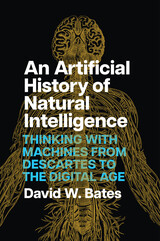
We imagine that we are both in control of and controlled by our bodies—autonomous and yet automatic. This entanglement, according to David W. Bates, emerged in the seventeenth century when humans first built and compared themselves with machines. Reading varied thinkers from Descartes to Kant to Turing, Bates reveals how time and time again technological developments offered new ways to imagine how the body’s automaticity worked alongside the mind’s autonomy. Tracing these evolving lines of thought, An Artificial History of Natural Intelligence offers a new theorization of the human as a being that is dependent on technology and produces itself as an artificial automaton without a natural, outside origin.
Highlighting the impact of human-like AI design, from gendered virtual assistants to romanticized social robots, the book shows how these technologies intersect with longstanding humanistic questions about the concepts of creativity and language as well as the relations between humans and machines. Additionally, the book explores AI’s applications in medical fields, particularly psychiatry and neurotechnology, including how AI interacts with the human body and mind to address conditions like paralysis. By emphasizing the philosophical and cultural implications of these technologies, Beguš highlights the need for responsible innovation that prioritizes human well-being as well as machine potential outside of human imitation. Accessible and thought-provoking, Artificial Humanities offers tools for analyzing and assessing technologies while they are being developed and invites readers to see how the humanities can guide us toward a more thoughtful future for AI.

Through algorithms and artificial intelligence (AI), objects and digital services now demonstrate new skills they did not have before, right up to replacing human activity through pre-programming or by making their own decisions. As part of the internet of things, AI applications are already widely used today, for example in language processing, image recognition and the tracking and processing of data.
This policy brief illustrates the potential negative and positive impacts of AI and reviews related policy strategies adopted by the UK, US, EU, as well as Canada and China. Based on an ethical approach that considers the role of AI from a democratic perspective and considering the public interest, the authors make policy recommendations that help to strengthen the positive impact of AI and to mitigate its negative consequences.


This Charleston Briefing seeks to provide some answers to these very important questions, offering both general essays on AI and more specific essays on AI in scholarly publishing, academic libraries, and AI in information discovery and knowledge building. The essays will help publishers, librarians, and researchers better understand the actual impact of AI on libraries and publishing so that they can respond to the potentially transformative impact of AI in a measured and knowledgeable manner.
Charleston Briefings: Trending Topics for Information Professionals is a thought-provoking series of brief books concerning innovation in the sphere of libraries, publishing, and technology in scholarly communication. The briefings, growing out of the vital conversations characteristic of the Charleston Conference and Against the Grain, will offer valuable insights into the trends shaping our professional lives and the institutions in which we work.


Artificial Mythologies was first published in 1997. Minnesota Archive Editions uses digital technology to make long-unavailable books once again accessible, and are published unaltered from the original University of Minnesota Press editions.
Cultural critics teach us that myths are artificial. Cultural innovators use the artificial to make something new. In this exhilarating guide, Craig J. Saper takes us on an eye-opening tour of the process of cultural invention-willfully entertaining foolish, absurd, even fake, solutions as a way of reaching new perspectives on cultural problems. Saper deploys this method to reveal unsuspected connections among major cultural issues, such as urban decay, the dangers of television's power, family values, and conservative criticism of higher education.
The model Saper uses builds on the later works of the revered French cultural critic Roland Barthes. These works, Saper argues, suggest poignant, playful, and productive ways of engaging dominant methodologies and mythologies. Artificial Mythologies shows us how, by allowing the artificial-our received ideas, common responses, and cultural mythologies-full play, we can arrive at provocative new solutions. The book demonstrates that the very conceptions of media and sociocultural issues that stymie innovation can be made to serve the cause of invention.
Craig J. Saper is assistant professor in the Department of English at the University of Pennsylvania.

During the past few decades, high-profile cases like that of Terry Schiavo have fueled the public debate over forgoing or withdrawing artificial nutrition and hydration from patients in a persistent vegetative state (PVS). These cases, whether involving adults or young children, have forced many to begin thinking in a measured and careful way about the moral legitimacy of allowing patients to die. Can families forgo or withdraw artificial hydration and nutrition from their loved ones when no hope of recovery seems possible?
Many Catholics know that Catholic moral theology has formulated a well-developed and well-reasoned position on this and other end-of-life issues, one that distinguishes between "ordinary" and "extraordinary" treatment. But recent events have caused uncertainty and confusion and even acrimony among the faithful. In his 2004 allocution, Pope John Paul II proposed that artificial nutrition and hydration is a form of basic care, thus suggesting that the provision of such care to patients neurologically incapable of feeding themselves should be considered a moral obligation. The pope's address, which seemed to have offered a new development to decades of Catholic health care ethics, sparked a contentious debate among the faithful over how best to treat permanently unconscious patients within the tenets of Catholic morality.
In this comprehensive and balanced volume, Ronald Hamel and James Walter present twenty-one essays and articles, contributed by physicians, clergy, theologians, and ethicists, to reflect the spectrum of perspectives on the issues that define the Catholic debate. Organized into six parts, each with its own introduction, the essays offer clinical information on PVS and feeding tubes; discussions on the Catholic moral tradition and how it might be changing; ecclesiastical and pastoral statements on forgoing or withdrawing nutrition and hydration; theological and ethical analyses on the issue; commentary on Pope John Paul II's 2004 allocution; and the theological commentary, court decisions, and public policy resulting from the Clarence Herbert and Claire Conroy legal cases.
A valuable resource for students and scholars, this teachable volume invites theological dialogue and ethical discussion on one of the most contested issues in the church today.
As a prize winning detective novel, Artificial Respiration reaches through many levels of mystery to explore the forces that have been at play in Argentina throughout its violent history. The narrator, a writer named Renzi, begins to look for an uncle who has vanished, a man he knows only through a web of contradictory family stories and an exchange of letters. Through these letters he learns about his uncle’s research into the life of Enrique Ossario, secretary to the 19th-century Argentine dictator Rosas and spy for the dictator’s enemy. As Renzi’s search leads further into his uncle’s work and to conversations with his literary and chess-playing friends, the reader is led by Piglia to consider the nature of Argentine identity, its literature and history, and its relation, for example, to Europe, exile, and democracy. Finally, and made most vividly appreciable by the retelling of a story in which Kafka meets Hitler, it is the encounter between literature and history that is explored.
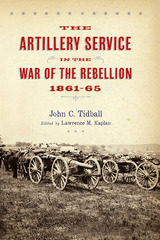
A Rediscovered History That Will Become Essential Reading for Civil War Studies
The Artillery Service in the War of the Rebellion, 1861–65, is a comprehensive overview and analysis of the U.S. Army’s field artillery service in the Civil War’s principal battles, written by John C. Tidball, a distinguished artilleryman of the era. The overview, which appeared in the Journal of the Military Service Institution from 1891 to 1893, and nearly impossible to find today, examines the Army of the Potomac, including the battles of Fair Oaks, Gaines’s Mill, Mechanicsville, Malvern Hill, Antietam, Fredericksburg, Chancellorsville, and Gettysburg; the Army of the Tennessee, including the battles of Stones River and Chickamauga, and the Army of the Ohio’s battle of Shiloh. Tidball, a decorated Civil War veteran and superintendent of artillery instruction for the army, expertly presents the war through an artilleryman’s eyes in explaining the organization, equipping, and manning of the artillery service. His analysis highlights how the improper use of artillery, tying batteries down to relatively small infantry commands that diluted their firepower, seriously undermined the army’s effectiveness until reforms produced independent artillery commands that could properly mass artillery fire in battle.
The Artillery Service in the War of the Rebellion, edited by historian Lawrence M. Kaplan and presented here in one volume for the first time, includes additional material from an unpublished paper Tidball wrote in 1905 which contains further insights into the artillery service, as well as a general overview of the Petersburg campaign. A major new discovery in Civil War scholarship, The Artillery Service in the War of the Rebellion contains essential information that will change earlier historical interpretations of key battles and will be essential reading for all those interested in the war or contemplating writing about it.
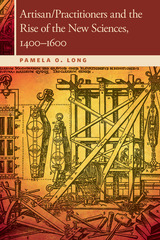

Canadian writer Madeleine Thien reflects on a fragment of a mural depicting Three Uighur Princes from one of the Bezeklik Caves along the Northern Silk Road, in what is now the Xinjiang Uighur Autonomous Region of China. This most renowned donor portrait of Uighur-Buddhist art was brought to the Berlin museums following the Second German Turfan Expedition (1904–5). Thien responds to its vibrant colors and expressive lines with a literary text, transporting us into the daily lives of the painters who adorned the caves with strikingly lifelike murals in the tenth century.
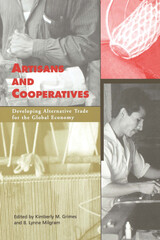
With new markets opening up for goods produced by artisans from all parts of the world, craft commercialization and craft industries have become key components of local economies. Now with the emergence of the Fair Trade movement and public opposition to sweatshop labor, many people are demanding that artisans in third world countries not be exploited for their labor.
Bringing together case studies from the Americas and Asia, this timely collection of articles addresses the interplay among subsistence activities, craft production, and the global market. It contributes to current debates on economic inequality by offering practical examples of the political, economic, and cultural issues surrounding artisan production as an expressive vehicle of ethnic and gender identity.
Striking a balance between economic and ethnographic analyses, the contributors observe what has worked and what hasn't in a range of craft cooperatives and show how some artisans have expanded their entrepreneurial role by marketing crafts in addition to producing them. Among the topics discussed are the accommodation of craft traditions in the global market, fair trade issues, and the emerging role of the anthropologist as a proactive agent for artisan groups.
As the gap between rich and poor widens, the fate of subsistence economies seems more and more uncertain. The artisans in this book show that people can and do employ innovative opportunities to develop their talents, and in the process strengthen their ethnic identities.
ContentsIntroduction: Facing the Challenges of Artisan Production in the Global Market / Kimberly M. Grimes and B. Lynne Milgram
Democratizing International Production and Trade: North American Alternative Trading Organizations / Kimberly M. Grimes
Building on Local Strengths: Nepalese Fair Trade Textiles / Rachel MacHenry
"That They Be in the Middle, Lord": Women, Weaving, and Cultural Survival in Highland Chiapas, Mexico / Christine E. Eber
The International Craft Market: A Double-Edged Sword for Guatemalan Maya Women / Martha Lynd
Of Women, Hope, and Angels: Fair Trade and Artisan Production in a Squatter Settlement in Guatemala City / Brenda Rosenbaum
Reorganizing Textile Production for the Global Market: Women’s Craft Cooperatives in Ifugao, Upland Philippines / B. Lynne Milgram
Textile Production in Rural Oaxaca, Mexico, and the Complexities of the Global Market for Handmade Crafts / Jeffrey H. Cohen
"Part-Time for Pin Money": The Legacy of Navajo Women’s Craft Production / Kathy M’Closkey
The Hard Sell: Anthropologists as Brokers of Crafts in the Global Marketplace / Andrew Causey
Postscript: To Market, To Market / June Nash

history, Bruce Laurie examines the character of working-class factionalism, plebian expectations of government, and relations between the organized few and the unorganized many. Laurie also examines the republican tradition and the movements that drew on it, from the General Trades Unions in the age of Jackson to the Knights of Labor later in the century.
Animals have always been compelling subjects for artists, but the rise of animal advocacy and posthumanist thought has prompted a reconsideration of the relationship between artist and animal. In this book, Steve Baker examines the work of contemporary artists who directly confront questions of animal life, treating animals not for their aesthetic qualities or as symbols of the human condition but rather as beings who actively share the world with humanity.
The concerns of the artists presented in this book—Sue Coe, Eduardo Kac, Lucy Kimbell, Catherine Chalmers, Olly and Suzi, Angela Singer, Catherine Bell, and others—range widely, from the ecological to the philosophical and from those engaging with the modification of animal bodies to those seeking to further the cause of animal rights. Drawing on extensive interviews he conducted with the artists under consideration, Baker explores the vital contribution that contemporary art can make to a broader conception of animal life, emphasizing the importance of creativity and trust in both the making and understanding of these artworks.
Throughout, Baker is attentive to issues of practice, form, and medium. He asks, for example, whether the animal itself could be said to be the medium in which these artists are working, and he highlights the tensions between creative practice and certain kinds of ethical demands or expectations. Featuring full-color, vivid examples of their work, Artist Animal situates contemporary artists within the wider project of thinking beyond the human, asserting art’s power to open up new ways of thinking about animals.
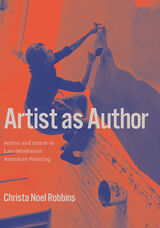
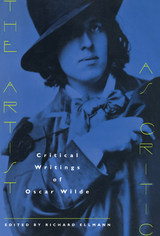
Included in Richard Ellmann's impressive collection of Wilde's criticism, The Artist as Critic, is a wide selection of Wilde's book reviews as well as such famous longer works as "The Portrait of Mr. W.H.," "The Soul Man under Socialism," and the four essays which make up Intentions. The Artist as Critic will satisfy any Wilde fan's yearning for an essential reading of his critical work.
"Wilde . . . emerges now as not only brilliant but also revolutionary, one of the great thinkers of dangerous thoughts."—Walter Allen, New York Times Book Review
"The best of Wilde's nonfictional prose can be found in The Artist as Critic."—Michael Dirda, Washington Post Book World


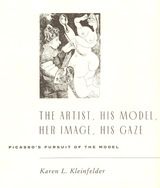
In this innovative study, Karen L. Kleinfelder rejects the claim that Picasso's later work was a failure. The failing, she claims, lies more in the way we typically have read the images, treating them merely as reflections of an "old-age" style or of the artist's private life.
Focusing on graphics dating from 1954 to 1970, Kleinfelder shows how Picasso plays with the artist-model theme to extend, subvert, and parody both the possibilities and limits of representation. For Kleinfelder, Picasso's graphic work both mystifies and demystifies the creative process, venerates and mocks the effects of aging and the artist's self-image as a living "old master," and acknowledges and denies his own fear of death.
Using recent interpretive and literary theory, Kleinfelder probes the three-way relationship between artist, model, and canvas. The dynamics of this relationship provided Picasso with an open-ended textual framework for exploring the dichotomies of man/woman, self/other, and vitality/mortality. What unfolds is the artist's struggle not only with the impossibility of representing the model on canvas, but also with the inevitability of his own death.
Kleinfelder explores how Picasso's means of pursuing these issues allows him to defer closure on a long, productive career. By focusing on the graphics rather than the paintings, Kleinfelder contradicts the primacy of the painted "masterpiece"; she steers the reader away from the assumption that the artist must work toward creating a final body of work that signifies the culmination of his search for a coherent identify.
Picasso's search, she argues, realizes itself in the creative process. She interprets the late graphics not as a biographical statement but as a tool for investigating the possibilities of representation within the limits of Picasso's medium and his lifetime. Richly illustrated, Kleinfelder's book will open up new approaches to the late work of this complex artist.
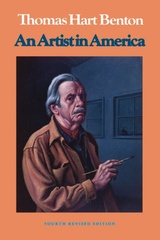
Controversial, flamboyant, contentious, brilliant--Thomas Hart Benton (1889-1975) was certainly all of those. Few American artists have stirred so much love and hatred as he did in a career that lasted almost seventy years. Although his painting aroused much controversy, perhaps equally as much was created by his words, for his piercing wit, profane sarcasms, and insightful condemnations were fired off without restraint. In this fiery and provocative autobiography, Benton presents an intriguing records of American art and society during his lifetime.
The first installment of this work was published in 1937, but Benton continued his life story in chapters added to editions published in 1951 and 1968. This new edition includes seventy-six drawings that add much to his narrative, plus a foreword discussing Benton's place in American art and an afterword covering his career after 1968, both written by art historian Matthew Baigell.
Although Benton is most famous as a regionalist painter and muralist, his complex and fascinating career brought him into contact with many of the most important artists and thinkers of the century, including Jackson Pollock, Grant Wood, Julian Huxley, Felix Frankfurter, Eugene Debbs, John Reed, and Harry Truman. While living in New York and on Martha's Vineyard in the 1920s and 1930s, Benton often associated with leading intellectuals and radicals. However, when his evolving principles of art led him away from an interest in Marxism, he was bitterly attacked by many of his former friends, and his account of that time reveals strikingly the fierce critical battles he faced in trying to establish his own artistic vision.
Critics on the Left were not his only opponents, however, and equally revealing are his responses to the moral condemnations heaped on his murals done for the states of Indiana and Missouri and on his realistic nudes of the late 1930s.
Throughout his account, from descriptions of his boyhood in southwest Missouri, his travels, and his career to discussions of specific works of art and other artists, Benton portrays people and events as vividly in words as he does in his paintings.
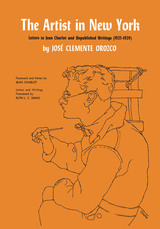
In his Foreword to this edition, Jean Charlot says: "An unusual feature of Orozco's letters is the great deal that he has to say about art. That one artist writing to another would emphasize art as his subject seems normal enough to the American reader. Yet, within the context of the Mexico of those days, the fact remains exceptional. The patria Orozco was leaving behind had, even from the point of view of its artists, many cares more pressing than art."
The letters and unpublished writings of Orozco from this period (1925-1929) describe an important period of transition in the artist's life, from his departure from Mexico, almost as a defeated man, to the period just before he received the great mural commissions—Pomona, The New School for Social Research in New York, Dartmouth—that were to bring him lasting international fame.
Artist Scholar: Reflections on Writing and Research is part history, introduction, and discussion for artists and designers entering, graduating, and employed by the contemporary art academy in the United States. The evolution of art education in the university continues to expand in the 21st century as the variables of craft, skill, technique, theory, history and criticism shift and expand as the perspective of arts-based research is introduced into this professionalized environment. Given this context: what can M.F.A. students do to improve their understanding of writing and research without sacrificing their commitment to their studio art process?
Through a series of essays, the text argues for better writing at the M.F.A. level with the purpose of becoming better artists. By contextualizing art practice in the university and providing a foundation for future artist scholarship, it serves as an invitation to artist scholars to push their work further and develop the confidence to situate their art in the university context.
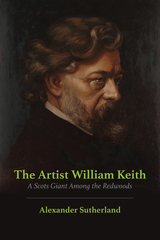
The Artist William Keith: A Scots Giant Among the Redwoods reveals the rise of William Keith (November 18, 1838? – April 13, 1911), a fatherless child from a humble presbyterian upbringing in rural Aberdeenshire, Scotland to an eminent position in the artistic and civic circles of Gold Rush-era San Francisco. Illustrated with 20 images, Alexander Sutherland’s detailed and engaging study traces Keith’s personal, family and artistic influences, his lively personality and his drive to make a name for himself.
Brought to America by his widowed mother in 1851, Keith’s initial career in wood engraving was superseded by an interest in painting. He later trained in Europe, influenced by German Realism, the Barbizon painters in Paris, and later, studying portraiture in Munich. However, his major artistic shift came in 1872, when he befriended fellow Scot, John Muir (April 21, 1838 – December 24, 1914), a conservationist and environmentalist.
Their numerous trips into the mountains of Yosemite and other wilderness regions in search of suitable subjects for painting was the catalyst for a thirty-eight-year friendship and cemented Keith’s success as a landscape painter. A later influence was landscape artist George Inness (1825-94), who helped Keith find a way out of a period of despondency. Keith’s later years in San Francisco were characterised by cosmopolitan and Suffragist connections and influence in the bohemian art world of California. The San Francisco Earthquake of 1906 destroyed much of his life’s work but Keith responded pragmatically producing further work -tangible evidence of his remarkable resilience.
Through the twentieth century, from colonial Ireland to the United States, and from Franco's Spain to late Soviet Russia, to include sexuality in a novel signaled social progressiveness and artistic innovation, but also transgression. Certain novelists—such as James Joyce, Vladimir Nabokov, Luis Martín-Santos, and Viktor Erofeev—radicalized the content of the novel by incorporating sexual thoughts, situations, and fantasies and thus portraying repressed areas of social, cultural, political, and mental life.
In The Artistic Censoring of Sexuality: Fantasy and Judgment in the Twentieth-Century Novel, Susan Mooney extensively examines four modernist and postmodernist novels that prompted in their day harsh external censorship because of their sexual content—Ulysses, Lolita, Time of Silence, and Russian Beauty. She shows how motifs of censorship, with all its restrictions, pressures, rules, judgments, and forms of negation, became artistically embedded in the novels' plots, characters, settings, tropes, and themes. These novels contest censorship's status quo and critically explore its processes and power. This study reveals the impact of censorship on literary creation, particularly in relation to the twentieth century's growing interest in sexuality and its discourses.
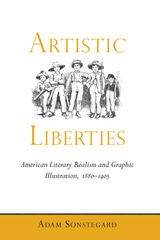
Though today we commonly read major works of nineteenth-century American literature in unillustrated paperbacks or anthologies, many of them first appeared as magazine serials, accompanied by ample illustrations that sometimes made their way into the serials’ first printings as books. The graphic artists creating these illustrations often visually addressed questions that the authors had left for the reader to interpret, such as the complexions of racially ambiguous characters in Uncle Tom’s Cabin. The artists created illustrations that depicted what outsiders saw in Huck and Jim in Adventures of Huckleberry Finn, rather than what Huck and Jim learned to see in one another. These artists even worked against the texts on occasion—for instance, when the illustrators reinforced the same racial stereotypes that writers such as Paul Laurence Dunbar had intended to subvert in their works.
Authors of American realism commonly submitted their writing to editors who allowed them little control over the aesthetic appearance of their work. In his groundbreaking Artistic Liberties, Adam Sonstegard studies the illustrations from these works in detail and finds that the editors employed illustrators who were often unfamiliar with the authors’ intentions and who themselves selected the literary material they wished to illustrate, thereby taking artistic liberties through the tableaux they created.
Sonstegard examines the key role that the appointed artists played in visually shaping narratives—among them Mark Twain’s Pudd’nhead Wilson, Stephen Crane’s The Monster, and Edith Wharton’s The House of Mirth—as audiences tended to accept their illustrations as guidelines for understanding the texts. In viewing these works as originally published, received, and interpreted, Sonstegard offers a deeper knowledge not only of the works, but also of the realities surrounding publication during this formative period in American literature.
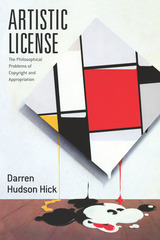
Engaging with long-standing debates about the nature of originality, authorship, and artists’ rights, Hick examines the philosophical challenges presented by the role of intellectual property in the artworld and vice versa. Using real-life examples of artists who have incorporated copyrighted works into their art, he explores issues of artistic creation and the nature of infringement as they are informed by analytical aesthetics and legal and critical theory. Ultimately, Artistic License provides a critical and systematic analysis of the key philosophical issues that underlie copyright policy, rethinking the relationship between artist, artwork, and the law.
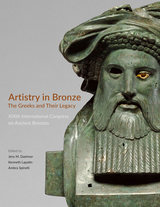
www.getty.edu/publications/artistryinbronze
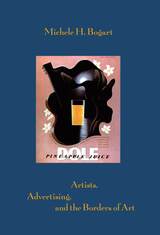
From the turn of the century through the 1950s, the explosive growth of popular magazines and national advertising offered artists new sources of income and new opportunities for reaching huge audiences. Bogart shows how, at the same time, this change in the marketplace also forced a rethinking of the purpose of the artistic enterprise itself. She examines how illustrators such as Howard Pyle, Charles Dana Gibson, and Norman Rockwell claimed their identities as artists within a market-oriented framework. She looks at billboard production and the growing schism between "art" posters and billboard advertisements; at the new roles of the art director; at the emergence of photography as the dominant advertising medium; and at the success of painters in producing "fine art" for advertising during the 1930s and 1940s.
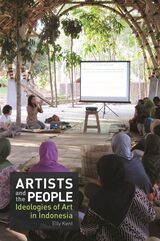
Exploring the work of established and emerging artists in Indonesia’s vibrant art world, this book examines why so many artists in the world’s largest archipelagic nation choose to work directly with people in their art practices. While the social dimension of Indonesian art makes it distinctive in the globalized world of contemporary art, Elly Kent is the first to explore this engagement in Indonesian terms. What are the historical, political, and social conditions that lie beneath these polyvalent practices? How do formal and informal institutions, communities, and artist-run initiatives contribute to the practices and discourses behind socially engaged art in Indonesia? Drawing on interviews with artists, translations of archival material, visual analyses, and participation in artists’ projects, this book presents a unique, interdisciplinary examination of ideologies of art in Indonesia.
Part of the Living and Sustaining a Creative Life series, Artists as Writers joins the tradition of books designed or intended to inspire would-be writers to write. Yet, it distinguishes itself by offering succinct first-person narratives by writers of varied genres about the day-to-day life of writing for a living.
Artists as Writers offers accounts of the journeys that thirty-two writers have taken, including what decisions were made; which paths were taken, rejected, and charted; and why. It answers the question: What magic keeps a writer writing?
Writers from Ethiopia, Guatemala, Nigeria, Palestine, Poland, and Sweden, as well as several American artists, contribute their stories. They each provide vividly detailed accounts of the circuitous roads that each individual took to earn the title “writer.” These are richly descriptive stories from writers who write consistently, relating how they came to the writing life, who helped them get there, and what sustains them as writers.
Sixty years ago, at the height of World War II, an extraordinary series of gatherings took place at Mount Holyoke College in western Massachusetts. During the summers of 1942–1944, leading European figures in the arts and sciences met at the college with their American counterparts for urgent conversations about the future of human civilization in a precarious world.
Two Sorbonne professors, the distinguished medievalist Gustave Cohen and the existentialist philosopher Jean Wahl, organized these “Pontigny” sessions, named after an abbey in Burgundy where similar symposia had been held in the decades before the war. Among the participants—many of whom were Jewish or had Jewish backgrounds—were the philosophers Hannah Arendt and Rachel Bespaloff, the poets Marianne Moore and Wallace Stevens, the anthropologist Claude Lévi-Strauss and the linguist Roman Jakobson, and the painters Marc Chagall and Robert Motherwell.
In this collection of original essays, Stanley Cavell and Jacques Derrida lead an international group of scholars—including Jed Perl, Mary Ann Caws, Jeffrey Mehlman, and Elisabeth Young-Bruehl—in assessing the lasting impact and contemporary significance of Pontigny-en- Amérique. Rachel Bespaloff, a tragic figure who wrote a major work on the Iliad, is restored to her rightful place beside Arendt and Simone Weil. Anyone interested in the “intellectual resistance” of Francophone intellectuals and artists, and the inspiring support from such American figures as Stevens and Moore, will want to read this pioneering work of scholarship and historical re-creation.

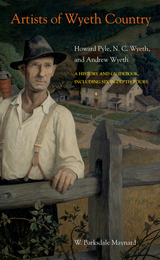
Few artists have ever been so beloved—or so controversial among art critics—as Andrew Wyeth. The groundbreaking book Artists of Wyeth Country presents an unauthorized and unbiased biographical portrait of Wyeth, based on interviews with family, friends, neighbors—even actress Eva Marie Saint. Journalist W. Barksdale Maynard shines new light on the reclusive artist, emphasizing Wyeth’s artistic debt to Howard Pyle as well as his surprising interest in surrealism. The book is filled with brand-new information and fresh interpretations.
Artists of Wyeth Country also comprises the first-ever guidebook to the artistic world of Chadds Ford, Pennsylvania, center of the Brandywine Tradition begun by Howard Pyle. Six in-depth tours for walking or driving allow the reader to stand exactly where N. C. and Andrew Wyeth stood, as has never been fully possible before.
As Maynard explains, Andrew Wyeth’s artistic process was influenced by Henry David Thoreau’s nature-worship and by his habit of walking daily. Newly commissioned maps, rare aerial photographs, as well as glorious full-color images and artworks of the landscape (many never reproduced before) illustrate the text.
A fascinating exploration of the world of Andrew Wyeth, Artists of Wyeth Country is sure to become an essential new source for those who love American art as well as for admirers of the scenic landscapes of the Mid-Atlantic, of which the Brandywine Valley is an exceptional example. As a rare, unauthorized biography of Andrew Wyeth, it opens the door for an entirely new understanding of the American master.
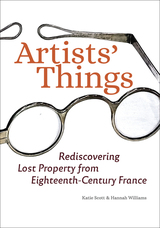
Artists are makers of things. Yet it is a measure of the disembodied manner in which we generally think about artists that we rarely consider the everyday items they own. This innovative book looks at objects that once belonged to artists, revealing not only the fabric of the eighteenth-century art world in France but also unfamiliar—and sometimes unexpected—insights into the individuals who populated it, including Jean-Antoine Watteau, François Boucher, Jean-Baptiste Greuze, and Elisabeth Vigée-LeBrun.
From the curious to the mundane, from the useful to the symbolic, these items have one thing in common: they have all been eclipsed from historical view. Some of the objects still exist, like Jean-Honoré Fragonard’s color box and Jacques-Louis David’s table. Others survive only in paintings, such as Jean-Siméon Chardin’s cistern in his Copper Drinking Fountain, or in documents, like François Lemoyne’s sword, the instrument of his suicide. Several were literally lost, including pastelist Jean-Baptiste Perronneau’s pencil case. In this fascinating book, the authors engage with fundamental historical debates about production, consumption, and sociability through the lens of material goods owned by artists.
The free online edition of this open-access publication is at www.getty.edu/publications/artists-things/ and includes zoomable illustrations. Free PDF and EPUB downloads of the book are also available.
Is an artist-teacher a mere professional who balances a career—or does the duality of making and teaching art merit a more profound investigation? Rejecting a conventional understanding of the artist-teacher, this book sets out to present a robust history from the classical era to the twenty-first century. Particular pedagogical portraits—featuring George Wallis, Walter Gropius, Johannes Itten, Victor Pashmore, Richard Hamilton, Arthur Wesley Dow, and Hans Hofmann—illustrate the artist-teacher in various contexts. This book offers a revelation of the complex thinking processes artists utilize when teaching, and a reconciliation of the artistic and educational enterprises as complimentary partners.

In this special edition of Artivate built around the expanded field of arts entrepreneurship, guest editors Adrienne Callander and Johanna K. Taylor collect scholars’ research on ideas they see as both central and pivotal in driving the field forward. In a futurecasting glossary, past, present, and future Artivate editors gather their thinking around such ideas, exploring where and how arts entrepreneurship currently happens beyond expected models. The three articles contained in this issue explore arts entrepreneurship’s overlaps from policy to activism to philanthropy through new adaptable organizational modeling. Starting with an in-depth analysis of hybrid practice as a mode of institutional entrepreneurship, the conversation turns to a view on artist activism as a form of arts entrepreneurship, followed by a case study of the Maniobra program of cultural employment supporting artists. To culminate in this issue’s galleries, an artist showcase profiles participating artists in the Maniobra program.

This arresting graphic provides a visual overview of the impacts of arts integration and interdisciplinarity in the university. It can be a tool for case-making, communication, and further inquiry.

This arresting graphic provides a visual overview of the impacts of arts integration and interdisciplinarity in the university. It can be a tool for case-making, communication, and further inquiry.
This listing is for a pack of 12 maps.

This arresting graphic provides a visual overview of the impacts of arts integration and interdisciplinarity in the university. It can be a tool for case-making, communication, and further inquiry.
This listing is for a pack of 5 maps.
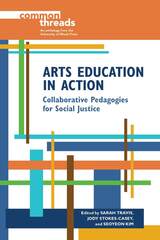
This edition of Common Threads investigates the intersection of social justice work with education in the visual arts, music, theatre, dance, and literature. Weaving together resources from a range of University of Illinois Press journals, the editors offer articles on the scholarly inquiry, theory, and practice of social justice arts education. Selections from the past three decades reflect the synergy of the diverse scholars, educators, and artists actively engaged in such projects. Together, the contributors bring awareness to the importance of critically reflective and inclusive pedagogy in arts educational contexts. They also provide pedagogical theory and practical tools for building a social justice orientation through the arts.
Contributors: Joni Boyd Acuff, Seema Bahl, Elizabeth Delacruz, Elizabeth Garber, Elizabeth Gould, Kirstin Hotelling, Tuulikki Laes, Monica Prendergast, Elizabeth Saccá, Alexandra Schulteis, Amritjit Singh, and Stephanie Springgay
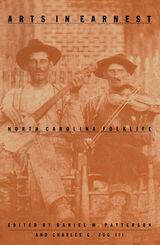
Personal interviews are an important element in the book. Laura Lee, an elderly black woman from Chatham County, describes the quilts she made from funeral flower ribbons; witnesses and friends each remember varying details of the Duke University football player who single-handedly vanquished a gang of would-be muggers; Clyde Jones leads a safari through his backyard, which is filled with animals made of wood and cement that represent nontraditional folk art; the songs and sermon of a Primitive Baptist service flow together as one—“it tills you up all over”; Durham bluesman Willie Trice, one of a handful of Durham musicians who recorded in the 1930s and early 1940s, remembers when the active tobacco warehouses offered ready audiences—“They’d tip us a heap of change to play some music”; and Goldsboro tobacco auctioneer H. L. “Speed” Riggs chants 460 words per minute, five to six times faster than a normal conversational rate.
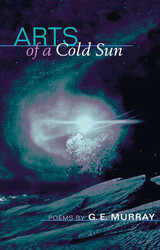
Viewing his subjects sometimes from airplane altitude, sometimes from the intimacy of a shared restaurant table, Murray crafts “true stories about color,” narratives of dislocation and belonging that invite readers to question their own relationship to art.
Included in this volume is a long sequential poem titled “The Seconds,” which Murray composed across the second days of thirteen months. The rhythms of this diary-as-poem seize the tensions of shifting times and locales, capturing the essences of moments that are at once chosen and arbitrary.
“Codes toward an Incidental City,” the sequence that closes the book, is a confederacy of forty poems that delve into the concrete familiarities and mythologies of urban landscapes, illuminating the ecstasies of city life.
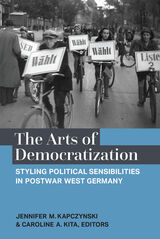
These essays highlight the contradictory and competing impulses that ran through the project to democratize postwar society and cast a critical eye toward the internal biases that shaped the model of Western democracy. In so doing, the contributions probe critical questions that we continue to grapple with today. How did postwar thinkers understand what it meant to be democratic? Did they conceive of democratic subjectivity in terms of acts of participation, a set of beliefs or principles, or perhaps in terms of particular feelings or emotions? How did the work to define democracy and its subjects deploy notions of nation, race and gender or sexuality? As this book demonstrates, the case of West Germany offers compelling ways to think more broadly about the emergence of democracy. The Arts of Democratization offers lessons that resonate with the current moment as we consider what interventions may be necessary to resuscitate democracy today.
Covering the emergence of English literature from the Old English to the late medieval periods, Arts of Dying argues that the problem of how to designate death produced a long tradition of literature about dying, which continues in the work of Heidegger, Blanchot, and Gillian Rose. Philosophy’s attempt to designate death’s impossibility is part of a literature that imagines a relationship with death, a literature that intensively and self-reflexively supposes that its very terms might solve the problem of the termination of life. A lyrical and elegiac exploration that combines medieval work on the philosophy of language with contemporary theorizing on death and dying, Arts of Dying is an important contribution to medieval studies, literary criticism, phenomenology, and continental philosophy.

The Arts of the Microbial World explores the significance of fermentation phenomena, both as life processes and as technologies, in Japanese scientific culture. Victoria Lee’s careful study documents how Japanese scientists and skilled workers sought to use the microbe’s natural processes to create new products, from soy-sauce mold starters to MSG, vitamins to statins. In traditional brewing houses as well as in the food, fine chemical, and pharmaceutical industries across Japan, they showcased their ability to deal with the enormous sensitivity and variety of the microbial world.
Charting developments in fermentation science from the turn of the twentieth century, when Japan was an industrializing country on the periphery of the world economy, to 1980 when it had emerged as a global technological and economic power, Lee highlights the role of indigenous techniques in modern science as it took shape in Japan. In doing so, she reveals how knowledge of microbes lay at the heart of some of Japan’s most prominent technological breakthroughs in the global economy.
At a moment when twenty-first-century developments in the fields of antibiotic resistance, the microbiome, and green chemistry suggest that the traditional eradication-based approach to the microbial world is unsustainable, twentieth-century Japanese microbiology provides a new, broader vantage for understanding and managing microbial interactions with society.

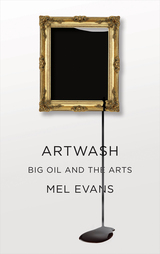
Reflecting on the role and function of art galleries, Artwash considers how the association with oil money might impede these institutions in their cultural endeavors. Outside the gallery space, Mel Evans examines how corporate sponsorship of the arts can obscure the strategies of corporate executives to maintain brand identity and promote their public image through cultural philanthropy. Ultimately, Evans sounds a note of hope, presenting ways artists themselves have challenged the ethics of contemporary art galleries and examining how cultural institutions might change.
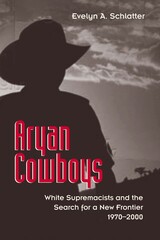
During the last third of the twentieth century, white supremacists moved, both literally and in the collective imagination, from midnight rides through Mississippi to broadband-wired cabins in Montana. But while rural Montana may be on the geographical fringe of the country, white supremacist groups were not pushed there, and they are far from "fringe elements" of society, as many Americans would like to believe. Evelyn Schlatter's startling analysis describes how many of the new white supremacist groups in the West have co-opted the region's mythology and environment based on longstanding beliefs about American character and Manifest Destiny to shape an organic, home-grown movement.
Dissatisfied with the urbanized, culturally progressive coasts, disenfranchised by affirmative action and immigration, white supremacists have found new hope in the old ideal of the West as a land of opportunity waiting to be settled by self-reliant traditional families. Some even envision the region as a potential white homeland. Groups such as Aryan Nations, The Order, and Posse Comitatus use controversial issues such as affirmative action, anti-Semitism, immigration, and religion to create sympathy for their extremist views among mainstream whites—while offering a "solution" in the popular conception of the West as a place of freedom, opportunity, and escape from modern society. Aryan Cowboys exposes the exclusionist message of this "American" ideal, while documenting its dangerous appeal.
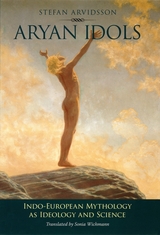
Stefan Arvidsson traces the evolution of the Aryan idea through the nineteenth century—from its roots in Bible-based classifications and William Jones’s discovery of commonalities among Sanskrit, Latin, and Greek to its use by scholars in fields such as archaeology, anthropology, folklore, comparative religion, and history. Along the way, Arvidsson maps out the changing ways in which Aryans were imagined and relates such shifts to social, historical, and political processes. Considering the developments of the twentieth century, Arvidsson focuses on the adoption of Indo-European scholarship (or pseudoscholarship) by the Nazis and by Fascist Catholics.
A wide-ranging discussion of the intellectual history of the past two centuries, Aryan Idols links the pervasive idea of the Indo-European people to major scientific, philosophical, and political developments of the times, while raising important questions about the nature of scholarship as well.
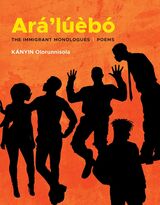
The Yoruba word Ará’lúèbó (/ah-rah-loo-ay-bow/), as the book tells us, means “an endearing term for a native who has gone abroad, and/or is returning” or “a person who becomes a foreigner everywhere they go.”
In his debut poetry collection, KÁNYIN Olorunnisola showcases the expansiveness of the immigrant experience through the form of the choreopoem, a non-Western style of poetry that incorporates elements of music and theater. The collection tells a multitude of stories through five people (Odunsi, beja, Levi, Sekina, and Ismaila), who, though fictional, represent the emotional truths of the lived experience of an African residing in the United States. As Ismaila says early on, “we r five fly kids hyphenated by time & / geography.”
Mixing Yoruba, Nigerian Pidgin, and English, Ará’lúèbó: The Immigrant Monologues is a blend of linguistic influences, with debts to visual art and rap music. At the center of its expression is formal experimentation; poems are structured like movie screenplays, diary entries, flowcharts, pie charts, and dictionary entries. The book encompasses a broad span of American, African, and other world history, even as it is strongly rooted in the contemporary, with references to Lauryn Hill, Kendrick Lamar, and other Black creatives. Ultimately, the book asks who is allowed to belong and paints a portrait of what it means to be American and from elsewhere.

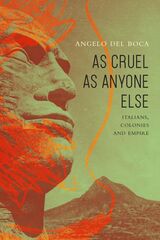
Between the end of the nineteenth century and over the first half of the twentieth, Italy invaded and occupied the Horn of Africa, Libya, and several other territories. Yet recognition of this history of colonial destruction, racist violence, and genocidal aerial and chemical warfare—carried out not only during the Fascist dictatorship but also under preceding liberal governments—has been consistently repressed beneath the myth that the Italians never truly practiced colonialism.
The late journalist, historian, novelist, campaigner, and former Resistance fighter Angelo Del Boca dismantles this myth. He expertly narrates episodes of state violence committed by Italians both abroad—from Ethiopia to Slovenia, from China to Libya—and “at home” during the civil war following Unification in the 1860s or when the anti-Fascist Resistance faced off against the Republic of Salò after 1943. Attentive to the losses and pain suffered by all sides in war, Del Boca deftly demonstrates how such violence was not only a tool of domination but has also been central to creating and shaping an Italian “people.”
Drawing on a lifetime of interviews as a special correspondent, decades of work in private and state archives, and his own experiences during the Second World War, Del Boca’s popular and influential work has contributed to overturning views of Italian history. Presenting many historical episodes in English for the first time, As Cruel as Anyone Else provides a key to reading contemporary Italy, its place in international politics, and the disturbing permanence of the far-right within mainstream Italian politics.
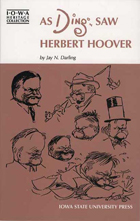
Ding Darling was a Pulitzer Prize-winning editorial cartoonist whose work appeared daily on the front page of the Des Moines Register between 1906 and 1949 and also was syndicated in 135 newspapers across the country. A brief encounter with Herbert Hoover during World War I was the beginning of a friendship that lasted until Ding’s death in 1962. After Hoover’s election as president, Ding’s relationship changed somewhat from one of strictly a friend to one of an unofficial advisor. On at least three occasions, the Darlings were overnight guests at the White House. Although their friendship deepened after the years of the presidency, Ding did not agree with Hoover on everything. In As “Ding” Saw Herbert Hoover, Ding interprets the career of Hoover as food administrator, cabinet member, candidate, and president in 57 cartoons, personal recollections, and a running commentary of the times as told in the day-by-day headlines.

Edited by Re’al Christian, Carin Kuoni, and Eriola Pira, an opening score by Raven Chacon and contributions by Salome Asega, Carolina Caycedo with Lupita Limón Corrales, Raven Chacon, Jesse Chun, Asia Dorsey, Taraneh Fazeli and Cannach MacBride, Pablo Helguera, Emmanuel Iduma, Mary Maggic, Shannon Mattern, V. Mitch McEwen with Nadir Jeevanjee, Rashaun Mitchell with Silas Riener, Romy Opperman, Rasheedah Phillips, Leanne Betasamosake Simpson with Maria Hupfield, Ultra-red with Robert Sember, and Underground Resistance.
France is often depicted as the model of assimilationist or republican integration in the international literature on immigration. However, rarely have surveys drilled down to provide individual responses from a double representative sample. In As French as Everyone Else?, Sylvain Brouard and Vincent Tiberj provide a comprehensive assessment of the state of integration in France and challenge the usual crisis of integration by systematically comparing the "new French" immigrants, as well as their children and grandchildren born in France, with a sample of the French general population.
The authors' survey considers a wide range of topics, including religious affiliation and religiosity, political attitudes and political efficacy, value systems (including gender roles, work ethics, and anti-Semitism), patterns of integration, multiple identities and national belongings, and affirmative action. As the authors show, despite existing differences, immigrants of Maghrebin, African, and Turkish origin share a wide scope of commonality with other French citizens.

Through the experiences and reflections of steelworkers, Jill A. Schennum demonstrates the significance of work, and particularly of industrial work, in giving meaning to people’s lives, identities, and sense of worth. She uses workers’ narratives and voices to show the importance of work space, time, and social relations, rejecting dominant interpretations of blue-collar workers as alienated from their work but well-paid and co-opted by a middle-class standard of living. Schennum covers thirty-five years of investment and disinvestment, managerial initiatives, transfer decisions, layoffs and downsizings, external transfers, the eventual bankruptcy of the Bethlehem Steel Corporation, and movement into retirement, unemployment, and new postindustrial jobs.
The very solidarities, rights of citizenship, and rule of law forged in the mill and built on by the union were constructed, in part, through exclusions based on race, ethnicity, gender, and region. These lines of fracture were mobilized to undermine working-class strength in the postindustrial period. Through the experiences of African American, Puerto Rican, coal country, and women workers in the steel mills, this book explores these issues of fracture and solidarity.

In 1997, on top of his regular visual contributions to the Tribune, Martin Rowson—the veteran mouthpiece of the Left of the British Labour Party—started writing a monthly column in the paper’s “As I Please” section, which was George Orwell’s slot fifty years earlier. Through his columns, Rowson chronicled the changing tides and tsunamis in the current political scene, documenting the rise of nationalism and the right-wing in these prescient musings. Over the next two decades, he pondered everything—the ideological battles inside Labour, the psychopathology of the Tory Party, the London Zoo, the British class system, Doctor Who, terrorism—and anything else that came to mind a day or so before the deadline.
Here, for the first time, a selection of these columns has been collected alongside Rowson’s other textual journalism, from tiny underground magazines in the United States to contributions to the Guardian, the Independent, and many other mainstream publications, on subjects ranging from the Charlie Hebdo massacre to his favorite books.
“The world is full of continuous conversations: Now is surrounded by Past, and both are encircled by Forever.” So states an unnamed narrator in As if a Bird Flew by Me.
Celia lives in the contemporary Midwest. Ann is an accused witch, executed during the Salem witch trials. Two women separated by time and place yet yoked by heritage and history. Set in three time periods, stories within stories unfold, and Greenslit’s language seamlessly weaves Celia’s modern life with the historical record of Ann’s demise alongside dazzling renderings of animal life. Greenslit’s hybrid of fiction and nonfiction occupies that rarest of airs: it is a book that illuminates, line by line and page by page, how it should be read.
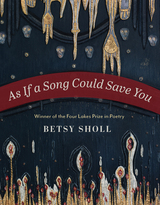
As the volume carefully and slowly immerses us in the poet’s world, we gradually begin to understand that this is our journey of exploration as much as hers. Where does one find joy in the face of loss? Why does music exist in a world of grief? How long does it take love to overwhelm pain?
Through these powerful poems we learn to see past the unreliability of memory and into the depth of the present.
The child makes you a blue inch at the top of the page,
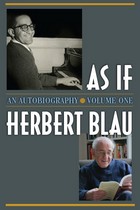
As If: An Autobiography traces the complex life and career of director, scholar, and theorist Herbert Blau, one of the most innovative voices in the American theater. From his earliest years on the streets of Brooklyn, with gang wars there, to the often embattled, now-legendary Actor's Workshop of San Francisco, the powerfully told story of Blau's first four decades is also a social history, moving from the Great Depression to the cold war, with fallout from "the balance of terror" on what he once described in an incendiary manifesto as The Impossible Theater.
Blau has always forged his own path, from his activist resistance to the McCarthy witch hunts to his emergence as a revolutionary director whose work included the controversial years at The Workshop, which introduced American audiences to major playwrights of the European avant-garde, including Brecht, Beckett, Genet, and Pinter. There is also an account here of that notorious production of Waiting for Godot at the maximum-security prison at San Quentin, which became the insignia of the Theater of the Absurd.
Blau went on from The Workshop to become codirector of the Repertory Theater of Lincoln Center, and then founding provost of California Institute of the Arts, where he developed and became artistic director of the experimental group KRAKEN. Currently Byron W. and Alice L. Lockwood Professor of the Humanities at the University of Washington, Blau has been visionary in the passage from theater to theory, and his many influential and award-winning books include The Dubious Spectacle: Extremities of Theater, 1976–2000; Sails of the Herring Fleet: Essays on Beckett; Nothing in Itself: Complexions of Fashion; To All Appearances: Ideology and Performance; The Audience; The Eye of Prey: Subversions of the Postmodern; and Take Up the Bodies: Theater at the Vanishing Point.
This richly evocative book includes never-before-published photographs of the author, his family and friends, collaborators in the theater, and theater productions.
Three lives. One song. A fire that reveals what cannot be hidden.
As If Fire Could Hide Us explores the expansiveness of consciousness and compassion through and beyond the human body.
A twelve-year-old girl slips out a basement window, steals a bike, and sets off on a perilous adventure. Injured and slowly bleeding out, Orelia enters a vast, spectacularly animate environment where she senses the limits of self disintegrating, her being entangled with the forest.
A prison guard and member of the strap down team witnesses a painfully prolonged execution and is delivered to a heart-cracking sense of identification with the ones he’s killed. Every grieving mother is his own. Any man might be himself, his closest friend, his brother.
An organ donor’s body is restored and resurrected through the bodies of multitudes. Spiritually and physically, one human being becomes many. Everything in the cosmos is intertwined and interchangeable. Embracing this awareness may bring fear or euphoria—desolation, peace, despair, rapture.

Who has a right to tell us how to experience our grief? How to perform—or not perform—the roles society prescribes to us based on our various points of identity?
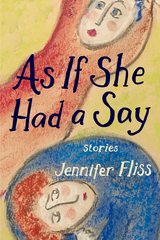
As If She Had a Say, the second story collection from Jennifer Fliss, uses an absurdist lens to showcase characters—predominantly women—plumbing their resources as they navigate misogyny, abuse, and grief. In these stories, a woman melts in the face of her husband’s cruelty; a seven-tablespoons-long woman lives inside a refrigerator and engages in an affair with the man of the house; a balloon-animal artist attends a funeral to discover he was invited as more than entertainment; and a man loses all his nouns.
Fans of Karen Russell and Carmen Maria Machado will appreciate how As If She Had a Say’s inventive narratives expose inequities by taking us on imaginative romps through domesticity and patriarchal expectations. Each story functions as a magnifying glass through which we might examine our own lives and see ourselves more clearly.
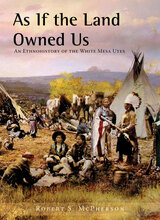
The Ute people of White Mesa have a long, colorful, but neglected history in the Four Corners region. Although they ranged into the Great Basin, Southwest, and parts of the Rocky Mountains as hunters, gatherers, and warriors, southeastern Utah was home. There they adapted culturally and physically to the austere environment while participating in many of the well-known events of their times.
In As If the Land Owned Us, Robert McPherson has gathered the wisdom of White Mesa elders as they imparted knowledge about their land—place names, uses, teachings, and historic events tied to specific sites—providing a fresh insight into the lives of these little-known people. While there have been few published studies about the Southern Utes, this ethnohistory is the first to mix cultural and historic events. The book illustrates the life and times of the White Mesa Utes as they faced multiple changes to their lifeways. It is time for their history to be told in their terms.

The legends Swedish Americans tell about their past are both similar to and distinct from those of others who migrated westward; they participated in settler colonialism while maintaining a sense of their specific, Swedish ethnicity. Unlike racial minority groups, Swedish Americans could claim membership in a majority white community without abandoning their cultural heritage. Their legends and local histories reflect that positioning. Attebery reveals how Swedish American legends are embedded within local history writing, how ostension and rhetoric operate in historical legends, and how vernacular local history writing works in tandem with historical legends to create a common message about a communal past. This impeccably researched study points to ways in which legends about the past possess qualities unique to their subgenre yet can also operate similarly to contemporary legends in their social impact.
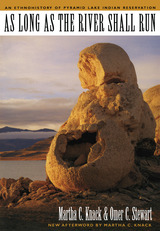
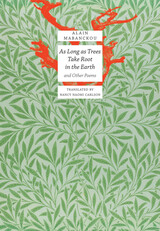
These compelling poems by novelist and essayist Alain Mabanckou conjure nostalgia for an African childhood where the fauna, flora, sounds, and smells evoke snapshots of a life forever gone. Mabanckou’s poetry is frank and forthright, urging his compatriots to no longer be held hostage by the civil wars and political upheavals that have ravaged their country and to embrace a new era of self-determination where the village roosters can sing again.
These music-infused texts, beautifully translated by Nancy Naomi Carlson and supported by a grant from the National Endowment for the Arts, appear together in English for the first time. In these pages, Mabanckou pays tribute to his beloved mother, as well as to the regenerative power of nature, especially of trees, whose roots are a metaphor for the poet’s roots, anchored in the red earth of his birthplace. Mabanckou’s yearning for the land of his ancestors is even more poignant because he has been declared persona non grata in his homeland, now called Congo-Brazzaville, due to his biting criticism of the country’s regime. Despite these barriers, his poetry exudes hope that nature’s resilience will lead humankind on the path to redemption and reconciliation.

As Long as We’re Here is an off-key anthem, a funhouse mirror held up to our dumpster fire era. Chronically online, distracted and distracting, with too many browser tabs open at once, attentive to everything and focused on nothing, Brouwer delights in the late capitalist absurdities of sleeping apps and internet dance crazes, and riffs on the argot of the group chat and the team meeting. These slippery poems both suffer from and revel in their ADD. Their shifts are as fleet as our news feeds, their serpentine sentences leap from barroom jests to high modernist splendor and back. But the book is not all fun and games. Dreamy tales of edgelords and loyalty oaths often arrive at places of surprising pathos and beauty. Mortality gnaws at the narrators of these poems, and political unrest lurks in the background. Still, a sense of solidarity—that we of the title, a recurring pronoun throughout—keeps despair at bay. Indeed, As Long as We’re Here is a book of intimacy, of the coterie. Friends and lovers people its lyrics, which often feel like late-night hang sessions with eccentric, wise-cracking pals. Full of wry wisdom and lush music, As Long as We’re Here knows what to do with a diminished thing: make it sing.
Austrian poet Friederike Mayröcker is widely considered one of the most important European poets of the twentieth and twenty-first centuries. The last book of hers to be published during her lifetime, as mornings and moosgreen I. Step to the window is an elliptical and, if at times cryptic, deeply personal, playful, and highly poetic collection of experiences, memories, dreams, desires, fears, visions, observations, and peregrinations through landscapes both real and imagined. The volume bears witness to her unique late lyrical style of pyrotechnical cut-up. Among many others, her beloved Derrida, Duchamp, Hölderlin, and Jean-Paul all appear, almost like guides, as Mayröcker bravely makes her way through infirmity, old age, and loneliness, prolonging her time as a prolific writer as much as possible.
First published in 1933 by the University of Chicago Press to mark the occasion of the Century of Progress Exhibition, As Others See Chicago consists of writings culled from over a thousand men and women who visited the city and commented on the best and worst it had to offer, from the skyscrapers to the stockyards. Originally compiled by Bessie Louise Pierce, the first major historian of Chicago, and featuring her own incisive commentary, the volume brings together the impressions of visitors to Chicago over two and a half centuries, from the early years of Westward Expansion to the height of the Great Depression. In addition to writings from better known personalities such as Rudyard Kipling and Waldo Frank, the book collects the opinions of missionaries, aristocrats, journalists, and politicians—observers who were perfectly placed to comment on the development of the city, its inhabitants, and well known events that would one day define Chicago history, such as the Great Fire of 1871 and the 1893 World's Fair.
Taking us back to a time when Chicago was "more astonishing than the wildest visions of the most vagrant imaginations," As Others See Chicago offers an enthralling portrait of an enduring American metropolis.
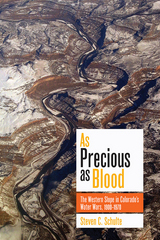
The diversion of water from Colorado’s Western Slope to meet the needs of the rest of the state has been a contentious issue throughout Colorado’s history. The source of Colorado’s water is in the snow that accumulates west of the Continental Divide, but the ever-growing population on the Front Range continues to require more municipal water. In As Precious as Blood, Steven C. Schulte examines the water wars between these two regions and how the western part of the state fits into Colorado’s overall water story, expanding the account of water politics he began in Wayne Aspinall and the Shaping of the American West.
Slow to build its necessary water infrastructure and suffering from a small population, little political power, and distance from sources of capital, the Western Slope of Colorado has struggled to maintain its water supply in the face of challenges from the Eastern Slope as well as from surrounding states. Schulte explains in detail the reasons, rationalizations, and resources involved in the multimillion-dollar dams and reclamation projects that divert much-needed water to the Front Range and elsewhere. He draws from archives, newspapers, and oral histories to show the interrelationships among twentieth-century Colorado water law, legislators from across the state, and powerful members of congress from the Western Slope, who have influenced water policy throughout the American West.
As Precious as Blood provides context for one of the most contentious legal, political, and economic periods in the state’s history. Schulte puts a human face on Colorado’s water wars by exploring their social and political dimensions alongside the technical and scientific perspectives.
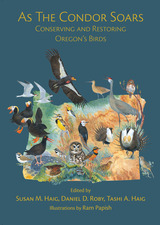
The essays collected in As the Condor Soars focus on the role that ornithologists have played in research, management, and conservation debates across the state over the past century. Contributors to this volume discuss new developments in the study of birds, from sophisticated tracking devices to the evolving connections between ornithologists and artists. Readers also learn about the important role of citizen scientists in saving our treasured birds. These essays provide hope for species recovery, despite environmental threats, when scientists and the public work together. They also offer to other regions examples of adaptive management learned through these efforts.
This full-color book is beautifully illustrated by noted Oregon Coast artist Ram Papish and includes over eighty stunning photographs donated by some of the state’s finest nature photographers. Fifty capsule biographies of noted Oregon avian scientists round out the inspirational stories about the monumental efforts that have taken shape in recent decades. Accessibly written for scientists and laypeople alike, As the Condor Soars is a gift to everyone who cares about the conservation and restoration of Oregon’s birds.
READERS
Browse our collection.
PUBLISHERS
See BiblioVault's publisher services.
STUDENT SERVICES
Files for college accessibility offices.
RECENTLY PUBLISHED



UChicago Accessibility Resources
home | accessibility | search | about | contact us
BiblioVault ® 2001 - 2026
The University of Chicago Press