
 A SCHOLARLY BOOK REPOSITORY

Distinguished by a remarkable combination of erudition and lucidity, Aspects of Old English Poetic Syntax provides new insight into the rules that govern syntactic relationships and indicates how these rules differ for prose and verse. Blockley considers the functions of four of the most common and most syntactically important words in Old English, as well as such features of clauses as verb-initial order, negative contraction, and unexpressed but understood subjects. Picking up where Bruce Mitchell's classic Old English Syntax left off, Blockley shows how such common words and structures mark the relationships between phrases and clauses.
Blockley also considers how the poetic tradition compensated for the loss in written texts of the syntactic functions served by intonation and inflection. Arguing that verse relied instead on a prescriptively regulated, unambiguous syntax, she suggests principles that promise more complex and subtle interpretations of familiar texts such as Beowulf as well as a wealth of other Old English writings.
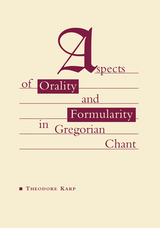
The essays are loosely connected through their bearing on one or more of three themes: the role of orality in the transmission of chant circa 700-1400; varying degrees of stability or instability in the transmission of chant; and the role of the formula in the construction of chant. Throughout, Karp uses 202 musical examples.
The first essay evaluates forms of evidence that may shed light on the nature of orality that led to the surviving notational records of Gregorian chant and assembles evidence that supports the conclusion that fidelity of transmission represented an important goal of the Franks. The second essay treats formulas that cross the boundaries of individual liturgical genres and modes. The third essay defines the varying kinds of musical formulas in chant and proposes a chronological ordering of the genre of second-mode tracts.
The fourth essay treats the transmission of a stable melody and explores the ways in which one basic melody may be adapted to texts of widely differing structures and lengths. The fifth essay deals with a group of unstable melodies that furnished difficulties in modal classification. The sixth essay explores the problems faced by scribes seeking to represent in diastematic notation melodies employing tones not normally admitted into the medieval gamut. The seventh essay takes up the role of the formula in introits, a neumatic genre intended forchoral performance.
The two final essays look at second-mode tracts and at the interrelationship between Roman and Gregorian chant.
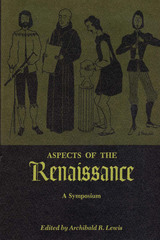
The Renaissance has long posed a problem to scholars. It has been generalized as an emergence of intellect and will in all fields of human endeavor, but because it is diversely manifested in varying attitudes and forms at various times in the Western world, this vast era of Western European history has resisted definitive boundaries.
To help clarify the problems inherent in the study of the Renaissance and its relationship to the preceding and subsequent historical periods, an international conference was held in Austin, Texas, in April, 1964, jointly sponsored by the South Central Renaissance Conference and The University of Texas. The ten papers here presented reveal how during the symposium leading scholars representing several academic disciplines shared their approaches and insights into the politics, economics, science, literature, art, music, philosophy, and religion of this complex era.
This study determines that right-to-left association is the best method of analysis for Kalabari-ljo and also proposes that both morphosyntactic and semantic input be included in the tone system rules. Harry's innovative work provides new evidence for the morphological and semantic input in phonology theory and launches a new platform for scholarship in African language studies.

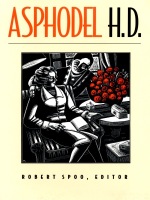
A sequel to the author's HERmione, Asphodel takes the reader into the bohemian drawing rooms of pre-World War I London and Paris, a milieu populated by such thinly disguised versions of Ezra Pound, Richard Aldington, May Sinclair, Brigit Patmore, and Margaret Cravens; on the other side of what H.D. calls "the chasm," the novel documents the war's devastating effect on the men and women who considered themselves guardians of beauty. Against this riven backdrop, Asphodel plays out the story of Hermione Gart, a young American newly arrived in Europe and testing for the first time the limits of her sexual and artistic identities. Following Hermione through the frustrations of a literary world dominated by men, the failures of an attempted lesbian relationship and a marriage riddled with infidelity, the birth of an illegitimate child, and, finally, happiness with a female companion, Asphodel describes with moving lyricism and striking candor the emergence of a young and gifted woman from her self-exile.
Editor Robert Spoo's introduction carefully places Asphodel in the context of H.D.'s life and work. In an appendix featuring capsule biographies of the real figures behind the novel's fictional characters, Spoo provides keys to this roman à clef.
Coming to terms with a new period of uncertainty when it is still replete with possibilities
This quick and engaging study clearly lays out the United States’ current democratic crisis. Examining the early stages of the Nazi movement in Germany, William E. Connolly detects synergies with Donald Trump’s rhetorical style. Tapping into a sense of contemporary fragility, Aspirational Fascism pays particular attention to how conflicts between neoliberalism and the pluralizing left have placed the white working class in a bind. Ultimately, Connolly believes a multifaceted democracy constitutes the best antidote to aspirational fascism and rethinks what a politics of the left might look like today.
Forerunners is a thought-in-process series of breakthrough digital works. Written between fresh ideas and finished books, Forerunners draws on scholarly work initiated in notable blogs, social media, conference plenaries, journal articles, and the synergy of academic exchange. This is gray literature publishing: where intense thinking, change, and speculation take place in scholarship.
This book is also freely available online as an open-access digital edition.
Download the open access book here.
In Assassin of Youth, Alexandra Chasin gives us a lyrical, digressive, funny, and ultimately riveting quasi-biography of Anslinger. Her treatment of the man, his times, and the world that arose around and through him is part cultural history, part kaleidoscopic meditation. Each of the short chapters is anchored in a historical document—the court decision in Webb v. US (1925), a 1935 map of East Harlem, FBN training materials from the 1950s, a personal letter from the Treasury Department in 1985—each of which opens onto Anslinger and his context. From the Pharmacopeia of 1820 to death of Sandra Bland in 2015, from the Pennsylvania Railroad to the last passenger pigeon, and with forays into gangster lives, CIA operatives, and popular detective stories, Chasin covers impressive ground. Assassin of Youth is as riotous and loose a history of drug laws as can be imagined—and yet it culminates in an arresting and precise revision of the emergence of drug prohibition.
Today, even as marijuana is slowly being legalized, we still have not fully reckoned with the racist and xenophobic foundations of our cultural appetite for the severe punishment of drug offenders. In Assassin of Youth, Chasin shows us the deep, twisted roots of both our love and our hatred for drug prohibition.

As a young man, Strang was a dreamer of grandiose dreams--dreams of power, of royalty, and of fame. For him, the dreams came true. But in his pursuit of those dreams, Strang walked a tightrope to avoid ever-impending doom. Strang's kingdom flourished despite perennial conflicts with non-Mormons, including a gun battle with mainlanders, and despite a major prosecution by the federal government. His kingdom was designed to be totally independent of the state and nation. And yet, he was a shrewd political tactician who took advantage of Michigan law to be twice elected to the state legislature and become what one Detroit newspaper called the most powerful politician in the state.
Here is Strang the man of contrasts and contradictions, the strident opponent of polygamy and the husband of five wives, the astute editor and the incendiary propagandist, the prophet and the scoundrel, the man who through the sheer force of his personality made his followers a group to be feared in his region.
Vast amount of fresh information, including contemporary journals, documents, and letters never before used by biographers help draw a portrait of one of the most complex and resourceful leaders in American history.
Drawn in part from personal interviews with participants and witnesses, Herbert Braun’s analysis of the riot’s roots, its patterns and consequences, provides a dramatic account of this historic turning point and an illuminating look at the making of modern Colombia.
Braun’s narrative begins in the year 1930 in Bogotá, Colombia, when a generation of Liberals and Conservatives came to power convinced they could kept he peace by being distant, dispassionate, and rational. One of these politicians, Jorge Eliécer Gaitán, was different. Seeking to bring about a society of merit, mass participation, and individualism, he exposed the private interests of the reigning politicians and engendered a passionate relationship with his followers. His assassination called forth urban crowds that sought to destroy every visible evidence of public authority of a society they felt no longer had the moral right to exist.
This is a book about behavior in public: how the actors—the political elite, Gaitán, and the crowds—explained and conducted themselves in public, what they said and felt, and what they sought to preserve or destroy, is the evidence on which Braun draws to explain the conflicts contained in Colombian history. The author demonstrates that the political culture that was emerging through these tensions offered the hope of a peaceful transition to a more open, participatory, and democratic society.
“Most Colombians regard Jorge Eliécer Gaitán as a pivotal figure in their nation’s history, whose assassination on April 9, 1948 irrevocably changed the course of events in the twentieth century. . . . As biography, social history, and political analysis, Braun’s book is a tour de force.”—Jane M. Rausch, Hispanic American Historical Review
He describes an almost continual parade of garish and grandiose plans: some, like the destruction of the glorious marketplace of les Halles for him the heart of the city, were realized; others, like the superhighway along the left bank of the Seine, were bitterly and successfully resisted.
Almost twenty years later, we find it difficult to remember the city as it was. And while Paris looks to many much the way it always has, behind the carefully sandblasted stone and restored shop fronts is a city radically transformed—emptied of centuries of popular life; of entire neighborhoods and the communities they housed engineered out to desolate suburban slums. The battle over the soul and spirit of the city continues.
This book is not entirely about the loss of physical places. Or a romance about a world that never really was. It is a cautionary tale filled with lessons for all who struggle to protect the human scale, the diversity, and the welcoming public life that are the threatened gifts of all great cities.
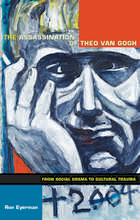
Eyerman utilizes theories of social drama and cultural trauma to evaluate the reactions to and effects of the murder. A social drama is triggered by a public transgression of taken-for-granted norms; one that threatens the collective identity of a society may develop into a cultural trauma. Eyerman contends that the assassination of Theo van Gogh quickly became a cultural trauma because it resonated powerfully with the postwar psyche of the Netherlands. As part of his analysis of the murder and reactions to it, he discusses significant aspects of twentieth-century Dutch history, including the country’s treatment of Jews during the German occupation, the loss of its colonies in the wake of World War II, its recruitment of immigrant workers, and the failure of Dutch troops to protect Muslims in Srebrenica in 1995.
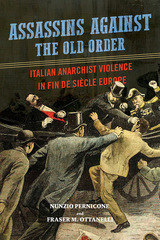
Nunzio Pernicone and Fraser M. Ottanelli dig into the transnational experiences and the historical, social, cultural, and political conditions behind the phenomenon of anarchist violence in Italy. Looking at political assassinations in the 1890s, they illuminate the public effort to equate anarchy's goals with violent overthrow. Throughout, Pernicone and Ottanelli combine a cutting-edge synthesis of the intellectual origins, milieu, and nature of Italian anarchist violence with vivid portraits of its major players and their still-misunderstood movement.
A bold challenge to conventional thinking, Assassins against the Old Order demolishes a century of myths surrounding anarchist violence and its practitioners.
Reviewing the dismantling of American labor law in more than 100 Supreme Court cases
The National Labor Relations Act (NLRA), signed into law by Franklin Delano Roosevelt in 1935, guarantees the right of private sector employees to organize into trade unions, engage in collective bargaining, and take collective action such as strikes. Since its passage, the NLRA has functioned as the foundational statute of United States labor law. Opposed by conservatives and members of the Republican Party from the beginning, its provisions were largely upheld by the Supreme Court until the 1960s. In the latter part of the twentieth century and into the twenty-first, however, the Court began to erode the protections of the NLRA. While some cases have received widespread attention from commentators and scholars, such as Starbucks Corp. v. McKinney (2024), there have been numerous detrimental rulings that are little discussed. Taken as a whole, the Supreme Court’s efforts to undermine the NLRA appear sustained and systematic.
In The Assault on American Labor Law, distinguished labor law professor Roger C. Hartley collects and carefully reviews every Supreme Court decision concerning the NLRA over the past sixty years. By examining approximately 100 cases, Hartley demonstrates that the Court has often operated more like a legislature than a judicial body, effectively amending the NLRA’s collectivist policy underpinnings in favor of the interests of individuals and businesses. These judicial decisions create staggering obstacles for American workers to collectively organize and force them to face globalization, deindustrialization, and technological change individually, without the negotiating leverage provided by union representation. While scholars have suggested individual reforms to re-establish the efficacy of the NLRA, Hartley’s thorough study illuminates how the current crisis in US labor law evolved—a comprehensive view that is necessary to help restore the rights of workers to unionize.
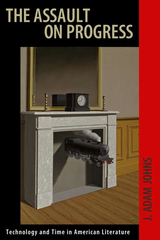
A belief in progress is a fundamental ethos in American history and culture. The Assault on Progress probes American literary works that challenge the prevailing notion of technology as a manifestation of progress. J. Adam Johns argues that the idea of technology-as-destiny has long been explored—and undercut—in American literary works and that literature remains a crucial site for ongoing debates in this area.
Johns studies the phenomenon by which each generation comes to regard itself as the hinge upon which history turns. He explores several works by historians of technology, focusing in detail on the works of literary critic Lewis Mumford, whose examinations of Herman Melville’s novels provide an early example of critical interest in the abandonment of progress as a value.
He goes on to study the works of William Faulkner and Ralph Ellison, focusing on the convergence of technology and race—machines and slavery, and highlights the ways that these writers have portrayed humans as reduced to machines, evidence that technological “progress” is not always progressive, or liberating to humanity.
The conclusion argues for a shift in our understanding of the relationship between technology and time. According to Johns, writers like Melville, Faulkner, and Ellison help us to think of technology separate from notions of progress, and therefore help us to escape from a perilous ideological bind that forever situates humankind at the end of history.
Informed by a half-century of historical analyses and released documents, this expanded edition of William E. Porter’s award-winning Assault on the Media analyzes new documents of significance; synthesizes recent historical analyses; incorporates legal evaluations by journalism scholars; and traces how Nixon-era plans cultivated the divisive state of 21st-century society and amplified assaults on journalism. It also evaluates lasting concerns about the Supreme Court’s Pentagon Papers decision and journalists cited for contempt as a form of prior restraint; the currencies of power and race in protecting confidential sources; and regulatory decisions that hamper effective journalism. Assault on the Media not only documents the incidents and circumstances of governmental intimidation, harassment, and regulation of the news media during the Nixon presidency, but it offers insights into the long-term effects and their relevance today.

With funding cuts well under way and many institutions already promising to charge the maximum £9,000 yearly tuition fee, university education for the majority is under threat. This book exposes the true motives behind the government's programme and provides the analytical tools to fight it.
Widespread student protests and occupations, often supported by staff, unions and society at large, show the public's opposition to funding cuts and fee increases. The contributors to this sharp, well-written collection, many of whom are active participants in the anti-cuts movement, outline what's at stake and why it matters. They argue that university education is becoming increasingly skewed towards vocational degrees, which devalues the arts and social sciences – subjects that allow creativity and political inquiry to flourish.
Released at the beginning of the new academic year, this book will be at the heart of debates around the future of higher education in the UK and beyond, inspiring both new and seasoned activists in the fight for the soul of our universities.

A novel of suspense set in the academic world, Assault with a Deadly Lie probes the disturbing psychological impact of slander, harassment, stalking, police brutality, and the loss of personal safety. What will Nick do when his world threatens to collapse? How can he reestablish order in a suddenly chaotic life?
Assault with a Deadly Lie, the eighth installment of Lev Raphael's Nick Hoffman Mysteries, propels the series to a new level of danger and intrigue as Nick and Stefan are catapulted out of their tranquil existence by shocking accusations.
Finalist, Midwest Book Award for Mystery/Thriller Fiction, Midwest Independent Publishers Association
“A riveting great read for mystery/suspense fans, author Lev Raphael once again documents his impressive gifts as a storyteller, holding the reader’s rapt attention from beginning to end with unexpected plot twists and surprise twists.”—Jack Mason, Midwest Book Review
“Raphael portrays with frightening power the wrenching experience of victimization by the corporatized, PR-prioritized groves of academia, where both men teach, and by local authorities militarized into SWAT teams practicing police brutality. . . . The compelling core of this unusual novel is Raphael’s depiction of the agonizing reality of victims’ shame, in which someone ‘feels doubly exposed talking about the violation’ and so says nothing.”—Booklist
“Professor Nick Hoffman learns that even tenure can’t guarantee real security.”—Kirkus Reviews
A cogent reconsideration of Assayas’s cinematic oeuvre and what it teaches us about the political today
The films of Olivier Assayas are widely celebrated for their complex responses to the many shifts that globalization has introduced in our time. Brian Price contends that they offer a different way of regarding the so-called problem of cultural and political enmeshment that Carl Schmitt and other conservative thinkers fear, including a contention that enmeshment is not a problem at all, in fact, but rather a different mode of social and political organization. Price puts Assayas’s films in dialogue not only with Schmitt’s theory of the political but also with the history of political philosophy after Schmitt, especially in the work of Hannah Arendt, Jacques Derrida, and Chantal Mouffe, all of whom have attempted to reckon with the friend/enemy dynamic at the core of the political.
At the heart of Assayas’s cinematic oeuvre, and of this book, is a reflection on what it means to be politically serious, which, Price shows, cannot be reduced to criteria that can simply be applied or repeated. The boundaries between the political and the varied forms of the social demand a sensitivity to change and the unknown, none of which can be accessed in the states of absolute certainty that are derived from crises that do not repeat in the same ways. The messiness and nuances of modern life are held together by moving images, which insist that we know why we value what we demand and seek to protect.
Once upon a time, neuroscience was born. A dazzling array of neurotechnologies emerged that, according to popular belief, have finally begun to unlock the secrets of the brain. But as the brain sciences now extend into all corners of cultural, social, political, and economic life, a yet newer world has taken shape: “neuroculture,” which goes further than ever before to tackle the profound ethical implications we face in consequence.
The Assemblage Brain unveils a major new concept of sense making, one that challenges conventional scientific and philosophical understandings of the brain. Drawing on Deleuze and Guattari, Tony D. Sampson calls for a radical critical theory that operates in the interferences between philosophy, science, art, and politics. From this novel perspective the book is structured around two questions: “What can be done to a brain?” and “What can a brain do?” Sampson examines the rise of neuroeconomics in informing significant developments in computer work, marketing, and the neuropharmaceutical control of inattentiveness in the classroom. Moving beyond the neurocapitalist framework, he then reestablishes a place for proto-subjectivity in which biological and cultural distinctions are reintegrated in an understanding of the brain as an assemblage.
The Assemblage Brain unravels the conventional image of thought that underpins many scientific and philosophical accounts of how sense is produced, providing a new view of our current time in which capitalism and the neurosciences endeavor to colonize the brain.
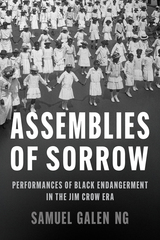
Samuel Galen Ng illuminates this Black consciousness as it emanated from feelings of collective endangerment. The dissemination and intensification of such feelings became a pivotal way of solidifying a national Black consciousness on the eve of the Civil Rights Movement. Ng examines how performances of Black endangerment performed political work that provided Black people with important means of political organizing and insurgency. As Ng shows, the grief and mourning that took place at the performances provided public spaces for individuals and communities to observe specific losses capable of impacting Americans across the country.
Ambitious and interdisciplinary, Assemblies of Sorrow explores an overlooked facet of Black organizing and protest and traces how activists shaped fear and grief into political action.
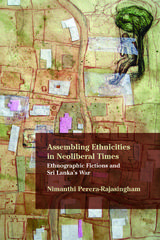
Assembling Ethnicities in Neoliberal Times: Ethnographic Fictions and Sri Lanka’s War argues that the bloody war fought between the Sri Lankan state and the separatist Tamil Tigers from 1983 to 2009 should be understood as structured and animated by the forces of global capitalism. Using Aihwa Ong’s theorization of neoliberalism as a mobile technology and assemblage, this book explores how contemporary globalization has exacerbated forces of nationalism and racism.
Nimanthi Perera-Rajasingham finds that ethnographic fictions have both internalized certain colonial Orientalist impulses and critically engaged with categories of objective gazing, empiricism, and temporal distancing. She demonstrates that such fictions take seriously the task of bearing witness and documenting the complex productions of ethnic identities and the devastations wrought by warfare. To this end, Assembling Ethnicities
explores colonial-era travel writing by Robert Knox (1681) and Leonard Woolf (1913); contemporary works by Michael Ondaatje, Romesh Gunesekera, Shobasakthi, Dharmasiri Bandaranayake, and Thamotharampillai Shanaathanan; and cultural festivals and theater, including vernacular performances of Euripides’s The Trojan Women and women workers’ theater.
The book interprets contemporary fictions to unpack neoliberalism’s entanglements with nationalism and racism, engaging current issues such as human rights, the pastoral, Tamil militancy, immigrant lives, feminism and nationalism, and postwar developmentalism.

How the United Nations headquarters became the architectural instrument and broadcast medium of global diplomacy
For almost seven years after World War II, a small group of architects took on an exciting task: to imagine the spaces of global governance for a new political organization called the United Nations (UN). To create the iconic headquarters of the UN in New York City, these architects experimented with room layouts, media technologies, and design in tribunal courtrooms, assembly halls, and council chambers. The result was the creation of a new type of public space, the global interior.
Assembly by Design shows how this space leveraged media to help the UN communicate with the world. With its media infrastructure, symbols, acoustic design, and architecture, the global interior defined political assembly both inside and outside the UN headquarters, serving as the architectural medium to organize multilateral encounters of international publics around the globe. Demonstrating how aesthetics have long held sway over political work, Olga Touloumi posits that the building framed diplomacy on the ground amid a changing political landscape that brought the United States to the forefront of international politics, destabilizing old and establishing new geopolitical alliances.
Uncovering previously closed institutional and family archives, Assembly by Design offers new information about the political and aesthetic decisions that turned the UN headquarters into a communications organism. It looks back at a moment of hope, when politicians, architects, and diplomats—believing that assembly was a matter of design—worked together to deliver platforms for global democracy and governance.

Contributors
Ebony Coletu, Kay Dickinson, Stefano Harney, Matthew Hockenberry, Tung-Hui Hu, Shannon Mattern, Fred Moten, Michael Palm, Ned Rossiter, Nicole Starosielski, Liam Cole Young, Susan Zieger

A bold new understanding of montage and French cinematic history
Amid the tumult of change that swept through French society in the wake of World War II, a trio of visionary filmmakers sought to make meaning of the chaos by revitalizing a common method: montage. Revealing Nicole Védrès, Alain Resnais, and Chris Marker as more than just groundbreaking auteurs, Ivan Cerecina shows how their collective infusion of montage with avant-garde aesthetics renewed the art of cinema while helping France reckon with its past and imagine its future.
Assembly Lines challenges a dominant story of postwar French film, championed by critics at important film journals like Cahiers du cinéma, that has generally centered realist film aesthetics. Working against this tendency, Cerecina shows how Védrès, Resnais, and Marker revitalized montage as a technique in response to the crises of the times, using it to process the ravages of the recent past, expose hidden connections, and uncover signs of coming catastrophe. Wedding insightful analyses of films and French cultural history with writings from lesser-heard voices like André Malraux, Jacques Brunius, and Henri Langlois, Assembly Lines illuminates obscured networks of critics, filmmakers, and historians to reshape our conception of French film and documentary. Meanwhile, Cerecina’s in-depth archival research unearths vital documents, including correspondence and production notes on Védrès’s Paris 1900 and Resnais’s Night and Fog.
More than a cinematic retrospective, Cerecina’s investigation of montage is also a call to action today as contemporary crises prompt reevaluation of our cultural histories. Assembly Lines exemplifies a powerful, future-oriented practice of historical reflection with implications that go well beyond the study of film.
Retail e-book files for this title are screen-reader friendly with images accompanied by short alt text and/or extended descriptions.
Native American tribes in the Pacific Northwest and Indigenous peoples around the Pacific Rim have already been deeply affected by droughts, flooding, reduced glaciers and snowmelts, seasonal shifts in winds and storms, and the northward movement of species on the land and in the ocean. Using tools of resilience, Native peoples are creating defenses to strengthen their communities, mitigate losses, and adapt where possible.
Asserting Native Resilience presents a rich variety of perspectives on Indigenous responses to the climate crisis, reflecting the voices of more than twenty contributors, including tribal leaders, scientists, scholars, and activists from the Pacific Northwest, British Columbia, Alaska, and Aotearoa / New Zealand, and beyond. Also included is a resource directory of Indigenous governments, NGOs, and communities and a community organizing booklet for use by Northwest tribes.
Section I frames the contexts facing deaf and hard of hearing individuals and those who test them, including a telling historical perspective. In Section II, chapters explore how deaf and hard of hearing candidates can meet the rigors of test-taking, how to level the playing field with a new approach to assessment, and what to consider to develop fully accessible licensing tests. The final chapter in this part examines the psychometric properties of intellectual assessments when used with deaf and hard of hearing people. Administrative Issues constitute Section III, beginning with legal considerations related to equity testing for deaf adults. An exploration of the potential of sign language interpretation in the testing environment follows.
Section IV provides case studies of deaf and hard of hearing adults from a variety of professions, including certification testing for therapeutic recreation, preparation strategies for university students, and ways to maximize access to licensure for social workers. A separate chapter addresses the impact of recent federal mandates on assessment of deaf and hard of hearing teachers and teaching candidates. The final section summarizes the current situation and presents recommendations to manage it, concluding with an epilogue on directions for the future.
Assessing English Language Learners in the Content Areas: A Research-into-Practice Guide for Educators seeks to provide guidance to classroom teachers, staff developers, and test-item designers who want to improve ELL assessment outcomes, particularly in the areas of math, science and social studies. The first two chapters of the book establish the background for the discussion of content-area assessment for ELLs, examining several important characteristics of this rapidly growing student population (as well as critical legislation affecting ELLs) and providing a description of various forms of assessment, including how ELL assessment is different from the assessment of English-proficient students. Important assessment principles that educators should use in their evaluation of tests or other forms of measurement are provided.
Other chapters review ELL test accommodations nationwide (because, surprisingly, most teachers do not know what they can and cannot allow) and the research on the effectiveness of these types of accommodations. The book analyzes the characteristics of alternative assessment; it discusses three popular alternative assessment instruments (performance assessment, curriculum-based measurement, and portfolios) and makes recommendations as to how to increase the validity, reliability, and practicality of alternative assessments. The book proposes fundamental assessment practices to help content area teachers in their evaluation of their ELL progress.

Significant modifications in education legislation since the publication of the first edition have necessitated this new volume, which includes updated EL demographics as they relate to the Common Core Standards and Every Student Succeeds Act and revised state-by-state test accommodation information. New to this edition is information about the assessment of language arts (in addition to math, science, and social studies). The Second Edition also features new research-based recommendations for large-scale and classroom-based assessments.
Like the previous edition, the first two chapters of the book establish the background for the discussion of content-area assessment for ELs, examining several important characteristics of this rapidly growing student population and providing a description of various forms of assessment, including how EL assessment is different from the assessment of English-proficient students. Important assessment principles that educators should use in their evaluation of tests or other forms of measurement are provided.
Other chapters review EL test accommodations nationwide (because, surprisingly, most teachers do not know what they can and cannot allow) and the research on the effectiveness of these types of accommodations. The book analyzes the characteristics of alternative assessment and makes recommendations as to how to increase the validity, reliability, and practicality of alternative assessments. The book proposes fundamental assessment practices to help content area teachers in their evaluation of their students’ progress. Two extensive appendixes outline TESOL Proficiency Standards and academic vocabulary for the content areas.


A hands-on guide for using the MMPI-3 when assessing suitability and fitness for duty of public safety personnel
Factors unique to police and public safety candidate selection require adjustments to standard guidelines when interpreting MMPI-3 scores. David M. Corey and Yossef S. Ben-Porath’s latest work broadly focuses on use of the MMPI-3 in both prehire suitability evaluations and posthire fitness-for-duty evaluations of individuals in public safety occupations.
This practical guide was written for clinicians who conduct evaluations of incumbent public safety personnel as well as candidates for law enforcement, correctional, firefighter/medic, or emergency dispatcher positions. The chapters are devoted to foundational and practical knowledge required for conducting these evaluations, including a concise primer on the MMPI-3, common procedural and legal requirements, and contextual factors affecting evaluations. The book also provides case illustrations that demonstrate use of integrative models in preemployment and fitness-for-duty evaluations and includes expanded coverage of the updated MMPI-3 Police Candidate Interpretive Report as well as the newly released Correctional Candidate Interpretive Report, Dispatcher Candidate Interpretive Report, and Firefighter Candidate Interpretive Report.
In response to increasingly negative attitudes toward journalism and its coverage of public affairs, many newspapers and television stations across the United States have experimented with novel approaches to reporting to better meet the public's demand for news. Known as "civic" or "public" journalism, this new movement seeks to improve the news media's ability to supply the information and insights needed by citizens of a democratic society. Critics of public journalism say it contradicts some principles of traditional reporting. As a result, the new movement has spurred great controversy among journalists. Assessing Public Journalism is the first book to evaluate this movement.
Public journalists use a variety of innovative methods to achieve their goals. To connect more closely with citizens, they may listen to their readers and viewers in neighborhood settings and public forums. To frame stories more accurately, they sometimes conduct focus groups and opinions polls. To maximize the reach of their work, print and electronic journalists have experimented with coordinated coverage of key elections and major public issues. Their goal is a form of journalism that improves the quality of citizen deliberation and participation in public life.
By collecting and focusing a wide range of original research and selected professional commentary, Assessing Public Journalism provides the necessary framework for examining the issues surrounding public journalism and for determining what must be done to enable it to meet its full potential. Scholars, journalists, and concerned citizens will benefit from this vital study.
Although fraught with politics and other perils, teacher evaluation can contribute in important, positive ways to faculty development at both the individual and the departmental levels. Yet the logistics of creating a valid assessment are complicated. Inconsistent methods, rater bias, and overreliance on student evaluation forms have proven problematic. The essays in Assessing the Teaching of Writing demonstrate constructive ways of evaluating teacher performance, taking into consideration the immense number of variables involved.
Contributors to the volume examine a range of fundamental issues, including the political context of declining state funds in education; growing public critique of the professoriate and demands for accountability resulting from federal policy initiatives like No Child Left Behind; the increasing sophistication of assessment methods and technologies; and the continuing interest in the scholarship of teaching. The first section addresses concerns and advances in assessment methodologies, and the second takes a closer look at unique individual sites and models of assessment. Chapters collectively argue for viewing teacher assessment as a rhetorical practice.
Fostering new ways of thinking about teacher evaluation, Assessing the Teaching of Writing will be of great interest not only to writing program administrators but also to those concerned with faculty development and teacher assessment outside the writing program.

Today's protracted asymmetrical conflicts confuse efforts to measure progress, often inviting politics and wishful thinking to replace objective evaluation.
In Assessing War, military historians, social scientists, and military officers explore how observers have analyzed the trajectory of war in American conflicts from the Seven Years’ War through the war in Afghanistan. Drawing on decades of acquired expertise, the contributors examine wartime assessment in both theory and practice and, through alternative dimensions of assessment such as justice and proportionality, the war of ideas and economics. This group of distinguished authors grapples with both conventional and irregular wars and emerging aspects of conflict—such as cyberwar and nation building—that add to the complexities of the modern threat environment. The volume ends with recommendations for practitioners on best approaches while offering sobering conclusions about the challenges of assessing war without politicization or self-delusion.
Covering conflicts from the eighteenth century to today, Assessing War blends focused advice and a uniquely broad set of case studies to ponder vital questions about warfare's past—and its future. The book includes a foreword by Gen. George W. Casey Jr. (USA, Ret.), former chief of staff of the US Army and former commander, Multi-National Force–Iraq.
The goals of this resource are broader than many standard books on writing assessment, which focus on evaluating an individual’s ability to create an effective piece of writing for a particular purpose. Assessing Writing, Assessing Learning seeks to support teachers, administrators, program directors, and funding entities who want to make the best use of the resources at their disposal to understand what students are learning and why and then take actions based on what they have learned. It also seeks to provide a common basis for communication among all the interested parties—the writing professionals, the people who identified the need for the program, and the students.
The book has sections on planning, tools (different ways of collecting data and links to instruments), and reporting (examples provided). Each section includes a discussion of issues and advice for working through the issue along with numerous examples, plus a list of resources to consult to learn more. The final chapter provides worksheets that may be reproduced and used to help those in charge of setting up and delivering a writing program to think through the issues presented. A glossary of terms is also included.

In celebration of Project Outcome’s fifth anniversary, Assessment and Advocacy: Using Project Outcome for Academic Libraries collects case studies demonstrating how a variety of libraries have used Project Outcome to make improvements in their practice and highlighting the value the toolkit has brought to institutions and the academic library profession. Chapters capture ways to use Project Outcome to make small changes, like the optimal arrangement of a library’s study room furniture, to using Project Outcome data in conversation with datasets from other sources to provide greater insights into the contributions of academic libraries to student learning and success, as well as evidence that can be used in advocating for institutional, state, and federal funding.
Academic librarians know that their work makes a difference. You set students on the road to success and researchers on the road to results, providing valuable skills and access to knowledge that help our colleges and universities thrive. The challenge for libraries can be capturing meaningful data to support that story. Since 2019, the Project Outcome for Academic Libraries toolkit has helped library workers measure learning outcomes to drive change, make data-informed decisions, and demonstrate the impact and value of academic libraries. Learn how to use this data in your library, institution, and the profession with Assessment and Advocacy, all proceeds of which go to keeping Project Outcome free.
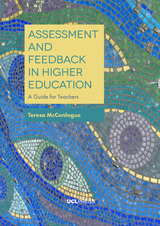
Teachers spend much of their time on assessment, yet many higher education teachers have received minimal guidance on assessment design and marking. This means assessment can often be a source of stress and frustration. Offering a concise overview of assessment theory and practice, this guide provides teachers with the help they need. In education, theory and practice are often poorly linked. In this guide, Teresa McConlogue presents theoretical ideas and research findings and links them to practice. She considers recent theoretical work on feedback and suggests ways of developing evaluative judgment. Throughout the book, teachers are encouraged to examine their practice critically, and there are ideas for small-scale educational investigations, involving teachers, their colleagues, and students, such as using the Assessment Review Questionnaire to adapt assessments. This guide explores the concept of academic standards and proposes methods of co-constructing shared standards within a teaching team and with students through calibration activities.
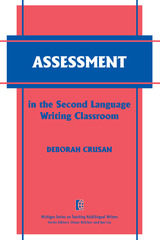
Assessment in the Second Language Writing Classroom is a teacher and prospective teacher-friendly book, uncomplicated by the language of statistics. The book is for those who teach and assess second language writing in several different contexts: the IEP, the developmental writing classroom, and the sheltered composition classroom. In addition, teachers who experience a mixed population or teach cross-cultural composition will find the book a valuable resource. Other books have thoroughly covered the theoretical aspects of writing assessment, but none have focused as heavily as this book does on pragmatic classroom aspects of writing assessment. Further, no book to date has included an in-depth examination of the machine scoring of writing and its effects on second language writers.
Crusan not only makes a compelling case for becoming knowledgeable about L2 writing assessment but offers the means to do so. Her highly accessible, thought-provoking presentation of the conceptual and practical dimensions of writing assessment, both for the classroom and on a larger scale, promises to engage readers who have previously found the technical detail of other works on assessment off-putting, as well as those who have had no previous exposure to the study of assessment at all.
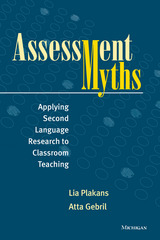
The book opens with an introduction that reviews many key assessment terms and concepts.
The myths examined in this book are:
- Assessment is just writing tests and using statistics.
- A comprehensive final exam is the best way to evaluate students.
- Scores on performance assessments are preferable because of their accuracy and authenticity.
- Multiple choice tests are inaccurate measures of language but are easy to write.
- We should test only one skill at a time.
- A test’s validity can be determined by looking at it.
- Issues of fairness are not a concern with standardized testing.
- Teachers should never be involved in preparing students for tests.

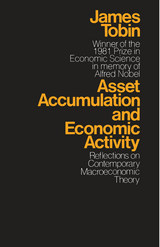
The contributors examine how central bankers determine their policy prescriptions with reference to the fluctuating housing market, the balance of debt and credit, changing beliefs of investors, the level of commodity prices, and other factors. At a time when the public has never been more involved in stocks, retirement funds, and real estate investment, this insightful book will be useful to all those concerned with the current state of the economy.
“The narrative is accelerated from the start. . . . As the novella builds to its horripilating climax, we realize the extent to which all values have thereby been inverted. The Assignment is a parable of hell for an age consumed by images.”—New York Times Book Review
“His most ambitious book . . . dark and devious . . . almost obsessively drawn to mankind’s most fiendish crimes.”—Chicago Tribune
“A tour-de-force . . . mesmerizing.”—Village Voice
In Assignments across the Curriculum, Dan Melzer analyzes the rhetorical features and genres of writing assignments through the writing-to-learn and writing-in-the-disciplines perspectives. Presenting the results of his study of 2,101 writing assignments from undergraduate courses in the natural sciences, social sciences, business, and humanities in 100 postsecondary institutions in the United States, Assignments across the Curriculum is unique in its cross-institutional breadth and its focus on writing assignments.
The results provide a panoramic view of college writing in the United States. Melzer's framework begins with the rhetorical situations of the assignments—the purposes and audiences—and broadens to include the assignments' genres and discourse community contexts. Among his conclusions is that courses connected to a writing-across-the-curriculum (WAC) initiative ask students to write more often, in a greater variety of genres, and for a greater variety of purposes and audiences than non-WAC courses do, making a compelling case for the influence of the WAC movement.
Melzer's work also reveals patterns in the rhetorical situations, genres, and discourse communities of college writing in the United States. These larger patterns are of interest to WAC practitioners working with faculty across disciplines, to writing center coordinators and tutors working with students who bring assignments from a variety of fields, to composition program administrators, to first-year writing instructors interested in preparing students for college writing, and to high school teachers attempting to bridge the gap between high school and college writing.
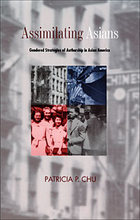
Chu further demonstrates that Asian American male and female writers engage different strategies in the struggle to adapt, reflecting their particular, gender-based relationships to immigration, work, and cultural representation. While offering fresh perspectives on the well-known writings—both fiction and memoir—of Maxine Hong Kingston, Amy Tan, Bharati Mukherjee, Frank Chin, and David Mura, Assimilating Asians also provides new insight into the work of less recognized but nevertheless important writers like Carlos Bulosan, Edith Eaton, Younghill Kang, Milton Murayama, and John Okada. As she explores this expansive range of texts—published over the course of the last century by authors of Chinese, Japanese, Korean, Filipino, and Indian origin or descent—Chu is able to illuminate her argument by linking it to key historical and cultural events.
Assimilating Asians makes an important contribution to the fields of Asian American, American, and women’s studies. Scholars of Asian American literature and culture, as well as of ethnicity and assimilation, will find particular interest and value in this book.

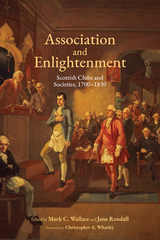


This comprehensive directory offers detailed information on the publishing programs and personnel of the Association of American University Presses’s member presses. Its many useful features include a convenient subject guide indicating which presses publish in specific disciplines; separate entries for each member press that include complete addresses, telephone and fax numbers, and e-mail addresses of key staffers within each press; guidelines for submitting manuscripts; and suggestions for further reading.
This comprehensive directory offers detailed information on the publishing programs and personnel of the 130-plus members of the Association of American University Presses. Its features include a subject guide indicating which presses publish in specific disciplines; guidelines for submitting manuscripts; and separate entries for each member press. Contact information for AAUP Partners is also included. Each press entry provides telephone numbers and email addresses of its key staff members as well as details about its editorial program.


Authors, booksellers, librarians, instructors, and publishing professionals across the industry will find this an invaluable resource, featuring editorial programs and publishing details for all 140+ Association members and much more.
Authors, booksellers, librarians, instructors, and publishing professionals across the industry will find this an invaluable resource, featuring editorial programs and publishing details for all 140+ Association members and much more.
Authors, booksellers, librarians, instructors, and publishing professionals across the industry will find this an invaluable resource, featuring editorial programs and publishing details for all 150+ Association members and much more.
Not simply a utopian idea, associative democracy calls for new forms of economic and social governance as supplements to representative democracy and market economies. It addresses the problems of the overload of big government by democratizing and empowering civil society. It transfers social provision to self-governing voluntary associations, while retaining public funding and political accountability. In the economic sphere, it advocates regional economic regulation through public-private partnerships, the promotion of self-governing industrial districts, and the democratization of the company.
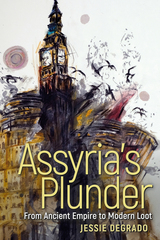
Assyria’s Plunder offers a new history of ancient Assyria and its interactions with its client states of Israel and Judah. Considering the entanglement of modern imperialism with the historiography of ancient empire, Jessie DeGrado reassesses the conventional understanding of the Neo-Assyrian Empire using textual analysis, art history, and archaeology.
Engaging texts from Israel and Judah, DeGrado refuses the usual framings of Biblical resistance to Assyrian despotism and asks instead why subject populations may have capitulated to Assyrian rule. Paired chapters consider specific Assyrian imperial practices and biblical texts that engage them. As the study moves from the awe-filled spectacle of Assyrian throne rooms to the Assyrian policy of deporting divine statues, Assyria’s Plunder centers the embodied experiences of those subjected to Assyrian hegemony. DeGrado also explores how the empire’s violence still holds sway in the popular imagination while Euro-American imperialism goes largely unacknowledged.
Drawing on decolonial studies alongside epigraphic and textual analysis, Assyria’s Plunder shows how critical historiography and theory can enrich historical analysis and provide a fuller portrait of Assyrian interaction with its client states.

Astad Deboo (1947–2020), widely considered a pioneer of modern dance in India, was globally renowned for his distinctive style, characterized by meditative minimalism, gravity-defying backbends, and signature whirls which defined his innovative approach to form and content. In this first biography and book-length appreciation of Deboo’s work, Ketu H. Katrak unveils the remarkable life, choreography, and legacy of this groundbreaking figure in Indian modern dance. Through a comprehensive exploration, readers journey from Deboo's formative years in Jamshedpur and Bombay to his global endeavors that shaped his unique dance style.
Divided into four parts, this biography sheds light on various aspects of Deboo’s life and career: his youth, schooling, and the friendships that shaped him; his solo choreography, which boldly addressed social issues and fused modern dance with traditional elements; his humanitarian spirit, showcasing group choreography with deaf performers and Manipuri drum-dancers; and his mastery in collaborating with artists from India and abroad.
From receiving prestigious awards to transforming lives through dance, traveling around the world for over five decades yet being firmly rooted in Indian soil, Deboo left an indelible mark on contemporary Indian dance. Astad Deboo: An Icon of Contemporary Indian Dance pays homage to the dancer’s legendary status, emphasizing his unparalleled dedication and resilience—a guiding light for aspiring dancers striving to realize their artistic visions. It is a valuable addition to scholarship on dance studies, performance studies, and South Asian studies.
At times personal, at others political, slipping back and forth between lyric and narrative and drawing on various languages and geographies, Asterism is a collection of grace and grit, the work of a mind at work—in, and on, a world that is simultaneously expanding and contracting. Both accessible and legitimately experimental, these poems invite and challenge the reader, moving between registers and modes with ease.

Asteroids II is not a sequel, per se, to the 1979 book Asteroids. It offered a fresh treatment intended to stand on its own as a complete description of the current understanding of the field. It was published in December 1989. The work showcased a large international collaboration, a sign of an active and growing discipline.

This collective knowledge, prepared by a team of more than one hundred international authorities on asteroids, includes new insights into asteroid-meteorite connections, possible relationships with comets, and the hazards posed by asteroids colliding with Earth. The book's contents include reports on surveys based on remote observation and summaries of physical properties; results of in situ exploration; studies of dynamical, collisional, cosmochemical, and weathering evolutionary processes; and discussions of asteroid families and the relationships between asteroids and other solar system bodies. Two previous Space Science Series volumes have established standards for research into asteroids. Asteroids III carries that tradition forward in a book that will stand as the definitive source on its subject for the next decade.
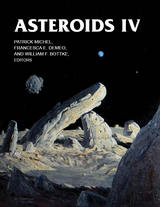
Asteroids IV sets the latest scientific foundation upon which all these topics and more will be built upon for the future. Nearly 150 international authorities through more than 40 chapters convey the definitive state of the field by detailing our current astronomical, compositional, geological, and geophysical knowledge of asteroids, as well as their unique physical processes and interrelationships with comets and meteorites. Most importantly, this volume outlines the outstanding questions that will focus and drive researchers and students of all ages toward new advances in the coming decade and beyond.
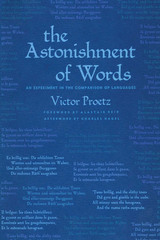
One, two! one, two! And through and through
The vorpal blade went snicker-snack!
He left it dead, and with its head
He went galumphing back.
Un deux, un deux, par le milieu,
Le glaive vorpal fait pat-à-pan!
La bête défaite, avec sa tête,
Il rentre gallomphant.
Eins, Zwei! Eins, Zwei! Und durch und durch
Seins vorpals Schwert zerschniferschnück.
Da blieb es todt! Er, Kopf in Hand,
Geläumfig zog zurück!
The late Victor Proetz was by vocation a visual artist who created many distinguished architectural and decorative designs. His favorite avocation, however, was to explore the possibilities (and impossibilities) of words, especially words in translation, and to share his discoveries. As Alastair Reid says in his foreword, "He turned words over in his head, he listened to them, he unraveled them, he looked them up, he played with them, he passed them on like presents, all with an unjadeable astonishment."
What, Proetz wondered, do some of the familiar and not-so-familiar works of English and American literature sound like in French? In German? "How," he asked, "do you say 'Yankee Doodle' in French—if you can?" And "How do they say 'Hounyhnhnm' and 'Cheshire Cat' and things like that in German?" And, in either language, "How, in God's name, can you possibly say 'There she blows!'?"
This book, unfortunately left incomplete on his death in 1966, contains many of his answers. They are given not only in the assembled texts and translations but also in his wry, curious, sometimes hilarious commentaries. None of it is scholarly in any formal, academic sense—"and yet," Reid reminds us, "his is precisely the kind of enthusiastic curiosity that gives scholarship its pointers."
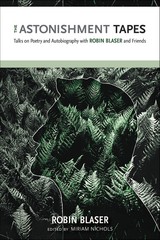
Robin Blaser moved from his native Idaho to attend the University of California, Berkeley, in 1944. While there, he developed as a poet, explored his homosexuality, engaged in a lively arts community, and met fellow travelers and poets Robert Duncan and Jack Spicer. The three men became the founding members of the Berkeley core of what is now known as the San Francisco Renaissance in New American Poetry.
In the company of a small group of friends and writers in 1974, Blaser was asked to narrate his personal story and to comment on the Berkeley poetry scene. In twenty autobiographical audiotapes, Blaser talks about his childhood in Idaho, his time in Berkeley, and his participation in the making of a new kind of poetry. The Astonishment Tapes is the expertly edited transcript of these recordings by Miriam Nichols, Blaser’s editor and biographer.
In The Astonishment Tapes Blaser comments extensively on the poetic principles that he, Duncan, and Spicer worked through, as well as the differences and dissonances between the three of them. Nichols has edited the transcripts only minimally, allowing readers to make their own interpretations of Blaser’s intentions.
Sometimes gossipy, sometimes profound, Blaser offers his version on the inside story of one of the most significant moments in mid-twentieth century American poetry. The Astonishment Tapes is of considerable value and interest, not only to readers of Blaser, Duncan, and Spicer, but also to scholars of the early postmodern and twentieth-century American poetry.

Before Seattle, before Portland, there was Astoria.
The rest of the country is just beginning to discover Astoria, Oregon, that historic gem of a town at the mouth of the Columbia River west of Portland, and the oldest European-American settlement west of the Rockies.
The author provides a chronological look dating back to the 1500s, including European exploration, Native American life, logging, fishing, Chinese laborers in the salmon industry, a giant cheese in the Civil War, Oregon’s first female surgeon, Victorian architecture, and valiant Coast Guard rescues.
Published by Rivertide Publishing and distributed by Oregon State University Press
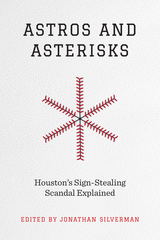
An in-depth and multiperspectival look at the Astros’ sign-stealing scandal and its roots in the culture of baseball fandom.
In 2017 the Houston Astros won their first World Series title, a particularly uplifting victory for the city following Hurricane Harvey. But two years later, the feel-good energy was gone after The Athletic revealed that the Astros had stolen signs from opposing catchers during their championship season, perhaps even during the playoffs and World Series. Their methods were at once high-tech and crude: staff took video of opponents’ pitching signals and transmitted the footage in real time to the Astros’ dugout, where players banged on trash cans to signal to their teammates at bat which pitches were coming their way. Wry observers labeled them the Asterisks, pointing to the title that no longer seemed so earned.
Astros and Asterisks examines the scandal from historical, journalistic, legal, ethical, and cultural perspectives. Authors delve into the Astros’ winning-above-all attitude, cultivated by a former McKinsey consultant; the significance of hiring a pitcher recently suspended for domestic abuse; the career-ending effects of the Astros’ transgression on opposing players; and the ethically fraught choices necessary to participate in sign-stealing. Ultimately, it links the Astros’ choices to the sporting world’s obsession with analytics. What emerges is a sobering tale about the impact of new technology on a game whose romanticized image feels increasingly incongruous with its reality in the era of big data and video.
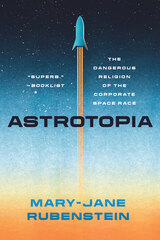
As environmental, political, and public health crises multiply on Earth, we are also at the dawn of a new space race in which governments team up with celebrity billionaires to exploit the cosmos for human gain. The best-known of these pioneers are selling different visions of the future: while Elon Musk and SpaceX seek to establish a human presence on Mars, Jeff Bezos and Blue Origin work toward moving millions of earthlings into rotating near-Earth habitats. Despite these distinctions, these two billionaires share a core utopian project: the salvation of humanity through the exploitation of space.
In Astrotopia, philosopher of science and religion Mary-Jane Rubenstein pulls back the curtain on the not-so-new myths these space barons are peddling, like growth without limit, energy without guilt, and salvation in a brand-new world. As Rubenstein reveals, we have already seen the destructive effects of this frontier zealotry in the centuries-long history of European colonialism. Much like the imperial project on Earth, this renewed effort to conquer space is presented as a religious calling: in the face of a coming apocalypse, some very wealthy messiahs are offering an other-worldly escape to a chosen few. But Rubenstein does more than expose the values of capitalist technoscience as the product of bad mythologies. She offers a vision of exploring space without reproducing the atrocities of earthly colonialism, encouraging us to find and even make stories that put cosmic caretaking over profiteering.
An engaging collection of contemporary short stories from various Arabic countries develops students’ mastery of literary analysis and cultural awareness
Aswat Mu’asira introduces advanced level students to contemporary short stories from across the Middle East. Fifty-five stories in Arabic from twenty countries engage students with current topics and literary approaches that open the door to discovering both established and emerging authors and literary traditions. The book includes voices from often overlooked Arabic-speaking countries and peoples, giving readers the opportunity to broaden their understanding of Arabic cultures.
While most Arabic literature textbooks include only excerpts of longer works, the short stories in this collection are designed to be read in one sitting, giving students the opportunity to immerse themselves in a complete piece of literature. Stories are organized into chapters based on their country of origin. Each story is preceded by an author biography and followed by exercises to help students practice vocabulary and comprehension, explore the literary tradition, and master literary analysis.
Scholars of Arabic literature will also welcome these new stories, many of which are available outside the Middle East for the first time in this collection and expand the understanding of the short story and of contemporary literature from this important region.

In her new collection of poems, Glancy explores the history of loss that has marked the Cherokee community. In a voice that is as economical as it is eloquent and as sophisticated as it is exhilarating, she describes the loss of family, the loss of cultural heritage, and the loss of old worlds as new ones encroach. In one poem, a farm auction becomes an auction of culture, of heritage, of the past. In others, ancestors meet in a twenty-four-hour café, lunch is shared with a great-grandmother who has been traveling the universe, Christ appears as a cowboy in an apocalyptic vision, and Clytemnestra is discovered in a snakeskin. Some of the poems are as campy as a duck-decoy Custer in a shooting gallery. Some glitter with dime-store glue. Others speak with the reflection of sunlight off a stream. Sometimes the verse produces a shortstop language on the baseline of experience. In whatever form they take, Glancy’s poems stimulate and challenge the reader with their unfettered, unadorned, and unpretty purity. This collection is not only a spirited ride across the Great Plains, it is also an important addition to the literature of white–Native American cultural relationships.

Asylum on the Hill is the story of a great American experiment in psychiatry, a revolution in care for those with mental illness, as seen through the example of the Athens Lunatic Asylum. Built in southeast Ohio after the Civil War, the asylum embodied the nineteenth-century “gold standard” specifications of moral treatment. Stories of patients and their families, politicians, caregivers, and community illustrate how a village in the coalfields of the Hocking River valley responded to a national movement to provide compassionate care based on a curative landscape, exposure to the arts, outdoor exercise, useful occupation, and personal attention from a physician.
Katherine Ziff’s compelling presentation of America’s nineteenth-century asylum movement shows how the Athens Lunatic Asylum accommodated political, economic, community, family, and individual needs and left an architectural legacy that has been uniquely renovated and repurposed. Incorporating rare photos, letters, maps, and records, Asylum on the Hill is a fascinating glimpse into psychiatric history.
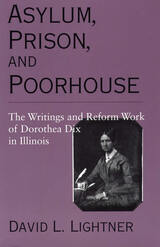
This illustrated collection of annotated newspaper articles and memorials by Dorothea Dix provides a forum for the great mid-nineteenth-century humanitarian and reformer to speak for herself.
Dorothea Lynde Dix (1802–87) was perhaps the most famous and admired woman in America for much of the nineteenth century. Beginning in the early 1840s, she launched a personal crusade to persuade the various states to provide humane care and effective treatment for the mentally ill by funding specialized hospitals for that purpose. The appalling conditions endured by most mentally ill inmates in prisons, jails, and poorhouses led her to take an active interest also in prison reform and in efforts to ameliorate poverty.
In 1846–47 Dix brought her crusade to Illinois. She presented two lengthy memorials to the legislature, the first describing conditions at the state penitentiary at Alton and the second discussing the sufferings of the insane and urging the establishment of a state hospital for their care. She also wrote a series of newspaper articles detailing conditions in the jails and poorhouses of many Illinois communities.
These long-forgotten documents, which appear in unabridged form in this book, contain a wealth of information on the living conditions of some of the most unfortunate inhabitants of Illinois. In his preface, David L. Lightner describes some of the vivid images that emerge from Dorothea Dix's descriptions of social conditions in Illinois a century and a half ago: "A helpless maniac confined throughout the bitter cold of winter to a dark and filthy pit. Prison inmates chained in hallways and cellars because no more men can be squeezed into the dank and airless cells. Aged paupers auctioned off by county officers to whoever will maintain them at the lowest cost."
Lightner provides an introduction to every document, placing each memorial and newspaper article in its proper social and historical context. He also furnishes detailed notes, making these documents readily accessible to readers a century and a half later. In his final chapter, Lightner assesses both the immediate and the continuing impact of Dix's work.
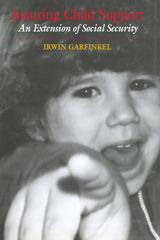
In this volume, specialists from traditionally separate areas in economics and finance investigate issues at the conjunction of their fields. They argue that financial decisions of the firm can affect real economic activity—and this is true for enough firms and consumers to have significant aggregate economic effects. They demonstrate that important differences—asymmetries—in access to information between "borrowers" and "lenders" ("insiders" and "outsiders") in financial transactions affect investment decisions of firms and the organization of financial markets. The original research emphasizes the role of information problems in explaining empirically important links between internal finance and investment, as well as their role in accounting for observed variations in mechanisms for corporate control.

The responses in At a Breezy Time of Day are occasioned when someone writes or phones with a request for an interview. There may be a common theme but often side questions come up. We are curious about what someone has to say – about sports, about God, about Plato, about education, about books, about just about anything. Usually central questions occur. The same question can be answered in different ways. We often have more to say on a given topic than we do say on our first being asked about it.
These interviews appeared in various on-line and printed sources. Having them collected in one text makes the interview form itself seem more substantial. Interviews too often seem to be passing, ephemeral things, but often we want to hold on to them. There is something more existential about them. Yet there is also something more lightsome about them also. The truth of things seems more bearable when it is spoken, when it has a human voice.
So, as the title of this collection intimates, we begin with the very first interview in the Garden of Eden. We touch many places and issues. The interview always has somewhere even in its written form the touch of the human voice. The one who interviews invites us to speak, to tell us what we hold, why we hold it. Interviews are themselves part of that engagement in conversation that defines our kind in its search for a full knowledge of what is.
We know that when we have said the last word, much remains to be said. We can rejoice both in what we know, and in what we know that we do not know. I believe it was Socrates who, in an earlier form of interview at the end of The Apology, alerted us to be aware of what we know and to await the many other interviews that we hope to carry on with so many others of our kind in the Isles of the Blessed.
READERS
Browse our collection.
PUBLISHERS
See BiblioVault's publisher services.
STUDENT SERVICES
Files for college accessibility offices.
RECENTLY PUBLISHED





UChicago Accessibility Resources
home | accessibility | search | about | contact us
BiblioVault ® 2001 - 2026
The University of Chicago Press