
 A SCHOLARLY BOOK REPOSITORY
144 start with B start with B

Robert L. Marshall traces how each of the sons grappled with—and at times suffocated beneath—their illustrious father’s legacy. Mary Oleskiewicz’s essay investigates the Bach family’s connections to historical keyboard instruments and musical venues at the Prussian court, while David Schulenberg looks at Carl Philipp Emanuel Bach’s diverse and innovative keyboard works. Evan Cortens digs into everything from performance materials to pay stubs to offer a detailed view of the business of Carl Philipp Emanuel Bach’s liturgical music. Finally, Christine Blanken discusses how the rediscovery of Bach family musical manuscripts in the Breitkopf archive opens up new perspectives on familiar topics.
A supplemental companion website is now available for Bach Perspectives 11. This resource features additional images, captions, and short descriptions to provide an essential supplement to the printed text.

Launched in 1995, Bach Perspectives has become the premier English-language serial book series dedicated to cutting-edge Bach scholarship. The University of Illinois Press now offers the first four volumes in open access editions available for free to all interested readers.
The third volume of the acclaimed series features a roster of scholars analyzing the crucial influence of J. S. Bach’s music upon compositions by Mozart, Beethoven, Brahms, Hindemith, and others. Throughout, the contributors highlight Bach’s subtle presence in the history of composition and illuminate the intertwined works of Bach and his successors.
Contributors: Thomas Christensen, Ludwig Finscher, Walter Frisch, Stephen Hinton, William Kinderman, and Robert L. Marshall
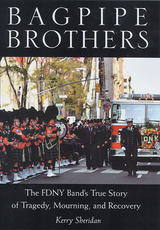
Bagpipe Brothers tells the unforgettable story of four firefighters in the band, who struggled to bring peace to their families and themselves while searching for the dead, coping with the endless round of funerals, and rethinking the meaning of faith. Their experiences illustrate the grief and recovery of the nation in the aftermath of the terrorist attacks.
Kerry Sheridan has written the first book to cover the ordeal of the massive number of funerals, the importance of recovering bodies in Irish American culture, and the bagpiping ritual, both traditional and modern.
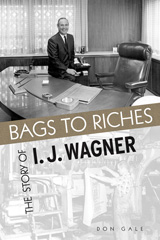
His sense of humor was legendary. His tenacity in pursuit of goals was unwavering. His grasp of past, present, and future opportunities was profound. Bags to Riches shows the personal side of an 'outsider' who became an 'insider' through congeniality, good humor, and integrity.
In fact, Baha’i draws on a diverse heritage that encompasses both East and West. Reflecting their Islamic roots, they observe daily prayers and the reading of sacred texts; a month of fast; pilgrimage to Haifa, Israel, where the religion’s relics are preserved; and abstinence from alcohol. They face toward their prophet Baha’u'llah’s resting place when praying, which is reminiscent of Muslims facing Mecca to pray.
In other ways, the Baha’i religion has dissociated itself from orthodox Shi’ism. Adherents avoid communal prayer, reject the idea of a professional clergy, promote gender equality, and devote a great deal of attention to education, health care, and environmental issues. They work actively through the United Nations system to promote their view of a new world order of peace and harmony that they feel will one day unify humankind across all nations, races, and religions.
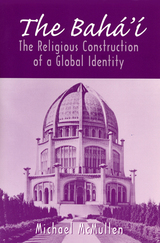
The Bahá’í Faith is one of the fastest growing, but least studied, of the world’s religions. Adherents view themselves as united by a universal belief that transcends national boundaries. Michael McMullen examines how the Bahá’í develop and maintain this global identity. Taking the Bahá’í community in Atlanta, Georgia, as a case in point, his book is the first to comprehensively examine the tenets of this little-understood faith.
McMullen notes that, to the Bahá’í, Buddha, Moses, Jesus, and Mohammed are all divinely sent teachers of ‘the Truth’, whose messages conform to the needs of their individual cultures and historical periods. But religion—which draws from the teaching of Bahá’u’lláh, a nineteenth-century Persian—encourages its members to think of themselves as global citizens. It also seeks to establish unity among its members through adherence to a Bahá’í worldview.
By examining the Atlanta Bahá’í community, McMullen shows how this global identity is interpreted locally. He discusses such topics as: the organizational structure and authority relations in the Bahá’í “Administrative Order”; Bahá’í evangelicalism; and the social boundaries between Bahá’ís and the wider culture.
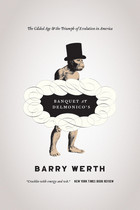
In Banquet at Delmonico’s, Barry Werth draws readers inside the circle of intellectuals, scientists, politicians, businessmen, and clergymen who brought Charles Darwin’s controversial ideas to post-Civil-War America. Each chapter is dedicated to a crucial intellectual encounter, culminating with an exclusive farewell dinner held in English philosopher Herbert Spencer’s honor at the venerable New York restaurant Delmonico’s in 1882. In this thought-provoking and nuanced account, Werth firmly situates social Darwinism in the context of the Gilded Age. Banquet at Delmonico’s is social history at its finest.
The third volume in the anthology, featuring a wide range of plays that reimagine Shakespeare works from Borderlands perspectives.
For several decades, Chicanx and Indigenous theatermakers have been repurposing Shakespeare’s plays to reflect the histories and lived realities of the US–Mexico Borderlands and to create space to tell stories of and for La Frontera. Celebrating this rich tradition, The Bard in the Borderlands: An Anthology of Shakespeare Appropriations en La Frontera brings a wide range of Borderlands Shakespeare plays together for the first time in a multi-volume open-access scholarly edition. This anthology celebrates the dynamic, multilingual reworking of canon and place that defines Borderlands Shakespeare, and it situates these geographically and temporally diverse plays within the robust study of Shakespeare’s global afterlives.
The plays featured in this volume diverge drastically from Shakespeare, bringing elements of Hamlet, Henry IV, Part 1, Macbeth, and The Tempest into a range of subcultures that challenge dominant structures of power. In so doing, they remix and revise intersecting histories and traditions to heal colonial wounds and to call forth new worlds for fronterizos.
Through ethnographic fieldwork at eight CBOs in the Brooklyn neighborhoods of Williamsburg and Bushwick, Nicole P. Marwell discovered that the complex and contentious relationships these groups form with larger economic and political institutions outside the neighborhood have a huge and unexamined impact on the lives of the poor. Most studies of urban poverty focus on individuals or families, but Bargaining for Brooklyn widens the lens, examining the organizations whose actions and decisions collectively drive urban life.

Through a series of case studies, historian Jonathan D. Anzalone highlights the role of public and private interests in the region and shows how partnerships frayed and realigned in the course of several key developments: the rise of camping in the 1920s and 1930s; the 1932 Lake Placid Olympics; the construction of a highway to the top of Whiteface Mountain; the postwar rise of downhill skiing; the completion of I-87 and the resulting demand for second homes; and the 1980 Lake Placid Olympics. Battles of the North Country reveals how class, economic self-interest, state power, and a wide range of environmental concerns have shaped modern politics in the Adirondacks and beyond.

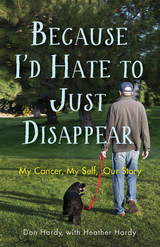
Because I’d Hate to Just Disappear is a portrait of a husband and wife, Don and Heather Hardy, thrown into the physical and emotional machinery of Don being diagnosed with leukemia and going through chemotherapy and treatment over a period of close to two years.
In this thoughtful and exquisite account, Don and Heather narrate Don’s struggle in real-time. Disarmingly honest, they recount each intimate stage of a couple living through cancer together, the mental and physical struggles, the humor and visceral emotion to reveal how two very different personalities shape—and are shaped by—the experience of cancer and its treatment. Through these moments emerge a constant flow of human kindness and discovery that lifts them each day.
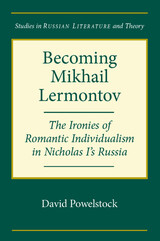
By bringing to light Lermontov's operative version of Romantic individualism, Powelstock is able to make sense of the poet's relationship to "romantic irony," his highly modern concept of the reader (both real, and implied in the text), and his vexed passion for his predecessor Alexander Pushkin--a relationship that is almost always treated sentimentally, but is here given its true competitive edge. Furthermore, Powelstock offers the most persuasive account ever given of Lermontov's exceptionally odd treatment of, and success with, women--both in real life and in fiction--and of his cruel overlapping of these two planes.
Clarifying what has remained perplexing for so long, and correcting what has been misinterpreted, Powelstock's work illuminates Lermontov's views of dignity, death, love, nature, society, and ethics--and, finally, gives us an intellectual biography that is deeper and more subtle than any written before.
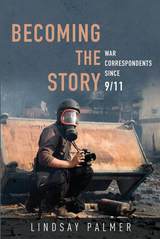
Becoming the Story examines the transformation of war reporting in the decade after 9/11. Lindsay Palmer delves into times when print or television correspondents themselves received intense public scrutiny because of an incident associated with the work of war reporting. Such instances include Daniel Pearl’s kidnapping and murder; Bob Woodruff’s near-fatal injury in Iraq; the expulsions of Maziar Bahari and Nazila Fathi from Iran in 2009; the sexual assault of Lara Logan; and Marie Colvin’s 2012 death in Syria. Merging analysis with in-depth interviews of Woodruff and others, Palmer shows what these events say about how post-9/11 conflicts transformed the day-to-day labor of reporting. But they also illuminate how journalists’ work became entangled with issues ranging from digitization processes to unprecedented hostility from all sides to the political logic of the War on Terror.

This volume reports in detail how a particular portion of the American wilderness developed into a settled farming community. To fully comprehend the history of the American people in the early national period, an understanding of this transformation from forest to community—and the pattern of life within such communities where the vast majority of the people live—is essential.
Three major conclusions emerge from Philip L. White's study of Beekmantown, New York. First, the economic advantages of the frontier attracted a first generation of settlers relatively high in social and economic status, but the disappearance of frontier conditions brought a second generation of settlers appreciably lower in status. Second, White rejects the romantic notion that the frontier fostered equality and argues instead that the frontier's economic opportunities fostered inequality. Finally, in contrast to revisionist arguments, he affirms that in Beekmantown the Jacksonian period does indeed warrant characterization as the era of the "common man."
This book represents a model in community history: the narrative is full of human interest; the scholarship is prodigious; the applications are universal.

In January 1990, the New York Harbor suffered a major oil spill when an underwater pipe at an Exxon refinery leaked into the Arthur Kill, the fifteen-mile strait that runs between New Jersey and Staten Island. The waterway is home to herons and egrets, fiddler crabs and sea turtles, and a favorite place for recreational fishing, bird-watching, hiking, and boating. It is also lined with refineries and a busy corridor for oil tankers. Because this industrial activity posed such an imposing threat to the fragile ecosystem, biologists had been monitoring the region’s water, soil, vegetation, and wildlife for some time before the oil spill. Thus, we have before -and-after data about the habitat—the only oil spill anywhere for which this is true.
This unique book discusses the human consequences of the oil spill as well as providing detailed studies of its effects on the plants and animals of the Arthur Kill. Biologists, environmentalists, lawyers, and officials worldwide will find this book an essential guide to dealing with—and possibly preventing—future environmental disasters.
The contributors areJohn Brzorad, Angela Christini, Keith Cooper, Lynn Frink, Michael Gochfeld, Paul Hauge, Gordon Johnson, Alan D. Maccarone, Katherine Parsons, Carolyn Summers, Robert Tucker.

The 2017 Grenfell tower fire in London was a “slow disaster,” the product of a long accumulation of faults and errors that resulted from erroneous assumptions and organizational and governmental decision-making. This book offers a critical perspective on the systematic failures that lead to one of the greatest tragedies in Britain in our time.
Before Grenfell is a poignant and timely analysis of risk, fire, and safety in postwar Britain. Tracing the evolution of state housing policy in relation to multistory housing since the mid-1950s, the book adds to a burgeoning history of the British experience of fire and safety in high-rises and investigates a latent housing crisis in contemporary Britain against a backdrop of increasingly deregulated urban building development. Drawing on public inquiries, newspaper accounts, and oral histories, Shane Ewen details other avoidable disasters, including the Ronan Point tower block explosion in 1968, the Summerland leisure center fire in 1972, and the Bradford City Football Club fire in 1985. The book closes with a powerful chapter on fire safety campaigners, including survivor groups, who are seeking justice for the victims of fire disasters. Before Grenfell aims to exert pressure on policy-makers to act on the lessons of fatal disasters in order to both prevent future casualties and establish a legacy for those who lost their lives.

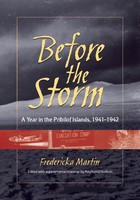
From June of 1941 through the following summer, Fredericka Martin lived with her husband, Dr. Samuel Berenberg, on remote St. Paul Island in Alaska. During that time, Martin delved into the complex history of the Unangan people, and Before the Storm draws from her personal accounts of that year and her research to present a fascinating portrait of a time and a people facing radical change. A government-ordered evacuation of all Aleuts from the island in the face of World War II, which Martin recounts in her journal, proved but the first step in a long struggle by native peoples to gain independence, and, as editor Raymond L. Hudson explains, Martin came to play a significant role in the effort.

As the nation tried to absorb the shock of the 9/11 attacks, Muslim Americans were caught up in an unprecedented wave of backlash violence. Public discussion revealed that widespread misunderstanding and misrepresentation of Islam persisted, despite the striking diversity of the Muslim community.
Letting the voices of 140 ordinary Muslim American men and women describe their experiences, Lori Peek's path-breaking book, Behind the Backlash presents moving accounts of prejudice and exclusion. Muslims speak of being subjected to harassment before the attacks, and recount the discrimination they encountered afterwards. Peek also explains the struggles of young Muslim adults to solidify their community and define their identity during a time of national crisis.
Behind the Backlash seeks to explain why blame and scapegoating occur after a catastrophe. Peek sets the twenty-first century experience of Muslim Americans, who were vilified and victimized, in the context of larger sociological and psychological processes. Peek’s book will be of interest to those in disaster research studies, sociology of religion, and race and ethnic relations.
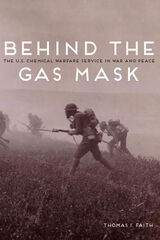
As Faith shows, the believers in chemical weapons staffing the CWS allied with supporters in the military, government, and private industry to lobby to add chemical warfare to the country's permanent arsenal. Their argument: poison gas represented an advanced and even humane tool in modern war, while its applications for pest control and crowd control made a chemical capacity relevant in peacetime. But conflict with those aligned against chemical warfare forced the CWS to fight for its institutional life--and ultimately led to the U.S. military's rejection of battlefield chemical weapons.
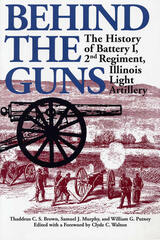
Much has been written of the infantry and the cavalry during the Civil War, but little attention has been paid the artillery. Through the battles of Chickamauga and Missionary Ridge in 1863 and the Atlanta Campaign of 1864 and with General Sherman’s forces on the famous March to the Sea, the acts of a courageous fighting group are vividly recounted in Behind the Guns: The History of Battery I, 2nd Regiment, Illinois Light Artillery. Originally published in 1965 in a limited edition, this regimental history of a light artillery unit was written by three of its soldiers, including the bugler.
Battery I was formed in 1861 by Charles W. Keith of Joliet and Henry B. Plant of Peoria. More than a hundred men were mustered into service in December near Springfield and left for Cairo in February 1862. The battery trained at Camp Paine across the Ohio River in Kentucky until March, when the men were dispatched to the South. During the war, the Battery was attached to three different armies: the Army of the Mississippi, the Army of the Ohio, and the Army of the Cumberland.
Clyde C. Walton’s foreword and the narrative discuss the variety of weapons used by the unit, including James, Parrott, and Rodman guns and the bronze, muzzle-loading Napoleons that fired twelve-pound projectiles. The book also includes an account of the prisoner-of-war experience of Battery I lieutenant Charles McDonald, biographical sketches of the battery soldiers, and eighteen maps and five line drawings.

The annual Beijing Film Academy Yearbook continues to showcase the best academic debates, discussions, and research published in the prestigious Journal of Beijing Film Academy from the previous year. This volume brings together specially selected articles, covering the most up-to-date topics in Chinese cinema studies appearing for the first time in English, in order to bridge the gap in cross-cultural research in cinema and media studies, as well as to encourage new conversations.
This book is the latest offering in Intellect China Library series, which publishes work by Chinese scholars that have not previously been available to English-language academia. Covering the subjects of film studies, visual arts, performing arts, media, and cultural studies, the series aims to foster intellectual debate and to promote closer cross-cultural intellectual exchanges by introducing important works of Chinese scholarship to readers.
The annual Beijing Film Academy Yearbook highlights the best academic debates, discussions, and research from the previous year, as previously published in the highly prestigious Journal of Beijing Film Academy. This volume brings together specially selected articles, appearing for the first time in English, to bridge the gap in cross-cultural research in cinema and media studies.
The book is the latest in the Intellect China Library series to produce work by Chinese scholars that have not previously been available to English-language academia. Covering the subjects of film studies, visual arts, performing arts, and media and cultural studies, the series aims to foster intellectual debate and to promote closer cross-cultural intellectual exchanges by introducing important works of Chinese scholarship to readers.
Beijing Film Academy 2022 offers an essential collection of the most thought-provoking debates, discussions, and research from China’s leading institution for film and media studies. For the first time in English, this volume presents carefully selected articles from the prestigious Journal of Beijing Film Academy, providing scholars and students with unparalleled access to a significant body of work from Chinese academics.
This book covers a wide range of topics–from film studies and visual arts to performing arts and media culture and provides critical insights into contemporary cinematic and media discourse in China. As part of the Intellect China Library series, it fosters cross-cultural intellectual exchange and bridges the gap between Chinese scholarship and global academia.
An indispensable resource for film and media scholars, this yearbook serves as a vital tool for understanding the evolving landscape of Chinese cinema and its global impact.

The proclamation of Belarusian independence on March 25, 1918, and the rival establishment of the Soviet Belarusian state on January 1, 1919, created two distinct and mutually exclusive national myths, which continue to define contemporary Belarusian society. This book examines the processes that resulted in this dual resolution in the context of World War I and the subsequent Russian Revolutions.
Based on original archival material, Lizaveta Kasmach scrutinizes the development of competing concepts of Belarusian nationhood in the context of rivaling national aspirations and imperial policies. The analysis convincingly demonstrates the divisions within the nationalist movement, both politically between the moderates and socialists, and geographically between German-occupied territory with Vilna as a center versus Russian-controlled territory around Minsk. Besides the case study of Belarusian nation-building efforts, the book is a contribution to the study of the First World War in East Central Europe, approaching the war and its aftermath as a mobilizational moment in the region.


In 2020 the OSIRIS-REx spacecraft successfully landed on the surface of Bennu and collected pristine asteroid material for delivery to Earth in September 2023. Scientific studies of the samples, along with data collected during the rendezvous, promise to help find answers to some of humanity’s deepest questions: Where did we come from? What is our destiny in space?
This book, the world’s first complete (and stereoscopic) atlas of an asteroid, is the result of a unique collaboration between OSIRIS-REx mission leader Dante Lauretta and Brian May’s London Stereoscopic Company. Lauretta’s colleagues include Carina Bennett, Kenneth Coles, and Cat Wolner, as well as Brian May and Claudia Manzoni, who became part of the ultimately successful effort to find a safe landing site for sampling. The text details the data collected by the mission so far, and the stereo images have been meticulously created by Manzoni and May from original images collected by the OSIRIS-REx cameras.

—James Fallows, National Correspondent for Atlantic Monthly
“The human experience is being shaped by our symbiotic relationship to technology. What makes this collection wonderful is that it’s not about the technology, per se, but it’s about this changing human experience. I will look forward to it every year.”
—Po Bronson, author of What Should I Do With My Life?
The Best of Technology Writing 2006 brings together some of the most important, timely, and just plain readable writing in the fast-paced, high-stakes field of technology. The first annual collection to target this vibrant and versatile area, The Best of Technology Writing 2006 features innovative work from an unusually diverse array of writers: best-selling authors, noted academics, and indie journalists and bloggers. The culmination of an open, on-line nominating process, this collection covers topics ranging from jetpacks, to the ethics of genetically cloned pets, to the meaning of life in the information age. By turns epic and intimate, serious and playful, The Best of Technology Writing 2006 captures the vitality, importance, and complexity of technology today. Koerner
Featuring contributions from:
digitalculturebooks is an imprint of the University of Michigan Press and the Scholarly Publishing Office of the University of Michigan Library dedicated to publishing innovative and accessible work exploring new media and their impact on society, culture, and scholarly communication. Visit the website at www.digitalculture.org.
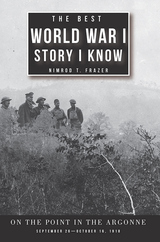
The Best World War I Story I Know: On the Point in the Argonne is the breath-taking story of three US Army divisions tasked with capturing the Côte de Châtillon during the Meuse-Argonne offensive in autumn 1918. Readers will first follow in the footsteps of Missouri-Kansas Guard troops who were repulsed in the opening days of the battle; their courage in the face of heavy fire was not enough to overcome poor leadership.
They were replaced by the 1st Division, the “best of the Regular Army.” This fine unit became physically and mentally exhausted after suffering horrendous casualties. Unable to fight on, “The Big Red One” was exchanged at the base of Côte de Châtillon, with the 42nd, the Rainbow Division. It too struggled to gain ground on the heavily-contested hill until General Douglas MacArthur’s determined 84th Brigade of “Alabama cotton pickers and Iowa corn growers” forced their way past the Germans. The Côte was finally in American hands and the war all but over.
Explaining that the postwar expanded cinema was a response to both developments, Andrew V. Uroskie argues that, rather than a formal or technological innovation, the key change for artists involved a displacement of the moving image from the familiarity of the cinematic theater to original spaces and contexts. He shows how newly available, inexpensive film and video technology enabled artists such as Nam June Paik, Robert Whitman, Stan VanDerBeek, Robert Breer, and especially Andy Warhol to become filmmakers. Through their efforts to explore a fresh way of experiencing the moving image, these artists sought to reimagine the nature and possibilities of art in a post-cinematic age and helped to develop a novel space between the “black box” of the movie theater and the “white cube” of the art gallery. Packed with over one hundred illustrations, Between the Black Box and the White Cube is a compelling look at a seminal moment in the cultural life of the moving image and its emergence in contemporary art.
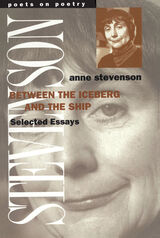
Feminist critics will find much to invigorate and infuriate them in these essays. Stevenson believes that the "takeover" of poetry by critical theorists has, in recent years, all but brought about its demise in England and America. But she also fears that the media's doctrine of mass marketability may have a detrimental effect on the future of poetry. Her essays on Plath, Bishop, Irish poetry, and other subjects are as witty as they are challenging, upsetting many of the easy assumptions of our putatively "postmodern" era.
Anne Stevenson is the author of numerous books, including Bitter Fame: A Life of Sylvia Plath, The Other House, Four and a Half Dancing Men, and most recently, Collected Poems 1955- 1995.
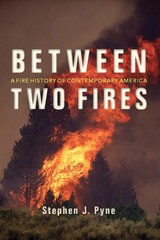
Pyne is uniquely qualified to tell America’s fire story. The author of more than a score of books, he has told fire’s history in the United States, Australia, Canada, Europe, and the Earth overall. In his earlier life, he spent fifteen seasons with the North Rim Longshots at Grand Canyon National Park.
In Between Two Fires, Pyne recounts how, after the Great Fires of 1910, a policy of fire suppression spread from America’s founding corps of foresters into a national policy that manifested itself as a costly all-out war on fire. After fifty years of attempted fire suppression, a revolution in thinking led to a more pluralistic strategy for fire’s restoration. The revolution succeeded in displacing suppression as a sole strategy, but it has failed to fully integrate fire and land management and has fallen short of its goals.
Today, the nation’s backcountry and increasingly its exurban fringe are threatened by larger and more damaging burns, fire agencies are scrambling for funds, firefighters continue to die, and the country seems unable to come to grips with the fundamentals behind a rising tide of megafires. Pyne has once again constructed a history of record that will shape our next century of fire management. Between Two Fires is a story of ideas, institutions, and fires. It’s America’s story told through the nation’s flames.
Beyond Postprocess offers a vigorous, provocative discussion of postprocess theory in its contemporary profile. Fueled by something like a fundamental refusal to see writing as self-evident, reducible, and easily explicable, the contributors rethink postprocess, suggesting that there is no easily defined moment or method that could be called postprocess. Instead, each contribution to this collection provides a unique and important example of what work beyond postprocess could be.
Since postprocess theory in writing studies first challenged traditional conceptions of writing and the subject who writes, developments there have continued to push theorists of writing in a number of promising theoretical directions. Spaces for writing have arisen that radically alter ideological notions of space, rational thinking, intellectual property and politics, and epistemologies; and new media, digital, and visual rhetorics have increasingly complicated the scene, as well.
Contributors to Beyond Postprocess reconsider writing and writing studies through posthumanism, ecology, new media, materiality, multimodal and digital writing, institutional critique, and postpedagogy. Through the lively and provocative character of these essays, Beyond Postprocess aims to provide a critical site for nothing less than the broad reevaluation of what it means to study writing today. Its polyvocal considerations and conclusions invest the volume with a unique potential to describe not what that field of study should be, but what it has the capacity to create. The central purpose of Beyond Postprocess is to unleash this creative potential.

This anthology includes some of the world's leading commentators - Noam Chomsky, Robert Fisk, Naomi Klein, John Pilger, Paul Foot and A.Sivanandan. It presents accessible, detailed and often deeply personal accounts of the aftermath, the bombing of Afghanistan and the dubious claims for its legality. From investigative journalists to critical academics, human rights lawyers and anti-racist campaigners, the contributors are united in their opposition to military intervention in Afghanistan and beyond and to the attack on civil liberties in the US, the UK and Europe.
From the US and Canada, Herman and Julia Schwendinger, Jonathan Farley, Tony Platt, Cecilia O'Leary, Christian Parenti and Michael Mandel are among critical academics who assess the validity, lawfulness and political consequences of the Bush/Blair agenda. European based commentators include Martti Gronfors and Thomas Mathiesen.
Examining the the context and rhetoric of US vengeance -- ennobled by the symbolic title 'Enduring Freedom' -- they challenge political and popular definitions, constructions,pathologisation and reporting of terrorism. In questioning the representation of war as 'just', the anthology focuses on civilian deaths in Afghanistan, evidence of US/allied atrocities, violations of prisoners' rights and US determination to escalate military offensives, regardless of global destabilisation.

Examining Netflix’s global influence through its complex global-local dynamics in Korean media.
Korea is a global entertainment powerhouse, thanks in no small part to Netflix. Analyzing the artistry and industry behind Netflix-produced Korean hits like Squid Game, The Glory, and Narco-Saints, Benjamin Han argues that Korea is ground zero for an emerging “Netflix Paradigm.” The US-based streaming platform generates massive profits by erasing boundaries of foreign and domestic production, even as it underscores the resilience of the national media within global popular culture.
Beyond Squid Game breaks down the intricate and often ambivalent relationship between Netflix and the Korean media business, drawing on interviews with creative workers navigating the streaming giant’s ever-increasing economic and cultural power. Challenging narratives that present Netflix as a revolutionary disruptor, Han shows how the company has replicated abroad the precarious labor conditions and tensions over intellectual property from which US studios have long benefited. At the same time, Beyond Squid Game underscores the complex dynamics of a globalized media industry in which cultural imperialism thrives on localization and perceived authenticity.
This collection of highly readable essays reveals that research is not restricted to library archives. When researchers pursue information and perspectives from sources beyond the archives—from existing people and places— they are often rewarded with unexpected discoveries that enrich their research and their lives.
Beyond the Archives: Research as a Lived Process presents narratives that demystify and illuminate the research process by showing how personal experiences, family history, and scholarly research intersect. Editors Gesa E. Kirsch and Liz Rohan emphasize how important it is for researchers to tap into their passions, pursuing research subjects that attract their attention with creativity and intuition without limiting themselves to traditional archival sources and research methods.
Eighteen contributors from a number of disciplines detail inspiring research opportunities that led to recently published works, while offering insights on such topics as starting and finishing research projects, using a wide range of types of sources and methods, and taking advantage of unexpected leads, chance encounters and simple clues. In addition, the narratives trace the importance of place in archival research, the parallels between the lives of research subjects and researchers, and explore archives as sites that resurrect personal, cultural, and historical memory.
Beyond the Archives sheds light on the creative, joyful, and serendipitous nature of research, addressing what attracts researchers to their subjects, as well as what inspires them to produce the most thorough, complete, and engaged scholarly work. This timely and essential volume supplements traditional-method textbooks and effectively models concrete practices of retrieving and synthesizing information by professional researchers.
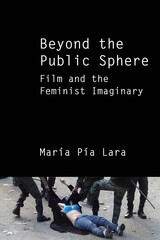
In Beyond the Public Sphere: Film and the Feminist Imaginary, the renowned philosopher and critical theorist María Pía Lara challenges the notion that the bourgeois public sphere is the most important informal institution between social and political actors and the state.
Drawing on a wide range of films—including The Milk of Sorrow, Ixcanul, Wadja, The Stone of Patience, Marnie, A Streetcar Named Desire, and Talk to Her—Lara dissects cinematic images of women’s struggles and their oppression. She builds on this analysis, developing a concept of the feminist social imaginary as a broader and more complex space that provides a way of thinking through the possibilities for emancipatory social transformation in response to forms of domination perpetuated by patriarchal capitalism.

This anthology deals with such diverse conventions as the treatment of food, the iconography of weapons, the paraphernalia of baseball, the uses of clothing, tools, and technologies, and the representation of art and print media within the world of film. The essays within this collection help to reveal how the objects in American movies reflect both the fixed and changeable cultural assumptions of film makers and film audiences.


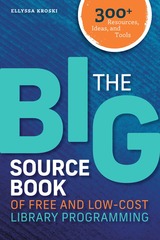
There’s no need to spend hours trying to come up with creative programming ideas—bestselling library activity guru Kroski has already done all the hard work for you! Largely drawn from contributions by library workers across the country, this e-book is a cornucopia of ready-to-go activities, easily accessible resources, and adaptable tools for inspiring countless fun and engaging programs at your library. Best of all, these exciting low cost/no-cost library programs can be implemented using only free resources. Offering a broad selection of ideas for adults, tweens, and younger children that can be tailored to a variety of contexts, inside this sourcebook you’ll discover
- seniors and older adult programming resources on such topics as genealogy, financial literacy, lifelong learning, gardening, and health and wellness;
- career, ESL/literacy, and "just for fun" programs and book clubs perfect for adults;
- young adult programming resources such as the Book to Action toolkit, YALSA’s Teen Programming Guidelines, literacy and educational resources, computers and coding activities, live action roleplaying games (LARPS), and many more;
- free resources to teach financial responsibility to toddlers, lesson plans from NASA, resources to host an Earth Day event incorporating a “free trees for kids” program, StoryWalks and more ideas for children;
- makerspace, STEM, and art programming resources;
- Pinterest boards, idea lists, writing prompts, coloring pages, free books, and passive programming downloadables and printables;
- information about more than two dozen grant opportunities for funding programs; and
- planning templates, marketing tips, assessment resources, and tools for brainstorming and productivity.

Page, Seawright, and Lacombe argue that while political contributions offer a window onto billionaires’ influence, especially on economic policy, they do not present a full picture of policy preferences and political actions. That is because on some of the most important issues, including taxation, immigration, and Social Security, billionaires have chosen to engage in “stealth politics.” They try hard to influence public policy, making large contributions to political parties and policy-focused causes, leading policy-advocacy organizations, holding political fundraisers, and bundling others’ contributions—all while rarely talking about public policy to the media. This means that their influence is not only unequal but also largely unaccountable to and unchallengeable by the American people. Stealth politics makes it difficult for ordinary citizens to know what billionaires are doing or mobilize against it. The book closes with remedies citizens can pursue if they wish to make wealthy Americans more politically accountable, such as public financing of political campaigns and easier voting procedures, and notes the broader types of reforms, such as a more progressive income tax system, that would be needed to increase political equality and reinvigorate majoritarian democracy in the United States.
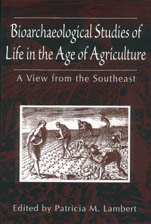
Investigations of skeletal remains from key archaeological sites reveal new data and offer insights on prehistoric life and health in the Southeast.
The shift from foraging to farming had important health consequences for prehistoric peoples, but variations in health existed within communities that had made this transition. This new collection draws on the rich bioarchaeological record of the Southeastern United States to explore variability in health and behavior within the age of agriculture. It offers new perspectives on human adaptation to various geographic and cultural landscapes across the entire Southeast, from Texas to Virginia, and presents new data from both classic and little-known sites.
The contributors question the reliance on simple cause-and-effect relationships in human health and behavior by addressing such key bioarchaeological issues as disease history and epidemiology, dietary composition and sufficiency, workload stress, patterns of violence, mortuary practices, and biological consequences of European contact. They also advance our understanding of agriculture by showing that uses of maize were more varied than has been previously supposed.
Representing some of the best work being done today by physical anthropologists, this volume provides new insights into human adaptation for both archaeologists and osteologists. It attests to the heterogeneous character of Southeastern societies during the late prehistoric and early historic periods while effectively detailing the many factors that have shaped biocultural evolution.

Volumes three and four of this monumental work include full entries for all such illustrious names as those of the Cibbers—Colley, Theophilus, and Susanna Maria—Kitty Clive, and Charlotte Charke, George Colman, the Elder, and the Younger, William Davenant, and De Loutherboug. But here also are full entries for dozens of important secondary figures and of minor ones whose stories have never been told, as well as a census (and at least a few recoverable facts) for even the most inconsiderable performers and servants of the theatres.
As in the previous volumes in this distinguished series, the accompanying illustrations include at least one picture of each subject for whom a portrait exists.





Through finely crafted poems that utilize a plainspoken roughness to keep the reader slightly disoriented, Almallah replicates his own verbal and cultural experience of existing between languages and societies. There is a sense of displacement to these poems as Almallah recounts the amusing, sad, and perilous moments of day-to-day living in exile. At the heart of Bitter English is a sense of loss, both of home and of his mother, whose struggle with Alzheimer’s becomes a reflection of his own reality in exile. Filled with wit, humor, and sharp observations of the world, Bitter English brings a fresh poetic voice to the American immigrant experience.

Black and White Cinema is the first study to consider the use of black-and-white as an art form in its own right, providing a comprehensive and global overview of the era when it flourished, from the 1900s to the 1960s. Acclaimed film scholar Wheeler Winston Dixon introduces us to the masters of this art, discussing the signature styles and technical innovations of award-winning cinematographers like James Wong Howe, Gregg Toland, Freddie Francis, and Sven Nykvist. Giving us a unique glimpse behind the scenes, Dixon also reveals the creative teams—from lighting technicians to matte painters—whose work profoundly shaped the look of black-and-white cinema.
More than just a study of film history, this book is a rallying cry, meant to inspire a love for the artistry of black-and-white film, so that we might work to preserve this important part of our cinematic heritage. Lavishly illustrated with more than forty on-the-set stills, Black and White Cinema provides a vivid and illuminating look at a creatively vital era.
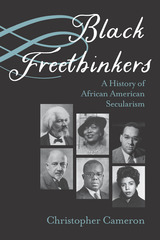
Christopher Cameron suggests an alternative origin of nonbelief and religious skepticism in America, namely the brutality of the institution of slavery. He also traces the growth of atheism and agnosticism among African Americans in two major political and intellectual movements of the 1920s: the New Negro Renaissance and the growth of black socialism and communism. In a final chapter, he explores the critical importance of freethought among participants in the civil rights and Black Power movements of the 1960s and 1970s.
Examining a wealth of sources, including slave narratives, travel accounts, novels, poetry, memoirs, newspapers, and archival sources such as church records, sermons, and letters, the study follows the lives and contributions of well-known figures, including Frederick Douglass, Zora Neale Hurston, James Baldwin, and Alice Walker, as well as lesser-known thinkers such as Louise Thompson Patterson, Sarah Webster Fabio, and David Cincore.
From 1900 to the present, people of African descent living in the United States have drawn on homegrown and diasporic minds to create a Black intellectual tradition engaged with ideas on race, racial oppression, and the world. This volume presents essays on the diverse thought behind the fight for racial justice as developed by African American artists and intellectuals; performers and protest activists; institutions and organizations; and educators and religious leaders. By including both women’s and men’s perspectives from the U.S. and the Diaspora, the essays explore the full landscape of the Black intellectual tradition. Throughout, contributors engage with important ideas ranging from the consideration of gender within the tradition, to intellectual products generated outside the intelligentsia, to the ongoing relationship between thought and concrete effort in the quest for liberation.
Expansive in scope and interdisciplinary in practice, The Black Intellectual Tradition delves into the ideas that animated a people’s striving for full participation in American life.
Contributors: Derrick P. Alridge, Keisha N. Blain, Cornelius L. Bynum, Jeffrey Lamar Coleman, Pero Gaglo Dagbovie, Stephanie Y. Evans, Aaron David Gresson III, Claudrena N. Harold, Leonard Harris, Maurice J. Hobson, La TaSha B. Levy, Layli Maparyan, Zebulon V. Miletsky, R. Baxter Miller, Edward Onaci, Venetria K. Patton, James B. Stewart, and Nikki M. Taylor
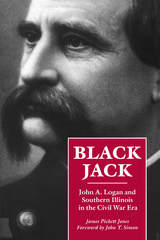
John A. Logan, called "Black Jack" by the men he led in Civil War battles from the Henry-Donelson campaign to Vicksburg, Chattanooga, and on to Atlanta, was one of the Union Army’s most colorful generals.
James Pickett Jones places Logan in his southern Illinois surroundings as he examines the role of the political soldier in the Civil War. When Logan altered his stance on national issues, so did the southern part of the state. Although secession, civil strife, Copperheadism, and the new attitudes created by the war contributed to this change of position in southern Illinois, Logan’s role as political and military leader was important in the region’s swing to strong support of the war against the Confederacy, to the policies of Lincoln, and eventually, to the Republican party.

Recounting the experiences of black soldiers in the Civil War
In the ten probing essays collected in this volume, Howard C. Westwood recounts the often bitter experiences of black men who were admitted to military service and the wrenching problems associated with the shifting status of African Americans during the Civil War.
Black Troops, White Commanders and Freedmen during the Civil War covers topics ranging from the roles played by Lincoln and Grant in beginning black soldiery to the sensitive issues that arose when black soldiers (and their white officers) were captured by the Confederates. The essays relate the exploits of black heroes such as Robert Smalls, who single-handedly captured a Confederate steamer, as well as the experiences of the ignoble Reverend Fountain Brown, who became the first person charged with violating the Emancipation Proclamation.
Although many thousands were enlisted as soldiers, blacks were barred from becoming commissioned officers and for a long time they were paid far less than their white counterparts. These and other blatant forms of discrimination understandably provoked discontent among black troops which, in turn, sparked friction with their white commanders. Westwood's fascinating account of the artillery company from Rhode Island amply demonstrates how frustrations among black soldiers came to be seen as "mutiny" by some white officers.
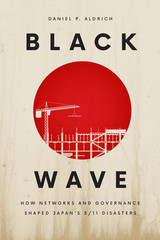
Black Wave illuminates two critical factors that had a direct influence on why survival rates varied so much across the Tōhoku region following the 3/11 disasters and why the rebuilding process has also not moved in lockstep across the region. Individuals and communities with stronger networks and better governance, Daniel P. Aldrich shows, had higher survival rates and accelerated recoveries. Less-connected communities with fewer such ties faced harder recovery processes and lower survival rates. Beyond the individual and neighborhood levels of survival and recovery, the rebuilding process has varied greatly, as some towns and cities have sought to work independently on rebuilding plans, ignoring recommendations from the national government and moving quickly to institute their own visions, while others have followed the guidelines offered by Tokyo-based bureaucrats for economic development and rebuilding.
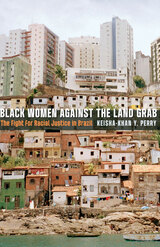
In Brazil and throughout the African diaspora, black women, especially poor black women, are rarely considered leaders of social movements let alone political theorists. But in the northeastern city of Salvador, Brazil, it is these very women who determine how urban policies are established. Focusing on the Gamboa de Baixo neighborhood in Salvador’s city center, Black Women against the Land Grab explores how black women’s views on development have radicalized local communities to demand justice and social change.
In Black Women against the Land Grab, Keisha-Khan Y. Perry describes the key role of local women activists in the citywide movement for land and housing rights. She reveals the importance of geographic location for understanding the gendered aspects of urban renewal and the formation of black women–led social movements. How have black women shaped the politics of urban redevelopment, Perry asks, and what does this kind of political intervention tell us about black women’s agency? Her work uncovers the ways in which political labor at the neighborhood level is central to the mass mobilization of black people against institutional racism and for citizenship rights and resources in Brazil.
Highlighting the political life of black communities, specifically those in urban contexts often represented as socially pathological and politically bankrupt, Black Women against the Land Grab offers a valuable corrective to how we think about politics and about black women, particularly poor black women, as a political force.
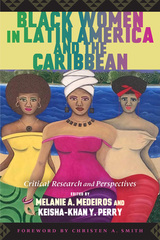

Finalist for the Society of Midland Authors Richard Frisbie Award for Adult Nonfiction
In A Blacklist Education, a mysterious file of family papers triggers a journey through the dark days of political purges in the 1950s. Jane S. Smith tells the story of the anticommunist witch hunt that sent shockwaves through New York City’s public schools as more than a thousand teachers were targeted by Board of Education investigators. Her father was one of them—a fact she learned only long after his death.
Beginning in 1949, amid widespread panic about supposed communist subversion, investigators questioned teachers in their homes, accosted them in their classrooms, and ordered them to report to individual hearings. The interrogations were not published, filmed, open to the public, or reported in the news. By 1956, hundreds of New York City teachers had been fired, often because of uncorroborated reports from paid informers or anonymous accusers.
Most of the targeted teachers resigned or retired without any public process, their names recorded only in municipal files and their futures never known. Their absence became the invisible outline of an educational void, a narrowing of thought that pervaded classrooms for decades. In this highly personal story, family lore and childhood memory lead to restricted archives, forgotten inquisitions, and an eerily contemporary campaign to control who could teach and what was acceptable for students to learn.

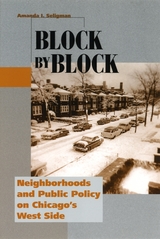
Seligman's study reveals that the responses of white West Siders to racial changes occurring in their neighborhoods were both multifaceted and extensive. She shows that, despite rehabilitation efforts, deterioration in these areas began long before the color of their inhabitants changed from white to black. And ultimately, the riots that erupted on Chicago's West Side and across the country in the mid-1960s stemmed not only from the tribulations specific to blacks in urban centers but also from the legacy of accumulated neglect after decades of white occupancy. Seligman's careful and evenhanded account will be essential to understanding that the "flight" of whites to the suburbs was the eventual result of a series of responses to transformations in Chicago's physical and social landscape, occurring one block at a time.
We present applications that use Web 3.0 technologies to unlock value in DeFi, NFTs, supply chains, media, identity, credentials, metaverses, and more. Readers will learn about the underlying technologies, the maturity of Web 3.0 today, and the future of the space from thought-leaders. This textbook is used by undergraduate and graduate Blockchain Fundamentals courses at the University of Arkansas, the University of Wyoming, and other universities around the world. Professors interested in adopting this book for instructional purposes are welcome to contact the authors for supporting instructional materials.
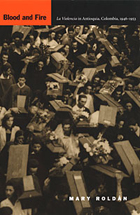
Through an analysis of the evolution of violence in Antioquia, which at the time was the wealthiest and most economically diverse region of Colombia, Roldán demonstrates how tensions between regional politicians and the weak central state, diverse forms of social prejudice, and processes of economic development combined to make violence a preferred mode of political action. Privatization of state violence into paramilitary units and the emergence of armed resistance movements exacted a horrible cost on Colombian civic life, and these processes continue to plague the country.
Roldan’s reading of the historical events suggests that Antioquia’s experience of la Violencia was the culmination of a brand of internal colonialism in which regional identity formation based on assumptions of cultural superiority was used to justify violence against racial or ethnic "others" and as a pretext to seize land and natural resources. Blood and Fire demonstrates that, far from being a peculiarity of the Colombians, la Violencia was a logical product of capitalist development and state formation in the modern world.
This is the first study to analyze intersections of ethnicity, geography, and class to explore the genesis of Colombian violence, and it has implications for the study of repression in many other nations.
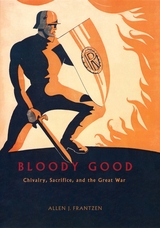
Here for the first time, Allen J. Frantzen traces these chivalric ideals from the Great War back to their origins in the Middle Ages and shows how they resulted in highly influential models of behavior for men in combat. Drawing on a wide selection of literature and images from the medieval period, along with photographs, memorials, postcards, war posters, and film from both sides of the front, Frantzen shows how such media shaped a chivalric ideal of male sacrifice based on the Passion of Jesus Christ. He demonstrates, for instance, how the wounded body of Christ became the inspiration for heroic male suffering in battle. For some men, the Crucifixion inspired a culture of revenge, one in which Christ's bleeding wounds were venerated as badges of valor and honor. For others, Christ's sacrifice inspired action more in line with his teachings—a daring stay of hands or reason not to visit death upon one's enemies.
Lavishly illustrated and eloquently written, Bloody Good will be must reading for anyone interested in World War I and the influence of Christian ideas on modern life.

"In Williamson County some men took to violence almost as a way of life. A shocking story, well told."--New Yorker
Williamson County in southern Illinois has been the scene of almost unparalleled violence, from the Bloody Vendetta between two families in the 1870s through the Herrin Massacre of 1922, Ku Klux Klan activities that ended in fatalities, and the gang war of the 1920s between the Charlie Birger and Shelton brothers gangs. Paul Angle was fascinated by this more-than-fifty-year history, and his account of this violence has become a classic.
Through illustrative photography and text, Ailor and his son capture once more the local color and beauty of the back roads, cafes, taverns, and people of Heat-Moon’s original trek. Almost every photograph in Blue Highways Revisited is referenced to a page in the original work. With side-by-side photographic comparisons of eleven of Heat-Moon’s characters, this new volume reflects upon and develops the memoir of Heat-Moon’s cross-country study of American culture and spirit. Photographs of Heat-Moon’s logbook entries, original manuscript pages, Olympia typewriter, Ford van, and other artifacts also give readers insight into Heat-Moon’s approach to his trip. Discussions with Heat-Moon about these archival images provide the reader insight into the travels and the writing of Blue Highways that only the perspective of the author could provide.
Blue Highways Revisited reaffirms that the "blue highway" serves as a romantic symbol of the free and restless American spirit, as the Ailors lose themselves to the open road as Heat-Moon did thirty years previously. This book reminds readers of the insatiable attraction of the “blue highway”—“But in those brevities just before dawn and a little after dusk—times neither day or night—the old roads return to the sky some of its color. Then, in truth, they carry a mysterious cast of blue, and it's that time when the pull of the blue highway is strongest, when the open road is a beckoning, a strangeness, a place where a man can lose himself” (Introduction to Blue Highways).
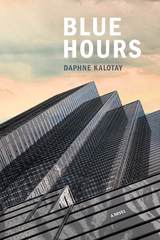
A mystery linking Manhattan circa 1991 to eastern Afghanistan in 2012, Blue Hours tells of a life-changing friendship between two memorable heroines. When we first meet Mim, she is a recent college graduate who has disavowed her lower middle class roots to befriend Kyra, a dancer and daughter of privilege, until calamity causes their estrangement. Twenty years later, Kyra has gone missing from her NGO’s headquarters in Jalalabad, and Mim—now a recluse in rural New England—embarks on a journey to find her. In its nuance, originality, and moral complexity, Blue Hours becomes an unexpected page-turner.
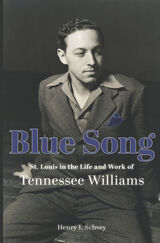
The question of this paradox lies at the heart of this book, an attempt not so much to correct the record about Williams’s well-chronicled dislike of the city, but rather to reveal how the city was absolutely indispensable to his formation and development both as a person and artist. Unlike the prevailing scholarly narrative that suggests that Williams discovered himself artistically and sexually in the deep South and New Orleans, Blue Song reveals that Williams remained emotionally tethered to St. Louis for a host of reasons for the rest of his life.
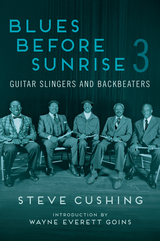
Steve Cushing’s third volume of interviews from Blues Before Sunrise puts fans face-to-face with music legends and industry figures. The volume kicks off with a roundtable featuring drumming all-stars Earl Phillips, S.P. Leary, Odie Payne, Clifton James, and Fred Below discussing their lives and craft. Cushing segues to one-on-one interviews with Howlin’ Wolf sideman Phillips; Leary, a fellow Wolf alum and player with Sonny Boy Williamson II; Payne, known for his kick drum technique; longtime Muddy Waters drummer Willie “Big Eyes” Smith; next-generation standard bearer and session mainstay Casey Jones; and King Records house drummer Phillip Paul.
Interviews with guitarists include talks with Honeyboy Edwards, whose friendships with innumerable Chicago blues legends (and Robert Johnson) predated the Great Migration; jazz player turned bluesman Guitar Shorty; and figures like Texas native Roy Gaines, Johnny Heartsman of Oakland, and Memphis-born Floyd Murphy. A final section offers interviews with vocalists, record label founders, and other figures. Music scholar Wayne Everett Goins provides an introduction on blues history, blues style, and the careers of the featured artists.
Interviews: Joel Dorn, Honeyboy Edwards, Slim Gaillard, Roy Gaines, Johnny Heartsman, Franz Jackson, Casey Jones, S.P. Leary, Floyd Murphy, Jimmy “T-99” Nelson, Johnny Parth, Phillip Paul, Odie Payne, Earl Phillips, Art Sheridan, Guitar Shorty, Willie “Big Eyes” Smith, and Norvel Taborn
READERS
Browse our collection.
PUBLISHERS
See BiblioVault's publisher services.
STUDENT SERVICES
Files for college accessibility offices.
RECENTLY PUBLISHED





UChicago Accessibility Resources
home | accessibility | search | about | contact us
BiblioVault ® 2001 - 2026
The University of Chicago Press