
 A SCHOLARLY BOOK REPOSITORY
2477 start with C start with C
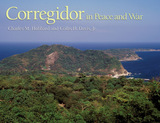
A picturesque island strategically located at the entrance of Manila Bay, Corregidor has had military significance since the days of the Spanish galleon trade. Although its dramatic role in the defense of the Philippines during World War II is well documented, relatively little is known about its history apart from military involvement. This richly illustrated book tells the story of the island and sheds new light on the geopolitical forces that shaped its destiny.
Corregidor in Peace and War is a biography of a mysterious island known simply as “the Rock.” It traces the buildup of armaments and fortifications on the island after the American occupation of the Philippines in 1898, then chronicles clandestine military preparations for an expected war with Imperial Japan. It vividly documents aspects of island life before World War II—including the enviable lifestyle of the American officer corps stationed there, the development of the island’s rail system using imported American streetcars, and the creation of the Philippine Scouts coastal artillery units—and then records its loss and recapture during the struggle with Japan. The final chapter reviews the island’s history since the war.
More than 150 illustrations include maps and photos from both the Spanish and American periods up to the present day—some photographs published more than a century ago and impeccably restored, many never before seen in print. Interweaving new and old photos with informative text, Charles Hubbard and Collis Davis, Jr., provide a guided tour that captures the natural beauty of an island once enjoyed by early residents but subsequently decimated by cannon fire and aerial bombardment. Brilliant color images evoke a place where flora and wildlife coexist alongside abandoned fortifications, documenting stark reminders from times of war. Other photographs show the majestic “suicide cliffs” where Japanese soldiers are said to have jumped to their deaths rather than become prisoners.
Now a tourist destination and historic monument, Corregidor remains a formidable island worthy of its nickname. Corregidor in Peace and War uncovers its many unknown facets and singularly reflects the experiences of both a place and a people that deserve a prominent place in history.
Arendt and Scholem met in 1932 in Berlin and quickly bonded over their mutual admiration for and friendship with Walter Benjamin. They began exchanging letters in 1939, and their lively correspondence continued until 1963, when Scholem’s vehement disagreement with Arendt’s Eichmann in Jerusalem led to a rupture that would last until Arendt’s death a dozen years later. The years of their friendship, however, yielded a remarkably rich bounty of letters: together, they try to come to terms with being both German and Jewish, the place and legacy of Germany before and after the Holocaust, the question of what it means to be Jewish in a post-Holocaust world, and more. Walter Benjamin is a constant presence, as his life and tragic death are emblematic of the very questions that preoccupied the pair. Like any collection of letters, however, the book also has its share of lighter moments: accounts of travels, gossipy dinner parties, and the quotidian details that make up life even in the shadow of war and loss.
In a world that continues to struggle with questions of nationalism, identity, and difference, Arendt and Scholem remain crucial thinkers. This volume offers us a way to see them, and the development of their thought, anew.
Between 1478 and 1513 Amerbach published more than a hundred substantial works. He is best known for his monumental editions of the works of early church fathers. Crucial to his success was the information network he kept through correspondence with scholars, teachers, printers, booksellers, library curators, and other members of the literate community. The letters reveal how books were made, by whom, and for whom. The Correspondence of Johann Amerbach allows us to see the tensions in the new alliance between commerce and the republic of letters. Filling out the scene more fully, letters between the Amerbach children and their parents tell of the daily life, expectations, and aspirations of an intellectual bourgeois family at the end of the fifteenth century.
Barbara C. Halporn is Head of the Collection Development Department, Widener Library, Harvard University.



Price's correspondence with Adams, Franklin, Jefferson, Rush, and other Americans concern the issues of slavery, the rebellion in Massachusetts, use of paper money, opposition to the establishment of religion, and the status of the federal government. Letters to Priestly, Lansdowne, and others in Britain are about science and technology, the crisis in the United Provinces, armed neutrality, the national debt, revolution, religious sects, and foreign relations. In his correspondence with French leaders following the fall of the Bastille, particularly with le Duc del la Rochefoucauld, Price expresses his high hopes for the growth of civil and religious freedom in France.
Indispensable for an understanding of the work of one of the best known and most distinguished Welshmen of the eighteenth century, this book—and the series—will also be of interest to those who study the history of ideas.
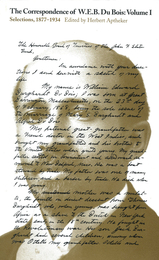
Scholar, author, editor, teacher, reformer, and civil rights leader, W.E.B. Du Bois (1868–1963) was a major figure in American life and one of the earliest proponents of equality for Black Americans. He was a founder and leader of the Niagara Movement, the NAACP, and the Pan-African Movement; a progenitor of the 1920s Harlem Renaissance; an advocate of anticolonialism, anti-imperialism, unionism, and equality for women; and a champion of the rights of oppressed people around the world.
The three-volume Correspondence of W.E.B. Du Bois offers a unique perspective on Du Bois's experiences and views. In recognition of the significance of the Correspondence, the final volume was named a Best Book of the Year by the New York Times Book Review.
Herbert Aptheker has provided an introduction and notes to each volume, illuminating the circumstances and identifying the personalities involved in the correspondence. A long time friend and colleague of Du Bois, Aptheker is a well-known historian of the African American experience. In 1939 and again in 1969, he won the history award given by the Association for the Study of Negro Life and History. Among his most prominent works are American Negro Slave Revolts and the three-volume Documentary History of the Negro People in the United States.
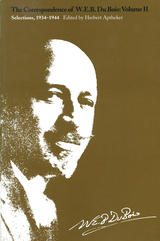
Scholar, author, editor, teacher, reformer, and civil rights leader, W.E.B. Du Bois (1868–1963) was a major figure in American life and one of the earliest proponents of equality for black Americans. He was a founder and leader of the Niagara Movement, the NAACP, and the Pan-African Movement; a progenitor of the 1920s Harlem Renaissance; an advocate of anticolonialism, anti-imperialism, unionism, and equality for women; and a champion of the rights of oppressed people around the world.
The three-volume Correspondence of W.E.B. Du Bois offers a unique perspective on Du Bois's experiences and views. In recognition of the significance of the Correspondence, the final volume was named a Best Book of the Year by the New York Times Book Review.
Herbert Aptheker has provided an introduction and notes to each volume, illuminating the circumstances and identifying the personalities involved in the correspondence. A long time friend and colleague of Du Bois, Aptheker is a well-known historian of the African American experience. In 1939 and again in 1969, he won the history award given by the Association for the Study of Negro Life and History. Among his most prominent works are American Negro Slave Revolts and the three-volume Documentary History of the Negro People in the United States.
Scholar, author, editor, teacher, reformer, and civil rights leader, W.E.B. Du Bois (1868–1963) was a major figure in American life and one of the earliest proponents of equality for black Americans. He was a founder and leader of the Niagara Movement, the NAACP, and the Pan-African Movement; a progenitor of the 1920s Harlem Renaissance; an advocate of anticolonialism, anti-imperialism, unionism, and equality for women; and a champion of the rights of oppressed people around the world.
The three-volume Correspondence of W.E.B. Du Bois offers a unique perspective on Du Bois's experiences and views. In recognition of the significance of the Correspondence, the final volume was named a Best Book of the Year by the New York Times Book Review.
Herbert Aptheker has provided an introduction and notes to each volume, illuminating the circumstances and identifying the personalities involved in the correspondence. A long time friend and colleague of Du Bois, Aptheker is a well-known historian of the African American experience. In 1939 and again in 1969, he won the history award given by the Association for the Study of Negro Life and History. Among his most prominent works are American Negro Slave Revolts and the three-volume Documentary History of the Negro People in the United States.
In the San Joaquin Valley Cotton Strike of 1933, frenzied cotton farmers murdered three strikers, intentionally starved at least nine infants, wounded dozens of people, and arrested more. While the story of this incident has been recounted from the perspective of both the farmers and, more recently, the Mexican workers, this is the first book to trace the origins of the Mexican workers’ activism through their common experience of migrating to the United States.
Rodolfo F. Acuña documents the history of Mexican workers and their families from seventeenth-century Chihuahua to twentieth-century California, following their patterns of migration and describing the establishment of communities in mining and agricultural regions. He shows the combined influences of racism, transborder dynamics, and events such as the industrialization of the Southwest, the Mexican Revolution, and World War I in shaping the collective experience of these people as they helped to form the economic, political, and social landscapes of the American Southwest in their interactions with agribusiness and absentee copper barons.
Acuña follows the steps of one of the murdered strikers, Pedro Subia, reconstructing the times and places in which his wave of migrants lived. By balancing the social and geographic trends in the Mexican population with the story of individual protest participants, Acuña shows how the strikes were in fact driven by choices beyond the Mexican workers’ control. Their struggle to form communities graphically retells how these workers were continuously uprooted and their organizations destroyed by capital. Corridors of Migration thus documents twentieth-century Mexican American labor activism from its earliest roots through the mines of Arizona and the Great San Joaquin Valley cotton strike.
From a founding scholar of Chicano studies and the author of fifteen books comes the culmination of three decades of dedicated research into the causes and effects of migration and labor activism. The narrative documents how Mexican workers formed communities against all odds.
In Corrupt Illinois, veteran political observers Thomas J. Gradel and Dick Simpson take aim at business-as-usual. Naming names, the authors lead readers through a gallery of rogues and rotten apples to illustrate how generations of chicanery have undermined faith in, and hope for, honest government. From there, they lay out how to implement institutional reforms that provide accountability and eradicate the favoritism, sweetheart deals, and conflicts of interest corroding our civic life.
Corrupt Illinois lays out a blueprint to transform our politics from a pay-to-play–driven marketplace into what it should be: an instrument of public good.
Almost since its creation, recurring problems with corruption bedeviled the Teamsters Union. David Witwer provides the first in-depth historical study of the forces that contributed to the Teamsters' troubled past and the mechanisms the union employed--from top-down directives to grassroots measures--to combat corruption.
Witwer draws on the perspectives of rank-and-file members, union leaders, and the criminal element to explain the processes that allowed organized crime to seize power inside the union. His account includes the infamous links between the Mafia and union head Jimmy Hoffa, but he also tells the little-known story of the McClellan Committee investigation that first brought those links to light. Witwer also examines how anti-labor forces used the Teamsters' unsavory reputation to influence popular and legislative opinion in a broad attack on workers' rights.
Contributors to this volume address the measurement and consequences of fraud and corruption and the forces that ultimately led to their decline within the United States. They show that various approaches to reducing corruption have met with success, such as deregulation, particularly “free banking,” in the 1830s. In the 1930s, corruption was kept in check when new federal bureaucracies replaced local administrations in doling out relief. Another deterrent to corruption was the independent press, which kept a watchful eye over government and business. These and other facets of American history analyzed in this volume make it indispensable as background for anyone interested in corruption today.

While Fidel Castro maintained his longtime grip on Cuba, revolutionary scholars and policy analysts turned their attention from how Castro succeeded (and failed), to how Castro himself would be succeeded—by a new government. Among the many questions to be answered was how the new government would deal with the corruption that has become endemic in Cuba. Even though combating corruption cannot be the central aim of post-Castro policy, Sergio Díaz-Briquets and Jorge Pérez-López suggest that, without a strong plan to thwart it, corruption will undermine the new economy, erode support for the new government, and encourage organized crime. In short, unless measures are taken to stem corruption, the new Cuba could be as messy as the old Cuba.
Fidel Castro did not bring corruption to Cuba; he merely institutionalized it. Official corruption has crippled Cuba since the colonial period, but Castro's state-run monopolies, cronyism, and lack of accountability have made Cuba one of the world's most corrupt states. The former communist countries in Eastern Europe were also extremely corrupt, and analyses of their transitional periods suggest that those who have taken measures to control corruption have had more successful transitions, regardless of whether the leadership tilted toward socialism or democracy. To that end, Díaz-Briquets and Pérez-López, both Cuban Americans, do not advocate any particular system for Cuba's next government, but instead prescribe uniquely Cuban policies to minimize corruption whatever direction the country takes after Castro. As their work makes clear, averting corruption may be the most critical obstacle in creating a healthy new Cuba.
This important new volume examines archaeological evidence of Roman colonization of the Middle Republican period. Themes of land use, ethnic accommodation and displacement, colonial identity, and administrative schemes are also highlighted. In delving deeply into the uniqueness of select colonial contexts, these essays invite a novel discussion on the phenomenon of colonialism in the political landscape of Rome’s early expansion. Roman urbanism of the Middle Republican period brought to the Italian peninsula fundamental changes, an important example of which, highlighted by a wealth of studies, is the ebullience of a dense network of colonies, as well as a mix of senatorial tactics and individual initiatives that underpinned their foundation. Whether Latin, Roman, or Maritimae, colonies created a new mesh of communities and imposed a new topography; more subtly, they signified the mechanisms of the rising hegemony. This book brings to the fore the diversity, agendas, and overall impact of a “settlement device” that changed the Italian landscape and introduced a new idea of Roman town.
At the time of Will’s death, her manuscript consisted of a typed catalogue of the amphora stamps from Cosa and an equal number of unstamped vessels, but was missing important elements. On the basis of extensive notes and photographs, Kathleen Warner Slane has reviewed and updated the manuscript, adding type descriptions and footnotes to materials that have appeared since Will’s death as well as a framing introduction and conclusions. Appendices highlight an Augustan amphora dump on the Arx and add a catalogue of the Greek amphora stamps found at Cosa.
Cosa: The Roman and Greek Amphoras will be of interest to scholars and students of Rome and its system of colonies, and also to those interested in Greek and Roman archaeology and trade in the ancient world.
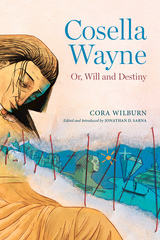
Published serially in the spiritualist journal Banner of Light in 1860, Cosella Wayne: Or, Will and Destiny is the first coming-of-age novel, written and published in English by an American Jewish woman, to depict Jews in the United States and transforms what we know about the history of early American Jewish literature. The novel never appeared in book form, went unmentioned in Jewish newspapers of the day, and studies of nineteenth-century American Jewish literature ignore it completely. Yet the novel anticipates many central themes of American Jewish writing: intermarriage, generational tension, family dysfunction, Jewish-Christian relations, immigration, poverty, the place of women in Jewish life, the nature of romantic love, and the tension between destiny and free will.
The narrative recounts a relationship between an abusive Jewish father and the rebellious daughter he molested as well as that daughter’s struggle to find a place in the complex social fabric of nineteenth-century America. It is also unique in portraying such themes as an unmarried Jewish woman’s descent into poverty, her forlorn years as a starving orphaned seamstress, her apostasy and return to Judaism, and her quest to be both Jewish and a spiritualist at one and the same time.
Jonathan Sarna, who introduces the volume, discovered Cosella Wayne while pursuing research at the Israel Institute for Advanced Studies in Jerusalem. This edition is supplemented with selections from Cora Wilburn’s recently rediscovered diary, which are reprinted in the appendix. Together, these materials help to situate Cosella Wayne within the life and times of one of nineteenth-century American Jewry’s least known and yet most prolific female authors.

The Latin-English bilingual volume presents the text of The Chronicle of the Czechs by Cosmas of Prague. Cosmas was born around 1045, educated in Liège, upon his return to Bohemia, he got married as well as became a priest. In 1086 he was appointed prebendary, a senior member of clergy in Prague. He completed the first book of the Chronicle in 1119, starting with the creation of the world and the earliest deeds of the Czechs up to Saint Adalbert. In the second and third books Cosmas presents the preceding century in the history of Bohemia, and succeeds in reporting about events up to 1125, the year when he died.
The English translation was done by Petra Mutlova and Martyn Rady with the cooperation of Libor Švanda. The introduction and the explanatory notes were written by Jan Hasil with the cooperation of Irene van Rensvoude.T
"Christian Moraru is an especially dynamic and brilliant scholar who works at a high level of critical and theoretical sophistication. I've never seen anything quite so exhaustive, so magisterial. Readers of Cosmodernism will think of the Keats line about an astronomer's exhilaration when a new planet swims into his ken."
---David Cowart, University of South Carolina
"Cosmodernism has the potential to become foundational for the study of a whole period. Christian Moraru undertakes here to establish a new basis for thinking about the era of cultural history in which we have found ourselves, in the United States but also around the world, since the end of the Cold War. The strength of Moraru's work lies in its intellectual ambition and scope; its polymathic range and breadth of learning; its confident mastery of a variety of disciplinary discourses; its fresh and thoughtful selection of texts for discussion; the sharpness and insight of its textual analyses; and, animating everything, its fervent commitment to a new and better way of understanding our relationship to others and the world at large."
---Brian McHale, The Ohio State University
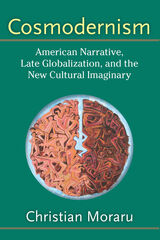
A sweeping inquiry into post–Cold War American literature and theory, Cosmodernism argues, cautiously but persuasively, for the rise of a new cultural paradigm against the backdrop of accelerating globalization. Moraru calls this paradigm "cosmodern." He uses the term to account for what seems to be gradually challenging the postmodern over the last twenty-odd years. Not so much a well-structured movement yet, cosmodernism is chiefly a critical construct enabling Moraru to articulate representative literary-theoretical interventions of the past two decades into a reasonably coherent model. The coherence inheres, he shows, in a certain "relational" imaginary, which the critic canvasses by placing a wide range of authors and works in, across, and against the material-conceptual networks of globalization, cosmopolitanism, modernism, postmodernism, postcolonialism, multiculturalism, and other areas of contemporary U.S. intellectual history.
Christian Moraru is Professor of English at the University of North Carolina, Greensboro. His latest books include Rewriting: Postmodern Narrative and Cultural Critique in the Age of Cloning (2001), Memorious Discourse: Reprise and Representation in Postmodernism (2005), and the edited collection Postcommunism, Postmodernism, and the Global Imagination (2009).
Cover art: Earth, oil and acrylic on canvas, 48" × 36", 2008. Painting courtesy of Rebecca Darlington.
In the seventeenth century, a vision arose which was to captivate the Western imagination for the next three hundred years: the vision of Cosmopolis, a society as rationally ordered as the Newtonian view of nature. While fueling extraordinary advances in all fields of human endeavor, this vision perpetuated a hidden yet persistent agenda: the delusion that human nature and society could be fitted into precise and manageable rational categories. Stephen Toulmin confronts that agenda—its illusions and its consequences for our present and future world.
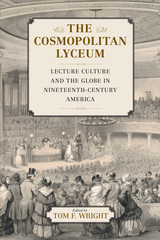
From the 1830s to the 1900s, a circuit of lecture halls known as the “lyceum movement” flourished across the United States. At its peak, up to a million people a week regularly attended talks in local venues, captivated by the words of visiting orators who spoke on an extensive range of topics. The movement was a major intellectual and cultural force of this nation-building period, forming the creative environment of writers and public figures such as Frederic Douglass, Ralph Waldo Emerson, Anna Dickinson, and Mark Twain.
The phenomenon of the lyceum has commonly been characterized as inward looking and nationalistic. Yet as this collection of essays reveals, nineteenth-century audiences were fascinated by information from around the globe, and lecturers frequently spoke to their fellow Americans of their connection to the world beyond the nation and helped them understand “exotic” ways of life. Never simple in its engagement with cosmopolitan ideas, the lyceum provided a powerful public encounter with international currents and crosscurrents, foreshadowing the problems and paradoxes that continue to resonate in our globalized world.
This book offers a major reassessment of this important cultural phenomenon, bringing together diverse scholars from history, rhetoric, and literary studies. The twelve essays use a range of approaches, cover a wide chronological timespan, and discuss a variety of performers both famous and obscure. In addition to the volume editor, contributors include Robert Arbour, Thomas Augst, Susan Branson, Virginia Garnett, Peter Gibian, Sara Lampert, Angela Ray, Evan Roberts, Paul Stob, Mary Zboray, and Ronald Zboray.
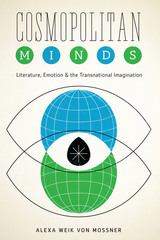
During World War II and the early Cold War period, factors such as race, gender, sexual orientation, or class made a number of American writers feel marginalized in U.S. society. Cosmopolitan Minds focuses on a core of transnational writers—Kay Boyle, Pearl S. Buck, William Gardner Smith, Richard Wright, and Paul Bowles—who found themselves prompted to seek experiences outside of their home country, experiences that profoundly changed their self-understanding and creative imagination as they encountered alternative points of views and cultural practices in Europe, Asia, and Africa.
Alexa Weik von Mossner offers a new perspective on the affective underpinnings of critical and reflexive cosmopolitanism by drawing on theories of emotion and literary imagination from cognitive psychology, philosophy, and cognitive literary studies. She analyzes how physical dislocation, and the sometimes violent shifts in understanding that result from our affective encounters with others, led Boyle, Buck, Smith, Wright, and Bowles to develop new, cosmopolitan solidarities across national, ethnic, and religious boundaries. She also shows how, in their literary texts, these writers employed strategic empathy to provoke strong emotions such as love, sympathy, compassion, fear, anger, guilt, shame, and disgust in their readers in order to challenge their parochial worldviews and practices. Reading these texts as emotionally powerful indictments of institutionalized racism and national violence inside and outside of the United States, Weik von Mossner demonstrates that our emotional engagements with others—real and imagined—are crucially important for the development of transnational and cosmopolitan imaginations.

Cosmopolitan Publics focuses on China's "cosmopolitans," Western-educated intellectuals who returned to Shanghai in the late 1920s to publish in English and who, ultimately, became both cultural translators and citizens of the wider world. Shuang Shen highlights their work in publications such as The China Critic and T'ien Hsia, providing readers with a broader understanding of the role and function of cultural mixing, translation, and multilingualism in China's cultural modernity.
Decades later, as nationalist biases and political restrictions emerged within China, the influence of the cosmopolitans was neglected and the significance of cosmopolitan practice was underplayed. Shen's encompassing study revisits and presents the experience of Chinese modernity as far more heterogeneous, emergent, and transnational than it has been characterized until now.

Building on many of the topics in his highly acclaimed earlier work, these essays treat a number of contentious issues, many of them deeply embedded in America's past and present political polarization. Essays include "Amalgamation and Hypodescent," "Enough Already: Universities Do Not Need More Christianity," "Cultural Relativism," "Why Are Jews Preeminent in Science and Scholarship: The Veblen Thesis Reconsidered," and "The One Drop Rule and the One Hate Rule." Hollinger is at his best in his judicious approach to America's controversial history of race, ethnicity, and religion, and he offers his own thoughtful prescriptions as Americans and others throughout the world struggle with the pressing questions of identity and solidarity.

Originally published in French in seven volumes, Cosmopolitics investigates the role and authority of the sciences in modern societies and challenges their claims to objectivity, rationality, and truth. Cosmopolitics II includes the first English-language translations of the last four books: Quantum Mechanics: The End of the Dream, In the Name of the Arrow of Time: Prigogine’s Challenge, Life and Artifice: The Faces of Emergence, and The Curse of Tolerance.
Arguing for an “ecology of practices” in the sciences, Isabelle Stengers explores the discordant landscape of knowledge derived from modern science, seeking intellectual consistency among contradictory, confrontational, and mutually exclusive philosophical ambitions and approaches. For Stengers, science is a constructive enterprise, a diverse, interdependent, and highly contingent system that does not simply discover preexisting truths but, through specific practices and processes, helps shape them.
Stengers concludes this philosophical inquiry with a forceful critique of tolerance; it is a fundamentally condescending attitude, she contends, that prevents those worldviews that challenge dominant explanatory systems from being taken seriously. Instead of tolerance, she proposes a “cosmopolitics” that rejects politics as a universal category and allows modern scientific practices to peacefully coexist with other forms of knowledge.
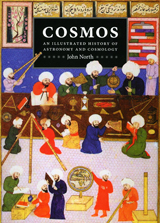
Organizing his history chronologically, North begins by examining Paleolithic cave drawings that clearly chart the phases of the moon. He then investigates scientific practices in the early civilizations of Egypt, Greece, China, and the Americas (among others), whose inhabitants developed sophisticated methods to record the movements of the planets and stars. Trade routes and religious movements, North notes, brought these ancient styles of scientific thinking to the attention of later astronomers, whose own theories—such as Copernicus’ planetary theory—led to the Scientific Revolution.
The work of master astronomers, including Ptolemy, Galileo, Kepler, and Newton, is described in detail, as are modern-day developments in astrophysics, such as the advent of radio astronomy, the brilliant innovations of Einstein, and the many recent discoveries brought about with the help of the Hubble telescope. This new edition brings North’s seminal book right up to the present day, as North takes a closer look at last year’s reclassification of Pluto as a “dwarf” planet and gives a thorough overview of current research.
With more than two hundred illustrations and a comprehensive bibliography, Cosmos is the definitive history of astronomy and cosmology. It is sure to find an eager audience among historians of science and astronomers alike.

In a volume that represents the culmination of his life’s work in considering the relationship between culture and landscape, eminent scholar Yi-Fu Tuan argues that “cosmos” and “hearth” are two scales that anchor what it means to be fully and happily human. Illustrating this contention with examples from both his native China and his home of the past forty years, the United States, Tuan proposes a revised conception of culture, one thoroughly grounded in one’s own society but also embracing curiosity about the world. Optimistic and deeply human, this important volume lays out a path to being “at home in the cosmos.”
Hardcover:In this moving meditation on the difficult choices facing humanity in the next millennium, celebrated scholar Yi-Fu Tuan reaffirms his faith in the value of a cosmopolitan worldview. In a volume that represents the culmination of his life's work in considering the relationship between culture and landscape, Tuan argues that “cosmos” and “hearth” are two scales that anchor what it means to be fully and happily human. Hearth is our house and neighborhood, family and kinfolk, habit and custom. Cosmos, by contrast, is the larger reality-world, civilization, and humankind. Tuan addresses the extraordinary revival of interest in the hearth in recent decades, examining both the positive and negative effects of this renewed concern. Among the beneficent outcomes has been a revival of ethnic culture and sense of place. Negative repercussions abound, however, manifested as an upsurge in superstition, excessive pride in ancestry and custom, and a constricted worldview that when taken together can inflame local passions, leading at times to violent conflict-from riots in American cities to wars in the Balkans. In Cosmos and Hearth, Tuan takes the position that we need to embrace both the sublime and the humble, drawing what is valuable from each. Illustrating the importance of both cosmos and hearth with examples from his country of birth, China, and from his home of the past forty years, the United States, Tuan proposes a revised conception of culture, the “cosmopolitan hearth,” that has the coziness but not the narrowness and bigotry of the traditional hearth. Tuan encourages not only being thoroughly grounded in one’s own culture but also the embracing of curiosity about the world. Optimistic and deeply human, Cosmos and Hearth lays out a path to being “at home in the cosmos.” Born in China and educated in Australia, the Philippines, England, and the United States, Yi-Fu Tuan is professor of geography at the University of Wisconsin, Madison, and the author of Space and Place: The Perspective of Experience (Minnesota, 1977), Landscapes of Fear (Minnesota, 1982), The Good Life (1986), and Passing Strange and Wonderful: Aesthetics, Nature, and Culture (1993). Excerpt: “Thinking yields a twofold gain: although it isolates us from our immediate group it can link us both seriously and playfully to the cosmos-to strangers in other places and times; and it enables us to accept a human condition that we have always been tempted by fear and anxiety to deny, namely, the impermanence of our state wherever we are, our ultimate homelessness. A cosmopolite is one who considers the gain greater than the loss. Having seen something of the splendid spaces, he or she will not want to return, permanently, to the ambiguous safeness of the hearth.”
Thomas C. Moser, Jr. explores the fascinating body of medieval Latin erotic poetry found in English manuscripts. His study describes the intellectual and social context from which the great erotic songs of the twelfth century emerged, and examines a variety of erotic poems, from school exercises to the magnificent lyrics found in Arundel 384. He also illuminates the influence of neoplatonic philosophy on this poetry, explicating key neoplatonic texts and applying that analysis in close readings of erotic lyrics from the same period and milieu.
A Cosmos of Desire will interest scholars of medieval literature as well as specialists in Latin poetry and philosophy. Students of Middle English literature will find that it fills an important gap in our understanding of English intellectual life between the twelfth and the fourteenth century. All Latin prose and poetry is translated, some works for the first time, and the book is generously illustrated with photographs of the manuscripts discussed.
Thomas C. Moser, Jr. is Associate Professor of English at the University of Maryland, College Park.
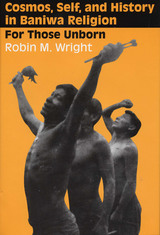
The Baniwa Indians of the Northwest Amazon have engaged in millenarian movements since at least the middle of the nineteenth century. The defining characteristic of these movements is usually a prophecy of the end of this present world and the restoration of the primordial, utopian world of creation. This prophetic message, delivered by powerful shamans, has its roots in Baniwa myths of origin and creation.
In this ethnography of Baniwa religion, Robin M. Wright explores the myths of creation and how they have been embodied in religious movements and social action—particularly in a widespread conversion to evangelical Christianity. He opens with a discussion of cosmogony, cosmology, and shamanism, and then goes on to explain how Baniwa origin myths have played an active role in shaping both personal and community identity and history. He also explores the concepts of death and eschatology and shows how the mythology of destruction and renewal in Baniwa religion has made the Baniwa people receptive to both Catholic and Protestant missionaries.

An examination of male screen sex appeal and the ways that race, ethnicity, and national origin combine with performance tools and film and television style to aid or inhibit actors’ circulation on an increasingly global stage.
Sex appeal is complicated, especially for screen actors. Looking good is not enough. Charisma and charm have to register when the camera rolls. And sexiness has to travel. Today’s heartthrobs are expected to raise temperatures all around the world.
Cosmosexuals theorizes male sex appeal as a form of capital in an age of international stardom. Screen scholar Mark Gallagher assembles a diverse cast—Idris Elba, Pedro Pascal, Simu Liu, Ryan Gosling, and more—analyzing how each actor uses his appearance, voice, and movement to perform in ways that viewers across cultural divides register as sexually appealing. Cosmosexuals also explores the intersection of global sex appeal and exoticism in historical and contemporary contexts—from the malleable racial identities of Omar Sharif and Conrad Veidt to Mads Mikkelsen’s “accented whiteness”—and assesses the barriers that confine nonwhite actors, in spite of their talent or celebrity. Far more than handsome faces and chiseled abs, male sex symbols emerge as laborers subject to disciplinary regimes steeped in patriarchy, racism, and structural inequity. As such, they have much to tell us about the economies of taste at work in the construction of screen masculinity and the terms of human desire.
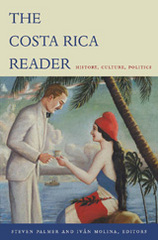
This essential introduction to Costa Rica includes more than fifty texts related to the country’s history, culture, politics, and natural environment. Most of these newspaper accounts, histories, petitions, memoirs, poems, and essays are written by Costa Ricans. Many appear here in English for the first time. The authors are men and women, young and old, scholars, farmers, workers, and activists. The Costa Rica Reader presents a panoply of voices: eloquent working-class raconteurs from San José’s poorest barrios, English-speaking Afro-Antilleans of the Limón province, Nicaraguan immigrants, factory workers, dissident members of the intelligentsia, and indigenous people struggling to preserve their culture. With more than forty images, the collection showcases sculptures, photographs, maps, cartoons, and fliers. From the time before the arrival of the Spanish, through the rise of the coffee plantations and the Civil War of 1948, up to participation in today’s globalized world, Costa Rica’s remarkable history comes alive. The Costa Rica Reader is a necessary resource for scholars, students, and travelers alike.
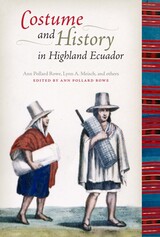
The traditional costumes worn by people in the Andes—women's woolen skirts, men's ponchos, woven belts, and white felt hats—instantly identify them as natives of the region and serve as revealing markers of ethnicity, social class, gender, age, and so on. Because costume expresses so much, scholars study it to learn how the indigenous people of the Andes have identified themselves over time, as well as how others have identified and influenced them.
Costume and History in Highland Ecuador assembles for the first time for any Andean country the evidence for indigenous costume from the entire chronological range of prehistory and history. The contributors glean a remarkable amount of information from pre-Hispanic ceramics and textile tools, archaeological textiles from the Inca empire in Peru, written accounts from the colonial period, nineteenth-century European-style pictorial representations, and twentieth-century textiles in museum collections. Their findings reveal that several garments introduced by the Incas, including men's tunics and women's wrapped dresses, shawls, and belts, had a remarkable longevity. They also demonstrate that the hybrid poncho from Chile and the rebozo from Mexico diffused in South America during the colonial period, and that the development of the rebozo in particular was more interesting and complex than has previously been suggested. The adoption of Spanish garments such as the pollera (skirt) and man's shirt were also less straightforward and of more recent vintage than might be expected.
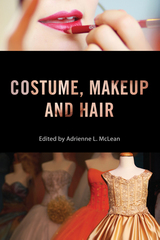
From the acclaimed Behind the Silver Screen series, Costume, Makeup, and Hair charts the development of these three crafts in the American film industry from the 1890s to the present. Each chapter examines a different era in film history, revealing how the arts of cinematic costume, makeup, and hair, have continually adapted to new conditions, making the transitions from stage to screen, from monochrome to color, and from analog to digital. Together, the book’s contributors give us a remarkable glimpse into how these crafts foster creative collaboration and improvisation, often fashioning striking looks and ingenious effects out of limited materials.
Costume, Makeup, and Hair not only considers these crafts in relation to a wide range of film genres, from sci-fi spectacles to period dramas, but also examines the role they have played in the larger marketplace for fashion and beauty products. Drawing on rare archival materials and lavish color illustrations, this volume provides readers with both a groundbreaking history of film industry labor and an appreciation of cinematic costume, makeup, and hairstyling as distinct art forms.

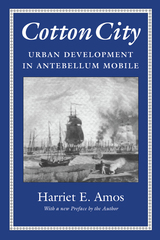
The exploration of the North-South relationship and the growth of of antebellum Mobile.
Cotton City offers a compelling exploration of Mobile, Alabama’s transformation into a thriving urban center during the antebellum period. Historian Harriet E. Amos examines how economic ambition, civic planning, and the cotton trade shaped the city’s development between 1819 and 1861. Through detailed archival research, Amos reveals how Mobile’s leaders sought to modernize infrastructure, expand commerce, and assert the city’s regional importance—all while navigating the tensions of slavery, class, and Southern identity.
This richly contextualized study highlights the interplay between urban growth and the broader forces of the Southern economy, making Cotton City a vital contribution to the histories of the American South, urbanization, and antebellum society.
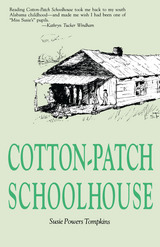
Step back into 1920s Alabama, where grit, laughter, and the red clay roads of the Black Belt shape one young woman’s unforgettable first year of teaching
Cotton-Patch Schoolhouse follows 18‑year‑old Susie Powers Tompkins as she takes on a one-room school with eight children, zero experience, and a Model T that’s always one mud puddle away from disaster. With warmth and wit, she discovers that the real curriculum is written not in textbooks—but in the faces, fears, and fierce hopes of her students.
In a world of cotton fields, nature walks, homemade art supplies, and potbellied stoves, Susie learns that teaching is as much about heart as it is about lessons. She navigates runaway love affairs, surprise pets (including an opinionated mouse), the hardships of rural poverty, and the extraordinary generosity of neighbors who have little but give much.
As contemporary readers grapple with educational inequities, rural depopulation, and renewed conversations about community, Cotton-Patch Schoolhouse feels strikingly fresh. It reminds us that creativity blooms under constraint, that relationships matter more than resources, and that small schools can make a big difference. Tompkins' memoir will delight lovers of Southern history, educators, memoir readers, rural studies enthusiasts, and anyone who enjoys heartfelt stories of resilience, community, and the transformative power of teaching
One member downplayed the significance of this secret legislative body in 1849 as “nothing but a debating School.” On the contrary, a typical meeting included decisions regarding irrigation, fencing, and adobe housing, after which the group sang a song written by Parley P. Pratt: “Come ye sons of doubt and wonder; Indian, Moslem, Greek or Jew; … Be to all a friend and brother; Peace on Earth, good will to men.” Two weeks later, the council called for “blood to flow” to enforce its laws.
As the nineteenth century waned and the LDS Church moved toward the American mainstream, ending its emphasis on the imminent End of Days, there was no longer a need for a Church-managed municipal group destined to become the millennial world government. The council became irrelevant but survives today as a historical artifact available in fragmented documentary pieces which are presented here for the first time.

Count Those Buzzards! Stamp Those Grey Mules! is Kathryn Tucker Windham’s warm and witty look back at her Alabama childhood. Through a series of vivid, humorous stories, she captures the people, places, and traditions that shaped her early life in a small Southern town. Blending personal memories with the charm of regional folklore, Windham offers a nostalgic portrait of family, community, and the everyday moments that become lasting legends. It’s a lively, affectionate celebration of Southern storytelling and the enduring power of memory.
How to remake the world with neurodivergence at its heart
What if we embraced neurodivergent ways of being not as deviations to be corrected but as vital ways of inhabiting the world? What new realities might emerge? Bringing a much-needed humanistic perspective to the study of autism and other forms of neurodivergence, Counter-cartographies offers a bold reimagining of neurological difference, moving beyond rigid diagnostic frameworks to uncover more expansive, generative modes of existence.
Engaging the work of Fernand Deligny to trace how modern taxonomies of neurodivergence have hardened over time, Leon J. Hilton questions how these categories might instead serve as tools for remapping the world with neurodivergence at its center. At the heart of Counter-cartographies is an exploration of performance and performativity that reveals how the norm of neurotypical reality is continually reinforced through acts of doing, redoing, and undoing.
Charting the historical shift away from “mind” and toward “brain” and moving fluidly across disciplines—from digital art and documentary cinema to cybernetics and radical mental health movements—Hilton illuminates the deep interconnections between performance, perception, and the historical construction of the “neurotypical.” Through close readings of works by William Pope.L, Mel Baggs, Wu Tsang, and others, Hilton also examines how neurodivergence has been represented, embodied, and materialized in contemporary art and media. Restless, engrossing, and persistently attuned to moments of rupture when the neurotypical order falters, Counter-cartographies charts a path toward a more capacious, imaginative world.
Retail e-book files for this title are screen-reader friendly with images accompanied by short alt text and/or extended descriptions.
In the mid-twentieth century, far more evangelicals supported such “liberal” causes as peace, social justice, and environmental protection. Only gradually did the conservative evangelical faction win dominance, allying with the Republican Party of Ronald Reagan and, eventually, George W. Bush.
In Countercultural Conservatives Axel Schäfer traces the evolution of a diffuse and pluralistic movement into the political force of the New Christian Right. In forging its complex theological and political identity, evangelicalism did not simply reject the ideas of 1960s counterculture, Schäfer argues. For all their strict Biblicism and uncompromising morality, evangelicals absorbed and extended key aspects of the countercultural worldview.
Carefully examining evangelicalism’s internal dynamics, fissures, and coalitions, this book offers an intriguing reinterpretation of the most important development in American religion and politics since World War II.
In a bold reconsideration of the late sixties San Francisco counterculture movement, Counterculture Kaleidoscope takes a close look at the cultural and musical practices of that era. Addressing the conventional wisdom that the movement was grounded in rebellion and opposition, the book exposes two myths: first, that the counterculture was an organized social and political movement of progressives with a shared agenda who opposed the mainstream (dubbed "hippies"); and second, that the counterculture was an innocent entity hijacked by commercialism and transformed over time into a vehicle of so-called "hip consumerism."
Seeking an alternative to the now common narrative, Nadya Zimmerman examines primary source material including music, artwork, popular literature, personal narratives, and firsthand historical accounts. She reveals that the San Francisco counterculture wasn't interested in commitments to causes and made no association with divisive issues---that it embraced everything in general and nothing in particular.
"Astute and accessible, Counterculture Kaleidoscope provides thought-provoking insights into the historical, cultural and social context of the San Francisco counter-culture and its music scene, including discussions of Vietnam and student protest, the Haight-Ashbury Diggers, the Grateful Dead, Led Zeppelin, Altamont, and Charlie Manson. A must for students and scholars of socio-musical activity and for all of us to whom music matters."
---Sheila Whiteley, author of The Space Between the Notes: Rock and the Counter-Culture and Too Much Too Young: Popular Music, Age and Gender
"The hippie counterculture has never garnered the scholarly attention accorded the new left and the black freedom struggle. Overviews of the period ritualistically mention it as part and parcel of that apparently incandescent era---the Sixties---but rarely capture its distinctiveness. Counterculture Kaleidoscope is a timely and provocative intervention in Sixties scholarship that significantly deepens our understanding of this important but understudied phenomenon."
—Alice Echols, Associate Professor, University of Southern California, and author of Scars of Sweet Paradise: The Life and Times of Janis Joplin
Through ethnographic fieldwork conducted annually in Cauca from 1995 through 2002, Gow compares the development plans of the three communities, looking at both the planning processes and the plans themselves. In so doing, he demonstrates that there is no single indigenous approach to development and modernity. He describes differences in how each community defined and employed the concept of culture, how they connected a concern with culture to economic and political reconstruction, and how they sought to assert their own priorities while engaging with the existing development resources at their disposal. Ultimately, Gow argues that the moral vision advanced by the indigenous movement, combined with the growing importance attached to human rights, offers a fruitful way to think about development: less as a process of integration into a rigidly defined modernity than as a critical modernity based on a radical politics of inclusive citizenship.
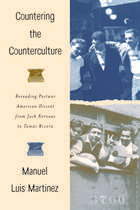
Rebelling against bourgeois vacuity and taking their countercultural critique on the road, the Beat writers and artists have long symbolized a spirit of freedom and radical democracy. Manuel Martinez offers an eye-opening challenge to this characterization of the Beats, juxtaposing them against Chicano nationalists like Raul Salinas, Jose Montoya, Luis Valdez, and Oscar Acosta and Mexican migrant writers in the United States, like Tomas Rivera and Ernesto Galarza.
In an innovative rereading of American radical politics and culture of the 1950s and 1960s, Martinez uncovers reactionary, neoromantic, and sometimes racist strains in the Beats’ vision of freedom, and he brings to the fore the complex stances of Latinos on participant democracy and progressive culture. He analyzes the ways that Beats, Chicanos, and migrant writers conceived of and articulated social and political perspectives. He contends that both the Beats’ extreme individualism and the Chicano nationalists’ narrow vision of citizenship are betrayals of the democratic ideal, but that the migrant writers presented a distinctly radical and inclusive vision of democracy that was truly countercultural.
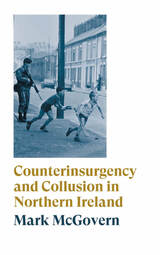
Here Mark McGovern turns back the clock to the late 1980s and early ‘90s—the ‘endgame’ of the Troubles and a period defined by a rash of state-sanctioned paramilitary killings. Drawing on previously unpublished evidence, and original testimony of victims’ families and eyewitnesses, McGovern examines several dozen killings of republicans and their families and communities that took place in the Mid-Ulster area. Placing these accounts within a wider critical analysis of the nature of British counterinsurgency and the state use of agents and informers, McGovern paints a damning picture of covert, deniable, and unlawful violence.

Andrew Mumford challenges the notion of a “special relationship” between the United States and United Kingdom in diplomatic and military affairs, the most vaunted and, he says, exaggerated of associations in the post-1945 era. Though they are allies to be sure, national self-interest and domestic politics have often undercut their relationship.
This is the first book to combine a history of US-UK interaction during major counterinsurgency campaigns since 1945, from Palestine to Iraq and Afghanistan, with a critical examination of the so called special relationship that has been tested during these difficult, protracted, and costly conflicts. Mumford’s assessment of each nation’s internal political discussions and diplomatic exchanges reveals that in actuality there is only a thin layer of specialness at work in the wars that shaped the postcolonial balance of power, the fight against Communism in the Cold War, and the twenty-first-century “war on terror.” This book is especially timely given that the US-UK relationship is once again under scrutiny because of the Trump administration’s “America First” rhetoric and Britain's changing international relations as a result of Brexit. Counterinsurgency Wars and the Anglo-American Alliance will interest scholars and students of history, international relations, and security studies as well as policy practitioners in the field.
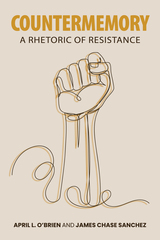
Investigates the interdisciplinary dimensions of countermemory through a rhetorical lens
Countermemory: A Rhetoric of Resistance by April L. O’Brien and James Chase Sanchez is a groundbreaking monograph that explores the concept of countermemory from an interdisciplinary and rhetorical perspective. The authors define “countermemory” as remembrance that resituates often overlooked or erased narratives of marginalized groups by positioning these memories as equally significant to dominant historical narratives. This work investigates how countermemories emerge in response to public memories, highlighting the tensions and resistance that arise when marginalized voices challenge mainstream historical accounts.
Through a mixed-methodological approach—incorporating site-based analysis, participant observation, textual analysis, and historiography—O’Brien and Sanchez examine countermemory in both physical and digital spaces. From memorial sites and museums to music videos, TV shows, and digital maps, they reveal the various ways countermemory operates and persists. The authors focus particularly on countermemory in the American South, centering on the experiences and histories of Black, Latinx, and Indigenous communities.
Countermemory is essential reading for scholars and students of rhetoric and public memory. The book also offers rich insights to readers who are passionate about addressing issues of racial inequality, people interested in examining their own experiences and the role they can play in promoting social change, and those interested in exploring the ways in which history is constructed and presented, and how marginalized perspectives are often excluded or distorted.
Weaving together nearly 100 stories of non-migrants, returnees, and repeat migrants from Ethiopia, Girma advances a theory of migra-emotions, emotions specific to migration, to understand decisions and experiences, such as the imaginary of home and the lived reality of alienation, disaffection abroad, and feelings of duty to one’s homeland.
Looking beyond the meanings of migration or processes of integration, Girma explores the emotional subtext of migration aspirations. In doing so, Counterstreams of Migration complicates conventional understandings of migration and provides a more complete picture of migrant stories.


Chicago is revered as a musical breeding ground, having launched major figures like blues legend Muddy Waters, gospel soul icon Mavis Staples, hip-hop firebrand Kanye West, and the jazz-rock band that shares its name with the city. Far less known, however, is the vital role Chicago played in the rise of prewar country music, the folk revival of the 1950s and 1960s, and the contemporary offspring of those scenes.
In Country and Midwestern, veteran journalist Mark Guarino tells the epic century-long story of Chicago’s influence on sounds typically associated with regions further south. Drawing on hundreds of interviews and deep archival research, Guarino tells a forgotten story of music, migration, and the ways that rural culture infiltrated urban communities through the radio, the automobile, and the railroad. The Midwest’s biggest city was the place where rural transplants could reinvent themselves and shape their music for the new commercial possibilities the city offered. Years before Nashville emerged as the commercial and spiritual center of country music, major record labels made Chicago their home and recorded legendary figures like Bill Monroe, The Carter Family, and Gene Autry. The National Barn Dance—broadcast from the city’s South Loop starting in 1924—flourished for two decades as the premier country radio show before the Grand Ole Opry. Guarino chronicles the makeshift niche scenes like “Hillbilly Heaven” in Uptown, where thousands of relocated Southerners created their own hardscrabble honky-tonk subculture, as well as the 1960s rise of the Old Town School of Folk Music, which eventually brought national attention to local luminaries like John Prine and Steve Goodman. The story continues through the end of the twentieth century and into the present day, where artists like Jon Langford, The Handsome Family, and Wilco meld contemporary experimentation with country traditions.
Featuring a foreword from Grammy-nominated singer-songwriter Robbie Fulks and casting a cross-genre net that stretches from Bob Dylan to punk rock, Country and Midwestern rediscovers a history as sprawling as the Windy City—celebrating the creative spirit that modernized American folk idioms, the colorful characters who took them into new terrain, and the music itself, which is still kicking down doors even today.
Winner, 2023 J. G. Ragsdale Book Award from the Arkansas Historical Association
Because Johnny Cash cut his classic singles at Sun Records in Memphis and reigned for years as country royalty from his Nashville-area mansion, people tend to associate the Man in Black with Tennessee. But some of Cash’s best songs—including classics like “Pickin’ Time,” “Big River,” and “Five Feet High and Rising”—sprang from his youth in the sweltering cotton fields of northeastern Arkansas.
In Country Boy, Colin Woodward combines biography, history, and music criticism to illustrate how Cash’s experiences in Arkansas shaped his life and work. The grip of the Great Depression on Arkansas’s small farmers, the comforts and tragedies of family, and a bedrock of faith all lent his music the power and authenticity that so appealed to millions. Though Cash left Arkansas as an eighteen-year-old, he often returned to his home state, where he played some of his most memorable and personal concerts. Drawing upon the country legend’s songs and writings, as well as the accounts of family, fellow musicians, and chroniclers, Woodward reveals how the profound sincerity and empathy so central to Cash’s music depended on his maintaining a deep connection to his native Arkansas—a place that never left his soul.
Country music evokes a simple, agrarian past, with images of open land and pickup trucks. While some might think of the genre as a repository of nostalgia, popular because it preserves and reveres traditional values, Jeremy Hill argues that country music has found such expansive success because its songs and its people have forcefully addressed social and cultural issues as well as geographic change. Hill demonstrates how the genre and its fans developed a flexible idea of “country,” beyond their rural roots, and how this flexibility allowed fans and music to “come to town,” to move into and within urban spaces, while retaining a country “character.”
To understand how the genre has become the far-reaching commercial phenomenon that it is today, Hill explores how various players within the country music fold have grappled with the notion of place. He shows both how the industry has transformed the city of Nashville and how country music—through song lyrics, imagery associated with the music, and branding—has reshaped ideas about the American landscape and character. As the genre underwent significant change in the last decades of the twentieth century, those who sought to explain its new styles and new locations relied on a traditional theme: “You can take the boy out of the country, but you can't take the country out of the boy.” Hill demonstrates how this idea—that you can still be “country” while no longer living in a rural place—has been used to expand country's commercial appeal and establish a permanent home in the urban space of Nashville.


Based on a thorough search of hundreds of primary sources ranging from chronicles of military expeditions to field reports by early naturalists, first-person accounts by fur traders and hunters to up-to-date county checklists, A Country So Full of Game examines the dramatic encounters of humans with elk, black bears, passenger pigeons, bobcats, prairie-chickens, otters, and many more. Each chapter discusses the animal's status and distribution when explorers first arrived in Iowa, how it was hunted or trapped, how this exploitation affected its population, and what its current status is both in Iowa and nationally. Enhanced by Mark Müller's distinctive drawings, commissioned for this book, the anecdotes evoke a sense of loss and wonder at the magic abundance of Iowa's wildlife.
Iowa has been changed more than, perhaps, any other state. We can mourn the disappearance of the bison and mountain lion while we marvel at the recent success of the wild turkey and white-tailed deer. Listening to James Dinsmore tell the story of wildlife in Iowa can open a window onto the future as other areas of our planet are increasingly altered by humans. A Country So Full of Game will allow all naturalists, both amateur and professional, hunter and biologist, to appreciate and learn from Iowa's diverse wild heritage.
A County of Culture demonstrates how changes in educational policies have exerted considerable influence on social life in Zouping, from the macro level of nation building and state formation to the micro level of individual careers. It also shows that the rural population has been far from being a passive object of reform, and that it has been extremely difficult for educational reformers to achieve their goals as a result of the social, economic, and mental realities of China's villages. The fate of educational reforms has thus been decided in the tension between two poles: the visions of educational planners and reformers on the one hand, and the expectations of the rural population on the other.
Not only pertinent to specialists of Chinese education, this book will also be useful to anyone interested in state-society relations in modern China and to students of comparative education and rural development.
Stig Thøgersen is Associate Professor of Chinese Language and Society, University of Aarhus.

On January 17, 1979, driven by new information that some of the worst criminals in the state's penitentiaries were about to be released (and fears that James Earl Ray might be one of them), a small bipartisan group chose to take charge. Senior Democratic leaders, friends of the sitting governor, together with the Republican governor-elect Lamar Alexander (now US Senator from Tennessee), agreed to oust Blanton from office before another night fell. It was a maneuver unique in American political history.
Expanded edition, with a newly discovered account of the events by Senator Lamar Alexander:
"In December 2015 something unexpected happened. Keel [Hunt] delivered to my Nashville office a brown three-ring binder. He had only recently discovered it in a box that had been in storage for thirty years." —Senator Lamar Alexander
This binder contained the forgotten typescript, written in 1985, of Alexander's recollections of the events leading up to his early inauguration on January 17, 1979. In this expanded edition of Coup, the Senator's 22,000-word text has been added as a lost footnote to Hunt's definitive account.
From the foreword by John L. Seigenthaler:
"The individual stories of those government officials involved in the coup—each account unique, but all of them intersecting—were scattered like disconnected pieces of a jigsaw puzzle on the table of history until the author conceived this book. Perhaps because it happened so quickly, and without major disagreement, protest, or dissent, this truly historic moment has been buried in the public mind. In unearthing the drama in gripping detail, Keel Hunt assures that the 'dark day' will be remembered as a bright one in which conflicted politicians came together in the public interest."
Ciudad Juárez has recently become infamous for its murder rate, which topped 3,000 in 2010 as competing drug cartels grew increasingly violent and the military responded with violence as well. Despite the atmosphere of intimidation by troops, police, and organized criminals, women have led the way in civil society activism, spurring the Juárez Resistance and forging powerful alliances with anti-militarization activists.
An in-depth examination of la Resistencia Juarense, Courage, Resistance, and Women in Ciudad Juárez draws on ethnographic research to analyze the resistance’s focus on violence against women, as well as its clash with the war against drugs championed by Mexican President Felipe Calderón with the support of the United States. Through grounded insights, the authors trace the transformation of hidden discourses into public discourses that openly challenge the militarized border regimes. The authors also explore the advocacy carried on by social media, faith-based organizations, and peace-and-justice activist Javier Sicilia while Calderón faced U.S. political schisms over the role of border trade in this global manufacturing site.
Bringing to light on-the-ground strategies as well as current theories from the fields of sociology, political anthropology, and human rights, this illuminating study is particularly significant because of its emphasis on the role of women in local and transnational attempts to extinguish a hot zone. As they overcome intimidation to become game-changing activists, the figures featured in Courage, Resistance, and Women in Ciudad Juárez offer the possibility of peace and justice in the wake of seemingly irreconcilable conflict.
Mallon recounts the land usurpation Nicolás Ailío endured in the first decades of the twentieth century and the community’s ongoing struggle for restitution. Facing extreme poverty and inspired by the agrarian mobilizations of the 1960s, some community members participated in the agrarian reform under the government of socialist president Salvador Allende. With the military coup of 1973, they suffered repression and desperate impoverishment. Out of this turbulent period the Mapuche revitalization movement was born. What began as an effort to protest the privatization of community lands under the military dictatorship evolved into a broad movement for cultural and political recognition that continues to the present day. By providing the historical and local context for the emergence of the Mapuche revitalization movement, Courage Tastes of Blood offers a distinctive perspective on the evolution of Chilean democracy and its rupture with the military coup of 1973.
Courbet's Realism is clearly a major contribution to the highly active field of Courbet studies. . . . But to contribute here and now is necessarily also to contribute to central debates about art history itself, and so the book is also—I hesitate to say 'more importantly,' because of the way object and method are woven together in it—a major contribution to current attempts to rethink the foundations and objects of art history. . . . It will not be an easy book to come to terms with; for all its engagement with contemporary literary theory and related developments, it is not an application of anything, and its deeply thought-through arguments will not fall easily in line with the emerging shapes of the various 'new art histories' that tap many of the same theoretical resources. At this moment, there may be nothing more valuable than such a work."—Stephen Melville, Art History
"Kaufmann throws considerable light on one of the more neglected and least understood periods in art history."—Philadelphia Inquirer
"A wonderful book which does justice both to a formal analysis of the art and to an explanation of broader political and economic forces at work."—Virginia Quarterly Review
"Important and stimulating, Kaufmann's study examines the cultural legacy of a region too little known and understood."—Choice
"Peaks of the creative heritage which [Kaufmann] describes reserve their message—and their surprises—for those who visit them in situ. But invest in Kaufmann's volume before you go."—R. J. W. Evans, New York Review of Books

Fascinated by the Tribunal’s rich complexities, journalist Thierry Cruvellier came back day after day to watch the proceedings, spending more time there than any other outside observer. Gradually he gained the confidence of the victims, defendants, lawyers, and judges. Drawing on interviews with these protagonists and his close observations of their interactions, Cruvellier takes readers inside the courtroom to witness the motivations, mechanisms, and manipulations of justice as it unfolded on the stage of high-stakes, global politics. It is this ground-level view that makes his account so valuable—and so absorbing. A must-read for those who want to understand the dynamics of international criminal tribunals, Court of Remorse reveals both the possibilities and the challenges of prosecuting human rights violations.
Best Books for General Audiences, selected by the American Association for School Libraries and the Public Library Association
Best Books for High Schools, selected by the American Association for School Libraries
A Court That Shaped America traces the flesh-and-blood courtroom scenes from the district's first cases in the early nineteenth century through the turn of the millennium. Historical figures—including Mormon leader Joseph Smith, inventor Thomas Edison, and author Mark Twain—as well as contemporary superstars like Michael Jackson and Oprah Winfrey have all had their day in the Northern Illinois court. Some were victorious; some came out scathed. This book examines these great trials and the people behind them to offer a unique look at Chicago and U.S. history.
As any reader of the Symposium knows, the ancient Greek philosopher Socrates conversed over lavish banquets, kept watch on who was eating too much fish, and imbibed liberally without ever getting drunk. In other words, James Davidson writes, he reflected the culture of ancient Greece in which he lived, a culture of passions and pleasures, of food, drink, and sex before—and in concert with—politics and principles. Athenians, the richest and most powerful of the Greeks, were as skilled at consuming as their playwrights were at devising tragedies. Weaving together Greek texts, critical theory, and witty anecdotes, this compelling and accessible study teaches the reader a great deal, not only about the banquets and temptations of ancient Athens, but also about how to read Greek comedy and history.

This study profoundly remaps the textbook narratives of gender bias, challenges modern prejudices prevalent in the literary history of Chinese drama, and reveals how theatrical conditions and writing styles shifted to accommodate courtesan performances. Utilizing a wide range of sources such as scripts, city guides, biographies, diaries, letters, wood-block illustrations, and paintings, this study distinguishes itself from earlier studies of Chinese courtesans by not thematizing courtesans for their allegorical values, but rather pinpointing their agency in shaping the features of Chinese theater and recognizing courtesans as a source of creativity and development in the medium. Xu’s focus on courtesan performance culture allows for fresh readings of canonical Chinese plays, opening up new ways of understanding the history of Chinese drama written by women, thus deviating from standard historiography based solely on the writings of men.

With its dignified courthouse set among shade trees and lawns dotted with monuments to prominent citizens and fallen veterans, the courthouse square remains the civic center in a majority of the county seats of Texas. Yet the squares themselves vary in form and layout, reflecting the different town-planning traditions that settlers brought from Europe, Mexico, and the United States. In fact, one way to trace settlement patterns and ethnic dispersion in Texas is by mapping the different types of courthouse squares.
This book offers the first complete inventory of Texas courthouse squares, drawn from extensive archival research and site visits to 139 of the 254 county seats. Robert Veselka classifies every existing plan by type and origin, including patterns and variants not previously identified. He also explores the social and symbolic functions of these plans as he discusses the historical and modern uses of the squares. He draws interesting new conclusions about why the courthouse square remains the hub of commercial and civic activity in the smaller county seats, when it has lost its prominence in others.
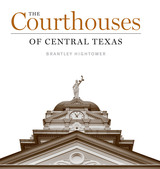
The county courthouse has long held a central place on the Texas landscape—literally, as the center of the town in which it is located, and figuratively, as the symbol of governmental authority. As a county’s most important public building, the courthouse makes an architectural statement about a community’s prosperity and aspirations—or the lack of them. Thus, a study of county courthouses tells a compelling story about how society’s relationships with public buildings and government have radically changed over the course of time, as well as how architectural tastes have evolved through the decades.
A first of its kind, The Courthouses of Central Texas offers an in-depth, comparative architectural survey of fifty county courthouses, which serve as a representative sample of larger trends at play throughout the rest of the state. Each courthouse is represented by a description, with information about date(s) of construction and architects, along with a historical photograph, a site plan of its orientation and courthouse square, and two- and sometimes three-dimensional drawings of its facade with modifications over time. Side-by-side drawings and plans also facilitate comparisons between courthouses. These consistently scaled and formatted architectural drawings, which Brantley Hightower spent years creating, allow for direct comparisons in ways never before possible. He also explains the courthouses’ formal development by placing them in their historical and social context, which illuminates the power and importance of these structures in the history of Texas, as well as their enduring relevance today.
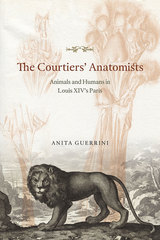
Through the stories of Duverney and Perrault, as well as those of Marin Cureau de la Chambre, Jean Pecquet, and Louis Gayant, The Courtiers' Anatomists explores the relationships between empiricism and theory, human and animal, as well as the origins of the natural history museum and the relationship between science and other cultural activities, including art, music, and literature.
A mesmerizing account of the role of public communication in the Anglo-American world, Courting the Abyss shows that liberty's earliest advocates recognized its fraternal relationship with wickedness and evil. While we understand freedom of expression to mean "anything goes," John Durham Peters asks why its advocates so often celebrate a sojourn in hell and the overcoming of suffering. He directs us to such well-known sources as the prose and poetry of John Milton and the political and philosophical theory of John Locke, Adam Smith, John Stuart Mill, and Oliver Wendell Holmes Jr., as well as lesser-known sources such as the theology of Paul of Tarsus. In various ways they all, he shows, envisioned an attitude of self-mastery or self-transcendence as a response to the inevitable dangers of free speech, a troubled legacy that continues to inform ruling norms about knowledge, ethical responsibility, and democracy today.
A world of gigabytes, undiminished religious passion, and relentless scientific discovery calls for a fresh account of liberty that recognizes its risk and its splendor. Instead of celebrating noxious doctrine as proof of society's robustness, Courting the Abyss invites us to rethink public communication today by looking more deeply into the unfathomable mystery of liberty and evil.
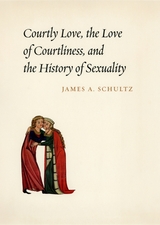
Courtly love, Schultz finds, was provoked not by the biological and intrinsic factors that play such a large role in our contemporary thinking about sexuality—sex difference or desire—but by extrinsic signs of class: bodies that were visibly noble and behaviors that represented exemplary courtliness. Individuals became “subjects” of courtly love only to the extent that their love took the shape of certain courtly roles such as singer, lady, or knight. They hoped not only for physical union but also for the social distinction that comes from realizing these roles to perfection. To an extraordinary extent, courtly love represented the love of courtliness—the eroticization of noble status and the courtly culture that celebrated noble power and refinement
Illuminates the legal engine behind colonial America’s market economy, revealing how law and commerce intertwined to sideline women's participation and lay the groundwork for industrial capitalism.
In Courts and Commerce, Deborah A. Rosen offers a fresh, incisive look at the economic and legal foundations of colonial New York. Drawing on a wide array of 18th-century sources—probate inventories, court records, petitions, and more—Rosen uncovers how law and commerce intertwined to shape a market economy long before the rise of industrial capitalism.
Rosen challenges the romanticized view of colonial America as a bastion of communal values. Instead, she reveals a society already driven by arm’s-length transactions and legal mechanisms that empowered men to expand their economic reach while systematically limiting women’s participation. Her analysis spans both urban and rural settings, highlighting regional contrasts and the gendered impact of legal structures.
This book pushes back against the idea that the nineteenth century marked a sudden economic transformation. Rosen shows that many of the legal and economic patterns associated with industrialization were already in motion a century earlier. Engaging and deeply researched, Courts and Commerce is essential reading for scholars of colonial history, legal and economic development, and gender studies. It reframes our understanding of early American life—and the roots of inequality in the modern economy.
Surveying Milton’s early pamphlets, divorce tracts, late political tracts, and major prose works in comparison with the writings and cases of some of Milton’s contemporaries—including George Herbert, John Donne, Ben Jonson, and John Bunyan—Chapman reveals the variety and nuance in Milton’s juridical toolkit and his subtle use of competing legal traditions in pursuit of justice.
Everyone got married in the 1950s, then moved to the suburbs to have the children of the soon-to-be-famous baby boom. For Americans who had survived the Great Depression and World War II, prosperous married life was a triumph. The unwed were objects of pity, scorn, even suspicion. And so in the 1950s, Eva Eldridge, no longer so young and marginally employed, was the perfect target for handsome Vick, who promised everything: storybook romance, marital respectability, and the lively social life she loved. When he disappeared not long after their honeymoon, she was devastated.
Eva hadn’t always been so vulnerable. Growing up pretty and popular in rural Oregon, she expected to marry young and live a life much like that of her parents, farming and rearing children. But then the United States threw its weight into World War II and as men headed to battle, the government started recruiting women to work in their places. Eva, like many other young women, found that life in the city with plenty of money, personal freedom, and lots of soldiers and sailors eager to pay court was more exhilarating than life down on the farm. After the war, she was ambivalent about getting married and settling down—at least until Vick arrived.
Refusing to believe her brand-new husband had abandoned her, Eva set about tracking down a man who, she now believed, was more damaged by wartime trauma than she had known. But instead of a wounded hero, she found a long string of women much like herself—hard-working, intelligent women who had loved and married Vick and now had no idea where—or even who—he was.
Drawing on a trove of some eight hundred letters and papers, Diane Simmons tells the story of Eva’s poignant struggle to get her dream husband back, as well as the stories of the women who had stood at the altar with Vick before and after her. Eva’s remarkable life illuminates women’s struggle for happiness at a time when marriage—and the perfect husband—meant everything.

At the center of an artistic milieu as vital and exciting as the Left Bank of Paris or Greenwich Village, Rosa and Miguel Covarrubias knew almost everyone in the limelight of the 1930s and 1940s—Langston Hughes, Carl Van Vechten, John Huston, Diego Rivera, and Frida Kahlo, to name just a few. As fascinating themselves as any of their friends, the couple together fostered a renaissance of interest in the history and traditional arts of Mexico's indigenous peoples, while amassing an extraordinary collection of art that ranged from pre-Hispanic Olmec and Aztec sculptures to the work of Diego Rivera.
Written by a long-time friend of Rosa, this book presents a sparkling account of the life and times of Rosa and Miguel. Adriana Williams begins with Miguel's birth in 1904 and follows the brilliant early flowering of his artistic career as a renowned caricaturist for Vanity Fair and the New Yorker magazines, his meeting and marriage with Rosa at the height of her New York dancing career, and their many years of professional collaboration on projects ranging from dance to anthropology to painting and art collecting to the development of museums to preserve Mexico's pre-Columbian heritage. Interviewing as many of their friends as possible, Williams fills her narrative with reminiscences that illuminate Miguel's multifaceted talents, Rosa's crucial collaboration in many of his projects, and their often tempestuous relationship.
In the rabbinic system, Hoffman argues, circumcision was neither a birth ritual nor the beginning of the human life cycle, but a rite of covenantal initiation into a male "life line." Although the evolution of the rite was shaped by rabbinic debates with early Christianity, the Rabbis shared with the church a view of blood as providing salvation. Hoffman examines the particular significance of circumcision blood, which, in addition to its salvific role, contrasted with menstrual blood to symbolize the gender dichotomy within the rabbinic system. His analysis of the Rabbis' views of circumcision and menstrual blood sheds light on the marginalization of women in rabbinic law. Differentiating official mores about gender from actual practice, Hoffman surveys women's spirituality within rabbinic society and examines the roles mothers played in their sons' circumcisions until the medieval period, when they were finally excluded.
Where were you born? Were you born at the Beth? Many thousands of Americans-Jewish and non-Jewish-were born at a hospital bearing the Star of David and named Beth Israel, Mount Sinai, or Montefiore. In the United States, health care has been bound closely to the religious impulse. Newark Beth Israel Hospital is a distinguished modern medical institution in New Jersey whose history opens a window on American health care, the immigrant experience, and urban life. Alan M. and Deborah A. Kraut tell the story of this important institution, illuminating the broader history of voluntary nonprofit hospitals created under religious auspices initially to serve poor immigrant communities. Like so many Jewish hospitals in the early half of the twentieth century, "the Beth" cared not only for its own community's poor and underprivileged, a responsibility grounded in the Jewish traditions of tzedakah ("justice") and tikkun olam ("to heal the world"), but for all Newarkers.
Since it first opened its doors in 1902, the Beth has been an engine of social change. Jewish women activists and immigrant physicians founded an institution with a nonsectarian admissions policy and a welcome mat for physicians and nurses seeking opportunity denied them by anti-Semitism elsewhere. Research, too, flourished at the Beth. Here dedicated medical detectives did path-breaking research on the Rh blood factor and pacemaker development. When economic shortfalls and the Great Depression threatened the Beth's existence, philanthropic contributions from prominent Newark Jews such as Louis Bamberger and Felix Fuld, the efforts of women volunteers, and, later, income from well-insured patients saved the institution that had become the pride of the Jewish community.
The Krauts tell the Beth Israel story against the backdrop of twentieth-century medical progress, Newark's tumultuous history, and the broader social and demographic changes altering the landscape of American cities. Today, the United States, in the midst of another great wave of immigration, once again faces the question of how to provide newcomers with culturally sensitive and economically accessible medical care. Covenant of Care will inform and inspire all those working to meet these demands, offering a compelling look at the creative ways that voluntary hospitals navigated similar challenges throughout the twentieth century.
In this revised and expanded edition, Daly updates his narrative with new stories about legacy media like the New York Times and the Washington Post, and the digital natives like the Huffington Post and Buzzfeed. A new final chapter extends the study of the business crisis facing journalism by examining the "platform revolution" in media, showing how Facebook, Twitter, and other social media are disrupting the traditional systems of delivering journalism to the public. In an era when the factual basis of news is contested and when the government calls journalists "the enemy of the American people" or "the opposition party," Covering America brings history to bear on the vital issues of our times.
READERS
Browse our collection.
PUBLISHERS
See BiblioVault's publisher services.
STUDENT SERVICES
Files for college accessibility offices.
RECENTLY PUBLISHED



UChicago Accessibility Resources
home | accessibility | search | about | contact us
BiblioVault ® 2001 - 2026
The University of Chicago Press