
 A SCHOLARLY BOOK REPOSITORY
Approximately one in every two thousand infants born in America each year is sexually ambiguous in such a way that doctors cannot immediately determine the child’s sex. Some children’s chromosomal sexuality contradicts their sexual characteristics. Others have the physical traits of both sexes, or of neither. Is surgical intervention or sex assignment of intersexed children necessary for their physical and psychological health, as the medical and mental health communities largely assume? Should parents raise sexually ambiguous children as one gender or another and keep them ignorant of their medical history?
Drawing upon life history interviews with adults who were treated for intersexuality as children, Sharon E. Preves explores how such individuals experience and cope with being labeled sexual deviants in a society that demands sexual conformity. Preves frames their stories within a sociological discussion of gender, the history of intersex medicalization, the recent political mobilization of intersexed adults, and the implications of their activism on identity negotiation, medical practice, and cultural norms. By demonstrating how intersexed people manage and create their own identities, often in conflict with their medical diagnosis, Preves argues that medical intervention into intersexuality often creates, rather than mitigates, the stigma these people suffer.
Intersex Figures in Modern Japanese Literature and Art explores the history of intersex or futanari figures in modern Japanese literature and culture to examine the provocative discourses that defied a sexual regime as the modern nation-state of Japan advanced its national and imperial designs. As sexologists and medical practitioners continued reinforcing categories of “male” and “female,” “normal” and “pathological,” intersex literary figures garnered attention because the perceived subject was expected to be male or female—any variation was unintelligible. Many of the same century-old tropes and societal attitudes of needing to “cure” intersex persist. At the same time the 1991 novel Ringu by Suzuki Kōji testifies to a denial of futanari subjectivity, while the 1998 Japanese horror film (Ringu) and its 2002 American remake (The Ring) erase intersex all together.
Winston interrogates how the trope of the futanari is deployed for pragmatic or aesthetic purposes, thereby complicating the trajectory of the dominant sexological ideology of the time. Winston reads the figurative futanari in the works of Shimizu Shikin, Tanizaki Jun’ichirō, and Takabatake Kashō, and reveals how the artists’ different approaches to the futanari served their agendas and expressed views that challenged the dominant discourse on intersex.

In Interspecies Communication, music scholar Gavin Steingo examines significant cases of attempted communication beyond the human—cases in which the dualistic relationship of human to non-human is dramatically challenged. From singing whales to Sun Ra to searching for alien life, Steingo charts the many ways we have attempted to think about, and indeed to reach, beings that are very unlike ourselves.
Steingo focuses on the second half of the twentieth century, when scientists developed new ways of listening to oceans and cosmic space—two realms previously inaccessible to the senses and to empirical investigation. As quintessential frontiers of the postwar period, the outer space of the cosmos and the inner space of oceans were conceptualized as parallel realities, laid bare by newly technologized “ears.” Deeply engaging, Interspecies Communication explores our attempts to cross the border between the human and non-human, to connect with non-humans in the depths of the oceans, the far reaches of the universe, or right under our own noses.
This book explores the ways that international politics is a form of interspecies politics, one that involves the interactions, ideas, and practices of multiple species, both human and nonhuman, to generate differences and create commonalities. While we frequently think of having an international politics “of” the environment, a deep and thoroughgoing anthropocentrism guides our idea of what political life can be, which prevents us from thinking about a politics “with” the environment. This anthropocentric assumption about politics drives both ecological degradation and deep forms of interhuman injustice and hierarchy.
Interspecies Politics challenges that assumption, arguing that a truly ecological account of interstate life requires us to think about politics as an activity that crosses species lines. It therefore explores a postanthropocentric account of international politics, focusing on a series of cases and interspecies practices in the American borderlands, ranging from the US-Mexico border in southern Texas, to Guantánamo Bay in Cuba, to Isle Royale, near the US-Canadian border. The book draws on international relations, environmental political theory, anthropology, and animal studies, to show how key international dimensions of states—sovereignty, territory, security, rights—are better understood as forms of interspecies assemblage that both generate new forms of multispecies inclusion, and structure forms of violence and hierarchy against human and nonhuman alike.

In this blend of baseball and cultural history, Garvey defines the “I-70 Showdown Series” not only by the literal highway that links the two teams’ home cities but the individual and collective roads travelled by the players and others who took part in the event, both before the Series began and well after the last cheers faded.
In addition to gripping human stories and vivid descriptions of on-field action long overshadowed by Denkinger’s monumental blunder, Garvey’s work captures the provincial spectacle of the “Show-Me Series” throughout the state of Missouri. Featuring 27 new interviews conducted by the author, including with George Brett, Ozzie Smith, Don Denkinger, Bud Black, Andy Van Slyke, Ricky Horton, and Mark Gubicza, Interstate ’85 is baseball history writing at its deepest and most captivating.


With this book, Alexander Alberro engages decolonial theory to explore the dynamic exchanges that occur where the ideals and values of different artistic frameworks meet. Resisting notions of a singular art world and global contemporary art, Alberro explores what lies outside of Western art’s hegemonic presence, recognizing the rich multitude of art formations at its periphery, each with its own artistic narratives and conventions. Alberro brings into focus the complex negotiations that are cultivating innovation and transformation at the margins of Western art, showing how this seemingly monolithic framework is both crucial to and insufficient for a comprehensive understanding of contemporary art.
His examples include artists and collectives from around the world, including Iosu Aramburu, Subhankar Banerjee, Yto Barrada, Mabe Bethônico, El Colectivo, Maria Galindo and Mujeres Creando, Bouchra Khalili, Multiplicity, Lucy Orta, Raqs Media Collective, Tracey Rose, Doris Salcedo, Yinka Shonibare, World of Matter, and Yin Xiuzhen. As notions of transculturation and decoloniality continue to drive conversations about contemporary art, Interstices offers a critical explanation of what is at stake, showing how the tensions at the edges of the Western art framework are pushing it toward its discursive limits.




The Interval of Freedom was first published in 1960. Minnesota Archive Editions uses digital technology to make long-unavailable books once again accessible, and are published unaltered from the original University of Minnesota Press editions.
When Boris Pasternak's Doctor Zhivago was published in Europe and America in 1957 and 1958, the Western world was astonished and elated. But Doctor Zhivago is not the only significant literary work to come out of Soviet Russia recently. During four extraordinary years, 1954 to 1957, from Stalin's death to the aftermath of the Hungarian revolt, Soviet Russian authors were able to express their minds with unusual freedom. In this volume Professor Gibian examines various revelations made in Soviet literature during this interval of comparative freedom.
Nearly a score of contemporary Soviet writers are considered in detail. The authors and their works are grouped according to three major subjects to which Soviet writers have devoted much attention: science, love and sex, and the literary villain or "negative" character. Works of the following writers are discussed in depth: Alexander Bek, Leonid Leonov, Daniel Granin, Venyamin Kaverin, Vladimir Dudintsev, Semen Kirsanov, S. Aleshin, Viktor Nekrasov, Nikolai Pogodin, Galina Nikolaeva, Alexander Korneichuk, Alexander Shtein, Alexander Volodin, Nikolai Gorbunov, Nikolai Zhdanov, and Alexander Yahin. An entire chapter is devoted to Doctor Zhivago. In an introductory chapter, the author provides a survey of literary developments during the interval of freedom. In a final chapter he draws conclusions about the nature of the thinking of Soviet literary intelligentsia, comparing it with Western literary thought. The book is illuminating from social and political as well as literary viewpoints.
One of the largest peace-keeping missions currently being undertaken by the United Nations is in the Democratic Republic of Congo, where the UN is attempting to deal with the civil wars and other conflicts that have plagued the country since 1996. In Intervention as Indirect Rule, Alex Veit uses a close study of the district of Ituri, a major battlefield and a laboratory for international intervention, to explore the micropolitics of warfare and statebuilding. Combining detailed firsthand empirical data with a historically informed analysis, Veit shows the effect that contemporary humanitarian interventions have on state-society relations. He also pays particular, and much needed, attention to the question of why the very organizations that should be helping with international statebuilding efforts—local authorities and civil society groups—so often instead turn out to be corrupt or hostile. Ultimately Veit argues that international intervention tends inadvertently to replicate—or even amplify—historical structures of political inequality, rather than establishing a liberal form of statehood.
This is a book for those who were raised to be girls and expected to become women, for those who were told they were too girly and not girly enough, and for those who were ogled, talked over, touched, fed, imagined, and indoctrinated in ways they didn’t want. Angela Hume writes directly about the experience of womanhood, addressing the boundaries and pressures imposed from childhood on. She considers the persistent instructions to smile, be quiet, and act happy, all administered with the promise that this forced behavior would make everything better. The poems address rigid social norms and, ultimately, walk through the uncomfortable realizations about the bigger systems at play and call on us to examine our own complicity in them.
Reading various works by U.S. expatriates Ezra Pound and Gertrude Stein, Parry compares the cultural politics of U.S. canonical modernism with alternative representations of temporality, hybridity, erasure, and sexuality in the work of the Taiwanese writers Yü Kwang-chung and Hsia Yü and the Asian American immigrant author Theresa Hak Kyung Cha. Juxtaposing poems by Pound and Yü Kwang-chung, Parry shows how Yü’s fragmented, ambivalent modernist form reveals the effects of neocolonialism while Pound denies and obscures U.S. imperialism in Asia, asserting a form of nondevelopmental universalism through both form and theme. Stein appropriates discourses of American modernity and identity to represent nonnormative desire and sexuality, and Parry contrasts this tendency with representations of sexuality in the contemporary experimental poetry of Hsia Yü. Finally, Parry highlights the different uses of modernist forms by Pound in his Cantos—which incorporate a multiplicity of decontextualized and ahistorical voices—and by Cha in her 1982 novel Dictee, a historicized, multilingual work. Parry’s sophisticated readings provide a useful critical framework for apprehending how “minor modernisms” illuminate the histories erased by certain canonical modernist texts.
This book contains interviews with psychologist Mary Field Belenky, linguist and philosopher of language Noam Chomsky, French deconstructionist Jacques Derrida, international literacy scholar Paulo Freire, distinguished anthropologist Clifford Geertz, philosopher Richard Rorty, and cultural critic Gayatri Chakravorty Spivak (all of whose work has influenced the discipline of rhetoric and composition) followed by essay responses from notable scholars in rhetoric and composition.

Virginia Anderson edits the first published collection of these conversations. She pairs each interview with a contextual essay by a contemporary expert that shows how the composer's discussion with Childs fits into his life and work. Together, the interviewees cover a broad range of ideas and concerns around topics like education, notation, developments in electronic music, changing demands on performers, and tonal music.
Innovative and revealing, Interviews with American Composers is an artistic and historical snapshot of American music at an important crossroads.
“This book offers a valuable account of literary activity in a genre still inadequately covered in literary-critical history. Emily Witt- man organizes her material through pairings and contextualizing that are instructive and illuminating and often exciting . . . This is comparative literature at its best.” —Vincent Sherry, Washington University
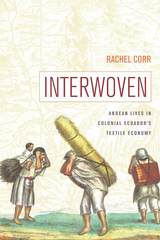
Interwoven is the untold story of indigenous people’s historical experience in colonial Ecuador’s textile economy. It focuses on the lives of Native Andean families in Pelileo, a town dominated by one of Quito’s largest and longest-lasting textile mills. Quito’s textile industry developed as a secondary market to supply cloth to mining centers in the Andes; thus, the experience of indigenous people in Pelileo is linked to the history of mining in Bolivia and Peru.
Although much has been written about colonial Quito’s textile economy, Rachel Corr provides a unique perspective by putting indigenous voices at the center of that history. Telling the stories of Andean families of Pelileo, she traces their varied responses to historical pressures over three hundred years; the responses range from everyday acts to the historical transformation of culture through ethnogenesis. These stories of ordinary Andean men and women provide insight into the lived experience of the people who formed the backbone of Quito’s textile industry.
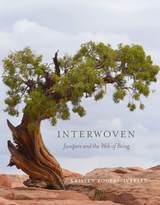
Throughout prehistory and history, junipers have influenced ecosystems, cultures, mythologies, economics, politics, and environmental controversies. In terms of their effects on human lives the juniper may be the most significant tree in the interior West. Interwoven explores these interconnecting aspects of junipers. Ghost beads, biotic communities, gin, tree masticators, Puebloan diapers, charcoal, folklore, historic explorers, spiral grain, tree life cycles, spirituality, packrat middens, climate changes, wildfire, ranching, wilderness, and land management policies are among the many different threads the book follows. These and other topics shed light on a fascinating organism, but the book is more than a compilation of facts. At once a scientific, experiential, historical, and metaphorical walk among junipers and their interrelationships, Interwoven may change readers’ experiences with these trees and the natural world.
Finalist for the Utah State Historical Society Best Book Award.
Finalist for the 2019 ASLE Book Award for excellence in ecocriticism and environmental creative writing.
Named a “notable book” by the prize committee of the 2018 Sigurd F. Olson Nature Writing Award.
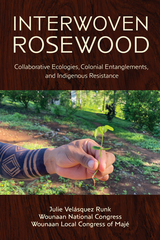
Drawing on more than a decade of community-based research and six collaborative book workshops, the authors weave together first-person narratives, ecological analysis, historical context, and Indigenous knowledge. The result is a richly textured account that challenges dominant narratives of environmental degradation by centering Wounaan experiences of joy, resistance, and conviviality. The book’s structure reflects its method: interwoven chapters authored or spoken by Wounaan colleagues, grounded in consent protocols and shaped by ancestral storytelling traditions.
Accessibly written, Interweaving Rosewood is ideal for courses in environmental conservation, Indigenous studies, anthropology, Latin American studies, and political ecology. With its interdisciplinary reach and classroom-ready discussion questions, the book invites readers to reflect on the global forces behind environmental catastrophe—and the enduring power of Indigenous ways of knowing, being, and becoming.

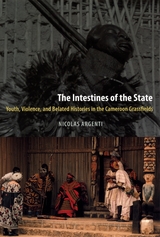
Beginning his study with a political analysis of youth in the Grassfields from the eighteenth century to the present, Argenti pays special attention to the repeated violent revolts staged by young victims of political oppression. He then combines this history with extensive ethnographic fieldwork in the Oku chiefdom, discovering that the specter of past violence lives on in the masked dance performances that have earned intense devotion from today’s youth. Argenti contends that by evoking the imagery of past cataclysmic events, these masquerades allow young Oku men and women to address the inequities they face in their relations with elders and state authorities today.

In pursuit of new forms of intimacy they take up a range of concerns across a variety of contexts. To test the hypothesis that the essence of the analytic exchange is intimate talk without sex, they compare Patrice Leconte’s film about an accountant mistaken for a psychoanalyst, Intimate Strangers, with Henry James’s classic novella The Beast in the Jungle. A discussion of the radical practice of barebacking—unprotected anal sex between gay men—delineates an intimacy that rejects the personal. Even serial killer Jeffrey Dahmer and the Bush administration’s war on terror enter the scene as the conversation turns to the way aggression thrills and gratifies the ego. Finally, in a reading of Socrates’ theory of love from Plato’s Phaedrus, Bersani and Phillips call for a new form of intimacy which they term “impersonal narcissism”: a divestiture of the ego and a recognition of one’s non-psychological potential self in others. This revolutionary way of relating to the world, they contend, could lead to a new human freedom by mitigating the horrifying violence we blithely accept as part of human nature.
Charmingly persuasive and daringly provocative, Intimacies is a rare opportunity to listen in on two brilliant thinkers as they explore new ways of thinking about the human psyche.

Intimacy is a series of experimental poems that play with, resist, and acknowledge complicity with received concepts of intimacy that circulate in this media-centric age. Undertaking an expansive understanding of the word “intimacy”, each poem contains a word or set of words that modifies the noun, uncovering the attending, associative and often contradictory obligations that arise in our relations with one another.

How is it that "private matters" are analyzed endlessly in public forums on a daily basis? Why is it assumed that "getting a life" means having a private relationship? Intended to unravel some of the tangled relations that fall under the broad category of "intimacy," this provocative collection of sixteen essays articulates the ways in which intimate lives are connected with the institutions, ideologies, and desires that organize people's worlds.
Locating its domain in the familiar spaces of friendship, love, sex, family, and feeling "at home," Intimacy also examines the estrangement, betrayal, loneliness, and even violence that may accompany the demise of relationships, both personal and political. These include intimacies among strangers, such as happens in times of national scandal or habits of everyday life. The contributors to this volume traverse many disciplines and cultures, tracking the processes by which intimate lives absorb and repel the dominant rhetoric, law, ethics, and ideologies of public spheres. Drawing on examples from contemporary culture, history, art, literature, and music, this book illuminates the ways in which intimacy has become linked with stories of citizenship, capitalism, aesthetic forms, and the writing of history. As it challenges conventional notions of private life, Intimacy is sure to spark controversy about its institutions as well.
Some of these essays in this book were previously published in an award-winning issue of the journal "Critical Inquiry."
Contributors include Lauren Berlant, Svetlana Boym, Steven Feld, Deborah R. Grayson, Michael Hanchard, Dagmar Herzog, Annamarie Jagose, Laura Kipnis, Laura Letinsky, Biddy Martin, Maureen McLane, Mary Poovey, Elizabeth A. Povinelli, Eve Kosovsky Sedgwick, Joel Snyder, Candace Vogler, Michael Warner, and others.

In this melancholy novel about a man on the brink of suicide, Stanley Crawford allows readers to question what it really means to be close to a person. Intimacy follows an unnamed narrator planning his own death. His preparations become a trigger and occasion for him to revisit key moments in his life and his material possessions, which are the solid artifacts from his life’s journey.
As sparrows in flight might form a single arrow, the life of the narrator comes into focus as a collage of fleeting events and images. Readers gain insights into tiny moments that slowly build into a picture of a man who seems to have very little, aside from material possessions, to lose.
The narrative pulls the reader along a trail of digressions—about running shoes, about the symbolism of rings—that lead down a proverbial rabbit hole until we realize the narrator’s intentions. Despite our lack of concrete knowledge about the narrator’s life, he allows us to share his thought processes: how every thought leads to the next, how memories seep upward when he picks up a particular T-shirt, or when he glimpses his car keys. And alongside our growing understanding of the narrator comes a recognition of our own thought processes: how we, like him, relate to our bodies; how we, too, cannot break away from the constant motion of our thoughts.
Intimacy is a brief, intense novel charged with the heightened sense of closeness that comes from watching a man’s last hours. It illuminates how brief snapshots of memory can trace the outline of an entire life.
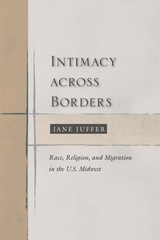
Examining how encounters produced by migration lead to intimacies-ranging from sexual, spiritual, and neighborly to hateful and violent, Jane Juffer considers the significant changes that have occurred in small towns following an influx of Latinos to the Midwest.
Intimacy across Borders situates the story of the Dutch Reformed Church in Iowa and South Africa within a larger analysis of race, religion, and globalization. Drawing on personal narrative, ethnography, and sociopolitical critique, Juffer shows how migration to rural areas can disrupt even the most thoroughly entrenched religious beliefs and transform the schools, churches, and businesses that form the heart of small-town America. Conversely, such face-to-face encounters can also generate hatred, as illustrated in the increasing number of hate crimes against Latinos and the passage of numerous anti-immigrant ordinances.
Juffer demonstrates how Latino migration to new areas of the U.S. threatens certain groups because it creates the potential for new kinds of families—mixed race, mixed legal status, and transnational—that challenge the conservative definition of community based on the racially homogeneous, coupled, citizen family.
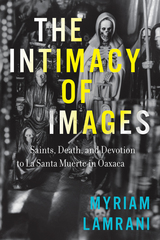
La Santa Muerte becomes a lens for understanding how Oaxacans relate to saints, loved ones, and other “special dead.”
In Oaxaca, images of saints and loved ones, as well as of victims of political or criminal violence, are seemingly everywhere. While Oaxacans relate to all sorts of “special dead,” they are particularly devoted to La Santa Muerte (Saint Death), a female reaper-like figure whose popularity has risen in tandem with violence throughout Mexico.
The Intimacy of Images recontextualizes Oaxacans’ relationships with their “special dead” through the lens of La Santa Muerte, examining how devotees closely interact with what Lamrani terms “intimate images”: not only devotional effigies but also photographs, films, tattoos, and murals, and even dreams and visions. Though Mexicans have a well-known cultural familiarity with death, Lamrani argues that devotion to La Santa Muerte builds upon this intimacy even as it also participates in the production of terror and reflects political and criminal violence. Ultimately, Lamrani finds that these human-image interactions represent more than Catholic devotion; they reveal the secrets of Oaxacan political, religious, and social life, embody changing relationships to mortality and violence, and even offer insight into the practice of anthropology itself.
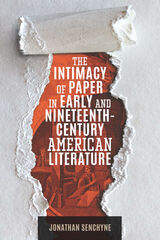
The Intimacy of Paper in Early and Nineteenth-Century American Literature reveals that book history and literary studies are mutually constitutive and proposes a new literary periodization based on materiality and paper production. In unpacking this history and connecting it to cultural and literary representations, Senchyne also explores how the textuality of paper has been used to make social and political claims about gender, labor, and race.
Aja Couchois Duncan’s third book of poetry, The Intimacy Trials, explores cycles of violence, loss, and love that arc across history. Composed of intersecting narratives, this collection follows a post-apocalyptic collective of survivors living in a state of gratitude, shame, and awe amid desecrated ecosystems. The present tense of The Intimacy Trials carries the magnitude of a historic past tense filled with land theft, genocide, settler colonialism, and the vicissitudes of romantic love. Couchois Duncan’s lyrical, concomitant stories produce a space that holds in balance the complexities of life—joy, despair, intimacy, and irreconcilable grief.
In language that is prophetic, lush, and unequivocal, The Intimacy Trials is a loving accountability letter to our past, present, and future selves, holding both our yearning for connection and the remembrance of what has driven us apart.

The rise in divorce, cohabitation, single parenthood, and same-sex partnerships, along with an increase in surrogacy, adoption, and assisted reproductive technologies, has led to many diverse configurations of families, or intimate associations. J. Herbie DiFonzo and Ruth C. Stern chart these trends over the past several decades and investigate their social, legal, and economic implications.
Drawing upon a wealth of social science data, they show that, by a number of measures, children of married parents fare better than children in a household formed by cohabiting adults. This is not to condemn nontraditional families, but to point out that society and the law do not yet adequately provide for their needs. The authors applaud the ways in which courts and legislatures are beginning to replace rigid concepts of marriage and parenthood with the more flexible concept of “functional” family roles. In the conclusion, they call for a legal system that can adapt to the continually changing reality of family life.

In ministering to the sick, for instance, Clayton anointed with perfumed oil and rum. He performed baptisms to heal the sick. Church services, held irregularly, were referred to as “going to meeting” and seemed to be elective. He testifies of people speaking in tongues and of others “almost speaking in tongues.” When introduced to plural marriage, he was reluctant but eventually became one of its most enthusiastic proponents, marrying ten women and fathering forty-two children.
Since polygamy was initially secret, Clayton spent much of his time putting out the fires of innuendo and discontent. He caught his first plural wife rendezvousing with her former fiancé; later, when she became pregnant, her mother–his unaware mother-in-law–was so overwrought that she attempted suicide. Joseph Smith reassured him: “Just keep her at home and brook it and if they raise trouble about it and bring you before me I will give you an awful scourging and probably cut you off from the church and then I will set you ahead as good as ever.” Clayton was also the object of Emma Smith’s attentions, allegedly part of a jealous wife’s plan to make a cuckold of her errant husband.
Exchanges of women between men occur regularly in Greek tragedy—and almost always with catastrophic results. Instead of cementing bonds between men, such exchanges rend them. They allow women, who should be silent objects, to become monstrous subjects, while men often end up as lifeless corpses. But why do the tragedies always represent the transferal of women as disastrous?
Victoria Wohl offers an illuminating analysis of the exchange of women in Sophocles' Trachiniae, Aeschylus' Agamemnon, and Euripides' Alcestis. She shows how the attempts of women in these plays to become active subjects rather than passive objects of exchange inevitably fail. While these failures seem to validate male hegemony, the women's actions, however futile, blur the distinction between male subject and female object, calling into question the very nature of the tragic self. What the tragedies thus present, Wohl asserts, is not only an affirmation of Athens' reigning ideologies (including its gender hierarchy) but also the possibility of resistance to them and the imagination of alternatives.
While other scholars have argued that the Progressive Era was the “golden age” for women’s single-sex education, pointing to the many positive depictions of the women’s college student, Inness suggests that these representations actually helped to perpetuate the status quo and did little to advance women’s social rights.

Integrating the psychology of love and creativity, this pioneering book explores both how a couple’s involvement as lovers influences their creative collaboration and how working together affects their relationship. Representing a variety of genres—painting, sculpture, photography, and installation art—the celebrated couples profiled here include, among others, Christo and Jeanne-Claude, Elizabeth Diller and Ricardo Scofidio, and Kristin Jones and Andrew Ginzel.
Intrigued by this process of "intimate creativity," psychologists Irving and Suzanne Sarnoff (themselves partners in love and work) decided to conduct in-depth interviews with partners in visual art because they defy the supremely individualistic tradition of their field. Whatever their age or sexual orientation, these artist-couples combine their talents to form a collective identity as a professional team. Passionately intense about their shared commitment, they communicate endlessly to resolve conflicts and reach consensus. Providing mutual validation and support, they increase their productivity and the quality of their work; they minimize their fear and frustration and enhance their pleasure in being together.
The authors also draw on historical and contemporary literature about similar couples, ranging from Jean Arp and Sophie Taeuber to Gilbert and George to Claes Oldenburg and Coosje van Bruggen. Stimulating and engaging, this book highlights the features of a unique collaborative process, considers the connection between creativity and sexuality, and suggests possibilities for any couple to expand their intimacy.

Grounded in feminism and connected to the race, class, and gender paradigms in cultural studies, the twenty-six contributors to this volume—including Jane Tompkins, Henry Louis Gates, Jr., Shirley Nelson Garner, and Shirley Goek-Lin Lim—respond in new, refreshing ways to literary subjects ranging from Homer to Freud, Middlemarch to The Woman Warrior, Shiva Naipaul to Frederick Douglass. Revealing the beliefs and formative life experiences that inform their essays, these writers characteristically recount the process by which their opinions took shape--a process as conducive to self-discovery as it is to critical insight. The result—which has been referred to as "personal writing," "experimental critical writing," or "intellectual autobiography"—maps a dramatic change in the direction of literary criticism.
Contributors. Julia Balen, Dana Beckelman, Ellen Brown, Sandra M. Brown, Rosanne Kanhai-Brunton, Suzanne Bunkers, Peter Carlton, Brenda Daly, Victoria Ekanger, Diane P. Freedman, Olivia Frey, Shirley Nelson Garner, Henry Louis Gates, Jr., Melody Graulich, Gail Griffin, Dolan Hubbard, Kendall, Susan Koppelman, Shirley Geok-Lin Lim, Linda Robertson, Carol Taylor, Jane Tompkins, Cheryl Torsney, Trace Yamamoto, Frances Murphy Zauhar
Relating the intensely personal stories from people experiencing different stages of divorce, Alexy provides a rich ethnography of Japan while also speaking more broadly to contemporary visions of love and marriage during an era in which neoliberal values are prompting wide-ranging transformations in homes across the globe.

Bolivians and Japanese involved in these musical practices often express narratives of intimacy and racial belonging that reference shared but unspecified indigenous ancestors. Along with revealing the story of Bolivian music's route to Japan and interpreting the transnational staging of indigenous worlds, Bigenho examines these stories of closeness, thereby unsettling the East-West binary that often structures many discussions of cultural difference and exotic fantasy.
Weaving together ethnography, archival research, and cultural history, Bobrow-Strain argues that prior to the upheavals of 1994 landowners were already squeezed between increasingly organized indigenous activism and declining political and economic support from the Mexican state. He demonstrates that indigenous mobilizations that began in 1994 challenged not just the economy of estate agriculture but also landowners’ understandings of progress, masculinity, ethnicity, and indigenous docility. By scrutinizing the elites’ responses to land invasions in relation to the cultural politics of race, class, and gender, Bobrow-Strain provides timely insights into policy debates surrounding the recent global resurgence of peasant land reform movements. At the same time, he rethinks key theoretical frameworks that have long guided the study of agrarian politics by engaging political economy and critical human geography’s insights into the production of space. Describing how a carefully defended world of racial privilege, political dominance, and landed monopoly came unglued, Intimate Enemies is a remarkable account of how power works in the countryside.
Vicinus also considers the nineteenth-century roots of such contemporary issues as homosexual self-hatred, female masculinity, and sadomasochistic desire. Drawing upon diaries, letters, and other archival sources, she brings to life a variety of well known and historically less recognized women, ranging from the predatory Ann Lister, who documented her sexual activities in code; to Mary Benson, the wife of the Archbishop of Canterbury; to the coterie of wealthy Anglo-American lesbians living in Paris.
In vivid and colorful prose, Intimate Friends offers a remarkable picture of women navigating the uncharted territory of same-sex desire.
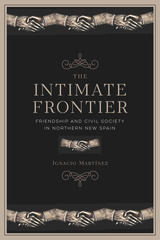
Spaniards living in the isolated borderlands region of colonial Sonora were keen to develop an ideologically relevant and socially acceptable form of friendship with Indigenous people that could act as a functional substitute for civil law and governance, thereby regulating Native behavior. But as frontier society grew in complexity and sophistication, Indigenous and mixed-raced people also used the language of friendship and the performance of emotion for their respective purposes, in the process becoming skilled negotiators to meet their own best interests.
In northern New Spain, friendships were sincere and authentic when they had to be and cunningly malleable when the circumstances demanded it. The tenuous origins of civil society thus developed within this highly contentious social laboratory in which friendships (authentic and feigned) set the social and ideological parameters for conflict and cooperation. Far from the coffee houses of Restoration London or the lecture halls of the Republic of Letters, the civil society illuminated by Martínez stumbled forward amid the ambiguities and contradictions of colonialism and the obstacles posed by the isolation and violence of the Sonoran Desert.
2021 Foreword Indies Finalist - Politics and Social Sciences
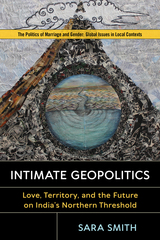
Intimate Geopolitics begins with a love story set in the Himalayan region of Ladakh, in India’s Jammu and Kashmir State, but this is also a story about territory, and the ways that love, marriage, and young people are caught up in contemporary global processes. In Ladakh, children grow up to adopt a religious identity in part to be counted in the census, and to vote in elections. Religion, population, and voting blocs are implicitly tied to territorial sovereignty and marriage across religious boundaries becomes a geopolitical problem in an area that seeks to define insiders and outsiders in relation to borders and national identity. This book populates territory, a conventionally abstract rendering of space, with the stories of those who live through territorial struggle at marriage and birth ceremonies, in the kitchen and in the bazaar, in heartbreak and in joy. Intimate Geopolitics argues for the incorporation of the role of time–temporality–into our understanding of territory.
Intimate Grammars takes an ethnographic and ethnopoetic approach to language and culture in contemporary time, in which poetry and poets are increasingly important and visible in the Navajo Nation. Webster uses interviews and linguistic analysis to understand the kinds of social work that Navajo poets engage in through their poetry.
Based on more than a decade of ethnographic and linguistic research, Webster’s book explores a variety of topics: the emotional value assigned to various languages spoken on the Navajo Nation through poetry (Navajo English, Navlish, Navajo, and English), why Navajo poets write about the “ugliness” of the Navajo Nation, and the way contemporary Navajo poetry connects young Navajos to the Navajo language. Webster also discusses how contemporary Navajo poetry challenges the creeping standardization of written Navajo and how boarding school experiences influence how Navajo poets write poetry and how Navajo readers appreciate contemporary Navajo poetry.
Through the work of poets such as Luci Tapahonso, Laura Tohe, Rex Lee Jim, Gloria Emerson, Blackhorse Mitchell, Esther Belin, Sherwin Bitsui, and many others, Webster provides new ways of thinking about contemporary Navajo poets and poetry. Intimate Grammars offers an exciting new ethnography of speaking, ethnopoetics, and discourse-centered examinations of language and culture.
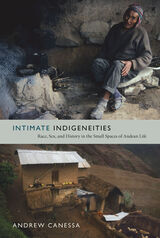

This issue addresses how laborers within intimate industries—those who do interpersonal work that tends to the sexual, bodily, health, hygiene, or care needs of individuals—are shaping Asia’s growing role in the global economy. The contributors investigate how intimate industries support relational connections for consumers while disrupting laborers’ relationships, as in the case of migrants who perform intimate labor away from their families and communities of origin. The articles collected here include examinations of such trade-offs and their complex meanings and implications for the workers. The authors explore these social processes through the lens of industries that organize, enable, or delimit the trade in domestic labor, marriage migration, companionship and romance, sex work, pornographic performance, surrogate mothering and ova donation, and cosmetics sales. This issue puts people, as embodied subjects, back into narratives of economic change and offers a perspective on globalization from below.
Contributors: Danièle Bélanger, Hae Yeon Choo, Nicole Constable, Daisy Deomampo, Akhil Gupta, Chaitanya Lakkimsetti, Pei-Chia Lan, Purnima Mankekar, Eileen Otis, Juno Salazar Parreñas, Rhacel Parreñas, Sharmila Rudrappa, Celine Parreñas Shimizu, Rachel Silvey, Hung Cam Thai, Leslie Wang
Intimate inequalities exist where the embodied and the everyday rub up against transnational structures of power. Ella Parry-Davies conducted collaborative research with migrant domestic workers from the Philippines living in the UK and Lebanon, where migration is regulated by employer sponsorship systems, to explore how they negotiate the intimacy of the family home and the attendant inequalities of laboring within it. Intimate Inequalities: Performing Migrant Domestic Work brings these conditions into focus while articulating a methodological inquiry into the dynamics of collaborative performance research. Parry-Davies examines site-specific soundwalks, recorded and coedited with domestic workers, which steer the book between church choirs in Beirut and activist gatherings in London, and from urban performances in Lebanon’s 2019 revolution to mutual aid organizing amid COVID-19 in the UK. Breaking with prevalent depictions of migrant domestic workers as voiceless and victimized, Intimate Inequalities mobilizes performance as both an analytic lens and a practical methodology, amplifying its subjects’ expertise while reckoning with the intimate yet unequal dynamics of research itself.

A feminist perspective on the early history of personal computing, revealing how computers were integrated into the most intimate aspects of family life
The Intimate Life of Computers shows how the widespread introduction of home computers in the 1980s was purposefully geared toward helping sustain heteronormative middle-class families by shaping relationships between users. Moving beyond the story of male-dominated computer culture, this book emphasizes the neglected history of the influence of women’s culture and feminist critique on the development of personal computing despite women’s underrepresentation in the industry.
Proposing the notion of “companionate computing,” Reem Hilu reimagines the spread of computers into American homes as the history of an interpersonal, romantic, and familial medium. She details the integration of computing into family relationships—from helping couples have better sex and offering thoughtful simulations of masculine seduction to animating cute robot companions and giving voice to dolls that could talk to lonely children—underscoring how these computer applications directly responded to the companionate needs of their users as a way to ease growing pressures on home life.
The Intimate Life of Computers is a vital contribution to feminist media history, highlighting how the emergence of personal computing dovetailed with changing gender roles and other social and cultural shifts. Eschewing the emphasis on technologies and institutions typically foregrounded in personal-computer histories, Hilu uncovers the surprising ways that domesticity and family life guided the earlier stages of our all-pervasive digital culture.
"The book John D'Emilio co-wrote with Estelle B. Freedman, Intimate Matters, was cited by Supreme Court Justice Anthony Kennedy when, writing for a majority of court on July 26, he and his colleagues struck down a Texas law criminalizing sodomy. The decision was widely hailed as a victory for gay rights—and it derived in part, according to Kennedy's written comments, from the information he gleaned from D'Emilio's book, which traces the history of American perspectives on sexual relationships from the nation's founding through the present day. The justice mentioned Intimate Matters specifically in the court's decision."—Julia Keller, Chicago Tribune
"Fascinating. . . . [D'Emilio and Freedman] marshall their material to chart a gradual but decisive shift in the way Americans have understood sex and its meaning in their lives." —Barbara Ehrenreich, New York Times Book Review
"With comprehensiveness and care . . . D'Emilio and Freedman have surveyed the sexual patterns for an entire nation across four centuries." —Martin Bauml Duberman, Nation
"Intimate Matters is comprehensive, meticulous and intelligent." —Jonathan Yardley, Washington Post Book World
"This book is remarkable. . . . [Intimate Matters] is bound to become the definitive survey of American sexual history for years to come." —Roy Porter, Journal of the History of the Behavioral Sciences
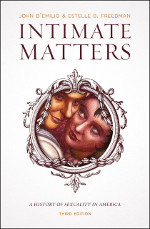
As the first full-length study of the history of sexuality in America, Intimate Matters offered trenchant insights into the sexual behavior of Americans from colonial times to the present. In this fully up-to-date edition of the classic work, John D’Emilio and Estelle B. Freedman give us an even deeper understanding of how sexuality has dramatically influenced politics and culture throughout our history and into the present.
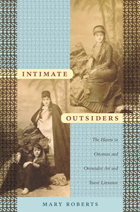
Roberts draws on a range of sources, including paintings, photographs, and travelogues discovered in archives in Britain, Turkey, Egypt, and Denmark. She rethinks the influential harem works of the realist painter John Frederick Lewis, a British artist living in Cairo during the 1840s, whose works were granted an authoritative status by his British public despite the actual limits of his insider knowledge. Unlike Lewis, British women were able to visit Ottoman harems, and from the mid-nineteenth century on they did so in droves. Writing about their experiences in published travelogues, they undermined the idea that harems were the subject only of male fantasies. The elite Ottoman women who orchestrated these visits often challenged their guests’ misapprehensions about harem life, and a number of them exercised power as patrons, commissioning portraits from European artists. Their roles as art patrons defy the Western idea of the harem woman as passive odalisque.

On a visit to eastern Hui'an in 1994, Sara Friedman was surprised to see a married woman reluctant to visit her conjugal home. The author would soon learn that this practice was typical of the area, along with distinctive female dress styles, gender divisions of labor, and powerful same-sex networks. These customs, she would learn, have long distinguished villages in this coastal region of southeastern China from other rural Han communities.
Intimate Politics explores these practices that have constituted eastern Hui'an residents, women in particular, as an anomaly among rural Han. This book asks what such practices have come to mean in a post-1949 socialist order that has incorporated forms of marriage, labor, and dress into a developmental scale extending from the primitive to the civilized. Government reform campaigns were part of a wholesale effort to remake Chinese society by replacing its "feudal" elements with liberated socialist ideals and practices. As state actors became involved in the intimate aspects of Huidong women's lives, their official models of progress were challenged by the diversity of local practices and commitment of local residents. These politicized entanglements have generated what the author calls "intimate politics," a form of embodied struggle in which socialist civilizing agendas—from the state-sponsored reforms of the Maoist decades to the market-based "reform and opening" of the post-Mao era—have been formulated, contested, and, in some cases, transformed through the bodies and practices of local women.

Winner of the 1995 University of Illinois Press-National Women's Studies
Association manuscript prize
Women's clubs at the turn of the century were numerous, dedicated to
a number of issues, and crossed class, religious, and racial lines. Emphasizing
the intimacy engendered by shared reading and writing in these groups,
Anne Ruggles Gere contends that these literacy practices meant that club
members took an active part in reinventing the nation during a period
of major change. Gere uses archival material that documents club members'
perspectives and activities around such issues as Americanization, womanhood,
peace, consumerism, benevolence, taste, and literature--and offers a rare
depth of insight into the interests and lives of American women from the
fin de siècle through the beginning of the roaring twenties.
Intimate Practices is unique in its exploration of a range of
women's clubs--Mormon, Jewish, white middle-class, African American, and
working class--and paints a vast and colorful multicultural, multifaceted
canvas of these widely-divergent women's groups.
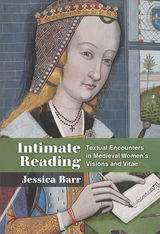
This new volume is structured around five case studies. Chapters consider the biographies of 13th-century holy women from Liège, the writings of Margery Kempe, Gertrude of Helfta, Mechthild of Magdeburg, Marguerite Porete, and Julian of Norwich. At the heart of Intimate Reading is the question of how reading works—what it means to enter imaginatively and intellectually into the words of another. The volume showcases the complexity of medieval understandings of the work of reading, deepening our perception of the written word’s capacity to signify something that lies even beyond rational comprehension.
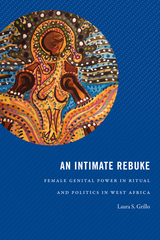
Kakar's sources are primarily textual, celebrating the primacy of the story in Indian life. He practices a cultural psychology that distills the psyches of individuals from the literary products and social institutions of Indian culture. These include examples of lurid contemporary Hindi novels; folktales; Sanskrit, Tamil, and Hindi proverbs; hits of the Indian cinema; Gandhi's autobiography; interviews with women from the slums of Delhi; and case studies from his own psychoanalytic practice. His attentive readings of these varied narratives from a vivid portrait of sexual fantasies and realities, reflecting the universality of sexuality as well as cultural nuances specific to India.
Moving from genre to genre, Kakar offers a brilliant reading of verses from the Laws of Manu, the original source of Hindu religious laws, to uncover their psychological foundations—male terror of the female sexual appetite that shields itself by idealizing women's maternal role. Kakar also examines the psychosexual history of Gandhi at length, though his near-lifelong celibacy makes him an atypical subject. Gandhi's story is universal, Kakar says, because "we all wage war on our wants."
In India's lore and tradition, complex symbols abound—snakes that take the shape of sensual women or handsome men, celibates sleep with naked women, gods rape their daughters, and a goddess fries a king in oil. With the analyst's "third ear," Kakar listens, decodes, and translates the psychological longings that find expression in Indian sexual relations.
The last few decades have seen a surge of historical scholarship that analyzes state power and expands our understanding of governmental authority and the ways we experience it. At the same time, studies of the history of intimate life—marriage, sexuality, child-rearing, and family—also have blossomed. Yet these two literatures have not been considered together in a sustained way. This book, edited and introduced by three preeminent American historians, aims to close this gap, offering powerful analyses of the relationship between state power and intimate experience in the United States from the Civil War to the present.
The fourteen essays that make up Intimate States argue that “intimate governance”—the binding of private daily experience to the apparatus of the state—should be central to our understanding of modern American history. Our personal experiences have been controlled and arranged by the state in ways we often don’t even see, the authors and editors argue; correspondingly, contemporary government has been profoundly shaped by its approaches and responses to the contours of intimate life, and its power has become so deeply embedded into daily social life that it is largely indistinguishable from society itself. Intimate States makes a persuasive case that the state is always with us, even in our most seemingly private moments.

Intimate Strangers charts the experiences of shin Issei lives: their existence in Japan prior to migration, their motivations for moving to the United States, their settlement, and their growing awareness of their place in American society. Toyota chronicles how these resilient young women became active agents in circumventing social restrictions to fashion new lives of meaning. The Nikkei community (Americans of Japanese ancestry who were born in the United States) has been transformed by the inclusion of shin Issei, and Toyota describes the tensions around intergroup negotiations over race, identity, and the possibility of common belonging.
Intimate Strangers is a perceptive study of migration and community incorporation enacted around cultural differences and processes.
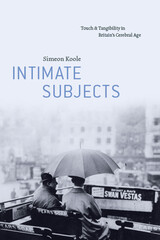
When, where, and who gets to touch and be touched, and who decides? What do we learn through touch? How does touch bring us closer together or push us apart? These are urgent contemporary questions, but they have their origins in late nineteenth- and early twentieth-century Britain, when new urban encounters compelled intense discussion of what touch was, and why it mattered. In this vividly written book, Simeon Koole excavates the history of these concerns and reveals how they continue to shape ideas about “touch” in the present.
Intimate Subjects takes us to the bustling railway stations, shady massage parlors, all-night coffee stalls, and other shared spaces where passengers, customers, vagrants, and others came into contact, leading to new understandings of touch. We travel in crammed subway cars, where strangers negotiated the boundaries of personal space. We visit tea shops where waitresses made difficult choices about autonomy and consent. We enter classrooms in which teachers wondered whether blind children could truly grasp the world and labs in which neurologists experimented on themselves and others to unlock the secrets of touch. We tiptoe through London’s ink-black fogs, in which disoriented travelers became newly conscious of their bodies and feared being accosted by criminals. Across myriad forgotten encounters such as these, Koole shows, touch remade what it meant to be embodied—as well as the meanings of disability, personal boundaries, and scientific knowledge.
With imagination and verve, Intimate Subjects offers a new way of theorizing the body and the senses, as well as a new way of thinking about embodiment and vulnerability today.

This is an auto-narrated audiobook version of this book.
The queer recluse, the shambling farmer, the clannish hill folk—white rural populations have long disturbed the American imagination, alternately revered as moral, healthy, and hardworking, and feared as antisocial or socially uncouth. In Peculiar Places, Ryan Lee Cartwright examines the deep archive of these contrary formations, mapping racialized queer and disability histories of white social nonconformity across the rural twentieth-century United States.
Sensationalized accounts of white rural communities’ aberrant sexualities, racial intermingling, gender transgressions, and anomalous bodies and minds, which proliferated from the turn of the century, created a national view of the perversity of white rural poverty for the American public. Cartwright contends that these accounts, extracted and estranged from their own ambivalent forum of community gossip, must be read in kind: through a racialized, materialist queercrip optic of the deeply familiar and mundane. Taking in popular science, documentary photography, news media, documentaries, and horror films, Peculiar Places orients itself at the intersections of disability studies, queer studies, and gender studies to illuminate a racialized landscape both profoundly ordinary and familiar.
Drawing on ten years of ethnographic research with Korean American students at the University of Illinois and closely following multiple generations of a single extended Korean American family in the Chicago metropolitan area, Abelmann investigates the complexity of racial politics at the American university today. Racially hyper-visible and invisible, Korean American students face particular challenges as they try to realize their college dreams against the subtle, day-to-day workings of race. They frequently encounter the accusation of racial self-segregation—a charge accentuated by the fact that many attend the same Evangelical Protestant church—even as they express the desire to distinguish themselves from their families and other Korean Americans. Abelmann concludes by examining the current state of the university, reflecting on how better to achieve the university’s liberal ideals despite its paradoxical celebration of diversity and relative silence on race.
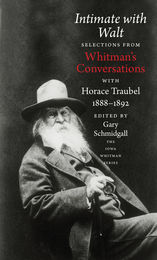
In Intimate with Walt Gary Schmidgall has condensed Traubel's nearly 5,000 pages into one manageable volume featuring the many self-revealing, humorous, nostalgic, and often curmudgeonly words of the Good Gray Poet. The book is divided into five sections, each consisting of several chapters: the first, presenting Walt on himself, his family, and his daily life and visitors at the only home he ever owned; the second, on his artistic credos, the literary life, and a large array of comments on the writing, publication of, and critical reaction to Leaves of Grass; the third, focusing on his friends, admirers, idols, and lovers; the fourth and longest, presenting his no-holds-barred views on a variety of topics, including the American scene, race, religion, music, and even alcohol; and finally, a gathering of passages revealing Whitman's struggles with his infirmities, his poignant final days, and Traubel's observations on Whitman's deathbed scene and burial rites.
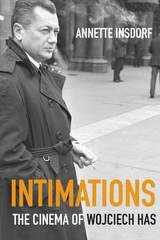
Wojciech Has’s films are still less known outside of his native Poland than those of his countrymen Andrzej Wajda, Krzysztof Zanussi, and Krzysztof Kieslowski. Yet thanks to his singular vision, many critics rank Has among the masters of world cinema. Some of his movies have developed a cult following, notably The Saragossa Manuscript, the favorite film of the Grateful Dead’s Jerry Garcia, which has been praised by directors such as Luis Buñuel, Francis Ford Coppola, and Roman Polanski.
Has’s films reveal the inner lives of his characters, which he portrays by giving free rein to his own wildly creative imagination. In addition toThe Saragossa Manuscript, his diverse and innovative filmography includes The Hourglass Sanatorium, a vividly surreal depiction of Hassidic life in Poland between the world wars; The Noose, a stark poetic drama about a lucid alcoholic who knows he will not be able to kick the habit; and How to Be Loved, in which an actress remembers her wartime past.
Has made disparate but formally striking movies infused with European strains of existentialism and the avant-garde. With many of his films being restored and rereleased, new generations of film lovers are discovering his artistic genius. Intimations: The Cinema of Wojciech Has is the definitive guide in English to his work.

As in the works of George Schaller and Cynthia Moss, Packer transports us to life in the field. He is addicted to this land—to the beauty of a male lion striding across the Serengeti plains, to the calls of a baboon troop through the rain forests of Gombe—and to understanding the animals that inhabit it. Through his vivid narration, we feel the dust and the bumps of the Arusha Road, smell the rosemary in the air at lunchtime on a Serengeti verandah, and hear the lyrics of the Grateful Dead playing off bootlegged tapes.
Into Africa also explores the social lives of the animals and the threats to their survival. Packer grapples with questions he has passionately tried to answer for more than two decades. Why do female lions raise their young in crèches? Why do male baboons move from troop to troop while male chimps band together? How can humans and animals continue to coexist in a world of diminishing resources? Immediate demands—logistical nightmares, political upheavals, physical exhaustion—yield to the larger inescapable issues of the interdependence of the land, the animals, and the people who inhabit it.
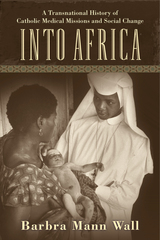
Awarded first place in the 2016 American Journal of Nursing Book of the Year Award in the History and Public Policy category
The most dramatic growth of Christianity in the late twentieth century has occurred in Africa, where Catholic missions have played major roles. But these missions did more than simply convert Africans. Catholic sisters became heavily involved in the Church’s health services and eventually in relief and social justice efforts. In Into Africa, Barbra Mann Wall offers a transnational history that reveals how Catholic medical and nursing sisters established relationships between local and international groups, sparking an exchange of ideas that crossed national, religious, gender, and political boundaries.
Both a nurse and a historian, Wall explores this intersection of religion, medicine, gender, race, and politics in sub-Saharan Africa, focusing on the years following World War II, a period when European colonial rule was ending and Africans were building new governments, health care institutions, and education systems. She focuses specifically on hospitals, clinics, and schools of nursing in Ghana and Uganda run by the Medical Mission Sisters of Philadelphia; in Nigeria and Uganda by the Irish Medical Missionaries of Mary; in Tanzania by the Maryknoll Sisters of New York; and in Nigeria by a local Nigerian congregation. Wall shows how, although initially somewhat ethnocentric, the sisters gradually developed a deeper understanding of the diverse populations they served. In the process, their medical and nursing work intersected with critical social, political, and cultural debates that continue in Africa today: debates about the role of women in their local societies, the relationship of women to the nursing and medical professions and to the Catholic Church, the obligations countries have to provide care for their citizens, and the role of women in human rights.
A groundbreaking contribution to the study of globalization and medicine, Into Africa highlights the importance of transnational partnerships, using the stories of these nuns to enhance the understanding of medical mission work and global change.
Finalist, Publishing Triangle's Thom Gunn Award
In this affecting poetry debut, Charif Shanahan explores what it means to be fully human in our wounded and divided world. In poised yet unrelenting lyric poems, Shanahan—queer and mixed-race—confronts the challenges of a complex cultural inheritance, informed by colonialism and his mother’s immigration to the United States from Morocco, navigating racial constructs, sexuality, family, and the globe in search of “who we are to each other . . . who we are to ourselves.”
With poems that weave from Marrakesh to Zürich to London, through history to the present day, this book is, on its surface, an uncompromising exploration of identity in personal and collective terms. Yet the collection is, most deeply, about intimacy and love, the inevitability of human separation and the challenge of human connection. Urging us to reexamine our own place in the broader human tapestry, Into Each Room We Enter without Knowing announces the arrival of a powerful and necessary new voice.

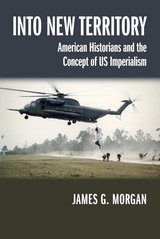
Tracing the emergence of the concept of US imperialism, James G. Morgan shows how radical and revisionist scholars in the 1950s and 1960s first challenged the paradigm of denying an American empire. As the Vietnam War created a critical flashpoint, bringing the idea of American imperialism into the US mainstream, radical students of the New Left turned toward Marxist critiques, admiring revolutionaries like Che Guevara. Simultaneously, a small school of revisionist scholars, led by historian William Appleman Williams at the University of Wisconsin, put forward a progressive, nuanced critique of American empire grounded in psychology, economics, and broader historical context. It is this more sophisticated strand of thinking, Morgan argues, which demonstrated that empire can be an effective analytical framework for studying US foreign policy, thus convincing American scholars to engage with the subject seriously for the first time.
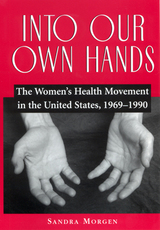
Recent history has witnessed a revolution in womens health care. Beginning in the late 1960s, women in communities across the United States challenged medical and male control over womens health. Few people today realize the extent to which these grassroots efforts shifted power and responsibility from the medical establishment into womens hands as health care consumers, providers, and advocates.
Into Our Own Hands traces the womens health care movement in the United States. Richly documented, this study is based on more than a decade of research, including interviews with leading activists; documentary material from feminist health clinics and advocacy organizations; a survey of womens health movement organizations in the early 1990s; and ethnographic fieldwork. Sandra Morgen focuses on the clinics born from this movement, as well as how the movements encounters with organized medicine, the state, and ascendant neoconservative and neoliberal political forces of the 1970s to the1980s shaped the confrontations and accomplishments in womens health care. The book also explores the impact of political struggles over race and class within the movement organizations.
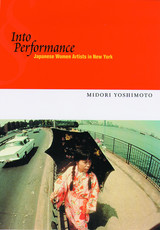
The 1960s was a time of incredible freedom and exploration in the art world, particularly in New York City, which witnessed the explosion of New Music, Happenings, Fluxus, New Dance, pop art, and minimalist art. Also notable during this period, although often overlooked, is the inordinate amount of revolutionary art that was created by women.
Into Performance fills a critical gap in both American and Japanese art history as it brings to light the historical significance of five women artists-Yoko Ono, Yayoi Kusama, Takako Saito, Mieko Shiomi, and Shigeko Kubota. Unusually courageous and self-determined, they were among the first Japanese women to leave their country-and its male-dominated, conservative art world-to explore the artistic possibilities in New York. They not only benefited from the New York art scene, however, they played a major role in the development of international performance and intermedia art by bridging avant garde movements in Tokyo and New York.
This book traces the pioneering work of these five women artists and the socio-cultural issues that shaped their careers. Into Performance also explores the transformation of these artists' lifestyle from traditionally confined Japanese women to internationally active artists. Yoshimoto demonstrates how their work paved the way for younger Japanese women artists who continue to seek opportunities in the West today.
Sur’s Ocean: Poems from the Early Tradition was published in 2015 as the fifth volume of the Murty Classical Library of India. That book contains Kenneth Bryant’s critical reconstructions of 433 poems of Surdas that circulated in the sixteenth century, when this great Hindi poet lived, and it includes facing-page, English verse translations by John Stratton Hawley. The name traditionally assigned to these poems is Sursagar, meaning Sur’s Ocean.
Into Sūr’s Ocean: Poetry, Context, and Commentary picks up many threads from that volume, and provides a substantial introduction to the poet, his medium, and his oeuvre; an overview of editions, including Bryant’s; an analysis of the challenges Hawley faced as translator; and poem-by-poem commentary. Each commentary is a brief, independent essay. This book offers a deep—and rewarding—dive into Sur’s Ocean.
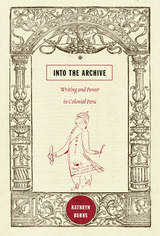
Kathryn Burns argues that the archive itself must be historicized. Using the case of colonial Cuzco, she examines the practices that shaped document-making. Notaries were businessmen, selling clients a product that conformed to local “custom” as well as Spanish templates. Clients, for their part, were knowledgeable consumers, with strategies of their own for getting what they wanted. In this inside story of the early modern archive, Burns offers a wealth of possibilities for seeing sources in fresh perspective.

Working from the precept that "nature abhors a gradient," Into the Cool details how complex systems emerge, enlarge, and reproduce in a world tending toward disorder. From hurricanes here to life on other worlds, from human evolution to the systems humans have created, this pervasive pull toward equilibrium governs life at its molecular base and at its peak in the elaborate structures of living complex systems. Schneider and Sagan organize their argument in a highly accessible manner, moving from descriptions of the basic physics behind energy flow to the organization of complex systems to the role of energy in life to the final section, which applies their concept of energy flow to politics, economics, and even human health.
A book that needs to be grappled with by all those who wonder at the organizing principles of existence, Into the Cool will appeal to both humanists and scientists. If Charles Darwin shook the world by showing the common ancestry of all life, so Into the Cool has a similar power to disturb—and delight—by showing the common roots in energy flow of all complex, organized, and naturally functioning systems.
Tracy Dahlby is an award-winning journalist who has reported internationally as a contributor to National Geographic magazine and served as a staff correspondent for Newsweek and the Washington Post. In this memoir of covering a far-flung swath of Asia, he takes readers behind the scenes to reveal “the stories behind the stories”—the legwork and (mis)adventures of a foreign correspondent on a mission to be the eyes and ears of people back home, helping them understand the forces and events that shape our world.
Into the Field centers on the travel and reporting Dahlby did for a half-dozen pieces that ran in National Geographic. The book tours the South China Sea during China’s rise as a global power, visits Japan in a time of national midlife crisis, and explores Southeast Asia during periods of political transition and tumult. Dahlby’s vivid anecdotes of jousting with hardboiled sea captains, communing with rebellious tribal chieftains, enduring a spectacular shipboard insect attack, and talking his way into a far place or out of a tight spot offer aspiring foreign correspondents a realistic introduction to the challenges of the profession. Along the way, he provides practical advice about everything from successful travel planning to managing headstrong local fixers and dealing with circumstances that can range from friendly to formidable. A knowledgeable, entertaining how-to book for observing the world and making sense of events, Into the Field is a must-read for student journalists and armchair travelers alike.

In the fall of 2001 Charles Salmon had a Fulbright fellowship in Israel. He was due to depart on September 12. Arriving in Israel a few weeks later, speaking no Hebrew and largely unfamiliar with Judaism and Israeli customs, he immersed himself in Israeli culture.
This collection of correspondence began as a weekly report to friends and was designed to offer an alternative to mainstream media. With the excitement of a tourist and the eagerness of an anthropologist, Salmon emerges as a modern Candide. He describes historical sites and a supermarket in Tel Aviv, discusses the differences between university students in Israel and America, and negotiates the purchase of food and the vagaries of the weather with humor and passion. The letters also discuss Israeli–Palestinian relations, and details terrorist events and responses to them.
This unique book focuses on how everyday hopes and fears transcend geopolitical boundaries and provides valuable lessons on how to thrive in these new and uncertain times.

A detailed and vivid account of the World War II disaster."—Booklist
"Into the Fire shimmers with historical parallels and modern resonances. . . . Schultz combed an impressive body of material for this account." —Washington Times
"This bittersweet tale of arrogance, wishful thinking, sacrifice, and heroism is recounted with grace and empathy." —Military.com
"Schultz combines a historian's meticulous research and a novelist's hypnotic prose to produce this memorable popular history... Shultz's intimate account of this controversial episode is a timely reminder of the horrors of war and a moving tribute to Ploestl's heroes." —Publishers Weekly
"We knew it was a disaster and knew that in the flames shooting up from those refineries we might be burned to death. But we went right in." —Lt. Norman Whalen
"We were dragged through the mouth of hell."—from a Ploesti Mission debriefing report
Planned by Winston Churchill, authorized by Dwight D. Eisenhower, and executed by five specially trained American bomber units, the attack on the oil refineries of Ploesti, Romania, was among the most daring and dangerous missions of World War II. If the raid succeeded, the Nazi war machine would suffer a devastating blow. On August 1, 1943, nearly two hundred B-24 bombers flew from Benghazi, North Africa, with directions to descend on Ploesti at treetop level, bomb the refineries, and return. The low-level bombers could evade enemy radar and were thought to be more difficult to shoot down. But despite warnings that a German heavy flak train had been moved into the area and that the secrecy of their mission had been compromised, the bombers were sent out. Minutes from the target, one of the commanders made a wrong turn, leading the formations away from Ploesti. Recovering from this mistake, most of the bombers relocated the refineries, but the mission was doomed. The ensuing air-ground battle claimed dozens of the bombers, and many of those that survived the ordeal were forced to ditch in the ocean or in remote areas due to lack of fuel or structural damage.
In Into the Fire: Ploesti, The Most Fateful Mission of World War II, Duane Schultz re-creates this great battle, combining original research and interviews with survivors in order to capture the tension, drama, and heroics of the warring sides. More Medals of Honor were awarded for this mission than any other aerial combat enterprise in the history of the United States. But the medals are bittersweet testimony to the courage of the 1,726 young men who risked all on a fateful attempt to cut off the Nazi supply of "black gold.
In recovering the links between such seemingly disparate figures, Leonard transforms our understanding of modern culture.
Selected by the American Library Association's journal, Choice, as "one of the Outstanding Academic Books of the Year"
"Leonard's book is a fine example of interdisciplinary studies. He shifts focus persuasively from art theory to literature to religious thought and biography, making his method seem the natural mode of inquiry into culture."—Kenneth Baker, San Francisco Chronicle Book Review
"Provocative and illuminating."—Library Journal
"Highly stimulating, impassioned."—Publisher's Weekly
"A rich and rewarding study written in a clear and accessible style with excellent references and a very useful index. Highly recommended."—Choice


Contributors tell of confronting North American bears, cougars, and rattlesnakes; suffering red ctenid spider bites in the tropical rain forest; swimming through layers of feeding-frenzied hammerhead sharks in the Galapagos; evading the wrath of African bull elephants in South Africa; and delighting in the curious and gentle nature of foxes and unconditional acceptance by a family of owls. They describe “fire in the sky” across a treeless tundra, a sea ablaze with bioluminescent algae, nighttime earthquakes on the Pacific Rim, and hurricanes and erupting volcanoes on a Caribbean island.
Into the Night reveals rare and unexpected insights into nocturnal field research, illuminating experiences, discoveries, and challenges faced by intrepid biologists studying nature’s nightly marvels across the globe. This volume will be of interest to scientists and general readers alike.
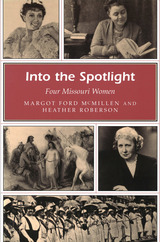
Sacred Sun, also called Mohongo, was a Native American of the Osage tribe in Missouri. In 1827, her people lost their land, their sacred places, and many of their traditions. Seeking answers to the dilemma faced by her people, and possibly aid from the French, she journeyed to Europe with a group of prominent Osage and a French entrepreneur. The harrowing events she experienced there would shape the woman she became when she returned to the Osage tribe, which had been forced to move to Oklahoma and was still struggling to survive.
Emily Newell Blair was born into a successful southwest Missouri family. Although she was born at a time when the contributions of women in the workforce were quite limited, she was encouraged by her family to get an education and expand her skills in writing and speaking. When women did begin to pursue education and careers, Blair was at the forefront, working tirelessly to secure voting rights for women. Eventually, she was elected to the Democratic National Committee and later poured her energy into organizing Democratic women’s clubs.
Josephine Baker grew up in segregated turn-of-the-century St. Louis society, which determined human worth by the color of one’s skin. Her mixed ethnic background left Baker feeling isolated both from her own black family and from white society. Driven to develop her own unique style, she became a star of song and stage, toured Europe, served as a spy, and was a fervent civil rights and antiracism activist.
Elizabeth Virginia Wallace, known to her family as “Bess,” grew up in one of Missouri’s most prominent families. She married a neighborhood boy—considered unacceptable by her mother—who would go on to become President Harry Truman. Bess Truman, called “the boss” by her husband, worked side by side with him, editing his speeches and providing advice and guidance through innumerable crises during and after World War II.
Into the Spotlight provides valuable new insights into Missouri and American history, as well as women’s history, and will be a welcome addition to the Missouri Heritage Readers Series.
READERS
Browse our collection.
PUBLISHERS
See BiblioVault's publisher services.
STUDENT SERVICES
Files for college accessibility offices.
RECENTLY PUBLISHED




UChicago Accessibility Resources
home | accessibility | search | about | contact us
BiblioVault ® 2001 - 2025
The University of Chicago Press