
 A SCHOLARLY BOOK REPOSITORY
511 start with L start with L
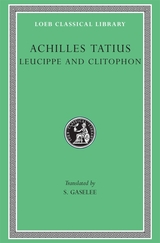
A charming Greek romance narrated by its hero.
Achilles Tatius was a Greek from Alexandria in Egypt; he is now believed to have flourished in the second century AD. Of his life nothing is known, though the Suidas says he became a Christian and a bishop and wrote a work on etymology, one on the sphere, and an account of great men. He is famous however for his surviving novel in eight books, The Adventures of Leucippe and Clitophon, one of the best Greek love stories. Clitophon relates to a friend the various difficulties which he and Leucippe had to overcome before they are happily united. The story is full of incident and readers are kept in suspense. There are many digressions giving scientific facts, myths, meditations, and so on, the interest of which redeems irrelevance.
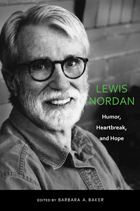
A vibrant tribute to Lewis Nordan’s unforgettable blend of Southern surrealism, dark humor, and deep humanity.
Lewis Nordan: Humor, Heartbreak, and Hope is a rich collection of essays that examines the life and work of one of the South’s most distinctive literary voices. Edited by Barbara A. Baker, this volume brings together scholars and writers who explore Nordan’s use of magical realism, dark humor, and emotional vulnerability to portray the complexities of life in the Mississippi Delta. Through themes of race, poverty, family, and resilience, the contributors illuminate how Nordan’s fiction captures both the pain and beauty of the Southern experience. This book is essential reading for fans of Southern literature, cultural studies, and American fiction.
Written by scholars and fiction writers who represent a fascinating range of experience—from a Shakespearean scholar to English professors to a former student of Nordan’s—this is a rich array of essays, poems, and visual arts in tribute to this increasingly important writer. The collection deepens the base of scholarship on Nordan, and contextualizes his work in relation to other important southern writers such as William Faulkner and Eudora Welty.
Nordan was born and raised in Mississippi before moving to Alabama to pursue his Ph.D. at Auburn University. He taught for several years at the University of Arkansas in Fayetteville and retired from the University of Pittsburgh, where he was a professor of English. Nordan has written four novels, three collections of short stories, and a memoir entitled Boy with Loaded Gun. His second novel, Wolf Whistle, won the Southern Book Award, and his subsequent novel, The Sharpshooter Blues, won the Notable Book Award from the American Library Association and the Fiction Award from the Mississippi Institute of Arts and Letters. Nordan is renowned for his distinctive comic writing style, even while addressing more serious personal and cultural issues such as heartbreak, loss, violence, and racism. He transforms tragic characters and events into moments of artistic transcendence, illuminating what he calls the “history of all human beings.”

A co-publication with NInA and Live Art Development Agency.

Normal0falsefalsefalseMicrosoftInternetExplorer4

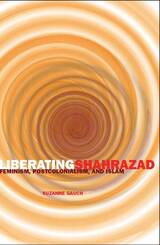
In Liberating Shahrazad, Suzanne Gauch analyzes how postcolonial writers and filmmakers from Algeria, Morocco, and Tunisia have reclaimed the storyteller in order to portray Muslim women in ways that highlight their power to shape their own destinies. Gauch looks at Maghrebian works that incorporate Shahrazad’s storytelling techniques into unexpected and unforeseen narratives. Highlighting the fluid nature of storytelling, Gauch demonstrates how these new depictions of Shahrazad—from artists such as Moufida Tlatli, Fatima Mernissi, Tahar Ben Jelloun, Assia Djebar, Leïla Sebbar—navigate the demands of a global marketplace, even as they reshape the stories told about the Islamic world.
In the face of both rising fundamentalism and proliferating Western media representations of Arab and Muslim women as silent, exploited, and uneducated victims, Gauch establishes how contemporary works of literature and film revive the voice of a long-silenced Shahrazad—and, ultimately, overthrow oppressive images of Muslim women. Suzanne Gauch is assistant professor of English and women’s studies at Temple University.
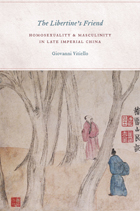
Delving into three hundred years of Chinese literature, from the mid-sixteenth century to the mid-nineteenth, The Libertine’s Friend uncovers the complex and fascinating history of male homosexual and homosocial relations in the late imperial era. Drawing particularly on overlooked works of pornographic fiction, Giovanni Vitiello offers a frank exploration of the importance of same-sex love and eroticism to the evolution of masculinity in China.
Vitiello’s story unfolds chronologically, beginning with the earliest sources on homoeroticism in pre-imperial China and concluding with a look at developments in the twentieth century. Along the way, he identifies a number of recurring characters—for example, the libertine scholar, the chivalric hero, and the lustful monk—and sheds light on a set of key issues, including the social and legal boundaries that regulated sex between men, the rise of male prostitution, and the aesthetics of male beauty. Drawing on this trove of material, Vitiello presents a historical outline of changing notions of male homosexuality in China, revealing the integral part that same-sex desire has played in its culture.
Challenging overarching theories of the novel by carefully mapping the historical contexts that have influenced modern experimental narratives, Boone constructs a model for interpreting sexuality that reaches from Freud's theory of the libidinal instincts to Foucault's theory of sexual discourse. The most ambitious study yet written on the links between literary modernity and the psychology of sex, Boone's Libidinal Currents will be a landmark book in the study of modernist fiction, gay studies/queer theory, feminist criticism, and studies in sexuality and gender.

A history of early modern libraries and the imperial desire for total knowledge—now in paperback.
Medieval scholars imagined the library as a microcosm of the world, but as novel early modern ways of managing information facilitated empire in both the New and Old Worlds, the world became a projection of the library. In The Librarian’s Atlas, Seth Kimmel offers a sweeping material history of how the desire to catalog books coincided in the sixteenth and seventeenth centuries with the aspiration to control territory. Through a careful study of library culture in Spain and Morocco—close readings of catalogs, marginalia, indexes, commentaries, and maps—Kimmel reveals how the booklover’s dream of a comprehensive and well-organized library shaped an expanded sense of the world itself.
Libraries amid Protest unpacks how these protest libraries—labor-intensive, temporary installations in parks and city squares, poorly protected from the weather, at odds with security forces—continue to arise. In telling the stories of these surprising and inspiring spaces through interviews and other research, Sherrin Frances confronts the complex history of American public libraries. She argues that protest libraries function as the spaces of opportunity and resistance promised, but not delivered, by American public libraries.
Remains of a universal chronicle.
Diodorus Siculus, Greek historian of Agyrium in Sicily (ca. 80–20 BC), wrote forty books of world history, called Library of History, in three parts: mythical history of peoples, non-Greek and Greek, to the Trojan War; history to Alexander’s death (323 BC); history to 54 BC. Of this we have complete Books 1–5 (Egyptians, Assyrians, Ethiopians, Greeks) and Books 11–20 (Greek history 480–302 BC); and fragments of the rest. He was an uncritical compiler, but used good sources and reproduced them faithfully. He is valuable for details unrecorded elsewhere, and as evidence for works now lost, especially writings of Ephorus, Apollodorus, Agatharchides, Philistus, and Timaeus.
The Loeb Classical Library edition of Diodorus Siculus is in twelve volumes.
Remains of a universal chronicle.
Diodorus Siculus, Greek historian of Agyrium in Sicily (ca. 80–20 BC), wrote forty books of world history, called Library of History, in three parts: mythical history of peoples, non-Greek and Greek, to the Trojan War; history to Alexander’s death (323 BC); history to 54 BC. Of this we have complete Books 1–5 (Egyptians, Assyrians, Ethiopians, Greeks) and Books 11–20 (Greek history 480–302 BC); and fragments of the rest. He was an uncritical compiler, but used good sources and reproduced them faithfully. He is valuable for details unrecorded elsewhere, and as evidence for works now lost, especially writings of Ephorus, Apollodorus, Agatharchides, Philistus, and Timaeus.
The Loeb Classical Library edition of Diodorus Siculus is in twelve volumes.
Remains of a universal chronicle.
Diodorus Siculus, Greek historian of Agyrium in Sicily (ca. 80–20 BC), wrote forty books of world history, called Library of History, in three parts: mythical history of peoples, non-Greek and Greek, to the Trojan War; history to Alexander’s death (323 BC); history to 54 BC. Of this we have complete Books 1–5 (Egyptians, Assyrians, Ethiopians, Greeks) and Books 11–20 (Greek history 480–302 BC); and fragments of the rest. He was an uncritical compiler, but used good sources and reproduced them faithfully. He is valuable for details unrecorded elsewhere, and as evidence for works now lost, especially writings of Ephorus, Apollodorus, Agatharchides, Philistus, and Timaeus.
The Loeb Classical Library edition of Diodorus Siculus is in twelve volumes.
Remains of a universal chronicle.
Diodorus Siculus, Greek historian of Agyrium in Sicily (ca. 80–20 BC), wrote forty books of world history, called Library of History, in three parts: mythical history of peoples, non-Greek and Greek, to the Trojan War; history to Alexander’s death (323 BC); history to 54 BC. Of this we have complete Books 1–5 (Egyptians, Assyrians, Ethiopians, Greeks) and Books 11–20 (Greek history 480–302 BC); and fragments of the rest. He was an uncritical compiler, but used good sources and reproduced them faithfully. He is valuable for details unrecorded elsewhere, and as evidence for works now lost, especially writings of Ephorus, Apollodorus, Agatharchides, Philistus, and Timaeus.
The Loeb Classical Library edition of Diodorus Siculus is in twelve volumes.
Remains of a universal chronicle.
Diodorus Siculus, Greek historian of Agyrium in Sicily (ca. 80–20 BC), wrote forty books of world history, called Library of History, in three parts: mythical history of peoples, non-Greek and Greek, to the Trojan War; history to Alexander’s death (323 BC); history to 54 BC. Of this we have complete Books 1–5 (Egyptians, Assyrians, Ethiopians, Greeks) and Books 11–20 (Greek history 480–302 BC); and fragments of the rest. He was an uncritical compiler, but used good sources and reproduced them faithfully. He is valuable for details unrecorded elsewhere, and as evidence for works now lost, especially writings of Ephorus, Apollodorus, Agatharchides, Philistus, and Timaeus.
The Loeb Classical Library edition of Diodorus Siculus is in twelve volumes.
Remains of a universal chronicle.
Diodorus Siculus, Greek historian of Agyrium in Sicily (ca. 80–20 BC), wrote forty books of world history, called Library of History, in three parts: mythical history of peoples, non-Greek and Greek, to the Trojan War; history to Alexander’s death (323 BC); history to 54 BC. Of this we have complete Books 1–5 (Egyptians, Assyrians, Ethiopians, Greeks) and Books 11–20 (Greek history 480–302 BC); and fragments of the rest. He was an uncritical compiler, but used good sources and reproduced them faithfully. He is valuable for details unrecorded elsewhere, and as evidence for works now lost, especially writings of Ephorus, Apollodorus, Agatharchides, Philistus, and Timaeus.
The Loeb Classical Library edition of Diodorus Siculus is in twelve volumes.
Remains of a universal chronicle.
Diodorus Siculus, Greek historian of Agyrium in Sicily (ca. 80–20 BC), wrote forty books of world history, called Library of History, in three parts: mythical history of peoples, non-Greek and Greek, to the Trojan War; history to Alexander’s death (323 BC); history to 54 BC. Of this we have complete Books 1–5 (Egyptians, Assyrians, Ethiopians, Greeks) and Books 11–20 (Greek history 480–302 BC); and fragments of the rest. He was an uncritical compiler, but used good sources and reproduced them faithfully. He is valuable for details unrecorded elsewhere, and as evidence for works now lost, especially writings of Ephorus, Apollodorus, Agatharchides, Philistus, and Timaeus.
The Loeb Classical Library edition of Diodorus Siculus is in twelve volumes.
Remains of a universal chronicle.
Diodorus Siculus, Greek historian of Agyrium in Sicily (ca. 80–20 BC), wrote forty books of world history, called Library of History, in three parts: mythical history of peoples, non-Greek and Greek, to the Trojan War; history to Alexander’s death (323 BC); history to 54 BC. Of this we have complete Books 1–5 (Egyptians, Assyrians, Ethiopians, Greeks) and Books 11–20 (Greek history 480–302 BC); and fragments of the rest. He was an uncritical compiler, but used good sources and reproduced them faithfully. He is valuable for details unrecorded elsewhere, and as evidence for works now lost, especially writings of Ephorus, Apollodorus, Agatharchides, Philistus, and Timaeus.
The Loeb Classical Library edition of Diodorus Siculus is in twelve volumes.
Remains of a universal chronicle.
Diodorus Siculus, Greek historian of Agyrium in Sicily (ca. 80–20 BC), wrote forty books of world history, called Library of History, in three parts: mythical history of peoples, non-Greek and Greek, to the Trojan War; history to Alexander’s death (323 BC); history to 54 BC. Of this we have complete Books 1–5 (Egyptians, Assyrians, Ethiopians, Greeks) and Books 11–20 (Greek history 480–302 BC); and fragments of the rest. He was an uncritical compiler, but used good sources and reproduced them faithfully. He is valuable for details unrecorded elsewhere, and as evidence for works now lost, especially writings of Ephorus, Apollodorus, Agatharchides, Philistus, and Timaeus.
The Loeb Classical Library edition of Diodorus Siculus is in twelve volumes.
Remains of a universal chronicle.
Diodorus Siculus, Greek historian of Agyrium in Sicily (ca. 80–20 BC), wrote forty books of world history, called Library of History, in three parts: mythical history of peoples, non-Greek and Greek, to the Trojan War; history to Alexander’s death (323 BC); history to 54 BC. Of this we have complete Books 1–5 (Egyptians, Assyrians, Ethiopians, Greeks) and Books 11–20 (Greek history 480–302 BC); and fragments of the rest. He was an uncritical compiler, but used good sources and reproduced them faithfully. He is valuable for details unrecorded elsewhere, and as evidence for works now lost, especially writings of Ephorus, Apollodorus, Agatharchides, Philistus, and Timaeus.
The Loeb Classical Library edition of Diodorus Siculus is in twelve volumes.
Remains of a universal chronicle.
Diodorus Siculus, Greek historian of Agyrium in Sicily (ca. 80–20 BC), wrote forty books of world history, called Library of History, in three parts: mythical history of peoples, non-Greek and Greek, to the Trojan War; history to Alexander’s death (323 BC); history to 54 BC. Of this we have complete Books 1–5 (Egyptians, Assyrians, Ethiopians, Greeks) and Books 11–20 (Greek history 480–302 BC); and fragments of the rest. He was an uncritical compiler, but used good sources and reproduced them faithfully. He is valuable for details unrecorded elsewhere, and as evidence for works now lost, especially writings of Ephorus, Apollodorus, Agatharchides, Philistus, and Timaeus.
The Loeb Classical Library edition of Diodorus Siculus is in twelve volumes.
Remains of a universal chronicle.
Diodorus Siculus, Greek historian of Agyrium in Sicily (ca. 80–20 BC), wrote forty books of world history, called Library of History, in three parts: mythical history of peoples, non-Greek and Greek, to the Trojan War; history to Alexander’s death (323 BC); history to 54 BC. Of this we have complete Books 1–5 (Egyptians, Assyrians, Ethiopians, Greeks) and Books 11–20 (Greek history 480–302 BC); and fragments of the rest. He was an uncritical compiler, but used good sources and reproduced them faithfully. He is valuable for details unrecorded elsewhere, and as evidence for works now lost, especially writings of Ephorus, Apollodorus, Agatharchides, Philistus, and Timaeus.
The Loeb Classical Library edition of Diodorus Siculus is in twelve volumes.
Antiquity’s most influential mythological handbook.
The Library provides in three books a grand summary of traditional Greek mythology and heroic legends. Written in clear and unaffected style, the compendium faithfully follows the Greek literary sources. It is thus an important record of Greek accounts of the origin and early history of the world and their race. This work has been attributed to Apollodorus of Athens (born ca. 180 BC), a student of Aristarchus. But the text as we have it was written by an author probably living in the first or second century of our era.
In his highly valued notes to the Loeb Classical Library edition (which is in two volumes) J. G. Frazer cites the principal passages of other ancient writers where each particular story is told and compares the various versions to those in the Library.
Antiquity’s most influential mythological handbook.
The Library provides in three books a grand summary of traditional Greek mythology and heroic legends. Written in clear and unaffected style, the compendium faithfully follows the Greek literary sources. It is thus an important record of Greek accounts of the origin and early history of the world and their race. This work has been attributed to Apollodorus of Athens (born ca. 180 BC), a student of Aristarchus. But the text as we have it was written by an author probably living in the first or second century of our era.
In his highly valued notes to the Loeb Classical Library edition (which is in two volumes) J. G. Frazer cites the principal passages of other ancient writers where each particular story is told and compares the various versions to those in the Library.
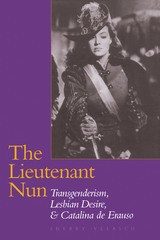
Catalina de Erauso (1592-1650) was a Basque noblewoman who, just before taking final vows to become a nun, escaped from the convent at San Sebastián, dressed as a man, and, in her own words, "went hither and thither, embarked, went into port, took to roving, slew, wounded, embezzled, and roamed about." Her long service fighting for the Spanish empire in Peru and Chile won her a soldier's pension and a papal dispensation to continue dressing in men's clothing.
This theoretically informed study analyzes the many ways in which the "Lieutenant Nun" has been constructed, interpreted, marketed, and consumed by both the dominant and divergent cultures in Europe, Latin America, and the United States from the seventeenth century to the present. Sherry Velasco argues that the ways in which literary, theatrical, iconographic, and cinematic productions have transformed Erauso's life experience into a public spectacle show how transgender narratives expose and manipulate spectators' fears and desires. Her book thus reveals what happens when the private experience of a transgenderist is shifted to the public sphere and thereby marketed as a hybrid spectacle for the curious gaze of the general audience.
Greco-Roman antiquity’s premier Jewish historian.
Josephus, soldier, statesman, historian, was a Jew born at Jerusalem about AD 37. A man of high descent, he early became learned in Jewish law and Greek literature and was a Pharisee. After pleading in Rome the cause of some Jewish priests he returned to Jerusalem and in 66 tried to prevent revolt against Rome, managing for the Jews the affairs of Galilee. In the troubles that followed he made his peace with Vespasian. Present at the siege of Jerusalem by Titus, he received favors from these two as emperors and from Domitian, and assumed their family name Flavius. He died after 97.
As a historical source Josephus is invaluable. His major works are: History of the Jewish War, in seven books, from 170 BC to his own time, first written in Aramaic but translated by himself into the Greek we now have; and Jewish Antiquities, in twenty books, from the creation of the world to AD 66. The Loeb Classical Library edition of the works of Josephus, which is in thirteen volumes, also includes the autobiographical Life and his treatise Against Apion.
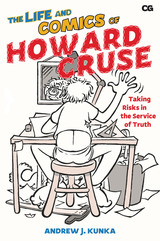
The Life and Comics of Howard Cruse tells the remarkable story of how a self-described “preacher’s kid” from Birmingham, Alabama, became the so-called “Godfather of Gay Comics.” This study showcases a remarkable fifty-year career that included working in the 1970s underground comics scene, becoming founding editor of the groundbreaking anthology series Gay Comix, and publishing the graphic novel Stuck Rubber Baby, partially based on his own experience of coming of age in the Civil Rights era.
Through his exploration of Cruse’s life and work, Andrew J. Kunka also chronicles the dramatic ways that gay culture changed over the course of Cruse’s lifetime, from Cold War-era homophobia to the gay liberation movement to the AIDS crisis to the legalization of gay marriage. Highlighting Cruse’s skills as a trenchant satirist and social commentator, Kunka explores how he cast a queer look at American politics, mainstream comics culture, and the gay community’s own norms.
Lavishly illustrated with a broad selection of comics from Cruse’s career, this study serves as a perfect introduction to this pioneering cartoonist, as well as an insightful read for fans who already love how his work sketched a new vision of gay life.
Published by Bucknell University Press. Distributed worldwide by Rutgers University Press.

Wegner shows how phenomena including the debate on globalization, neoliberal notions of the end of history, the explosive growth of the Internet, the efflorescence of new architectural and urban planning projects, developments in literary and cultural production, new turns in theory and philosophy, and the rapid growth of the antiglobalization movement came to characterize the long nineties. He offers readings of some of the most interesting cultural texts of the era: Don DeLillo’s White Noise; Joe Haldeman’s Forever trilogy; Octavia Butler’s Parable novels; the Terminator films; the movies Fight Club, Independence Day, Cape Fear, and Ghost Dog; and the television series Buffy the Vampire Slayer. In so doing, he illuminates fundamental issues concerning narrative, such as how beginnings and endings are recognized and how relationships between events are constructed.
Some books start at point A, take you by the hand, and carefully walk you to point B, and on and on.
This is not one of those books. This book is about mood, and how it works in and with us as complicated, imperfectly self-knowing beings existing in a world that impinges and infringes on us, but also regularly suffuses us with beauty and joy and wonder. You don’t write that book as a linear progression—you write it as a living, breathing, richly associative, and, crucially, active, investigation. Or at least you do if you’re as smart and inventive as Mary Cappello.
What is a mood? How do we think about and understand and describe moods and their endless shadings? What do they do to and for us, and how can we actively generate or alter them? These are all questions Cappello takes up as she explores mood in all its manifestations: we travel with her from the childhood tables of “arts and crafts” to mood rooms and reading rooms, forgotten natural history museums and 3-D View-Master fairytale tableaux; from the shifting palette of clouds and weather to the music that defines us and the voices that carry us. The result is a book as brilliantly unclassifiable as mood itself, blue and green and bright and beautiful, funny and sympathetic, as powerfully investigative as it is richly contemplative.
“I’m one of those people who mistrusts a really good mood,” Cappello writes early on. If that made you nod in recognition, well, maybe you’re one of Mary Cappello’s people; you owe it to yourself to crack Life Breaks In and see for sure.

Somehow people continue to imagine a world of justice against the odds of a deck that has been stacked against them. In her urgent and perceptive book, Life in and against the Odds, Hoechst focuses on the particular circumstances and conditions of different phases of speculative expansion in the United States. She traces the roots of the nation-state to nineteenth-century land markets and slave exchanges. Hoechst also chronicles how these racial foundations extend through corporate capitalism from the 1920s and ´30s to the present era of financialized capitalism and the recent housing bubble.
Life in and against the Odds identifies where and how speculative nationalism creates roadblocks to freedom. Hoechst retells the history of the United States with a perspective on how human lives are made, destroyed, reconfigured, and claimed under the systemic violence of a nation that is rooted in the racializing futurity of speculative capitalism.
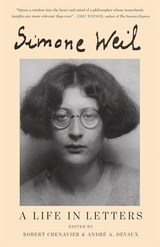
The inspiring letters of philosopher, mystic, and freedom fighter Simone Weil to her family, presented for the first time in English.
Now in the pantheon of great thinkers, Simone Weil (1909–1943) lived largely in the shadows. Assembled here, the letters she wrote to her parents and brother from childhood onward chart her intellectual range as well as her itinerancy and shifting preoccupations, revealing the singular personality at the heart of her brilliant essays.
The daughter of a bourgeois Parisian Jewish family, Weil was a troublemaking idealist who preferred the company of miners and Russian exiles to that of her peers. A scholar of history and politics, she ultimately found a home in Christian mysticism. Weil paired teaching with poetry and even dabbled in mathematics, as evidenced by her correspondence with her brother, André, who won the Kyoto Prize in 1994 for the famed Weil Conjectures.
The first complete collection of Simone Weil’s missives to her family, A Life in Letters vividly illustrates her thought taking shape as she joins the Spanish struggle against fascism and the transatlantic resistance to the Nazis. An introduction and notes contextualize the letters historically and intellectually, providing an ideal entryway into Weil’s treasured philosophical insights.
A vital contribution to environmental humanities that explores artistic responses to the plastic age
Since at least the 1960s, plastics have been a defining feature of contemporary life. They are undeniably utopian—wondrously innovative, cheap, malleable, durable, and convenient. Yet our proliferating use of plastics has also triggered catastrophic environmental consequences. Plastics are piling up in landfills, floating in oceans, and contributing to climate change and cancer clusters. They are derived from petrochemicals and enmeshed with the global oil economy, and they permeate our consumer goods and their packaging, our clothing and buildings, our bodies and minds. Plastic reshapes our cultural and social imaginaries.
With impressive breadth and compelling urgency, the essays in Life in Plastic examine the arts and literature of the plastic age. Focusing mainly on post-1960s North America, the collection spans a wide variety of genres, including graphic novels, superhero comics, utopic and dystopic science fiction, poetry, and satirical prose, as well as vinyl records and visual arts. Essays by a remarkable lineup of cultural theorists interrogate how plastic—as material and concept—has affected human sensibilities and expression. The collection reveals the place of plastic in reshaping how we perceive, relate to, represent, and re-imagine bodies, senses, environment, scale, mortality, and collective well-being.
Ultimately, the contributors to Life in Plastic think through plastic with an eye to imagining our way out of plastic, moving toward a postplastic future.
Contributors: Crystal Bartolovich, Syracuse U; Maurizia Boscagli, U of California, Santa Barbara; Christopher Breu, Illinois State U; Loren Glass, U of Iowa; Sean Grattan, U of Kent; Nayoung Kim, Brandeis U; Jane Kuenz, U of Southern Maine; Paul Morrison, Brandeis U; W. Dana Phillips, Towson U in Maryland and Rhodes U in Grahamstown, South Africa; Margaret Ronda, UC-Davis; Lisa Swanstrom, U of Utah; Jennifer Wagner-Lawlor, Pennsylvania State U; Phillip E. Wegner, U of Florida; Daniel Worden, Rochester Institute of Technology.
The Life of Aesop the Philosopher, an anonymous Greek literary work, presents one version of the novelistic biography of Aesop, which dates to the fourth to fifth century CE. In this volume, Grammatiki A. Karla offers an extended introduction to the Life of Aesop in general, the history of the textual tradition, and the MORN manuscript family and its relationship to other versions and papyrus fragments. She then presents a new edition of the late antique version (MORN) alongside David Konstan’s English translation. A commentary addresses editorial choices and focuses on words and phrases that are of interest for the history of the Greek language.
THIS EDITION HAS BEEN REPLACED BY A NEWER EDITION.
Novel and biography are joined in this literary work with a historical core. Philostratus' life of the first century mystic from Tyana was written at the request of the empress Julia Domna. It portrays a man with supernatural powers, a Pythagorean who predicts the future, cures the sick, raises the dead, and himself prevails over death, ascending to heaven and later appearing to disciples to prove his immortality. The account has a rich and varied setting: Apollonius' ministering carries him throughout the eastern Mediterranean world, as far south as Ethiopia, and eastward to India. Philostratus' Life of Apollonius was long viewed by Christians as a dangerous attempt to set up a Christ-like rival.
This two-volume edition of the Life of Apollonius of Tyana includes, in the second volume, a collection of Apollonius' letters and a treatise by the Christian bishop and historian Eusebius attacking Apollonius as a charlatan.
Also available by Philostratus 'the Athenian' in the Loeb Classical Library is his Lives of the Sophists, a treasury of information about notable sophists that yields a good picture of the predominant influence of Sophistic in the educational, social, and political life of the Empire in the 2nd and 3rd centuries.
THIS EDITION HAS BEEN REPLACED BY A NEWER EDITION.
Novel and biography are joined in this literary work with a historical core. Philostratus' life of the first century mystic from Tyana was written at the request of the empress Julia Domna. It portrays a man with supernatural powers, a Pythagorean who predicts the future, cures the sick, raises the dead, and himself prevails over death, ascending to heaven and later appearing to disciples to prove his immortality. The account has a rich and varied setting: Apollonius' ministering carries him throughout the eastern Mediterranean world, as far south as Ethiopia, and eastward to India. Philostratus' Life of Apollonius was long viewed by Christians as a dangerous attempt to set up a Christ-like rival.
This two-volume edition of the Life of Apollonius of Tyana includes, in the second volume, a collection of Apollonius' letters and a treatise by the Christian bishop and historian Eusebius attacking Apollonius as a charlatan.
Also available by Philostratus 'the Athenian' in the Loeb Classical Library is his Lives of the Sophists, a treasury of information about notable sophists that yields a good picture of the predominant influence of Sophistic in the educational, social, and political life of the Empire in the 2nd and 3rd centuries.
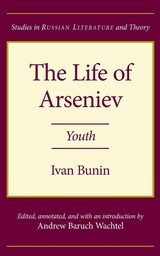
In ways similar to Nabokov's Speak, Memory, Bunin's novel powerfully evokes the atmosphere of Russia in the decades before the Revolution and illuminates those Russian literary and cultural traditions eradicated in the Soviet era. This first full English-language edition updates earlier translations, taking as its source the version Bunin revised in 1952, and including an introduction and annotations by Andrew Baruch Wachtel.

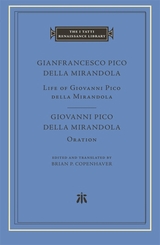
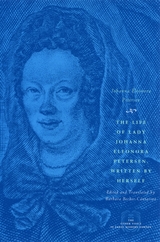
Collected in The Life of Lady Johanna Eleonora Petersen are Petersen's autobiography and two shorter tracts that would become models of Pietistic devotional writing. A record of the status and contribution of women in the early Protestant church, this collection will be indispensable reading for scholars of seventeenth-century German religious and social history.
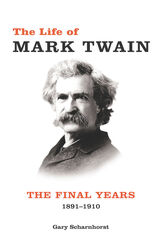
In the final volume of his three-volume biography, Gary Scharnhorst chronicles the life of Samuel Langhorne Clemens from his family’s extended trip to Europe in 1891 to his death in 1910 at age 74. During these years Clemens grapples with bankruptcy, returns to the lecture circuit, and endures the loss of two daughters and his wife. It is also during this time that he writes some of his darkest, most critical works; among these include Pudd’nhead Wilson; Personal Recollections of Joan of Arc; Tom Sawyer Abroad; Tom Sawyer, Detective; Following the Equator; No. 44, the Mysterious Stranger; and portions of his Autobiography.
The Life of Texts is designed around particular issues rather than the history of the discipline as such. Each chapter concentrates on a different aspect of 'the life of texts' and introduces the key debates and concepts relevant to its study. The issues discussed range from aesthetics and narrative to intertextuality and intermediality, from reading practices to hermeneutics and semiotics, popular culture to literary canonisation, postcolonial criticism to cultural memory. Key concepts and schools in the field have been highlighted in the text and then collected in a glossary for ease of reference. All chapters are richly illustrated with examples from different language areas.
In his Nobel Prize acceptance speech, Albert Camus declared that a writer's duty is twofold: "the refusal to lie about what one knows and the resistance against oppression." These twin obsessions help explain something of Camus' remarkable character, which is the overarching subject of this sympathetic and lively book. Through an exploration of themes that preoccupied Camus--absurdity, silence, revolt, fidelity, and moderation--Robert Zaretsky portrays a moralist who refused to be fooled by the nobler names we assign to our actions, and who pushed himself, and those about him, to challenge the status quo.
Though we do not face the same dangers that threatened Europe when Camus wrote The Myth of Sisyphus and The Stranger, we confront other alarms. Herein lies Camus' abiding significance. Reading his work, we become more thoughtful observers of our own lives. For Camus, rebellion is an eternal human condition, a timeless struggle against injustice that makes life worth living. But rebellion is also bounded by self-imposed constraints--it is a noble if impossible ideal. Such a contradiction suggests that if there is no reason for hope, there is also no occasion for despair--a sentiment perhaps better suited for the ancient tragedians than modern political theorists but one whose wisdom abides. Yet we must not venerate suffering, Camus cautions: the world's beauty demands our attention no less than life's train of injustices. That recognition permits him to declare: "It was the middle of winter, I finally realized that, within me, summer was inextinguishable."

This comprehensive anthology will be the standard source for the
study of African American public address for years to come.
For Americans of the 19th century, as W. E. B. Du Bois observed, eloquent
speeches were 'the shining lights of civilization' that both expressed
and sought to improve the lives and communities from which they sprang.
Through political speeches, sermons, lectures, oral testimonies, and ceremonial
addresses, African Americans offered diverse responses to the issues and
events of their times, including not only slavery and racial equality but
also women's rights, education, religion, immigration, socialism, war,
Indian policy, and labor organization, among others. The speeches in this
collection are among the most powerful expressions of African American
opinions on these issues and were delivered on occasions and before audiences
where the speakers believed their words might be transformative.
Lift Every Voice is a completely revised, updated, and expanded
version of Philip Foner's 1972 classic Voice of Black America, which Library
Journal hailed as "indispensable.""This well-edited and
richly inclusive work," wrote Benjamin Quarles, "unveils the
full sweep of Black expression as found in platform addresses" by
"men and women who join eloquence with reason in articulating their
grievances and their aspirations and in arousing their listeners with their
ringing and prophetic challenges." This new collection includes over
60 additional texts and revised and expanded introductory essays that provide
historical, biographical, and critical information for each speech.
Containing more than 150 speeches, this anthology represents the most
extensive and diverse collection of African American oratory of the 18th
and 19th centuries ever published. Lift Every Voice makes readily
accessible not only the classic orations of such well-known figures
as Frederick Douglass, Sojourner Truth, and Booker T. Washington but also
dozens of lesser-known but important speeches deserving greater recognition
and study. Many of these speeches are previously unpublished, uncollected,
or long out of print.
The full extent of Plutarch’s moral educational program remains largely understudied, at least in those aspects pertaining to women and the gendered other. As a result, scholarship on his views on women have differed significantly in their conclusions, with some scholars suggesting that he is overwhelmingly positive towards women and marriage and perhaps even a “precursor to feminism,” and others arguing that he was rather negative on the issue. Like a Captive Bird: Gender and Virtue in Plutarch is an examination of these educational methods employed in Plutarch’s work to regulate the expression of gender identity in women and men. In six chapters, author Lunette Warren analyzes Plutarch’s ideas about women and gender in Moralia and Lives. The book examines the divergences between real and ideal, the aims and methods of moral philosophy and psychagogic practice as they relate to identity formation, and Plutarch’s theoretical philosophy and metaphysics.
Warren argues that gender is a flexible mode of being that expresses a relation between body and soul, and that gender and virtue are inextricably entwined. Plutarch’s expression of gender is also an expression of a moral condition that signifies relationships of power, Warren claims, especially power relationships between the husband and wife. Uncovered in these texts is evidence of a redistribution of power, which allows some women to dominate other women and, in rare cases, men too. Like a Captive Bird offers a unique and fresh interpretation of Plutarch’s metaphysics which centers gender as one of the organizational principles of nature. It is aimed at scholars of Plutarch, ancient philosophy, and ancient gender studies, especially those who are interested in feminist studies of antiquity.

Co-winner, Ray & Pat Browne Award for Best Edited Collection in Popular Culture and American Culture
Once a small subculture, the steampunk phenomenon exploded in visibility during the first years of the twenty-first century, its influence and prominence increasing ever since. From its Victorian and literary roots to film and television, video games, music, and even fashion, this subgenre of science fiction reaches far and wide within current culture. Here Rachel A. Bowser and Brian Croxall present cutting-edge essays on steampunk: its rise in popularity, its many manifestations, and why we should pay attention.
Like Clockwork offers wide-ranging perspectives on steampunk’s history and its place in contemporary culture, all while speaking to the “why” and “why now” of the genre. In her essay, Catherine Siemann draws on authors such as William Gibson and China Miéville to analyze steampunk cities; Kathryn Crowther turns to disability studies to examine the role of prosthetics within steampunk as well as the contemporary culture of access; and Diana M. Pho reviews the racial and national identities of steampunk, bringing in discussions of British chap-hop artists, African American steamfunk practitioners, and multicultural steampunk fan cultures.
From disability and queerness to ethos and digital humanities, Like Clockwork explores the intriguing history of steampunk to evaluate the influence of the genre from the 1970s through the twenty-first century.
Contributors: Kathryn Crowther, Perimeter College at Georgia State University; Shaun Duke, University of Florida; Stefania Forlini, University of Calgary (Canada); Lisa Hager, University of Wisconsin–Waukesha; Mike Perschon, MacEwan University in Edmonton, Alberta; Diana M. Pho; David Pike, American University; Catherine Siemann, New Jersey Institute of Technology; Joseph Weakland, Georgia Institute of Technology; Roger Whitson, Washington State University.
In Sharon Cameron’s essays, a magnetic constellation gathers works of Emerson, Whitman, Dickinson, Cather, and Stevens—each manifesting in its own terms “the likeness of things unlike”—to form a loose commonality in a strain of American writing in which incommensurable elements can’t be integrated and can’t be separated. The Likeness of Things Unlike is concerned with discordant elements of an aesthetic work and argues that these elements refigure the aesthetic wholes whose integrity they apparently violate. These intertwined, subversive elements are challenges to literary systems and are essentially philosophical in their rethinking of categories, and thus go beyond the aesthetic particulars that exemplify them.
Cameron is known for rigorously and brilliantly connecting artistic achievement to radical ways of thinking. Georg Lukcás describes the essayist as one who “adapts himself to the essay’s ‘smallness’ of form—the eternal smallness of the most profound work of the intellect in [the] face of life.” With The Likeness of Things Unlike Cameron powerfully demonstrates Lukács’s remarkable insight.
Yet for all her remarkable accomplishments, Lillie Blake's story has been all but forgotten. As Grace Farrell reveals in this richly textured biography, Blake's creative writings did not survive the canonical purges of women authors at the turn of the twentieth century, and her contributions to the suffrage movement were simply ignored in the official histories sanctioned by Susan B. Anthony. From the traces that remain, Farrell reconstructs an extraordinary life of passion and purpose. She chronicles Blake's literary career from Civil War correspondent to novelist and provides an inside view of suffrage politics, correcting some long held misconceptions perpetuated by Anthony and her supporters.
At the same time, Farrell expands the generic boundaries of biography by recounting not only a life and the causes of its erasure but also her own process of recovering that life. She brings the reader along with her as she follows Blake's path in the world, touches her diary, reads her letters, and campaigns to prevent Yale University from demolishing Blake's childhood home in New Haven.
With a backdrop of religious violence and escalating regional tensions in South Asia, Priya Kumar’s Limiting Secularism probes the urgent topic of secularism and tolerance in Indian culture and life. Kumar explores Partition as the founding trauma of the Indian nation-state and traces the consequences of its marking off of “Indian” from “Pakistani” and the positioning of Indian Muslims as strangers within the nation.
Kumar unpacks the implications of the Nehruvian doctrine of tolerance-with all of its resonances of condescension and inequality-and asks whether more ethical cohabitation can replace the “arrogant compulsive tolerance” of the state and the majority. Informed by Jacques Derrida’s recent work on hospitality and living together, Kumar argues for the emergence of an “ethics of coexistence” in Indian fiction and film. Considering narratives ranging from the cosmopolitan English novels of Rushdie and Ghosh to literature in South Asian languages as well as recent Hindi cinema, Kumar demonstrates that these fictions are important resources for reimagining tolerance and coexistence.
Distinctive and timely in its investigation of secularism and communalism, Limiting Secularism works to envision the radical possibilities of going beyond tolerance to living well together.
Priya Kumar is associate professor of English at the University of Iowa.
Why must critics unmask and demystify literary works? Why do they believe that language is always withholding some truth, that the critic’s task is to reveal the unsaid or repressed? In this book, Rita Felski examines critique, the dominant form of interpretation in literary studies, and situates it as but one method among many, a method with strong allure—but also definite limits.
Felski argues that critique is a sensibility best captured by Paul Ricoeur’s phrase “the hermeneutics of suspicion.” She shows how this suspicion toward texts forecloses many potential readings while providing no guarantee of rigorous or radical thought. Instead, she suggests, literary scholars should try what she calls “postcritical reading”: rather than looking behind a text for hidden causes and motives, literary scholars should place themselves in front of it and reflect on what it suggests and makes possible.
By bringing critique down to earth and exploring new modes of interpretation, The Limits of Critique offers a fresh approach to the relationship between artistic works and the social world.

Why must critics unmask and demystify literary works? Why do they believe that language is always withholding some truth, that the critic’s task is to reveal the unsaid or repressed? In this book, Rita Felski examines critique, the dominant form of interpretation in literary studies, and situates it as but one method among many, a method with strong allure—but also definite limits.
Felski argues that critique is a sensibility best captured by Paul Ricoeur’s phrase “the hermeneutics of suspicion.” She shows how this suspicion toward texts forecloses many potential readings while providing no guarantee of rigorous or radical thought. Instead, she suggests, literary scholars should try what she calls “postcritical reading”: rather than looking behind a text for hidden causes and motives, literary scholars should place themselves in front of it and reflect on what it suggests and makes possible.
By bringing critique down to earth and exploring new modes of interpretation, The Limits of Critique offers a fresh approach to the relationship between artistic works and the social world.
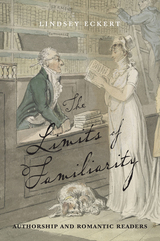
What did Wordsworth wear, and where did he walk? Who was Byron’s new mistress, and how did his marriage fare? Answers—sometimes accurate, sometimes not—were tantalizingly at the ready in the Romantic era, when confessional poetry, romans à clef, personal essays, and gossip columns offered readers exceptional access to well-known authors. But at what point did familiarity become overfamiliarity? Widely recognized as a social virtue, familiarity—a feeling of emotional closeness or comforting predictability—could also be dangerous, vulgar, or boring. In The Limits of Familiarity, Eckert persuasively argues that such concerns shaped literary production in the Romantic period. Bringing together reception studies, celebrity studies, and literary history to reveal how anxieties about familiarity shaped both Romanticism and conceptions of authorship, this book encourages us to reflect in our own fraught historical moment on the distinction between telling all and telling all too much.
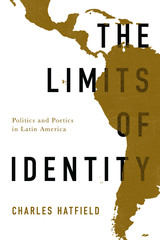
The Limits of Identity is a polemical critique of the repudiation of universalism and the theoretical commitment to identity and difference embedded in Latin American literary and cultural studies. Through original readings of foundational Latin American thinkers (such as José Martí and José Enrique Rodó) and contemporary theorists (such as John Beverley and Doris Sommer), Charles Hatfield reveals and challenges the anti-universalism that informs seemingly disparate theoretical projects.
The Limits of Identity offers a critical reexamination of widely held conceptions of culture, ideology, interpretation, and history. The repudiation of universalism, Hatfield argues, creates a set of problems that are both theoretical and political. Even though the recognition of identity and difference is normally thought to be a form of resistance, The Limits of Identity claims that, in fact, the opposite is true.
The Limits of Orientalism: Seventeenth-Century Representations of India challenges the recent postcolonial readings of European, predominantly English, representations of India in the seventeenth century. Following Edward Said’s discourse of “Orientalism,” most postcolonial analyses of the seventeenth-century representations of India argue that the natives are represented as barbaric or exotic “others,” imagining these representations as products of colonial ideology. Such approaches tend to offer a homogeneous idea of the “native” and usually equate it with the term “Indian.” Sapra, however, argues that instead of representing all natives as barbaric “others,” the English drew parallels, especially between themselves and the Mughal aristocracy, associating with them as partners in trade and potential allies in war. While the Muslims are from the outset largely portrayed as highly civilized and cultured, early European writers tended to be more conflicted with Hindus, their first highly negative views undergoing a transformation that brings into question any straightforward Orientalist reading of the texts and anticipates the complexity of later representations of the indigenous peoples of the sub-continent.
Sapra’s theoretical and methodological approach is influenced by such writers as Aijaz Ahmad and Denis Porter, who have highlighted powerful alternatives to Said’s discourse of “Orientalism.” Sapra historicizes European representations of the indigenous to draw attention to the contrasting approaches of the Portuguese, the Dutch and the English in relation to seventeenth-century India, effectively undermining comfortable notions of a homogenous “West.” Unlike the Portuguese, for whom the idea of a dynasty and the conversion of heathens went hand in hand with the idea of trade, for the Dutch and the English the primary consideration was commercial. In keeping with the commercial approach of the English East India Company, most English travelers, instead of representing the Muslims as barbaric “others,” highlight the compatibility between the two cultures and consistently praise the Mughal empire for its religious tolerance. In the representations of the Hindus, Sapra demonstrates that most writers, even while denigrating the Hindu religion, appreciate the civilized society of the Hindus. Moreover, in the representations of sati or widow-burning, a distinction needs to be made between the patriarchal and the Orientalist points of views, which are at variance with each other. The tension between the patriarchal and the Orientalist positions challenges Gayatri Chakravorty Spivak’s analysis of sati in “Can the Subaltern Speak?” which has become the standard model for most postcolonial appraisals of European representations of sati. The book highlights the lacuna in postcolonial readings by providing access to selections of commonly unavailable early-modern writings by Thomas Roe, Edward Terry, Henry Lord, Thomas Coryate, Alexander Hamilton and other the records of the East India Company, which makes the book vital for students of theory, European and South-Asian history, and Renaissance literatures.
Published by University of Delaware Press. Distributed worldwide by Rutgers University Press.
Studies in Medieval and Renaissance Sources, the transformative successor to Studies in Medieval and Renaissance History (first published in 1964), provides a unique venue for scholars to offer fresh readings of evidence from the period 400–1600. This annual is dedicated to the fundamental scholarship of analysis and interpretation led by direct engagement with the sources—written, visual, material—in any form, from editions, translations, and commentaries to reports, notes, and reflections. By foregrounding the most basic approach of working outwards from the evidence, it aims to foster conversations across disciplines, regions, and periods, as well as to become a reference point for original approaches and new discoveries.
This supplementary volume comprises essays on sources from the pre-modern world authored by members of the Medieval Studies Research Group, University of Lincoln, to mark the launch of the new (fourth) series.
Christopher Sullivan’s engaging exploration focuses on the role of poetry in Lincoln’s life and thought. As Sullivan shows, the poetic prose of Lincoln’s most famous writings and oratory drew on an ear for verse he began to cultivate during his frontier youth. Full versions of Lincoln’s own published and unpublished poetry provide fascinating context for his work before and during his political career while shedding light on his state of mind during the crisis of an existential war. Sullivan also considers Lincoln’s relationship with poetry against a backdrop of what poetry is, how it operates, and how it may resurface in prose.
A journalistic look at the crossroads of art and leadership, Lincoln’s Poetry adds a surprising yet vital dimension to our perceptions of the sixteenth president.
Winner of the Ralph J. Gleason Music Book Award, Rock & Roll Hall of Fame
Winner of the American Book Award, Before Columbus Foundation
Winner of the PEN Oakland–Josephine Miles Award
Winner of the MAAH Stone Book Award
A Pitchfork Best Music Book of the Year
A Rolling Stone Best Music Book of the Year
“Brooks traces all kinds of lines, finding unexpected points of connection…inviting voices to talk to one another, seeing what different perspectives can offer, opening up new ways of looking and listening by tracing lineages and calling for more space.”
—New York Times
An award-winning Black feminist music critic takes us on an epic journey through radical sound from Bessie Smith to Beyoncé.
Daphne A. Brooks explores more than a century of music archives to examine the critics, collectors, and listeners who have determined perceptions of Black women on stage and in the recording studio. How is it possible, she asks, that iconic artists such as Aretha Franklin and Beyoncé exist simultaneously at the center and on the fringe of the culture industry?
Liner Notes for the Revolution offers a startling new perspective on these acclaimed figures—a perspective informed by the overlooked contributions of other Black women concerned with the work of their musical peers. Zora Neale Hurston appears as a sound archivist and a performer, Lorraine Hansberry as a queer Black feminist critic of modern culture, and Pauline Hopkins as America’s first Black female cultural commentator. Brooks tackles the complicated racial politics of blues music recording, song collecting, and rock and roll criticism. She makes lyrical forays into the blues pioneers Bessie Smith and Mamie Smith, as well as fans who became critics, like the record-label entrepreneur and writer Rosetta Reitz. In the twenty-first century, pop superstar Janelle Monae’s liner notes are recognized for their innovations, while celebrated singers Cécile McLorin Salvant, Rhiannon Giddens, and Valerie June take their place as cultural historians.
With an innovative perspective on the story of Black women in popular music—and who should rightly tell it—Liner Notes for the Revolution pioneers a long overdue recognition and celebration of Black women musicians as radical intellectuals.
Winner of the Ralph J. Gleason Music Book Award, Rock & Roll Hall of Fame
Winner of the American Book Award, Before Columbus Foundation
Winner of the PEN Oakland–Josephine Miles Award
Winner of the MAAH Stone Book Award
A Pitchfork Best Music Book of the Year
A Rolling Stone Best Music Book of the Year
A Boston Globe Summer Read
“Brooks traces all kinds of lines…inviting voices to talk to one another, seeing what different perspectives can offer, opening up new ways of looking and listening.”
—New York Times
“A wide-ranging study of Black female artists, from elders like Bessie Smith and Ethel Waters to Beyoncé and Janelle Monáe…Connecting the sonic worlds of Black female mythmakers and truth-tellers.”
—Rolling Stone
“A gloriously polyphonic book.”
—Margo Jefferson, author of Negroland
How is it possible that iconic artists like Aretha Franklin and Beyoncé can be both at the center and on the fringe of the culture industry? Daphne Brooks explores more than a century of music archives to bring to life the critics, collectors, and listeners who have shaped our perceptions of Black women both on stage and in the recording studio.
Liner Notes for the Revolution offers a startling new perspective, informed by the overlooked contributions of other Black women artists. We discover Zora Neale Hurston as a sound archivist and performer, Lorraine Hansberry as a queer feminist critic of modern culture, and Pauline Hopkins as America’s first Black female cultural commentator. Brooks tackles the complicated racial politics of blues music recording, song collecting, and rock and roll criticism in this long overdue celebration of Black women musicians as radical intellectuals.

Is American vision implicitly possessive, as a generation of critics contends? By viewing the American poetic tradition through the prism of pragmatism, Elisa New contests this claim. A new reading of how poetry "sees," her work is a passionate defense of the power of the poem, the ethics of perception, and the broader possibilities of American sight.
American poems see more fully, and less invasively, than accounts of American literature as an inscription of imperial national ideology would allow. Moreover, New argues, their ways of seeing draw on, and develop, a vigorous mode of national representation alternative to the appropriative sort found in the quintessential American genre of encounter, the romance. Grounding her readings of Dickinson, Frost, Moore, and Williams in foundational texts by Edwards, Jefferson, Audubon, and Thoreau, New shows how varieties of attentiveness and solicitude cultivated in the early literature are realized in later poetry. She then discloses how these ideas infuse the philosophical notions about pragmatic experience codified by Emerson, James, and Dewey. As these philosophers insisted, and as New's readings prove, art is where the experience of experience can be had: to read, as to write, a poem is to let the line guide one's way.
Mattessich theorizes a new kind of time—subjective displacement—dramatized in the parody, satire, and farce deployed through Pynchon’s oeuvre. In particular, he is interested in showing how this sense of time relates to the counterculture of the 1960s and 1970s. Examining this movement as an instance of flight or escape and exposing the beliefs behind it, Mattessich argues that the counterculture’s rejection of the dominant culture ultimately became an act of self-cancellation, a rebellion in which the counterculture found itself defined by the very order it sought to escape. He points to parallels in Pynchon’s attempts to dramatize and enact a similar experience of time in the doubling-back, crisscrossing, and erasure of his writing. Mattessich lays out a theory of cultural production centered on the ethical necessity of grasping one’s own susceptibility to discursive forms of determination.

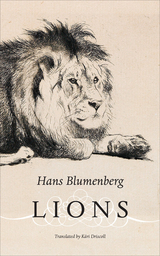
Each of these short texts, sparkling with erudition and humor, is devoted to a peculiar leonine presence—or, in many cases, absence—in literature, art, philosophy, religion, and politics. From Ecclesiastes to the New Testament Apocrypha, Dürer to Henri Rousseau, Aesop and La Fontaine to Rilke and Thomas Mann, the extraordinary breadth of Blumenberg’s knowledge and intellectual curiosity is on full display. Lions has much to offer readers, both those already familiar with Blumenberg’s oeuvre and newcomers looking for an introduction to the thought of one of Germany’s most important postwar philosophers.
---Greece & Rome
---Irene J.F. de Jong, Gnomon
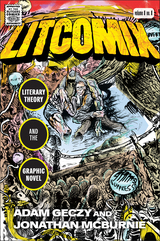
Using the methodology of Georg Lukács and his detailed defense of literary realism as a socially embedded practice, Litcomix tackles difficult questions about reading graphic novels as literature. What critical standards should we use to measure the quality of a graphic novel? How does the genre contribute to our understanding of ourselves and the world? What qualities distinguish it from other forms of literature?
LitComix hones its theoretical approach through case studies taken from across the diverse world of comics, from Yoshihiro Tatsumi’s groundbreaking manga to the Hernandez Brothers’ influential alt-comix. Whether looking at graphic novel adaptations of Proust or considering how Jack Kirby’s use of intertextuality makes him the Balzac of comics, this study offers fresh perspectives on how we might appreciate graphic novels as literature.

Why did Puritan Christianity repeatedly turn to allegorical forms of representation in spite of its own intolerance of "Allegorical fancies?" Luxon demonstrates that Protestant doctrine itself was a kind of allegory in hiding, one that enabled Puritans to forge a figural view of reality while championing the "literal" and the "historical". He argues that for Puritanism to survive its own literalistic, anti-symbolic, and millenarian challenges, a "fall" back into allegory was inevitable. Representative of this "fall," The Pilgrim's Progress marks the culminating moment at which the Reformation's war against allegory turns upon itself. An essential work for understanding both the history and theory of representation and the work of John Bunyan, Literal Figures skillfully blends historical and critical methods to describe the most important features of early modern Protestant and Puritan culture.
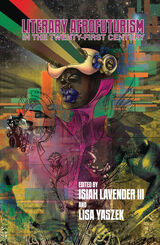
In Literary Afrofuturism in the Twenty-First Century, eminent contributors pay tribute to Afrofuturism as a powerful and evolving aesthetic practice that communicates the experience of science, technology, and race across centuries, continents, and cultures. While Ryan Coogler and Janelle Monáe may have helped bring the genre into contemporary pop consciousness, it in fact extends back to the writing of eighteenth-century poet Phyllis Wheatley and has continued in the work of Samuel R. Delany, Octavia E. Butler, N. K. Jemisin, and many others. In examining this heritage, contributors in this volume question generic boundaries, recover lost artists and introduce new ones, and explore how the meteoric rise of a new, pan-African speculative literary tradition may or may not connect with Afrofuturism.
Additionally, the editors have marshaled some of today’s most exciting writers for a roundtable discussion of the genre: Bill Campbell, Minister Faust, Nalo Hopkinson, N. K. Jemisin, Chinelo Onwualu, Nisi Shawl, and Nick Wood. Pioneering author and editor Sheree R. Thomas limns how black women have led new developments in contemporary Afrofuturism, and artist Stacey Robinson’s illustrations orient readers to the spirited themes of this enduring and consequential literary tradition.
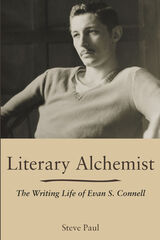
Winner, 2022 Society of Midland Authors award for Biography/Memoir
Evan S. Connell (1924–2013) emerged from the American Midwest determined to become a writer. He eventually made his mark with attention-getting fiction and deep explorations into history. His linked novels Mrs. Bridge (1959) and Mr. Bridge (1969) paint a devastating portrait of the lives of a prosperous suburban family not unlike his own that, more than a half century later, continue to haunt readers with their minimalist elegance and muted satire. As an essayist and historian, Connell produced a wide range of work, including a sumptuous body of travel writing, a bestselling epic account of Custer at the Little Bighorn, and a singular series of meditations on history and the human tragedy.
This first portrait and appraisal of an under-recognized American writer is based on personal accounts by friends, relatives, writers, and others who knew him; extensive correspondence in library archives; and insightful literary and cultural analysis of Connell’s work and its context. It also illuminates aspects of American publishing, Hollywood, male anxieties, and the power of place.
The goal of this book is to overcome some of the widespread misunderstandings about the meaning of a Darwinian approach to the human mind generally, and literature specifically. The volume brings together scholars from the forefront of the new field of evolutionary literary analysis-both literary analysts who have made evolution their explanatory framework and evolutionist scientists who have taken a serious interest in literature-to show how the human propensity for literature and art can be properly framed as a true evolutionary problem. Their work is an important step toward the long-prophesied synthesis of the humanities and what Steven Pinker calls "the new sciences of human nature."
Larson focuses on the most famous writers associated with the May Fourth Movement, a group most active in the 1920s and 1930s, and their fundamental ambivalence about writing. She analyzes how their writing paradoxically characterized textual labor as passive, negative, and inferior to material labor and the more physical political work of social progress, and she describes the ways they used textual means to devalue literary labor.
The impact of China’s increasing contact with the West—particularly the ways in which Western notions of “individualism” and “democracy” influenced Chinese ideologies of self and work—is considered. Larson also studies the changes in China’s social structure, notably those linked to the abolition in 1905 of the educational exam system, which subsequently broke the link between the mastery of certain texts and the attainment of political power, further denigrating the cultural role of the writer.
In the nineteenth century, the Cuban economy rested on the twin pillars of sugar and slaves. Slavery was abolished in 1886, but, one hundred years later, Cuban authors were still writing antislavery narratives. William Luis explores this seeming paradox in his groundbreaking study Literary Bondage, asking why this literary genre has remained a viable means of expression.
Applying Foucault's theory of counter-discourse to a vast body of antislavery literature, Luis shows how these narratives have always served to undermine the foundations of slavery, to protest the marginalized status of blacks in Cuban society, and to rewrite the canon of "acceptable" history and literature. He finds that emancipation did not end the need for such counter-discourse and reveals how the antislavery narrative continues to provide a forum for voices that have been silenced by the dominant culture.
In addition to such well-known works as Cecilia Valdés, The Kingdom of This World, and The Autobiography of a Runaway Slave, Luis draws on many literary works outside the familiar canon, including Romualdo, uno de tantos, Aponte, SofíaLa familia Unzúazu, El negrero, and Los guerrilleros negros. This comprehensive coverage raises important questions about the process of canon-formation and brings to light Cuba's rich heritage of Afro-Latin literature and culture.
From Puss in Boots to T. S. Eliot’s Jellicles, cats have long inspired an incredible range of fiction, memoir, and poetry. This book celebrates the connections between our favorite feline friends and the literary imagination, diving into ancient myths and fables, much-loved children’s books, classic literature, and contemporary novels.
Featuring famous fictional characters such as Lewis Carroll’s Cheshire Cat, Beatrice Potter’s Tom Kitten, and Edgar Allan Poe’s Pluto, Literary Cats explores the role of felines across literary genres. This light-hearted history also uncovers their domestication, early cultural beginnings, and religious associations. The collection also reveals the history of several real-life cats such as Bob, the famous London street cat, as well as cats belonging to authors Ernest Hemingway, Patricia Highsmith, Muriel Spark, and more. A section on cats in world literature introduces narrator cats and cat companions from Japan, Eastern Europe, France, Greece, Germany, and Finland, demonstrating their enduring worldwide appeal.
This study examines literary celebrity in Britain from 1850 to 1914. Through lively analysis of rare cultural materials, Easley demonstrates the crucial role of the celebrity author in the formation of British national identity. As Victorians toured the homes and haunts of famous writers, they developed a sense of shared national heritage. At the same time, by reading sensational accounts of writers’ lives, they were able to reconsider conventional gender roles and domestic arrangements. As women were featured in interviews and profiles, they were increasingly associated with the ephemerality of the popular press and were often excluded from emerging narratives of British literary history, which defined great literature as having a timeless appeal. Nevertheless, women writers were able to capitalize on celebrity media as a way of furthering their own careers and retelling history on their own terms. Press attention had a more positive effect on men’s literary careers since they were expected to assume public identities; however, in some cases, media exposure had the effect of sensationalizing their lives, bodies, and careers. With the development of proto-feminist criticism and historiography, the life stories of male writers were increasingly used to expose unhealthy domestic relationships and imagine ideal forms of British masculinity.
The first section of Literary Celebrity explores the practice of literary tourism in Victorian Britain, focusing specifically on the homes and haunts of Charles Dickens, Christina Rossetti, George Eliot, Elizabeth Barrett Browning, and Harriet Martineau. This investigation incorporates analysis of fascinating cultural texts, including maps, periodicals, and tourist guidebooks. Easley links the practice of literary tourism to a variety of cultural developments, including nationalism, urbanization, spiritualism, the women’s movement, and the expansion of popular print culture. The second section provides fresh insight into the ways that celebrity culture informed the development of Victorian historiography. Easley demonstrates how women were able to re-tell history from a proto-feminist perspective by writing contemporary history, participating in architectural reform movements, and becoming active in literary societies. In this chapter she returns to the work of Harriet Martineau and introduces a variety of lesser-known contributors to the field, including Mary Gillies and Mary Ward. Literary Celebrity concludes with a third section focused on the expansion of celebrity media at the fin de siècle. These chapters and a brief coda link the popularization of celebrity news to the de-canonization of women writers, the professionalization of medicine, the development of the open space movement, and the institutionalization of English studies. These investigations elucidate the role of celebrity media in the careers of Charlotte Robinson, Marie Corelli, Mary Braddon, Harriet Martineau, Thomas Carlyle, Ernest Hart, and Octavia Hill.
Published by University of Delaware Press. Distributed worldwide by Rutgers University Press.
Although the literary circle is widely recognized as a significant feature of Renaissance literary culture, it has received remarkably little examination. In this collection of essays, the authors attempt to explain literary circles and cultural communities in Renaissance England by exploring both actual and imaginary ways in which they were conceived and the various needs they fulfilled. The book also pays considerable attention to larger theoretical issues relating to literary circles.
The essayists raise important questions about the extent to which literary circles were actual constructs or fictional creations. Whether illuminating or limiting, the circle metaphor itself can be extended or reformulated. Some of the authors discuss how particular circles actually operated, and some question the very concept of the literary circle. Literary Circles and Cultural Communities in Renaissance England will be an important addition to seventeenth-century studies.
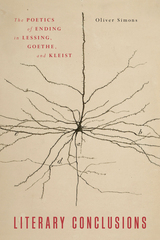
Simons examines the interrelations of Lessing’s literary endings with modes of logical conclusion; he highlights how Goethe’s narrative closures are forestalled by an uncontrollable vital force that was discussed in the sciences of the time; and he reveals that Kleist conceived of literary genres themselves as forms of reasoning. Kleist’s endings, Simons demonstrates, mark the beginning of modernism. Through close readings of these authors and supplemental analyses of works by Walter Benjamin, Friedrich Hölderlin, and Georg Wilhelm Friedrich Hegel, he crafts an elegant theory of conclusions that revises established histories of literary genres and forms.
This innovative collection challenges the traditional focus on solitary genius by examining the rich diversity of literary couplings and collaborations from the early modern to the postmodern period. Literary Couplings explores some of the best-known literary partnerships—from the Sidneys to Boswell and Johnson to Sylvia Plath and Ted Hughes—and also includes lesser-known collaborators such as Daphne Marlatt and Betsy Warland. The essays place famous authors such as Samuel Coleridge, Oscar Wilde, and William Butler Yeats in new contexts; reassess overlooked members of writing partnerships; and throw new light on texts that have been marginalized due to their collaborative nature. By integrating historical studies with authorship theory, Literary Couplings goes beyond static notions of the writing "couple" to explore literary couplings created by readers, critics, historians, and publishers as well as by writers themselves, thus expanding our understanding of authorship.
Literary Criticism offers a concise overview of literary studies in the English-speaking world from the early twentieth century to the present. Joseph North steps back from the usual tangle of figures, schools, and movements in order to analyze the intellectual paradigms that underpinned them. The result is a radically new account of the discipline’s development, together with a trenchant argument about where its political future lies.
People in today’s literature departments often assume that their work is politically progressive, especially when compared with the work of early- and mid-twentieth-century critics. North’s view is less cheering. For when understood in relation to the longer arc of the discipline, the current historicist and contextualist mode in literary studies represents a step to the Right. Since the global turn to neoliberalism in the late 1970s, all the major movements within literary studies have been diagnostic rather than interventionist in character: scholars have developed sophisticated techniques for analyzing culture, but they have retreated from systematic attempts to transform it. In this respect, the political potential of current literary scholarship compares poorly with that of earlier critical modes, which, for all their faults, at least had a programmatic commitment to cultural change.
Yet neoliberalism is now in crisis—a crisis that presents opportunities as well as dangers. North argues that the creation of a genuinely interventionist criticism is one of the central tasks facing those on the Left of the discipline today.
All of American author Frank Norris’s significant critical writings have been compiled in this book, including his articles for the San Francisco Wave during 1896–1897 and selections from his “Weekly Letter” column for the Chicago American in 1901. Essays from these two previously unexploited sources, comprising almost half the book, reveal certain areas of Norris’s thought which heretofore had been overlooked by scholars.
This book was compiled in order to clarify Frank Norris’s literary creed. When Donald Pizer began to read Norris’s uncollected critical articles, he observed concepts which had been unnoted or misunderstood by his critics. Crediting this to the inadequate representation of Norris’s ideas in the posthumous The Responsibilities of the Novelist (1903), Pizer recognized the need for an interpretive and complete edition of Norris’s critical writings. This volume thus fills a noticeable gap in the field of American literary criticism.
By the time of his death in 1902 Norris had a closed system of critical ideas. This core of ideas, however, is only peripherally related to the conventional concept of literary naturalism, which perhaps explains why critics have gone astray trying to find Zolaesque ideas in Norris’s criticism. Norris’s central idea, around which he built an aesthetic of the novel, was that the best novel combines an intensely primitivistic subject matter and theme with a highly sophisticated form. His paradox of sophisticated primitivism clarifies the vital link between the fiction produced in the 1890s and that written by Hemingway, Faulkner, and Steinbeck.
Norris’s essays deal with many of the literary themes which preoccupy modern critical theorists. His range of subjects includes the form and function of the novel; definitions of naturalism, realism, and romanticism; and the problem of what constitutes an American novel. His interpretation of commonplace events, his comments on prominent figures of his day, and his parodies of writers such as Bret Harte, Stephen Crane, and Rudyard Kipling are characterized by ingenuity and perception. Through these writings the personality of a man with well-defined convictions and the ability to expound them provocatively comes into sharp focus.
In a general introduction Pizer summarizes Norris’s critical position and surveys his career as literary critic. This introduction and the interpretative introductions preceding each section constitute an illuminating essay on the literary temper of the period and provide a new insight into Norris’ craft and his literary philosophy.
Disease—real or imagined, physical or mental—is a common theme in Western literature and is often a symbol of modern alienation. In Literary Diseases, a comprehensive analysis of the metaphorical and symbolic force of disease in modern Italian literature, Gian-Paolo Biasin expands the geography of the discussion of this important theme. Using as a backdrop the perspective of European experiences of the previous hundred years, Biasin analyzes the theme of disease as a reflection of certain sociological and historical phenomena in modern European novels, as a metaphor for the world visions of selected Italian novelists, and especially as a vehicle for understanding the nature and function of fiction itself.
The core of Biasin’s study is found in his discussion of the works of four major Italian writers. In his criticism of the novels of Giovanni Verga, who stood at the center of many complex developments in the nineteenth century, he examines the antecedents of modern Italian prose. He then scrutinizes the works of Italo Svevo and Luigi Pirandello, who together inaugurated the modern novel in Italy. Of particular interest is his exploration of their critical use of psychoanalysis and madness climaxed by apocalyptic visions. He then discusses the prose of Carlo Emilio Gadda, which epitomizes the problems of the avant-garde in its experimentalism and expressionism.
Biasin utilizes a broad spectrum of critical approaches—from sociology, psychoanalysis, and different trends in modern French, American, and Italian literary criticism—in shaping his own methodology, which is a thematic and structural symbolism. He concludes that disease in literature should be considered as a metaphor for writing (écriture) and as a cognitive instrument that calls into question the anthropocentric values of Western culture. The book, with its textual comparisons and unusual supporting examples, constitutes a significant methodological contribution as well as a major survey of modern Italian prose, and will allow the reader to see traditional landmarks in European fiction in a new light.
In modern China, literature has been regarded as a vehicle of political and idea logical dissent, a concept that has persisted under communism. This study exhaustively analyzes the conflict between the Chinese Communist party and the intellectuals, particularly the writers, in the crucial decades of the 1940's and 1950's.
By singling out individual writers as egregious examples, party leaders, through a series of thought-control campaigns, have tried to mold intellectuals along orthodox doctrinal lines. But these same leaders, holding to the paradoxical conviction that personal initiative and creativity are necessary catalysts in the effort to construct a Communist state, have not wanted to stifle these qualities altogether. The result has been a pattern of permissiveness and pressure, as illustrated by the ill-fated "Hundred Flowers" movement and the subsequent return to a policy of harsh regimentation.
In depicting the views, feelings, frustrations, and tragic fates of many individual intellectuals in the confrontation with an oppressive party bureaucracy, the author reveals, in an unprecedented way, the nature of the authoritarian society that has evolved in Communist China. Her study convincingly demonstrates that totalitarian rule has not guaranteed the subservience of the Chinese intelligentsia and, even more important, that the alienated, critical intellectual remains a significant and vital force.
A bold rethinking of genre as both form and philosophical problem.
Why do we have literary genres, and what problems do they solve?
In this original engagement with the ancient problem of literary genres, Enzo Melandri begins by asking why literary genres exist in the first place. His investigation extends beyond literary history, as important as it is, to become a philosophical inquiry into the limits of language and the strategies language must employ to register the impossibility of fully grasping its relation to the world. In this light, tragedy, comedy, epic, elegy, and so on emerge as the musical and emotional traces language bears from its encounter with its own limits.

Provence through the eyes of its writers—those who wrote of it in Provençal or French and also those visitors who were moved by its beauty—that is the inspiration behind A Literary Guide to Provence. In this compact travel guide, Marseilles native Daniel Vitaglione presents a literary panorama of the region of southern France from the Avignon of Mistral to Colette’s St. Tropez.
Including such sites as the birthplace of Nostradamus and the ruins of the Marquis de Sade’s castle, A Literary Guide to Provence presents a thousand years of history entwined with maps and photos that provide readers on tour with a sense of the historical import of this most beautiful of regions even as they experience it firsthand.
Both authors of Provençal ancestry and those who came to love and live in Provence are featured in this comprehensive and enchanting picture of the garden place of France. The Riviera enticed Virginia Woolf. Toulon inspired two novels by Georges Sand. Robert Louis Stevenson resided in Hyères, as did Edith Wharton. Le Lavandou was Willa Cather’s favorite place. F. Scott Fitzgerald lived in St. Raphael and Juan-les-Pins, where he wrote Tender is the Night.
This illustrated guide follows in these writers’ footsteps, and the practical information on hotels and restaurants (phones, web sites, email, etc.) make it the ideal traveling companion for armchair tourists and those who cannot resist seeing Provence for themselves.
READERS
Browse our collection.
PUBLISHERS
See BiblioVault's publisher services.
STUDENT SERVICES
Files for college accessibility offices.
RECENTLY PUBLISHED



UChicago Accessibility Resources
home | accessibility | search | about | contact us
BiblioVault ® 2001 - 2026
The University of Chicago Press