
 A SCHOLARLY BOOK REPOSITORY

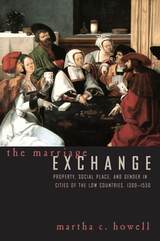
Based on extensive research in this archive, this book reveals how these documents were produced in a centuries-long effort to regulate—and ultimately to redefine—property and gender relations. At the center of the transformation was a shift from a marital property regime based on custom to one based on contract. In the former, a widow typically inherited her husband's property; in the latter, she shared it with or simply held it for his family or offspring. Howell asks why the law changed as it did and assesses the law's effects on both social and gender meanings but she insists that the reform did not originate in general dissatisfaction with custom or a desire to disempower widows. Instead, it was born in a complex economic, social and cultural history during which Douaisiens gradually came to think about both property and gender in new ways.
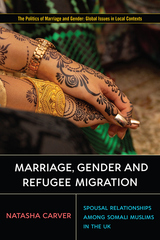
This ethical and poetic ethnography analyses the upheavals to gender roles and marital relationships brought about by Somali refugee migration to the UK. Unmoored from the socio-cultural norms that made them men and women, being a refugee is described as making "everything" feel "different, mixed up, upside down." Marriage, Gender and Refugee Migration details how Somali gendered identities are contested, negotiated, and (re)produced within a framework of religious and politico-national discourses, finding that the most significant catalysts for challenging and changing harmful gender practices are a combination of the welfare system and Islamic praxis. Described as “an important and urgent monograph," this book will be a key text relevant to scholars of migration, transnational families, personal life, and gender. Written in a beautiful and accessible style, the book voices the participants with respect and compassion, and is also recommended for scholars of qualitative social research methods.
Marriage in a Culture of Divorce examines the shifting meanings of divorce and gender for two generations of middle-class, married couples. Hackstaff finds that new social and economic conditions both support and undermine the efforts of spouses to redefine the meaning of marriage in a culture of divorce. The definitions of marriage, divorce, and gender have changed for all, but more for the young than the old, and more for women than for men. While some spouses in both generations believe that marriage is for life and that men should dominate in marriage, the younger generation of spouses increasingly construct marriage as contingent rather than forever.
Hackstaff presents this evidence in archival case studies of couples married in the 1950s, which she then contrasts with her own case studies of people married during the 1970s, finding evidence of a significant shift in who does the emotional work of maintaining the relationship. It is primarily the woman in the '50s couples who "monitors" the marriage, whereas in the '70s couples both husband and wife support a "marital work ethic," including couples therapy in some cases.
The words and actions of the couples Hackstaff follows in depth - the '50s Stones, Dominicks, Hamptons, and McIntyres, and the '70s Turners, Clement-Leonettis, Greens, Kason-Morrises, and Nakatos -- reveal the changes and contradictory tendencies of married life in the U.S. There are traditional relationships characterized by male dominance, there are couples striving for gender equality, there are partners pulling together, and partners pulling apart.
Those debating "family values" should not forget, Hackstaff contends, that there are costs associated with marriage culture as well as divorce culture, and they should view divorce as a transitional means for defining marriage in an egalitarian direction. She convincingly illustrates her controversial position, that although divorce has its cost to society, the divorce culture empowers wives and challenges the legacy of male dominance that previously set the conditions for marriage endurance.
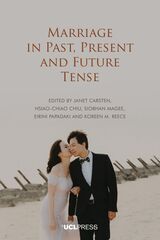
A series of global case studies, Marriage in Past, Present and Future Tense unravels the ever-changing intimate and institutional questions united by marriage. Traversing politics, economics, and religion, the authors explore how marital practices both react to and produce broader social transformation. In particular, the authors contend that contexts marked by violent sociopolitical ruptures such as civil war or colonization illuminate the links between the personal and political. What emerges is a complex portrait of marriage as a site of cultural memory, embodied experience, and active imagination.
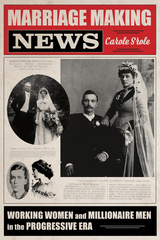
Women’s desire for autonomy, a rising divorce rate, the declining power of the upper class, new ideas of beauty and sexuality—newspaper tales of cross-class nuptials brought a host of anxieties about gender and class to the front page. Srole focuses particular attention on the economic changes faced by working-class women while also surveying newspaper attacks on their morality and womanhood, and their complicity in their own poverty. As she shows, working women and their advocates persevered by asserting an independence they pursued through union activism, professionalism, land ownership, and filling traditionally male jobs.
An engaging merger of media and women’s history, Marriage Making News looks at a rags-to-riches genre and illuminates the forces of change at work behind the stories.
It is no secret that marriage rates in the United States are at an all-time low. Despite this significant decline, the institution of marriage endures in our society amid historic changes to its meaning and practice. How does the continuing strength of marriage impact the relationships of same-sex couples after the legalization of same-sex marriage?
Drawing on over one hundred interviews with LGBTQ+ people, Marriage Material reveals the transformative impact marriage equality has had on same-sex relationships. Sociologist Abigail Ocobock looks to same-sex couples across a wide age range to illuminate the complex ways institutional mechanisms work in tandem to govern the choices and behaviors of individuals with different marriage experiences. Ocobock examines both the influence of marriage on the dynamics of same-sex relationships and how LGBTQ+ people challenge heteronormative assumptions about marriage, highlighting the complex interplay between institutional constraint and individual agency.
Marriage Material presents a bold challenge to dominant scholarly and popular ideas about the decline of marriage, making clear that gaining access to legal marriage has transformed same-sex relationships, both for better and for worse.

A cutting-edge study of marriage’s transformative effects on same-sex relationships.
It is no secret that marriage rates in the United States are at an all-time low. Despite this significant decline, the institution of marriage endures in our society amid historic changes to its meaning and practice. How does the continuing strength of marriage impact the relationships of same-sex couples after the legalization of same-sex marriage?
Drawing on over one hundred interviews with LGBTQ+ people, Marriage Material reveals the transformative impact marriage equality has had on same-sex relationships. Sociologist Abigail Ocobock looks to same-sex couples across a wide age range to illuminate the complex ways institutional mechanisms work in tandem to govern the choices and behaviors of individuals with different marriage experiences. Ocobock examines both the influence of marriage on the dynamics of same-sex relationships and how LGBTQ+ people challenge heteronormative assumptions about marriage, highlighting the complex interplay between institutional constraint and individual agency.
Marriage Material presents a bold challenge to dominant scholarly and popular ideas about the decline of marriage, making clear that gaining access to legal marriage has transformed same-sex relationships, both for better and for worse.
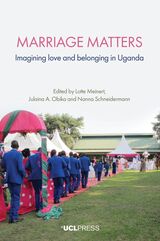
Building on a collaborative research project between African and European scholars, this volume examines changes in ideas of partnership, kinship, child filiation, friendship, love, and commitment in Uganda. Through detailed portraits of Ugandan couples and communities, Marriage Matters offers fresh new insights within the burgeoning field of scholarship on marriage and family, as well as thought-provoking reflections on the consequences of partnership changes for the country’s future. Engaging with new and classical anthropological theory and gender studies, the volume reflects not only on how Ugandans imagine the relationships between genders and generations, but also broader trends in how we understand love and intimacy.
This new facsimile edition of The Marriage of Heaven and Hell includes a plate-by-plate guide to the texts, interlinear figures, and larger designs in a commentary accompanying the transcript of each reproduced plate. Drawings from Blake’s manuscript notebook, which were used as a basis for the designs, as well as working proof impressions, are also included, demonstrating the evolution of the work. This edition also reproduces a single plate from each of the other eight surviving copies, revealing how over a period of more than thirty years Blake altered the way he finished each copy. An introduction explores the book's literary and historical background, Blake’s printing process, and the book's anonymous initial publication.
This expertly edited work is available for students and scholars in paperback and for collectors in a special hardcover edition. Both versions allow Blake’s vision to reassert its breathtaking power.
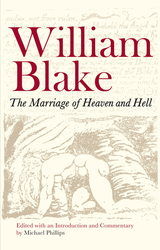
This new facsimile edition of The Marriage of Heaven and Hell includes a plate-by-plate guide to the texts, interlinear figures, and larger designs in a commentary accompanying the transcript of each reproduced plate. Drawings from Blake’s manuscript notebook, which were used as a basis for the designs, as well as working proof impressions, are also included, demonstrating the evolution of the work. This edition also reproduces a single plate from each of the other eight surviving copies, revealing how over a period of more than thirty years Blake altered the way he finished each copy. An introduction explores the book's literary and historical background, Blake’s printing process, and the book's anonymous initial publication.
This expertly edited work is available for students and scholars in paperback and for collectors in a special hardcover edition. Both versions allow Blake’s vision to reassert its breathtaking power.
During their brief marriage, the Russells surveyed almost all of Arizona Territory, traveling by horse over rugged terrain and camping in the back of a Conestoga wagon in harsh environmental conditions. Nancy J. Parezo and Don D. Fowler detail the grit and determination of the Russells’ unique collaboration over the course of three field seasons. Delivering the first biographical account of Frank Russell’s life, this book brings detail to his life and work from childhood until his death in 1903. Parezo and Fowler analyze the important contributions Theresa and Frank made to the bourgeoning field of archaeology and Akimel O’odham (Pima) ethnography. They also offer never-before-published information on Theresa’s life after Frank’s death and her subsequent career as a professor of English literature and philosophy at Stanford University.
In 1906 Theresa Russell published In Pursuit of a Graveyard: Being the Trail of an Archaeological Wedding Journey, a twelve-part serial in Out West magazine. Theresa’s articles constituted an experiential narrative based on field journals and remembrances of life in the northern Southwest. The work offers both a biography and a seasonal field narrative that emphasized personal experiences rather than traditional scientific field notes. Included in A Marriage Out West, Theresa’s writing provides an invaluable participant’s perspective of early 1900s American archaeology and ethnography and life out West.

Vasquez-Tokos finds that their experiences in childhood, adolescence, and young adulthood shape their perceptions of race, which in turn influence their romantic expectations. Most Latinos marry other Latinos, but those who intermarry tend to marry whites. She finds that some Latina women who had domineering fathers assumed that most Latino men shared this trait and gravitated toward white men who differed from their fathers. Other Latina respondents who married white men fused ideas of race and class and perceived whites as higher status and considered themselves to be “marrying up.” Latinos who married non-Latino minorities—African Americans, Asian Americans, and Native Americans—often sought out non-white partners because they shared similar experiences of racial marginalization. Latinos who married Latinos of a different national origin expressed a desire for shared cultural commonalities with their partners, but—like those who married whites—often associated their own national-origin groups with oppressive gender roles.
Vasquez-Tokos also investigates how racial and cultural identities are maintained or altered for the respondents’ children. Within Latino-white marriages, biculturalism—in contrast with Latinos adopting a white “American” identity—is likely to emerge. For instance, white women who married Latino men often embraced aspects of Latino culture and passed it along to their children. Yet, for these children, upholding Latino cultural ties depended on their proximity to other Latinos, particularly extended family members. Both location and family relationships shape how parents and children from interracial families understand themselves culturally.
As interracial marriages become more common, Marriage Vows and Racial Choices shows how race, gender, and class influence our marital choices and personal lives.

Two rabbis, visiting Palestine in 1897, observed that the land was like a bride, 'beautiful, but married to another man'. By which they meant that, if a place was to be found for Israel in Palestine, where would the people of Palestine go? This is a dilemma that Israel has never been able to resolve.
No conflict today is more dangerous than that between Israel and the Palestinians. The implications it has for regional and global security cannot be overstated. The peace process as we know it is dead and no solution is in sight. Nor, as this book argues, will that change until everyone involved in finding a solution accepts the real causes of conflict, and its consequences on the ground.
Leading writer Ghada Karmi explains in fascinating detail the difficulties Israel's existence created for the Arab world and why the search for a solution has been so elusive. Ultimately, she argues that the conflict will end only once the needs of both Arabs and Israelis are accommodated equally. Her startling conclusions overturn conventional thinking -- but they are hard to refute.
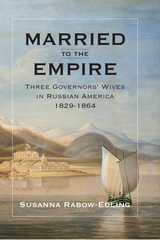
Elisabeth von Wrangell, Margaretha Etholén, and Anna Furuhjelm were three of eight governors' wives who took up this domestic mantle. Married to the Empire tells their stories using their own words and though extraordinary research by Susanna Rabow-Edling. All three were young and newly wed when they left Russia for the furthest outpost of the empire, and all three went through personal and cultural struggles as they worked to adjust to life in the colony. Their trials offer a little-heard female history of Russian Alaska, while illuminating the issues that arose while trying to reconcile expectations of womanhood with the realities of frontier life.
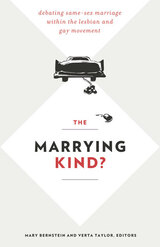
As the fight for same-sex marriage rages across the United States and lesbian and gay couples rush to marriage license counters, the goal of marriage is still fiercely questioned within the LGBT movement. Rarely has an objective so central to a social movement’s political agenda been so controversial within the movement itself. While antigay forces work to restrict marriage to one man and one woman, lesbian and gay activists are passionately arguing about the desirability, viability, and social consequences of same-sex marriage.
The Marrying Kind? is the first book to draw on empirical research to examine these debates and how they are affecting marriage equality campaigns. The essays in this volume analyze the rhetoric, strategies, and makeup of the LGBT social movement organizations pushing for same-sex marriage, and address the dire predictions of some LGBT commentators that same-sex marriage will spell the end of queer identity and community. Case studies from California, Connecticut, Massachusetts, New Jersey, Oklahoma, Vermont, and Canada illuminate the complicated politics of same-sex marriage, making clear that the current disagreements among LGBT activists over whether marriage is conforming or transformative are far too simplistic. Instead, the impact of the marriage equality movement is complex and often contradictory, neither fully assimilationist nor fully oppositional.
Contributors: Ellen Ann Andersen, U of Vermont; Mary C. Burke, U of Vermont; Adam Isaiah Green, U of Toronto; Melanie Heath, McMaster U, Ontario; Kathleen E. Hull, U of Minnesota; Katrina Kimport, U of California, San Francisco; Jeffrey Kosbie; Katie Oliviero, U of Colorado, Boulder; Kristine A. Olsen; Timothy A. Ortyl; Arlene Stein, Rutgers U; Amy L. Stone, Trinity U; Nella Van Dyke, U of California, Merced.


Today von Braun is recognized as the person most responsible for laying the groundwork for public acceptance of America's space program. When President Bush directed NASA in 1989 to prepare plans for an orbiting space station, lunar research bases, and human exploration of Mars, he was largely echoing what von Braun proposed in The Mars Project.

Mars enthusiasts will appreciate these perfect snapshots of our current understanding of Mars, with soon-to-be classic pictures that have come to define our vision of the Red Planet. These images and their interpretations will be held as a yardstick for future exploration as we learn more about the surface and geologic processes of the fourth planet from the Sun.
With tantalizing and artistic glimpses at actively eroding slopes, impact craters, strange polar landscapes, avalanches, and even spectacular descent pictures of probes like the Phoenix Lander and the Mars Science Laboratory, we see what researchers are seeing.
Through vivid and beautiful images, this book underscores the need for such a camera on future orbiters, especially as more landing missions are planned. Mars: The Pristine Beauty of the Red Planet provides a stunning keepsake of one of humanity’s greatest accomplishments in space travel.

Marsden Hartley was first published in 1952. Minnesota Archive Editions uses digital technology to make long-unavailable books once again accessible, and are published unaltered from the original University of Minnesota Press editions.
Art connoisseurs and students, who are becoming increasingly aware of the importance of Marsden Hartley in an understanding of modern at, will welcome this book. It contains a biographical and critical essay on the artist and his work, a checklist of items in the Hudson D. Walker collection of Hartley's works, a biography of writings by and about Hartley, a chronology of his life, and halftone reproductions illustrating his development as an artist. The illustrations are taken from works in the Walker collection, which is on long-term loan to the University of Minnesota Gallery.

Cassidy, sensitive to the psychological and gender analysis traditionally central to interpretations of Hartley, becomes the first scholar to reassess his late work in light of contemporary American perceptions of race, ethnicity, place, and history. This remarkable new book resonates not only as a seminal Hartley study and a complex art and cultural period history, but as a superb example of applied early twentieth-century American intellectual history informed by an impressive command of primary and secondary interdisciplinary literature. Numerous and rich illustrations, as well as transcriptions of several key essays by Hartley, some never before published, including "This Country of Maine" (1937–38), round out this insightful, nuanced, and revolutionary treatment. Donna M. Cassidy's Marsden Hartley will engage general readers as well as scholars and students.
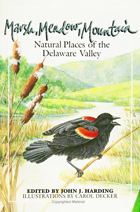
Stretching from the craggy reaches of the Pocono Mountains to the rolling farmlands of Lancaster County, Pennsylvania, sprawling east across the Delaware River basin and New Jersey’s coastal plain Atlantic beaches—here is a land of rich historical, cultural, and environmental diversity. Few other locales in the United States have as many varied habitats, each with its own distinctive vegetation and wildlife. The nature lover in the Delaware Valley can travel from ocean, across barrier-beaches, salt-water and fresh-water marshes, pine barrens, deciduous woodlands and fields, to mountains, all in a few hours.
Marsh, Meadow, Mountain, a combination tour guide and ecological primer, is written for the thousands of people in the area with an interest in natural history or for those seeking alternative recreational activities. Each chapter, written by an experienced naturalist intimately familiar with one of the seven major ecosystems, introduces the reader to the dynamic interrelationships in nature, the interactions between a particular habitat and its inhabitants, and its plants and wildlife. Over 135 locations are described including the Pocono Mountains, the Pine Barrens, Stone Harbor, Delaware Water Gap National Recreation Area, Ridley Creek State Park, Tyler Arboretum, and Tinicum National Environmental Center, which in any season can provide fascinating viewing opportunities depending upon your interests. Each site also includes addresses, directions, trail maps, artistic drawings, and a suggested reading list.
Marsh, Meadow, Mountain conveys both a sense of fun and learning and, ultimately, will instill in the reader a special intimacy with the Delaware Valley’s precious wild places.
Marshall and Taney was first published in 1939. Minnesota Archive Editions uses digital technology to make long-unavailable books once again accessible, and are published unaltered from the original University of Minnesota Press editions.
The tides of social, political, and economic conflict will surge more violently about the Supreme Court in the future than they have in the past. Constantly larger numbers of the people are becoming aware of the tremendous power of the court as final interpreter of the constitution as a check upon Congress and the executive, and as guardian of individuals and minorities against governmental power. As a president of the American Bar Association has said, "Producers of potatoes in Maine, peanuts in Virginia, cotton in South Carolina, cane sugar in Louisiana, wheat in Kansas, corn in Iowa, peaches in Georgia, oranges in California, and thousands of small local enterprises everywhere are coming more and more to realize that their own bread and butter is seriously affected by the personnel of the Supreme Court.
Since public opinion rules in America, the place that the court will occupy in the scheme of things will be determined by the thought and emotions of the people. Thought and emotion alike will, in turn, depend largely upon popular conceptions of the part played by the court. Those conceptions cannot be accurate without a knowledge of the functioning of the individual judge.
We can better comprehend present and future judges if we understand why past ones acted officially as they did. This study contributes materially to that understanding.
In the light of history and the law, Ben W. Palmer has made a clear and thought provoking analysis of the judicial function, indicated revolutionary changes in the law. In the sharply etched portraits of the two chief justices who molded American constitutional law in its formative stages, he has shown how and why these two men affect lawyer and laymen today.
"Law," says historian-lawyer Palmer, "like religion, government, art, science, receives its meaning and value, not because of what it has been or is, but because of what it accomplishes as an instrument for the benefit of humanity."
"The judge's most essential and unavoidable function," thinks Dr. Palmer, "is the attempt to reconcile the contending principles of liberty and order. He stands between rule and discretion, the strict law and one tempered by time, circumstance, abstract justice, popular feeling—all crying out for relaxation of the rule. He must stand between Shylock, with his shining knife of legal right, and the victim who calls to his compassion."

This book explores both the human and natural history of the marshes between Toledo and Port Clinton, Ohio. The author, Louis Campbell is the acknowledged authority on the birds of the Toledo area. Mr. Campbell began weekly birding trips to the marshes in the 1920’s, carefully recording his observations. His discerning eye and inquiring mind have accumulated a wealth of information, presented here in a style that is comfortably conversational, whether the subject is glacial moraines, nesting eagles, or a drunken meadow mouse.
The book begins with an almanac, a celebration of marsh life throughout the year, enriched by personal experiences. Mr. Campbell’s encounters include a pair of bloodthirsty shrews, a roguish gallery of courting waterfowl, and a rhythm-challenged bittern. He invites the reader to share the risky pleasures of punting and the eerie night sounds of the marsh in May.
Part II describes the history of the low-lying marshes from the Ice Age to the present, as they were transformed into drained, flood-plagued farmland then to drought-and flood-plagued private hunting clubs, and finally to government-protected marshes sealed off by huge dikes from the gift and the threat of Lake Erie. Readers of this book will never again take these wetlands for granted.

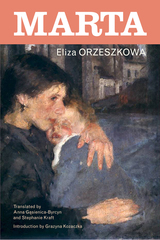
Eliza Orzeszkowa was a trailblazing Polish novelist who, alongside Leo Tolstoy and Henryk Sienkiewicz, was a finalist for the 1905 Nobel Prize in Literature. Of her many works of social realism, Marta (1873) is among the best known, but until now it has not been available in English. Easily a peer of The Awakening and A Doll’s House, the novel was well ahead of the English literature of its time in attacking the ways the labor market failed women.
Suddenly widowed, the previously middle-class Marta Świcka is left penniless and launched into a grim battle for her survival and that of her small daughter. As she applies for job after job in Warsaw—portrayed here as an every-city, an unforgiving commercial landscape that could be any European metropolis of the time—she is told time after time that only men will be hired, that men need jobs because they are fathers and heads of families.
Marta burns with Orzeszkowa’s feminist conviction that sexism was not just an annoyance but a threat to the survival of women and children. It anticipated the need for social safety nets whose existence we take for granted today, and could easily read as an indictment of current efforts to dismantle those very programs. Tightly plotted and exquisitely translated by Anna Gąsienica-Byrcyn and Stephanie Kraft, Marta resonates beyond its Polish setting to find its place in women’s studies, labor history, and among other works of nineteenth-century literature and literature of social change.

“I have been unfaithful to my husband.” Marta Oulie’s opening line scandalized Norwegian readers in 1907. And yet, Sigrid Undset had a gift for depicting modern women “sympathetically but with merciless truthfulness,” as the Swedish Academy noted in awarding her the Nobel Prize for Literature in 1928. At the time she was one of the youngest recipients and only the third woman so honored. It was Undset’s honest story of a young woman’s love life—“the immoral kind,” as she herself bluntly put it—that made her first novel an instant sensation in Norway.
Marta Oulie, written in the form of a diary, intimately documents the inner life of a young woman disappointed and constrained by the conventions of marriage as she longs for an all-consuming passion. Set in Kristiania (now Oslo) at the beginning of the twentieth century, Undset’s book is an incomparable psychological portrait of a woman whose destiny is defined by the changing mores of her day—as she descends, inevitably, into an ever-darker reckoning. Remarkably, though Undset’s other works have attracted generations of readers, Marta Oulie has never before appeared in English translation. Tiina Nunnally, whose award-winning translation of Undset’s Kristin Lavransdatter captured the author’s beautifully clear style, conveys the voice of Marta Oulie with all the stark poignancy of the original Norwegian.

Beginning with a historical retrospective on Chinese martial arts films as a diasporic film genre and the transnational styles and ideologies of the filmmakers themselves, Szeto uses case studies to explore in depth how the forces of colonialism, Chinese nationalism, and Western imperialism shaped the identities and work of Lee, Woo, and Chan. Addressed in the volume is the groundbreaking martial arts swordplay film that achieves global success-Ang Lee's Crouching Tiger, Hidden Dragon- and its revelations about Hollywood representations of Asians, as well as concepts of male and female masculinity in the swordplay film tradition. Also investigated is the invigoration of contemporary gangster, thriller, and war films by John Woo, whose combination of artistic and historical contexts has contributed to his global success.
Szeto then dissects Chan's mimetic representation of masculinity in his films, and the influences of his Chinese theater and martial arts training on his work. Szeto outlines the similarities and differences between the three artists' films, especially their treatments of gender, sexuality, and power. She concludes by analyzing their films as metaphors for their working conditions in the Chinese diaspora and Hollywood, and demonstrating how through their works, Lee, Woo, and Chan communicate not only with the rest of the world but also with each other.
Far from a book simply about three filmmakers, The Martial Arts Cinema of the Chinese Diaspora investigates the transnational nature of films, the geopolitics of culture and race, and the depths of masculinity and power in movies. Szeto's interdisciplinary approach calls for nothing less than a paradigm shift in the study of Chinese diasporic filmmakers and the embodiment of cosmopolitical perspectives in the martial arts genre.
In this age of the sound bite, what sort of author could be more relevant than a master of the epigram? Martial, the most influential epigrammatist of classical antiquity, was just such a virtuoso of the form, but despite his pertinence to today’s culture, his work has been largely neglected in contemporary scholarship. Arguing that Martial is a major author who deserves more sustained attention, William Fitzgerald provides an insightful tour of his works, shedding new and much-needed light on the Roman poet’s world—and how it might speak to our own.
Writing in the late first century CE—when the epigram was firmly embedded in the social life of the Roman elite—Martial published his poems in a series of books that were widely read and enjoyed. Exploring what it means to read such a collection of epigrams, Fitzgerald examines the paradoxical relationship between the self-enclosed epigram and the book of poems that is more than the sum of its parts. And he goes on to show how Martial, by imagining these books being displayed in shops and shipped across the empire to admiring readers, prophetically behaved like a modern author. Chock-full of epigrams itself—in both Latin and English versions—Fitzgerald’s study will delight classicists, literary scholars, and anyone who appreciates an ingenious witticism.
Those who have read Orpheus in the Bronx, Reginald Shepherd's previous collection of essays about the act of creating poetry, and those who take on the task, can immediately understand why it was a national finalist for a prestigious National Book Critics Circle Award. Shepherd was candid and disarming, practical and funny, able to mix thoughts about the Transformers with meditations on the realities of growing up poor.
This is Reginald Shepherd's final opportunity to speak his mind about the craft he loved, the art of using words to express the soul and the wit of every person's experience. Edited by Shepherd's longtime partner and intellectual confidant, Robert Philen, A Martian Muse stands as a final monument to a master in the craft, but is also a readable, important work in its own right.
"Reginald Shepherd died September 10, 2008, after a hard struggle with cancer. While he had completed the essays presented here and had selected them from his available essays to form a collection, he didn't have time to organize the presentation of the essays within the collection.
"The task of editing this collection has been a daunting challenge as I struggle to live up to the level of intellectual engagement, clarity, and coherence that Reginald always expected. While daunting, it has also been a labor of love and a compulsion for me, based on the many years I spent with him as a partner, friend, lover, intellectual companion, and sharer of common passions."
---Robert Philen, from the Introduction
Reginald Shepherd was the editor of The Iowa Anthology of New American Poetries and Lyric Postmodernisms: An Anthology of Contemporary Innovative Poetries and the author of five books of poetry. He was a finalist for the 2009 National Book Critics Circle Award and was the recipient of grants from the NEA, the Illinois Arts Council, the Saltonstall Foundation, the Florida Arts Council, and the Vogelstein Foundation, among many other awards and honors.
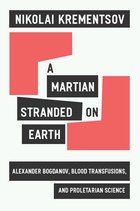
Much like Vladimir Lenin, his onetime rival for the leadership of the Bolshevik party during its formative years, Alexander Bogdanov (1873–1928) was a visionary. In two science fiction novels set on Mars, Bogdanov imagined a future in which the workers of the world, liberated from capitalist exploitation, create a “physiological collective” that rejuvenates and unites its members through regular blood exchanges. But Bogdanov was not merely a dreamer. He worked tirelessly to popularize and realize his vision, founding the first research institute devoted to the science of blood transfusion.
In A Martian Stranded on Earth, the first broad-based book on Bogdanov in English, Nikolai Krementsov examines Bogdanov’s roles as revolutionary, novelist, and scientist, presenting his protagonist as a coherent thinker who pursued his ideas in a wide range of venues. Through the lens of Bogdanov’s involvement with blood studies on one hand, and of his fictional and philosophical writings on the other, Krementsov offers a nuanced analysis of the interactions between scientific ideas and societal values.

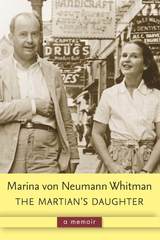
One of the five Hungarian scientific geniuses dubbed "the Martians" by their colleagues, John von Neumann is often hailed as the greatest mathematician of the twentieth century and even as the greatest scientist after Einstein. He was a key figure in the Manhattan Project; the inventor of game theory; the pioneer developer of the modern stored-program electronic computer; and an adviser to the top echelons of the American military establishment. In The Martian's Daughter, Marina von Neumann Whitman reveals intimate details about the famed scientist and explores how the cosmopolitan environment in which she was immersed, the demanding expectations of her parents, and her own struggles to emerge from the shadow of a larger-than-life parent shaped her life and work.
Unfortunately, von Neumann did not live to see his daughter rise to become the first or highest-ranking woman in a variety of arenas. Whitman became a noted academic during the 1960s and '70s, casting her teaching and writing in the framework of globalization before the word had been invented; became the first woman ever to serve on the President's Council of Economic Advisers and participated actively in U.S. efforts to reshape the international monetary and financial system during the early 1970s; pioneered the role of women on the boards of leading multinational corporations; and became the highest-ranking female executive in the American auto industry in the 1980s. In her memoir, Whitman quotes from personal letters from her father and describes her interactions with such figures as Roger Smith of GM and President Nixon. She also details the difficulties she encountered as an early entrant into a world dominated by men and how she overcame the obstacles to, in her words, "have it all."
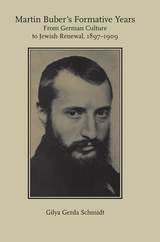
Martin Buber (1878–1965) has had a tremendous impact on the development of Jewish thought as a highly influential figure in 20th-century philosophy and theology. However, most of his key publications appeared during the last forty years of his life and little is known of the formative period in which he was searching for, and finding, the answers to crucial dilemmas affecting Jews and Germans alike. Now available in paperback, Martin Buber’s Formative Years illuminates this critical period in which the seeds were planted for all of his subsequent work.
During the period from 1897 to 1909, Buber's keen sense of the crisis of humanity, his intimate knowledge of German culture and Jewish sources, and his fearlessness in the face of possible ridicule challenged him to behave in a manner so outrageous and so contrary to German-Jewish tradition that he actually achieved a transformation of himself and those close to him. Calling on spiritual giants of great historical periods in German, Christian, and Jewish history—such as Nicolas of Cusa, Jakob Boehme, Israel Baal Shem Tov, Rabbi Nachman of Brazlav, Johann Wolfgang von Goethe, and Friedrich Nietzsche—Buber proceeded to subvert the existing order by turning his upside-down world of slave morality right side up once more.
By examining the multitude of disparate sources that Buber turned to for inspiration, Gilya Gerda Schmidt elucidates Buber's creative genius and his contribution to turn-of-the-century Jewish renewal. This comprehensive study concludes that Buber was successful in creating the German-Jewish symbiosis that emancipation was to have created for the two peoples but that this synthesis was tragic because it came too late for practical application by Jews in Germany.
Martin Gardner (1914–2010) was a polymath whose international reputation extended from mathematics to literature, philosophy to science, and magic to fiction. This comprehensive bibliography covers every aspect of Gardner’s lengthy publishing career, from 1930 to 2010, and features detailed descriptions and indices of his writings on mathematics and many other topics. Editor Dana Richards worked directly with Gardner on this project from 1978 until Gardner’s death; it draws on the two hundred boxes of Gardner’s mathematical papers held in the Stanford archives
Acquaintance with the work of Martin Heidegger is indispensable to an understanding of contemporary thought and culture. His work has had a profound influence on a number of disciplines, including theology, Sartrean existentialism, linguistics, Hellenic studies, the structuralist and hermeneutic schools of textual interpretation, literary theory, and literature itself. With characterisitc lucidity and style, George Steiner makes this philosopher’s immensely difficult body of work accessible to the general reader. The breadth of Steiner’s learning and interests also allows him to place Heidegger in a broader Continental literary-cultural context. In a new Introduction, Steiner addresses language and philosophy and the rise of Nazism
In Martin Heidegger Saved My Life, Grant Farred combines autobiography with philosophical rumination to offer this unusual meditation on American racism. In the fall of 2013 while raking leaves outside his home, Farred experienced a racist encounter: a white woman stopped to ask him, “Would you like another job?” Farred responded, “Only if you can match my Cornell faculty salary.” The moment, however, stuck with him. The black man had gravitated to, of all people, Martin Heidegger, specifically Heidegger’s pronouncement, “Only when man speaks, does he think—and not the other way around,” in order to unpack this encounter.
In this essay, Farred grapples with why it is that Heidegger—well known as a Nazi—resonates so deeply with him during this encounter instead of other, more predictable figures such as Malcolm X, W. E. B. DuBois, or Frantz Fanon.
Forerunners is a thought-in-process series of breakthrough digital works. Written between fresh ideas and finished books, Forerunners draws on scholarly work initiated in notable blogs, social media, conference plenaries, journal articles, and the synergy of academic exchange. This is gray literature publishing: where intense thinking, change, and speculation take place in scholarship.
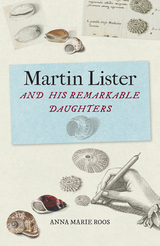
Susanna and Anna portrayed the shells of this collection not only as curious and beautiful objects, but also as specimens of natural history, rendering them with sensitivity and keen scientific empiricism. Beautiful in their own right, their illustrations and engravings reveal the early techniques behind scientific illustration and offer fascinating insight into the often hidden role of women in the scientific revolution.
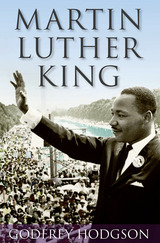
Dr. Martin Luther King Jr. is as relevant today as he was when he led civil rights campaigns in the 1950s and 1960s. He was an agent and a prophet of political change in this country, and the election of President Barack Obama is his direct legacy.
Now from one of Britain's most experienced political observers comes a new, accessible biography of the man and his works. The story of King is dramatic, and Godfrey Hodgson presents it with verve, clarity, and acute insight based in part on his own reporting on-scene at the time. He interviewed King half a dozen times or more; heard his speech at the March on Washington; was in Birmingham, Selma and Chicago; and met many of the characters in King's life story. Martin Luther King combines the best of his own reporting, plus the work of other biographers and researchers, to trace the iconic civil rights leader's career from his birth in Atlanta in 1929, through the campaigns that made possible the Civil Rights Act of 1964 and the Voting Rights Act of 1965, to his assassination in Memphis in 1968. Hodgson sheds light on every aspect of an extraordinary life: the Black Baptist culture in which King grew up, his theology and political philosophy, his physical and moral courage, his insistence on the injustice of inequality, his campaigning energy, his repeated sexual infidelities.
Hodgson describes the political minefield in which King operated; follows how he gradually persuaded President Kennedy that he could not stand by and allow the civil rights movement to be frustrated; and describes how, on the verge of success, his career was threatened by President Johnson's anger at King's principled decision to come out against the Vietnam War. He also puts King's career into the context of American history in the crisis of the 1960s. In his life, King was frustrated; but in death, he has been triumphant.
Martin Luther King allows the charisma and power of King's personality to shine through, showing in gripping narrative style exactly how one man helped America to progress toward its truest ideals. Hodgson's extensive research and detail help paint an accurate, complex portrait of one of America's most important leaders.
Godfrey Hodgson has worked in Britain and America as a newspaper and magazine journalist; as a television reporter, documentary maker and anchor; as a university teacher and lecturer; and as the author of a dozen well-received books about U.S. politics and recent history, including America in Our Time, a history of the United States in the 1960s; More Equal than Others, on politics and society in twentieth-century America; and most recently, a biography of Senator Daniel Patrick Moynihan, The Gentleman from New York. Hodgson met King on a number of occasions between 1956 and 1967. He recently retired as director of the Reuters Foundation Programme at Oxford University and is a visiting journalism professor at City University in London.
PRAISE FOR America in Our Time
"A critique so stimulating and compelling that I can only say read it."
---Richard Lingeman, The New York Times
"It simply gets right, without great fuss, the detail and proportion of things like the civil rights movement, student unrest, the stages of our Vietnam engagement."
---Garry Wills, The New York Review of Books
PRAISE FOR More Equal than Others
"The most thoughtful, thorough and sorrowful book imaginable on what has happened in these years."
---Bernard Crick, The Independent
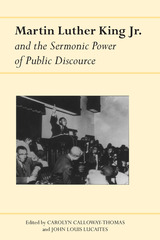
Critical studies of the prophetic voice that reshaped a nation.
Martin Luther King Jr. and the Sermonic Power of Public Discourse presents a rich and illuminating examination of Dr. King’s rhetorical mastery, revealing how his most iconic speeches and writings drew deeply from African American sermonic traditions to articulate a moral vision capable of transforming public consciousness. Through nine incisive essays, the volume explores how King’s oratory fused theology, ethics, metaphor, and call‑and‑response patterns to mobilize audiences and frame the civil rights movement as a universal moral struggle.
The collection focuses on five pivotal works—“Death of Evil on the Seashore,” “Letter from Birmingham Jail,” “I Have a Dream,” “A Time to Break Silence,” and “I’ve Been to the Mountaintop”—each analyzed for its rhetorical structure, historical context, and thematic force. These pieces span the full arc of King’s public career, illustrating not only his evolving political and theological commitments but also his sustained effort to envision and communicate a “beloved community” rooted in justice, equality, and human dignity.
In addition to unpacking King’s metaphoric language, ethical appeals, and theological grounding, several essays highlight the ways his rhetoric bridged diverse audiences and invited collective participation in social change. Scholars examine how King re‑constructed the rhetorical situation in “Letter from Birmingham Jail,” framed equality as a universal ideal, and used orality and performance to elevate “I Have a Dream” into one of the most resonant speeches in American history.
Far more than an anthology of commentary, this volume provides a nuanced, interdisciplinary understanding of King as a rhetorician whose discourse transcended political advocacy to become a powerful form of moral persuasion. It is an essential resource for readers interested in rhetoric, communication, civil rights history, and the enduring power of prophetic speech.
Examines how representations of Martin Luther King Jr.’s character and persona in works of African American literature have evolved and reflect the changing values and mores of African American culture
African American writers have incorporated Martin Luther King Jr. into their work since he rose to prominence in the mid-1950s. Martin Luther King Jr., Heroism, and African American Literature is a study by award-winning author Trudier Harris of King’s character and persona as captured and reflected in works of African American literature continue to evolve.
One of the most revered figures in American history, King stands above most as a hero. His heroism, argues Harris, is informed by African American folk cultural perceptions of heroes. Brer Rabbit, John the Slave, Stackolee, and Railroad Bill—folk heroes all—provide a folk lens through which to view King in contemporary literature. Ambiguities and issues of morality that surround trickster figures also surround King. Nonconformist traits that define Stackolee and Railroad Bill also inform King’s life and literary portraits. Defiance of the law, uses of indirection, moral lapses, and bad habits are as much a part of the folk-transmitted biography of King as they are a part of writers’ depictions of him in literary texts.
Harris first demonstrates that during the Black Arts Movement of the 1960s, when writers such as Nikki Giovanni, Sonia Sanchez, and LeRoi Jones (Amiri Baraka) were rising stars in African American poetry, King’s philosophy of nonviolence was out of step with prevailing notions of militancy (Black Power), and their literature reflected that division.
In the quieter times of the 1970s and 1980s and into the twenty-first century, however, treatments of King and his philosophy in African American literature changed. Writers who initially rejected him and nonviolence became ardent admirers and boosters, particularly in the years following his assassination. By the 1980s, many writers skeptical about King had reevaluated him and began to address him as a fallen hero. To the most recent generation of writers, such as Katori Hall, King is fair game for literary creation, no matter what those portrayals may reveal, to a point where King has become simply another source of reference for creativity.
Collectively these writers, among many others, illustrate that Martin Luther King Jr. provides one of the strongest influences upon the creative worlds of multiple generations of African American writers of varying political and social persuasions.

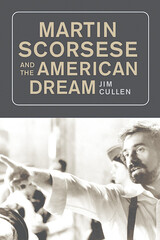
This book is the first study of Scorsese’s profound ambivalence toward the American Dream, the ways it drives some men and women to aspire to greatness, but leaves others seduced and abandoned. Showing that Scorsese understands the American dream in terms of a tension between provincialism and cosmopolitanism, Jim Cullen offers a new lens through which to view such seemingly atypical Scorsese films as The Age of Innocence, Hugo, and Kundun. Fast-paced, instructive, and resonant, Martin Scorsese and the American Dream illuminates an important dimension of our national life and how a great artist has brought it into focus.
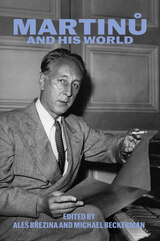
Bohuslav Martinů was one of the most extraordinary and prolific composers of the twentieth century. Martinů and His World offers a portrait of the composer in all his complexity. Born in the present-day Czech Republic, Martinů was rendered stateless as a result of events around World War II and the Communist takeover of Czechoslovakia. He lived for more than a decade in the United States, where he had great success, and died in Switzerland.
Martinů composed more than four hundred works in all genres of instrumental and vocal music, and infused each with a special combination of the lyrical and the dramatic. Alongside an unerring sense of form, his works draw on a kaleidoscope of elements from such sources as Dvořák, American jazz of the 1920s, English Renaissance madrigals, the late Baroque concerto grosso, French Impressionism, Czech and Moravian folk songs, and the contemporary music of his day.
This volume pays special attention to Martinů’s little-known operatic works and presents for the first time both a recently discovered personal diary and a series of interviews with important figures who were part of his American years.
Martinů and His World reveals the composer as an essential voice of his time, an original thinker about music past and present, who lived through the political complexities of the twentieth century and stood up to them both as a human being and as an artist.
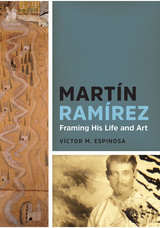
Martín Ramírez, a Mexican migrant worker and psychiatric patient without formal artistic training, has been hailed by leading New York art critics as one of the twentieth century’s greatest artists. His work has been exhibited alongside masters such as José Clemente Orozco, Diego Rivera, Rufino Tamayo, Salvador Dalí, Marc Chagall, Paul Klee, and Joan Miró. A landmark exhibition of Ramírez’s work at the American Folk Art Museum in 2007 broke attendance records and garnered praise from major media, including the New York Times, New Yorker, and Village Voice.
Martín Ramírez offers the first sustained look at the life and critical reception of this acclaimed artist. Víctor Espinosa challenges the stereotype of outsider art as an indecipherable enigma by delving into Ramírez’s biography and showing how he transformed memories of his life in Mexico, as well as his experiences of displacement and seclusion in the United States, into powerful works of art. Espinosa then traces the reception of Ramírez’s work, from its first anonymous showings in the 1950s to contemporary exhibitions and individual works that have sold for as much as a half-million dollars. This eloquently told story reveals how Ramírez’s three-decades-long incarceration in California psychiatric institutions and his classification as “chronic paranoid schizophrenic” stigmatized yet also protected what his hands produced. Stripping off the labels “psychotic artist” and “outsider master,” Martín Ramírez demonstrates that his drawings are not passive manifestations of mental illness. Although he drew while confined as a psychiatric patient, the formal elements and content of Ramírez’s artwork are shaped by his experiences of cultural and physical displacement.
When we speak of clouds these days, it is as likely that we mean data clouds or network clouds as cumulus or stratus. In their sharing of the term, both kinds of clouds reveal an essential truth: that the natural world and the technological world are not so distinct. In The Marvelous Clouds, John Durham Peters argues that though we often think of media as environments, the reverse is just as true—environments are media.
Peters defines media expansively as elements that compose the human world. Drawing from ideas implicit in media philosophy, Peters argues that media are more than carriers of messages: they are the very infrastructures combining nature and culture that allow human life to thrive. Through an encyclopedic array of examples from the oceans to the skies, The Marvelous Clouds reveals the long prehistory of so-called new media. Digital media, Peters argues, are an extension of early practices tied to the establishment of civilization such as mastering fire, building calendars, reading the stars, creating language, and establishing religions. New media do not take us into uncharted waters, but rather confront us with the deepest and oldest questions of society and ecology: how to manage the relations people have with themselves, others, and the natural world.
A wide-ranging meditation on the many means we have employed to cope with the struggles of existence—from navigation to farming, meteorology to Google—The Marvelous Clouds shows how media lie at the very heart of our interactions with the world around us. Peters’s book will not only change how we think about media but provide a new appreciation for the day-to-day foundations of life on earth that we so often take for granted.
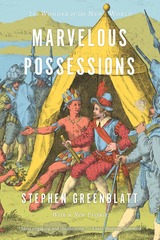
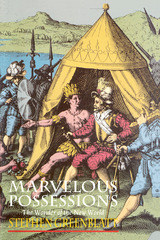
In a series of innovative readings of travel narratives, judicial documents, and official reports, Stephen Greenblatt shows that the experience of the marvelous, central to both art and philosophy, was cunningly yoked by Columbus and others to the service of colonial appropriation. He argues that the traditional symbolic actions and legal rituals through which European sovereignty was asserted were strained to the breaking point by the unprecedented nature of the discovery of the New World. But the book also shows that the experience of the marvelous is not necessarily an agent of empire: in writers as different as Herodotus, Jean de Léry, and Montaigne—and notably in Mandeville's Travels, the most popular travel book of the Middle Ages—wonder is a sign of a remarkably tolerant recognition of cultural difference.
Marvelous Possession is not only a collection of the odd and exotic through which Stephen Greenblatt powerfully conveys a sense of the marvelous, but also a highly original extension of his thinking on a subject that has occupied him throughout his career. The book reaches back to the ancient Greeks and forward to the present to ask how it is possible, in a time of disorientation, hatred of the other, and possessiveness, to keep the capacity for wonder from being poisoned?
"A marvellous book. It is also a compelling and a powerful one. Nothing so original has ever been written on European responses to 'The wonder of the New World.'"—Anthony Pagden, Times Literary Supplement
"By far the most intellectually gripping and penetrating discussion of the relationship between intruders and natives is provided by Stephen Greenblatt's Marvelous Possessions."—Simon Schama, The New Republic
"For the most engaging and illuminating perspective of all, read Marvelous Possessions."—Laura Shapiro, Newsweek
The Arrington Lecture series, established by one of the twentieth-century West's most distinguished historians, Leonard Arrington, has become a leading forum for prominent historians to address topics related to Mormon history. Utah State University hosts the Leonard J. Arrington Mormon History Lecture Series through the Merrill-Cazier Library Special Collections and Archives department.
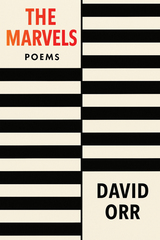
In his second collection, The Marvels, David Orr writes from the conviction that the available world is enough: its worn shirts, coffee cups, rainbows, buses, obsolete machines, failed plans, neighborly borders, and minor acts of courtesy. These poems are clear-eyed without being cold, comic without being merely light. They attend to ordinary things not as symbols waiting to be elevated, but as the actual substance of our shared existence.
Praised by The Washington Post for his “quirky, engaging poetry,” Orr brings formal control, wry wit, whimsy, and an exacting intelligence to the relentless dailiness of life. In “Coffee Cups,” two mugs have been scoured blank by the dishwasher: “Nothing makes them special now. / What they do is all they are.” Yet the household still reaches for them first, “hoping to save the others.” In “Decency,” a nearly useless blue shirt becomes kin to the small social gestures that certify “this shared space as shared”: a held door, a blessing after a sneeze, the habitual signs by which strangers acknowledge one another. And in the title poem, marvels are planted along a property line, where two neighbors meet to prune, argue, trade tools, and admire what grows between them.
Unillusioned but not disenchanted, The Marvels finds its force in persistence, use, courtesy, memory, and care. The poems do not look past the real for consolation. They look steadily at the world we have — its comedy, damage, repetition, and thin but durable fabrics of connection — until its sufficiency comes into view.

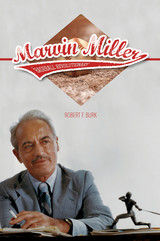
Educating and uniting the players as a workforce, Miller embarked on a long campaign to win the concessions that defined his legacy: decent workplace conditions, a pension system, outside mediation of player grievances and salary disputes, a system of profit sharing, and the long-sought dismantling of the reserve clause that opened the door to free agency. Through it all, allies and adversaries alike praised Miller's hardnosed attitude, work ethic, and honesty.
Comprehensive and illuminating, Marvin Miller, Baseball Revolutionary tells the inside story of a time of change in sports and labor relations, and of the contentious process that gave athletes in baseball and across the sporting world a powerful voice in their own games.

“Healy closes his marvellous book by saying that ‘alienation is a constant feature and is experienced as a norm rather than as an aberration’.” - https://marxandphilosophy.org.uk/reviews/19718_marx-and-digital-machines-alienation-technology-capitalism-by-mike-healy-reviewed-by-thomas-klikauer/
This book explores the fundamental contradiction at the heart of the digital environment: technology offers all manner of promises, yet habitually fails to deliver. This failure often arises from numerous problems: the proficiency of the technology or end-user, policy failure at various levels, or a combination of these. Solutions such as better technology and more effective end-user education are often put into place to solve these failures.
Mike Healy argues that such approaches are inherently faulty drawing upon qualitative research informed by Marx’s theory of alienation. Using Marx’s theory, he considers participants in three distinct settings: the workplace of information and communications technology (ICT) professionals; university scholars researching the ethical and societal implications of our digital environment; and a group of pensioners living in South London, UK, undertaking ICT training. By delving beneath the surface of how digital technologies are created, researched and experienced, this study illustrates the contradictory nature of our digital lives, as they directly arise from the needs of capitalism.
The book also places Marx’s theory in contrast to the mainstream approaches derived from Seaman and Blauner. In researching and comprehending ICT, this book reaffirms the superior explanatory power of Marx’s theory of alienation.
In this book Marx's observations on history, which are found scattered throughout his voluminous writings, are brought together and subjected to searching analysis.
D. Ross Gandy writes in refreshingly direct language, without resorting to jargon. For the first time we have a thoughtful assessment of Marx's views on all the epochs that cross his historical vision. Gandy treats Marx's ideas on primitive societies, on ancient Roman and Asiatic civilization, on the structure of feudalism, on strategies for overthrowing capitalism, and on the hypothetical communist future. Among the author's departures from traditional readings of Marx are his interpretations of class struggle, his conception of social strata, and his cogent analysis of the "new Marxism."
Since many aspects of Marxist historical theory have been neglected or distorted, Gandy's remarkably clear commentary, based on extensive research—including an exhaustive study of the forty-volume Marx-Engels Werke—will doubtless stimulate debate among sociologists and other students of social change, political scientists, and historians.
Yet these concepts, within a specifically Marxist framework, are not always easy to understand. This book is an ideal student introduction that explains, in clear and concise chapters, the precise meaning and implications of each of Marx's key concepts. Furthermore, the contributors show how these ideas continue to be relevant, and how they relate to modern society.
The contributors include leading academics in the field of politicial science. Outlining clearly what each concept means, they move on to situate it within cutting-edge contemporary political theory.
Concepts include historical materialism, capitalism, class, the state, imperialism, the division of labour, oppression, production and reproduction, revolution, working class internationalism, equality and democracy.
With his early critique of Hegel, Marx started moving toward his fundamental thesis: that the state is a product of civil society and that the French Revolution was the triumph of bourgeois society. Furet's interpretation follows the evolution of this idea and examines the dilemmas it created for Marx as he considered all the faces the new state assumed over the course of the Revolution: the Jacobin Terror following the constitutional monarchy, Bonaparte's dictatorship following the parliamentary republic.
The problem of reconciling his theory with the reality of the Revolution's various manifestations is one of the major difficulties Marx contended with throughout his work. The hesitation, the remorse, and the contradictions of the resulting analyses offer a glimpse of a great thinker struggling with the constraints of his own system. Marx never did elaborate a theory of an autonomous state, but he never stopped wrestling with the challenge to his doctrine posed by late eighteenth-century France, whose changing conditions and successive regimes prompted some of his most intriguing and, until now, unexplored thought.
It covers a broad range of digital aspects now proliferating across our work and lives, including chapters on the digitalization of agriculture, robotics in the factory and the labor process on crowdworking platforms. It looks to how 20th century Marxist predictions of the 'workerless factory' are, or are not, coming true, and how 'Platform Capitalism' should be understood and critiqued.
Through rich empirical, theoretical and historical material, this book is necessary reading for those wanting a clear overview of our digital world.
It covers a broad range of digital aspects now proliferating across our work and lives, including chapters on the digitalization of agriculture, robotics in the factory and the labor process on crowdworking platforms. It looks to how 20th century Marxist predictions of the 'workerless factory' are, or are not, coming true, and how 'Platform Capitalism' should be understood and critiqued.
Through rich empirical, theoretical and historical material, this book is necessary reading for those wanting a clear overview of our digital world.

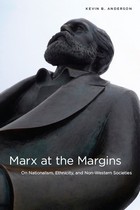
In Marx at the Margins, Kevin Anderson uncovers a variety of extensive but neglected texts by the well-known political economist which cast what we thought we knew about his work in a startlingly different light. Analyzing a variety of Marx’s writings, including journalistic work written for the New York Tribune, Anderson presents us with a Marx quite at odds with our conventional interpretations. Rather than providing us with an account of Marx as an exclusively class-based thinker, Anderson here offers a portrait of Marx for the twenty-first century: a global theorist whose social critique was sensitive to the varieties of human social and historical development, including not just class, but nationalism, race, and ethnicity, as well.
Marx at the Margins ultimately argues that alongside his overarching critique of capital, Marx created a theory of history that was multi-layered and not easily reduced to a single model of development or revolution. Through highly-informed readings on work ranging from Marx’s unpublished 1879–82 notebooks to his passionate writings about the antislavery cause in the United States, this volume delivers a groundbreaking and canon-changing vision of Karl Marx that is sure to provoke lively debate in Marxist scholarship and beyond.

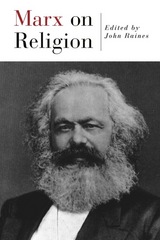

If we are serious about finding a different way to run the post-credit crunch society, we must start by introducing alternatives to undergraduates. Kieran Allen begins the task with an accessible and comprehensive look at the ideas of Karl Marx.
Dispensing with the dryness of traditional explanations of Marx, Allen shows how Marx's ideas apply to modern society. The first section briefly outlines Marx's life and the development of his work, then goes on to clearly explain his key theories, including historical materialism and surplus value. The second section examines alternatives to capitalism, the concept of 'anti-capitalism' and provides concrete, contemporary examples of Marx’s theories being put into practice in today's world.
This book encompasses a range of influential thinkers and historians from the period of the Second and Third Internationals down to the heyday of the New Left. Among the individuals it covers are William Morris, Mikhail Lifshits, Frederick Antal, Francis Klingender, Max Raphael, Meyer Schapiro, Walter Benjamin, Henri Lefebvre, and Arnold Hauser. It also includes three essays addressing the heritage of the New Left. In the spirit of Marxism itself, the authors interpret the achievements and limitations of Marxist art history in relation to the historical and political circumstances of its production and provide an indispensable and lucid introduction to contemporary radical practices in the field.
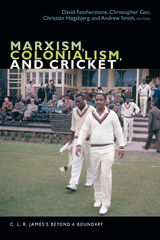
Contributors. Anima Adjepong, David Austin, Hilary McD. Beckles, Michael Brearley, Selwyn R. Cudjoe, David Featherstone, Christopher Gair, Paget Henry, Christian Høgsbjerg, C. L. R. James, Selma James, Roy McCree, Minkah Makalani, Clem Seecharan, Andrew Smith, Neil Washbourne, Claire Westall
Reading history against the grain, Neil Faulkner reveals that what happened in the past was not predetermined. Choices were frequent and numerous. Different outcomes - liberation or barbarism - were often possible. Rejecting the top-down approach of conventional history, Faulkner contends that it is the mass action of ordinary people that drives great events.
At the beginning of the 21st century - with economic disaster, war, climate catastrophe and deep class divisions - humans face perhaps the greatest crisis in the long history of our species. The lesson of A Marxist History of the World is that, if we created our past, we can also create a better future.
– the economic bases of state policies and their determination by social and political struggles;
– the politcal reshaping of international economic order;
– industrial work in relation to other institutions (such as education, patriarchy, and citizenship);
– the transformation of class structures in capitalist and state-socialist societies.
Published as a supplement to American Journal of Sociology, these studies constitute essential reading both for those sociologists who see Marxism as a powerful framework for understanding capitalist societies and for those who may not be committed to working within the Marxist tradition but nevertheless want to see Marxist hypotheses fully researched and debated.

Contributors. Andrew Cole, Valerie Forman, Bruce Holsinger, Ethan Knapp, Maura B. Nolan, John Parker, Stephen H. Rigby, D. Vance Smith
Although the influence of deconstruction, post-Marxism, and other postmodernist practices is felt in this volume, many of the essays indicate a move to reengage the Marxist legacies. In their complex interactions with topics such as the tradition of Chinese Marxism, the Kwangju Uprising and massacre, the fetishism of cult leaders, and community policing in China, these essays demonstrate the analytical importance of categories such as exploitation, alienation, and violence for any engagement with the politics of knowledge.
Contributors. Bill Brugger, Li Dazhao, Michael Dutton, D. R. Howland, Liu Kang, Rajeswari Mohan, You-me Park, William Pietz, Claudia Pozzana, Sanjay Seth, Gi-Wook Shin, Tomiyama Ichiro, Jing Wang, Gang Yue
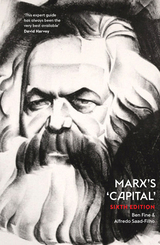
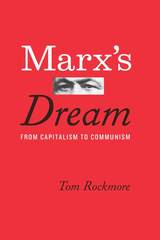
With Marx’s Dream, Tom Rockmore offers a much-needed alternative view, distinguishing rigorously between Marx and Marxism. Rockmore breaks with the Marxist view of Marx in three key ways. First, he shows that the concern with the relation of theory to practice—reflected in Marx’s famous claim that philosophers only interpret the world, while the point is to change it—arose as early as Socrates, and has been central to philosophy in its best moments. Second, he seeks to free Marx from his unsolicited Marxist embrace in order to consider his theory on its own merits. And, crucially, Rockmore relies on the normal standards of philosophical debate, without the special pleading to which Marxist accounts too often resort. Marx’s failures as a thinker, Rockmore shows, lie less in his diagnosis of industrial capitalism’s problems than in the suggested remedies, which are often unsound.
Only a philosopher of Rockmore’s stature could tackle a project this substantial, and the results are remarkable: a fresh Marx, unencumbered by doctrine and full of insights that remain salient today.
Marx's account of the rise of Louis-Napoleon Bonaparte is one of his most important texts. Written after the defeat of the 1848 revolution in France and Bonaparte's subsequent coup, it is a concrete analysis that raises enduring theoretical questions about the state, class conflict and ideology.
Unlike his earlier analyses, Marx develops a nuanced argument concerning the independence of the state from class interests, the different types of classes, and the determining power of ideas and imagery in politics. In the Eighteenth Brumaire he applies his 'materialist conception of history' to an actual historical event with extraordinary subtlety and an impressive, powerful command of language.
This volume contains the most recent and widely acclaimed translation of the Eighteenth Brumaire by Terrell Carver, together with a series of specially commissioned essays on the importance of the Brumaire in Marx's canon. Contributors discuss its continuing significance and interest, the historical background and its contemporary relevance for political philosophy and history.
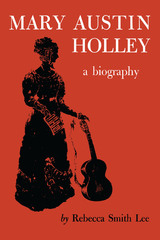
Mary Austin Holley found life challenging and made it interesting for others. As wife and widow of Horace Holley, eminent orator, clergyman, and educator, and as cousin and friend of Stephen F. Austin, founder of the first Texas colony, she formed friendships among important people. From New Haven to New Orleans and Brazoria, Texas, she was beloved.
The panorama of her life, described in vivid detail by a former head of the English Department at Texas Christian University, transports the reader to the tempestuous early years of the American Republic and, finally, to Texas during its colonization and early Republic years. Throughout this charming book Mrs. Holley's "intuition for important people" brings the reader into the company of many of America's great and accomplished: Noah Webster, John Quincy Adams, President and Mrs. Monroe, Andrew Jackson, Sam Houston, and many others.
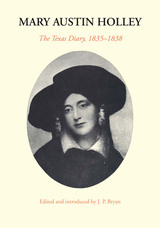
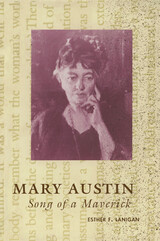
"[Lanigan] provides illuminating sociological background and lucidly marshals the existing biolgraphical data." —Choice
"Mary Hunter Austin was a well-known and respected author and activitst in her lifetime but is little known in ours. In this excellent biography...[Lanigan] chose to focus on a few central relationships in Austin's life, to explore in some depth a few central texts, and to understand the interior life of her subject. She has done a splendid job." —Ann J. Lane in the Journal of American History
READERS
Browse our collection.
PUBLISHERS
See BiblioVault's publisher services.
STUDENT SERVICES
Files for college accessibility offices.
RECENTLY PUBLISHED


UChicago Accessibility Resources
home | accessibility | search | about | contact us
BiblioVault ® 2001 - 2026
The University of Chicago Press